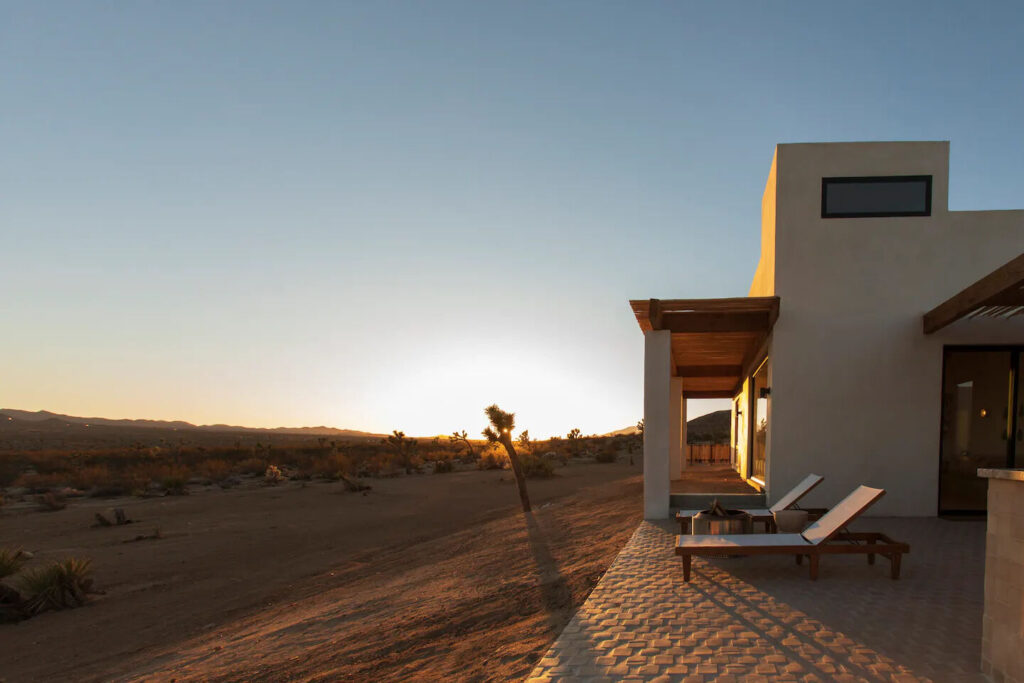
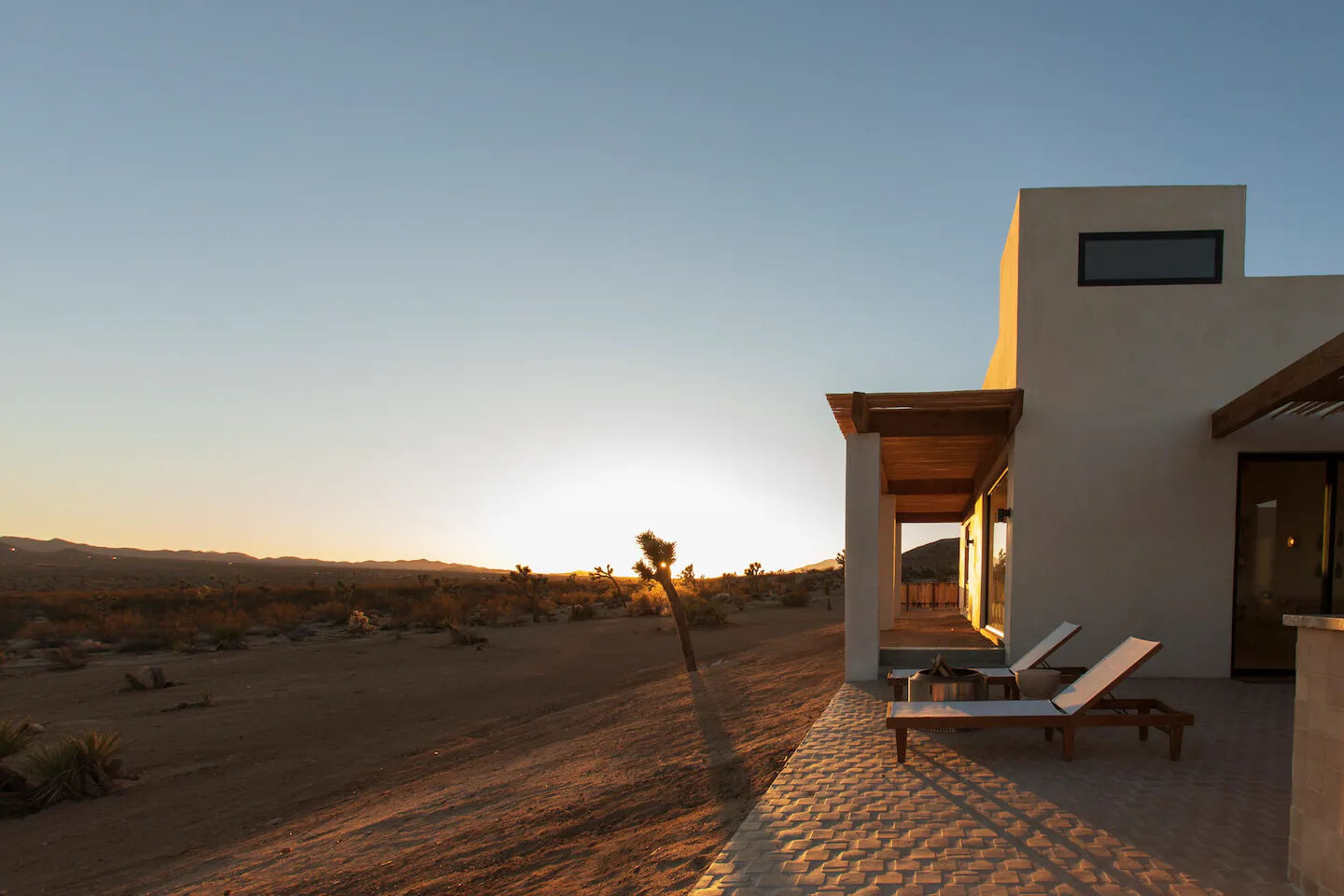
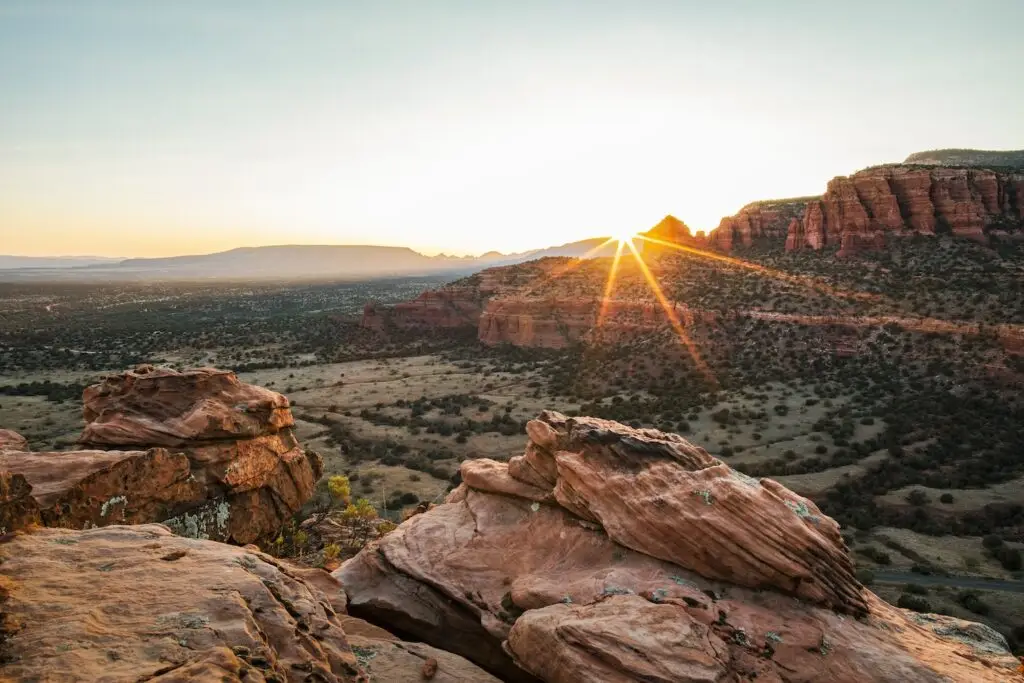
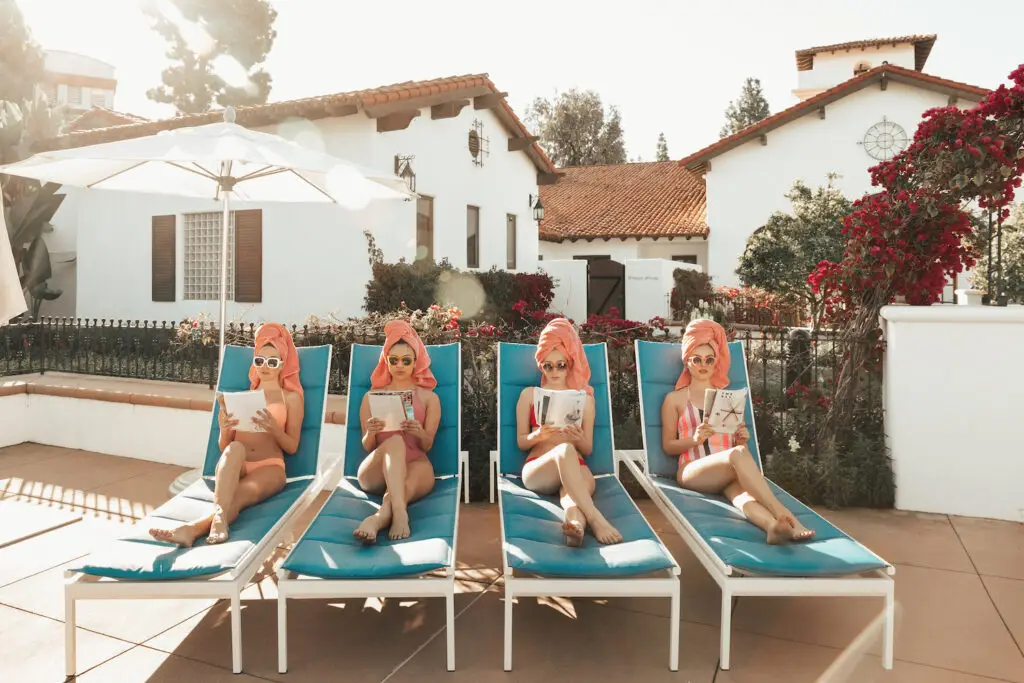
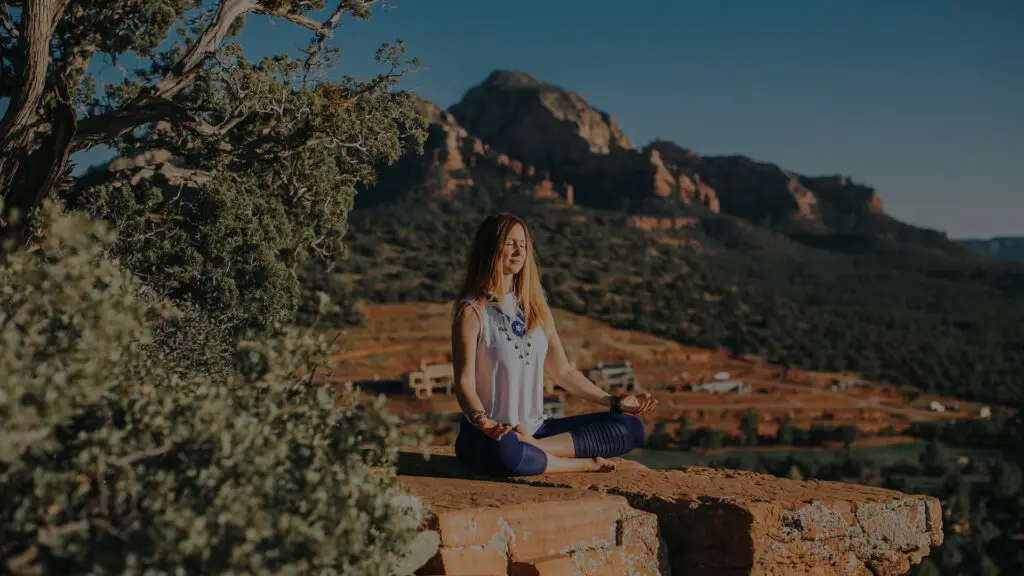
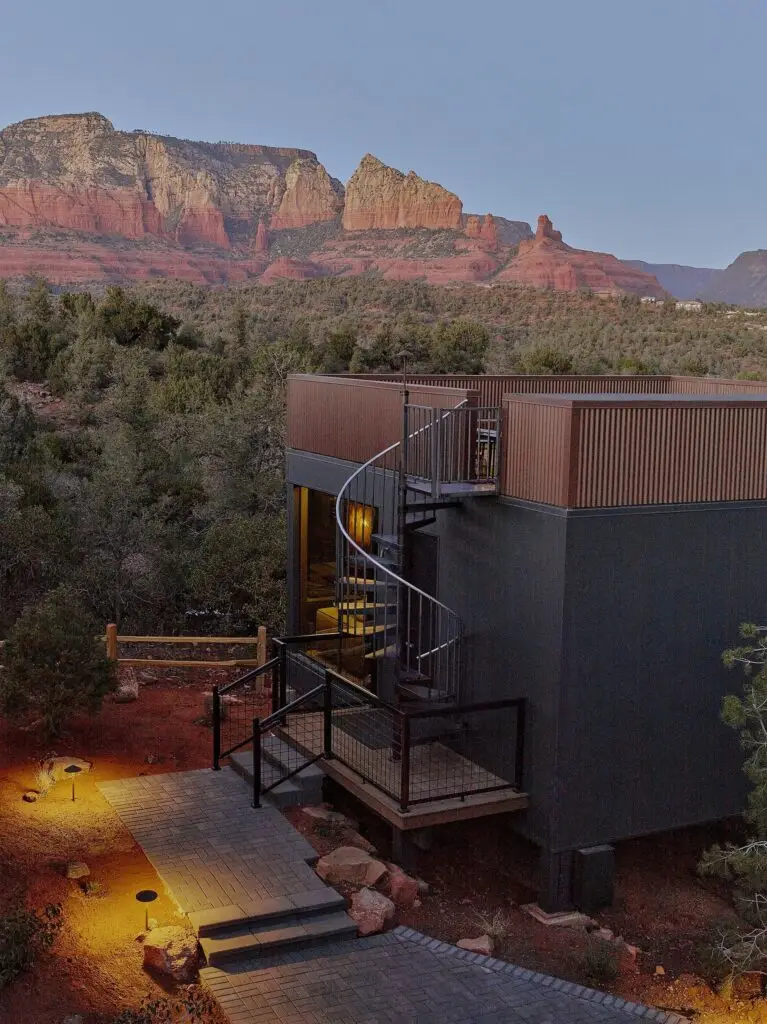
“I drove to Joshua Tree the night this land came up for sale and slept in my car under the stars,” says Nate Benedetto, co-owner of Halcyon Hideaway, Joshua Tree’s latest spa-inspired retreat. Even if Nate’s name doesn’t sound familiar, you probably know the restaurants that looked to him to secure their locations.
Nate combined forces with his wife Kristi, an interior designer and owner of the design firm Jooj Projects, to create a getaway with wellness in mind. Their niche space sits on 50 acres of quiet desert land and lets you unplug and realign. “Truly getting away from it all, including other people, is the best way to block out all of the distractions of city life in order to reconnect with nature and yourself,” Nate says.
Inspired by the couple’s many backpacking expeditions and Nate’s memorable trip to a Scandinavian-style spa in Whistler, Halcyon Hideaway is an amalgam of ease, comfort, and seclusion. “Halcyon Hideaway was built with the intention to provide benefits [similar to] backpacking in a remote setting but in a warm, luxurious, and comfortable setting,” Nate explains.
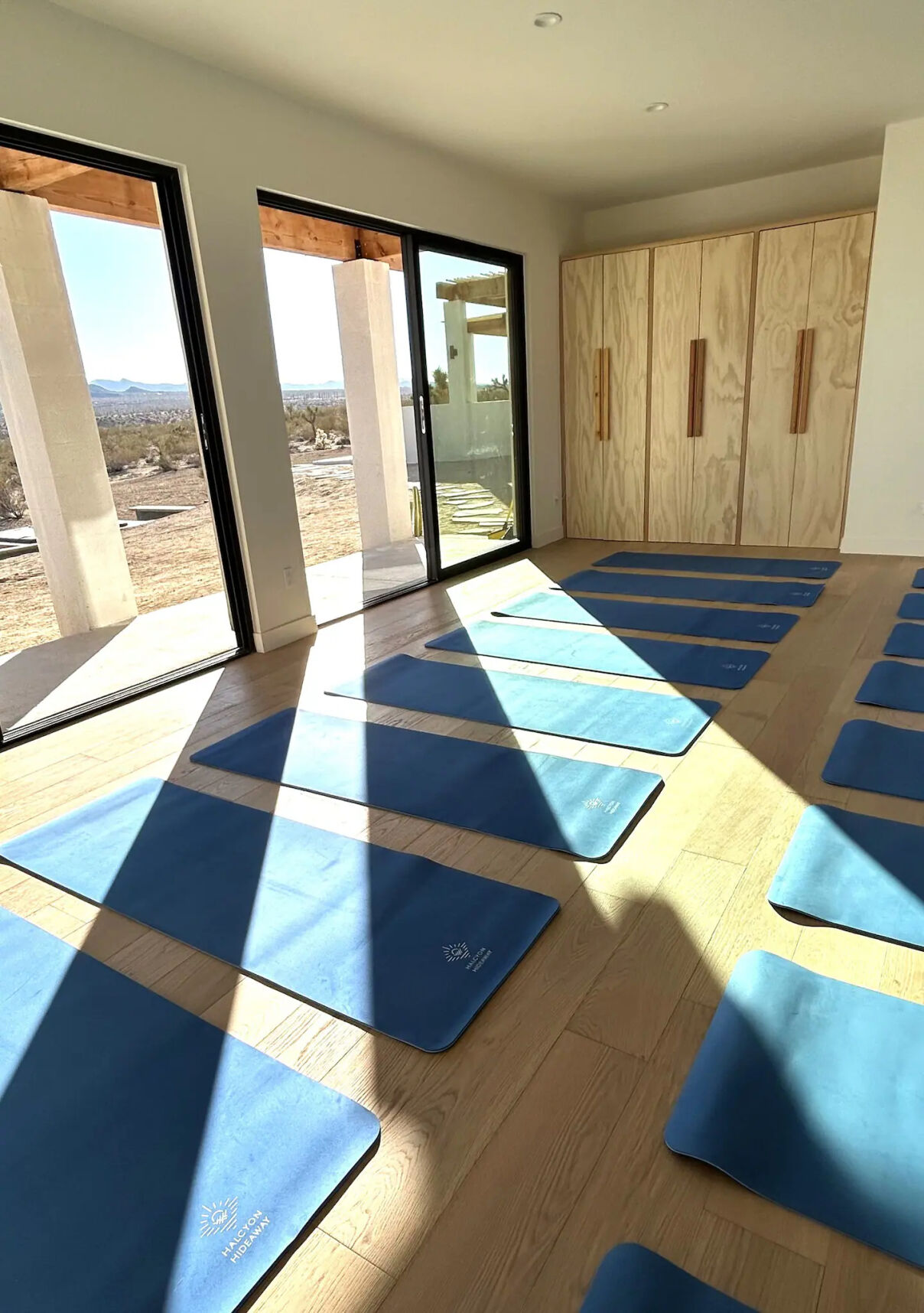
To get the feeling just right, the couple teamed up with architect Andrew Hall of AHA to craft the 1,700-square-foot house and its adjoining 600-square-foot yoga studio. The edifice itself is a solar-powered, modern adobe structure with clean lines and a wide berth, running parallel to views of the national park. With four bedrooms and two-and-a-half baths, the vacation abode accommodates as many as eight guests. “We want to market this space as a place where a small company or a group of friends or family members could do a small retreat,” Kristi says.
Halycon’s Hideaway Yoga Studio
Photo Credit: Tomoko Matsubayashi
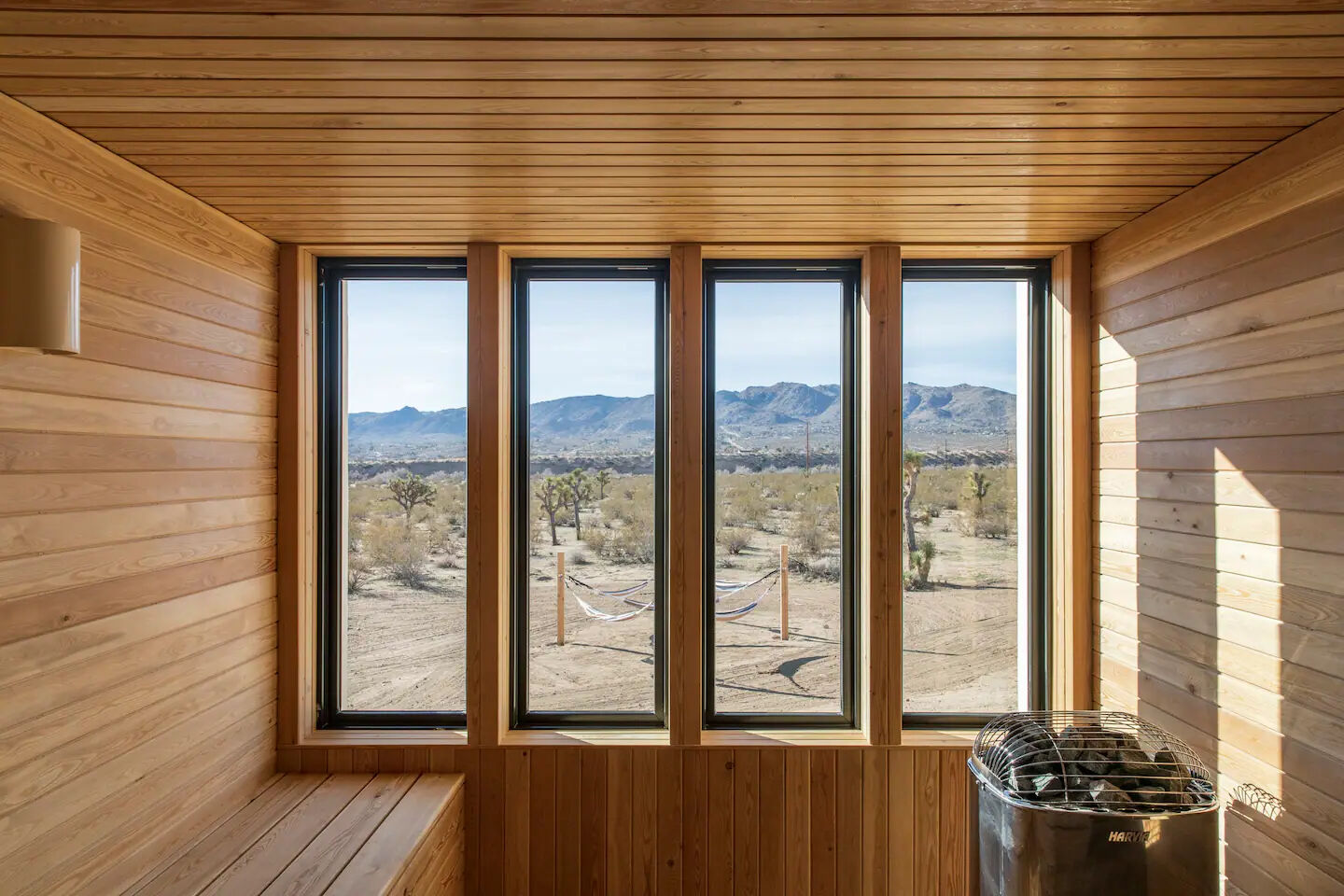
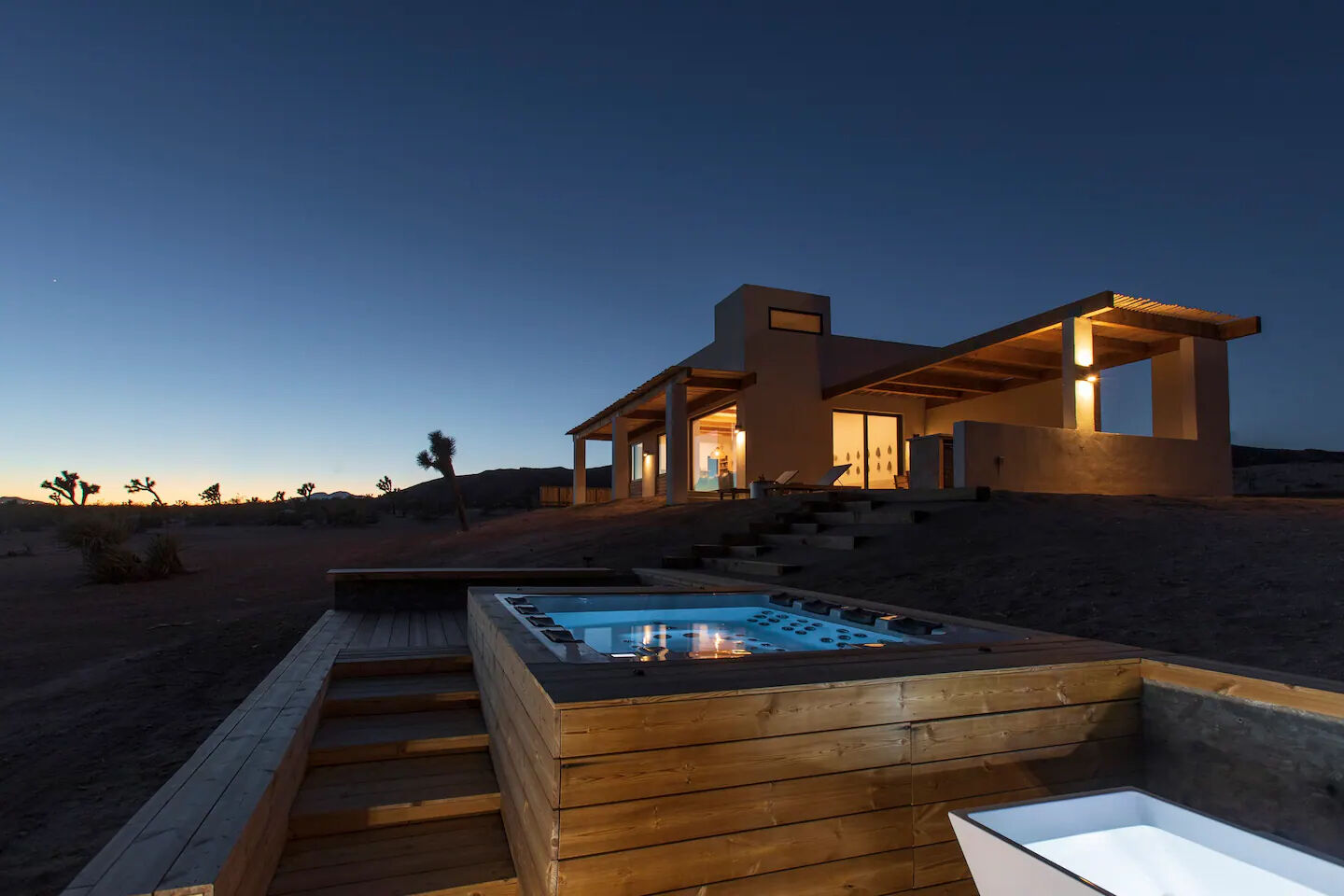
Halcyon’s soothing energy comes from its amenities. It’s a laundry list of leisure, with a custom sauna, cold plunge pool, hot tub that seats eight, a sun deck, separate yoga and dining facilities, an outdoor shower, and plenty more. Of the compound-like feel, Kristi says, “You can make [it] what you want, [get] whatever you want to gather from it.” Feel like heading into Pioneertown for a show? Go for it. Want to cook dinner on a Miele range and never glance at a screen? There are all these possibilities waiting for you.
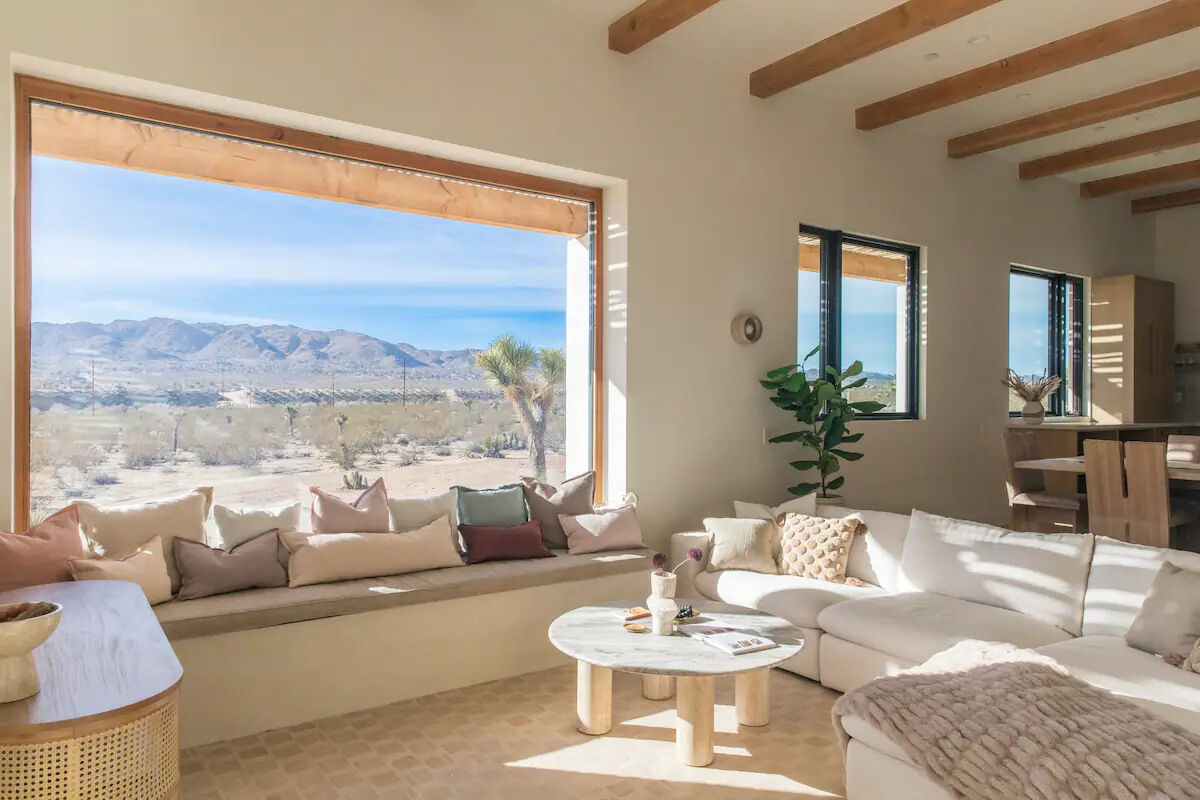
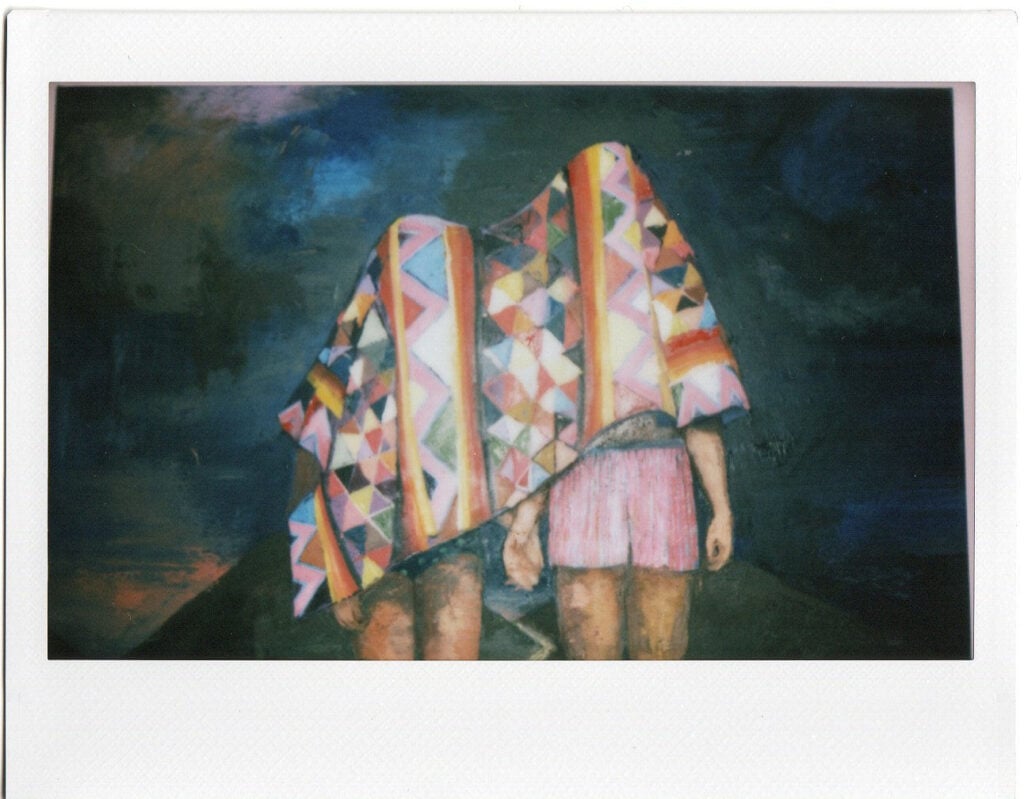
When it came to the design, Kristi says, “We wanted to embrace the natural landscape.” Channeling her own tastes and expectations for this kind of getaway, she brought in “organic, soothing, textural” elements to the space, like raw stone and linen paired with boucle and warm wood, she says. In terms of the color palette, don’t think Millennial beige (remember the “stick of butter” trend?); think ecru with an attitude, as there is colorful commissioned art and wallpaper that welcomes. It’s the finer details, like complimentary Ouai toiletries, that seal the relaxing deal.
Halcyon Hideaway Exterior Night Hot Tub
Tomoko Matsubayashi
If Nate slept in his car for you—well, for the love of cold plunges and the magic of an arid breeze under a starlit canopy—the least you can do is return the favor and sleep inside this top-tier home away from home. As Kristi says, “We just want everybody to have a memorable, relaxing experience where they can really tune into nature.” Okay, I guess you could sleep outside, too.
Danielle is a freelance culture journalist focusing on music, food, wine, hospitality, and arts, and founder-playwright of Yeah No Yeah Theatre company, based in San Diego. Her work has been featured in FLAUNT, Filter Magazine, and San Diego Magazine. Born and raised in Maui, she still loves a good Mai Tai.
Mad Libs. License plate bingo. The “quiet game,” a universal parent savior. Long live Slug Bug, where kids with zero self-control punched each other in the arm every time they saw a VW Bug in the wild—an activity no doubt invented by some Volkswagen marketing intern who now quietly runs the world. A family that cruises together bruises together.
So many threats to pull the car over and leave unruly progeny on the side road for good. GenXers are such baddies because our parents actually followed through. But we tracked those boomers down—or just walked into the wilderness and formed angsty flannel bands. We survived.
There were no downloaded movies back then. No seatback entertainment. Just a mythical road, a few bug-gutty windows, and the fast-moving summer world beyond. Seatbelts ignored, hot air whipping a frenzy of hair and beef-stick child scent.
Very few chaoses match being trapped in a moving car with your entire bloodline. It’s unimaginable, but we kinda liked it.
The road trip was always about endurance, discovery, adventure, creativity, and memory. Somewhere between gas station hot dogs, the Hollywood Walk of Fame, and musty motels with coin-operated vibrating beds—the bored between moments of mutual expedition sealed our love of the long distance car ride.
To respark road lust, we’ve put together a coastal California run up the 101 and Highway 1. The state’s famed road trip siblings, with ocean on one side and possibility in every direction. We analyzed what’s incoming, just-arrived, compelling, or a classic in need of a reminder in almost every county along the way—the kind of places we’d drag our family (or dog or best friend) to.
We start our trip just outside San Diego County lines and work our way through San Francisco. Because, by then, it’s time to turn the car around and do it all again.
The road is still the main character.
Photo Credit: @Tanveerbadal
Laguna Beach
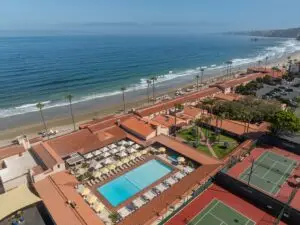
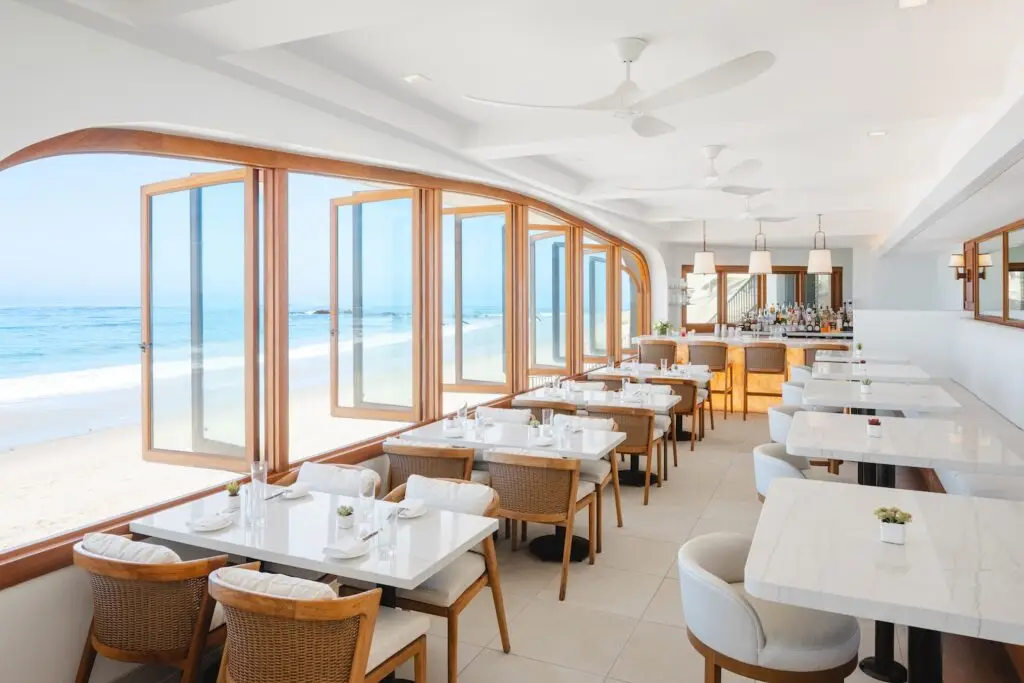
A 90-minute drive from downtown San Diego, Laguna Beach is home to serene coves, big-deal art events, miles of hiking trails, and the greatest number of beachfront hotels in California. Among the latter is the newly revamped icon, Surf & Sand Laguna Beach. Along with tweaks to the guestrooms, pool, and onsite Splashes restaurant, the remodel includes a new spa, Aquaterra. Wake up to ocean views, then get outside: Go tide pooling at Shaw’s Cove, or descend to Thousand Steps Beach and spend the day stretched out with a salacious summer read. For dinner, get fancy at the upscale (no swimwear allowed!) Studio Mediterranean at the Montage Laguna Beach hotel. Led by Greek chef Dennis Efthymiou, it serves feta-, phyllo-, and fish-forward cuisine inspired by his heritage.
Newport Beach
Head another 15 minutes up the road to Newport, an unlikely destination for adrenaline junkies both relatively tame (family-friendly thrill rides at the Balboa Fun Zone amusement park) and willing to risk life and limb (30-foot waves at the Wedge surf break). It’s also increasingly a killer place to eat, with Luke’s, of international Maine-lobster-roll fame, having recently opened locations in town. James Beard Award winner Tyson Cole just opened his sleek omakase and sushi restaurant Uchi this year. Once you’re stuffed, lay your head at Bay Shores Peninsula Hotel, a midcentury-inspired, 25-room boutique resort overlooking the sea. Watch the waves from beside the hotel’s rooftop fire pits, or paddle out on surfboards provided free for guests.
Huntington Beach
Huntington Beach has been an icon of California surf culture since the 1910s thanks to Hawaiian Olympic swimmer Duke Kahanamoku. Surfers still chase waves near his old haunts, including the Huntington Beach Pier, where the aptly named Huntington’s on the Pier is scheduled to arrive this fall in the location of the old Ruby’s Diner (RIP, Ruby). It’ll serve seafood, obviously, plus livestreamed videos of groms wiping out just a few feet away. Sports here don’t always require wetsuits: Mini-golf bar Playground is equipped with the obvious, as well as arcade and pinball games. Or bypass physical exertion en masse at the new Holistic Lounge at Hyatt Regency. It’s packed with newfandangled healing tech that uses light, heat, and electromagnetic fields to allegedly repair stressed skin and muscles tired from lifting mojitos.
Aaryn Belfer is a writer and editor specializing in nonfiction across art, architecture, and culture. Once upon a time, she wrote a provocative column for San Diego CityBeat (RIP). She was a runner up in the 2025 Matchbook Stories contest at the San Diego Central Library and is irrationally happy about it. Currently in her Soft Girl Era, Aaryn has expensive taste in (mostly flat) shoes and will choose a great art exhibit or live jazz concert over almost anything else. Except, possibly, Javier Bardem.
Amelia Rodriguez is a writer and journalist and winner of the San Diego Press Club's 2023 Rising Star Award and 2024 Best of Show Award, she’s also covered music, food, arts and culture, fashion, and design for Rolling Stone, Palm Springs Life, and other national and regional publications. After work, you can find her hunting down San Diego’s best pastries and maintaining her five-year Duolingo streak.
From artsy, boutique hotels in New Mexico to a revolutionary restaurant in Baja, explore what’s new in these desert cities around San Diego.
Coachella Valley
Terra Palm Springs, Palm Springs
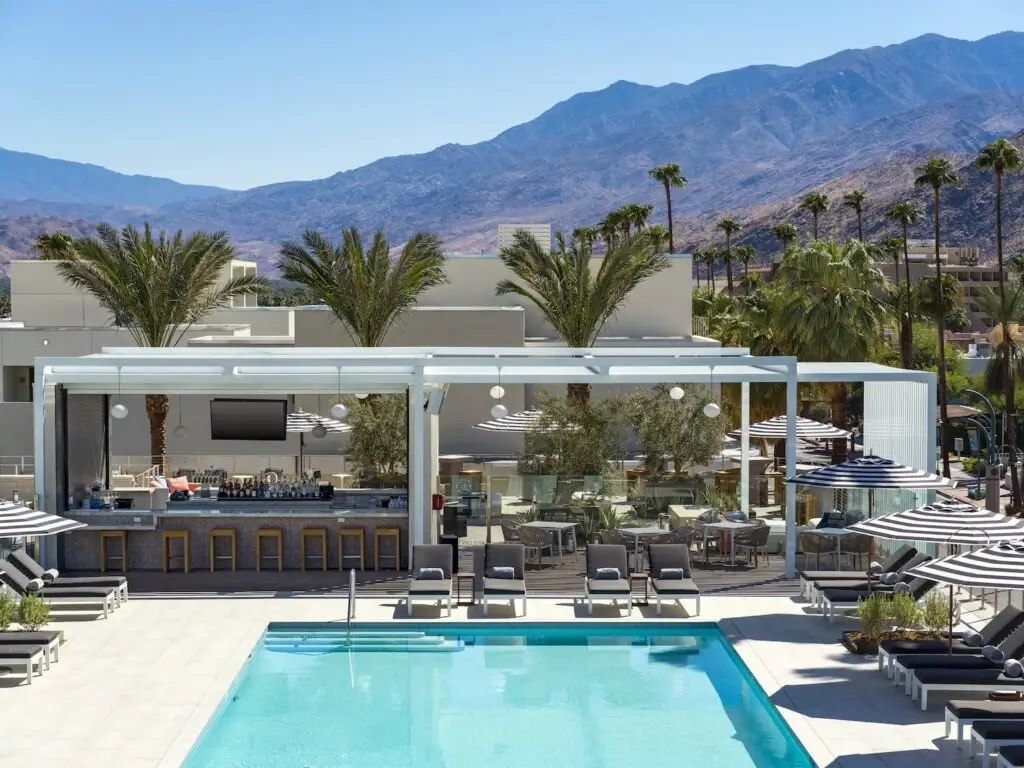
Serenity-seeking guests (and, presumably, the free-spirited ghosts of naked people) roam this 13-room wellness escape that was once a clothing-optional resort. Opened a year ago, it offers exclusive, 24-hour access to a Himalayan salt sauna, cold plunge pool, and rain room. For food and drink, it’s tonics and juice cleanses, plus poolside bites from Michael Beckman, exec chef of the nearby Workshop Kitchen + Bar.
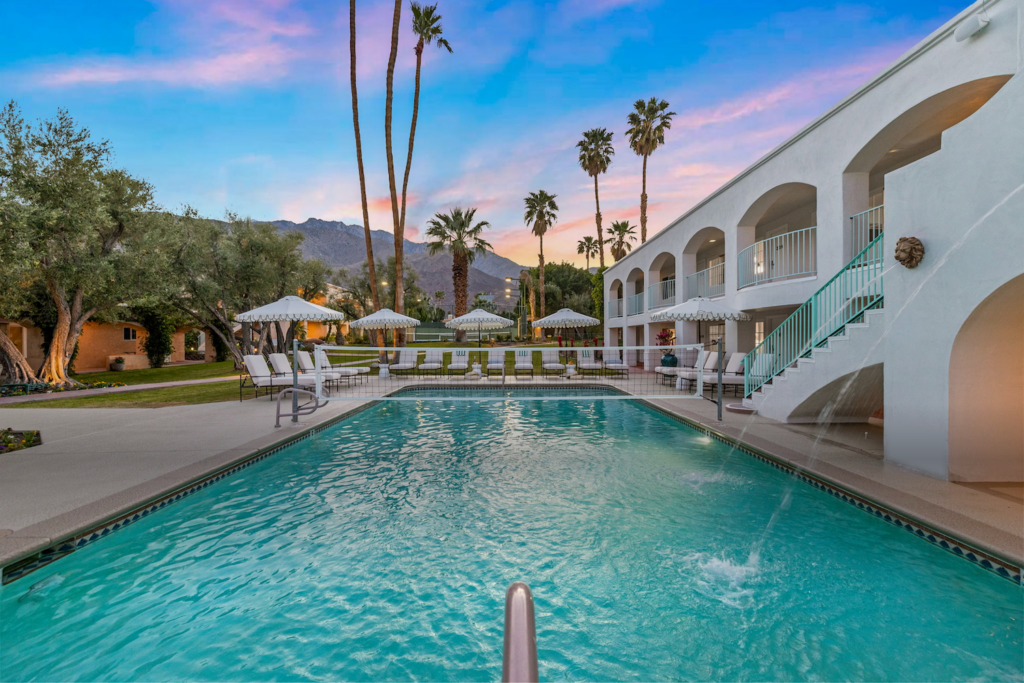
Casa Palma Hotel & Bungalows, Palm Springs
Opened last year on the historic, two-acre Movie Colony neighborhood property originally built by actor Errol Flynn (it was called the Normandy then), this is a micro-hotel for people who love Taschen books. Casa Palma reimagined the place as a minimalist, veneers-white 33-room escape with pickleball; tennis; and a mountain view bistro serving breakfast, salads, and sandwiches.
“Surfing in the desert” sounds like an absurd ayahuasca notion, but the Coachella Valley already has one wave pool (Palm Springs Surf Club), and, soon, a 5.5-acre surf lagoon will anchor DSRT Surf, an incoming resort at the Desert Willow Golf Courses. Planned for completion in mid-2026, it’ll include a 139-room hotel, 57 luxury villas, and restaurants.
Photo Credit: Patrick Chin
New Mexico
Hotel Willa, Taos
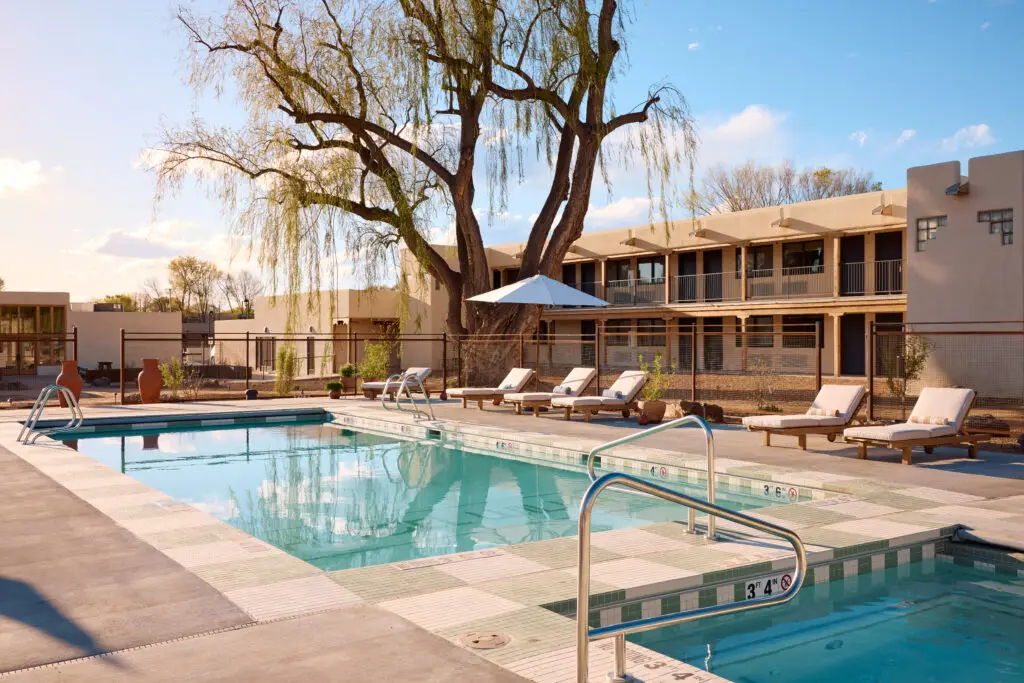
Last spring, the Casetta Group (the same folks who own SD’s Pearl Hotel) resuscitated an old motor lodge in Taos, a longtime beacon for creatives, and named it after Willa Cather (who finished her novel Death Comes to the Archbishop in town). The 51-room Hotel Willa has adobe architecture, an artist residency, a pool with a giant weeping willow nearby, and a seasonal restaurant from husband-and-wife duo chef Johnny Ortiz Concha and artist Maida Branch.
Arrive Albuquerque, Albuquerque
Originally built in 1965 as the Downtowner, a classic, six-story inn on the motel-culture strip of Route 66 in downtown Albuquerque cycled through several identities before last year, when Palisociety reimagined it with the Secret Gallery (featuring modern work from Southwest artists), a cocktail bar, a restaurant, and 137 dog-friendly rooms. Like any good desert road trip hotel, Arrive Albuquerque hotel is a cheeky, midcentury affair centered around an umbrella-shaded pool scene and those strappy ’80s patio loungers.
Courtesy of Leo’s Santa Fe
Leo’s, Santa Fe
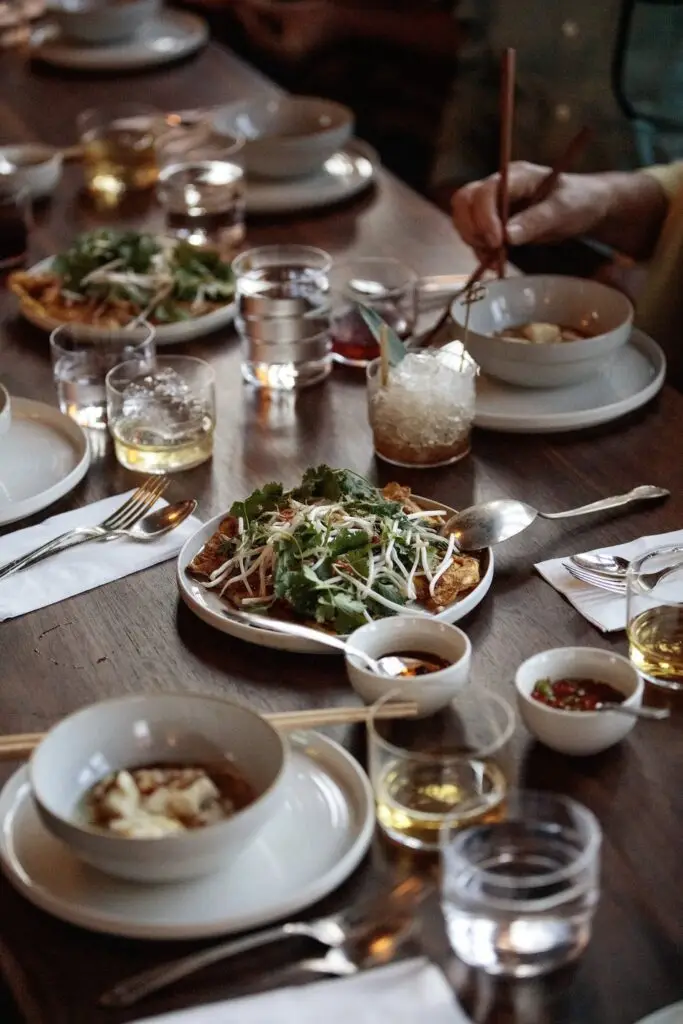
After forming Vital Spaces, an org that leased abandoned warehouses and rented them at a low cost to artists, furniture designer Jonathan Boyd launched Leo’s, a no-signage, no-reservations restaurant last August with James Beard Award–winning chef Zakary Pelaccio. It focuses on Thai and Malaysian dishes—catfish sum tum, pork belly with garlic prik phao, fried chicken with tofu-mustard sauce and jiao chili sauce—plus natural wines and inventive cocktails. It promptly landed on Esquire’s Best New Restaurants of 2025.
Arizona
Trailborn Grand Canyon, Williams
Trailborn is the base camp of hotel groups. It’s focused on America’s grand outdoorsy arenas, with spots in the Rockies; the Blue Ridge Mountains; and now, Williams, a mile from the Grand Canyon Railroad Depot. This kitchy, 96-room roadside hotel offers a moody, wood-paneled steakhouse; adventure excursions; free breakfast inside a bustling “camp hall;” and front-row access to the fanfare of Route 66’s centennial celebration this year.
Early this year, Paradise Valley (the mountain-wrapped town neighboring Scottsdale) will welcome the 40-acre Kimpton Miralina, with six pools; more than 400 rooms and villas; and three restaurants, including Hecho Libre, a new Baja-inspired concept from fellow Beard semifinalist Wes Avila (known for Angry Egret Dinette and MXO in Los Angeles).
International Dark Sky Discovery Center, Fountain Hills
As cities grow and stargazing becomes an endangered pastime, an org called International Dark Sky Places works to protect the best areas in the world to behold night skies. One of them is Fountain Hills on the outskirts of Phoenix. This summer, it’ll get even better with a $28 million discovery center featuring a massive telescope, a planetarium, science exhibits, and a stargazing terrace.
Courtesy of Cote Korean Steakhouse
Nevada
Cote Korean Steakhouse, Las Vegas
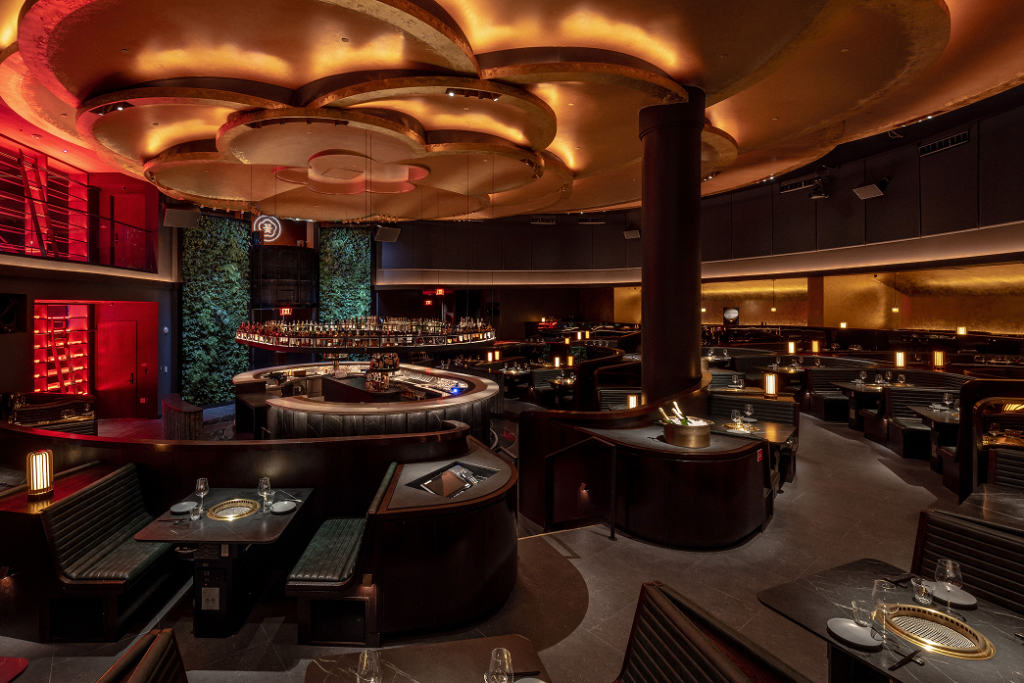
Cote is the only Michelin-starred Korean steakhouse in the US, an idea from Seoul-born and James Beard nominated chef and restaurateur Simon Kim. Part of The Venetian’s $1.5 billion renovation, it’s a show—18,000 square feet, with stadium seating, VIP skyboxes, a crow’s nest DJ booth, a glowing central bar, 1,200 wine bottles, and the inimitable buzz of energetic impulse spending.
F1 Arcade, Las Vegas
2025 was a big year for Formula 1 racing—the sport celebrated 75 years with a Brad Pitt film (for which Rancho Bernardo–based Sony Electronics created a one-of-a-kind camera that took viewers inside the cockpit), and Caesars Palace welcomed a 21,000-square-foot F1 Arcade where fans can flex their inner Lando Norris with 87 racing simulators.
GSR Arena, Reno
When built in the 1970s as the MGM Grand, the Grand Sierra Resort was one of the biggest hotels in the world with over 1,000 rooms. Almost 50 years later, it’s nearly doubled its occupancy and is undergoing a billion dollar upgrade. The star will be the $435 million, 10,000-seat GSR Arena, which broke ground in September. Once completed (hopefully in fall 2027), it’ll be home to the University of Nevada men’s basketball team.
Courtesy of Dendric Estate
Utah
Dendric Estate, Kamas
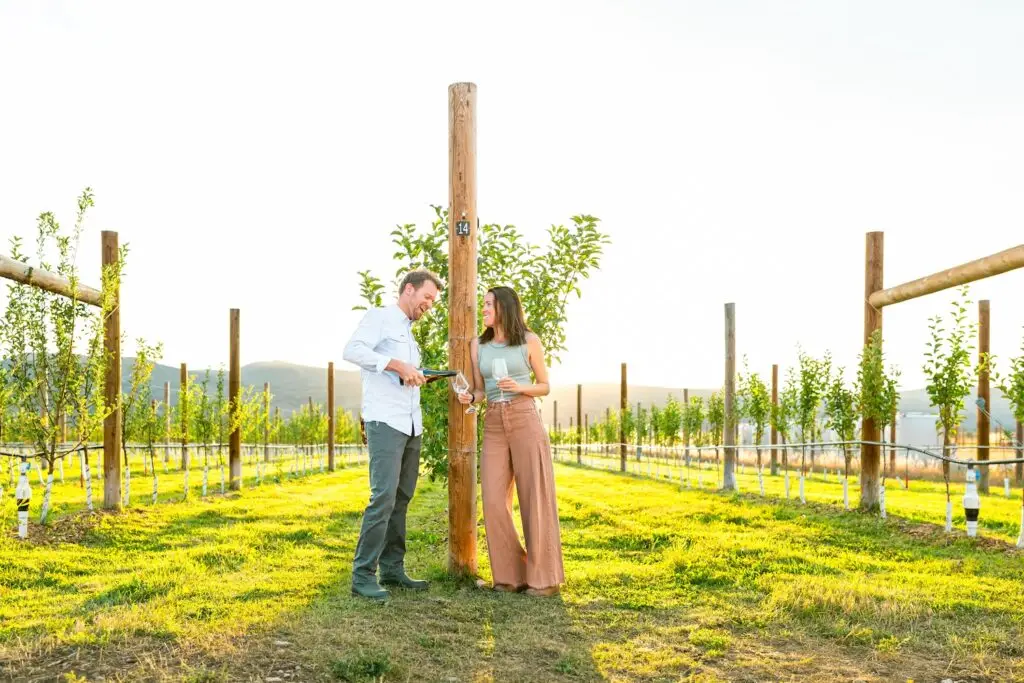
Utah’s High West Distillery was a groundbreaker, the first legal distillery in Utah when it opened in 2006. Now High West’s master distiller Brendan Coyle has left to open his dream project with his wife, Carly. They purchased 20 acres in Kamas Valley at the foothills of the Uinta mountain range, where they’re growing high elevation apples and flipping them into bone-dry boozy cider with Dendric Estate. You can tour the estate or wait for the onsite tasting room, planned for 2027.
The Inn at Sundance Mountain Resort, Sundance
In 2020, Robert Redford sold his famed, conservationist-minded mountain ski resort to Broadreach Capital Partners and Cedar Capital Partners, who promised to keep his “build some, preserve more” vision going. Since, it’s earned a Michelin Key. This month, The Inn at Sundance Mountain Resort—a 63-room, ski-in/ski-out inn—opens with views of the 12,000-foot Mount Timpanagos. Perched right out front, the Outlaw Express chair lift takes you to the Mandan summit in seven minutes (getting there used to take 20). There’s a wrap-around porch, relaxation pools, a sauna, outdoor showers, and a cold plunge at The Springs.
Canopy by Hilton Deer Valley East Village, Park City
Four years after hosting the Winter Olympics, famed ski-only resort Deer Valley is undergoing a massive expansion of its East Village, including eight new hotels (the Grand Hyatt is already there, and the Four Seasons and others are incoming). Scheduled to open this summer, Canopy will be Hilton’s 180-room, ski-in/ ski-out property with après-ski and rooftop lounges. Deer Valley has also added 2,000 additional acres of skiable slopes, 100 new runs, and 10 new chairlifts.
Baja
Diego, Valle de Guadalupe
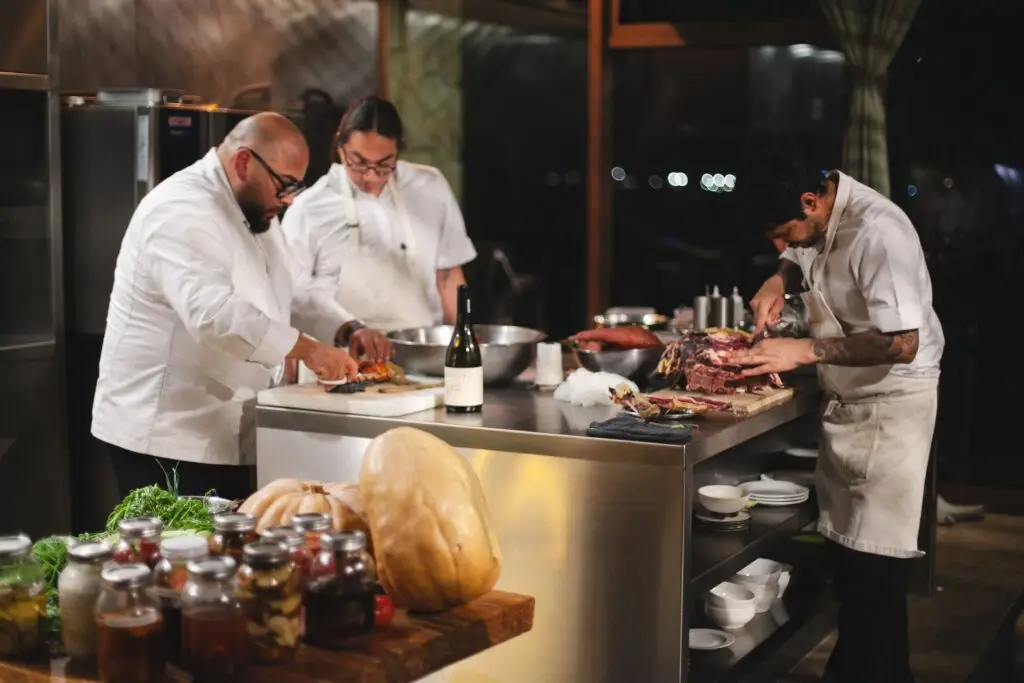
In the 2010s, Ensenada-born chef Diego Hernández was a headliner in the food-culture revolution in Valle de Guadalupe with Corazón de Tierra—named number 30 in the 2018 “World’s 50 Best Restaurants” list. It closed in 2020 (damn pandemic!). Last January, he returned with an eponymous 40-seat restaurant, Diego, inside Valle’s Museo de La Vid y El Vino, relying on onsite gardens and in-house butchery to prepare seasonal, multi-course tasting menus and à la carte dishes nodding to his Corazón roots.
Kadún, Cabo San Lucas
Over the years, the trend in Cabo resorts has been to get away from the action with secluded beachfront hideouts. Well, not all who travel to Cabo want to be tucked away. Last October, Mexico Grand Hotels (known for elaborate luxury resorts like Marina Fiesta and El Encanto) opened a smaller but still opulent thing: Kadún, a 110-room hotel with a rooftop pool and sundeck. It’s within walking distance to the Cabo Marina (the Vegas of Baja’s southern tip) and Medano Beach (one of the only swimmable beaches in Cabo).
Courtesy of Carnival Cruise Line
Ensenada Bay Village, Ensenada
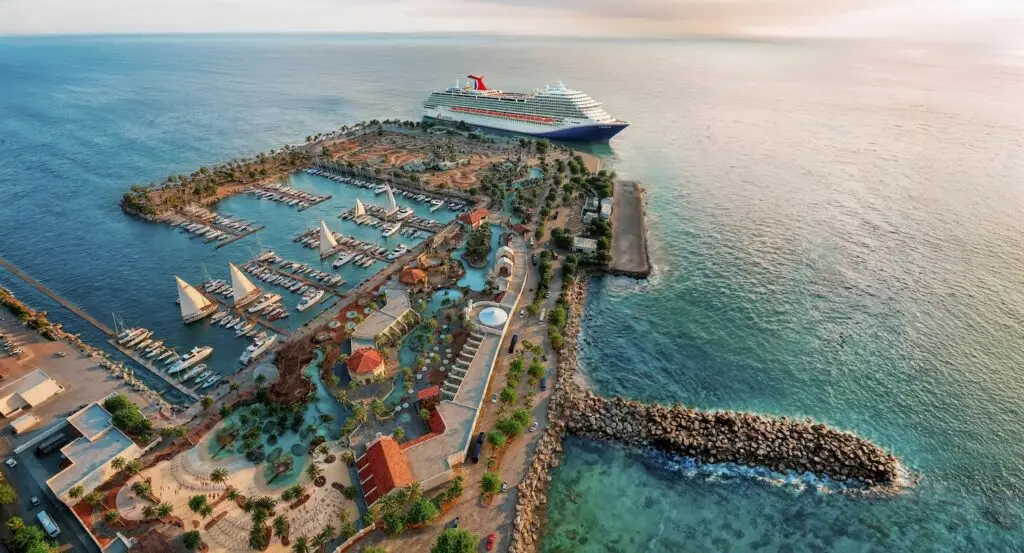
Carnival Cruise Line has a vested interest in building up the ports it parks in. It’s established spots in Grand Turk, Roatan, and Cozumel, and its next elaborate disembarkment project is a $26 million beachside playground in Ensenada, planned for completion in 2027. Expect a sort of Pinocchio’s Island isthmus packed with zip lines, dune buggy rides, river rides, an adult pool, thermal springs, a spa, and wine and cheese pairings from Valle de Guadalupe (the wine region is 15 minutes inland).
Troy Johnson is the magazine’s award-winning food writer and humorist, and a long-standing expert on Food Network. His work has been featured on NatGeo, Travel Channel, NPR, and in Food Matters, a textbook of the best American food writing.
Amelia Rodriguez is a writer and journalist and winner of the San Diego Press Club's 2023 Rising Star Award and 2024 Best of Show Award, she’s also covered music, food, arts and culture, fashion, and design for Rolling Stone, Palm Springs Life, and other national and regional publications. After work, you can find her hunting down San Diego’s best pastries and maintaining her five-year Duolingo streak.
What the hell am I doing in Arizona looking for water?
It’s the kind of question that creeps in the moment you step off the plane at Sky Harbor and the dry heat hits like an open oven door. Arizona is famous precisely because it’s unforgiving, a place where the presence of life amid the extreme lack of water is its own marvel. The compelling thing about attractions on this hot moon is the ingenuity behind the fact that they exist at all.
Long before the golf courses and cul-de-sacs, the Indigenous Hohokam people engineered one of the most sophisticated canal systems in the ancient world, diverting water from the Salt River to irrigate crops and sustain entire communities. Built by hand more than 1,000 years ago, portions of those canals still guide water through the Mesa valley today.
Phoenix’s main pockets tell different stories: Scottsdale has its polished, resort-town sheen; Tempe is full of young brains on vices; and Mesa is expansive and quietly strange. The kind of Arizona you think of when someone says Arizona. It’s the state’s third-largest city by population, but it feels like a series of outposts stitched together: historic downtown blocks, desert trailheads, leftovers of the Old West, and now—the improbable thing that brought me here—a surf park.
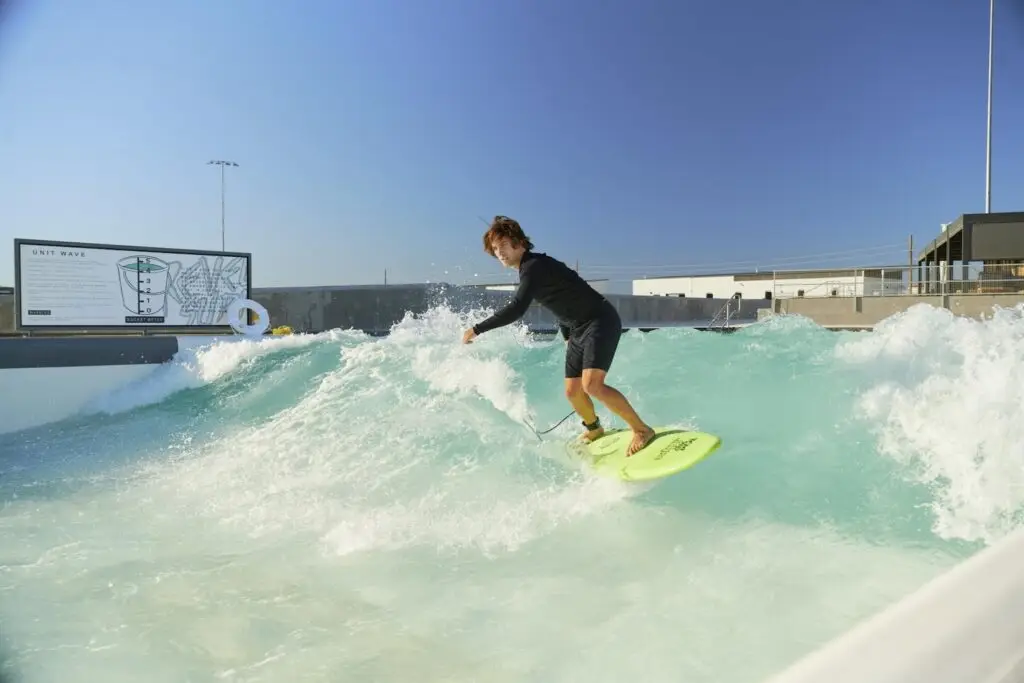
As I pull into Revel Surf Park, a watery lagoon glows blue against a backdrop of red dirt and distant peaks. The waves come and go like someone endlessly draining and refilling a mirage.
Revel—the centerpiece of Mesa’s Cannon Beach development—opened in late 2024, turning a patch of desert into Arizona’s first full-scale surf park. Roughly 2.2 million gallons of water circulate through the lagoon in an area that averages just over eight inches of rain a year.
It looks excessive, wildly irresponsible. It isn’t.
“We built this very strategically,” general manager Ryan Armstrong explains. “The well is located right here on the property. It’s processed and piped right into the lagoon.”
The pool runs on a closed-loop filtration system, recycling every drop and losing water only to evaporation. Developers say the park uses less water than a single golf hole—and a mere two percent of what the alfalfa field that once occupied the site consumed. Because Revel draws directly from the ground rather than city taps, Armstrong notes, “our water bill is essentially zero.”
Like many of the staff members at Revel, Armstrong is a surfer transplanted from the coast. The wave technology he oversees didn’t come out of a research lab, but a backyard. Matt Gunn, the creator of Swell Manufacturing, built a functional model of the wave in his own yard before partnering with developer Cole Cannon and pro surfer Shane Beschen to bring it to scale. The result is a private ocean—a lagoon where surfers can choose between the sloping lines of Trestles, the hollow barrels of Oahu’s V-Land, or Malibu’s mellow shoulders.
As a surfer spoiled by San Diego’s coastline, I’m equal parts curious and skeptical. Wave pools can feel sterile, stripped of the wild consequence that makes the ocean seem alive. But the sea can’t come close to the constant supply of waves a surf park offers. “We’re running eight hours a day, eight sessions a day, 10 surfers in each session, with waves every minute,” Armstrong tells me. “We have stadium lights, so sometimes we’re out here surfing until midnight.”
I opt for the Trestles setting, expecting smooth sailing. I’m wrong. The drop is quick, the margin for error thin. I get pitched. I recover. I link together a few snaps, then lose it again. Even manufactured waves have a way of humbling you. A few solid rides save the session.
As I dry off, Armstrong walks me through the broader vision. The 44-acre Cannon Beach district surrounding Revel will include roughly 500,000 square feet of retail.
“There are about seven or eight restaurants going in and a super high-end med spa,” he says, pointing toward the construction. Beyond food and surfing, the site is designed as a multi-sport hub. A massive KTR (Kids That Rip) indoor action sports park is in the works, featuring trampolines, parkour obstacles, and a world-class skate park.
This corner of the desert won’t stay quiet for long.
In hindsight, the advantages to Revel Surf Park are obvious: no suffocating crowds, no jockeying for position. Waves arrive every minute, precisely on schedule (if you miss one, that’s on you). There are no flat days at Revel. You don’t have to monitor weather reports and tide charts to know when it might be a good day for a surf. The swell is never not quite right for the break. It’s surfing’s version of shooting fish in a barrel—a strange, athletic fever dream and a convincing way to scratch the surfing itch when the nearest ocean is more than 300 miles away.
Cole Novak is an award-winning writer with a passion for highlighting local figures, small businesses, and nonprofits. Born and raised in San Diego, Cole is passionate about photography, surfing, art, the local food scene, and the great outdoors.
Meet ArtsConnect, UC San Diego’s Invitation to SoCal Arts Lovers
ArtsConnect brings those experiences into view, helping residents discover what they can see, hear and create at UC San Diego while experiencing the campus in a new way.
Ask most people what UC San Diego is known for, and the arts may not be the first answer. Yet this fall, San Diegans can watch Ghostbusters with a live orchestra, try their hand at glassmaking and wander among more than 20 works of public art woven throughout the university’s La Jolla campus.
ArtsConnect brings those experiences into view, helping residents discover what they can see, hear and create at UC San Diego while experiencing the campus in a new way.
Courtesy of UC San Diego | Photo Cred: Erik Jensen
“The arts are at the heart of UC San Diego’s student-centered mission and vision,” says Alysson Satterlund, Vice Chancellor for Student Affairs and Campus Life. “Whether creating, participating in, or experiencing performances, the arts are essential to a healthy and truly fun Triton student experience.”
That invitation often begins where the arts intersect with other fields.
“Some of the most innovative work and discovery happen where disciplines don’t usually share a stage,” says Cristina Della Coletta, Dean of the UC San Diego School of Arts and Humanities. “So through our unique intersection of the arts with science, technology, and medicine, we are improving lives, physically and emotionally.
Take The Inaudible Ocean, a collaboration between Department of Music Professor Lei Liang and Scripps Institution of Oceanography Assistant Project Scientist Josh Jones. Over eight years, the pair recorded earthquakes, ship noise, whale songs and other sounds in remote underwater locations. They transformed those recordings into a live music experience that allowed audiences to hear the ocean in an entirely new way. The work premiered on campus in May and continues to evolve.
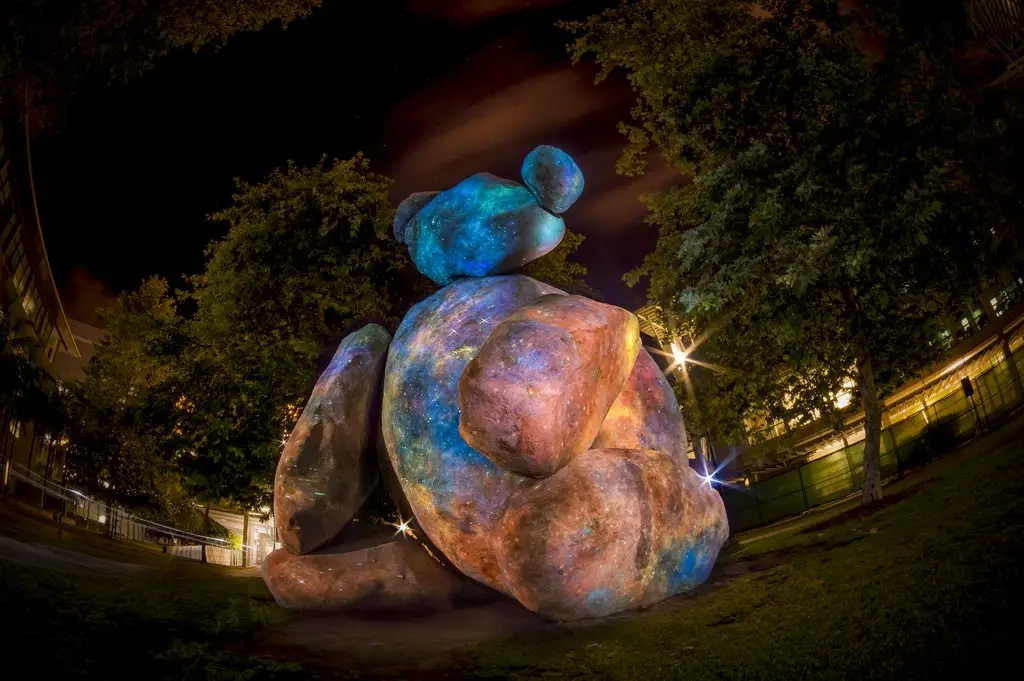
The arts also connect the campus to the global art world and diverse perspectives. Chief Campus Curator Jessica Berlanga Taylor recently curated the Mexico Pavilion at the 61st Venice Biennale, featuring RojoNegro, the collective formed by Noé Martínez and María Sosa. The collective will unveil a compelling new permanent installation for UC San Diego’s celebrated Stuart Collection later this fall.
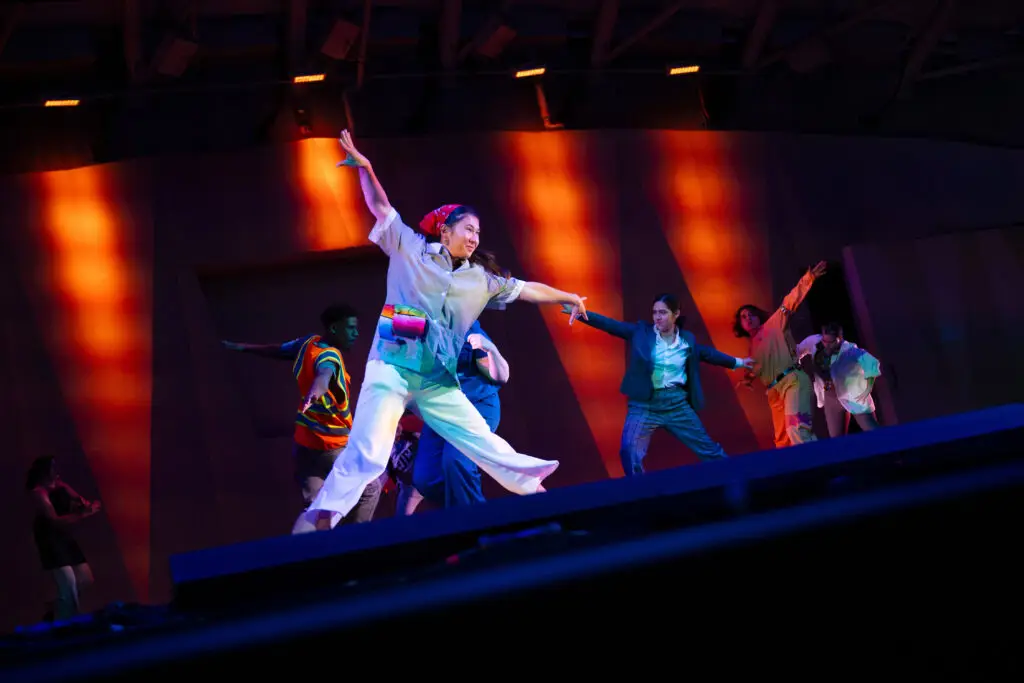
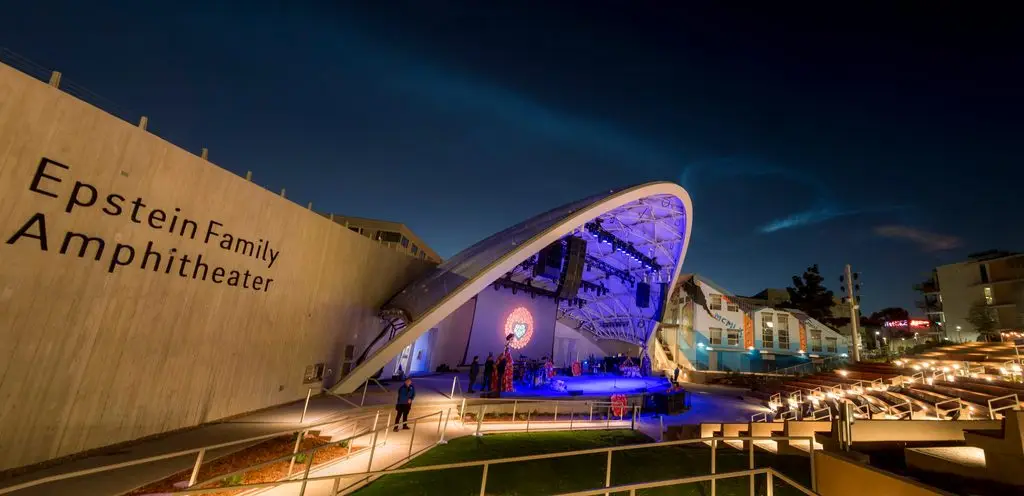
ArtPower offers another easy entry point, bringing touring performers to venues including the outdoor Epstein Family Amphitheater and the intimate Loft. The nearly three dozen performances featured through its 2026-2027 season span music, dance, film, theater and conversation.
Among the fall highlights is Ghostbusters in Concert on Sept. 25, pairing the beloved 1984 film with a live performance of Elmer Bernstein’s score. Tickets start at $35, and the amphitheater is located next to the UC San Diego Blue Line trolley station.
“Every member of our community should have access to world-class art, so we work hard to remove the barriers that stand in the way,” says Colleen Kollar Smith, executive artistic director of the Campus Performances and Events Office. “That means affordable ticket prices, and performances, voices and experiences where people see themselves reflected on stage and know they belong.”
The arts at UC San Diego are not only something to watch. The Craft Center offers public classes and workshops in ceramics, jewelry, woodworking, culinary arts and even surfboard shaping. At the new Glass Center, beginners and experienced makers can explore glassmaking through classes, demonstrations and studio experiences.
Whether you want to attend a performance, make something yourself or spend an afternoon exploring public art, there is an easy way in. And the invitation extends well beyond students and alumni.
Kollar Smith says it best: “Visit, participate, spectate or create. You’re invited, and we hope you’ll connect with us soon.”
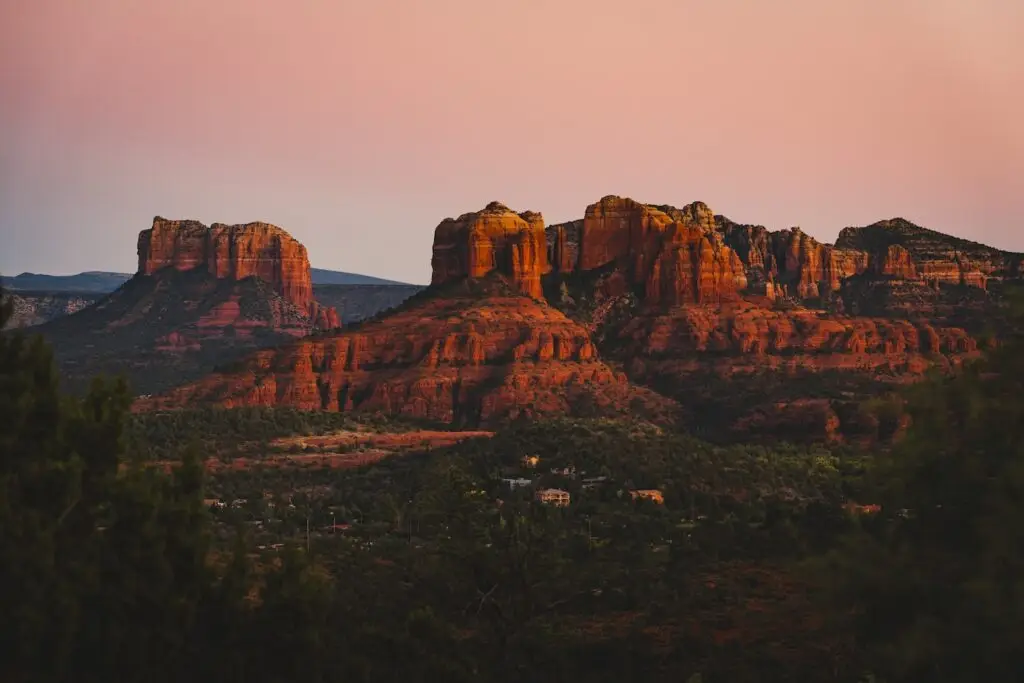
Yolanda Curtis’ straight, auburn locks fall past her shoulders and over her multihued poncho; mala bead bracelets wrap around her wrist. She’s not the only riot of color in this place: Oak Creek Canyon’s soaring red rocks encircle us. Green desert flora—Ponderosa pines, sycamores, agave plants, juniper trees—stand like middle fingers to winter. And, if Curtis is right, I’m enveloped in a kaleidoscope, too, with white, purple, and blue auras orbiting various parts of my body.
“I spent a lot of time down [on your feet] because it felt like you need to connect to the Earth more,” says Curtis—a mystic, artist, and healing facilitator—after our one-hour reiki session, where she hovered her hands over me with the intention of moving what practitioners call “universal life force energy” through my body.
She’s not wrong—grounding is why I, like millions before me, have come to Sedona. I headed here alone in search of emotional balance and stability, hoping to quiet my overly anxious mind that has led to years of insomnia and mental fatigue.
Apparently, Curtis can sense that, too. “It [feels] like you get in your head a lot. When you’re in your head, you’re cutting off your spirit in a way,” she says. “The next time you’re in your head, just take a moment to clear your mind.”
I’m hoping this trip will be full of those moments. According to the Chinese zodiac, 2025 was the year of the snake—a time to shed old habits and beliefs and embrace new paths forward. It seemed fitting, then, to board the one-hour flight from San Diego to Phoenix, then make the two-hour drive to Sedona, an area known for its regenerative energy.
For centuries, Sedona’s striking formations and expansive desert scenery have been the backdrop for those seeking restoration and a higher power. From about 650 to 1400 CE, the region that is now known as Sedona was inhabited by the Sinagua Indigenous peoples. Their art—specifically pottery such as Mogollon-style pots with distinctive “kill holes” (often found in burials)—suggest ritualistic practices.
Doe Mountain | Courtesy City of Sedona
Later, Hopi, Yavapai, Apache, and Navajo tribes made their way to Sedona and regarded its red rocks as spiritually significant, incorporating them into their narratives and ceremonies. When early European American settlers inhabited the region (between 1876 and the 1950s), ranches and orchards popped up throughout Sedona’s landscape—though it still retained its Wild West feel.
In the late 1940s, the area’s scenic beauty drew in artists and, later, mystics like real estate agent Mary Lou Keller, who proclaimed the ranching town a global center of spiritual energy and founded the supernaturalist “Church of Light” in her office. While this may have been a savvy marketing ploy to attract more buyers, the New Thought movement—characterized by spiritual exploration and metaphysical practices—emerged.
In the 1980s, Page Bryant, a psychic and spiritual teacher, popularized the area’s Airport Mesa, Bell Rock, Boynton Canyon, and Cathedral Rock as “vortexes,” or “energy spots” said to elicit feelings of calmness, emotional clarity, and physical tingling.
Spiritualists had a new home. Wellness and yoga retreats (like Enchantment Resort, founded 1987), energy healers, and mindfulness workshops (the 1987 Harmonic Convergence, hosted by José Argüelles, was among the first globally recognized meditation events) began popping up across the county.
Today, roughly around 750,000 of Sedona’s three million annual travelers visit for spiritual or wellness reasons.
“When I first came to Sedona, I kind of felt like I was being electrocuted energetically,” Curtis says. “It doesn’t always affect everybody like that. It’s just that I’m really sensitive. So everyone feels the energy differently.”
Courtesy of Yolanda Curtis
After growing up in the mountains of Utah, Curtis spent her early career in Los Angeles in the fashion industry. “I went through a healing crisis when I was in LA and it forced me to tap into these energetic, holistic ways of healing ourselves,” she says. “It brought me closer to my connection to this kind of higher power.”
She moved to Sedona a few years later to begin training as a guide and healer. Like her, I’m in search of the area’s cosmic answers. I’m not camped out in a self-made yurt in the red dirt, though—I prefer my spirituality to have a higher thread count.
From the rooftop deck of my room at the adults-only Ambiente hotel, Curtis’ energy cleansing session starts to tickle my mind. She read me in a way that felt like she’s known me for years. Is this the energy?
Nicolle Monico is an award-winning writer and the director of creative projects, digital editor for San Diego Magazine with more than 19 years of experience in media including Outside Run, JustLuxe and The San Francisco Chronicle.
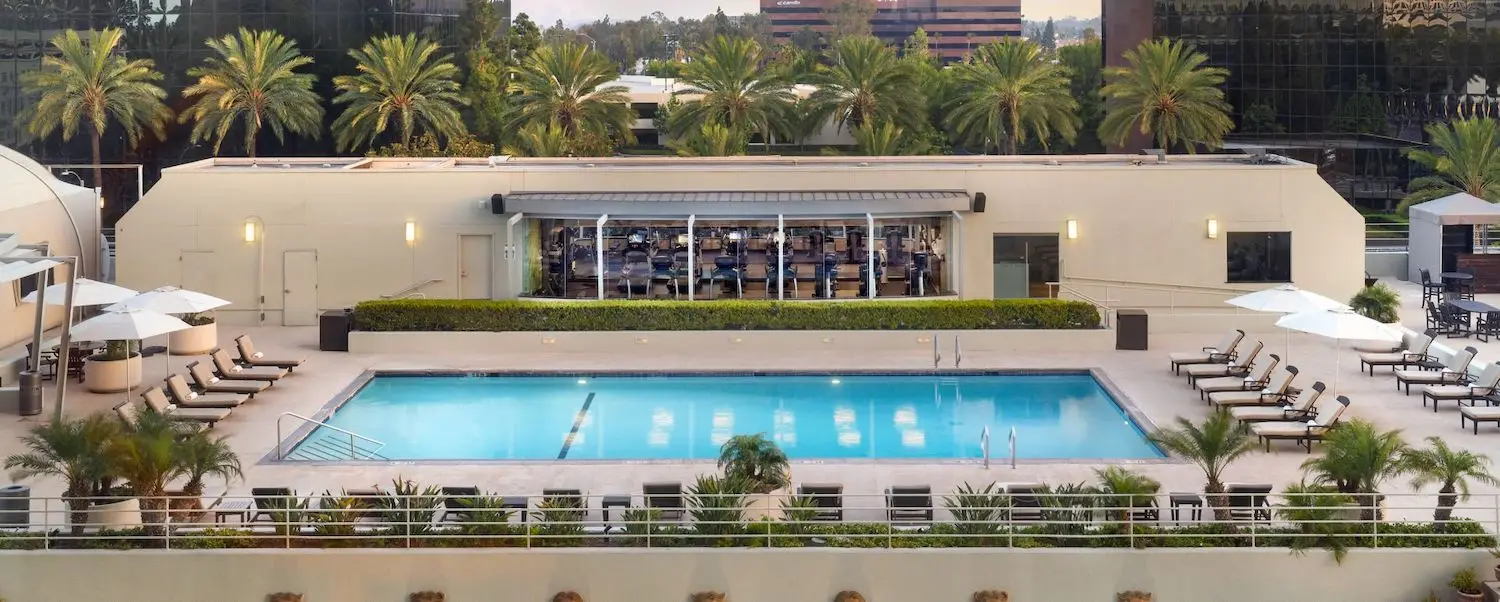
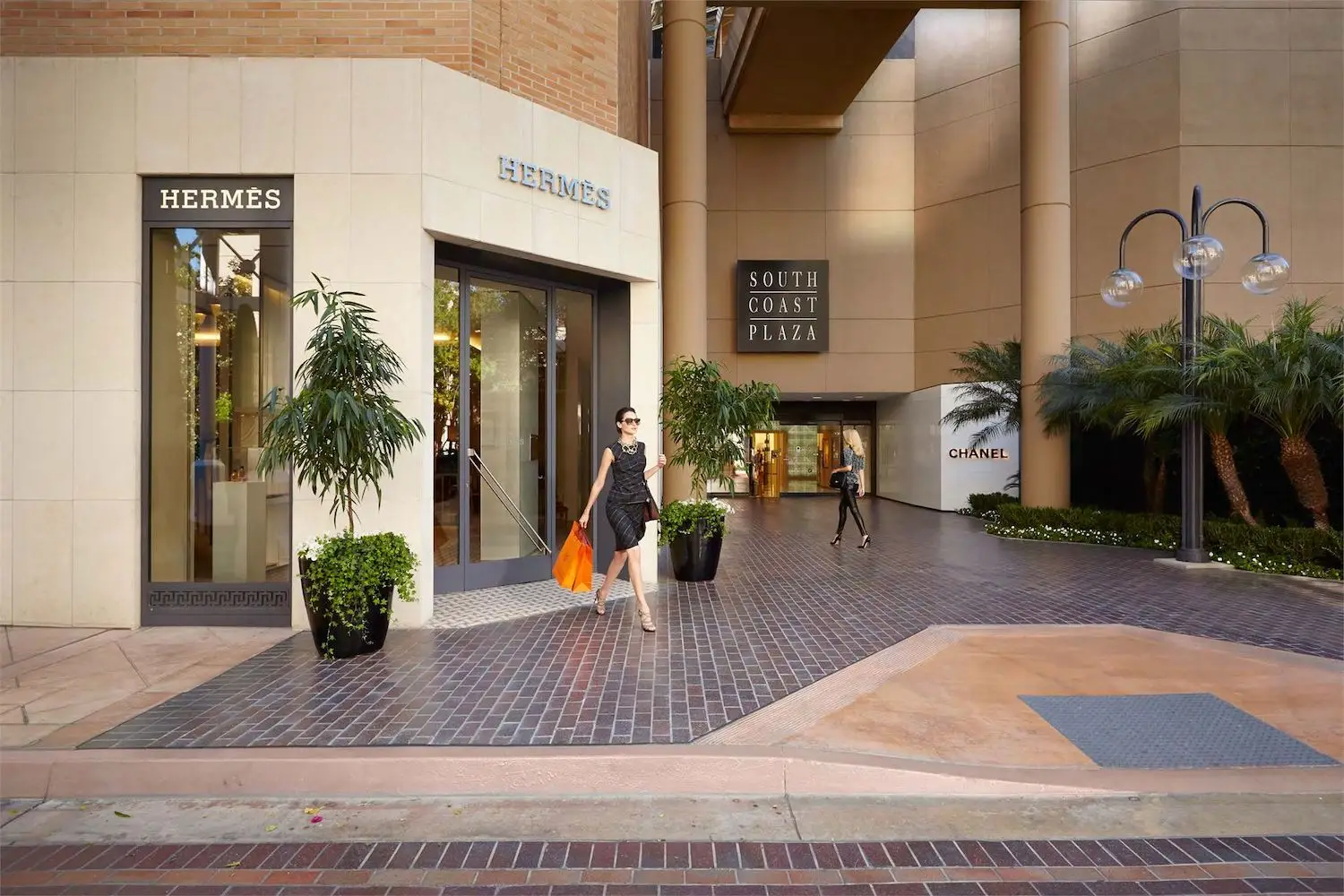
I’m standing in a hotel lobby with a carry-on suitcase packed with three pairs of flats, two pairs of heels, a dress I hope isn’t wrinkled for TheNutcracker later, and a handful of outfits perfect for wandering a multi-story mall. Light Christmas music floats through the air, mingling with the scent of pine and the gentle hum of holiday chatter. The lobby of The Westin South Coast Plaza in Costa Mesa is dotted with festive vignettes: a twinkling tree here, a cozy red-ribboned seating nook there, and even a mailbox for letters to Santa. I glance down at my boyfriend, his backpack-size suitcase at his feet, and silently question whether I truly needed all this.
Then, a couple glides past us: he in a maroon suit, she in a matching floor-length velvet dress, both stopping for a quick drink before TheNutcracker. I know instantly I made the right call.
Courtesy of Marriott The Westin South Coast Plaza
I’d heard of South Coast Plaza before—my boyfriend, a UC Irvine alumni, swears it’s the best mall in California—but I’d never had the chance to explore it for myself. By chance, the weekend doubled my birthday getaway, making it feel perfectly serendipitous.
We’re greeted by the hotel receptionist with a warmth that matches the lobby’s glow, informing us that our room awaits on the 15th floor, overlooking the city. From our window, it spreads below us, a sky of lights crowned by a towering Christmas tree. To the right, the Segerstrom Center for the Arts; to the left, the sprawling luxury of South Coast Plaza.
Courtesy of West Coast Plaza
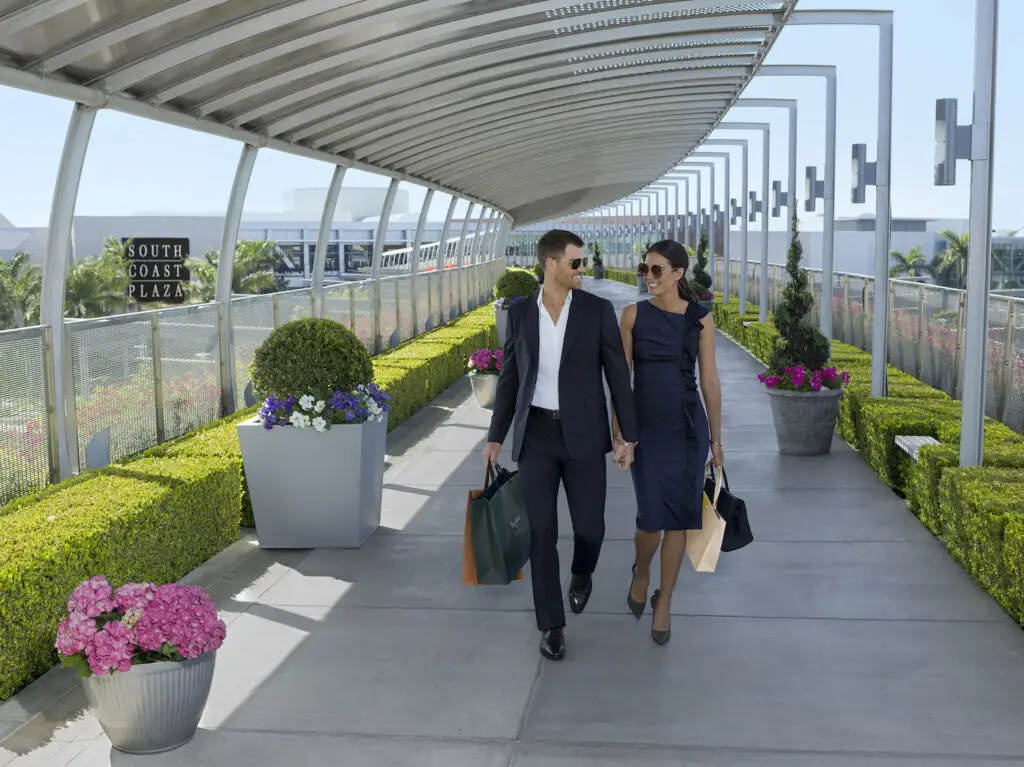
A note to overpackers: it’s never too much. My boyfriend realizes he has nothing to wear, but luck is on our side. South Coast Plaza houses over 280 upscale shops, from Harry Winston to Zara Man, Dior Beauty, and Max Mara. We weave through boutiques and storefronts, leaving with a polished outfit for him—socks and shoes included.
Dressed and ready, I slip into my black long-sleeve, ballerina-esque dress with white heels and a red bag, while he looks freshly pressed from head to toe (thank you, H&M). The short walk to Segerstrom Center for the Arts feels like a scene from a Hallmark movie.
Courtesy of Segerstrom Center for the Arts
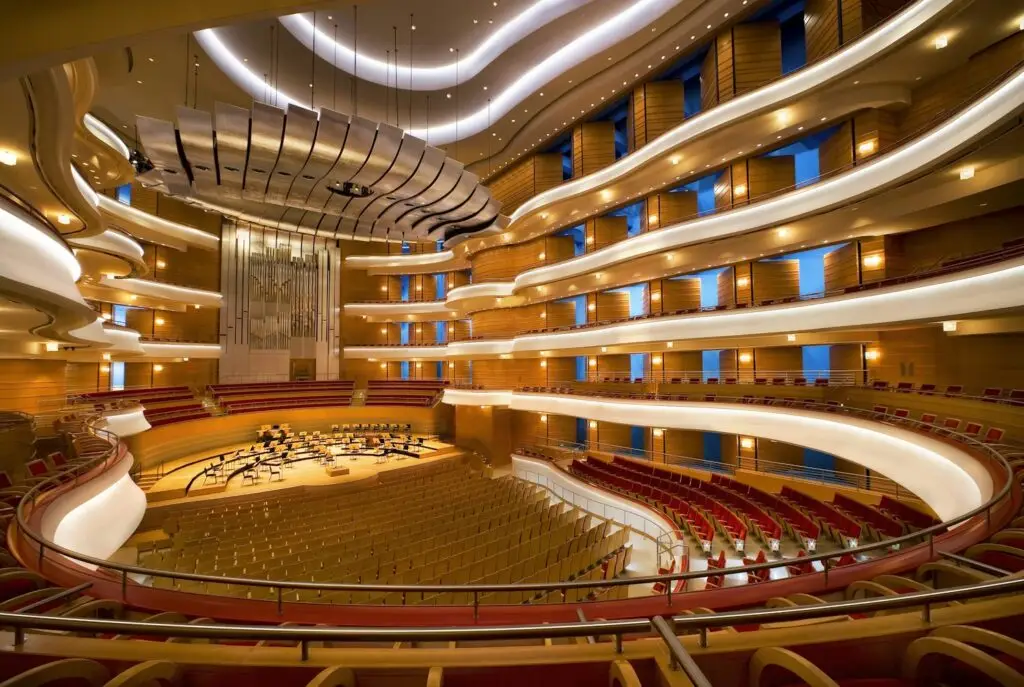
Segerstrom Hall, with its crimson interior and 3,000 seats, has welcomed the world’s greatest dance companies, Broadway productions, and operas since 1986. Until Dec. 23, Segerstrom Hall’s 8,500-square-foot stage transforms into a sparkling winter wonderland for The Nutcracker, where dancers soar and twirl with precision and the Tchaikovsky score fills every corner. Outside, fountains ripple alongside the Palm Collection, a curated botanical display of 87 unique palms celebrated for their diversity.
Post-performance, we attend the cast’s after-party and learn about the mall’s nearly 60-year history as a West Coast luxury landmark, its dedication to the arts, and its continuous innovations to ensure guests keep coming back for much more than just shopping.
Courtesy of Knife Pleat
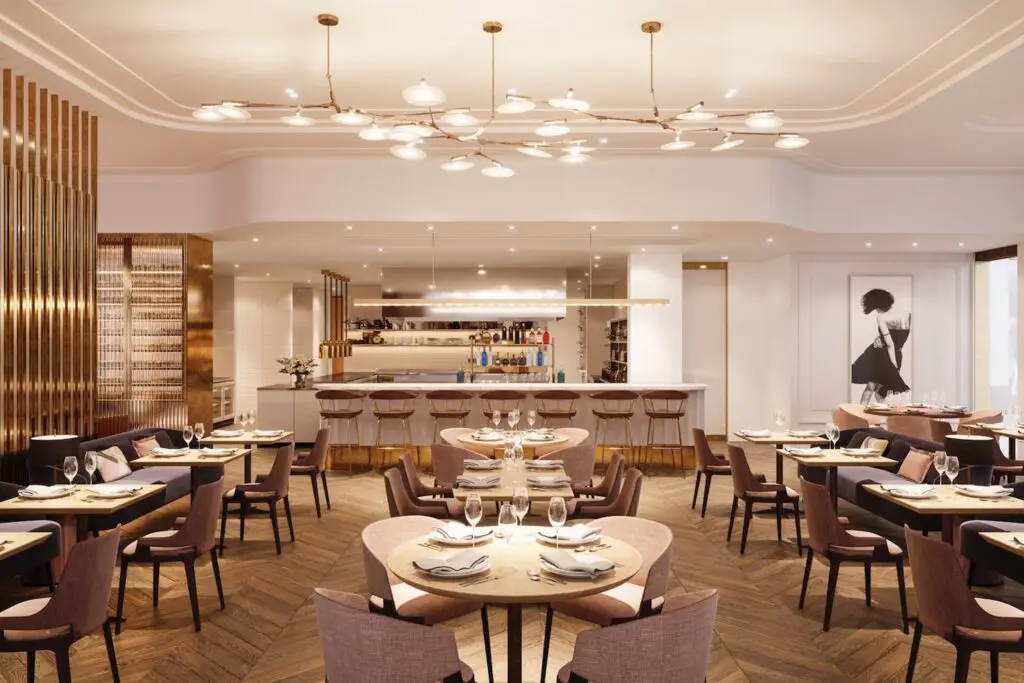
The next morning, the hotel offers breakfast in the Great Room, but we make the tough decision to skip it. We somehow have bigger plans. Holiday tea at Knife Pleat, the Michelin-starred restaurant just across the way, awaits. Seasonal, beautifully plated, and thoughtfully executed, it reminds you that South Coast Plaza is as much a dining destination as it is a shopping one.
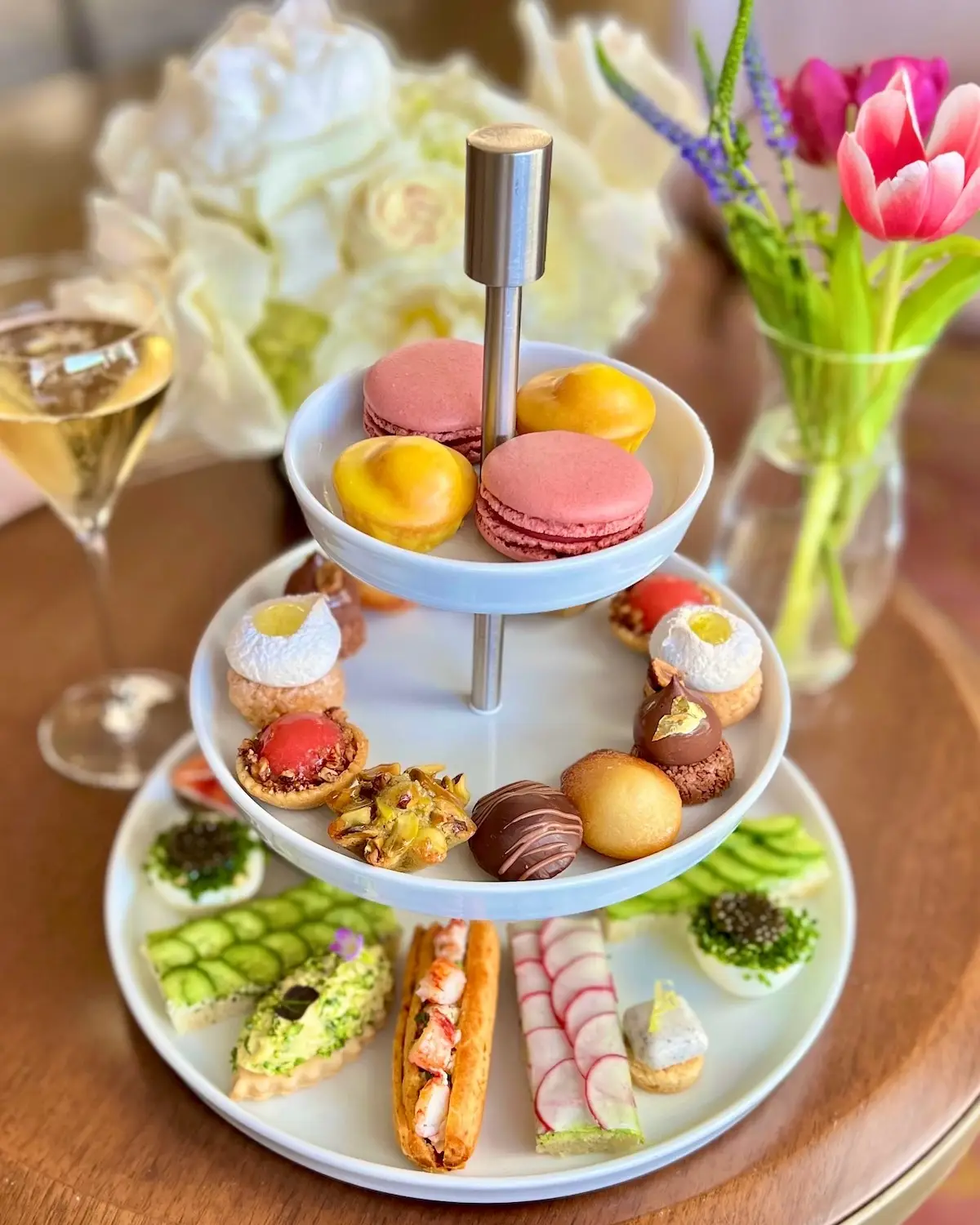
Knife Pleat’s Holiday Tea begins with caviar, pomme gaufrette, toasted brioche, and silky scrambled eggs with chives, followed by a tiered tower of savory and sweet bites—from Persian cucumber with herb cream cheese, squash buckwheat tartlet, deviled eggs with smoked trout roe, and Maine lobster éclair, to orange-glazed spice cake, peppermint macarons, pistachio financier, and tropical choux. We devoured it entirely (not as gracefully as we should have, but it was too good to care).
Courtesy of Knife Pleat
We also meet chef Tony Esnault along with his wife, restaurateur Yassmin Sarmadi. Behind the scenes, the kitchen is stacked with top-tier talent, the freshest locally sourced ingredients, and a service staff who never let our teacups run dry.
Courtesy of Visit Buena Park
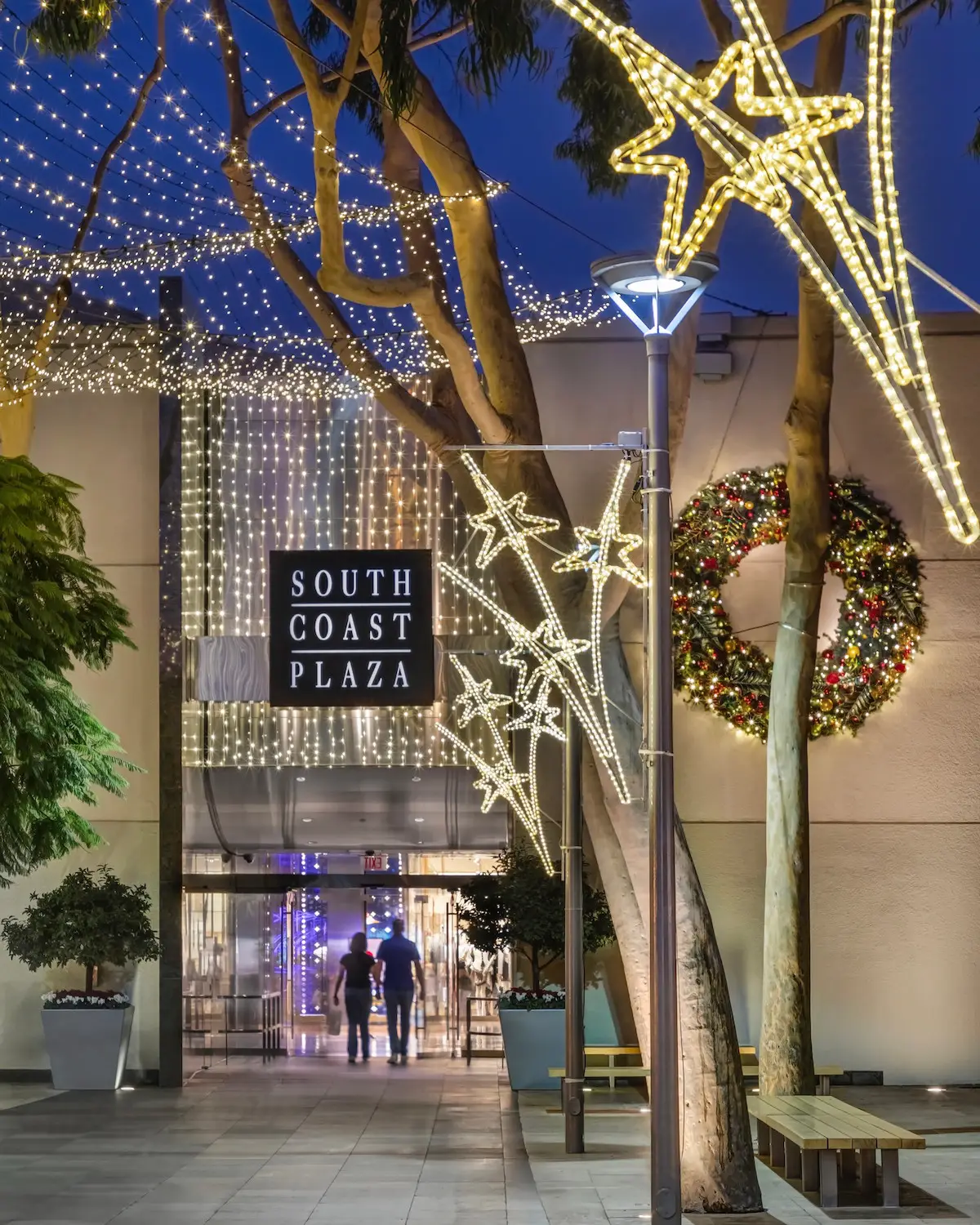
Stomachs far too full, we wander the mall again, exploring the newest additions—Manolo Blahnik, Skims, Bottega Veneta—and soaking in the curated holiday displays: two story-tall Christmas trees, Santa workshop setups, and garlands lit along every railing. And, just when you think they have every store imaginable, you turn a corner and discover a niche shop you didn’t even know existed in a real-life mall.
On the drive home, I’m already plotting my next escape, maybe dinner at one of South Coast Plaza’s trendiest spots like Water Grill or a return for a concert at the Renée and Henry Segerstrom Concert Hall. I’ll give it to my boyfriend… South Coast Plaza is an insane mall. But it’s more than that. It’s an experience that blends luxury, culture, and the quiet thrill of discovering something new, just a car or train ride from home.
Isabella Dallas is a freelance writer for San Diego Magazine and the Arts and Culture Editor at The Daily Aztec in her final year at San Diego State University. She previously worked as an editorial intern for SDM, but when she’s not writing, you can find her trying the best coffee spots in SD, devouring the latest rom-coms, and indulging in anything and everything pop culture.
Visit Tuolumne County to Find the Unmistakable Spirit of Fall and Winter
Take a refreshing trip to Tuolumne County, where your senses will get their fill and your wallet will stay full with off-peak accommodation prices
Gold Country Columbia Stage Coach.jpg
It’s that time when all of your senses are awakened by the unmistakable feel, sights, tastes, smells, and sounds of fall and winter. Experience them all in Tuolumne County in Northern California! Discover a different side of Yosemite National Park in the quieter and less crowded destinations. Watch as history comes to life with local tales and vibrant colors in Gold Country. Temperatures are dropping, but cooler adventures are found on the trails and slopes of the High Sierra and at unique events throughout the County.
Take a refreshing trip to Tuolumne County, where your senses will get their fill and your wallet will stay full with off-peak accommodation prices.
Find Serenity in Less-Crowded Yosemite National Park and Surrounding Area
Yosemite
Yosemite has quieted down, and now’s the time for national park adventures and new explorations. Find yourself in awe as you take in the sights among the giant sequoias backdropped by colors of maples and dogwoods and maybe some glistening snow in the Tuolumne Grove of Giant Sequoias. Or, hike around stunning Hetch Hetchy Reservoir.
Wander in Groveland, outside of Yosemite, and enjoy a warming pumpkin spice latte or a one-of-a-kind seasonal brew. Feel like shopping? Pop into some of the unique shops in town to find gifts and seasonal decor to bring home.
Discover an Era Past in Gold Country
Gold Country Jamestown – Railtown SHP Roundhouse-3.jpg
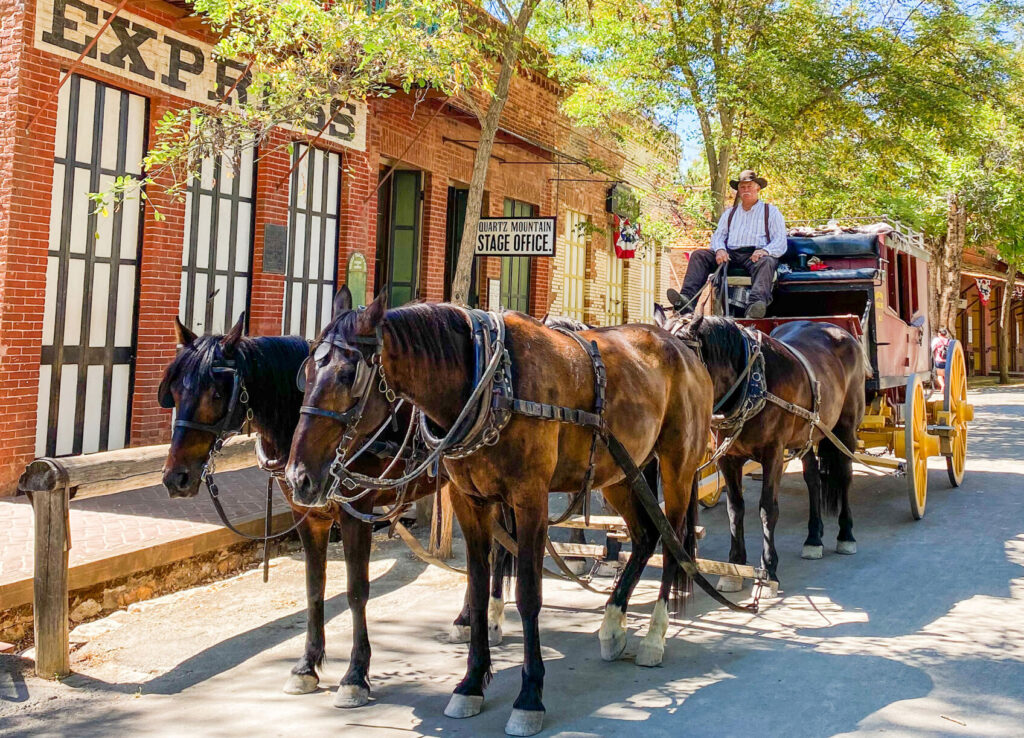
Explore Gold Country starting with the nooks of Columbia State Historic Park, and let your eyes and nose lead you into candle, candy, and provisional shops where their seasonal creations will warm your heart. Listen for clanging from the blacksmith shop or clinking of the authentic stagecoach as it enters town.
In nearby Jamestown, become immersed by the smells, sounds, and sights of Wild West railroad culture at Railtown 1897 State Historic Park, and stroll down Main Street where you’ll find shops, restaurants, and inns housed in picturesque historic buildings.
In Downtown Sonora, you’ll find many shops and restaurants located in historic buildings; as you step inside, you’ll see some interiors are left to show the architecture of 150 years ago. Also, take in a show at the Gold Country’s premier theater company, Sierra Repertory Theatre.
Reach the Mountain Tops in the High Sierra
High Sierra Ski_Photo Credit-Dodge Ridge Mountain Resort.jpg
High Sierra adventures await where brisk mountain breezes are the perfect excuse for a cozy sweater. Take a hike along the Pinecrest Lake Loop Trail, and catch unreal views of changing leaves set against rugged granite mountains. Feel the invigorating wind in your face as you ski, snowboard, or snow tube down glorious mountain sides.
Visit the nostalgic mountain town of Twain Harte and enjoy a relaxing stroll to find some fun fall fashions or handy cooking gadgets to help with upcoming holiday cooking or gift giving.
Stir Up Your Seasonal Cheer
Events Sonora Christmas Parade.jpg
Seasonal cheer is found in every town throughout Tuolumne County. Events include Fall Fest at Indigeny Reserve in Sonora and Harvest Festifall in Columbia State Historic Park in October. The night-time Sonora Christmas Parade, the night after Thanksgiving, and the sights and activities of Christmas Town Sonora delight all ages. The Polar Express departs Railtown 1897 State Historic Park for the North Pole on weekends following Thanksgiving.
Plan Your Trip to Tuolumne County
Rush Creek Lodge
You’ll need a place to stay during your visit. Pick from mountain resorts, historic inns, cozy vacation cabins (perfect for gathering the family), distinctive B&Bs, and full-service RV parks.
Start planning your vacation with the help of travel inspiration and information delivered directly to your mailbox. Request your FREE Tuolumne County Travel Guide at VisitTuolumne.com today. Or, call the Visit Tuolumne County team at 209-533-4420.