
Featured articles
Featured articles
Featured articles
What's next
Featured articles
Featured articles
Featured articles
Ready to know more about San Diego?
SubscribeReady to know more about San Diego?
This week's local real estate news

A blighted downtown block is about to get a major makeover, and we’re excited, since this is happening right in San Diego Magazine’s neighborhood.
Zephyr Partners is getting ready to break ground on Broadway Block, a development of two high-rise residential towers that will take up the entire block between Broadway and C Street, and Seventh and Eighth avenues.
The main tower will be 41 stories high, the second 21 stories. The towers will house 498 residential units and sit atop a six-story podium. Designed by locally based Joseph Wong Design Associates, the property will have a 25,000-square-foot “sky garden” on the seventh floor, and a common deck on the 30th floor. Lots of new retail space—19,000 square feet of it—and 960 underground parking spaces are also in the works.
The estimated cost of the project is a cool $250 million.
“The site spans a full city block, and is one of the few remaining underdeveloped areas in downtown’s core,” Brad Termini, Zephyr CEO, said in a statement. “After studying the layout of other major urban areas such as Los Angeles, San Francisco, and Seattle, we think this project will accelerate the transformation of downtown San Diego, as it continues to evolve into a more walkable and accessible neighborhood.”
Termini said the block had fallen into disrepair. Many of the existing buildings and retail spaces—which were built in the 1950s—are vacant, like the former Super Discount & Food on Broadway and Seventh.
Termini didn’t give a specific date for the groundbreaking, only saying that he’s “excited to get the project started as soon as possible.”
What shops and restaurants would you like to see move into Broadway Block? Tell us in the comments!
$250M High-Rises Coming to Downtown, Roppongi Closes in La Jolla
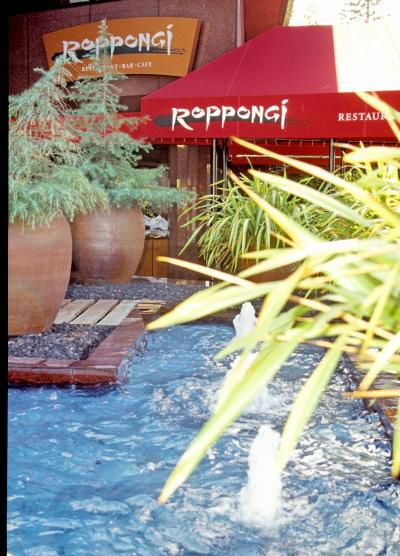
Roppongi restaurant
Roppongi, an Asian-fusion and sushi restaurant that had been on Prospect Street for 17 years, closed earlier this week without notice.
Owner Sam Ladeki, who is also head of local chain Sammy’s Woodfired Pizza, told Eater business was dwindling and that he may reopen the restaurant in a new location.
Ladeki said the restaurant climate in La Jolla is changing. Amici’s East Coast Pizzeria and Bijou French Bistro, also located on Prospect Street, closed earlier this year. Meanwhile, newcomers Catania and Galaxy Taco are thriving in the neighborhood, and there’s been a lot of buzz on the opening of Duke’s La Jolla.
Is the southern stretch of Prospect Street just a tough spot for restaurants?
“As a general rule, restaurants on Prospect Street without a view of the ocean have always seen significantly lower sales volumes than their neighbors with views of the water,” says Mike Spilky, president of real estate firm Location Matters.
“The recent restaurant closures have all been from uninspiring or old, stale restaurant brands,” Spilky says. “Going up against the challenges of parking and a stigma locals have for Prospect Street, a restaurant must really have a special offering to draw the local crowd to this area.”
Spilky is also the leasing agent for 909 Prospect, a property that has had its share of struggles with restaurant tenants ever since the Hard Rock Café closed. A new landlord is looking to divide the Hard Rock’s former space—which is 8,000 square feet—into three separate areas and plans to modernize the building.
There’s controversy surrounding CH Projects’ newest Little Italy venture, and this time it has nothing to do with the company’s refusal to serve vodka or ketchup at any of its bars and restaurants.
CH Projects wants to spend $2.5 million to transform the old Nelson Photo Supplies building on the corner of Fir and India streets into a two-story restaurant with rooftop seating, calling the project its most ambitious restaurant to date. The San Diego Regional Airport Authority reviewed the plans and initially said no. What seemed like a straightforward land-use issue then became complicated, as two local politicians got involved in petitioning for and against the restaurant’s development.
The Port of San Diego is asking for ideas on how to transform Harbor Island. The agency formally issued a request for proposals from developers regarding what it should do with 57 acres on the island’s eastern portion.
In August, the California Coastal Commission had rejected Sunroad Enterprises’ plan to build a hotel in the area because of a mandate that requires affordable lodging along the waterfront.
Do you think Harbor Island should be redeveloped? Tell us in the comments!
The City of San Diego want its new fire station in north University City to be adorned with public art, and has put out a request for artists to apply for the project.

$250M High-Rises Coming to Downtown, Roppongi Closes in La Jolla
Broadway Block is bringing more luxury high rises to downtown. | Image courtesy of Joseph Wong Design Associates
We found a handful of inspiring people who live in, and truly know, these 'hoods and asked them how they’d spend their time out and about
Growing up in Carlsbad, I never quite understood why people vacationed there. What, so you want to check out the field where I have soccer practice? Pay my orthodontist a visit? Carlsbad just felt like a town by the beach, no better or worse than any other in the country. It took going to college out of state for me to actually understand just how rare a place like Carlsbad is.
Thanksgiving break my freshman year, my first time coming home after three months in the Midwest, my shoulders dropped. I rolled down the windows and drove to lifeguard tower 37—the hangout magnet for Carlsbad’s youths (and, in the summer, tourists)—and the smells of the ocean woke me right up like smelling salts do. I finally got it.
Carlsbad isn’t just a stopover town on your way to something better. It is the destination. Travel + Leisure named Carlsbad one of the top 50 places around the world to travel in 2026. From the whole globe, the travel magazine picked my home. Sure, we’ve got the Flower Fields and Legoland—but now it’s the smaller ships and indier dreams that are giving it street-level character.
It’s not just Carlsbad, either. People have talked about the “North County bubble” for decades—a force field that prevents its residents from traveling south of the 56. It’s often used derogatorily, and it’s a fairly accurate burn.
For decades, living up in North County meant giving up on culture, or at least culture within close proximity. But now, the main expansion of San Diego culture is happening up north. Central San Diego restaurants have started taking notice and are expanding into the area—spurred no doubt by Oceanside’s food boom and the Jeune et Jolie–Campfire–Wildland–Lilo constellation in Carlsbad. City Heights burger joint Key & Cleaver opened a new spot in Oceanside; the owners of Parc Bistro-Brasserie in Bankers Hill opened Parc Lounge in Rancho Santa Fe. Possibly the strongest market indicator is that Sam Fox—one of the most successful restaurateurs west of the Rockies—has started focusing on North County for his concepts. In 2025, he opened both The Henry in Carlsbad and Culinary Dropout in Del Mar.
For the ultimate insider guide, we found a handful of inspiring people who live and create and truly know six North County neighborhoods—San Marcos, Escondido, Oceanside, Leucadia, Rancho Santa Fe, and Vista—and asked them how they’d spend a dream day out and about in their town.
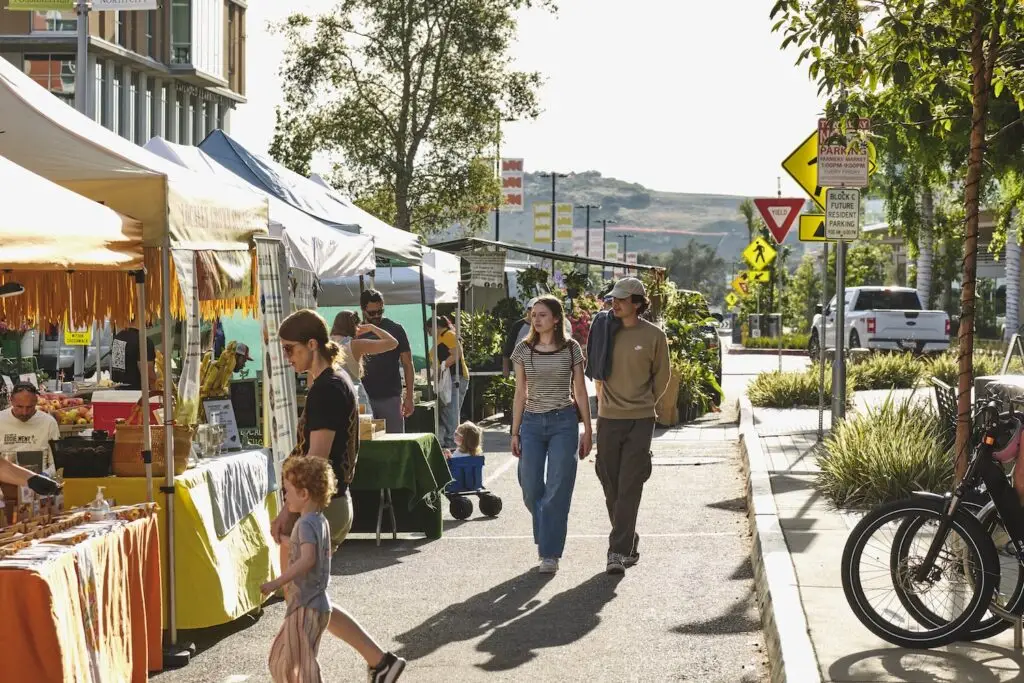
San Marcos is in full renaissance mode. The biggest story is that the grand North City vision is starting to peek through the scaffolding. It’s essentially the North County Downtown that’s been written in the tea leaves and discussed whenever someone gets stuck in traffic at the 5/805 merge: a 200-acre, pedestrian-friendly, mixed-use face-changer that’s slated for 2,600 homes, 350,000 square feet of retail and restaurants, 250 hotel rooms, and about a million square feet of offices and labs. Its most recent manifestation is 222 North City—a 12-story residential tower with over 450 residences, rooftop garden, pool cabanas, art installations, and almost 20,000 square feet of ground-floor retail (Necessity Coffee, Buona Forchetta, Draft Republic, Milonga Empanadas, and a grocery store anchor on its way).
Which means Restaurant Row is no longer burdened with being the primary caregiver for the hungry or the socially inclined. Patricia Prado-Olmos has watched the city morph during her nearly three-decade tenure at CSUSM, having spent the past six years as the school’s chief community engagement officer. She also just announced her forthcoming retirement at the end of the 2026–2027 school year, so she’ll have even more time to haunt local haunts.
Those in the know call the university “Cal State StairMaster” from the Sisyphean amount of stairs on the hillside campus. So, any day at or around CSUSM should start with a homestyle carbo-load (biscuits and gravy) from Mama Kat’s.

“There’s something about this breakfast spot that immediately puts me in a good mood,” she says. Mama Kat’s is also known for its pie (strawberry-rhubarb), which is breakfast if you change your perspective.
After a few hours on campus—with a break to pet the university’s official therapy goldendoodle, Frank, who helps ease finals tremors or apprehension of on-campus stairs—Prado-Olmos will wander into North City, just steps away. She says the almond croissant and coffee at Christophe Rull Patisserie rival Parisian cafés: “It feels like the kind of place you’d stumble across in a much bigger city.”
Rull, a Michelin-trained pastry chef who’s done stints on Netflix (Bake Squad) and Food Network (Super Mega Cakes, Halloween Wars), opened his patisserie last fall. The hype hasn’t cooled off yet: Get there early because the crowds do.
Emma Veidt is an editor at San Diego Magazine. She earned her bachelor's and master's degrees from the Missouri School of Journalism. She loves running, hiking, and rock climbing, but really, she mostly loves encounters with the street cats around North Park.
Discover eateries, outings, and shops within this inland North County community
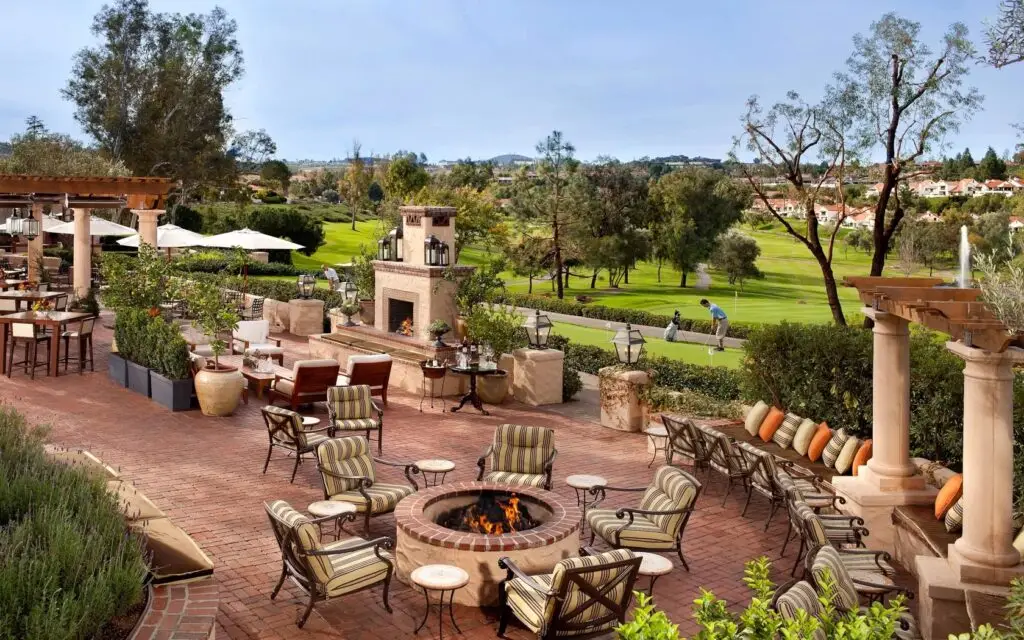
Just south of Lake Hodges near 4S Ranch and Poway, Rancho Bernardo is a suburban community that blends residential neighborhoods with industrial pockets, elevated by a decidedly diverse food scene.
Over 60 years ago, this North County neighborhood was once part of a family ranch. Since that time, big tech companies have taken up residence here, including Amazon, Sony Electronics, Oura Ring, HP, Teradata, and ASML. Rancho Bernardo Inn serves as a community hub, with locals frequently meeting at the hotel’s restaurants, golf course, and spa.
Whether it’s work or a round of golf that brings you to Rancho Bernardo, we’ve taken care of the agenda planning with our guide to the area’s best restaurants, activities, and shops.

Sample ingredients plucked straight from Rancho Bernardo Inn’s onsite garden and served at their signature restaurant Avant. One of the neighborhood’s most upscale dining options, they serve a French-inspired menu with nods to California, including many seafood options. Don’t miss their more casual sister restaurant Veranda for al fresco dining.
17550 Bernardo Oaks Drive
Wood-fired pizzas and handmade pastas are standouts at The Kitchen, Bernardo Winery’s counter-service restaurant specializing in Sicilian flavors. Charcuterie boards and bruschetta make for great starters or snacks while wine tasting.
13330 Paseo Del Verano Norte
Fast-casual and family-owned eatery Bushfire Kitchen recently opened a location in Rancho Bernardo, serving sandwiches, bowls, salads, burgers, protein plates, and housemade empanadas. Bushfire prepares comfort food with healthy ingredients, and offers plenty of vegetarian and vegan options.
11962 Bernardo Plaza Drive, Suite 110
Some might call The Cork & Craft an overachiever. This gastropub has an in-house craft brewery and winery: Abnormal Beer and Wine. The more, the merrier. Their sushi menu is definitely worth exploring, but don’t miss other specialties like garlic noodles, chicken wings, and pork belly.
16990 Via Tazon
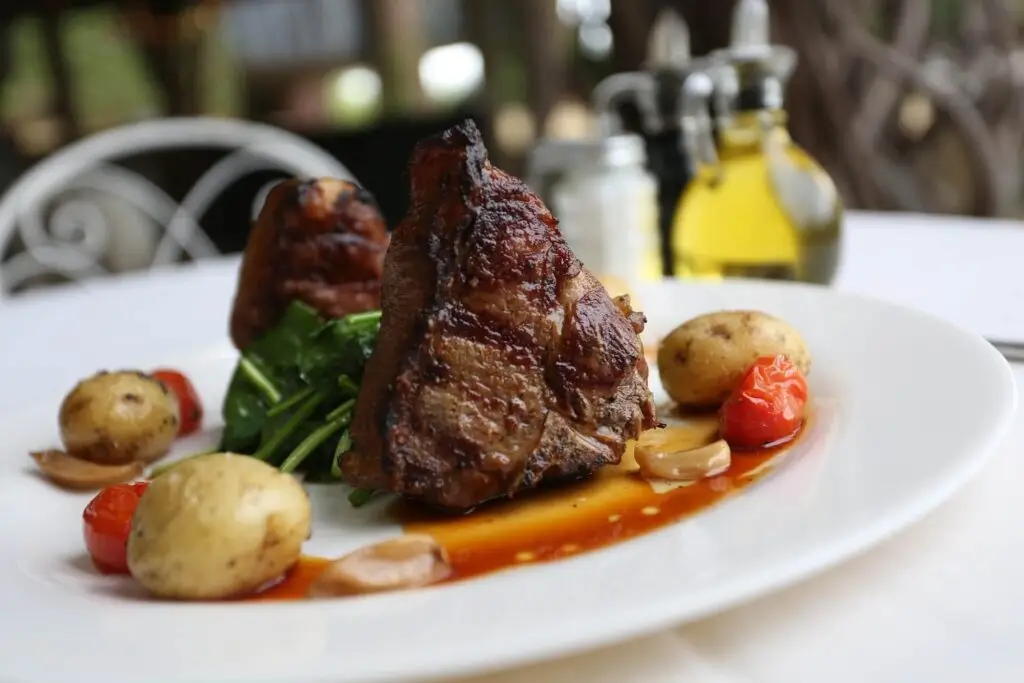
You don’t have to leave Rancho Bernardo to get a white tablecloth steakhouse experience. Carvers Steaks & Chops has prime rib (their best seller), filet, ribeye, porterhouse, New York strip, and other cuts, served alongside crab-stuffed mushrooms, wedge salad, French onion soup, potato skins, and other steakhouse specialties.
1940 Bernardo Plaza Drive
This no-frills Burmese restaurant is known for its traditional tea leaf salad that’s topped with sesame and sunflower seeds, garlic chips, peanuts, tomatoes, jalapeños, fried yellow beans, and fermented green tea leaf dressing. Tucked into a nondescript strip mall, Burma Place is a great takeout option when you want to eat garlic noodles, fried rice, chicken curry, and samosas from the comfort of your couch.
16719 Bernardo Center Drive, Suite A
Find authentic Vietnamese cuisine at Phở Ca Dao, including favorites like phở noodle soup, vermicelli noodles, broken rice dishes, and spring rolls. One of eight locations throughout San Diego, this family-owned chain uses robot servers for food delivery.
11808 Rancho Bernardo Road, Suite 100
It’s all about the sauce at fast-casual Mediterranean restaurant The Kebab Shop. Smothering your chicken shawarma, gyro, or falafels in garlic yogurt, cilantro jalapeno, fire chili, and dill yogurt sauce is practically a rite of passage. The hardest part is deciding whether to order a wrap, bowl, or salad.
11980 Bernardo Plaza Drive
Get a taste of South Asian flavors at Casa Lahori, a Pakistani restaurant noted for its grilled meat kabobs. Other best-selling dishes include beef nihari, chicken biryani, and shahi paneer— best enjoyed with naan bread.
11975 Bernardo Plaza Drive
Grill your own meat on the tabletop at Kangnam Korean BBQ, an interactive, all-you-can-eat experience that’s well-suited for large groups. Marinated beef bulgogi, grilled galbi short ribs, and spicy pork are served alongside traditional banchan dishes like kimchi, japchae glass noodles, and flavorful stews. Weekday lunch specials provide a nice discount on these filling meals.
11828 Rancho Bernardo Road, Suite 117–119
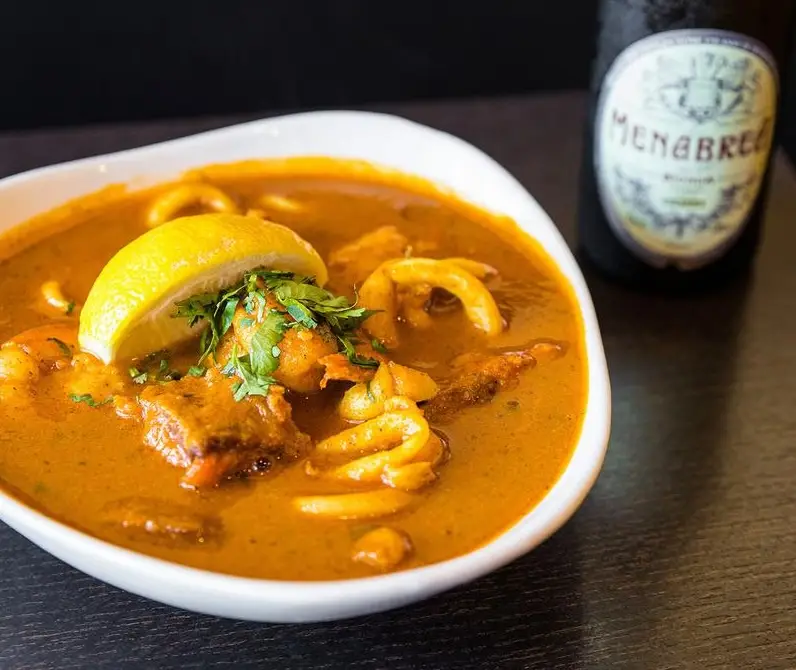
Dig in to your favorite curries and kebabs at Curry & More Indian Bistro. Most entrees are served with a choice of two side dishes, including basmati rice, potatoes with cumin, daal, naan, or mixed greens. Help offset the spice with one of their sweet mango or strawberry lassi drinks.
11808 Rancho Bernardo Road, Suite 123

Kai Oliver-Kurtin is a San Diego-based writer who covers travel, dining, events, and culture. Her writing has been published in USA Today, Condé Nast Traveler, Fodor's Travel, Marie Claire, and HuffPost, among others.
We asked, you voted, and food critic Troy Johnson chose his favorites—these are the top food and drink people and places in the city

Some keep lists of favorite books, of quotes, of enemies whose time shall come. At SDM we keep vast, nuanced, hotly debated lists of the best food and drink in the city. Menus are our smut novels. From Michelin stars to mom and pops, our list constantly evolves over hundreds of new bites tried every year. Here’s the 2026 list from food critic Troy Johnson and 129,000-plus votes from our readers, who really, really know their food.

Troy Johnson is the magazine’s award-winning food writer and humorist, and a long-standing expert on Food Network. His work has been featured on NatGeo, Travel Channel, NPR, and in Food Matters, a textbook of the best American food writing.
At Vi at La Jolla Village, residents don't have to choose between security and adventure, connection and independence. They get all of it.

Today’s seniors are more connected than ever, with a renewed focus on retirement as a time of discovery and enriching experiences. The ultimate reward for a retirement well-earned is the wisdom to appreciate it all, and what better place to enjoy that unique perspective than Vi at La Jolla Village, in the heart of San Diego.
All-access pass to good living.
As a Continuing Care Retirement Community (CCRC), Vi provides access to a connected and fulfilling community while making it easy to plan for future care, should the need ever arise. With a care plan in place, residents enjoy greater financial predictability and long-term value, freeing them to focus on making the most out of retirement.
Resort-style amenities at the epicenter of a cultural hub like San Diego offer a retirement experience unlike any other. Paired with exceptional dining, spacious accommodations and dedicated staff, the best of maintenance-free living is all around. And with the introduction of Vista 360 Well-Being, Vi’s panoramic approach to wellness, there are more ways than ever for residents to access it all.
The harmony of mind, body and community.

The key to longevity is striking the right balance in maintaining an active lifestyle with an active mind in a fulfilling community. With newly renovated community spaces and restaurants, Vista brings a variety of opportunities for residents to elevate their well-being through Vi-exclusive “Signature Experiences.”
Vista Enrich takes an evidence-based approach to brain vitality, keeping residents at the forefront of cognitive health through exergaming (exercising + gaming), nutritional plans and informative workshops. It is also home to The Brain Vitality Studio, an innovative facility dedicated to cognitive fitness that has garnered national recognition.
Vista Discover invites residents into stimulating educational experiences, from chef-led cooking demos and guided wine tastings to lectures at local universities and intimate lectures following cultural outings.
While Vista Enrich focuses on brain health and Vista Discover engages residents intellectually, Vista Explore cultivates a sense of adventure through curated travel and local excursions. But broadening one’s horizons doesn’t always require a plane ticket. One recent event brought a taste of the world right to the community: an onsite “jazz cruise” featuring live music and global cuisine served at a series of themed “ports” all within the community’s own ballroom.
“Location, location, location”

One of the biggest perks of life at Vi at La Jolla Village is its proximity to just about everything. With easy access to transportation and local attractions just steps away, residents can explore and engage with their community at their own pace.
“There are trolley and bus stops within a 5-minute walk that will get you to the beach, UCSD Campus, medical appointments, downtown La Jolla or San Diego, et cetera. We rarely use our car,” said resident Tom Yager.
With the best of San Diego just steps away, residents don’t just live in the city, they live within reach of everything that makes it special.
The best of all worlds.

At Vi at La Jolla Village, retirement isn’t a chapter to slow down; it’s an invitation to discover more. Tailored community experiences created by Vista, paired with the vibrant pulse of San Diego just outside the door, mean that residents don’t have to choose between security and adventure, connection and independence. They get all of it.
This is what an all-access pass to good living looks like: the comforts of an elevated lifestyle, a community built for growth and a city made for discovery – all in one place.
To learn more about Vi at La Jolla Village or for details on available floor plans, visit ViatLaJollaVillage.com/SDM.
This historical East County community offers numerous hikes, family-owned shops, and a slower pace of life.
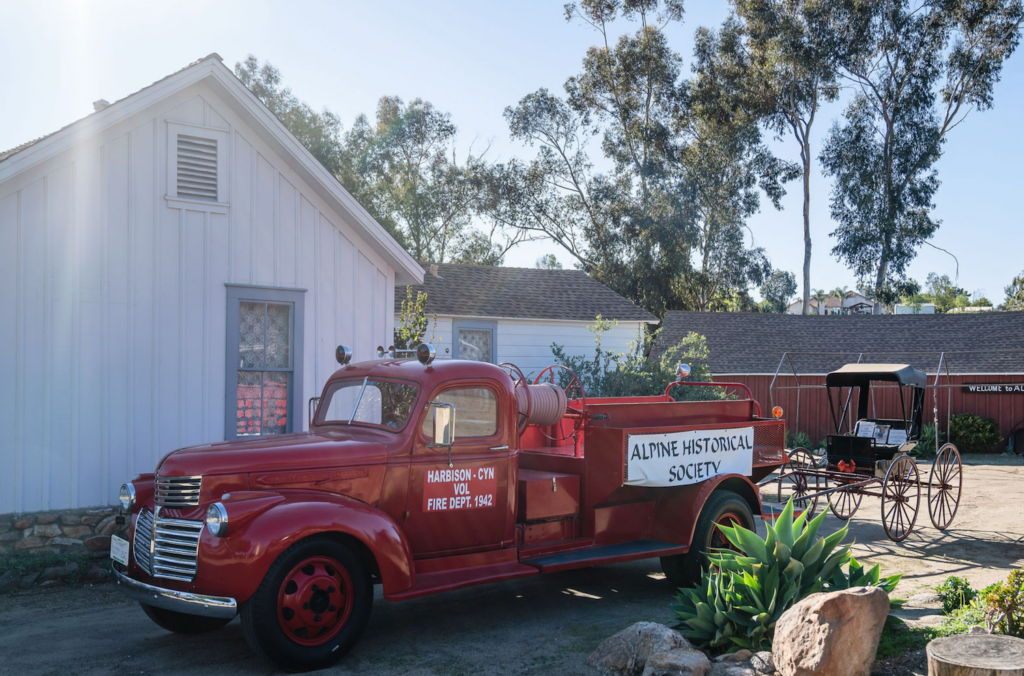
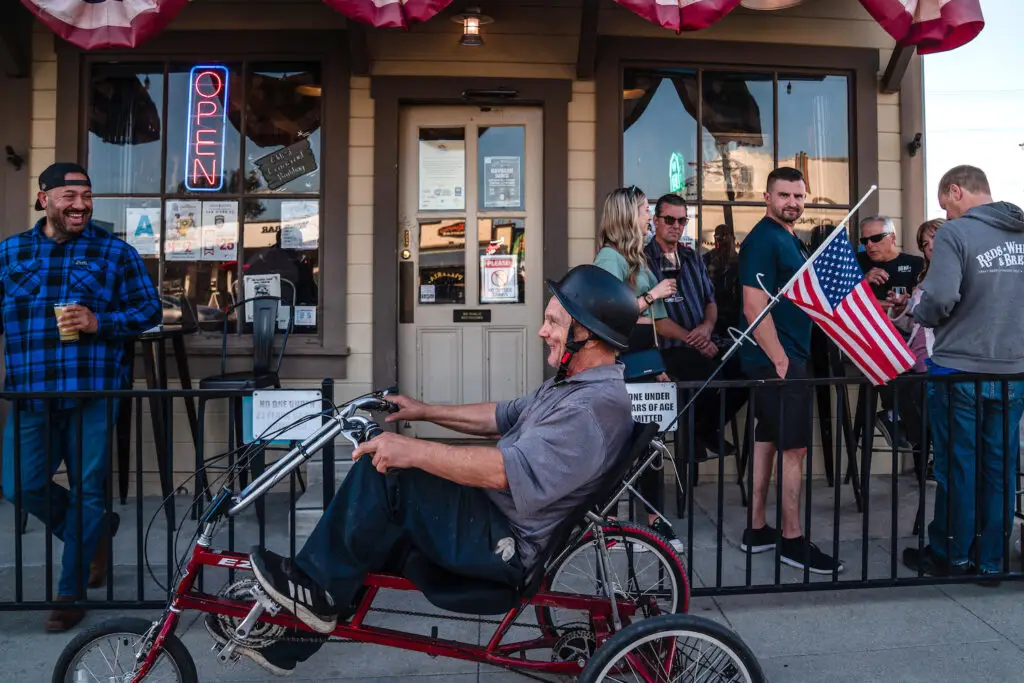
You don’t have to go far to get your forest fix in San Diego County—just take the 8 East past El Cajon and gain altitude in the Cuyamaca Mountains and you’ll hit Alpine, a quasi-rural community of 15,000 with sweeping views. Surrounded by national forest land and two reservations and perched at 2,000-feet elevation, Alpine is only about 30 miles east of downtown San Diego, perfect for a day trip when you’re in the mood for a small-town outing (or a stop along the way to the desert or Viejas).
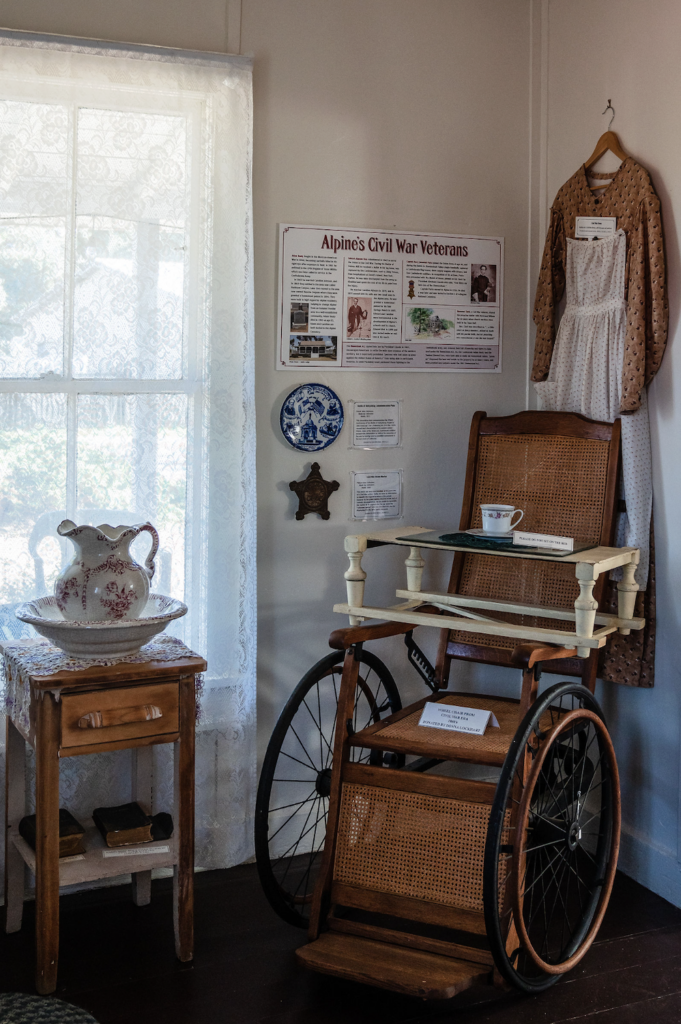
The Kumeyaay hunted, gathered, and farmed in what is now Alpine more than 12,000 years ago before Spanish missionaries forced them to convert their villages to rancherias. By the late 1840s, after California and Mexico declared independence from Spain, the rancherias were consolidated into one massive “rancho,” and, in the 1850s, the area became a stopover on the “Jackass Mail,” SoCal’s first regular postal route. Then came the Gold Rush and a road to Julian, followed by another kind of gold: Alpine was California’s leading producer of honey in the late 1800s.
Former historical society president and honorary mayor Bob Ring says that during WWI, Alpine became known for having the “best climate” in the United States—healthy for soldiers’ convalescence or those with respiratory issues. Good weather, agriculture, and deer hunting brought folks to Alpine as it grew from hunting shacks to cottages to family homes.
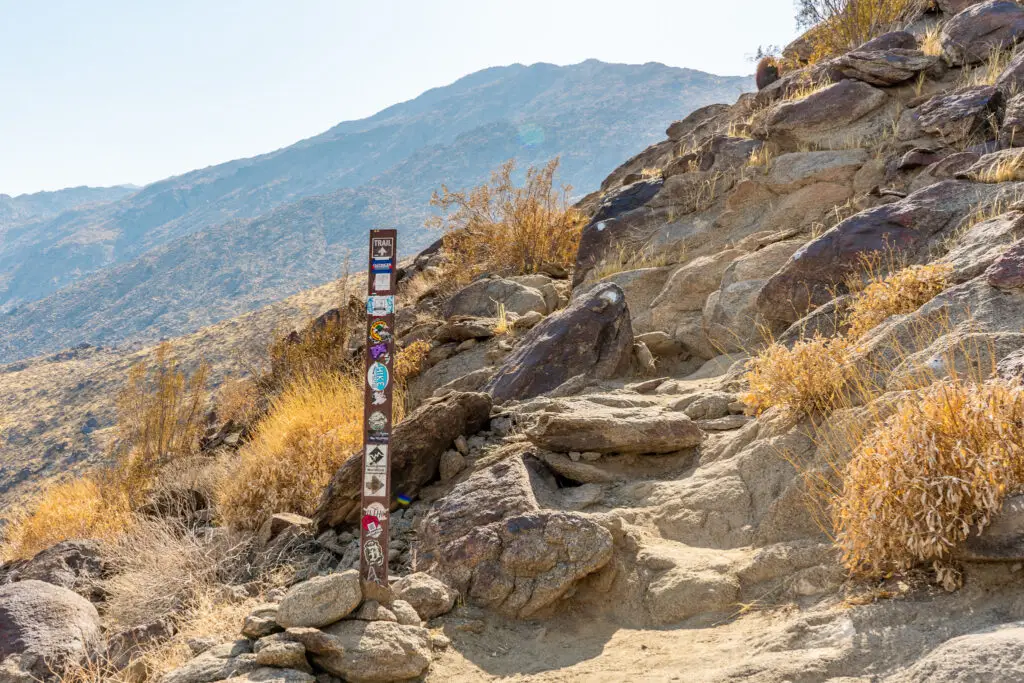
Nowadays, Alpine is a place where “you have to get in touch with nature—because we have no movie theaters,” jokes real estate broker and former chamber of commerce board member Jeff Campbell, a resident since 1974. Getting outdoors in Alpine might mean joining 4-H or Future Farmers of America; hiking or dog-walking at Wright’s Field or Loveland Reservoir; riding horses, ATVs, and mountain bikes; or hitting the trails to discover seasonal waterfalls like Cedar Creek Falls, which cascades into a swimmable pool. Alpine is also the place to get up close with raptors at Sky Falconry and meet rescued big cats at the animal sanctuary Lions Tigers and Bears.
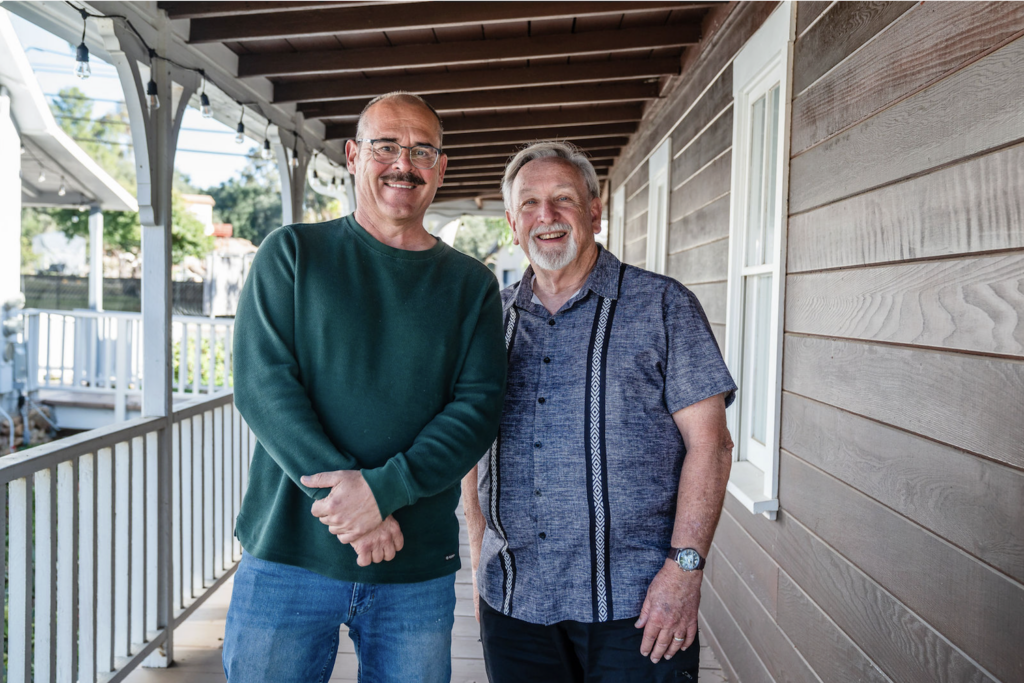
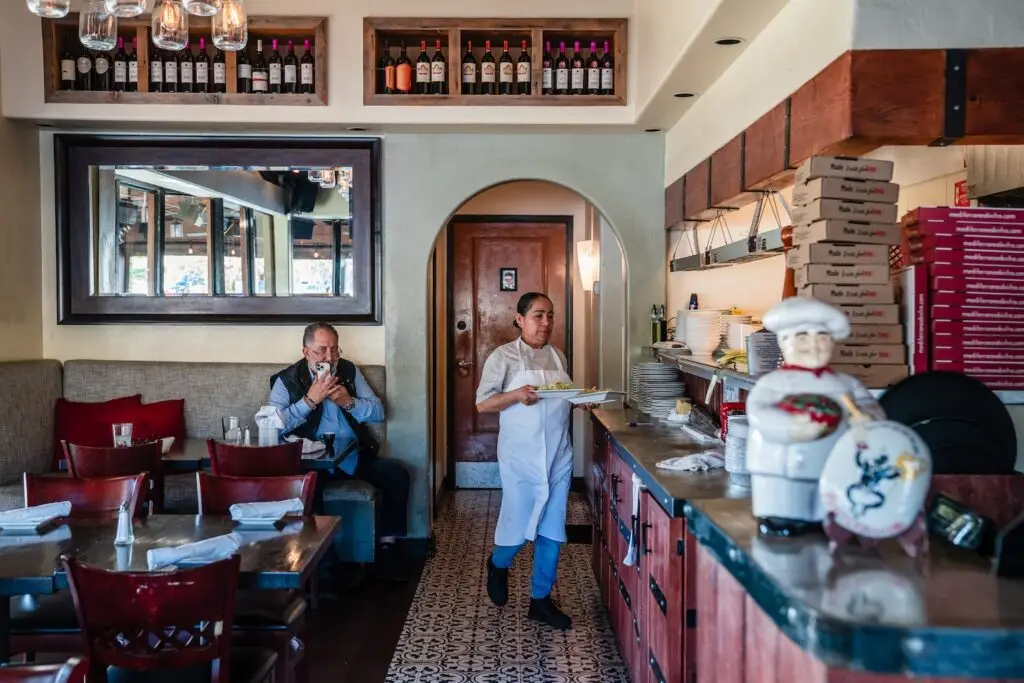
“Here’s how favorites work in Alpine: We all have our preferred menu items at each of our town’s 11 eateries,” Campbell explains. The restaurants are mostly concentrated along Alpine Boulevard right off the 8.
Ring likes the rolled tacos at family-owned Alpine Taco Shop, with extra guac and cheese, while Campbell is partial to the fried fish tacos at Casino Inn Bar & Grill. According to Campbell, Franca’s Italian Kitchen and Bar has the best baked rigatoni not only in Alpine but in all of San Diego County. Ring goes there for family dinners and says he could be satisfied with “just the homemade bread with balsamic and olive oil.” Or head to Mediterraneo (locals call it “the Med”) for vegetarian lasagna. “I’m a keto dude, but it’s that good,” Campbell says.
For coffee, there’s The Well Cafe, where Cecilia Kennedy runs the shop and her husband Alan roasts beans in micro batches at home. Try the dark roast for drip and Mexican mocha for something a little fancier. Breakfast is a must at Janet’s Montana Cafe, which Campbell says serves the fluffiest pancakes, with no syrup needed. “[Janet’s has] homemade everything,” Ring adds, “but try the pies.” Grab supersized treats at Steph’s Donut Hole, and lunch is on the go at Barons Market, where you can pick up soup and salad.
With two award-winning breweries in town, Alpine has a good beer scene for its size. Campbell gets the Assaulted By Feather Pillows IPA at Mike Hess Brewing and the Apricot Bells Bluff blonde ale at Mcilhenney Brewing Co.
The town also has a healthy populace of gearheads: Locals like to bring out their classic cars, motorcycles, dune buggies, and fifth wheels. Hang out on a Sunday to ogle old Thunderbirds, Mustangs, and Corvettes. For fun, Alpine parents take their kids to Viejas Outlet Center for outdoor ice skating in winter (and roller skating the rest of the year) or games at the center’s big arcade.
Overall, Campbell and Ring agree, you gotta have humor and heart to live in Alpine. “The culture of this community is that people are always willing to help, even in these busy times,” Ring says.
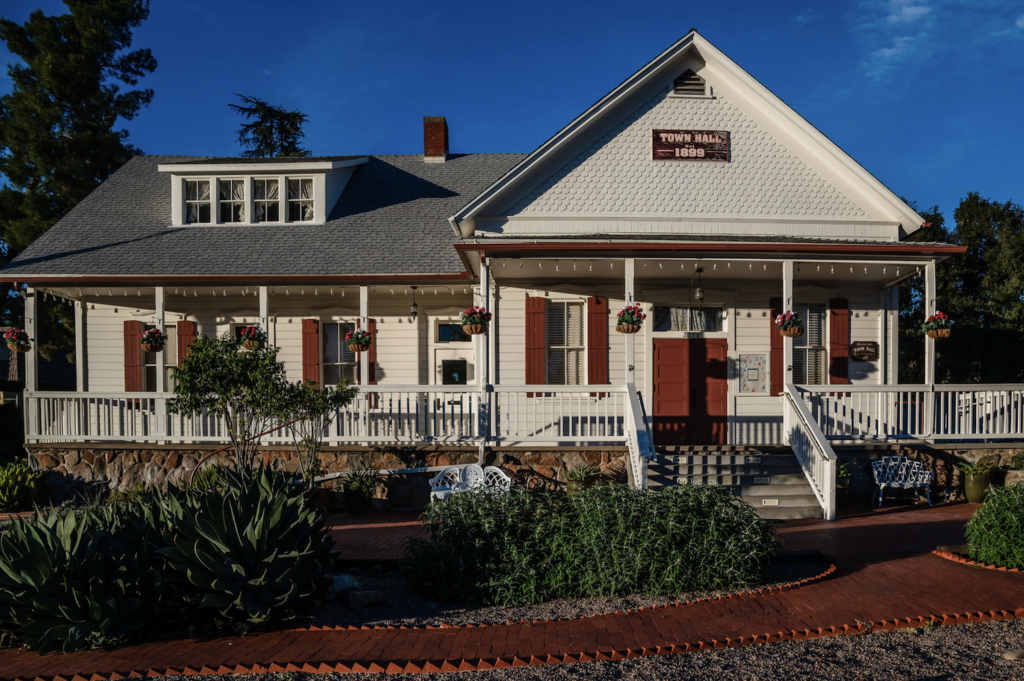
Change in Alpine is incremental. Campbell anticipates Alpine’s mix of historic and suburban-type housing won’t shift dramatically in the near future, but he has seen some movement by the county to rezone some of its land to encourage more affordable units. “It’s my greatest hope for Alpine,” he says. “Nothing is deeded yet, but it’s on the county’s radar.”
Caltrans is also paying attention to the area, with a recent freeway expansion east of Alpine to Pine Valley, which means more road enhancements could be coming to the two-lane stretch of the 8 that leads from El Cajon west to Alpine.
A new state law that took effect in 2026 will certainly bring changes to Alpine’s mountain aesthetic: Homeowners and businesses must remove all combustible materials within five feet of any structure to help prevent fires. Compliance means replacement of existing landscaping with bare soil, rocks, gravel, concrete, or stone. It could be a whole different look for a rugged town with natural smatterings of oaks, bushy sage, and chaparral.
Campbell has recently seen positive growth and possible expansion in the tribal areas, with new housing subdivisions. In Alpine, he’s noticed a gradual ADU trend, gaining momentum but not catching on as quickly as in other parts of San Diego—“because people come out here for elbow room,” he says.
It’s kind of big news that there’s talk of a small grocery store incoming (the first supermarket to arrive in town since Barons in 2015). New businesses in Alpine used to be heralded with ribbon-cuttings by the chamber of commerce, which disbanded last year—but, Campbell has heard, the organization may get revived soon and bring back this charmingly small-town style of welcome. “Alpine has a need for a center to elevate business to a new level,” he says.
Franca’s Italian Kitchen and Bar

Leorah Gavidor won her first essay contest at age 5. She writes features, news, and non-fiction in San Diego.
Explore the ins-and-outs of this coastal beach town, including what to do, see, and eat
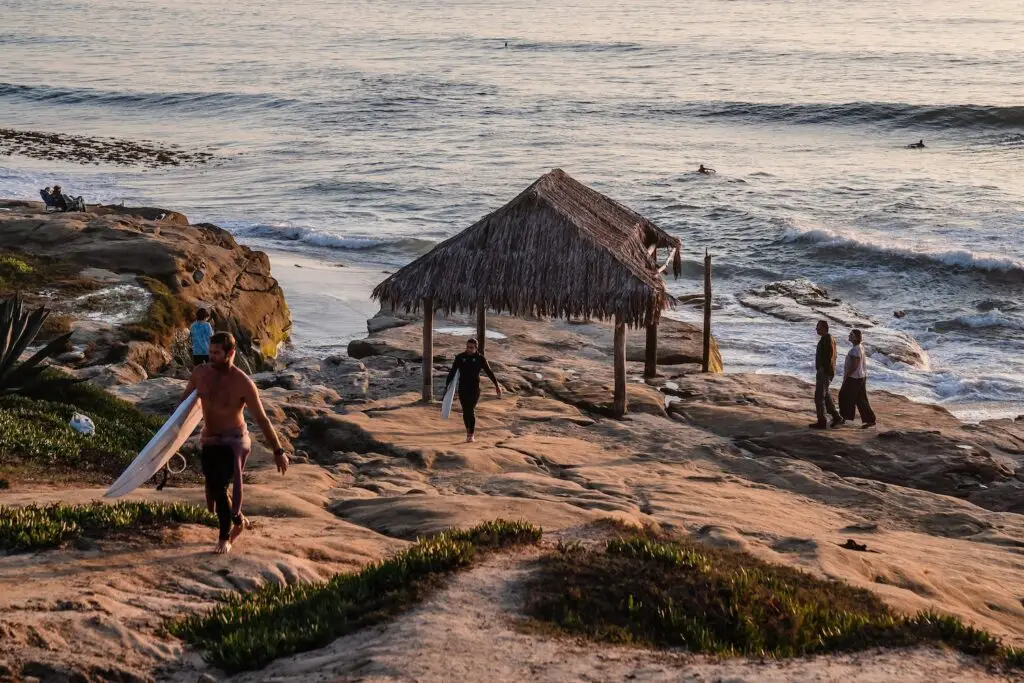
Need help deciding which of La Jolla’s seemingly endless beaches to lay your towel out at today? Each little sandy sliver between the neighborhood’s sea cliffs has its own name and character: the Cove for swimming, Children’s Pool for seal-watching, Wipeout Beach for skim-boarding. Head to La Jolla Shores for that wide, sandy, picnic-with-the-family feel, and if you know what you’re doing, go surfing at Windansea or Bird Rock (if you’re a beginner, opt instead for the Shores, where most of San Diego learned to surf).
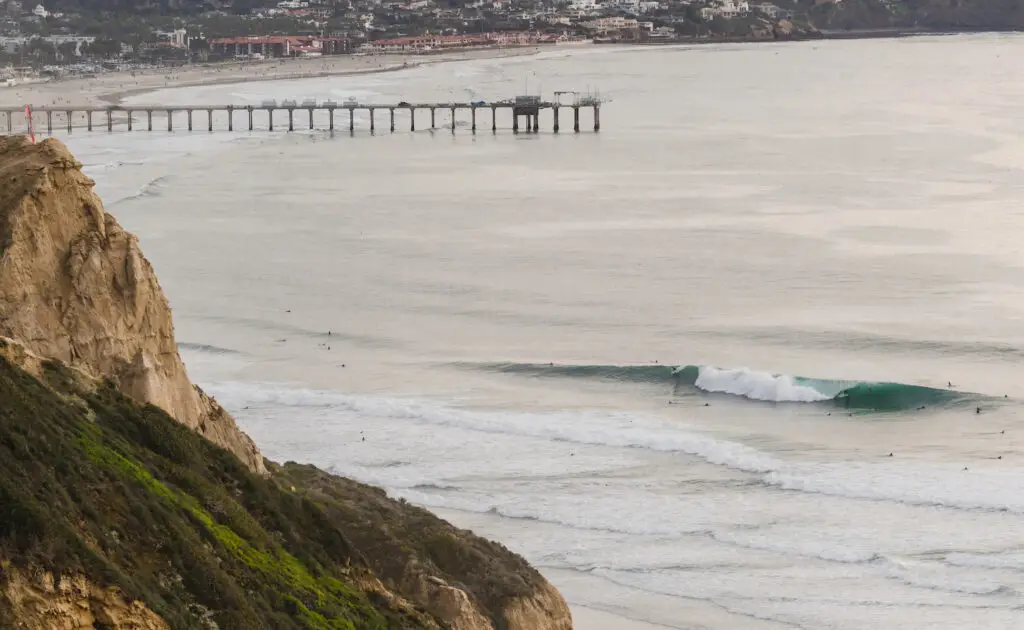
Of course, beachy isn’t La Jolla’s only vibe. The Village (locals don’t call it downtown anymore, says La Jolla resident and senior editor of lajolla.ca Elisabeth Frausto) is La Jolla’s most walkable area—highlighted by the main drag, Prospect Street—with a wide radius of shop-lined roads sloping down to the coast.
At long standing neighborhood staples like Warwick’s bookstore and Harry’s Coffee Shop, “old-timers still belly up to the counter and talk politics,” Frausto says. Art enthusiasts visit to peruse through its many galleries, including Quint and Joseph Bellows, and check out what’s on at the Museum of Contemporary Art San Diego (MCASD). Shoppers wander Girard Avenue, picking out activewear at Lululemon and Vuori and fancier digs at Thread + Seed and Sigi’s Boutique. Friends gossip and sip coffee at locally owned outposts like Flower Pot Cafe and Il Giardino Di Lilli.

Once isolated from the rest of San Diego, La Jolla became a popular resort destination when the San Diego, Pacific Beach, and La Jolla Railway arrived in the 1890s and made the area more accessible to visitors (who wanted to spend time there so badly they stayed in tents during the summer). Some of those tourists got creative, too.
“Our tradition of supporting the arts goes back to the days of the Green Dragon Artist Colony that was founded in 1894,” says Athenaeum Music & Arts Library Executive Director Christie Mitchell. Anna Held started the Green Dragon Colony to attract visiting artists to La Jolla for a weekend getaway; it quickly became a venue for ad-hoc performances and bohemian artists’ salons.
However, it was Ellen Browning Scripps more than anyone who shaped La Jolla into the neighborhood we know today, commissioning buildings like the structure that now houses MCASD. The arrival of the Scripps Institution of Oceanography in 1907 laid the foundation for the establishment of UC San Diego 53 years later at the longtime site of the military base Camp Matthews. All of these developments helped establish La Jolla’s layered identities: high-dollar beach town, arts magnet, academic research hub.
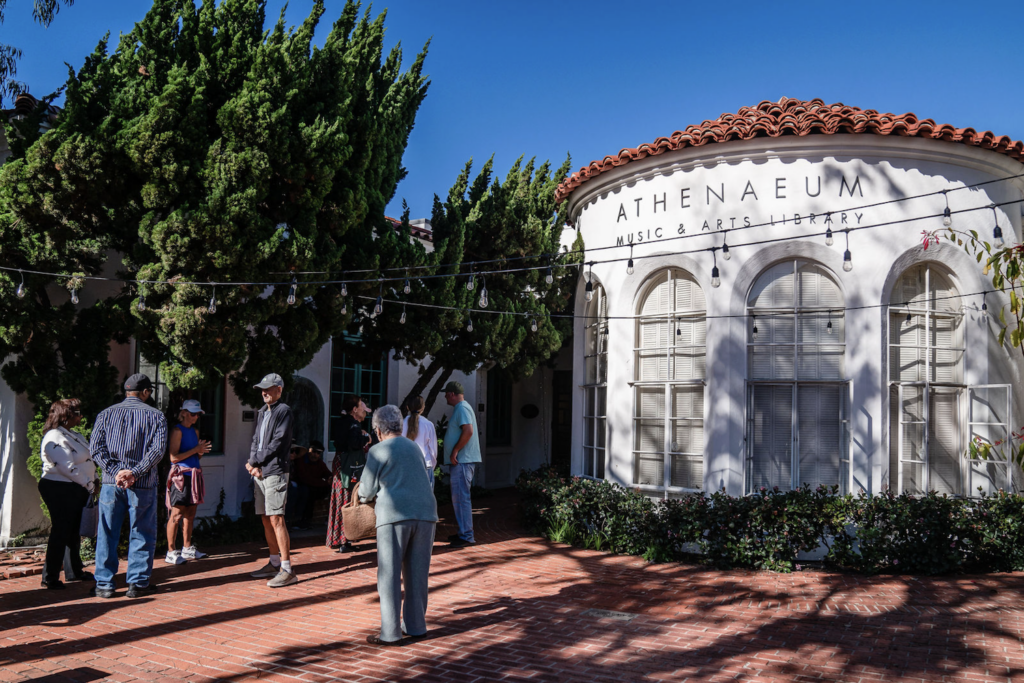
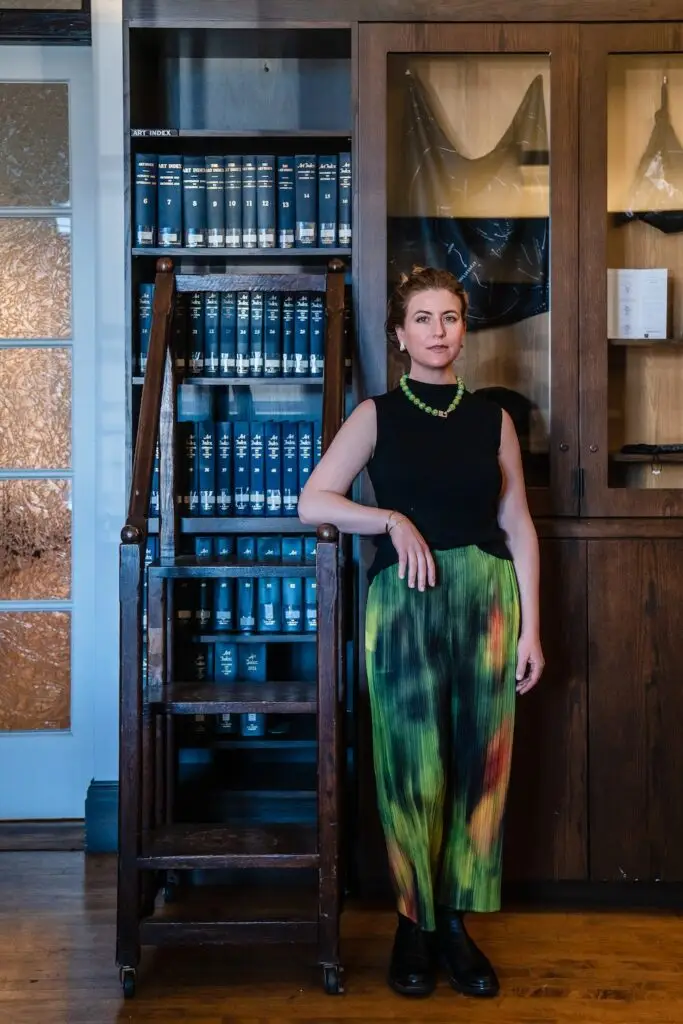
Athenaeum Music & Arts Director Christie Mitchell is a bona fide La Jolla local, having grown up in the LJ neighborhood of Bird Rock. Her dad still surfs, and Mitchell met her own surfer husband at La Jolla High (their toddler has already tried surfing, too). Mitchell’s mom still lives in Bird Rock, and “it’s gotten a lot livelier and more pedestrian-friendly,” she says.
On weekends, she makes sure to hit Wayfarer Bread for “the gooiest, heaviest, stickiest cinnamon loaf—definitely preorder because there’s always a line,” she advises. Friday and Saturday are pizza night at Wayfarer, and the bakery’s industry collabs produce some unique pies. For coffee, head to Bird Rock Coffee Roasters, of course, where you can grab a cup and hang out in the open-air seating or stroll to La Jolla Hermosa Park for ocean views (and a skate park and bike paths for little ones to tire themselves out on).
One of Mitchell’s favorites for lunch with coworkers in the Village is Peruvian-inspired Pepino, owned by one of her high school classmates. “The sweet potato bowl is really good,” she says.
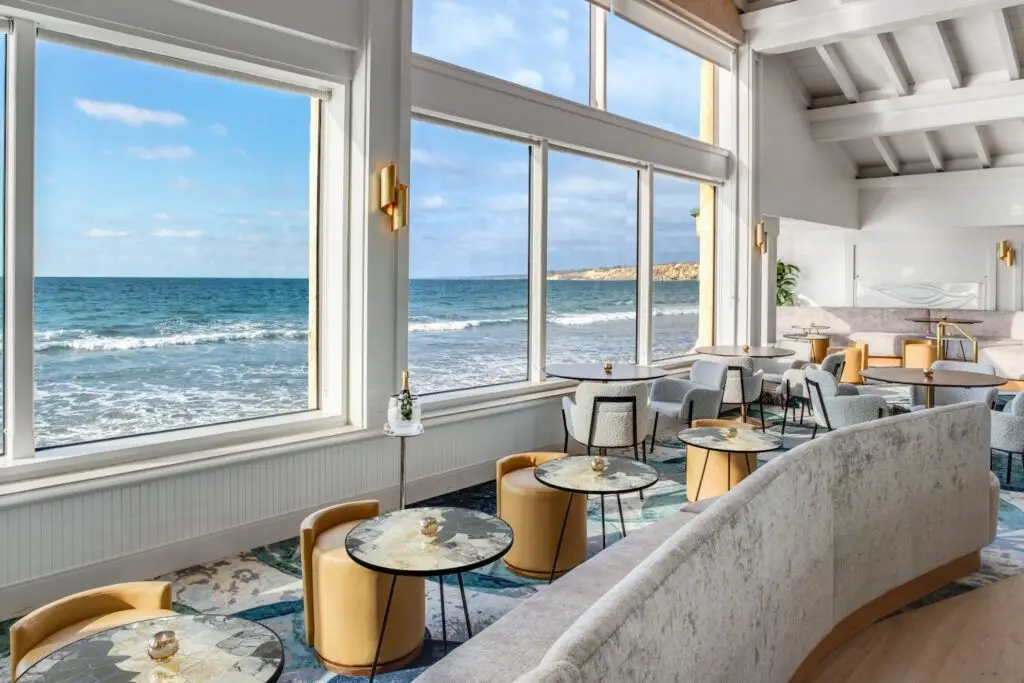
She also cherishes La Jolla institutions. The Ascot Shop, a longtime men’s clothing boutique, is a go-to for gifts; founded by a local fisherman, El Pescador Fish Market is the place for the freshest seafood and fish tacos; and The Marine Room is for special occasions, with on-point service against a backdrop of crashing waves. “And nothing says ‘La Jolla’ like George’s at the Cove,” Mitchell adds. “With the John Baldessari mural and the view, it’s a great mix of the arts and the ocean.”
There’s a surprising amount to do on the weekdays in La Jolla, Mitchell says, with free live music every Monday at the Athenaeum (and weekly ticketed events), late-night DJ sessions at Le Coq, acts at The Comedy Store, concerts at the The Conrad (home of La Jolla Music Society), and the monthly First Friday Art Walk.

The biggest talk of the town for La Jollans? Possible secession from the city of San Diego, Frausto says. Proponents want to separate so La Jolla can maintain its own infrastructure and make decisions about development (critics say La Jolla should contribute taxes to the rest of the city). If the initiative advances, final say would come down to a city-wide vote.
Additionally, locals and visitors alike are witnessing a genuine culinary explosion. Restaurateur Sami Ladeki’s Roppongi, a Japanese fusion and sushi favorite that closed in 2015, reopened in December 2025 under returning chef Alfie Szeprethy. Michelin-starred chef Elijah Arizmendi launched tasting-menu-only restaurant Lucien last year, and chef Accursio Lota of North Park’s Cori Trattoria Pastifico opened his new spot Dora in November. Local designers Paul Basile and Jules Wilson are building Roseacre, 5,000 square feet of culinary concepts on Girard Avenue. And one of La Jolla’s favorite restaurant families is opening a completely new eatery near Torrey Pines Golf Course in summer 2026: From the guys behind Puesto and Marisi comes an Eastern Mediterranean spot called Ikaria.
Back in the Village, a new boutique hotel by Orli is landing in the old nurses’ quarters (now condos) next to the original 1924 Scripps hospital (the institution moved to Genesee Avenue in 1964). La Jolla is also getting in on the thrifting trend—Goodwill opened a shop on Herschel Avenue in early 2026.
Pedestrian-friendly changes are afoot in two of LJ’s walkable areas. At La Jolla Shores, look for enhancements to Avenida de la Playa from El Paseo Grande to Calle de la Plata, where the street has been closed to vehicles since 2020 for outdoor dining. The Village Streetscape Plan is coming to Girard Avenue between Silverado Street and Prospect Street, bringing expanded walking areas, corner parks, improved lighting, new seating, public art, and landscaping to create shade canopies and gathering spaces.
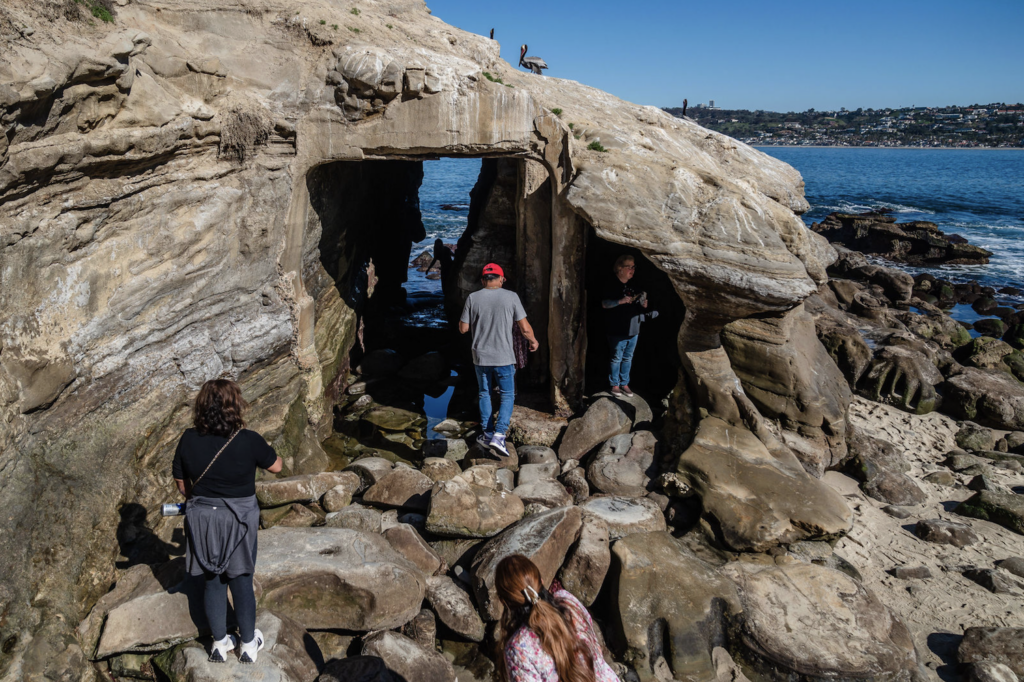
Also look for beautification projects along the coast. The 1920s stairs leading down to the tide pools at Whale View Point are finally getting a redo; Ellen Browning Scripps Park will receive fresh sod and much-needed widened sidewalks. And ADA trail improvements and a new restroom facility are on their way at Torrey Pines State Natural Reserve, making the beloved natural area more accessible.
As for housing, Frausto says, affordable units are hard to come by, and that probably won’t change soon. Most new homes and apartments are geared toward the luxury market, like La Jolla’s first new gated community in 40 years, Foxhill, which broke ground in October 2025 on the site of a former golf course—with empty lots selling for more than $8 million.
Leorah Gavidor won her first essay contest at age 5. She writes features, news, and non-fiction in San Diego.
Laika Nur, MD, takes her love of volleyball from the court to the clinic as team physician for the San Diego Mojo

Growing up, Laika Nur, MD, Scripps Clinic sports medicine specialist, loved watching beach volleyball when the Association of Volleyball Professionals tour came to her hometown of Chicago. A talented volleyball player herself, she remembers sitting in the stands all day, and once, even got a couple autographs. Years later, Dr. Nur was attending a professional event focused on women’s sports, and the discussion turned to a new professional women’s volleyball league. The general manager and coaching staff for San Diego’s team, the Mojo, happened to be in attendance, and Dr. Nur took the opportunity to ask them if they needed a team doctor. Flash forward to the Mojo’s inaugural 2024 season, when Dr. Nur officially became the team physician. Click here to read more about Dr. Nur and how she incorporates lessons she learned on the court into her practice.
For more nutrition, wellness, and healthy living tips, sign up for the San Diego Health newsletter here.