Ready to know more about San Diego?

Subscribe
Features FEBRUARY 28, 2013

The Dark Side

Mexico's craft beer is booming. And screwed

The Dark Side
The Dark Side

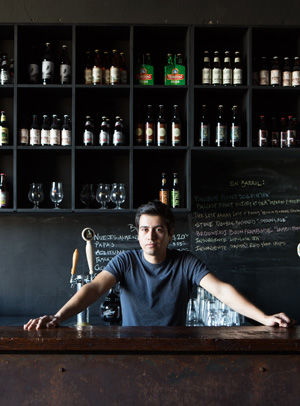
Edgar Martinez

Luis :Garcia Luis Garcia

The ceviche on the bar does dead fish proud. It’s from Tijuana’s famed strip of taco carts, Las Ahumederas, a block away. There’s a 4-ounce glass of “Santa’s Red,” a yeasty, seasonal gem from Cerveceria Insurgente, brewed with oat chips for winter comfort. Not a Corona or lime in sight. It’s only 3 p.m., but the Beer Box is dark, so each new person makes an imposing entrance—silhouettes with full-body halos of daylight.

Large, dark body with a fringe of light. Just like the Mexican beer industry.

In December, Baja’s most established craft beer—Cucapá—crossed the border again, selling its Chupacabras Pale Ale and Runaway IPA in 30-plus San Diego outlets. Cucapá’s first trip here in 2008 didn’t last. But things have changed. The US now has nearly 2,800 breweries, the highest number since the late 1800s. The craft beer industry is growing at about 14 percent a year. And San Diego, with 50-plus breweries like Stone Brewing Co., Green Flash, Ballast Point, and Lost Abbey, is arguably the country’s craft beer capital.

Simply put, Americans want fancy suds. And, having been raised on Mexican beer, we’re primed to appreciate cerveza artesanal.

“We’re next to San Diego, the beer mecca,” says Ivan Morales, a Chula Vista/Tijuana native who formed Insurgente with his brother, Damian, while attending USC business school. “People here got exposed to that, opened up their palates. That’s why Baja—Ensenada, Tijuana, and Mexicali—is going to be the hub of Mexican craft beer.”

Every year, Modelo and FEMSA buy nearly all the liquor licenses in Mexico and divvy them out to bars and restaurants. If Tecate gives you a license, you can’t sell Modelo, or the Brutal Imperial Stout from Tijuana’s rising star, Border Psycho Brewery.

Since its formation in 2010, the Association of Baja California Craft Brewers (ACABC) has doubled in size each year. It launched the Baja Beer Fest, which doubled in attendance and will hit four cities this year. Mexicali is even making local craft beer a lynchpin of its downtown redevelopment. And the country’s duopoly of beer giants—simplified as Corona and Tecate—are one anti-trust investigation away from total European control.

Mexico’s craft beer moment is now! Chocolate-coffee stouts and yerba santa porters! Viva la revolución!

Only one thing’s missing: A new government.


The Beast with Two Beers

Beer is big business south of the border. Corona is the leading imported beer in 38 countries, and Dos Equis’ Most Interesting Man in the World is the most popular beer icon since Spuds MacKenzie. The average Mexican drinks 16 gallons of beer a year, making it the world’s fourth largest market, at $15 billion. And beer consumption in Mexico is rising three percent a year—unlike the US, where it declined from 2009 to 2011, according to Plato Logic Ltd. in London.

Meanwhile, Baja cuisine is making international headlines, and Ensenada’s Valle de Guadalupe wine region is being recognized as world-class. Even with a less affluent population, that should translate into a ripe market for the Stones and Ballast Points of Baja, right?

Yes. Except for two massive, massive details.

Just about all of Mexico’s beer money goes to two companies: Grupo Modelo and FEMSA. They’ve formed a near-total duopoly that controls every aspect of the industry, from raw materials to bars and politicians. Founded in 1925, Modelo’s beers (Corona, Modelo, Pacifico, etc.) take about 60 percent of the market. Most of the remaining  40 percent is owned by FEMSA, with classic suds like Tecate, Dos Equis, Sol, and Bohemia.

So, using the Star Wars model: Mexican craft beer is the idealistic upstart Luke going up against two-headed Darth Modelo-FEMSA. Mexican government officials are the sickly-looking generals who fear Darth MF, and therefore assist him in his quest to enslave the beer universe.

That is, of course, an incredibly skewed view. After all, Darth MF provides jobs and support local businesses. They give them interest-free loans, refrigerators, tap handles, barstools, glassware, and, most importantly, liquor licenses. Smokey’s Grill and Cantina in Los Barriles sums up the relationship on its website: “Grupo Modelo agreed to sponsor Smokey’s. What that means is we don’t need to purchase a liquor license. It also means we are not allowed to sell any cerveza other than Grupo Modelo brands.”

Every year, Darth MF buys nearly all the liquor licenses in Mexico and divvies them out to bars and restaurants. If Tecate gives you a license, you can’t sell Modelo, or the Brutal Imperial Stout with star anise from Tijuana’s rising star, Border Psycho Brewery.


“Tecate and Corona own around 90 percent of the permits,” says Mexicali’s tourism director, Omar Dipp.

That’s how it works. The exclusive deals are called “tied house,” explains Greg Koch, founder of Stone Brewing Co. “It’s illegal in the US, post-Prohibition. Those laws have helped level the playing field and allowed the US to become the world craft-beer leader.”

The US prevented the tied-house practice by instituting a three-tiered system. Basically, it divides the alcohol industry into producer, wholesaler/distributor, and retailer. If you make beer, you can’t distribute it or sell it (exceptions are made for small operations like tasting rooms and brewpubs). Even with this law, about 75 percent of the market is owned by AB InBev (47 percent) and MillerCoors (28 percent), with US craft beer slowly eroding their market shares. And 75 is much, much different than 90-plus.

“I have brewer friends in San Diego who have 1,000 accounts,” says Cucapá’s CEO, Mario Garcia. “We can only have 30 or 40 because of the duopoly.”

“It happens in Belgium and the UK, too,” says Sonny Jensen, GM of The Beer Company in San Diego. Jensen’s been actively supporting Mexican craft brewers, most recently with “Hecha en Mexico,” a gathering of Baja talent.

Darth MF is able to snag all those licenses thanks to help from the government, which prices them so high that only Darth MF can afford them. Cucapá’s license cost more than $30,000. The license for its brewpub was $100,000. To sell its own beer on premise in San Diego, a craft brewer’s beer-and-wine license would cost somewhere in the ballpark of $1,200. “See the difference?” says Garcia.

Multiple small brewers have filed lawsuits against the government for this practice. “Somehow,” Garcia laughs, “they always lose.”

Taxes are also a huge obstacle for Mexican craft breweries. Federal tax on beer is 26.5 percent, plus local sales taxes are anywhere between 10 percent and 16 percent. “Tell me one business that can increase the cost of its product by 40 percent and survive,” explains Insurgente’s Morales, whose La Lupulosa Pale Ale won Best of Show at the 2011 Baja Beer Fest. “Which is why there are so many under-the-table brewers.”


Darth MF, meanwhile, gets tax break after tax break. Because its watery lagers are so cheap ($2 as opposed to $5 to $6 for craft beer), it pays less (3 pesos per liter). The company also gets a 60 percent tax credit for using returnable bottles. The duopoly owns most local retail outlets. That forces craft brewers like Cucapá to find customers in far-flung cities, making it almost impossible for them to retrieve their bottles. So, no tax credit. “All told, we pay about 300 percent more tax per liter than they do,” Cucapá’s Garcia says.

Still, the Baja craft beer scene is growing by the minute, especially at border towns with access to US supplies and consumers. Another twist: In 2010, Heineken bought out FEMSA for $5.7 billion. Last year, Grupo Modelo agreed to sell to AB InBev for $20.1 billion, although US antitrust forces have sued to block that acquisition. Some predict European ownership would slowly erode the duopoly.

Garcia laughs. So does Dipp, the tourism director. “They’re coming into a great duopoly! Why would they change it?” says Dipp. (Calls and emails to InBev and Heineken were not returned.)

There are other hurdles for craft beer. Mexico is not a very wealthy country; how are you going to sell a $6 Dunkelweisen from Tijuana’s Cerveceria Kudos? And is the Mexican palate ready to go from light pilsners to chewy, yeast-spackled craft beer?

Every craft brewer replies the same: They can’t keep up with demand.

The Revolution

Mauricio Peralta, an aeronautical engineer, took second place at last year’s Baja Beer Fest with his Black IPA. He runs Zombie Brew Labs out of a warehouse in downtown Ensenada. Situated behind the microbrew-friendly bar Distrito, the warehouse is a hub for the craft scene. Anyone can brew there for free if they buy supplies at Brewmaster Shop, Baja’s first homebrew supply store.

Supplies are a huge issue in Mexico. Only Darth MF produces malted grains. The hops industry is in the US and Canada. The only available yeast is dried into powdered form, whereas San Diego’s White Labs sells the superior live, liquid slurry. Most Tijuana brewers either live or work in San Diego, so they can bring back bags of supplies without paying taxes (another reason Tijuana and Mexicali are primed to become the craft beer hubs). But that’s impossible for brewers from Ensenada to Mexico City, so they have to import it in bulk and shell out the 40 percent tax.


Brewmaster Shop owner Eduardo Nuñez, a mechanical engineer who also brews Cerveceria MX, spearheaded the supply chain by calling the top SD companies. “At first, they didn’t want to make deals with Mexico over the phone.” To convince them he was for real, Nuñez made multiple trips across the border to places like White Labs and Homebrew Mart with his computer and business plan.

Now Nuñez is literally harboring a craft beer scene in his warehouse, which supplies progressive bars like Distrito, Pelicanos Gastro-Pub, and Cerveceria Wendlandt. Distrito is taking a risk, since it got its liquor license from Tecate. More and more sponsored bars are taking that same gamble. In Tijuana, both Beer Box and craft-beer boutique La Tasca have contracts through Modelo. La Tasca co-owner Omar Monroy isn’t too concerned. “We created a really nice place to sell [Modelo], and we sell it,” he says. “We just sell other beers, too.”

Nuñez and Morales, however, see a war coming.

“Right now we don’t sell enough beer to be a threat,” says Morales. “But eventually, we will. And that’s when they’ll just start pulling back those licenses.’”

By that time, Mexican craft beer might have other alternatives. The newly opened Blind Burro in downtown San Diego has Cucapá on tap. “It’s a really good pale ale,” says GM Frank Miller. “Plus, I just like the movement in general—food, art, and spirits in Mexico. In most people’s minds, TJ has been banned. But [Tijuana’s] Querencia is probably my favorite new restaurant.”

The future might lie in the hands of the Association of Baja California Craft Brewers, much like homebrewing in the US (illegal until 1978) depended on the Brewers Association. Carlos Castillo, the president of ACABC, is a corporate lawyer who spent four years helping Baja wines get a Certificate of Origin. In a 53,000-square-foot warehouse in Ensenada, he brews about 300 barrels a year of Cerveceria Costa Azul, with plans for a taproom and brewhouse.

“Ensenada is very well known for wine and gastronomy,” Castillo says. “Now we have beer.”

Castillo’s work for the Baja wine region taught him how to get the government’s attention. “In our first year in 2010, there were 20-something brewers in ACABC. Then 34 in 2011, and currently 46,” he says. “That could’ve changed by the time I said that. Nothing would’ve happened without legally incorporating.”


It was Castillo and ACABC who first discussed the idea of special liquor licenses with Dipp, the tourism director for San Felipe and Mexicali. Mexicali is a Tecate town, with about 70 percent of the beer sales. Yet in late January, the city broke ground on a $1.5 million redevelopment project of downtown—using craft beer as the attraction.

“I walked into the mayor’s office and said, ‘What if, instead of charging $100,000, we give licenses for $500 a month, and that money will go into a development fund for the downtown area?’” Dipp recalls.

He got approval from young Mexicali mayor Francisco Perez Tejada, a possible 2013 candidate for governor. The special liquor licenses will belong to the city. Anyone using them is required to sell at least five different kinds of Mexican craft beer. According to ACABC’s Castillo, a similar craft beer zone will be built in Ensenada and Tijuana. Dipp is also helping ACABC host four versions of the Baja Beer Fest in 2013—one in each city (Tijuana, Ensenada, Mexicali, and San Felipe).

Darth MF has taken notice. “One of my councilmen got a free case for his wife’s birthday. His wife’s birthday,” says Dipp. “They’ll try and buy out the alcohol council. But I’m not prohibiting Corona or Tecate from selling beer there. I’m just not giving them the exclusive anymore.”

“It’s progress,” shrugs Cucapá’s Garcia. After 12 years, his brewery is ready for Main Street, not a “redeveloping” zone in Mexicali.

For Cucapá, the real saviors might come in the form of two US companies that don’t have the craftiest reputation in the States—Walmart and 7-Eleven. Unlike on-premise accounts (restaurants, bars, anywhere you drink the beer on-site), retail outlets (off-premise) aren’t owned by Darth MF. On March 1, Cucapá and Mexico City’s Cerveceria Minerva will be part of Walmart’s new craft beer initiative, and 7-Eleven will stock Cucapá around the same time.

Ask anyone about the larger picture—about breaking down the duopoly—and you can really hear just how touchy the situation is.

“We need to be very, very clear on this—the duopoly is dependent on help from the government,” says Garcia. “The actual government needs to change.”

Insurgente, somewhat kiddingly, declares revolution: “We are a group of rebels dedicated to liberating you from the tyranny of flavorless beer.”

“Oh… I don’t know,” a mayoral aide tells me, sadly aversive. “Why don’t you talk to the Tourism Board?”

And Dipp accepts the whole scene with resigned humor: “We have a saying in Mexico: ‘It’s crap, it’s disgusting, I love it!’”

Subscribe to our newsletters

Select Options

By subscribing you confirm that you agree with our Terms and Conditions and Privacy Policy.

Features JUNE 2, 2025

The Future of Fish Is Farmed: In the Water at Baja’s Largest Tuna Ranch

Pacific bluefin once dominated San Diego, but in our modern food system, wild fish come from cages

The Future of Fish Is Farmed: In the Water at Baja’s Largest Tuna Ranch
Courtesy of Baja Aqua Farms

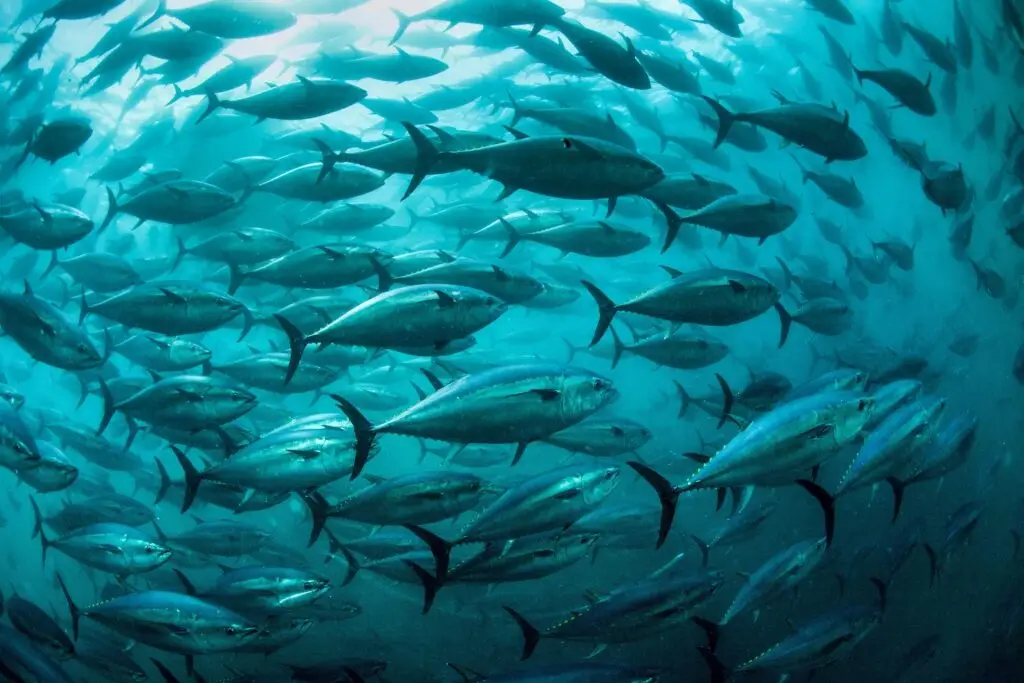
Swimming above a thousand bluefin tuna in the deep waters of the Pacific, one feels a dizzying calm. Below, the fish move in endless, unhurried loops, slowly growing plump in their monotony. Weighing around 170 pounds each, the fish in this net-pen are considerable. Heavy as a man and as wide as a surfboard, they move like hydrodynamic refrigerators, pewter backs reflecting water-filtered light like suncatchers.

Not long ago, these fish were in the open ocean, gunning 18 miles an hour through cold currents, possibly detecting our planet’s magnetic field using mineral deposits in their snouts, and tracing ancient migration patterns through the largest ocean on Earth. But here, with a gringo in a wetsuit bobbing above them, the fish merely draw lazy loops inside a giant aquaculture cage tethered far offshore, awaiting their fate as some of the most sought-after and expensive cuts of protein on the planet.

This is Baja Aqua Farms (BAF). Located in Mexican waters southwest from San Diego, BAF is, at any given time, home to tens of thousands of tuna worth tens of millions of dollars, making it one of the largest tuna ranching operations in the world and a major player in a modern global fish farming industry that now supplies more than half of the world’s seafood.

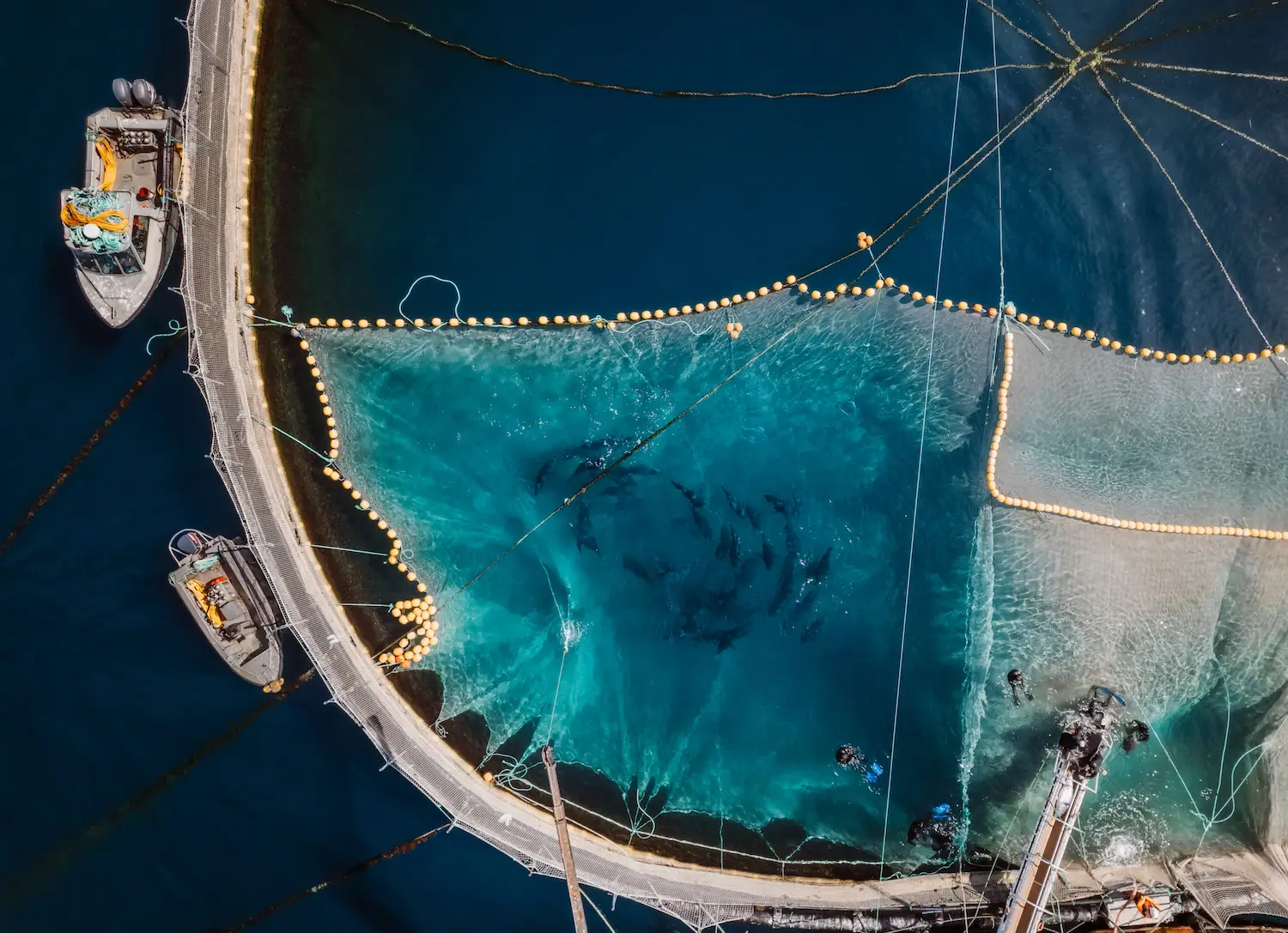
A Baja Aqua Farms boat pumping thousands of pounds of small fish into dozens of net pens filled with bluefin tuna
Courtesy of Baja Aqua Farms
Anchored in the deep waters of the Pacific, the main feeding vessel at Baja Aqua Farms pumps thousands of pounds of small fish into dozens of net pens filled with slow-circling bluefin tuna.

If one were to, say, fly a helicopter over this operation, the view through the omnipresent cloud of gulls would prove impressive. Thirty Olympic pool–sized net-pens float in an open-water grid, each filled with a single school of a thousand or more bluefin. Some are huge, weighing more than 400 pounds, and some are smaller, around 45 pounds (still a lot of fish). And anchored in the middle of it all is a sizable, computerized central feeding vessel where specialists sit on aging rolling chairs inside an air-conditioned cabin, monitoring each school’s food consumption and their pen’s water quality on screens 24/7. A ship that thousands of pounds of feeder fish visit briefly each day after being offloaded from sardine boats and before being pumped into the bellies of tuna.

I ventured here on an educational mission. As a lover of both the ocean and tuna, I wanted to find out how bluefin—an animal fished nearly to extinction within my lifetime—makes its way into the tartares and chirashi bowls of today. My search led me here, face down in the water, listening to the sound of my breath through a snorkel and contemplating the vast machinations that keep these incredible fish churning through the global food system.

Silent as they are, these tuna tell a story about the future of fish and the future of how we interact with the ocean.

All of which we’ll get to. But first, let’s eat.


Baja Aqua Farm workers separate  tuna from the school and stun them with electricity before bringing them aboard the harvest boat
Courtesy of Baja Aqua Farms
Workers separate a select number of tuna from the school and stun them with electricity before bringing them aboard the harvest boat.

By the time the bluefin arrives on my plate as glistening, fatty slices of pink otoro at Ophelia restaurant in Ensenada, it has already crossed oceans, boundaries, and moral terrain.

This fish was part of a school of tuna born in the open Pacific from eggs laid off the coast of Japan, captured as juveniles in Mexican waters by BAF boats in vast purse seine nets, towed for months to the BAF ranch, and fattened for many more months with feeder fish harvested from our coastal ecosystem by the BAF sardine fleet, then efficiently and bloodily killed, refrigerated, and brought to shore here in Ensenada to be packaged and driven over the border to LAX, where they either get exported—mostly to Japan— or eaten in high-end omakase and strip-mall sushi joints throughout San Diego, once the world’s tuna fishing capital.

Bluefin tuna, recent developments have shown, is both a symbol of past overfishing and a surprising conservation success. And its future now lies in operations like Baja Aqua Farms, which represent the next phase of human seafood consumption.

With me at the table, talking tuna, is Rodrigo Armada Tapia, the head of sustainability at BAF. Having grown up in Ensenada, Tapia speaks with pride about the region’s food culture—where tuna is often a star ingredient. Before taking me to the farm the next day, he wanted me to try the product, which BAF packages under the name Bluefiná.

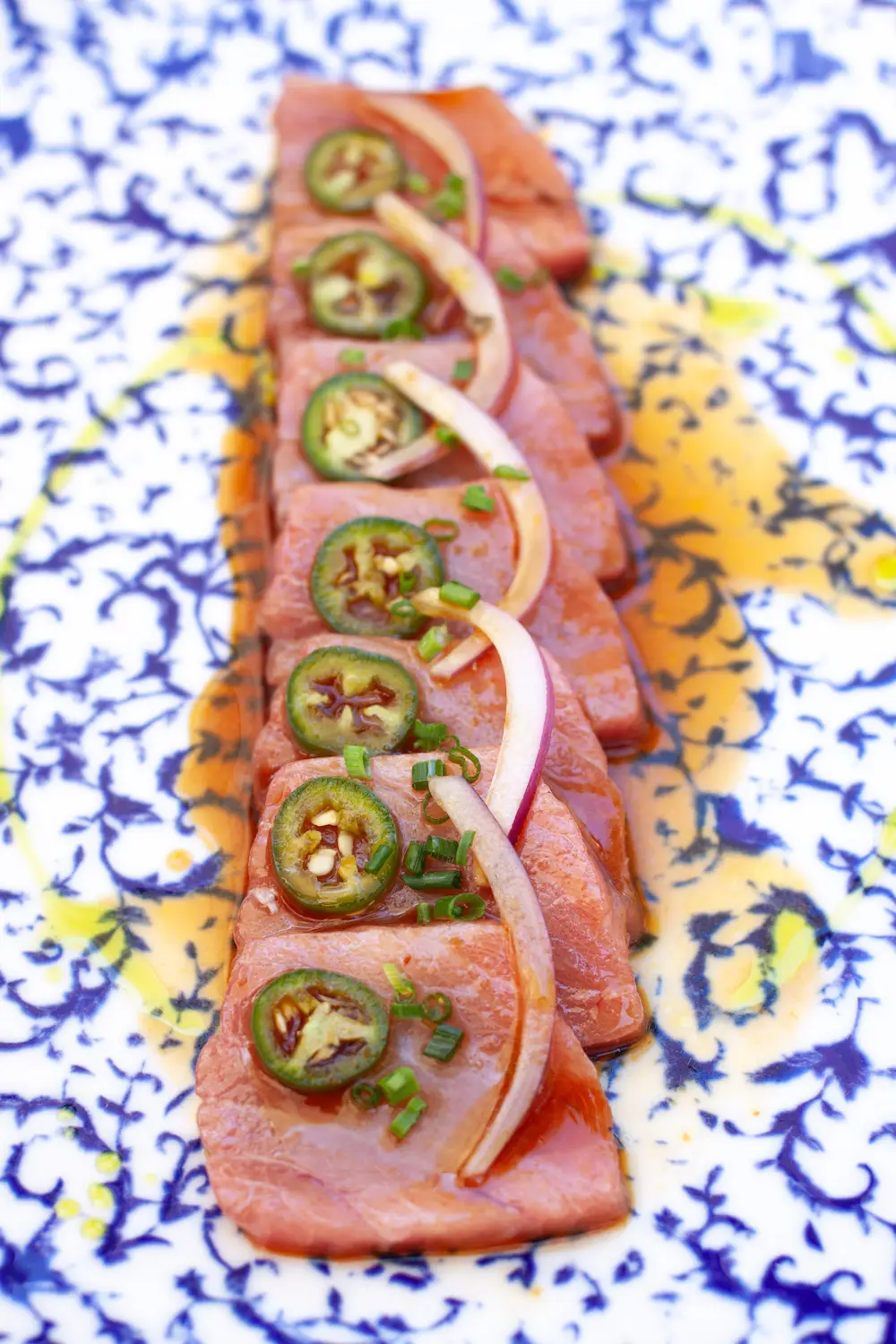
Bluefin tuna otoro from Ensenada restaurant Ophelia featured on the Mexico Michelin guide
Photo Credit: Mateo Hoke
Otoro at Ophelia in Ensenada.

“You can’t understand the fish until you taste it,” he tells me.

Ophelia is Michelin-recognized. It sources bluefin from BAF, as do some notable restaurants in San Diego.

Mateo Hoke

About Mateo Hoke

Mateo Hoke is a journalist and author. His books include Six by Ten: Stories from Solitary, and Palestine Speaks: Narratives of Life Under Occupation.

Mexico MAY 29, 2025

Guide to Visiting Baja California Sur in 2025

Peruse local history, sample classic coastal Mexican bites, and spend time in nature in this quieter part of Mexico

Guide to Visiting Baja California Sur in 2025
Courtesy of Visit Mexico

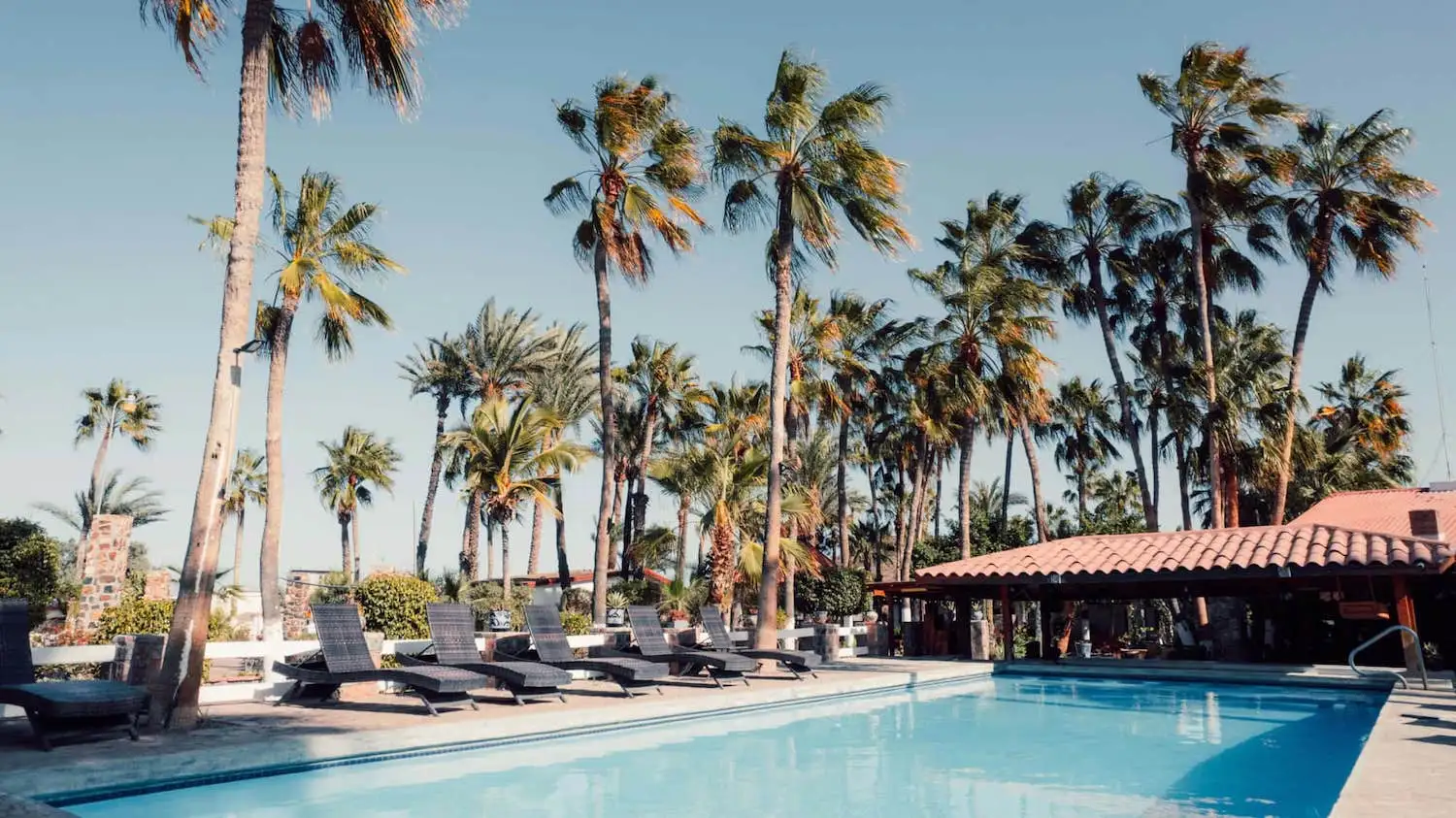
Before 1973, visitors to Mulegé, Mexico arrived by tiny prop plane on the dirt runway next to Hotel Serenidad. The airstrip was built in the 1950s, when the transpeninsular highway that runs north to south along the Baja peninsula was still just a dream in some civic engineer’s mind. The hotel’s longest-running owner, Don Johnson, was an early transplant to Baja California Sur, and he bought Hotel Serenidad in 1968 and turned it into the famed vacation spot it became during that era.

On the mushroom-shaped bar stools, cemented just below the water line at the swim-up bar, sat many a famous traveler. With the palm trees swaying languorously in the breeze, it’s easy to imagine the hotel freshly painted and sparkling, hosting the great Fred Astaire, Charles Lindbergh, and John Wayne.

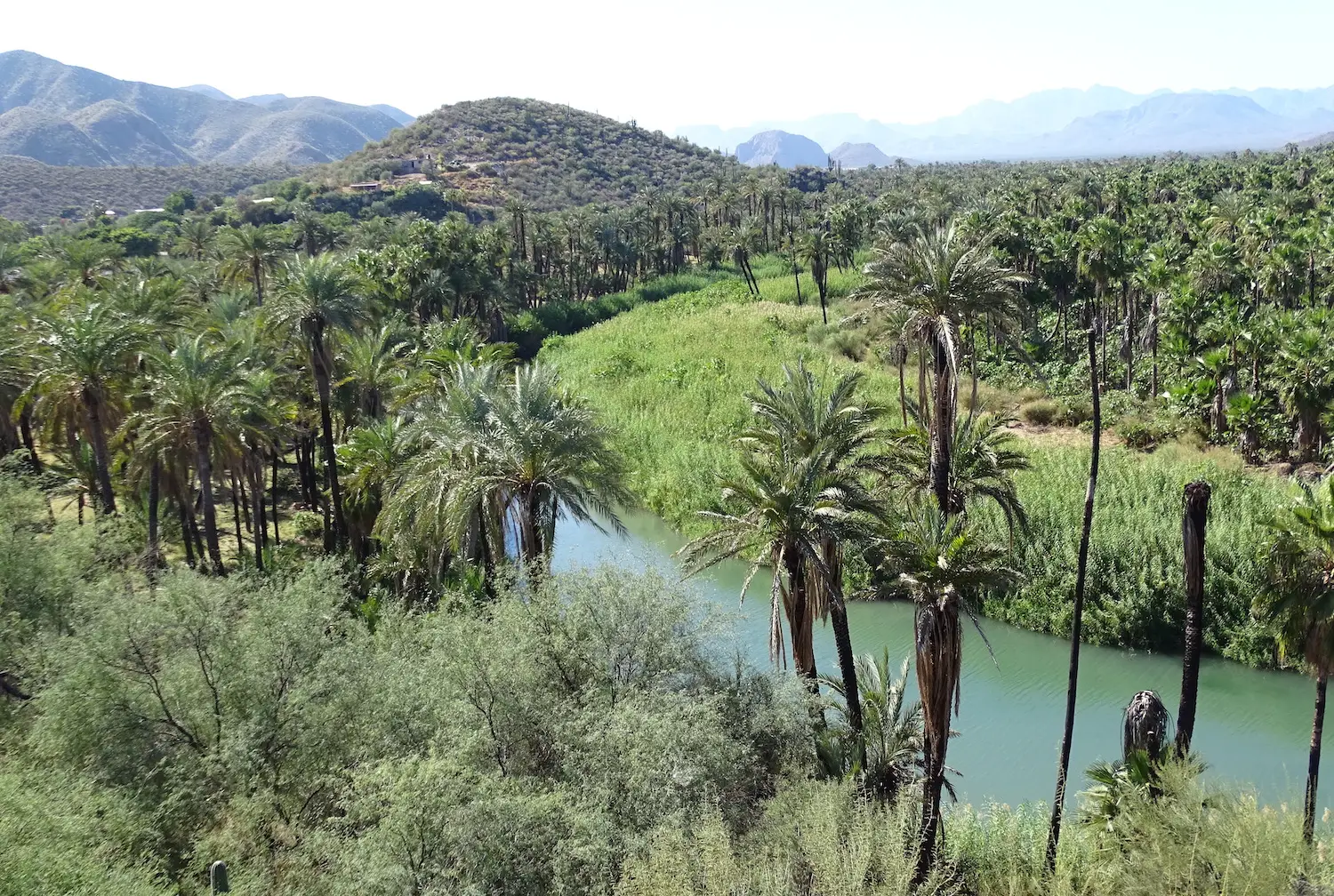
Mulegé, like most of the towns of northern Baja Sur, is an oasis, a place where a natural freshwater spring made it possible for the evangelizing Spanish missionaries to settle. Up on a hill above town, its mission church is a stocky, stone building with bright white balustrades lining its rooftop and a statue of the Virgin Mary gazing down on the town below. Climb the handful of stone stairs to the lookout point beside the church, and you can watch the sunrise paint the tips of hundreds of palm trees, slowly bathing the entire valley in soft light each morning.

Visiting Baja California Sur, Mexico featuring Hotel Serenidad near Mulegé
Courtesy of Hotel Serenidad

Decidedly sleepy, Mulegé is the place that you come to amble down to California Birrería for birria chilaquiles in the morning, then take a stroll along the riverside, stop for lunch at Histórico Las Casitas (don’t leave without trying the flan), and finish off the day with a beer and some live music out at Mulegé Brewing’s highway bar.

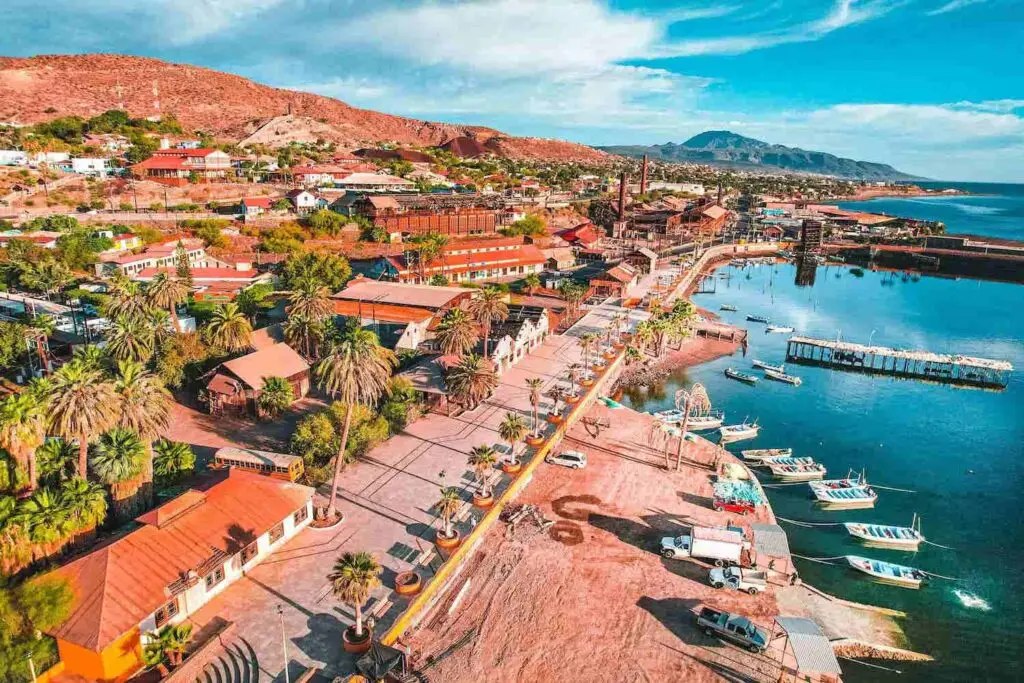
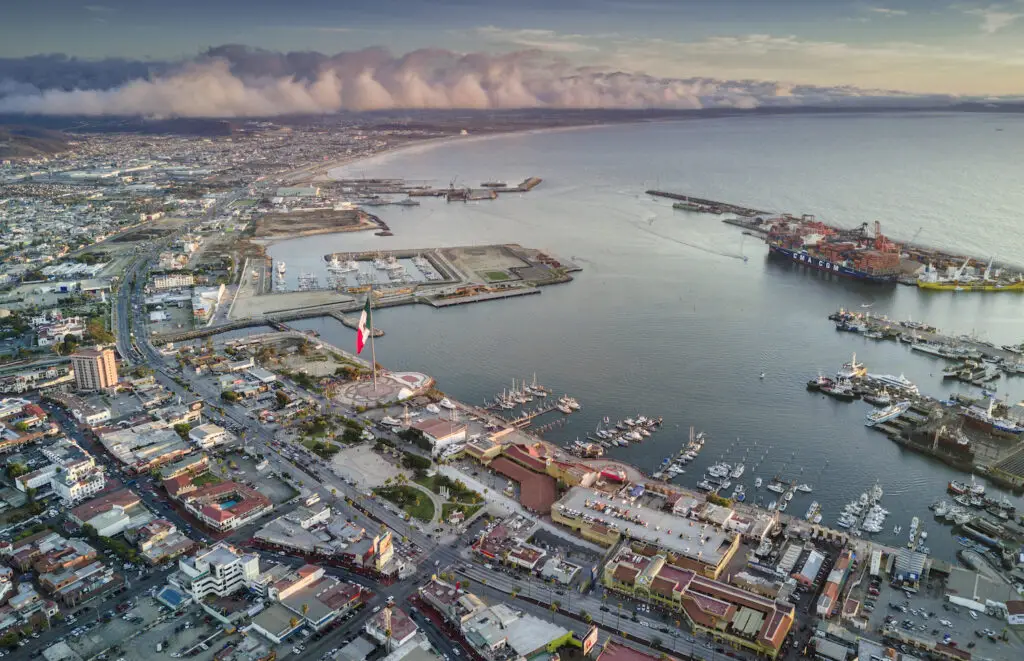
Aerial view of the city of Ensenada in Baja California, Mexico

One of the town’s most fascinating historic curiosities is the “prison without doors,” now converted into a museum on its hillside perch, the stark white façade contrasting the coral blue skies. One of the museum’s two docents will explain how prisoners were sentenced here but had day privileges to make their living in town. They were expected to return to the jail to sleep when the evening bell rang. There was little fear that they would escape, with a vast, empty desert behind them and the Gulf of California in front. Using Mulegé as a base to discover Baja Sur, you can explore the local desert, hidden beaches, and incredible wildlife during the day, returning to the town’s laidback bohemian vibes each evening.

Visiting Baja California Sur, Mexico featuring an oasis near Mulegé
Courtesy of Wikipedia Commons

Much of the culture and language of the peninsula’s original nomadic peoples was destroyed, first by Spanish colonization and later by subsequent populations of settlers. Some of the most awe-inspiring examples that remain are their ancient cave paintings, preserved by the peninsula’s dry climate and the caves’ isolated locations.

An hour from Mulegé is the San Borjitas cave, with some of the finest specimens of this ancient artwork decorating the 16-foot high ceilings of a long, oval-shaped cave that peers out over a dry riverbed below. Dozens of figures in red, black, and white seemingly reach for the stars on the rock face, their significance and meaning remaining a mystery to archaeologists even 73 years after they were discovered. 

Exterior of the winery at Valle de Guadalupe's Banyan Tree resort

From December to April, all along Baja Sur’s coasts, gray, blue, and humpback whales come to breed, give birth, and feed in the mellow waters of the peninsula’s lagoons and the Gulf of California. Located south from Mulegé along the coast, Loreto, Baja Sur’s largest town, is a popular place to whale-watch, eat lunch, and explore the local history museum.

Visiting Baja California Sur, Mexico featuring Puerto Escondido Marina near Loreto Bay
Courtesy of Puerto Escondido Marina

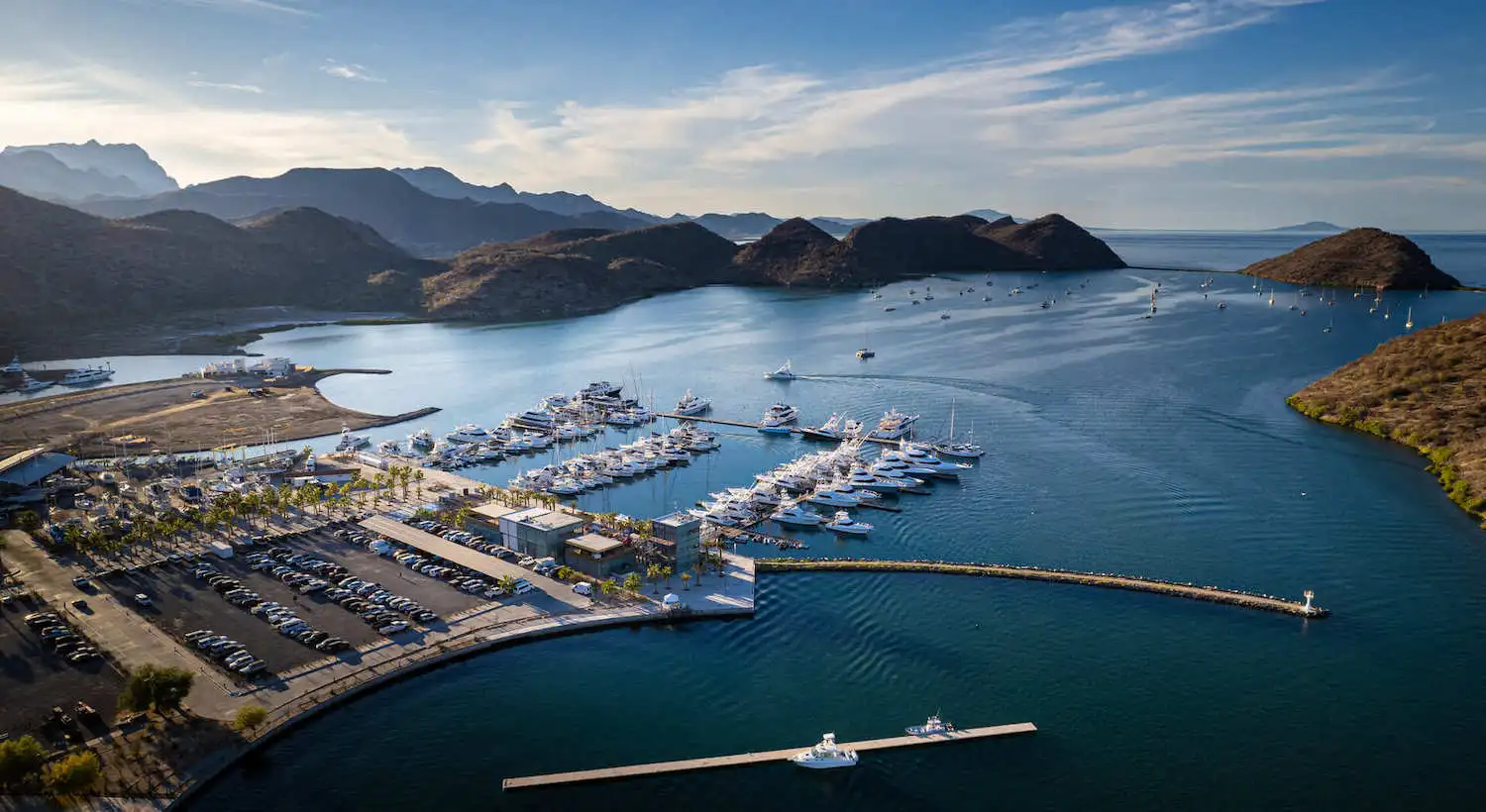
Pleasure cruises leave from the nearby Puerto Escondido Marina, where $1,000+ private charters will take you sport fishing or cruising around the eight islands of the vibrant Loreto Bay National Park that buttresses the coastline. Pods of black dolphins surf in the wake of the boats, and Isla del Carmen is covered with fossilized mollusks that were trapped there when waters receded thousands of years ago, most likely because of tectonic shifts. In the tiny bays tucked into the islands’ edges, you can snorkel to see bright blue and yellow angelfish and the long, skinny Pacific barracuda flitting among the crevices of the shoreline. 

Afternoons are a good time to find yourself a seat at El Zopilote Brewing Co. on the town’s main plaza. Or pop next door for a coffee at La Route. After dark, wander into Asadero Super Burro with the locals for the burrito of a lifetime or Santo Cielo for the rosemary-roasted bone marrow or a half a lobster drizzled with salty butter. The next morning, head to Taquitos del Valle for phenomenal fish tacos or over to Café Olé for sweet cafe de olla and eggs with machaca (dried beef jerky).

Visiting Baja California Sur, Mexico featuring the city of Santa Rosalía
Courtesy of Visit Mexico

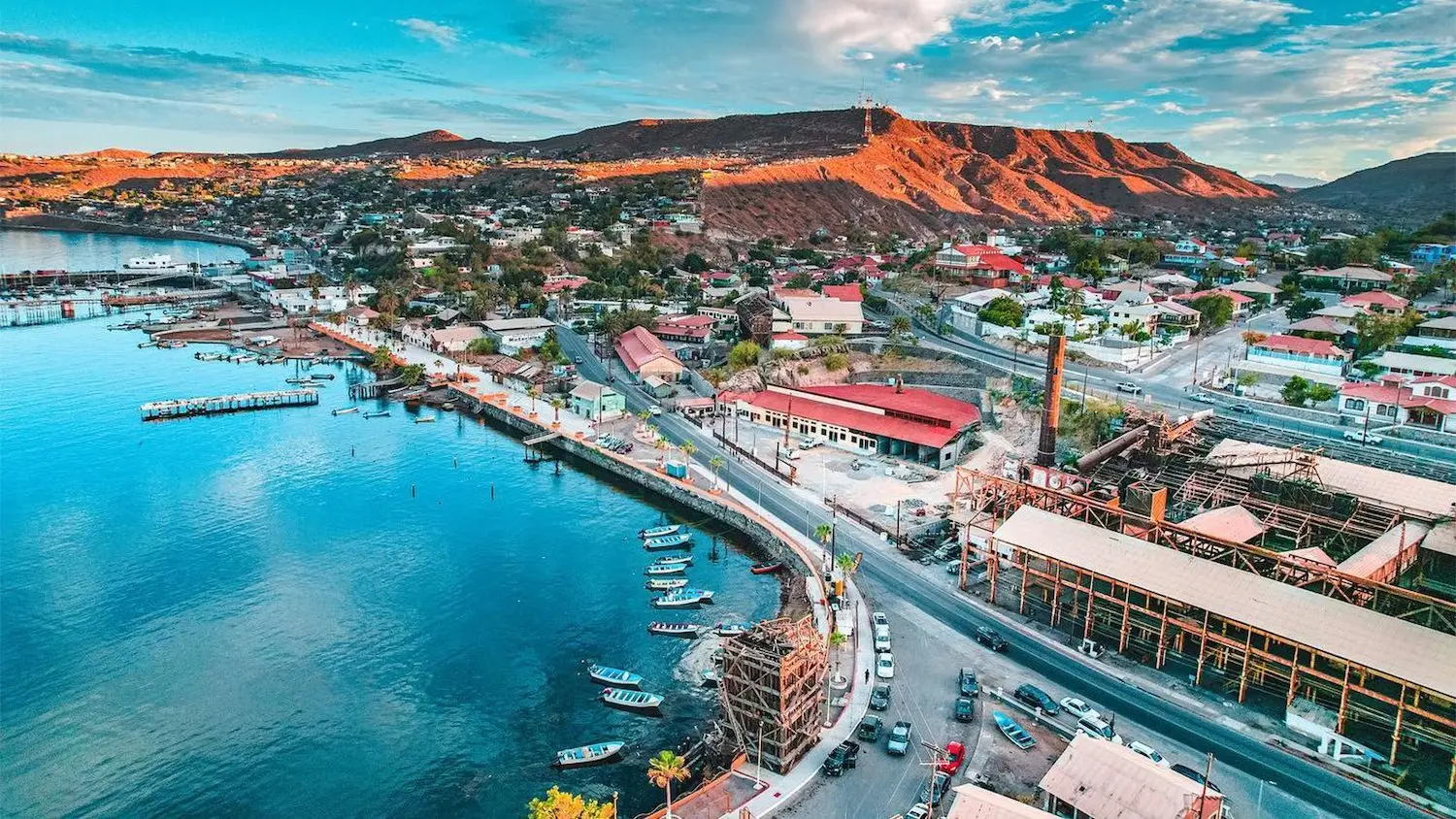
Heading north from Mulegé, stop in Santa Rosalía, a mining town with a dark history of exploitation, but also incredible architecture—a throwback to the days of the wild, wild west. The French mining company that dominated this town for 69 years left behind French Caribbean–style homes and buildings with symmetrical designs, wraparound porches, and peaked roofs. Their presence alongside the local church designed by Gustavo Effiel gives the sensation that you’re walking through a movie set and not a 140-year-old town. 

For lunch, Tacos y Mariscos Calle 6 offers the epitome of Baja-style tacos—the fried scallops are like nothing you will find anywhere else. The town’s bakery, El Boleo, is famous for its “French” bread that isn’t much different from what you will find in bakeries across Mexico, but the locale’s charm and antiquated architecture are enough to merit a visit. Don’t miss Padre Santo Brewing on the marine side of the coastal road that passes through town; it has an excellent red ale hazy IPA called Pecosa, meaning “sinner.”

Visiting Baja California Sur, Mexico featuring Trés Vírgenes volcanos and eco lodge
Courtesy of Wikipedia

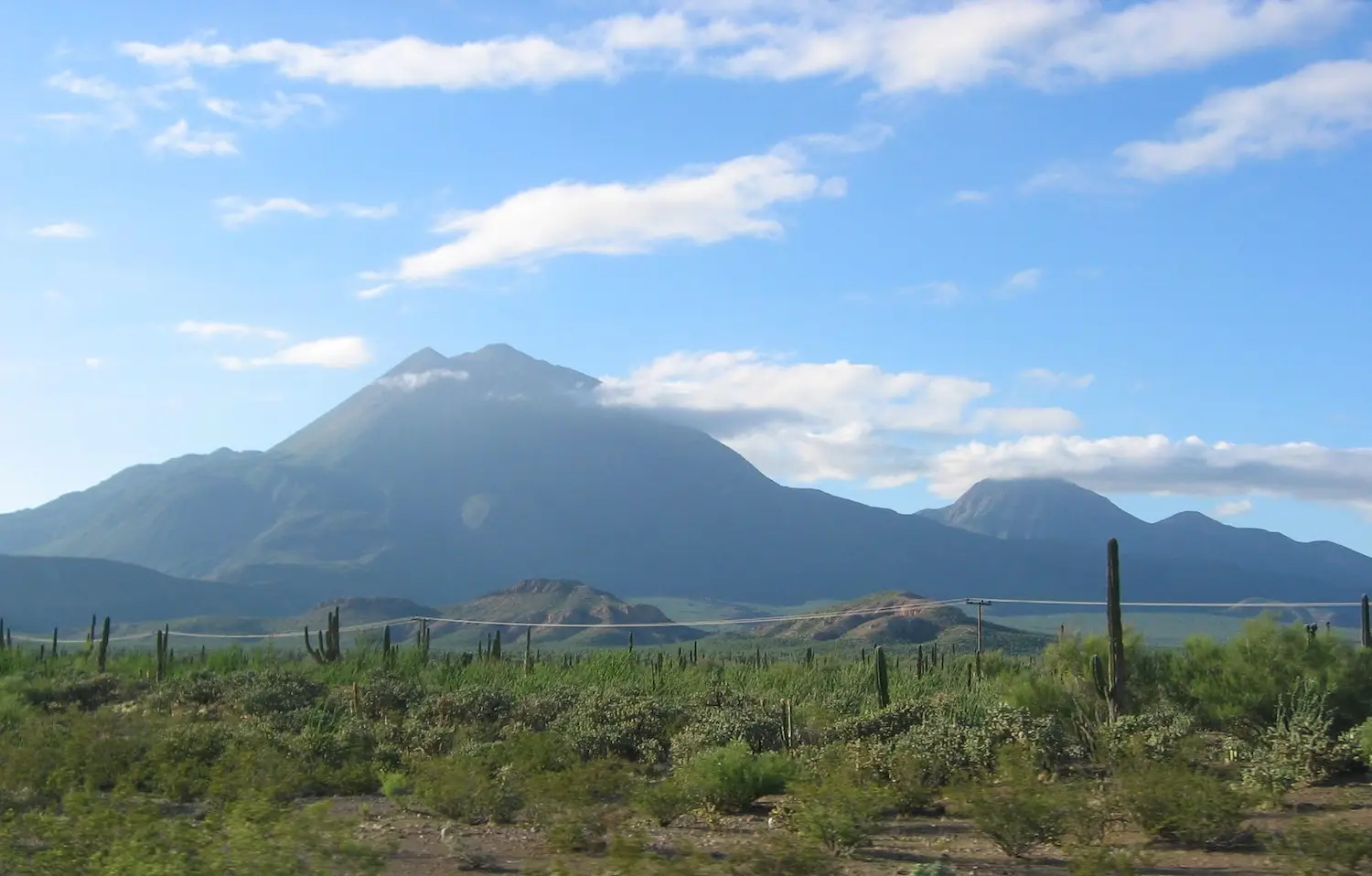
Don’t let the intense heat of the desert persuade you not to stop at Trés Vírgenes, an eco-lodge just an hour north of Santa Rosalía by car. Afternoons here should be spent sipping a cool drink in the shade, but once the sun starts to set, you’ll experience the spectacular celestial show that is the lodge’s star attraction. Caretakers from the local community host stargazers, hunters, and real-world escapists at this collection of humble cabins.

The area is a special Conservation Management Unit (UMA), which means the community is committed to maintaining the habitat and wildlife of the area. It auctions off two or three bighorn sheep hunting licenses a year to big game enthusiasts, helping to sustainably cull the population and raising thousands of dollars to support the eco-lodge and other community projects. Guides can take you through the desert that surrounds the Trés Vírgenes (three dormant volcanoes sitting in a line from the eco-lodge to the ocean) and out to see 30-foot-high cardon cactus.

These locations are just a small snapshot of what can be explored in Baja California Sur, but, starting here, you are sure to be captivated by the area and find your way back in no time.

Lydia Carey

About Lydia Carey

Lydia Carey is a travel and food writer based in Mexico City, who has spent the last 20 years traveling the Americas and sampling its bounty. She has been published widely online and in print and is the founder of the Mexico City Streets tour company.

Features MAY 22, 2025

The Story Behind North America’s First Wellness Retreat

After 85 years, Rancho La Puerta remains true to its roots with daily fitness activities, group lectures and guests speakers, and health-focused fare

The Story Behind North America’s First Wellness Retreat
Courtesy of Rancho La Puerta

The story starts when she is 17.

World War II is raging, and Deborah Szekely is newly married to a Jewish health guru known as the Professor. “My husband was a prominent writer, a Hungarian with a Romanian passport,” she recalls. “When his visa expired in the United States in 1940, we tried to get it renewed, but we were unsuccessful.”

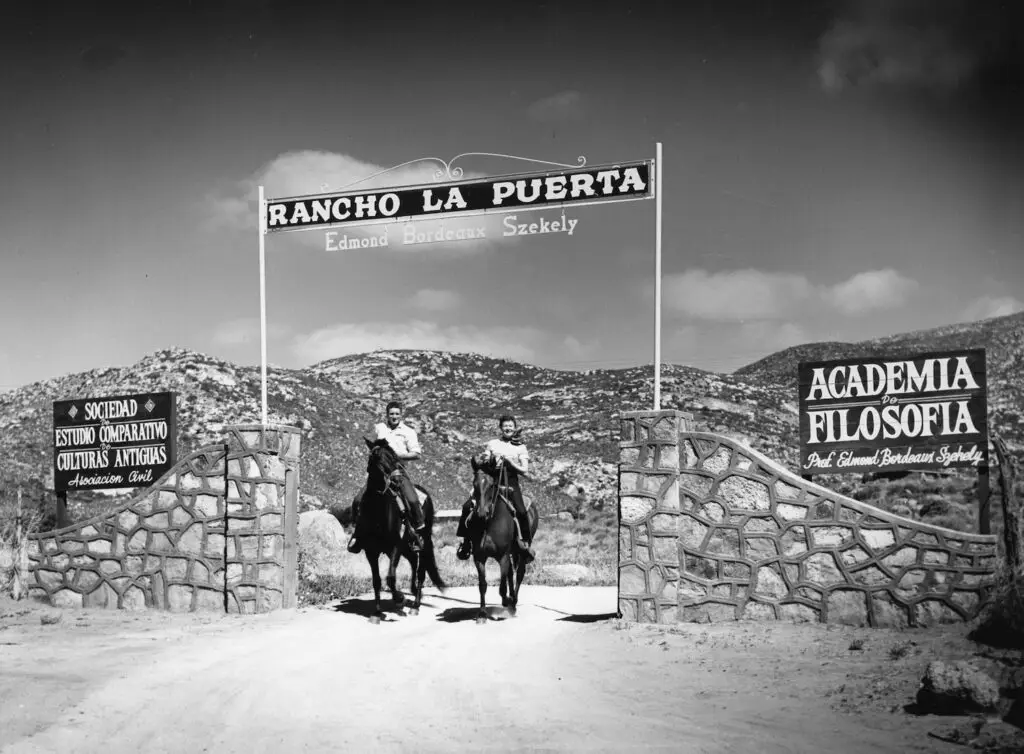
Historical photo of Rancho La Puerta  owners Deborah and Edmond "the professor" Szekely in Baja California, Mexico
Courtesy of Rancho La Puerta

So, they go to Tecate, Mexico, where they rent a hay shack at the foot of the sacred Mt. Kuchumaa for $50 a year. It’s the furthest thing from fancy, but that doesn’t stop the people from coming—health-conscious devotees drawn by the Professor’s work. For $17.50 a week and some chores, they can hear him speak and follow his diet and exercise recommendations, sleeping in tents they bring themselves. They don’t know it yet, but they’re the first guests of one of the first wellness retreats in the world. Eventually encompassing 4,000 acres just south of the US-Mexico border, it would come to be known as Rancho La Puerta.

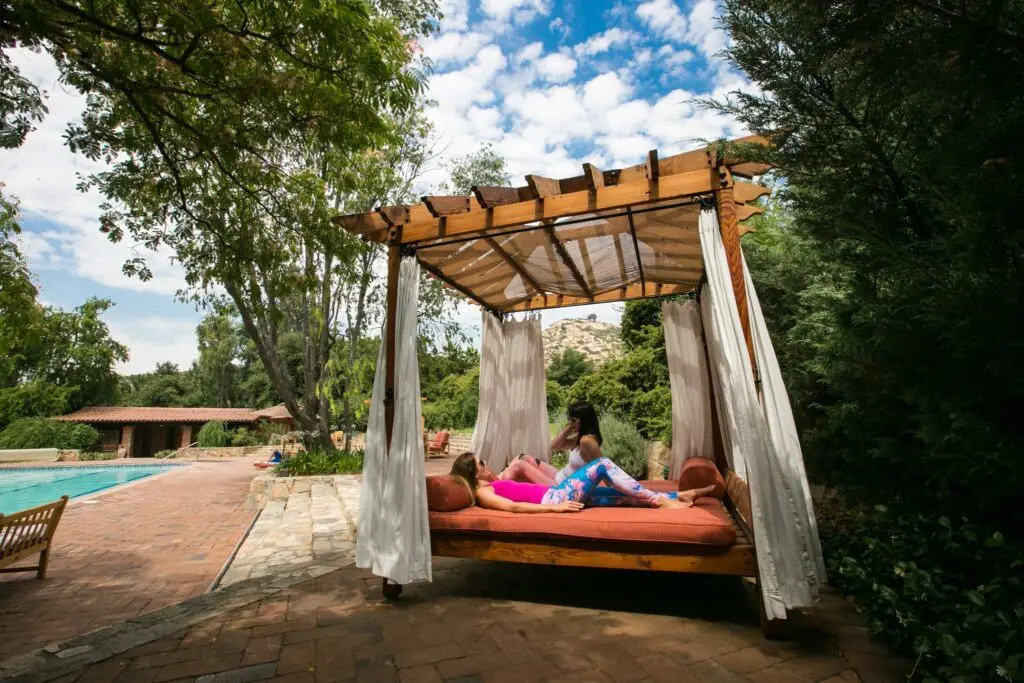
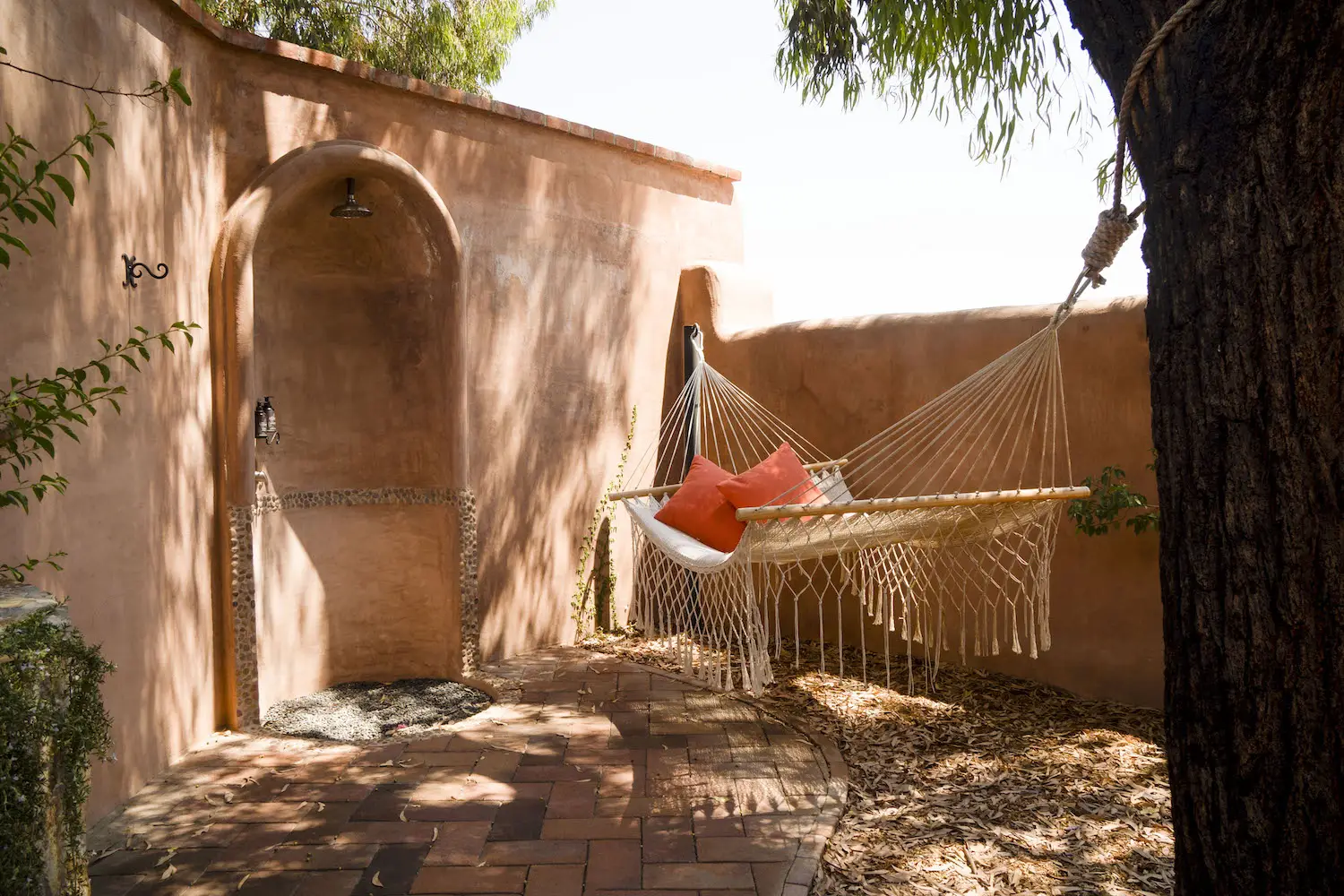
Now, in RLP’s 85th year, guests have traded tents for Mexican-tiled casitas equipped with wood-burning fireplaces. But an adult summer camp sensibility endures.

Historical photo of Rancho La Puerta  wellness classes featuring owner Edmond Szekely known as the professor in Baja California, Mexico
Courtesy of Rancho La Puerta

A typical day at the Ranch, as guests and staff affectionately call it, starts around 6 a.m. “I would say 90 percent of our guests do some kind of hike or walk before breakfast,” says Director of Guest Experience Barry Shingle. After you eat, it’s off to your pick of RLP’s 40-or-so daily 45-minute classes—meditation, water workouts, Pilates, yoga, breathwork, art, sound healing, stretching, pickleball clinics, dance, tai chi—from 9 a.m. to about 4 p.m., with a midday break for a buffet lunch and, if one is so inclined, a spa treatment or a few hours by the pool. Dinner is four pescatarian courses, usually shared with strangers. After that, it’s time for a movie or lecture before an early bedtime, so you can do it all again the next day.

Guests at dinner while at Mexican wellness retreat Rancho La Puerta near Tecate in Baj California
Courtesy of Rancho La Puerta
Rancho La Puerta’ s rustic architecture is nestled in a fragrant, 80-acre garden designed by the Szekelys’ daughter, current RLP president Sarah Livia Brightwood Szekely.

Some travelers (the must-sightsee-everything or don’t-talk-to-me-until-I’ve-had-my-breakfast-margarita types) will find this concept akin to paying $5,150 or more to spend a week in a Daedalean labyrinth of small talk and abdominal soreness. For a certain kind of person, it’s heaven.

Exterior of the winery at Valle de Guadalupe's Banyan Tree resort

More than 60 percent of guests return after their first visit, with plenty booking dozens of eight-day stays over the years. (A handful have made their way there more than 100 times.) And while many publications have sung RLP’s praises (“I first read about this place in Teen magazine when I was 13 and I thought, ‘I have to go there,’” now-retired, first-time guest Gloria Rathbun tells me), most people find themselves here on the recommendation of friends. The Ranch tends to create evangelists.

Rancho La Puerta Mexican wellness retreat owner Deborah Szekely at age 103
Courtesy of Rancho La Puerta
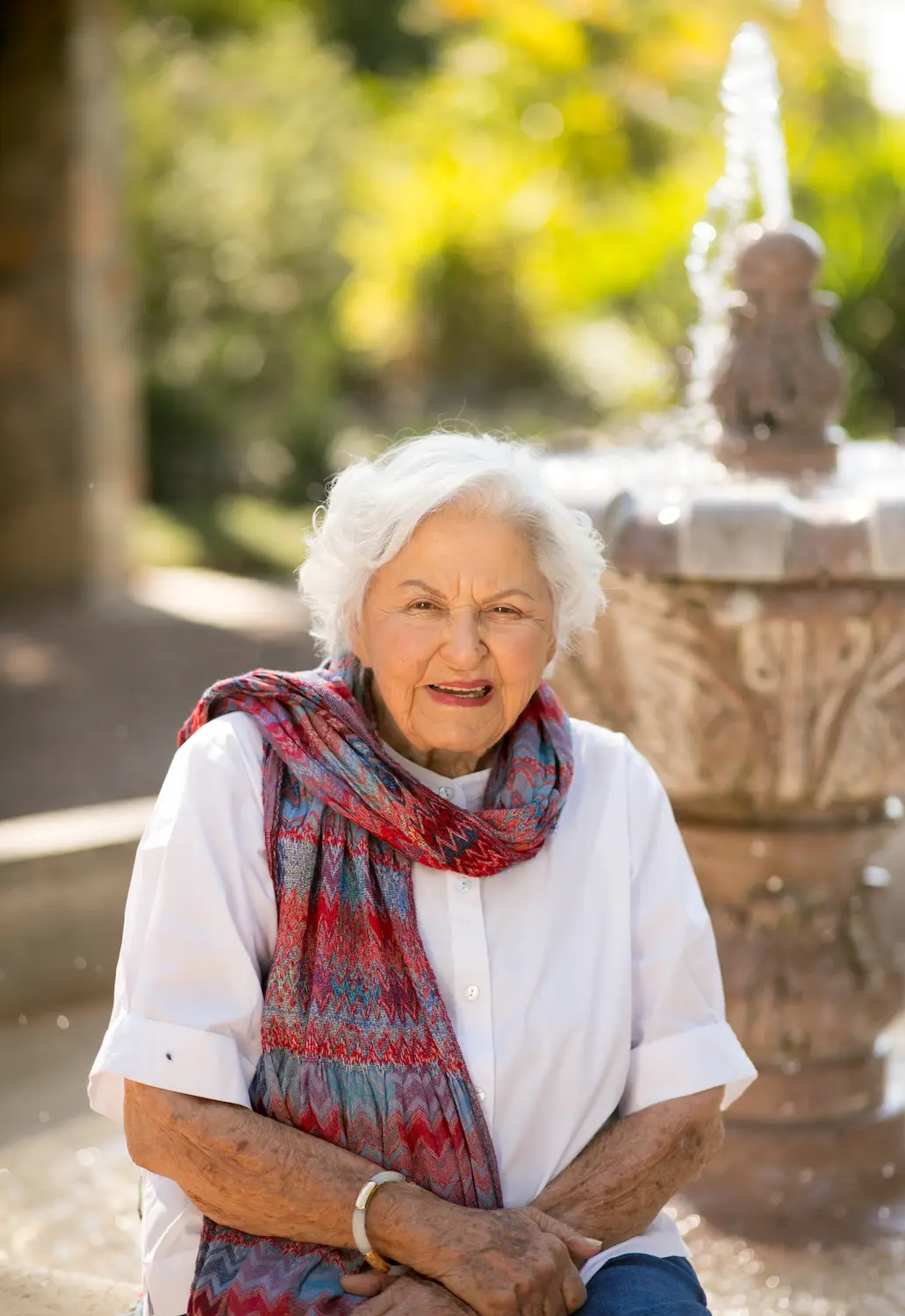
RLP founder Deborah Szekely turned 103 on May 3.

Many credit Szekely’s warm influence. Turning 103 this month, she is vibrant, still sharp, a living advertisement for the RLP brand of wellness. “I think some people make wellness too complicated and can get obsessive,” she says. “For me, regular exercise, eating well, and communing in nature helps me feel well.”
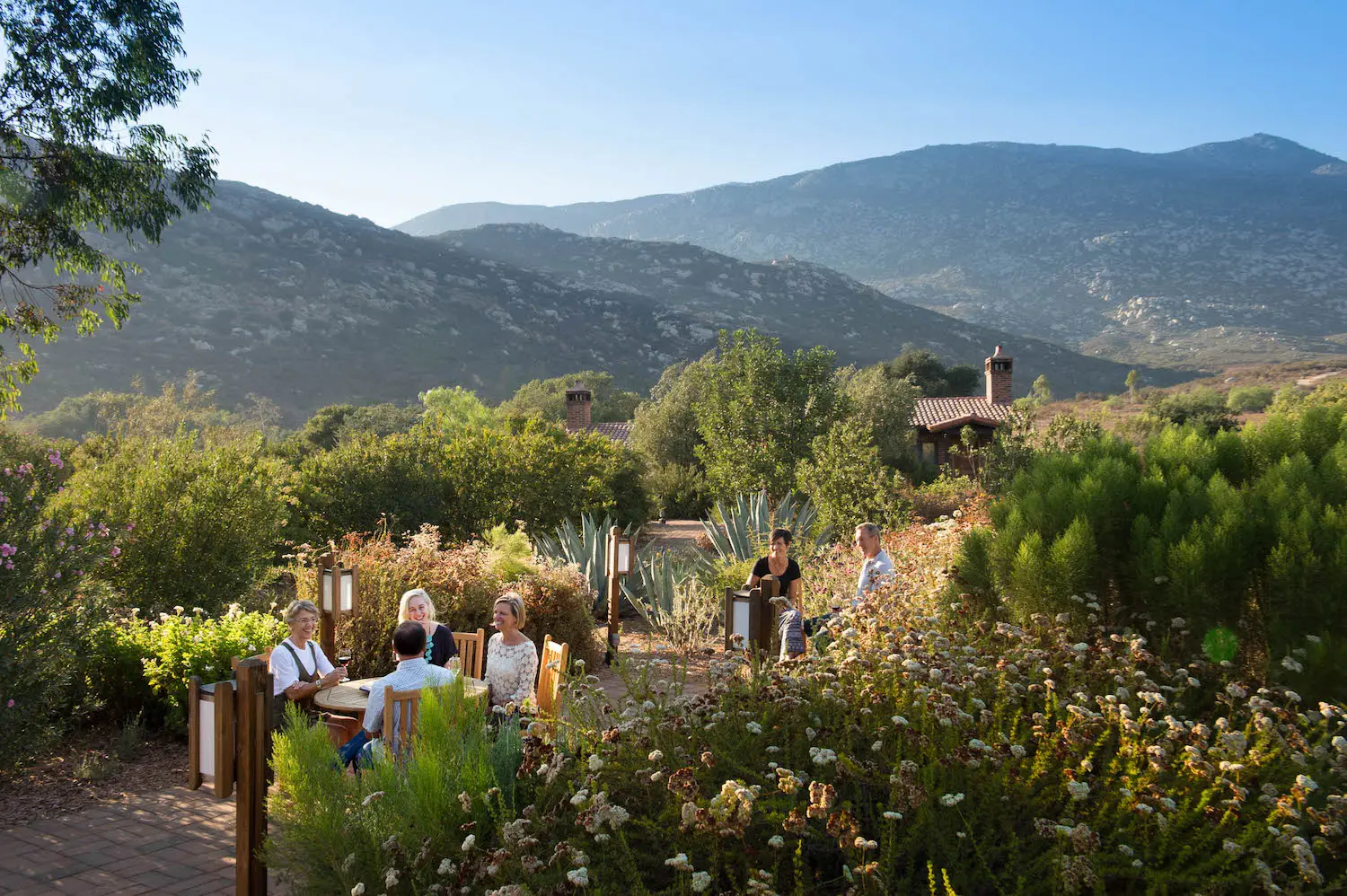
Indeed, you won’t encounter blood tests or calorie counts or supplements or body scans at the Ranch. Instead, you move. You eat produce grown on the property’s five-acre organic garden. And, with a maximum of 150 guests a week and all those group classes and structured mealtimes, you spend most of your waking hours immersed in one of wellness’s most underrated tenets: community.

Exterior of a casita at Mexican wellness retreat Rancho La Puerta in Baja California
Courtesy of Rancho La Puerta

While the Ranch, now run by the Szekelys’ daughter, always has something new in the works—they are currently building onsite residences, and a treatment plant that will process wastewater from 5,000 local families—its guiding lights remain the same.

“After we’d been in business for about 10 years, a reporter from the San Diego Union Tribune came to the Ranch to give us a review and called us ‘a cult to end all cults,’” Szekely remembers. “But today, many of the things the Professor taught and we’ve practiced at the Ranch since the beginning … are all considered common sense. Wellness is like buoyancy; you float in happiness, and you can do things that you wouldn’t be able to do if you were tired.”

Amelia Rodriguez is a writer and journalist and winner of the San Diego Press Club's 2023 Rising Star Award and 2024 Best of Show Award, she’s also covered music, food, arts and culture, fashion, and design for Rolling Stone, Palm Springs Life, and other national and regional publications. After work, you can find her hunting down San Diego’s best pastries and maintaining her five-year Duolingo streak.

Studio S JUNE 15, 2026

A Modern Take on Steak

Stake Chophouse & Bar brings contemporary classics and old-school service to the heart of Coronado

A Modern Take on Steak
Courtesy of Stake Chophouse

Stake Chophouse & Bar isn’t your average steakhouse. Blue Bridge Hospitality’s Coronado outpost is a modern interpretation of a big-city steakhouse nestled in the heart of the small coastal community. The team at Stake has reimagined the whole steakhouse experience. By prioritizing a seasonal farm-to-table sourcing philosophy, a personalized guest experience, and unique service touches, like a formal steak presentation and a bespoke knife selection process, Stake distinguishes itself in a sea of steakhouses.

Exceptional steaks, including Wagyu from Japan, Australia, and the U.S., and fresh seafood flown in daily form the core of Stake’s culinary identity. The menu features a five-course omakase-style steak experience highlighting house favorites, plus an array of cuts, and classic steakhouse staples—think a wedge salad, baked potato, or pasta carbonara—refined for a contemporary palate without losing their traditional appeal. Stake focuses on seasonal sourcing from the region’s best family farms and specialty purveyors, and incorporates intentionally unexpected touches to create something truly unique.

“I challenge our chefs and myself to take it a step further in sourcing,” says Chef Ronnie Schwandt. “It’s important to us to highlight different farms, unique one-off farms—whether it’s cattle, strawberries, a local fisherman or from anywhere in the United States, we’re always trying to find that niche.”

Beyond the menu, Stake emphasizes outstanding service, says Vinny Spatafore, Director of Hospitality Operations. Staff maintains detailed notes, allowing them to remember guests by name, recall previous orders such as a favorite martini (also memorable for the customer since it’s served in an extra tall, distinctly-shaped glass), and celebrate special occasions like birthdays and anniversaries.

“When you have those points of topic that you remember about a guest, they appreciate that,” he says. “Our servers are really good with that—we have a couple servers who have been here since the beginning and they’ll remember somebody from years ago, their name, their kids’ names, where they live. I’m really thankful to have a great front of house staff.”

Award-winning wines, rare whiskeys, special events, and a complementary black car service that provides transportation for guests throughout Coronado add to Stake’s appeal.

Schwandt stresses that Stake offers more than a meal; they aim to give patrons something unforgettable.

“It starts when you walk up the stairs and are greeted by the hostess—that sets the tone for the night. Then you’re greeted by a server, who may know you by name, and can guide you through the menu and curate as they get to know you,” says Schwandt. “Most people leave kind of blown away; they leave feeling like they just had an experience. That’s the goal, right? Whether you’re serving smash burgers or high-end steak, you want somebody to leave thinking, Wow, that was awesome.”

Partner Content
Features MAY 21, 2025

Where to Eat & Stay in Baja California Sur

From rooftop cocktails to Michelin eats and luxury private villas—your guide to exploring Los Cabos, La Paz, Todos Santos, and East Cape

Where to Eat & Stay in Baja California Sur
Courtesy of Los Cabos Tourism Trust

Baja California Sur is hot right now, and it’s not just the weather—leading hotel brands are adding dazzling properties to the beachfront (and golf-adjacent) lineup, notable chefs are helming farm- and sea-to-table restaurants, and master mixologists are crafting new cocktails from garden-fresh ingredients. San Jose del Cabo and Cabo San Lucas still retain that prized seaside vibe, capital city La Paz is expanding its luxury offerings, Loreto is maximizing its status as the enchanting “Pueblo Mágico” where charm meets nature, and low-key Todos Santos is dialing up the opulence. Luckily, all the “new” is just a short flight (or road trip, if you’re adventurous) from San Diego.

Los Cabos | La Paz | Todos Santos | East Cape

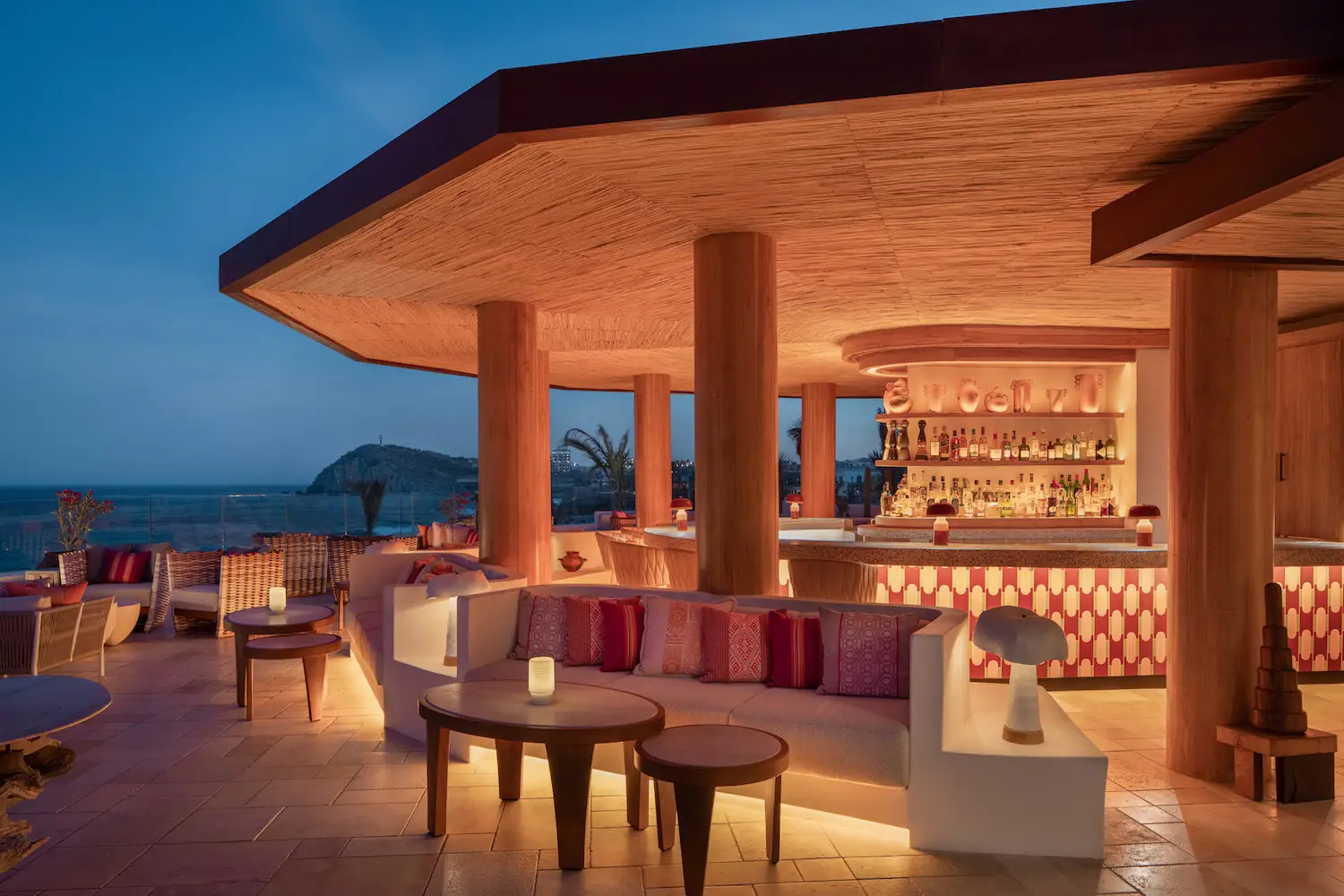
Sora Rooftop Lounge bar atop the Four Seasons Cabo San Lucas hotel at Cabo Del Sol in Baja California Sur
Photo Credit: Joseph Thomas
Sora Rooftop Lounge gives guests killer views from atop the Four Seasons Cabo San Lucas at Cabo Del Sol.

Hotels in Los Cabos, Mexico

Four Seasons Resort and Residences Cabo San Lucas at Cabo Del Sol

Opened in 2024 with a mix of guestrooms and private residences, this luxuriously welcoming, village-style resort within putting distance of Cabo Del Sol greens offers a guests-only, swimmable beach; private plunge pools; and retractable floor-to-ceiling glass doors.

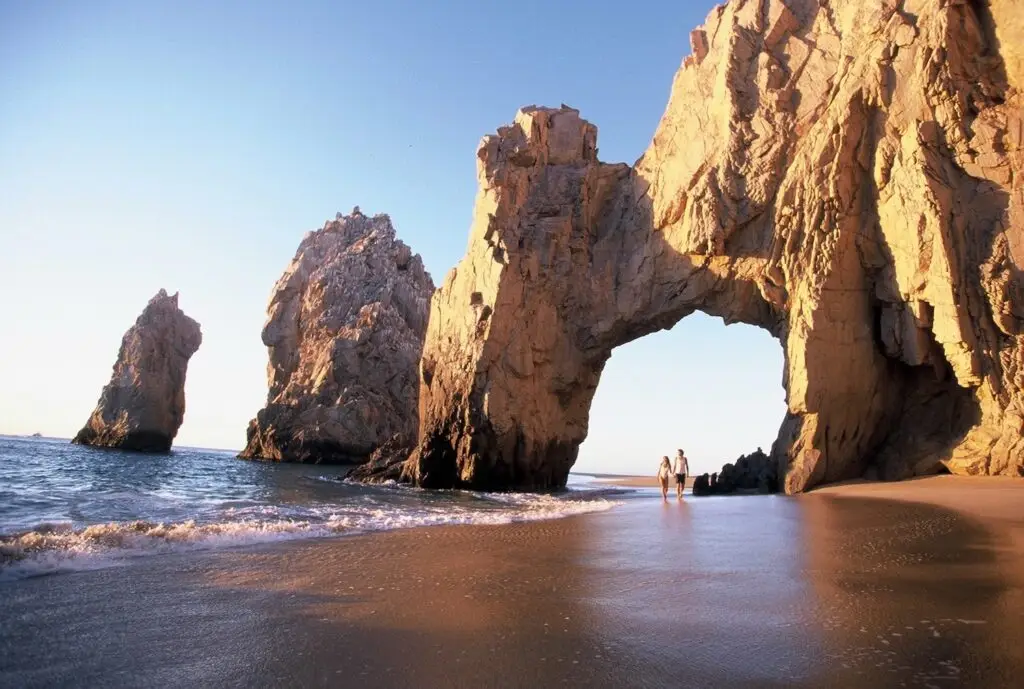
Exterior of Cabo San Lucas hotel Corazon Resort & Spa featuring Land's End

Grand Velas Boutique

This adults-only, $150 million, beachfront all-inclusive enclave within Grand Velas Los Cabos launched in 2023 with Michelin-starred cuisine and four mixology concepts to sip your way through. Try an Ice & Fire treatment at the spa or reset with a “harmonizing ritual.”

Park Hyatt Los Cabos at Cabo Del Sol

Loyal Hyatt guests, rejoice: The first Park Hyatt in Mexico debuts in summer 2025 with plunge pools for private dipping, cabanas, golf, a full-service spa, a fitness center, international dining, a nail salon, a coffee shop, and a kids’ club onsite.

Hyatt Ziva Los Cabos

2025 ushers in a $50 million update to this all-ages, all-inclusive seaside resort: relaxing décor, swim-up suites and floating lagoon fire pits, a two-story spa, 16 dining and drinking spots, and renovated rooms with private balconies.

Tropicana Los Cabos, Tapestry by Hilton Collection

Last year brought a complete revamp of the iconic 1956 Tropicana Inn, one of the oldest hotels in the heart of San Jose del Cabo. It’s still cozy but much more expansive, with 68 rooms,
a new pool, an intimate bar overlooking the boulevard, and a farm-to-table restaurant.

GR Solaris Lighthouse, San José del Cabo

New as of late 2024, this all-inclusive resort provides a beachfront pool, plus private balconies and views with every room. The sushi bar at El Faro (the lighthouse) offers 360-degree vistas.

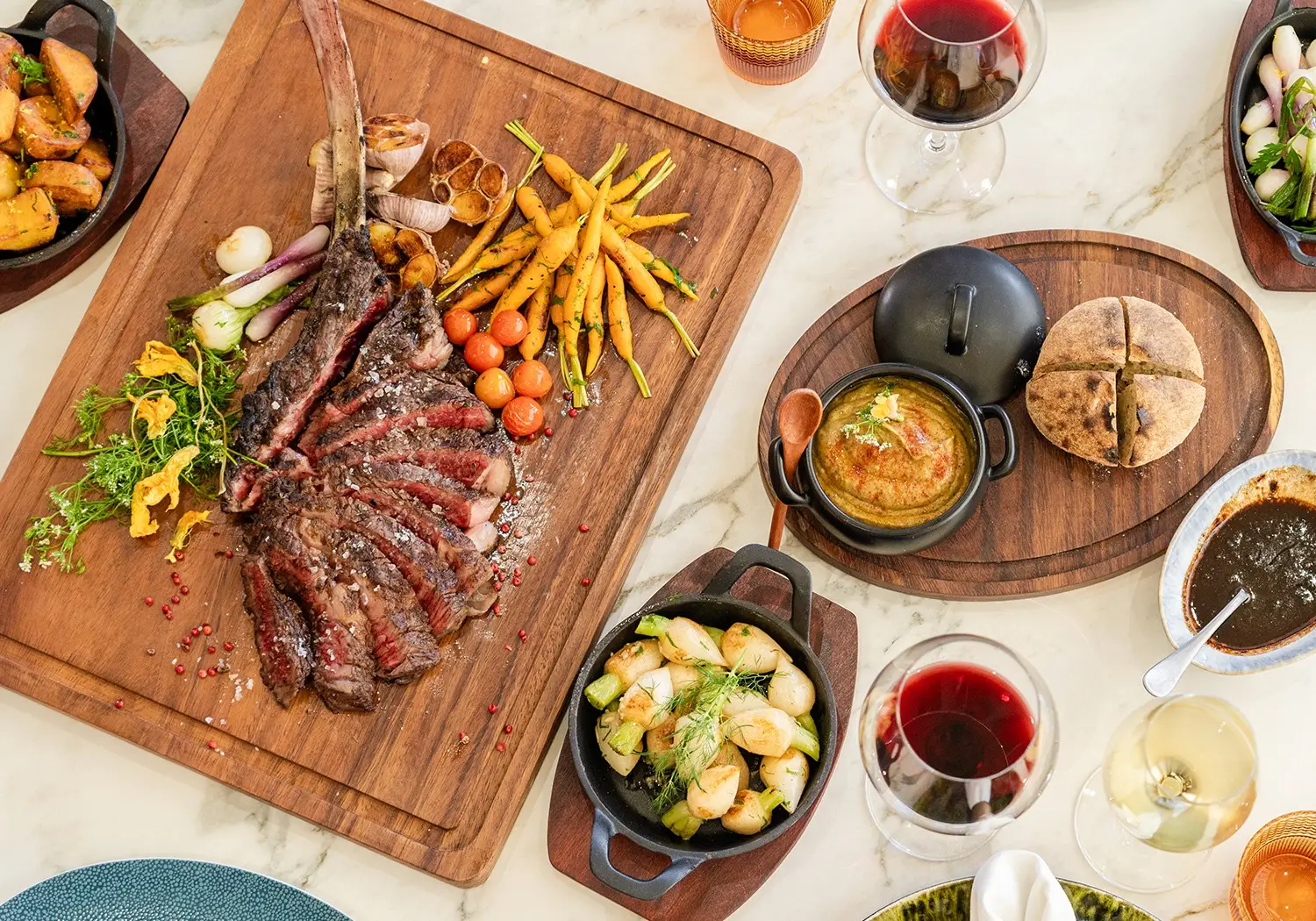
Food from The Woods Cabo restaurant in Baja California Sur in Los Cabos
Courtesy of Diamente Cabo San Lucas
The Woods Cabo

Restaurants in Los Cabos, Mexico

The Woods Cabo

Opened in late 2023 at Diamante Cabo San Lucas and overlooking the greens at El Cardonal and the Pacific, Tiger Woods’ luxury sports bar serves Mexiterranean fare with local produce, fresh- caught seafood, and an onsite butcher shop.

Zenna Los Cabos

Laying down spicy, gingery Asian-Latin seafood dishes since late 2023, Zenna is a stylish escape (with plenty of al fresco seating) at Palmilla Dunes.

Casa Martín

At beloved chef Roger Martín’s second location, opened in 2024, you’ll find Baja dishes, Italian cuisine, and classics like tuna tartare. Start with charcuterie and a cocktail, then order the linguine habanero and the lobster risotto.

M Bar

M Bar joined Nobu Residences’ rooftop lineup in 2023. Catch the sunset here on the west side of the cape, order cocktails and nibbles, and take in the view and sea air, then hit your next stop for the main meal.

Zest

Dine under the stars in executive chef Fabio Quarta’s private garden at Four Seasons Costa Palmas. This restaurant, opened in 2024, seats only 12 guests a night for a nine-course odyssey featuring seasonal ingredients and pairings from sommelier Victor Itza Pacheco.

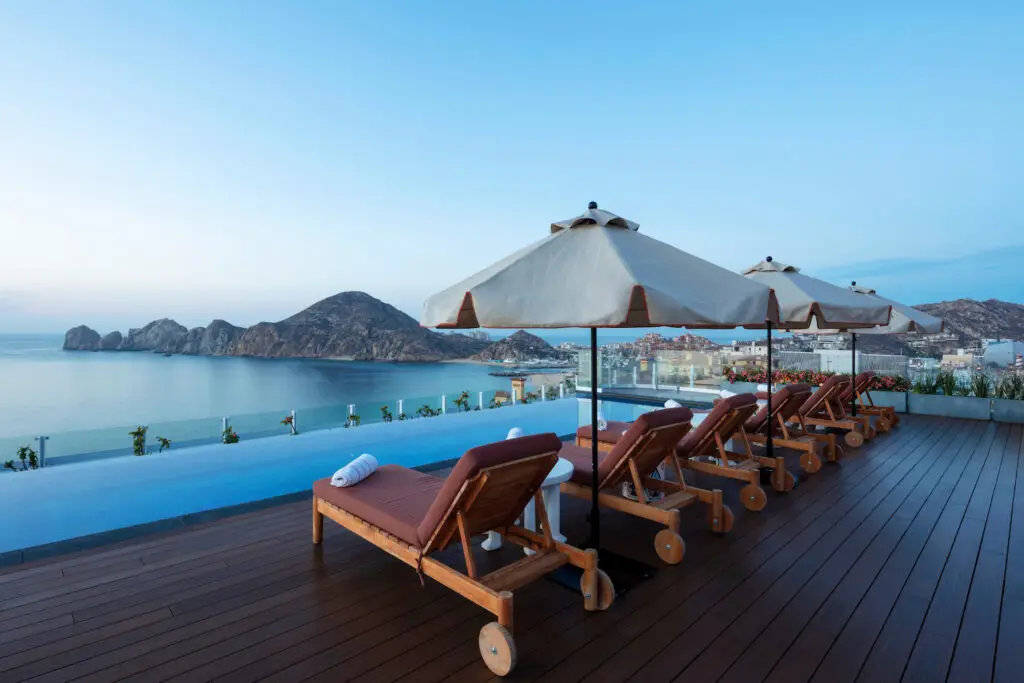
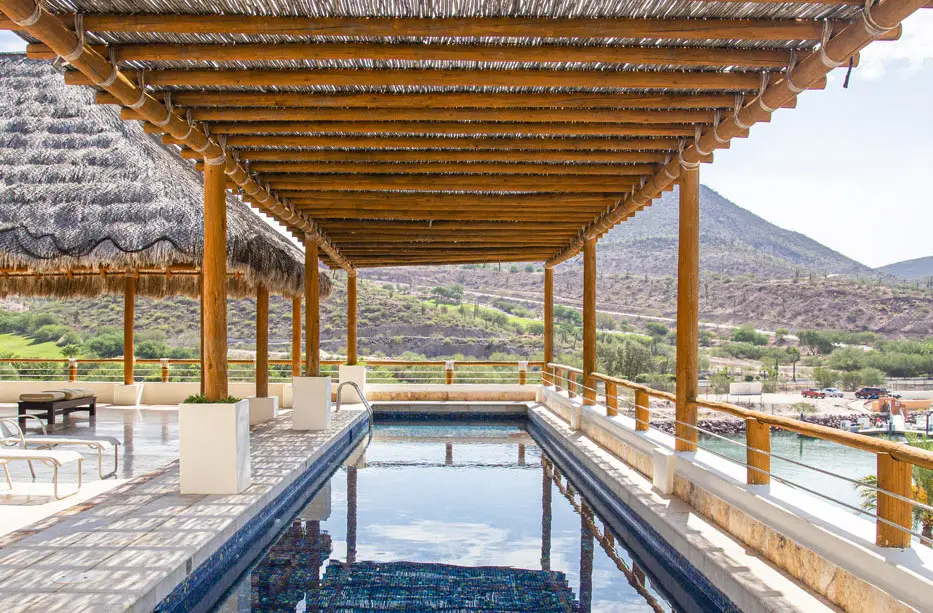
Rooftop pool at Baja California Sur's Hotel Indigo La Paz Puerta Cortés hotel in Mexico
Courtesy of Hotel Indigo La Paz Puerta Cortés
Stays at La Paz resorts like Hotel Indigo offer a more serene escape than those in bustling Los Cabos.

Hotels in La Paz, Mexico

Hotel Indigo La Paz Puerta Cortés

In 2024, IHG Hotels & Resorts opened this 115-room facility as a getaway from the bustle of Los Cabos, with a beach club and outdoor infinity pool. Access golfing, snorkeling, and boating, or simply stroll along the malecón.

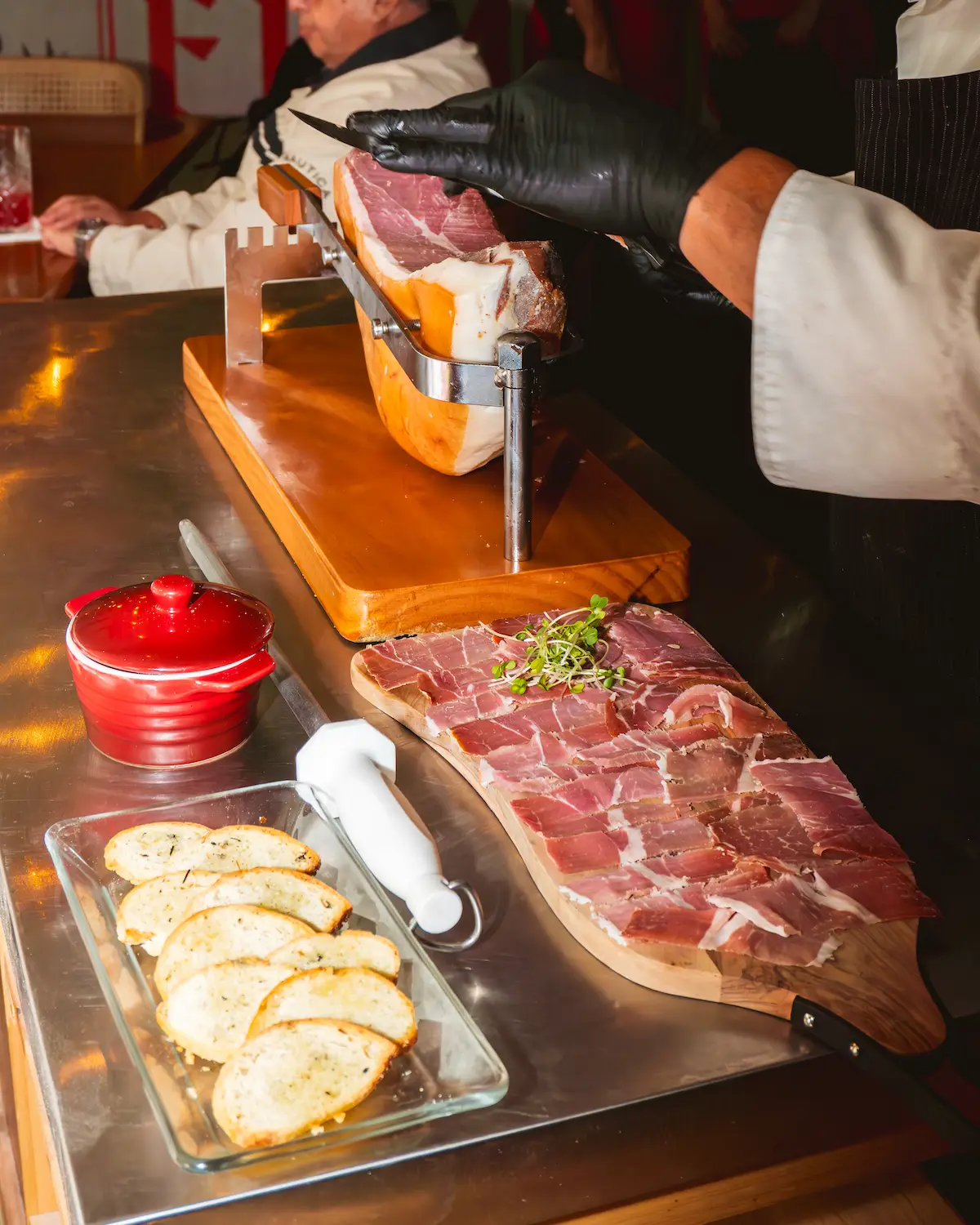
Sliced meat appetizers at Fumo Italian Grill in La Paz, Mexico
Photo Credit: Isle Castillo/Haken Media
A chef slices charcuterie at Fumo Italian Grill.

Restaurants in La Paz, Mexico

Fumo Italian Grill

This upscale, full-service restaurant opened in 2024 on the terrace at popular sando spot La Esquina Deli & Market. Expect sumptuous Italian pastas, hand-tossed wood-fired pizzas, and grilled meats. Don’t skip the cocktails—or the reservations.

Azotea

Beneath flowing, sculptural architecture, look out over the sea from the rooftop of hotel República Pagana while enjoying master mixology, music, and comforting bites.

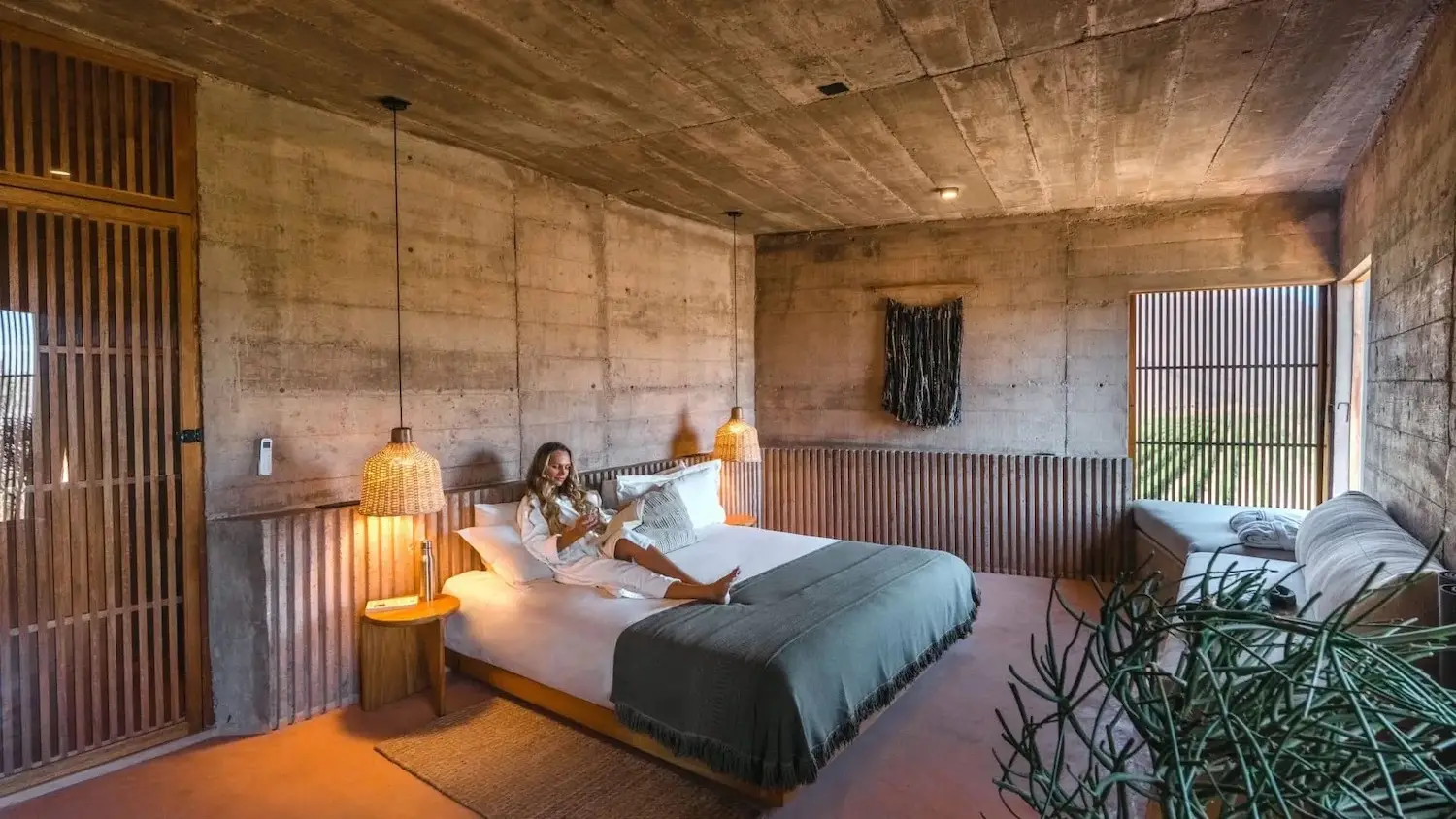
Interior of bedroom at Paradero Todos Santos hotel in Baja California Sur, Mexico
Courtesy of Paradero Todos Santos

Hotels in Todos Santos, Mexico

Todos Santos Boutique Hotel

Built in 1890 by a Spanish countess and converted in 2024 to a 10-key boutique hotel with $1 million in renovations, this is an opulent escape with a secret wine cellar. The lower-level suites come with plunge pools and gardens.

Paradero Todos Santos

One of three hotels in Mexico to join the Leading Hotels of the World list in 2024, this resort treats guests to opportunities to explore nature. It’s set to expand in 2025 with 26 family-friendly, ultra- luxe villa residences starting at $2.5 million.

Hotel San Cristóbal

This Playa Punta guest favorite just added a private beach and six luxurious oceanfront saltwater plunge pool rooms with immersive indoor-outdoor spaces and private outdoor soaking tubs.

Villa Santa Cruz

A 2025 refresh brings 24 new ocean-view rooms, including eight rooftop villas with hot tubs and fire pits, and oceanfront glamping tents. The hotel—co-owned by two San Diego families—provides horseback-riding excursions, onsite stargazing, beach bonfires, and outdoor massages.

Kimpton Mas Olas Resort & Spa

Opened in April 2024, this updated oceanfront, adults-only, luxury boutique hotel offers seamless indoor-outdoor spaces, with terraces and private plunge pools in view of dramatic mountain, desert, and ocean backdrops. There’s a sea turtle hatchery and a bird sanctuary on the grounds.

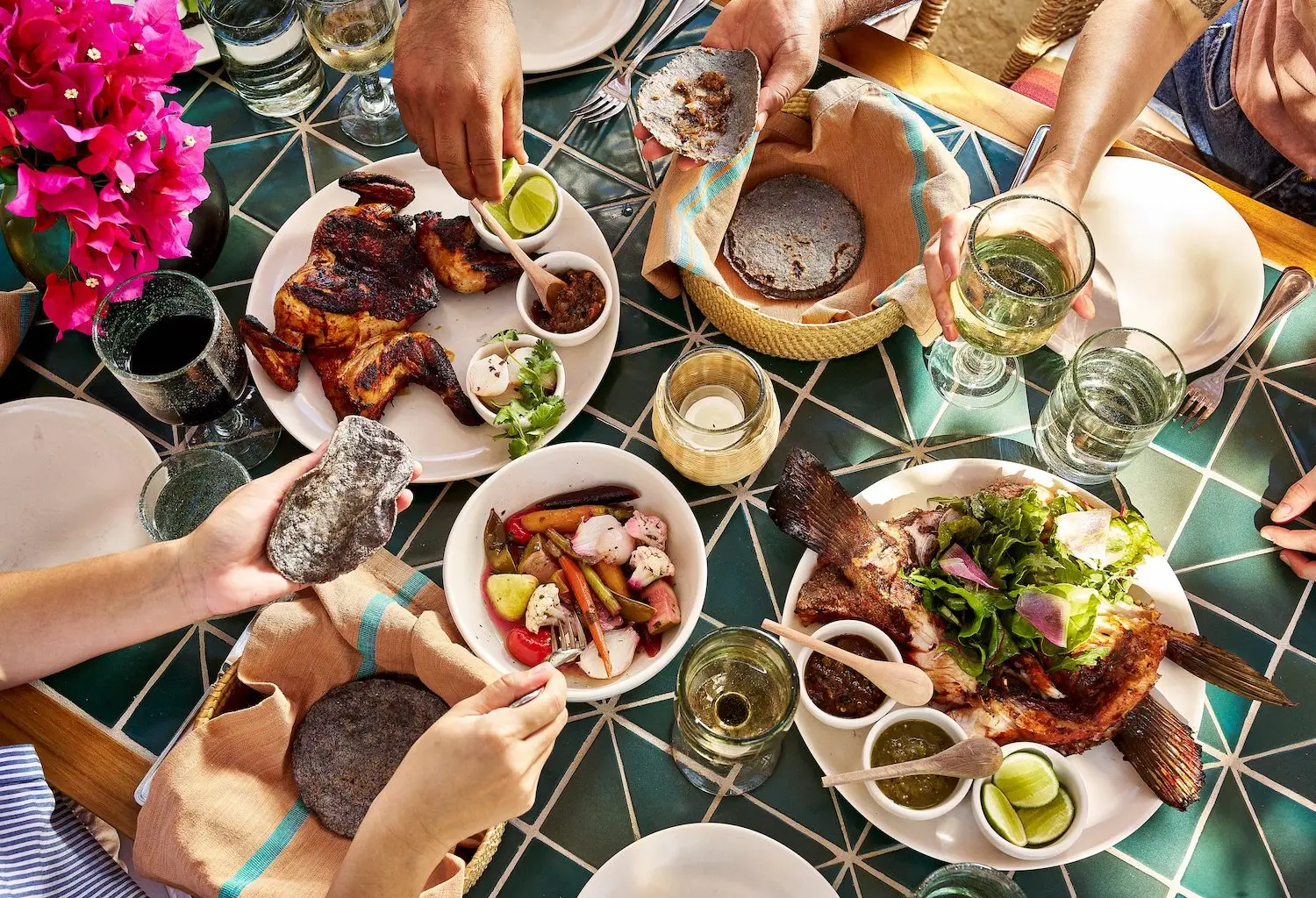
Food from Todos Santos restaurant Cosecha at Hotel San Cristóbal located in Baja California Sur, Mexico
Courtesy of Cosecha

Restaurants in Todos Santos, Mexico

Cosecha at Hotel San Cristóbal

Dishes are prepared in an outdoor kitchen and served family-style in the garden, with seasonal ingredients from land and sea. Sip a cocktail adorned with a flower or infused with herbs.

Caracara at Villa Santa Cruz

The hotel restaurant serves seasonal produce and handcrafted cocktails from the new Farm Bar in the open air amid agave plants.

Outdoor pool and lounge area at the Kimpton Mas Olas Botánica Spa in Todos Santos, Mexico
Courtesy of IHG

Things to Do in Todos Santos, Mexico

Kimpton Mas Olas Botánica Spa

Here, you’ll find 25,000 square feet of curative treatments (with botanicals from the garden onsite), meditation indoors or outdoors, hydrotherapy, yoga, Pilates, and, soon, pickleball.

Exterior of new Mexico hotel Amanvari in La Ribera/East Cape, Mexico
Courtesy of Elastic Architects
Amanvari

Hotels in La Ribera/East Cape, Mexico

Amanvari

On the quieter East Cape near La Ribera, this new enclave at Four Seasons Costas Palmas—slated for late 2025—will feature 20 standalone bi-level villas. Floor-to-ceiling windows, private pools, and outdoor terraces will provide a seamless transition between interior accommodations and natural surroundings.

Vidanta East Cape

New for 2025, the latest Vidanta property claims to have the largest saltwater pool in the world, and it overlooks the Gulf of California. Rumor has it a Cirque du Soleil show (like at other Vidanta locations) is coming, along with a Greg Norman–designed golf course and rooftop poolside dining.

Leorah Gavidor won her first essay contest at age 5. She writes features, news, and non-fiction in San Diego.

Features MAY 19, 2025

5 Wines to Try from Valle de Guadalupe

Pick up a bottle or plan a tasting from these esteemed Baja wineries featuring everything from organic pours to a century-old icon

5 Wines to Try from Valle de Guadalupe
Courtesy of Bodegas Magoni

With more than 100 wineries in Valle de Guadalupe, knowing where to go and which to try can feel overwhelming. Luckily, we took the guesswork out of the task and put together a list of our favorite wines in the region from organic pours to a husband-and-wife team, and a century-old icon, here’s what to drink in Valle.

Finca La Carrodilla

The first organic and biodynamic winery in Mexico (with certifications from CCOF and the USDA) is best known for its Árbol line—the 2021 grenache rosé is fresh and acidic, with notes of strawberries and red fruit.

Vena Cava

A highlight of winemaker Phil Gregory’s vision is the 2020 Ambar, a skin-contact chardonnay that is aged for two months in neutral oak barrels, yielding a smooth trip toward the tannic pleasures of an otherwise hackneyed grape.

Exterior of the winery at Valle de Guadalupe's Banyan Tree resort

Mina Penélope

This husband-and-wife team does it all, from concept to harvest. Try their 2023 sauvignon blanc—its stainless fermentation gives way to a taught acidity.

Vinos Pijoan

Started by ex-veterinarian Pau Pijoan, this sleeper hit of the valley is best known for “El Carbónico,” a playful take of the known grapes of the region—grenache, tempranillo, and syrah—fermented through carbonic maceration.

L.A. Cetto

Channeling the body and depth of Super Tuscans, the 2018 Petite Sirah from this nearly 100-year-old icon is a hearty red whose grapes hail from the Rhône Valley in France but feel just as at home in the arid landscapes of Valle de Guadalupe.

Danielle is a freelance culture journalist focusing on music, food, wine, hospitality, and arts, and founder-playwright of Yeah No Yeah Theatre company, based in San Diego. Her work has been featured in FLAUNT, Filter Magazine, and San Diego Magazine. Born and raised in Maui, she still loves a good Mai Tai.

Partner Content JUNE 10, 2026

New Options for GLP-1 Users

Scripps study shows that some patients may be able to taper their dose and maintain results

New Options for GLP-1 Users
Courtesy of Scripps Health

While glucagon-like peptide-1 (GLP-1) receptor agents have been used to treat Type 2 diabetes for more than 20 years, their recent emergence as weight-loss wonder drugs marked a new frontier in medicine. But their effectiveness has left some patients wondering what to do once they’ve reached their goal. Stopping the medication could mean regaining some, if not all, of the weight. A Scripps Clinic internal medicine physician recently conducted a small study of whether GLP-1 patients who had reached their goal weight could maintain that weight by taking their regularly prescribed injection every other week instead of weekly. Spoiler alert: 30 of 34 patients did. Read more about the study here and what that may mean as pharmaceutical companies roll out oral GLP-1s.

For more nutrition, wellness, and healthy living tips, sign up for the San Diego Health newsletter here.

Partner Content

Thousands of savvy locals already get it.

San Diego's best restaurants, experiences, and events—handpicked and delivered to your inbox weekly. You in?

Close the CTA

Contact Us

1230 Columbia Street, Suite 800,

San Diego, CA