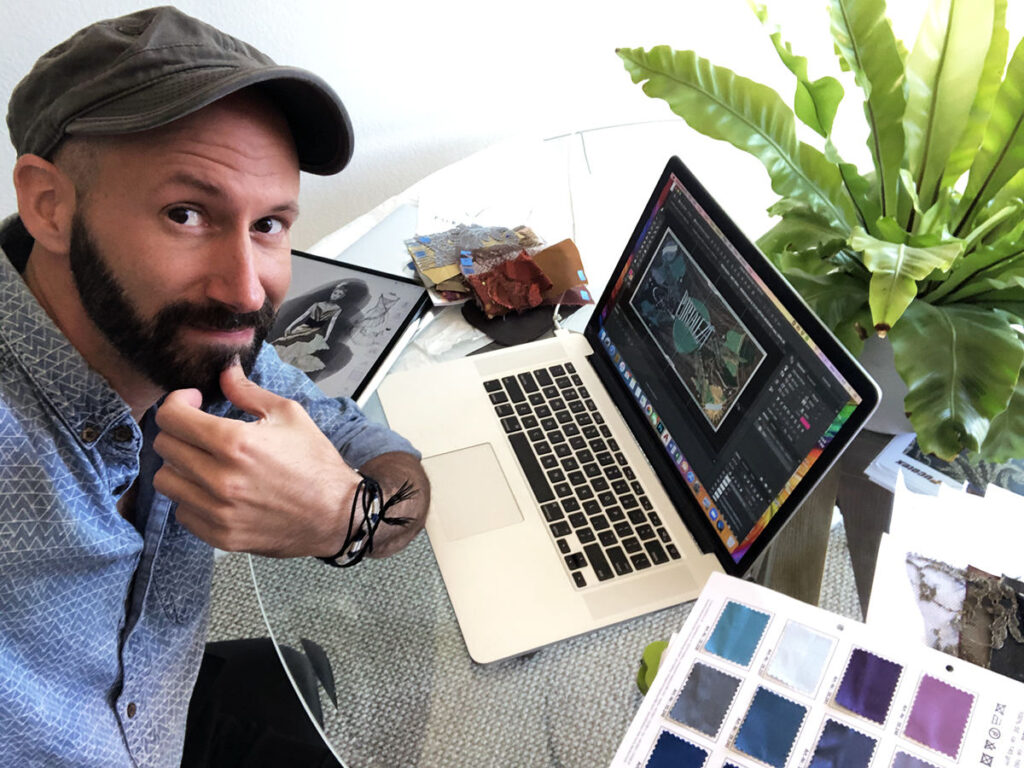
Sheltering at Home with… David Israel Reynoso, Artist
The La Jolla Playhouse artist-in-residence and creator of upcoming digital Without Walls show “Portaleza” tells us how to make a “quick quiche” and stay away from sweatpants
I think it’s technically “Temecula Heights,” but essentially, I’m on the outskirts as you enter OB.
Occupation:
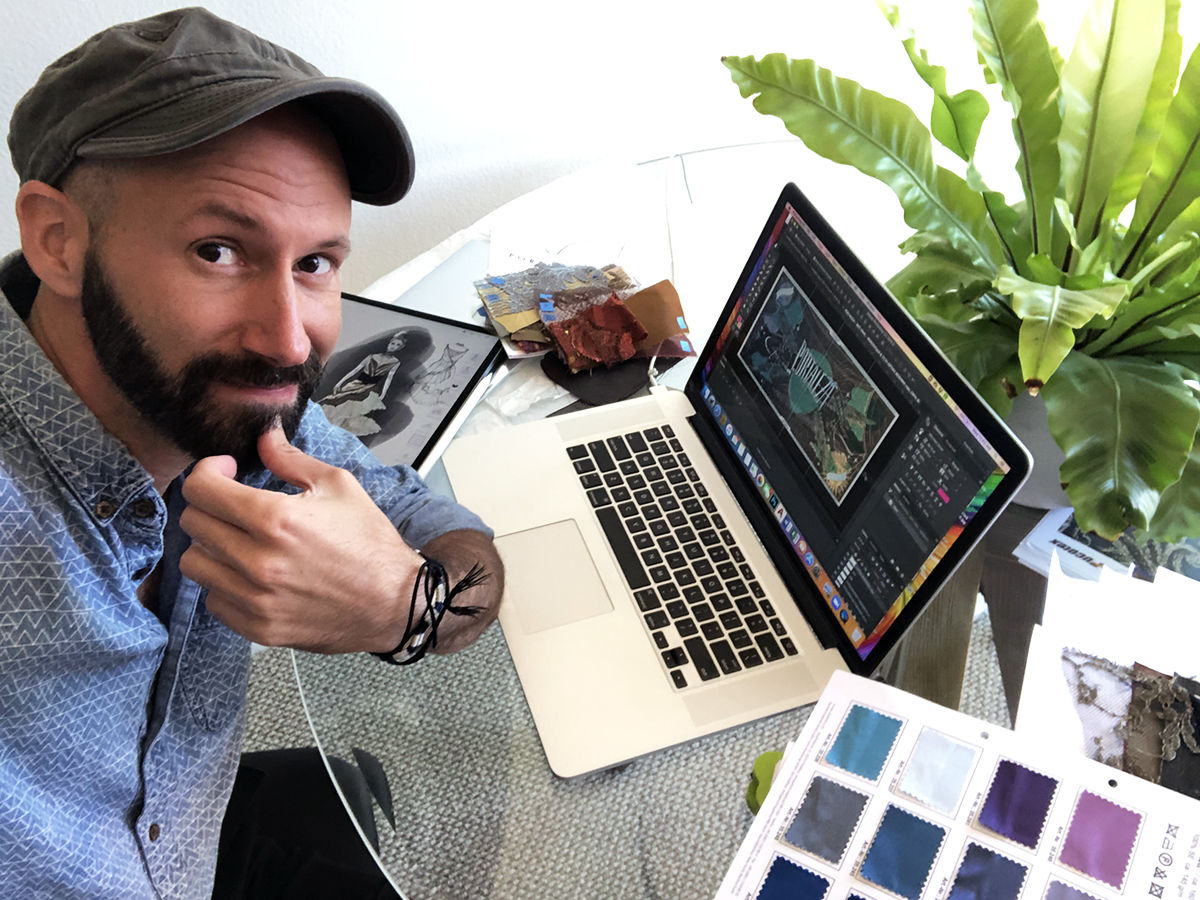
Scenic, costume, exhibit, and immersive designer; founder of Optika Moderna; artist-in-residence at La Jolla Playhouse; currently working on Portaleza for La Jolla Playhouse’s digital Without Walls series.
Who you’re sheltering with:
My kids and my family.
Go-to meal:
I like to make what I lovingly refer to as “quick quiches.” I believe they’re somewhere between a quiche and a frittata, but closer to a quiche as it has a crust. I make mine out of egg-soaked tortillas that I pan fry. I fill them with eggs, whole milk, sautéed vegetables like mushrooms or tomato, and any worthy leftovers that seem like interesting candidates. Sometimes I finish them off in the oven or brave flipping them in the pan.
What you’re doing for exercise:
I discovered I can do pull-ups and chin-ups and really enjoy them! Who knew?! I do go on walks, and had been following a routine of going at 11 and 3 each day—I need to get on that again. I do some living room resistance training and have been known to break out into dance if the song is right.
I feel like I should offer up some amazing documentary that makes me seem like some super-highbrow intellectual. But I confess, I got hooked on RuPaul’s Drag Race! Which is… just so incredible. I had heard for years about how amazing the queens are, and yes, I feel super late to the party. For a different flavor, I’ve enjoyed watching nearly every animated film in the Disney canon with my two kids. It’s been surprising that even after nearly a dozen replays, I am still finding new layers within some of those films!
Rituals to stay sane:
I try to find benchmarks within the day that help maintain a routine, especially when juggling work and homeschooling. It seemed a little nuts at first, but I map out a full day’s schedule, hour by hour, and whoa, has it made all the difference for my sanity! It’s an odd thing to be an artist who needs space to create and enter a flow state without interruptions, all while balancing Zoom work meetings and ever-changing deadlines. Yet I am so grateful.
What you’ve come to appreciate:
I’ve come to appreciate my loved ones like never before. I never realized how much I took the time I spent with them for granted, and hope to never do so again.
Daily uniform:
I’ve always liked getting dressed for the day. I never veer away from feeling “presentable,” as I define that for myself. I do find something about maintaining a sense of personal respect and self-care comes with just being intentional about whatever I put on, be it a swimsuit or a three-piece suit.
What you can’t wait to do when everything reopens:
Hug, kiss… go out to eat… see a show… travel… and dance with a spicy margarita in hand.
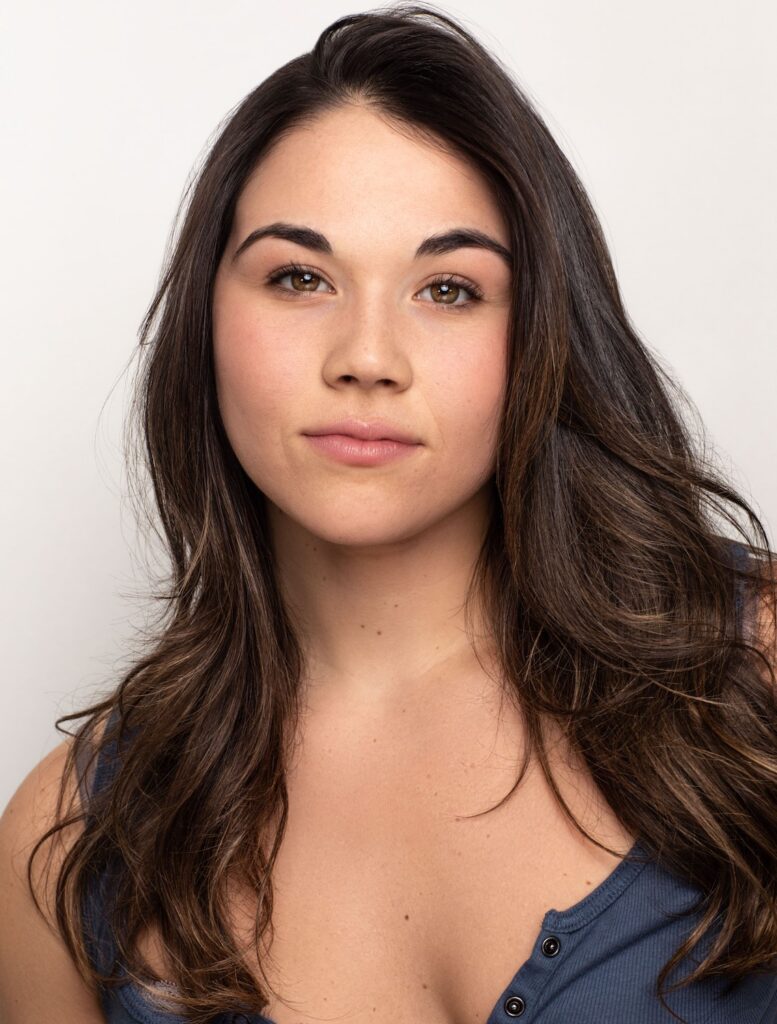
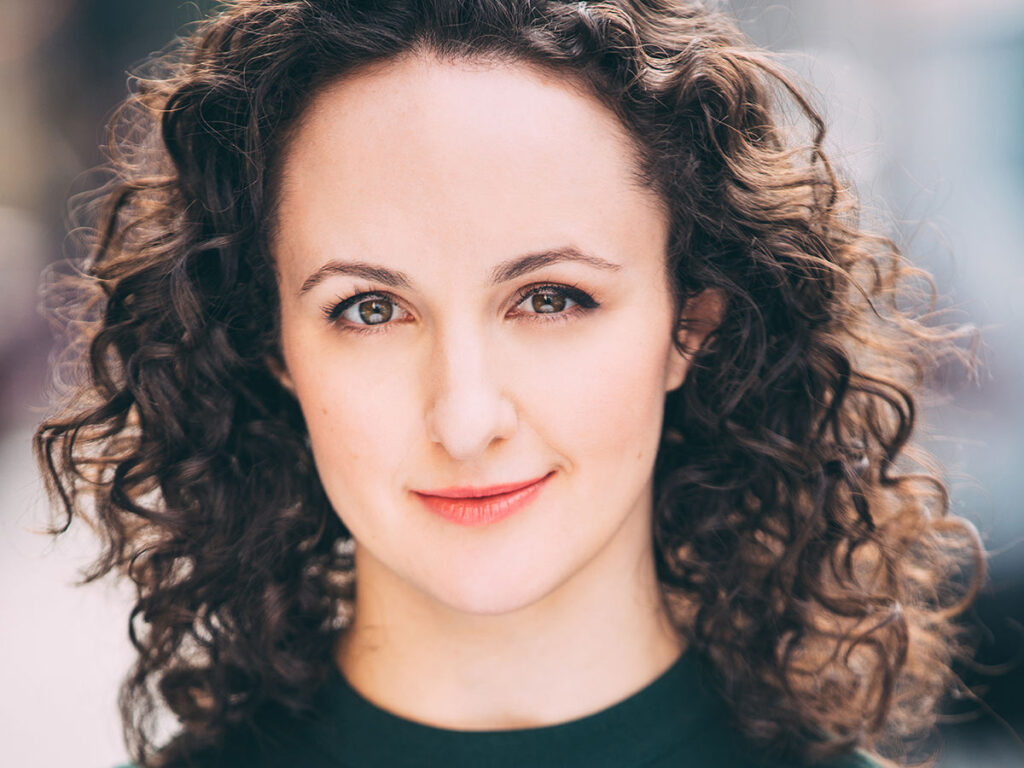
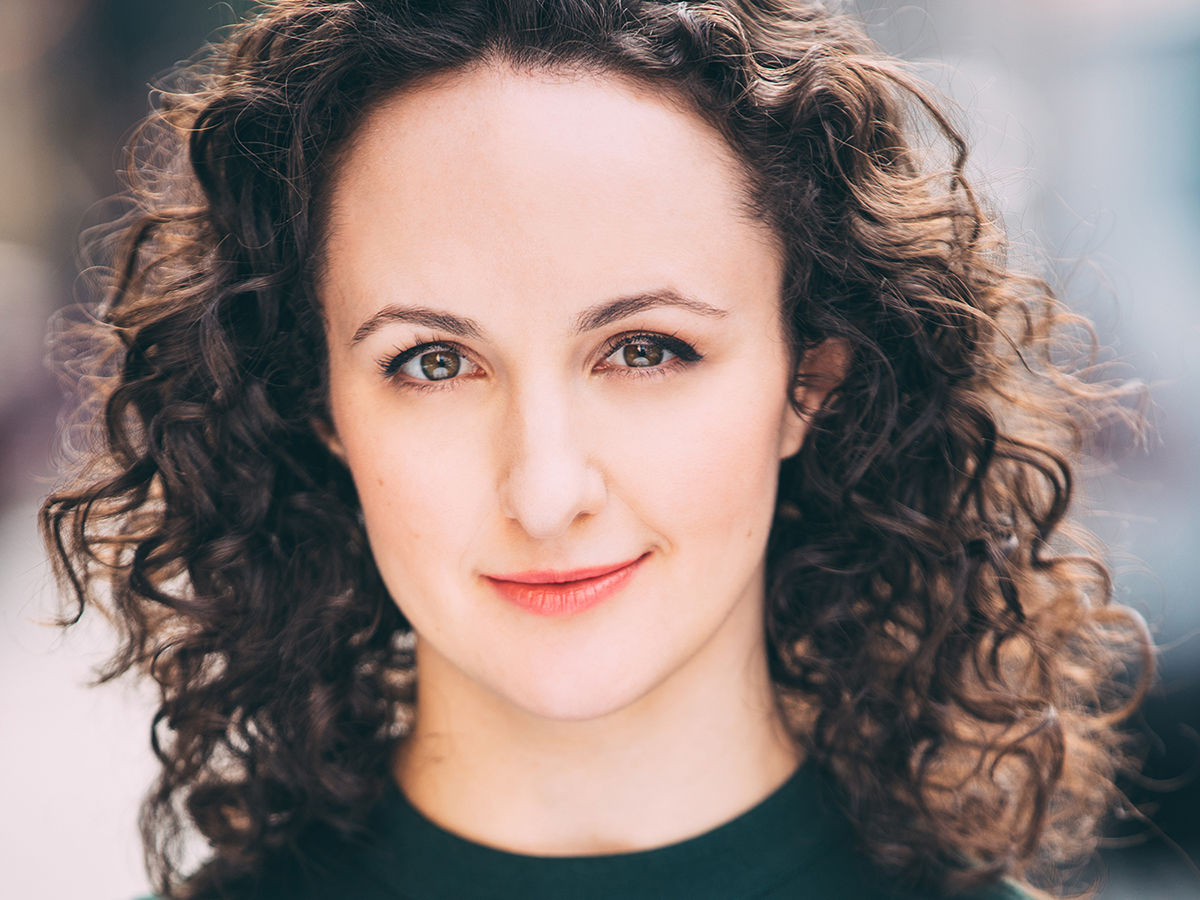
“ABBA has always been a huge part of our family. I woke up to ‘Dancing Queen’ in the house; that’s played at every birthday,” said Alisa Melendez, the Carlsbad native who will be starring in Broadway SD’s production of Mamma Mia!
“To think about playing it in San Diego, where I’m from, where I’ve listened to this album driving down PCH, where I’ve danced to these songs in the gymnasium of where I went to middle school at Tri-City Christian… It truly is the biggest blessing for me.”
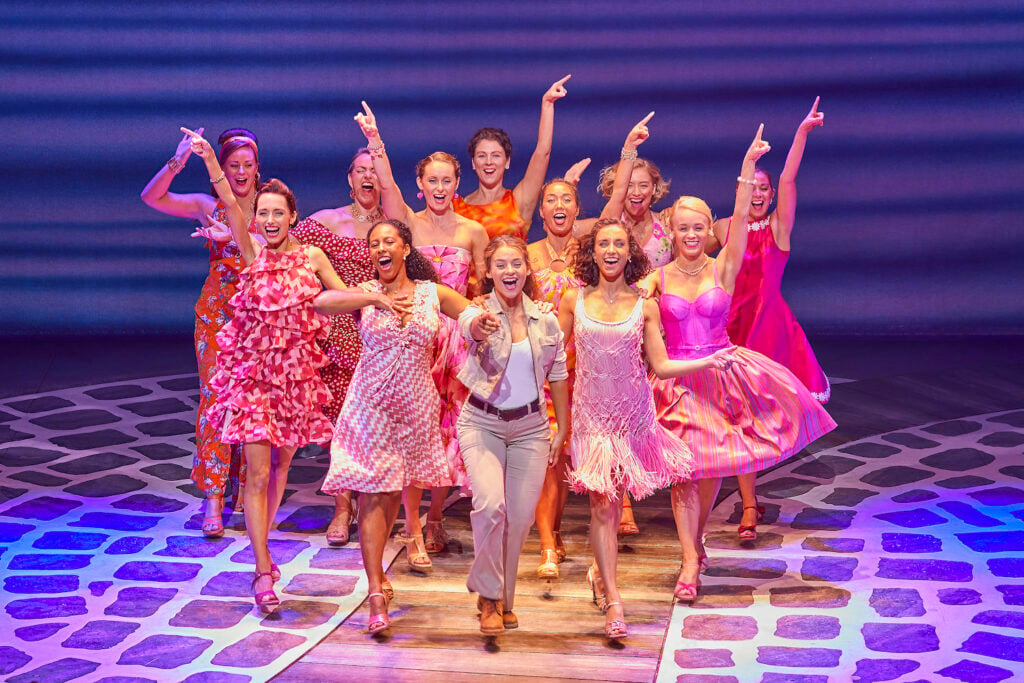
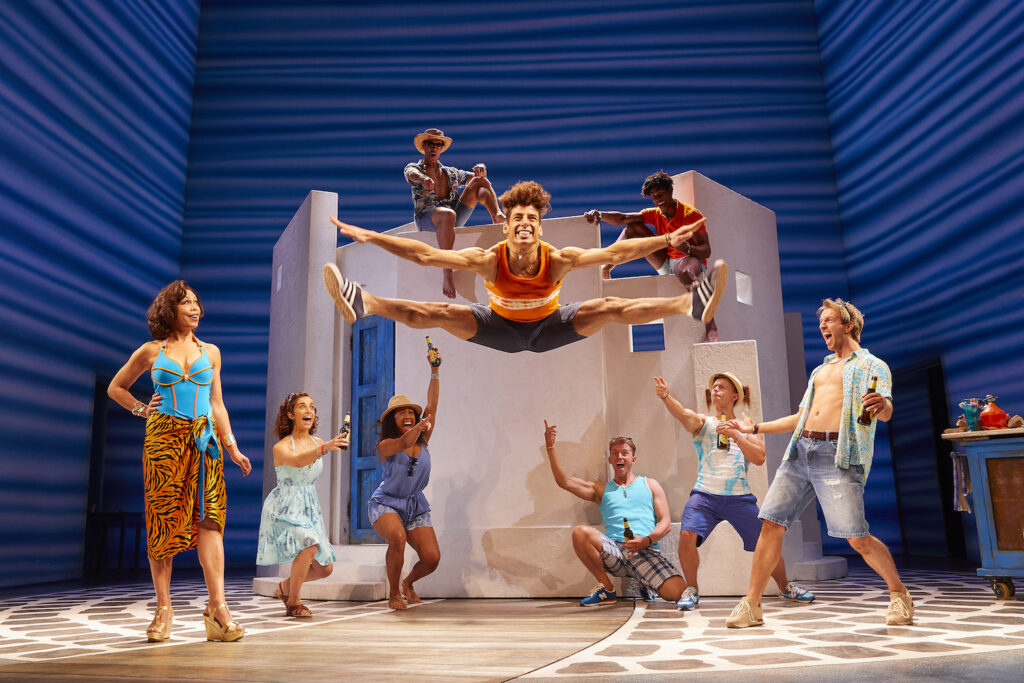
As a kid growing up, Melendez’s family had a special love for the music of ABBA. After her parents saw a production of Mamma Mia! in San Diego and bought a copy of the play’s soundtrack, the entire family became huge fans. So it’s only fitting that Melendez will grace the Broadway San Diego stage as the lead role of Sophie Sheridan when the nationally touring musical hits San Diego in November. This is the 25th anniversary of the Mamma Mia! tour, which officially launches in Denver on Oct. 31. The tour will hit 35+ cities through August of 2024.
Melendez has always been an entertainer, despite growing up in a family of chiropractors—both of her parents, two brothers, and their wives are chiropractors. But Melendez didn’t see a future for herself in the medical world. Her family, she said, have never been anything but supportive of her stage aspirations.
Growing up, she performed in local shows at school, community theater, and church while idolizing stars like Miley Cyrus and Bernadette Peters. Her room was papered with photos of her favorites, including a photo of Sophie from Mamma Mia! hanging just above her bed.
Melendez said she has been lucky enough to know what she wanted to do in life since middle school. After a year at Coronado High School, she convinced her family to let her attend the Orange County School of the Arts (OCSA) for high school, commuting each day from Carlsbad. She would wake up at dawn to catch the train to the OC, and would often not return until after dark due to rehearsals.
“It was hard leaving a school where I knew everyone to go to a new to go to a new school… part of me didn’t want to leave. But [my family was] like, ‘You love this so much. You’re really passionate about it,'” she said. “They encouraged me to go.”
Following high school, Melendez made the big move to the Big Apple. She received her Bachelor of Fine Arts degree in musical theater from Pace University in New York City, where she currently lives.
Since graduating, Melendez’s theatrical career has taken off, with roles in plays like Rent, Les Miserables, and Almost Famous right here at the Old Globe. But the role of Sophie is close to her heart.
“The first tour I ever saw was Mamma Mia! in San Francisco for my 16th birthday. I begged my mom to take me. And I was like, ‘I want to play Sophie one day,’” she said. “I just can’t believe it.”
Jennifer Ianni is a long-time San Diego journalist whose work has appeared in the Los Angeles Times, PACIFIC magazine, Point Loma-OB Monthly, PB Monthly, and more. She’s a native San Diegan who loves puns, pop culture, dive bars, yoga, extra dirty martinis, walks with her dog, Luna, and hanging out with her nephew, Jay, and her niece, Siena.
Louisa May Alcott’s everlasting novel Little Women has been made over for generations—adapted for our big screens, small screens, and the stage. Now, Kate Hamill has written what is arguably the most contemporary spin to date on the March sisters’ coming of age.
The Wall Street Journal named Hamill Playwright of the Year in 2017, largely for her record of modernizing such timeless tales (Sense and Sensibility and Pride and Prejudice, to name a few). Following raved-about runs in Minneapolis, New York City, and Dallas last year, Hamill’s Little Women makes its West Coast premiere at The Old Globe March 14 through April 19. Here, she shares her stance on the original story, its characters—and the reason her remake may be the most radical to date.
Can you recall the first time you read Little Women?
I, like so many others, was given the novel as a rite of passage. It was my mother’s favorite book, and I was given it just before adolescence. The play is actually dedicated to my mom. When re-reading the novel with an eye toward adaptation, I was really moved by the wit and the depth of the relationships. It’s far more original and quirkier than how it’s often remembered.
Which March sister do you relate to the most?
I find parts of myself in each one of them, but the two that are closest are probably Jo and Meg. Temperamentally, I’m a bit of a Jo. And since she’s an artist, her arc is familiar. Meg’s perfectionism and self-criticism are deeply familiar to me, and I played her in the NYC run.
Why do you think we’re seeing new adaptations of this story now—your stage adaptation and Greta Gerwig’s film?
Well, it’s about family relationships, and the complexities therein. It’s a story of the transition from childhood to adulthood, and that’s fairly evergreen. I also suppose it’s in the air. Each generation tends to create a Little Women for themselves, and Gerwig and I are both attempting to explore that.
So, in what ways have you put a modern stamp on your adaptation?
I believe in radical adaptation—in bringing new lenses to old stories and approaching adaptation very much as a new play speaking to modern audiences, as a collaboration between myself and the original author. I feel like adaptations that bring nothing new to the table are doing a disservice to both the original and the play, which must stand by itself as a work of theater.
I specifically wanted my Little Women to reflect American women today. It is requisite that the play be cast in an inclusive fashion: No production of this play ever may be cast with all white actors; all young girls and women deserve to see themselves onstage in a universal story, particularly within the limitless imaginative bounds of theater.
And I very much wanted to create a Little Women that allowed LGBTQ+ youths and their families to know that there is and always has been a place for people all across the spectrum in stories. Alcott herself was likely not straight, and I believe that if she were here cowriting with me today, she’d be onboard. Jo’s story is reflective of that journey. And I think it’s a particularly evocative time to be exploring women’s lives against a country fraught with internal tensions.
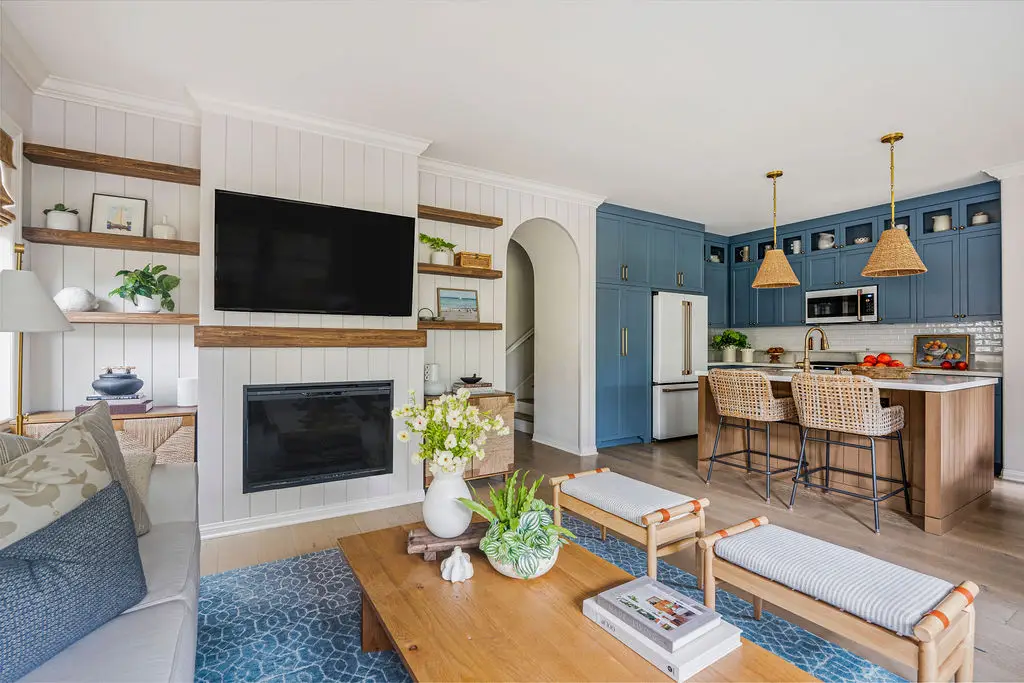
A perfectly designed home rarely happens by accident. Those kitchens that feel effortless and rooms that seem to tell a story the second you walk in? They’re usually the work of someone who knows exactly what they’re doing.
It’s knowing which ideas will actually work, which materials will hold up over time, and how to turn a collection of choices into a space that feels intentional. That’s where a professional interior designer comes in.
For the American Society of Interior Designers (ASID) California San Diego Chapter, the goal is to help people see interior design as more than just the finished look. Behind every well-designed space is a process built on technical expertise. Designers are educated in everything from professional software and construction details to building codes, space planning, materials, and functionality.
Courtesy of ASID
“People don’t always realize how much goes on behind the scenes,” Kirsten Recce , current president of the ASID California San Diego Chapter, says. “Our designers are not just doing furniture placement and color selection and picking out new fluffy pillows. That’s not what they’re trained for.”
ASID members bring formal education, continued learning, and industry knowledge to their projects, helping create spaces that are not only beautiful, but designed to work. A paint color that changes completely depending on the lighting. A material that looks beautiful in a showroom but doesn’t make sense for everyday life. A layout that photographs well but doesn’t function for the people living there. These are the details where professional guidance can make all the difference.
Still, one of the biggest misconceptions about hiring an interior designer is that it’s reserved for massive renovations, luxury homes, or people who already know exactly what they want. The process can feel intimidating. Where do you begin? Is a designer worth the investment? What if you only need help with one room?
ASID’s answer: start with one hour.
ASID’s Spruce Up events break down one of the biggest barriers between homeowners and professional design: knowing where to begin. Held twice a year, the community program gives homeowners the chance to work directly with an ASID designer through a one-hour, $125 consultation in their own home. Whether you’re looking for advice on furniture placement, window treatments, kitchen and bath updates, remodeling ideas, vacation rentals, color selections or something else entirely, the upcoming September 2026 event offers an approachable way to get expert guidance before committing to a full project. Signups are open through Sept. 7, with consultations taking place Sept. 21 through Oct. 31. Proceeds benefit ASID San Diego’s educational and community programs. Register here!
Courtesy of ASID
“It’s a great opportunity for people who are in that exploratory phase,” Recce says. “Maybe they’re not sure they want to hire an interior designer yet, or they think it sounds daunting or expensive. This gives them a chance to discover what working with a designer is actually like.”
Design is personal. A good designer isn’t just creating a beautiful room; they’re helping create a space that fits the way someone lives.
“We’re a resource to all of San Diego County,” Recce says. “It doesn’t cost anything to pick up the phone and call and ask. We’ll answer.”
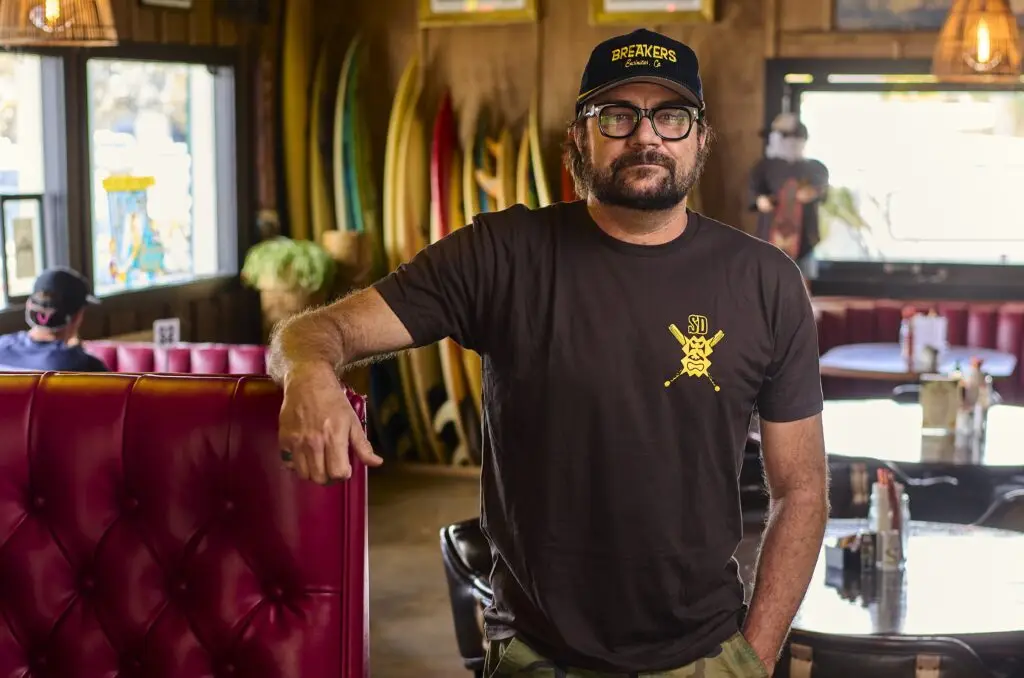
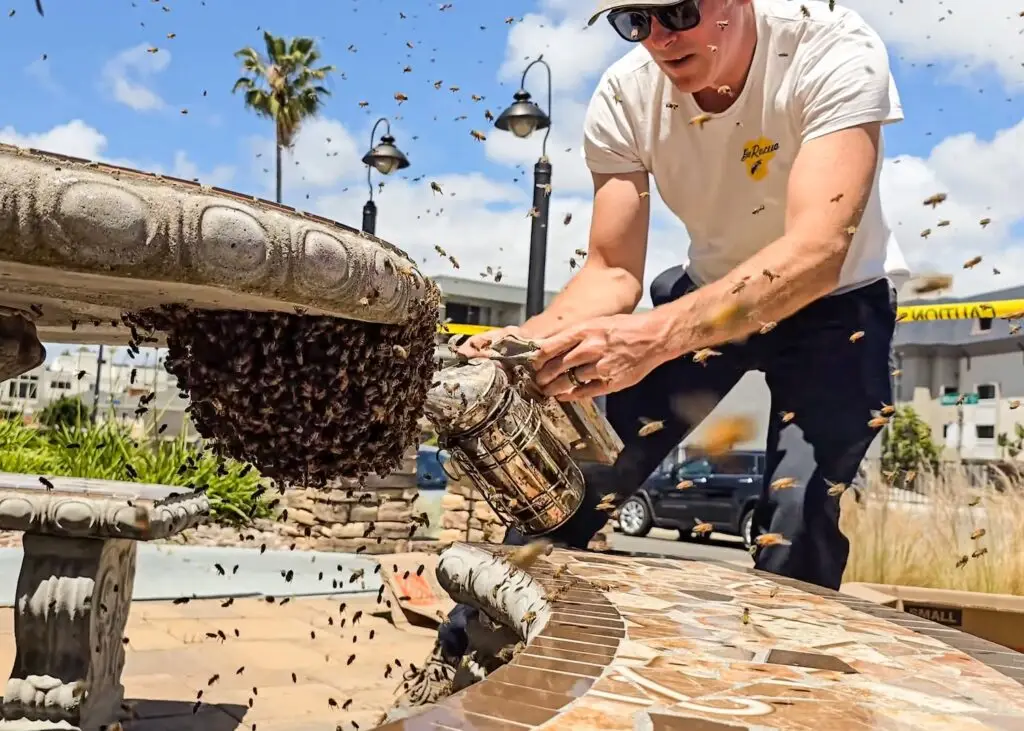
Captain Keno’s No. 8 special—pancakes, sausage, toast, home fries, and eggs for $2.99—was the fuel that powered Benji Weatherley for surf competitions as a teenage pro. A couple decades later, tears were shed when the Coast Highway dive-slash-eatery called it a day after 54 years. Usually, the guts of a shuttered restaurant go to liquidation auctions or straight to the dump to decompose along with its legend. Instead, Weatherley took in Keno’s spare parts—plus other relics from Encinitas’ past—and used them to build the newest community hangout.
Every single piece in the place is from somewhere in this town,” Weatherley says about Breakers Cafe Bar & Grill. “I’m not going to settle for anything less.”
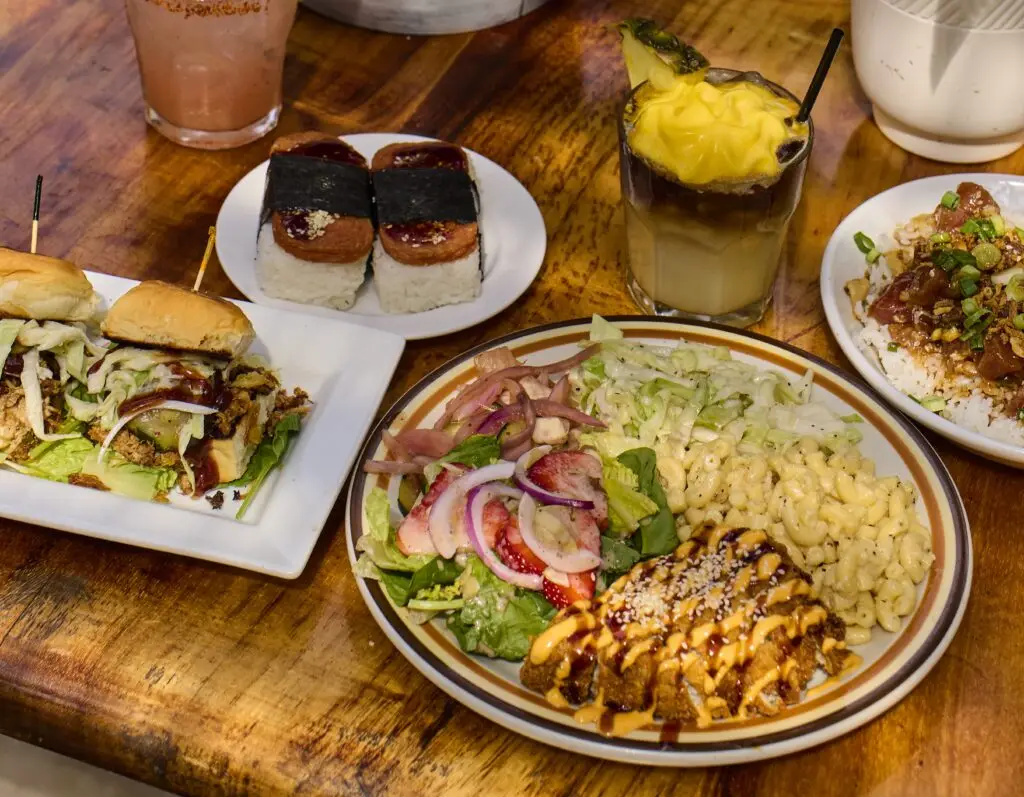
Breakers is a Hawaiian hideout in an uncool part of the coastal surf town, but it’s got the set design of an Encinitas superfan. The plates, silverware, and coffee mugs are from Keno’s. So are the tables and booths. There’s a bench made from the last table preserved in The Derby House (a building that, for over a century, was a hotel, then became a hospital, a religious retreat, and a private home). Weatherley’s not performing CPR on old upholstery because he’s a fan of antique furniture. It’s a method to bring people together.
“Representing nostalgia in this town is the only way to grasp a hold of the community,” Weatherley says. “Everyone wants to touch and feel something different from what they’re experiencing on their phones.”
Photo Credit: Matt Furman
Every week, locals bring him photos, artifacts, and bits of paraphernalia from Encinitas’ past and ask Weatherley to give them a new home. “I’ve had ladies who were there when [Captain Keno’s] opened cry in my arms and say, ‘This table is where I had my second birthday with my grandma,’” he says. “They tell me these stories, and I tell them I have all the same stories about my mom.” (Weatherley’s mom first brought him to Keno’s and helped raise the young surfers from the Momentum Generation documentary—Weatherley, Taylor Steele, Rob Machado, Kelly Slater, etc.—as they surfed some of the world’s most dangerous waves at Pipeline in Hawaii. Back then, she owned Breakers Restaurant & Bar in Haleiwa. Name sound familiar?)
Weatherley has always been the funniest man in the room. He calls Breakers “the Chuck E. Cheese of Encinitas.” The restaurant hosts hula dancing classes, open-mic comedy nights, and evenings bartended by longtime Captain Keno’s barkeep Vaka Kaufusi. Cult-loved reggae band Steel Pulse hit the Breakers stage recently to perform a new song that Weatherley also helped write. His longtime friend Jack Johnson has dropped by to sing a few, too.
Despite not having a fancy location along the 101, people are catching on. Fire stations and hospitals have held staff parties there. Weatherley also currently sponsors four sports teams.
“Last night, I had a girl say, ‘I want my birthday party at Breakers,’” he says. “That, to me, is community in a nutshell.”
Emma Veidt is an editor at San Diego Magazine. She earned her bachelor's and master's degrees from the Missouri School of Journalism. She loves running, hiking, and rock climbing, but really, she mostly loves encounters with the street cats around North Park.
Walking into a room full of strangers isn’t high on the fun index for most. It’s inherently awkward: Everyone’s standing in closed-loop clusters, deep in conversation, and, depending on your social aptitude, the feeling is somewhere between light apprehension and burning alive from the inside out. The pull to retreat or reflexively look busy on your phone is stronger than the drink you now deeply crave. Having friends is nice, but making friends can be brutal.
There’s plenty of commentary on the loneliness epidemic. Last year, the American Psychiatric Association reported that one in three adults feel lonely at least once a week; those aged 18 to 34 are more likely to feel isolated and even more likely to turn to social media as a result. Dr. Vivek Murthy’s “My Parting Prescription for America” cautioned that “being socially disconnected increases our risk of heart disease, dementia, depression, anxiety, and premature death.” So it’s not just an emotional need; it’s nearly nutritional—chit-chat and the occasional wine-fueled, emotional deep-dive are just as important as Pilates and a reasonable amount of kale.
Finding social connections in any city is hard, but San Diego has very specific challenges. This is largely a transient population that acts as a temporary hotspot for many and a permanent home for few. Pick your reason: high rent, surreal gas prices, housing shortage, meh job opportunities (ranked 71st in the country in 2025), or the fact that active military is a sizable chunk of us (110,000-ish)—stationed here for a stretch, then gone. This constant flow of departees sucks out the potential for deeply established families and friend groups, leaving a good share of nomads, searchers, and plenty of people feeling socially awkward.
“There’s an underlying loneliness in all of us,” says Ramel Wallace, the host of monthly meetup CreativeMornings. “There are not a lot of San Diegans who are born and raised here, so [even those] San Diegans end up being just as lonely as the person who just got here.”
Photo Credit: Blair Kirby
Every month, in local libraries, breweries, and small businesses, there are ambitious social architects who have made a career out of undoing social sads. Extroverted champions of the awkward and searching, they’ve struck gold on in-person connection.
The first moments in a social situation are crucial. Sets the tone and cools the nerves.
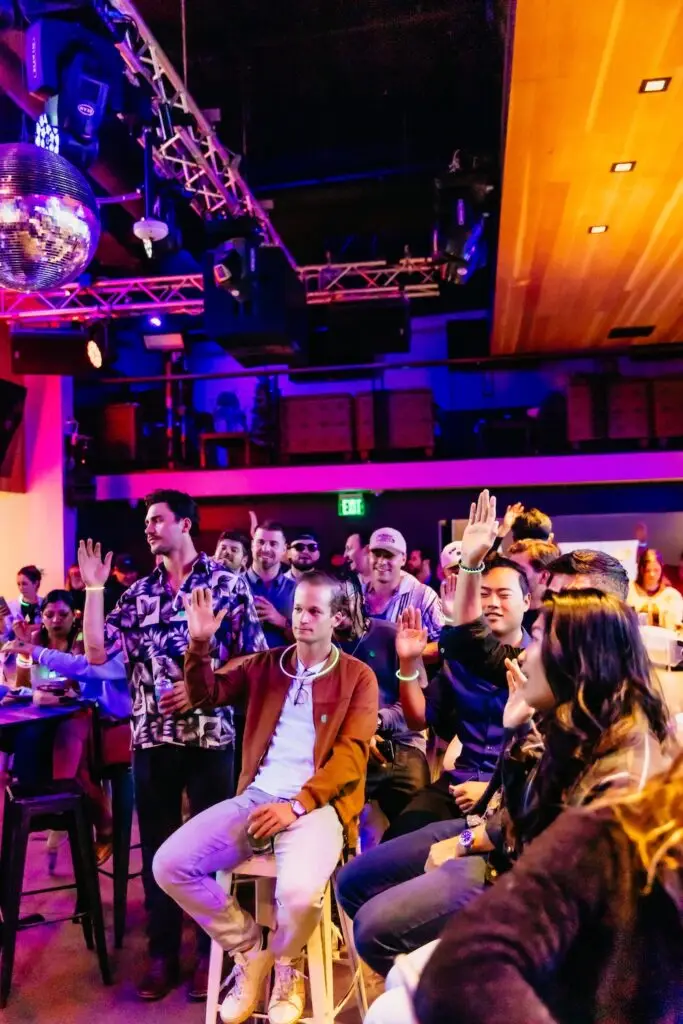
At Pitch-A-Friend, singles recruit their close friends to present a slideshow of their dating green flags. The entry points for connection at Pitch-A-Friend are simple, old tech: stickers. Each colored sticker indicates if the wearer is single or taken, queer or straight, or practicing ethical non-monogamy (in a partnership but open to others under a mutual understanding).
At the helm of each showcase is Arielle Fuller, aka Chief Wingwoman, who is making dating hopeful again. As Fuller explains, this takes some of the fear of rejection out of a first interaction. “Putting a sticker on immediately means, ‘I wanted to leave my house and talk to someone, and I am a safe space to come and speak to me,’” she says.
Of course, not all of San Diego’s events designed to make connections are romantic. On the last Friday of every month, hundreds gather at San Diego Central Library for the local chapter of CreativeMornings—an org formed to unite creatives in various cities across the world (designers, artists, writers, producers, performers, architects, etc.).
Photo Credit: Gina Ribando
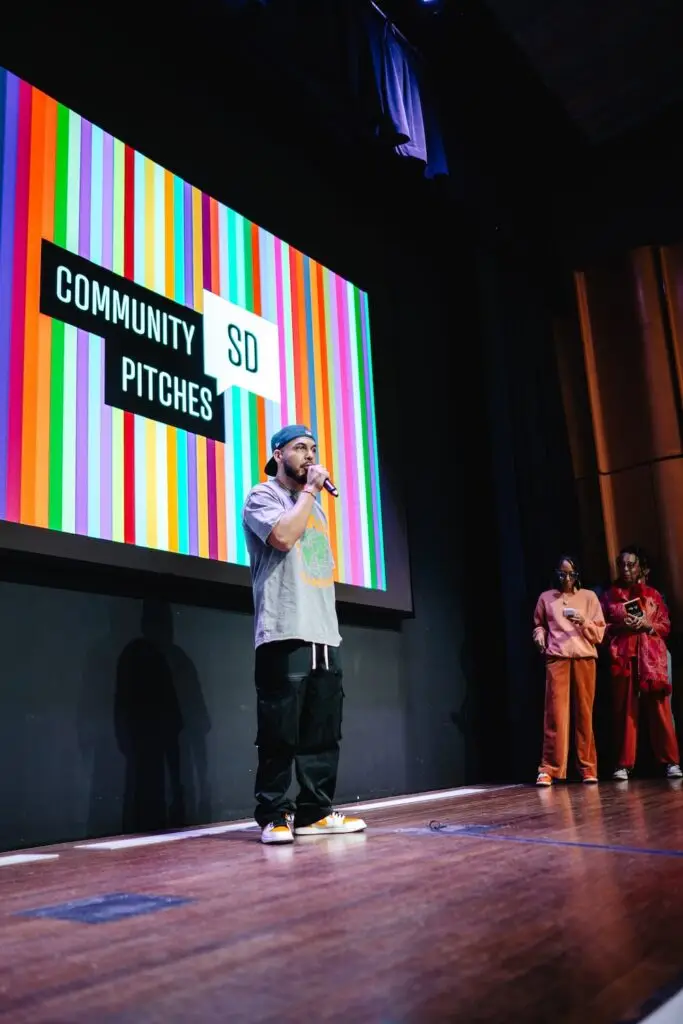
These aren’t your standard business card swaps, though. Coming from a hip-hop background, host Wallace uses call-and-response to break the fourth wall. “This is not my stage at all, this is our stage,” he says.
In your standard lecture-based meetup, the crowd silently faces the host and acknowledges nobody except those they came with. At CreativeMornings, everyone is encouraged to look around, pay attention to the strangers in the audience—not just the host. Wallace will pull volunteers to read the CM manifesto aloud, and he passes the mic to creatives, who make 30-second pitches to the community about projects they’re working on—and there’s always an invitation to connect and collaborate with the presenters whose ideas struck a chord.
The U.S. Chamber of Connection (yes it exists) says people experience life transitions nearly every year, and in these stretches are more open to forming new habits, relationships, and communities. In a revolving-door city like ours, the transition often comes when someone moves away. In 2023, the Census Bureau reported San Diego had the ninth-highest rates of domestic out-migration in the US.
This poses an issue for friendships that IRL SD addresses in monthly friend-making events called 619 Night.
“San Diego isn’t a place a lot of people stay forever,” says Alex Hunter, the creator of IRL SD. “They leave, and people [who stay] lose that community, so they’re hungry for community again.”
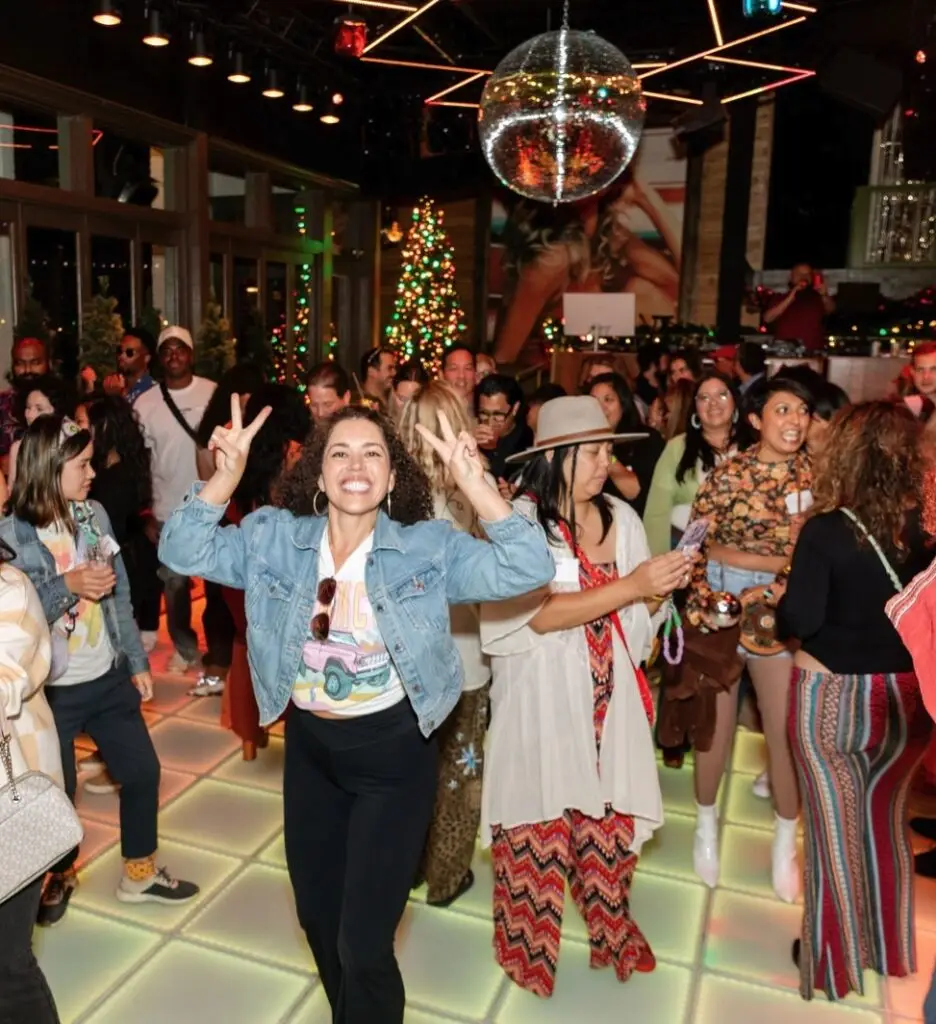
Their website describes the vibe as “backyard party meets college fair meets networking event meets happy hour.” Each follows a theme—wellness, sports, refresh and reset, etc.—with related community groups joining as well.
“The people I encounter are trying to get a fresh start in some capacity, so they’re more open, receptive, and ready to meet new friends,” Hunter says. “They need the circle.”
Photo Credit: Elysian Visions by Deaune Boyd LLC
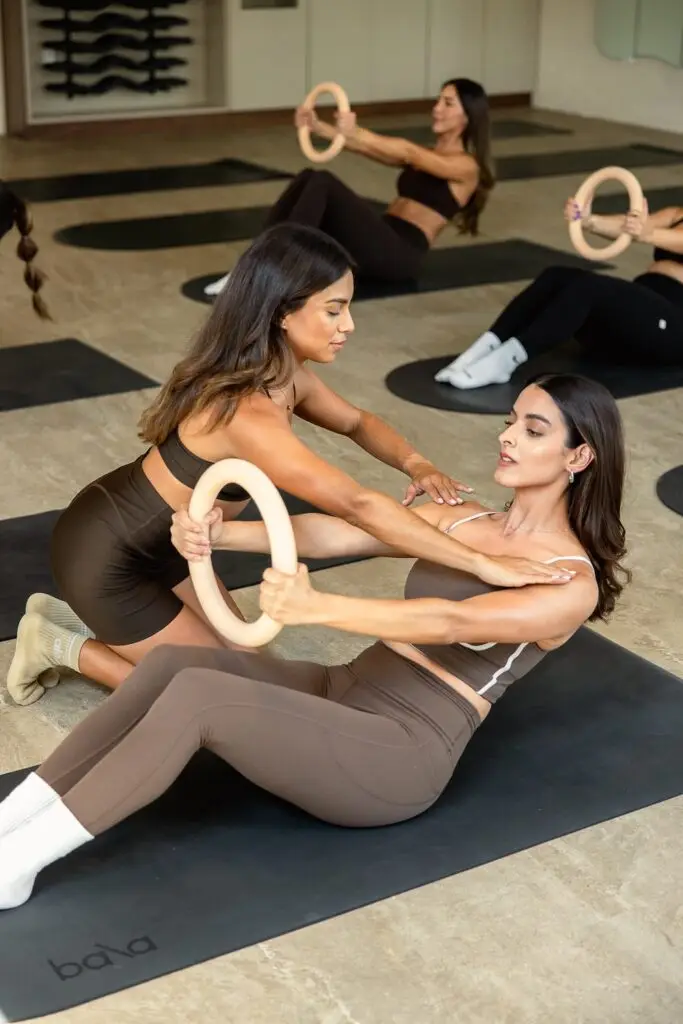
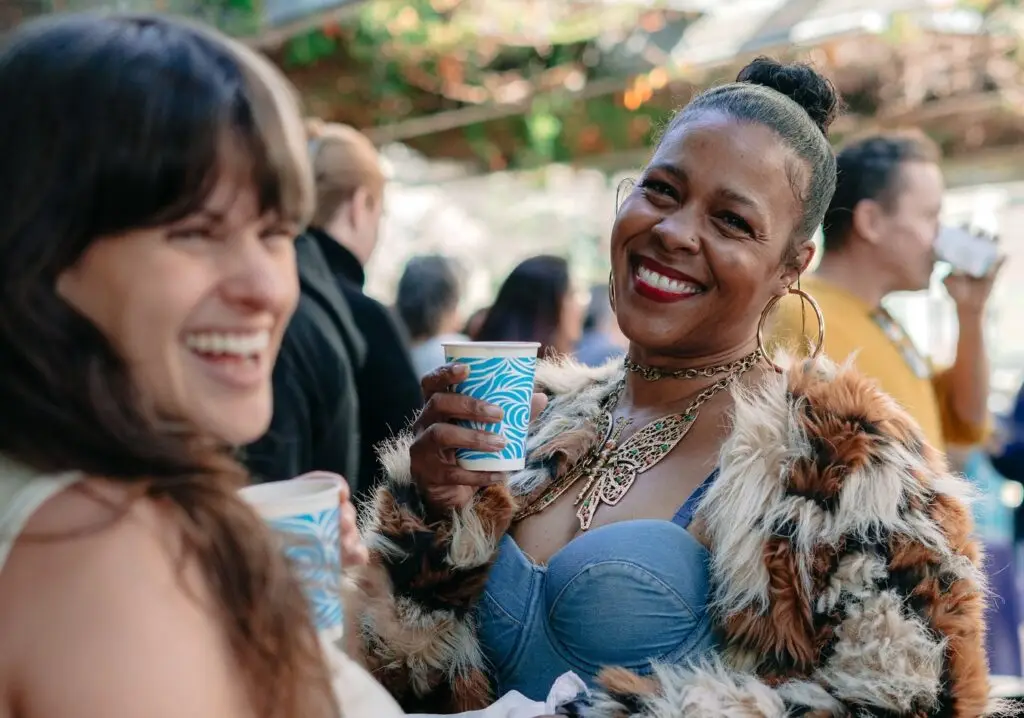
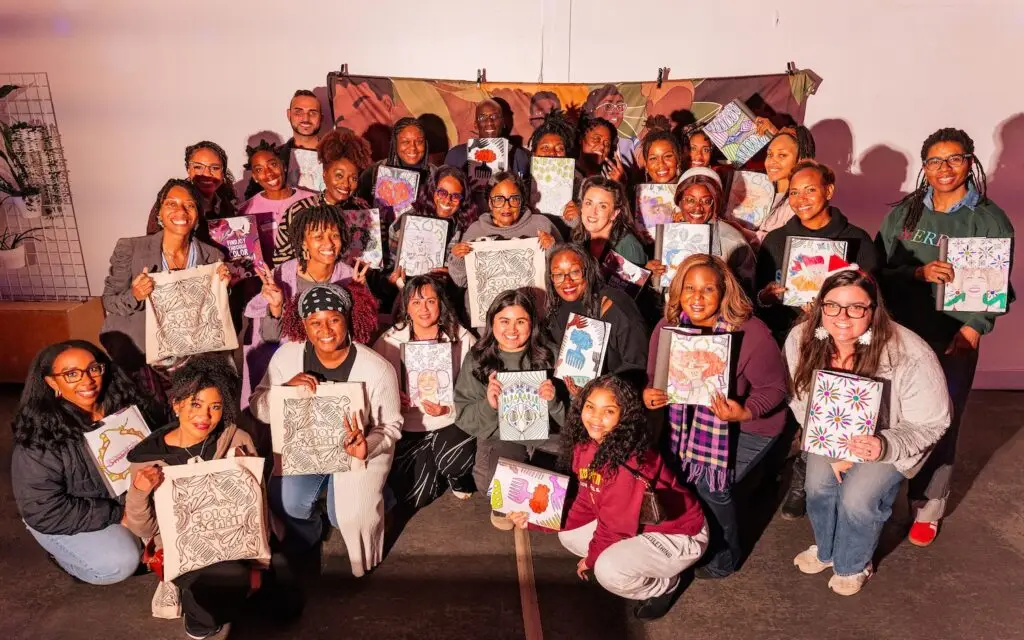
Another way adults can break out of this disconnection is to revert in unison, says artist Elisa Summiel-Bey. The 2015-ish adult coloring book moment in the US was based on some real science, with multiple studies finding coloring has a noticeable meditative and stress-release effect by taking the brain away from anxieties and mental inventories, and focusing it on a simple, easy art. Summiel-Bey’s company Illustrated Melanin throws “Color & Chill” events, turning that trend into a group exercise, along with live DJ sets, wellness experts doing sound baths, and food and drink from BIPOC-owned local businesses. “I tend to think of coloring as your way to tap back into your childlike play,” she says. “As adults, I think we’re almost scared to let loose and have that unabashed joy.”
All of these social meetups attract crowds of likeminded connection-seekers, but high attendance is not the only thing that matters. Metrics nuts can track RSVPs, but spreadsheets can’t capture intangible wins: friendships made, innovative ideas sparked, collaborations kicked off. At CreativeMornings, Wallace redefines ROI as Return On Imagination. Resounding success means thoughtful inquiries over coffee, curiosity about the monthly meeting themes, and requests to take the microphone.
A simple, observable ROI is an increased number of window shoppers to the experience—on the periphery, watching from afar, looking for the right way in. Hunter from IRL SD sees the anxiety in her DMs. “The scariest part for you right now is not meeting new friends: It’s the unknown,” she says. “It’s the gap between ‘I’m here’ and ‘That’s where I need to be.’ If I can help you understand, or get a little bit of a shape around that unknown, it’s much more approachable.”
Courtesy of IRL SD
Being able to bridge that gap, however, depends on your ability to step out of your own mind. “It’s not a connection crisis; it’s a courage and confidence crisis,” says Fuller. The first hello could be as easy as, “Hey, cool shirt.” These are the types of things she includes in her confidence lab reels on Instagram and weekly newsletters.
Ever left a social event and shot straight into a spiral? Was I being weird? Why did I tell that story? I hope that person moves to another state very soon.
The experts say that post-event self-interrogation is a standard-issue part of being alive.
“I love awkward people, and I love being awkward myself,” says Wallace. “It’s humbling to experience: ‘I’m not alone. Finally someone is not put together.’ So give yourself that grace.”
Jeannine Boisse (she/her) is a freelance writer and professional creative with a background in Radio & Television. Based in sunny San Diego, Jeannine spends her time exploring the city's vibrant brewery scene, cooking up new recipes in the kitchen, and connecting with new people.
It’s estimated that one in five people in the U.S. will develop skin cancer at some point in their lives. When you factor in living in a sun-soaked city like San Diego and the outdoorsy lifestyle that comes with it, that figure can jump to as high as one in three, which makes early detection and intervention all the more important. Dermatologists at Bighorn Mohs and Dermatology Center are using innovative imaging methods and advanced surgical techniques to diagnose and treat skin cancer. For certain cancers in sensitive spots, like the face, dermatologists perform Mohs surgery, removing skin tissue layer by layer until reaching healthy, cancer-free tissue. They also use a process called immunohistochemistry to view tissue samples taken during Mohs surgery in far greater detail than previous methods. Read more about how Scripps is advancing skin cancer care here.
For more nutrition, wellness, and healthy living tips, sign up for the San Diego Health newsletter here.