Featured articles
Featured articles
Featured articles
What's next
Featured articles
Featured articles
Featured articles
Ready to know more about San Diego?
SubscribeReady to know more about San Diego?
We spoke to the musician about all the whys — why food, why farming, why Oceanside, why coffee?
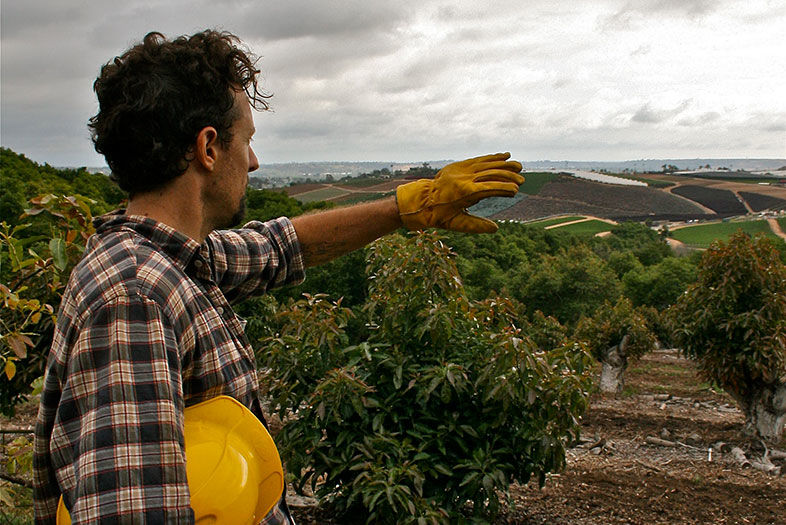
The middle of nowhere is the best nowhere to be. After all the development in San Diego over the decades, it’s hard to believe a place like South Morro Hills exists. This is farmland. You’ve read about it in books. It’s east of downtown Oceanside, across the 5 Freeway, down some windy roads, a couple blocks past the moon.
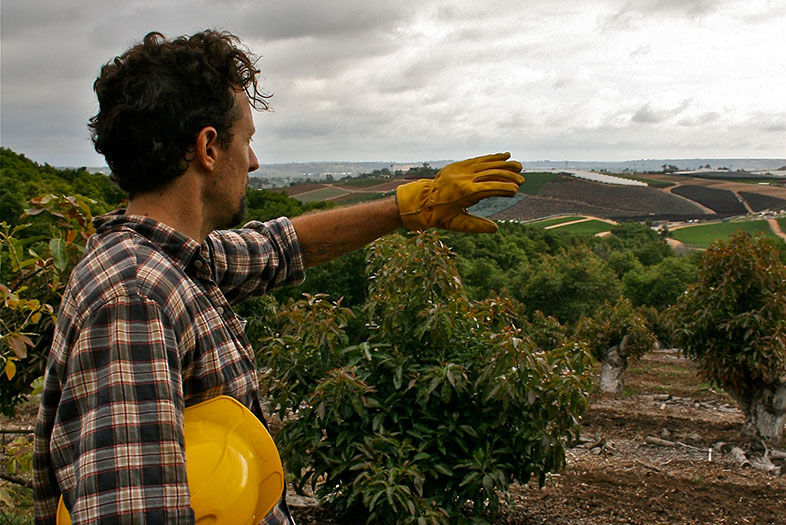
Jason Mraz stands on a makeshift stage, guitar in hand, at the future site of what he hopes will be his and his wife’s “little coffee laboratory.” Following the lead of pioneering farmer Jay Ruskey, Mraz and a handful of others are growing the equatorial plant in Southern California.
He tells a story about his grandfather, a farmer. He sings a song about him, “Frank D. Fixer.” As a musician, Mraz has sold millions of records. It’s nice for community morale and cocktail party chat when a creative of his caliber makes his home in San Diego. It’s even nicer that he didn’t just buy a big plot of land and build a fortress.
Mraz is a farmer. For years, he’s been growing organic avocados near his Oceanside home. Now, with the help of a couple of top organic farmers, Jay Ruskey and Scott Murray, he’s nursing his baby coffee trees into fruition. Mraz also goes to city council meetings to help make sure San Diego farmers, and especially his neighbors in South Morro Hills, can survive. As SoCal’s recurring droughts jack up water prices, and labor costs climb, it’s getting difficult to make a living as a farmer. It’s getting harder to say no when housing developer after housing developer offer piles of money for your family’s farmland.
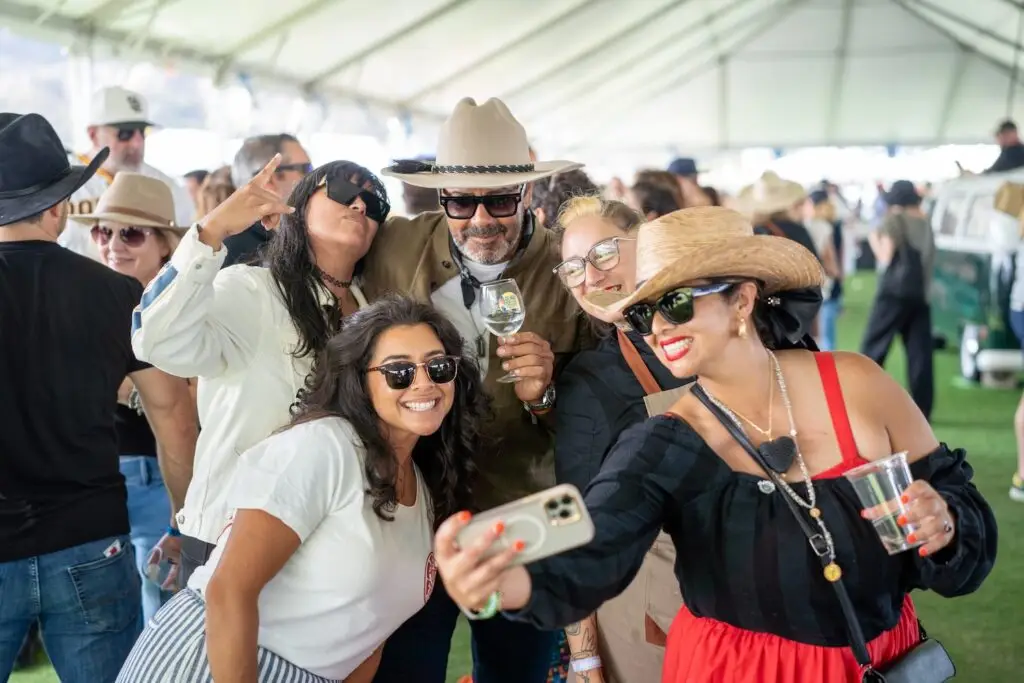
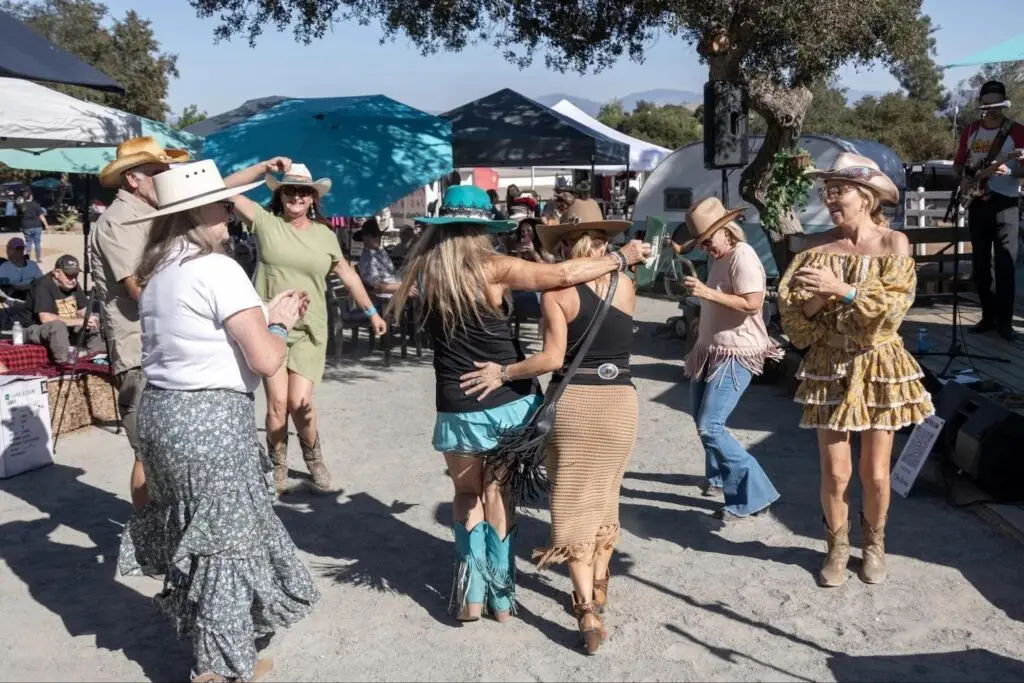
That’s why we’re all here on Mraz Family Farms for the first annual O’Side Feast. The City of Oceanside has dedicated money to explore agritourism. The idea is to make the area’s vast farmland a destination for locals and tourists, whether that’s for tastings at Beach House Winery, a tour of Cyclops Farms, or cuppings at Mraz’s eventual coffee lab in the country. Maybe there’ll be bed and breakfasts. Craft beer breweries. Micro distilleries. Mead breweries. Kombucha huts. Farm stands, cheese stands, creameries, apiaries (bee farms). Maybe one day Mraz will bring musician friends for a Farmchella.
The hope is that as Oceanside beaches and restaurants thrive, the farm country that delivers fresh food to their kitchens will do the same.
Who knows. They’re still mapping it out. Events like O’Side Feast are a start. A jovial toe dip into the unknown future of local farmers. The eventual hope is that as Oceanside beaches and restaurants thrive (the scene is booming), the farm country that delivers fresh food to their kitchens will do the same. That Oceanside, and San Diego, will see as much value in crops as they do condos.
On the drive up to Mraz Family Farms, there are so many avocado trees, waxy green herds of them. Looks like someone hit pause on a Morgan Freeman documentary film about their migration. The heat is venting an ancient, mean grudge. There’s no Big! Lots! and I can’t find a quality Applebees to save my life.
Jason Mraz Is Growing Coffee on a Farm in Oceanside
Photo: Louis Hayward
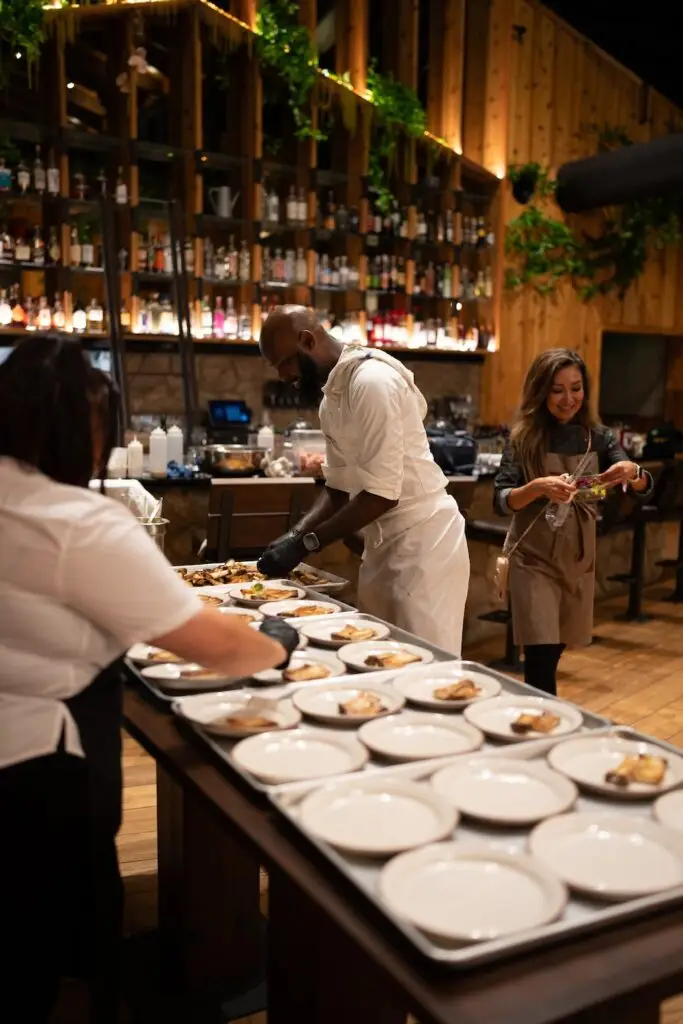
The event is lined by tents, and more avocado trees, where local food people worship shade and share what they made. Davin Waite from Oceanside’s Wrench & Rodent is here with his clean, righteous sushi. So is 608 chef-owner Willy Eick, who’s slicing hunks of fresh big-eye tuna loin, dipping it in white shoyu, and sprinkling some elderflower on top (“from that bush right there,” he says, pointing). Trailblazing bistro and pork whisperers The Flying Pig is there with trucker hats and, well, pork. Jan DeLyser shows me how to properly cut an avocado, and gives me a temporary avocado tattoo. Jan’s the vice president of marketing for California Avocado Commission, and San Diego County grows 40 percent of America’s avocados.
There’s an Oceanside company, Misadventure, that’s making vodka out of past-due baked goods that would otherwise go to waste. Golden Coast is serving tasters of their craft mead, the oldest alcohol in the world. Oceanside’s damn good Beach House Winery pours sips.
It’s all of Mraz’s neighbors, on an undeveloped hilltop that grows food, making a case for preserving hilltops that grow food.
He and I spoke about why food, why farming, why Oceanside, why coffee. A lot of whys. And a couple whats.
I guess it was probably somewhere between 2006 and 2009. It’s a little blurred. I saw the importance of healthy eating so that I could sustain myself on tour, not come home depleted and sick. I discovered the good food movement, and started to meet people into vegan, organic, slow food, different types of food narrative. And one of those narratives was farm-to-table and “eat your own zip code.” People were eating local because you could see the impact of food being shipped all around the world, and the negative effects on climate and carbon emissions.
I realized I live in an ag area. I’d lived in that region for five years, and I didn’t know anybody. I was kind of hiding there, or touring a lot. I held an event in 2009 or 2010, where I invited my whole neighborhood over to my house. I wanted to see who had a tractor, who was growing what, who’s composting, what can I learn from these neighbors before I commit to some big project and waste money and time. I got to meet a lot of people, and that’s only grown now.
It’s called South Morro Hills. It’s the western gate of Fallbrook. Many people, including myself, didn’t know it existed. Oceanside is the new Brooklyn of San Diego. Great restaurants, the best shops, still super low key and about surfers and makers, military families, and growers. Morro Hills is such a beautiful little island of green. When you drive on the 76 you can see it on the left, past the drive-in movie theater. And Oceanside could really benefit from saving this beautiful little island.
Oceanside is the new Brooklyn of San Diego.
Much like Luke Gerling’s farm, Cyclops, we could have more of those that could contribute to the restaurants, families, households of Oceanside. It’s a progressive, local community that sustains itself. Rather than importing things from all over the country or the world that we know puts pressure on the planet. It’s a gem of a resource.
This program that we’re doing is hopefully waking people up to this gem. And not just see it as more land to develop and more houses. I think there are other places we could put houses. There’s a great Rumi quote that the “earth turns to gold in the hands of the wise.”
The city’s been very gracious in helping and hearing us out. There’s only about 3,500 acres of remaining farmland. And if the land does get rezoned for high or medium density housing, it could become a domino effect. The large pieces of land could quickly turn into neighborhoods that save a couple acres for community gardens. We’ve just asked for a little more time to create a very comprehensive vision plan.
What we need most are participants. There are only a handful of people who are creating farm businesses out here. There are commercial farmers, but they’ve never had a visitor setup. At Mellano Farm, you can go to Carlsbad and see their flower field; now that’s a proper visitor center.
Morro Hills isn’t really set up as a visitor center. What would help us is more young people interested in farming, be aggressive with whatever crop they’re interested in, whether it’s wine, coffee, guavas. One of the things that’s happening is the commercial farmer is retiring. The thing that looks best for their land is selling to a developer. What we need the most in my experience are participants. Young families who want to come out and start a farm business and use a small acreage of land to accommodate that.
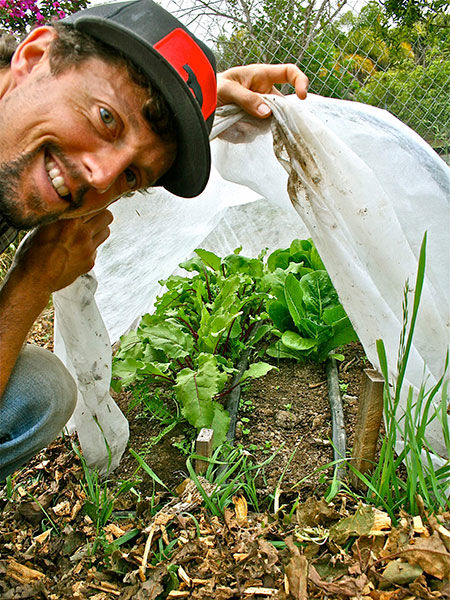
Scott Murray, my farming mentor, was the one who helped me eat my zip code right away when I moved here. He and his wife have a CSA program. I loved that. Scott helped me build my own garden, just a modest four rows with tomatoes and lettuce. Each year the garden grew and took shape and became my little hobby when I wasn’t making music.
In that narrative I said, “I want to convert these 40-year old avocados to organic.” I saw how expensive it was, and how commercial farming wasn’t profitable for my neighbors or myself. It required new laborers, new applications, certain transformations in terms of water runoff and whatever. My problem was I was a monoculture of avocados. I didn’t have enough diversity to pay back my water bill alone, with the rising water cost during the drought. I learned I needed to diversify.
Through the many different narratives, I asked, ‘What do chefs and people want? What is no one else growing that no one else can provide?’ We looked into saffron or artichokes or gooseberries. We put our feelers out there, and Scott came to us with this idea of coffee after hearing a lecture by Jay Ruskey of Good Land Organics. He said, if you can grow avocados, you can grow coffee.
Jason Mraz Is Growing Coffee on a Farm in Oceanside
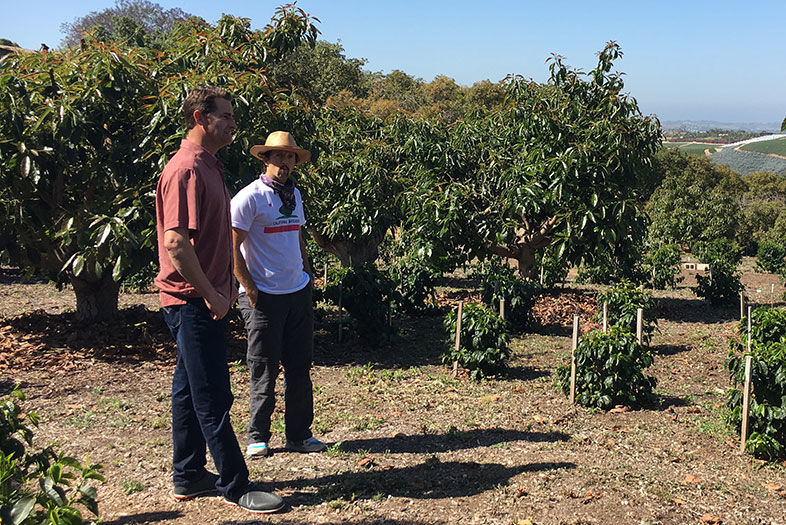
Mraz speaks with reporter Jeff Zevely | Photo by Shae Geary
My wife and I just perked up, because I started my career in coffee shops, and I met my wife in a coffee shop. She used to own a coffee shop. Everywhere I tour, I just go into a corner and hide in coffee shops and take it all in. I love coffee shop culture. I love this idea of bringing coffee into our life. It’s a brand new industry for California. Maybe there are 20 or two dozen farmers, thanks to the research of Jay and Mark [Gaskell]. It’s a trial to be honest with you. We don’t know if it’s going to work or how productive it’s going to be.
They arrived in April of 2015, and the first ones went into the ground that October. We’ve had them in our care for over two years. The first six months were just us nursing them. Suddenly 2000 coffee trees show up at your door and shit gets real—real quick. We had to dig 2,300 holes, 2,300 chicken baskets to go around the trees, structures around each one so winter didn’t damage or blow them over. We had to make sure they weren’t sunburned. Scott helped me give great care to these trees. But it’s been a labor of love. The first ones are starting to show some beans. I think it adds to the unique experience of agritouriism paired with a rare crop to help save farmers.
Around the world, coffee is grown by poor people. It’s not growing coffee that makes them poor. Growing coffee is a great opportunity for them to get out of a bad situation. Coffee is grown in landlocked regions, conflict regions, or regions bordering conflict. They’re just crushed right from the start.
Because coffee is the second hottest commodity on the planet, it’s this great opportunity for farmers to provide for their families. It’s showed up now in California at a time when farmers are facing failures, water costs, labor costs. After 1,500 years of people growing it around the world, I think it’s interesting that coffee as an opportunity shows up in California right now.
Almost as if the plant could feel us and it said, ‘Here you go.’ I love a good story. My music career gives an advantage as a farmer because I have a name. But I have to tell you my experience in farming has affected the way I write music.
Yes. I do. Specialty coffee, for specialty coffee enthusiasts. It’s for that market that’s willing to pay for a really good cup and story. I’ve paid 13 dollars for a cup of coffee. But it comes with the knowledge of the farmer, the flavor notes I’m looking for, the story of the land. I’m not just drinking a brilliant cup of coffee, I’m also drinking a story. And I think that’s what’s going to help our coffee but also our agricultural region.
We have winter. And that slows down the maturation period in general. In 10 years, we’ll have beautiful flowers in the summer and hopefully they’ll be pollinated. It’ll take 10-12 months for that bean to fully ripen. In the equatorial regions, when you hear about shade grown coffee or high-altitude coffee, they have a similar effect—the slowing down of the maturation. And that can be a great thing. You’re giving that sugar in that cherry more time to influence the coffee bean. When it’s finally ready, you have more flavor potential. With the right roaster, you can bring up that flavor profile. Ruskey’s already had some great blind cuppings [blind taste tests by experts]. And his rate as some of the best in the world.
Well, I’m going to say 2020 or after. That’s when we should start to have a substantial amount of beans to play with. Some might show their flavor profile develops better after six or seven production runs. We have 11 different varieties, and each has different characteristics. This is not necessarily commodity coffee. What makes coffee possible in California is specialty coffee.
We’re holding O’Side Feast on what I hope is the future site of our own little coffee laboratory. It’s something we anticipate building in 2018 or 2019. It’ll be a sustainable structure that’ll be more of a flex space.
The footprint of the building is going to have to depend on what my zoning ordinance will allow, and that we haven’t figured out yet. It’s a collaboration with CalEarth. They help design and build sustainable structures that can last 500 years, as opposed to one where you’ve got to replace the roof in 50 years.
We not only want to inspire, but wow you when you see it. A lot of time it won’t be open to the public, where we’re drying coffee as well as avocados and various other tropical fruits. Maybe people will want to hold a wedding or a retreat there, bring in some chairs, get a sense of nature. It’s wild out here. I mean, everything is planted by man, but you still get a sense that you’re in the natural wild, which I love.
Jason Mraz Is Growing Coffee on a Farm in Oceanside
PARTNER CONTENT
Jason Mraz overlooking the South Morro Hills. | Photo: Louis Hayward

Award-winning brewer and North County native Mike Aubuchon’s long-awaited brewery set to open this April
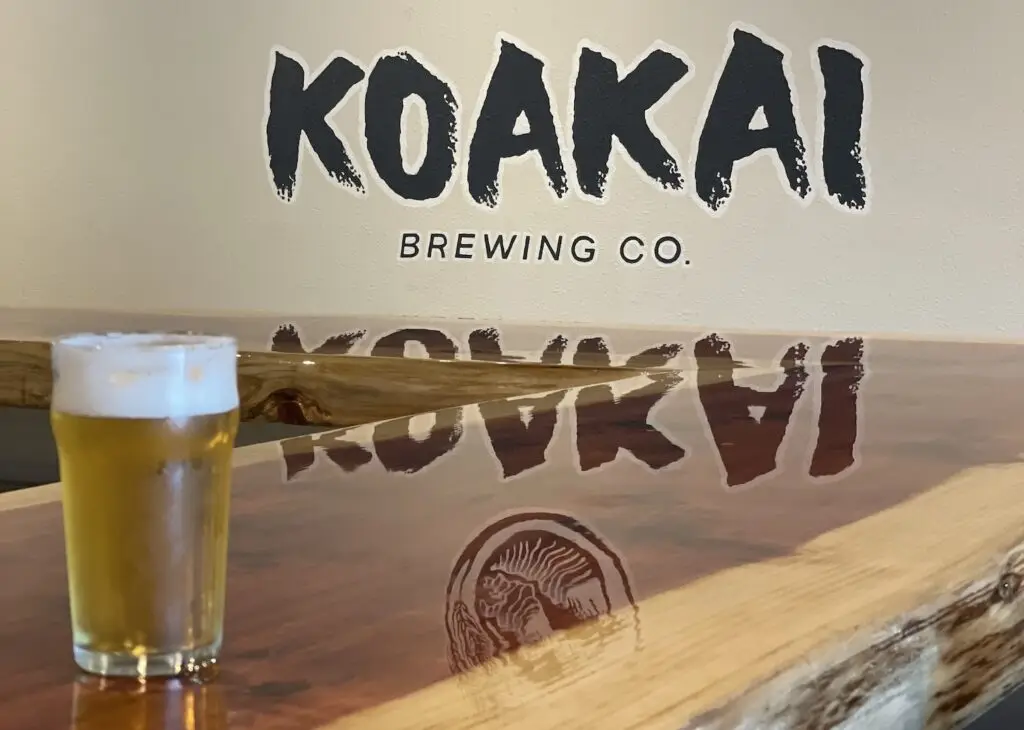
Mike and AJ Aubuchon share one very important trait: Patience. The Aubuchons are the husband-and-wife team behind Koakai Brewing Company, a brewery that’s been in the works for roughly two years. Like many other food and drink businesses, they’ve faced delay after delay after delay. Lesser people would have given up—or at least seemed a lot more annoyed about it. I wouldn’t blame them one bit.
But the excitement in AJ’s voice is palpable. It’s like the night before Christmas for the duo, whose patience is about to pay off. Koakai is finally slated to open in Oceanside in mid- to late-April next to the Aubuchons’ other business, Kyoto Japanese Market.

A North County native, Mike started his beer career in the bottle shop at Pizza Port Carlsbad before becoming a cellarman, then assistant brewer at the chain’s Ocean Beach shop. When the Carlsbad brewhouse needed a head brewer, he went back to his hometown and started racking up hardware at competitions like The Great American Beer Festival, where he won bronze in 2015, silver in 2017, and gold in 2020. He stayed for a little over 10 years before helping launch brewing operations at Heritage BBQ & Beer Co., now Hill Street Brewing.
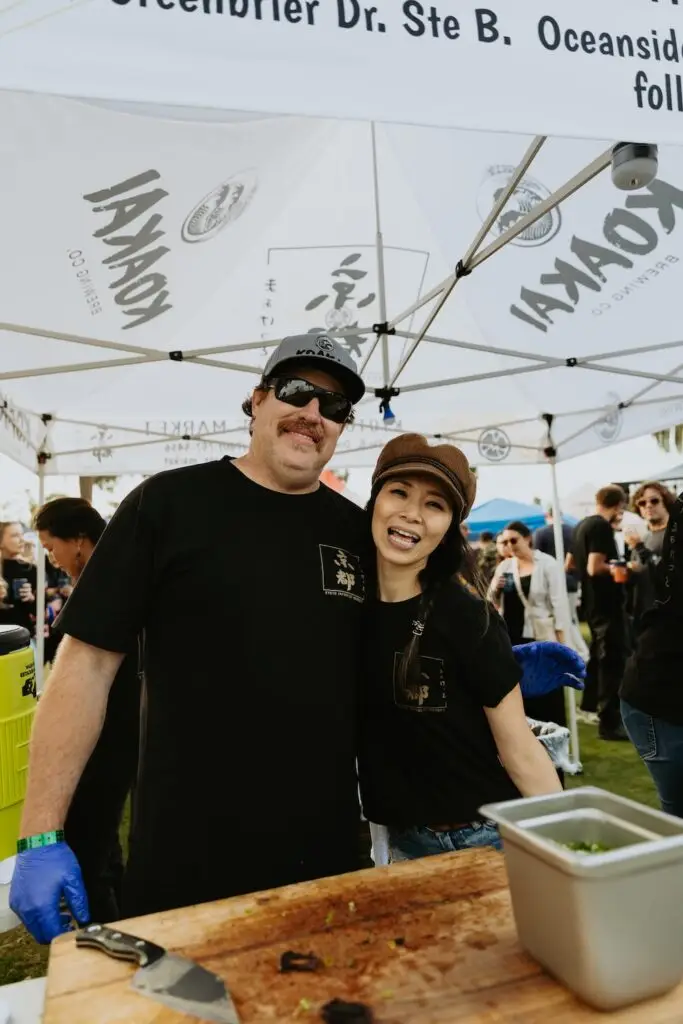
Originally from Kyoto, Japan, AJ worked in restaurants from her teens until she moved to Oceanside to attend MiraCosta College. She also worked alongside Mike at Pizza Port, bartending, learning about craft beer, and making connections with other people in the industry—relationships they plan to bring into their operations through collaborative brews.
“Koakai” has a double meaning: “warrior for the sea” in Hawaiian and “a little red” in Japanese. “My maiden name in Japanese is Kaiho and that means ‘saving the ocean,’” AJ explains, adding that when she first met Mike, a lifelong ocean lover, he was working as a professional surfboard shaper. “Also, my husband has a lot of Irish in his heritage, so our kids—we have four children—they all have a kind of reddish tint in their hair… so it kind of means heritage and family.”
Koakai’s inaugural lineup will feature a flagship Japanese lager, German schwarzbier, West Coast IPA, hoppy pilsner, Mexican lager, XPA, and a few collaborations like a West Coast IPA with RahrBSG, a craft malt supplier, and yet another IPA made with specialty hops, this one a collab with Cannonball Creek Brewing Company from Colorado. They’ll likely add more drinks later, such as a house seltzer, and dry Irish stouts on nitro, and even feature some imported Japanese sake.
Patrons will be able to pick up food—items like onigiri, Japanese-style sandwiches, bento boxes, and sushi—from Kyoto Japanese Market next door. The brewery’s kitchen will offer fresh sushi as well as its signature blend of Japanese, Hawaiian, and Central Texas-style barbecue, similar to what the market currently serves on weekends (think sticky ribs, charcoal-grilled steaks, and yakitori-style chicken). Some of the dishes are based on AJ’s childhood favorites, like hambagu, a Japanese hamburger steak.
“It’s almost like a hamburger patty, but it’s more like meatloaf,” she explains. “It has a lot of different ingredients, caramelized onions, ginger, garlic, bread crumbs, and eggs.”
A lot—and I mean a lot—has changed in the craft beer world since the Aubuchons entered the scene, and they know it’s not an easy landscape for them right now. But they’ve both been around the beer block a time or two. They’re ready. “It’s our time to show people what we’ve learned and what we can do,” says AJ.
Koakai Brewing Company opens at 559 Greenbrier Drive, Suite B, in Oceanside in mid- to late April 2026.

Listen Now: The Latest in San Diego’s Food and Drink Scene
Have breaking news, exciting scoops, or great stories about new San Diego restaurants or the city’s food scene? Send your pitches to [email protected].
Beth Demmon is an award-winning writer and podcaster whose work regularly appears in national outlets and San Diego Magazine. Her first book, The Beer Lover's Guide to Cider, is now available. Find out more on bethdemmon.com.
Chef David Lay’s menu for Kettle On Coast is a unique and ambitious concept for the former Petite Madeline space
Givino Rossini knows there are already a lot of great specialty coffee shops in San Diego. He likes to think he runs two of them already: Kettle On Grand in Escondido and Kettle On Main in Fallbrook. But rather than open another conventional coffee shop—with a few fun pastries and community events like DJ nights—he decided to kick it up a notch for his third location in Oceanside, Kettle On Coast.
“This is going to lean a lot more restaurant than fast-casual coffee shop,” he explains. The space, which housed Petite Madeline Bakery until March 15, comes with a full kitchen—something the first two Kettle Ons don’t have. And the menu won’t be typical coastal California avocado toasts and acai bowls. Chef David Lay, who’s worked at restaurants like the Michelin Bib Gourmand Kettner Exchange as chef de cuisine and at Juniper & Ivy as chef de partie, is spearheading the kitchen, developing to-go breakfast and lunch menu along with a pastry and coffee program.
“I describe the food as rooted in African diasporic flavors and traditions, with influences from the Mediterranean and the Levant [the land bridge between Africa and Eurasia]. The opening menu is really meant to be an introduction to some of those ingredients, spices, and techniques in a way that feels approachable,” Lay explains. “But the long term vision is to continue exploring African culinary traditions more deeply as the menu evolves.”
The opening menu includes items like French toast with a cinnamon sugar crust, Moroccan tres leches, and crème fraîche; miso cheddar grits with a sunny-side-up egg, berbere (an Egyptian spice blend), and chives; Aleppo fried chicken with chermoula (a North African sauce and marinade somewhat similar to chimichurri), tahini, preserved lemon relish, and herbs; and a grilled mochi with honey, berbere, and crème fraîche for dessert. Guests will order at the counter and either take their food to go or have it delivered to their table.

Kettle On Coast will soft-open in early April, initially rolling out between nine and 15 of Lay’s menu items and ramping it up from there. Rossini expects to have everything in place for a grand opening in early summer and hopes to introduce the same sort of community-specific events to Oceanside as he has in Escondido and Fallbrook.
“Each location has its own unique kind of concept and energy around that space,” he says. “We kind of tailor each space to what we feel is missing or what’s needed in that community.” In Escondido, it’s been events like skate competitions, while Fallbrook has put on poetry readings. But in Oceanside, the future is yet to be written.
Kettle On Coast will soft-open at 223 N. Coast Hwy. in Oceanside in April 2026. Initial operating hours will be Monday through Friday, 7 a.m. to 2 p.m., and Saturday and Sunday, 7:30 a.m. to 2:30 p.m.

I only got really into boba tea in the last couple of years, but once you go full “QQ,” you never go back. For those unfamiliar with the concept, QQ is a Taiwanese term referring to the springy, chewy texture of elastic-y foods that seem to bounce against your teeth—things like fish balls, tendon, or boba pearls. It’s not everyone’s cup of tea (pun intended), but if it’s yours, tons of tea shops have sprung up around San Diego to satisfy a wide range of flavor cravings, from classic milk tea to out-there options like matcha-mango with cheese foam and popping pearls.
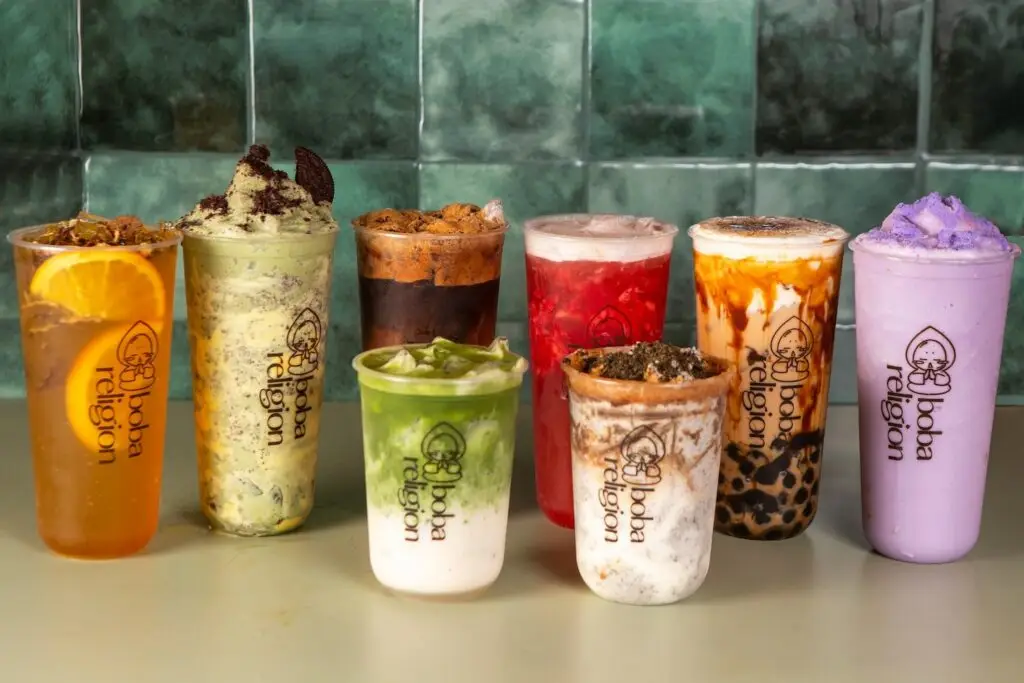
If you’re not sure where to start, Boba Religion in Convoy District is celebrating its one-year anniversary on March 21-22, giving patrons a chance to try the shop’s Vietnamese-sourced tea, coffee, matcha, and other specialty drinks with a buy-one, get-one-free promotion on Saturday and buy-one, get-one-half-off on Sunday. So, whether you’re a QQ fan already or QQ-curious, this weekend might be a good time to give the squishy, fun to chew pearls a try.

Listen Now: The Latest in San Diego’s Food and Drink Scene
Have breaking news, exciting scoops, or great stories about new San Diego restaurants or the city’s food scene? Send your pitches to [email protected].
Beth Demmon is an award-winning writer and podcaster whose work regularly appears in national outlets and San Diego Magazine. Her first book, The Beer Lover's Guide to Cider, is now available. Find out more on bethdemmon.com.
Bier Garden Encinitas debuts its second spot just steps from the pier
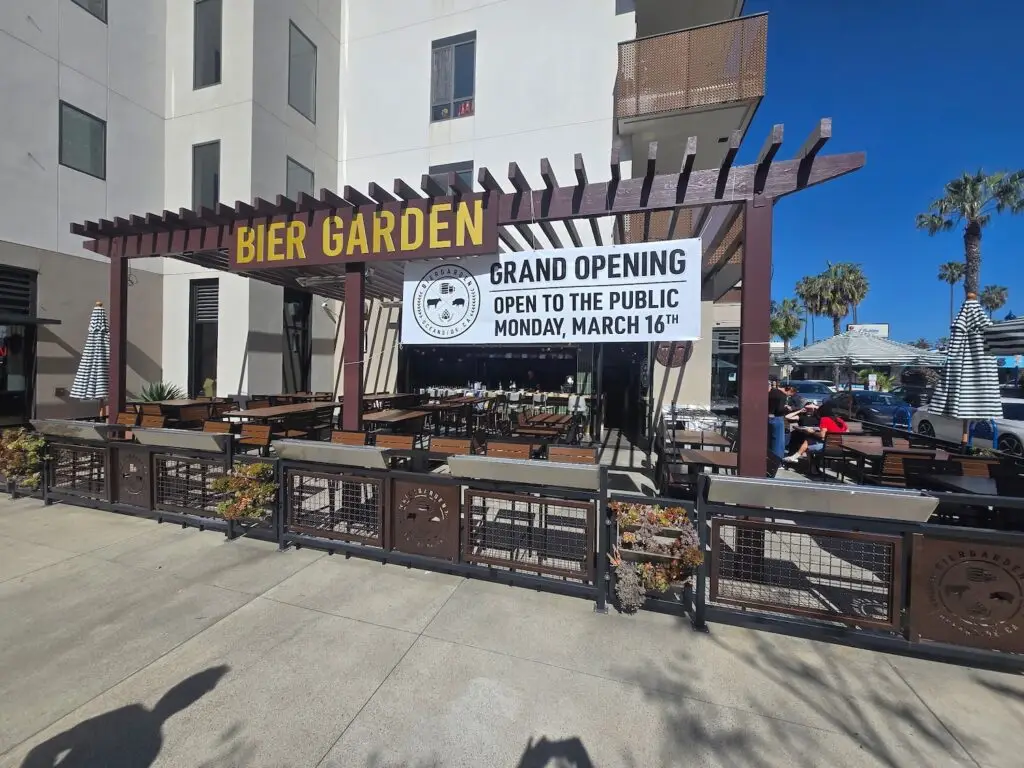
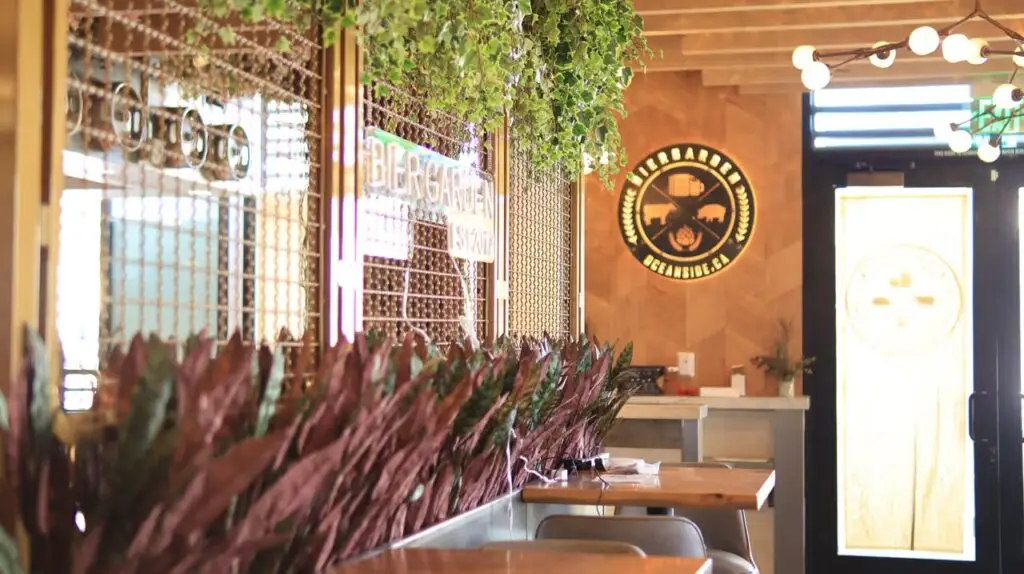
After 13 years of serving only-in-San Diego favorites like a Cardiff Crack sando and cocktails like a bacon-cheddar vodka-infused Bloody Mary mixed with housemade tomato juice—Bier Garden Encinitas is ready to take their show on the road. They’ll open a second location in downtown Oceanside on Monday, March 16.
Owner David Creviston is hardly the first to eyeball the coastal North County city as a food and drink destination. Key & Cleaver, Odie’s Pizza, Merenda, and 24 Suns have all either recently opened or are on the cusp of opening in Oceanside, and Bier Garden’s location just steps from local institutions like one Michelin-starred Valle and Craft Coast (who, hilariously, is reverse-migrating to open their own new location in Encinitas).
“I think the culture of our new restaurant is going to fit incredibly well here,” he says. North County vibes tend to be chill, but still lean on a bit of a higher-end side. Creviston says he wants to offer a laid-back type of place where you can bring a date just as easily as your grandparents, but still get a great cocktail and food.

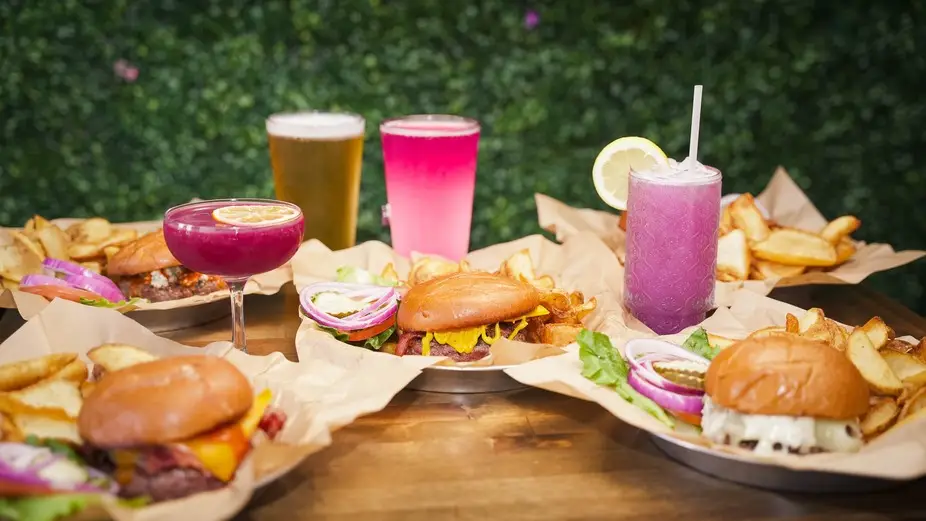
The food and drink menus will look very similar to Encinitas—short rib nachos, Baja fish tacos, and the signature Cheeseburger 101, plus 24 taps of craft beer, craft cocktails, and a slightly bigger wine list. (“We have a bigger wine cabinet,” he explains.) They’ll also be able to try a few new specials like a bulgogi bowl and lake trout to see how they hit with guests.
With March Madness coming up quickly, Creviston says he hopes to be a destination for viewing parties and other future sporting events. “We’ve structured the bar to be an indoor-outdoor patio bar, similar to Encinitas,” he explains. The Oceanside spot will have a total of 16 TVs—not to become a dedicated sports bar, per se, but to at least be a destination for people who want to catch a game and some grub that goes beyond a pile of soggy tots.
Bier Garden Oceanside opens at 201 N. Cleveland Street, Oceanside on Monday, March 16. Hours will be Sunday through Thursday, 11 a.m. to 10 p.m., and Friday through Saturday, 11 a.m. to 11 p.m.

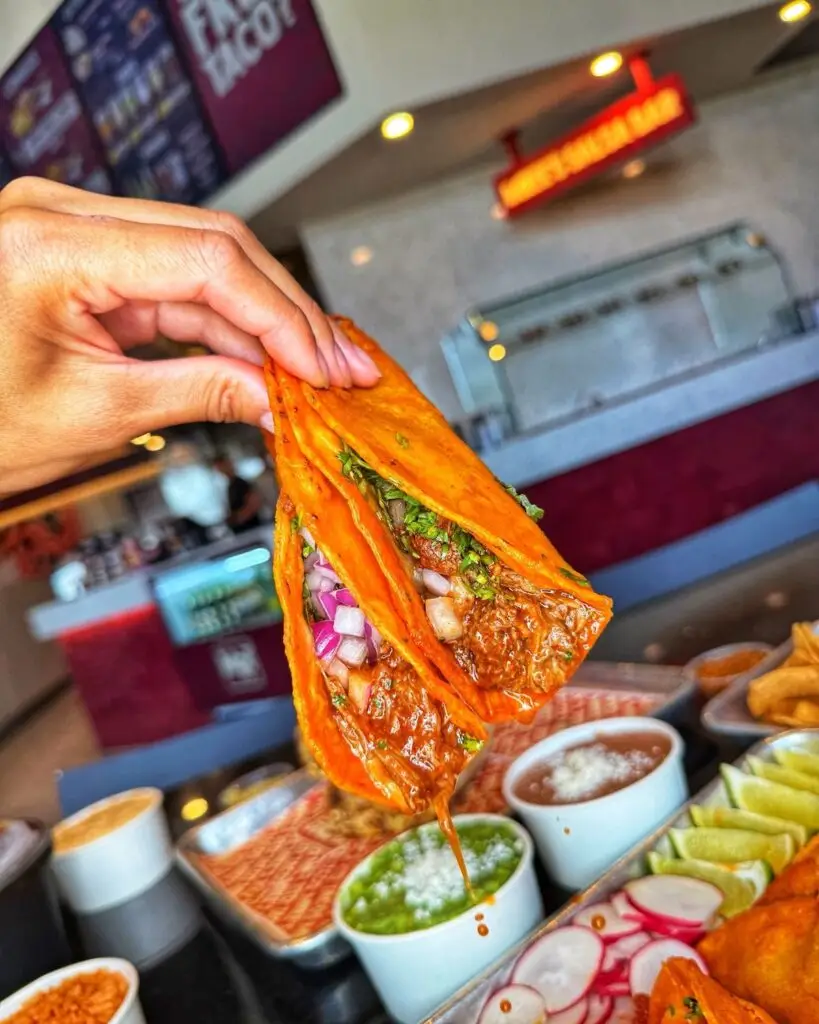
Who doesn’t love a San Diego success story? Rubio’s may have been the first local taco chain to make it big, but Mike’s Red Tacos has made a huge run in the hand-held taco land. Originally launched as a food truck only a few years ago (and quickly getting named one of the top places to eat by Yelp in 2023), the birria-based chain currently only has three locations in San Diego (Point Loma, Clairemont Mesa, and the newest in Mira Mesa). Now, it’s going the massive franchise route, according to the San Diego Union-Tribune, Mike’s fans can expect to see 200-plus new locations across the country over the next couple of years.

Listen Now: The Latest in San Diego’s Food and Drink Scene
Have breaking news, exciting scoops, or great stories about new San Diego restaurants or the city’s food scene? Send your pitches to [email protected].
Beth Demmon is an award-winning writer and podcaster whose work regularly appears in national outlets and San Diego Magazine. Her first book, The Beer Lover's Guide to Cider, is now available. Find out more on bethdemmon.com.
The annual event honors middle market companies creating jobs, scaling up, and investing in the region
San Diego is known for its startup culture and innovation economy, but what happens when the company moves beyond its early-stage years? The San Diego Business Impact Awards aim to answer that question, spotlighting the middle market businesses helping drive the region’s economy.
Hosted by San Diego Regional Economic Development Corporation (EDC) and JPMorganChase, the second annual awards celebration takes place on Thursday, July 23, from 4:30 to 7:00 p.m. at Scripps Research Auditorium. More than 200 executives, entrepreneurs, and business leaders are expected to attend the networking and cocktail event honoring some of San Diego County’s fastest-growing companies.
Businesses headquartered in San Diego County that have operated for at least two years are encouraged to submit their nomination by Thursday, June 18 at 4 p.m. Companies across industries—from technology and life sciences to tourism and consumer products, as well as pre-revenue startups—are eligible for recognition.
For EDC President and CEO Mark Cafferty, the event is as much about building connections as celebrating success. “We’ve had a longtime partnership with JPMorganChase; their work aligns with our efforts to support underserved communities and drive talent development,” says Cafferty. “And the networking was invaluable last year. I’m still in touch with people I met at last year’s awards.”

EDC is an independently-funded nonprofit that works directly with San Diego companies to help them grow the local economy, make the region as a whole more competitive, and attract and retain top-tier talent with quality jobs. Through EDC, companies can get help starting or expanding their business with support for things like site selection, permit navigation, and regulatory guidance, plus connections to local resources and potential business collaborators.
The San Diego Business Impact Awards began as an idea with one of EDC’s longtime strategic partners, JPMorganChase. The two organizations share a commitment to San Diego and are dedicated to bolstering middle market businesses.
“We’re blessed with a robust innovation economy and startup community,” says Aaron Ryan, San Diego Region Manager for JPMorgan’s Commercial and Investment Bank and vice chair of the firm’s’ San Diego Market Leadership Team. “But one of the segments of the business community we felt was overlooked was emerging middle market companies—the businesses that are no longer small but not yet large.”
Ryan says supporting those companies is critical as they scale and decide where to invest, hire, and grow.
San Diego’s high cost of living remains one of the region’s biggest business challenges, making talent recruitment and retention increasingly competitive. But local leaders point to the region’s quality of life, climate, and collaborative business community as advantages that continue to attract employers and workers.

“In order to support thriving households, there has to be enough high-quality jobs for people to be able to afford to live here,” Cafferty says. “Once a company grows and excels past that middle market point in their growth cycle, they become much more likely to pay higher wages and compete globally.”
Both Cafferty and Ryan proudly tout the unique collaboration that exists among San Diego County businesses. Bringing together top universities producing high-quality talent, cutting-edge research institutions, a robust military and defense presence, leading ocean science and environmental organizations, and a binational, cross-border identity creates a distinct business ecosystem that defines and strengthens the San Diego region.
Last year’s San Diego Business Impact Awards celebrated nearly 60 honorees from 49 industries, representing a total of 8,232 jobs across eight sectors, including: software and technology, healthcare and life sciences, consumer goods, professional services, finance, construction and manufacturing, defense, and hospitality and tourism. On average, honoree companies doubled their revenues over the previous year, employed more than 145 San Diegans each, and offered an average annual compensation of $192,415.
Top honorees included defense contractor Innoflight, environmental consulting firm Bancroft Construction Services, life sciences startup Element Biosciences, defense technology contractor GALT Aerospace, organic grocery store chain Jimbo’s, and biopharmaceutical company LENZ Therapeutics. During the event, Innoflight Founder and CEO Jeff Janicik held a fireside chat offering his insights on investing in the community and embracing San Diego culture.
This year, organizers hope to continue highlighting the middle market players driving economic impact across the region. Nominations are now open through June 18 at 4 p.m. Get your tickets to the San Diego Business Impact Awards celebration to enjoy drinks by Snake Oil Cocktail Co., light bites, live music, and networking.
Plus, new sushi opening in Point Loma, a local chef gets Italy’s highest award, and more San Diego food news
Whenever I write a “Best Of” roundup, it inevitably triggers an immediate onslaught of “yOu FoRgOt So AnD sO” comments (ransom note grammar intentional).
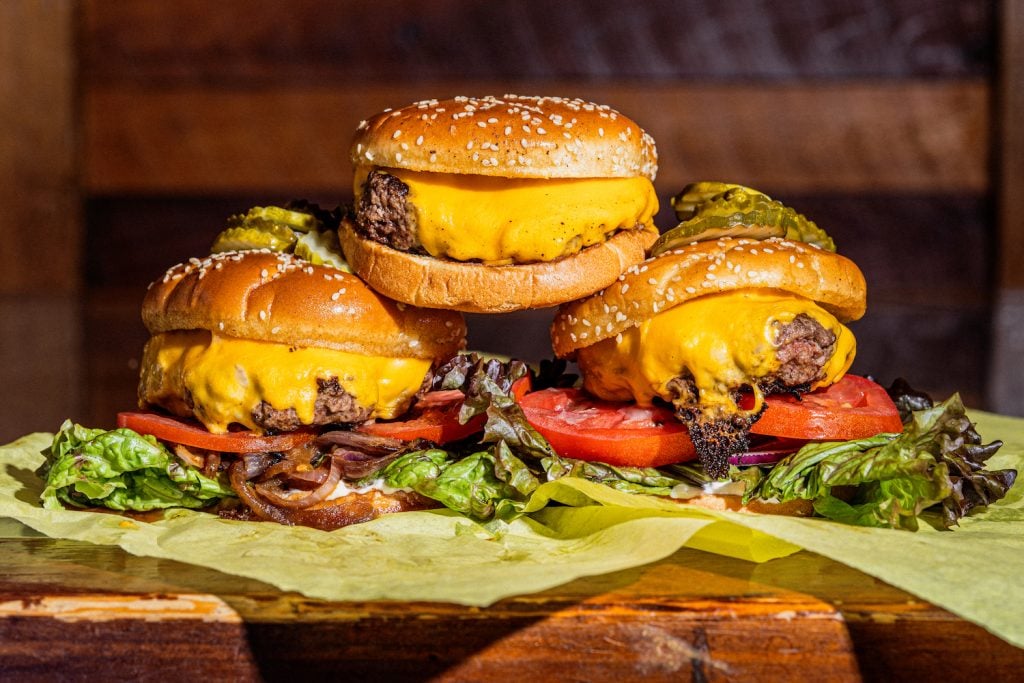
But I’m an adult. I can admit I may have made a teeny-tiny oversight when compiling last year’s list of great burgers in San Diego and neglecting to mention Copper Kings Burgers. You readers knew it when you voted them runners-up for “Best Burger” in 2025’s Best Restaurants issue. I humbly accept 10 seconds of well-deserved scorn… starting now.
… all done? Thank you.
Now that we’ve established Copper Kings Burgers does indeed slap, I have more good news. The North County–based burger joint that believes “life’s too short for crappy burgers” is opening a second location in Oceanside at the end of April.
Founders Jonathan Petr and Dermot Owens originally came up with Copper Kings with their partners Brittany Howlett (head of baking) and Korey Kaczur (catering sales manager), initially hoping to open a whiskey bar and burger joint. But when the pandemic hit, Petr realized no one in their right mind was going to invest in a new restaurant while the world was shut down.
Petr operated a food truck before in Los Angeles around 2012, so he and Owens decided to first go mobile to get some brand recognition. Since bars and breweries had to serve food to stay open, “we became a hot commodity,” he says. In a few years, they got popular enough to need a bigger trailer, then a second trailer, and opened their flagship brick-and-mortar in San Marcos in 2023.

Thanks to Owens’ Irish heritage and die-hard Arsenal fandom, the San Marcos spot has been a destination for football (soccer) fans—showing European Premier and Champion League games. He says they plan to do the same in Oceanside with Guinness game-day specials and early morning watch parties. With the new location’s bigger size (about twice the capacity of San Marcos, with a private dining space and outdoor patio), it’ll act as both a second restaurant location and central kitchen, cranking out baked goods like their signature Japanese milk buns for the burgers.
Oceanside’s menu will mirror San Marcos, but with a few more items thanks to the extra space, like a fried chicken plate and seasonal pasta. “We have so much more capabilities over there to do so many more fun things we were talking about doing,” says Petr, like new weekend pastries and breakfast sandwiches, a supper club, and more. “The sky’s the limit for what we’re trying to do. We’re just excited to do it.”
Even though Copper Kings #2 isn’t open yet, Petr says they’re always open to opportunities for new locations—maybe Cardiff, maybe somewhere else nearby, but most likely still in North County. “It’s the hope, the goal, the dream,” he says. “We’re always keeping our eye out.”
Copper Kings Burgers soft opens at 326 N. Horne Street in Oceanside at the end of April. Initial operating hours will be Sunday through Thursday, 11 a.m. to 10 p.m., and Friday through Saturday, 11 a.m. to midnight.

I don’t usually think of Palm Springs as a “sushi destination,” but based on Ponzu Sushi’s reputation, maybe I should. The cocktail bar and sushi spot first opened near the Forever Marilyn Monroe statue in July 2024, and things must have gone gangbusters since, because the team decided to open the next location right here in San Diego—Liberty Station, to be precise.
“We chose San Diego for our second location because we personally love the city and visit often,” says Ponzu founder, Nat Tangkitsombat. “It’s a place we’ve always enjoyed spending time in, and we felt it would be a great community to introduce our style of modern Japanese fusion—upscale but still approachable.”
That could also be the description of Liberty Station, so good fit. If all goes well with construction, permits, and luck, Ponzu should open in late summer, bringing along yellowtail carpaccio, seared salmon belly, and more tasty faves from the cold waters of the Pacific.

Listen Now: The Latest in San Diego’s Food and Drink Scene
Have breaking news, exciting scoops, or great stories about new San Diego restaurants or the city’s food scene? Send your pitches to [email protected].
Beth Demmon is an award-winning writer and podcaster whose work regularly appears in national outlets and San Diego Magazine. Her first book, The Beer Lover's Guide to Cider, is now available. Find out more on bethdemmon.com.
The under-the-radar burger spot in City Heights will open their second location this December
When Jennipher Hager and Chris Dainty opened Key & Cleaver in 2023, they had one goal in mind: great, locally-sourced food and drinks at affordable prices. They kept their word. Their beef comes from Perennial Pastures Ranch in Santa Ysabel, all craft beer and burger buns are made in San Diego, and most of their spirits are local. Even their location in City Heights is local.
“We live two blocks from it,” laughs Dainty.
But come December, they’ll expand to another corner of the county, opening a second Key & Cleaver in the former Breakwater Brewing location in Oceanside. O’side beckoned for a couple of reasons—yes, the north county city’s food scene is booming with new pizza joints, a Michelin star at Valle, and a wildly ambitious Chinese concept from ex-Addison chefs—but also because they needed a second location to be able to survive at all.
“It’s gotten to a point where we need to expand if we’re going to keep this thing going,” says Dainty, pointing to factors like the city of San Diego’s necessary, but disruptive street repairs to University Avenue that took over a year longer than expected. He estimates the construction cost them 40 percent of their business, but with a solid concept in hand, they knew it was more a matter of when they could find another spot they could afford rather than if they should grow.
“We don’t have huge resources like a lot of other restaurant companies do,” he says. But what Dainty and Hager do have are decades of experience in the hospitality industry between the two of them. Plus, the Oceanside space came at the right time in the right place for the right price with the right amount of potential customers. “You have a thousand hotel rooms in walking distance,” he says. “How do you say no to that?”
Everything will feel pretty much the same as the original Key & Cleaver space in terms of the burger-centric menu and casual vibe, but on one floor rather than two as in City Heights. Most of the spot faces the 101 with rolling garage door windows, and a side outdoor patio along Seagaze Drive adds a bit of an ocean view.
“Our biggest thing is everybody is welcome and it’s always going to be comfortable,” Hager promises.
But the other biggest thing is that the burger is still going to be top-notch. “I truly believe we have the best burger in San Diego,” says Dainty. “And I’ll stand by that.”
Key & Cleaver Oceanside opens December 2025 at 101 N. Coast Highway, Suite C140.

Yes, it’s a bit of shameless self-promotion, but only because I’m on an endless quest to convince all of you that cider is the future. And I can prove my theory on Saturday, November 15 at Cellar Hand in Hillcrest, when I’ll join four of San Diego’s best cider makers—Serpentine Cider, Calico Cidery, Raging Cider & Mead, and Oddish Wine—for Orchard to Table, a one-night flight of ciders paired with special selections by executive chef Ashley McBrady. Grab a flight of four for $20 and see why we’re all so passionate about these pome fruits. (Editor’s note: You can buy Beth’s book she wrote on cider here).
Beth Demmon is an award-winning writer and podcaster whose work regularly appears in national outlets and San Diego Magazine. Her first book, The Beer Lover's Guide to Cider, is now available. Find out more on bethdemmon.com.
sometimes, even us sun-soaked San Diegans need a getaway of our own. Fortunately, unforgettable experiences are just a short trip away.
It’s hard to think of two words that go together better than summer and vacation. Every summer, visitors flock to San Diego to explore our breathtaking beaches and awesome attractions—and who could blame them?
But sometimes, even us sun-soaked San Diegans need a getaway of our own. Fortunately, unforgettable experiences abound, around the world and in our own backyard.
This guide will help you pick the perfect summer escape. Want even more ideas? Check out the Central Coast’s tourism guide here.
Ventura Harbor.png
Relax and unwind at Ventura’s seaside Ventura Harbor Village for waterfront treats, fresh seafood, patio dining, coastal shops, artisans, pampering, dive trips, live music, and fun rentals on the water! Walk from Ventura Harbor hotels to scenic beaches, Ventura Harbor Village, and Channel Islands National Park Visitor Center. SEA you SEAside! venturaharborvillage.com
Solvang
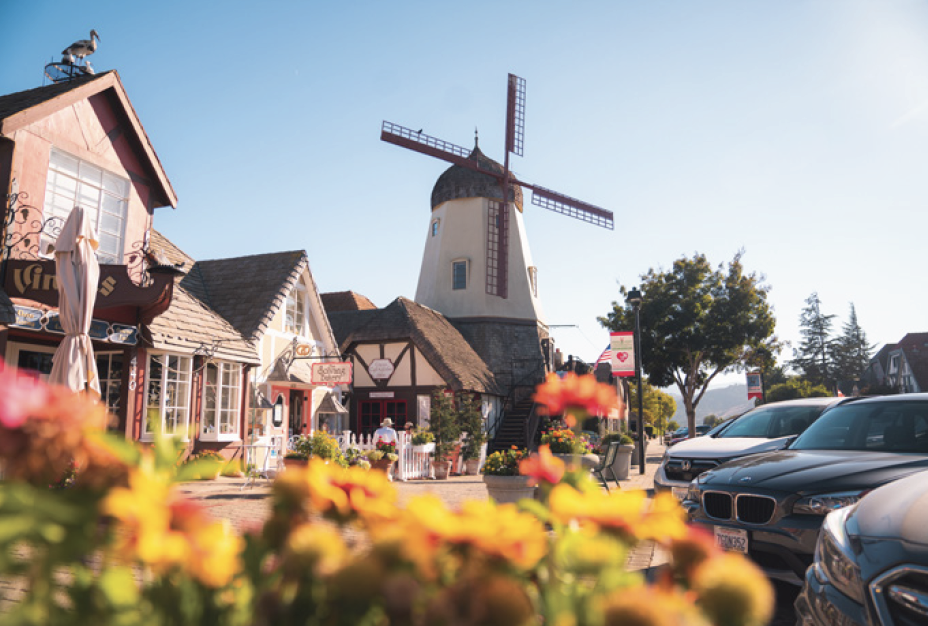
Solvang’s walkable village is brimming with wine tasting rooms and bars, museums, galleries, independently owned shops, and restaurants helmed by Michelin-level chefs. Architecture reminiscent of Northern Europe frames Danish-pastry-filled itineraries. Spot the Little Mermaid, chase windmills, brush up on Hans Christian Andersen’s fairy tales— then live one of your own. What’s your Solvang story? Solvangusa.com
Gilroy.png
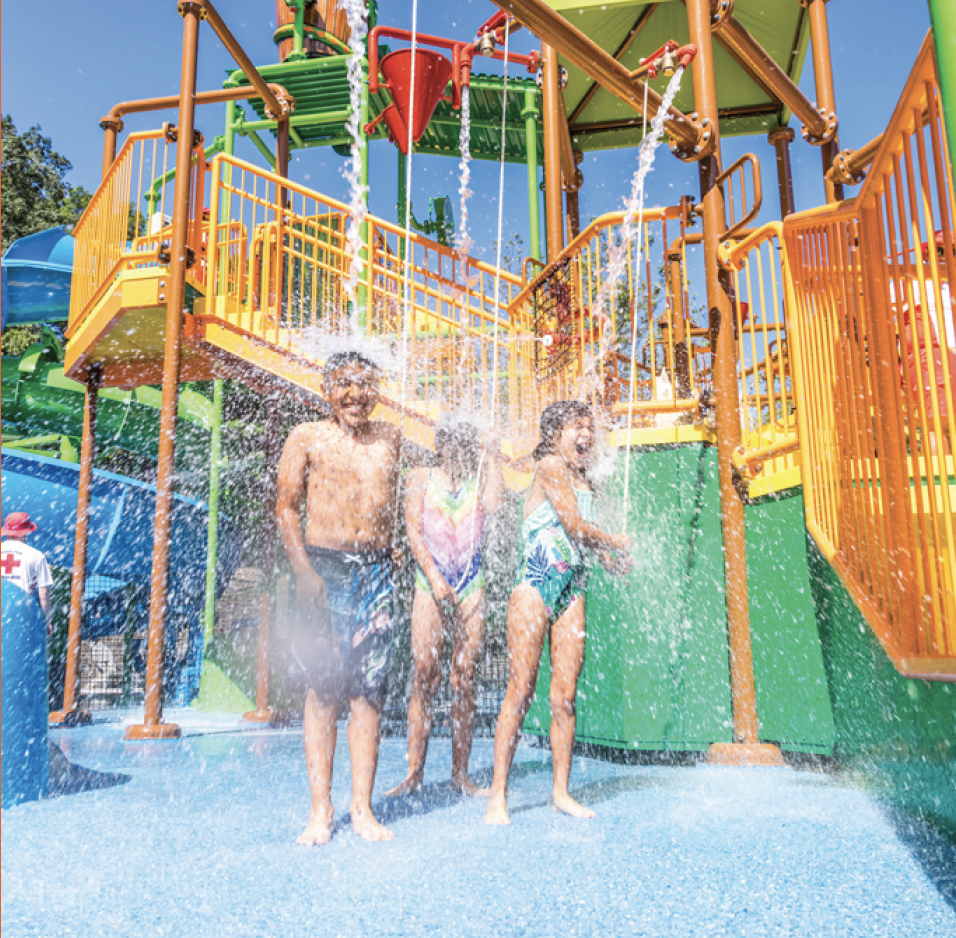
The super-splashy Water Oasis in Gilroy Gardens is the coolest place to play in Gilroy—but there’s lots more to see and do in the Garlic Capital of the World. Enjoy wine tasting, outlet shopping, golfing, hiking, and more. Visitgilroy.com
Ventura.png
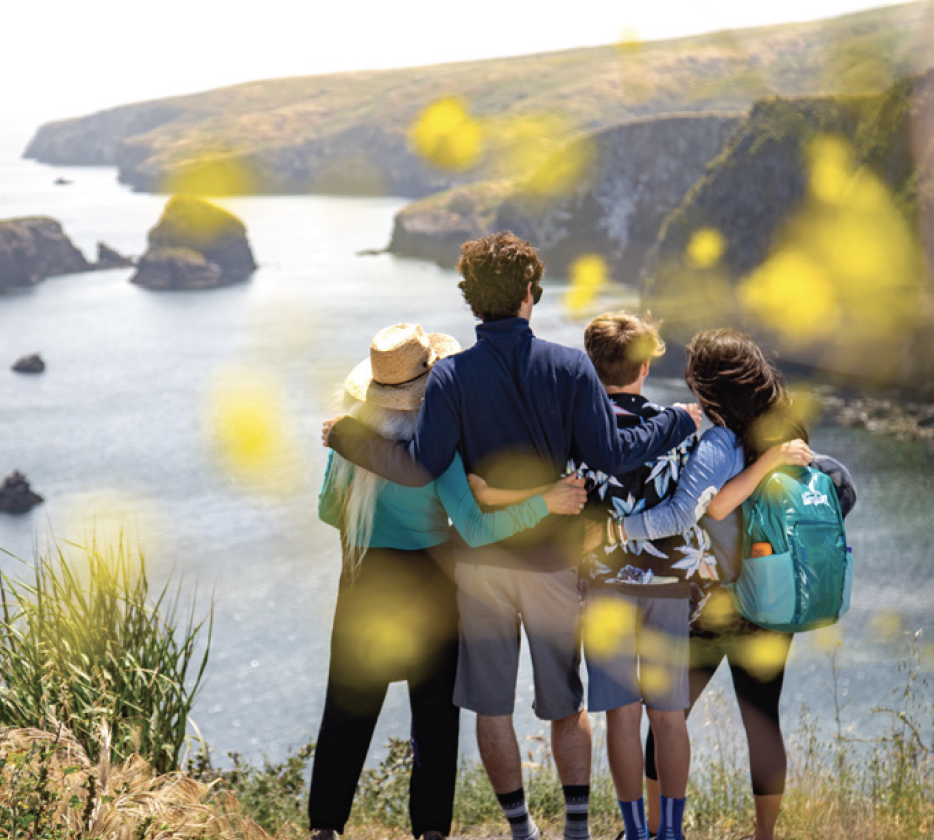
Ventura is your portal to life-changing adventure. The closest of the five islands of Channel Islands National Park are just a 70-minute boat ride from Ventura Harbor, and they offer the wild glory you’d expect from one of America’s least visited national parks. “The Galapagos of North America”? Better. visitventura.com
Paso Robles
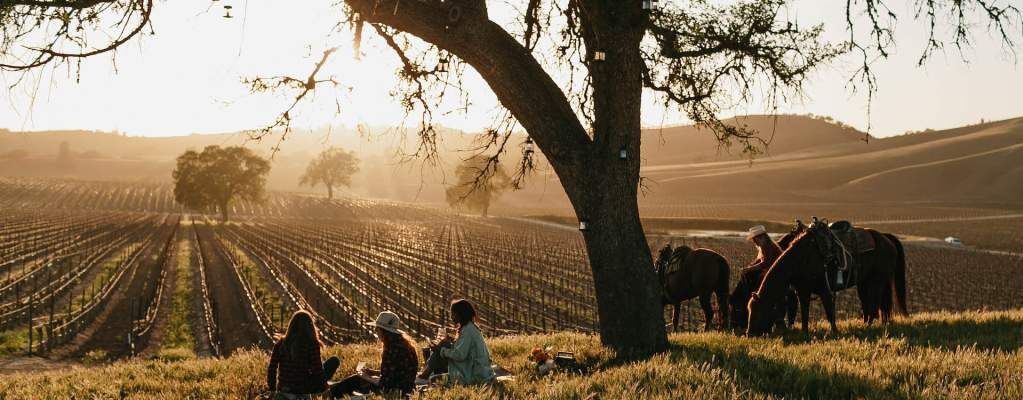
Escape to the majestic vineyards, oak-dotted hills, and small-town charm of Paso Robles. It’s where world-class food and wine meet small-town cowboy charm, and it boasts endless lodging options, from historic inns and luxury resorts to rustic vineyard escapes. Recently named a “must-visit region” by the New York Times. travelpaso.com
Pismo Beach.png
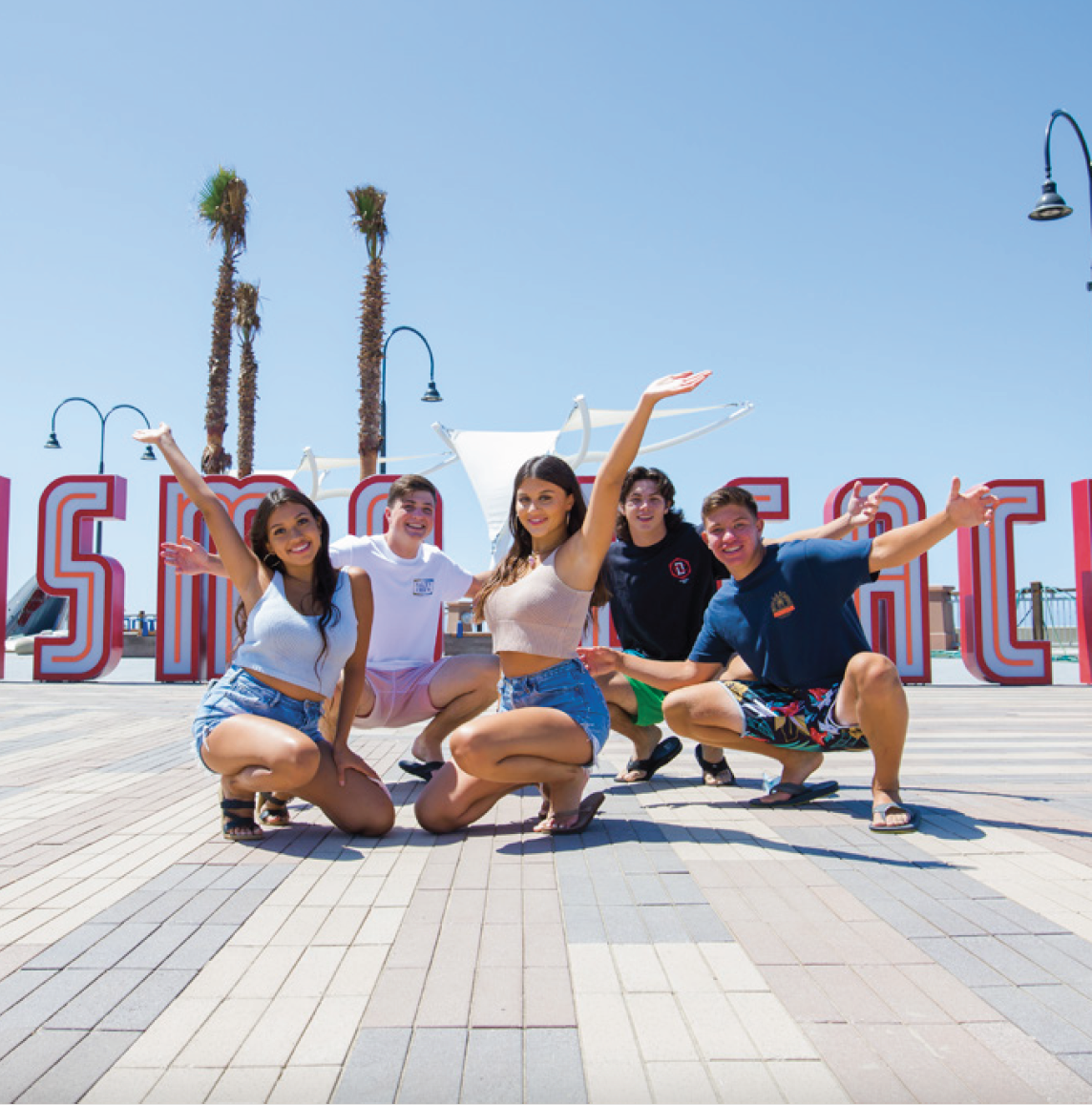
It’s all here waiting for you—a gentle climate, where sand, sun, sea, and sky converge to create the ideal getaway. California’s golden past is alive and well in Pismo Beach. Visit experiencepismobeach.com to book your stay. experiencepismobeach.com
Monterey.png
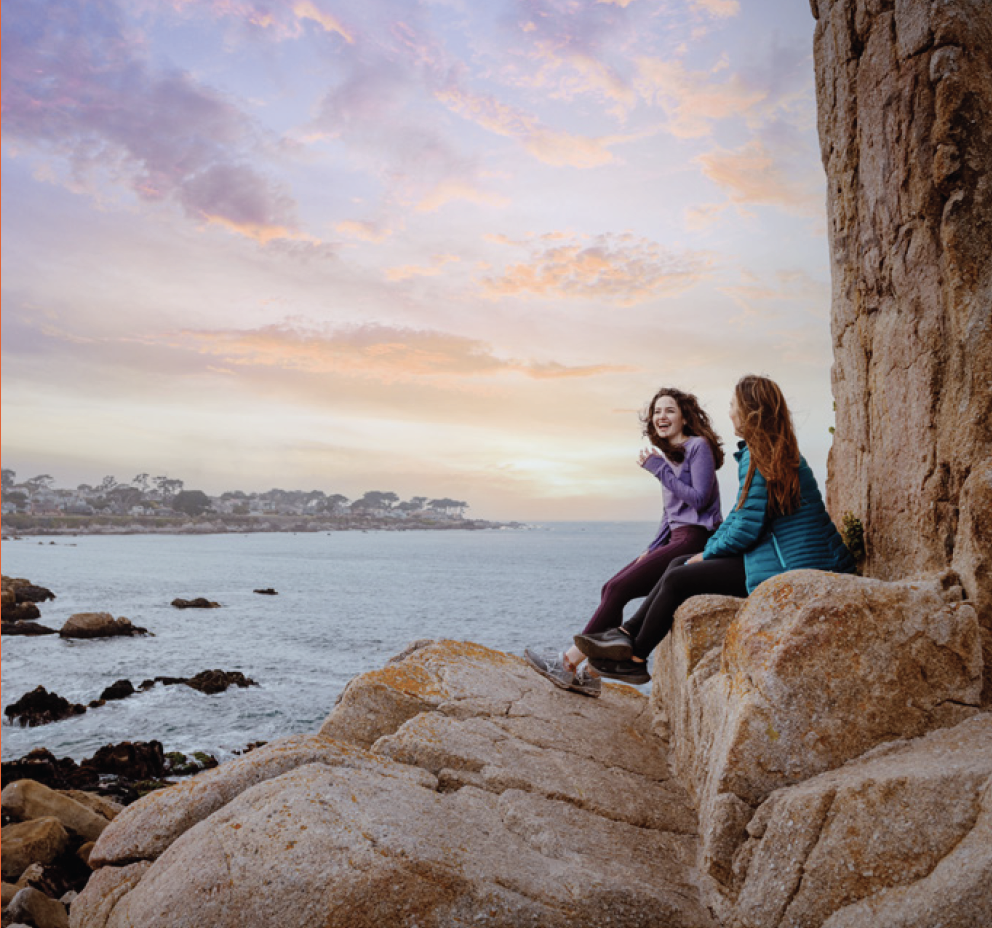
Escape to an inspiring place with striking coastline, secluded redwood forests, and a culinary scene as diverse as the landscape. Now is the moment to embrace the unexpected adventures and natural beauty of Monterey County. Why wait? Plan your trip and join us here. Seemonterey.com
Santa Barbar.png
Discover a gentle crescent of California coast where the sea and mountains meet, the sun feels more golden, and the valleys overflow with a bounty of color. Santa Barbara offers exhilarating outdoor adventure, fascinating arts and culture, an incredible variety of local food and wine, and more. santabarbaraca.com
Buellton.png
#SkipTheBigCities and head to Buellton, nestled in the Sta. Rita Hills wine region, where you’ll also enjoy feeding an ostrich, horseback riding, taking a stroll through the botanic garden, or enjoying the collection at Mendenhall’s Museum of Gasoline Pumps and Petroliana. You’ll find accommodations for all budgets, including “glamping.” discoverbuellton.com