Featured articles
Food & Drink
Food & Drink
Food & Drink
Featured articles
Everything SD
Everything SD
Everything SD
Featured articles
Things to Do
Charitable SD
Things to Do
Featured articles
podcast-ep
podcast-ep
video
Featured articles
Everything SD
Everything SD
Everything SD
Featured articles
Things to Do
Local Charities
Partner content
Ready to know more about San Diego?
SubscribeReady to know more about San Diego?
What started as a few people jamming on the street has turned into a life-changing, self-sustaining nonprofit
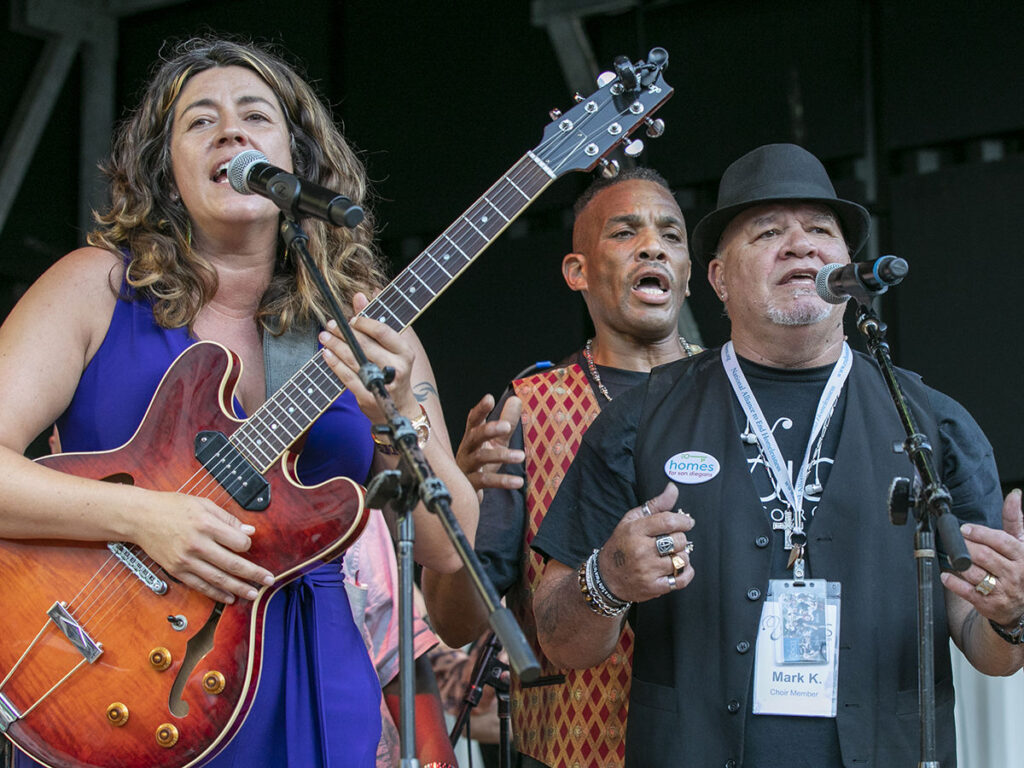
It’s 11 a.m. on a Friday at the Living Water Church, located at 16th and Market in the East Village. Steph Johnson holds a guitar and speaks into a microphone. “If you have a solo, it’s time to memorize,” she says calmly to a seated group of about 100 people. One-third of them are unsheltered, another third are on the brink, and the rest are volunteers or East Village residents. The group makes up an R & B/soul choir called Voices of Our City, and they are rehearsing for a concert that’s one week away called “Summer in the City,” which will take place in the Quartyard.
The church is abuzz with vocal warm-ups, preshow jitters, and the promise of lunch. Anyone and everyone is welcome at these weekly sing-alongs—people come for the camaraderie and the stress relief, but only about 50 of the members will perform. A few professional musicians tinker with their band equipment. Someone in the choir has brought a kitty in a backpack-type carrier.
On cue, they close their eyes and collectively sing on a vowel, with the digeridoo that one of the musicians plays.
They rehearse the Sister Sledge classic “We Are Family,” followed by Ben E. King’s “Stand by Me” and Paul Simon’s “Homeless.” During a break, they sing “Happy Birthday” to a young man named Ray.

Voices of Our City / Choir 2
Michele Zousmer
The choir performs an original song that some members wrote together called “Sounds of the Sidewalk.” It describes coins falling in a cup, a baby crying. A sample lyric goes like this: “Gotta keep that hope for tomorrow/ With my dignity inside/ What’s mine is yours to borrow/ Together we touch the sky.” The tune is catchy and the lyrics a testament to how the choir members’ lives have been transformed, thanks in large part to Johnson.
Johnson does not have a background in social work or social enterprise. But three years ago, the 39-year-old San Diego native noticed a big change in the East Village. “It seemed like overnight there were thousands more people on the street.” She began educating herself on the issues around homelessness and learned that affordable housing units had been removed while people on the street were going to jail. “I thought it was just so incredibly inhumane. My mother’s disabled, and I grew up a little bit on assistance, so I know not everyone has the same circumstances.”
Johnson had befriended a lot of people who were living on the street. With her guitar by her side, she would hand out food and bottles of water and sing with them. Sometimes she’d bring friends, and they would distribute feminine hygiene products. Around that time, the Living Water pastor noticed what she was doing and offered up his church space to use for anything. “I was like, ‘Really? I don’t go to church. Really?’” Johnson recalls. “I said, ‘I want to start a choir.’ The words kind of came from somewhere else. I knew that a lot of the people I’d met on the street, we bonded through making art or singing.” What started with one person grew to nine, then 20. KPBS did a story on Voices of Our City at the end of 2016. “It went nationwide on PBS NewsHour, and our lives were never the same,” she says.
Johnson, a self-taught musician who did banking in her former life, was about to go on a European tour with her fourth album. But Voices was getting gig after gig, so she put her album and music career on hold. People wanted to hire them to perform, but they needed money to transport members and feed them (Voices provides food every time they get together to sing). So, to be more organized and efficient, they held auditions for a 30-member performance choir that rehearses separately and performs about one to four times per week. Their paying gigs include community events and conferences, but they also do donated concerts at places like women’s shelters. They even performed “Amazing Grace” with the San Diego Symphony at the Bayside Performance Park in 2018. With the orchestra’s new music director, Rafael Payare, they are recording an album.
In addition to all the music and performing, Johnson had to learn how to establish a nonprofit and create a board. Today she is the cofounder and executive director and also acts as a music director.
The concerts became a revenue stream that allowed them to hire a case manager, programs director, and drivers—a few of whom started out as choir members. They run about 10 programs, from songwriting and guitar lessons to personal development workshops. More importantly, they’ve helped 40 people get into housing or safe shelter. “The wraparound support, the feeling of family, is the transformational element,” she says. Voices of Our City also does advocacy and trains members in public speaking and how to tell their story. They meet regularly with elected officials and go to city council and transit meetings.
“We really felt like in San Diego it’s all so fractured. I couldn’t give people a phone number and say, ‘Call this number,’ when I knew it was broken on the other end. So, we use our popularity and our name. A lot of agencies come now to practice. Everyone’s welcome—people who are sheltered, people who live up the street . . . if they want to come sing with us, they can sing. And so, you’re sitting next to someone who is unsheltered, and then that person is immediately in a conversation with somebody in a respectful dialogue, so it’s really unique.”

Voices of Our City / Choir 3
Michele Zousmer
Music and gathering is a very simple and free antidote to sadness, desperation, and loneliness, and Johnson seems to have struck a very sweet chord in the community.
In between songs, Johnson continues to teach the choir, not just about music, but also about performing and commitment and showing up. Life skills.
She is telling the members that there will be paying customers at the concert and that the choir should think about sharing the venue and not just taking over.
“I always try to give up my space or comfort to make accommodations for others. Someone who bought a ticket, can you give your seat to them?”
Harmony—it’s now a sound on the sidewalk in the East Village.
Editor’s Note: We first published this story in our Charitable Giving Guide 2020. In May, Voices of Our City earned a Golden Buzzer on TV’s America’s Got Talent. Then in June, the organization lost its co-founder, Nina Deering, in a vehicle accident. Our thoughts and condolences go out to all the members of this choir that brings hope and joy to so many San Diegans. Support them here.
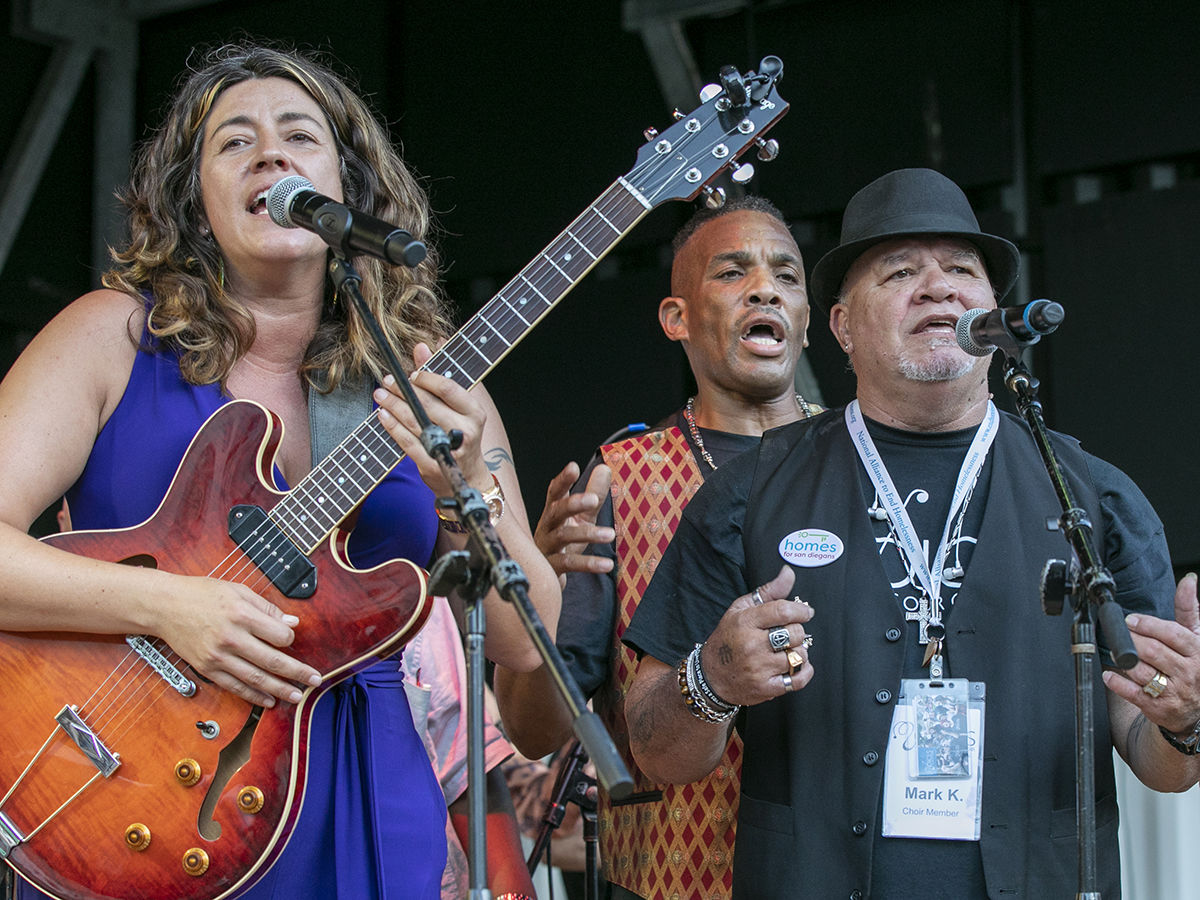
Steph Johnson (on guitar) performs with Voices of Our City at “Summer in the City.”
Michele Zousmer

After more than six decades of preserving the community’s past, the newly renamed museum is expanding how it tells its stories

La Jolla has a rich history. From its roots as Kumeyaay territory and early days shaped by influential San Diegans like Ellen Browning Scripps to the vibrant hub for arts, culture, and education that it is today, the roughly seven-mile stretch along the coast has long been a local gem.

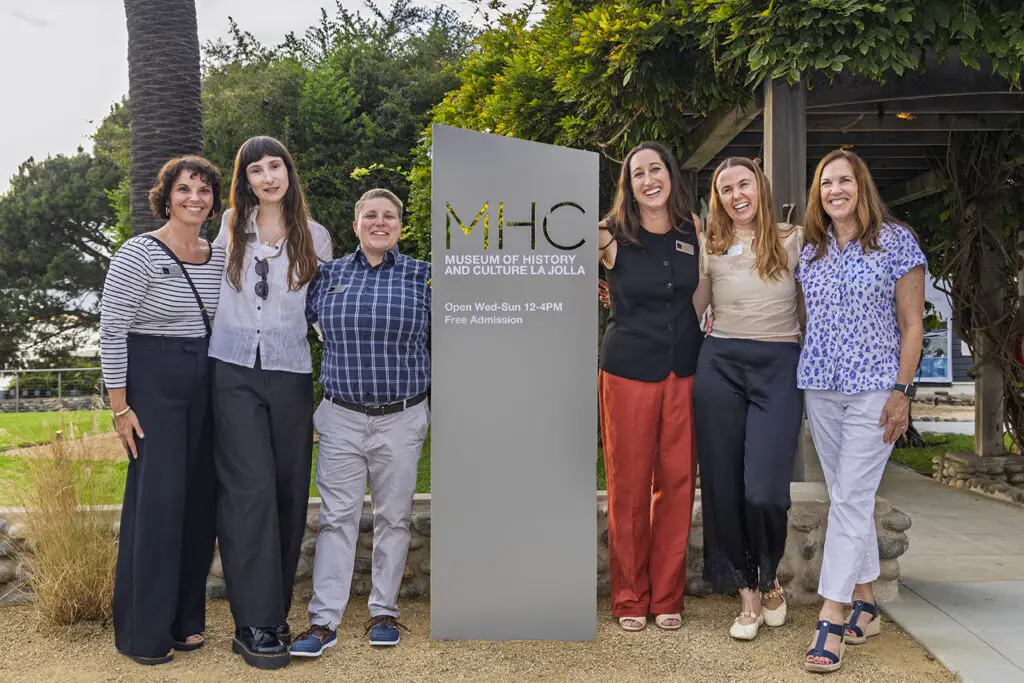
In 1964, a group of volunteers came together to preserve the history of the community. They formed the La Jolla Historical Society, which has since evolved into the Museum of History and Culture La Jolla. For the past 62 years, the organization has worked to protect historic buildings, archival materials, and recorded memories, ensuring the character of the neighborhood would endure well into the future.
“La Jolla is a small community, but it has a fascinating history,” says Lauren Lockhart, executive director of the Museum of History and Culture La Jolla. “The focus was always on how do we preserve the stories, places, and people that make La Jolla unique, and that remains central to our mission.”
However, in its early days, the organization was limited in what types of programming it could offer because it didn’t have a permanent homebase. A pivotal point came in 2008, when it was gifted Wisteria Cottage, originally the private residence of Virginia Scripps, by descendants of the Scripps family. The historic Craftsman cottage had been remodeled by famed architect Irving Gill, whose other modernist works are peppered throughout La Jolla, adding to its distinctive look. The organization then launched a capital campaign to expand into a museum-quality space to host exhibitions and to store the tens of thousands of photos, drawings, postcards, and other materials in its collection, Lockhart explains.
“At that point the organization could really begin to invest in developing a public space and public programs that would give back to the community,” she adds. “That effort accelerated with my predecessor, Heath Fox, who pushed the organization to think about an exhibition program that was interdisciplinary in nature. It’s something that drew me to this organization and that I’ve continued to advocate for because examining history through lenses of art, architecture, science, and literature is so compelling and such a great way to bring different audiences into the fold.”

The organization entered another period of transformation this year when it “outgrew” its previous identity as La Jolla Historical Society and officially rebranded as the Museum of History and Culture La Jolla. The organization had transitioned from a traditional historical society into a professionally operated museum and wanted to reflect that while also amplifying its ability to connect with broader audiences.
“We’ve grown so far beyond what a traditional historical society might offer to the public that we were finding that often, especially younger generations, they would come through our doors and say, ‘Wow, it’s a lot cooler than I thought it would be,’ which is a nice compliment, but it made us ask ourselves who’s not coming through our doors because they’re not sure what we have to offer or that they will see themselves reflected here,” says Lockhart. “We wanted to remove that barrier and make sure that everyone, just from recognizing our name, will think, That sounds like there’s something there for me, and that definitely is evidenced in our current programming and exhibitions.”

The change, she says, has been a long time coming. “We’ve already made a lot of huge strides over the years,” Lockhart says. “It’s about our name catching up to our work.”
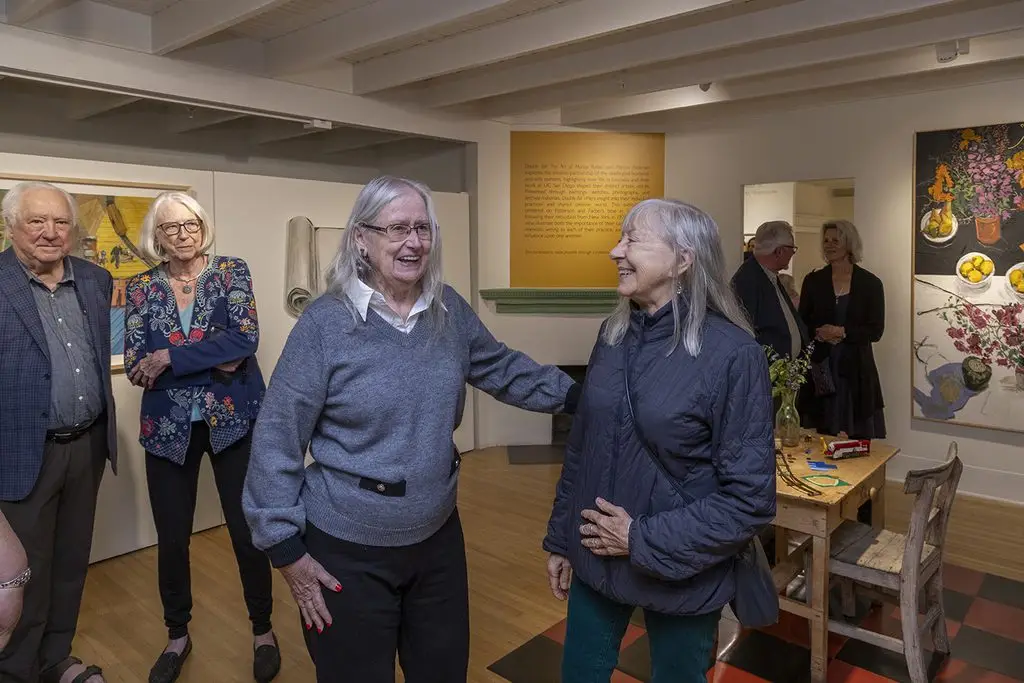
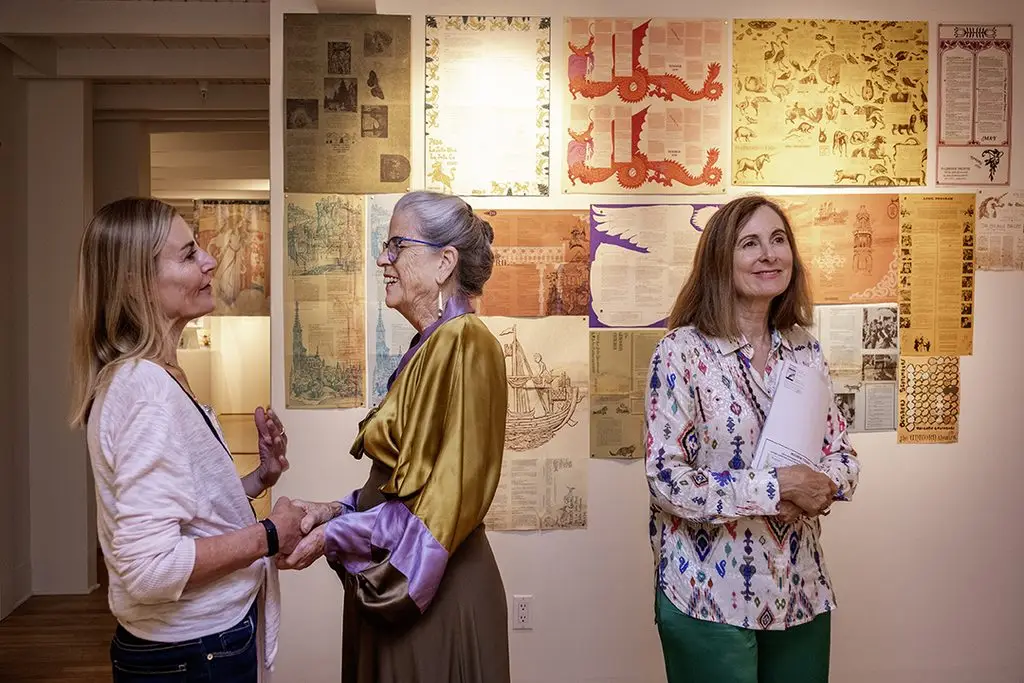
The Museum of History and Culture La Jolla’s current exhibits include Stories in Cloth: Communicating Through Textiles, presented in partnership with the Visions Museum of Textile Art at Liberty Station, on display through September 6. On deck is The Scientific Art of Historic Preservation, which explores the processes behind the museum’s mission. To honor the philanthropic spirit of the Scripps sisters, admission to the museum and many of its public programs are free of charge.
Sarah Sapeda is San Diego Magazine’s Custom Content Editor. In her 15 years in San Diego journalism, she has covered charitable events, health care, education, crime, current events, and more.
For nearly four decades, the Latina mentorship organization has connected volunteers with girls and young women
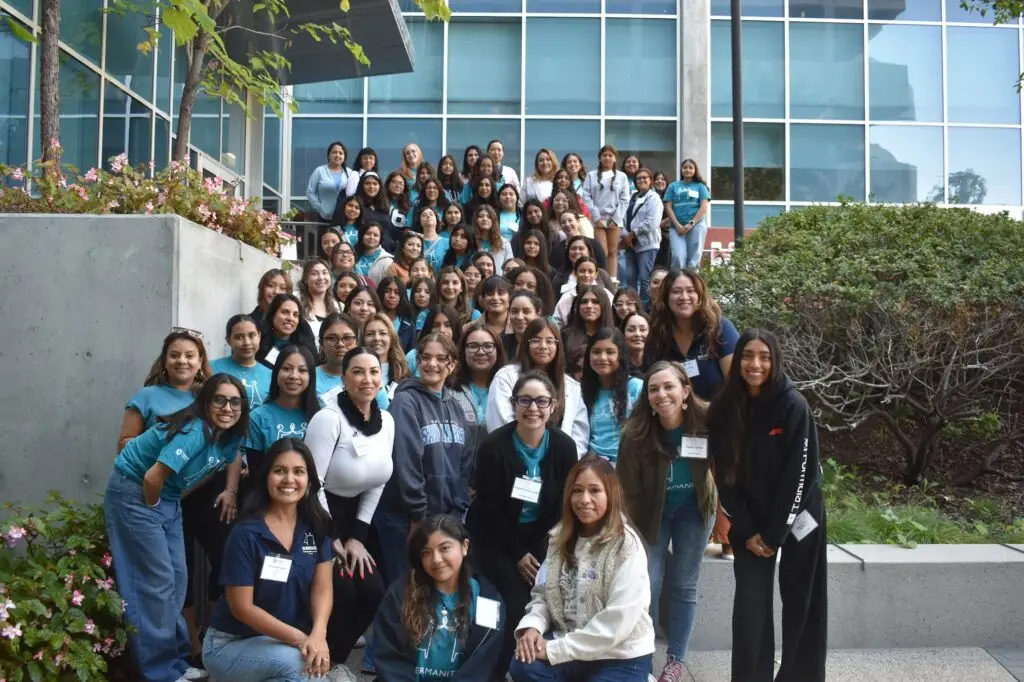
MANA de San Diego has spent the past 38 years building a community to help girls and women thrive. Short for hermana, Spanish for sister, MANA de San Diego is part of a national organization that aims to empower Latinas to reach their full potential through programs like its Hermanitas mentoring program for middle and high school students, which has served more than 600 girls and young women since its inception and, in recent years, boasts 100 percent high school graduation and college admission rates.
Volunteers like Brenda Lemas are essential to MANA de San Diego’s mission. Here, she details her service with the organization and why, for her, mentoring is truly paying it forward.
I had just come back from a conference that was sponsored by LATINA Style magazine. I was receiving an award while I was still on active duty in the Navy. It was all women, all different branches of the military. The environment I was in excited me so much. I had never been in a room full of women who just wanted to help each other out.
When I came back to San Diego, I started looking for that type of community. I found MANA and I volunteered at its Latina Success Conference. It was just incredible. I stayed connected with MANA, but because I was still on active duty, I couldn’t fully engage as a volunteer. When I retired, I wanted to go back to it. They wanted me to do the Latina Success Leadership Program, and during that, one of the women asked me if I wanted to be a mentor. I really enjoy mentoring. When I was in the military on active duty, that was something that was at the top of my priorities. I always wanted to mentor people.

I was asked to be in the leadership program, so I became part of the leadership team and did that for a year. And I have done a consulting gig with them. Right now I’m a mentor, and help any time I can with any of the events. I really love the community that they have.
For me, what it means is giving back. I didn’t have a strong female role model when I was growing up. I kind of always searched for that. But I think slowly, life shapes you and molds you and I sort of became that for other people.
I’ve always looked at mentors as somebody to provide guidance. And that’s what we do. The program is for young women, and the purpose is to encourage them to continue in their academic journeys. As a woman in a professional space, you’re offering that guidance to that young woman, and the goal is to get them through high school and eventually for them to pursue higher education. Then some of them come back and they become mentors. It’s a holistic way to empower young women.
My favorite part has been seeing my mentee grow. You always learn something different from each person that you get to mentor. The experience is not one-way; they get a lot from it, but then as a mentor, you gain a lot of knowledge. With my mentee now, she was going through some stuff when she first started the program that I didn’t fully understand. But it allowed me to gain some insight into what it looks like for a young adult and how to help her and support her. And I really didn’t have to do much other than be a strong presence for her. She’s a very smart, intelligent young woman.
It is the whole process. I look back, like, if I had only had somebody in my life that could have been there, I probably would’ve done most of the things that [my mentee] has done. None of what she’s accomplished I was able to do in my young lifetime. She’s just so motivated; it’s a confidence that I can’t explain, and a complete 180 from where she started.
The question for them is, ‘What are you trying to get out of it?’ Most of us volunteer for a reason, like a higher purpose or something like that. But I would recommend finding a community where you feel like you belong and just do it. It doesn’t have to necessarily be difficult. Just go out there and start asking people, ‘Where can I help?’
Sarah Sapeda is San Diego Magazine’s Custom Content Editor. In her 15 years in San Diego journalism, she has covered charitable events, health care, education, crime, current events, and more.
Here’s where to celebrate, connect, give back, and make a difference this month
Margaritaville Hotel San Diego Gaslamp Quarter will honor the legacy of the late Jimmy Buffet with a fundraiser for the San Diego Music Foundation. Its Day of Service at its rooftop bar will feature a performance by The Buffett Band, a travel and experience themed silent auction, and interactive entertainment.
Hundreds of San Diegans will gather at NTC Park at Liberty Station for the McAlister Institute’s 14th Annual Walk for Sobriety. In addition to the walk, the event will include a resource fair with more than 35 nonprofits, healthcare providers, and community organizations that are part of a network of support for those in recovery.
Foreigner will take the stage to benefit Promises2Kids at its Dream On Concert Gala at a private home in La Jolla. Proceeds from the exclusive event will help Promises2Kids create a brighter future for local foster kids.
The Lucky Duck Foundation will host its annual Showcase Soirée at the Estancia La Jolla Hotel & Spa. Proceeds from the event will support the nonprofit’s mission to prevent and alleviate the suffering of homelessness throughout San Diego County.
Show your support for families of local children with life-threatening diseases at the Emilio Nares Foundation’s Harvest for Hope at the Fairmont Grand Del Mar. Funds raised will benefit programs like Ride With Emilio, which provides no-cost transportation for families seeking medical treatment, and Healing Through Nature activities for kids in recent cancer remission.
To celebrate the 50th anniversary of Girl Scouts San Diego’s Camp Winacka, the organization will host a nostalgic evening under the stars. This year’s Urban Campout: Ignite the Possibilities at Girl Scouts San Diego’s Balboa Campus will feature camp-inspired cuisine, cocktails, and activities.
The Boys and Girls Clubs of Greater San Diego will celebrate its impact on local youth at its 13th annual An Evening of Changing Lives. Proceeds from the gala at the Marriott Marquis San Diego Marina support programs that promote academic success, character development, and healthy lifestyles.
Youth Tennis San Diego will honor the sport’s American icons at its annual gala at the Barnes Tennis Center. An Evening Celebrating Tennis Heritage & Legends will help the nonprofit make tennis accessible to all youth in San Diego, regardless of background or skill level.
Serving Seniors will produce a Jukebox Broadway-style show for its highly anticipated Sunshine Gala. The evening at the Hilton San Diego/Del Mar will support Serving Seniors’ compassionate and life-changing services for seniors in need throughout San Diego.
Tom Petty Tribute Band, PettyBreakers, will take the stage at the Doors of Change 2026 Concert of Hope at the California Center for the Arts in Escondido. This year, the nonprofit will celebrate its 25th year of transforming the lives of unhoused youth.
Boys to Men Mentoring will celebrate 30 years of service this year at its annual 100 Wave Challenge. The annual surf-a-thon event welcomes hundreds of surfers who attempt to catch 100 waves in one day and raise $1,000 or more to support Boys to Men Mentoring.
The San Diego Automotive Museum will host The Party in the Park to raise money for the museum and programs that equip youth for careers in the automotive industry. The Roaring 20s-themed event at the Balboa Park institution will feature live jazz and an exhibit of 1920s automobiles.
Sarah Sapeda is San Diego Magazine’s Custom Content Editor. In her 15 years in San Diego journalism, she has covered charitable events, health care, education, crime, current events, and more.
Behind every beautiful space is a thoughtful process, and ASID San Diego is helping homeowners understand the value of professional design.
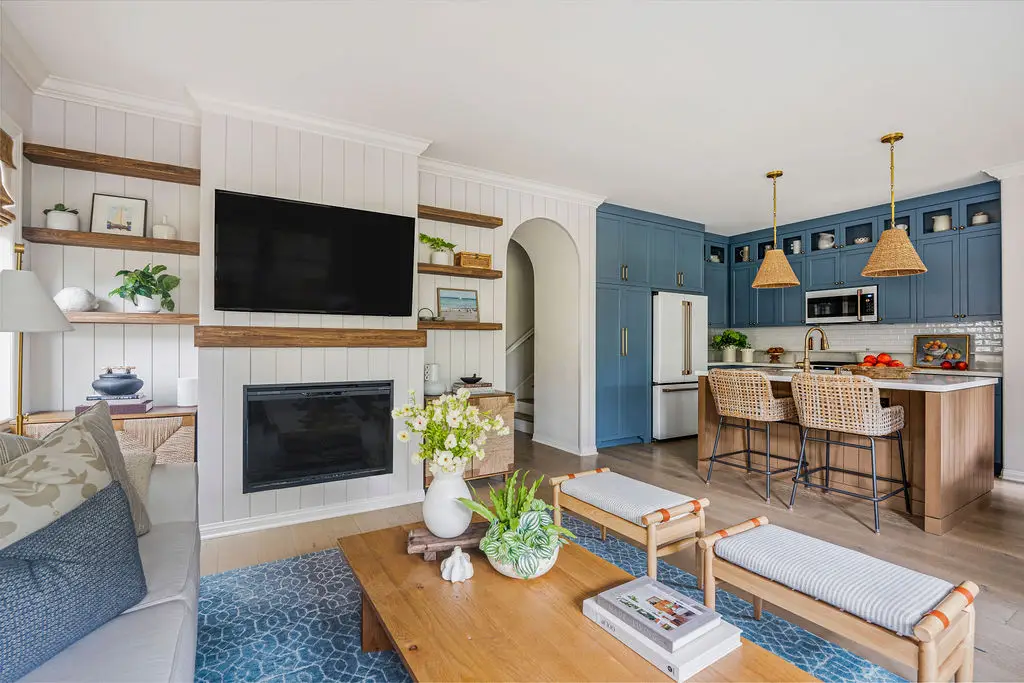
A perfectly designed home rarely happens by accident. Those kitchens that feel effortless and rooms that seem to tell a story the second you walk in? They’re usually the work of someone who knows exactly what they’re doing.
It’s knowing which ideas will actually work, which materials will hold up over time, and how to turn a collection of choices into a space that feels intentional. That’s where a professional interior designer comes in.
For the American Society of Interior Designers (ASID) California San Diego Chapter, the goal is to help people see interior design as more than just the finished look. Behind every well-designed space is a process built on technical expertise. Designers are educated in everything from professional software and construction details to building codes, space planning, materials, and functionality.

“People don’t always realize how much goes on behind the scenes,” Kirsten Recce , current president of the ASID California San Diego Chapter, says. “Our designers are not just doing furniture placement and color selection and picking out new fluffy pillows. That’s not what they’re trained for.”
ASID members bring formal education, continued learning, and industry knowledge to their projects, helping create spaces that are not only beautiful, but designed to work. A paint color that changes completely depending on the lighting. A material that looks beautiful in a showroom but doesn’t make sense for everyday life. A layout that photographs well but doesn’t function for the people living there. These are the details where professional guidance can make all the difference.
Still, one of the biggest misconceptions about hiring an interior designer is that it’s reserved for massive renovations, luxury homes, or people who already know exactly what they want. The process can feel intimidating. Where do you begin? Is a designer worth the investment? What if you only need help with one room?
ASID’s answer: start with one hour.
ASID’s Spruce Up events break down one of the biggest barriers between homeowners and professional design: knowing where to begin. Held twice a year, the community program gives homeowners the chance to work directly with an ASID designer through a one-hour, $125 consultation in their own home. Whether you’re looking for advice on furniture placement, window treatments, kitchen and bath updates, remodeling ideas, vacation rentals, color selections or something else entirely, the upcoming September 2026 event offers an approachable way to get expert guidance before committing to a full project. Signups are open through Sept. 7, with consultations taking place Sept. 21 through Oct. 31. Proceeds benefit ASID San Diego’s educational and community programs. Register here!

“It’s a great opportunity for people who are in that exploratory phase,” Recce says. “Maybe they’re not sure they want to hire an interior designer yet, or they think it sounds daunting or expensive. This gives them a chance to discover what working with a designer is actually like.”
Design is personal. A good designer isn’t just creating a beautiful room; they’re helping create a space that fits the way someone lives.
“We’re a resource to all of San Diego County,” Recce says. “It doesn’t cost anything to pick up the phone and call and ask. We’ll answer.”
Follow ASID San Diego on Instagram, LinkedIn, and Facebook for updates on upcoming events, or connect with the chapter directly at [email protected] or 619-548-8847.
From tacos to tailors and trainers to travel, these are the businesses, people, and places that earned San Diego readers' votes
San Diego Aesthetics and Med Spa
Elicia Soltesz, Elicia Marie Beauty
Ashley Fierro, Ashley Fierro Makeup
Michelle Langston, MSN, APRN, FNP-BC, HNB-BC, Starlite Aesthetics
Alysa Espiritu, Afterglo Beauty Lounge
Ronnie Page, Gold Comb Barbershop North Park

Ryleigh Hunter, Headbang Salon
Ann Teresa Degischer, Maen the Salon
Lindsay Axelrod, Pixiedot Salon
Lauren Skinker, Lucky Cat Tattoo

Father Joe’s Villages Turkey Trot
The Camp Transformation Center, West Chula Vista
Singing Hills Golf Club at Sycuan

Camila Casanueva, The Yard Gym

Austin Harrington, Captain’s Quarters
Bivouac Ciderworks, Savoy Dry Apple Cider

Missi Burns, Et Voila

Prospera Internal Medicine and Aesthetics
Serving Seniors provides meals and coordinated services to more than 13,000 older adults each year, aided by a dedicated volunteer network
Seniors today face challenges that were unimaginable to previous generations, and some turn to nonprofit organizations to bridge the gap. Serving Seniors helps low-income older adults with housing assistance, social services, and more. The nonprofit provides 1.5 million meals and coordinated services to 13,265 older adults each year, the majority living on less than $1,125 per month.
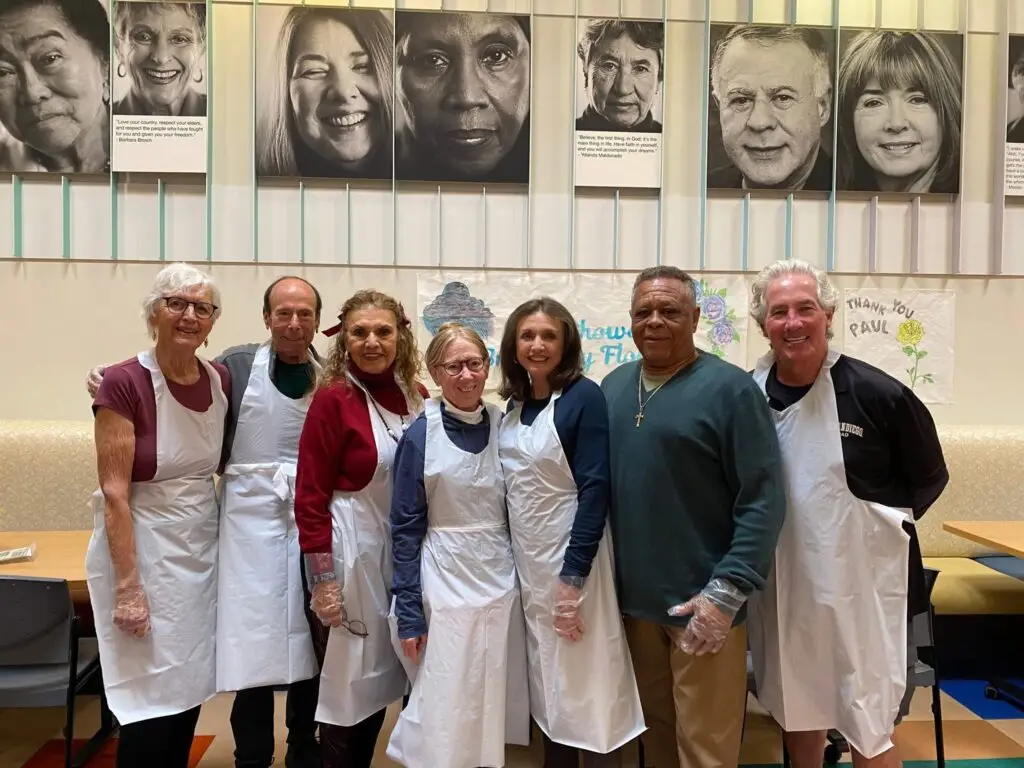
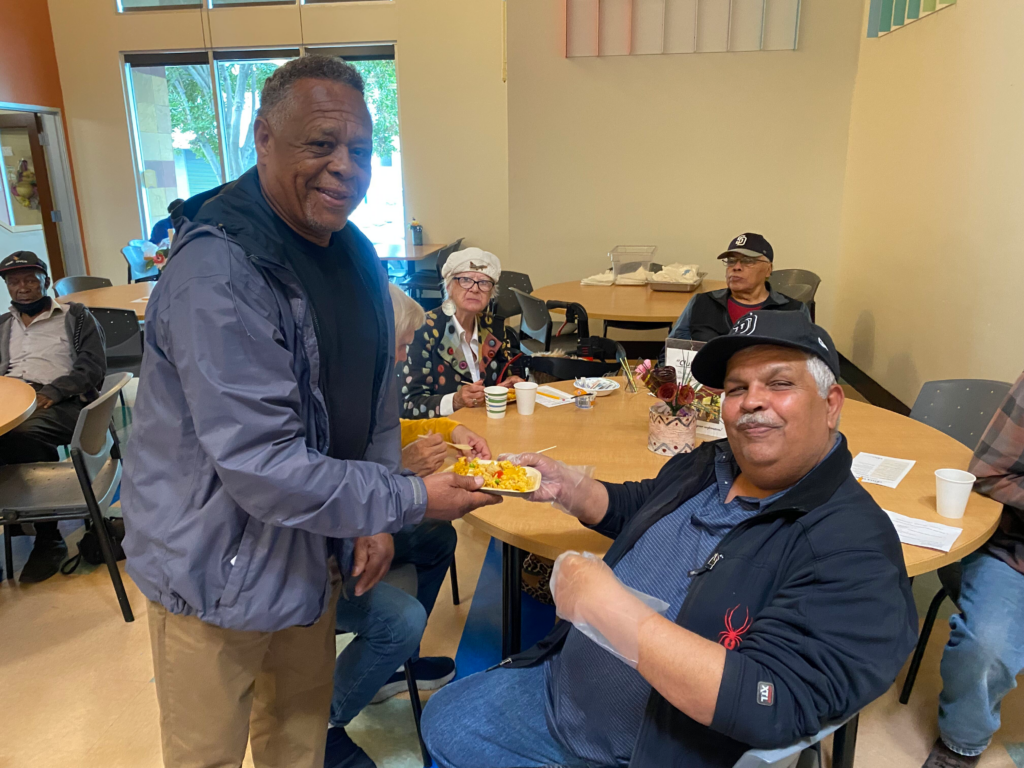
Dedicated volunteers, like Fred Davis, help make this important work possible. Since roughly 2008, Davis has spent six days a week at the Serving Seniors Gary and Mary West Senior Wellness Center serves as a liaison to help clients access much-needed resources. Here, he shares what keeps him coming back day after day.

I have a community outreach ministry and my grandson and I were on the streets downtown handing out sack lunches, water, hygiene products, clothes and shoes, and things like that and I noticed that most of the people I met appeared to be seniors. So the next logical step for me was to find a senior group that I could work with. I heard about Serving Seniors, and I made a few phone calls. No one really responded to me, so I showed up. They opened the door for me and now they can’t get rid of me. I found a home. I’ve met some really good people over the years. And as it turned out, I’ve been here longer than most of them. I’ve been here at the West Center ever since the doors opened. And matter of fact, I was the one who gave Gary and Mary West an award for their generous donation that made it possible to open up this center.
I’m in ministry, but I don’t want that to be the highlight of what I do. It’s not just a passion for serving people, it’s a calling. I like the idea of giving and serving people and trying to meet their needs. So I counsel, I oversee the serving of the lunches, and I work with the head of the volunteer group. I’m involved in different activities. Matter of fact, this coming Saturday, I’m going to take a group of seniors out sailing. I also helped start the Civic Engagement Group. It was a group of us, and there are about three members that are left from when we originally started it. Now Serving Seniors is taking it over, and my role is to work with them. I also took it a little bit further and ended up joining Aging and Independent Services and sat on that advisory board for a number of years. That led to me being elected to the California Senior Legislature. So I’ve been advocating for seniors for a very long time. They’re a vulnerable group. They worked hard and don’t always get the respect that they deserve.

The people—this is my target group right here. I don’t have to walk the streets like my grandson and I did anymore; they’re right here. I’m here every day at the West Center but Sunday.
The biggest challenge is not being able to help someone who really needs the help. But we try to find a way. I reach out to different organizations, faith-based organizations or other nonprofits, sometimes with success and a lot of times without success. There are quite a few people that are in need who are hardworking people, dedicated people who still want to provide for themselves and their family, and they’re just caught in that void.

I was handing out clothes; I usually have a sock drive and I gave a homeless person a pair of socks. As they peeled their filthy socks off their feet, this person cried. You don’t know how important these little things are that we take for granted. It was really touching.
A lot of people use the term giving back, but I just say giving. When you say ‘giving back,’ that means you’re trying to repay something and you’re taking credit. But giving is a passion. It’s something that you do from your heart, not out of obligation.
Sarah Sapeda is San Diego Magazine’s Custom Content Editor. In her 15 years in San Diego journalism, she has covered charitable events, health care, education, crime, current events, and more.
Laika Nur, MD, takes her love of volleyball from the court to the clinic as team physician for the San Diego Mojo
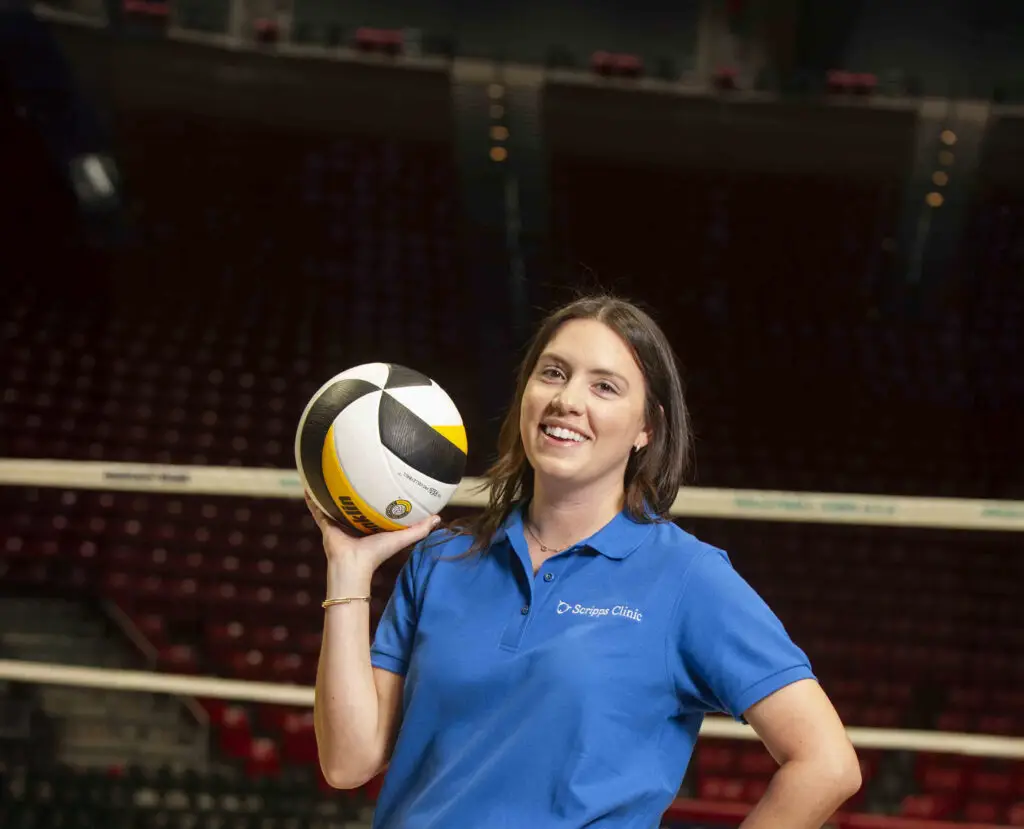
Growing up, Laika Nur, MD, Scripps Clinic sports medicine specialist, loved watching beach volleyball when the Association of Volleyball Professionals tour came to her hometown of Chicago. A talented volleyball player herself, she remembers sitting in the stands all day, and once, even got a couple autographs. Years later, Dr. Nur was attending a professional event focused on women’s sports, and the discussion turned to a new professional women’s volleyball league. The general manager and coaching staff for San Diego’s team, the Mojo, happened to be in attendance, and Dr. Nur took the opportunity to ask them if they needed a team doctor. Flash forward to the Mojo’s inaugural 2024 season, when Dr. Nur officially became the team physician. Click here to read more about Dr. Nur and how she incorporates lessons she learned on the court into her practice.
For more nutrition, wellness, and healthy living tips, sign up for the San Diego Health newsletter here.