You’d expect to find a great burrito in Barrio Logan, but gourmet hot dogs and spicy lemonade? This neighborhood is stuffed with surprises. If a friend is visiting from out of town, take them here. In the words of TV personality Andrew Zimmern, “If you come to San Diego and don’t go to Barrio Logan, then you’re not really seeing San Diego.”
Courtesy of Wikipedia Commons
Barrio Logan Restaurants and Bars
Las Cuatro Milpas
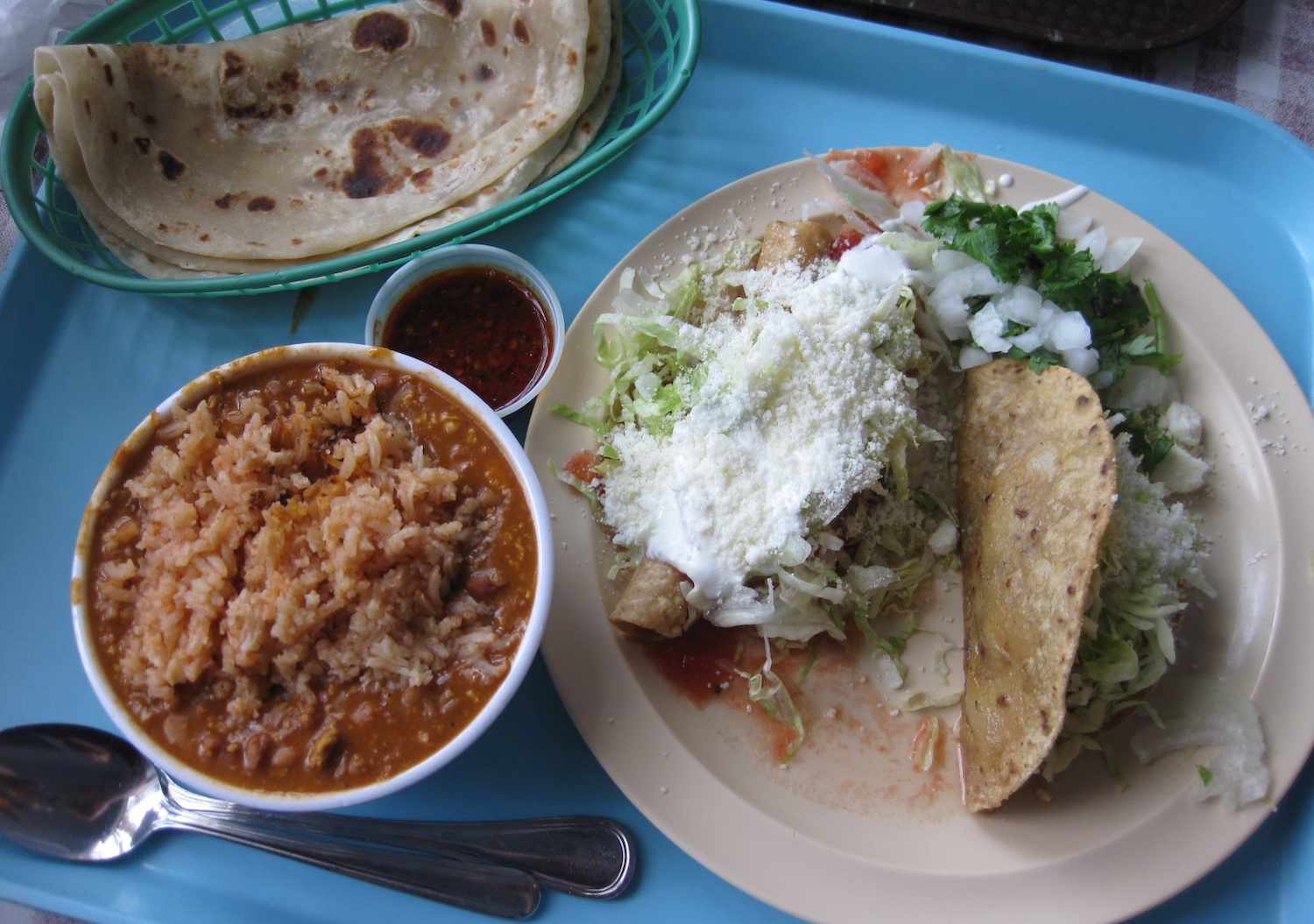
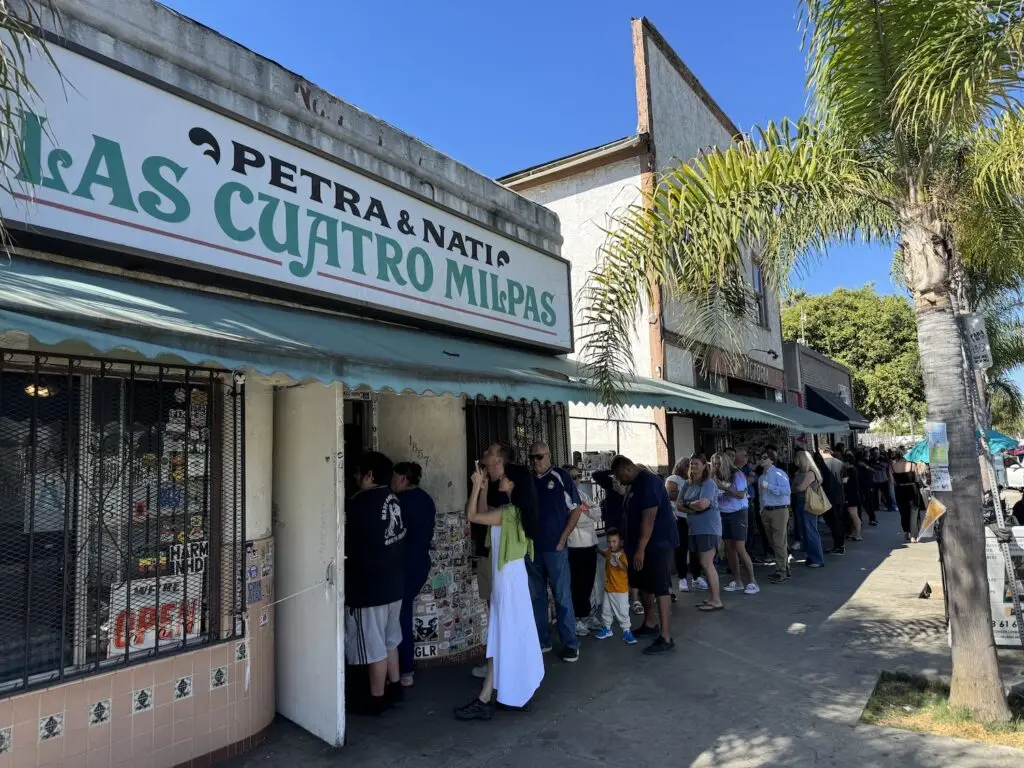
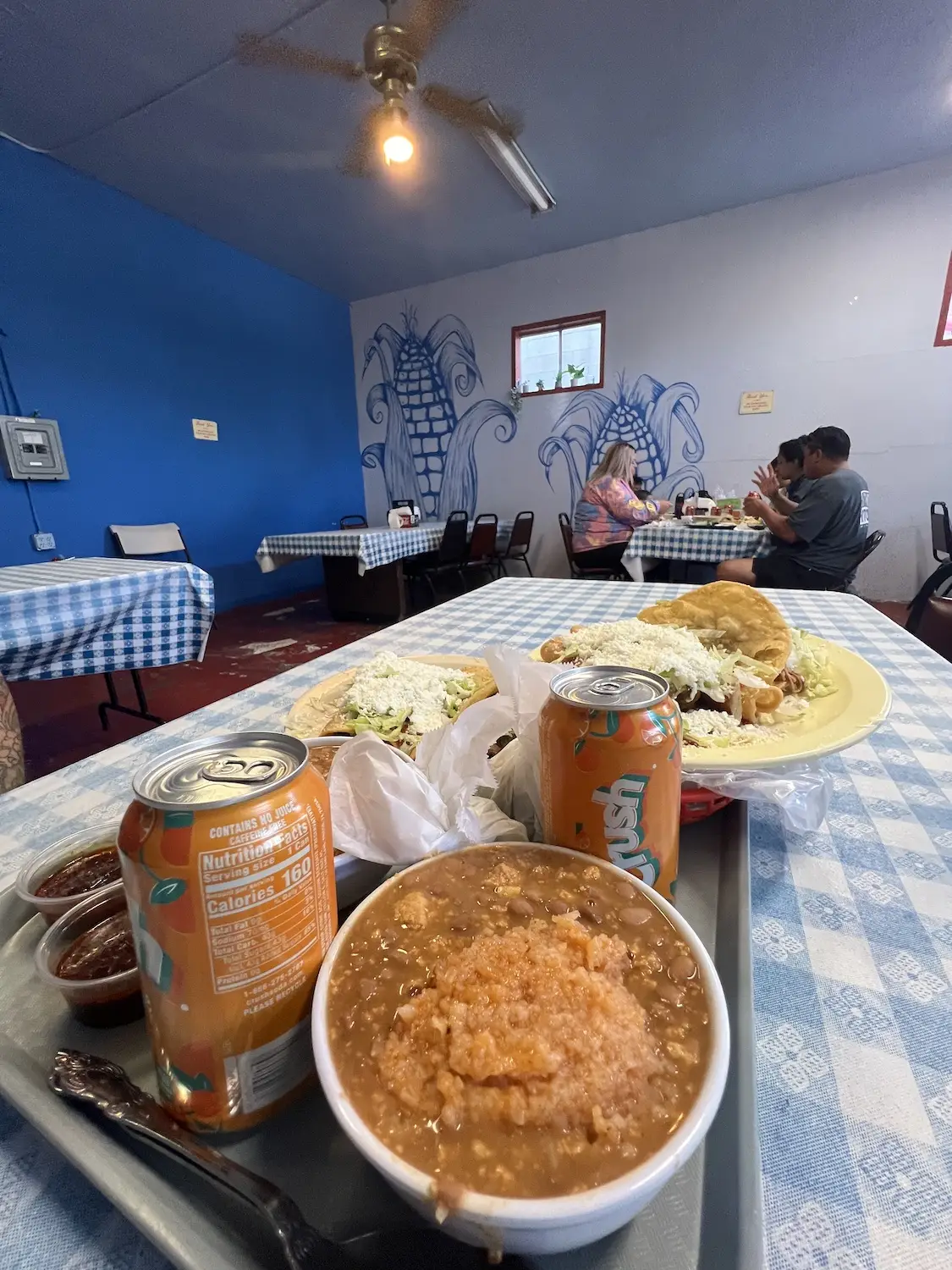
Run by the Estudillo family since the 1930s, Las Cuatro Milpas supplies the San Diego community with locally famous tortillas, tamales, and tacos. Make sure to bring cash and keep in mind that they’re closed on Sundays.
Mexican craft beer for the win, and there are plenty of pours to choose from at Border X Brewing. The Horchata Golden Stout has notes of vanilla bean and cinnamon, while the Tarantula Stout is brewed with three different types of chocolate malt. Bonus: It’s a dog-friendly environment.
2181 Logan Avenue
Por Vida
There are lots of ways to quench your thirst at Por Vida, but, whatever you do, don’t walk out without a spicy lemonade or limonada made with chamoy and Tajín. Lick the rim for a blast of salt and spice, then take a swig to quell the flames.
2146 Logan Avenue
Barrio Dogg
The longtime little bro of the burger at the backyard cookout, the humble hot dog is the main act at Barrio Dogg.The franks at this joint are dialed up to 11 with a mountain of toppings: El Chihuahua, for example, comes covered in slow-braised pork, poblano and serrano peppers, and the house-made salsa verde. Get it wrapped in bacon or on top of an entire pound of fries. Your move, cheeseburger.
2234 Logan Avenue
Ryan Bros Coffee
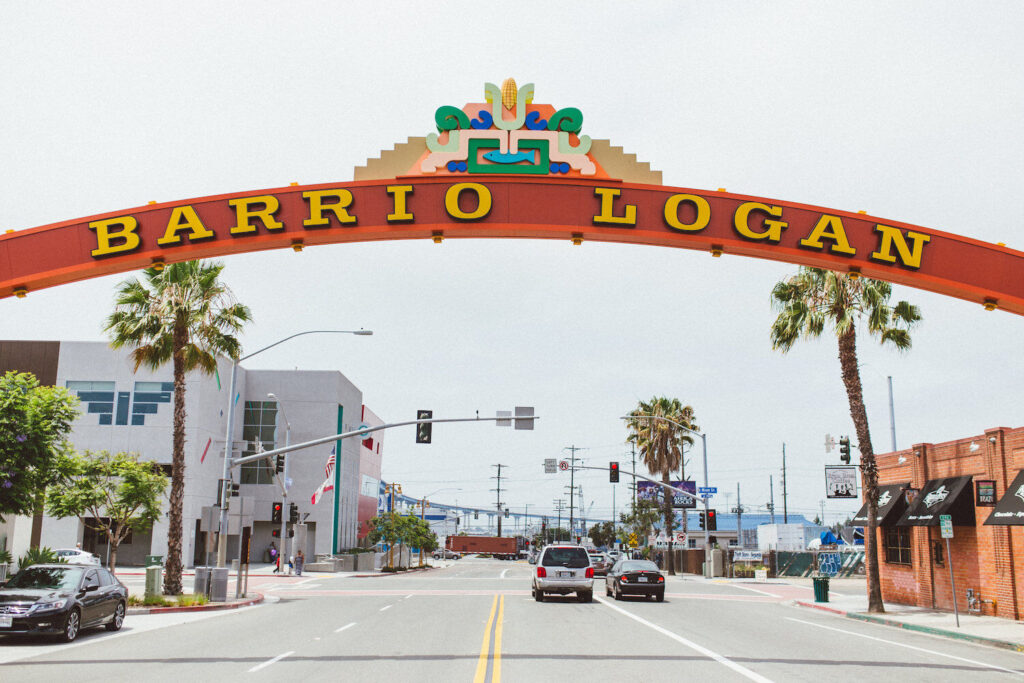
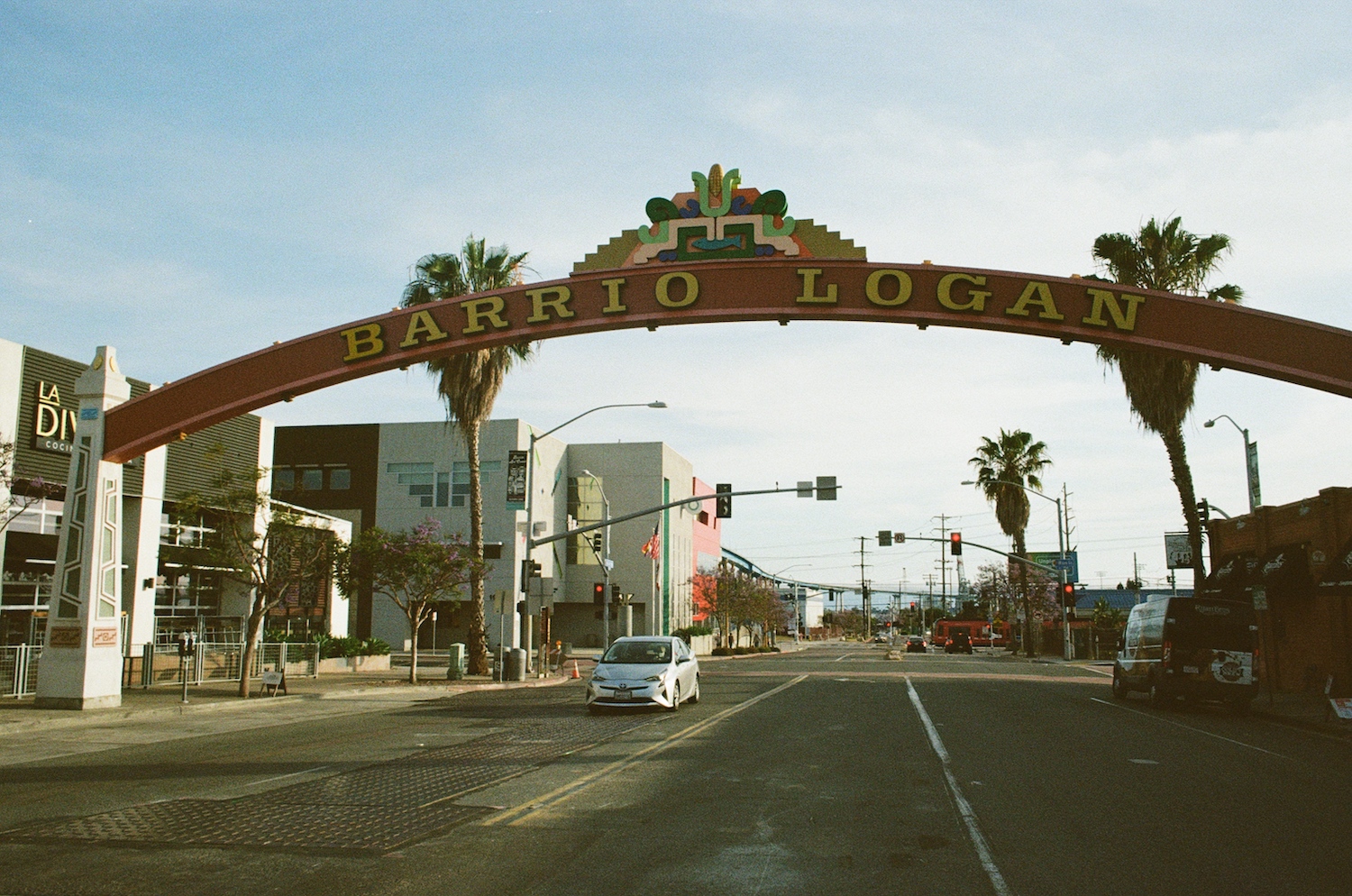
Located right next to the sign declaring the neighborhood’s name, Ryan Bros Coffee can sweeten your morning with fluffy croissants or a sweet bear claw. Wash down a pastry with the Funky Monkey smoothie, made with chocolate, peanut butter, and bananas.
1894 Main Street
Courtesy of the San Diego Tourism Authority
Things to Do in Barrio Logan
Chicano Park
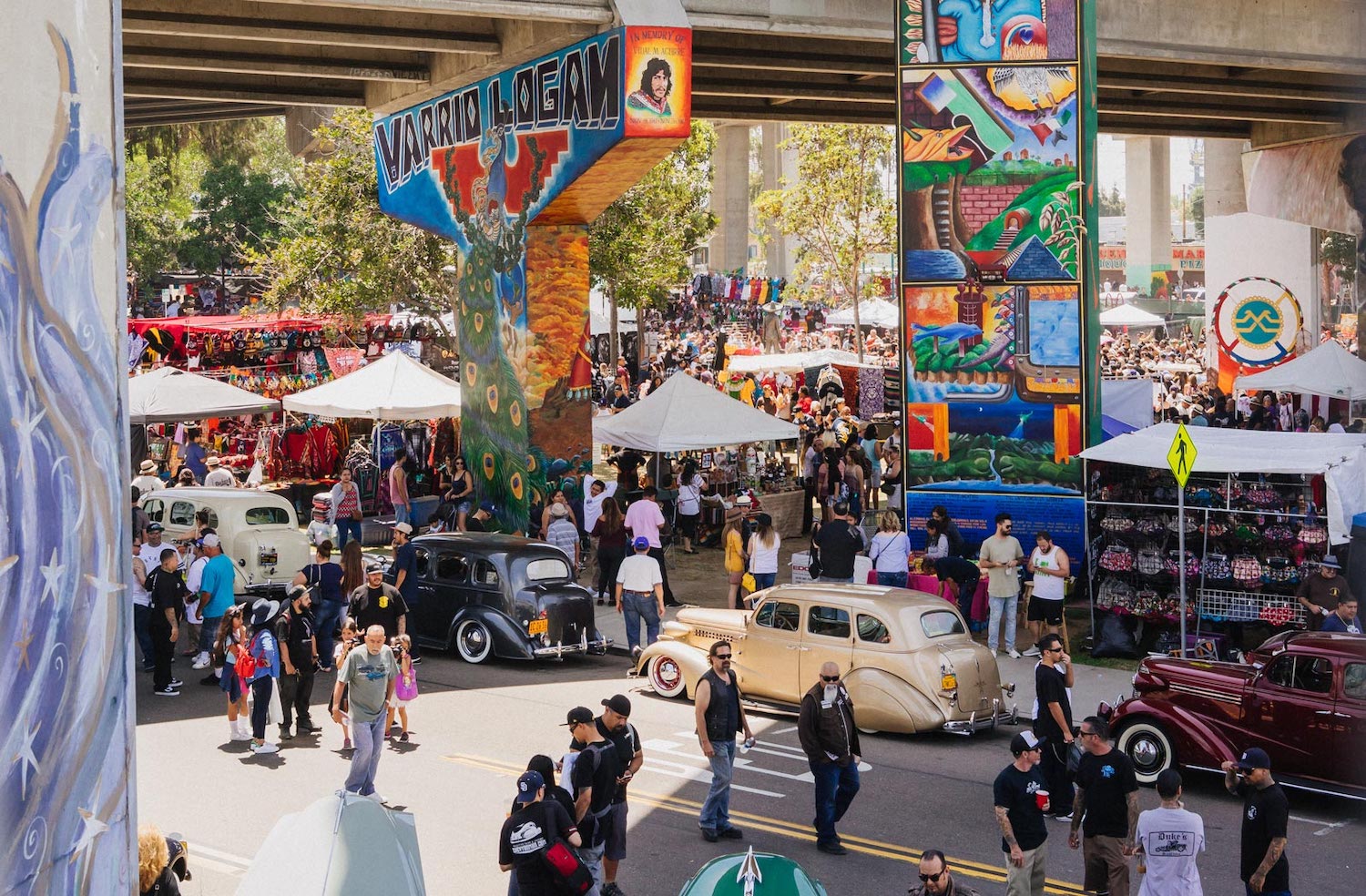
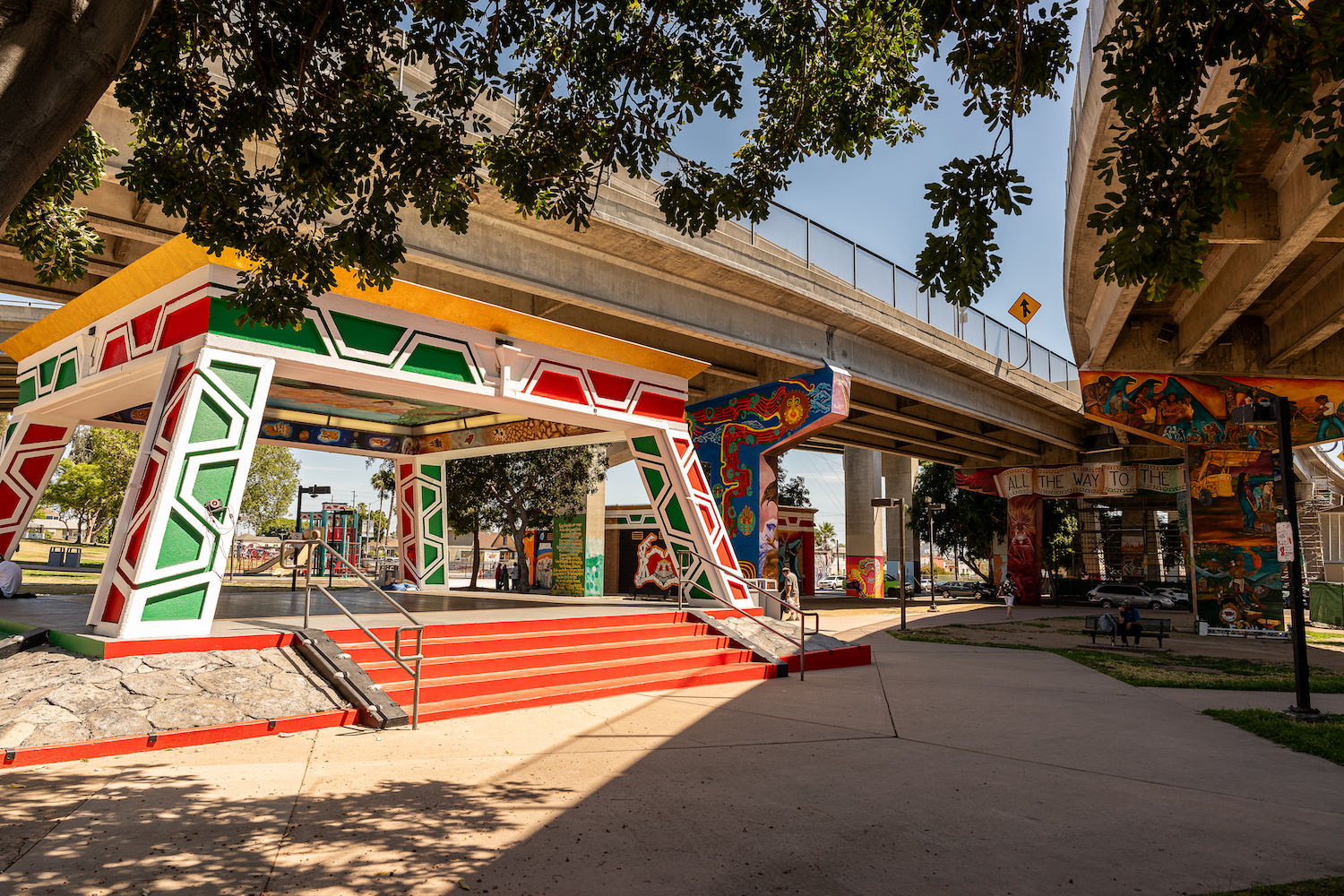
A U.S. National Historic Landmark, Chicano Park is the country’s largest collection of outdoor murals, with many paying tribute to the neighborhood’s Mexican heritage. Make time for a stroll, as the experience will give you a greater appreciation for the Barrio and its inhabitants. Chicano Park Day is held annually in April to celebrate the park’s takeover by the community in 1970.
1993 Logan Avenue
Bread and Salt
A 45,000-square-foot space, Bread and Salt houses multiple independent galleries. Artwork from both local and international artists can be discovered inside, and the building regularly hosts affordable concerts and food pop-ups.
1955 Julian Avenue
Barrio Art Crawl
Held every second Saturday from 12 to 8 p.m., the Barrio Art Crawl features local Chicano artists, open studios, music, and food. Stay up to date with all the happenings by following @barrioartcrawl on Instagram.
Any toppings on your ice cream? How about a sprinkling of culture? Order a cone (for dairy-free folks, there’s a generous selection of sorbets) and slurp away as you take in a collection of local art curated by Armando Nunez at this shared shop.
2168 Logan Avenue
Garage Collective
You take the subway in New York and the train in Chicago, but, in California, you drive. Garage Collective is a space dedicated to everything that goes fast on two-to-four wheels. Members of the collective’s club can take advantage of perks like track days and cars and coffee events. Those not interested in a membership can always settle for a free tour.
1827 Main Street, Unit B
The iN Gallery
Owner Irina Negulescu hangs her colorful works on the walls of The iN Gallery. Many of the paintings incorporate her favorite colors (red, blue and green), and several pieces are set in or under the water. The gallery is open by appointment or by chance. (I was lucky enough to stumble in without making any arrangements.)
1878 Main Street, Unit D
Photo Credit: Ariana Drehsler
Barrio Logan Shopping & Boutiques
arts-rec
Founded in 2018 by pro skater Kellen James, arts-rec is a cool, clean space specializing in skateboards and streetwear. That includes plenty of shoes, and the store offers sneakerheads lots of Vans and Nikes to choose from. You’ll leave looking ready for the ramp—even if you have no idea how to ollie.
2161 Logan Avenue
Sew Loka
Growing up, Claudia Biezunski-Rodríguez’s father was a denim distributor. Her mother sewed clothing for all six kids. At Sew Loka, the Chicana designer honors their legacy, creating one-of-a-kind wearable masterpieces with upcycled materials and vintage fabrics. A major win for slow fashion (and your wardrobe).
2113 Logan Avenue
Beatbox Records
Arguably the kookiest shop in the Barrio, Beatbox Records is a music lover’s paradise. The small store is packed floor-to-ceiling with CDs, concert posters, figurines, and, of course, tons of records. Almost everything inside is for sale, so if you see something you like, ask about it.
2148 Logan Avenue
Libélula Books & Co.
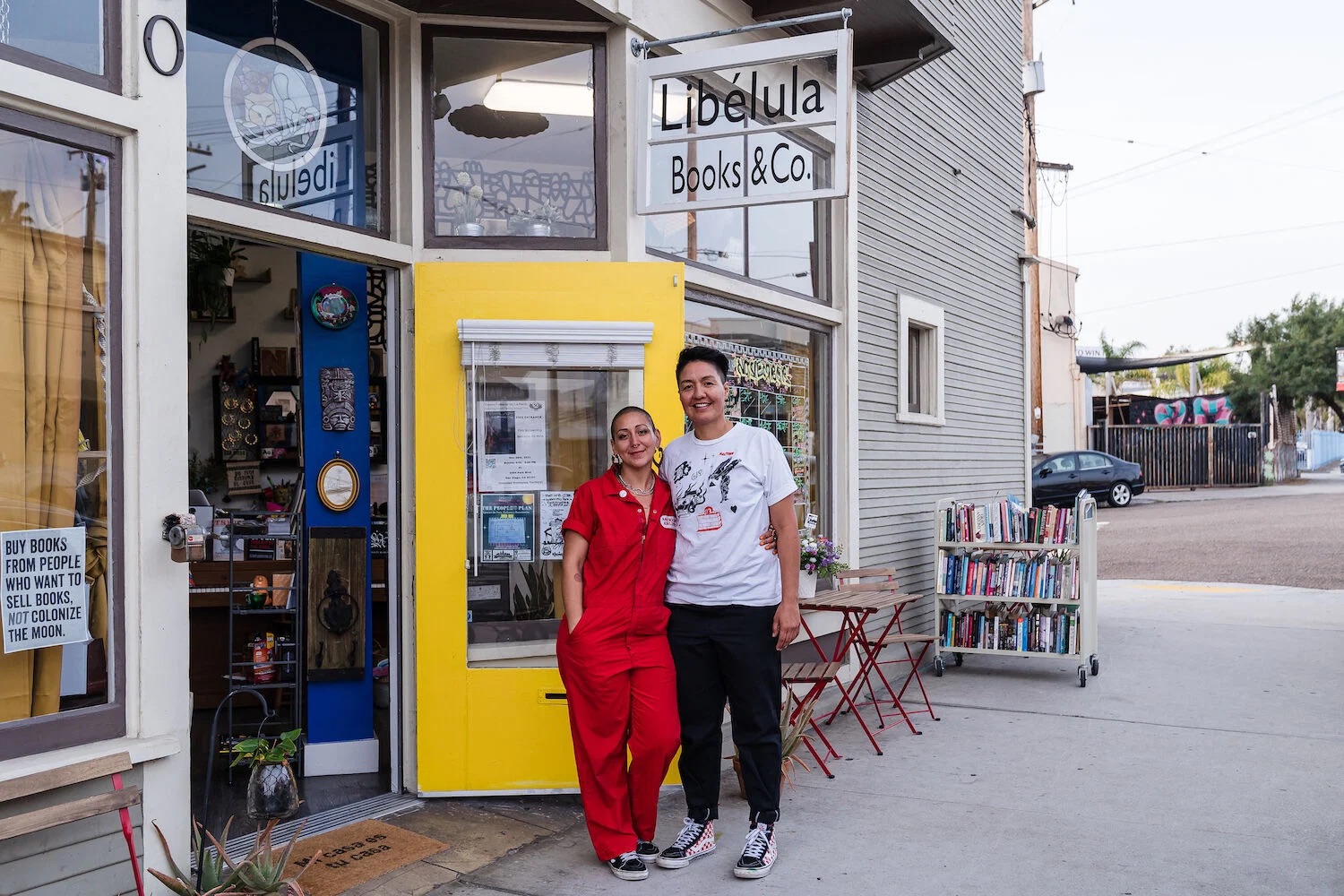
It’s the inclusive atmosphere and wide-ranging selection of literature that make Libélula Books & Co. a special spot. There’s everything from LGBTQ reads to cookbooks, and even a section of books “hecho a mano,” or “made by hand.” Make sure to say hi to the resident polydactyl cat, Billie.
950 South 26th Street
HOLA Swim
Founded by besties Aida Soria and Syncletica Maestas, HOLA Swim vends suits designed and produced entirely in America’s Finest City. You’ll have to book an appointment to shop chic bikinis and one-pieces, plus sweatshirts and shorts perfect for tossing on after a long day chasing waves.
Will Riddell is an editorial intern at San Diego Magazine. He is currently studying multimedia journalism at Taylor University, and he is planning on graduating this fall. Will has served as both a staff writer and an editor at his school's newspaper, The Echo.
For 92 years, Las Cuatro Milpas bucked the odds. Petra and Natividad Estudillo opened the restaurant on Logan Avenue in 1933, serving simple plates of comfort food like rice, beans, tacos, burritos, and the best tortillas in town. It’s hardly changed a bit since then—it’s still cash-only, the lard-laden beans are last meal-worthy delicious, and there’s always a daily line of hungry patrons snaking around the block.
But soon, the tortilla press will close for the last time and the Estudillo family will hand over the keys to someone else. As of this week, the property is officially for sale.
Real estate broker Voltaire Lepe says he’s been working with the family to help them explore their exit options for “quite some time.” When San Diego Magazine spoke to Sofia Estudillo (Petra and Natividad’s granddaughter) last year, she estimated the restaurant was near the end of its lifespan. The next generation of descendants have other careers, and her and her sister Margarita, who owns the restaurant, are getting too old to keep running it. Lepe says they’ve been ready to retire, “but they just didn’t know how to go about it.”
Las Cuatro Milpas has been a San Diego institution for nearly a century, appearing on the Netflix series Taco Chronicles and topping pretty much every list for Best Mexican food they’ve ever been nominated for. There have been a lot of expectations to live up to.
“I think if there wasn’t those pressures, they would have retired a long time ago,” Lepe says. “They’ve been working there for their entire lives… They’re just like, ‘We’re done. We had a good run.’” Putting the property up for sale one day after The San Diego Union-Tribunereported the restaurant’s debt of $60,000 in back taxes raised some eyebrows at the timing. But Lepe dismissed the correlation, claiming tax debts and liens like these are typical for small businesses, and the amount of money expected for the sale of the property far exceeds the debt.
“I don’t even know the number off the top of my head, but it’s nothing compared to the value of their real estate and the value of their business,” he says.
The current listing is for the building only, and at $1,995,000, includes two commercial units, eight residential properties, three garages, and one storage unit comprising nearly 12,000-square-feet in total. While Las Cuatro Milpas is not currently listed as for sale, he says that if the right offer came around, the Estudillos would consider selling the name, recipes, equipment—something Sofia originally said they would not do.
Photo Credit: Beth Demmon
(So there is a chance thatsomeone—ahem, cough—could buy Las Cuatro Milpas and keep the legend alive. Just saying.)
But, Lepe explains, taking the steps towards closing the door on an icon of this magnitude was a heavy decision for the family. And even after one day on the market, Lepe says he’s been inundated with interest. (Due to the overwhelming interest in both the property and the business, he’s collecting all bids to bring to the family on August 6.)
It’s a bittersweet development—on one hand, ending a run while you’re still on top is a pretty baller move. But closing the book on a cherished and longstanding pillar of the community will always leave a sense of loss. Lepe says in his talks with the family, they feel both sorrow and relief at the thought of rest after so many of their lives have been spent in service.
“I think it’s a thing to be celebrated,” he says. “I think a lot of people in the neighborhood are happy for them.”
San Diego Magazine reached out to the Estudillo family on Friday morning and has not yet received a reply. We will update this article as new information becomes available.
Beth Demmon is an award-winning writer and podcaster whose work regularly appears in national outlets and San Diego Magazine. Her first book, The Beer Lover's Guide to Cider, is now available. Find out more on bethdemmon.com.
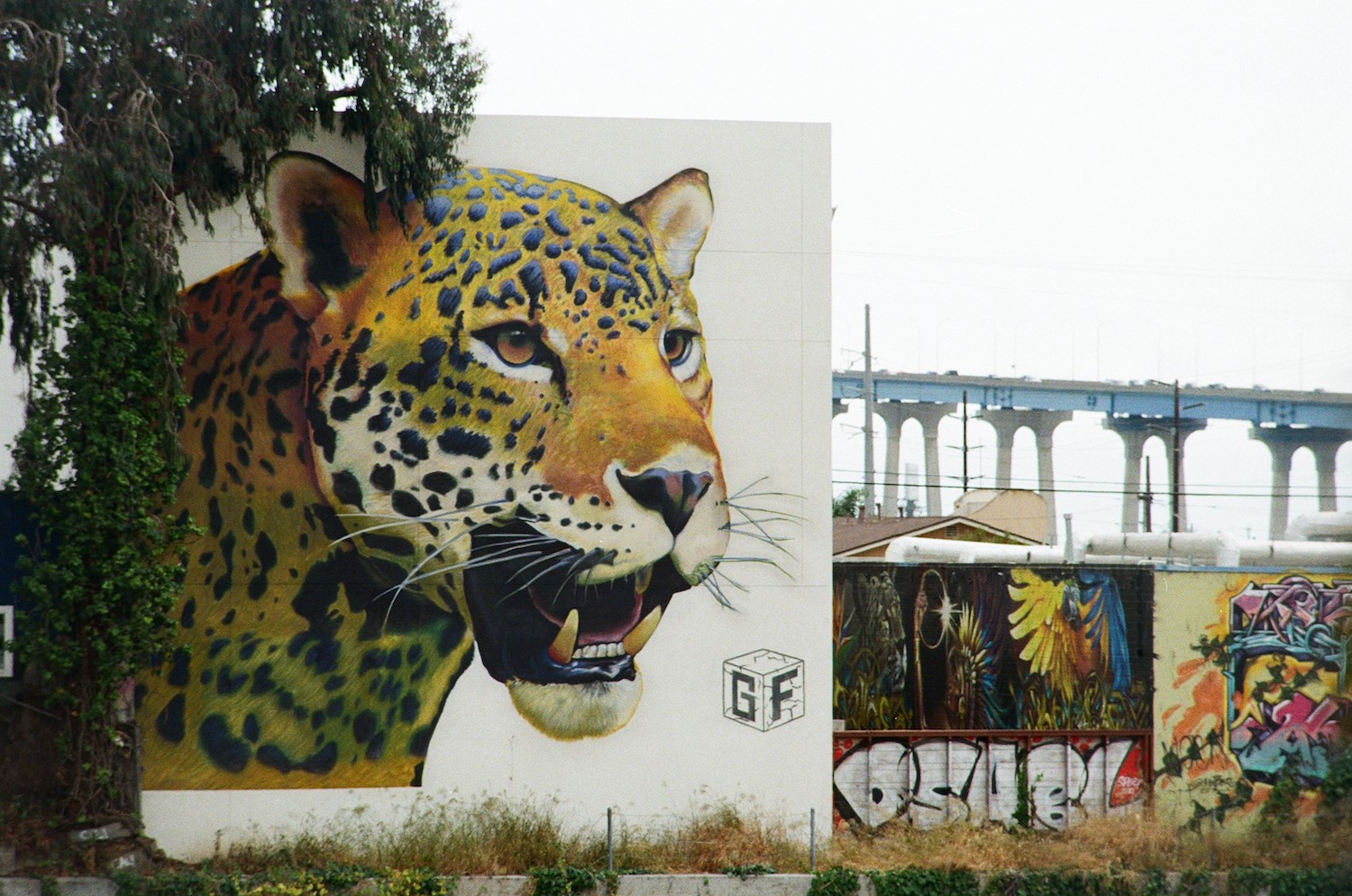
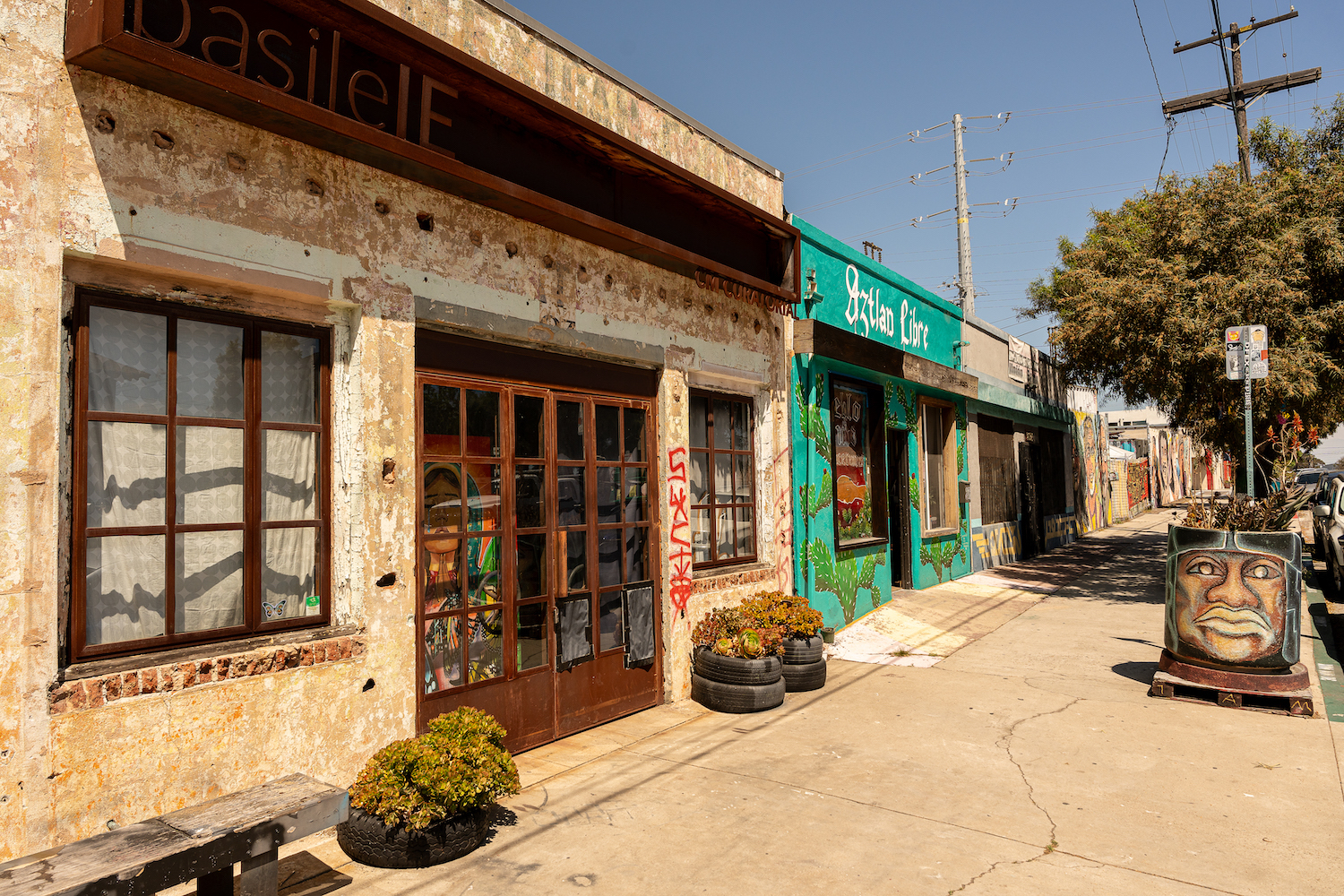
Barrio Logan is always a jolt to the senses. Strolling Logan Avenue from Chicano Park to National Avenue, grabbing a Mexican mocha at Por Vida coffee, stopping by Border X Brewing to see if they’re hosting a lotería game, housing a loaded hot dog amid Barrio Dogg’s lowrider-themed décor—there’s no bad way to spend a day here. The vibrant storefronts—vending traditional Mexican embroidery, bilingual books, and sweatshirts emblazoned with Spanish slang—are a testament to the pride this Chicano community feels to its roots.
Barrio Logan’s population is 80 percent Hispanic. Up until the 1950s, the area was mostly a residential neighborhood housing almost half of the city’s Spanish speakers. But rezoning laws brought in junkyards, and, in 1963, the I-5 was built, bisecting the community. It was in the late ’60s, after the Coronado Bridge opened, that the barrio assumed its character, with residents fighting for the construction of Chicano Park and the maintenance of public green spaces in the area.
Since then, Barrio Logan has remained an activism stronghold, with community groups coming to the mat time and again against threats like gentrification and bad air quality. Today, the area is a hotbed of culture and a growing destination for food and shopping amid lowrider shows and street festivals.
Photo Credit: Cole Novak
Things to Do in Barrio Logan, San Diego
Photo Credit: Cole Novak
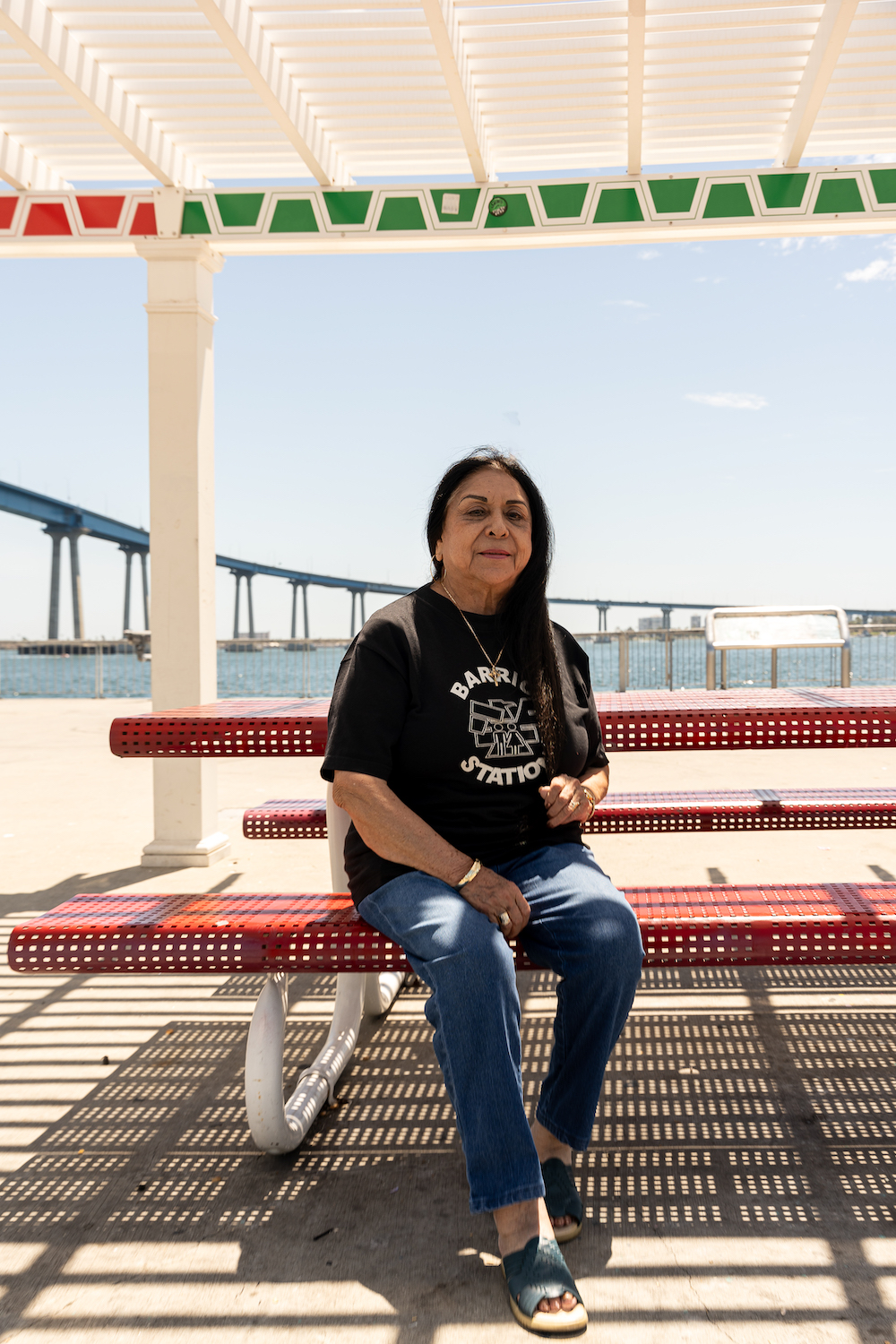
Eighty-three-year-old Barrio Station Executive Director Rachel Ortiz grew up within a few blocks of Chicano Park, with her parents and sister working in the fish canneries before the I-5 highway arrived. “I remember after work [the employees] had that fish smell on them, and everybody embraced it—people could buy homes or buy a new car. [They could] support their families,” Ortiz says.
At the nonprofit youth center Barrio Station, she provides a physical space where neighborhood kids can gather after school to exercise, box, use computers, and find support and mentorship. “That way, they are not on the street,” Ortiz adds. When she’s not at the center, here’s where she likes to hang out in the neighborhood.
Breakfast with a Side of History at Las Cuatro Milpas
Founded in 1933, Barrio institution Las Cuatro Milpas has “been there since I was a girl,” Ortiz recalls. “My parents would go in there and buy fresh-made corn and harina tortillas.” Nowadays, she orders chorizo with eggs, rice, and beans off the taco shop’s letterboard menu. Counter-serve and cash only, the restaurant has remained immune to the tug of trends and tech in its near-century of operation—but Ortiz isn’t complaining. “I would not want them to change a thing there,” she says.
Fresh Tamales at Northgate Market
Northgate Market is a community hub in Barrio Logan. The supermarket’s hot food stand slings beef, corn, and cheese tamales with beans. “They are always fresh, soft, steamy, and juicy,” Ortiz says. “The flavors are all delicious, but I favor the beef.”
Chow Down Near Chicano Park
Because of the restaurant’s proximity to Chicano Park, Ortiz feels right at home at casual Chinese eatery Imperial Express, located on the corner of Logan Avenue and Cesar E. Chavez Park Way. Her order of choice is the fried fish with vegetables, but “their vegetables with beef and white rice are also excellent,” she says.
Photo Credit: Oscar Cruz
Facts About Barrio Logan
Barrio Logan’s Chicano heritage began with an influx of refugees during the 1910 Mexican Revolution.
Chicano Park, with its massive murals painted on the Coronado Bridge support pillars, was designated as a historic landmark in 2016.
The average price of a single-family home in Barrio Logan is $653,488.
Barrio Logan residents had direct beach access to the bay until World War II, when the San Diego naval base expanded.
Famous Mexican-American muralist Salvador Torres, who many consider the conceptual father of Chicano Park’s murals, grew up in Barrio Logan.
Photo Credit: Oscar Cruz
What’s Next for Barrio Logan
Taco institution ¡Salud! and adjoining Mexican-Japanese restaurant La Bamba Room closed after owner Ernie Becerra’s negotiations to renew the lease failed. The nationally acclaimed ¡Salud! opened in 2015 and anchored a vital corner of Logan Avenue, helping draw visitors to the area. Becerra will continue to offer catering services, but it’s unknown whether he will reopen in another location.
While the shuttering of ¡Salud! will certainly bring changes to Barrio Logan, the community looks to the future with a hopeful new blueprint. Barrio Logan residents had direct beach access to the bay until World War II, when the San Diego naval base expanded.
Concerns over bad air quality and its effects on public health have long plagued Barrio Logan and its residents, who experience one of the highest rates of asthma in California. The area’s new community plan finally passed late last year following approval by local authorities and the California Coastal Commission. Chief among its wins is the sought-after buffer zone between the commercial and residential zones to prevent air pollution.
The document will also help secure increased green spaces, better public transportation, and affordable housing, with the intention of ensuring that longtime residents are able to remain in the neighborhood despite the quickly gentrifying housing market.
But that’s not the only victory of the grassroots Chicano community’s efforts. The Port of San Diego has agreed to double their annual funding for combatting industrial effects within their area of influence, chiefly Barrio Logan, Logan Heights, and National City. A total of $1.5 million per year will be dedicated to environmental justice programs.
María José Durán is a bilingual, Emmy and Golden Mike award-winning journalist with two decades of experience across two continents and three countries. She’s interested in all things motherhood, border life, intersectional feminism, and lifestyle.
This house burnt near to the studs, and one of my favorite Italian chefs rebuilt it into a restaurant, which feels exactly as it sounds—like an old house someone loved enough to burn down, and like a burned house a chef loved enough to cram a restaurant into. Though crammed is not the right word. It feels like a homely riot of memorabilia and knick-knacks and food-adjacent photos of both the living and dead, all loved or at least admired enough to hang on a wall.
Friends tried to warn Mario Cassineri that he was flirting with career delusion when he decided to open an Italian trattoria in Barrio Logan in 2019. Let alone in a house with its important wood parts black as tires.
Why not Little Italy, where no one balks at $10 fries that apply truffle oil in the same volume preteens apply Sol de Janeiro? (Sol de J is the Drakkar Noir of Gen Alpha; I had to ask younger editorial staff.) Cassineri has a name, a reputation for quality Italian food that had followed him since he’d opened Bice in Downtown nearly 20 years ago. Why not North Park, San Diego’s urban amusement park, where everyone is a graphic designer and has a side band named after their pet chickens and yet can still somehow can afford food?
But he did it. He built Ciccia Osteria, largely by himself with friends on a Home Depot budget and an Italian’s genetically bestowed instinct for charming design. And it is lovely, in an “I built this” way. What used to be the front yard facing Logan Avenue—that main throb of Barrio, the one lined with lowriders and graffiti and religious talismans both sober and whimsical (like the “piñatas for Christ”)—is now a shaded dining patio, a lovely secret garden, an oxygenated space protecting his from-scratch pastas from the scratchy city air.
The house, like the food, was built by hand. And it has worked. “Mario is the one who is always there if we need sugar or milk or advice,” a fellow restaurateur told me.
Courtesy of Yelp
Try These Dishes from Ciccia Osteria’s Menu
The Mushroom Flan
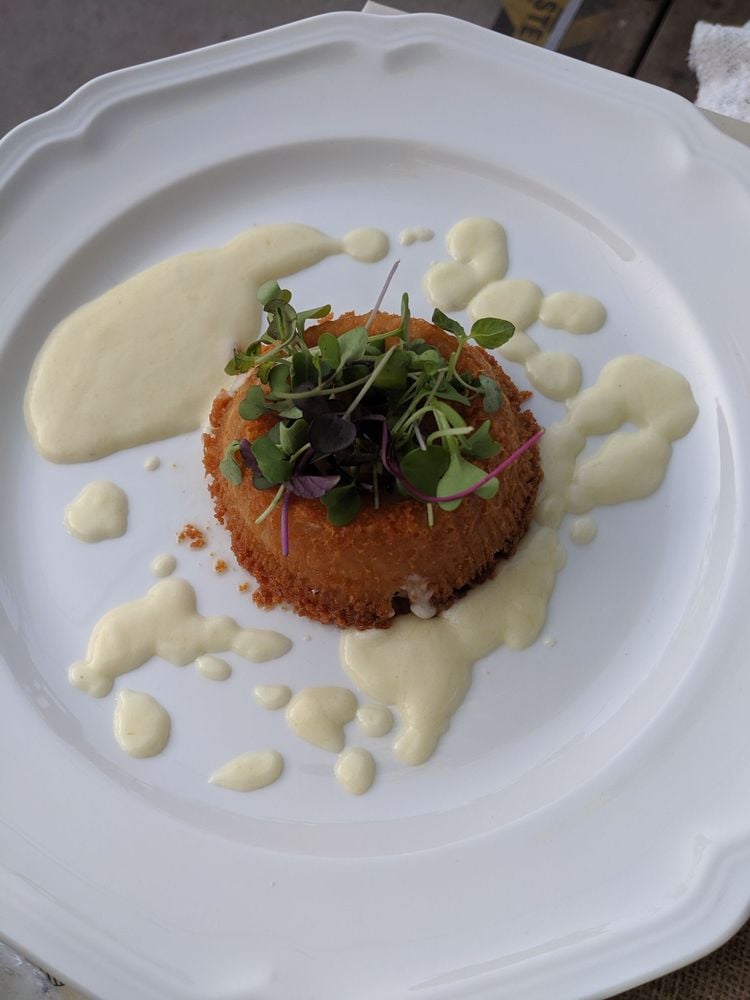
This dish is why I could go vegetarian, but never vegan. Because cheese and cream are capable of unsurmountable joys. Cassineri soaks porcini mushrooms in milk for 24 hours to make the base for a mornay sauce. It’s solidified into a custard-like texture, given a pecorino butter crust, baked to order, and then—delicious, in a nihilistic way—placed in a small pool of gorgonzola cheese fonduta with a single mint leaf up top (which makes it a salad in creative circles).
Courtesy of Ciccia Osteria
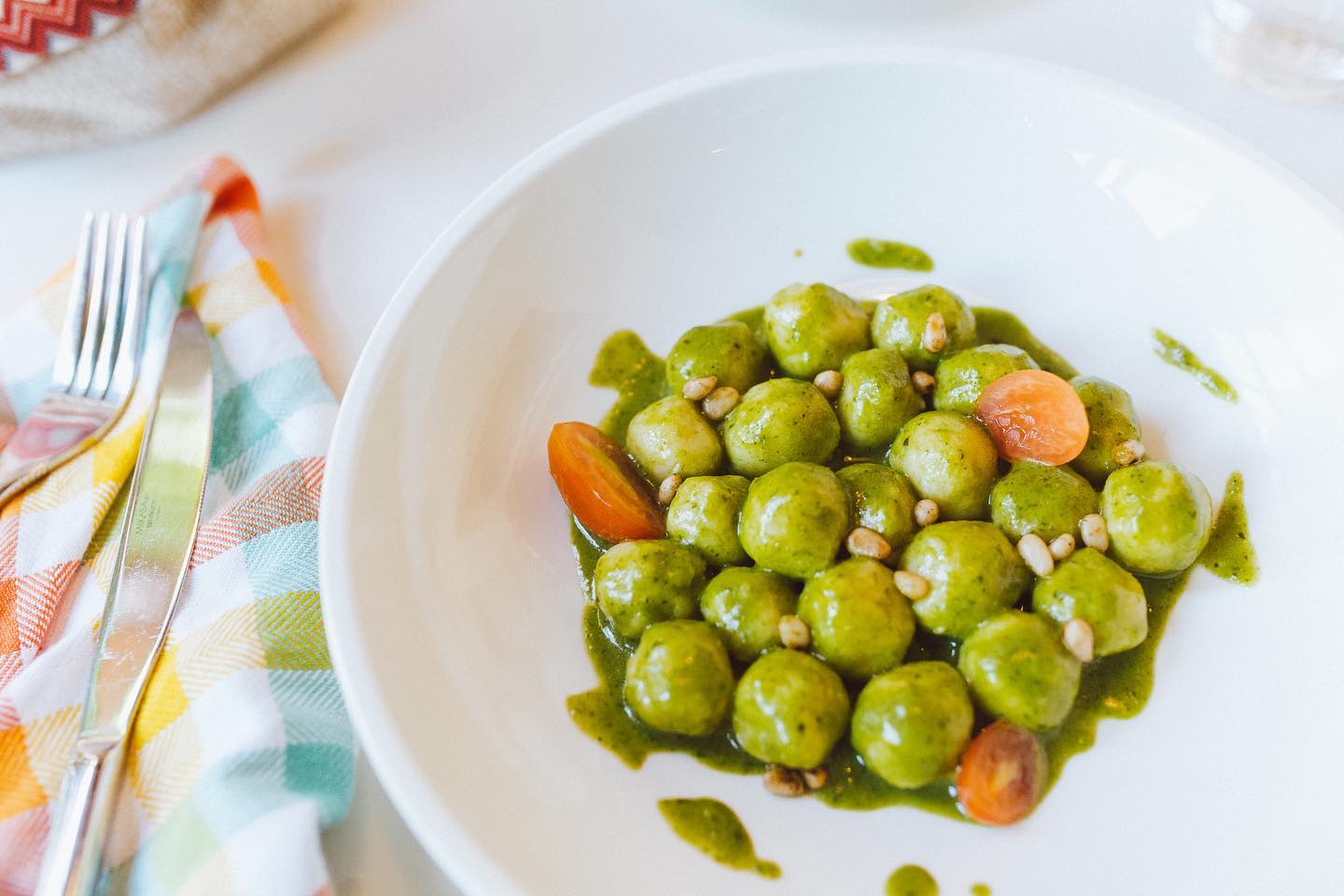
The Pesto Gnocchi
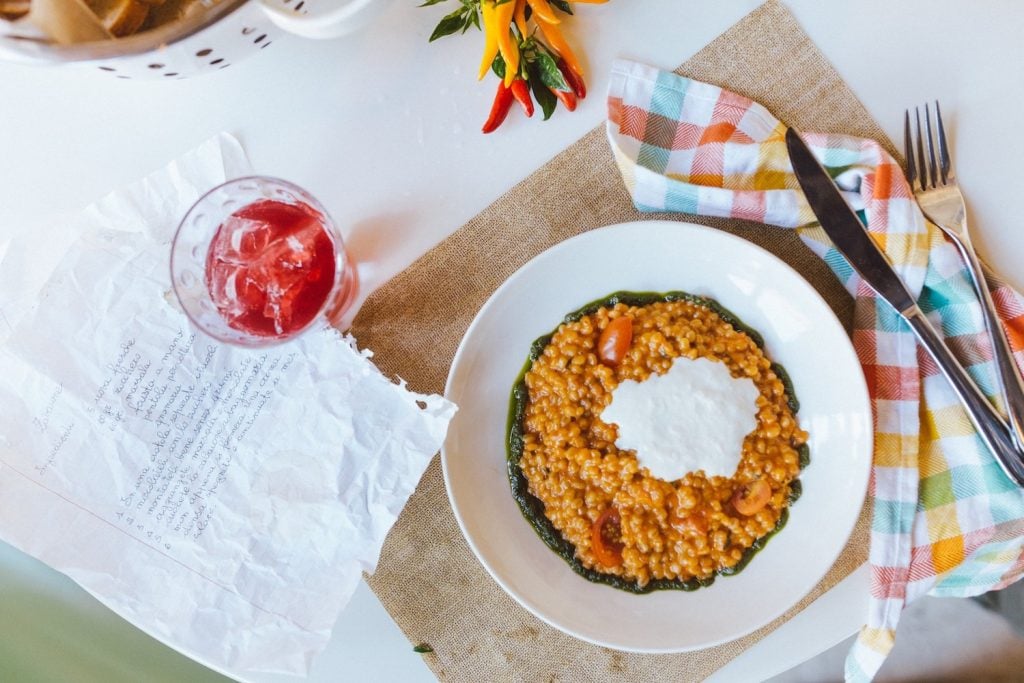
The best gnocchi occupy a textural middle-magic between pasta and puree. Chefs often make wrong turns by adding too much flour, which places the gnocchi between pasta and chewing gum. Cassineri’s are clouds, made even more interesting with the addition of some Asiago cheese, pinched into the middle, nearly raviolo-style. The pesto is strained, not rustic, to match the silky texture of the gnocchi, with roasted pine nuts, tomatoes, and a light rain of Pecorino and Grana.
Courtesy of Yelp
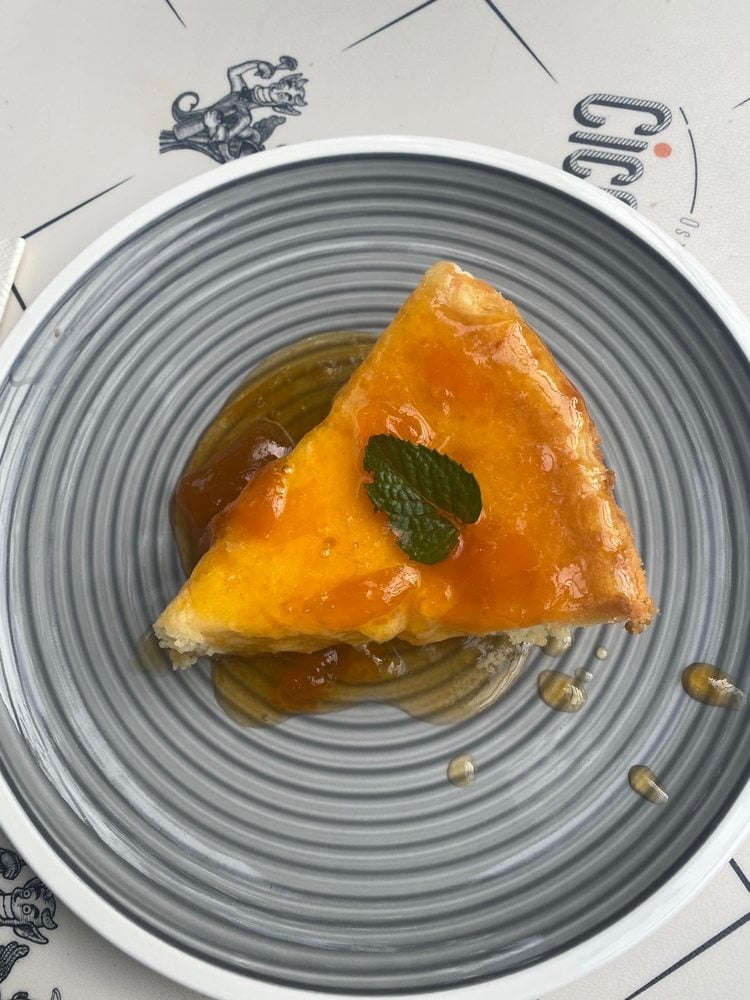
Apricot-Habañero Ricotta Cake
First, remember this is not a cheesecake—it’s a ricotta cake. Ricotta cakes are an Italian specialty, less creamy and sweet than the cheesecake most of us know. A bit more savory, just the right amount of sugar and salt, with a texture between dried ricotta and cornbread. Cassineri’s is set on a cookie dough base, then topped with an apricot-habañero glaze, an ode to the Barrio’s deep Chicano culture.
Troy Johnson is the magazine’s award-winning food writer and humorist, and a long-standing expert on Food Network. His work has been featured on NatGeo, Travel Channel, NPR, and in Food Matters, a textbook of the best American food writing.
Today’s seniors are more connected than ever, with a renewed focus on retirement as a time of discovery and enriching experiences. The ultimate reward for a retirement well-earned is the wisdom to appreciate it all, and what better place to enjoy that unique perspective than Vi at La Jolla Village, in the heart of San Diego.
All-access pass to good living.
As a Continuing Care Retirement Community (CCRC), Vi provides access to a connected and fulfilling community while making it easy to plan for future care, should the need ever arise. With a care plan in place, residents enjoy greater financial predictability and long-term value, freeing them to focus on making the most out of retirement.
Resort-style amenities at the epicenter of a cultural hub like San Diego offer a retirement experience unlike any other. Paired with exceptional dining, spacious accommodations and dedicated staff, the best of maintenance-free living is all around. And with the introduction of Vista 360 Well-Being, Vi’s panoramic approach to wellness, there are more ways than ever for residents to access it all.
The harmony of mind, body and community.
Courtesy of Vi at La Jolla Village
The key to longevity is striking the right balance in maintaining an active lifestyle with an active mind in a fulfilling community. With newly renovated community spaces and restaurants, Vista brings a variety of opportunities for residents to elevate their well-being through Vi-exclusive “Signature Experiences.”
Vista Enrich takes an evidence-based approach to brain vitality, keeping residents at the forefront of cognitive health through exergaming (exercising + gaming), nutritional plans and informative workshops. It is also home to The Brain Vitality Studio, an innovative facility dedicated to cognitive fitness that has garnered national recognition.
Vista Discover invites residents into stimulating educational experiences, from chef-led cooking demos and guided wine tastings to lectures at local universities and intimate lectures following cultural outings.
While Vista Enrich focuses on brain health and Vista Discover engages residents intellectually, Vista Explore cultivates a sense of adventure through curated travel and local excursions. But broadening one’s horizons doesn’t always require a plane ticket. One recent event brought a taste of the world right to the community: an onsite “jazz cruise” featuring live music and global cuisine served at a series of themed “ports” all within the community’s own ballroom.
“Location, location, location”
Courtesy of Vi at La Jolla Village
One of the biggest perks of life at Vi at La Jolla Village is its proximity to just about everything. With easy access to transportation and local attractions just steps away, residents can explore and engage with their community at their own pace.
“There are trolley and bus stops within a 5-minute walk that will get you to the beach, UCSD Campus, medical appointments, downtown La Jolla or San Diego, et cetera. We rarely use our car,” said resident Tom Yager.
With the best of San Diego just steps away, residents don’t just live in the city, they live within reach of everything that makes it special.
The best of all worlds.
Courtesy of Vi at La Jolla Village
At Vi at La Jolla Village, retirement isn’t a chapter to slow down; it’s an invitation to discover more. Tailored community experiences created by Vista, paired with the vibrant pulse of San Diego just outside the door, mean that residents don’t have to choose between security and adventure, connection and independence. They get all of it.
This is what an all-access pass to good living looks like: the comforts of an elevated lifestyle, a community built for growth and a city made for discovery – all in one place.
To learn more about Vi at La Jolla Village or for details on available floor plans, visit ViatLaJollaVillage.com/SDM.
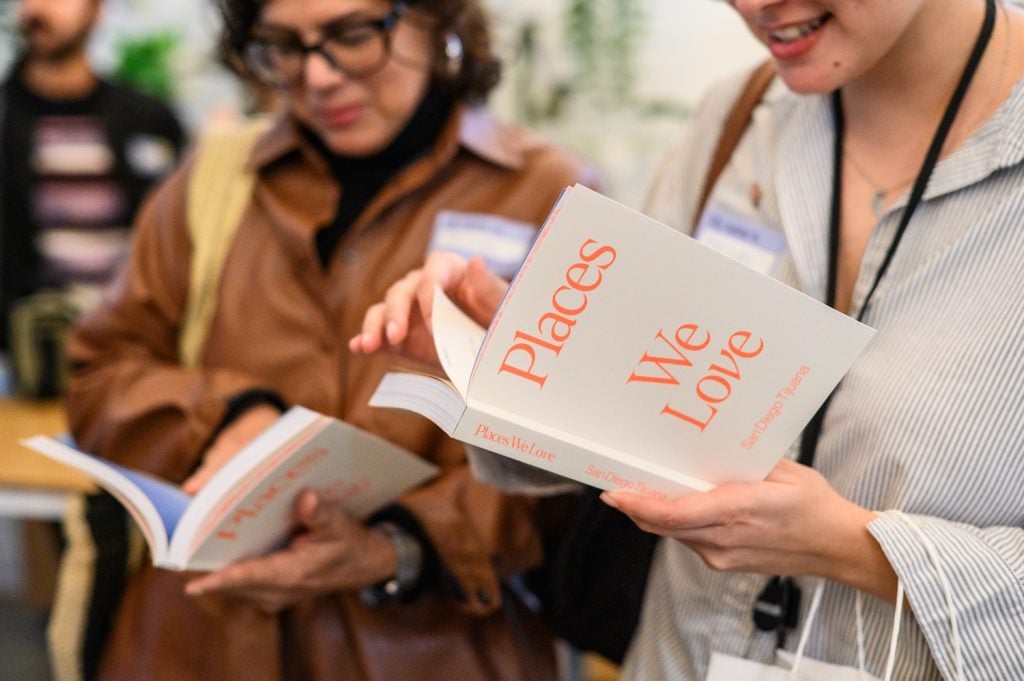
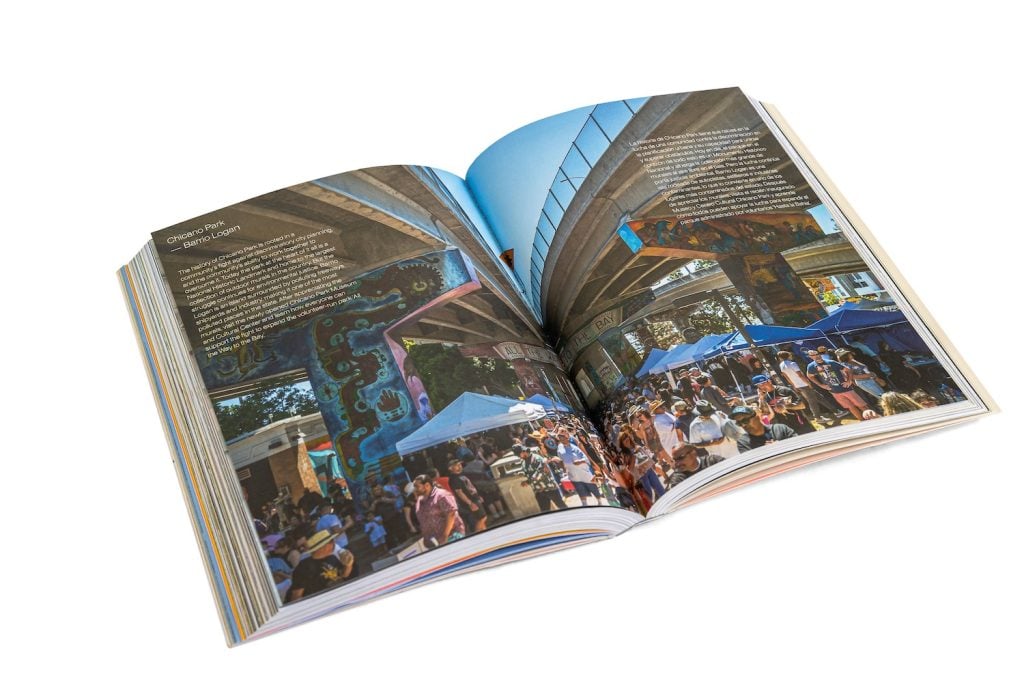
“The book is basically a piece of advocacy for better urban design wrapped in a sexy guidebook,” says Megan Groth, author of Places We Love San Diego Tijuana. The book—272 pages of the very best places to visit from North County to Tijuana—is rich with beautiful photography and studded with bilingual essays encouraging new and improved public spaces. It’s a love letter, of sorts. And a call to action.
Inspiration for the book struck Groth—an urbanist, educator, and native San Diegan—after she studied architecture in Helsinki, Finland, just one year before the city was announced as the 2012 World Design Capital. When she returned in 2012 for a conference, Groth picked up a portable, photo-oriented guidebook about Helsinki.
But it wasn’t until years later, when she was back home in San Diego, that she rediscovered the book and really began musing about creating a similar guide for San Diego and Tijuana.
Passion for representation, public spaces, and community has been a consistent theme since those early days. The accumulation of all the places in the guide was the result of, yes, lots of research, but also the snowball effect that came from Groth reaching out to “friends and friends of friends and neighbors and just saying, ‘Hey, I’m writing this book. What do you think?’”
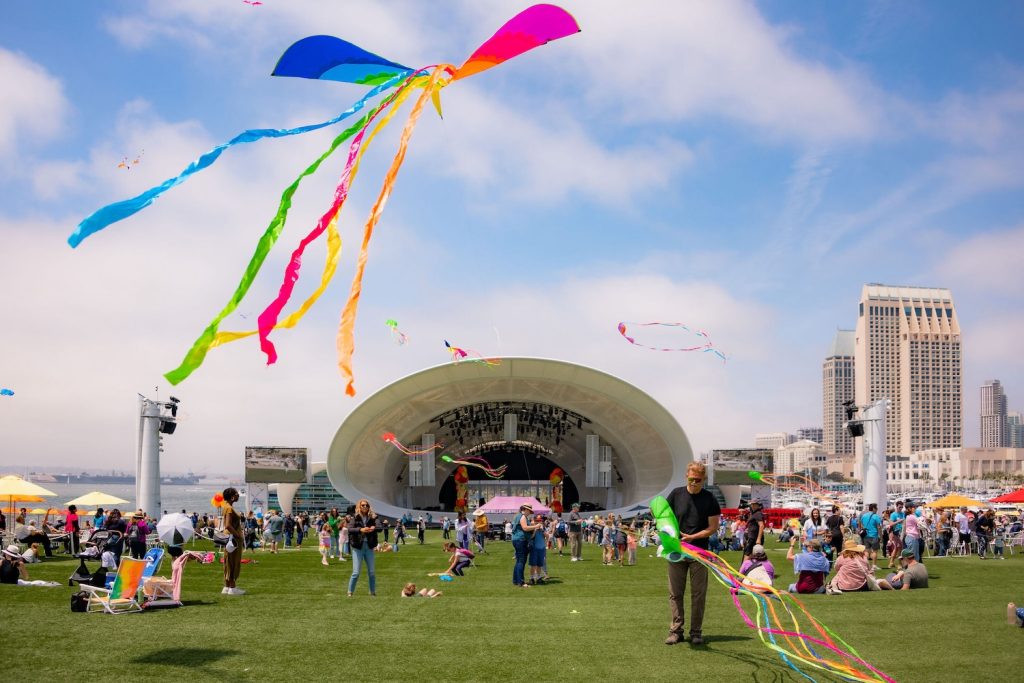
The Rady Shell at Jacobs Park, Downtown San Diego Photo Credit: Jenna Selby
Groth embraced the diversity of locations that came from crowdsourcing. She had just one criterion for inclusion: that each place is free and publicly accessible. “I did make a few exceptions for places like the Mingei and the Museum of Contemporary Art San Diego, because I am an architect and both of those projects have recent amazing, architecturally significant renovations,” she notes. “I felt like it was important that those were celebrated.”
Though your typical guidebook is penned with a visitor’s perspective in mind, Groth hopes to see Places We Love taken up by locals and tourists alike. “I think the goal was not to restrict it, and so not to write it in a way that didn’t feel accessible to everyone,” she says.
Her desire for an inclusive look at the area also drove her decision to make the guide a binational one. “I don’t know of any other book that shows both [Tijuana and San Diego] together as one, and that is the reality of so many people that live here,” she says. Blurbs describing each place—regardless of what side of the border it’s on—are published in English and Spanish, and Groth drew visual connections between the two cities by ensuring that Tijuana and San Diego were photographed “in the same vein.”
Groth and her team commissioned more than 15 photographers to shoot the book’s locations, resulting in a beautiful array of styles, including both digital and analog snaps. Though Groth allotted creative control to the photographers, she did stress the importance of capturing the relationship between people and space, which is why you’ll see locals and visitors hanging out in almost every photo.
A 100-or-so-word blurb packed with history and fun facts accompanies the photograph of each location. Groth also uses this space to urge people to visit and care about these places and to emphasize the importance of public spaces. “We need to further invest in these places and understand how they came to be so that we can make more now and in the future,” she says.
Photo Credit: Jazzmine Taylor
She believes that bringing “more [and] better” public spaces to San Diego and Tijuana requires an equal division of work between top-down and bottom-up policies. “The truth is, you have to have both because, if not, you’ll have communities organizing and working very hard without the support of the city or country, and you’ll have public entities putting resources into policies and plans without community support,” she says. “Neither scenario is effective or sustainable.”
Coincidentally, around the same time that Groth was putting final touches on Places We Love, San Diego and Tijuana were jointly named the 2024 World Design Capital. Groth, however, feels that “it’s not that we are a world design capital as much as I think this is a year that we can really galvanize around [that title] to promote things—you know, move the dial.” And that’s exactly what she aims to do with her book: to guide us not just through the San Diego and Tijuana of today, but to the future of public spaces.
Amanda Parmele is a third year undergraduate student at UCSD and works at SD Magazine as a Photography/Visual Editing intern. She takes photos for her school newspaper, is a writing mentor, and loves surf photography, though she cannot surf to save her life.
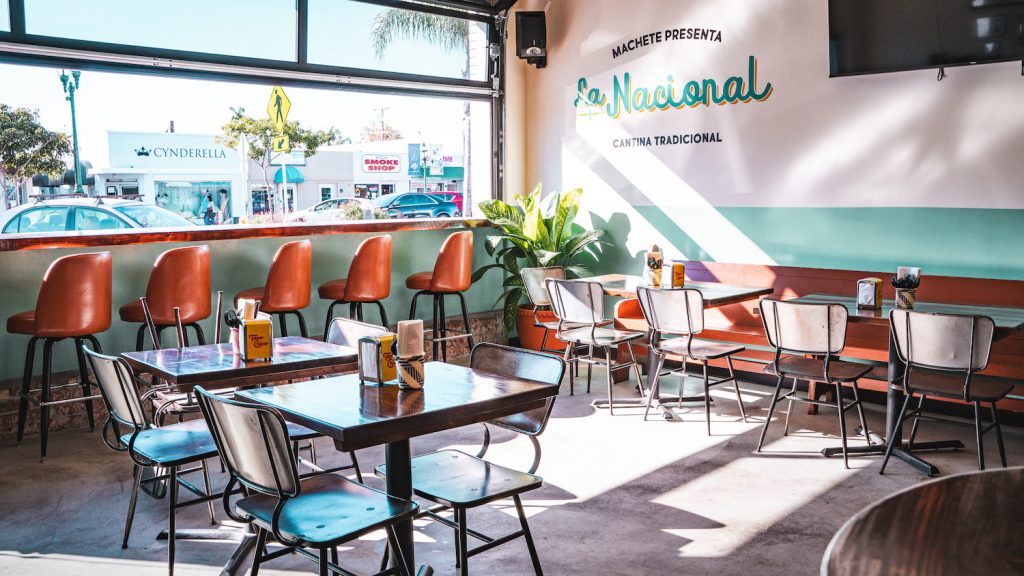
Joann Cornejo is a mother, teacher, and co-owner of National City’s Machete Beer House and Chula Vista’s newly opened La Nacional. Her limited time is precious and her knowledge of South Bay limitless, so she knows exactly how to craft the perfect family day.
Courtesy of Franco’s Flapjack Family Restaurant
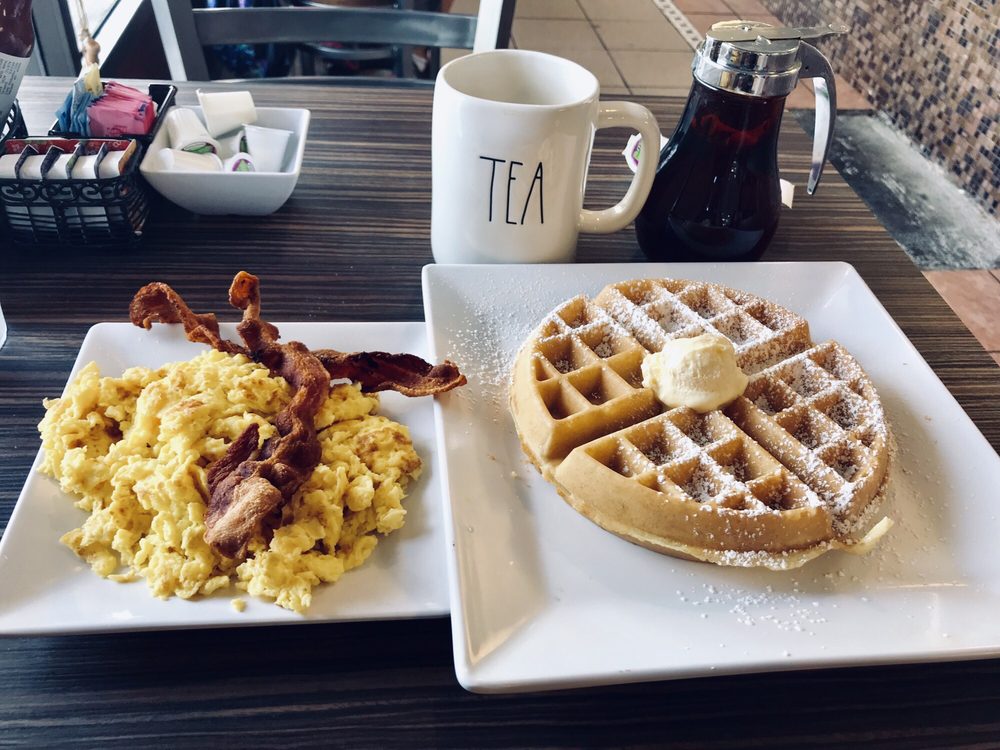
The morning begins at Franco’s Flapjack Family Restaurant in Bonita, an old-school diner known for large portions of classic breakfast dishes like country fried steak, eggs Benedict, and Belgian waffles. “My go-to is an omelet with a side of hotcakes,” Cornejo says. If he kids need to run off some sugar from their plates of syrup, she usually takes them to nearby Rohr Park, where multiple playgrounds appeal to little ones of all ages. There’s also a model train that runs the second Saturday and Sunday of each month (except in September) and an adult fitness area near the basketball courts. “If you’re lucky,” Cornejo adds, “you’ll see a few horses with their owners walking the trail.”
Courtesy of the San Diego Tourism Authority
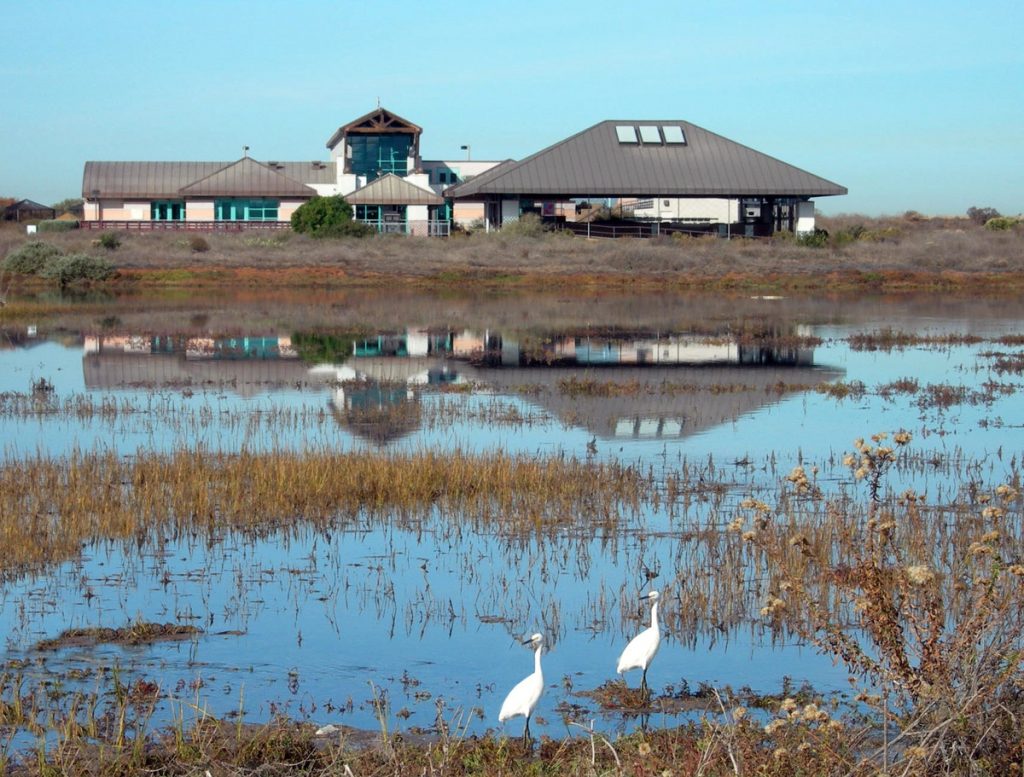
For more family fun, head to Chula Vista’s Living Coast Discovery Center, where you can ogle sea creatures like turtles, jellyfish, sharks, and manta rays. Cornejo’s personal favorite critters, owls, live on the center’s Raptor Row. Be sure to check the website to see what animal encounters are on the schedule before your visit, and make time for a stroll down Living Coast’s marshland walking trail to catch a front-row view of the entire San Diego bay.
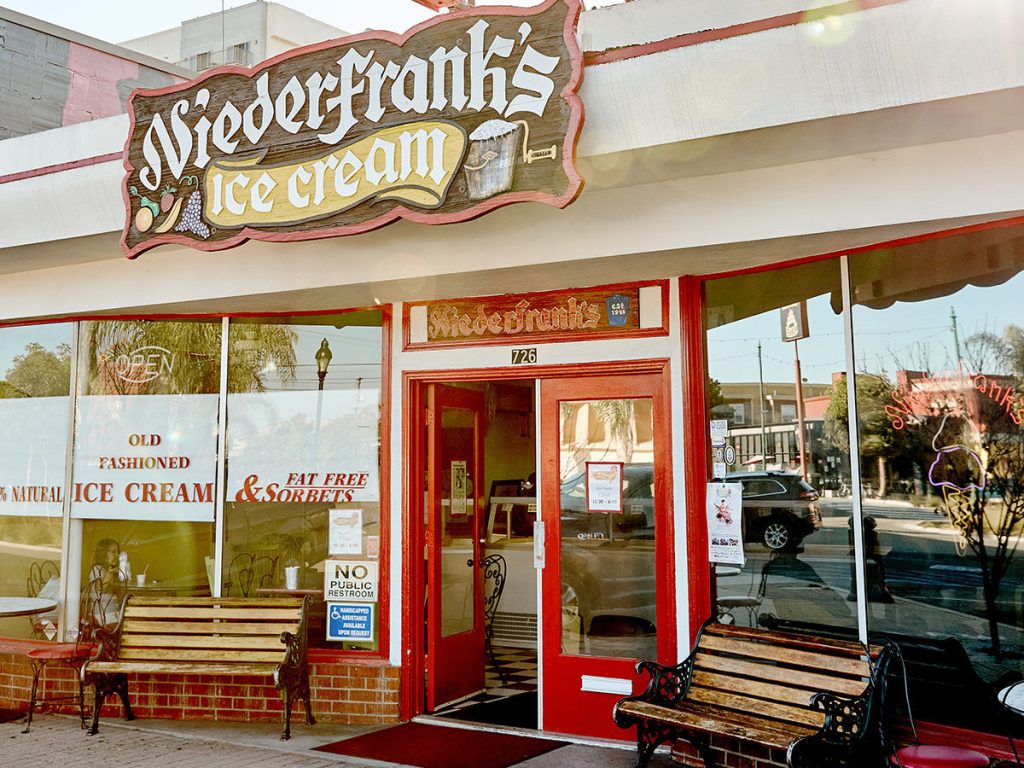
If Cornejo’s kiddos need a pick-me-up after an afternoon of aquatic exploration, Niederfrank’s is a quick drive up the 5. The National City ice cream shop has been an institution for over 60 years, making their old-fashioned scoops the same way they did back in the ’50s. Requisite flavors like chocolate and vanilla are mainstays, but they also offer creative varieties like papaya-pineapple, chocolate stout beer, and avocado-pistachio. Cornejo says she can’t resist a scoop of Kahlua Krunch.
Finally, she admits she’s biased, but she hopes locals and travelers alike will come check out the new La Nacional. “Your family can enjoy a delicious dinner and parents-slash-adults can unwind with a cocktail or mezcal, neat,” she says. After a day jam-packed with activities, a cocktail sounds pretty sweet.
Beth Demmon is an award-winning writer and podcaster whose work regularly appears in national outlets and San Diego Magazine. Her first book, The Beer Lover's Guide to Cider, is now available. Find out more on bethdemmon.com.
Growing up, Laika Nur, MD, Scripps Clinic sports medicine specialist, loved watching beach volleyball when the Association of Volleyball Professionals tour came to her hometown of Chicago. A talented volleyball player herself, she remembers sitting in the stands all day, and once, even got a couple autographs. Years later, Dr. Nur was attending a professional event focused on women’s sports, and the discussion turned to a new professional women’s volleyball league. The general manager and coaching staff for San Diego’s team, the Mojo, happened to be in attendance, and Dr. Nur took the opportunity to ask them if they needed a team doctor. Flash forward to the Mojo’s inaugural 2024 season, when Dr. Nur officially became the team physician. Click here to read more about Dr. Nur and how she incorporates lessons she learned on the court into her practice.
For more nutrition, wellness, and healthy living tips, sign up for the San Diego Health newsletter here.