Featured articles
Food & Drink
Food & Drink
Food & Drink
Featured articles
Everything SD
Everything SD
Things to Do
Featured articles
Things to Do
Things to Do
Guides
Featured articles
podcast-ep
podcast-ep
podcast-ep
Featured articles
Everything SD
Everything SD
Food & Drink
Featured articles
Everything SD
Everything SD
Food & Drink
Ready to know more about San Diego?
SubscribeReady to know more about San Diego?
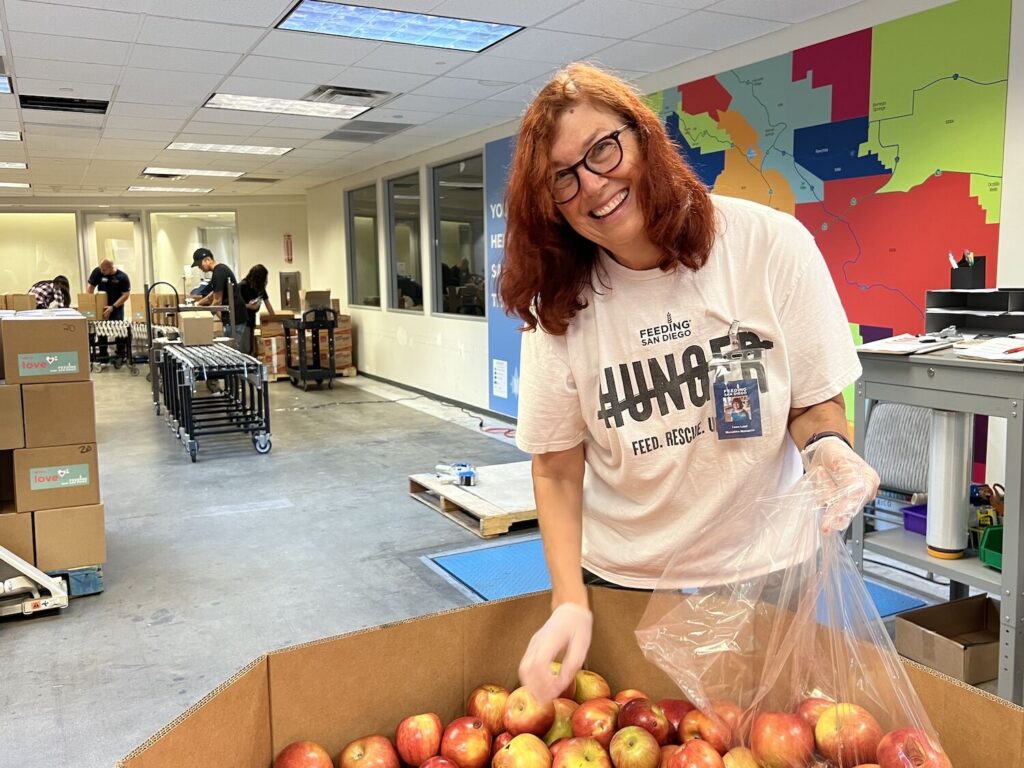
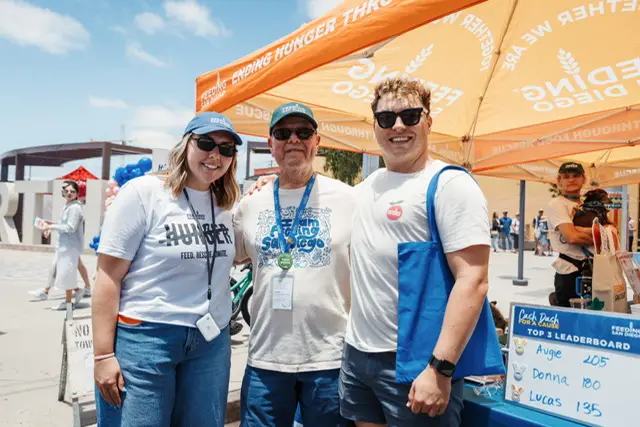
We spoke with Feeding San Diego's Volunteer Team Leader about her experience with the nonprofit and what keeps her coming back
Feeding San Diego
Feeding San Diego
Feeding San Diego is a hunger-relief and food rescue organization in San Diego County, and the only Feeding America affiliate in the region. This year, the non-profit is marking 15 years of service and over 300 million meals distributed to the people of San Diego County. The organization provides much needed food assistance throughout the county through its decentralized network of community partners who help distribute nutritious food at no cost in hunger hot spots.
Food rescue is also a primary focus, working with local grocery stores, farms, food manufacturers, and more to rescue surplus food. At the start of the pandemic, Feeding San Diego activated its emergency response to help the many people negatively impacted. Now, more than two years later, the nonprofit is still seeing an urgent need for food assistance amid record-high inflation.
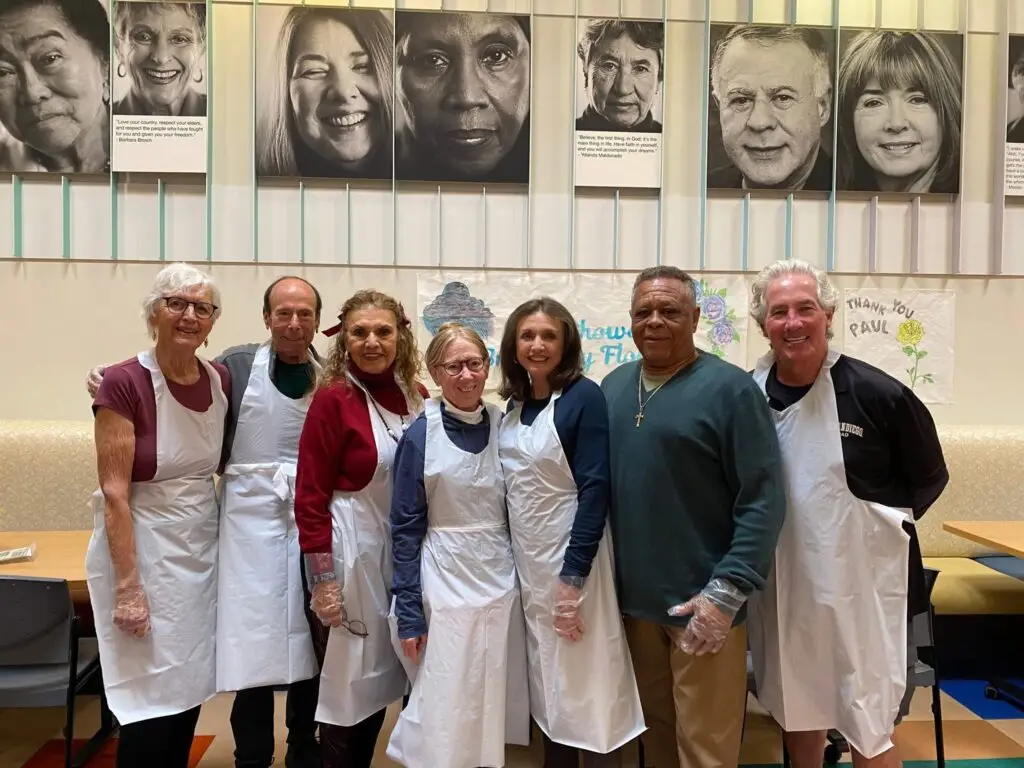
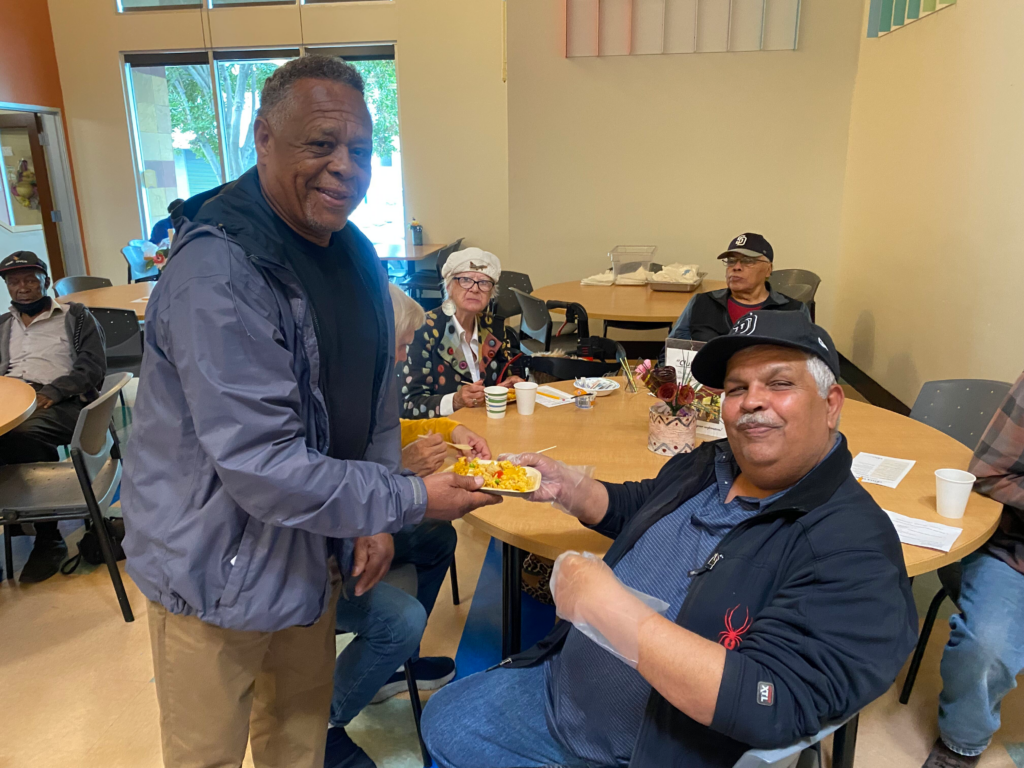
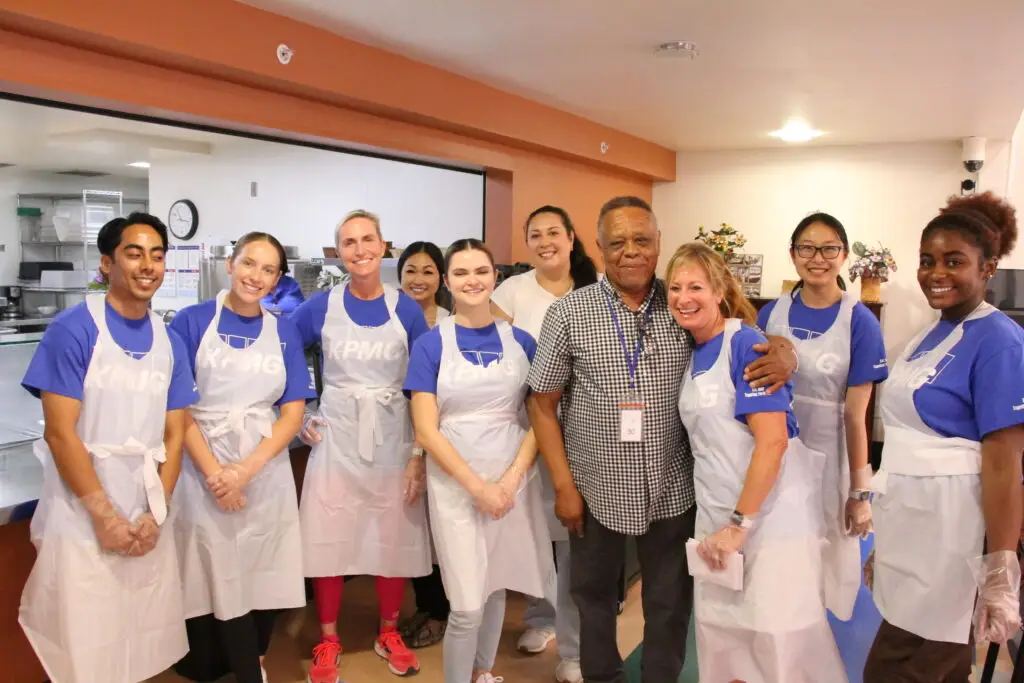
Feeding San Diego’s services would simply not be possible without its volunteer force, who help get food out into the community. Six days a week, four times every day, there are food sorting volunteer shifts at the organization’s headquarters in Sorrento Valley. There, volunteers work to sort, glean, and pack food for individual food distributions.
Meredith Mainquist: I think that time really kindled my awareness of food insecurity. For the first time in my career I wasn’t traveling around the country and really got to learn about my community. Early in the pandemic there were much smaller volunteer groups and there was a real sense of urgency to the work. The combination of working in the warehouse and then working with CERT on the early distributions at Qualcomm stadium where we distributed the food brought home the severity of the issues. The smaller teams at the warehouse gave me an opportunity to get to know the staff and to learn about food safety and food rescue. The shifts were longer (4-6 hours) so you not only had a major sense of accomplishment but lots of fun. We had some great times training for various imagined volunteer Olympic events: who could create the highest stack of boxes, who could make the most boxes in an hour, who could wrap the most pallets in a row without getting dizzy, and the favorite: gleaning productivity pounds gleaned versus errors in gleaning with one of the volunteer team members acting as judges.
I believe in the mission and values of Feeding San Diego. I feel that volunteers are truly appreciated and are key to providing the services that Feeding San Diego extends to the community. It also feels good to know that we are making a difference in people’s lives. Talking to those we serve makes me very grateful for all I have and gives me the reminder that we can all help.
I wanted to help more or be able to do more during the shifts, like use the pallet jack and be able to have more interaction with other staff members. I also enjoy leading projects and answering questions from the other volunteers. The training involved some online food safety, a deeper dive into the mission and structure of the organization, practice leading projects, and some on the job training and observation. My favorite part was the pallet jack “obstacle course” after an evening shift where we had to put all the pallets back in the cooler and fit them into tight spaces. The warehouse team is so helpful and supportive, it made the learning fun.
I have built fun relationships with several staff members at the Together Tours and at the warehouse. But the deeper relationships have been with some of the other volunteers. I am going to Portugal and Spain this fall with one of the other team leads and I go to coffee regularly with Together Tour volunteers. Now that I’m retired, friendships have become more important for me to develop and finding people with a similar desire to give back has been a huge reason for me to stay involved.
Apples, no question about it.
This is probably one of my favorite things about volunteering with FSD. You never know what you will be doing during a shift: gleaning, packing, washing Starbucks bins, organizing closets, checking donated food for safety, building emergency food boxes, stocking the marketplace produce.
Then there are the Together Tour food distributions where we set up mini assembly lines for produce and run Nascar-like pit stops loading vehicles, and every location is different. But the response to the help provided is the same. Drivers receiving the food are so thankful for every bit of help.
I’ve also met some angels. There is the UPS driver that comes to Faith Chapel on her lunch hour to pick up food for some of the families on her route without cars, there is the young mother that picks up for all the moms in her baby and me class and comes with eight QR codes and names to make checking her in easier. I just started working in the Feeding San Diego marketplace and met two Ukrainian refugees overwhelmed by the choices offered and the ability to choose what they needed and wanted. And finally, I had fun answering phones at the annual Month of a Million Meals telethon and got selfies with Claudia Sandoval, Sam the cooking Guy and Mark Loretta who were there to support the cause.
I have learned more about the partner agencies that work with Feeding San Diego. Organizations like the Lucky Duck Foundation that distributes food to San Diego’s unsheltered community, or Starbucks donating all its unsold food as part of the FoodShare program. I’ve also learned about the impact that Feeding San Diego has on our community partners that run much smaller pantries and food distributions, helping these organizations make a difference to their local community. Connecting these partners to food donors to rescue food has helped so many of these groups find local resources to help their neighbors and reduce land fill.
It feels good to know that what we do is reducing food waste and has made me more aware of food waste at home. The best part, however, is seeing the looks on the faces of the Girl Scout troops that come in to volunteer when we tell them that the organic waste gets picked up by farmers to feed their pigs.
A couple of things: first, just do it and then do it again and again and again. Second, bring a friend or come prepared to make a friend. Very few shifts are the same and there are so many opportunities for volunteers. Feeding San Diego seems to offer something for everyone.
PARTNER CONTENT
My father has Alzheimer’s, so I try to spend time with him. He was a great example of giving back to his community for so many years and always encouraged me to find the time to figure out ways to give back regardless of the season in my life. Otherwise I love to hike, walk on the beach, read and travel.

The 24-year-old nonprofit helps teens celebrate the milestone while promoting fashion sustainability
Prom is a rite of passage for high schoolers, but a flashy new dress can cost hundreds of dollars. The Princess Project helps girls cut costs while promoting fashion sustainability. The nonprofit collects new and gently used formal dresses and accessories throughout the year, then when prom season rolls around, launches pop-up boutiques where girls can shop for their dream dress at no cost. The only criteria is they have to be a high school student who’s going to prom.
The Princess Project started in San Francisco in 2002 with a small dress drive. The movement grew exponentially over the years, and expanded to San Diego in 2008. Today, it’s headquartered at Parkway Plaza in El Cajon and has chapters in San Francisco, Silicon Valley, and Sonoma.
“We really want to celebrate teens, make them feel good about themselves, and save them some money because it costs a lot to go to prom. This is one way that we can help alleviate the cost,” says Karen Martin-Spellerberg, corporate board chairman and head of the San Diego chapter. “There’s no financial requirement to come get a dress with us because we are all about everybody being equal and having the same opportunity.”
The experience is more than just picking out a dress, says Martin-Spellerberg. The Princess Project works to create a bubble of inclusiveness and confidence, where all shapes and sizes are celebrated, and all comments are positive.

In the months leading up to prom season, teens can book an hour-long appointment at the Parkway Plaza location to try on dresses and accessories, which they get to keep. Volunteers act as personal shoppers, curating an experience unique to each kid. This year, the Princess Projects also brought dresses to eight library branches throughout San Diego County to reach girls who couldn’t make it to the main event.
Because the Princess Project relies on donations, they often do not receive enough dresses in “fringe sizes” (00-2 and 14 and up), so they hold fundraising events to purchase new dresses in those specific sizes to maintain an inclusive range. Its signature $5 Dress Sale Fundraiser event will take place on May 30-31 at Parkway Plaza, where non-prom dresses (cocktail, casual, business) donated throughout the year are sold for a minimum $5 donation per dress. All proceeds from this fundraiser are used to purchase the understocked sizes.
“We’ve got dress drop off sites throughout San Diego County and people sometimes will donate dresses that are non-prom—sometimes they’re cocktail, casual, summer, business. So, what happens is when we are done with the season, we flip our dress store and we put out all of the non-prom dresses,” says Martin-Spellerberg. “People can come shop and get as many dresses as they want and 100 percent of the proceeds go toward us purchasing dresses in the sizes we don’t have enough of.”
The Princess Project also relies heavily on volunteers, including teen ambassadors, the latter who meet monthly, help organize the store, work outreach tables, and host a fashion show to help spread the word to their fellow students that the dresses are premium-quality and “ready to wear, beautiful and amazing.”
“It’s all about kindness and making kids feel good about themselves,” says Martin-Spellerberg.
Sarah Sapeda is San Diego Magazine’s Custom Content Editor. In her 15 years in San Diego journalism, she has covered charitable events, health care, education, crime, current events, and more.
Here’s where to celebrate, connect, give back, and make a difference this month
St. Germaine Children’s Charity will host its annual grant awards dinner at the Museum of Contemporary Art San Diego. The grant funds that will be donated to local agencies that work to end child abuse were raised at various St. Germaine Children’s Charity fundraisers and events throughout the year.
Help San Diego seniors age gracefully at Senior Prom: Forever Young, a fundraiser for Meals on Wheels San Diego County. The retro school dance-themed gala at the Kona Kai San Diego Resort will help the nonprofit continue to deliver daily nutritious meals and friendly visits to local seniors.
San Diego nonprofit GenerateHope and international charity Freedom Challenge will host a 45-mile, three-day walk from Oceanside to Coronado to help combat human trafficking. Funds raised will go toward Freedom Challenge’s work around the world and GenerateHope’s local programs that serve survivors of sex trafficking.
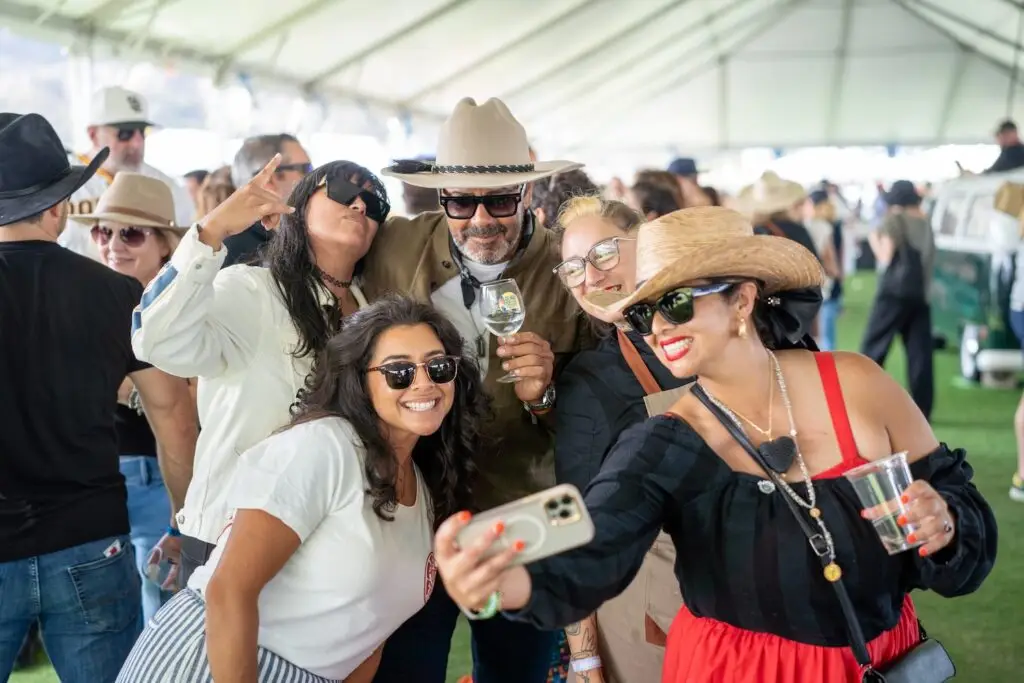
Roughly 300 guests will gather at a private residence in Solana Beach for bites prepared by San Diego’s top sustainable chefs, along with fine wine, craft beer, and small batch mezcal and tequila to support coastal conservation in the U.S. and Mexico. Funds raised at Wildcoast’s Baja Bash will help expand its programs in 2026 and beyond.
Local law enforcement, first responders, and military personnel will face off in a boxing match aboard the USS Midway Museum to raise money for the Community Youth Athletic Center. Now in its 21st year, the Battle of the Badges supports CYAC’s boxing programs for underprivileged youth.
Sarah Sapeda is San Diego Magazine’s Custom Content Editor. In her 15 years in San Diego journalism, she has covered charitable events, health care, education, crime, current events, and more.
The 50-year-old nonprofit provides transitional housing and financial literacy services to youth leaving the system
For young adults transitioning out of foster care, housing instability is often among the greatest challenges they face. This, along with underemployment or unemployment and a sudden lack of support and resources, significantly increases the likelihood that they will ultimately slip through the cracks.
Walden Family Services, a 50-year-old nonprofit that helps find stable, supportive home environments for local youth in foster care, is addressing the problem head-on through transitional housing programs that integrate financial literacy, case management, and life-skills development to help young adults learn how to live independently.
“It was pretty much a foster care to homelessness pipeline—or prison,” says Teresa Stivers, Walden Family Services CEO. In response, Walden Family Services launched an initiative called Independent Futures to help clients between 18 and 21 acclimate to their newfound independence. There’s also an extended care program for those ages 22 to 24.
Clients are provided furnished housing, food, and job training, and learn basic life skills, like how to cook and grocery shop, save money, pay bills, and budget. They pay rent that’s deposited into a savings account and matched by Walden Family Services. Clients are also required to work, attend school, or do a combination of both for 40 hours a week.

Roughly 90 percent of existing clients live in safe, sustainable housing, 83 percent maintain stable employment, and 83 percent leave the program with significant savings.
“There’s a reason why every young person in this country can be on their parents’ health benefits until 26. Research shows that’s about how long it takes for someone to fully take off—and that’s for somebody who grew up with their parents and maybe went to college,” says Stivers. “As you can imagine, it’s more difficult for someone who went from family to family, school to school, exiting at 18 without a diploma.”
The program’s success stories exemplify its impact, Stivers says. Clients have gone on to become entrepreneurs, advocates, scholars, and loving parents who break the cycle of child abuse and neglect. Many also want to give back and help other kids in the foster care system. Walden Family Services is working to develop an alumni program and build a mentoring component into its transitional program.
“We’ve done all kinds of peer mentoring, peer therapy, and have a lot of staff members who grew up in our program or have lived experience, and it’s been really impactful. So now we want to formalize that program for our alumni and give our graduates an opportunity to help other folks,” Stivers says.
Walden is also looking ahead, focusing on expanding housing partnerships, strengthening prevention efforts, and increasing community involvement to meet growing demand. However, rising housing costs and funding constraints are taking their toll on nonprofits like Walden Family Services.
“It’s challenging for all of us,” Stivers says. “We are all still trying to provide the best care that we can with the limited dollars.”
Those considering ways to help can make a monetary donation to the organization or attend a fundraising event like the Walden Family Services’ “There’s No Place Like Home” gala on April 30 at The Thursday Club. The organization is currently looking for volunteers to host activities or training sessions for clients, help out in the office, serve on the board, or participate in holiday drives. If you’re a local property owner, they’re also looking for partnerships with those willing to rent reasonably priced apartments to their clients.
“There are so many things that people can do to make an investment in their community,” Stivers says. “Many people don’t realize that there are children in their own backyard who are going hungry, who are sad and scared and lonely, and that they can make a difference. We hope that people will do that so we can all benefit.”
Sarah Sapeda is San Diego Magazine’s Custom Content Editor. In her 15 years in San Diego journalism, she has covered charitable events, health care, education, crime, current events, and more.
Stake Chophouse & Bar brings contemporary classics and old-school service to the heart of Coronado
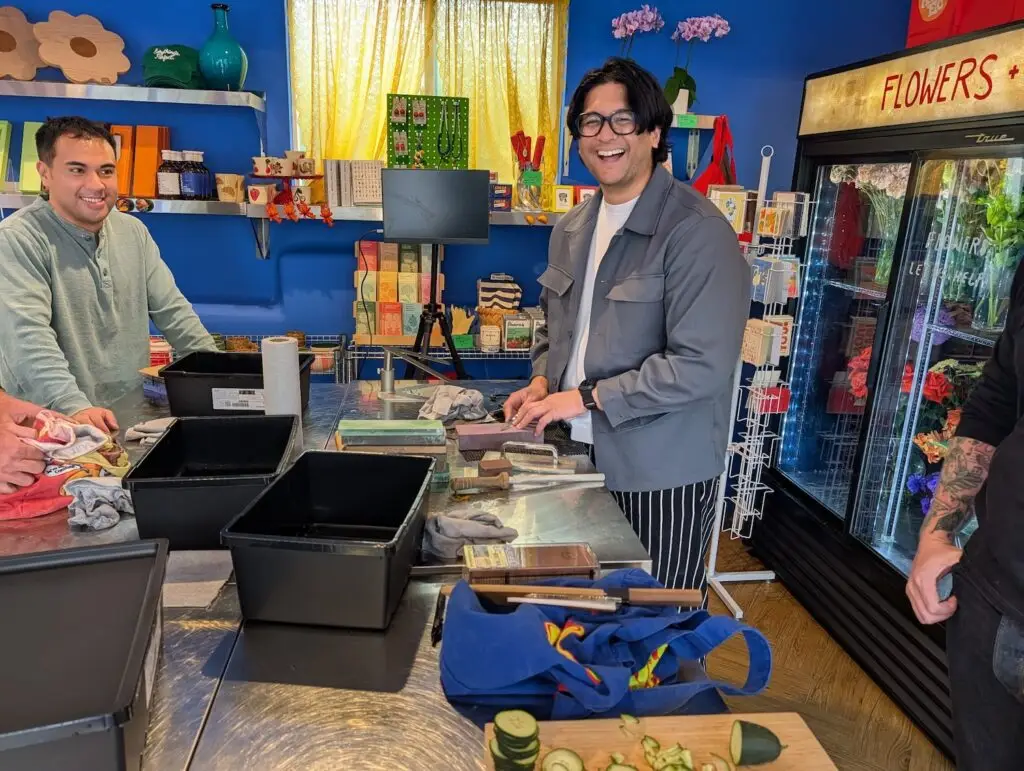
Stake Chophouse & Bar isn’t your average steakhouse. Blue Bridge Hospitality’s Coronado outpost is a modern interpretation of a big-city steakhouse nestled in the heart of the small coastal community. The team at Stake has reimagined the whole steakhouse experience. By prioritizing a seasonal farm-to-table sourcing philosophy, a personalized guest experience, and unique service touches, like a formal steak presentation and a bespoke knife selection process, Stake distinguishes itself in a sea of steakhouses.
Exceptional steaks, including Wagyu from Japan, Australia, and the U.S., and fresh seafood flown in daily form the core of Stake’s culinary identity. The menu features a five-course omakase-style steak experience highlighting house favorites, plus an array of cuts, and classic steakhouse staples—think a wedge salad, baked potato, or pasta carbonara—refined for a contemporary palate without losing their traditional appeal. Stake focuses on seasonal sourcing from the region’s best family farms and specialty purveyors, and incorporates intentionally unexpected touches to create something truly unique.
“I challenge our chefs and myself to take it a step further in sourcing,” says Chef Ronnie Schwandt. “It’s important to us to highlight different farms, unique one-off farms—whether it’s cattle, strawberries, a local fisherman or from anywhere in the United States, we’re always trying to find that niche.”
Beyond the menu, Stake emphasizes outstanding service, says Vinny Spatafore, Director of Hospitality Operations. Staff maintains detailed notes, allowing them to remember guests by name, recall previous orders such as a favorite martini (also memorable for the customer since it’s served in an extra tall, distinctly-shaped glass), and celebrate special occasions like birthdays and anniversaries.
“When you have those points of topic that you remember about a guest, they appreciate that,” he says. “Our servers are really good with that—we have a couple servers who have been here since the beginning and they’ll remember somebody from years ago, their name, their kids’ names, where they live. I’m really thankful to have a great front of house staff.”
Award-winning wines, rare whiskeys, special events, and a complementary black car service that provides transportation for guests throughout Coronado add to Stake’s appeal.
Schwandt stresses that Stake offers more than a meal; they aim to give patrons something unforgettable.
“It starts when you walk up the stairs and are greeted by the hostess—that sets the tone for the night. Then you’re greeted by a server, who may know you by name, and can guide you through the menu and curate as they get to know you,” says Schwandt. “Most people leave kind of blown away; they leave feeling like they just had an experience. That’s the goal, right? Whether you’re serving smash burgers or high-end steak, you want somebody to leave thinking, Wow, that was awesome.”
The annual fundraiser helped provide university scholarships for women in low-income countries
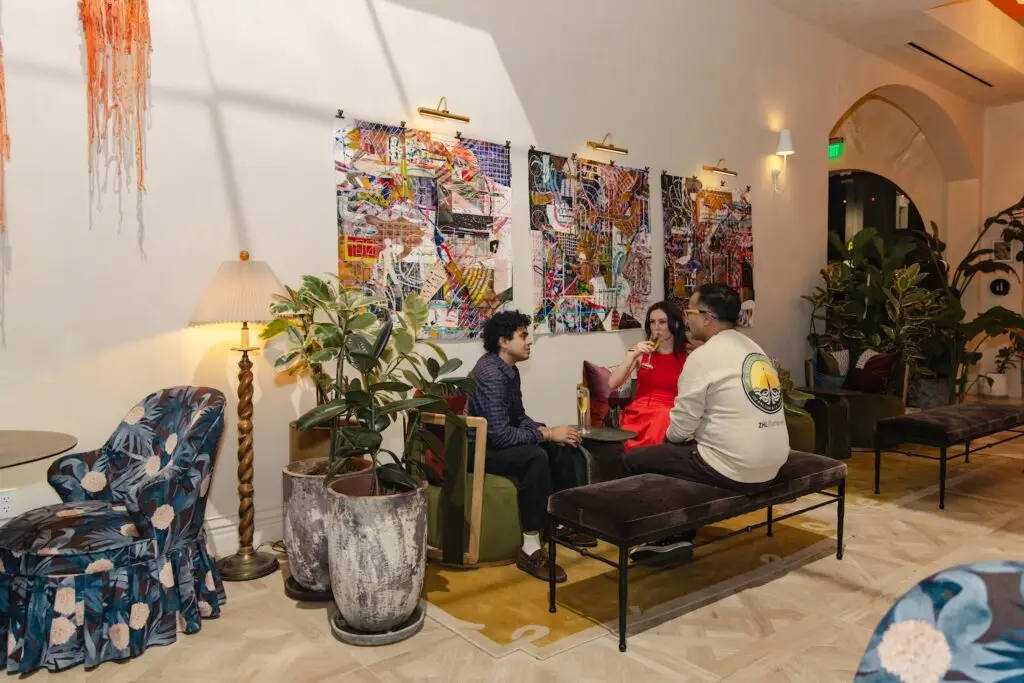
On April 11, San Diego–based nonprofit U-GO hosted a fundraiser at Cucina 2051 in Carlsbad to support women in low-income countries pursuing higher education. The U-GO San Diego Wine Dinner raised money to fund university scholarships for young women from underserved communities around the world.
Photo Credit: Madilynn Saige Photo


Sarah Sapeda is San Diego Magazine’s Custom Content Editor. In her 15 years in San Diego journalism, she has covered charitable events, health care, education, crime, current events, and more.
Water and Kindness provides unhoused San Diegans with water, clothing, and community
Clean drinking water is essential. But for San Diegans who are unhoused, access to portable water isn’t always guaranteed. Water and Kindness has distributed more than 3,000 reusable water bottles—each with a custom-printed label with information on local food pantries, and resources for clothing and other necessities. Water and Kindness also operates a pop-up “free store” and hosts monthly clothing swaps (note that clothing donations are not accepted in advance).
The nonprofit depends on a mutual aid network and volunteers like Kathryn Cox to reach as many people as possible. Here, Cox shares what she loves about volunteering for Water and Kindness and how the organization is helping build community.
My partner has known Jess [Stephens, Water and Kindness founder,] for decades. We were out at a cycling event and were catching up, and she mentioned that she had started this nonprofit about distributing water and clothing. I had just cleaned out my closet and had been trying to figure out what to do with all these clothes and I had already been handing out water on hot days in my neighborhood. Jess said she’d planned to start doing a free store clothing swap. I had three bags full of clothes that I brought to the first clothing swap, and I’ve been at every clothing swap since.
I probably do a little more than most people just because I have taken on a bigger role and do grant work, but that’s not the fun stuff that other volunteers would probably want to jump in on. The biggest things that we have are our three water distribution locations where people can pick up a case of water with information about food pantries and their weekly schedules. And then what I do, the clothing swap, which is the last Saturday of every month, and we have a free store every Saturday that has hygiene supplies, diapers, baby formula, first aid stuff, and blankets.

Getting to know people. I’m an introvert, but once you start to get comfortable in the space, it’s fun to help people find stuff that helps them. For instance, I’ve randomly found pieces of clothing that I could tell would look amazing on somebody—I work in retail so I don’t know if that’s the part of me that likes people to get new stuff and be happy about it. Like there was an older guy with a walker who came in with a friend and it was a cool jacket. He was stoked afterwards and his friend was hyping him up the whole time. Another person was excited that they found a pair of boots, but they were in black pants and like a black spaghetti tank top. We had this really cool blazer with embroidery on it and kind of a Stevie Nicks vibe, and a leather cowboy hat, too. I was like, This would look so cool on them. They put it on, and were like, “I didn’t know I could look this good.” It’s such a cool experience.
Getting the word out. On some of the clothing swap days we have a community fair with other organizations or community partners who come in and have tables with their information. And sometimes we’ll get a lot more donations and we don’t always have as many people to shop all of those clothes.
There’s one specific person who stood out because he came in and was really excited that we had clothes because what he had in his bag was all that he had. I got to pull some clothes, and his style was not my style, but I got a feel for it. I picked up this white pair of jeans that were embroidered on the butt with studs and stuff, and I held them up and he was like, “How did you know?” And then he got this pink zip-up hoodie and some other shirt. He went into the bathroom to change into the new outfit and came out and was so excited. He showed off everything and did spins.
Community support is super needed right now. Building community is hopefully going to make things a little bit easier as time goes on. But beyond that, I don’t like doing things that are new, so, I very much understand any hesitation with that. If there is somebody who’s interested but still nervous, they could message us on Instagram and ask for a little extra support. I know the people with anxiety probably feel more comfortable knowing ahead of time that things are going to be okay. Volunteers have amazing hearts and some great personalities. It’s a great community where you can make good friends and enjoy giving back.
*Responses edited for length and clarity.
Sarah Sapeda is San Diego Magazine’s Custom Content Editor. In her 15 years in San Diego journalism, she has covered charitable events, health care, education, crime, current events, and more.
Scripps study shows that some patients may be able to taper their dose and maintain results
While glucagon-like peptide-1 (GLP-1) receptor agents have been used to treat Type 2 diabetes for more than 20 years, their recent emergence as weight-loss wonder drugs marked a new frontier in medicine. But their effectiveness has left some patients wondering what to do once they’ve reached their goal. Stopping the medication could mean regaining some, if not all, of the weight. A Scripps Clinic internal medicine physician recently conducted a small study of whether GLP-1 patients who had reached their goal weight could maintain that weight by taking their regularly prescribed injection every other week instead of weekly. Spoiler alert: 30 of 34 patients did. Read more about the study here and what that may mean as pharmaceutical companies roll out oral GLP-1s.
For more nutrition, wellness, and healthy living tips, sign up for the San Diego Health newsletter here.