Featured articles
Food & Drink
Food & Drink
Food & Drink
Featured articles
Features
Everything SD
Features
Featured articles
Everything SD
Things to Do
Everything SD
Featured articles
podcast-ep
podcast-ep
podcast-ep
Featured articles
Features
Features
Features
Featured articles
Features
Everything SD
Food & Drink
Ready to know more about San Diego?
SubscribeReady to know more about San Diego?
Creator Jaime Fritsch on the uproar his food event caused.
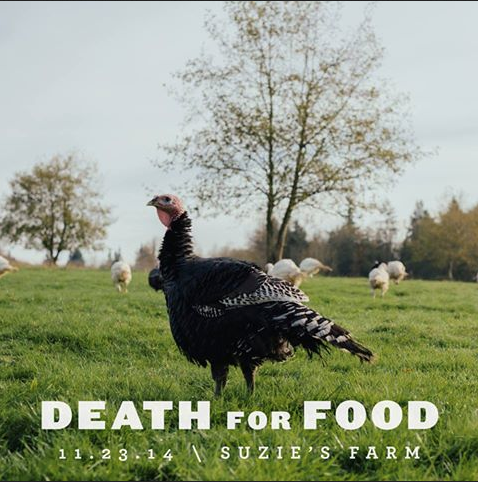
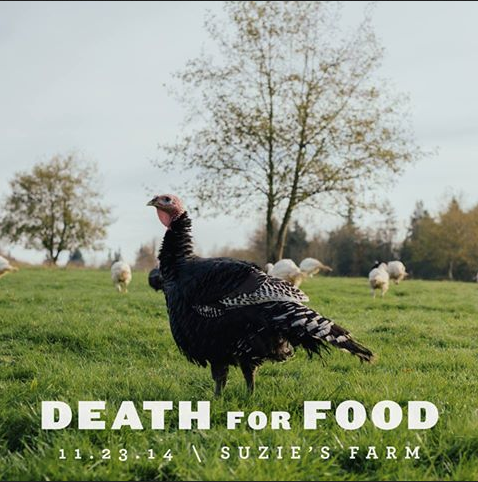
Some San Diego meat eaters were going to kill animals for food. A vegan activist lawyer staged an international campaign to stop them. That’s how Death for Food became one of the most controversial food events the city has seen in years. It made national news, and resulted in this cover story in San Diego CityBeat.
I’m highly biased in this debate. Months ago, I agreed to collaborate with Death for Food creator Jaime Fritsch because I believe in the educational philosophy driving his project. You can read why here, and read my initial reaction to Pease’s campaign here.
Basically, Death for Food invites omnivores to humanely kill their own dinner. Not for alpha-species thrill or Ted Nugent-esque blood sport. The idea is to reconnect meat-eaters to the life behind their meat, and let the emotions of that process guide their food decisions from that point on. It’s a movement against how meat is currently produced in America: anonymously and industrially.
Vegan activist Bryan Pease started an international Change.org campaign to stop the event, set to be held at one of the city’s most progressive and ethical food compounds, Suzie’s Farm. Without contacting the farm or organizers to see what the event was truly about, Pease made his best guess and portrayed the event very negatively, including the term “torture animals.” The hate mail and hate phone calls flooded into the farm and Death for Food creator, Jaime Fritsch. It caused financial harm to both. Since the protest, Fritsch has been accused of some pretty vile things. Animal abuse. Damaging children (a father brought his son to participate). Profiteering off animal slaughter. Insanity.
What’s been missing in the press coverage of the event is in-depth insight from Fritsch himself. The basic questions: Why invite people to a farm to kill their own dinner? Is that a progressive way to educate omnivores and promote responsible meat consumption? Or is it just sick in the head?
Here is Fritsch speaking about Death for Food, in his own words:
Why are you doing this?
I really don’t like answering this question. When you tell people what your purpose is, you pre-ordain their experience. It defeats the entire concept of Death for Food. Which is—by immersing yourself in the process, you fully experience it and integrate it, instead of having a preacher at a pulpit telling you how to feel. Now I feel I have no choice. My hope for the participants is that they integrate the process of meat back into their lives. That includes knowing about the life the animal lived, smelling the fresh air and the sunshine it gets, knowing it was a living, breathing, sentient being—and then understanding the magnitude of killing it. In my experience, afterward many people will slow down a lot, even just how they physically eat meat. They’ll chew it more, taste it more, think about where it comes from. By doing that, they’ll actually assimilate the food and nutrients more efficiently.
Sounds like some hippy dippy bullshit.
That’s science. When you think about food and concentrate on what you’re eating, you start to salivate and activate your digestive system. And what happens if you’re assimilating your food more efficiently? You need less. I’m not saying people should eat less meat. I do believe that—but I don’t preach that. After experiencing Death for Food, they tend to eat less meat. But not because I or anyone else told them to. Because they experienced killing first hand and felt the magnitude of it. Integration.
Can’t I just intellectualize it? Is it necessary to kill the animal myself?
I feel direct experience is the only way to experience that magnitude. It’s contagious, too—taking that brave step of looking at things and experiencing things in a real way. This is about self-trust. I’m going to jump in and I’m going to figure it out myself. We live in a world where things like the food pyramid tells us what to eat and what not to eat. Religion tells us that humans are innately greedy and bad and sinful and that we can’t be trusted. Science tells us that our bodies are not amazing and regenerative, but unreliable and in need of medicine and technology to regulate and improve them. A big part of what I’m saying is—you can be trusted. If you’re like me and feel a need to eat animals, you can trust yourself to eat them. You don’t need some professional to endorse your decision.
What made you start doing this?
For years I ate only humanely raised, very high quality meat—the best I could possibly find. But it would still come just wrapped up cold. And I started wondering if chicken was ever actually a chicken. If pork was actually ever a pig. I realized there’s a big disconnect between the life of the animal and the meat in the grocery store. One of the most shocking things about Death for Food is when you kill something and you remove the fur or the feathers. It starts to look like meat again. But there’s one key difference. It’s warm. The body temperature is warm. I needed that.
Why is that so important?
All meat we touch in a typical American kitchen is cold. When you touch it as you’re eviscerating just after killing it though, it’s warm. There’s still energy—actual caloric heat energy. It just had a heart that was pumping blood. It’s a shattering moment. It looks like meat, but it feels like life. It’s this in-between state. That’s when you associate meat with the live sentient being that it was.
Does the experience end there? Are there repercussions?
I think people come to Death for Food for an initial experience to get them started. We provide participants with resources for procuring locally raised, whole animals and help them meet local farmers and ranchers doing good things. We’re also starting a meat collective in San Diego where people can continue to take classes on slaughter, butchery, charcuterie, etc. It’s not a one-time “Get your Death for Food shot, and you’re good for life!” It’s a highly rewarding path to continue along after the event—to reconnect with the process of your food. On a very basic level, what participants have said about the way they think about and eat meat afterward: More thought, more responsibility, less meat.
Did you expect a protest like the one from Bryan Pease?
No. When I was in Portland, I had significant dialogue with hardcore animal rights activists—guys who have broken into places to set animals free, set fires to places doing animal research. And they were down with Death for Food. They said, ‘If you’re going to eat animals, please take a look. Please be honest with yourselves.’ I actually thought that was what we were going to get. I thought we’d get some heat from people who didn’t understand it, but I could talk to them and explain it.
Did it make you angry? Sad? Vengeful?
I see Death For Food as a question, not an answer. The Change.org campaign denied people the means to ask that question. I was shocked, because while I know it wasn’t a perfect scenario for animal rights activists—they’d prefer we just don’t kill animals for food at all—my experience has been that it’s a step in the right direction for them. Even though Bryan Pease fundamentally disagrees with what I’m doing on the basic level of killing animals for food, I think he knows I’m not the real enemy. Hopefully someday he will launch a campaign against factory farming and I’ll have his back in that fight. I respect his position that animals have unique personalities and feelings and we should not kill them. I’m not asking him to pat me on the back or anything. Our feelings on fighting animal cruelty overlap in many places but, like he has said, you have to draw a line somewhere. He does, and I respect that.
What sort of people are objecting to the event?
Objections are coming from hardline animal rights activists who believe humans shouldn’t kill animals for food, period. Honestly, I can respect where they’re coming from because I’ve entertained that sentiment myself and still wrestle with it sometimes. One guy told me he signed the petition because he felt like it should be held at a ranch, not a vegetable farm. And you know what? In retrospect, he was right. Suzie’s was not the right venue for Death For Food. From what I can gather, hardline animal rights activists also take the stance that “humane ranching” advocates like myself are even worse than industrialized ranchers because we raise these animals with the same care as pets and then betray their trust when we eat them.
Is this worse?
You really have to ask me that?
Yes.
I don’t think anything could be worse than a factory farm system. It’s hell on earth. The fact remains, though, that I want meat and I want it on what seems like an almost cellular level. I understand the desire to not hurt animals. That’s how this entire project began. For me, the abstinence solution just didn’t work. Treating animals well during their lives—and giving them a quick, as-painless-as-possible death—does work.
What about the more extreme objections to Death For Food? That meat eating is a fundamentally bad thing—both environmentally and health-wise?
Those arguments are based off the factory meat system, with good reason. Death For Food that promotes local, holistic farms that mimic nature and utilize plants and animals to restore functioning, food producing ecosystems. That’s dangerous for vegan activists because it undermines the core arguments of vegan activism. We advocate a deeper connection with food in order to find a resonant system of eating for yourself. Daeth for Food usually results in people eating far less meat, and far healthier meat. We require humane treatment of animals in life and in death both within the project and beyond, when we use our dollar power to purchase ethically produced food. By eating a more reasonable amount of meat and taking part in the process ourselves by sourcing whole animals from local farms, we make healthy meat affordable to all.
And you think activists are threatened by this?
I hope not, because logistically I think a network of local, omnivorous food systems is the only thing that’s going to feed Earth’s population without completely destroying its ecology. I don’t want to hinder any implementation of that by further inflaming the current vegan vs. omnivore fight. This planet evolved over four billion years around local, omnivorous food systems. That’s just what works for us, environmentally speaking. But removing factory farms from the discussion seems to dismantle every pragmatic argument for a wholesale, global conversion to veganism. I can see how that alone could be a catalyst for a whole new round of arguments. The bummer of it all for me is that I’m 95-percent vegetarian. Ironically, it’s this tiny bit of meat I’m fighting about eating.
It didn’t seem like there was a “tiny bit of meat” set to be served at Death for Food. It seemed like a feast.
Right. It was a family-style meal with many different types of local and seasonal produce, fish and meat. But the idea was you could eat as little or as much as you wanted as an exercise in learning to be your own barometer with what you need in your diet. I tried not to talk about that too much because, again, I didn’t want people to come in feeling like they had to take a half a bite of everything and pretend like they were being “good, responsible omnivores.”
Some vegans have argued that no sane person would willingly kill an animal.
With Death for Food, sane citizens experienced responsible animal slaughter and reported that it was challenging but worthwhile. Most of them also decided to continue eating meat, but do so with more responsible parameters. Is that the action of an insane person? Or are certain parts of life merely challenging, and Death for Food attendees are people willing to face that challenge head on.
You say animals are humanely killed at Death for Food. How so?
We use a process where we blood-let very close to the jawline and position the animal so that the first blood that comes is from their brain. We use a razor sharp knife. They lose consciousness in two to six seconds. I’d compare it to when you’re cut with a scalpel and you don’t even know until you see the blood. When done by a professional, the animal doesn’t even realize what happened.
How do you know that’s the best way, for, say, the lamb that you were going to kill at Suzie’s?
That’s advice from holistic ranchers. The other way is to shoot the lamb in the head. But they have such small brains you can easily miss, causing needless pain to the animal. You also destroy the head, which is a lot of food. Stun guns are also controversial. It mostly works, but it can also just hurt the animal and not render them unconscious. I’ve seen the killing process at holistic, small farms and ranches from Washington to Mexico—and the most ideal method I’ve seen is a professional wielding a sharp knife and going for the bloodline close to the brain.
But you’re having regular people kill their own dinner. Not professionals.
We have a very good support staff with a lot of experience. I’m there with you. That’s to keep you and the bird from injuring yourselves. That said, there is potential for it going wrong. I can’t insulate people from that. Life is messy. Even the best, most humane ranchers I’ve ever met will admit it’s not always a perfect process and that occasionally a humane kill goes badly. In America we’ve taken this sort of hyper-sterile, ultra-safety path to everything. I actually see that as part of a larger problem—the refusal to engage with anything dangerous. The process at Death for Food is not only dangerous for the animal—it’s dangerous for the participants. One of those turkeys could easily break your nose with its wing. It could take an eye out with a claw. Death for Food is a larger idea of going headfirst into life and embracing the challenging parts along with the good parts. Typically when we say ‘embrace life,’ we mean hug your neighbor. Well, part of embracing life is embracing the challenging parts, too. Like holding your loved ones’ hands as they die. Not as they ‘pass on.’ As they die. Or spending time with the terminally ill. Whatever you want to do. Embracing life fully means embracing death. Conversely, denying death means denying life.
People have complained about the cost. They’ve said it’s astronomical and accuse you of profiteering.
The max possible sales for the event was $12,900. There were only going to be 75 attendees. And there were only a handful of higher-cost tickets–$200-$300, where people were able to take the morning class to kill their own chickens and turkeys, and take them home for Thanksgiving. Let’s break it down with our projected costs: venue fee ($1,000); food service staff ($2,000); tables/chairs/linens/wares ($2,200); food ($2,500); beverages ($2,500); harvest chickens ($500); harvest turkeys ($1,000); decor ($200); cooking equipment ($750); kitchen staff ($480); lighting ($250); A/V and sound ($200); harvest station construction ($2,000); photo exhibition ($1,000); wood for fires ($150); contributor flight/hotel ($500); menu printing ($200). That’s $17,230 and we hadn’t even yet budgeted security because I wasn’t thinking we’d need it until things got crazy. It’s also worth noting none of the chefs, speakers, or my event coordinator were receiving a cent. They were all doing this for free.
So you would’ve lost over $4,000.
I don’t think so. People support this project. Donations come in, vendors politely refuse payment or give me a big discount to show support. I bet in the end I would have at least come close to breaking even. I guess I just trust life like that.
If this is about education and not profit, couldn’t you silence critics by becoming a nonprofit?
It doesn’t matter to me if Death for Food is labeled a nonprofit. It’s a negative profit. It hemorrhages money.
There were accusations that you weren’t using USDA-approved meat, and that’s partly why the event was canceled because that would be illegal.
My top priority is using the most humane, best meat possible. I wouldn’t put on an illegal event. If there were questions of the legality, I would have properly addressed them.
Have you heard from people who attended the first event and how it affected them?
Dozens. People tell me it changed their lives.
The Controversy: Death for Food
by Jaime Fritsch

Creator Jaime Fritsch on the uproar his food event caused.
Some San Diego meat eaters were going to kill animals for food. A vegan activist lawyer staged an international campaign to stop them. That’s how Death for Food became one of the most controversial food events the city has seen in years. It made national news, and resulted in this cover story in San Diego CityBeat.
I’m highly biased in this debate. Months ago, I agreed to collaborate with Death for Food creator Jaime Fritsch because I believe in the educational philosophy driving his project. You can read why here, and read my initial reaction to Pease’s campaign here.
Basically, Death for Food invites omnivores to humanely kill their own dinner. Not for alpha-species thrill or Ted Nugent-esque blood sport. The idea is to reconnect meat-eaters to the life behind their meat, and let the emotions of that process guide their food decisions from that point on. It’s a movement against how meat is currently produced in America: anonymously and industrially.
Vegan activist Bryan Pease started an international Change.org campaign to stop the event, set to be held at one of the city’s most progressive and ethical food compounds, Suzie’s Farm. Without contacting the farm or organizers to see what the event was truly about, Pease made his best guess and portrayed the event very negatively, including the term “torture animals.” The hate mail and hate phone calls flooded into the farm and Death for Food creator, Jaime Fritsch. It caused financial harm to both. Since the protest, Fritsch has been accused of some pretty vile things. Animal abuse. Damaging children (a father brought his son to participate). Profiteering off animal slaughter. Insanity.
What’s been missing in the press coverage of the event is in-depth insight from Fritsch himself. The basic questions: Why invite people to a farm to kill their own dinner? Is that a progressive way to educate omnivores and promote responsible meat consumption? Or is it just sick in the head?
Here is Fritsch speaking about Death for Food, in his own words:
Why are you doing this?
I really don’t like answering this question. When you tell people what your purpose is, you pre-ordain their experience. It defeats the entire concept of Death for Food. Which is—by immersing yourself in the process, you fully experience it and integrate it, instead of having a preacher at a pulpit telling you how to feel. Now I feel I have no choice. My hope for the participants is that they integrate the process of meat back into their lives. That includes knowing about the life the animal lived, smelling the fresh air and the sunshine it gets, knowing it was a living, breathing, sentient being—and then understanding the magnitude of killing it. In my experience, afterward many people will slow down a lot, even just how they physically eat meat. They’ll chew it more, taste it more, think about where it comes from. By doing that, they’ll actually assimilate the food and nutrients more efficiently.
Sounds like some hippy dippy bullshit.
That’s science. When you think about food and concentrate on what you’re eating, you start to salivate and activate your digestive system. And what happens if you’re assimilating your food more efficiently? You need less. I’m not saying people should eat less meat. I do believe that—but I don’t preach that. After experiencing Death for Food, they tend to eat less meat. But not because I or anyone else told them to. Because they experienced killing first hand and felt the magnitude of it. Integration.
Can’t I just intellectualize it? Is it necessary to kill the animal myself?
I feel direct experience is the only way to experience that magnitude. It’s contagious, too—taking that brave step of looking at things and experiencing things in a real way. This is about self-trust. I’m going to jump in and I’m going to figure it out myself. We live in a world where things like the food pyramid tells us what to eat and what not to eat. Religion tells us that humans are innately greedy and bad and sinful and that we can’t be trusted. Science tells us that our bodies are not amazing and regenerative, but unreliable and in need of medicine and technology to regulate and improve them. A big part of what I’m saying is—you can be trusted. If you’re like me and feel a need to eat animals, you can trust yourself to eat them. You don’t need some professional to endorse your decision.
What made you start doing this?
For years I ate only humanely raised, very high quality meat—the best I could possibly find. But it would still come just wrapped up cold. And I started wondering if chicken was ever actually a chicken. If pork was actually ever a pig. I realized there’s a big disconnect between the life of the animal and the meat in the grocery store. One of the most shocking things about Death for Food is when you kill something and you remove the fur or the feathers. It starts to look like meat again. But there’s one key difference. It’s warm. The body temperature is warm. I needed that.
Why is that so important?
All meat we touch in a typical American kitchen is cold. When you touch it as you’re eviscerating just after killing it though, it’s warm. There’s still energy—actual caloric heat energy. It just had a heart that was pumping blood. It’s a shattering moment. It looks like meat, but it feels like life. It’s this in-between state. That’s when you associate meat with the live sentient being that it was.
Does the experience end there? Are there repercussions?
I think people come to Death for Food for an initial experience to get them started. We provide participants with resources for procuring locally raised, whole animals and help them meet local farmers and ranchers doing good things. We’re also starting a meat collective in San Diego where people can continue to take classes on slaughter, butchery, charcuterie, etc. It’s not a one-time “Get your Death for Food shot, and you’re good for life!” It’s a highly rewarding path to continue along after the event—to reconnect with the process of your food. On a very basic level, what participants have said about the way they think about and eat meat afterward: More thought, more responsibility, less meat.
Did you expect a protest like the one from Bryan Pease?
No. When I was in Portland, I had significant dialogue with hardcore animal rights activists—guys who have broken into places to set animals free, set fires to places doing animal research. And they were down with Death for Food. They said, ‘If you’re going to eat animals, please take a look. Please be honest with yourselves.’ I actually thought that was what we were going to get. I thought we’d get some heat from people who didn’t understand it, but I could talk to them and explain it.
Did it make you angry? Sad? Vengeful?
I see Death For Food as a question, not an answer. The Change.org campaign denied people the means to ask that question. I was shocked, because while I know it wasn’t a perfect scenario for animal rights activists—they’d prefer we just don’t kill animals for food at all—my experience has been that it’s a step in the right direction for them. Even though Bryan Pease fundamentally disagrees with what I’m doing on the basic level of killing animals for food, I think he knows I’m not the real enemy. Hopefully someday he will launch a campaign against factory farming and I’ll have his back in that fight. I respect his position that animals have unique personalities and feelings and we should not kill them. I’m not asking him to pat me on the back or anything. Our feelings on fighting animal cruelty overlap in many places but, like he has said, you have to draw a line somewhere. He does, and I respect that.
What sort of people are objecting to the event?
Objections are coming from hardline animal rights activists who believe humans shouldn’t kill animals for food, period. Honestly, I can respect where they’re coming from because I’ve entertained that sentiment myself and still wrestle with it sometimes. One guy told me he signed the petition because he felt like it should be held at a ranch, not a vegetable farm. And you know what? In retrospect, he was right. Suzie’s was not the right venue for Death For Food. From what I can gather, hardline animal rights activists also take the stance that “humane ranching” advocates like myself are even worse than industrialized ranchers because we raise these animals with the same care as pets and then betray their trust when we eat them.
Is this worse?
You really have to ask me that?
Yes.
I don’t think anything could be worse than a factory farm system. It’s hell on earth. The fact remains, though, that I want meat and I want it on what seems like an almost cellular level. I understand the desire to not hurt animals. That’s how this entire project began. For me, the abstinence solution just didn’t work. Treating animals well during their lives—and giving them a quick, as-painless-as-possible death—does work.
What about the more extreme objections to Death For Food? That meat eating is a fundamentally bad thing—both environmentally and health-wise?
Those arguments are based off the factory meat system, with good reason. Death For Food that promotes local, holistic farms that mimic nature and utilize plants and animals to restore functioning, food producing ecosystems. That’s dangerous for vegan activists because it undermines the core arguments of vegan activism. We advocate a deeper connection with food in order to find a resonant system of eating for yourself. Daeth for Food usually results in people eating far less meat, and far healthier meat. We require humane treatment of animals in life and in death both within the project and beyond, when we use our dollar power to purchase ethically produced food. By eating a more reasonable amount of meat and taking part in the process ourselves by sourcing whole animals from local farms, we make healthy meat affordable to all.
And you think activists are threatened by this?
I hope not, because logistically I think a network of local, omnivorous food systems is the only thing that’s going to feed Earth’s population without completely destroying its ecology. I don’t want to hinder any implementation of that by further inflaming the current vegan vs. omnivore fight. This planet evolved over four billion years around local, omnivorous food systems. That’s just what works for us, environmentally speaking. But removing factory farms from the discussion seems to dismantle every pragmatic argument for a wholesale, global conversion to veganism. I can see how that alone could be a catalyst for a whole new round of arguments. The bummer of it all for me is that I’m 95-percent vegetarian. Ironically, it’s this tiny bit of meat I’m fighting about eating.
It didn’t seem like there was a “tiny bit of meat” set to be served at Death for Food. It seemed like a feast.
Right. It was a family-style meal with many different types of local and seasonal produce, fish and meat. But the idea was you could eat as little or as much as you wanted as an exercise in learning to be your own barometer with what you need in your diet. I tried not to talk about that too much because, again, I didn’t want people to come in feeling like they had to take a half a bite of everything and pretend like they were being “good, responsible omnivores.”
Some vegans have argued that no sane person would willingly kill an animal.
With Death for Food, sane citizens experienced responsible animal slaughter and reported that it was challenging but worthwhile. Most of them also decided to continue eating meat, but do so with more responsible parameters. Is that the action of an insane person? Or are certain parts of life merely challenging, and Death for Food attendees are people willing to face that challenge head on.
You say animals are humanely killed at Death for Food. How so?
We use a process where we blood-let very close to the jawline and position the animal so that the first blood that comes is from their brain. We use a razor sharp knife. They lose consciousness in two to six seconds. I’d compare it to when you’re cut with a scalpel and you don’t even know until you see the blood. When done by a professional, the animal doesn’t even realize what happened.
How do you know that’s the best way, for, say, the lamb that you were going to kill at Suzie’s?
That’s advice from holistic ranchers. The other way is to shoot the lamb in the head. But they have such small brains you can easily miss, causing needless pain to the animal. You also destroy the head, which is a lot of food. Stun guns are also controversial. It mostly works, but it can also just hurt the animal and not render them unconscious. I’ve seen the killing process at holistic, small farms and ranches from Washington to Mexico—and the most ideal method I’ve seen is a professional wielding a sharp knife and going for the bloodline close to the brain.
But you’re having regular people kill their own dinner. Not professionals.
We have a very good support staff with a lot of experience. I’m there with you. That’s to keep you and the bird from injuring yourselves. That said, there is potential for it going wrong. I can’t insulate people from that. Life is messy. Even the best, most humane ranchers I’ve ever met will admit it’s not always a perfect process and that occasionally a humane kill goes badly. In America we’ve taken this sort of hyper-sterile, ultra-safety path to everything. I actually see that as part of a larger problem—the refusal to engage with anything dangerous. The process at Death for Food is not only dangerous for the animal—it’s dangerous for the participants. One of those turkeys could easily break your nose with its wing. It could take an eye out with a claw. Death for Food is a larger idea of going headfirst into life and embracing the challenging parts along with the good parts. Typically when we say ‘embrace life,’ we mean hug your neighbor. Well, part of embracing life is embracing the challenging parts, too. Like holding your loved ones’ hands as they die. Not as they ‘pass on.’ As they die. Or spending time with the terminally ill. Whatever you want to do. Embracing life fully means embracing death. Conversely, denying death means denying life.
People have complained about the cost. They’ve said it’s astronomical and accuse you of profiteering.
The max possible sales for the event was $12,900. There were only going to be 75 attendees. And there were only a handful of higher-cost tickets–$200-$300, where people were able to take the morning class to kill their own chickens and turkeys, and take them home for Thanksgiving. Let’s break it down with our projected costs: venue fee ($1,000); food service staff ($2,000); tables/chairs/linens/wares ($2,200); food ($2,500); beverages ($2,500); harvest chickens ($500); harvest turkeys ($1,000); decor ($200); cooking equipment ($750); kitchen staff ($480); lighting ($250); A/V and sound ($200); harvest station construction ($2,000); photo exhibition ($1,000); wood for fires ($150); contributor flight/hotel ($500); menu printing ($200). That’s $17,230 and we hadn’t even yet budgeted security because I wasn’t thinking we’d need it until things got crazy. It’s also worth noting none of the chefs, speakers, or my event coordinator were receiving a cent. They were all doing this for free.
So you would’ve lost over $4,000.
I don’t think so. People support this project. Donations come in, vendors politely refuse payment or give me a big discount to show support. I bet in the end I would have at least come close to breaking even. I guess I just trust life like that.
If this is about education and not profit, couldn’t you silence critics by becoming a nonprofit?
It doesn’t matter to me if Death for Food is labeled a nonprofit. It’s a negative profit. It hemorrhages money.
There were accusations that you weren’t using USDA-approved meat, and that’s partly why the event was canceled because that would be illegal.
My top priority is using the most humane, best meat possible. I wouldn’t put on an illegal event. If there were questions of the legality, I would have properly addressed them.
Have you heard from people who attended the first event and how it affected them?
Dozens. People tell me it changed their lives.
The Controversy: Death for Food
by Jaime Fritsch
SDM's staff shouts out our favorite food finds this month including bites Stake Chophouse & Bar, Valentina, and Steady State
There’s a place in heaven for a steakhouse that remakes chicken nuggets but uses Jidori instead of whatever glum bird is proffered in the children’s section. And then they top it with caviar. That, plus an editor with an obsession-level ranking of chai in Carlsbad, and a whole fish from one of San Diego’s OG top chefs who has mercifully returned to the kitchen. These are the very best things we’ve found from another month of eating professionally in San Diego. Go get some.
One of my favorite experiences at Stake in Coronado is that—if the patio is chilly enough to warrant heaters—they’ll surround you with towers of flame. Paired with the retaining wall of heat against the glass railing overlooking Orange Avenue, there is so much surrounding fire that it feels like dining in a much nicer version of the Elmo meme, in which the nasally puppet’s whole world has amusingly arsoned.
Three things you have to get here: first, the Wagyu popcorn (kernels popped in melted Wagyu beef fat, salted with paprika); second, the Snake River Farms Wagyu skirt steak (its Gold grade means incredibly high marble), one of the best steaks in the city; third, the Jidori chicken nuggets with herbed crème fraîche, pickle, and a perm of caviar. A childhood food, deliciously adulted. —Troy Johnson

It’s been 15 years since married folk Aaron and Roddy Browning opened Flying Pig Pub & Kitchen in a hidden south Oceanside hovel—using vinyl records as placemats, the decor an assortment of welded metal weirdities. One thing has always remained: Pork is their native tongue.
This sandwich pries open long-dormant pleasure receptors in most alive human bodies. Brandt Beef tri-tip is rubbed with its “Pig Spice” (hint: good paprika and celery seed do wonders), sleeps for 24 hours, then is seared and rested for an hour—sliced and seared again, placed on a mini baguette wet with fresh chimichurri and smoked tomato aioli, then topped with melted aged provolone, grilled peppers, onions, and gremolata (parsley, garlic, lemon zest). Order two, or be prepared to fight. —Troy Johnson

Pintxos are Basque-country bar snacks, finger foods for Real Sociedad games. The appropriate utensils are a couple of fingers and a toothpick. But Valentina’s in Leucadia are done with just enough culinary school ambition (not too much, fuss has no place in pintxos) from exec chef Enrique Ñol, who worked at the estimable Wrench & Rodent.
Its tomaquet (tomato bread) could be underestimated as a stacked pile of quality ingredients, but it’s undeniably great—toasted pan de cristal (light, airy, Catalan “glass bread”) dressed with tomato, garlic, salt, EVOO, and a layer of one of the world’s greatest meats: Cinco Jotas Iberian jamón. Eat it with a minor winefall of porrón, and ask for Todd—a certified sommelier and one of the most knowledgeable food minds in the local scene. —Troy Johnson

Get the whole fish. Doesn’t matter the catch, just trust that chef Jason McLeod’s got you. When CH Projects opened Ironside in Little Italy in 2014, the restaurant group took over the old Farkas furniture store and turned it into a replica of an ocean liner, tapping McLeod (a chef who’d earned two Michelin stars in Chicago) to oversee its menus.
It quickly became a San Diego staple for seafood. After leaving for a few years to help concept and launch some big-name restaurants in Vegas, McLeod is back again getting his hands dirty in the kitchen. And his fish? They come in fresh from local fishermen who he’s established relationships with over the years. So yeah, get the whole damn thing. —Nicolle Monico

I have a running spreadsheet of chai rankings in Carlsbad. The chai that stays on the highest shelf? Steady State’s gingery, nutmeggy Indian Summer with an almond milk base and fresh nutmeg shavings on top. Juiced ginger gives the drink deeper, warmer notes, but not so much spice that your throat closes on the first sip.
Too often, coffee shops advertise authentic chai, then uncork that carton of sugar-bomb concentrate from an artisanal wholesaler called Costco. This is the real deal; it’s mildly sweet, a little more spicy, and in my opinion, best served hot. If I could order a keg of it, I would. (Can I?) —Emma Veidt
What's next for the 10-year-old award-winning destination? Owner Mike Tajran hopes to hand the reins to a local up-and-comer
After 10 years of rooftop dining and brewing award-winning beers, OB Brewery is for sale. A local fixture on Newport Avenue, OB Brewery owner Mike Tajran is ready to retire and hand over the reins. “It’s got so much potential,” he says, pointing to the accolades the brewpub has collected throughout the last decade (it’s more than a few).
At the 2017 Great American Beer Festival, OB’s Hidden Gem Dunkelweizen won silver in the German-Style Wheat Ale category, followed by a World Beer Cup silver medal as a South German-Style Dunkel Weizen in 2026. In 2018, GABF named OB Brewery Small Brewpub of the Year, brewer Jim Millea earned Small Brewpub Brewer of the Year, and the B. Right On pale ale nabbed a gold medal in the American-Style Pale Ale category. The Elevator Red IPA also took bronze that year at the San Diego International Beer Festival, and earlier this year, they won gold for Couple’s Therapy chili beer and silver for Rauch Me smoked beer at San Diego County Fair Craft Brew Competition.
It’s a solid foundation for the right buyer, he says—someone with brewing and business chops ready for a turnkey operation in a favorable location a block from the beach on Ocean Beach’s busiest street. (And while he’s letting go of the brewpub business, he’s also open to selling the building as part of the deal.)
Originally from Iraq, Tajran’s family ran restaurants in Baghdad, but “they were decimated by Saddam Hussein,” he explains. Once in the United States, he launched Giant New York Pizza at 5050 Newport Avenue in 1984, which eventually became Newport Pizza & Ale House. Newport Pizza felt long ahead of its time, proudly proclaiming they served “no crap on tap” years before the craft beer craze caught fire in San Diego.

When the building’s owners passed away and their son cut his lease short in 2020, Tajran says he was disappointed, but he had a nagging feeling that would happen eventually—which is why he already purchased 5041 Newport Avenue back in 2009 and opened Ocean Beach Brewery in 2016.
“For 42 years, I have been in this location in this area, the same block,” he says with pride. Ocean Beach has gone through some changes since 1984 (the OB farmers market launched in 1992, Starbucks came in 2001 and left in 2022, ADUs crept in, and the iconic OB Pier closed in 2023), but Tajran says the heart of the beachside town has remained the same.
So has most of his staff. Millea has been brewing since day one, and longtime manager Megan Schuster has worked for Tajran for 19 years, first at Newport, then at OB Brewery. Most of the employees are locals, and Tajran says he doesn’t plan on closing the business until he finds the right buyer to carry on the baton.
The property itself comes with some unique features for the area—three stories with a rooftop deck and ocean views from every level. And if you’re wondering if those uninterrupted views will remain that way, Tajran assures me they will. Part of his original building purchase included language that prohibits the three buildings between him and the ocean from building up. He also leases space next door, which would allow a new owner to expand brewing capacity with more tanks and fermenters.
“I just wanted to make sure this goes in good hands,” he says. He and his wife both hope to retire soon in order to spend time with their children. But he’ll make sure his other baby is taken care of first.
“I love Ocean Beach,” he says. “I can say nothing but thank you, OB.”
OB Brewery is still open at 5041 Newport Avenue. Hours are Sunday through Thursday, 11 a.m. to 9 p.m.; Friday, 11 a.m. to 10 p.m.; and Saturday, 10 a.m. to 10 p.m. Interested parties should contact Next Wave Commercial.
Listen Now: The Latest in San Diego’s Food and Drink Scene
Have breaking news, exciting scoops, or great stories about new San Diego restaurants or the city’s food scene? Send your pitches to [email protected].
Beth Demmon is an award-winning writer and podcaster whose work regularly appears in national outlets and San Diego Magazine. Her first book, The Beer Lover's Guide to Cider, is now available. Find out more on bethdemmon.com.
A customized memory-filled explosion gift box is a creative way to show someone you care
Finding a gift that feels truly personal can be surprisingly difficult. In a sea of generic options — flowers, gift cards, candles, and the like — Xplosion Box offers something more lasting: a customized keepsake built around the photos, messages, and memories that matter most.
Founded by Southern California entrepreneur Jay Vijay, Xplosion Box LLC creates fully customized explosion gift boxes that arrive professionally designed, printed, assembled, and ready to gift. Each box opens layer by layer to reveal personal photos, heartfelt messages, pull-out albums, origami-style photo pockets, and hidden notes, turning a simple gift into an emotional reveal.

The brand was built for people who want to give something meaningful without spending hours printing photos, cutting paper, folding cardstock, or assembling a DIY project. Customers simply choose a box, upload their favorite photos, add personal messages, and the Xplosion Box team transforms those details into a polished keepsake that feels thoughtful, personal, and beautifully made.
Xplosion Box offers personalized gift boxes for birthdays, anniversaries, weddings, graduations, Mother’s Day, Father’s Day, Valentine’s Day, Christmas, proposals, bridesmaid gifts, long-distance relationships, and thoughtful “just because” moments.

Customers can choose from flexible customization options starting at $27. The Mini Surprise Box includes 10 photos, three message cards, and one hidden secret note, while the Mega Surprise Box offers a fuller keepsake experience with 40 photos, three message cards, and one hidden secret note.
What sets Xplosion Box apart is its high level of customization combined with convenience. Filled with personal photos, custom text, decorative details, and layered surprises, each box gives customers the freedom to create a gift that feels one-of-a-kind — without having to make it themselves.
At its core, Xplosion Box helps people turn favorite photos, stories, and words into something tangible: a keepsake that can be opened, revisited, and remembered long after the occasion has passed. asion has passed.
The acclaimed restaurant will shutter after two years, while the family's Little Italy tasting room relocates to the University Avenue space
San Diego has lost a number of ambitious concepts lately—Vulture and Dreamboat in University Heights, Wildflour Delicatessen in Liberty Station, Deckman’s in North Park, Matsu in Oceanside. All have different reasons for closing (some outgrew their space, some overshot their costs), but none of them suffered for quality. Ditto for the next casualty. On July 19, Cellar Hand in Hillcrest will close its doors.
Unlike the other closures, there’s actually a silver lining. The Perr family, who owns both Cellar Hand and Pali Wine Co., announced they will relocate Pali’s tasting room from Little Italy to take over the vacated Cellar Hand space.
Cellar Hand opened just over two years ago with a promise to source 100 percent of their produce locally. Ambitious, but admirable. Logan Kendall, the original executive chef, launched with a menu centered around lots of funky fermentation, tinned fish preserved in-house, a bevy of fun dips like labneh and whipped tahini, and a ridiculously fantastic pork chop from Thompson Heritage Farms. Wine Enthusiast named the 120-seat eatery one of the top 50 wine-focused restaurants in the country in 2025—not a shock, considering the mega wine chops behind the project.
Following Kendall’s tenure, chefs Ashley McBrady and then Sable-Tanya Wentwoord took over the reins, keeping things rolling with expanded brunch offerings, chef’s dinners, and all the usual accoutrements of a hyped spot. Before joining the Pali Wine/Cellar Hand team, Wentwoord worked and staged at multiple James Beard Award–recognized and Michelin-starred restaurants in Boulder, Colorado (Frasca Food and Wine); San Francisco, CA (Coi, Che Fico); Providence, Rhode Island (Persimmon); and Fredericksburg, Tex. (Southold Farm + Cellar). She will continue to head the food program at Pali Wine Co.
Bad luck or bad timing, the reasons behind closing Cellar Hand don’t really matter. But I, for one, will really miss that pork chop.

Still, Cellar Hand’s loss is Pali Wine Co.’s gain, or at least a small balm on the sting of closure. The tasting room in Little Italy opened 10 years ago, bringing its Central Coast wine and vibes to an area smack in the middle of a craft beer boom. When it came time to renew the lease, the Perrs say the landlord did the landlord-y thing and tried to nearly double the rent. (Tale as old as time—just ask Wildwood Flour.)
Rather than suffer a double-whammy, the Perr family instead decided to shift their focus (and finances) to the heart of their businesses: wine. And despite losing a very cool rooftop patio in one sizzling hot neighborhood, they are gaining a pretty prime spot in a different sizzling hot neighborhood with a not-too-shabby patio of its own accord. (One more silver lining: no more jet noise from the airport!)
By moving Pali Wine Co. to where Cellar Hand used to be, they could at least keep a toehold in San Diego, says Nick Perr, managing partner. His family has made wine in Santa Barbara county for over two decades, with 10 of those years in the San Diego market—an investment they refused to lose. “That’s why it’s impossible to separate our winery from our San Diego community,” he explains, adding that the new location will allow Pali Wine Co. to offer programming designed around the nearby Hillcrest farmers market.
Guests can expect the same wine selection, wine club perks, private tastings, and similar food offerings Pali Wine Co. offers in Little Italy to transfer to Hillcrest. And maybe, if we’re lucky, they’ll bring back the pork chop (please?)
“We are extremely proud of what we accomplished at Cellar Hand,” said Perr in a statement. “Running an independent restaurant with real values is hard, and we gave it everything we had.”
Cellar Hand will permanently close on July 19. Pali Wine Co. will cease operations at 2130 India Street on July 19 and will move to 1440 University Avenue.
Pali’s new location in Hillcrest will soft open on August 12 with a grand opening on August 22. Operating hours will be Wednesday through Friday, 2 p.m. to 10 p.m.; Saturday, noon to 10 p.m.; and Sunday, noon to 9 p.m. Happy hour will run Wednesday through Sunday (hours to be determined).
Beth Demmon is an award-winning writer and podcaster whose work regularly appears in national outlets and San Diego Magazine. Her first book, The Beer Lover's Guide to Cider, is now available. Find out more on bethdemmon.com.
Patine packs new and used cookbooks, hard-to-find ingredients, and fresh-baked goods into a one-car garage—and a much bigger storefront is coming soon
There are two types of people: those whose cookbooks remain clean and crisp, and those whose cookbooks are dog-eared, stained with flecks of oil and butter, and graffitied with handwritten notes scrawled on each page.
Courtney Geilenfeldt falls in the second group. Sure, it’s easy to go to TikTok or Instagram to figure out what to cook on any given day. “But there’s something about a physical, analog book, where you can see the photos and get pasta sauce splattered on it,” she says. “I just have always loved that.”
In the spirit of sharing that love, earlier this year Geilenfeldt opened Patine, a cookbook micro-shop and grocery with an itty-bitty selection of curated goods. And when I say micro-shop, I mean it literally—she runs it out of her one-car garage in University Heights that’s too small to even fit her car.
What she lacks in square footage, she makes up for with unique offerings. “If I know that there’s this very specific ingredient in a cookbook that I’ve had to hunt down, then I will try to have that in the shop to just make it a little bit easier,” explains Geilenfeldt. Patine’s shelves are lined with items like specialty beans, a handful of wines, and fresh baked goods like loaves of sourdough, but the main attraction is her collection of new and used cookbooks on cuisines ranging from the Caribbean to Japan.
Her garage shop is only a placeholder. Later this year, Patine will open as a brick-and-mortar on Fifth Avenue and Nutmeg Street in Bankers Hill, across from Heavenly Bodega. That space will be “much, much bigger,” she promises, with an expanded selection of books and goods, plus space for cooking classes, author events, book club meetings, and other events.
The educational-plus-retail approach is something she missed from her years in Seattle, where bookshops like Book Larder have been combining the two since 2011. Although Geilenfeldt is a San Diego native, the Pacific Northwest is where she really began to cut her teeth in the world of professional baking. From there, she bakery-bopped to Germany, where she learned the art of European-style baking and embraced the more methodical, slowed-down culture.
“‘Patine’ is the French word for patina,” she explains. Items only acquire patina, or a polished look of something well-used and cared for, over years. It’s not something you can fake or make new, and it was the idea that inspires her in both baking and business.
That’s not to say Geilenfeldt doesn’t create new things. Actually, quite the opposite—she’s launched a micro-bakery cottage food business, hosted a supper club series, worked as a recipe writer, food stylist, private chef, pop-up host, book club host, and pretty much every other food-related entrepreneurial route you can think of. And if everything falls into place, Patine’s future storefront will open in August or early fall, bringing people together for the love of food and each other.
Patine’s micro-store currently operates at 4673 Alabama Street in University Heights. Check Instagram for current hours of operation.

Listen Now: The Latest in San Diego’s Food and Drink Scene
Have breaking news, exciting scoops, or great stories about new San Diego restaurants or the city’s food scene? Send your pitches to [email protected].
Beth Demmon is an award-winning writer and podcaster whose work regularly appears in national outlets and San Diego Magazine. Her first book, The Beer Lover's Guide to Cider, is now available. Find out more on bethdemmon.com.
It’s a Self-Care Summer. Because your best self is our favorite self.
If you’re anything like us, it can be easy to get so caught up in taking care of everyone else, that your own needs get lost in the ether. But while this may be a cliché, that doesn’t make it any less true: You can’t give your best self to other people unless you’re taking care of yourself.
Sometimes, that looks like stopping in for your regular acupuncture or chiropractic appointment. Other days, it means giving your body the fresh, organic fuel it needs to truly feel and function at its best. And some other times still, it involves leaving your responsibilities behind for a weekend to pamper yourself at an incredible resort and spa.
Only you can decide what your truly need. We’re just here to help you find the best ways to get it.

Island living meets desert luxury at the Tommy Bahama Miramonte Resort & Spa in Indian Wells. When you step onto the 11-acre property, you’ll be surrounded by sweeping view of the Santa Rosa Mountains with olive trees and fragrant citrus groves decorating the grounds. In other words, everything about this relaxed but refined resort is primed to help you let go of the stress from home and enjoy easy sun-soaked days and gorgeous starry nights.
The rooms blend calming, woven textures with Tommy Bahama’s signature tropical prints and feature private lanais, making it easy unwind the moment you walk in the door. If you book one of the four Villa Suites, you’ll be treated to exclusive Tommy Bahama furniture and unique personal touches to further that feeling of instant ease.
At the award-winning Spa Rosa, the expert team will help reset and recharge your body and mind using methods and rituals inspired by the desert. The 12,000-square-foot retreat includes outdoor soaking pools, eucalyptus steam rooms, and outdoor cabanas, as well as massages, facials, and body masks—all aimed at creating a day dedicated to you. We’re particularly partial to the Day Long Escape, an indulgent all-day affair of CDBs soaks, renewing scrubs, life changing massages, and transformative facials.
Following your treatment, continue the experience with a meal on the patio at Grapefruit Basil. We love the Hamachi Crudo, a light, citrus-forward dish featuring premium yellowtail, house-made ponzu, creamy avocado, and fresh seasonal garnishes.
Whether you’re strolling the gardens, relaxing beside its saltwater pools, or indulging in a restorative treatment, you’ll be able to escape in style and relax in luxury at the Tommy Bahama Miramonte Resort & Spa.

There’s no shortage of ways to stay active in San Diego—but if you really want to enjoy everything the city has to offer, you’ve got to make sure you’re giving your body its tune-ups. Enter: Healcove Chiropractic. The board-certified chiropractors and wellness professionals at Healcove are experts at addressing that stage where you’re not injured, exactly, but you’re not at 100%, either. Maybe you’re feeling a bit tense or stressed out. Or it could be that you’re not quite moving the way you want to. Sometimes, it’s just that the accumulation of days, weeks, or even years of daily strain is starting to take a toll. No matter what stage you find yourself at, the Healcove Chiropractic team can provide integrated, preventative care centered on long-term, science-backed approaches that ensure you can always stay active and live the life you want to live pain-free.
This starts by providing truly individualized care. Every patient can expect a thorough 60-minute consultation session that includes a posture and movement screening. This allows the team to develop a completely personalized plan. That plan might include chiropractic care, acupuncture, or massage therapy, as well as functional fitness training, vibration and sound therapy, and Dynamic Neuromuscular Stabilization, a clinical rehabilitation method that retrains the body’s stabilization systems. Whatever the team recommends, you can be sure that it’s tailored to meeting your body’s needs today and the future.
There’s a reason that San Diego Magazine named Healcove the “Best Chiropractor in San Diego”—don’t wait until you’re struggling with an injury to find out why. Book an appointment today for holistic, integrated care that helps ground and heal your body before it reaches a crisis point.

West Coast wellness culture meets the community feel of Southern Appalachia at Juice Holler. Juice Holler’s menu consists of made-to-order smoothies and smoothie bowls, as well as grab-and-go cold-pressed juices, wellness shots, salads, and more. It operates from the blissfully simple premise that fueling up with food and drink that’s guilt-free and good your body should be simple, accessible, and, above all else, delicious. And if you haven’t yet made it out to the Encinitas café, which opened just this year, let us be the first to tell you: Juice Holler delivers on each and every of these fronts.
We love the Supercharger smoothie, a mood-lifting and body-fueling option made with banana, almond butter, blue spirulina, maca, grass-fed whey protein, raw cacao nibs, medjool dates, and coconut milk. We’re also partial to the Thrive Alive smoothie bowl, where avocado, mango, sea moss, spirulina, mint, coconut milk, and agave are mixed and topped with coconut, chia seeds, strawberry, mango, and chocolate drizzle. The wellness shots include the Detoxifier, a cleansing blend of kale, cucumber, lemon and spirulina, plus a shot specially designed to fight inflammation (named, fittingly, Anti-Inflammation). Probiotic overnight oats, lemon turmeric bars, and strawberry shortcake chia pudding are other standouts on the grab-and-go menu.
Much of the vibe feels beachy North County chic—think green tile with orange and pink accents, grounded with greenery and natural wood—but Juice Holler founder Kelly Sergott, a longtime Encinitas local, has also enfused the space with her Kentucky roots. In Appalachia, a holler is small valley between hills and mountains, where nature reigns, community is king, and nourishment comes right from the land. At Juice Holler, Sergott has created a holler for the busy modern times, using local ingredients to create a spot for people to come together and enjoy fresh, fast, feel-good fuel for their day.

We’ve all had that experience with a medical professional where we’ve felt rushed, ignored, or misunderstood—and ultimately, like we didn’t get the answers that we needed. But at Everwell, the holistic acupuncture practice located in Solana Beach, the care team wants to transform your understanding of what healthcare can look like.
Patients at Everwell experience care rooted in intentional listening and radical empathy—and trust us, those aren’t just corporate buzzwords. This place actually puts those ideas into practice. You will always be given the time you need to tell your story— initial in-take appointments are two hours long—and you can rest assured that your story will be believed. Every single question and concern will be addressed by a dedicated practitioner who wants to find the specific solutions that work best for you, and you’ll receive care that’s aimed at healing the body, mind, and spirit.
Everwell’s highly trained, doctorate-level practitioners blend evidence-based acupuncture with the practice of classical Chinese medicine. (If you’ve never tried acupuncture before or aren’t sure if the team will be a fit, we’d highly recommended Everwell’s complimentary 20-minute consultations.) Research shows that by stimulating specific points on the body, acupuncture activates a natural healing response in the body, helping to restore balance, regulate the nervous system, and improve overall wellbeing. This allows the practice to address an incredibly wide range of conditions from chronic pain and autoimmune disorders to digestive issues, from stress and burnout to headaches migraines, fertility and postpartum struggles, hormonal imbalances, sleep concerns and more.
At Everwell, you can expect to feel heard, trusted, respected, and cared for. This is a space that doesn’t want to be just another healthcare provider you visit; it wants to provide patients with dedicated partner who will be there for their entire health journey.