Last month, a company had the best-performing IPO in almost 20 years—valued at $1.5 billion. It was not a tech company. It was Beyond Meat, a vegetarian meat substitute that got its start with veggie burgers.
Veggie burgers are officially the hottest food in the U.S. Their early years were not applauded. Let’s face it. Sometimes problem children don’t figure it out. Sometimes we realize they weren’t going through a phase or stage, but rather a destiny.
The plant-conscious people who first tinkered with veggie burgers were not chefs. If they were, they were terrible ones. The early patties tasted like a hot salad drowning in some sort of bean tar.
That’s because real chefs treated vegetarian and vegan cooking as a fad. They refused to dabble in the chlorophyll arts. But that’s no longer the case. Whether for reasons dietary, environmental, or ethical—plant-based eating is way up, and a big part of food’s future. Famed Jean-George Vongerichten has his meatless restaurant ABCV in New York. It’s no longer a treat for a good chef to have good vegetarian dishes; it’s a must.
As a result, veggie burgers have gottengooooood. Beyond Meat and its competitor, Impossible Foods, are the behemoths in the movement (Impossible’s investors include Bill Gates and Li Ka-shing, Asia’s third-richest person).
So it sent me on a hunt for the city’s best veggie burgers made the old-fashioned way—with beans and flax seeds and “meat spices.” No Beyond or Impossible burgers allowed. At this point, the Impossible Burger is so excellent and freakishly meat-like, it’s an unfair competitive edge.
I pestered my vegetarian and vegan friends, did my internet research, and visited the places that were mentioned again and again. All told, we tried 13 veggie burgers: Jyoti Bihanga, Station Tavern, OB BBQ House, Plant Power, Cafe Gratitude, Dan Diego’s, OB Garden Cafe, Royale, Dan Diego’s, Burger Lounge, Peace Pies, Healthy Creations, and Amplified Aleworks.
I have a few criteria specific to veggie burgers, based on past crimes: the patty can’t be dry. It can’t fall apart at a glance. And it can’t be too smeary (overworked beans become glue).
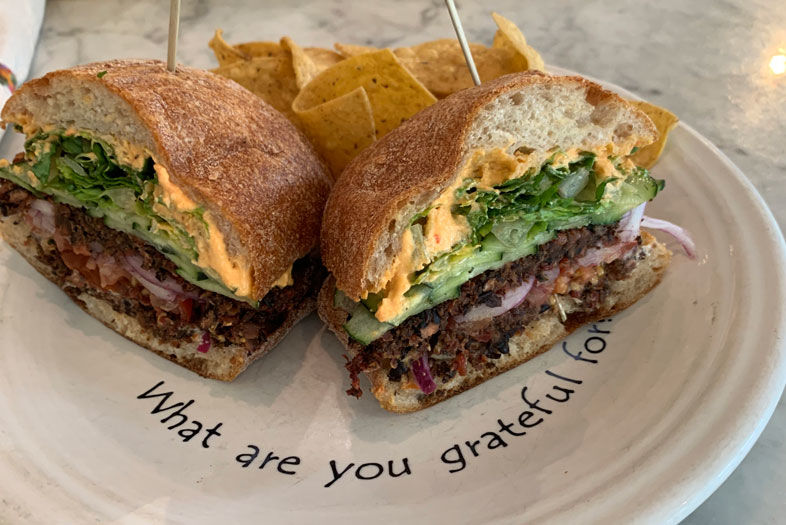
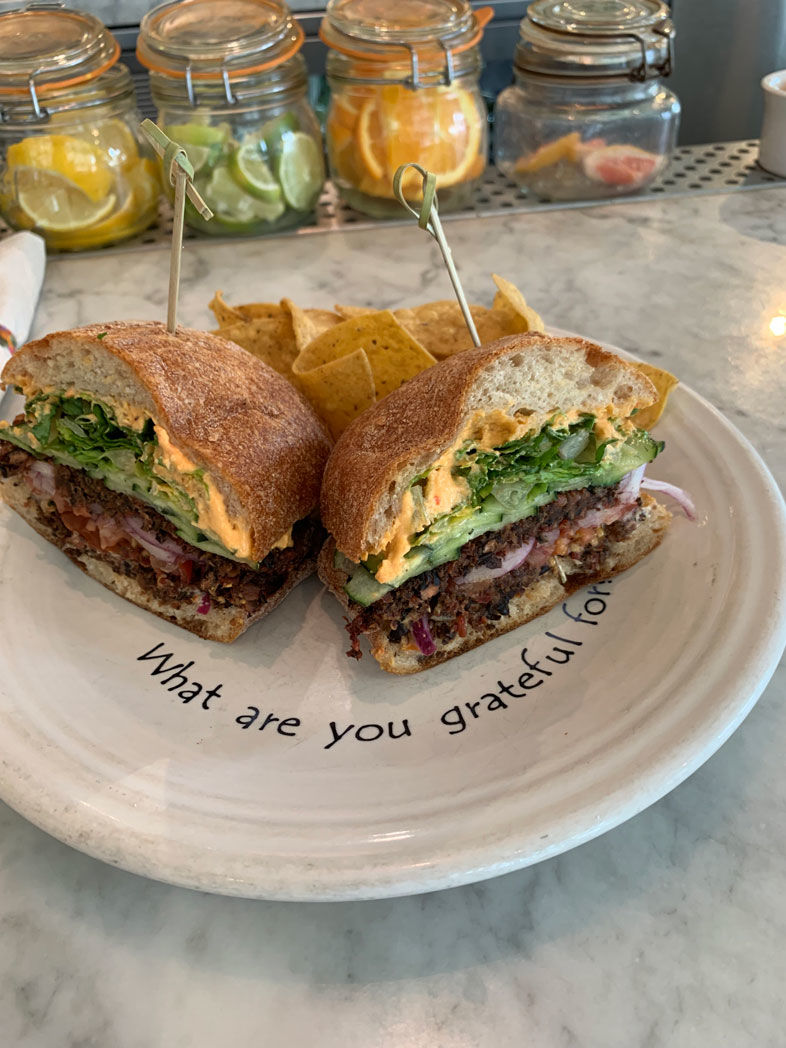
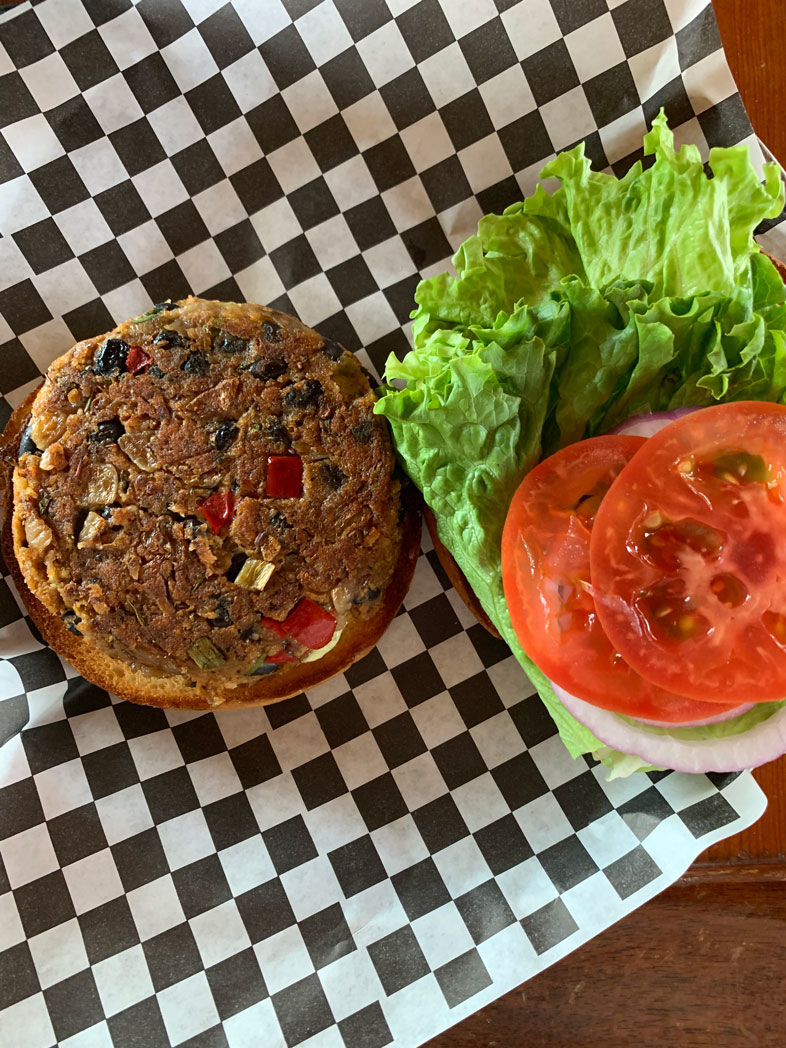
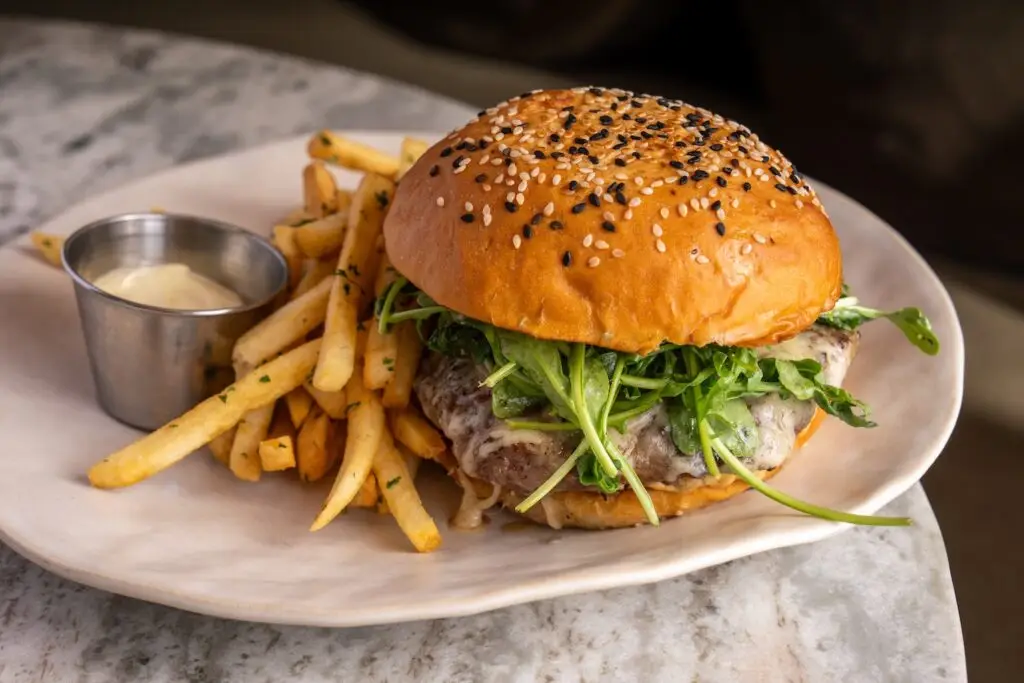
Not even close. The clean, white temple of self-affirmation and plant-based nutrition in Little Italy wins this by a country mile. This depressed me a touch, since Café Gratitude is based in the Bay Area. I wanted a local to win this. But being honest is quite literally my job as a food critic—so I told myself to deal with it. The “Magical Burger” patty is sturdy and delicious, made of roasted beets and mushrooms (shiitakes, criminis), steel cut oats, quinoa, brown rice, black beans (pureed and whole), pumpkin seeds (cooked and raw), flax seeds, barbecue sauce, herbs and salt. The cheese is a spreadable cashew-macadamia cheddar, with tomato, cucumber, lettuce, and house-made chipotle ketchup on a brioche bun. It costs $17. For that price, it better be fantastic. And it is.
This was a shocker. Peace Pies is raw vegan food. That means uncooked. The burger arrives looking like a salad between crackers. It looks beautiful, vibrant, popping with the colors of highly nutritional, organic vegetables and seeds. For that same reason, it also looks awful. Instead of a bun, there are two thin, flat, grayish crackers made of flax seeds and sunflower seeds. Sprouts stick out this way and that, and in the middle is a patty made of sun-dried tomatoes and walnuts. I don’t want to bite this thing. I have flashbacks of the post-hippie ’80s, when neighborhood moms thought they could cook meatless and they were terribly wrong. They’d force us to eat a cuisine best suited for finches and waifish dogs. The “Bliss Burger” instantaneously proves me wrong. It is delicious. The patty tastes of traditional meat spices, and it holds together, topped with a slice of yellow cashew cheese. The flax-sunflower bun actually works perfectly with the ingredients, and holds together as well. There’s a delicious side of cashew ranch. Being uncooked and having birdseed instead of a big, glorious bun, it’s a pretty far stretch from what most people think of as “a burger.”
The way to spot a vegetarian in Ocean Beach is to close your eyes and then open them. They’re everywhere. The counterculture set up camp here in the ’60s because no freeway had direct access to it (Interstate 8 didn’t reach it until 1972), making it a prime place to turn on, tune in, and drop out. They’ve got the only food co-op in San Diego (People’s), which refuses to sell meat. Even the local barbecue joint offers decent veggie burgers (not one, but two) and veggie wings. In other words, sad tofu patties don’t stand a chance in these streets. If your veggie burger can make it here, it can make it anywhere. And Royale’s does. It starts with a black bean and quinoa patty, using flaxseed meal and bread crumbs as a binder that holds it together perfectly. Tucked inside to season it are shallots, garlic, and balsamic vinegar. It has a nice crust like a smashed burger, and the inside avoids being overly dense despite the beans. They place it on a Sadie Rose whole wheat vegan bun (vegan baked goods are no longer underwhelming dry things for the niche crowd), a quick pickle slaw (julienned beets, carrots, cucumber, and jicama), and thinly sliced, tempura-fried eggplant for crunch and vegan mayonnaise flavored with Crystal Louisiana hot sauce and paprika.
South Park’s mainstay is probably my favorite place to hang out among all these joints. And their spicy black bean burger is really solid. Owner Sam Chammas is a longtime supporter of local music (he also owns Live Wire, Whistle Stop, and Krakatoa), and the little-known trivia is that this burger recipe was created by Jay Crane—aka JC 2000, trumpet player for one of San Diego’s favorite bands, Rocket from the Crypt. It’s a thick, substantial patty made of caramelized bell peppers and onions, cilantro, cayenne, green onions, garlic, cumin, salt, pepper, reduced chipotle peppers, ground fennel seed (as a binder), and panko bread crumbs. The cilantro lime sauce is also killer (simply lime, mayo, cilantro, garlic, salt and pepper). And it’s served on a brioche bun, which is basically butter masquerading as bread.
2204 Fern Street.
best veggie burgers in San Diego Burger Lounge
Gary Payne Photography
5. Burger Lounge
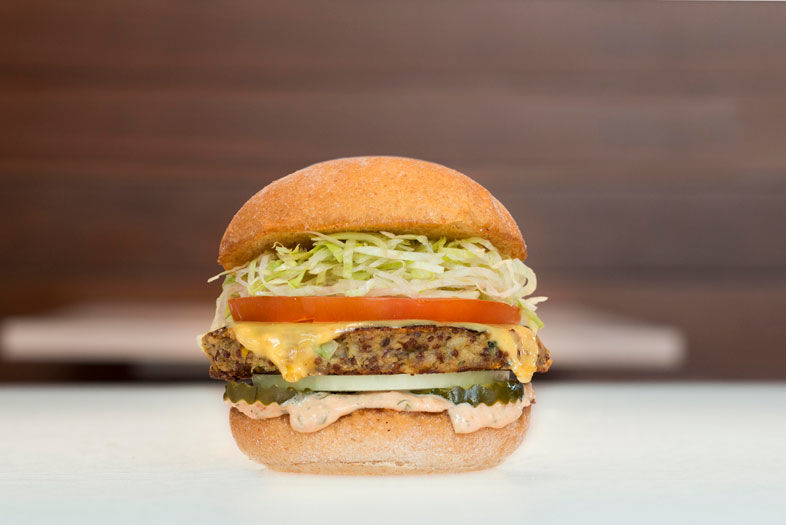
San Diego-based better-burger chain made their name with grass-fed burgers. But their quinoa veggie burger has been a local favorite for years. It wins “Best Fast Food Veggie Burger,” for sure. The patty has organic red quinoa, organic brown rice, zucchini, mushrooms, onions, carrots, corn, garlic, jack cheese, panko breadcrumbs, parsley and chipotles in adobo. The chipotles really amp up the flavor and make it special, then the whole thing is seared in butter for a nice caramelized crust. The only problem with this burger is the consistency—it’s a bit mushy and falls apart. Has all the structural integrity of an amoeba. But tastes great.
Various locations
Food & Drink
AUGUST 8, 2026
First Look: Zuma San Diego
The contemporary Japanese restaurant lands in San Diego as part of its global expansion
For years, writers (even me, I’ll admit) have spilled gallons of ink lauding San Diego’s up-and-coming dining scene. No, we’re not Los Angeles’ little sibling. Yes, we’re more than fish tacos—and have been for a while. We hosted this year’s California Michelin Guide ceremony. Southern California’s first three Michelin-starred restaurant (Addison by William Bradley) calls San Diego home. I think it’s safe to say we’re not on the way—we’ve arrived.
If anyone needs more proof that San Diego has truly made it to the world’s stage, all you need to do is look toward downtown’s newest arrival: Zuma, the globally-acclaimed contemporary Japanese restaurant and izakaya.
Located inside The Guild Hotel, Zuma San Diego is the sixth US outpost of the London-born brand, which now includes restaurants in destinations like Bangkok, Thailand; Ibiza, Spain; and Cannes, France. And there are on the way, including Saint Barth in the Caribbean; Los Cabos, Mexico; and its very first pop-up in Japan this winter.
Each Zuma outpost has its own local flair, but share a few key elements no matter where it is in the world: a large, energetic bar area; an open sushi counter; and Zuma’s signature robata grill.
Rainer Becker and Arjun Waney founded Zuma in Knightsbridge, London, in 2002 after Becker spent six years cooking in Tokyo, connecting Japanese elegance with vibrant design. After opening locations in Miami, New York City, Las Vegas, Boston, and Vail, vice president of operations Nick Fielding says San Diego felt like a natural fit.
Courtesy of Zuma
“There’s something uniquely special about San Diego in terms of energy and culture,” he says. “You’ve got a city that is extremely, extremely well versed in culture, in food, in hospitality, in luxury. It’s a quiet luxury, which is very much in keeping with what we believe in.”
The Guild Hotel makes sense as the host location. The historic Italian Renaissance property dates back to 1924, featuring a European-style courtyard, plush lobby, and an abundance of restored original details, like 1920s-era tilework.
One important note: while guests can access Zuma via the hotel lobby, the restaurant has its own dedicated entrance located on Columbia Street. And if you want the full Zuma experience, that’s where you’ll want to start, promises Fielding.
Courtesy of Zuma
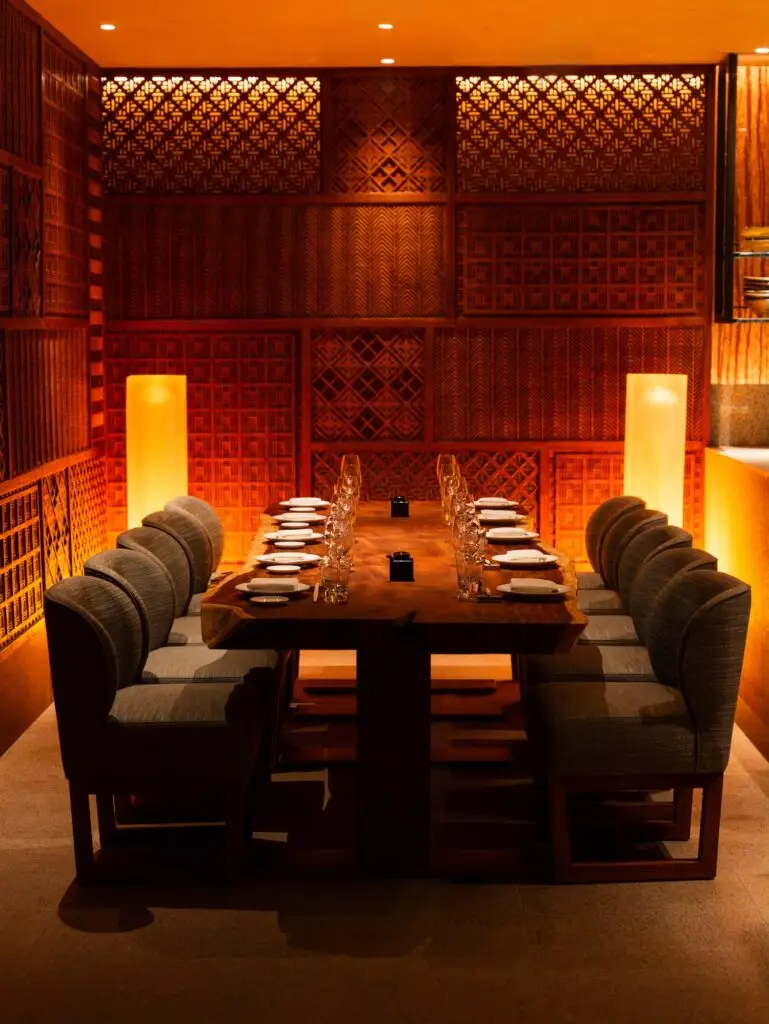
“The entrance is a big part of the arrival experience,” he says. Upon entry, guests walk through an elongated tunnel made from solid teak before arriving at an oversized boulder wall. Each stone has been hand-cut and carved by a team of artisans in Mexico, with a design meant to reflect the rugged California coastline. Next steps guide you across a Japanese garden–style walkway among a Zen pebble garden (inspired in part by the Japanese Friendship Garden in Balboa Park) straight to the indoor-outdoor bar made with hand-cast resin panels designed to emulate the sunset over the ocean.
As for the patio, it’s a jungle out there—literally. Luscious greenery and towering palms drape across the space to create a secret tropical garden framed by hand-carved, uplit teak screens from Indonesia. By design, there’s no question it’s a Zuma restaurant, but the San Diego location’s style rotates around five pillars, according to the restaurant group’s head of design, Lucy Robinson.
Courtesy of Zuma
One: embracing a sense of understated luxury. Two: highlighting the year-round climate with a 50/50 indoor/outdoor split of the space. Three: blending local architectural details (like the botanical garden references) with Japanese aesthetics. Four: creating a bespoke palette of bold pinks, oranges, and yellows inspired by minerals found in coastal stones along the coast. Five: Creating a vibrantly energetic space (a goal for every Zuma location).
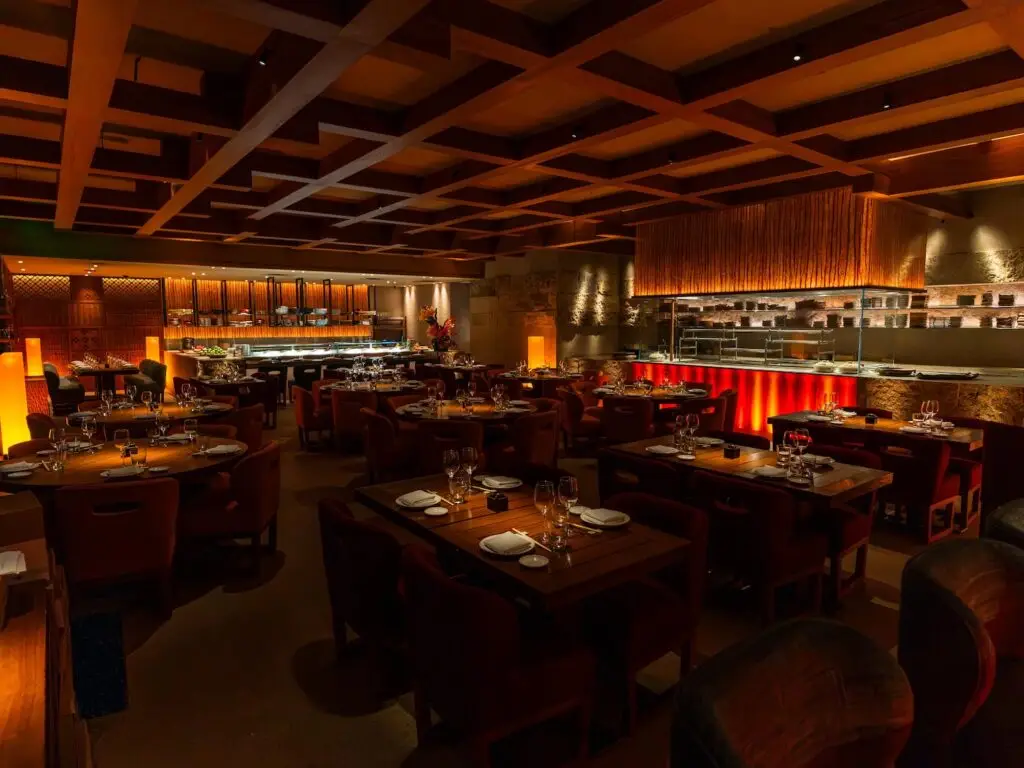
Inside, the robata grills crowns the center of the dining room, featuring a Japanese paper hood and fire element-inspired resin wainscot base to create a striking tower of red, yellow, and orange. “We always try to bring the four elements into our projects, which are fire, water, wind, and earth,” explains Robinson. San Diego also features Zuma’s first ice box centered on the sushi counter. “It’s almost like on an island—a big lit-up ice block, which will be chipped down to make the base of our sushi platters.”
The 1,591-square-foot dining space seats 221 guests, with a natural flow between the two—another nod to the nearby coast. From hand-woven details by an artist in Germany to the granite tiles on the walls, scale, pattern, texture, and color are everywhere.
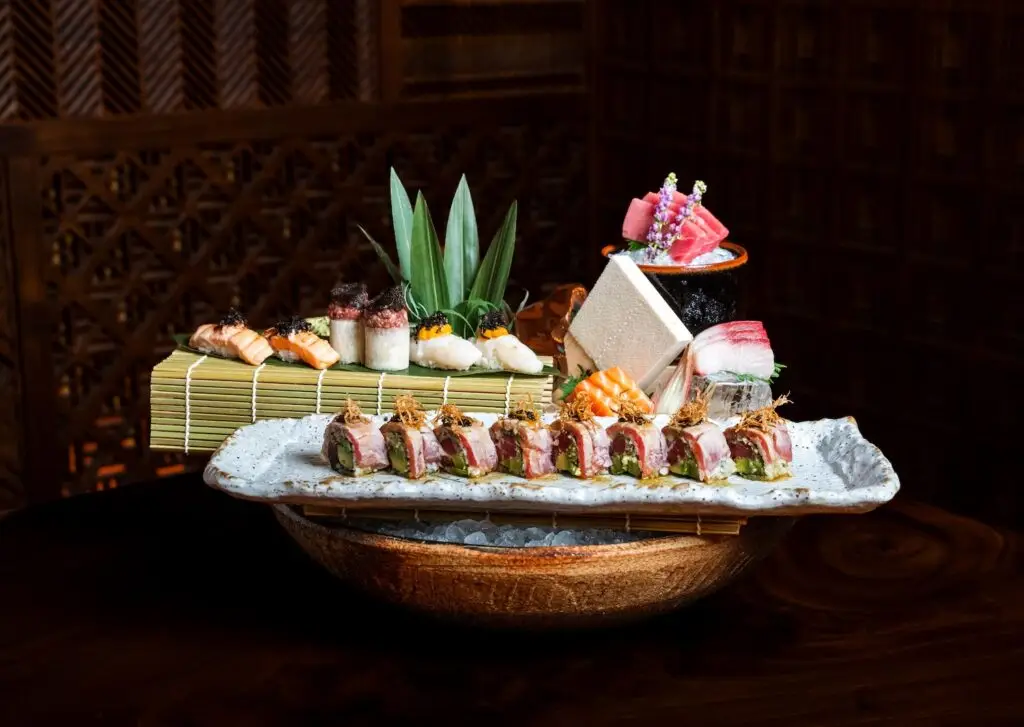
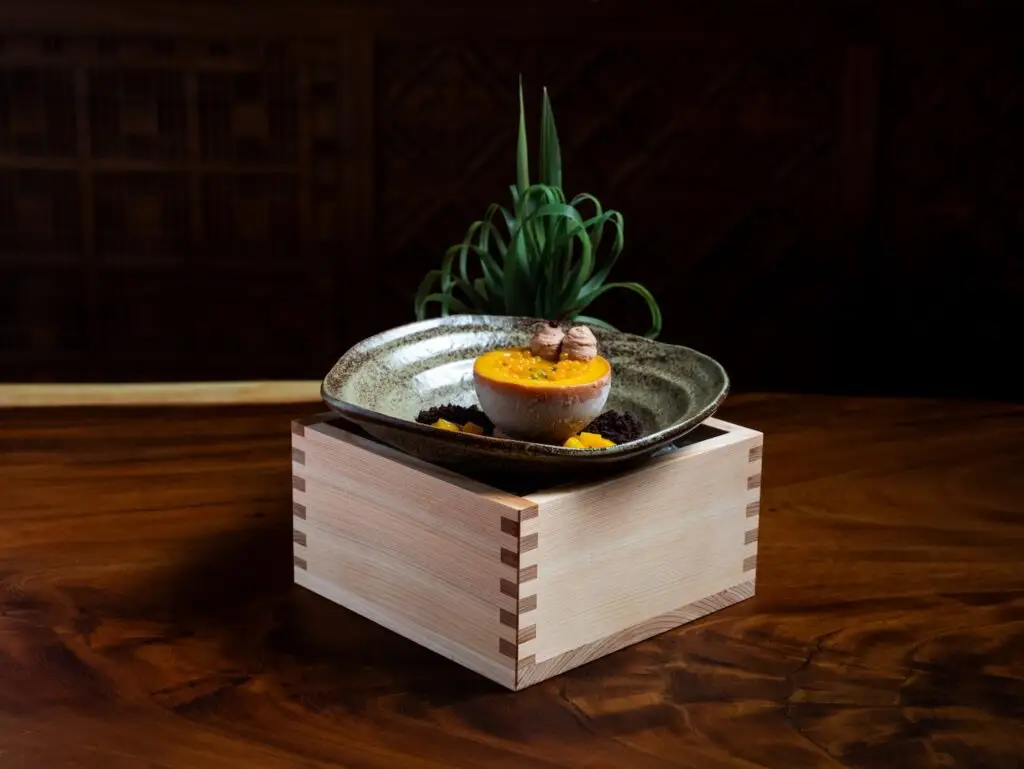
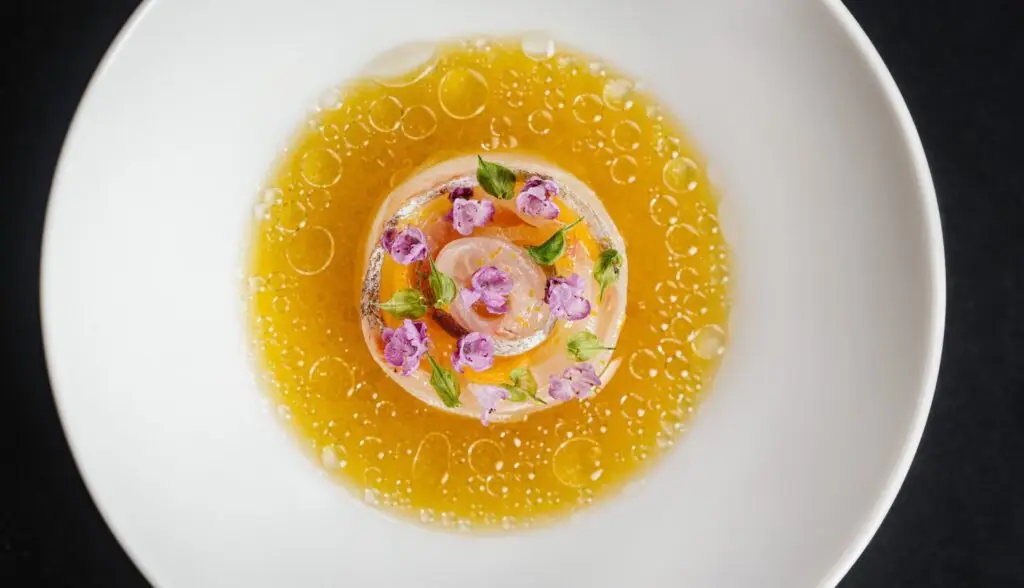
That’s true for the plates as well. Head chef Briant Arciniega’s menu features all Zuma’s big hits—spicy beef tenderloin, saikyo miso-marinated black cod, barley miso-marinated baby chicken, as well as signature sushi and sashimi options, and robata dishes like grilled scallop skewers, beef with shishito pepper and smoked chili soy, jumbo tiger prawn with yuzu pepper, and ribeye with wafu sauce and garlic crisps.
Courtesy of Zuma
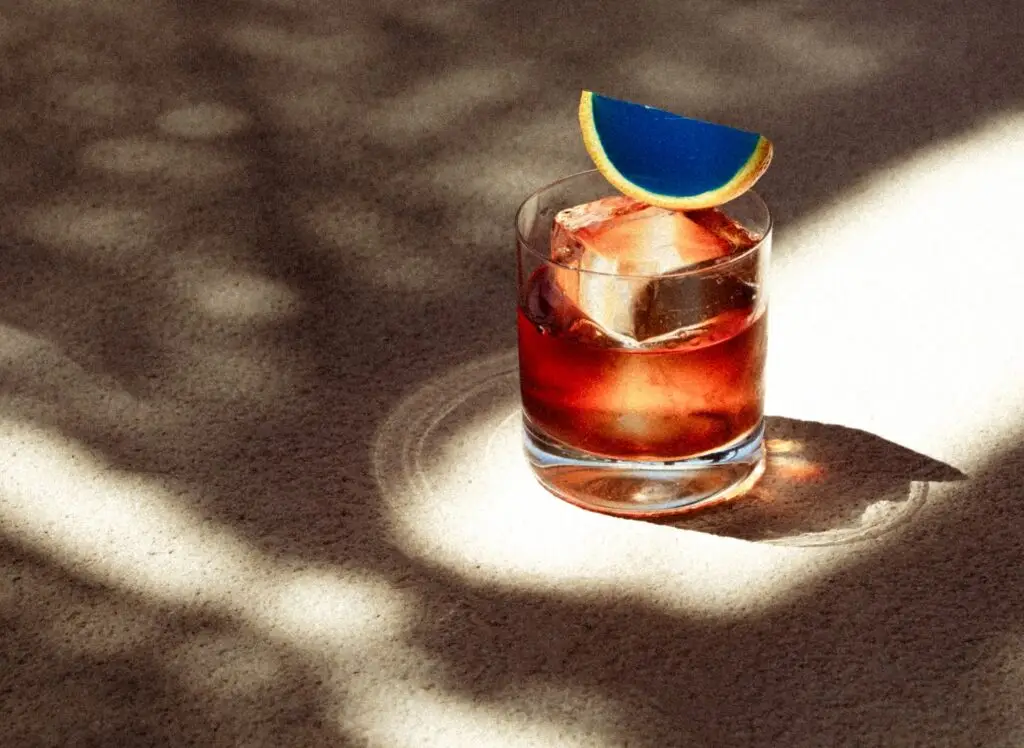
Beverage-wise, the menu follows the same diversity of flavors and price points to offer high-end staples, but remain approachable, says Fielding. Expect concoctions like a Japanese margarita made with Mijenta blanco tequila, mezcal, yuzu, orange, and yuzu koshu, opt for an easy-drinking Sapporo pale lager, ask the lead bartender Eric Howell for a wine recommendation, or explore the sake selection.
At minimum, expect vibes. Robinson says the Zuma team has watched certain San Diego restaurant groups go all-in on experiential, eye-popping, energetically-designed spaces. “We wanted to make sure we stood out when coming into the area,” she says. When you have to compete with things like speakeasies-within-speakeasies and man-made barside beaches of imported Turkish sand, you better bring it.
Zuma San Diego opens at The Guild Hotel (500 West Broadway) on August 10. Initial operating hours are seven days a week for dinner service. Reservations are now open.
Beth Demmon is an award-winning writer and podcaster whose work regularly appears in national outlets and San Diego Magazine. Her first book, The Beer Lover's Guide to Cider, is now available. Find out more on bethdemmon.com.
William Wordsworth’s 1807 poem “By The Sea” paints a glorious picture of a coastal sunset, elegantly describing the serenity that can only be found upon an ocean’s sandy shores.
It is a beauteous evening, calm and free, The holy time is quiet as a Nun Breathless with adoration; the broad sun Is sinking down in its tranquility
And as a San Diegan, I often have to pinch myself. We’re spoiled by this breathtaking beauty each day. Come August 12, Coronado will have a new place from which to soak in the Pacific’s peacefulness: By The Sea. Created by the team at Black Swan Hospitality (Nolita Hall), Doug and Lara Hamm brought to life a Mediterranean-meets-San Diego oasis influenced by their travels through the French Riviera, Italy’s Amalfi Coast, and the Greek Isles. (It’s not the first time the couple drew inspiration from the Mediterranean coast—their wedding took place on the island of Capri, their daughter’s namesake.)
Opening the 6,500-square-foot, second-story restaurant took longer than expected. First announced three years ago, the Hamms worked with Loren Wynn and Mellissa Ramos—their own in-house design studio (Creative House)—alongside Tecture (Lucien, Anigma Encinitas, Bivouac Ciderworks, George’s at the Cove) to create a space that feels more like a coastal villa than spartan dining room.
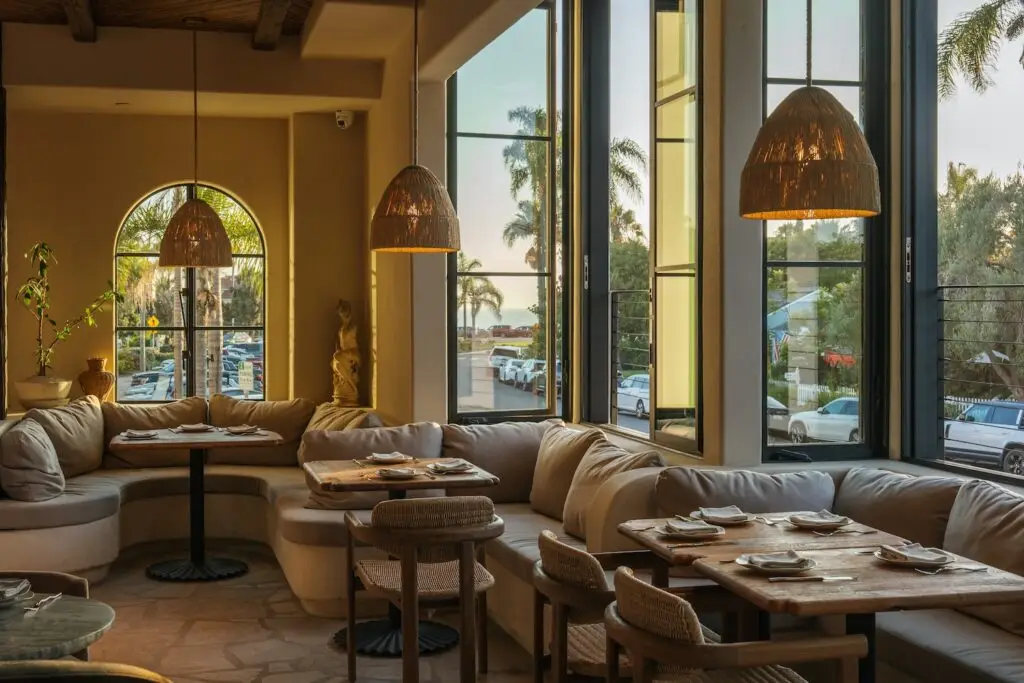
Guests enter via a cobblestone staircase to a light-drenched dining room and outdoor patio shaded by a eucalyptus wood trellis. Windows dot nearly every wall below the high ceiling of hand-stained willow reed thatching and exposed wood beams. “We have a beautiful lounge area with some textures such as velvet and marble,” says Lara. Everywhere feels organic, with materials like white oak and Italian limestone flowing throughout the open concept and semi-private dining areas.
Photo Credit: Kimberly Motos
The curvaceous travertine bar seats 24, while the 11 outdoor tables and 44 indoor tables and banquettes hold an additional 254 guests. It’s not quite oceanfront, but the peekaboo water view and floor-to-ceiling glass pocket doors allow the nearby sea breeze to drift across the dining room. (And if you’re the type of perpetually cold person once the mercury falls below 72, never fear—the outdoor fireplace and built-in heaters will keep you comfortable all year round.)
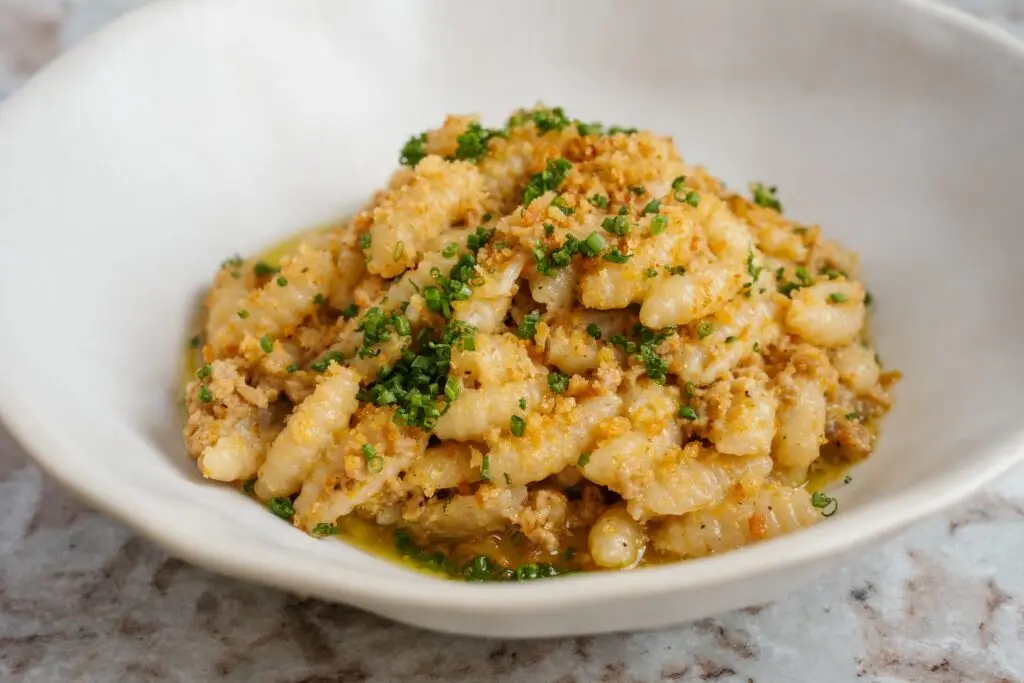
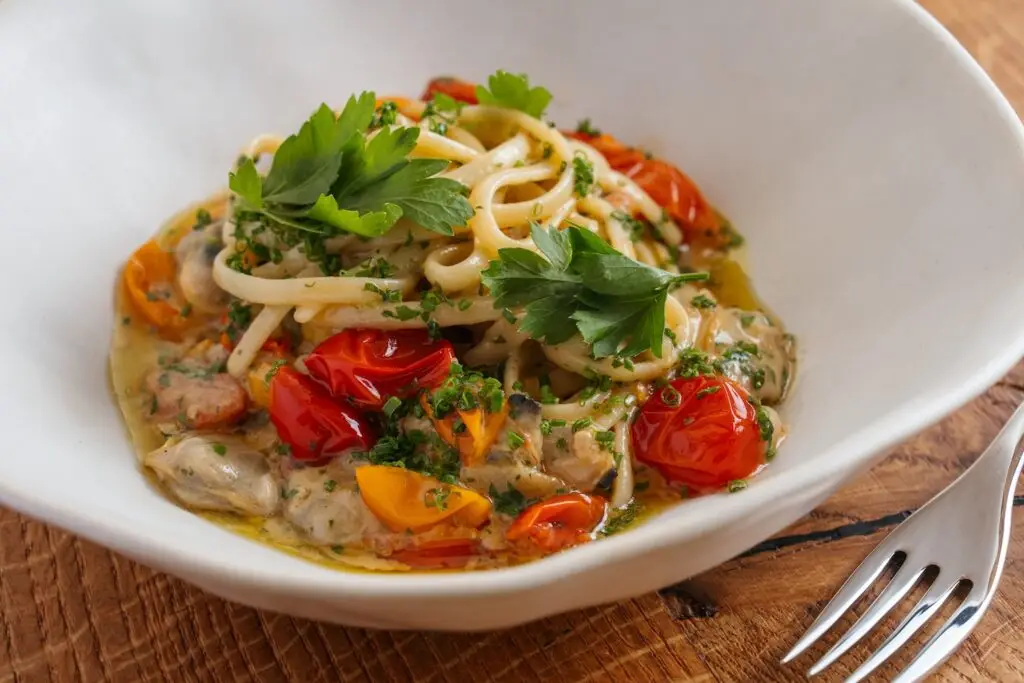
With a name like By The Sea, one can safely assume seafood features heavily on the menu. Executive chef Alex Carpio utilizes plenty of local produce and catches, with starters like scallop crudo, tuna tartare, octopus with crispy potatoes, and calamari fritti. The rest of the menu is broken into salads, vegetables, pastas, and mains, with standouts like a beet salad with feta, kale, orange, and charred lemon vinaigrette; Moroccan-spiced carrots served with lemon yogurt, mint, and parsley; classic linguine and clams with garlic, tomato, and parsley; a lamb cavatelli with fennel, chives, and breadcrumbs; grilled branzino with tahini and Castelvetrano olive tapenade; grilled half chicken with celery, cucumber, and a Calabrian chile vinaigrette; steak frites; and pan seared scallops with pickled peppers, basil, dill, and aioli.
Photo Credit: Kimberly Motos
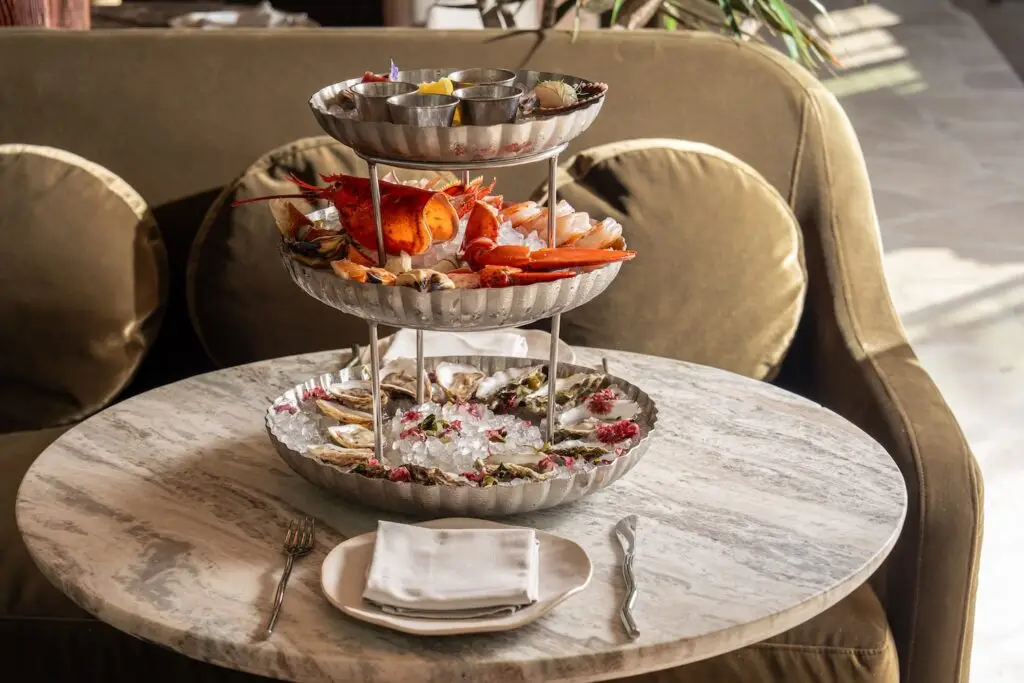
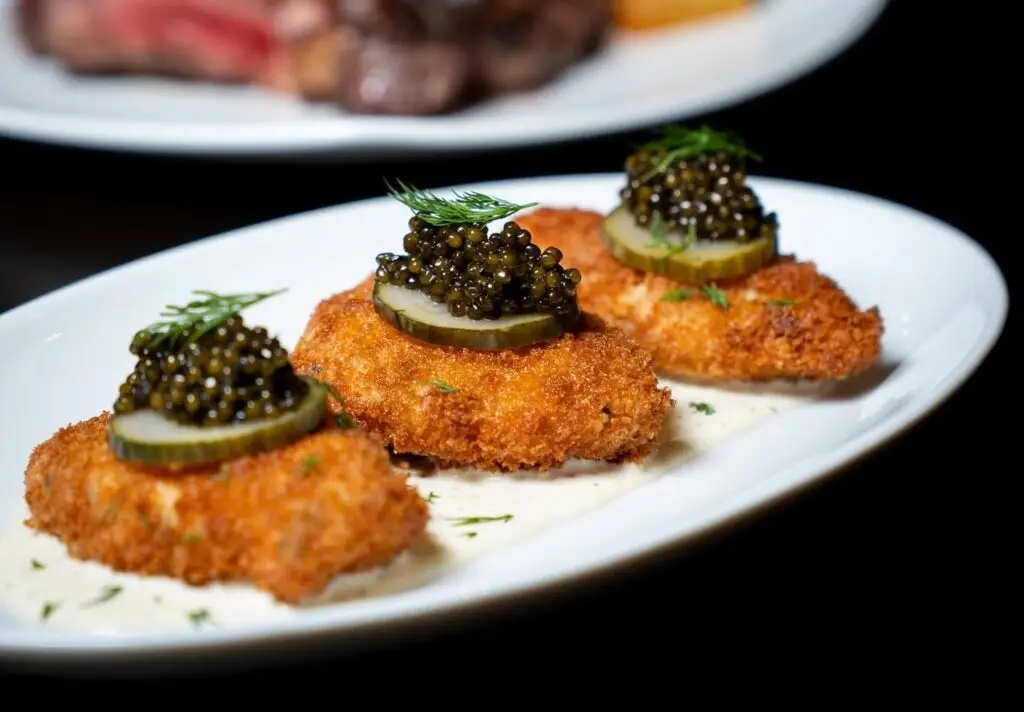
Lara says there was one non-negotiable item for the menu: a dramatic seafood tower. Built for 2-4 guests or 4-6, each option comes with a collection of fresh oysters, shrimp, tuna tartare, scallop crudo, and caviar, with lobster and crab claws available on the larger size.
And if you’re curious about exploring the world of caviar, you’re in luck. Doug says they’re building a tasting menu of different spirits to pair with various caviars under bar manager Andrew Phillips’ purview.
Photo Credit: Kimberly Motos
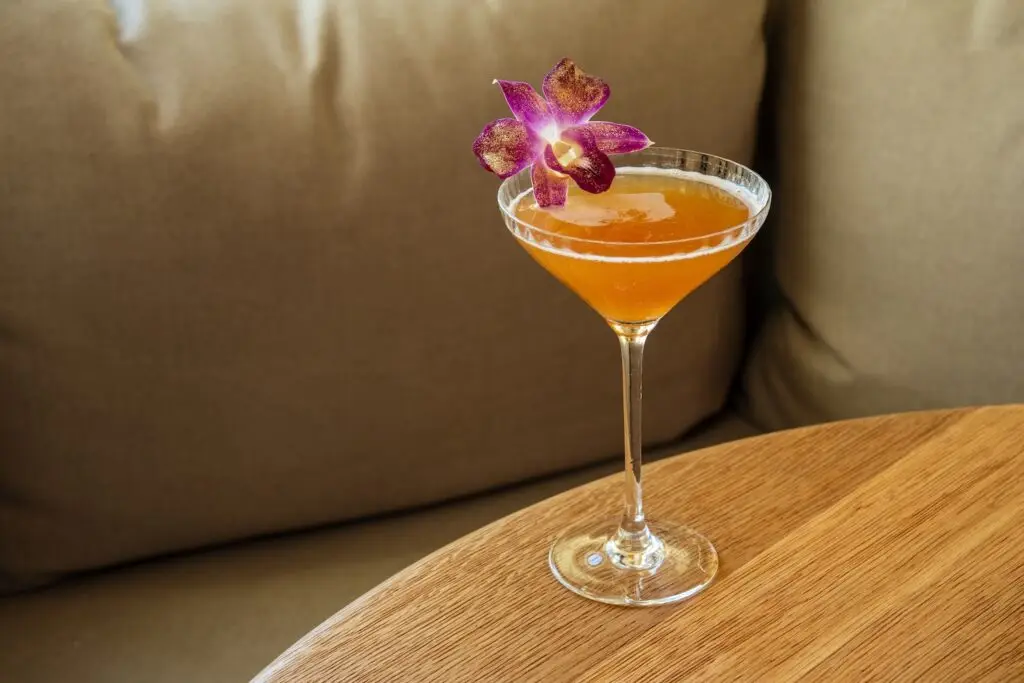
Phillips’ drinks menu uses housemade syrups and fresh-squeezed juices, encapsulating both classic cocktails as well as signature inventions like All That Glitters with Cazadores Reposado, Xila Licor de Agave, Chinola Passionfruit liqueur, vanilla, and lime; Sea Glass with Dewar’s scotch, Haku yuzu vodka, green tea, vanilla, lemongrass, apple, lime, and clarified milk; and The Mariner with Appleton Signature & Reserve Rums, Ron Zacapa 23, Chinola Passionfruit, Aperol, pineapple, lemon and orgeat. Wine pairings are curated by the directors of operations Daniela DiGregorio and Gina Martinez, spotlighting small, organic producers from around the world as well as a selection of high-end Champagnes.
Lara describes By The Sea as “a place to linger together,” with director of hospitality and general manager Heather Roberto overseeing every aspect of the low-key feeling of the space. The restaurant may be European-inspired, but the Hamms say it’s wholly Coronado.
The Hamms moved to the Crown City at the end of the pandemic after years in bustling Little Italy. “Within a few weeks of moving here, we felt the magic,” says Doug. Now, they get to be a part of building it up—CH Projects’ Baby Grand hotel is across the street and the Hotel del Coronado sits just down the block. “We’re happy to be part of the scene, and we hope it continues to grow,” he says. “That’s what makes Coronado so special.”
By The Sea opens August 12 at 1300 Orange Avenue, Coronado. Initial hours of operation are Wednesday and Thursday, 4 p.m. to 11 p.m.; Friday and Saturday, 4 p.m. to midnight; Sunday and Monday, 4 p.m. to 11 p.m.; closed Tuesday. Weekend brunch and extended hours to come soon. (Subject to change.)
Beth Demmon is an award-winning writer and podcaster whose work regularly appears in national outlets and San Diego Magazine. Her first book, The Beer Lover's Guide to Cider, is now available. Find out more on bethdemmon.com.
From celebrity pickleball tournaments to intimate dinner parties with your favorite Food Network chefs, here are all of the can’t-miss events going on Sept 30–Oct 4
Play is underrated. Somewhere along the way, someone decided it was something we should outgrow. That you A good song comes on, and they dance. A game appears, and they’re in. Someone hands them a melting ice cream cone, and somehow it’s the best part of the day.
Adults tend to need a reason. Or maybe just the right setting.
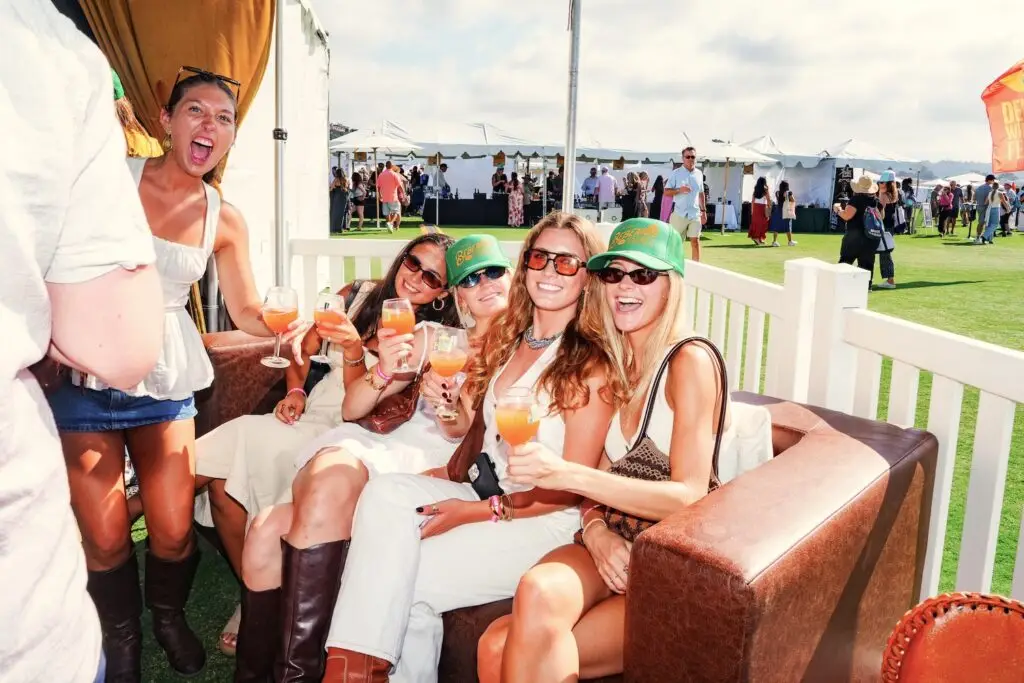
That’s part of what makes the Del Mar Wine & Food Festival feel different. Yes, the week revolves around food and wine, with celebrated chefs, winemakers, and restaurants drawing crowds from across the region. But what lingers afterward is the conversations that stretch a little longer than expected, the strangers who become dinner companions, the live music that pulls people out of their seats, and the rare chance to spend a few hours simply enjoying yourself without much of an agenda.
The Grand Tasting is the festival’s centerpiece, bringing thousands of guests together over two days for hundreds of bites and pours. But some of the week’s most memorable experiences happen on a smaller scale. In the days leading up to the main event, intimate dinners, chef collaborations, and guided tastings create opportunities for guests to interact more closely with the people behind the food and wine and with each other.
Signature San Diego Opening Night Party at Monarch Ocean Pub
Start festival week the San Diego way: ocean views, Baja-inspired bites, and a drink in hand as the sun goes down. The Signature San Diego Opening Night Party at Monarch Ocean Pub sets the tone for the week ahead with a walk-around tasting experience celebrating the flavors that make this city impossible to replicate. It’s an evening of fresh coastal cuisine, bold Mexican flavors, Baja seafood, and plenty of local favorites—all served against one of Del Mar’s most iconic backdrops. Consider it your first official toast to the weekend ahead…
Celebrity Pickleball Tournament Presented by Justin Vineyards & Winery
Wine and competition make an unexpectedly perfect pair. You can join Drew Brees and celebrity players at Barnes Tennis Center for a pickleball tournament benefiting Feeding San Diego, where the sidelines are just as exciting as the court. Grab a paddle, cheer from the sidelines, or simply enjoy a glass of wine while the action unfolds. The day blends friendly competition with an all-inclusive tasting experience.
Since year one, Del Mar Wine & Food Festival has partnered with Feeding San Diego to raise $100,000 in support of the organization’s mission to fight hunger across the region. Every serve, sip, and bite helps give back to the community that makes this festival possible.
Remember that pickleball paddle you swore you’d use? Time to put it to work.
Barnes Tennis Center | 4490 W Point Loma Blvd, San Diego, CA 92107
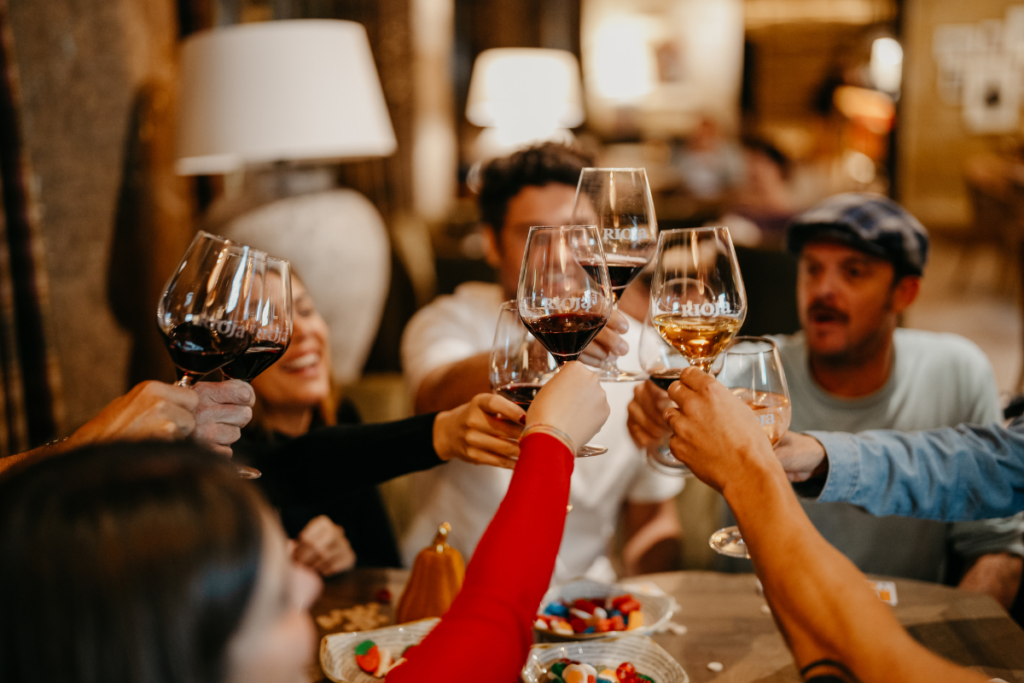
This is essentially a passport to Spain with no airport required. Set among the lush grounds of Rancho Valencia, Rioja Uncorked celebrates one of Spain’s most iconic wine regions with an evening of exceptional pours and thoughtfully paired bites. Guests will sip their way through Rioja wines while enjoying a menu featuring everything from Hiramasa crudo and uni toast to duck rillette, birria mini tacos, Cardiff Crack tri-tip sandwiches, and a sweet finale from Karen Krasne of Extraordinary Desserts (date night plans, solved).
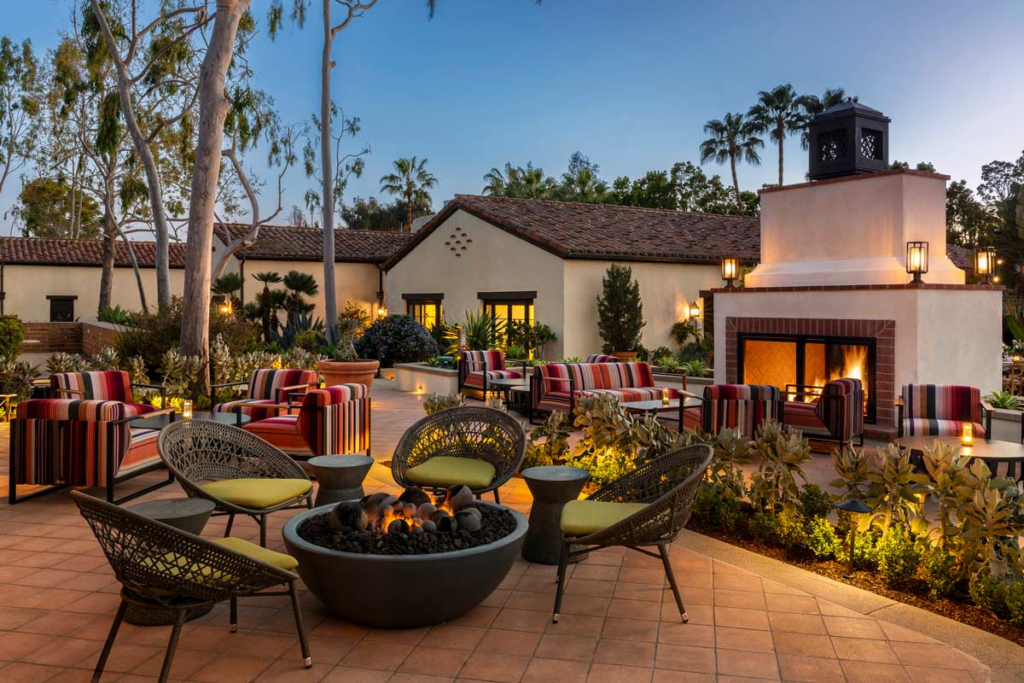
Rancho Valencia | 5921 Valencia Cir, Rancho Santa Fe
Justin Wine Dinner with Chefs Kaitlyn Weber, Buddha Lo & Jackson Kalb
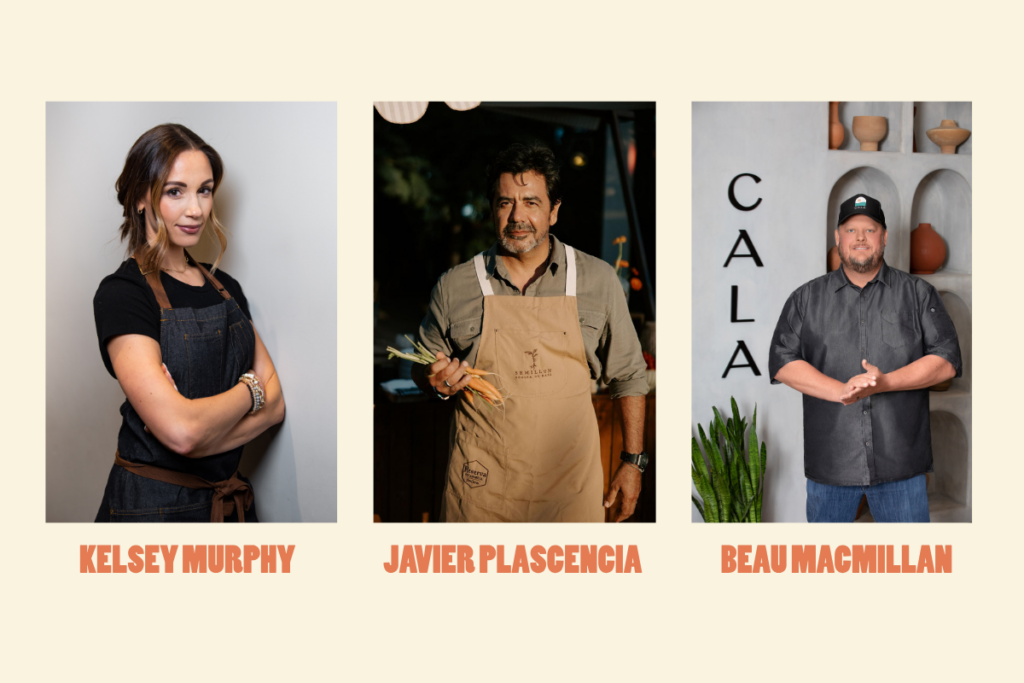
Justin Wine Dinner sounds simple: three chefs, one unforgettable table. But chefs Kaitlyn Weber (Estancia La Jolla), Buddha Lo (Top Chef), and Jackson Kalb (Top Chef) are taking you on a one-night-only culinary ride where three styles collide over a multi-course menu paired with exceptional pours from Justin Vineyards & Winery. Set in Estancia’s coastal estate, the evening unfolds course by course with pairings from Justin wines as each chef brings their own style to a menu focused on craft, connection, and a bit of friendly culinary overlap. It’s the kind of culinary conversation that only happens when very, very talented people cook together.
Estancia – Olive Lawn | 9700 N Torrey Pines Road, La Jolla, California
Isabella Dallas is a freelance writer for San Diego Magazine and the Arts and Culture Editor at The Daily Aztec in her final year at San Diego State University. She previously worked as an editorial intern for SDM, but when she’s not writing, you can find her trying the best coffee spots in SD, devouring the latest rom-coms, and indulging in anything and everything pop culture.
Renewable energy companies building hundreds of power plants. Biotech startups using artificial intelligence to create personalized medicine for children with rare diseases. Hospitality companies quietly powering thousands of local events. Consumer brands growing from beach-town startups into national businesses. These are the kinds of companies driving San Diego’s economy today, and the businesses recognized at this year’s San Diego Business Impact Awards offer a snapshot of where the region is headed.
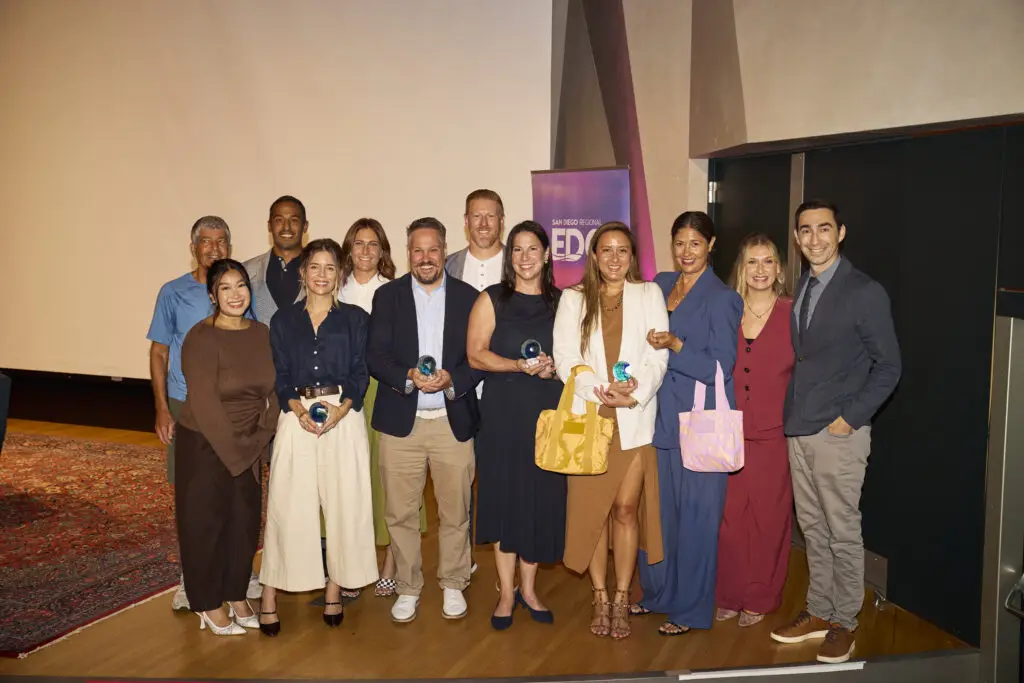
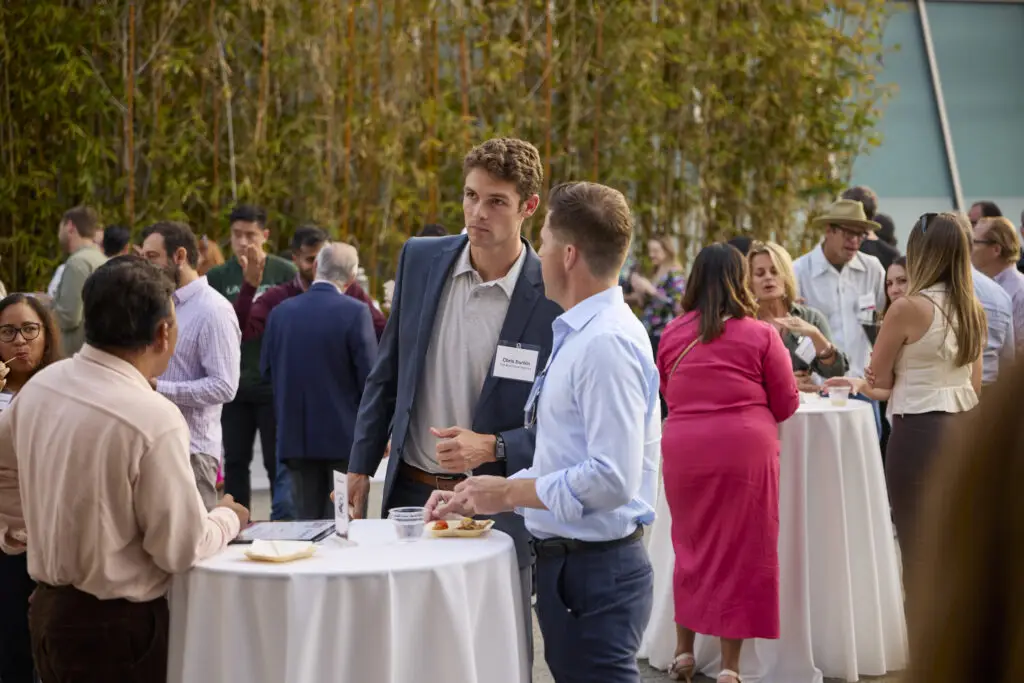
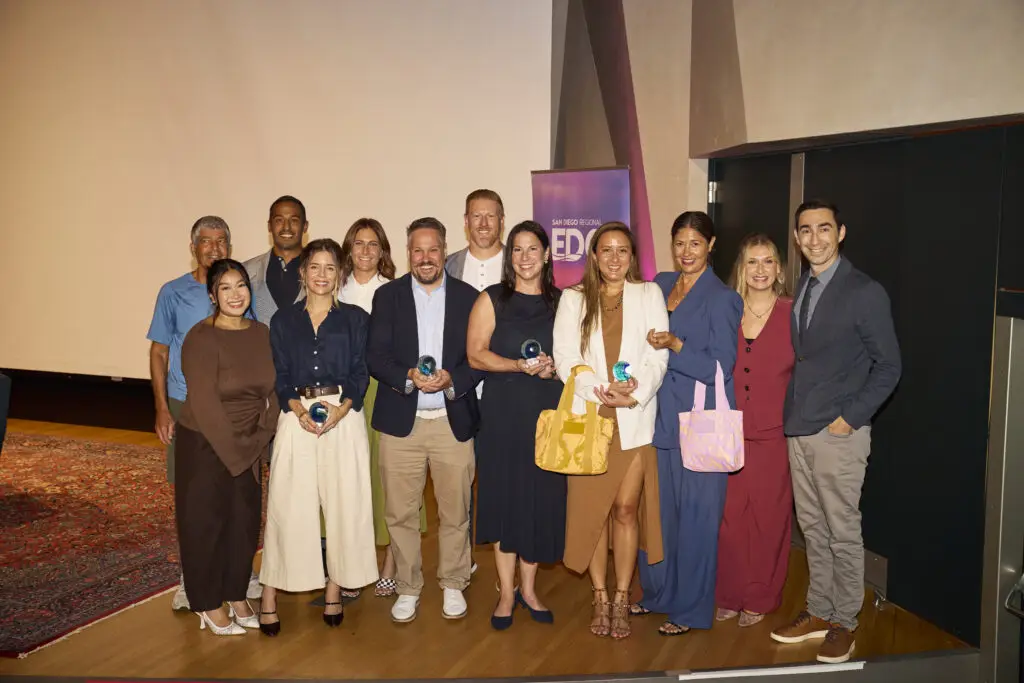
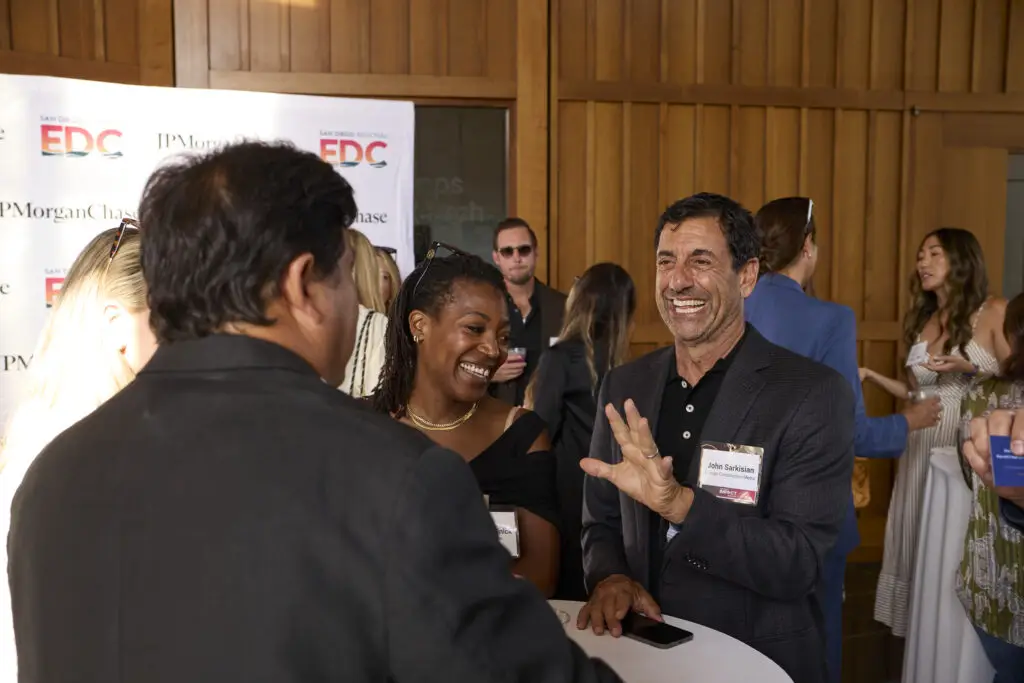
Hosted July 23 by San Diego Regional Economic Development Corporation (EDC) and JPMorganChase, the second annual awards event honored four local companies for innovation, growth, and economic impact. More than 100 nominations from San Diego’s middle-market businesses were reviewed by a 10-person judging committee, with winners selected across four categories: startup, early-stage innovator, rising star, and established heavyweight.
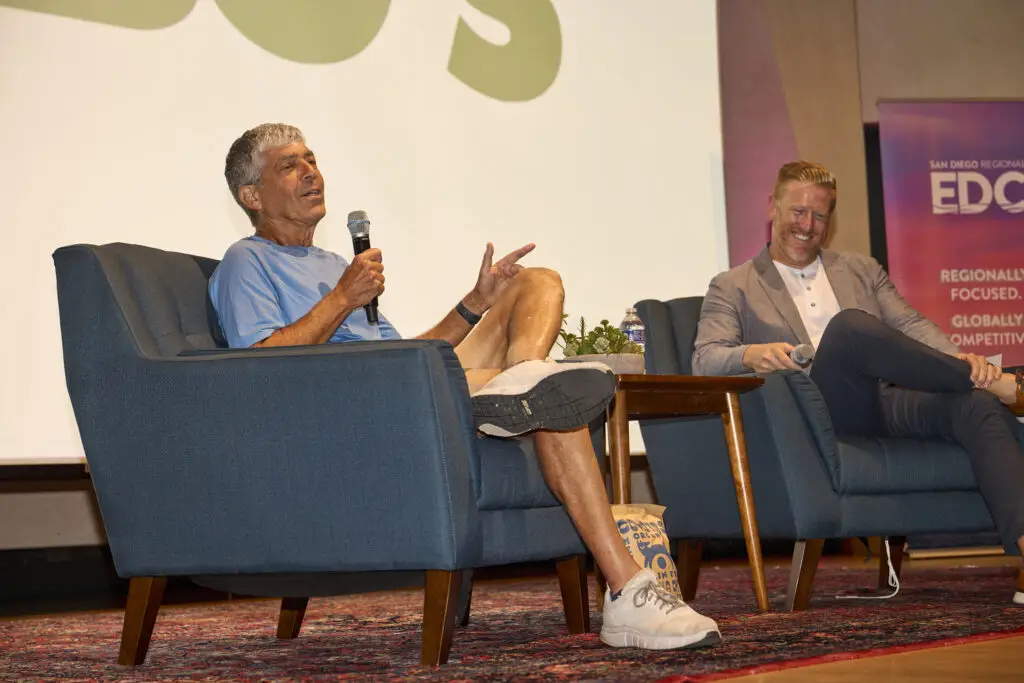
Two-time honoree Jimbo Someck, founder of Jimbo’s organic grocery stores, also joined the event for a fireside chat on buying local, supporting emerging brands, and giving back to the community.
“San Diego’s strength comes from its makers and builders—the resilient people who endure great risks and overcome obstacles to build and scale a company,” says Aaron Ryan, San Diego Region Manager and Middle Market Banking at JPMorganChase & Co. “These awards aren’t just recognition; they spotlight the talent, grit, and innovation shaping our region’s future. By celebrating those who create and build, we foster connections and fuel the growth that keeps San Diego thriving.”
Photo Credit: Matt Furman
Building the Infrastructure Behind Clean Energy
Heavyweight honoree SOLV Energy has grown alongside the country’s rapid investment in renewable power. “It’s an exciting time for SOLV Energy as we are experiencing significant growth,” says CEO George Hershman. “The business has doubled over the last year and has almost double-digit growth since its inception.”
The Rancho Bernardo-based company designs, builds, operates, and maintains utility-scale solar and energy storage facilities. Since its founding in 2008, SOLV Energy has built more than 500 power plants.
Growth has translated directly into hiring. About 200 employees work from the company’s local headquarters, including roughly 20 interns. “Our intern program is a big part of the way that we grow our workforce,” Hershman says. “Last year, 43 percent of our interns became full-time employees. We believe San Diego is a great community to build and grow a high-tech infrastructure and technology company because of the incredible workforce—the ability to attract top talent and draw from world-class universities.”
Photo Credit: Matt Furman
Developing Medicine One Patient at a Time
Startup honoree La Jolla Labs is tackling one of medicine’s biggest challenges by developing personalized RNA therapeutics for patients with rare diseases—many of them children with neurological disorders like ALS. Using proprietary artificial intelligence and machine learning tools, the biotech company develops treatments tailored to each patient’s specific genetic mutation.
CEO Tamar Grossman says the recognition reflects how far the company has come despite limited resources. “We’re honored to be recognized for our ability to change and save patients’ lives and turn our lean startup into a clinical company with very minimal resources,” she says.
Grossman credits San Diego’s concentration of research institutions—including UC San Diego, the Salk Institute, and Scripps Research—with creating a pipeline of talent and collaboration. “San Diego is one of the world-leading centers for technology, genomics, and RNA therapeutics,” she says. “We have over 30 RNA therapeutics companies here, and we support each other and help with anything related to drug discovery.”
She says that collaborative spirit extends beyond formal partnerships. “You can walk around Torrey Pines, go into a café, and find colleagues from the industry and have an ad hoc conversation,” Grossman says. “That’s something very unique to San Diego.”
While Snake Oil Venue Company may not be a household name, chances are many San Diegans have attended one of its events. The early-stage innovator honoree has expanded from beverage catering and mixology consulting into venue management, operating Julep Venue in Mission Hills, Bramble Bay Venue in Imperial Beach, Vesper Venue, the Chapel at Liberty Station, and five outdoor venues throughout Liberty Station—more than 500,000 square feet of event space altogether.
“We do a lot of launch parties for corporations and new products,” says CEO Mike Esposito. “I really like working on the entrepreneur side of things, where new businesses are entering the San Diego market and looking to make a splash.”
Snake Oil has executed more than 16,000 events, employed more than 1,000 people, and partnered with more than 900 local vendors, including caterers, florists, photographers, entertainers, and other hospitality businesses. The company also works with many of San Diego’s nonprofits, museums, and cultural institutions. “We get to celebrate people’s most important moments,” Esposito says. “Whether that’s a wedding, celebration of life, or quinceañera, we’re fortunate to be involved in the community in so many different ways.”
Photo Credit: Matt Furman
Growing a Beach-Town Brand into a National Business
Rising star honoree ALOHA Collection is proof that a simple idea can grow into a thriving company. Founded by two roommates who wanted a better way to carry wet swimsuits after a day at the beach, the lifestyle brand has grown into a business while maintaining strong year-over-year growth.
Now headquartered in Carlsbad, ALOHA Collection employs more than 100 people and operates its California flagship store in Encinitas, which is slated for a remodel. With roots in Hawaii, the company is known for its lightweight, splash-proof travel bags that have become a familiar sight on beaches in San Diego and beyond.
“‘Aloha’ is part of our name, but it’s also how we move through the world,” says CEO Lynna Barnard. “It’s how we show up for people, the way we travel, the way we give back.” Since day one, the company has maintained a 5 percent giveback to Hawaii conservation efforts, contributing millions of dollars over the years.
“I think what’s so inspiring about ALOHA Collection, and the founders in particular, is when you dream big, those dreams can come true when you work hard and trust in the universe,” Barnard says. “It’s inspiring to be a role model for other people wanting to start businesses from humble beginnings. Start small and watch it grow.”
Together, businesses like these form a cornerstone of San Diego’s economy—not only through the jobs and revenue they generate—but through the local workers they hire, vendors they support, and investments they make in the region. Their growth doesn’t happen in isolation; it ripples outward, strengthening the broader business community and the people who call San Diego home.
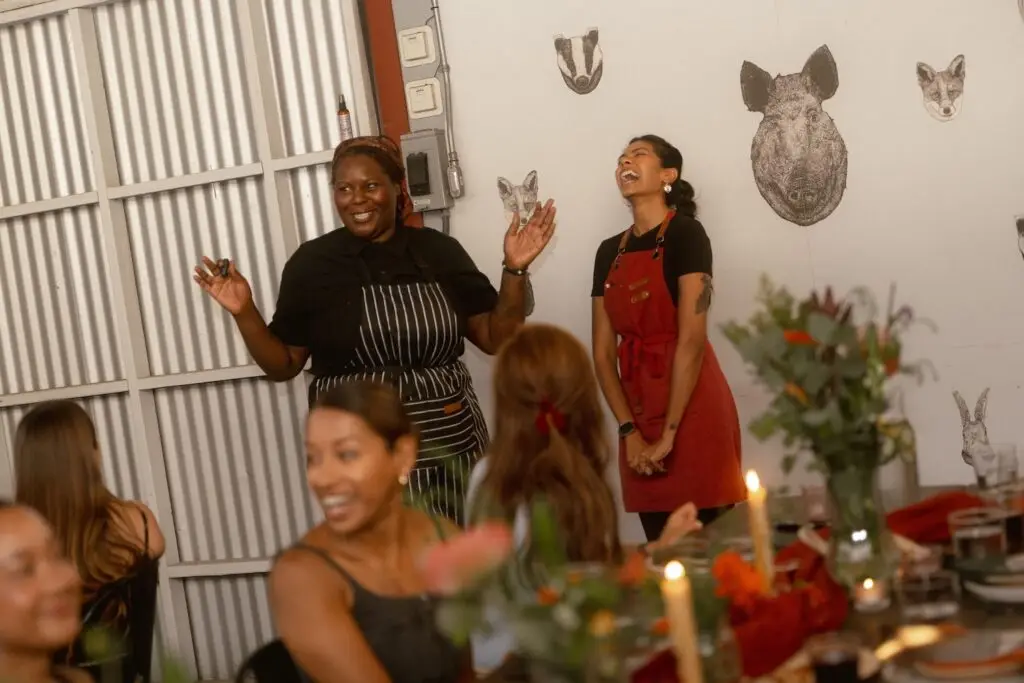
“Are you sure this isn’t a dating thing?” asked my husband as I headed out the door. Fair question, considering we’ve been happily, monogamously married for 15 years. But where I was headed—a Dinner With Strangers Co. collaborative dinner with Rasa Table—is a curated culinary experience emphasizing conversation and encouraging connection with whoever the universe decides to seat at your table.
Okay, I can see how that might sound like a blind date-type of matchmaking app. While I happen to love dining solo or with friends and loved ones, the idea of getting trapped at a table with a bunch of randos rockets me past my comfort zone somewhere in the realm of Neptune. Still, I’m nothing if not motivated by a good meal, and the duo’s Nigerian-meets-Malaysian collaborative menu this July at Millport in Imperial Beach ranged from the semi-familiar (savory jollof rice) to the completely new-to-me, like egusi, a rich West African stew made from melon seeds, palm wine, spices, assorted greens, and a mix of meats like beef and crayfish, along with a dollop of starch like yams or cassava to mop up every absolutely spectacular morsel.
(Quick note: if anyone has a rec on where to get good egusi in San Diego, please let me know immediately.)
Founder/chef Onyinyechukwu “Onyi” Akpa launched Dinner With Strangers in Houston before returning to her hometown of San Diego a little over a year ago. Not only did she see a widespread need for opportunities to meet new people, she says San Diego lacks some diverse cuisines. “One thing that made me move back is the actual lack of West African food,” she points out.
As a first-generation Nigerian-American and San Diego native, Akpa draws a lot of influence from Mexican, West African, and Black American culinary traditions, all of which were on full display alongside Vanishaa Doshi’s Southeast Asian fare from Rasa Table. (Think slow-braised oxtail meets coconut curry.)
It felt surprisingly easy to chit-chat with my fellow diners, most (but not all) of which came alone. Turns out when everyone is there to meet people, there’s no such thing as a cold shoulder. Long before the end of the night, the woman I ended up sitting next to captivated me with pictures of her recent travels to the brutalist Casa To boutique hotel in Puerto Escondido, Mexico and the ruins of La Recolección convent and church in Antigua, Guatemala.
We live our lives largely online, directed by the whims of The Invisible Algorithm and paid ads. A 2023 U.S. Surgeon General report categorizes loneliness and isolation as an epidemic, so cultivating opportunities for human connection has spawned a movement of supper clubs like these, each designed around the idea of making friends rather than networking opportunities or blind dates.
For some, there’s also an element of surprise. Local pop-up Cow by Bear is a 20-person, five-course dinner party series every Friday and Saturday at a secret location only revealed the day before. Another is The Blank Table, a pop-up dining series by Alexandria Ott and chef Frederick Keller centered around “cuisine, cocktails, and creativity,” which takes place six times a year. Details like the location and menu don’t get announced until the night before, and Ott says she tends to select venues that feel unexpected or off-the-beaten-path.
That’s how I found myself wandering around the lower floor of the Institute of Contemporary Art in Balboa Park, checking out Cat Gunn’s installation while sipping a cocktail created by Kiku Room and munching on an amuse bouche by chef Kassandra De Leon of Two Ducks. I cheated a tiny bit and brought a friend, but did manage to make small talk with some other attendees in the spirit of socializing with strangers. None of us knew what we were eating until we arrived, so there’s a level of trust required—not unlike prix fixe or omakase menus.
Rising demand for experiential dining alongside San Diego’s creative renaissance make it the perfect time to embrace these sorts of low-risk, high-reward types of endeavors. It’s less pressure than a blind date—everyone’s already paid and no one has to awkwardly browse the menu while also trying to keep the conversation going—and there’s no expectation of seeing each other again. That is, unless you really want to.
“Most people don’t think they’re gonna meet somebody they will like,” says Akpa. At both The Blank Table and Dining With Strangers, that proved true for this adventurous-in-food, introverted-by-nature, once skeptical, now convinced San Diegan.
Listen Now: The Latest in San Diego’s Food and Drink Scene
Beth Demmon is an award-winning writer and podcaster whose work regularly appears in national outlets and San Diego Magazine. Her first book, The Beer Lover's Guide to Cider, is now available. Find out more on bethdemmon.com.
The bird has a plan. You stand between that bird and that plan. For the remainder of your ceviche, you’ll identify as collateral damage.
There are many other nearby birds with the same plan, absolutely sucking at trying to be nonchalant about it. The pigeons are by far the boldest on account of what we can all agree just by looking at them is sheer stupidity. They come right up and ask with their red murder clown eyes: “Can bite?”
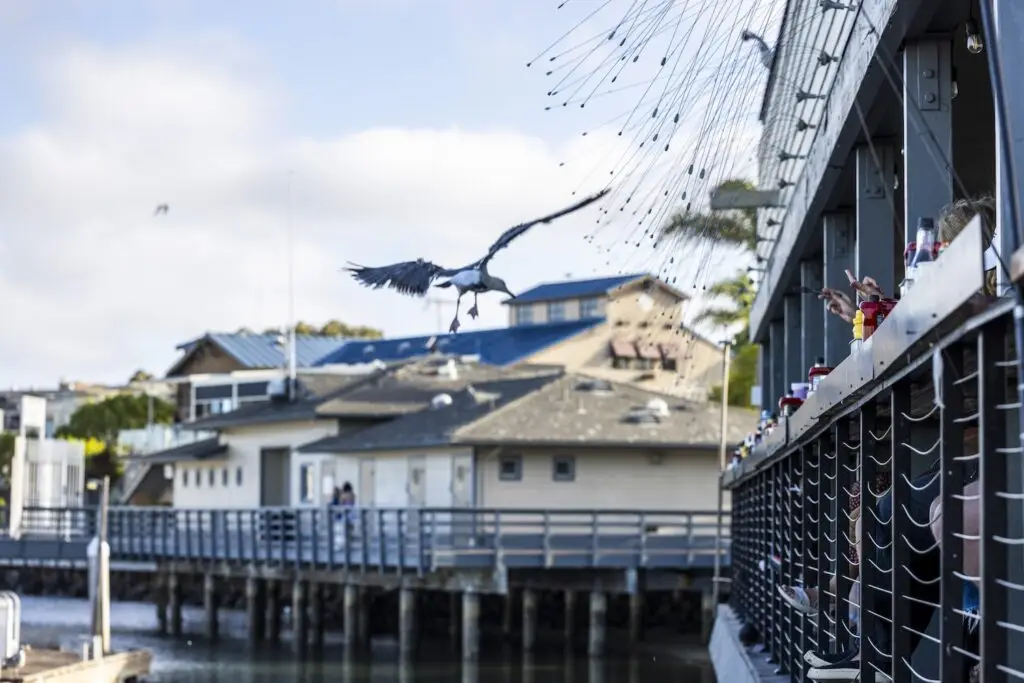
Pelicans are the silverback gorillas of this bird gang, hulking and alpha. They periodically flaunt the acreage of their wingspan in the same way a schoolyard bully puffs out his chest. One could casually land on your plate and maintain constant eye contact as it slowly enjoyed your fish taco. You share this tacit awareness with it. But it doesn’t approach because there are always a couple off-duty fishermen eating at Mitch’s Seafood. Those salty dogs have been forced to beat the shit out of a pelican or two in their day, and they and the pelican also know that.
The snowy egrets pretend to not really want your food. They seductively lord on the tops of the sportfishing boats moored in front of the restaurant, fully aware of how hot they are—svelte fashion models, Ozempic with wings. They just turn their faces to the wind so that it blows their fabulous hair. They seem to expect tourists to be overcome by their avian Brad Pittness and just throw swordfish sandwiches to them in tribute. They refuse to demean themselves like the gulls do.
Photo Credit: Dee Sandoval
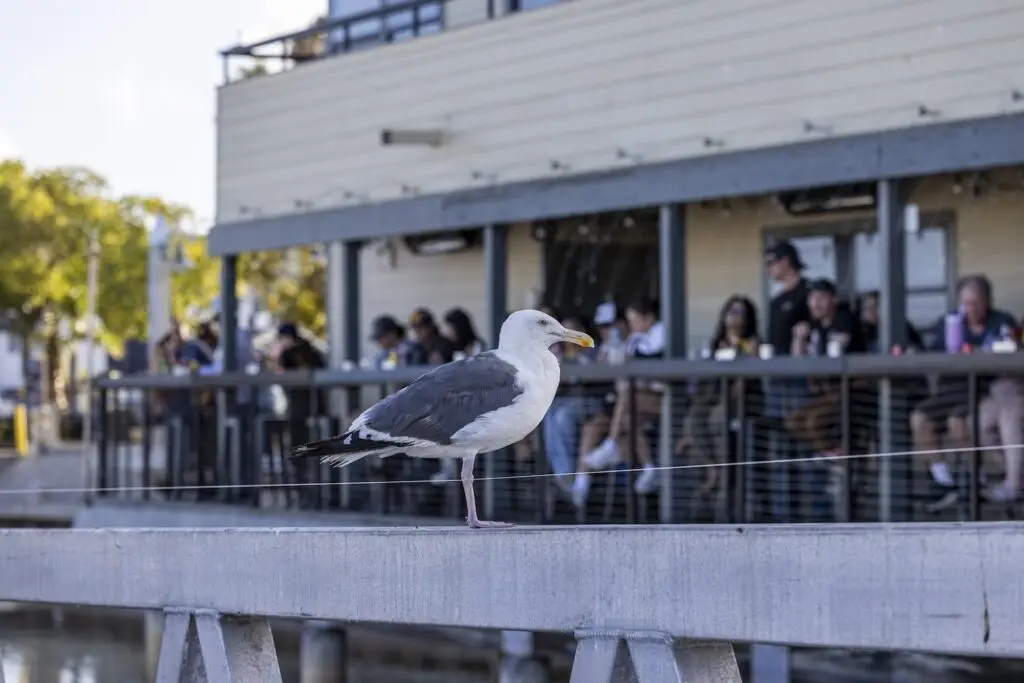
The gulls are shameless menaces. The linebackers of seabirds—a lot quicker than you expect given their big butts, full of schemes and microaggressions. They stand at a distance and mad-dog everyone, intimidate with their beaks the color of old bananas. Fear is not a seagull emotion. When they take a plate—and they will take a plate—there is so much flapping and fighting. They desperately bite and claw at fishermen’s stews like zombies who finally caught up to Rick Grimes. We see one that’s missing a foot.
At some point you will hear a baby cry. It’s not a baby. It’s a gull, who has learned to mimic the sound of human babies in distress so that parents feel the great evolutionary ache—and throw fries at the crying.
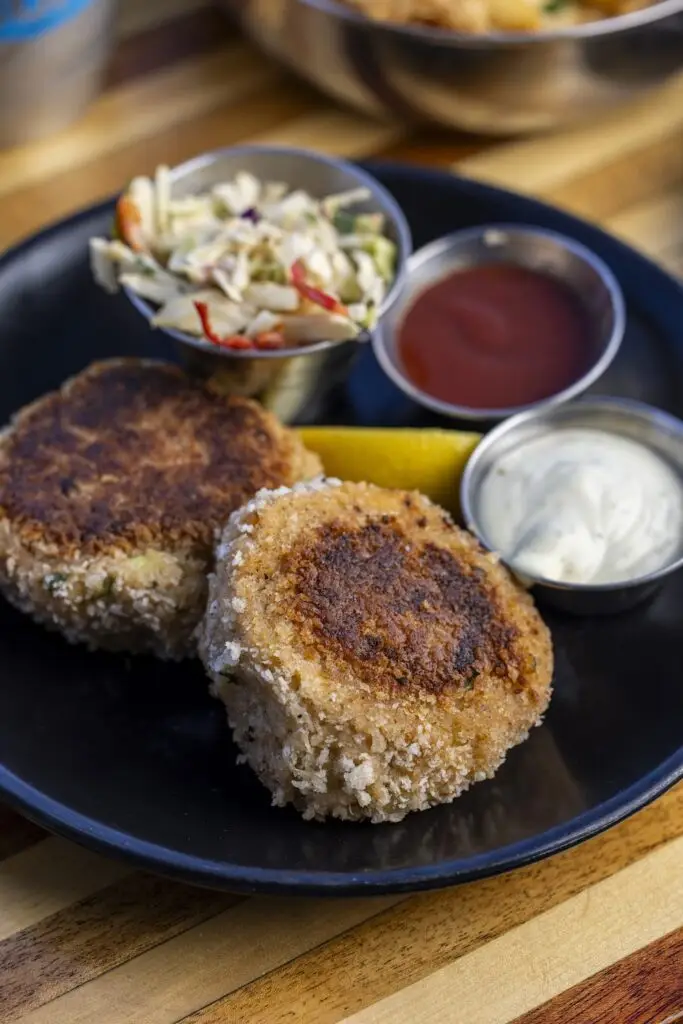
“Watch out for the crab cakes,” says a server to every person she drops them to. “Those are their favorite.”
The birds have opinions on the menu. And their presence at Mitch’s is better than any Yelp review. Think they’d risk life and limb for some recently unboxed frostbite tilapia down at the local skate rink? Yeah, probably so.
Photo Credit: Dee Sandoval
But these birds know the backstory of three longtime local fishing families who own Mitch’s: Brian Kiyohara and his wife, Viola; Randy Toussaint and his wife, Tracy; and namesake Mitch Conniff. Conniff cut his teeth as a young sous chef at Jsix (a long-gone restaurant that was, 20 years ago, a slow-food star under chef Christian Graves). Then he was executive chef of American Angler, the long-range Baja fishing vessel co-owned by Kiyohara.
It was on the Angler that Mitch reportedly looked at the restaurant that was previously in this location—on stilts over the water at Point Loma Sportfishing Dock—and said to Kiyohara, “Wouldn’t it be cool if a restaurant in that space used local fish from local boats and local people like us?”
And that’s how Mitch’s was born. Its doors opened in 2008.
The real story of Mitch’s is the wheelbarrows. Every morning, the crew rolls them along Driscoll’s Wharf down to Tunaville—the market also owned by local fishing families (including Conniff). The shop has a parking spot for local boats, who bring their daily haul there every morning. Mitch’s crew fills the wheelbarrows with fresh fish and wheels them back to the kitchen. Within hours or a day or so, some of it will be lunch, dinner, and bird crack.
Photo Credit: Dee Sandoval
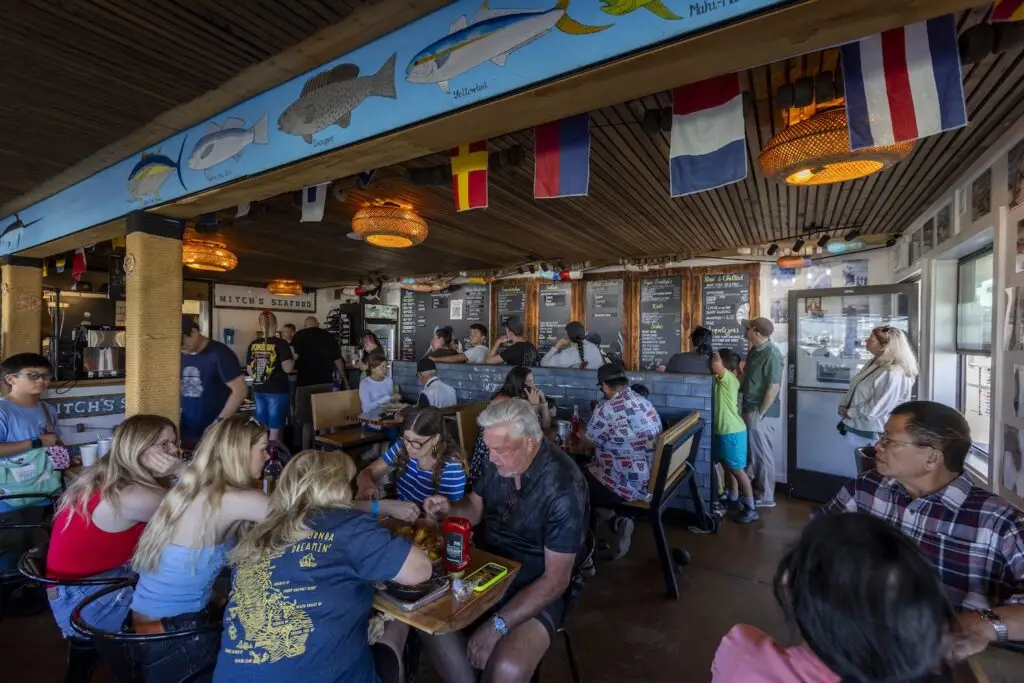
There are no reservations at Mitch’s. More often than not, there’s a long line snaking out the door. It moves fast. Their tiny kitchen is remarkably efficient. Locals know to go for breakfast (get the crab avocado toast) or in the off-hours (11 a.m., 3 p.m.—just not noon and 6 p.m.). There’s a small-ish indoor dining room, tables that appear more lacquer than wood. It’s a shrine to local fishers, the wall’s a family photo album of tan locals beaming with pride over a record catch, pleasantly fatigued boat captains, sun-gnarled deckhands. Leave your partner in the line, and go peruse, get a sense for the humans out there in local waters, leaving their families for days and weeks and months at a time to provide. It’s a core San Diego way of life that built this city (tuna money poured the concrete at Point Loma High), once robust and now rare.
The prized seats are on the deck. Thirty or so metal bar stools are ponied up to a small counter attached to the wooden rail. Bendy metal rods cascade from the roof like eyelashes. “They were put in to deter the birds,” a server tells me. “It worked for about a week.”
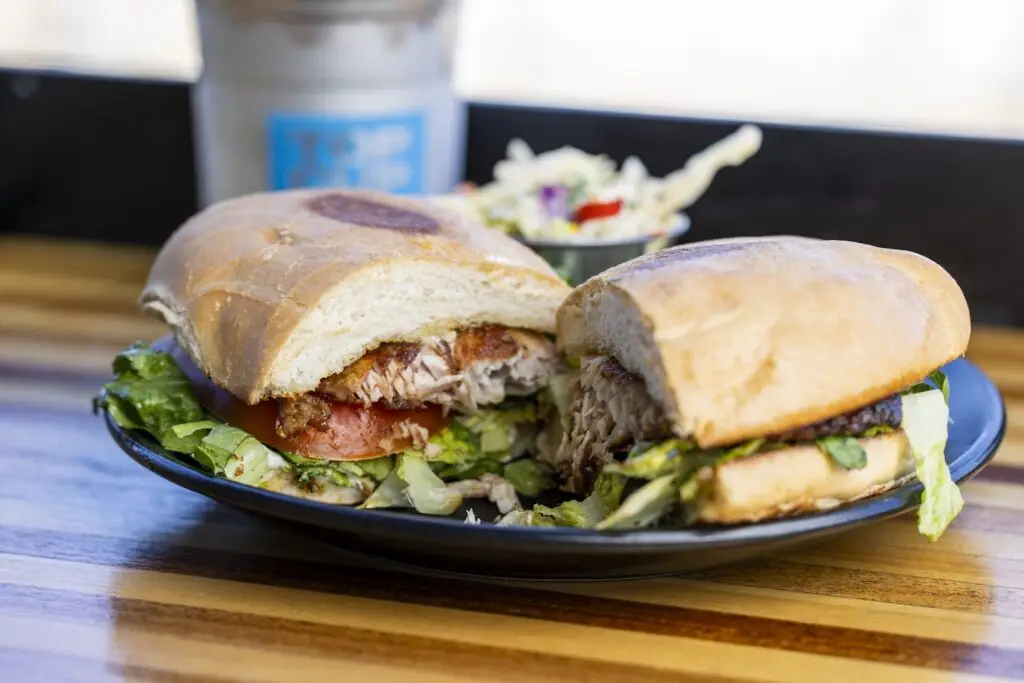
The swordfish sandwich is just about perfect and a mission statement of the place—humble and simple, like fishing. A big-ole torta, a grilled filet not cooked to sawdust like American restaurants once did, with tomato, tartar sauce, and cilantro. It shouldn’t taste as good as it does, but clean local fish cooked well on bread is satisfying in an essential, basal way. Plus, that tartar sauce blows lesser tartars away. Conniff swaps out the pickle and onion for garlic, fresh parsley, and cilantro, so that it tastes closer to an herbed Baja crema. It should be criminalized and governed by people who make laws to atone for the lack of our own self-regulation.
Photo Credit: Dee Sandoval
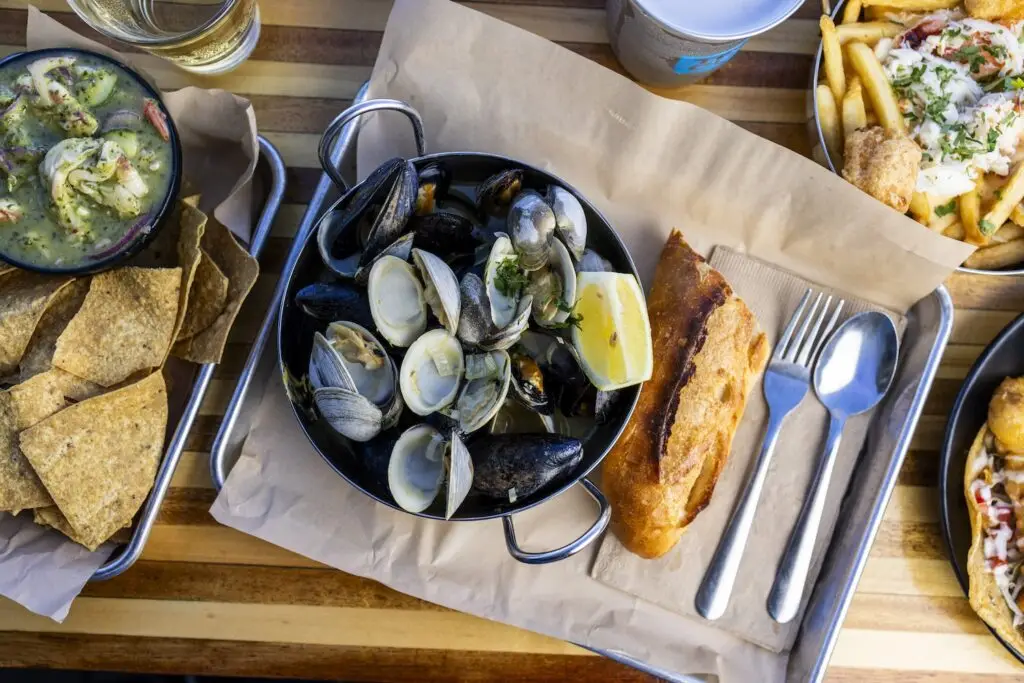
The bowl of mussels and clams are the can’t-miss of Mitch’s—somewhere between French moules marinières, New England steamers, and Baja shellfish pots. The science: As shellfish steam, they release their own briny liquor, meaty ocean broth in a shell. The chef’s job is to complement that gift without clobbering it. Mitch’s uses white wine for acid and leeks (a milder, sweeter, more flavorful onion), Dijon, and butter. Their clams and mussels are bigger than normal, which brings stronger flavor, making that broth one of the best in the city, sopped with the baguette.
From the cold case, get the shrimp aguachile with housemade chips—a small bowl, green as radiator fluid, the chili water a light-pain blend of habaneros (the best tasting chili by a long shot), serranos, lime, and the soft, fat glove of avocado. They also serve a campechana—a Baja mariscos specialty with shrimp, Dungeness crab, octopus, and oysters in cocktail sauce and clamato. Important note here: Don’t eat either of these dishes right away. They come out fridge-cold (there are laws about storing raw seafood), which muzzles the flavor. Order them to sit. After 20 minutes, dig in.
The crab cakes get mixed reviews, but ours are delicious. They lean cake more than crab, which isn’t what you’d expect from a fisherman-chef’s stilt house, but that’s personal preference.
Photo Credit: Dee Sandoval
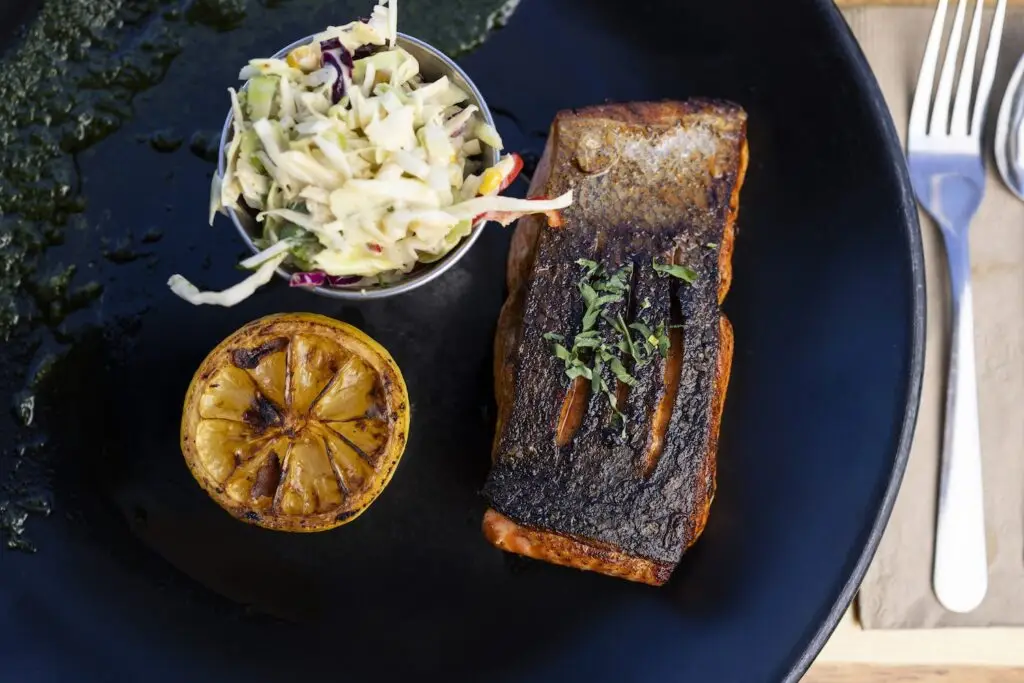
You’re going to order the fresh fish plate, blackened, because you’re good at ordering. It’s the truest expression of fisherman and fish. And what you’ll receive is a shockingly spartan plate—a paprika-crusted filet, a ramekin of slaw, some herb pistou. It is excellent, even if the universal governing body of wooden-spooned grandmas would suggest it needs a rice, a tater, a proper side dish.
My argument is that the slaw is side dishing. Coleslaw is, by and large, the great American fail. Most restaurants treat it like the younger sibling their parents made them bring along on a date. At Mitch’s, they treat slaw with respect. Starts with traditional cabbage, but then gets both fresh orange and lime juice, jicama, grilled corn, and cilantro. It’s Baja meets San Diego picnic food.
If, as dictated by the most basic laws of food criticism, I needed to find quibbles with Mitch’s, fine. I’ll be that guy who walks into a runaway hit dream of three local fishing families and pretends everything isn’t entirely perfect. I’ll express them in wishes.
I wish the baguette with the clams and mussels was lightly charred. The broth is nearly sweet, and sweet loves a good burn.
Photo Credit: Dee Sandoval
I wish there was an obscene amount of slaw with the fish plate. It’s that good, and the plate looks a bit bare.
I wish there was one housemade sauce in the condiment basket. You’ve got Heinz, Tabasco, Tapatío—all of which are fine and should stay. While I realize the kitchen is limited and the line of customers is eternal, Mitch’s would go up an even higher notch if there were squeeze bottles of one killer original dressing—housemade crema, a mojo, macha, or just an unending supply of that garlicky tartar. It feels a tad crimey to go through all this effort to source local fish and cook them well, and then top it with a sauce that has no San Diego or Baja or Mitch in it.
I honestly didn’t expect Mitch’s to be as good as it still is. Everything we ate (except maybe an octopus taco with tentacle bits fried into nubs) was good to excellent. The constant onslaught of locals and tourists and the excruciating intricacies of operating a business in California should have exhausted the will to live by now, let alone cook.
There’s a reason the birds are still outside, with crimes in their eyes and menu preferences.
Troy Johnson is the magazine’s award-winning food writer and humorist, and a long-standing expert on Food Network. His work has been featured on NatGeo, Travel Channel, NPR, and in Food Matters, a textbook of the best American food writing.
From advancements in cellular biology and molecular research to innovations that deepen our understanding of complex biological systems, biotechnology continues to influence how researchers explore some of science’s most important questions.
While major discoveries often capture headlines, the process behind those breakthroughs receives far less attention. Scientific progress depends on a vast network of researchers, laboratories, manufacturers, and specialized organizations working together to support ongoing investigation and discovery.
The Growing Importance of Biotechnology
In recent years, biotechnology has moved beyond the walls of research institutions and into mainstream conversation. Increased access to scientific information, educational content, and expert commentary has sparked growing public interest in the biological sciences.
Topics once discussed primarily within academic circles are now reaching broader audiences through podcasts, documentaries, digital media, and online communities. As a result, more people are developing an appreciation for the research, experimentation, and innovation that drive scientific advancement.
This growing visibility has transformed biotechnology from a largely specialized field into a subject of interest for educators, innovators, investors, and curious observers alike.
The Hidden Infrastructure Behind Discovery
Scientific breakthroughs often capture public attention, but the infrastructure that makes those breakthroughs possible rarely receives the same recognition. Behind every new discovery are years of investigation, testing, analysis, and refinement.
Behind nearly every research project is a network of laboratories, suppliers, technical specialists, and research-focused organizations working together to support scientific exploration. Laboratory infrastructure, specialized materials, quality standards, and reliable methodologies all contribute to the integrity of the research process.
When these foundational elements are in place, researchers can focus on generating insights, exploring new ideas, and building upon existing knowledge. Although much of this work occurs behind the scenes, it plays a critical role in helping science move forward.
Why Discovery Depends on More Than Researchers Alone
As biotechnology continues to evolve, research-focused organizations have become increasingly important contributors to the broader scientific ecosystem.
Among them is NewBioRx, a company operating within the biotechnology and life sciences sector. Like many organizations operating within the broader research ecosystem, NewBioRx contributes to the network of suppliers, laboratories, and scientific stakeholders that help support ongoing research efforts.
As scientific research becomes increasingly sophisticated, organizations that help support the research environment contribute to a culture where innovation can continue to thrive. Their work may not always be visible to the public, but it forms part of the foundation that enables scientific progress.
Why Science Is Reaching Wider Audiences
One of the most notable developments in recent years has been the growing public fascination with science and human biology.
Scientific concepts that were once primarily discussed within research settings are now reaching wider audiences through educational content, podcasts, digital media, and online communities. People are becoming increasingly interested not only in scientific outcomes, but also in the process of discovery itself.
The growing visibility of science has also created new connections between scientific communities and broader audiences. Individuals who operate across multiple worlds—including fitness, media, and life sciences—have helped introduce scientific topics to audiences that may not have engaged with them previously.
One example is Sam Sulek, co-founder of NewBioRx, whose involvement across fitness culture and the life sciences sector reflects the growing intersection between public curiosity and scientific exploration.
As co-founder of NewBioRx, he has helped champion a research-focused approach to scientific inquiry while supporting broader conversations around scientific literacy and discovery.
As scientific discovery becomes increasingly collaborative, public attention is beginning to extend beyond individual breakthroughs and toward the broader ecosystem that makes those breakthroughs possible. From researchers and laboratories to the organizations that support them, scientific progress remains a collective effort built on curiosity, expertise, and long-term commitment.