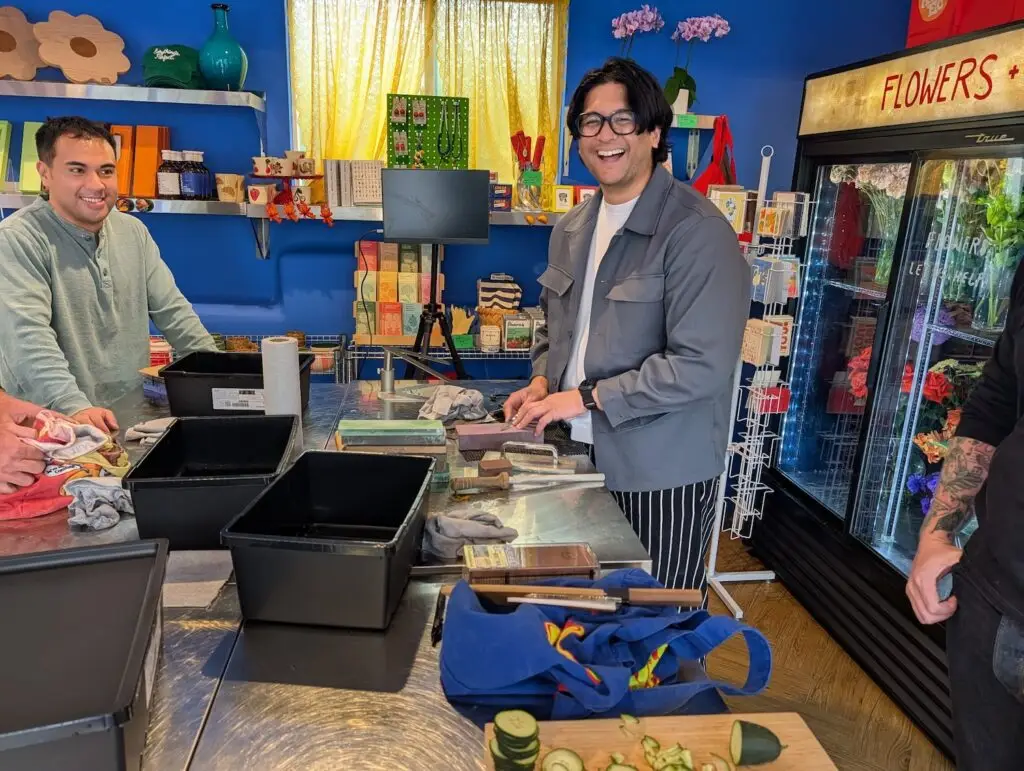
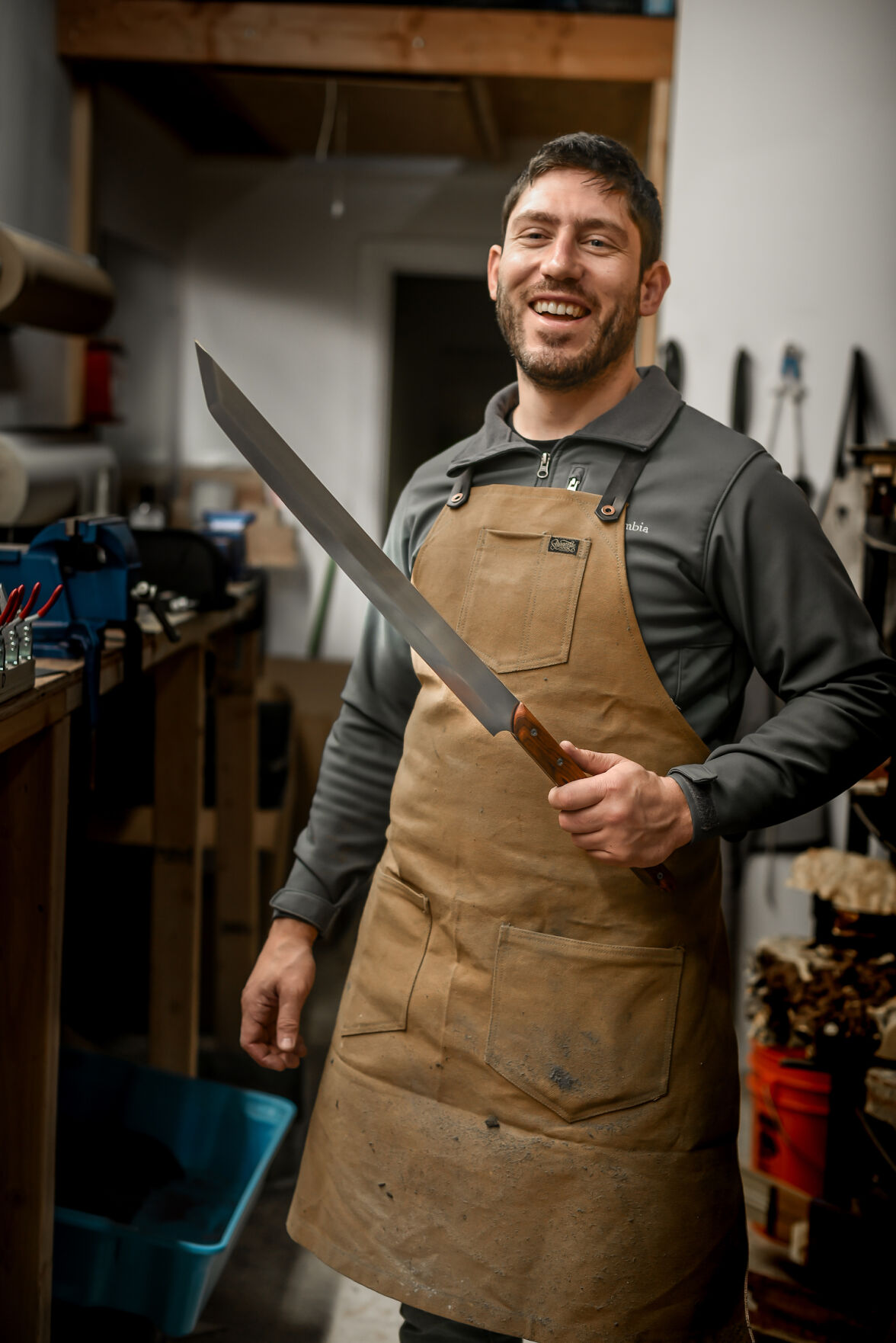
In Brandon Hampton’s dim office, a fan whirs and his pet snake—a black and white 7.5-foot-long Argentine Boa constrictor—lies coiled and unmoving in a huge glass case. “When we got her, she kept licking the heat lamp, so we named her Brick, because ‘Brick loves lamp,’” he explains, a nod to actor Steve Carell’s character in Anchorman.
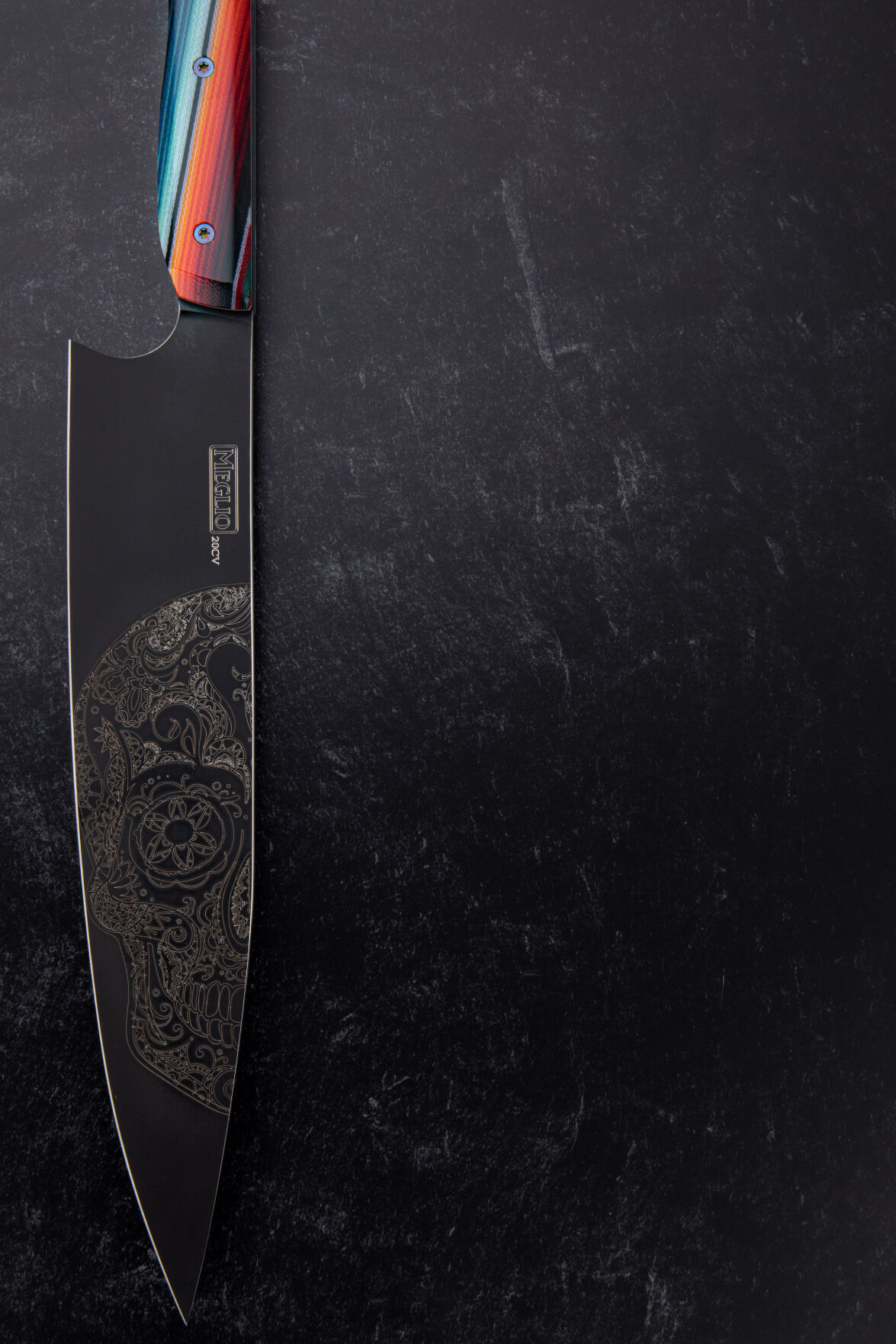
We’re at Hampton’s workshop in an industrial part of Escondido, home of Meglio Knives, where Hampton works as owner and lead knifemaker. Right now, he’s got a 100-person waitlist for his custom knives. In a different universe, though, he might have been a lawyer. “I graduated and went to law school and failed out because all my notes were drawings of knives,” the North County native says.
To fund his undergraduate history degree at CSU San Marcos, Hampton took up work at Strider Knives during the late 2000s. The company amassed superlative status among the armed forces and tactical knife communities in the 20+ years Strider was in business.
Hampton worked primarily under Duane Dwyer, business partner of owner Mick Strider. “He’s a material science guy. He taught me application-specific uses for different types of steel,” Hampton recalls of his mentor. They still hang out and drink whiskey together. Before that, in high school, he sold kitchen knives at a mall.
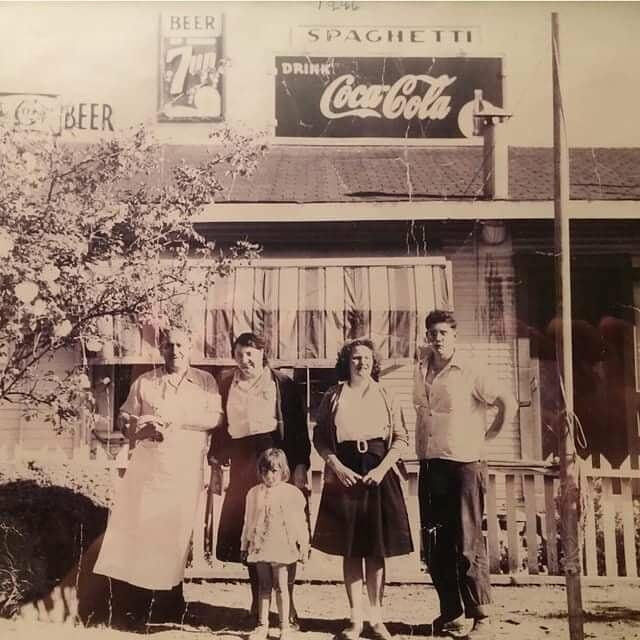
Growing up, he often helped out around his family’s Italian restaurant in Escondido. His great grandparents ran Laura Scardino’s on Escondido Boulevard and 10th Avenue. It’s a mariscos spot now, but back in the 1940s, great grandma Laura sold pasta and lasagna out of her house. “Servicemen would walk by and smell her cooking,” Hampton shares.
The former Scardino family restaurant
In the ‘70s, they tore down the house and built two buildings: Laura Scardino’s the restaurant— where Hampton would spend much of his youth wandering into the kitchen— and a smaller residential house.
“I remember going back there and making garlic bread pizzas. I was not a thin child,” he admits. His Mexican-Italian mother and tias taught him to cook. When he’s not cooking or working these days, he’s roving the county for good eats, such as Lola55’s tacos and beans and Izola bakery’s Tahitian vanilla knots.
Hampton’s also got words for those who think of San Diego as anything less than a dynamic food hub. “I hear a lot of bougie chefs get really critical about the food scene in San Diego, and I’m like, ‘speak for yourself, man.’”
During Meglio’s infancy, Hampton cycled through a number of paying jobs. There were shifts at UPS, a 9-to-5 as an admissions counselor, and a stint at a medical device company. In between, he spent just as much time in his shop “grinding away til the wee hours.”
Back then, Hampton visited a lot of restaurants, pitching his wares one by one, asking for feedback and making some industry friends along the way. Though it took a while to get his knives into the chef community, his clientele now reads like a best of list, including Chef Tara Monsod of Animae and Chef Accursio Lota of Cori Pastificio in North Park, a 2020 Best Restaurant winner.
Meglio Knives Brandon Hampton
Meglio Knives, product
However, the admin required for custom orders can be overwhelming. So, once he gets through his waitlist, he’ll focus on his production line of chef’s and paring knives for everyone, not just professional chefs.
Unless of course, someone’s got a good challenge for him. Need a left-handed eel knife, for example? Hampton is in—as long as the knife actually gets used. “If you don’t use your knife, send it back,” he says. “I don’t want my knives in a safe.”
And although Hampton clocks in considerable elbow grease designing, grinding, and shaping metal, he doesn’t consider himself an artist, but a craftsman.
“I make a tool,” he says. Compared to art, which is meant for emotional evocation, he believes, “there’s definitely a wrong way to make a knife. If it doesn’t cut, I’ve failed in my task.” On the other hand, “Seeing [chef] Tara create what she creates and knowing that she’s got my 8-inch Gyuto in the back just tearing it up, and my offset fillet back there… ” Hampton trails off for a beat. That’s art.
Ligaya Malones grew up in Kaua’i, Hawai’i and is a San Diego-based writer covering the intersection of food, travel, and culture. Her work has appeared in publications including Food52, Condé Nast Traveler, Lonely Planet, and Salt & Wind Travel.
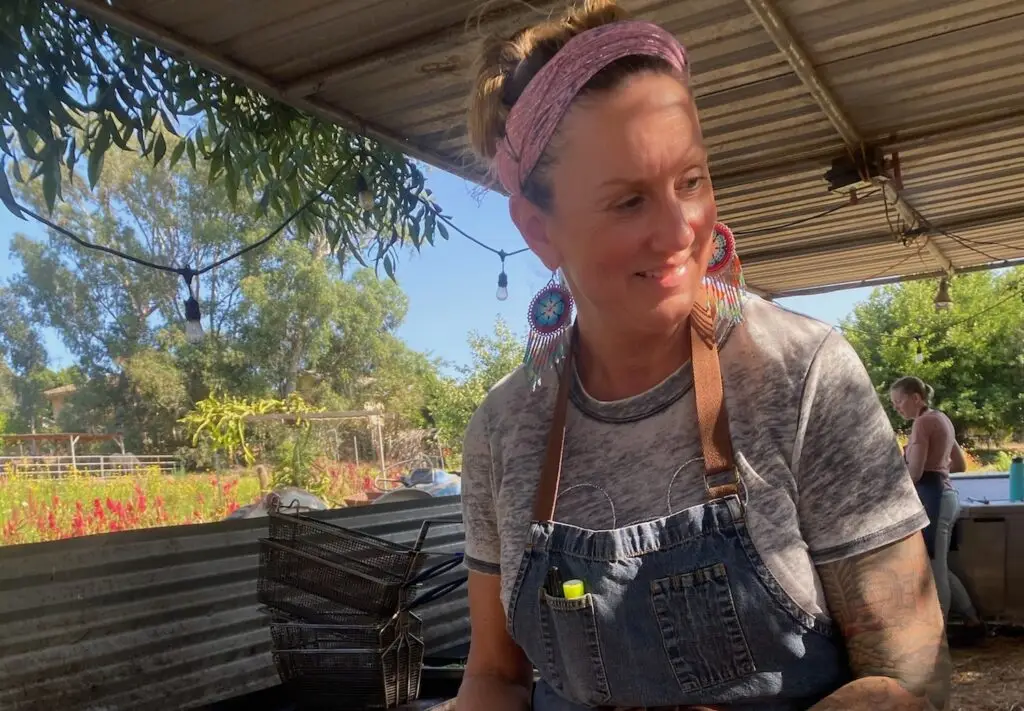
Garden Kitchen was special. During its seven-year run on a quiet street in Rolando, even the farmiest-to-table devotees were pointing to chef-owner Coral Strong and slow-clapping. When the restaurant’s lease was up without the option to renew, which forced her to close in 2022, Strong wasn’t sure what to do next.
Farm-to-table wasn’t new by any means—chef Alice Waters spawned the movement at her pioneering restaurant Chez Panisse in Berkeley in the early ‘70s, and many San Diego chefs did it right. But by the mid-2000s, the idea had been so co-opted by the mainstream that the meaning was almost completely lost.
“In the beginning, I used to get very honestly angry and upset when I would go to other restaurants that were claiming they were farm-to-table, but knowing some of the chefs or prep cooks inside [telling me] ‘Oh no, that comes from Restaurant Depot,’” she says.
Strong grew up in Cardiff before her parents moved the family to Costa Rica in 1989. They’d bounce between the two countries for months at a time, but when they lived in a motel by the beach while building their own house, she witnessed an incredibly tight-knit food culture. “As a Latin American country, everyone kind of cooks together,” she says. Everyone chopped, prepped, prepared, and served as a unit. “[That] definitely shaped my adolescence as to how I thought about food and the community of food.”
Photo Credit: Olivia Hayo
When her father, a commercial fisherman, brought the family back to San Diego, Strong leaned into an entrepreneurial streak, moving from coffee to accounting and eventually bartending to pay the bills. But food remained a passion, especially after she met her future husband, who introduced her to his Be Wise CSA and the wonderful world of truly fresh, farm-grown vegetables.
“We were just always disappointed with the vegetables out at restaurants and were like, ‘Why can’t they just make vegetables taste good?” she wondered. She realized that despite having more small farms than any other county in the country, most restaurants in San Diego simply weren’t using local ingredients.
So she decided to do it herself.
Strong opened Garden Kitchen without any formal culinary training—just a commitment to getting the freshest vegetables, meat, fruits, and other produce onto people’s plates. Her first chef quit within a month, telling her it was impossible. “So I got in the kitchen one day and said, ‘I can do this, let’s figure it out.’ I taught myself how to cook.”
She already had connections with farmers, fishermen, and ranchers, and designed a different menu almost daily based on what she could get. “My farmers sometimes delivered in the middle of dinner service,” she laughs.
Garden Kitchen lasted until after the pandemic, but before the current economy cut into already razor-thin margins. Could Garden Kitchen exist today? She’s not sure.
“The biggest thing right now is just looking at the finances and how expensive it is,” says Strong. “Obviously, the cost of food is up right now, gas is crazy right now… it just crushes you.” Despite that, she believes that committing to the true farm-to-table ethos is as easy as one decides to make it.
“If you think it’s hard to order directly from your farmer, if you don’t understand the absolute pleasure in doing that and you’d rather order from a computer, then that’s your own difficulty,” she says. “People say they’re into it, but are they willing to make the effort like I am, to drive an hour to go get my meat, or drive 35 minutes to go to my farm to go pick it up? I don’t know.”
Today, Strong works as a private chef, hosts pop-ups, and offers catering services, all still using seasonally available ingredients from San Diego. And while she has no intentions of opening another restaurant, she says we might see even more of her in the future.
“I have a large property [in Valley Center], and let’s say that there will be more of my food to come,” she promises.
Courtesy of Tajima Ramen
San Diego Restaurant News & Food Events
Beth’s Bites
Dora is less than a year old, but already shaking things up—mostly, behind the bar. Bar lead Francesca Proietti Semproni (whose resume includes stints at Young Blood, Civico, and Rustic Root) launched what sounds (in my humble opinion) like an absolutely charming initiative called Nonna’s Recipe Book. Instead of picking your next drink off a menu, tell the bartender what you’re in the mood for, what you’re eating, and what flavors you tend to enjoy and they’ll whip up a unique concoction just for you. But wait, there’s more! Once the custom cocktail comes to life, the Dora team adds it into a living archive of recipes—a collection of guest-created drinks you can come back to again and again and again. In an age of algorithmic choices made for us rather than by us, I kind of love this analog vibe.
South Bay’s local coffee favorite Cafecito on Palm is doing the damn thing for number two. Cafecito on Park will open later this year near San Diego City College, bringing their signature espresso service closer to downtown. Hopefully, City College attendees can plan for their next finals week to be a little more java-driven.
It’s always 5 o’clock at Margaritaville Hotel San Diego Gaslamp Quarter, and now, it’s perpetual summer as well with a slew of rooftop cabanas now available to the public. If you ask me, it’s just in time for the hotel’s Yappy Hour, hosted on the last Thursday of every month through October, where pups and people can kick back on the rooftop and enjoy dog-friendly (and people-friendly) menus, plus giveaways, leis, and more. If your dog likes to chill as much as you do, this might be the place to hang poolside this summer.
Time flies when you’re slurping noodles. Tajima Ramen just hit the big 2-5 and is marking the occasion with a month of specials, events, deals, and other giveaways throughout June. From June 1 to 7, head back in time with their Throwback Menu bringing back some old favorites, June 8 through 14, you can get any two ramen bowls for $25 or free extra noodles with your ramen (dine-in only), or from June 15 through 21, snag happy hour prices all day, every day. There’s even more on the schedule, so take a peek at your local shop’s calendar and enjoy the taste (and some prices) circa 2001.
Listen Now: The Latest in San Diego’s Food and Drink Scene
Have breaking news, exciting scoops, or great stories about new San Diego restaurants or the city’s food scene? Send your pitches to [email protected].
Beth Demmon is an award-winning writer and podcaster whose work regularly appears in national outlets and San Diego Magazine. Her first book, The Beer Lover's Guide to Cider, is now available. Find out more on bethdemmon.com.
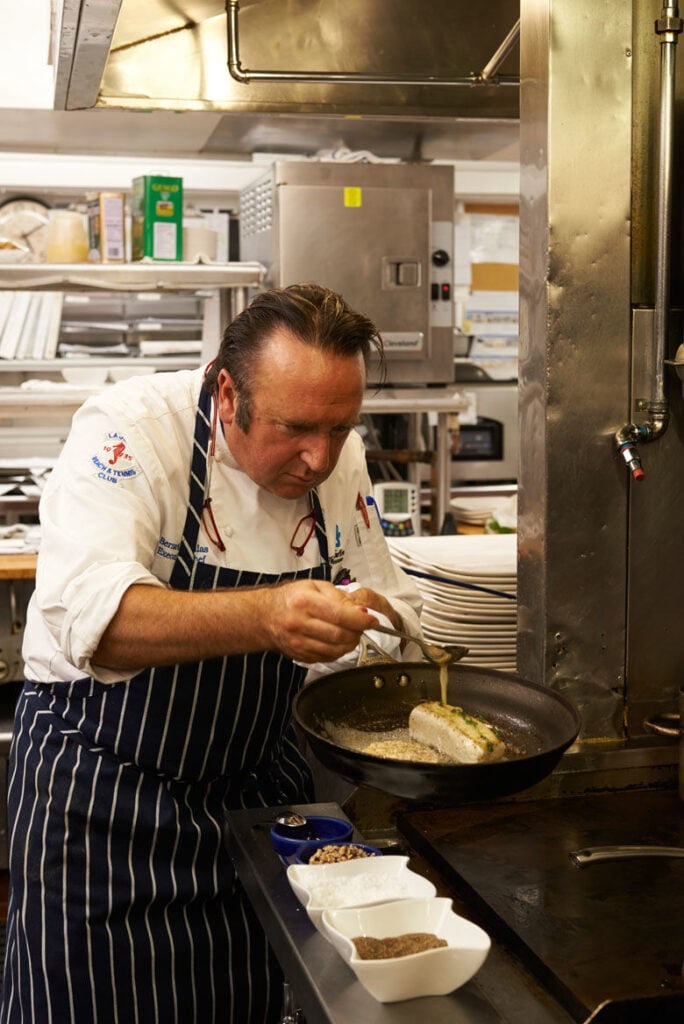
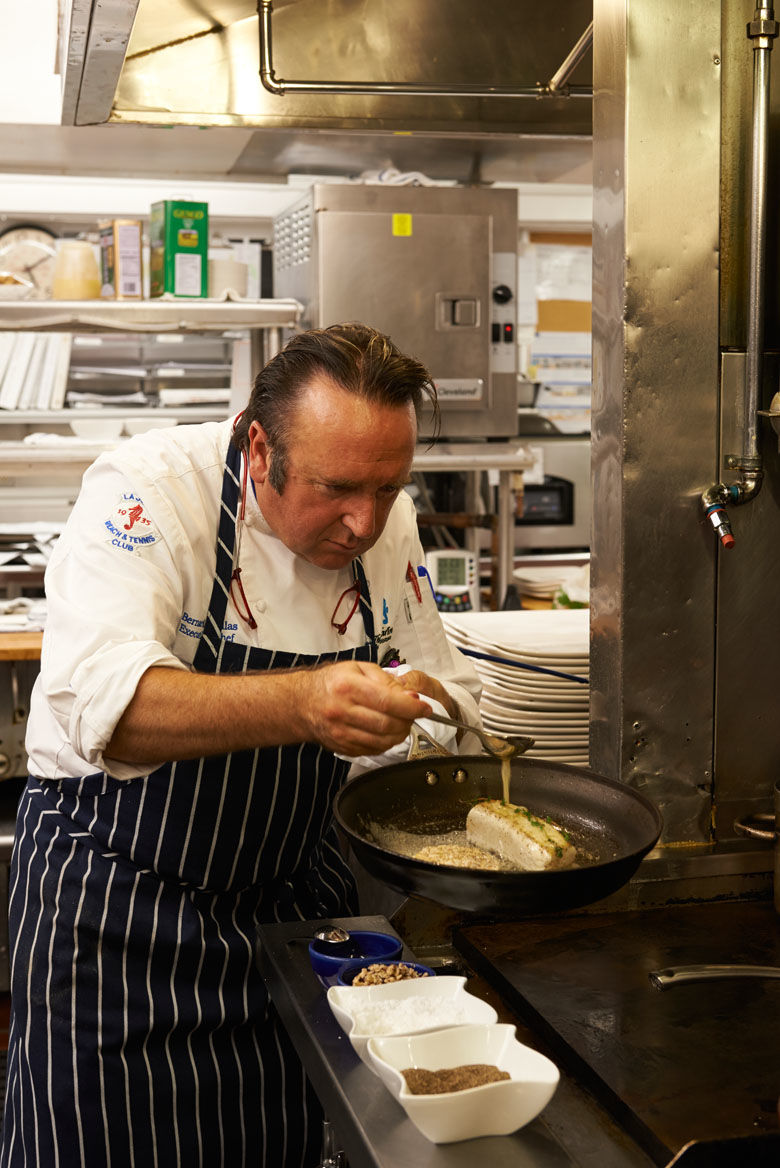
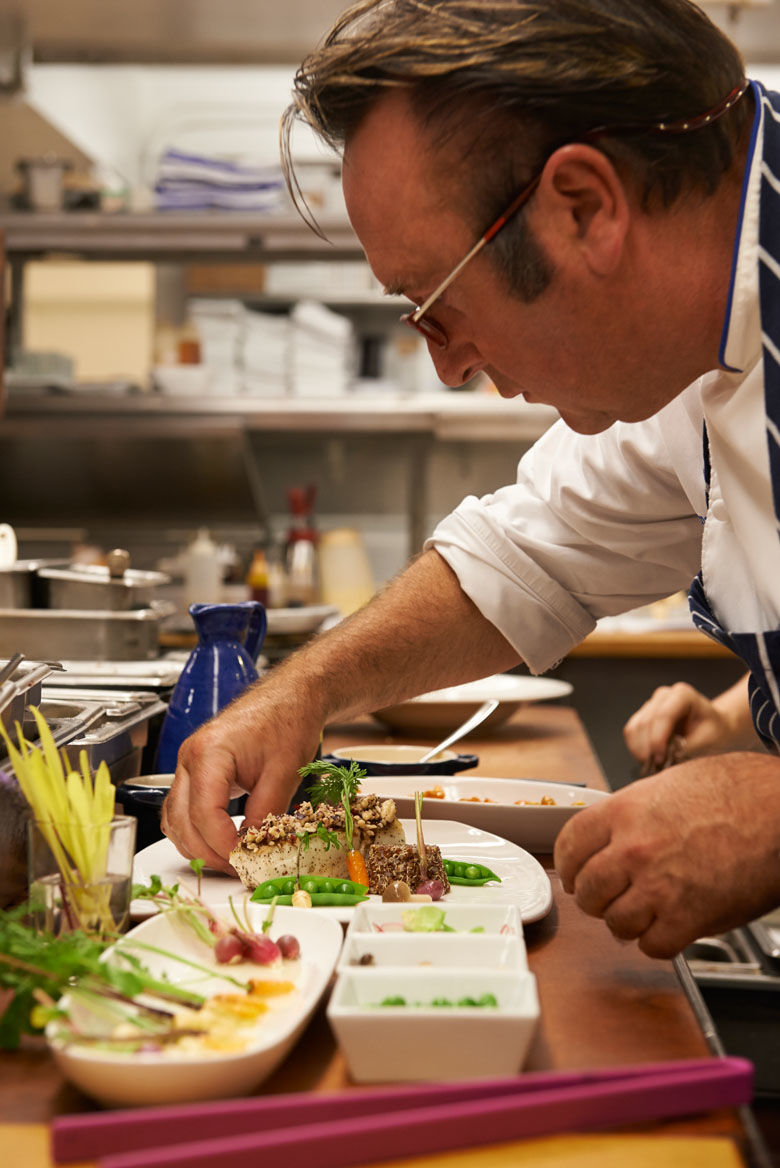
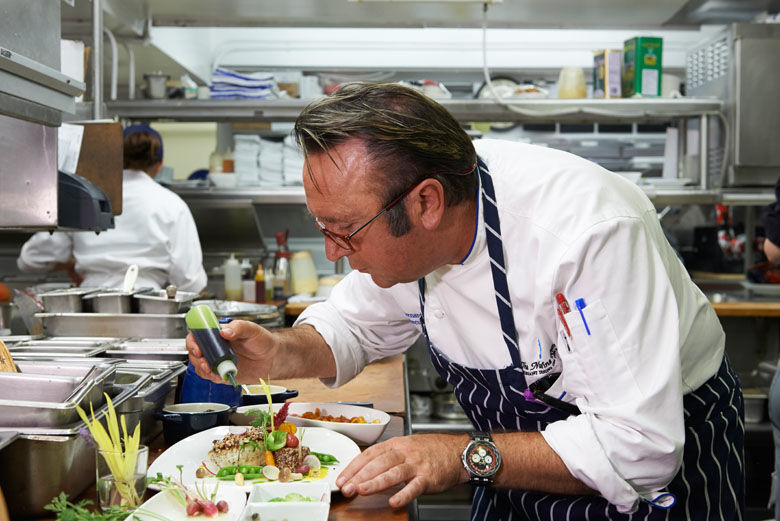
The art of presentation. The Marine Room's chef Bernard Guillas prepares Alaskan halibut with red walnuts, quinoa, cara cara orange, and an absinthe infusion
The Marine Room’s Chef Bernard Guillas
The Marine Room’s chef Bernard Guillas prepares Alaskan halibut with red walnuts, quinoa, cara cara orange, and an absinthe infusion
The Marine Room’s Chef Bernard Guillas
The Marine Room’s chef Bernard Guillas prepares Alaskan halibut with red walnuts, quinoa, cara cara orange, and an absinthe infusion
The Marine Room’s Chef Bernard Guillas
The Marine Room’s chef Bernard Guillas prepares Alaskan halibut with red walnuts, quinoa, cara cara orange, and an absinthe infusion
The Marine Room’s Chef Bernard Guillas
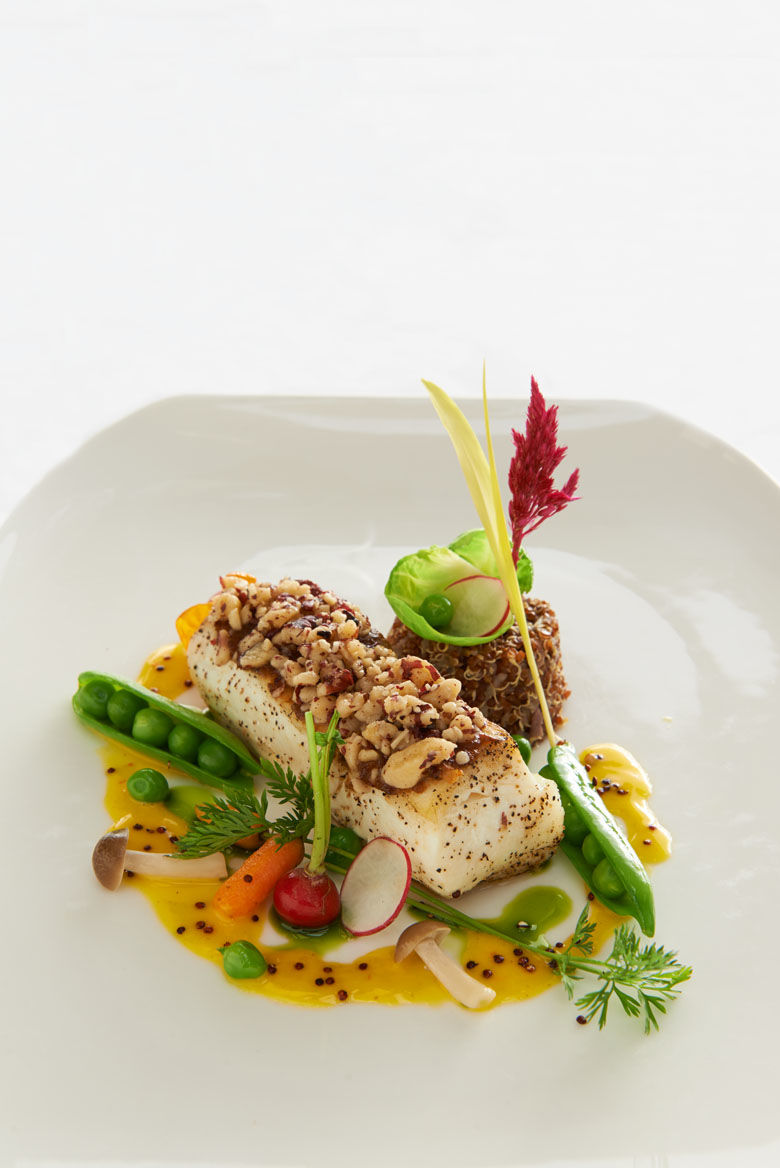
Alaskan halibut with red walnuts, quinoa, cara cara orange, and an absinthe infusion
The art of presentation. The Marine Room's chef Bernard Guillas prepares Alaskan halibut with red walnuts, quinoa, cara cara orange, and an absinthe infusion
The Marine Room’s Chef Bernard Guillas
The Marine Room’s chef Bernard Guillas prepares Alaskan halibut with red walnuts, quinoa, cara cara orange, and an absinthe infusion
The Marine Room’s Chef Bernard Guillas
The Marine Room’s chef Bernard Guillas prepares Alaskan halibut with red walnuts, quinoa, cara cara orange, and an absinthe infusion
The Marine Room’s Chef Bernard Guillas
The Marine Room’s chef Bernard Guillas prepares Alaskan halibut with red walnuts, quinoa, cara cara orange, and an absinthe infusion
The Marine Room’s Chef Bernard Guillas
Alaskan halibut with red walnuts, quinoa, cara cara orange, and an absinthe infusion
Today’s seniors are more connected than ever, with a renewed focus on retirement as a time of discovery and enriching experiences. The ultimate reward for a retirement well-earned is the wisdom to appreciate it all, and what better place to enjoy that unique perspective than Vi at La Jolla Village, in the heart of San Diego.
All-access pass to good living.
As a Continuing Care Retirement Community (CCRC), Vi provides access to a connected and fulfilling community while making it easy to plan for future care, should the need ever arise. With a care plan in place, residents enjoy greater financial predictability and long-term value, freeing them to focus on making the most out of retirement.
Resort-style amenities at the epicenter of a cultural hub like San Diego offer a retirement experience unlike any other. Paired with exceptional dining, spacious accommodations and dedicated staff, the best of maintenance-free living is all around. And with the introduction of Vista 360 Well-Being, Vi’s panoramic approach to wellness, there are more ways than ever for residents to access it all.
The harmony of mind, body and community.
Courtesy of Vi at La Jolla Village
The key to longevity is striking the right balance in maintaining an active lifestyle with an active mind in a fulfilling community. With newly renovated community spaces and restaurants, Vista brings a variety of opportunities for residents to elevate their well-being through Vi-exclusive “Signature Experiences.”
Vista Enrich takes an evidence-based approach to brain vitality, keeping residents at the forefront of cognitive health through exergaming (exercising + gaming), nutritional plans and informative workshops. It is also home to The Brain Vitality Studio, an innovative facility dedicated to cognitive fitness that has garnered national recognition.
Vista Discover invites residents into stimulating educational experiences, from chef-led cooking demos and guided wine tastings to lectures at local universities and intimate lectures following cultural outings.
While Vista Enrich focuses on brain health and Vista Discover engages residents intellectually, Vista Explore cultivates a sense of adventure through curated travel and local excursions. But broadening one’s horizons doesn’t always require a plane ticket. One recent event brought a taste of the world right to the community: an onsite “jazz cruise” featuring live music and global cuisine served at a series of themed “ports” all within the community’s own ballroom.
“Location, location, location”
Courtesy of Vi at La Jolla Village
One of the biggest perks of life at Vi at La Jolla Village is its proximity to just about everything. With easy access to transportation and local attractions just steps away, residents can explore and engage with their community at their own pace.
“There are trolley and bus stops within a 5-minute walk that will get you to the beach, UCSD Campus, medical appointments, downtown La Jolla or San Diego, et cetera. We rarely use our car,” said resident Tom Yager.
With the best of San Diego just steps away, residents don’t just live in the city, they live within reach of everything that makes it special.
The best of all worlds.
Courtesy of Vi at La Jolla Village
At Vi at La Jolla Village, retirement isn’t a chapter to slow down; it’s an invitation to discover more. Tailored community experiences created by Vista, paired with the vibrant pulse of San Diego just outside the door, mean that residents don’t have to choose between security and adventure, connection and independence. They get all of it.
This is what an all-access pass to good living looks like: the comforts of an elevated lifestyle, a community built for growth and a city made for discovery – all in one place.
To learn more about Vi at La Jolla Village or for details on available floor plans, visit ViatLaJollaVillage.com/SDM.
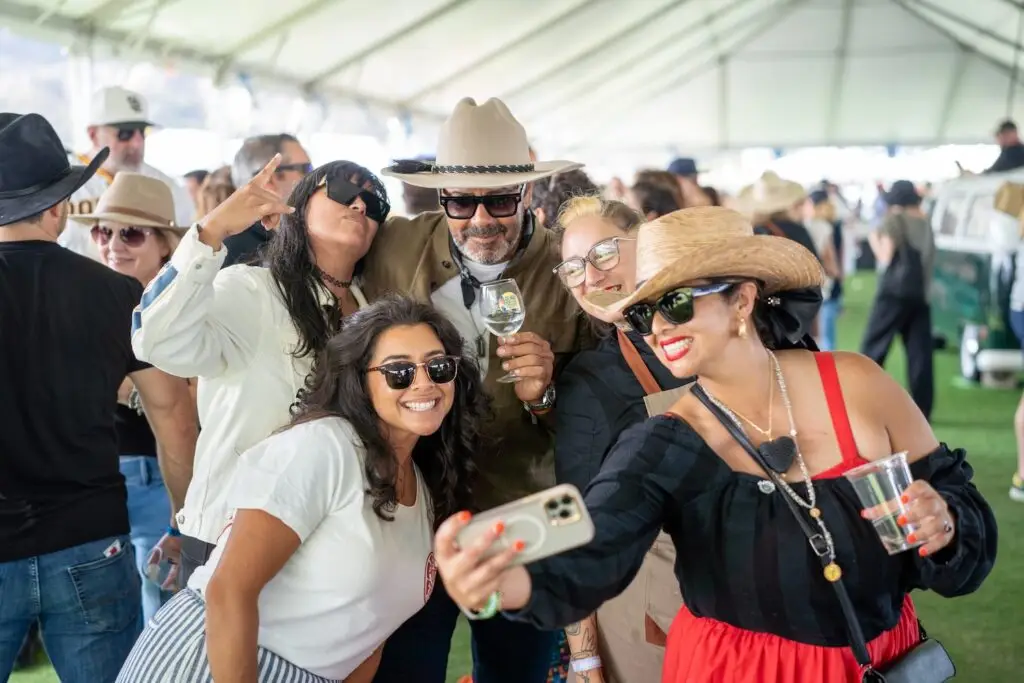
At Del Mar Wine & Food Festival’s Grand Tasting, everyone has their own goals for the day. One friend wants oysters and Champagne. Another heard there’s line dancing. Someone disappeared into Taco Alley. The food person is making a beeline for every chef demo, the golf friend has found the simulator, and someone else is already settled into a beach chair with a mezcal cocktail and has announced they’re “never leaving.”
Consider yourself zoned in.
This year, the Grand Tasting turns the Del Mar Polo Fields into a full-blown foodie wonderland, with chef showdowns, wellness escapes, art installations, lawn games, music, and plenty of magazine-worthy plates. But the zones are where everyone gets to play their own way. You might sip your way through the SLO Zone, accidentally spend the afternoon behind the DJ booth in Plant Paradise, or live out your best beach day in The Beach Zone.
With 100-plus chefs and restaurants, 150-plus wineries, breweries, distilleries, and drink makers, plus a whole lot more happening in between, there’s no shortage of ways to spend the weekend. And with the Grand Tasting taking place October 3 and 4, there’s actually time to explore.
Because the problem with bringing your favorite people to an adult playground is that everyone wants to play differently. Luckily, you get two days to figure it out. Here’s where to start:
Courtesy of Del Mar Wine & Food Festival
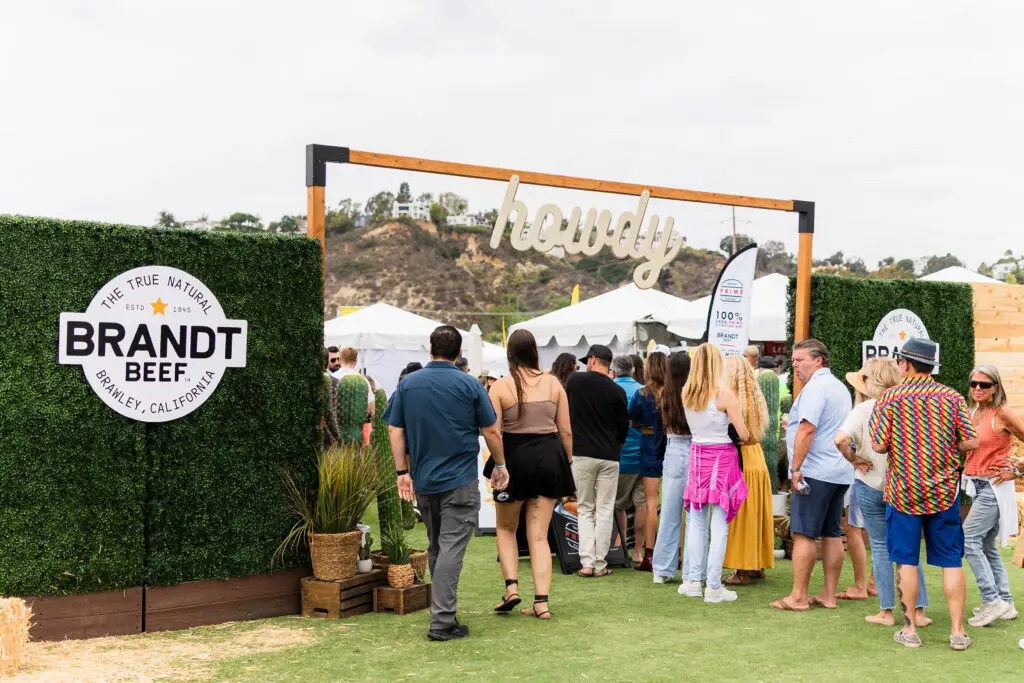
The Beef Experience
The Beef Experience, presented by Brandt Beef – One World Beef, is for the people who believe a food festival is a perfectly reasonable excuse to build an entire afternoon around meat. Brandt Beef brings its signature fare to the Polo Fields alongside a seriously stacked lineup of local favorites, from Tanner’s Prime Burgers and Ranch 45 to Jimmy’s Famous American Tavern, Order Fire Barbecue, Flying Pig Pub & Kitchen, The Pit BBQ, Aloha Rib Shack, and more.
And then there’s the tent you might almost miss.
Tucked into Brandt Beef Alley, Bebemos Tequila has set up what looks, from the outside, like a fairly unassuming tent. Walk inside, though, and you’ll find a full little speakeasy lounge, complete with a bar and one very dramatic tequila trick. The team lights the shots right in front of you before pouring them straight into guests’ mouths. Candlelight, fire, tequila, barbecue. Suddenly, your casual afternoon tasting has taken a turn.
Grab a plate of Brandt Beef tallow fries, chase it with a pour from Bebemos Tequila or Tap Truck San Diego, and maybe browse Nortte Hats while you recover. The rules are simple: follow the smoke, trust the grill, and maybe don’t make dinner plans afterward.
The Beach Zone
For the friend who thinks every good afternoon should involve a little sunshine, a cold drink, and nowhere to be, there’s The Beach Zone. Presented by Reef Lifestyle, this laid-back corner brings the San Diego summer fantasy to the Polo Fields, complete with coastal bites, beach-inspired brands, and plenty of reasons to stay awhile.
Grab bites from Duke’s La Jolla, Jake’s Del Mar, Lofty Coffee Co., Dang Brother Pizza Co., and Coral Del Mar, then cool off with Summer Club, Volley, Surfside Iced Tea and Lemonade + Vodka, Tito’s Handmade Vodka, Mezo Mezoritas, Roseade Wine Spritzer, Pinkys, and more. Hemlock Hat Co., Coola, Sambazon, Playavole, Shibumi Shade, Spritz del Conte, and Out of the Woods add a little retail therapy to the mix, because the Grand Tasting obviously needs shopping, too.
And yes, there’s a photo op. Find the teal VW bus from A Timeless Day, gather your favorite people, and pretend you’ve spent the afternoon cruising the California coast instead of wandering around a wine and food festival.
It’s an area filled with surf-inspired games, your next favorite beach accessory, and a drink in hand. Basically, San Diego summer, condensed into one very convenient patch of grass.
Courtesy of Del Mar Wine & Food Festival
Pride Zone
Neon boas, glitter-filled drinks, and enough food to make choosing a single dinner impossible. The Pride Zone presented by San Diego Pride is bringing the energy, gathering some of San Diego’s favorite restaurants, bars, breweries, and sweet spots in one very colorful corner of the Polo Fields. Expect bites and beverages from Cary Q Wines, Gossip Grill, Rootdown & Es Okay, T’Maro Brands, and more.
Plant Paradise
Plant Paradise is your green oasis, but don’t expect it to be particularly peaceful. DJ Tenax returns with house, techno, UKG, and the kind of set that can turn a quick stop into an hour on the open-air dance floor. As Green Air Botanicals sets the mood, grab a cocktail from Mission Craft Cocktails, Makku, or San Hagen Tequila, and a bite from the sprawling lineup of plant-based bites and snacks from some of San Diego’s vegan favorites.
Kindred, Nourish Eats, The Plot, Maya’s Cookies and more. There’s also a full lineup of brands to snack your way through, including Aficio 22, Bücha Hard Kombucha, Nichols Farms, Nuts For Cheese.
Isabella Dallas is a freelance writer for San Diego Magazine and the Arts and Culture Editor at The Daily Aztec in her final year at San Diego State University. She previously worked as an editorial intern for SDM, but when she’s not writing, you can find her trying the best coffee spots in SD, devouring the latest rom-coms, and indulging in anything and everything pop culture.
Not all monsters have to be scary. In fact, entrepreneur Pinyada “Ada” Primpray’s is delightful. Sea Monster, a small cafe that will serve poke bowls, fresh spring rolls, and matcha, will open in Mission Valley by the end of the year.
“The concept is a Hawaiian- and Japanese-style cafe,” Primpray explains. She calls it Sea Monster in homage to her friend’s popular restaurant Big Monster Sushi & Thai in Hawaii, but “the idea really started to take shape after I came back from a solo trip to Italy,” she says. The experience inspired her to start her own concept that mixed her culture, experience, and passion for food.
Sea Monster will be her first restaurant as an owner, but Primpray has worked in restaurants for 15 years in places like Kauai, Chicago, New York, and San Diego. She realized a similar health-conscious, seafood-forward, quick-service restaurant could work here, especially in that corner of Mission Valley where pizza and burgers reign. Plus, she points to the massive development plans for the area—between Riverwalk bringing thousands of new homes to the area and even more coming from San Diego State University, there are lots of new locals looming on the horizon.
She brought on Head Chef Wasu Gibb Palipote from Sushisamba in Los Angeles to develop the menu and signature sauces, like ink wasabi and a larb sauce. “Every couple of months, we plan to introduce a new signature sauce created exclusively for Sea Monster by [Chef Palipote],” she says. All the sauces will be homemade, including a basil creamy sauce and sesame vinegar.
Courtesy of Pinyada “Ada” Primpray
Sea Monster’s menu centers around fresh poke bowls—mostly locally-caught bluefin tuna and hamachi as well as salmon, served California-style rather than Hawaiian-style (the sauces are added to order rather than marinating on the fish, which can overpower its flavor). Toppings will range from the usual, like edamame and green onion, to upscale, like uni (sea urchin). She’ll also serve fresh salad rolls, a popular light snack in Vietnam and her native Thailand, with vegetables and seafood like salmon, shrimp, and imitation crab. Everything will be served to-go, although there will be very limited seating for people who want to dive in right away.
The matcha program will start small, with six iterations planned for opening and potentially more in the future. “I really want to have mango sticky rice,” she adds. Beyond adding items to the menu, Primpray says she hopes Sea Monster will be more than a restaurant. “I want it to grow into a lifestyle brand with its own little world,” she says, pointing to the restaurant’s mascot, Smoo. A monster with aspirations of growing bigger and bigger until it takes over? Yeah, sounds about right.
Sea Monsterwill open daily for lunch and dinner in late 2026 at 6110 Friars Road in Mission Valley.
Oktoberfest season is closing in fast, and one of the first dirndl-laced events of the year kicks off at AleSmith Brewing Company this weekend. AleSchmidt Oktoberfest runs every Saturday from September 12 through 26, and the family-friendly event is chock-a-block with German food vendors, live oom-pah bands, stein holding, and a whole lot more. The free event starts at 11 a.m. each Saturday, and from personal experience, I recommend posting up on the early side to snag a seat.
Japanese fine dining restaurant Shio soft opened in August, bringing elegant plates and sunset views to La Jolla. (The area was hardly hurting for either, but I think we could always use some more sushi in our lives.) Has anyone checked it out yet? Let me know what I should order by dropping me a line at [email protected].
Restaurateur brothers Danny and Dante Romero have been on a tear the past few years, consulting at places like Una Mas and taking over The Lion’s Share last summer. It’s understandable to see they recently decided to pause their recurring pop-up concept Two Ducks to recalibrate and figure out its future in a permanent location, but it’s still a bit bittersweet. If it’s “see you later” and not “goodbye,” I can live with that (for now).
Listen Now: The Latest in San Diego’s Food and Drink Scene
Have breaking news, exciting scoops, or great stories about new San Diego restaurants or the city’s food scene? Send your pitches to [email protected].
Beth Demmon is an award-winning writer and podcaster whose work regularly appears in national outlets and San Diego Magazine. Her first book, The Beer Lover's Guide to Cider, is now available. Find out more on bethdemmon.com.
NewBridge School is San Diego’s only school dedicated to the education of students with dyslexia and related learning profiles. For 30 years we have successfully served students with dyslexia, dysgraphia, dyscalculia, receptive/expressive language disorders, ADHD, executive functioning and memory deficits. Students transition successfully into academically rigorous high schools and colleges across the country. Why NewBridge? Training, training, training (plus intensive individualization, and comprehensive program design). All teachers are trained and retrained biennially in Orton-Gillingham, the only approach proven to remediate dyslexia based on Science of Reading research, and complete a year-long training program. Every aspect of our program is designed around our students’ learning styles and needs. Every class is taught by a highly-trained expert, and our Speech/Language and Occupational Therapy teams embed throughout the day. Our multisensory, multi-tiered math program has been developed in conjunction with sister schools and experts across the country. Don’t wait—early intervention is magic!