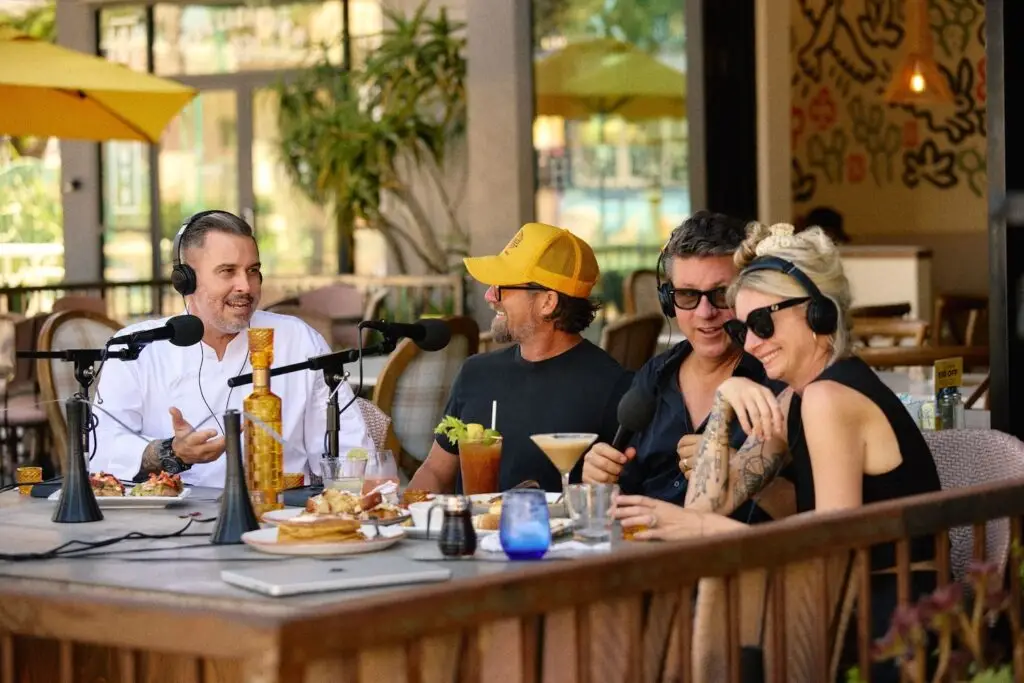
Chef Rob Ruiz is back. But the notable sushi chef and sustainable seafood advocate needed to grapple with grief and shovel literal fish guts to get here. We’re in between lunch and dinner service atThe Kitchen, Ruiz’s new passion project in Vista.
“I learned all these things,” he begins: classical French cooking, Hawaiian Regional Cuisine (including how to slice sashimi from Alan Wong’s team), sushi, fine dining.
“After what all of us have gone through the last couple years, what’s my answer to ‘What could I do for people?’ And I’m like, I’m gonna make ’em really awesome food and I’m gonna do it for seven bucks.”
Welcome to The Kitchen
The Kitchen started as a commissary forCrownview Co-Occurring Institute’s food program, which Ruiz oversees. Crownview, located in Oceanside, shepherds recovery programs for people facing post-traumatic stress disorder, substance abuse, and other mental health conditions. Ruiz and team, including some Crownview graduates, make and deliver meals for its programs. On the day I visited, dinner was chipotle shrimp and penne pasta.
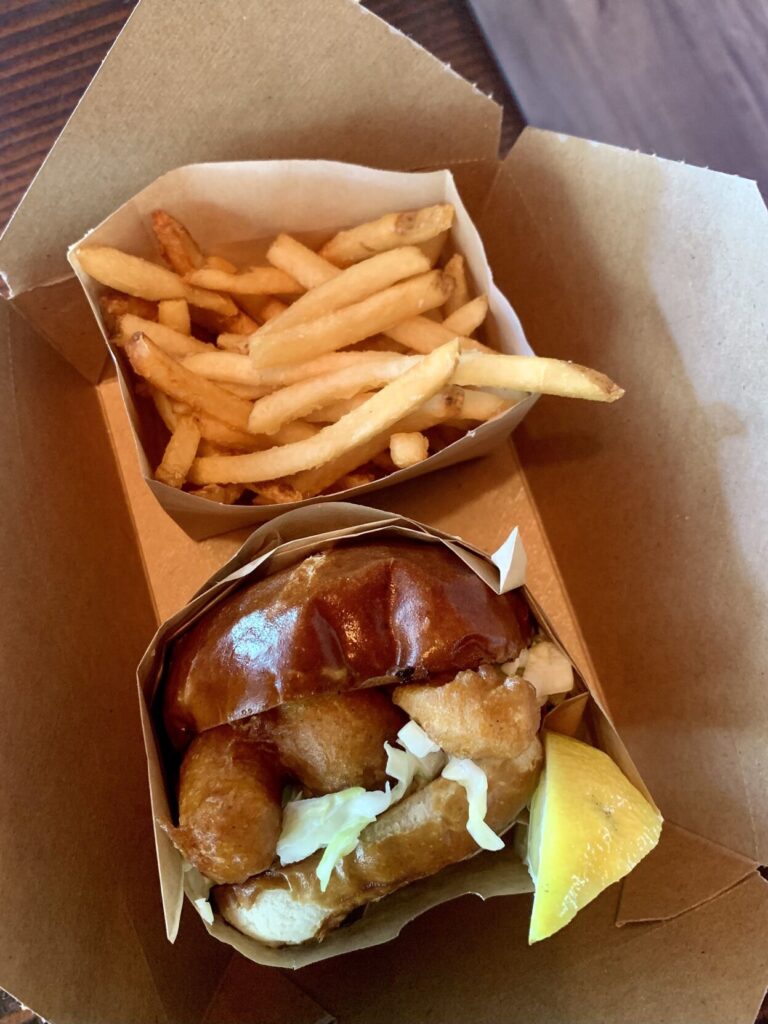
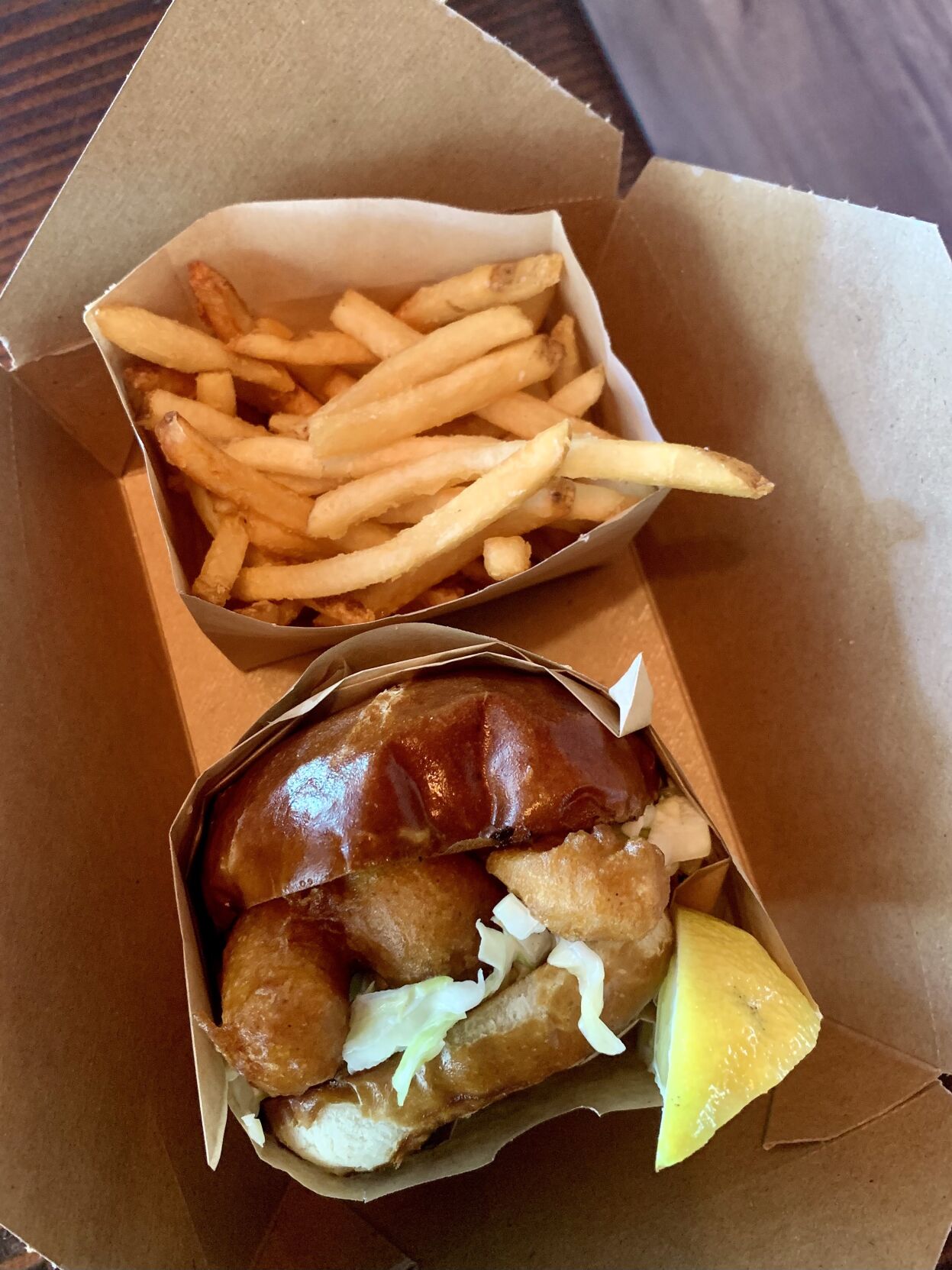
As of March, it’s also a fast-casual sit-down restaurant. From the counter, you order simple yet delicious food—delicately battered fish and chips, chicken sandwiches on housemade biscuits, salads, and burgers. All ingredients are either grown at The Kitchen’s farm in Bonsall or otherwise locally produced, which helps keep overhead low. Salads are named for the seeds that spawned their leafy greens, and virtually all dressings, condiments, and baked goods are made from scratch, which also keeps costs down.
A Tsunami of Humility
Just a few years ago, before The Kitchen, adversity slammed Ruiz from every angle. His signature sushi restaurant shuttered.Death came for someone close to him.Then the pandemic came for us all. Ruiz, like many in the hospitality business, was furloughed.
Fishmonger Tommy Gomes and team threw him a line processing fish to eke out a paycheck.
“I was like, okay, put me wherever you want,” Ruiz says. “So they put me on the boat, right. And you’re on the boat, and they have a crane that goes down and picks up like 500 or 600 pounds of tuna at a time. There’s seawater washing through the deck of the boat—it’s in the harbor, but it’s still gonna move. And then you have a cutting board that you’re just hoping to land the fish on because it’s moving. The fish is moving. The crane is moving. You have 10 guys all around you, all moving.
“And my job was to pick up a 100-plus-pound fish by yourself, carry it over, put it down, then get the head off of it, hand the head off, break the fillets off, go all the way and break it down to nothing. And then go run and get another one. You just do that nonstop. And you can’t wash your knife; you can’t wash your cutting board.
“This is just a few hours. These guys who do that for a living, these guys are beasts. These guys are a different breed. These guys are amazing.”
The point is, the once-rigid Ruiz is more malleable now, more balanced, yet the pursuit for bigger and better is still on. During the decade he spent cooking and surfing on Hawai‘i Island (the Big Island), some coworkers from Oaxaca gave him the kitchen name“El Diablo Sin Cola,”or The Devil Without a Tail.
“I really do things 110 percent,” he explains. He attributes his drive to his grandfather, a former Navy captain, who “always had a high bar of what was expected.” Give him a chapter to read and Ruiz will rip through the entire book, and then some.
Fine dining is still on his mind, maybe, eventually. So are whole paycheck-worthy tasting menus. Right now though, Ruiz is giving The Kitchen 110 percent.
Ligaya Malones grew up in Kaua’i, Hawai’i and is a San Diego-based writer covering the intersection of food, travel, and culture. Her work has appeared in publications including Food52, Condé Nast Traveler, Lonely Planet, and Salt & Wind Travel.
From Evolution to Plant Power, two local vegans look to revolutionize fast food
Dizzle Management
By Troy Johnson
Drive-thru restaurants are as depressing as they are useful. Once the celebratory hangout of car culture (America’s drive-thru boom was intimately tied to the development of highways), now they’re the unlucky embodiment of all that’s wrong with commodity food and our waistlines. Whenever we hear a stat like 70.7% of Americans are overweight (and 37.9% of us obese), we think of a burger clown, tailpipe exhaust, chicken-nuggeted kids, shakes, fries, ketchup, ranch, and an obligatory “salad in a cup” that no person of sane mind ever orders.
No city charter states “we need more fast food.” City planners try their hardest to zone them out. There are many reasons, including environmental impact of cars and trash. But the main reason for anti-fast foodism is tied to their deep-fried, sugar-filled, salt-spackled food and its inflationary effect on our human bodies. They’re a bigger villain in modern American than gluten or man-buns.
But what if fast food were different? What if it was ecologically conscious, served more plant-based foods, and generally tilted society in a progressive direction instead of a diabetic direction? Slow-food purists will tell you that food shouldn’t be rushed. That’s great for purists. But life is no casual stroll. Can’t we have the best of both worlds? Healthier food produced with somewhere near the expediency of McDonald’s? Why throw the baby (fast food) out with the bathwater (fattening, cheap, bad food)?
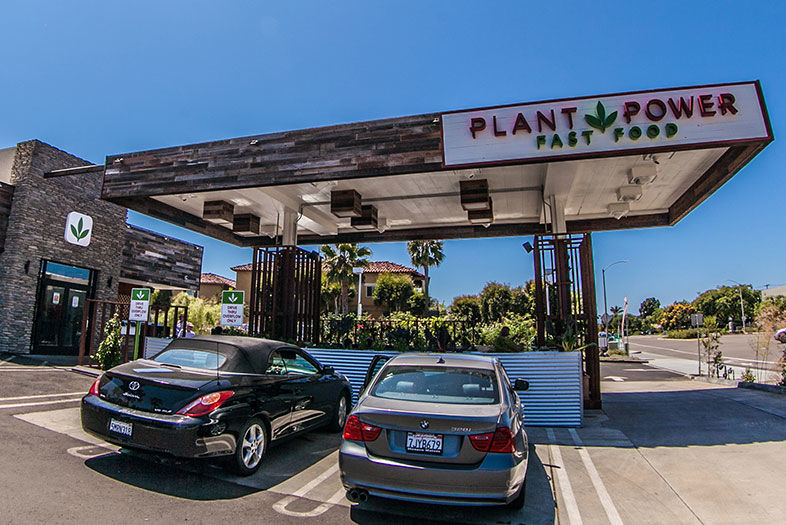
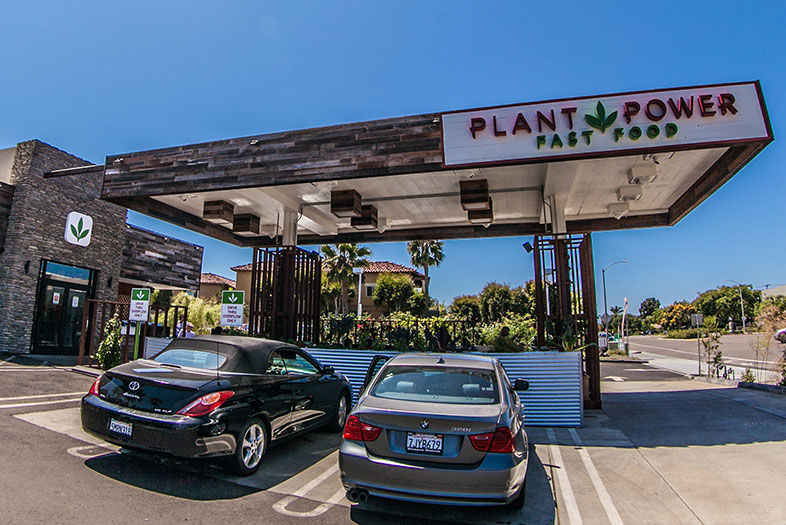
That’s the idea behind San Diego’s Plant Power, and they’re not alone. They serve plant-based fast food. All of their materials (utensils, etc.) are made from recycled material or plant material. The owners even dream of having a drive-thru that looks like a domed garden, with a canopy of plants and greenery that help offset the greenhouse emissions from cars.
The need for fast food and drive-thrus is still real. More than 160,000 fast food joints feed over 50 million Americans every day, with sales of over $110 billion. That’s because it doesn’t matter how educated we become about commodity food problems (hormones, antibiotics, CAFOs, etc.), we’re still busy. We still have demanding jobs, kids, spouses, friends, social media notifications, and lives. Minutes have never been more gold.
Evolution’s owner Mitch Wallis is one of the partners behind Plant Power along with Zach Vouga, an ethical vegan who worked at Evolution. They wanted to streamline Evolution’s branding, experience, and make the menu more approachable. They didn’t want meat eaters to feel like outsiders or somehow shamed in their house of leaf cuisine. The result was Plant Power, which opened its first location in Ocean Beach in 2016. It has the feel of an In N Out, but it’s all plant-based food. Now they’ve taken over a failed Burger King location in Encinitas, providing the community with vegan “fast food.”
Vouga is quick to point out that Plant Power isn’t necessarily “healthy.” It’s simply plant-based. But, as multiple studies have shown, the health of Americans could use a much bigger supply of plant-based foods for their well-being. I talked to Vouga about Plant Power’s new drive-thru, and the future of the company.
Why vegan food?
I’m a longtime vegan. I was in college in Chicago, and finishing up there when I made the switch. I got a job at Evolution Fast Food where I met my business partner, Mitch, the founder of Evolution. Mitch and I started planning for the future. We wanted something more accessible, friendly and inclusive, not just a vegan restaurant. We didn’t want it to feel like a vegan restaurant when they walked in. We wanted something that could be replicated, scalable, clean and easy.
Plant Power doesn’t seem overtly vegan. Why?
We wanted to rid ourselves of that stigma. Some people would come into a vegan restaurant and feel almost like they were in enemy territory. We realized that was a problem. A majority of our customers are not vegan. Maybe they’re just there for Meatless Monday, or they’re a flexitarian, or just exploring new things. There are so many heavily-charged emotions with veganism. I never wanted to be a “meat is murder!”, in-your-face vegan. We wanted to change the conversation about vegan food. It’s just another type of cuisine. It’s not cultish. And that’s the great thing about Plant Power. A few of our customers don’t even realize we’re vegan until the second or third time they eat there.
What ingredients are most integral to vegan cuisine?
Anytime you’re trying to make a vegan meat, it’s primarily a mix of vital wheat gluten or soy protein. Those are two very versatile ingredients. They can absorb any flavor and become a chameleon-type ingredient.
Do you use tons of nuts? Cashew cheese and things?
No. Most of our stuff is free of nuts, because we know people have allergies. Many of our burgers can be made with a gluten-free bun, too. I’ve always hated gluten-free bread. So I’m the best person to try it. After trying so many types, we finally found a bakery out of L.A. called Rising Hearts. Since I don’t like gluten-free bread, I knew it was a winner when I actually liked it.
Is drive-thru the business model going forward?
Absolutely. As Americans, with how busy we are, we desperately need healthier, more eco-friendly options on the go.
What’s eco-friendly about Plant Power?
We work with Hubbell and Hubbell Architects. They’re known for being one of the best environmentally friendly firms. Our tables are made of bamboo. We use recycled aluminum. Our compostables—plastic straws or forks or whatever—are made from renewable, plant-based sources. Our forks are made from potato starch. Our containers are made from sugar cane. We don’t even have recycling because most of our stuff isn’t recyclable.
That’s more expensive, right?
It does cost a lot more. I’m hoping as we expand, the price will come down. But if we were going to do this, I needed to do it right. We needed to bite the bullet. To top it all off, there are no subsidies on these vegan products. If I wanted to do a beef and dairy burger, I’d be able to buy a lot cheaper, subsidized food. But we’re getting by. It’s all about volume and demand, and I’m hopeful.
All right. I’m an omnivore. What am I ordering?
The buffalo chicken sandwich. It has that wow factor. It’s “chicken”—wheat protein, soy protein, quinoa—breaded in house batter, dipped in buffalo sauce, with a whole wheat bun and homemade ranch dressing. It’s amazing how easy it is to omit the eggs and milk in something like ranch. Sometimes people think that veganizing food is a huge mountain to climb, but the answer is right there in front of you.
Why do vegan restaurants always try to “imitate” meat?
One, we’re a bridge restaurant. We have tons of super healthy offerings, but we’re not at our core a healthy restaurant. We want to create an experience that’s accessible and redefines vegan food. Plus, nostalgia plays a part. I didn’t become a vegan because I hated the taste of meat. I still love the meat experience and I funnel all of that energy into what we create at Plant Power.
Where to next?
We’re not wanting to do three, four, or five restaurants. We’re looking at hundreds. All over the nation, the globe, and pursuing avenues to do that over the next ten to 15 years.
Plant Power has two locations: in Ocean Beach (2204 Sunset Cliffs Blvd.) and Encinitas (411 Santa Fe Dr.). plantpowerfastfood.com
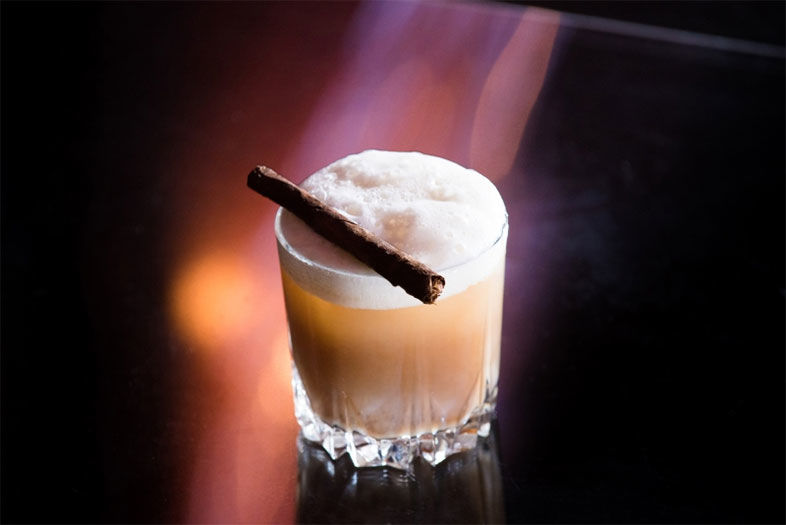
The Howlin’ Wolf cocktail, part of Grant Grill’s new menu dedicated to music legends.
By Troy Johnson
Wade Hageman can cook. The one-time white tablecloth chef has become an Encinitas icon since opening his pizza joint, Blue Ribbon Artisan Pizzeria. After that, he did a more full dining concept a bit east with The Craftsman. His foray into Hillcrest didn’t work so well (a story told by numerous, numerous restaurateurs who don’t own Baja Betty/Urban Mo’s/Gossip Grill). But now he’s announced he’s next concept—Open House, a riff on Asian flavors with his take on yakitori (Japanese barbecue), ramen, and poke. He’s secured the former spot of El Callejon, which passed into the restaurant afterlife in January after 22 years in business. It’s scheduled to open by the end of the summer…
Everyone’s favorite pork joint, Carnitas Snack Shack, is finally looking ready to open at the Embarcadero this spring. This space (1004 N. Harbor Dr.) will have cocktails from San Diego’s RMD Group (Fluxx, Sidebar, Rusted Root) and tons of outdoor waterside seating….
Hey, Del Mar. New chef in town for you guys this spring. Steven Lona is relocating from the L.A. area, the former exec chef of Bistro 45 (Pasadena) and worked under James Boyce and Craig Strong at Montage in Laguna Beach. He’s part of the team opening Tasting Room Del Mar (next to the Starbucks at 15th Street and Camino Del Mar) with a talented wine connoisseur in Rusti Gilbert, formerly of Addison at Grand Del Mar, which is like the Coachella of sommeliers…
I love Carlsbad. But its food and drink scene has needed to wake up and smell the decade for a while. It’s got some standouts, like Land & Water Co. (one of the best sustainable seafood chefs in San Diego in Rob Ruiz). But the most exciting opening-to-be is Campfire—creator John Resnick was one of the main faces and brains that helped Consortium Holdings (Craft & Commerce, Ironside) develop into a top-notch food and drink company. He’s hired Bells and Whistles to design his new 6,000 square-foot space, which will include a Quonset hut, for that post-WWII barracks drinking vibe. Carlsbad will be better off for this one, slated for sometime mid-2016…
I was mixed on my review of The Hake on Prospect Street a couple years ago, but have since returned and had some seriously good dishes (their ahi taco with jicama tortilla is pretty fantastic). And not a week goes by if someone asks proudly if I’ve tried the place. Well, now they’re adding 2,000 square feet to their subterranean semi-ocean perch, which means they’ll have a new outdoor dining space and an ocean view. Trying to do business on Prospect without an ocean view is like trying to do business on Morena Boulevard without a stripper pole…
Pizzeria Mozza’s sad and not terribly surprising demise at The Headquarters was big news. Now its replacement is nearly ready for business (early March). Flour & Barley is a concept from our bedazzled brethren in Vegas that does brick oven pizzas, plus Italian apps and over 150 draft, bottle and canned beers….
Westgate Hotel is one of my favorite hotels in Downtown San Diego. Looks like a fossilized doily, in a good way. They just announced their second annual Spirit of Baja Dinner, which’ll take place on April 15—inviting chef Javier Plascencia (Bracero, and new James Beard nominee) to collaborate with Westgate’s talented chef, Fabrice Hardel on a meal. Mezcal reception, Baja wines. You can buy tickets here. …
Now that the craft beer movement is into its 30s, its expanding its horizons. No longer is it “just a lot of hops plus fermentation and a beard.” We’re seeing lighter beers, sour beers, and now, especially, citrus beers like Grapefruit Sculpin. Now one of my favorite breweries in San Diego, Green Flash, just announced its new lineup under new brewer Erik Jensen, and he’s got a Passionfruit Kicker (American Wheat Ale with passion fruit), a “Soul Style” (tangerine India pale ale). They’re also releasing “Cosmic Ristretto” this Friday, a Baltic Porter with espresso and Candico, a caramelized Belgian candy sugar. For more on the new lineup, click here…
The other release of note is from the ever-awesome Lost Abbey. They’ve partnered with North Carolina’s Wicked Weed Brewing and tomorrow (Feb. 24) will release the finished product—Ad Idem, a French oak-aged golden sour ale with peaches and brett. It’s a blend, between a brettanomyces blond ale and a sour blond ale, aged in neutral wine barrels with whole, local peaches…
Everyone likes a free meal. And Leap Year babies (those of you born on Feb. 29, feeling like you don’t exist every three out of four years) get a free one from the Hard Rock Café on Feb. 29….
I love pairing dinners, mostly because I like food and drink. But I also like poking fun of pairing dinners. And that’s what San Diego band Splavender will do on March 18 at Mike Hess Brewing. Instead of pairing the beers with food, the beers will be paired with original Splavender songs written for the beer. For example, the Honeysuckle & Sho’Nuff Beer, a rye imperial stout, will be paired with a deep, contemplative groovy synth song. Sounds absolutely ridiculous. I like ridiculous…
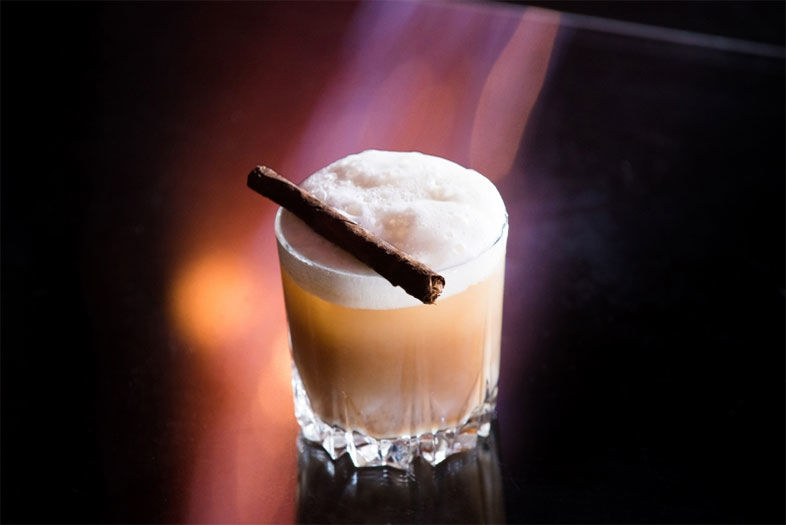
San Diego Magazine’s cocktail feature is coming out in the March issue. In there, I express extreme admiration for Grant Grill and mad-scientist cocktail guy Jeff Josenhans, who has ushered a slew of “firsts” into San Diego’s cocktail scene. However, more needs to be said about the Grill’s “chef de bar,” Cory Alberto. Well, now’s the chance to see his work. He just released a menu of cocktails inspired by his favorite musicians, including Howlin’ Wolf (Johnny Walker Red, cane sugar, chocolate, bitters and cigar foam), Ella Fitzgerald (Remy Martin 1738, Crème Yvette, rose water, tangerine, prosecco), Dick Dale (Mt. Gay Black Barrel US Grant Blend Rum, El Silencio mezcal, La Gitana sherry, tarragon orgeat, lime, pineapple, tiki bitters and a splash of absinthe), plus boozy odes to B.B. King, Ali Farka and Preservation Hall (the legendary venue in N’Awlins)…
Info Tapas
The Howlin’ Wolf cocktail, part of Grant Grill’s new menu dedicated to music legends.
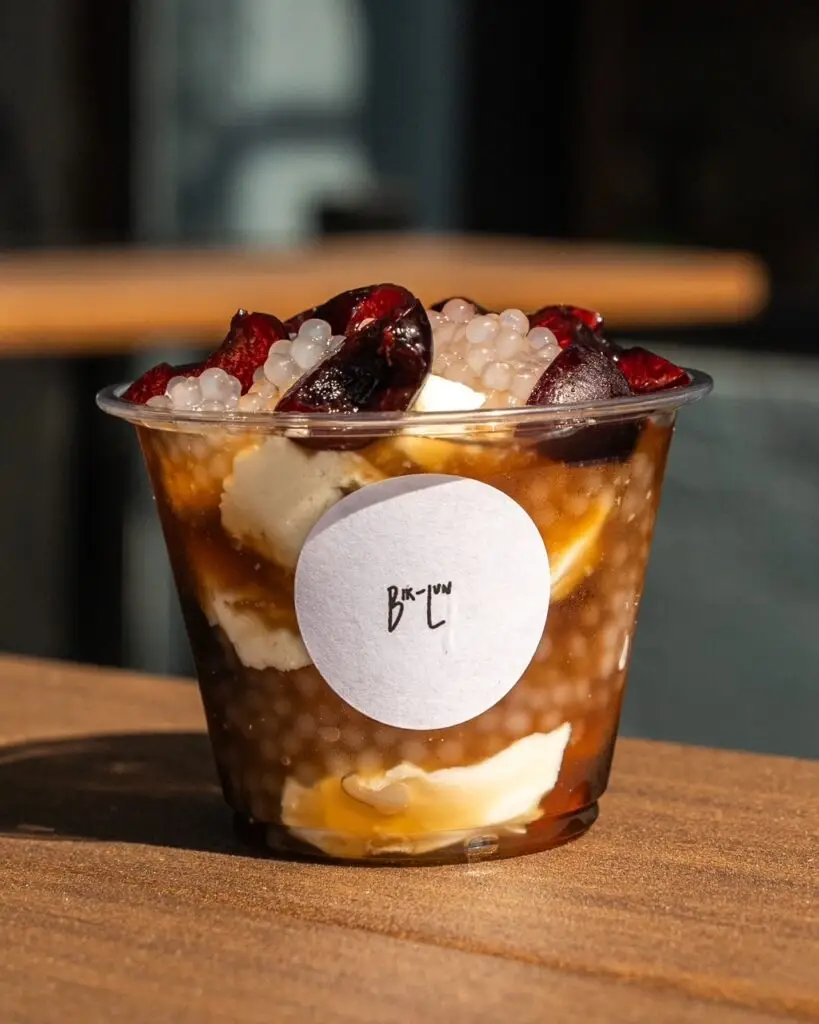
As a child, Chantal Partolan never considered cooking as a viable job route. Rather, it was a passion she could turn to as a way to flex her creative muscle, from the time she was in school all the way into adulthood working in a corporate space.
“I never felt like [cooking] was a chore, like some other people feel,” she says. To feed that passion, she started hosting supper clubs in 2022, creating menus and full tablescapes to bring together friends and family. With each successful gathering, she wondered: Could she take this further?
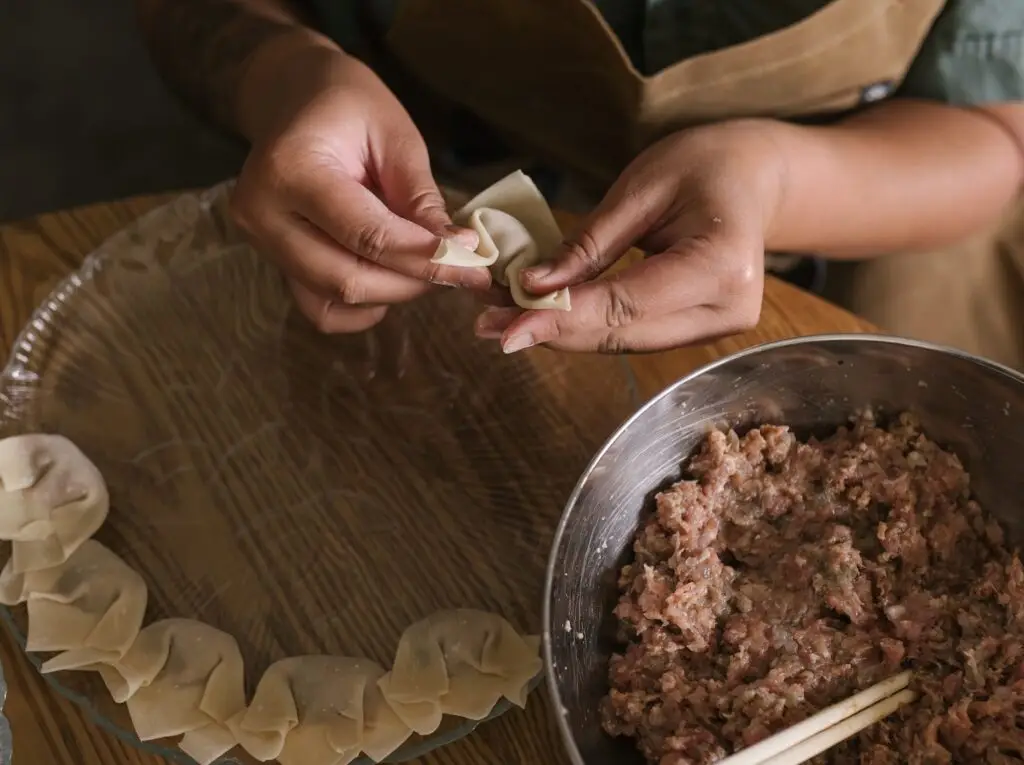
In 2024, she did. Officially launching as Bik-Lun, she began small, hosting baking pop-ups in Long Beach before moving back to her hometown of San Diego in 2025. Now, Partolan still mostly pops up at small local businesses like Moniker General and Joon Shoppe, but now also offers small batch catering and private chef services, all centered around her father’s Filipino and her mother’s Chinese heritages.
Photo Credit: Megan Jane Burgess
Bik-Lun (pronounced bik-LUHN, like “fun”) is named for her mother. “When she migrated to America when she was younger with all her siblings, they all got American names,” Partolan says. She doesn’t strictly adhere to rigid culinary rules—instead, she lets memories drive her creations.
“Now that my grandparents are no longer here, trying to revisit those memories and share them with others has been a really important part of this journey for me,” she explains. Ingredients like red bean and black sesame reflect her Chinese roots, while more savory items like sinigang (a sour and savory Filipino soup) pay homage to her father’s family.
You can next catch Bik-Lun on September 27 at Home Ec + Best Bud with Magnaye (formerly One of One), October 3 at Patine’s new location in Bankers Hill, and October 10-11 at the Mingei Museum for Merkado Kultura, a makers market for Filipino producers. Partolan says since most customers are familiar with her sweet products, she’s planning to offer more savory items—like a breakfast sandwich—at the Home Ec event to give people a taste of her creative versatility.
Eventually, she hopes to add some permanent residencies to Bik-Lun’s schedule—a few are already in the works, so stay tuned—while also looking for ways to combine her food and photography expertise. (A cookbook? Maybe, she says.) But in the meantime, Partolan will remain curious about where she comes from—and how it can take her to where she’s going.
Courtesy of Izola Bakery
San Diego Restaurant News & Food Events
Beth’s Bites
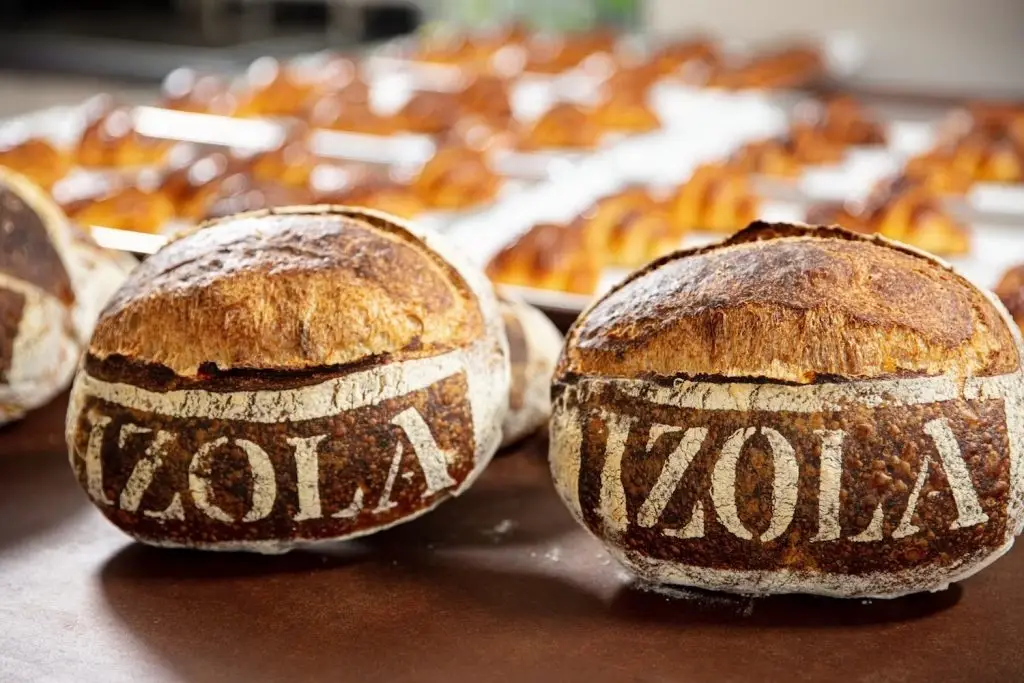
Izola Bakery has long discussed its expansion plans, and at long last, there’s finally some traction. The award-winning East Village bakery will officially move into its second location at the former California English space in Sorrento Valley, hopefully by the end of the year, according to owner Jeffrey Brown. In the meantime, the downtown location will continue to churn out plenty of buns, croissants, sourdough, and more to keep your carb cravings at bay.
Why settle for beer at Oktoberfest when you can have cider? Bivouac Ciderworks is throwing their version of Septemberfest, on Saturday, September 26 from noon to 5 p.m. at their North Park taproom and restaurant. Entry is free, and there will be plenty of German-inspired bites and eats to enjoy. I’m particularly eyeing the apple strudel cider float and Bavarian cider-kraut, but in all likelihood will also be getting a soft pretzel or two as well.
Listen Now: The Latest in San Diego’s Food and Drink Scene
Have breaking news, exciting scoops, or great stories about new San Diego restaurants or the city’s food scene? Send your pitches to [email protected].
Beth Demmon is an award-winning writer and podcaster whose work regularly appears in national outlets and San Diego Magazine. Her first book, The Beer Lover's Guide to Cider, is now available. Find out more on bethdemmon.com.
Today’s seniors are more connected than ever, with a renewed focus on retirement as a time of discovery and enriching experiences. The ultimate reward for a retirement well-earned is the wisdom to appreciate it all, and what better place to enjoy that unique perspective than Vi at La Jolla Village, in the heart of San Diego.
All-access pass to good living.
As a Continuing Care Retirement Community (CCRC), Vi provides access to a connected and fulfilling community while making it easy to plan for future care, should the need ever arise. With a care plan in place, residents enjoy greater financial predictability and long-term value, freeing them to focus on making the most out of retirement.
Resort-style amenities at the epicenter of a cultural hub like San Diego offer a retirement experience unlike any other. Paired with exceptional dining, spacious accommodations and dedicated staff, the best of maintenance-free living is all around. And with the introduction of Vista 360 Well-Being, Vi’s panoramic approach to wellness, there are more ways than ever for residents to access it all.
The harmony of mind, body and community.
Courtesy of Vi at La Jolla Village
The key to longevity is striking the right balance in maintaining an active lifestyle with an active mind in a fulfilling community. With newly renovated community spaces and restaurants, Vista brings a variety of opportunities for residents to elevate their well-being through Vi-exclusive “Signature Experiences.”
Vista Enrich takes an evidence-based approach to brain vitality, keeping residents at the forefront of cognitive health through exergaming (exercising + gaming), nutritional plans and informative workshops. It is also home to The Brain Vitality Studio, an innovative facility dedicated to cognitive fitness that has garnered national recognition.
Vista Discover invites residents into stimulating educational experiences, from chef-led cooking demos and guided wine tastings to lectures at local universities and intimate lectures following cultural outings.
While Vista Enrich focuses on brain health and Vista Discover engages residents intellectually, Vista Explore cultivates a sense of adventure through curated travel and local excursions. But broadening one’s horizons doesn’t always require a plane ticket. One recent event brought a taste of the world right to the community: an onsite “jazz cruise” featuring live music and global cuisine served at a series of themed “ports” all within the community’s own ballroom.
“Location, location, location”
Courtesy of Vi at La Jolla Village
One of the biggest perks of life at Vi at La Jolla Village is its proximity to just about everything. With easy access to transportation and local attractions just steps away, residents can explore and engage with their community at their own pace.
“There are trolley and bus stops within a 5-minute walk that will get you to the beach, UCSD Campus, medical appointments, downtown La Jolla or San Diego, et cetera. We rarely use our car,” said resident Tom Yager.
With the best of San Diego just steps away, residents don’t just live in the city, they live within reach of everything that makes it special.
The best of all worlds.
Courtesy of Vi at La Jolla Village
At Vi at La Jolla Village, retirement isn’t a chapter to slow down; it’s an invitation to discover more. Tailored community experiences created by Vista, paired with the vibrant pulse of San Diego just outside the door, mean that residents don’t have to choose between security and adventure, connection and independence. They get all of it.
This is what an all-access pass to good living looks like: the comforts of an elevated lifestyle, a community built for growth and a city made for discovery – all in one place.
To learn more about Vi at La Jolla Village or for details on available floor plans, visit ViatLaJollaVillage.com/SDM.
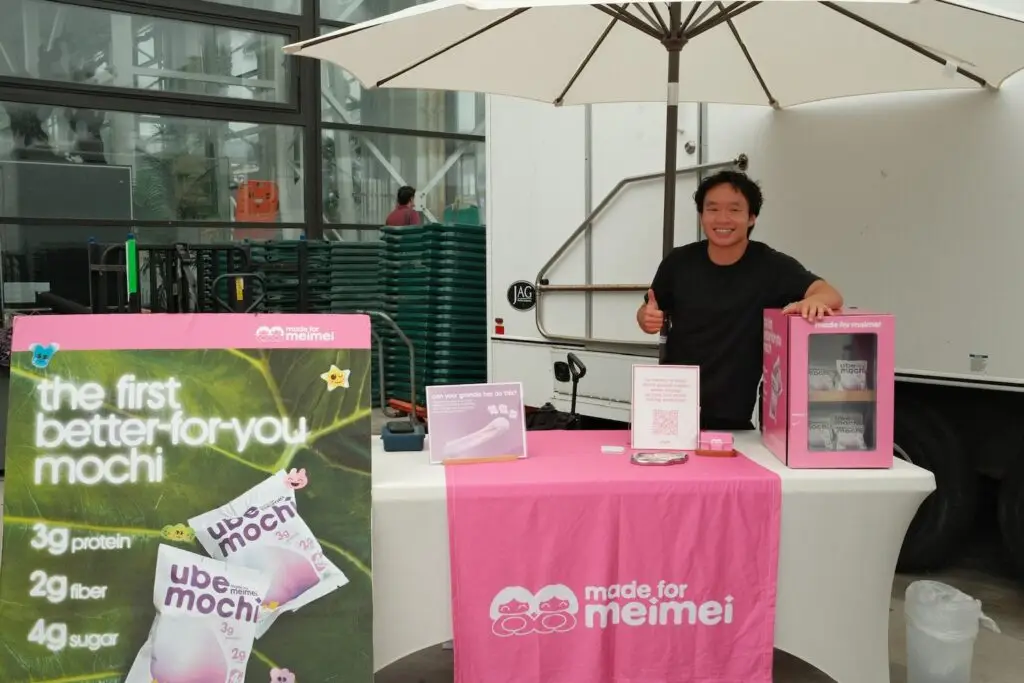
As a kid, Jacob Chen scrounged up whatever odd jobs he could—running lemonade stands, organizing garage sales, reselling appliances on Facebook Marketplace. But there was something about cooking that kept him coming back to the kitchen. “It started as a way for me to spend time with my mom,” he says. “In a way, I think it was inevitable that I would begin a food-based business.”
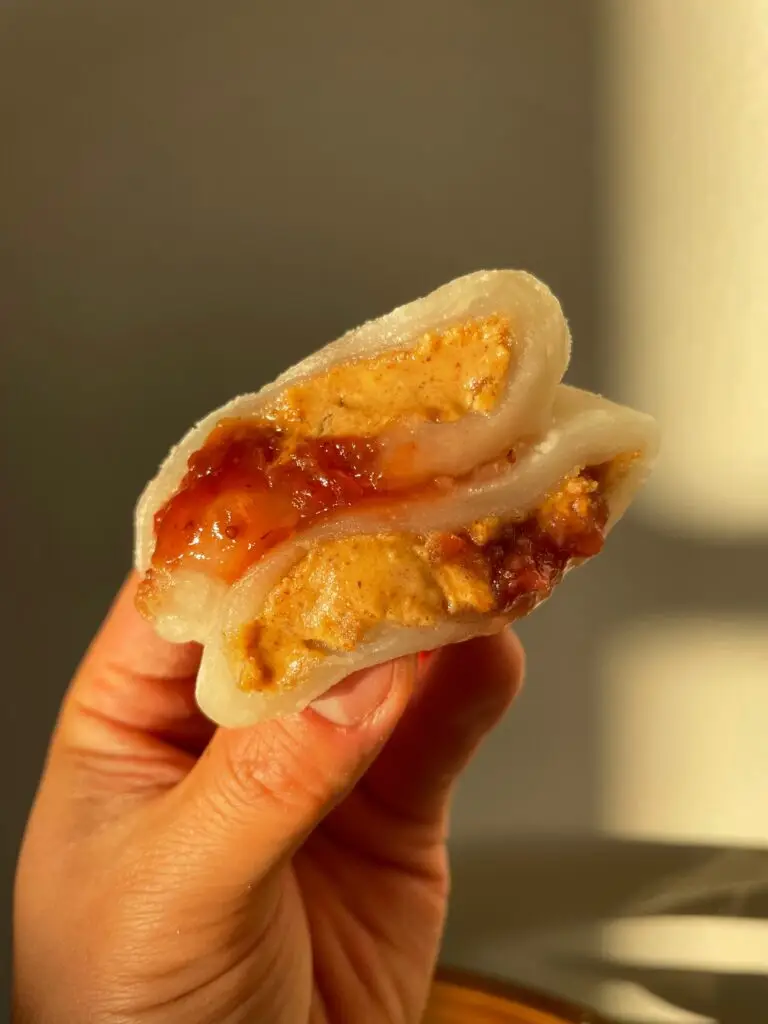
That business ended up being Made for MeiMei, a line of low-sugar, high protein and fiber mochi flavors like ube, matcha, red bean, black sesame, peanut butter and jelly, and chocolate hazelnut. “‘Mochi’ is derived from ‘mochigome,’ which is the special type of short grain rice that gives mochi its stretchy, chewy texture,” he explains. Traditionally served in Japan as a dessert to celebrate the new year (similar to bibingka in the Philippines and nian gao in China), American-style mochi tends to taste sweeter and often comes as mochi ice cream. However, Chen points out that wasn’t always the case.
Courtesy of Made for MeiMei
“Before mochi was synonymous with ice cream and refined sugar, it was simply a rice based snack filled with whole food ingredients,” he says. “That’s the version of mochi we’re trying to bring back.”
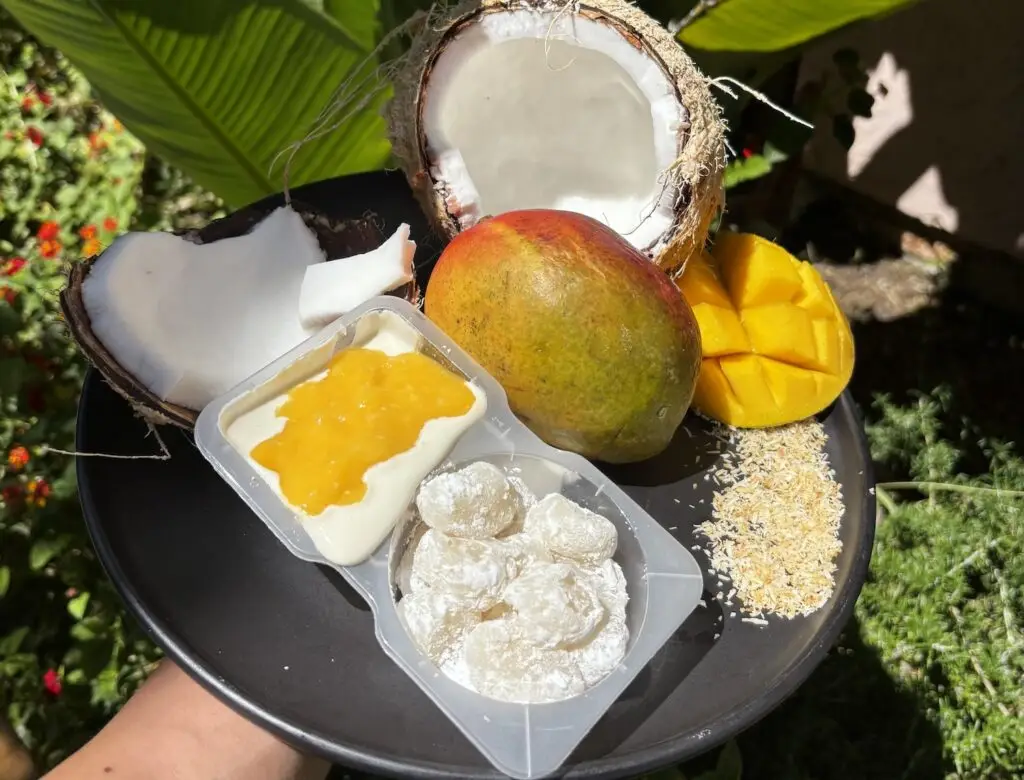
Made for MeiMei’s primary ingredients are rice flour and coconut milk, plus the featured ingredient for each flavor. But rather than using refined sugar, Chen sweetens his mochi with monk fruit and uses organic pumpkin seed protein and chicory root fiber to create what he calls “the first better-for-you mochi.”
Recent collaborations include a mochi-wrapped gelato with An’s Dry Cleaning, strawberry daifuku cream puff with Mon Chourie, and a funfetti chantilly cream dip mochi with The Clovery, but Chen has his sights set on retail expansion. Currently, Made for MeiMei products are available online, locally at Easy Does It Cafe, Bodega Market, or at upcoming events like Embolden Beer Company’s Taste of Shogun on September 27 (admission is free!) and a pop-up with Organic Oren on October 5.
Courtesy of Made for MeiMei
Besides being better for you nutritionally, Chen’s goal for the business is to also be better for the world. He’s worked in rehabilitation clinics and volunteered at San Quentin when he lived in Berkeley—experiences that transformed his worldview. “It really doesn’t take much to be on the other side of the fence,” he says. That’s why he donates portions of proceeds to organizations like Second Chance San Diego (which helps formerly incarcerated people find steady employment), Immigrant Defenders Law Center (a nonprofit deportation defense law firm), and Border Angels, an advocacy group working to reduce fatalities of people crossing the United States and Mexico border.
Chen has his sights aimed high, hoping to bring Made for MeiMei to more local grocery stores and cafes before hitting national retail shelves. Will he stop at mochi? Maybe not.
“There are so many childhood treats that could use an ingredient upgrade,” he says. “Mochi is just the beginning!”
Courtesy of Roppongi Restaurant & Lounge
San Diego Restaurant News & Events
Leave It Up To The Chefs at Roppongi
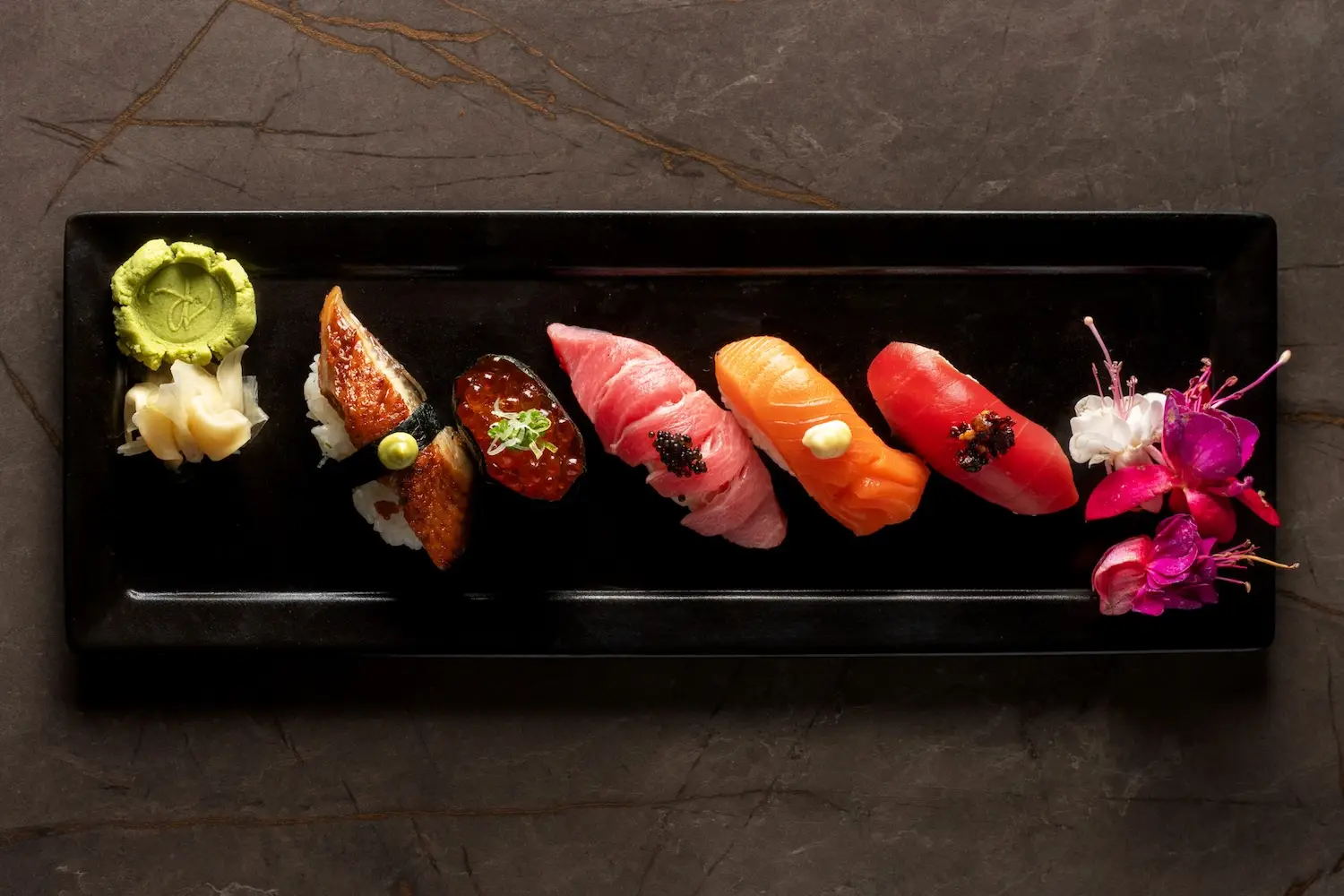
There’s no such thing as too much omakase, and we’re leaning in. On September 24, chef Davin Waite (The Plot, Wrench & Rodent) will join chef Mark Correa at Roppongi Restaurant & Lounge for a one-night-only, eight-course omakase experience with an optional (but personally recommended) beverage pairing curated by sommelier Humberto Ramirez. You definitely need to snap up a reservation for this one before they’re gone—and with a dream team like this, they will be gone.
Courtesy of Swells Sourdough Bakery
Beth’s Bites
Another weekend, another food festival—not that I’m complaining! On October 3, the 15th annual Taste of North Park hits the streets with over 50 tastings and 15 beverage stops awaiting your arrival. The event sells out every year (for real), thanks to participants like the newly opened One of Us, Falafel Heights, Finca, and many, many more. (Leave the parking stress at home—this is the ideal time to take advantage of the not-utilized-enough North Park parking garage.)
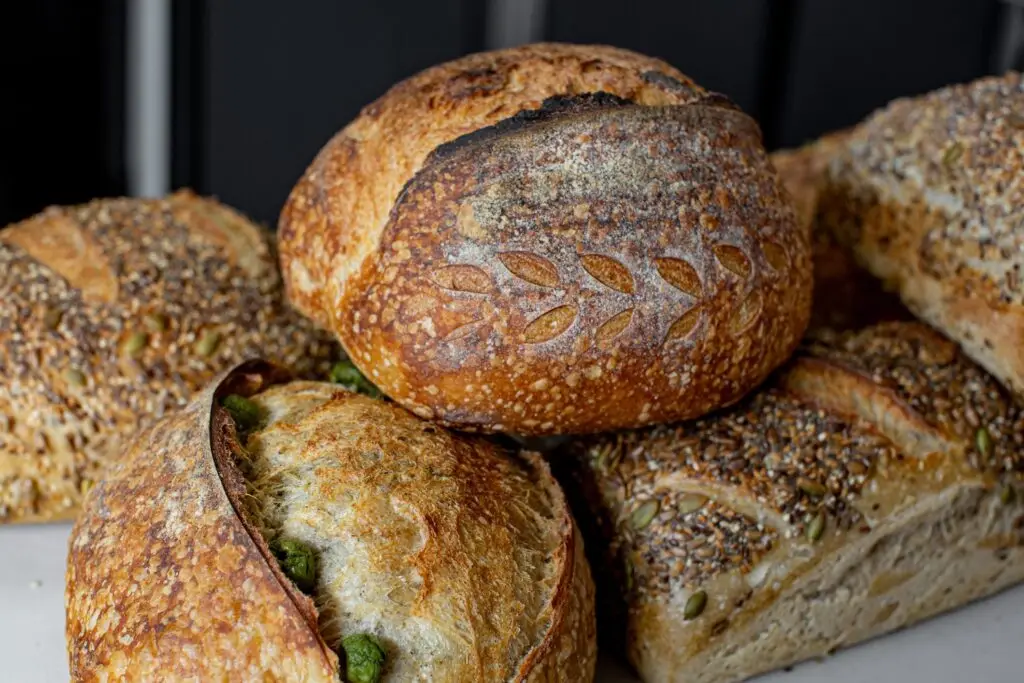
Swells Sourdough Bakery is movin’ on up—to Little Italy, that is. The farmers market favorite officially opens at 2254 India Street on October 1, but eager patrons can stop by during the soft opening starting September 26. Swimsuit season is over, people. It’s time to get our bagel on.
Longtime Point Loma watering hole Paradise Lounge & Grill is closing its doors, but only temporarily. I’m keeping an eye out for an official opening date, but the business has posted they hope by the end of September. Hopefully, it’ll be in time for the Padres to make the playoffs—manifestation!
Listen Now: The Latest in San Diego’s Food and Drink Scene
Have breaking news, exciting scoops, or great stories about new San Diego restaurants or the city’s food scene? Send your pitches to [email protected].
Beth Demmon is an award-winning writer and podcaster whose work regularly appears in national outlets and San Diego Magazine. Her first book, The Beer Lover's Guide to Cider, is now available. Find out more on bethdemmon.com.
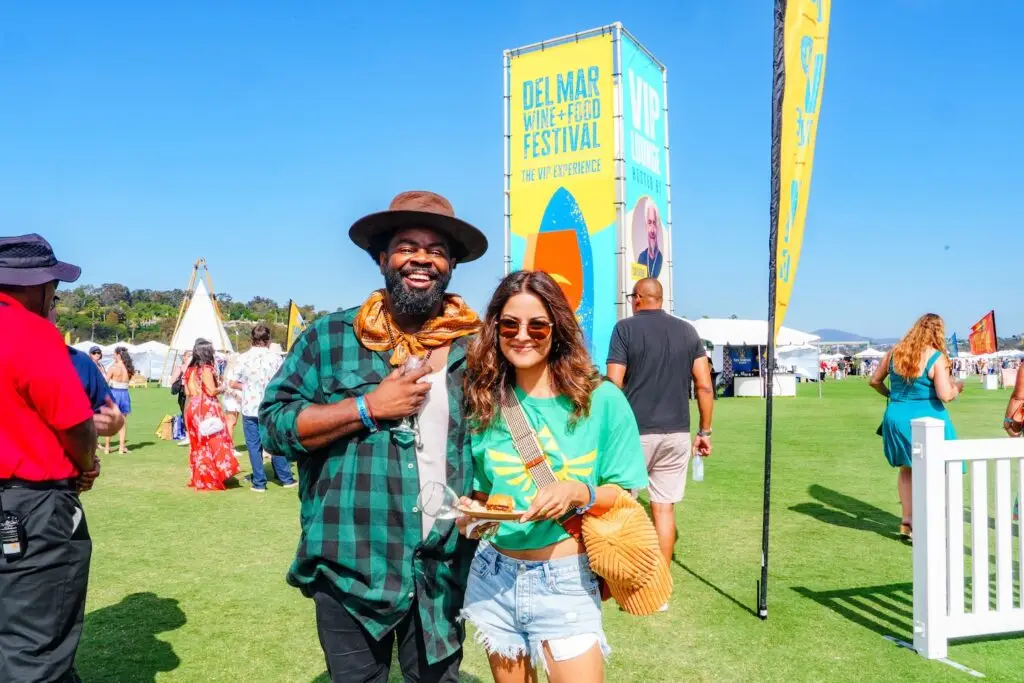
At Del Mar Wine & Food Festival’s Grand Tasting, the walk between food tents can take a while. You might stop to watch a chef competition, get pulled toward the DJ, or find yourself playing mini golf before you remember which bite you were after.
Across the Del Mar Polo Fields, there’s also line dancing, a 1961 red Beetle ready for photos, and an aviation-themed pop-up with Reno Tahoe chefs and mixologists. Need a slower stretch? Check out the wellness stops or browse the shops. Here’s what to look for as you make your way through the festival’s zones:
Courtesy of Del Mar Wine & Food Festival
VIP First Bites & First Sips
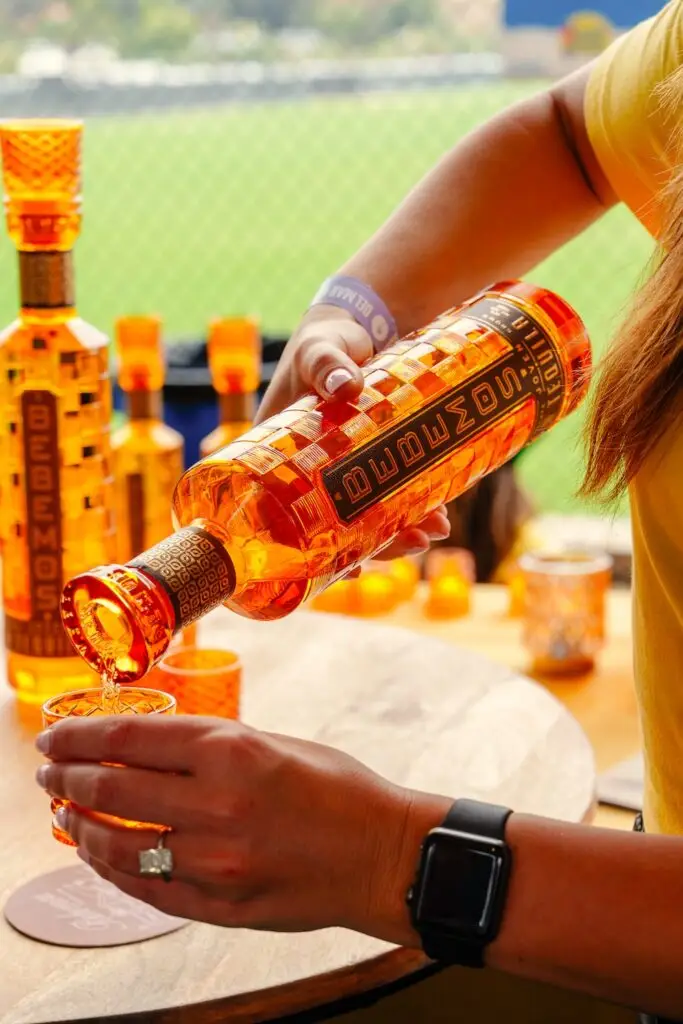
VIP ticket holders get a head start, with the VIP Reception running from 11:15 a.m. to 1 p.m. and serving first bites, first sips, and a few surprises before the Grand Tasting officially gets going. Champagne Telmont will make the festival’s first pour, while Cohn Restaurant Group brings carajillos alongside pours from Karl Strauss, Licor 43, Tap Truck San Diego, Bebemos Tequila, and Devil’s Grin Gin.
The bites are just as good. Celebrity chef Beau MacMillan will serve a first bite, while Warung RieRie is bringing one of its highly coveted dishes. Yes, this is the restaurant that currently has an eight-month waitlist. You’ll also find bites from The Shellfish Affair, The Waverly, Wolf in the Woods, Dora Ristorante, Cori Pastificio Trattoria, An’s Gelato, Pacific 333, Vintana, and more.
And because every good first act needs a soundtrack, there will be live painting and music, with Courtney Govan bringing live jazz to the reception. It’s the perfect opening act before the main event.
Live Cooking & Culinary Moments
During the VIP Reception, chefs Tommy Gomes and Jeff Roberto will conduct a live ahi cutting. Plant Paradise brings another culinary angle, with celebrity chef Zuliya Khawaja joining the plant-based lineup. The area combines chef talent with plant-forward restaurants and brands, giving guests a chance to see just how creative plant-based cooking can get.
Throughout the weekend, The Stage keeps the cooking demonstrations coming, with celebrities and chefs sharing techniques, recipes, and plenty of inspiration for anyone who plans to actually cook something when they get home. Before you know it, you’re watching a chef demo, casting your awards vote, and sipping mezcal on the grass with friends you just met in line.
Courtesy of Del Mar Wine & Food Festival
DJs, Music, & The Party
At the Grand Tasting, dancing just sort of… happens. A DJ drops the right song. Someone’s holding a taco in one hand and a glass of wine in the other. The country zone breaks into a two-step. Friends convince friends. Strangers become temporary dance partners. By the end of the day, everyone’s forgotten they were ever worried about looking cool.
DJ TENAX will be spinning in Plant Paradise, bringing house, techno, and UKG to an open-air dance floor that’s hard to leave. Chris Cantore, a veteran San Diego broadcaster, takes over the VIP Tent, while BootScootin Line Dance and PVO Events bring country-style line dancing to the Polo Fields, so you can work off your tasting itinerary one two-step at a time.
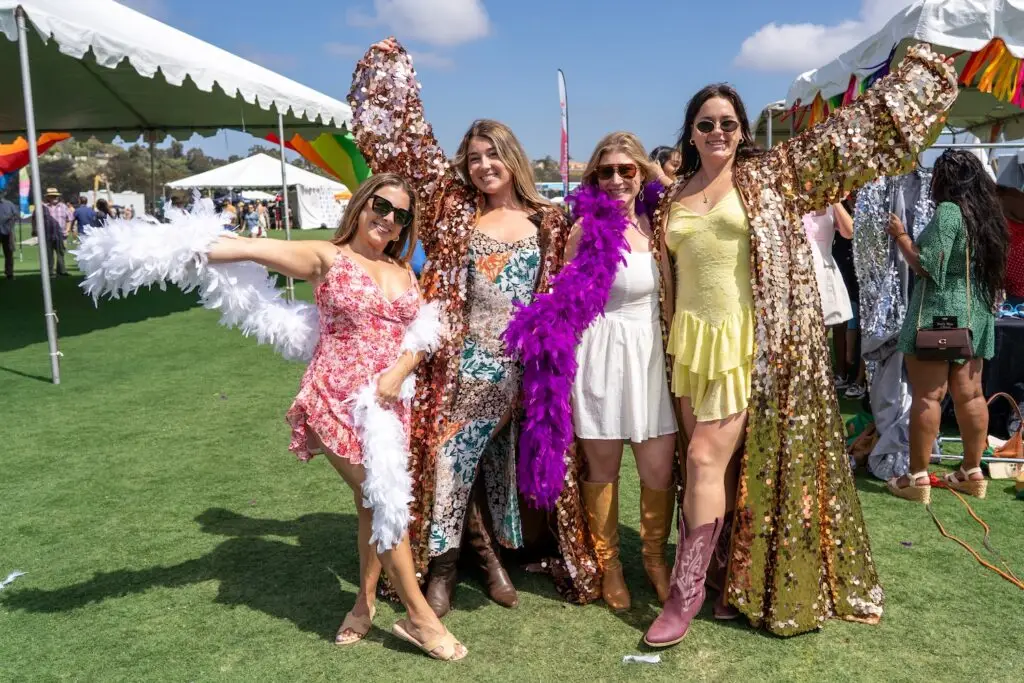
Then a live guitar hum in the distance leads you to a fuchsia boa over at the Pride Zone, where you’ll find yourself covered in sequins and having the lawn party of a lifetime.
Sports, Tailgates, & Games
Not every activity at the festival requires a tasting glass (although it’s certainly encouraged).
The Matchday Experience brings San Diego FC and San Diego Wave FC into the Grand Tasting, complete with interactive tents and plenty of game-day energy. Athletic Brewing is also sharing activation space with San Diego Wave FC, bringing a fun nonalcoholic option into the mix.
For golf fans, the Los Angeles Golf Club is bringing a Dryve Box golf simulator to the festival. And if your competitive streak is less fairway and more miniature windmill, SD Pop Up Mini Golf has you covered.
The Beach Zone gets in on the action, too, with surfing-inspired elements and Playavole paddle courts. Hemlock Hats and other California brands add to the coastal atmosphere, but the real draw is having somewhere to actually play. And don’t worry, you can cool down in COOLA’s turquoise beach chairs, too, and when your bestie suggests reapplying sunscreen, obviously you do. Basically, there are plenty of ways to work up an appetite between tastings.
Courtesy of Del Mar Wine & Food Festival
Photo Ops & Instagram Moments
You’re going to want to take photos, and the festival has made that extremely easy.
A Timeless Day is bringing multiple photo moments to the Grand Tasting, including a 1961 red Beetle at The Italian Getaway and a teal VW bus in The Beach Zone. For something a little more polished than the standard group selfie, head to the Locals Zone for Pixster Photo Booth and San Diego’s version of a Glam-Bot, complete with a grass red carpet.
Bebemos Tequila is also bringing back its festival-favorite hidden speakeasy. If there’s ever a time for a photo, it’s here. Otherwise, people might not believe you. The speakeasy serves bone marrow shots straight from the bone, with candlelight, a lounge area that makes it hard to believe you’re in a tent outside, and little orange shot glasses. This is “first slide of your festival photo dump” material.
You can also grab your squad and head to LaCroix’s bright and ridiculously cute setup, or swing by San Diego Magazine’s area, where you might stop for a photo in front of the larger-than-life SD Magazine sign and find yourself watching a painting come to life.
But really, you’re in Del Mar. The ocean is essentially your backdrop, and every zone gives you an excuse to stop for the obligatory “totally candid” photo. And yes, the best strategy is to get the group shot before everyone has been sampling wine for three hours.
Shop, Browse, & Take Something Home
The Grand Tasting also doubles as a little shopping excursion, with local makers, fashion, vintage finds, jewelry, and lifestyle brands scattered throughout the grounds. Smoke Revival Vintage Vault brings the thrill of vintage treasure hunting, while Nortte Hats and Hemlock Hat Company make a pretty good case for leaving with a new accessory.
Keep an eye out for jewelry and creative vendors, too, including Iris Studio Jewelry and New Nightfall Jewelry, plus local artists and makers featured throughout the festival.
You can come for an all day food and wine festival, but still leave with something shiny you definitely did not plan to buy.
Wellness & Reset Moments
We know, at some point, even the most dedicated grazer has to come up for air. The Novo Dia Wellness Zone is designed for exactly that, bringing together mocktails, coffee, hydration, wellness brands, and even bites from Parakeet Cafe.
Step away from the food and drink frenzy for a few minutes, relax in the shade, try some skincare, stretch with prAna, and maybe grab some Instant Hydration Electrolytes before round three.
There’s also nothing wrong with stopping to smell the roses at Green Air Botanicals while devouring a dairy-free cheese dip. It’s less about disappearing from the party and more about making sure you have enough energy to keep going.
The zones give you somewhere to wander, and the activities give you a reason to keep going. So grab your tasting glass, check the schedule, and leave a little room in your afternoon for something you didn’t plan on doing. At Del Mar Wine & Food, that’s usually where things get interesting.
Isabella Dallas is a freelance writer for San Diego Magazine and the Arts and Culture Editor at The Daily Aztec in her final year at San Diego State University. She previously worked as an editorial intern for SDM, but when she’s not writing, you can find her trying the best coffee spots in SD, devouring the latest rom-coms, and indulging in anything and everything pop culture.
NewBridge School is San Diego’s only school dedicated to the education of students with dyslexia and related learning profiles. For 30 years we have successfully served students with dyslexia, dysgraphia, dyscalculia, receptive/expressive language disorders, ADHD, executive functioning and memory deficits. Students transition successfully into academically rigorous high schools and colleges across the country. Why NewBridge? Training, training, training (plus intensive individualization, and comprehensive program design). All teachers are trained and retrained biennially in Orton-Gillingham, the only approach proven to remediate dyslexia based on Science of Reading research, and complete a year-long training program. Every aspect of our program is designed around our students’ learning styles and needs. Every class is taught by a highly-trained expert, and our Speech/Language and Occupational Therapy teams embed throughout the day. Our multisensory, multi-tiered math program has been developed in conjunction with sister schools and experts across the country. Don’t wait—early intervention is magic!