
Featured articles
Featured articles
Featured articles
What's next
Featured articles
Featured articles
Featured articles
Ready to know more about San Diego?
SubscribeReady to know more about San Diego?
Serea's over-the-top libation delivers Champagne wishes and caviar dreams
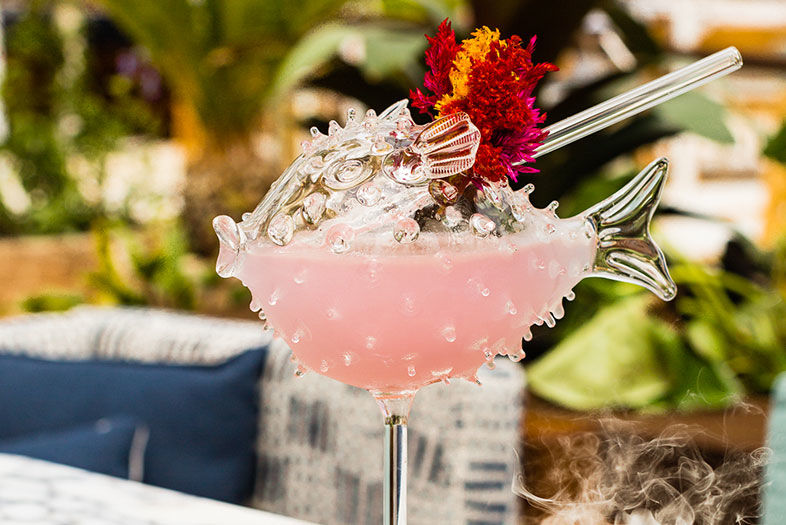
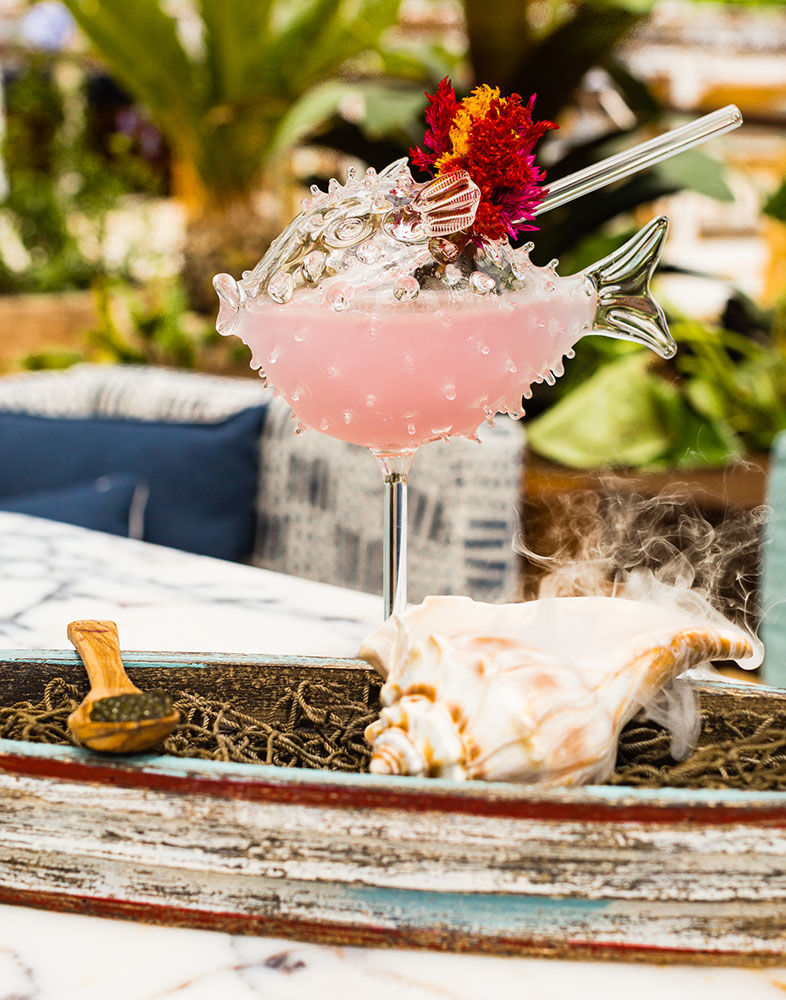
Top Shelf: The $150 Cocktail at Hotel Del Coronado
Photo by Justin McChesney-Wachs
Hotel Del’s new seaside restaurant has been the talk of Coronado for its tableside service and fresh-out-of-the-ocean seafood. But when we heard they have a $150 drink on the menu, in the name of research we had to see it for ourselves. And as far as Champagne wishes and caviar dreams go, the Fugu Del delivers (literally) just that.
The recipe has just a few ingredients: Beluga Gold vodka (a premium Russian brand), housemade marcona almond orgeat, and Meyer lemon juice are shaken over ice as a base, then topped with a liberal pour of 2006 Dom Pérignon. But what makes the price tag hefty is the puffer-fish glass it’s served in—handblown by an artist in Spain—and it’s yours to take home. The presentation doesn’t end there.
The Fugu Del arrives at the table on a wooden boat along with a spoonful of caviar and a conch billowing a cloud of coconut-scented dry ice vapor. It’s unabashedly over the top (every time I took a sip, I thought, “There goes twenty bucks”), and that’s exactly what the cocktail’s inventor, Eric Hobbie, was aiming for.
“The Del has such a majestic presence to it, and I wanted to grace that with a cocktail which brought an equally powerful presence,” says Hobbie, a “corporate intoxicologist” at Clique Hospitality. He wanted the drink to touch all the senses, and that’s where the puffer fish’s sidekicks come in—the scented shell is reminiscent of an ocean breeze; the caviar brings the saline taste of the sea.
The buzz you’ll get from the Fugu is comparable to that of a French 75, and it’s only magnified by the fancy feeling you’ll experience when they bring it to you.
1500 Orange Avenue, Coronado sereasandiego
Founder Dharti Jadav sources cumin, turmeric, coriander, and more directly from small-scale farms across India for fresher, more flavorful results

Around the world, people prize wine from hyper-specific regions. We know that grinding whole coffee beans results in a richer cup than using preground beans. So why do so many of us rely on preground spices to flavor our food?
Dharti Jadav wants us to change that perception of spices, using her own childhood memories from growing up in Ahmedabad, a city in western India in the state of Gujarat. She’s lived in the United States for 20 years, but never had to settle for substandard, stale spices from an old spice rack in a random grocery store. Her mother, who visited every year, would always bring along as many spices from India as she would need until the next year.

That changed with the pandemic. “I’m used to a certain freshness level in the spice,” she explains. When the world went into lockdown, she resigned herself to shopping at a large grocer to refill her shelves.
It didn’t go well.
The cumin tasted like cardboard—nothing like the piquant, aromatic herb her grandfather grew in India. “It literally felt like somebody was taking away my memories,” she says. She couldn’t let that happen. So she decided to launch Koshna to present spices in a way that actually showcases their depth.
Sharing a variety of fresh spices for people to fully experience their vibrancy is one thing. But Jadav’s business plan ensures all Koshna products are also sourced individually from small-scale farmers in India, who harvest and deliver the same year to ensure full potency. For comparison, mass-market spice brands can take two years or more to hit shelves, and every day in storage diminishes its vitality and flavor.
Plus, most spices aren’t just one flavor from one place, she explains. “There are varieties of specific turmeric that have their own nuances and grow in a specific region,” she says. But if you look at 99.9 percent of turmeric bottles on mass market shelves, the label will just say “turmeric.” We don’t simplify wines into just “white” or “red.” So why don’t spices, the commodity that literally launched global trade routes we still use today, get the same specificity, in stores or in restaurants?
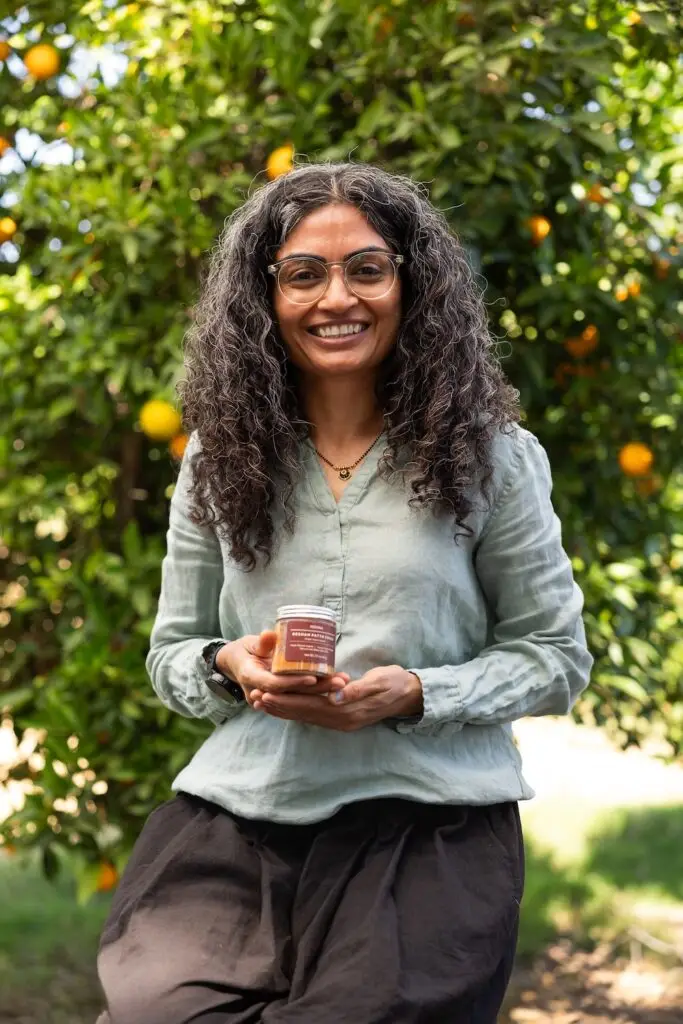
“All these restaurants, they’re all about farm-to-table,” says Jadav. The menu often says where the local lettuce was grown or where the fish was caught. “I have yet to find a restaurant that says ‘my spice comes from this farm.’” Most people don’t even know where black pepper originated from. (Hint: it’s also from India.)
Jadav sells Koshna spices online, various farmers markets in San Diego, seasonal pop-up events, and small shops like Home Ec, Bica, and Fox Point Farms. Currently, her product line features spices like Lakadong turmeric (from Umnari in the Meghalaya region), Chambal coriander (named for the Chambal River flowing through the Khera Rudhda in Rajasthan), Aaji fennel (named for the Aaji River flowing through the Ramod in Gujarat), Resham Patto chilli (from Ramod, Gujarat), and of course, the spice that started it all—Banas cumin (named after the Banas River flowing through Dungala, Gujarat).
She knows it can feel intimidating to go from a shaker of flavor to having to grind your own. But it’s worth it, she promises. “Just play with it,” she laughs. “Cooking, it’s like the simplest thing. Nothing wrong can come out of it.”
Listen Now: The Latest in San Diego’s Food and Drink Scene
Have breaking news, exciting scoops, or great stories about new San Diego restaurants or the city’s food scene? Send your pitches to [email protected].

Beth Demmon is an award-winning writer and podcaster whose work regularly appears in national outlets and San Diego Magazine. Her first book, The Beer Lover's Guide to Cider, is now available. Find out more on bethdemmon.com.
Some problems are worth having—like too many things to eat, sip, and do in one afternoon

At Del Mar Wine & Food Festival’s Grand Tasting, everyone has their own goals for the day. One friend wants oysters and Champagne. Another heard there’s line dancing. Someone disappeared into Taco Alley. The food person is making a beeline for every chef demo, the golf friend has found the simulator, and someone else is already settled into a beach chair with a mezcal cocktail and has announced they’re “never leaving.”
Consider yourself zoned in.
This year, the Grand Tasting turns the Del Mar Polo Fields into a full-blown foodie wonderland, with chef showdowns, wellness escapes, art installations, lawn games, music, and plenty of magazine-worthy plates. But the zones are where everyone gets to play their own way. You might sip your way through the SLO Zone, accidentally spend the afternoon behind the DJ booth in Plant Paradise, or live out your best beach day in The Beach Zone.
With 100-plus chefs and restaurants, 150-plus wineries, breweries, distilleries, and drink makers, plus a whole lot more happening in between, there’s no shortage of ways to spend the weekend. And with the Grand Tasting taking place October 3 and 4, there’s actually time to explore.
Because the problem with bringing your favorite people to an adult playground is that everyone wants to play differently. Luckily, you get two days to figure it out. Here’s where to start:

The Beef Experience, presented by Brandt Beef – One World Beef, is for the people who believe a food festival is a perfectly reasonable excuse to build an entire afternoon around meat. Brandt Beef brings its signature fare to the Polo Fields alongside a seriously stacked lineup of local favorites, from Tanner’s Prime Burgers and Ranch 45 to Jimmy’s Famous American Tavern, Order Fire Barbecue, Flying Pig Pub & Kitchen, The Pit BBQ, Aloha Rib Shack, and more.
And then there’s the tent you might almost miss.
Tucked into Brandt Beef Alley, Bebemos Tequila has set up what looks, from the outside, like a fairly unassuming tent. Walk inside, though, and you’ll find a full little speakeasy lounge, complete with a bar and one very dramatic tequila trick. The team lights the shots right in front of you before pouring them straight into guests’ mouths. Candlelight, fire, tequila, barbecue. Suddenly, your casual afternoon tasting has taken a turn.
Grab a plate of Brandt Beef tallow fries, chase it with a pour from Bebemos Tequila or Tap Truck San Diego, and maybe browse Nortte Hats while you recover. The rules are simple: follow the smoke, trust the grill, and maybe don’t make dinner plans afterward.
For the friend who thinks every good afternoon should involve a little sunshine, a cold drink, and nowhere to be, there’s The Beach Zone. Presented by Reef Lifestyle, this laid-back corner brings the San Diego summer fantasy to the Polo Fields, complete with coastal bites, beach-inspired brands, and plenty of reasons to stay awhile.
Grab bites from Duke’s La Jolla, Jake’s Del Mar, Lofty Coffee Co., Dang Brother Pizza Co., and Coral Del Mar, then cool off with Summer Club, Volley, Surfside Iced Tea and Lemonade + Vodka, Tito’s Handmade Vodka, Mezo Mezoritas, Roseade Wine Spritzer, Pinkys, and more. Hemlock Hat Co., Coola, Sambazon, Playavole, Shibumi Shade, Spritz del Conte, and Out of the Woods add a little retail therapy to the mix, because the Grand Tasting obviously needs shopping, too.
And yes, there’s a photo op. Find the teal VW bus from A Timeless Day, gather your favorite people, and pretend you’ve spent the afternoon cruising the California coast instead of wandering around a wine and food festival.
It’s an area filled with surf-inspired games, your next favorite beach accessory, and a drink in hand. Basically, San Diego summer, condensed into one very convenient patch of grass.

Neon boas, glitter-filled drinks, and enough food to make choosing a single dinner impossible. The Pride Zone presented by San Diego Pride is bringing the energy, gathering some of San Diego’s favorite restaurants, bars, breweries, and sweet spots in one very colorful corner of the Polo Fields. Expect bites and beverages from Cary Q Wines, Gossip Grill, Rootdown & Es Okay, T’Maro Brands, and more.
Plant Paradise is your green oasis, but don’t expect it to be particularly peaceful. DJ Tenax returns with house, techno, UKG, and the kind of set that can turn a quick stop into an hour on the open-air dance floor. As Green Air Botanicals sets the mood, grab a cocktail from Mission Craft Cocktails, Makku, or San Hagen Tequila, and a bite from the sprawling lineup of plant-based bites and snacks from some of San Diego’s vegan favorites.
Kindred, Nourish Eats, The Plot, Maya’s Cookies and more. There’s also a full lineup of brands to snack your way through, including Aficio 22, Bücha Hard Kombucha, Nichols Farms, Nuts For Cheese.

Isabella Dallas is a freelance writer for San Diego Magazine and the Arts and Culture Editor at The Daily Aztec in her final year at San Diego State University. She previously worked as an editorial intern for SDM, but when she’s not writing, you can find her trying the best coffee spots in SD, devouring the latest rom-coms, and indulging in anything and everything pop culture.
The new Hawaiian- and Japanese-inspired cafe will serve locally caught bluefin, fresh spring rolls, housemade sauces, and plenty of matcha

Not all monsters have to be scary. In fact, entrepreneur Pinyada “Ada” Primpray’s is delightful. Sea Monster, a small cafe that will serve poke bowls, fresh spring rolls, and matcha, will open in Mission Valley by the end of the year.
“The concept is a Hawaiian- and Japanese-style cafe,” Primpray explains. She calls it Sea Monster in homage to her friend’s popular restaurant Big Monster Sushi & Thai in Hawaii, but “the idea really started to take shape after I came back from a solo trip to Italy,” she says. The experience inspired her to start her own concept that mixed her culture, experience, and passion for food.
Sea Monster will be her first restaurant as an owner, but Primpray has worked in restaurants for 15 years in places like Kauai, Chicago, New York, and San Diego. She realized a similar health-conscious, seafood-forward, quick-service restaurant could work here, especially in that corner of Mission Valley where pizza and burgers reign. Plus, she points to the massive development plans for the area—between Riverwalk bringing thousands of new homes to the area and even more coming from San Diego State University, there are lots of new locals looming on the horizon.
She brought on Head Chef Wasu Gibb Palipote from Sushisamba in Los Angeles to develop the menu and signature sauces, like ink wasabi and a larb sauce. “Every couple of months, we plan to introduce a new signature sauce created exclusively for Sea Monster by [Chef Palipote],” she says. All the sauces will be homemade, including a basil creamy sauce and sesame vinegar.

Sea Monster’s menu centers around fresh poke bowls—mostly locally-caught bluefin tuna and hamachi as well as salmon, served California-style rather than Hawaiian-style (the sauces are added to order rather than marinating on the fish, which can overpower its flavor). Toppings will range from the usual, like edamame and green onion, to upscale, like uni (sea urchin). She’ll also serve fresh salad rolls, a popular light snack in Vietnam and her native Thailand, with vegetables and seafood like salmon, shrimp, and imitation crab. Everything will be served to-go, although there will be very limited seating for people who want to dive in right away.
The matcha program will start small, with six iterations planned for opening and potentially more in the future. “I really want to have mango sticky rice,” she adds. Beyond adding items to the menu, Primpray says she hopes Sea Monster will be more than a restaurant. “I want it to grow into a lifestyle brand with its own little world,” she says, pointing to the restaurant’s mascot, Smoo. A monster with aspirations of growing bigger and bigger until it takes over? Yeah, sounds about right.
Sea Monster will open daily for lunch and dinner in late 2026 at 6110 Friars Road in Mission Valley.
Listen Now: The Latest in San Diego’s Food and Drink Scene
Have breaking news, exciting scoops, or great stories about new San Diego restaurants or the city’s food scene? Send your pitches to [email protected].
Beth Demmon is an award-winning writer and podcaster whose work regularly appears in national outlets and San Diego Magazine. Her first book, The Beer Lover's Guide to Cider, is now available. Find out more on bethdemmon.com.
At Vi at La Jolla Village, residents don't have to choose between security and adventure, connection and independence. They get all of it.

Today’s seniors are more connected than ever, with a renewed focus on retirement as a time of discovery and enriching experiences. The ultimate reward for a retirement well-earned is the wisdom to appreciate it all, and what better place to enjoy that unique perspective than Vi at La Jolla Village, in the heart of San Diego.
All-access pass to good living.
As a Continuing Care Retirement Community (CCRC), Vi provides access to a connected and fulfilling community while making it easy to plan for future care, should the need ever arise. With a care plan in place, residents enjoy greater financial predictability and long-term value, freeing them to focus on making the most out of retirement.
Resort-style amenities at the epicenter of a cultural hub like San Diego offer a retirement experience unlike any other. Paired with exceptional dining, spacious accommodations and dedicated staff, the best of maintenance-free living is all around. And with the introduction of Vista 360 Well-Being, Vi’s panoramic approach to wellness, there are more ways than ever for residents to access it all.
The harmony of mind, body and community.

The key to longevity is striking the right balance in maintaining an active lifestyle with an active mind in a fulfilling community. With newly renovated community spaces and restaurants, Vista brings a variety of opportunities for residents to elevate their well-being through Vi-exclusive “Signature Experiences.”
Vista Enrich takes an evidence-based approach to brain vitality, keeping residents at the forefront of cognitive health through exergaming (exercising + gaming), nutritional plans and informative workshops. It is also home to The Brain Vitality Studio, an innovative facility dedicated to cognitive fitness that has garnered national recognition.
Vista Discover invites residents into stimulating educational experiences, from chef-led cooking demos and guided wine tastings to lectures at local universities and intimate lectures following cultural outings.
While Vista Enrich focuses on brain health and Vista Discover engages residents intellectually, Vista Explore cultivates a sense of adventure through curated travel and local excursions. But broadening one’s horizons doesn’t always require a plane ticket. One recent event brought a taste of the world right to the community: an onsite “jazz cruise” featuring live music and global cuisine served at a series of themed “ports” all within the community’s own ballroom.
“Location, location, location”

One of the biggest perks of life at Vi at La Jolla Village is its proximity to just about everything. With easy access to transportation and local attractions just steps away, residents can explore and engage with their community at their own pace.
“There are trolley and bus stops within a 5-minute walk that will get you to the beach, UCSD Campus, medical appointments, downtown La Jolla or San Diego, et cetera. We rarely use our car,” said resident Tom Yager.
With the best of San Diego just steps away, residents don’t just live in the city, they live within reach of everything that makes it special.
The best of all worlds.

At Vi at La Jolla Village, retirement isn’t a chapter to slow down; it’s an invitation to discover more. Tailored community experiences created by Vista, paired with the vibrant pulse of San Diego just outside the door, mean that residents don’t have to choose between security and adventure, connection and independence. They get all of it.
This is what an all-access pass to good living looks like: the comforts of an elevated lifestyle, a community built for growth and a city made for discovery – all in one place.
To learn more about Vi at La Jolla Village or for details on available floor plans, visit ViatLaJollaVillage.com/SDM.
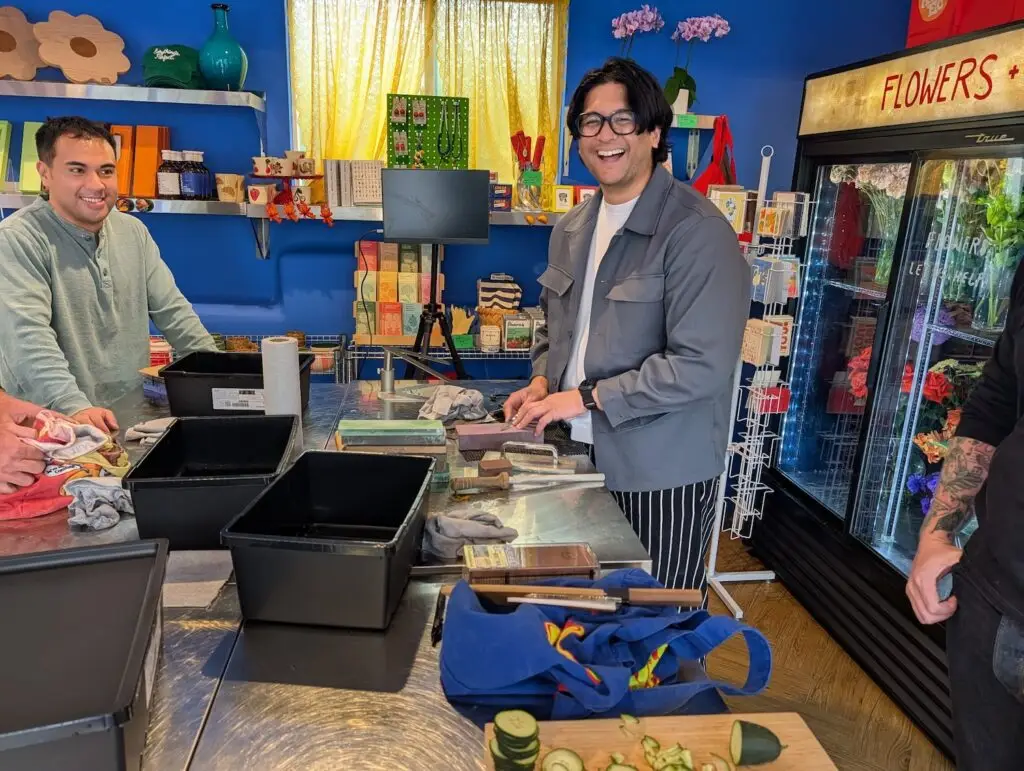
Kuya Sharpens owner Joshua “Jhun” de Andres turned a meditative practice into a business caring for prized kitchen knives—one whetstone at a time
“A sharp knife is a safe knife,” says Joshua “Jhun” de Andres, owner of Kuya Sharpens. It only takes a light touch to guide a properly-sharpened knife, while dull knives require much more force to cut through an object, increasing the likelihood and severity of an injury. “If you slip, that’s a lot of force that is now going into your finger, your hand, and that’s where it becomes extremely dangerous.”
De Andres started sharpening knives as a meditative practice during a time of personal grief, a way to zone in on a task with a useful and satisfying outcome. “[It was a] reminder to myself that you can fix something that’s broken and give it purpose again.” Once he ran through his own collection of knives, he started asking friends and family if he could sharpen theirs. When he’d sharpened everyone’s knives he could think of, he started posting videos on TikTok, where his first professional chef customer found him: Chef Tanner Stanich, chef de cuisine at Michelin-recognized Bib Gourmand Mabel’s Gone Fishing.

“That’s when things really started to take off,” he laughs. He uses whetstones rather than motorized belt sanders to sharpen, which gives him the ability to make microadjustments during the process for a more customized and controlled result. Whetstones also preserve steel more efficiently than other mechanical processes, which are faster, but take off more of the knife’s edge in exchange, reducing the lifespan of the knife.
Learning how to master whetstones takes a lot of time and practice, and while de Andres specializes in sharpening Japanese knives, he’ll sharpen a knife from anywhere. “Every knife deserves to be sharp,” he says.
Japanese kitchen knives are designed for extremely specific purposes: there’s a knife to break down a fish (deba), cut through boneless raw fish for sushi and sashimi (yanagiba), slice vegetables (nakiri), carve meat (sujihiki), debone poultry (honesuki), and even knives only the executive chef can use (kiritsuke). Few other culinary cultures utilize such ultra-specialized tools, and Japanese steel is prized for its extreme hardness and ability to maintain a razor-thin edge for decades when properly cared for.

De Andres is still figuring out different ways to expand his business: hosting workshops at Home Ec on Adams Avenue, creating knife restoration tutorials, and launching private lessons, all while continuing to sharpen knives people bring to him or even send from across the country. And he knows that for both home cooks and professional chefs, sharpening a knife that may have cost hundreds of dollars on a whetstone can feel overwhelming. Will I ruin it? Will I break it?
“You’re most likely not going to break it,” he promises. “But you are going to make it yours, and you have to kind of be okay with that.” Knives age and change just like humans do. Sharpening is an essential part of maintenance, and shaving away the dull edges to restore a shine takes care. And de Andres cares a lot.
“It’s just been really life-giving to me,” he says. “I know it seems really silly that taking a knife and putting it on a whetstone can change your perspective on how you view the world, but for me, it came to me at a time when I needed it most.”
Listen Now: The Latest in San Diego’s Food and Drink Scene
Have breaking news, exciting scoops, or great stories about new San Diego restaurants or the city’s food scene? Send your pitches to [email protected].
Beth Demmon is an award-winning writer and podcaster whose work regularly appears in national outlets and San Diego Magazine. Her first book, The Beer Lover's Guide to Cider, is now available. Find out more on bethdemmon.com.
Check out the stacked lineup of talent participating in this year’s celebration of food, cocktails, wellness, and SoCal energy
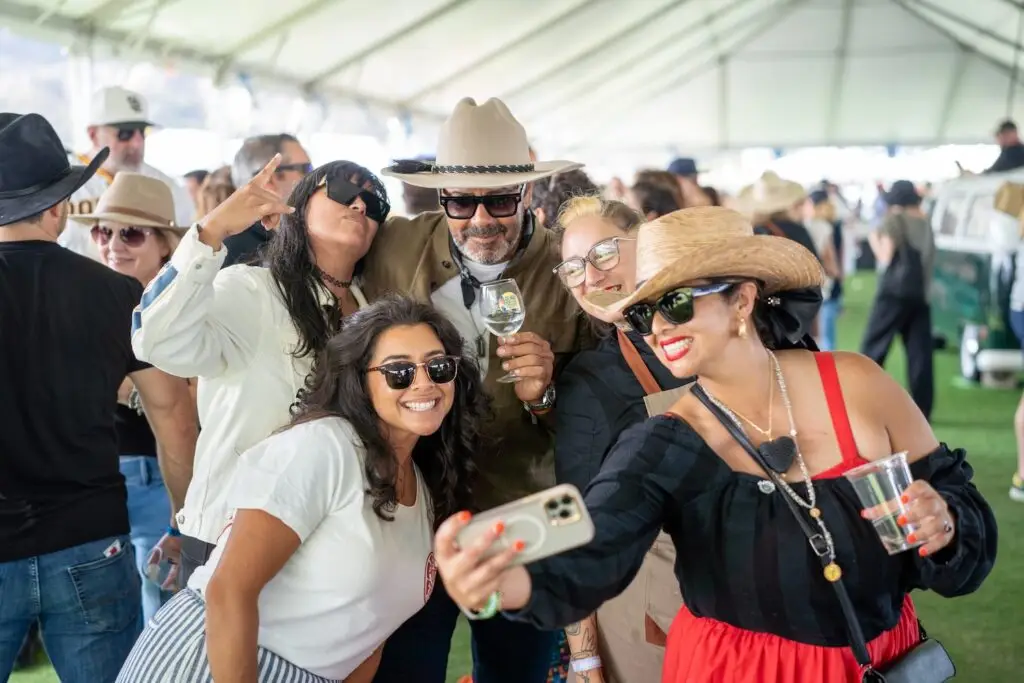
Tickets to the Del Mar Wine & Food Festival get you in the door. The real fun is figuring out who you’ll run into once you’re there. This year’s weeklong schedule of exclusive events, running September 30–October 4, includes dinners, tastings, and loosely-supervised chaos where celebrity chefs and local icons finally let their hair down.
The festival has a track record of the unexpected: Bryan Cranston and Aaron Paul once toasted their mezcal brand Dos Hombres with an intimate dinner at the Lodge at Torrey Pines (and then, evidently unsatisfied, kept drinking it on the cliffs above Blacks Beach with a rotating cast of San Diego and Food Network chefs. Alex Morgan showed up for a dinner under the lights honoring the country’s most badass women chefs). Drew Brees ran a celebrity pickleball tournament where the guy from It’s Always Sunny in Philadelphia got absolutely humbled by locals.
If you scored a ticket to last year’s Grand Tasting, you might’ve caught Guy Fieri doing exactly what Guy Fieri does: strolling the grass, signing t-shirts and foreheads, and hanging off the DJ surf van like it was built for him. Meanwhile, local chef Ethan Yang of Glass Box walked off with the Chef Competition surfboard.
So whether your plan for 2026 is to corner legendary San Diego chefs like Victor Jimenez of Cowboy Star and Jon Sloan of Juniper & Ivy in person, or just aim for a spontaneous golf cart ride with a Food Network star—here’s your cheat sheet for where to run into a celebrity chef, TV personality, award-winning winemaker, or pro athlete at this year’s Del Mar Wine & Food Festival.
Consider this your soft landing into festival week—the walk-around tasting that eases you in before things get chaotic later on. Monarch Ocean Pub hands its patio over to the flavors that define San Diego eating: Baja seafood done right, coastal bites, Mexican flavors with some heat behind them, all the staples locals will fight you over.
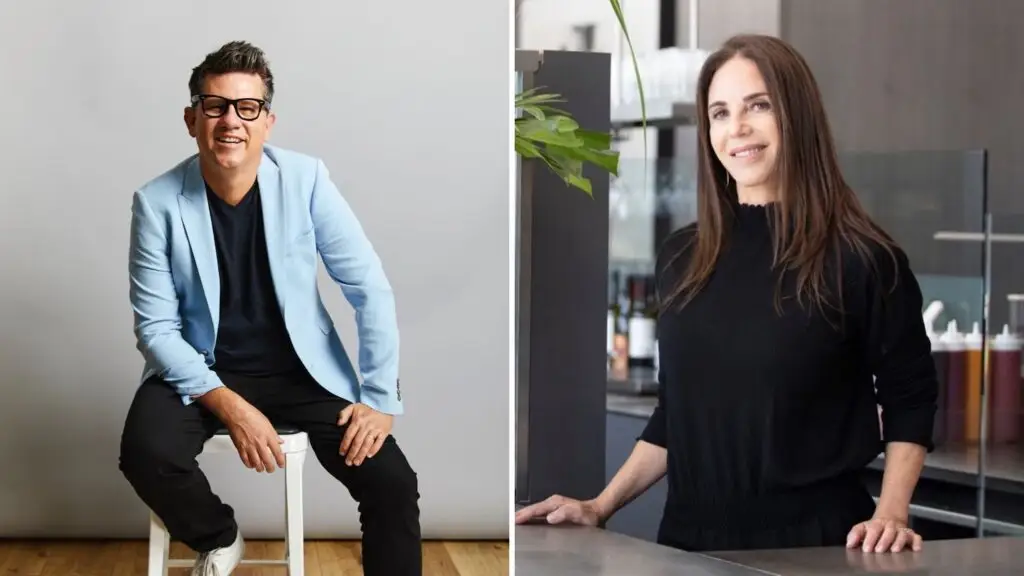
The celebrity sightings here lean more “bump into” than “spot from across the room.” Troy Johnson—Food Network judge, San Diego Magazine chief content officer and co-owner, Emmy-winning host, a man who has eaten his way across the entire country professionally—is the type to materialize at whichever station has the longest line, because he already knows it’s worth the wait. Ask him what he’s had so far. He’ll have opinions.
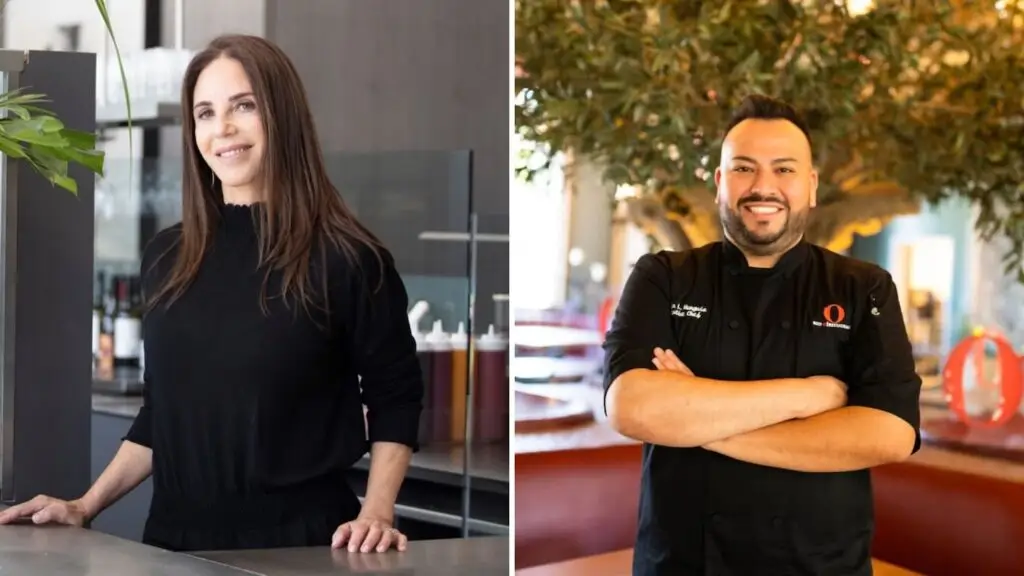
Then there’s celebrity pastry chef Karen Krasne, owner and executive pastry chef of Extraordinary Desserts, James Beard House alum, and a woman Forbes once ranked among the top 10 pastry chefs in the country—which tracks, because you might find her holding court next to a tray of her roasted pecan shortbread dipped in white chocolate, explaining exactly why this is the flavor combination. You will listen to every word, too, because you’ll want to try that cookie.
This is an opening night party where the person next to you in line might just be the one who baked the thing you’re about to eat.
Fifty years ago, a Napa Chardonnay beat France at its own game and rewrote what the world thought it knew about wine. This dinner is that legacy, poured by the family who built it, course by course.
Under the arches at Fairmont Grand Del Mar, Ernie Hahn and the Hahn family, who partnered with the Barretts to revive Chateau Montelena into the Napa powerhouse it is today, host an evening built entirely around the winery’s most iconic pours. Every course gets its own pairing straight from the Montelena portfolio, so you’re not just hearing about the Judgment of Paris, you’re tasting the wine that started it.
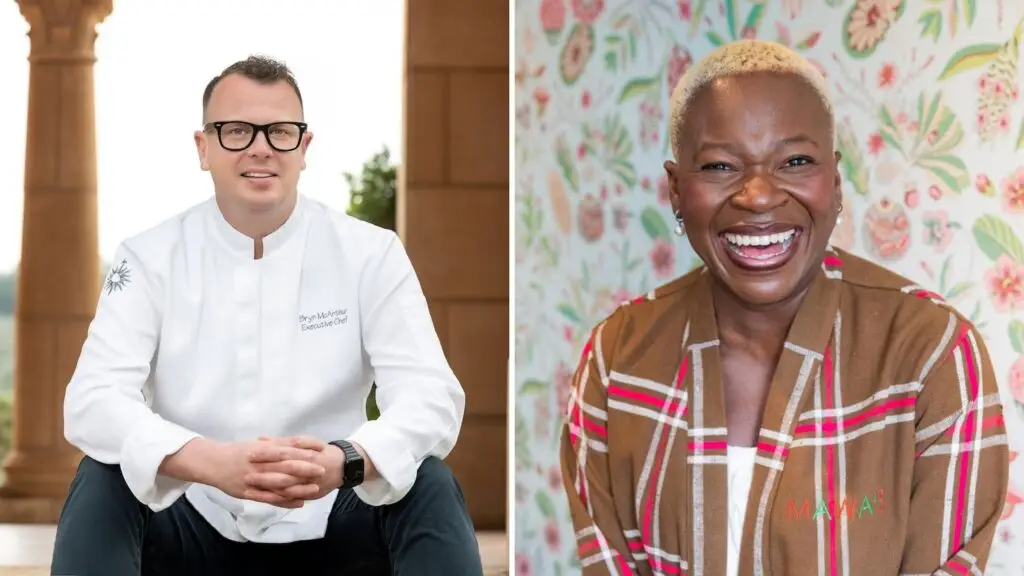
Chef Mawa McQueen, a former James Beard Best of the West winner out of Aspen, brings globally inspired cuisine and serious technique to the table. Alongside her, Fairmont Grand Del Mar’s executive chef Bryn McArthur leans into farm-to-table sensibility shaped by a career of global kitchens. Together they’re building a menu meant to hold its own against wine that already changed history once.
This is the rare dinner where the wine isn’t just accompanying the meal, it’s the reason the meal exists. Fifty years after Paris, the rematch is happening right here in Del Mar.
Isabella Dallas is a freelance writer for San Diego Magazine and the Arts and Culture Editor at The Daily Aztec in her final year at San Diego State University. She previously worked as an editorial intern for SDM, but when she’s not writing, you can find her trying the best coffee spots in SD, devouring the latest rom-coms, and indulging in anything and everything pop culture.
San Diego Magazine's Private School Guide 2026

NewBridge School is San Diego’s only school dedicated to the education of students with dyslexia and related learning profiles. For 30 years we have successfully served students with dyslexia, dysgraphia, dyscalculia, receptive/expressive language disorders, ADHD, executive functioning and memory deficits. Students transition successfully into academically rigorous high schools and colleges across the country. Why NewBridge? Training, training, training (plus intensive individualization, and comprehensive program design). All teachers are trained and retrained biennially in Orton-Gillingham, the only approach proven to remediate dyslexia based on Science of Reading research, and complete a year-long training program. Every aspect of our program is designed around our students’ learning styles and needs. Every class is taught by a highly-trained expert, and our Speech/Language and Occupational Therapy teams embed throughout the day. Our multisensory, multi-tiered math program has been developed in conjunction with sister schools and experts across the country. Don’t wait—early intervention is magic!
Enrollment: 100
Grades: K – 8
Tuition: $30,000
Deadline: Rolling
Gender: All-inclusive
Details Nonsectarian
Open House Tours by appointment

12285 Oak Knoll Road • Poway, California 92064
858-679-5744 • [email protected] • thenewbridgeschool.com