Ready to know more about San Diego?

Subscribe
Features JULY 11, 2022

A Modernist Utopia on the Sonoma Coast

San Diego’s most prolific architectural photographer turns his lens on Sea Ranch Lodge
A Modernist Utopia on the Sonoma Coast
Darren Bradley
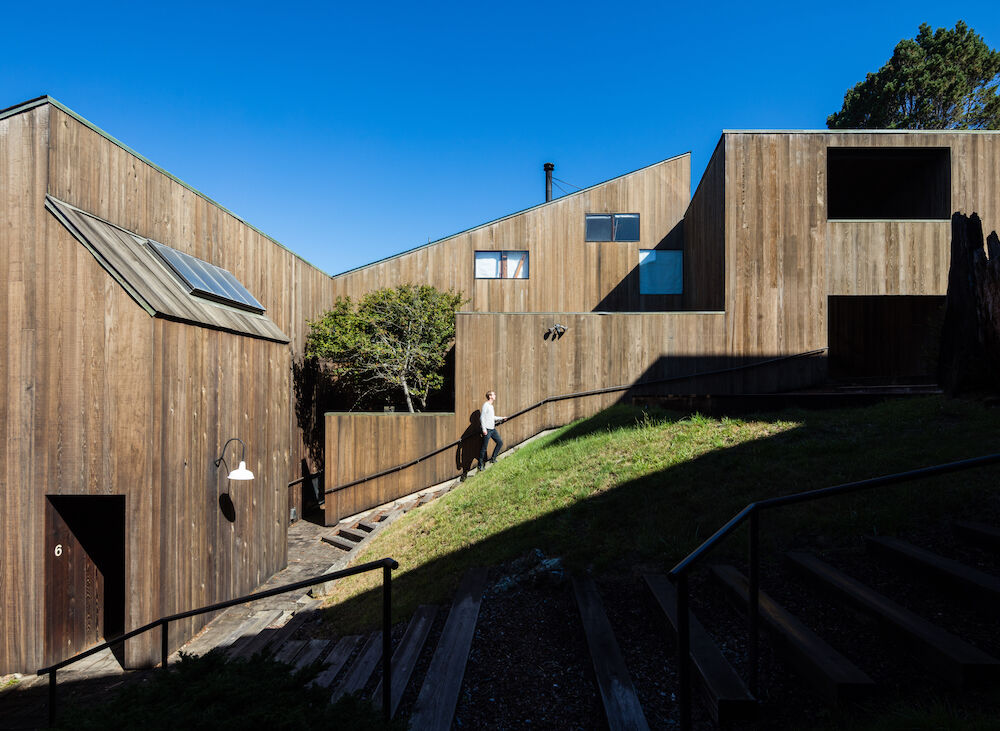
Sea Ranch, 2

“I took a ‘selfie’ looking out at the ocean, from the first housing built there, called Condo One. Note the steeply raked rooflines to deflect the wind. My camera here is in the courtyard of the building, which was also designed to provide outdoor space sheltered from the wind and weather.”

Darren Bradley

Darren Bradley’s camera can turn concrete and cedar shingles into symbols of romance. If a structure has charisma, he lures it out. With light. Through angles.

“Architects are always telling stories and making statements through their work,” he says. “I generally try to zero in on that story or statement, and find the best possible way to photograph the building to ensure that the message is conveyed properly.”
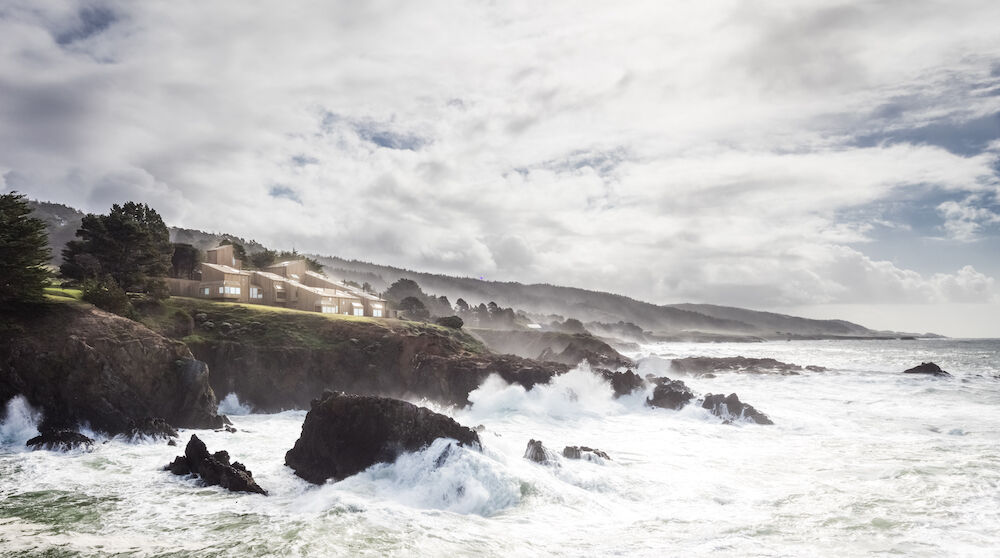
Sea Ranch, 1

“Weather can be unpredictable at Sea Ranch. The development occupies 5,000 acres of rocky coastline. The architecture was meant to blend in with the surroundings, while also deflecting the wind and protecting its inhabitants from the often- unpredictable weather. Sea Ranch is about 100 miles north of San Francisco but feels a world away.”

Darren Bradley

Architectural photography has developed into its own art form, and it might be as important as the built work itself. A good image can give the viewer a feeling of the atmosphere and design intention without actually being in the place. Bradley does this.
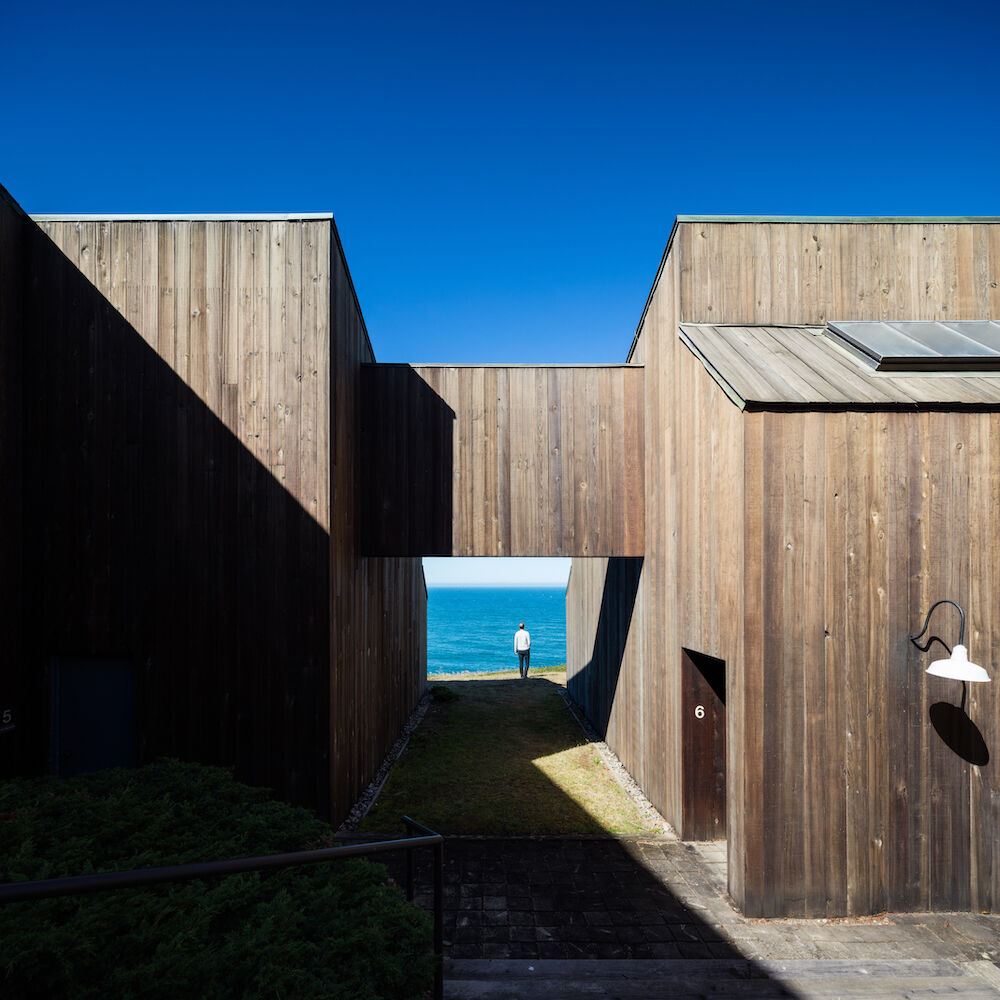
Sea Ranch, 4

Sea Ranch, 4

Darren Bradley

His Instagram profile, @modarchitecture, which has 117,000 followers, is packed with eye-catching buildings from around the world and those closer to home, including the Salk Institute for Biological Studies and the Geisel Library at UC San Diego. Born in Hawai‘i, raised in San Diego, and having studied history at the Sorbonne in Paris, he mostly focuses on modernist architecture from the 1950s through today. On his profile, he shares history, humorous field notes, and insight on his editing methodology.

For the Sea Ranch, he captured the discreet beauty of this secluded, forward-thinking residential enclave set on 53 rugged acres of Northern California coastline about halfway between Bodega Bay and Mendocino. At the time it was built in the 1960s, the vernacular architecture and ecological sensitivity were radical.
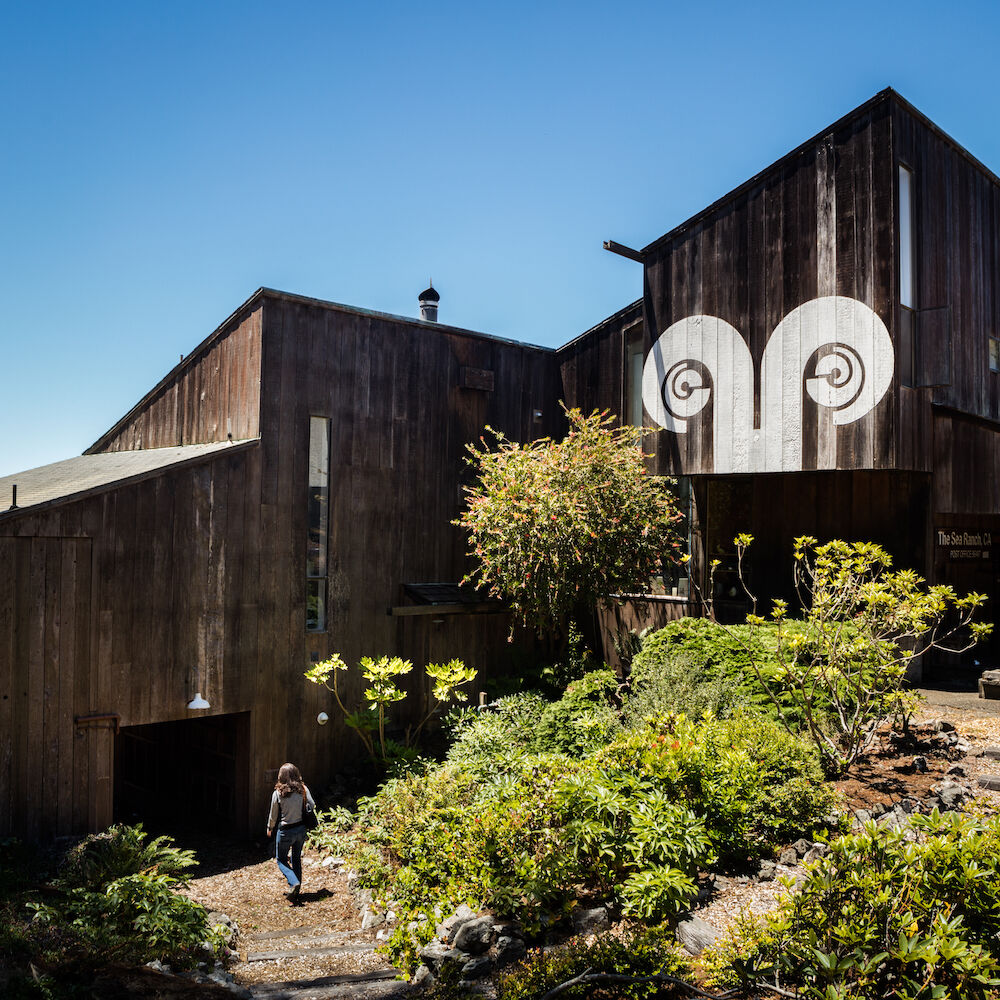
Sea Ranch, 5

“My wife walking down the path towards the cliffs, under the lodge. The ram’s horns are the logo of Sea Ranch, and evoke a time when the area was a sheep ranch. They were designed by local artist Barbara Stauffacher.”

Darren Bradley

A dream team of Bay Area architects—including Charles W. Moore, Donlyn Lyndon, Joseph Esherick, William Turnbull, and landscape architect Lawrence Halprin—evolved a concept of dynamic conservation of “living lightly on the land.” They created a tapestry of 2,200 private homes, clustered by cypress hedgerows, undeveloped lots, undulating meadows, rolling hills, redwood and Douglas fir forests, nature trails, and ocean views. All this on a former sheep ranch.

Last year, The Sea Ranch Lodge reopened after a detailed remodel; it includes a refreshed restaurant, The Bar + Lounge, a new café, and a general store, as well as a roster of cultural events.
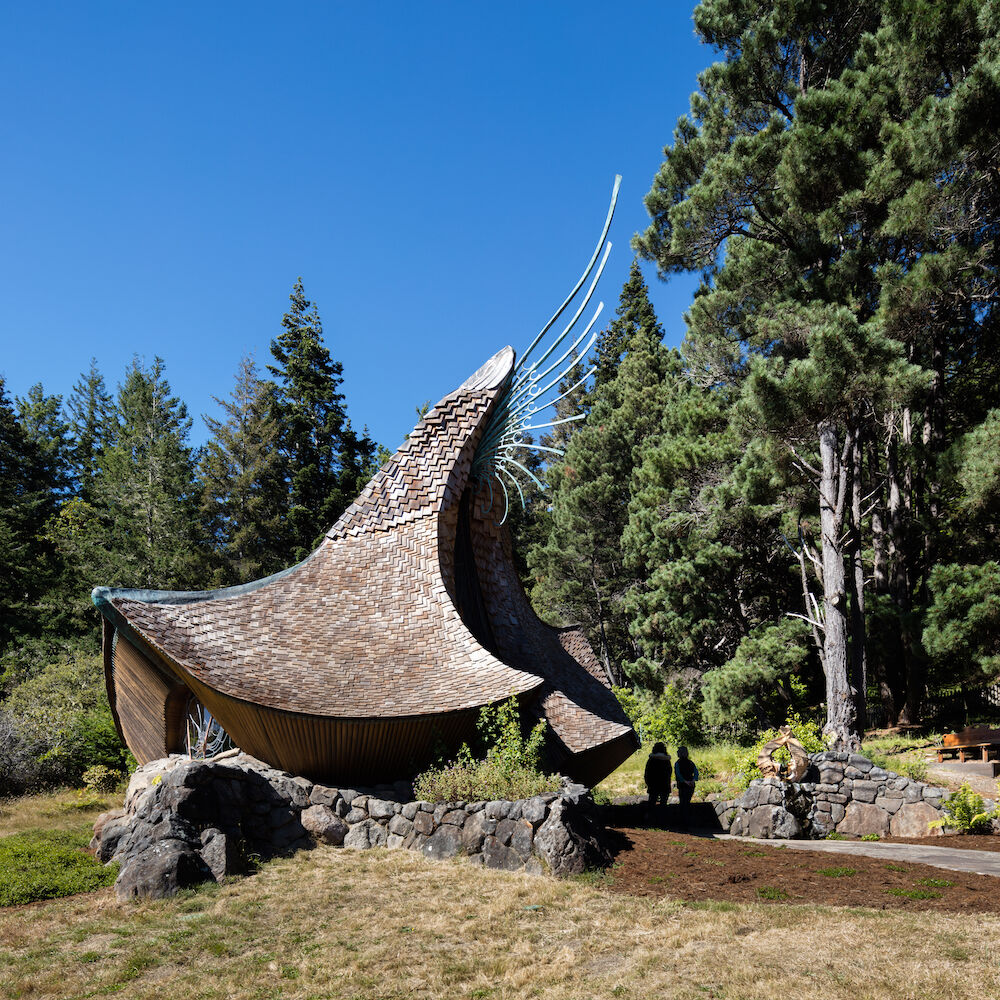
Sea Ranch, 6

“There’s even a San Diego connection to Sea Ranch! Local artist and architect James Hubbell designed this chapel.”

Darren Bradley
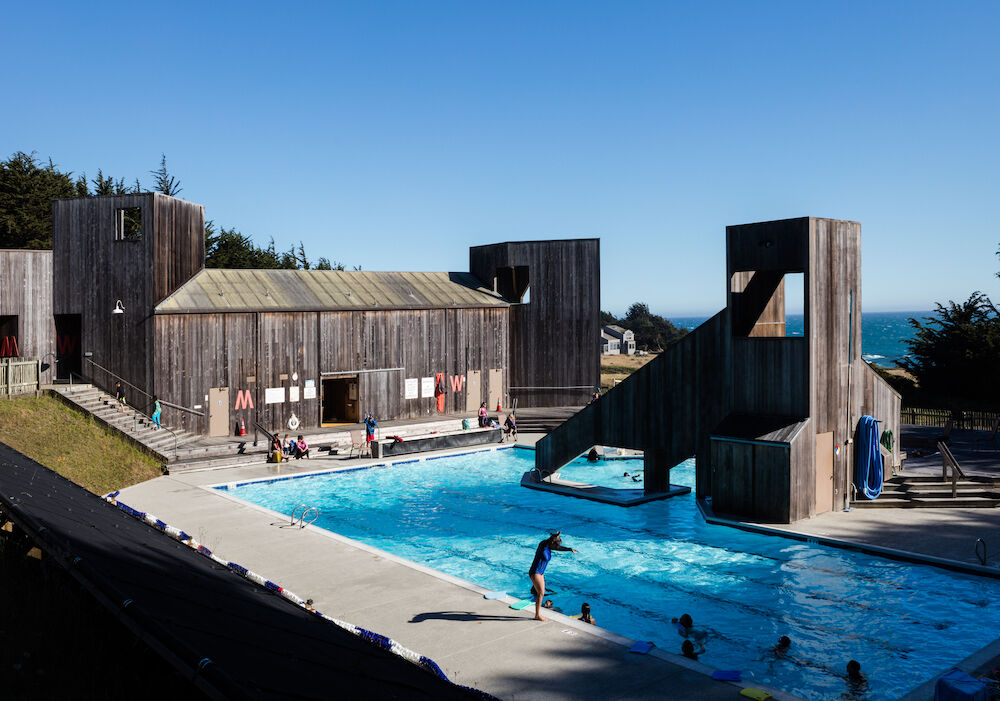
Sea Ranch, 7

“This is the Ohlson Recreation Center. The structure on the right is meant to also serve as a screen to deflect the often-high winds coming in off the cliffs.”

Darren Bradley

Usually, Bradley’s photo assignments are commissions from architects and publishers the likes of Phaidon, for whom he has photographed two midcentury- modern travel books. But Sea Ranch was a family affair, framing his wife, Elise, and daughter, Ava, amid the organic architecture. “I am often alone when I travel to photograph architecture,” says Bradley. “Being able to share that experience with my family was a rare treat and a memorable one. Sea Ranch is an iconic modernist architectural vision that has remained unspoiled by time.”
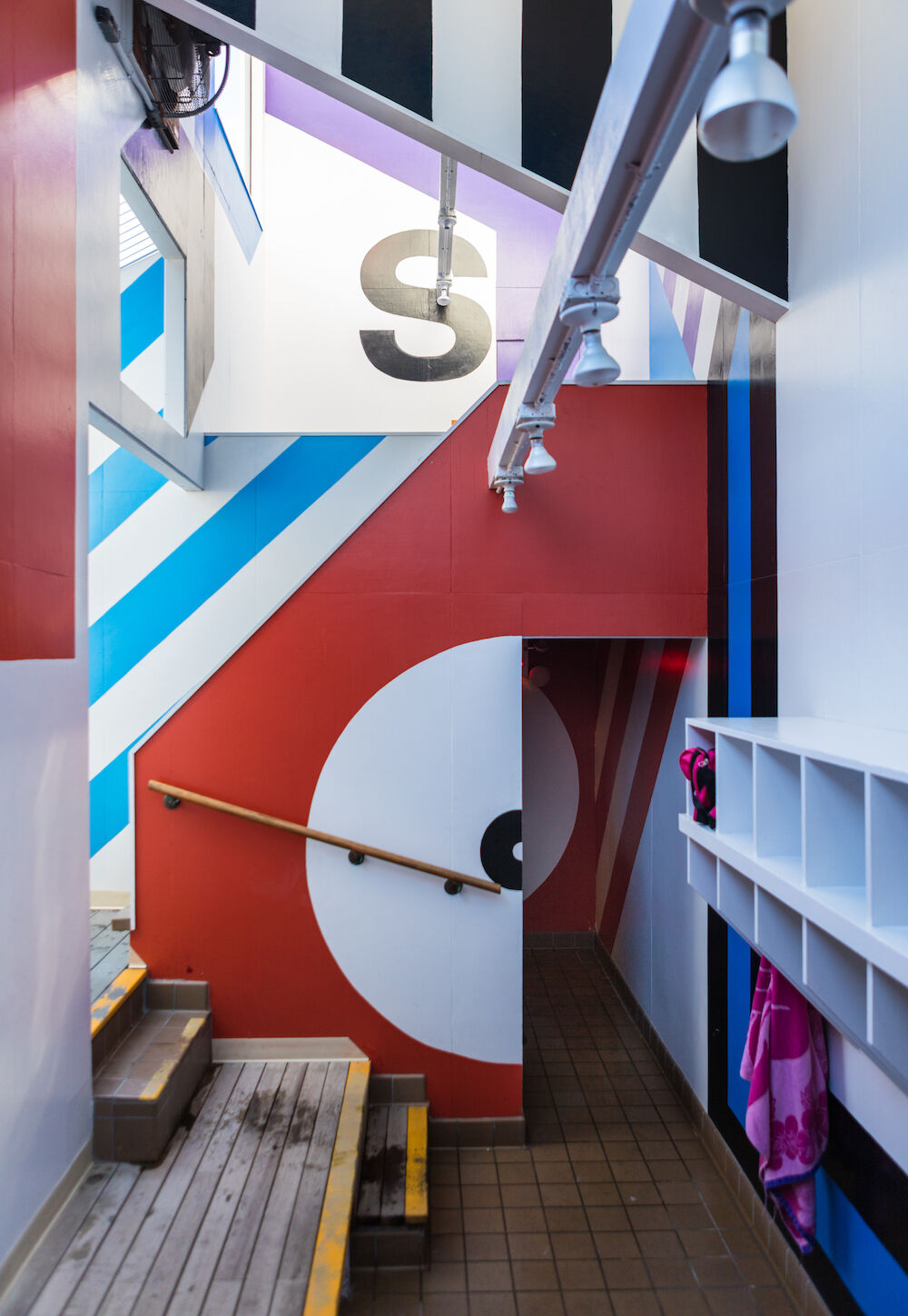
Sea Ranch, 8

“Sea Ranch has always been a haven for creative types. Graphic designer and artist Barbara Stauffacher created the ‘Supergraphics’ that are used throughout the development, including in this changing room at one of the site’s several public swimming pools. This pool is known as the Moonraker Pool… yes, like James Bond!”

Darren Bradley
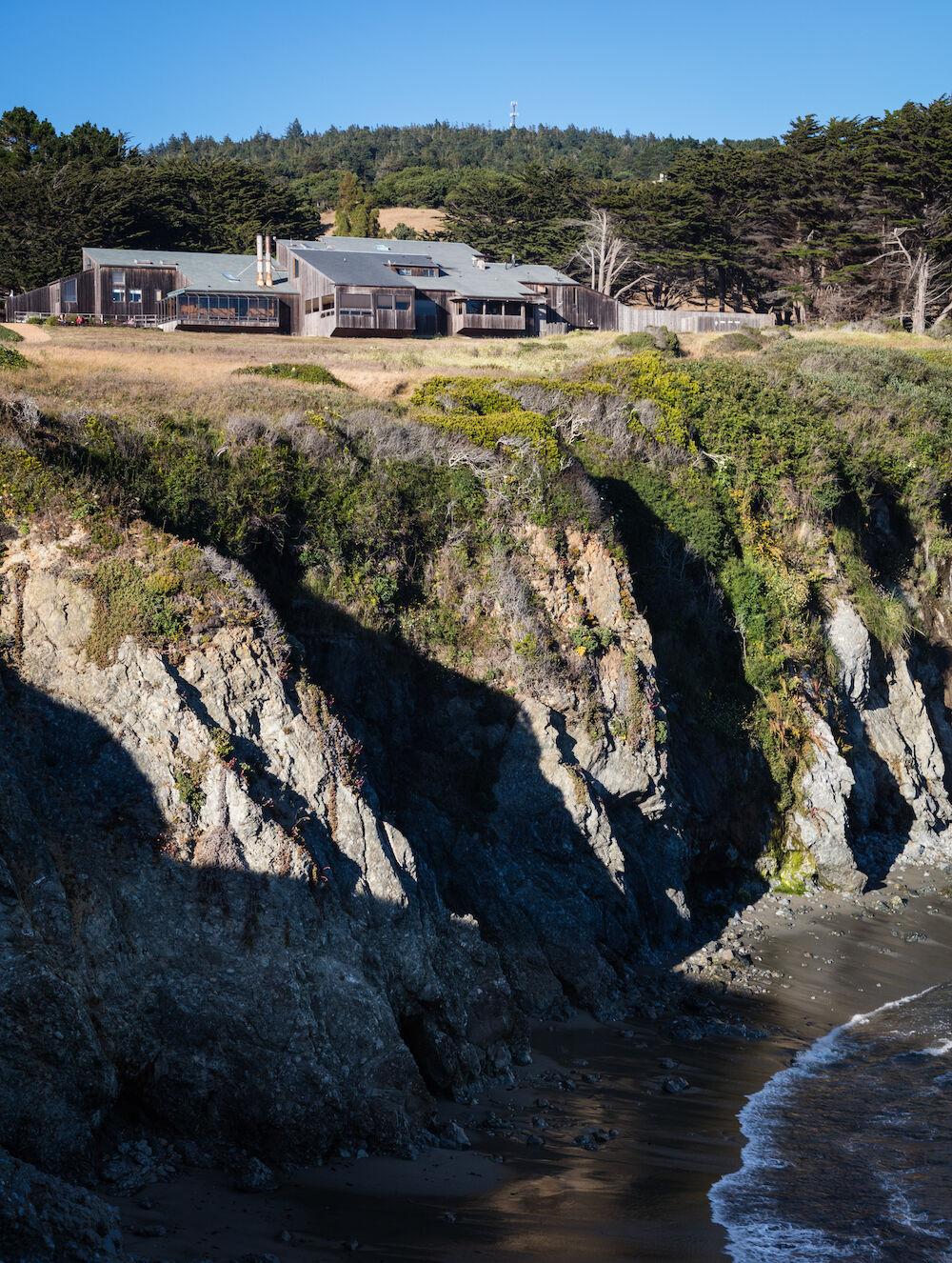
Sea Ranch, 9

“A view of the Sea Ranch Lodge perched on the steep cliffs overlooking the ocean.”

Darren Bradley
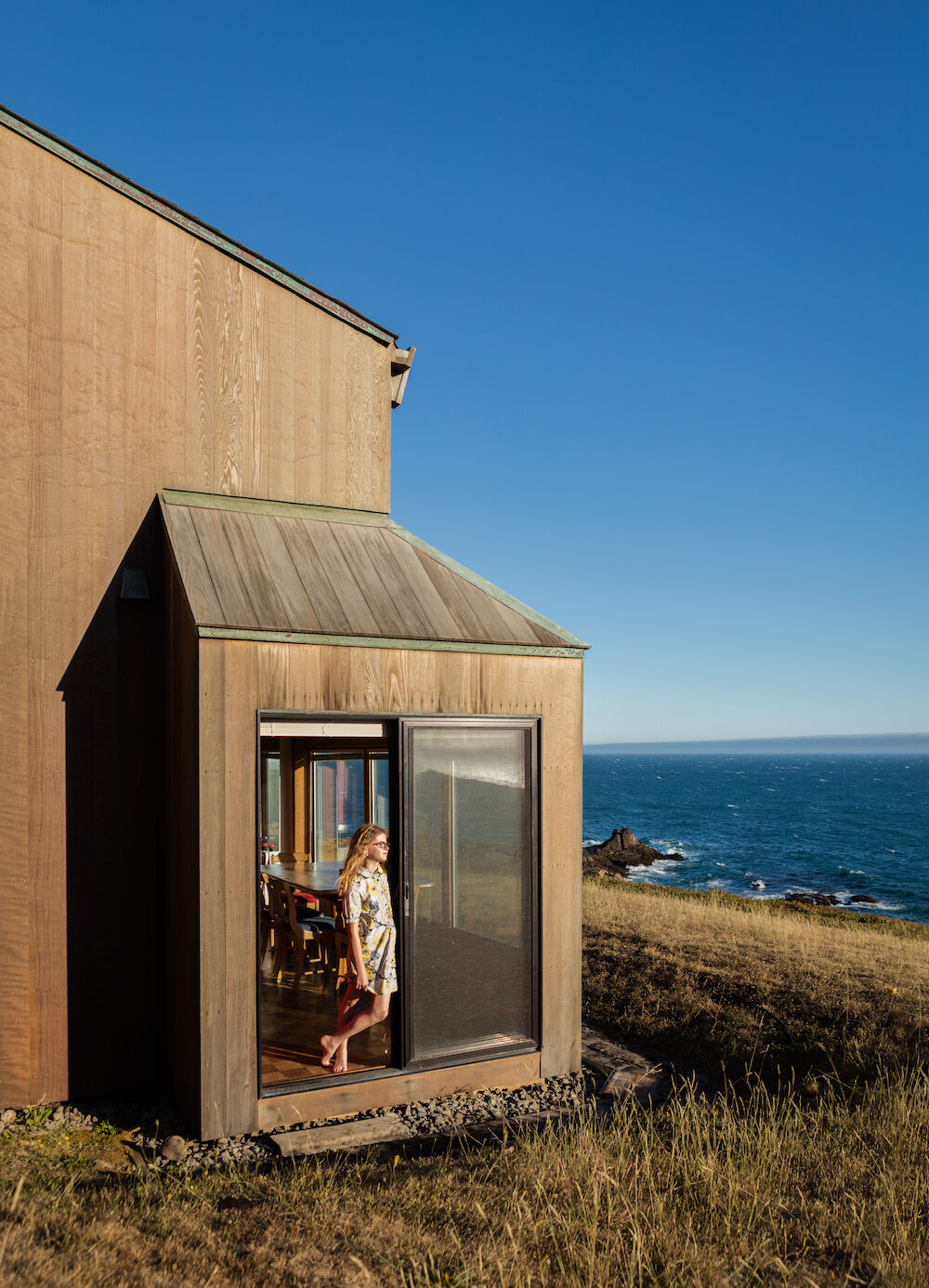
Sea Ranch, 10

“My daughter enjoying the view at our condo. Okay, I may have asked her to pose there! This complex includes several condos and was the first structure to be built at Sea Ranch. Designed by architects Richard Whitaker, Donlyn Lyndon, Charles Moore, and William Turnbull in the early 1960s.”

Darren Bradley
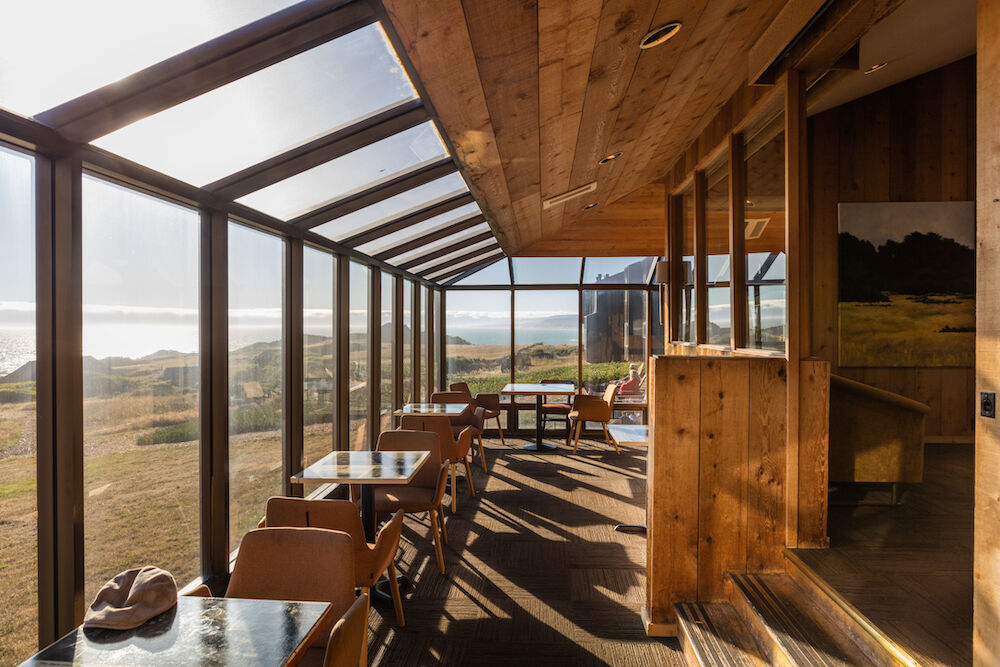
Sea Ranch, 11

“View of the lounge area of the Sea Ranch Lodge. I enjoyed sitting here with a cup of coffee with a book while watching the weather and the waves.”

Darren Bradley
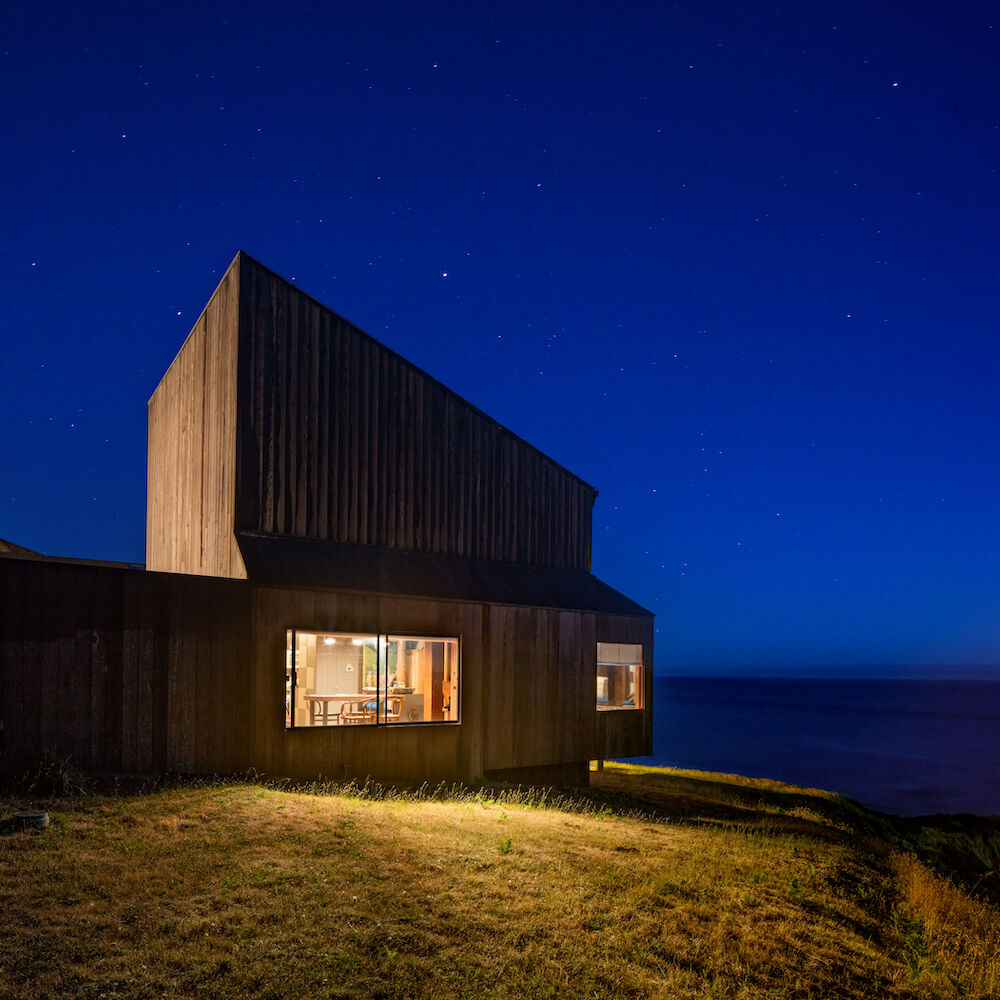
Sea Ranch 12

“The steep, slanted rooflines are meant to deflect the wind. There are no windows high up on the structures because of the difficulty of keeping them clean.”

Darren Bradley
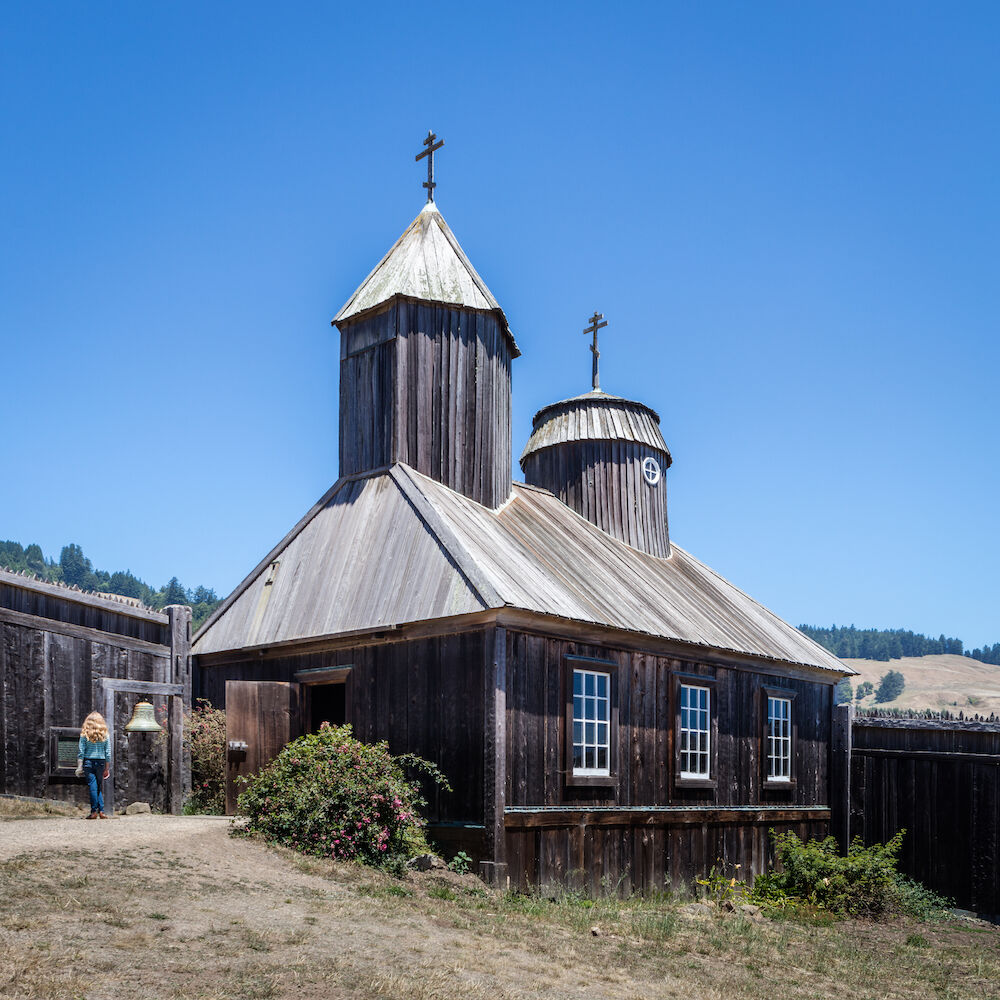
Sea Ranch, 13

“On our way up to Sea Ranch, we stopped at the former Russian colony at Fort Ross. In the early 1800s, this fort housed soldiers and fur traders. This Russian Orthodox chapel at the fort also served as inspiration for the architects who designed Sea Ranch.”

Darren Bradley
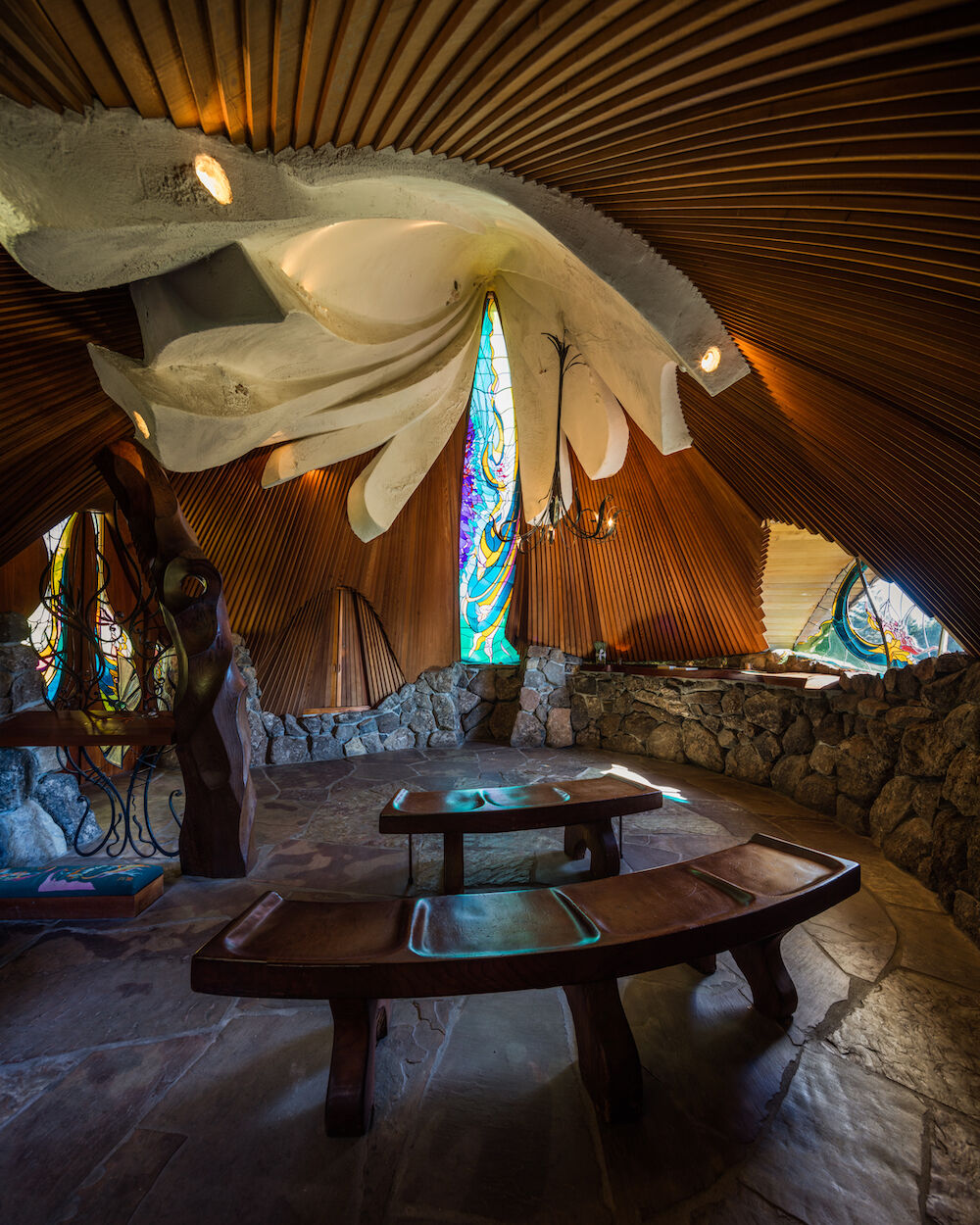
Sea Ranch 14

“Here’s the interior of the chapel designed by San Diego artist and architect James Hubbell.”

Darren Bradley
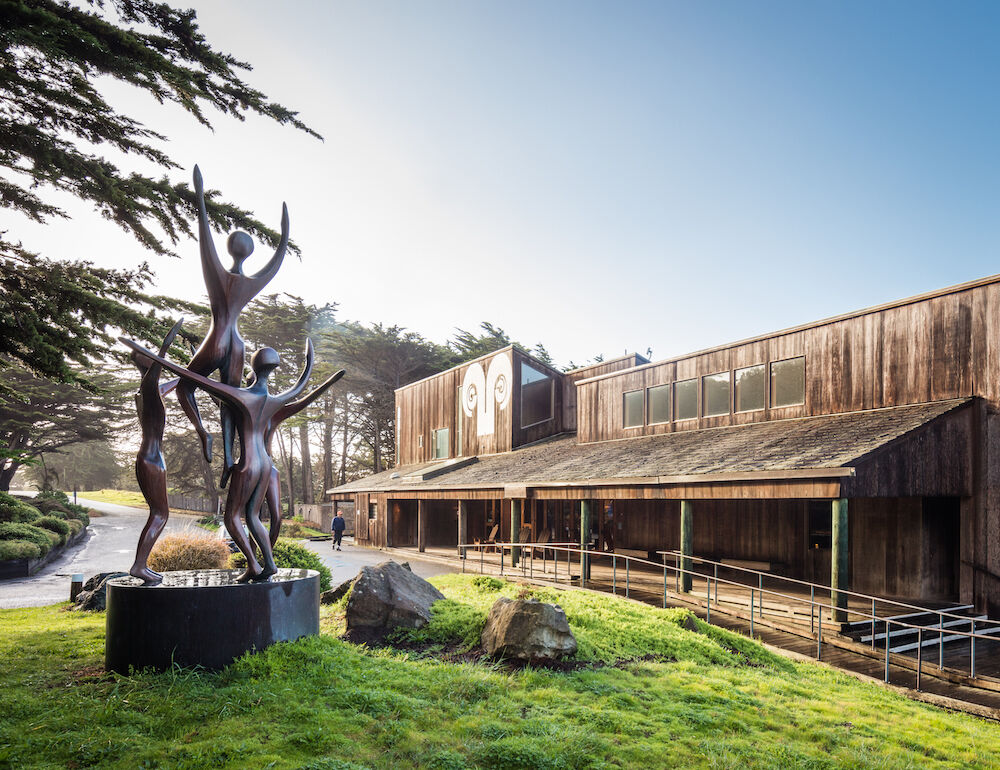
Sea Ranch, 15

“The Sea Ranch Lodge also serves 9. as the area’s only restaurant and community post office. It was designed by Joseph Esherick in 1964 and modeled after an old-fashioned country store. The sculpture is by artist Robert Holmes.”

Darren Bradley

Photo Essay

Subscribe to our newsletters

Select Options

By subscribing you confirm that you agree with our Terms and Conditions and Privacy Policy.

Arts & Culture MARCH 11, 2024

Photos: On Location With SD’s Top Travel Photographers

A feast for your eyes and inspiration for your next remote vacation

Photos: On Location With SD’s Top Travel Photographers
Photo Credit: Matt Furman | Panajachel, Guatemala

The world is a stunning place full of culture, nature, and really great food. To celebrate our annual travel and adventure issue, we tapped some of our favorite globetrotting photographers to help us experience life through their lenses. To tickle your travel bug we’re heading around the world to buy cheese in a Puglian market, stroll the streets of Osaka, and admire wild donkeys in the Oaxacan mountains. You’re guaranteed to come away longing for your own far-flung adventure. These photos are even sexier and more enticing on the page, so be sure to subscribe to San Diego Magazine for more gorgeous travel photos.


Matt Furman

San Diego Photographer Matt Furman's image of children in Suva, Fiji dressed in traditional Hindu attire
Suva, Fiji
San Diego Photographer Matt Furman's image of an older woman in Guatemala City, Guatemala carrying a large metal bucket over her head
Guatemala City, Guatemala

Lucianna McIntosh

San Diego photographer Lucianna McIntosh's image of a butcher and cheese shop in Puglina, Italy
Puglina, Italy
San Diego photographer Lucianna McIntosh's aerial image of the Bahamas island chain from an airplane
Bahamas
San Diego photographer Lucianna McIntosh's image of the side of a boat on the Pacific Ocean off the coast of Kauai, Hawai'i
Kauai, Hawai’i

Valerie Durham

San Diego photographer Valerie Durham's image of the busy streets of Osaka, Japan featuring people. power lines, and signs
Osaka, Japan

Andrew Reiner

Photographer Andrew Reiner's image of two donkeys in front of clouds and mountain peaks in Oaxaca, Mexico
Oaxaca, Mexico

Amelia Rodriguez is a writer and journalist and winner of the San Diego Press Club's 2023 Rising Star Award and 2024 Best of Show Award, she’s also covered music, food, arts and culture, fashion, and design for Rolling Stone, Palm Springs Life, and other national and regional publications. After work, you can find her hunting down San Diego’s best pastries and maintaining her five-year Duolingo streak.

Features SEPTEMBER 29, 2022

In Search of Water With Border Kindness

The California-based nonprofit provides food, shelter, clothing, medical care, and legal aid to those displaced along the United States-Mexico border

In Search of Water With Border Kindness
James Cordero
water warriors, hiking team

A Border Kindness group heads out just after sunrise. An average group is “usually around 8 to 12 people with an average hike length of 5 to 10 miles,” Cordero says.

James Cordero

Every week a group of volunteers heads to the eastern reaches of San Diego County, somewhere in the mountains, past the end of the big fence. They’re with Border Kindness, a California-based nonprofit that provides food, shelter, clothing, medical care, and legal aid to asylum-seekers, migrants, refugees, and the displaced along the United States-Mexico border. The San Diego chapter, run by James Cordero and his fiancé Jacqueline Arellano, handles the area’s water drops, which require arduous hikes into the deserts where migrants cross by foot, regardless of whether there’s searing summer temperatures or snow.

Border Kindness volunteers leave water, food, and clothing in canyons, mountains, and desert flats known to be frequented both by migrants and Customs and Border Protection (CBP, border patrol). They also remove trash from through-hikers and migrants who leave their personal effects along the rocks. The team has come across just about every likely scenario from border patrol apprehensions to encountering the remains of people who lost their lives in the final stretch of what was almost surely a long journey throughout the Americas.

water warriors, keychain

A keychain left behind with the image of la Virgen de Guadalupe—patron saint of both the Americas and vulnerable people. It’s a common image seen on items belonging to migrants.

James Cordero

Aside from witnessing and experiencing trauma in real-time, there are other risks: in 2019 a volunteer with an organization doing similar water drops in Arizona was charged with two counts of felony harboring and one count of conspiracy. In the end, he went free with a hung jury, but the legal risks of unsanctioned humanitarian aid are real.

“We provide humanitarian aid for many reasons,” Cordero says. “We have family that has immigrated to the United States. We want to help minimize the suffering and death that occurs all too frequently along the US-Mexico border. When you have a serious issue presented in front of you, it becomes a moral responsibility to do what you can to help. That is what we do.”

water warriors, land

A view from the top of a mountain ridge shows the canyons where migrants have to travel to try to evade border patrol. “Some caches are deposited over 5,000ft of elevation in the mountains, but most drop sites are less than 1,000ft, some below sea level,” Cordero says.

James Cordero

water warriors, hat in bush

A sombrero lays on top of a bush in a very windy area. “We presume the hat blew off the head of someone traveling through,” Cordero says.

James Cordero

water warriors, holding jug

Border Kindness Water Drop co-director James Cordero poses with a consumed gallon of water he left behind on a previous drop. The volunteers pick up trash, including discarded water bottles, as they deposit supply caches along their hiking routes.

James Cordero

water warriors, supplies

Border Kindness volunteers leave a supply cache consisting of gallons of water, canned food, and sun-protective clothing.

James Cordero

water warriors, snake

A juvenile rattlesnake, coiled up, camouflages into the decomposed granite and sandy wash believed to be transited by migrants.

James Cordero

water warriors, water jug

Cordero scribbled a bible verse from Romans 12:13: “Share with the Lord’s people who are in need. Practice hospitality.” It is assumed that the vast majority of migrants are culturally familiar with Catholicism.

James Cordero

water warriors, camo motion detector

A camouflaged CBP motion detection surveillance camera was recently installed in a highly migrant-traveled corridor to track human movement.

James Cordero

water warriors, truck

A border patrol truck races toward the Border Kindness Water Drop team. After realizing who they were, they let them be.

James Cordero

water warriors, baby clothes

Children’s clothes strewn about a hillside, at the site of a border patrol apprehension, shows the reality of who’s actually crossing the desert.

James Cordero

water warriors, hiker

A Border Kindness group scales a rocky mountainside, scouting for traces of recent migrant travel.

James Cordero

Jackie is a long-time freelance journalist covering cannabis, food/restaurants, travel, labor, wine, spirits, arts & culture, design, and other topics. Her work has been selected twice for Best American Travel Writing, and she has won a variety of national and local awards for her writing and reporting.

Photo Essay
Features SEPTEMBER 7, 2022

Documenting the Quiet Minimalism of MCASD

Photographer Maha Bazzari navigates San Diego’s cultural landscape to uncover the dialogue between art and space

Documenting the Quiet Minimalism of MCASD
Maha Bazzari
MCASD hero

“The $105-million overhaul of MCASD, including the new Jacobs Hall, feels more connected to the topography. “It’s a delicate balance in capturing the art and architecture for each space,” says Bazzari of her approach. “Do I highlight the architecture and emphasize the artwork? Will the ocean views be the focal point, or how does the architecture connect with the landscape?”

Maha Bazzari

“I experience art within the space, sit with it, and then digest it.” That’s not the technical part, but it’s absolutely the starting point for Maha Bazzari, an architectural photographer who splits her time between San Diego and Palm Springs. The trained architectural designer and fine artist is an accidental photographer. She started by shooting her own work, then friends, and then global architecture firm Gensler came knocking.

Most recently, she was tapped by MCASD La Jolla to chronicle the quiet minimalism of the $105-million overhaul by Selldorf Architects. The photographer came often: mid-morning as the marine layer lifted. Golden hour. During a rainstorm. “I know every nook, in every light,” she says, perched on a concrete bench in the museum shop.

When she’s not traveling (Berlin, most recently) she frequents local architectural gems from the Salk Institute to Bell Pavilion. Her work has been featured in Dwell, WSJ Magazine and National Geographic. “Expressive images require an understanding of the artist’s concepts. And being selective.” Bazzari often collaborates with local artist Yomar Augusto, and there’s a fluency that develops between them. “To capture Yomar’s work is to follow the flow of lines and strong colors.”

Selldorf and Kanjo

“Bazzari maximized the rare stormy day to capture this dramatic image of architect Annabelle Selldorf and MCASD director Kathryn Kanjo. “With the use of strobe lighting and image bracketing I was able to uncover the rainy views, bring them to the foreground, and show the expansive lines of the architecture.”

Maha Bazzari

MCASD museum

“Bazzari maximized the rare stormy day to capture this dramatic image of architect Annabelle Selldorf and MCASD director Kathryn Kanjo. “With the use of strobe lighting and image bracketing I was able to uncover the rainy views, bring them to the foreground, and show the expansive lines of the architecture.”

Maha Bazzari

exhibit space

“The size of the exhibit space dictates the photography style. For the smaller exhibitions, the art must be at the right scale to the architecture so they complement each other. For larger gallery spaces, I don’t want the art to get lost or capture too much information.” 

Maha Bazzari

studioMAHA_sdm0922.jpeg

“My love for the visual arts goes beyond a still image. I dabble in painting and explore different materials. This is a detail of Gravitational Attraction. I used acrylic paint, graphite, spray paint, and iron filings that were manipulated by the use of magnets to create this shape. Concept: The force of attraction is inescapable, especially the connections between people and their souls through interaction, sharing of ideas, stories, and experiences.”

Maha Bazzari

studio-maha-sdm0922.jpeg

Macro-micro is a common theme throughout Bazzari’s photos, as shown with these two shots of a piece by San Diego artist Melissa Walters. Of All Things was a site-specific installation made of 2,600 paper tetrahedrons. “The amount of detail that went into this piece is mind-boggling,” Bazzari says. “I had to consider the physical space in relation to the theoretical Omniverse that contains it.”

Maha Bazzari

keller

“I photographed this beautifully dramatic artwork for Yomar’s solo show at Point Loma Nazarene University. Although the mural was the main piece in the exhibition, the pieces came together through the narration of graphics throughout the gallery space.”

Maha Bazzari

maha studio mural

For this mural, commissioned by San Diego Made Factory, Bazzari added scale with pedestrians and trolley tracks. “I wanted to underscore the urban setting of the East Village.”

Maha Bazzari

maha studio

This abstract and colorful geometric calligraphy painting was commissioned for a residence in Mission Hills. “We wanted to highlight the colorful streaks and textures by enhancing the contrast, especially on the dark canvas.”

Maha Bazzari

CBRE Tecture sculpture

This light fabrication is by Tecture in collaboration with Gensler San Diego. “I captured the curvilinear sculptural elements made from independent layers of milled extruded PVC with suspended lighting in between.”

Maha Bazzari

maha-studio-sdm0922-1.jpeg

“This historic preservation of a mid-century modern house in San Diego [by architect Kristi Byers] is one of those projects that I photograph and admire all the work and consideration that went into it.”

Maha Bazzari

prescott-studio-sdm0922-1.jpeg

“We arrived before sunrise to make sure we captured the best light on the small chapel at Point Loma Nazarene University. It took us five hours to photograph the saturated colors, clean lines, and thoughtful materials.” The Lyle and Grace Prescott Memorial Prayer Chapel is a collaboration between architects Carrier Johnson and Tecture.

Maha Bazzari

maha-studios-sdm0922-2.jpeg

On The Salk Institute by Louis Kahn: “I can spend all day capturing this monumental architecture with its details, observing the light moving across all the surfaces.”

Maha Bazzari

maha-studio-sdm0922-3.jpeg

There are many approaches to shooting a door, especially this one designed and built by Tecture for a San Diego beachfront home. “It is a large pivot door with four operable windows, and a wheel operated gear system. So, we played around. Opening, closing and passing through it.”

Maha Bazzari

maha-studio-sdm0922.jpeg

A symphony of concrete was required to show off the muscularity of this chair designed and fabricated by Tecture. “We connected this piece to its surroundings—the concrete chair to the concrete floor and walls. Aligning textures and materials was the goal.”

Maha Bazzari

Studio S JULY 7, 2026

Xplosion Box: A Customized Keepsake Your Loved Ones Won’t Forget

A customized memory-filled explosion gift box is a creative way to show someone you care

Xplosion Box: A Customized Keepsake Your Loved Ones Won’t Forget
Hero image – Birthday Explosion Gift Box

Finding a gift that feels truly personal can be surprisingly difficult. In a sea of generic options — flowers, gift cards, candles, and the like — Xplosion Box offers something more lasting: a customized keepsake built around the photos, messages, and memories that matter most. 

Founded by Southern California entrepreneur Jay Vijay, Xplosion Box LLC creates fully customized explosion gift boxes that arrive professionally designed, printed, assembled, and ready to gift. Each box opens layer by layer to reveal personal photos, heartfelt messages, pull-out albums, origami-style photo pockets, and hidden notes, turning a simple gift into an emotional reveal. 

The brand was built for people who want to give something meaningful without spending hours printing photos, cutting paper, folding cardstock, or assembling a DIY project. Customers simply choose a box, upload their favorite photos, add personal messages, and the Xplosion Box team transforms those details into a polished keepsake that feels thoughtful, personal, and beautifully made.

Xplosion Box offers personalized gift boxes for birthdays, anniversaries, weddings, graduations, Mother’s Day, Father’s Day, Valentine’s Day, Christmas, proposals, bridesmaid gifts, long-distance relationships, and thoughtful “just because” moments. 

Customers can choose from flexible customization options starting at $27. The Mini Surprise Box includes 10 photos, three message cards, and one hidden secret note, while the Mega Surprise Box offers a fuller keepsake experience with 40 photos, three message cards, and one hidden secret note. 

What sets Xplosion Box apart is its high level of customization combined with convenience. Filled with personal photos, custom text, decorative details, and layered surprises, each box gives customers the freedom to create a gift that feels one-of-a-kind — without having to make it themselves. 

At its core, Xplosion Box helps people turn favorite photos, stories, and words into something tangible: a keepsake that can be opened, revisited, and remembered long after the occasion has passed. asion has passed.

Partner Content
Arts & Culture JULY 13, 2026

How Scrojo Became One of Rock’s Most Prolific Poster Artists

The San Diego designer has created more than 3,000 concert posters over nearly 40 years for artists including the Rolling Stones and the Red Hot Chili Peppers

How Scrojo Became One of Rock’s Most Prolific Poster Artists
Courtesy of Scrojo

Let’s start with his name.

No, not his birth name, Craig McKenzie Haskett.

Scrojo.

When he was in high school, he and his friends were trying to come up with the perfect name for their punk band that would encapsulate all their personas. Nicaragua. The Freds.

One of his friends said he was going to go by Jimmy Stacks and called it “the perfect rock and roll name.” Their names changed so much that Haskett erupted: “Fine, I’m f—ing Scrotum Joe, the true defender of the Open West.”

Their response: Wow, that’s a great name.

As a teenager, he drew chalkboards for Del Mar’s Pannikin coffee shop and would design T-shirts for surf/skate brand Life’s a Beach. He signed the shirts with his moniker, but even in punk rebellion, who wants a shirt with the words Scrotum Joe on it? “They just cut out the ‘t-u-m,’ and the next thing you know, a client referred to me as that, and it stuck,” he says.

Courtesy of Scrojo

Scrojo could have been part of a band as iconic as The Misfits—had he been able to learn the famously cumbersome bassline to The Kingsmen’s “Louie Louie.” Becoming one of the most renowned concert poster designers—someone who quite literally designed the cover of Art of Modern Rock: The Poster Explosion—is a pretty good Plan B.

“To my knowledge, he’s done more rock posters than anybody else alive,” says Dennis King, whose D. King Gallery in Berkeley, California, serves as one of the largest private rock poster collections in the world. “He’s the hardest-working guy in the poster business.”

King not only co-authored the sequel to music historian Paul Grushkin’s The Art of Rock, but he also handles distribution and sales for all of Scrojo’s work. That’s more than 3,000 different posters over nearly 40 years. (That’s over one poster each week. For four decades straight.)

For anything from boxing matches to rodeos, posters have long been used as promotional items. Toulouse-Lautrec’s famous lithographs advertised Moulin Rouge in the late 1800s. Around the same time, Hatch Show Print in Nashville was making handbills for the Grand Ole Opry.

“I propose this: Cave paintings are the first poster art,” Scrojo says.

Courtesy of Scrojo

Rock and roll posters took off in the 1960s, when the hippie counterculture era replaced conformity and suburbia. Artists like Jimi Hendrix and the Grateful Dead used their vibrant, psychedelic prints as a form of rebellion from the mainstream. Posters were promotional, commemorative, collectible, and especially expressive.

If the name Scrojo is any indication, he doesn’t shy away from imagery that toes the line of being too provocative. He focused more on what inspired him instead of trying to be offensive for the sake of getting attention.

“Didn’t want to show it to my grandmother, but my parents were fine with it,” Scrojo says with a laugh.

“We’ve had to ask him to put a Band-Aid over a nipple every now and then,” says Chris Goldsmith, president of Belly Up Tavern in Solana Beach, where Scrojo started out and hundreds of his posters currently line the walls.

Scrojo spent six weeks at Otis College of Art and Design for a summer semester before drugs, alcohol, and a self-described lack of discipline prevented him from enrolling full time. Still, he taught himself concepts like text hierarchy and later found his niche at the Belly Up and in the surfing and skating world, working with brands like Quiksilver, Rip Curl, Scorpion Bay, and DGK.

His first concert poster was for North County band Borracho y Loco, of which Goldsmith was bass guitarist. Scrojo drew an abstract version of the Belly Up’s iconic shark with colorful calypso and tiki themes.

Early on, he would craft using a pencil, pen, non-reproduction blue pencil, X-Acto knife, rubber knife, and proportion scale to create each poster, and the finished product could take a week or even longer.

Courtesy of Scrojo

“I recommend every artist coming up to do that for like six weeks,” Scrojo says. “It forces you to think about every design decision as you’re going along.”

He has since mastered vector imagery through Adobe Illustrator to the point where, depending on the level of detail needed, he could finish two projects in a day. Still, he fills sketchbook after sketchbook to blueprint.

“I liked his line in particular, and he knows how to draw, which a lot of people don’t really know how to do these days,” King says.

Scrojo would research what each musician’s merchandise looks like to get a feel for each artist’s tone and voice. Once he has his central image in mind, he focuses on what and where to place the text.

He doesn’t have one specific style, ranging his talents from art deco to psychedelic and everything in between (and outside the lines). Want a pop surrealist comic book cartoon devil with splattered paint textures, halftone dot patterns, and pure chaos? Red Hot Chili Peppers, February 1986. Want a minimalist graphic portrait with bold strokes and graffiti text? P!nk, October 2023. Want a carnival sideshow style piece with a tasteful caricature of Jeff Bridges? The Big Lebowski, August 2011.

Scrojo calls himself a jack of all trades because he can create posters for all music genres. King calls him a chameleon for his ability to adapt his voice to new eras.

Courtesy of Scrojo

“The variety of his skillset makes it possible for us to put 50 of his posters on a wall next to each other and have it look compelling, not just a bunch of the same thing over and over,” Goldsmith says.

Some of Scrojo’s favorite posters are when he feels a personal connection to the artist or the album. He has a vivid memory as a child of being trapped in a closet filled with marijuana leaves while playing hide and seek and staring at Jimmy Cliff’s “The Harder They Come” LP. “For whatever reason, as a kid, that sparked a desire to do graphic design,” Scrojo says.

Fast forward to February 2012, Cliff is performing at Belly Up. Scrojo decided to modify Cliff’s original album cover from rainbow gradient fills to classic reggae psychedelia while preserving Cliff’s striped pants and bold hat. Cliff’s manager called him and said they wanted to use it for the rest of their tour.

“We always get artists requesting that he does their posters,” Goldsmith says. “A lot of artists don’t want venues to go all rogue because they want to control how they’re being presented. With him, they’re like, ‘Let him go nuts.’”

Matt Eisenberg is an award-winning writer and photographer based in San Diego. A former ESPN editor, his work has also been published by CNN, Bleacher Report and the New York Daily News.

Guides JULY 6, 2026

6 Perfect Days in North County

We found a handful of inspiring people who live in, and truly know, these 'hoods and asked them how they’d spend their time out and about

6 Perfect Days in North County
Courtesy of Oceanside Museum of Art

Growing up in Carlsbad, I never quite understood why people vacationed there. What, so you want to check out the field where I have soccer practice? Pay my orthodontist a visit? Carlsbad just felt like a town by the beach, no better or worse than any other in the country. It took going to college out of state for me to actually understand just how rare a place like Carlsbad is.

Thanksgiving break my freshman year, my first time coming home after three months in the Midwest, my shoulders dropped. I rolled down the windows and drove to lifeguard tower 37—the hangout magnet for Carlsbad’s youths (and, in the summer, tourists)—and the smells of the ocean woke me right up like smelling salts do. I finally got it.

Carlsbad isn’t just a stopover town on your way to something better. It is the destination. Travel + Leisure named Carlsbad one of the top 50 places around the world to travel in 2026. From the whole globe, the travel magazine picked my home. Sure, we’ve got the Flower Fields and Legoland—but now it’s the smaller ships and indier dreams that are giving it street-level character.

It’s not just Carlsbad, either. People have talked about the “North County bubble” for decades—a force field that prevents its residents from traveling south of the 56. It’s often used derogatorily, and it’s a fairly accurate burn.

For decades, living up in North County meant giving up on culture, or at least culture within close proximity. But now, the main expansion of San Diego culture is happening up north. Central San Diego restaurants have started taking notice and are expanding into the area—spurred no doubt by Oceanside’s food boom and the Jeune et Jolie–Campfire–Wildland–Lilo constellation in Carlsbad. City Heights burger joint Key & Cleaver opened a new spot in Oceanside; the owners of Parc Bistro-Brasserie in Bankers Hill opened Parc Lounge in Rancho Santa Fe. Possibly the strongest market indicator is that Sam Fox—one of the most successful restaurateurs west of the Rockies—has started focusing on North County for his concepts. In 2025, he opened both The Henry in Carlsbad and Culinary Dropout in Del Mar.

For the ultimate insider guide, we found a handful of inspiring people who live and create and truly know six North County neighborhoods—San Marcos, Escondido, Oceanside, Leucadia, Rancho Santa Fe, and Vista—and asked them how they’d spend a dream day out and about in their town.

Courtesy of North City Farmers Market

San Marcos

San Marcos is in full renaissance mode. The biggest story is that the grand North City vision is starting to peek through the scaffolding. It’s essentially the North County Downtown that’s been written in the tea leaves and discussed whenever someone gets stuck in traffic at the 5/805 merge: a 200-acre, pedestrian-friendly, mixed-use face-changer that’s slated for 2,600 homes, 350,000 square feet of retail and restaurants, 250 hotel rooms, and about a million square feet of offices and labs. Its most recent manifestation is 222 North City—a 12-story residential tower with over 450 residences, rooftop garden, pool cabanas, art installations, and almost 20,000 square feet of ground-floor retail (Necessity Coffee, Buona Forchetta, Draft Republic, Milonga Empanadas, and a grocery store anchor on its way).

Which means Restaurant Row is no longer burdened with being the primary caregiver for the hungry or the socially inclined. Patricia Prado-Olmos has watched the city morph during her nearly three-decade tenure at CSUSM, having spent the past six years as the school’s chief community engagement officer. She also just announced her forthcoming retirement at the end of the 2026–2027 school year, so she’ll have even more time to haunt local haunts.

Meet the Local: Patricia Prado-Olmos

Those in the know call the university “Cal State StairMaster” from the Sisyphean amount of stairs on the hillside campus. So, any day at or around CSUSM should start with a homestyle carbo-load (biscuits and gravy) from Mama Kat’s.

“There’s something about this breakfast spot that immediately puts me in a good mood,” she says. Mama Kat’s is also known for its pie (strawberry-rhubarb), which is breakfast if you change your perspective.

After a few hours on campus—with a break to pet the university’s official therapy goldendoodle, Frank, who helps ease finals tremors or apprehension of on-campus stairs—Prado-Olmos will wander into North City, just steps away. She says the almond croissant and coffee at Christophe Rull Patisserie rival Parisian cafés: “It feels like the kind of place you’d stumble across in a much bigger city.”

Rull, a Michelin-trained pastry chef who’s done stints on Netflix (Bake Squad) and Food Network (Super Mega Cakes, Halloween Wars), opened his patisserie last fall. The hype hasn’t cooled off yet: Get there early because the crowds do.

Emma Veidt

About Emma Veidt

Emma Veidt is an editor at San Diego Magazine. She earned her bachelor's and master's degrees from the Missouri School of Journalism. She loves running, hiking, and rock climbing, but really, she mostly loves encounters with the street cats around North Park.

Partner Content JULY 10, 2026

Health & Wellness Summer 2026

It’s a Self-Care Summer. Because your best self is our favorite self.

Health & Wellness Summer 2026

If you’re anything like us, it can be easy to get so caught up in taking care of everyone else, that your own needs get lost in the ether. But while this may be a cliché, that doesn’t make it any less true: You can’t give your best self to other people unless you’re taking care of yourself.

Sometimes, that looks like stopping in for your regular acupuncture or chiropractic appointment. Other days, it means giving your body the fresh, organic fuel it needs to truly feel and function at its best. And some other times still, it involves leaving your responsibilities behind for a weekend to pamper yourself at an incredible resort and spa.

Only you can decide what your truly need. We’re just here to help you find the best ways to get it.

Tommy Bahama Miramonte Resort & Spa

Island living meets desert luxury at the Tommy Bahama Miramonte Resort & Spa in Indian Wells. When you step onto the 11-acre property, you’ll be surrounded by sweeping view of the Santa Rosa Mountains with olive trees and fragrant citrus groves decorating the grounds. In other words, everything about this relaxed but refined resort is primed to help you let go of the stress from home and enjoy easy sun-soaked days and gorgeous starry nights.

The rooms blend calming, woven textures with Tommy Bahama’s signature tropical prints and feature private lanais, making it easy unwind the moment you walk in the door. If you book one of the four Villa Suites, you’ll be treated to exclusive Tommy Bahama furniture and unique personal touches to further that feeling of instant ease.

At the award-winning Spa Rosa, the expert team will help reset and recharge your body and mind using methods and rituals inspired by the desert. The 12,000-square-foot retreat includes outdoor soaking pools, eucalyptus steam rooms, and outdoor cabanas, as well as massages, facials, and body masks—all aimed at creating a day dedicated to you. We’re particularly partial to the Day Long Escape, an indulgent all-day affair of CDBs soaks, renewing scrubs, life changing massages, and transformative facials.

Following your treatment, continue the experience with a meal on the patio at Grapefruit Basil. We love the Hamachi Crudo, a light, citrus-forward dish featuring premium yellowtail, house-made ponzu, creamy avocado, and fresh seasonal garnishes.

Whether you’re strolling the gardens, relaxing beside its saltwater pools, or indulging in a restorative treatment, you’ll be able to escape in style and relax in luxury at the Tommy Bahama Miramonte Resort & Spa.

Healcove Chiropractic

There’s no shortage of ways to stay active in San Diego—but if you really want to enjoy everything the city has to offer, you’ve got to make sure you’re giving your body its tune-ups. Enter: Healcove Chiropractic. The board-certified chiropractors and wellness professionals at Healcove are experts at addressing that stage where you’re not injured, exactly, but you’re not at 100%, either. Maybe you’re feeling a bit tense or stressed out. Or it could be that you’re not quite moving the way you want to. Sometimes, it’s just that the accumulation of days, weeks, or even years of daily strain is starting to take a toll. No matter what stage you find yourself at, the Healcove Chiropractic team can provide integrated, preventative care centered on long-term, science-backed approaches that ensure you can always stay active and live the life you want to live pain-free.

This starts by providing truly individualized care. Every patient can expect a thorough 60-minute consultation session that includes a posture and movement screening. This allows the team to develop a completely personalized plan. That plan might include chiropractic care, acupuncture, or massage therapy, as well as functional fitness training, vibration and sound therapy, and Dynamic Neuromuscular Stabilization, a clinical rehabilitation method that retrains the body’s stabilization systems. Whatever the team recommends, you can be sure that it’s tailored to meeting your body’s needs today and the future.

There’s a reason that San Diego Magazine named Healcove the “Best Chiropractor in San Diego”—don’t wait until you’re struggling with an injury to find out why. Book an appointment today for holistic, integrated care that helps ground and heal your body before it reaches a crisis point. 

Juice Holler

West Coast wellness culture meets the community feel of Southern Appalachia at Juice Holler. Juice Holler’s menu consists of made-to-order smoothies and smoothie bowls, as well as grab-and-go cold-pressed juices, wellness shots, salads, and more. It operates from the blissfully simple premise that fueling up with food and drink that’s guilt-free and good your body should be simple, accessible, and, above all else, delicious. And if you haven’t yet made it out to the Encinitas café, which opened just this year, let us be the first to tell you: Juice Holler delivers on each and every of these fronts.

We love the Supercharger smoothie, a mood-lifting and body-fueling option made with banana, almond butter, blue spirulina, maca, grass-fed whey protein, raw cacao nibs, medjool dates, and coconut milk. We’re also partial to the Thrive Alive smoothie bowl, where avocado, mango, sea moss, spirulina, mint, coconut milk, and agave are mixed and topped with coconut, chia seeds, strawberry, mango, and chocolate drizzle. The wellness shots include the Detoxifier, a cleansing blend of kale, cucumber, lemon and spirulina, plus a shot specially designed to fight inflammation (named, fittingly, Anti-Inflammation). Probiotic overnight oats, lemon turmeric bars, and strawberry shortcake chia pudding are other standouts on the grab-and-go menu.

Much of the vibe feels beachy North County chic—think green tile with orange and pink accents, grounded with greenery and natural wood—but Juice Holler founder Kelly Sergott, a longtime Encinitas local, has also enfused the space with her Kentucky roots. In Appalachia, a holler is small valley between hills and mountains, where nature reigns, community is king, and nourishment comes right from the land. At Juice Holler, Sergott has created a holler for the busy modern times, using local ingredients to create a spot for people to come together and enjoy fresh, fast, feel-good fuel for their day.

Everwell Acupuncture

We’ve all had that experience with a medical professional where we’ve felt rushed, ignored, or misunderstood—and ultimately, like we didn’t get the answers that we needed. But at Everwell, the holistic acupuncture practice located in Solana Beach, the care team wants to transform your understanding of what healthcare can look like.

Patients at Everwell experience care rooted in intentional listening and radical empathy—and trust us, those aren’t just corporate buzzwords. This place actually puts those ideas into practice. You will always be given the time you need to tell your story— initial in-take appointments are two hours long—and you can rest assured that your story will be believed. Every single question and concern will be addressed by a dedicated practitioner who wants to find the specific solutions that work best for you, and you’ll receive care that’s aimed at healing the body, mind, and spirit.

Everwell’s highly trained, doctorate-level practitioners blend evidence-based acupuncture with the practice of classical Chinese medicine. (If you’ve never tried acupuncture before or aren’t sure if the team will be a fit, we’d highly recommended Everwell’s complimentary 20-minute consultations.) Research shows that by stimulating specific points on the body, acupuncture activates a natural healing response in the body, helping to restore balance, regulate the nervous system, and improve overall wellbeing. This allows the practice to address an incredibly wide range of conditions from chronic pain and autoimmune disorders to digestive issues, from stress and burnout to headaches migraines, fertility and postpartum struggles, hormonal imbalances, sleep concerns and more.

At Everwell, you can expect to feel heard, trusted, respected, and cared for. This is a space that doesn’t want to be just another healthcare provider you visit; it wants to provide patients with dedicated partner who will be there for their entire health journey.

Partner Content

Thousands of savvy locals already get it.

San Diego's best restaurants, experiences, and events—handpicked and delivered to your inbox weekly. You in?

Close the CTA

Contact Us

1230 Columbia Street, Suite 800,

San Diego, CA
