Ready to know more about San Diego?

Subscribe
Features JULY 31, 2019

A Deep Dive into the San Diego Fishing Industry

A little market, some big boats, and a $2 billion project are poised to revive San Diego's commercial fishing industry
A Deep Dive into the San Diego Fishing Industry

“The beginning was tough—they didn’t trust us,” says Yehudi “Gaf” Gaffen, CEO of Protea Waterfront Development, referring to San Diego’s fishermen and women. “For decades they’ve been discriminated against and business has been taken away from them. People take advantage of them.”

Gaffen and his company have won the bid to redevelop the San Diego harbor. Their $2 billion “Seaport San Diego” plan will historically alter the future of the city’s waterfront—70 acres, to be almost exact. The fate of local fishers lies largely in his hands.

And a little fish market on a little dock may be the reason both Gaffen and the fishers themselves are so keenly aware of their vital importance.
A Deep Dive into the San Diego Fishing Industry

deep dive San Diego fishing industry

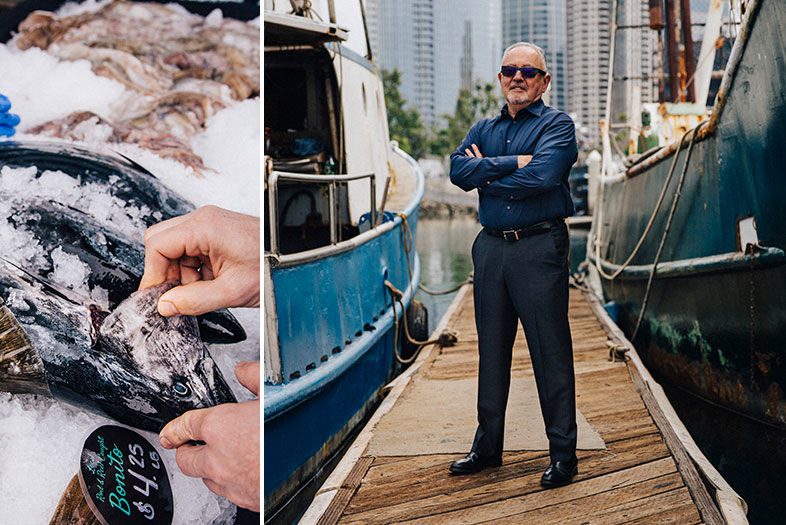
Right: Seaport developer Yehudi “Gaf” Gaffen photographed at the docks.

The Glory Days

There’s a decent chance San Diego’s fishermen and women have stopped reading this story by now, because it starts with a quote from a developer. Fishers have historically viewed developers as their most feared predator. In a city like San Diego, the water’s edge is the gold vein, the bounty, the most valuable thing. And while many players are involved—the San Diego Unified Port District, the California Coastal Commission, the people of San Diego (who own the land)—the fight over it usually boils down to fishers versus developers. Boats versus hotels. Bait versus brunch.

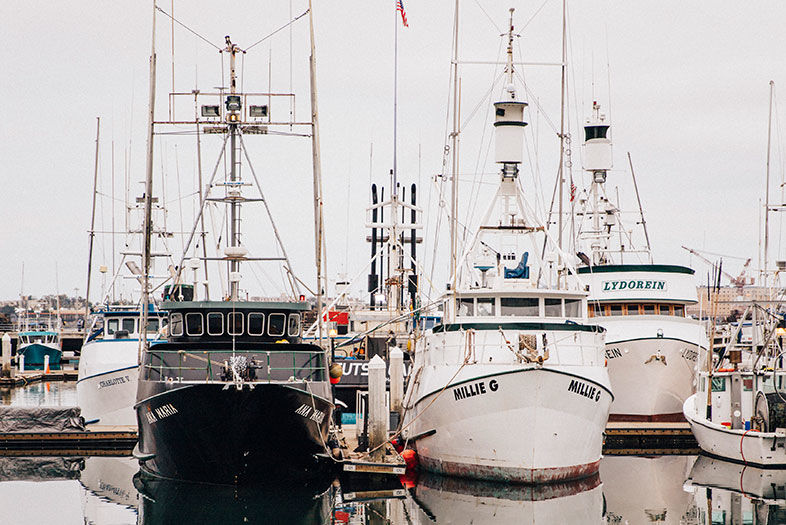
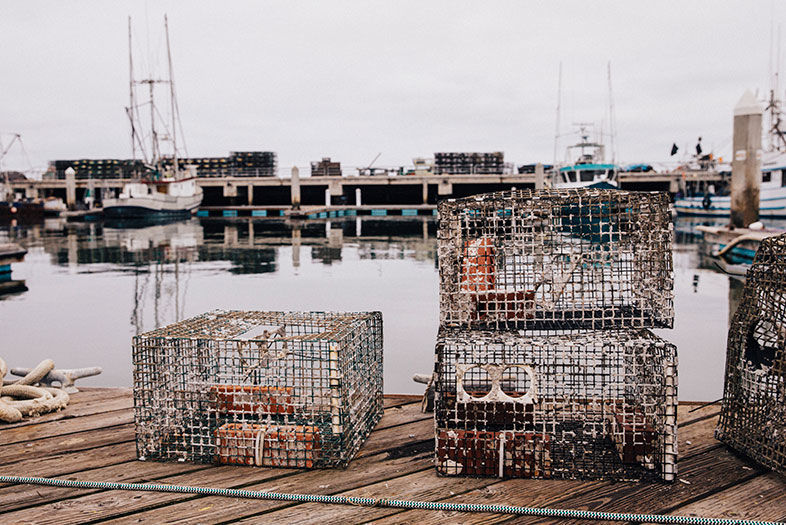
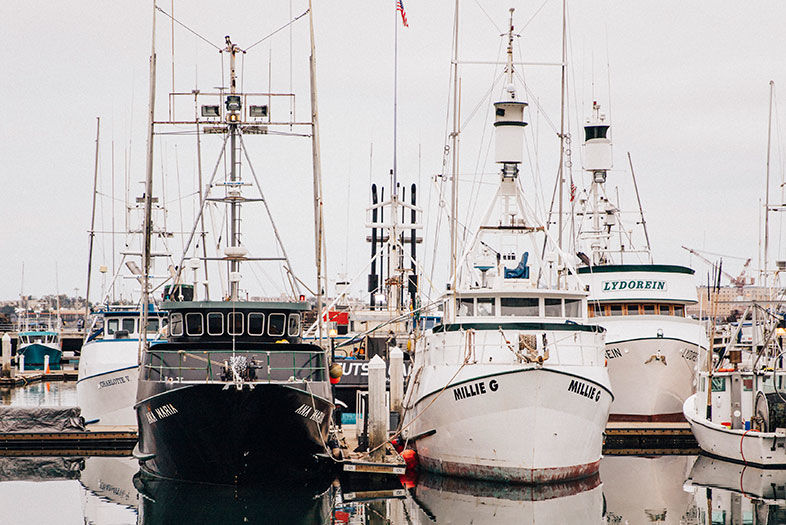
Tuna Harbor—located at the end of G Street, sharing a parking lot with the Fish Market restaurant, the USS Midway, and the American Tuna Boat Association—is one of two remaining spots along San Diego Bay dedicated to commercial fishing (the other is Driscoll’s Wharf). Longtime San Diego fisherman David Haworth stands on the edge and points at things. To parking spots that read “Reserved for Commercial Fishermen.” To the swarm of pedestrians and tour buses clogging the lot. To an aging dock where lobster traps and nets are stacked like a working-class art installation. To the 100 or so boats, where men with reptilian skin tanned like news anchors repair, well, everything.
A Deep Dive into the San Diego Fishing Industry

deep dive San Diego fishing industry

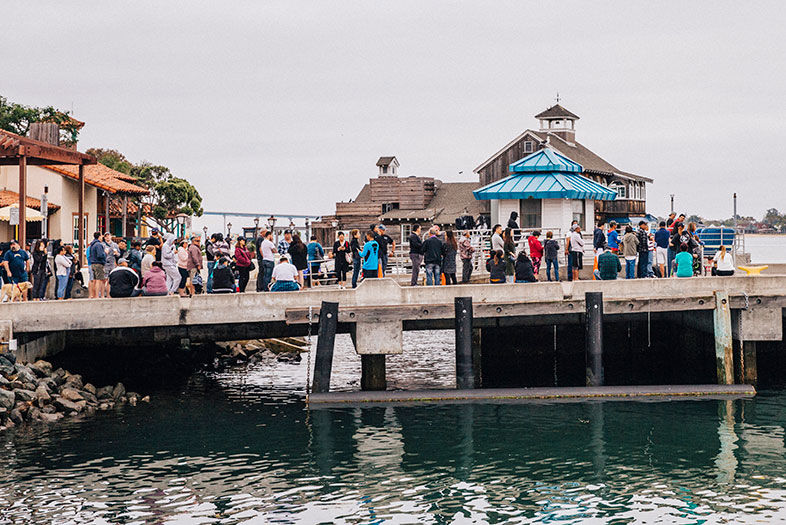
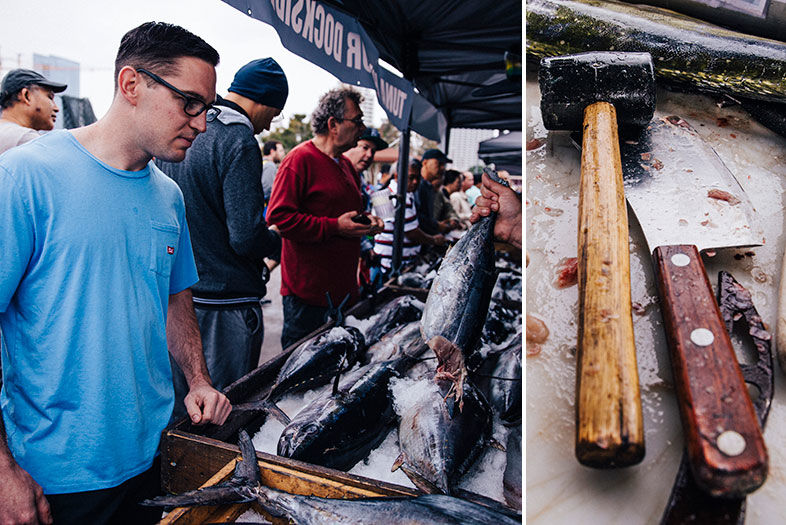
Customers wait in front of Tuna Harbor Dockside Market at 7 a.m., an hour before it opens.

“This is our Alamo,” he says, then laughs, acknowledging what happened at the Alamo.

San Diego was once known as the Tuna Capital of the World. At its peak in the early 1970s, the harbor was littered with gargantuan tuna boats, some with helicopters on the top deck for spotting fish. Every major cannery, including Bumble Bee, was based here. The industry employed over 4,000 people, the city’s third-largest employer behind the Navy and aerospace.

The Long Climb Back

Then fishing famously died, for many reasons. But mostly dolphins. During the gold rush for yellowfin and albacore tuna, nearly six million dolphins were killed, according to Sarah Mesnick, an ecologist in the Marine Mammal and Turtle Division of the Southwest Fisheries Science Center (SWFSC). Dolphins dying in nets was an international PR nightmare. Even suburban kids and moms thought bad thoughts about our fishing folk.

In response, the US passed the Marine Mammal Protection Act of 1972, severely limiting how American fishers could earn their living. In survival mode, boats fled San Diego and changed flags—to Mexican, Ecuadorian, Western Samoan, anything but American. Abroad, they found governments who didn’t care much about bycatch (dolphins, sea turtles, etc.), quotas designed to preserve the ocean’s stock, or labor rights. A lot of them still don’t. “We know, because we fish next to them every day,” Haworth says.

San Diego’s harbor gradually replaced commercial fishing spots with cruise ships, yachts, recreational fishing boats, floating museums. The decimation of the industry did have some positive outcomes, though: Over the past 50 years, the US has become a world leader in sustainable fishing.

“The dolphin mortality has dropped dramatically, from hundreds of thousands a year to under a thousand,” Mesnick says. Fishing’s not an exact science. If you drop a hook in the water, something’s going to bite it. But from a statistical standpoint, less than a thousand is basically zero.
A Deep Dive into the San Diego Fishing Industry

deep dive San Diego fishing industry

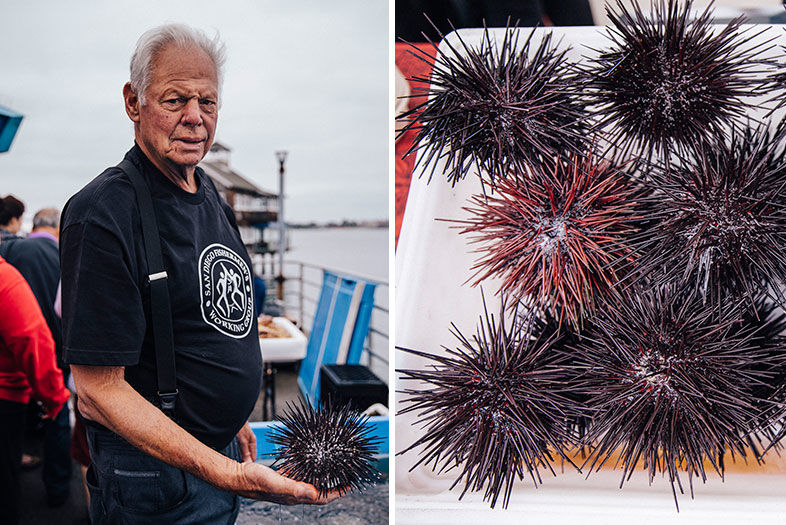
Left: Peter Halmay, uni diver and president of the San Diego Fishermen’s Working Group

Bluefin tuna—once the poster child for overfishing—are rebounding far stronger than official projections. An expert who agreed to speak anonymously said the US could raise its bluefin quotas right now. But the political nature of the fish has led government agencies to be extremely conservative, which means a couple more years. San Diego’s rockfish were nearly fished out in the ’80s, when everyone in restaurants ordered the red snapper (the menu misnomer for rockfish). Mesnick says they’ve rebounded, and local fishers are reporting huge stocks.

American sustainability efforts were carried out by commercial fishers. And the price was paid by commercial fishers. The half dozen I spoke with agreed that the restrictions were necessary after centuries of unregulated overfishing. “But we were told ‘short-term pain for long-term gain,’” says Peter Halmay, a 78-year-old uni diver and president of the San Diego Fishermen’s Working Group. “We’ve been under very strict guidelines for the last 20 years. And the stocks came back way faster than people anticipated. There’s going to be a movement to open up these groundfish to pay back these fishermen for preserving it.”

The Import Problem

The current reward for commercial fishers’ sustainability efforts? Of the 7.1 billion pounds of seafood Americans eat annually, over 90 percent is imported. Theresa Talley, researcher at Scripps Institution of Oceanography, published a report that found only eight percent of San Diego’s 86 seafood markets consistently carried local fish. This is bad news in many, many ways.

“US fleets pay more for gas, pay higher NOAA fees, regulatory fees, workers’ comp fees… the list goes on,” says Paddy Glennon of Superior Seafood, a decades-long proponent of sustainable seafood. “They don’t have that in Mexico. In Mexico they can fish for sea bass 11 months out of the year. Our fishermen get a month and a half. I love our brethren across the border, but they’re playing by a whole different set of rules.”

“The thing that’s sad about America,” says Haworth: “Our negotiators are terrible. At one point we were allowed to catch 900 tons of bluefin. Then our negotiator came to us and said he agreed to reduce it to 600 tons—for two years. What kind of negotiating is that? Meanwhile Mexico got 6,000 tons and Japan got 15,000 tons. Our whole quota isn’t even one load for other countries.”
A Deep Dive into the San Diego Fishing Industry

A Deep Dive into the San Diego Fishing Industry

Countries outside the US—not just Mexico, but in Asia, Africa, everywhere—can undercut American fishers by charging a much lower price. “You go into any wholesaler and you’ll see 80 percent Mexican sea bass, 20 percent American,” Glennon says.

That gives light to the ultimate cruel irony: Americans’ desire for sustainable, ethically caught seafood has resulted in Americans eating far more unsustainable, unethically caught seafood. An aphorism I heard over and over again during my research: Instead of asking why American seafood is so expensive, customers should be concerned about why imported seafood is so cheap.

Dave Rudy, owner of Catalina Offshore Seafood, says that US fisheries and management are the best in the world. “But consumers still look for low prices. We have to constantly remind them that low-priced fish is not the best thing for you, and supporting local fishermen is important.”

SWFSC’s Mesnick points to the dozen or so American fishers using drift gill nets to catch swordfish; they are often targeted by environmental nongovernmental organizations, or ENGOs. “These are the same fishermen who’ve been involved in fisheries management and research and reduction of bycatch,” she says. “They work with scientists to fish where they’re not hurting marine mammals and turtles. These are very advanced fishermen with very advanced gear. If you shut them down and still want to eat swordfish, you’re importing the swordfish from places who have none of that. So you’re hurting the species.”

San Diego fisherman Kelly Fukushima calls it “the transfer effect.” “Every time you punish a local fisherman, you increase the amount of bad habits you have to import,” he says. In our fight to save the turtles, we’re hurting turtles.

“Another mall on the water would be a huge disgrace to the harbor.” —Yehudi “Gaf” Gaffen

Commercial fishers make their living by being out on the water, not by attending meetings or launching publicity campaigns. Meanwhile, the ENGO Oceana launched a video series casting a negative light on commercial fishing. The titles include “Lauren Conrad Wants to Save the Sea Turtles,” “January Jones Is Scared FOR Sharks,” and “Miranda Cosgrove Wants to Keep Dolphins Singing.”

A representative for Oceana told me they’re supportive of American fishermen and women, and they’re all after the same goal: sustainable seafood. But every fisherperson I talked to took issue with ENGO’s portrayal of them (so did the scientists). They argue that they’re not the problem, and haven’t been for some time. The problem lies with dubiously regulated fleets overseas. And videos using January Jones don’t seem intended for the market in, say, Thailand.

As one of the most sustainable sushi chefs in the country—Rob Ruiz of The Land & Water Co.—once told me: “One of the most endangered species in our waters is a fisherman.”

To change this and tell their real story, fishers needed a public place. And in California they found it at markets like Dory Fleet Fish Market in Newport Beach, and Tuna Harbor Dockside Market in San Diego.

A Deep Dive into the San Diego Fishing Industry

A Deep Dive into the San Diego Fishing Industry

Big Changes for the Bay

Protea Development’s $2 billion plan to make over the waterfront is expected to break ground in 2024. Called Seaport San Diego, the project envisions more public parks, open spaces, and new stores and restaurants where Seaport Village and the nearby Tuna Harbor Dockside Market currently stand on the marina.

According to the developer’s website, the plan includes 400,000 square feet of retail space, an aquarium, hotels, a veterans’ museum, and a 480-foot tower with an observation deck. Protea Development and the San Diego Fishermen’s Working Group signed a memo of understanding in late 2018 that Tuna Harbor will remain in the redevelopment plan, and that improvements will be made to the harbor to allow commercial fishing to thrive, such as a new processing plant and a bridge where visitors can watch fishing boats offload their catch.

The Little Market That Could

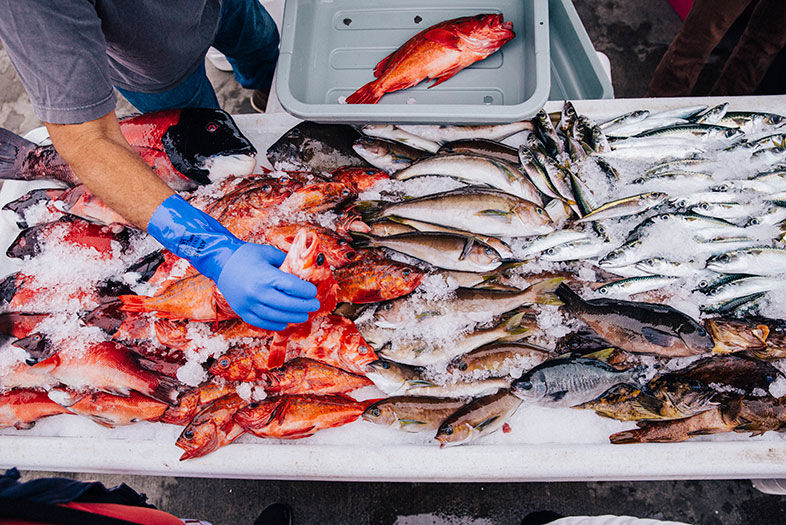
Every Saturday, a little pier near Seaport Village is lined with tables. Each table is teeming with one of the over 130 species caught by San Diego fishers. There’s urchin, black cod, mackerel, rock crab, spider crab, yellowtail, bonito, halibut, mahi-mahi, skipjack, wahoo, mongchong, opah, bluefin—you name it. A fisherman talks to a few customers, explaining what a sheepshead is, how to cook it. His wife stands nearby holding their newborn.

In 2014, San Diego fishers began efforts to sell their catch directly to consumers, just as farmers do at farmers’ markets. It required the passage of a bill (AB 226, aka “Pacific to Plate”), but Tuna Harbor Dockside Market finally opened for business in 2015 with a whimper: five fishers filling about a tenth of the pier outside Chesapeake Fishing Company.

“We just wanted to make sure the public had access to 100-percent sustainable, traceable fish,” says Fukushima.

“I thought we were gonna replace some of the middlemen,” says Halmay, one of Tuna Harbor’s founders. “Then I realized that wasn’t the goal. The goal was to simply show that fishing exists in San Diego.”

The market made fishing cool again. —Kelly Fukushima

Market attendance was slow, but they kept showing up each weekend rain or shine. Then San Diego’s Asian communities discovered it, particularly Filipinos (San Diego is home to the country’s second-largest Filipino population). In many Asian cultures, seafood is an almost-daily staple. Fresh seafood is not a delicacy inasmuch as a standard. Asian customers also supported the diversity of seafood found at the market.

“We have different species that different ethnic communities like,” says Halmay. “About 60 percent of our customers are Asian, and they know how to cook dogfish and mackerel. Your white La Jolla customer is buying the spot prawns.”

Just as monocultures like corn and soy have devastated farmlands, a country that eats only a few species of fish creates a dangerous imbalance in the oceans. In 2015, only 10 fish species made up 90 percent of American seafood sales (salmon and shrimp alone accounted for 55 percent). Overfishing a single species—tuna—led to the collapse of San Diego’s fishing fleet in the ’70s.

“Like a lot of things in life, being diverse and moderate is good,” explains Mesnick. “Tuna are top predators. You can’t just eat the lions of the sea. Eating through the food chain is good for your health and the sea.”

The next wave to discover Tuna Harbor were the chefs. JoJo Ruiz remembers being picked up by Paddy Glennon for his first trip to the market. They arrived before dawn and met all the fishers and their families. “It’s changed my entire cooking career and my life,” Ruiz says. “A lot of chefs say the same thing. If it wasn’t for the market, we’d still be using langoustines and turbot, stuff flown from all over the world.”
A Deep Dive into the San Diego Fishing Industry

A Deep Dive into the San Diego Fishing Industry

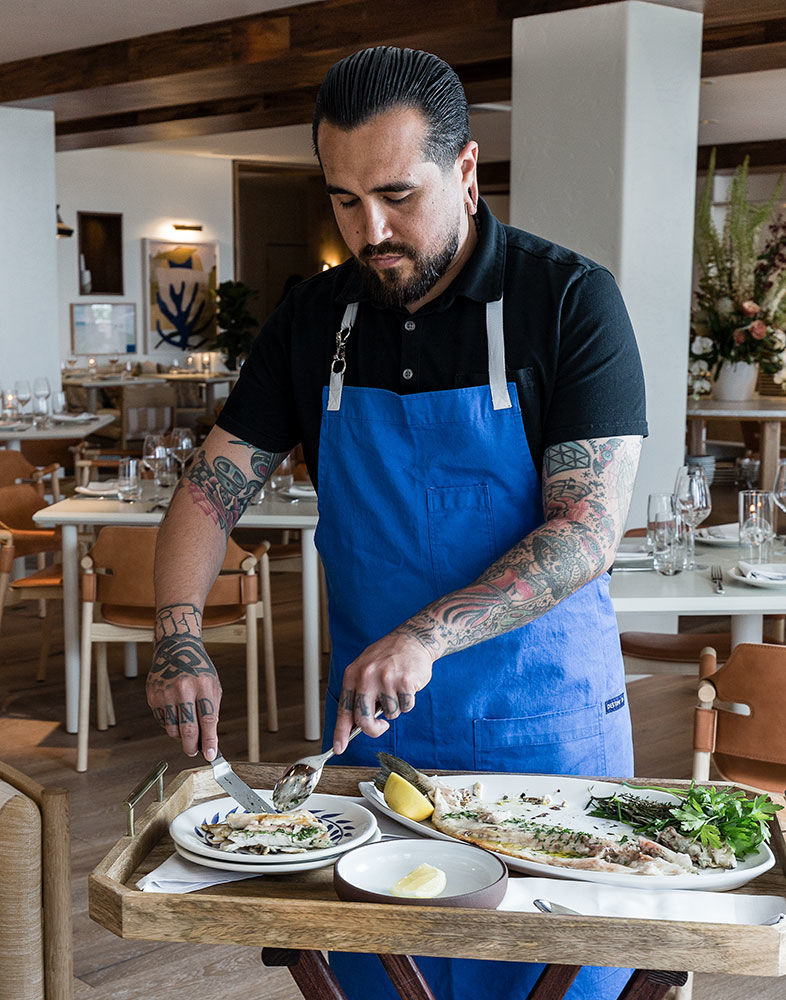
Chef JoJo Ruiz at Hotel Del Coronado’s new Sere~a restaurant, demonstrating their whole-fish presentation. | Photo: Justin McChesney-Wachs

Ruiz, executive chef at Lionfish and the new Serea at Hotel del Coronado, credits the market for his being named a James Beard Smart Catch Leader for sustainable seafood. At Sere~a, he presents local fish whole to diners, lets them look their dinner in the eye and choose one, and then the kitchen fillets and cooks it for them. He swears not only by the ethics of sustainability and connecting people to their food source (“I want my son to have the same seafood I have”), but also by the taste.

“Fresh, local vermilion rock cod is 10 times better than frozen red Thai snapper used at most restaurants,” he says. “Local halibut as a crudo is better than Alaskan halibut. Have you seen the claws on spider crabs? They’re giant; big as my wrist.”

There’s a parallel between Tuna Harbor Dockside Market and San Diego’s famed Chino Farm. It was Chino delivering the produce for the early farm-to-table movement. Alice Waters and Wolfgang Puck were regulars. Now Tuna Harbor is fueling the boat-to-throat movement, with regular customers from some of San Diego’s top seafood spots—Juniper & Ivy, Ironside, Wrench & Rodent, The Land & Water Co., The Fishery, The French Gourmet, and Saiko Sushi.

“In my 20 years of commercial fishing, I’ve never seen such a big increase in the demand for local fish,” Fukushima says. “The market really revitalized the fishing industry. It’s attracted a lot of people to the waterfront and made fishing cool again. Fishing was seen as something only outcasts or criminals or people without real jobs do. At the market they see the fishermen, meet their families, see them working together.”

It’s that humanizing element—and the ability to be an “attraction,” with people coming down to watch boats unload fish, snapping pics for the Insta—that may have motivated Yehudi Gaffen to make commercial fishers a focal point of his redevelopment plan.
A Deep Dive into the San Diego Fishing Industry

A Deep Dive into the San Diego Fishing Industry

Left: Ironside Fish & Oyster Bar’s chef de cuisine, Mike Reidy

The Future Is Now

The seaport plan includes hotels, a veterans’ museum, restaurants, almost 400,000 square feet of retail, an aquarium, and a 480-foot “Spire” observation deck. If all goes well, they’ll break ground in early 2024. But the plans and discussions that will guide these tectonic shifts are happening right now. Waterfront businesses must speak up, or risk being left out.

“Another mall on the water would be a huge disgrace to the harbor,” Gaffen says. “Another Disneyland would do a disservice and have no place. There has to be authenticity of a waterfront project.”

When the port first asked for redevelopment proposals, Haworth says they warned the fishers. “They said, ‘Listen, guys, you better negotiate with the developer, because we don’t have any money for Tuna Harbor. If you want it revitalized you better make the deal.”

The initial discussions with Gaffen were heated. Fishermen and women are notoriously defensive of their territories, because their territory has been taken from them—once allotted nine acres on the harbor, they’re currently down to 3.9. So Halmay and a few others formed the San Diego Fishermen’s Working Group. They started showing up to seaport plan meetings and port meetings, having productive sessions with Gaffen and his son-in-law, an ex–Navy SEAL named Alex Buggy.
A Deep Dive into the San Diego Fishing Industry

A Deep Dive into the San Diego Fishing Industry

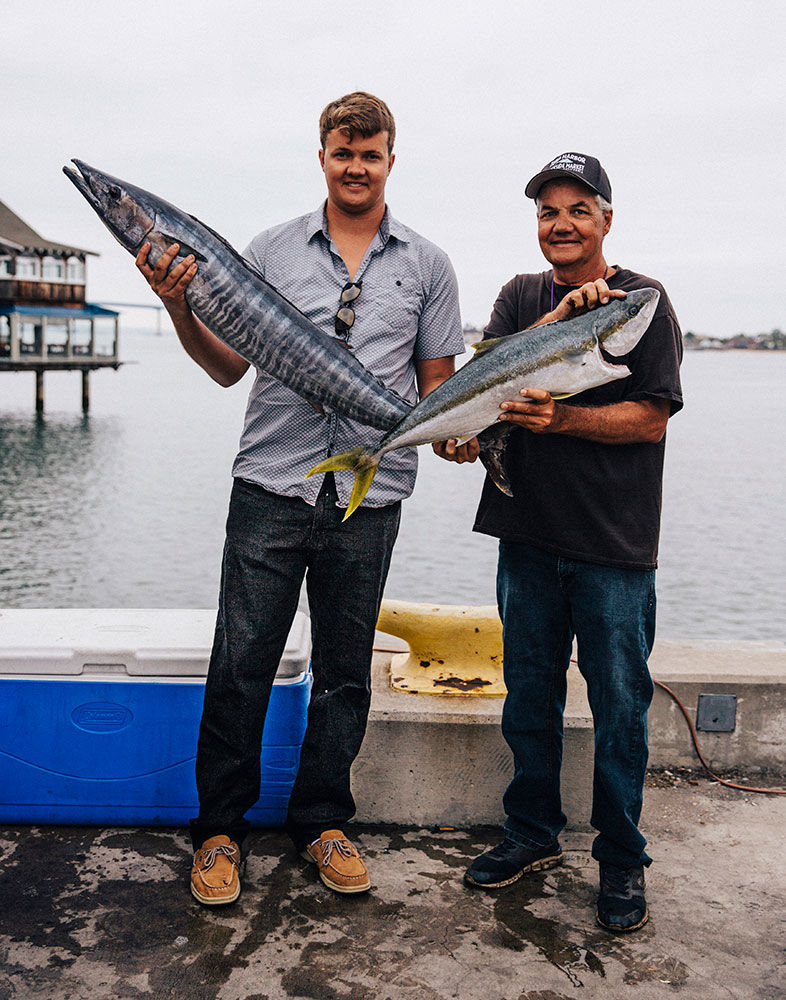
Nick Haworth and his father, David Haworth. David’s father, retired, is also a fisherman.

“Where there’s two fishermen there’s usually six opinions,” Gaffen laughs.

“Forming the fishermen’s group let us speak with one voice,” Halmay says. “We had to stop fighting fires and build a fire station first. The working group is that fire station.”

For instance, they sent Gaffen’s first proposal back with some curious markups. “The first few designs and drawings came back and they had them labeled HS1 and HS2,” he explains. “And I remember saying ‘What is that?’ It was Horseshit 1 and Horseshit 2. On a fisherman’s list of people they trust, we’re not on it.”

Gaffen and the seaport plan have to balance every interest, not just the fishing community’s—yachts want space in the harbor, people want parks, tour buses want parking, restau­rants have wants, hotels have wants. So many wants. Plus there’s the money issue. Unlike other governing agencies, the port doesn’t receive any public funding. They depend on money from leases, and commercial fishing has not been an eco­nomic boom for San Diego since the collapse. Not compared to, say, a luxury hotel. Not even close.

“If it wasn’t for the market, we’d still be using langoustines and turbot, stuff flown from all over the world.” ——JoJo Ruiz, Executive Chef, Sere~a and Lionfish

It was so fortuitously timed that Tuna Harbor Dockside Market has grown into a legitimate attraction. But even that was small potatoes until—seemingly out of nowhere—the big boats started showing up again.

“These tuna boats came in at just the right time,” Halmay says. “Just as Gaf was asking us, ‘How do we know you’re going to have this demand?’—here they came! I said, ‘Hey guys, here’s your demand!’”

The three big boats—carrying between 20,000 and 40,000 pounds of tuna—belong to Hawaiian Fresh Seafood, which just relocated to San Diego from Honolulu. Owner Frank Porcelli (a grad of Poway High) says he has plenty more boats he’s ready to bring in, many from the overcrowded Honolulu Harbor. But in order to accommodate this growth, San Diego desperately needs more infrastructure—slips, storage for traps and nets, ice machines, loading docks, cranes, and so on.

In September 2018, Gaffen and the Fishermen’s Working Group signed a memo of understanding. In it, Gaffen promises a list of items to “facilitate the revitalization of San Diego’s commercial fishing industry”—making improvements to Tuna Harbor, building a new processing plant, a bridge where visitors can watch fish be offloaded, and most importantly keeping yachts and recreational boats out of their “Alamo.”
A Deep Dive into the San Diego Fishing Industry

A Deep Dive into the San Diego Fishing Industry

Some are skeptical. The seaport plan to build a veterans’ museum and a processing plant on the G Street Mole (not to mention the new Manchester Group hotel across the street) will bring more traffic to what is already one of San Diego’s most congested parking lots. “They’re trying to stuff 10 pounds of [stuff] into a five-pound bag,” Fukushima says. Nearly all fishermen I talk to doubt whether Gaffen and the seaport plan can pull this off without grinding commercial fishing to a halt.

Gaffen and Buggy are confident they can. They’ll build a workable space for San Diego’s fishers—and help establish the city as the capital of sustainable seafood.

“It’s a differentiator and it’s authentic,” Gaffen says. “Com­mercial fishing is starting to come back. It’s a vital security need. If we can catch local, sustainable seafood for our community and restaurants—it’s a legacy I’d be really proud of.”

CORRECTION: In the original story, we included a quote from an expert claiming there was bycatch in imported cans of tuna. After further fact-checking, one of our experts said this was not true. There is no evidence that there is turtle meat in imported, canned seafood. We regret the error. They do, however, maintain that most imported seafood is far less sustainable and is caught by fleets with significantly higher bycatch of dolphins, turtles, and other marine mammals. We stand by their expertise in that regard. 
A Deep Dive into the San Diego Fishing Industry

Subscribe to our newsletters

Select Options

By subscribing you confirm that you agree with our Terms and Conditions and Privacy Policy.

Food & Drink JULY 8, 2026

Ina Garten Inspired This SD Baker to Open His Own Pop-Up

After a childhood obsession with the Barefoot Contessa and years in Michelin-starred kitchens, Juan Lopez is bringing Poppy Bakeshop to Liberty Station

Ina Garten Inspired This SD Baker to Open His Own Pop-Up
Courtesy of Poppy Bakeshop

It wasn’t his mother who inspired Juan Lopez to start baking. Nor was it pandemic boredom. It was Ina Garten. Lopez remembers it clearly—he was in third grade, watching TV at home in San Diego when the Food Network’s Barefoot Contessa appeared on the screen. She was in Paris, France, making profiteroles, which are essentially French cream puffs. He’d never seen them before. “That stuck with me forever,” Lopez says. 

Forever, or at least present day. It was enough inspiration for him to launch his own pop-up bakery this June: Poppy Bakeshop, which now appears every weekend from 7 a.m. to 12:30 p.m. (or sellout) at Moniker Coffee in Liberty Station. 

But let’s not fast-forward how he went from a third-grader to burgeoning bakery entrepreneur. After falling under Garten’s spell—I mean, who among us hasn’t at one point or another—Lopez decided to try his hand at making cookies, which proved equal parts satisfying (making something from scratch) and frustrating (not actually knowing what on Earth he was doing). But that itch never went away through high school, when he decided to pursue culinary school. But before enrolling, prospective students had to complete a six-month internship in a professional kitchen.

So Lopez went to the first French restaurant he ever visited—Cafe Chloe in East Village, where chef Katie Grebow took him under her wing. School didn’t pan out, but his education was just beginning.

In the early 2010s, San Diego’s culinary scene was still an afterthought on the national scale. Lopez recalls Grebow encouraging him to move to San Francisco to really hone his skills. “I was 18 and was like, ‘Well, I’ve got nothing else to do,’” he laughs. He walked into the one Michelin-starred La Folie in the Russian Hill neighborhood, resume in hand, and asked chef Roland Passot for a job. He started the next day.

After a few years in San Francisco, he returned to San Diego with the intention of moving out of restaurants and focusing on perfecting the foundations of pastry. After stints at Con Pane Rustic Breads, Herb & Wood, and Hommage Bakehouse, he landed at Wayfarer Bread & Pastry in 2023. 

The Bird Rock bakery was already well on its way to national acclaim—it was named one of the best 100 bakeries in America by Food & Wine Magazine in 2020, not to mention the Critic’s Pick for “Best Bakery” by San Diego Magazine in 2022, 2024, 2025, 2026, runner-up in 2023, critic’s pick and runner-up in 2021, and then I stopped counting (because I’m pretty sure we all get the picture). 

He still works part-time at Wayfarer while growing Poppy, but Lopez says he hopes to increase his pop-up schedule and collaborate more with other local makers. “The ultimate goal is to get a storefront,” he says. Normal Heights would be ideal, but he’s flexible on location and timeframe. 

One thing he’s not flexible on is boxing himself into one type of pastry or flavor profile. “I really want Poppy to be this overwhelming abundance of items with different colors and different textures… I don’t want to be known for one thing,” he says. French-inspired, Mexican-influenced, and yes, even taking cues from the fashion industry. Take his plum cornbread, for instance. It’s an homage to Belgian designer Dries Van Noten’s vibrant palette. 

“They had this one outfit that had this very, very bright kind of burgundy with this khaki-ish color. Then I went to the farmer’s market, and one of my favorite farmers, Heritage Family Farms, they had these gorgeous, gorgeous plums, and I was like, ‘Well, those are literally the color of that.’” The result? A sweet slice of rich reddish-purple plum cake. 

He also draws inspiration from his own family. Every year, he makes coffee cake for Mother’s Day. Cinnamon rolls for Christmas. Basically, anything and everything that makes it onto his shelves is “based on what I’m craving,” Lopez laughs. 

And he’s ready to share his cravings with you. “I’ve had so many bad days, and so many of them have been made better through pastry or through food,” he says. “I think as long as everyone just takes the time to just really enjoy what’s in front of them, that’s kind of all I hope for.”

Courtesy of Good Pressure Brewing

San Diego Restaurant News & Food Events

Beth’s Bites

  • Partnering with Bay City Brewing Company and the Center for Plant Conservation (CPC), the ecologically-minded Good Pressure Brewing just brewed an American Wheat Beer using 100 percent California-grown barley to raise money for the plant preservation program. The 20bbl batch will be available at the Mission Gorge taproom the week of July 13, with a yet-to-be-announced release event featuring CPC reps on hand to talk about their efforts. That’s about as easy-drinking as a beer style can get, and with some plant power supporting the initiative, it’s a no-brainer to swing by. 
  • For as many coffee shops San Diego has, there’s only a small number of tea houses that really focus on a genuine tea experience. (We see you, Paru.) But Chagee Modern Teahouse just soft opened its first location in the county at Westfield UTC, which will be followed by a second location at the new Zion Market later this year. Based on early reports, paying a visit to the whole leaf milk tea maker just might be worth dealing with the new parking costs at the mall. 
  • Every summer break, around 240,000 K-12 students across San Diego County lose access to school-provided meals. That’s around half of the total number of students enrolled across the entire county, so yeah, it’s a problem. For the sixth year, Regents Pizzeria in La Jolla partnered with Feeding San Diego to launch the chunkily-named, but uber-generous “Dough-nate to Fuel for Summer” campaign. Following the “buy one, give one” model, the pizzeria will donate one meal to Feeding San Diego for every meal purchased through July, as well as matching any customer’s donations. I’m always happy to eat a slice of ‘za, but if I can make sure others can too, that tastes even better.

Listen Now: The Latest in San Diego’s Food and Drink Scene

Have breaking news, exciting scoops, or great stories about new San Diego restaurants or the city’s food scene? Send your pitches to [email protected].

Beth Demmon

About Beth Demmon

Beth Demmon is an award-winning writer and podcaster whose work regularly appears in national outlets and San Diego Magazine. Her first book, The Beer Lover's Guide to Cider, is now available. Find out more on bethdemmon.com.

Food & Drink JULY 7, 2026

San Diego’s Filipino Food Revolution Continues

Along with other Filipino culinary icons, Ashley del Rosario is making Filipino pastries a category of their own

San Diego’s Filipino Food Revolution Continues
Courtesy of Ashley del Rosario

Baker Ashley del Rosario estimates she makes five people cry every day. It’s not because she’s some salty old grump. In fact, del Rosario is such a delight to talk to that we ended up chatting in the sunshine for 20 minutes after my two-hour parking meter ran out. (I got lucky—no ticket!) It’s because her baking philosophy, which centers around spotlighting her culture as a Filipina-American and using some of her mom’s recipes as inspiration, seems to uniquely touch a nerve in her community.  

“People message me every day saying… ‘Oh my God, my mom loves your stuff. Oh my God, this made me so emotional. This reminds me of my childhood,’” she says. “I must be doing something right.”

We’re sitting outside at Michi Michi in Bankers Hill, where she finished up a two-month residency as the in-house guest baker on June 30. Her menu of Filipino-inspired pastries feature ingredients like mango, ube, pandan, calamansi, and taro leaves in items like French croissants and Italian maritozzos. But she’s also pushing flavor boundaries with pastries like a champorado tart, a Filipino chocolate rice pudding topped with a dollop of anchovy paste. 

Love it or hate it, to del Rosario, the point is that she introduced champorado to a new audience. “If you don’t like Filipino food, or you’re not interested in it, or you don’t even get it… you [still] came into this bakery and you saw Filipino desserts,” she says. So the next time you come across champorado, your brain will already recognize it and hey, maybe you’ll give it a try. 

San Diego is home to the fifth-largest Filipino population in the United States, with enclaves in Mira Mesa, National City, southeast San Diego, and Chula Vista. That’s led to a rise in popularity of Filipino food in San Diego, as well as across the country

In 2021, Phillip Esteban—San Diego Magazine’s “Chef of the Year” in 2020—opened the first location of his fast-casual Filipino concept White Rice, which now has locations in Normal Heights and Sorrento Valley. Kristin Cleavinger’s coffee and matcha pop-up One of One draws inspiration from her own Filipina-American heritage. Tara Monsod, executive chef at Animae and Le Coq, is a three-time semifinalist for Best Chef in California by the James Beard Awards and one of the leading champions of Filipino-American cuisine. She was also del Rosario’s boss at her first kitchen job, which was doing pastries at Animae. (Nothing like jumping straight into the fire!)

Del Rosario says Monsod became a cultural and culinary mentor, pushing her to explore new and bigger opportunities. When she got the chance to study at the illustrious Italian Culinary Institute in Calabria, Italy, Monsod encouraged her to go. It changed del Rosario’s life—so much so, she’s moving to Italy later this year to continue honing her pastry skills. 

In the future, she says she hopes to split her time between Italy and San Diego, continuing collaborations and pop-ups while developing what she sees as an entirely new lane within pastry: Italian pastry technique with distinctly Filipino flavors. 

Italian pastry technique is different from classic French. Take croissants, for example. The Italian version, called cornetto, is often filled with creams, jams, or savory fillings, and tends to feel softer than its buttery, flakier French counterpart. They’re also more regionally driven, with different areas utilizing local specialties like citrus for the filling—an ideal vehicle for launching a Filipino-fusion creation. 

There are plenty of globally-inspired bakeries in San Diego with their own specialties—Azúcar in Ocean Beach is Cuban, Su Pan offers traditional Mexican pastries, and Asa Bakery is modeled after Japanese kissaten cafés. There are even a number of local Filipino bakeries like Valerio’s 1979 (formerly Valerio’s City Bakery), Kababayan Bakery, and Starbread Bakery. But a Filipino-Italian bakery? Not yet. And even if there were, del Rosario says the more, the merrier. 

“There is no competition,” she says. “It’s just showing our culture.”

San Diego Restaurant News & Events

Beth’s Bites

Beth Demmon

About Beth Demmon

Beth Demmon is an award-winning writer and podcaster whose work regularly appears in national outlets and San Diego Magazine. Her first book, The Beer Lover's Guide to Cider, is now available. Find out more on bethdemmon.com.

Food & Drink JULY 7, 2026

Review: Alchemy – Choose Thy Poison

The Mexican restaurant continues the Barrio Logan tradition of art in unexpected places

Review: Alchemy – Choose Thy Poison
Photo Credit: Dee Sandoval

I’m sitting in a slab of concrete under a freeway, eating a ceviche black as eyeliner.

There might be seven seats in this restaurant. Or maybe it’s 12 minus five. That area under the stairs might also be a couple seats, or it might just be a very inviting storage area with a flower vase. The restaurant is so small your core instinct is to count seats and tabulate if Alchemy – Choose Thy Poison is a real place with a sane business plan or if it’s a social art project designed to question the reality of restaurants and business plans.

There’s a large, floor-to-human-height window near our table. Through it, I notice someone didn’t make their bed this morning. It’s a decision I deeply empathize with. It’s moments like this that make you acutely aware that Alchemy is also technically the courtyard of a six-room micro-hotel called Narcissus. Not the kind of massagey boutique hotel you’re thinking of with soft woods, obscene amounts of linen, and opinions on bonsai therapy. It’s a near-Brutalist cube of base industrial materials—concrete and acrylics bent and molded into a series of alcoves, with pods to sleep in. Sculptures lie behind glass like Tilda Swinton circa 2013.

The window to the unmade bed forcibly crams light voyeurism into the dining experience. The hotel and Alchemy feel like the parts of Mexico I love the most. Although Mexico has its multimillion-dollar restaurants, a vast majority of the best street-level places feel like you’re temporarily recreating in a very lovely construction project.

Alchemy’s location is what most people comment on (“I can’t believe a place like this exists on a block like this.”)—jammed at the bottom of the freeway embankment on the northeast side of Barrio Logan. But that makes it distinctly Barrio, the historic cradle of San Diego’s Hispanic and Chicano culture. The I-5 freeway was built through Barrio in 1963—a fairly traumatic gashing of the neighborhood—and residents responded by painting epic murals on the ugly concrete belly of eminent domain. Where some would’ve just accepted the industrial blight, locals saw shade for a park. There is a deep history here of turning concrete into art, and Alchemy carries that on.

Photo Credit: Dee Sandoval

The vision for the property came from owner Benjamin Longwell, whose company—The Society of Master Craftsmen—sounds like it wears a monocle. Longwell is part of the new guard of developers who focus on urban infill. Instead of adding to the city sprawl, they find unused or underutilized parcels of land in established neighborhoods, then build creative mixed-use spaces that, in perfect scenarios, add something of value for locals.

I’m not making a case for architectural sainthood, but there isn’t a huge list of developers who would look at the line of cars exiting the freeway in front of Alchemy and think, “We must build here.” So in that sense, Narcissus and Alchemy feel additive to the community, not extractive.

I stare back at Alchemy’s ceviche negro, a glossy mound of halibut that looks inspired by the La Brea Tar Pits or melted vinyl records. Chef-owner and Mexico City–native Eddy Cortes saves all the trimmings of his dishes (garlic and onion skins, vegetable shavings), then chars them into an ash to create a recado negro—a Yucatán specialty that usually involves toasted chiles, achiote paste, vinegar, and a ton of warm spices. He tosses local halibut with squid ink, tamari, charred pineapple, and citrus. The usual charm of ceviche is that it’s light, bright, full of color. Not here.

It is fantastic—acidic but with a whole world of toasted, warm flavors, like ceviche that’s seen some things.

The menu from Cortes—a home cook his whole life, only having taken it professional a few years ago with his popular pop-up, Barracruda—is really a tour of specialties from various states in Mexico.

A crema de poblano has the blended ghost of rajas at its core: an emulsion of roasted poblanos with butter-sautéed onions and garlic, plus a touch of milk that’s topped with queso fresco, chile ancho, and morita oil. Morita—a smoky Mexican condiment made from dried and smoked red jalapeños for a less intense, fruitier cousin of chipotle—is the key here. It specializes in spiking fats (guacamole, fried eggs, burritos). Sop up the crema with house-baked garlic-rosemary sourdough, blackened from the ash of a corn husk.

Smoked tuna is a Baja gift that’s become an anchor for most San Diego taco shops, and Alchemy combines mesquite-smoked yellowtail with caramelized onions, sweet peppers, and Chihuahua cheese (the OG quesadilla filling), then stuffs it in a perfectly baked masa empanada. The result is somewhere between a TJ Oyster Bar taco, a calzone, and a tamale—but with extra flavor and more black hue from cuttlefish ink.

Alchemy’s huaraches de res is Cortes’ ode to where he’s from. Huaraches are the New Haven–style pizza of Mexican food—thick, oblong masa flatbread layered with refried beans and a payload inspired by the Mexico City markets the chef grew up roaming with his dad: braised beef (braseado), avocado salsa, pickled vegetables, salsa macha, and jocoque (Mexico’s fermented dairy product, like a cross between crema and labneh).

Alchemy’s seared tuna crudo gets a tad abused by the riot of big flavors: charred hibiscus salsa, avocado salsa, pickled grapes, pomegranate salsa macha, and chipotle aioli. It’s a fate that also tempers the joy of the zarandeado, with the adobo marinade on the shrimp fighting a bit with recado negro and chipotle crema. Sticking with curmudgeonly food critic notes, flies are a part of the Alchemy experience, at least during our visit. They’re fairly hard to evict from the outside world, but more measures could be taken to discourage their participation.

Photo Credit: Dee Sandoval

The oxtail tetelas—like a Mexican pupusa—are a diary note from Cortes’ travels to Tlaquepaque, where they famously superboost their salsa with a touch of instant coffee. First, Cortes braises the oxtail with beer and Mexican spices. Then he blends that braising liquid into a salsa with beef tallow, guajillo, charred onions, tomatoes, and black garlic. Keeping with the goth food theme, the oxtail goes into masa negra infused with squid ink.

Desserts are where you realize just how deeply Alchemy is committed to the art bit. Rarely do you see a neighborhood bistro trying to pull off trompe l’œil—the French specialty of making pastries and other desserts look like fruit or other everyday objects. (The phrase means “to deceive the eye” and is the historical precedent for the Is It Cake? phenomenon.) Pastry chef Catherinne Avila does, though. A “Naranja” comes out in the form of a mandarin, but inside is orange blossom mousse, apricot jelly, and sablée (a delicate, crumbly shortcrust). A “Philosopher’s Stone” comes in the form of a brick of gold with a serpent on top; inside are mango mousse, mango-Tajín jelly, and a coconut dacquoise.

As Barrio Logan enters an apprehensive phase—its creative culture and restaurant scene growing rapidly, bringing economic promise face-to-face with the need to protect the Chicano way of life—this concrete tuckaway from a Mexico City kid feels like a good step. The Barrio has a long history of making art in unexpected places, and Alchemy carries that a little further.

Photos Credit: Dee Sandoval

Troy Johnson

About Troy Johnson

Troy Johnson is the magazine’s award-winning food writer and humorist, and a long-standing expert on Food Network. His work has been featured on NatGeo, Travel Channel, NPR, and in Food Matters, a textbook of the best American food writing.

Studio S JULY 7, 2026

Xplosion Box: A Customized Keepsake Your Loved Ones Won’t Forget

A customized memory-filled explosion gift box is a creative way to show someone you care

Xplosion Box: A Customized Keepsake Your Loved Ones Won’t Forget
Hero image – Birthday Explosion Gift Box

Finding a gift that feels truly personal can be surprisingly difficult. In a sea of generic options — flowers, gift cards, candles, and the like — Xplosion Box offers something more lasting: a customized keepsake built around the photos, messages, and memories that matter most.

Founded by Southern California entrepreneur Jay Vijay, Xplosion Box LLC creates fully customized explosion gift boxes that arrive professionally designed, printed, assembled, and ready to gift. Each box opens layer by layer to reveal personal photos, heartfelt messages, pull-out albums, origami-style photo pockets, and hidden notes, turning a simple gift into an emotional reveal.

The brand was built for people who want to give something meaningful without spending hours printing photos, cutting paper, folding cardstock, or assembling a DIY project. Customers simply choose a box, upload their favorite photos, add personal messages, and the Xplosion Box team transforms those details into a polished keepsake that feels thoughtful, personal, and beautifully made.

Xplosion Box offers personalized gift boxes for birthdays, anniversaries, weddings, graduations, Mother’s Day, Father’s Day, Valentine’s Day, Christmas, proposals, bridesmaid gifts, long-distance relationships, and thoughtful “just because” moments.

Customers can choose from flexible customization options starting at $27. The Mini Surprise Box includes 10 photos, three message cards, and one hidden secret note, while the Mega Surprise Box offers a fuller keepsake experience with 40 photos, three message cards, and one hidden secret note.

What sets Xplosion Box apart is its high level of customization combined with convenience. Filled with personal photos, custom text, decorative details, and layered surprises, each box gives customers the freedom to create a gift that feels one-of-a-kind — without having to make it themselves.

At its core, Xplosion Box helps people turn favorite photos, stories, and words into something tangible: a keepsake that can be opened, revisited, and remembered long after the occasion has passed.

Partner Content
Food & Drink JULY 7, 2026

This Popular Ice Cream Pop-Up Is Opening Its First Permanent Shop

After building a loyal following through coffee shop pop-ups, Scoopy Scoopy is putting down roots in Leucadia

This Popular Ice Cream Pop-Up Is Opening Its First Permanent Shop
Courtesy of Scoopy Scoopy

There’s a saying in business that if you’re not evolving, you’re dying. I personally have a saying that if you’re not eating ice cream, you’re also probably dying, but of sadness.

Scoopy Scoopy doesn’t have either of those problems. The premium ice cream pop-up launched last year with the idea of setting up in coffee shops after hours, helping those businesses maximize their profitability while also avoiding the costs of a brick and mortar. But it turns out, a lot of people in Leucadia really like ice cream—so much so that Scoopy Scoopy decided to open their own scoop shop in the same building as Moto Deli and Cadence Cyclery (in the former Queenstage Coffee House space) on July 8.

Evolving doesn’t mean leaving the old ways behind. Zach Zien, who runs Scoopy with his partner Steven Segal and wife Sophia, says they will continue to pursue the shared space model on weekends at Coffee Coffee in Leucadia through the summer and are still open to popping up at other venues. “That’s still a core part of our business,” he says. But with steady demand in the Encinitas area, it gave them the confidence to put down roots of their own. 

“People have really welcomed us and we’ve been well-received,” he explains. “We think this is the market to succeed in.”

The super-premium ice cream is still sourced from Chocolate Shoppe Ice Cream in Wisconsin, but instead of the eight flavors they’re limited to for popups, the permanent storefront will be able to offer 12. “There will be three or four that regularly rotate, with probably eight staples that are our best sellers,” says Zien, pointing to flavors like peanut butter, oatmeal cookie, and the alternating vegan options. They’ll also be able to fill pints to order, something they haven’t been able to do in the past. 

Currently, Moto Deli closes at 4 p.m. daily, but once Scoopy Scoopy is up and running, it will offer beer and wine until 8 p.m. for a shared drinks-and-dessert Happy Hour. “We’re hoping to get a food truck vendor on regular rotation to have food options available after hours as well,” says Zien. 

The spontaneity of pop-ups can be as exciting as it is efficient. But when it comes to ice cream, I like knowing exactly when and where I can get a scoop—before the sadness kicks in. 

Scoopy Scoopy soft opens on July 8 at 190 N. Coast Hwy 101 in Encinitas. Initial operating hours are Wednesday and Thursday, noon to 8 p.m.; and Friday through Sunday, noon to 9 p.m. (subject to change). 

Courtesy of Cold Smoke BBQ

San Diego Restaurant News & Food Events

Cold Smoke BBQ Is San Diego’s Newest Meat-Centric MEHKO

Speaking of pop-ups, San Diego’s culinary entrepreneurs keep ramping things up with more concepts launching every week. But after a parade of pastry prodigies and brilliant breadmakers, it might be nice to sink your teeth into something with a bit of protein. (Shoutout to all my carboholic brethren out there.) 

Jim Adamski is joining the ever-swelling ranks of MEHKO (Micro Enterprise Home Kitchen) businesses alongside the likes of The Hidden Gazebo Eatery in Lemon Grove and Warung RieRie in Serra Mesa with his new venture, Cold Smoke BBQ. He’s not following a specific regional barbecue style like Central Texas, Kansas City, or St. Louis—he’s driven by whatever inspires him at the time (or, whatever he’s craving). He’s also not following a specific schedule. “My loose plans are weekends… then eventually maybe during the week,” he says. His menu and pick-up schedule get updated regularly, with pre-orders available to pick up from his house in 4S Ranch. So far, he says the dry-rubbed ribs and rib tips have been the best-sellers. But if you absolutely can’t resist adding a bread-adjacent item, you’re still in luck—he’s got cornbread.   

Beth’s Bites

Beth Demmon

About Beth Demmon

Beth Demmon is an award-winning writer and podcaster whose work regularly appears in national outlets and San Diego Magazine. Her first book, The Beer Lover's Guide to Cider, is now available. Find out more on bethdemmon.com.

Guides JULY 6, 2026

6 Perfect Days in North County

We found a handful of inspiring people who live in, and truly know, these 'hoods and asked them how they’d spend their time out and about

6 Perfect Days in North County
Courtesy of Oceanside Museum of Art

Growing up in Carlsbad, I never quite understood why people vacationed there. What, so you want to check out the field where I have soccer practice? Pay my orthodontist a visit? Carlsbad just felt like a town by the beach, no better or worse than any other in the country. It took going to college out of state for me to actually understand just how rare a place like Carlsbad is.

Thanksgiving break my freshman year, my first time coming home after three months in the Midwest, my shoulders dropped. I rolled down the windows and drove to lifeguard tower 37—the hangout magnet for Carlsbad’s youths (and, in the summer, tourists)—and the smells of the ocean woke me right up like smelling salts do. I finally got it.

Carlsbad isn’t just a stopover town on your way to something better. It is the destination. Travel + Leisure named Carlsbad one of the top 50 places around the world to travel in 2026. From the whole globe, the travel magazine picked my home. Sure, we’ve got the Flower Fields and Legoland—but now it’s the smaller ships and indier dreams that are giving it street-level character.

It’s not just Carlsbad, either. People have talked about the “North County bubble” for decades—a force field that prevents its residents from traveling south of the 56. It’s often used derogatorily, and it’s a fairly accurate burn.

For decades, living up in North County meant giving up on culture, or at least culture within close proximity. But now, the main expansion of San Diego culture is happening up north. Central San Diego restaurants have started taking notice and are expanding into the area—spurred no doubt by Oceanside’s food boom and the Jeune et Jolie–Campfire–Wildland–Lilo constellation in Carlsbad. City Heights burger joint Key & Cleaver opened a new spot in Oceanside; the owners of Parc Bistro-Brasserie in Bankers Hill opened Parc Lounge in Rancho Santa Fe. Possibly the strongest market indicator is that Sam Fox—one of the most successful restaurateurs west of the Rockies—has started focusing on North County for his concepts. In 2025, he opened both The Henry in Carlsbad and Culinary Dropout in Del Mar.

For the ultimate insider guide, we found a handful of inspiring people who live and create and truly know six North County neighborhoods—San Marcos, Escondido, Oceanside, Leucadia, Rancho Santa Fe, and Vista—and asked them how they’d spend a dream day out and about in their town.

Courtesy of North City Farmers Market

San Marcos

San Marcos is in full renaissance mode. The biggest story is that the grand North City vision is starting to peek through the scaffolding. It’s essentially the North County Downtown that’s been written in the tea leaves and discussed whenever someone gets stuck in traffic at the 5/805 merge: a 200-acre, pedestrian-friendly, mixed-use face-changer that’s slated for 2,600 homes, 350,000 square feet of retail and restaurants, 250 hotel rooms, and about a million square feet of offices and labs. Its most recent manifestation is 222 North City—a 12-story residential tower with over 450 residences, rooftop garden, pool cabanas, art installations, and almost 20,000 square feet of ground-floor retail (Necessity Coffee, Buona Forchetta, Draft Republic, Milonga Empanadas, and a grocery store anchor on its way).

Which means Restaurant Row is no longer burdened with being the primary caregiver for the hungry or the socially inclined. Patricia Prado-Olmos has watched the city morph during her nearly three-decade tenure at CSUSM, having spent the past six years as the school’s chief community engagement officer. She also just announced her forthcoming retirement at the end of the 2026–2027 school year, so she’ll have even more time to haunt local haunts.

Meet the Local: Patricia Prado-Olmos

Those in the know call the university “Cal State StairMaster” from the Sisyphean amount of stairs on the hillside campus. So, any day at or around CSUSM should start with a homestyle carbo-load (biscuits and gravy) from Mama Kat’s.

“There’s something about this breakfast spot that immediately puts me in a good mood,” she says. Mama Kat’s is also known for its pie (strawberry-rhubarb), which is breakfast if you change your perspective.

After a few hours on campus—with a break to pet the university’s official therapy goldendoodle, Frank, who helps ease finals tremors or apprehension of on-campus stairs—Prado-Olmos will wander into North City, just steps away. She says the almond croissant and coffee at Christophe Rull Patisserie rival Parisian cafés: “It feels like the kind of place you’d stumble across in a much bigger city.”

Rull, a Michelin-trained pastry chef who’s done stints on Netflix (Bake Squad) and Food Network (Super Mega Cakes, Halloween Wars), opened his patisserie last fall. The hype hasn’t cooled off yet: Get there early because the crowds do.

Emma Veidt

About Emma Veidt

Emma Veidt is an editor at San Diego Magazine. She earned her bachelor's and master's degrees from the Missouri School of Journalism. She loves running, hiking, and rock climbing, but really, she mostly loves encounters with the street cats around North Park.

Partner Content JULY 8, 2026

Theranostics: New Hope for Patients with Metastatic Cancers

Innovative treatment could offer cancer patients new options with fewer side effects

Theranostics: New Hope for Patients with Metastatic Cancers
Courtesy of Scripps Health

Chemotherapy and radiation have long been considered gold standards of cancer treatment, but they can cause severe side effects. A promising new approach called theranostics—a combination of “therapeutics” and “diagnostics”—could offer patients with certain types of metastatic cancers new hope. It’s a two-step process that uses a drug that binds to specific receptors on cancer cells. Advanced imaging detects this radioisotope, allowing doctors to then use a second radioisotope that binds to the cancer cells and destroys them. Click here to learn more about how specialists at Scripps Cancer Center are using theranostics.

For more nutrition, wellness, and healthy living tips, sign up for the San Diego Health newsletter here.

Partner Content

Eat Like a Local (Who Knows a Guy).

Restaurant news, culinary storytelling, and Troy Johnson’s sharp takes delivered straight to your inbox twice a month.

Close the CTA

Contact Us

1230 Columbia Street, Suite 800,

San Diego, CA