Recession Retreat or Repeat?
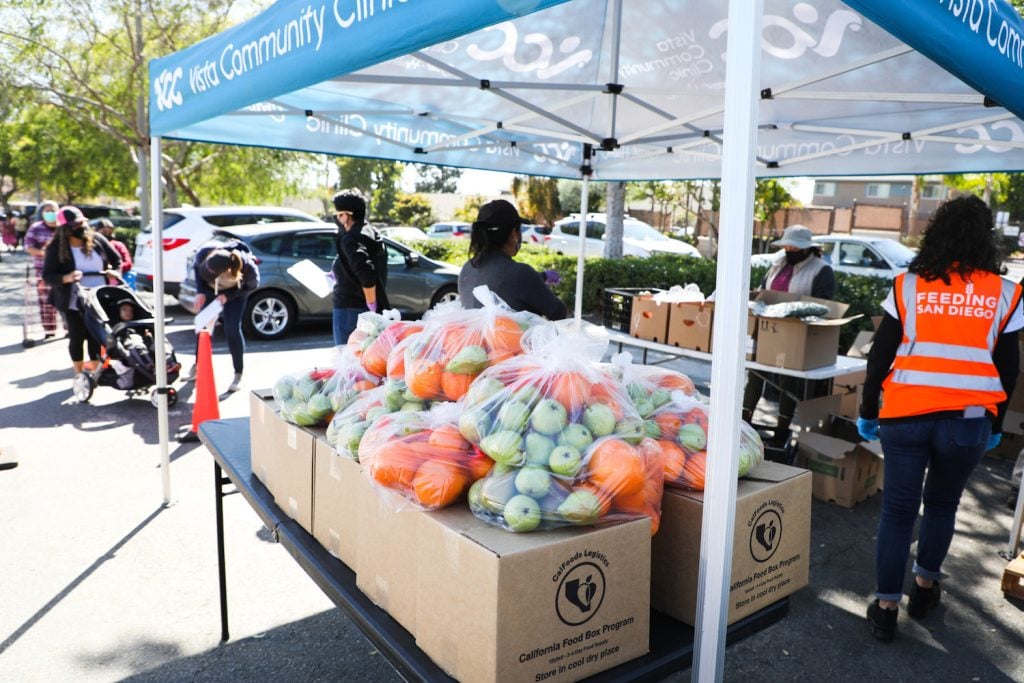
Photo by Mark Brewer
“THE RECESSION IS OVER,” trumpeted a recent cover of Newsweek magazine. Not so fast, said President Barack Obama, adding, “It is true we’ve stopped the freefall.” So it goes, as we head into the third quarter, back-to-school, pre-holiday shopping season.
Certainly, everyone has had more than enough of the recession that officially started in December of 2007, and is eagerly anticipating its end. Yet for every encouraging economic report, there is an explanation about why the trend is not yet your friend, or a warning about some new danger lurking on the horizon.
The stock market run-up, for example, can be attributed to big business trimming millions of workers from payrolls to make earnings-per-share targets. Summer stock rallies are frequently followed by stalls in the fall.
In San Diego, home sales are on the rise again, but that has been attributed to a clearing out of foreclosed inventory—though recent figures show the number of foreclosure sales easing. Conversely, Jack’s in La Jolla unexpectedly shut its doors this summer, but try getting a table for dinner at Mission Valley’s Cheesecake Factory without a 20-minute wait.
Let’s take one small leap of faith and assume a corner of sorts has been turned. Other than Washington, D.C., which benefitted from a new administration coming to town, most areas of the country were hit hard by the recession. San Diego was among the first into the downturn, and experts agree that the makeup of our economy made us more vulnerable to the failing U.S. economy.
What we’re learning is that we’re more dependent on residential housing than we thought. Housing affects everything. A slide in housing values dries up the equity piggy banks that fund auto purchases, home improvements, small-business expansions, credit card accounts and a night on the town.
Alan Gin compiles the University of San Diego’s Index of Leading Economic Indicators, a monthly snapshot of the local economy measured through five categories: building permits, initial claims for unemployment, stock prices, consumer confidence and help-wanted advertising.
“The recession has hit San Diego harder than the nation as a whole,” he says. “The best indicator, and the most comparable, is unemployment, which was 10.1 percent here versus 9.4 percent in the U.S.” in early August.
Gin says the recession’s bigger bite out of San Diego is directly attributable to the housing market. “Housing prices surged more here, and as a result had farther to fall. And it happened earlier, faster and deeper than elsewhere, which caused a lot of damage, “ he says.
James Hamilton, economics professor at the University of California, San Diego, points to the decline in housing prices as the chief indicator that San Diego was hit harder than most by the recession. “According to the Case-Shiller index, home prices in San Diego have fallen 42 percent over the past three years, compared with a national decline of 32 percent for the 20 metropolitan areas covered by the index,” he says.
In other industries, the decline in San Diego sales mirrors the national picture. According to Lance Roberts, spokesman for the San Diego New Car Dealers Association, new-car purchases in San Diego are off 20 percent during the recession, which he says tracks the decline in sales nationally.
WITH TOURISM A KEY COMPONENT of the local economy, hotels, restaurant owners and others dependent on tourists look to group and individual bookings for lodging as an indicator of visitor interest in San Diego. The Rubicon Group compiles reports of hotel reservations so hotels can figure out how they’re doing compared to the local competition.
“San Diego suffered more serious demand destruction than the rest of the markets, especially in the group segment,” says Tim Hart, president of Atlanta-based Rubicon. “However, as the demand outlook has stabilized over the past couple of months, San Diego is faring marginally better.”
By July of ’08, San Diego group bookings were off 3.5 percent compared to July of ’07, versus 1.7 percent for all markets. By May of this year, local group bookings were off 21.6 percent, compared to 15.7 percent for all markets.
Hart attributes the spring swoon to comments by officials, including President Obama, about how businesses should shy away from luxury locales. “Things turned really bad in the first quarter with the ‘Business travel is a terrible thing’ message,” he explains. “But it had a far greater effect in San Diego, Phoenix, Hawaii and Orlando, which were the hardest-hit markets. If you lumped those markets together, they would be down 25 percent compared to 8 percent for everybody else.”
Lately, however, San Diego is outperforming other markets. For example, June ’09 total bookings show San Diego off 3.7 percent, compared to 9.1 percent for all markets. And for July in the important group category, San Diego is off 7.1 percent, versus 14.1 percent for all markets.
ACCORDING TO GIN'S INDEX, the local economy is also starting to come around. After 24 consecutive months of declines (and 35 of the last 36), the index posted three months of modest increases through June. Despite the gains, Gin says he doesn’t think the recession is through with us yet; he predicts local unemployment could reach 11 or 12 percent by year’s end.
Housing sales are also on the rise, with La Jolla–based Dataquick reporting June sales of 3,692 new, resale and condominium homes, up 20 percent from last year but lagging behind the 29 percent increase in six Southern California counties as a whole.
Brookfield Homes San Diego president Steve Doyle says some areas have it better and others a whole lot worse. “We have an office in northern Virginia, and they have not experienced the same level of recession because it’s the political hub, and with the change in administrations, you had new people coming in and the old people not leaving,” he says. “But when I talk to colleagues in central Florida, they make what we’re going through look like a picnic. There was dramatic overbuilding, and there’s far more inventory than we have,” as illustrated by a firefighter and his family who are the lone residents in a 32-story condo complex on the edge of downtown Fort Myers.
Despite signs of improvement, there are other indicators of a “rolling recession,” in which this month’s layoffs become next year’s foreclosures. July retail sales were down 5 percent nationally, with department stores off more than 9 percent, leading to worries that back-to-school and holiday-season buying will be anemic. Deutsche Bank says the percentage of U.S. homeowners “underwater,” who owe more than their house is worth, will nearly double to 48 percent in 2011. And about one in 10 Californians with a home loan is now in default, according to First American CoreLogic.
“A rolling recession is a potential concern,” says Gin. “The first wave of foreclosures was due to people taking out subprime loans, and the reset of ARMs [adjustable-rate mortgages], but a second wave would be from people losing their jobs. Locally, we’re down 55,000 jobs, compared to a year ago.”
“There are some indications that a global recovery has begun,” says Hamilton. “But nobody really knows what it will look like for the U.S. The historical evidence is that the more severe the recession, the sharper the recovery. However, economic downturns that were caused by financial crises tend to see weak recoveries. Problems with the financial sector persist, leading many analysts to predict a weaker than normal recovery.”
Do you like what you read? Subscribe to San Diego Magazine »


Email this page
Print this page
Comments

Comments posted here do not necessarily reflect the views of the byline author or San Diego Magazine. Keep your comments civil, stay on the topic and your posts will remain online. Comments that use foul language, ethnic slurs or sexually suggestive language will be deleted. Posters who continually harass others or disobey the rules will be banned permanently from commenting on this Web site.