Gift Subscription

Ben Hueso

Dialogue with Tom Blair

(page 1 of 2)

Ben HuesoBEN HUESO was born in San Diego and grew up in Logan Heights, one of nine children of Mexican immigrants, both community activists. And he decided early that he, too, wanted to make a difference in his community. While running his own business, he served as a member of the Police Chief’s Advisory Committee and founded the central-city Commercial District Revitalization Corporation. In addition to being president of the San Diego City Council, he’s an appointee to the California Coastal Commission and the California League of Cities. Hueso holds a bachelor’s degree from the University of California, Los Angeles, and won a graduate degree in community and economic development from San Diego State University. He still lives in Logan Heights with his wife, Laura, and their four sons.

TOM BLAIR: Congratulations on your election as president of the city council. You and Obama won election right about the same time. Who won with the most votes?

BEN HUESO: He did, but I won with the bigger majority.

TB: You’re moved up relatively quickly in local politics——from small businessman to winning a special election to the city council, to your election to a full term and then the council presidency in just three years. Were you always aiming for a political career?

BH: No. But I’ve always been involved in neighborhood advocacy and education. Public service has always been important to me. I was raised by parents who were always big in public service.

TB: They were civic activists?

BH: My father was, and my mother kind of ran the community clinic from our house. Our people didn’t really have healthcare back then, and she was everyone’s local——in Spanish they call it the curandera, the person who helps people when they don’t have access to medical care. My parents came from a very small town in Mexico where they had to travel 200 miles to the closest healthcare facility. So locally, they went to the person most inclined toward providing care, and that was my mother’s mother. When my mother moved to Logan Heights, she kind of assumed that role for our community.

TB: In addition to the city council, you also serve on the state Coastal Commission. Have the environment and coastal issues always been important to you?

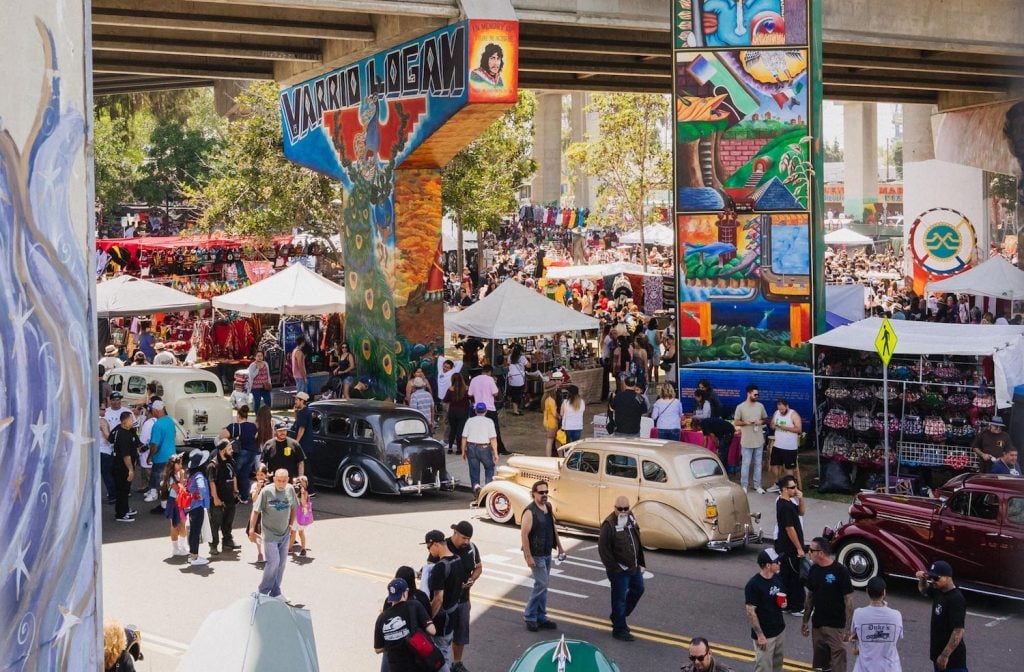
BH: Having grown up in Barrio Logan, a waterfront community that’s largely industrial, my perspective on the Coastal Commission was from an environmental justice point of view——seeking quality waterfront neighborhoods in areas that have largely been ignored by government. If you follow where industry is most likely to be located, that’s where you have pockets of low-income families——where nobody else wants to live. And that’s a failure of government to provide balance and quality housing for all its citizens. So I’ve taken the perspective to the commission to make sure that other communities with realities similar to Barrio Logan’s are dealt better cards.

TB: City council members are elected by district, which some say makes them beholden to their own narrow base of support. You’re also the only Latino on the city council. But as president of the council, you’d seem to have a wider responsibility to represent all parts of the city. How do you balance that?

BH: I always tell people: If Districts 2, 5, 6, 7——all the other parts of the city——do better, the people in my district do better. My district is a microcosm of San Diego, with some of the most important environmental resources in the country. We have the Tijuana River Valley, [which has been identified as] one of the most important environmental resources in the world. We have very important environmental resources in other parts of San Diego——the San Diego River, the San Pasqual Valley——but most people have never heard of the Tijuana River Valley.

TB: Unless there’s a sewage problem . . .

BH: Right. So we don’t realize it’s very important. We also don’t know it’s dying a slow death. And once it’s reduced to a toxic landfill, we’re going to lose a precious resource forever. We have an international airport in my district, Brown Field; we have two of the busiest border crossings in the country——one of them among the busiest in the world——and we’re working on a third; all ports of entry into San Diego are in my district. We have the 10th Avenue Terminal; we have the largest military base in America——Naval Base San Diego. So I can talk economic recovery, because our district is impacted heavily; the foreclosure crisis, because my district has been hit hardest of any in the city. I can talk about contaminated water in Chollas Creek and the importance of the military economy to our region. I bring all that perspective and knowledge to the city.

TB: As city council president, do you have real powers that your colleagues don’t have? Or is it mostly about wielding a gavel at council meetings?

BH: It’s setting the agenda for the council, making appointments to the committees . . .

TB: With council approval.

BH: Yes. But the selection process gives me a lot of leverage.

TB: And when you say you set the agenda, you mean. . . ?

BH: I schedule what’s going to be on the docket for consideration.

TB: A couple of your colleagues say they recently made a request for a docket item on reforming council governance. They later complained that what you docketed was a very limited version of the reforms they suggested——limited to permanent rules changes and leaving out policy changes they wanted. What about that?

BH: They issued a memo pertaining to permanent rules of the council. But at our first meeting, we determined that most of the items they had proposed were not permanent rules items. They were different policies. I told them I would docket [those policy items] for the rules committee.

TB: So that gives you some power.

BH: Well, hopefully, the requests councilmembers make will be responsible requests. Taxpayers pay a lot to fund our offices, our salaries. We have a $54 million deficit. If we get caught up making changes that may save us $100 a year——if we’re going to use our time to largely grandstand——that’s not going to be helpful. We need to use our time wisely.

TB: On top of the city’s huge pension deficit, San Diego has a budget that’s severely out of whack, and a state and national economy that’s putting added pressures on municipalities. If we exhaust all remedies to deal with the pension crisis, would you consider supporting a Chapter 9 bankruptcy filing for the city?

BH: No. We’re not anywhere close to declaring bankruptcy. We have options, and we should exercise them before we talk about bankruptcy. These are solvable problems. We’re going to make very good progress this year. We’re responding to the demands of the day. We have to learn to adjust our budget, if necessary. There are a lot of problems out there, but declaring bankruptcy is just admitting defeat.


Comments posted here do not necessarily reflect the views of the byline author or San Diego Magazine. Keep your comments civil, stay on the topic and your posts will remain online. Comments that use foul language, ethnic slurs or sexually suggestive language will be deleted. Posters who continually harass others or disobey the rules will be banned permanently from commenting on this Web site.

Add your comment:

Create an instant account, or please log in if you have an account. Anonymous comments are enabled.


Forgot your password?
Verification Question. (This is so we know you are a human and not a spam robot.)

What is 3 + 1 ? 

Newsletter

Subscribe to our email newsletters to get updates on local news, events and opportunities in San Diego. Please enter your email address below:

Email
I am interested in receiving email updates about:
(Choose one or more categories)
Bringing you the top 25 things to do in San Diego every month
Delectable dining and events in San Diego
Your guide to San Diego's philanthropic events and trends
Receive VIP invitations to some of San Diego's hottest parties!
Resources and information from the San Diego luxury wedding market