Featured articles
Food & Drink
Food & Drink
Food News
Featured articles
Features
Everything SD
Everything SD
Featured articles
Things to Do
Everything SD
Everything SD
Featured articles
podcast-ep
podcast-ep
video
Featured articles
Features
Everything SD
Everything SD
Featured articles
Partner content
Features
Things to Do
Ready to know more about San Diego?
SubscribeReady to know more about San Diego?
Where to root for your favorite team with a beer in hand
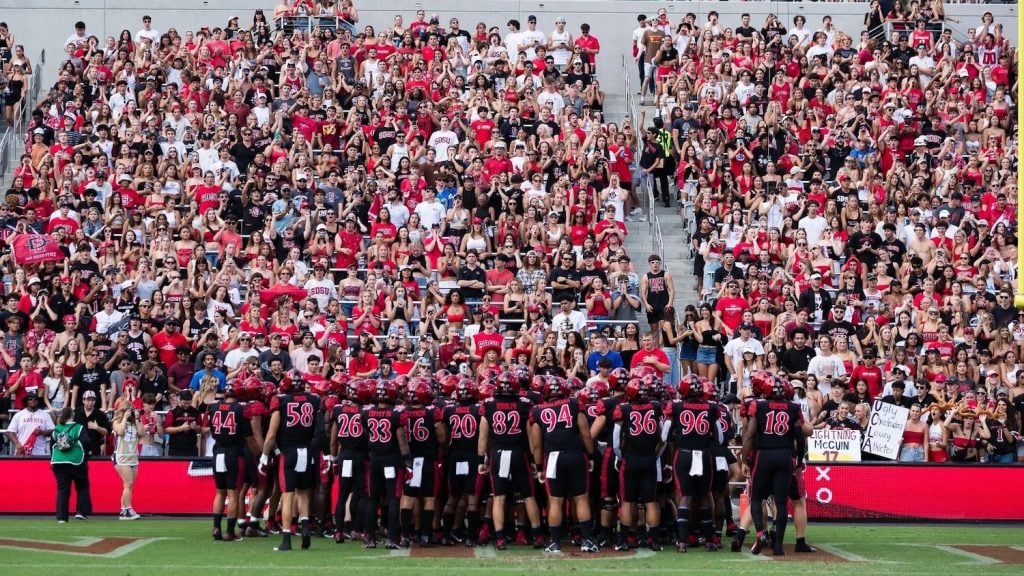
Who says San Diego isn’t a sports city? The Padres have become a real contender in the MLB; the new MLS team, San Diego FC, will arrive at Snapdragon next year; and SDSU’s basketball program has established itself as a recurring presence in the NCAA Tournament. Meanwhile, the San Diego Clippers are returning as a G-league team in Oceanside for their LA counterparts, and the San Diego Wave fútbol club led the NWSL last year. With tons of great teams to watch and ticket prices on the rise, San Diego’s sports bars are the next best locale to enjoy each game day with fellow fans.

Going out in the Gaslamp often requires a certain tolerance for purgatory-like lines and $20 well drinks, but this locally owned sports bar is an unabashedly divey antidote home to 29 rotating beer taps, a late-night menu for when the game goes into overtime, and a couple of pool tables (plus deals on mimosas for those daytime matches).
Hours: Monday–Friday, 11 a.m.–2 a.m. | Saturday–Sunday, 10 a.m.–2 a.m.
Happy Hour Specials: 3–6:30 p.m. | $5 Michelob Ultra, wells & beer of the day | $6 house wine | $8 Tito’s & Tullamore Dew | $2 off select food options
Address: 634 Broadway, Gaslamp Quarter
Whether it’s game day or not, barleymash is one of the liveliest spots downtown. A runner-up for best fries in SDM’s 2024 best restaurants list (they’ve got a bunch of toppings for ’em), this spot also serves four different varieties of loaded mac n’ cheese. Maybe that’s part of why it nabbed a place on Sports Illustrated’s 2019 list of the best places to watch the Super Bowl.
Hours: Monday–Friday, 12 p.m.–2 a.m. | Saturday–Sunday, 10 a.m.–2 a.m.
Happy Hour Specials: 3–6 p.m. | $4.50 draft beer | $7.50–$8 cocktails
Address: 600 Fifth Avenue, Unit 6916, Downtown
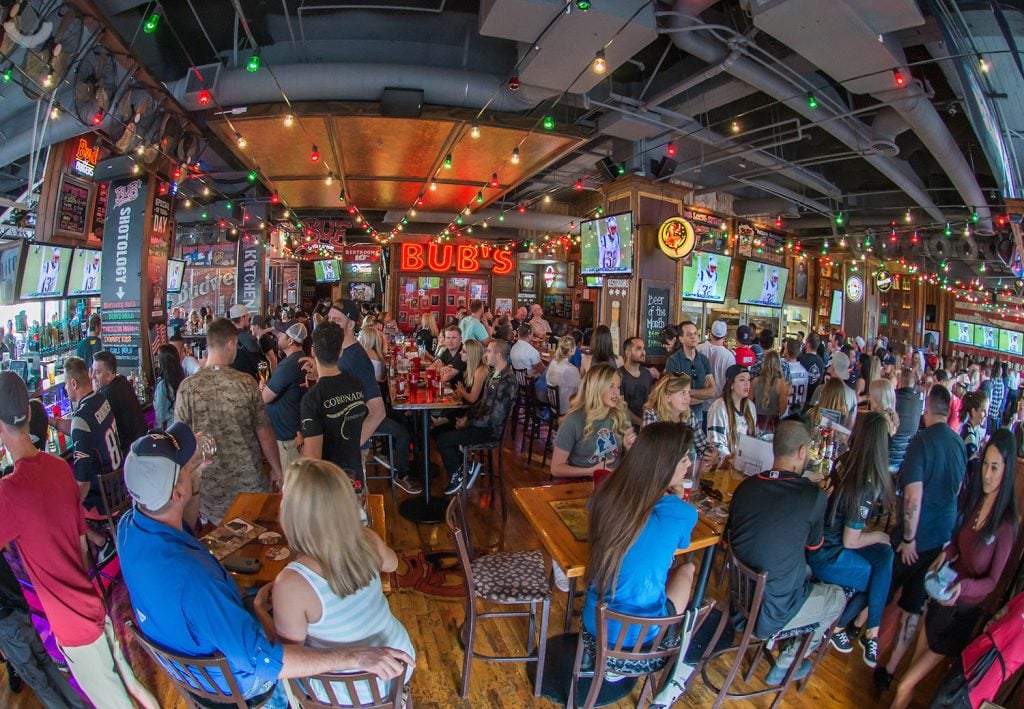
Located less than a block from Petco Park, Bub’s is the ultimate afterparty for Padres home games during the season. Friar faithful file in after a W to celebrate with a round of beer and remarkably unathletic feats of athleticism in the bar’s novelty basketball court. Bub’s gets packed on game day and is known for screening every Padres away game. For pigskin fans, the bar offers generous NFL and college football game-day drink deals.
Hours: Monday–Thursday, 11 a.m.–11 p.m. | Friday, 11 a.m.–12 a.m. | Saturday, 10 a.m.–12 a.m. | Sunday, 10 a.m.–11 p.m.
Happy Hour: Monday, Tuesday, Thursday, & Friday, 3–5 p.m. | $1 wings | $5 select drafts & wells | half-off appetizers
Address: 715 J Street, Gaslamp Quarter
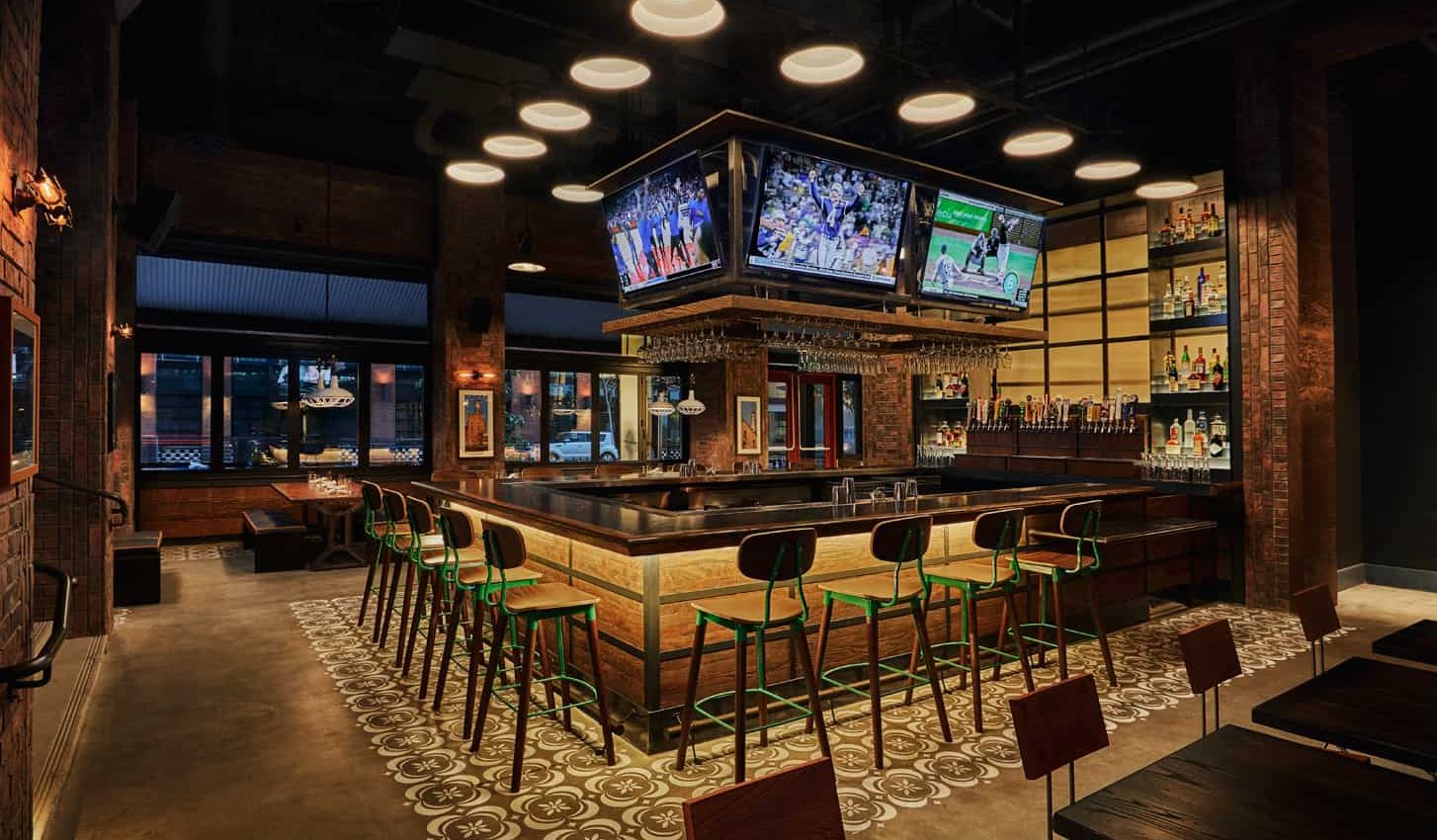
An upscale watering hole located in the Gaslamp’s swanky Pendry hotel, this retrofitted space dating to the 1900s is a great place to cheer on the Padres and feast on game-day specials like a $9 Wagyu hot dog. This must be the only spot in SD where you can chow down on $40 caviar while watching the Chargers play.
Hours: Monday–Thursday, 3–10 p.m. | Friday, 3 p.m.–12 a.m. | Saturday, 10 a.m.–12 a.m. | Sunday, 10 a.m.–10 p.m.
Happy Hour Specials: Monday–Friday, 3–5 p.m. | $5 draft beer | $6 wine | $7 well cocktails | $11 cheeseburger | $10 giant pretzel | $9 chips & guac | $9 buffalo chicken fries
Address: 570 J Street, Gaslamp Quarter
San Diego is increasingly staking its claim as a destination for soccer, but many local sports bars are lacking a dedicated space for fútbol fanatics. When FIFA rolls around, Shakespeare Pub in Little Italy is the place to be. Opened by a pair of British expats in 1990, this second-story bar on India Street tunes its TVs to Europe’s Premier League and offers the eats to match (think a full English breakfast or a plate of fish and chips).
Hours: Monday–Thursday, 10:30 a.m.–11 p.m. | Friday, 10:30 a.m.–12 a.m. | Saturday, 8 a.m.–12 a.m. | Sunday, 8 a.m–10 p.m.
Happy Hour: Monday–Friday, 3–6 p.m. | $1 off draft pints | $5 house wine | $1 off all bottled beer | $5.50 well liquor
Address: 3701 India Street, Little Italy

While sports are the main attraction at this PB hot spot, the food and drinks hold their own, especially when early weekend games draw fans for brunch and $19 bottomless mimosas. University of Nebraska alumni (all two of you) will be happy to hear that this is a certified Nebraska Husker bar, so enjoy hogging the TVs all season long.
Hours: Monday–Thursday, 10 a.m.–11 p.m. | Friday, 10 a.m.–12 a.m. | Saturday, 9 a.m.–12 a.m. | Sunday, 9 a.m.–11 p.m.
Happy Hour Specials: Tuesday–Friday, 3–6 p.m. | $6 cocktails | $6 select wines & drafts | half-off select appetizers
Address: 4650 Mission Boulevard, Pacific Beach
Sandbar is the place for Boise State fans to cheer on the Blue each week—or for any deals-seeking diner whose team is playing on a Tuesday, when the rooftop watering hole overlooking Belmont Park offers $3 street tacos, $5 Estrella Jaliscos, $6 house margaritas, and half-off all tequila (of which they have more than 50 types).
Hours: Tuesday–Thursday, 11 a.m.–11 p.m. | Friday–Monday, 9 a.m.–11 p.m.
Happy Hour Specials: 3–6 p.m. | $6 14-ounce Estrella Jalisco | $8 Margarita | $9 22-ounce Estrella Jalisco
Address: 718 Ventura Place, Mission Beach

Tucked into the heart of Old Town, this bar is home field for Kansas City Chiefs fans during the NFL season. The patio provides plenty of space for fans to catch every play on a massive outdoor screen while kids stay busy with games like cornhole and ping pong. It’s dog-friendly, too, so make sure Fido has his KC bandana on.
Hours: Monday–Thursday, 11:30 a.m.–1 a.m. | Friday, 11:30 a.m.–2 a.m. | Saturday, 10 a.m.–2 a.m. | Sunday, 9:30 a.m.–1 a.m.
Address: 2222 San Diego Avenue, Old Town
There’s nothing like rooting for the Fighting Irish during college football season in an old-school Irish pub. Located a few blocks from Snapdragon, this 28-year-old Mission Valley bar is a popular spot for post-game partying following Legion rugby matches and SDSU football games. Several pool tables, live music weekly, and shuffleboard offer a welcome distraction from agonizing SportsCenter recaps.
Hours: Sunday–Thursday, 11 a.m.–11 p.m. | Friday-Saturday, 11 a.m.–12 p.m.
Happy Hour Specials: Monday–Thursday, 4–6 p.m. | $1 off draft beer, house wine, well liquor & select appetizers
Address: 10475 San Diego Mission Road, Mission Valley
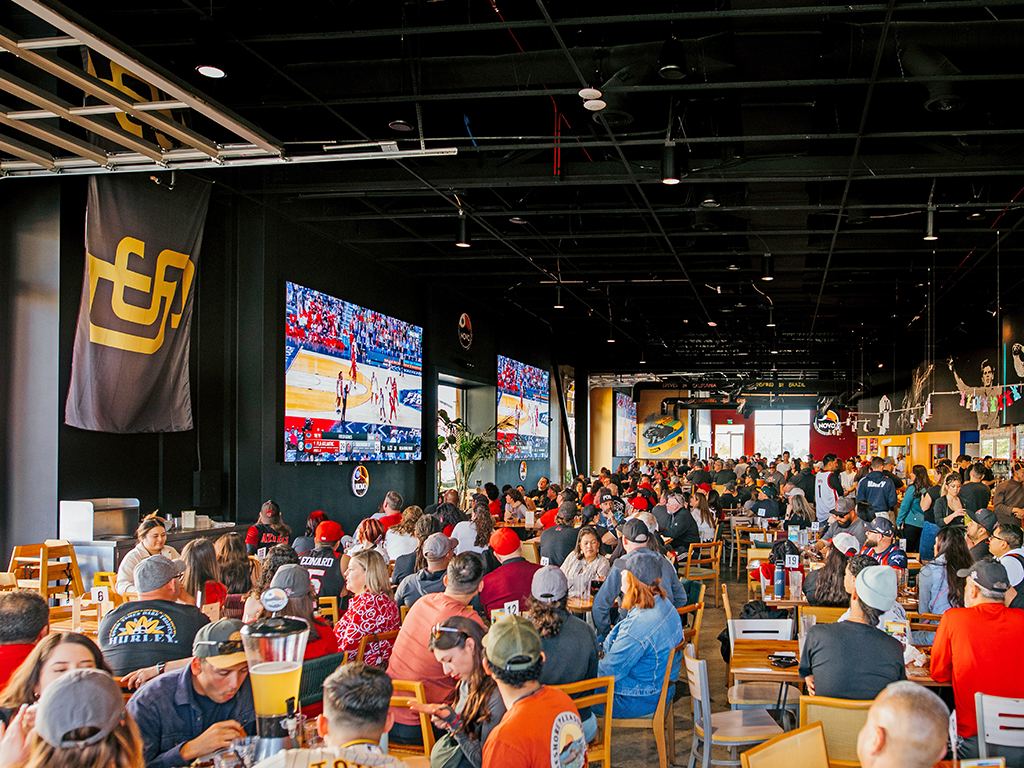
Novo Brazil has four expansive venues across San Diego County, but their newest location in Mission Valley is a true sports fan’s paradise, with 8,000 square feet of space, 64 taps, 100 feet of LED video walls, and a 3,500-square-foot fire pit—a perfect spot for strategizing your fantasy league draft picks. Sip refreshing kombuchas while supporting our local sports teams with Novo’s La Ola Dragon Fruit or Azteks Raspberry flavors, created in partnership with Wave FC and SDSU Athletics, respectively.
Hours: Monday–Thursday, 11 a.m.–10 p.m. | Friday–Saturday, 11 a.m.–11 p.m. | Sunday, 11 a.m.–8 p.m.
Address: 1640 Camino Del Rio North, Unit 341, Mission Valley

Whether you spell it “football” or “fútbol,” Fairplay has you covered with plenty of screens to catch the action. The spacious gastropub is also the home field for the Red Devils of San Diego, a local Manchester United fan group. Keep an eye on Fairplay’s Instagram page for their weekly TV guide to ensure you don’t miss a single play.
Hours: Monday–Wednesday, 11:30 a.m.–10 p.m. | Thursday–Friday, 11:30 a.m.–12 a.m. | Saturday, 6 a.m.–12 a.m. | Sunday, 7 a.m.–10 p.m.
Address: 4026 30th Street, North Park
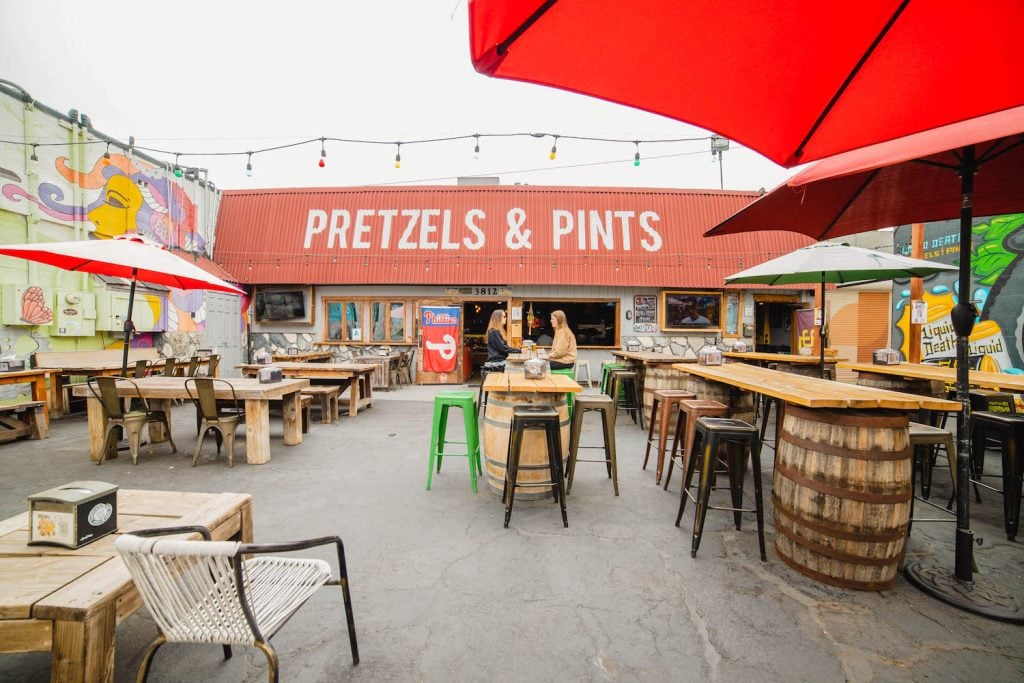
Philly fans, assemble! Pretzels & Pints is the spot for tuning into every Eagles, Phillies, Flyers, and 76ers game. This tucked-away North Park bar specializes in pretzels, offering oversized Bavarian, pillowy Philly, and classic NY-style options with its signature beer cheese. You’ll also find a selection of pizzas, sandwiches, and subs to fuel your game day—but you’ll need to leave your Giants and Celtics jerseys at home.
Hours: Monday–Friday, 12–10 p.m. | Saturday–Sunday, 11 a.m.–10 p.m.
Happy Hour Specials: Monday-Friday, 1–6 p.m. | $1.50 off drafts
Address: 3812 Ray Street, North Park

This old-school sports venue provides more than 60 TVs and bar bites at reasonable prices. The Bullpen isn’t the place for quiet, contemplative sports discussions—instead, grab a beer and join the hooting and hollering on Padres game nights and at fight night viewing parties. Check their website for their daily TV schedule to plan your night.
Hours: Saturday–Thursday, 11 a.m.–11 p.m. | Friday, 11 a.m.–2 a.m.
Address: 8199 Clairemont Mesa Boulevard, Clairemont Mesa
During Padres season, Nautilus has game day specials, including the Machado Platter, featuring wings, onion rings, tots, and mozzarella sticks (which I’m sure Manny always eats before first pitch). Stick around after the game as the sports tavern transforms into “Club Nauti,” where you can actualize your dreams of popping Champagne after your team (San Diego FC?) wins a national championship.
Hours: Monday–Wednesday, 11 a.m.–10 p.m. | Thursday–Saturday, 11 a.m.–1 a.m. | Sunday, 11 a.m.–10 p.m.
Happy Hour Specials: Monday–Friday, 3–6 p.m. | half-off draft beers, well liquor & house wine | $5 Daily Sunset
Address: 6830 La Jolla Boulevard, Unit 103, La Jolla
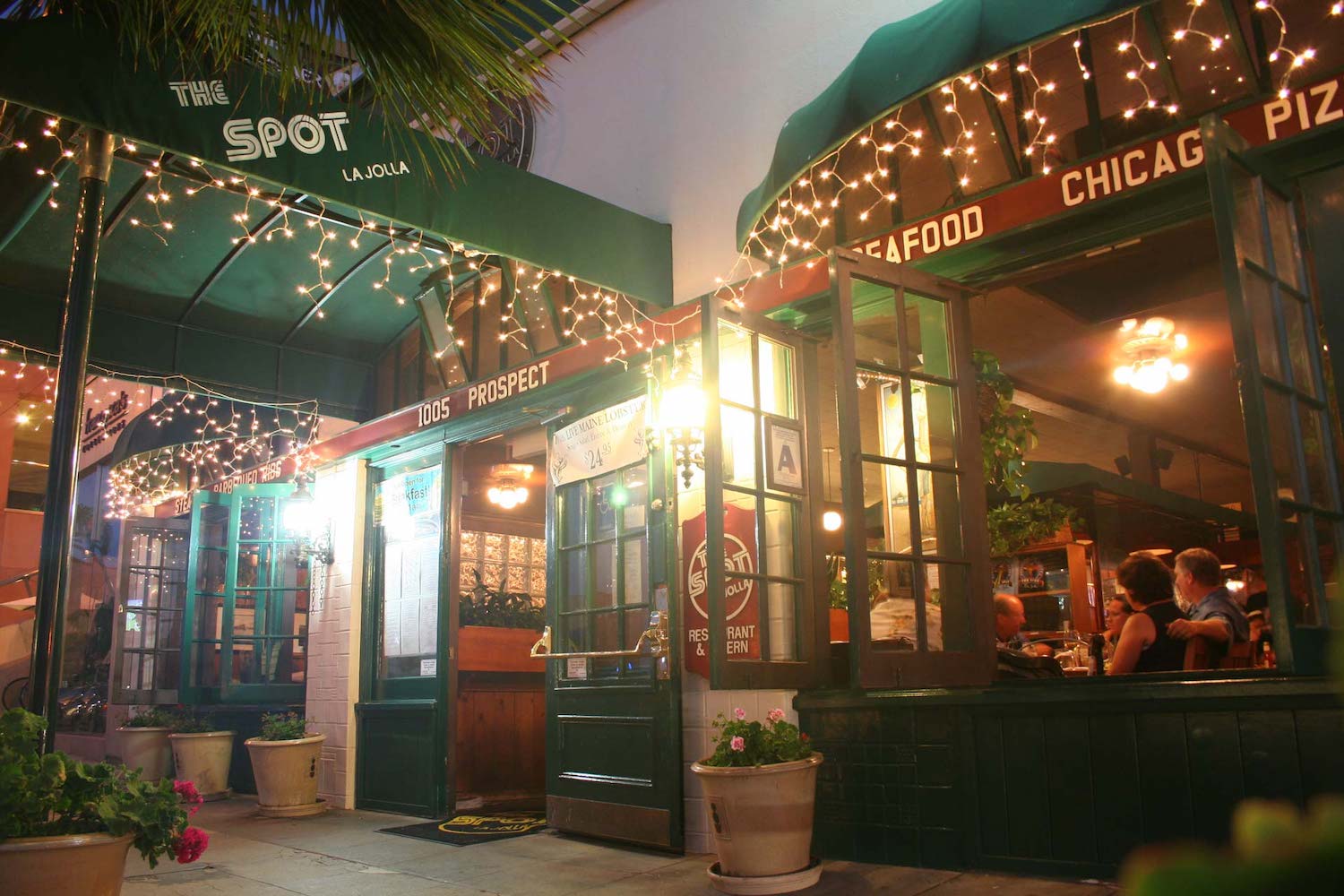
The Spot is truly the OG San Diego sports bar, with a history dating back to 1915. The space was purchased in 1978 by owners who wanted to relocate their Chicago watering hole to San Diego. This is the ultimate hangout for Windy City transplants wanting to watch da Bears, da Bulls, da Cubs, and Blackhawks games each week. Like any authentic Chicago hangout, it’s filled with decades of spilled beers, the scent of deep-dish pizza, and the accumulated tears of fans.
Hours: 11 a.m.–2 a.m.
Happy Hour Specials: Monday–Friday, 3–6 p.m. | $4 drafts & wells | 25 percent off appetizers
Address: 1005 Prospect Street, La Jolla

PRK 101 is Disneyland for North County sports fans. This two-story complex features large outdoor TVs, a spacious dog-friendly patio, and a menu full of savory barbecue. The spot is home base for the handful of loyal Chargers fans, and it also offers half-off beverages every Monday to locals with a Carlsbad address.
Hours: Monday–Wednesday, 4–10 p.m. | Thursday & Sunday, 11 a.m.–10 p.m. | Friday–Saturday, 11 a.m.–12 a.m.
Happy Hour Specials: Monday–Friday, 3–6 p.m. | $5 off house cocktails | $2 off draft beers | $5 house wines | $5 house calls
Address: 3040 Carlsbad Boulevard, Carlsbad
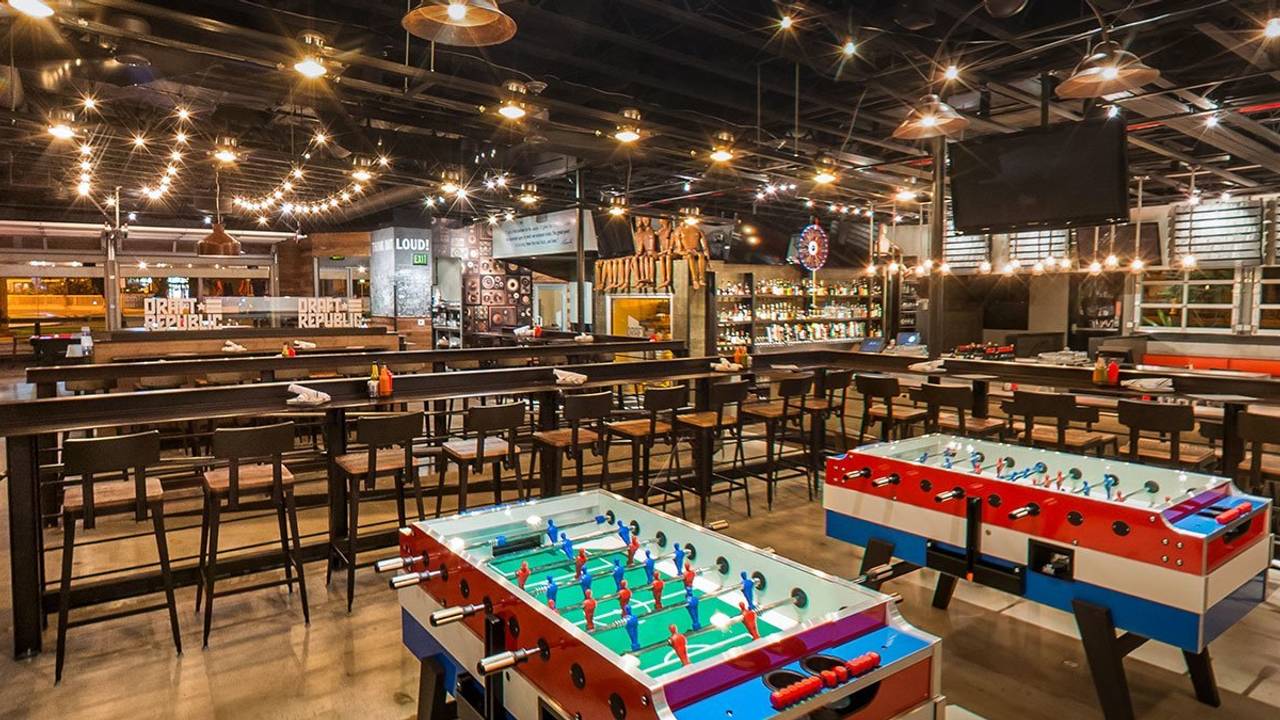
The name certainly holds up: Draft Republic vends more than 100 beers on tap. Meet up with your squad and catch the game on one of the bar’s 70 TVs while you stuff yourself with wings or buffalo cauliflower (for plant-based friends). Games aren’t just onscreen at this sports bar’s two locations, which offer golf simulators (Carlsbad), eight lanes of bowling (San Marcos), shuffleboard, and plenty of arcade cabinets to help you cool off after your team drops the ball in OT.
Hours: Monday–Thursday, 4–9 p.m. | Friday–Saturday, 11:30 a.m.–10 p.m. | Sunday, 9:30 a.m.–9 p.m.
Happy Hour Specials: 4–5:30 p.m. | $6 Draft Republic Beers | $8 select wines & well cocktails | discounted appetizers
Address: 5958 Avenida Encinas, Carlsbad & 255 Redel Road, San Marcos

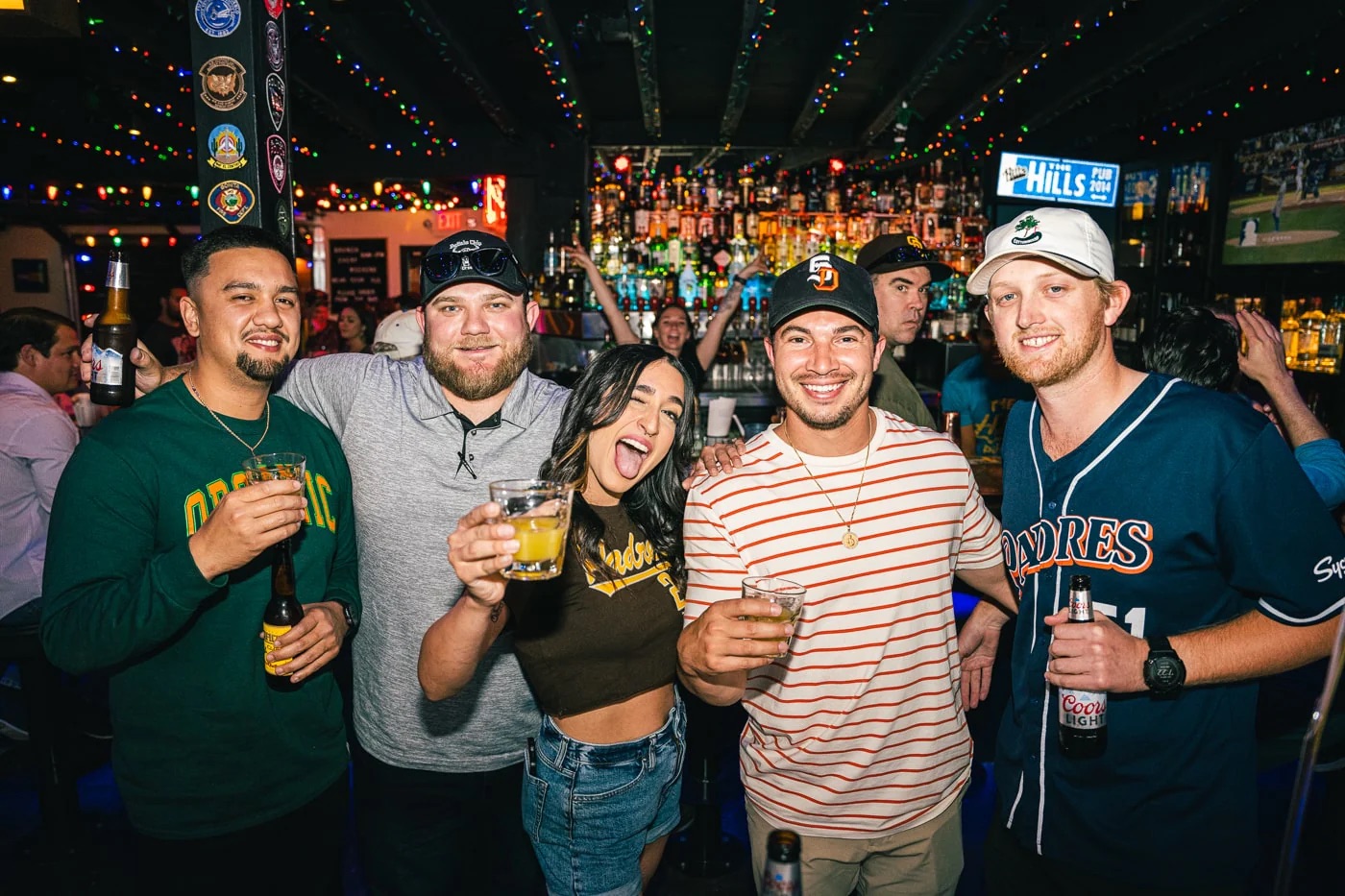
The Hills Pub is a popular watering hole for sports fans in La Mesa with its dog-friendly patio, zillion TVs, and kitchen that stays open until midnight daily. This makes it an ideal spot for post-game festivities and sprawling armchair game analysis with that pal who swears he could have gone pro if he’d only made the JV team. The joint hosts bingo every Tuesday, offering an opportunity to net yourself tickets to upcoming Gulls games.
Hours: Monday–Thursday, 11 a.m.–12 a.m. | Friday, 11 a.m.–2 a.m. | Saturday, 10 a.m.–2 a.m. | Sunday, 10 a.m.–12 a.m.
Happy Hour Specials: Monday–Friday, 2–5 p.m. | Sunday–Thursday, 9 p.m.–12 a.m. | $5 drafts, wells, house wines & Dangerdorf liquor
Address: 8758 La Mesa Boulevard, La Mesa
Main Tap is a rare destination showing every NHL game in sunny San Diego. This cozy East County tavern is known for its collection of rotating taps from local microbreweries, and it offers plenty of cheap eats to keep you going until a game-ending shootout. On Tuesdays and Fridays, this El Cajon locale moonlights as a karaoke bar, perfect for belting out tearful ballads after the Anaheim Ducks lose yet another game. Time to invest in a Kings jersey.
Hours: 11 a.m.–2 a.m.
Happy Hour Specials: Wednesday, 3–7 p.m. | $6 Reuben sandwiches
Address: 518 E Main Street, El Cajon

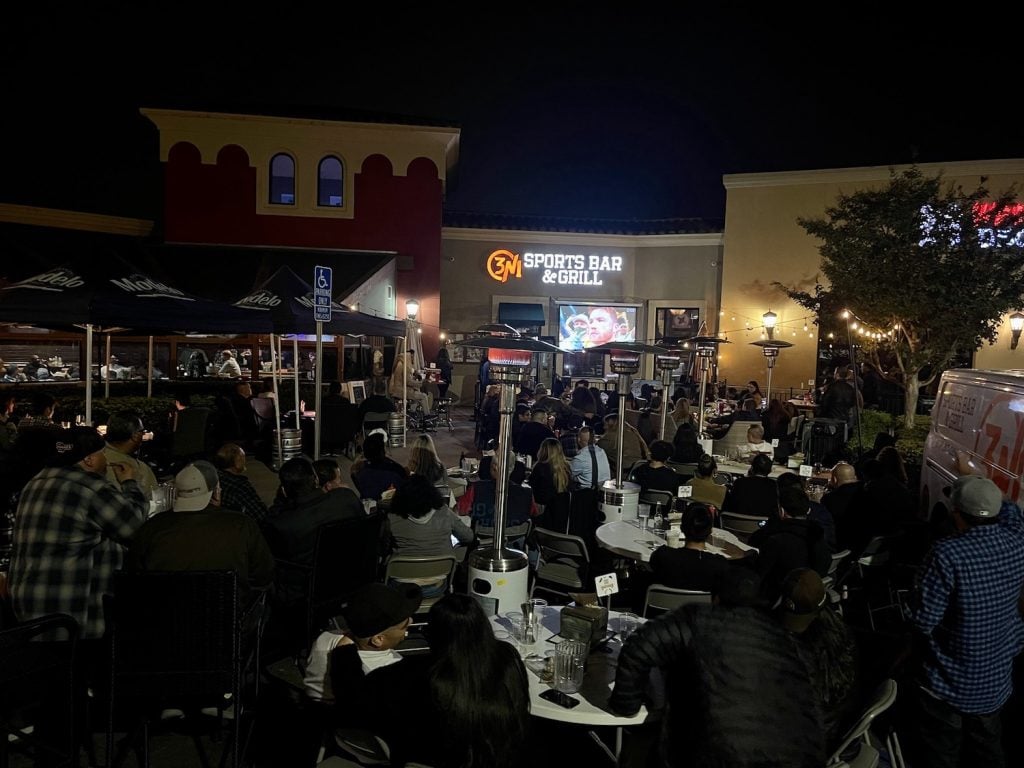
Score a hat trick at this triple-threat sports bar in Chula Vista. The name 3N1 refers to the venue’s restaurant, bar, and smoking lounge concept, making it a go-to for folks who enjoy a stogie while watching sports. The bar also offers karaoke on the weekends and regularly hosts PPV boxing and UFC events.
Hours: Monday–Wednesday, 11 a.m.–11 p.m. | Thursday, 11 a.m.–1 a.m. | Friday, 11 a.m–2 a.m. | Saturday, 9 a.m.–2 a.m. | Sunday, 9 a.m.–10 p.m.
Happy Hour Specials: Monday–Thursday, 4–7 p.m
Address: 2330 Proctor Valley Road, Unit 101, Chula Vista
The Canyon is a popular dive in Chula Vista serving homemade ’cheladas and wings that locals (and even SDM food critic Troy Johnson) have raved about. The bar screens Padres games weekly and holds special viewing parties for the most anticipated title cards in boxing and UFC.
Hours: Monday–Tuesday, 3 p.m.–2 a.m. | Wednesday–Sunday, 12 p.m.–2 a.m.
Happy Hour Specials: Monday–Friday, 4–7 p.m. | 20 percent off wells, draft pints & appetizers
Address: 421 Telegraph Canyon Road, Chula Vista
Cole Novak is an award-winning writer with a passion for highlighting local figures, small businesses, and nonprofits. Born and raised in San Diego, Cole is passionate about photography, surfing, art, the local food scene, and the great outdoors.

After a blind taste test, these four desserts came out on top—see the winners here
Basque grandmothers have not been making it for centuries. If you’re a millennial, there’s a strong possibility you’re older than the dessert itself. Yet somehow in less than 40 years, the Basque cheesecake—a half-pudding, half-cake creation with a top that looks like a mistake—managed to ooze its way onto menus all over the world.
It became the undisputed dessert star of San Diego’s restaurant world this year. So we invited 19 of the top restaurants, pastry chefs, and bakers to bring their best to the San Diego Magazine office for a blind taste test to find the best in the city.
First, a little history and context.
In 1987, after failing to find a job as an electrician, Santiago Rivera started working as a bartender at his parents’ unassuming pintxo bar La Viña, in San Sebastián, Spain. He was a naturally curious, self-taught cook who spent his free time testing recipes, tinkering with ingredients, and tweaking techniques.
So when it came to the cheesecake—which hadn’t changed much since its invention (a rudimentary version was served at the first Olympics in Greece 4,000 years ago, and the modern New York version in 1872)—he got radical with it.
He removed the crust (partly just to speed up the process because time is money for a small business). Without the crumbly crust, the experience was far creamier, less granulated. Then he cranked the oven to 400 degrees, nearly 100 degrees hotter than the normal baking temperature.
The result? The top became deeply caramelized, almost burnt, while leaving the center luxuriously soft and loosely set. The restaurant became a legend because of this breakthrough in the dairy arts, and his father never let him stop making it after that.
Now, 67 years after the restaurant’s opening, La Viña stands out for the unceasing line spilling onto the street, and the remarkable amount of curd cultists standing nearby, hovering over cream-smeared plastic containers. It’s the kind of scene that makes you stop and think: What the hell are they eating?
Now, the blind tasting. To keep things fair, the contenders were divided into four categories: Restaurant Traditional, Restaurant Flavored, Bakery Traditional, and Bakery Flavored. (It’s a tad unfair to pit a baker who specializes in the one glorious thing against a restaurant that cooks dozens of things.) Each entry was served blind and judged on texture, flavor, and number of vaguely inappropriate food moans.
The logistics were chaotic, to say the least. Our fridge—not a walk-in, sadly—was packed to the brim. Each cake was sliced, secretly labeled, and shuffled onto plates while the team gathered in the conference room. The whole shebang was not in any way sponsored by Lactaid, despite our various attempts to convince them of this ripe marketing opportunity.
The judging became gloriously unhinged. We heard it all, from “I don’t care how the cheesecake gets in my mouth, it just needs to happen,” and “Is it supposed to be this jiggly?” to “Kind of a baby throw-up situation,” “Straight cheese,” and “I’m getting vague socks there.”
But four Basque cheesecakes stood out among the rest, earning themselves the title of Best Burnt Basque Cheesecake in San Diego.

A restaurant for the people. Rosarito native chef Juan González and Megan Strom are the ideal married couple to be running a farm-to-table joint. She’s been a farmer for decades, selling top-notch produce to some of the best restaurants in California—which is how the two met. A couple years ago, she started working at the small organic farm in Valley Center run by Mike Reeske, who had spent decades breeding the perfect heirloom beans for SoCal’s climate. He recently retired, and gifted those strains to Strom—who grows them (and other crops) for their tiny Escondido taco/burrito shop specializing in guisados (Mexican stews).
A Basque cheesecake in a taco shop? You bet. Juan’s got family roots in Spain and has cooked in Spanish kitchens.
Mesa Agricola’s winning Basque is by far the most “burnt” of all contenders—so much so that an Instagram follower declared it a mistake. But as Chef Juan notes, there’s an art to hitting the sweet spot where “the bitterness of the char balances the richness and sweetness without turning it into ‘chicharrón.’” Plus, char is a core charm of Baja cooking. It’s the perfect Basque for the people who prefer setting their campfire marshmallows fully on fire.

With red leather booths and a retro steakhouse vibe, Moe’s in Mission Beach is a good cheat day destination. The menu is flavor maximalism—dry-aged steaks, housemade pastas, brown liquors, and sides like the lobster truffle mac ’n’ cheese. Pastry chef Eli Peralta (whom some might remember as the creator of The Patio on Lamont’s “Twisted Elvis”—a peanut butter-banana brûlée stunner) brings that same intensity to the dessert menu.
Baked at sister restaurant Molly’s (6 feet away), his Basque is served on a bed of caramel with walnut brittle and a dollop of whipped cream, an indulgent recipe that converted the pastry chef himself. “I wasn’t crazy about cheesecakes,” Eli admits. “Then I started making different flavors, and I started to like them.” He’s not the only convert: During our blind tasting, one judge likened the cake to crème brûlée, concluding, “I don’t even like crème brûlée, but I like this.”

Every creative pursuit starts with a muse—and Lada Sadovnyk’s has been the Basque cheesecake for years. In Ukraine, she baked them for friends and family gatherings, never imagining she would one day build an entire bakery around them in the US. “When we moved to San Diego,” she explains, “I kept thinking, ‘What can I do? What do I really love to do?’”
The answer is pretty fantastic.
After obsessing over proportion and techniques, chasing that molten center and deeply caramelized top, what began as an online recipe evolved into something entirely of her own.
She moved from her home kitchen to a rented commercial kitchen close to Sports Arena. The orders kept coming, and so did the pressure. “At one point, I was thinking about divorcing my husband,” she says with a laugh (while sitting next to him). The grind paid off: Today, Muse Cheesecakes bakes roughly 1,200 cheesecakes a month and is planning to open its first brick-and-mortar home in Pacific Beach.
For our competition, the expectations met reality. Muse has made a quick name in San Diego as the Basque to beat. In a blind taste test, there’s no bias, no reputational shine to sway a room. The response on reveal: “Oh, of course.”

Husband-and-wife duo Alex and Anastasia Kiperband pulled off the number of failures (and then some) that are required of any search for the best recipe. After adjusting baking temps, sugar rations, and experimenting with different brands of cream cheese and heavy cream—they finally landed on something worthy of a business license.
“When we started this business in America, we were really nervous,” Anastasia says, co-owner of Bite Cheesecakes & Bakery.
Once they won over those first customers, their confidence grew enough to start tinkering. When Dubai chocolate took social media by storm, they developed their own version, making the pistachio paste from scratch before layering the buttery kataifi pastry beneath a glossy chocolate shell to create its signature Dubai Chocolate Basque Cheesecake.
“In a lot of situations, we’re converting cheesecake haters to cheesecake lovers,” they say. “That’s probably the best feedback that we get.”
Camila Ibarra Gallego is a CaliBaja native pursuing a master's degree in culinary journalism at the Basque Culinary Center. Shaped by the culturally rich, bicultural megaregion, she's passionate about sniffing out stories that connect people, territory and culture through food. When she's not tumbling down internet rabbit holes, you can find her pretending to be a wine connoisseur at a local wine bar or nose-deep in a good book.
Live Nation is turning the historic Wonder Bread Building into a 4,000-capacity concert hall designed to bring more touring acts to the city
Imagine being the song continuously getting skipped on the playlist. Not because no one wants to hear you, but because you never quite fit the moment. For years, San Diego has been that song on the touring circuit. Artists who have outgrown intimate clubs but aren’t yet filling arenas and stadiums have often passed us by, heading north to venues better suited to the size of their show. San Diego wasn’t missing the audience, it was missing the room.
That’s all about to change.
On August 17, Live Nation Entertainment announced plans to transform the historic Wonder Bread Building, which it purchased in June for $16.8 million, into a 4,000-capacity indoor venue slated to open in fall 2028. The new space will host music acts as well as private, corporate, and community events.
Currently, San Diego’s concert landscape jumps quickly from intimate clubs like the Casbah, Winston’s, and Belly Up to larger theaters, amphitheaters, arenas, and stadiums. What’s largely missing—particularly downtown—is a modern indoor room built specifically for roughly 4,000 concertgoers. This leaves a gap in mid-size venues for touring acts that land stages like the Hollywood Palladium or Boston’s MGM Music Hall at Fenway.
“We are filling a void in the market,” says John Schalk, Live Nation’s Vice President, San Diego Market. “There are other venues in town, but this […] building is just something that doesn’t currently exist.” Although SDSU’s Cal Coast Credit Union Amphitheater serves the 4,000-capacity range, its outdoor, fixed-seating arrangement isn’t as versatile as the proposed Live Nation project.
Located at 171 14th Street, just a six-minute walk from Petco Park, the building carries a century of history. Architect Eugene Hoffman designed it in 1924, a year after completing the Barcelona Apartment Hotel in Bankers Hill. The landmark brick building served as a bakery and warehouse for the Southern California Baking Company before Continental Baking Company, producers of Wonder Bread, took over in the 1950s and operated there through 1988 continued at the site until 2007.
In the early 2000s, Bob and Gay Sinclair, the couple behind a portfolio of East Village properties, purchased the building. After Bob—the founder of Pannikin Coffee & Tea—died in 2011, Gay sold much of their real estate portfolio but held onto the Wonder Bread Building. Mission Brewing eventually took over the space, where it operated for more than a decade before announcing its 2026 departure.
Now, the building is preparing for another reinvention. Live Nation plans to preserve the historic bakery’s four exterior walls, red brick façade, grain silo, barrel-vaulted trusses, and skylights as part of its next chapter.
Live Nation isn’t looking to erase its history but to celebrate it, allowing the building’s past to give the new venue some soul. “It’s really important for us that we maintain the integrity and the history of that building,” Schalk says. “There will be new construction and design elements as we go through the process to create the concert venue, but we’re working really hard to preserve it.”
Blueprint Studio, Live Nation’s in-house design and development group, and Gensler, the architecture firm behind San Diego International Airport Terminal 1 and Snapdragon Stadium, will be heading the project. The plan is to design the ground-floor space as an open, general-admission area with a premium level above with 600-plus fixed seats, in addition to box and suite sections. There will also be an additional structure built on top of the historical portion of the building (the four original walls that house the lobby) called the Vinyl Room—a Japanese-inspired hi-fi listening VIP lounge serving elevated food options.
One of the most reassuring aspects of the project is the focus on the concertgoer’s experience—specifically the “pet peeves” we all know too well: long bathroom lines, cramped exits, obstructed views. According to Schalk, one of the best things about building upon the existing structure is having the ability to consider potential obstacles and tackle them before construction begins. “I’d say we are ‘purpose building’ the entirety of the project for a music venue,” says Gensler lead project architect Garrett van Leeuwen. “As part of our design process, we do an in-depth sightline analysis to make sure that sightlines are optimized from every point and seat within the venue.”
Circulation design is also being implemented to ease traffic flow, alongside acoustic optimization and a transformative outdoor beautification effort. According to van Leeuwen, this “public realm space” will grow the existing 14-foot sidewalk to a 32-foot sidewalk complete with plazas and landscaping.
“This venue is for the fans. For the music lovers,” Schalk explains. The vision is intimate: “I want a fan to walk up to that building, see that red brick facade, grab their ticket from the box office, go into the lobby and see some of the history that will present itself… and feel like you entered a home.” Schalk also expressed a “keen interest in making sure that we work with the local artists, the local bands, the local musicians in town.” It’s a project that recognizes San Diego as a growing market that is hungry and ready to see a vibrant arts and culture community thrive.
According to an analysis by Oxford Economics analysis shared by Live Nation, the venue is projected to deliver a significant boost to the local economy, generating approximately $97 million in annual economic impact and supporting 660 jobs. This also includes welcoming 316,000 fans each year—with 126,000 traveling from outside the San Diego metro area—and driving $53 million in local spending at nearby restaurants, hotels, and retail establishments.
Considering its proximity to other major event spaces and overall busy urban areas, traffic and parking may be a concern, especially on nights of overlapping events. But in those cases, Schalk said they would work together on communication efforts; parking availability; and staggering start, end, and loading times; as well as providing easy access to designated rideshare areas. With transit stations nearby (the closest one being a 4-minute walk at 12th & Imperial), public transportation is another great option for enjoying your night out.
There are still two years of design, construction, and plenty of logistics between now and opening night. But the bigger promise of the Wonder Bread Building is simple: San Diego finally gets a venue built for the artists who have historically passed it by. After years of getting skipped on the touring playlist, the city may finally be getting its turn on repeat.
Camila Ibarra Gallego is a CaliBaja native pursuing a master's degree in culinary journalism at the Basque Culinary Center. Shaped by the culturally rich, bicultural megaregion, she's passionate about sniffing out stories that connect people, territory and culture through food. When she's not tumbling down internet rabbit holes, you can find her pretending to be a wine connoisseur at a local wine bar or nose-deep in a good book.
Whether you’re ready to lean into fall or determined to keep summer going, here are all the best things to do this month
September is San Diego’s unofficial second summer—the crowds thin, the weather stays warm, and the city’s calendar somehow gets even busier. This month brings stadium-sized rock shows, Broadway’s buzziest comedy, a new anime convention, world-premiere theater, gallery openings, food festivals, and the first signs of spooky season. Whether you’re ready to lean into fall or determined to keep summer going, here are the best things to do in San Diego this September.
Concerts & Festivals | Theater & Art Exhibits | More Fun Things to Do

As Guns N’ Roses storm into decade five, their appetite for destruction persists. During their Snapdragon Stadium concert, hear the hard rock anthems, new material and a set from The Black Crowes.
Kehlani is proof that the romance and earnest sensuality of old-school R&B will never go out of style. Hear her take it back to the aughts at Viejas Arena.
From the silver screen to The Old Globe stage, John Carney will Begin Again (again) with a world premiere musical adaptation featuring new songs—courtesy of Train—and a story overflowing with hope.
The concept of work is a guiding principle for San Diego native and multidisciplinary creative noé olivas. Observe his community-informed approach via Tierra y Cielo (Earth and Sky) at Best Practice Gallery.
Two workers grapple with the weight of their roles at a temporary migrant shelter in Mario Vega’s world premiere play Our Lady of the San Diego Convention Center, set for citywide performances.
Luminous visions of peace and the Punjabi-American roots of Rupinder Kaloti inform The Gathering, a wondrous unification of family foretold via paintings at Oceanside Museum of Art.
It’s Mary Todd Lincoln’s world and we’re just living in it. See the presidential paramour barrel to her way to stardom at the Civic Theatre during Oh, Mary!, Cole Escola’s political spoof.

Pros and Con(vention)s: Anime San Diego will debut at the San Diego Convention Center with cosplayers, panels and more than 400 vendors well-versed in Japanese animation.
Scaredy cats beware: SeaWorld San Diego’s Howl-O-Scream embraces frights forged in darkness. Enjoy an ominous lineup of live shows, scare zones and bloody bars ahead of Halloween.
The best parts of Artivál and the Alley Cat Art Walk have united for the free Alley Cat Art Fest, an all-day outing for live music and immersive artwork in Downtown El Cajon.
Take a Grecian vacation for a fraction of the price during the annual Cardiff Greek Festival, two days of immersive cuisine and culture—with plenty of dancing—on the Encinitas coast.
Step away from the stove! The California Restaurant Association has eight days of eating experiences with your name on it. During San Diego Restaurant Week, explore by meal, neighborhood or cuisine for your personal dining plan.
Nourish yourself with an all-inclusive spread of Pacific Beach eats and locally-crafted artwork during the HeArt of PB Restaurant Walk on Garnet Avenue.
When it comes to stand-up comedy, Chelsea Handler is always ready to roast. See Handler tell anecdotes and skewer an assemblage of victims during her Balboa Theatre performance.
Ryan Hardison is a freelance arts and entertainment writer and recent graduate of San Diego State. When he's not staring at his laptop, he's likely eating an adobada burrito or getting sunburnt at the beach.
The 29-year-old culinary director at Herb & Sea is making seafood sexy (and approachable) again
Implementing a farm-to-table model hardly deserves acknowledgement these days. It’s not a stretch. It’s not innovative. “It’s the bare f**king minimum,” says Herb & Sea‘s executive chef Aidan Owens.
When I arrive at the Encinitas restaurant, I’m ready to talk sustainability, farm-to-table stuff, with Owens. “Did you see the chin on that?” he says of the extra big jiggly chin on the sheephead that just arrived with the day’s fresh catch. I did. It was Jay Leno adjacent.
I learn quickly that he somehow oozes both charm and stone-cold honesty. Maybe he could construct a new dish with chin goo, like he did when he had a bunch of tuna scraps and voila’d it into a smooth and crowd-pleasing ‘nduja. “I want to know what’s in there,” he says.

The instinct to look closer, to dig into what others might discard, says a lot about the chef’s approach. I guide him back to our topic, but he has something else on his mind. “We’re overcomplicating food—what happened to just cooking good food and having fun with it?”
Owens grew up on a farm in Byron Bay, Australia, where sustainability wasn’t a concept you chat about so much as a way of life. Think dirt roads, backyard chickens, pulling vegetables straight from the ground, and a mother who believed that if you couldn’t pronounce the ingredients on a package, you shouldn’t eat what was inside.
Food wasn’t precious or performative. Making it was what you did because you were hungry and that’s still what inspires Owens today. “I like to cook good food because I like to eat good food,” he says.
His approach to sustainability at Herb & Sea began so naturally that it felt just like instinct. “I was just like, ‘Let’s order food from the people who live and work here,’” he says.

And why wouldn’t he when lives in San Diego? Cities all over the world vie for our goods. Our tuna is sent overseas. Our spiny lobsters hit dinner plates in China and Japan. Not to mention California’s producing a third of the country’s vegetables and three-quarters of its fruits and nuts.
“Why would we outsource when it’s all here?” Owens asks.
Sustainability, in this context, is about cooking what exists in abundance, nearby, right now. “I love the local fish here. It’s f**king delicious and San Diego citrus, I mean, it is so f**ing good,” he says.
Instead of importing ingredients, Owens also looks for nearby alternatives. “You can find really cool things in the local waters,” he says, pointing out that stingray cheeks taste similar to scallops.

Whatever he finds in that sheephead chin might just be the next substitute for marrow. But to make this work, it means getting diners amped up about the slightly unfamiliar.
Tasting menus, where diners are completely in his hands, become an opportunity to gently push boundaries. “I’ll serve mackerel, because people think they hate it,” Owens says, noting that the abundant local fish can have some fishiness. “But when it’s fresh, it’s arguably one of the best fish in the ocean.”
He also tweaks the language on the menu so people might feel more compelled to give dishes a try without preconceived notions. He might use “lengua” instead of “tongue.” “Whelk” instead of “snail.” When he puts “stingray throat” on the menu, he disarmingly calls it “skate.”
To reduce waste, scraps aren’t always discarded but rather turned into something new. Sometimes they’re smoked, cured or fermented. Apples going bad turn into apple ponzu. Lemons turn to marmalade, which stretches their usefulness far beyond peak season. “And it’s super tasty on our pizza,” he says.
What makes the food even richer, is the relationships he’s built with farmers. Though it didn’t always feel natural, Owens sought personal connection first. He recalls approaching a fisherman at the Tuna Harbor Dockside Market. “I was awkward,” he says. “I went up to him and said, ‘I like your fish.’”
Owen’s is now so close to his suppliers—like fishermen Ryan Sebo and Joe Daly—that he gets texted pictures of fresh catches right as they flop on the boat. The messages always ask if he wants first dibs. “I say yes to a lot of fish,” Owens says, noting that Herb & Sea can go through 2,000 pounds of seafood a week.

The next evolution of sustainability, in his view, will be chefs working directly with producers such as his alliance with Sebo, cutting out middlemen and purveyors where possible. “It will put more money in the pockets of the people doing the work,” he says.
It will mean that chefs can’t just know their local farmers and producers, but they’ll choose to work with the ones who have the best practices. Dining and sustainability will become much less about the final plate. “It will be more about the impact that plate has on the Earth,” he says.
Ultimately, he believes sustainability doesn’t need to be loud. It doesn’t need hashtags. It just needs to be honest.
“We aren’t saving lives. We’re feeding people good food,” he says.
And yet, in feeding people well—simply, thoughtfully, responsibly—something meaningful happens. Guests leave satisfied. Ingredients are respected. Local ecosystems are supported and food returns to what it has always been at its core: nourishment, pleasure, and a quiet reflection of the place it comes from.
No buzzwords required.
The team behind El Agave and Nómade will open a breezy new restaurant with tapas, housemade pasta, seafood, and plenty of wine this September
After running El Agave Restaurant & Tequileria in Old Town for 30 years and opening Nómade Tapas & Records in North Park in 2025, owner Juan Carlos Gomez wasn’t actively on the hunt for a new project. But sometimes, you have to grab the opportunities as they come, unexpected though they may be.
He was taking a stroll in Bankers Hill last year when he noticed Barrio Star was closing after 17 years. “[It] was a neighborhood staple for a long time,” he says. So he figured he’d take a look. “We were talking with ownership and threw out an offer, and then it was accepted. So we were like, ‘Okay, cool, guess we’re going to get a new concept going!” (Much respect to the YOLO business style.)
That new restaurant is nearing completion. Filo will open early in September. The restaurant’s name, pronounced fie-low, references phyllo, the Greek word for “leaf” and an unleavened pastry dough commonly used in Mediterranean (often Greek) cuisines. Gomez says the menu will range from all over the Mediterranean region.
“I’ve always been a fan of European cuisine, obviously, but I can’t land on just one,” he laughs. “I’m part Spanish, so we wanted to do something Mediterranean, have a little bit of Spanish, have a little bit of French, Italian, Greek… a lot of olive oil, a lot of sea salt, and very, very light seasoning.”

Although the menu feels European, Gomez says expect the vibe and ingredients to feel very Southern Californian. There will be tapas, of course, and other small plates, along with housemade pastas, salads, with lots of seafood (like a whole branzino) coming from local purveyors. The accompanying beverage program will feel equally breezy, “fresh, very light, citrusy, salty,” he says. “We’re going to have a pretty hefty wine list and full bar.”
Gomez’s goal for Filo is for it to feel like a laid-back, seaside eatery on the craggy Mediterranean coastline—light colors, white oak, lime wash, flowing between the indoor dining room and outdoor patio. Personally, a European escape sounds pretty awesome right about now.
Filo opens at 2706 Fifth Avenue in early September. Initial operating hours are 4 p.m. to 10 p.m. daily, with lunch and happy hour coming soon. (Subject to change.)

Listen Now: The Latest in San Diego’s Food and Drink Scene
Have breaking news, exciting scoops, or great stories about new San Diego restaurants or the city’s food scene? Send your pitches to [email protected].
Beth Demmon is an award-winning writer and podcaster whose work regularly appears in national outlets and San Diego Magazine. Her first book, The Beer Lover's Guide to Cider, is now available. Find out more on bethdemmon.com.
The city's fish taco hero is opening Concrete Cowboy across the street, plus a home-cooked Mexican sandwich spot
You have to be crazy or a genius to name a restaurant Fish Guts. You have to be even crazier to open a restaurant that holds maybe two dozen people at a time—if you don’t mind elbowing one other while scarfing down some of the best fish tacos in San Diego.
And yes, “best” is a relative term. But in Fish Guts’ case, it’s for real—and that’s saying something in a town literally world-famous for fish tacos.
Ever since Pablo Becker opened up his diminutive eatery in 2023 at the corner of Logan Avenue and Sampson Street in Barrio Logan, Fish Guts has been named one of the city’s best new restaurants in 2023, Critic’s Pick for the best fish tacos in San Diego in 2024, 2025 and 2026, as well as readers’ top pick in 2024. It’s like if Rubio’s married into the royal family.
Most of his ingredients come straight from the cold waters of the Pacific Ocean, which happens to be down the street. His de espada (blackened swordfish) taco is the stuff of legend. He’s kept Fish Guts operating at an elite level, which tends to happen when you work for five years in Chicago under chef Richard Sandoval (who, by chance, is also his cousin) and open an ahead-of-its-time high-end modern Mexican restaurant in East Village (El Vitral Restaurant & Tequileria, 2009-2013).
Now Becker is branching out again, opening two new concepts in Barrio Logan this fall.
The first will be upstairs from Fish Guts, which at one point was destined to become an intimate omakase counter. Santo Poco will be a lunch-only sandwich shop, offering takeout and delivery (no dine-in), and the sandwiches will be a little Mexican, a little French, a little Italian, a little from Chicago, a little from New York. Basically, a bunch of different styles all on really, really good bread.
“There’s probably going to be a Cuban-style sandwich in there with a touch of Mexican, some cold cut Italians, too, putting my touch on them,” he says. “That’s what I feel like is my style of cooking.”
Things will be traditional, but inventive. Like his fish & chips taco at Fish Guts: two classic dishes, one killer mash-up. There will also be a hat tip to the late, great Anthony Bourdain, a sandwich called the Antonio Bourdain.
The second will be across the street from Fish Guts in the former Lia’s Lumpia space. Concrete Cowboy will be a taco-driven joint on the same wavelength as Fish Guts (keep it simple, keep it special), but featuring land animals rather than sea brethren. Think tacos made with duck confit, ribeye, pork belly, skirt steak.
The inspiration behind Concrete Cowboy comes from Becker’s father, a lifelong Western obsessive, despite growing up in Mexico City’s urban metropolis. “He always liked that cowboy life, that vibe,” he says. “I always say ‘Dad, you just grew up in the wrong city.”
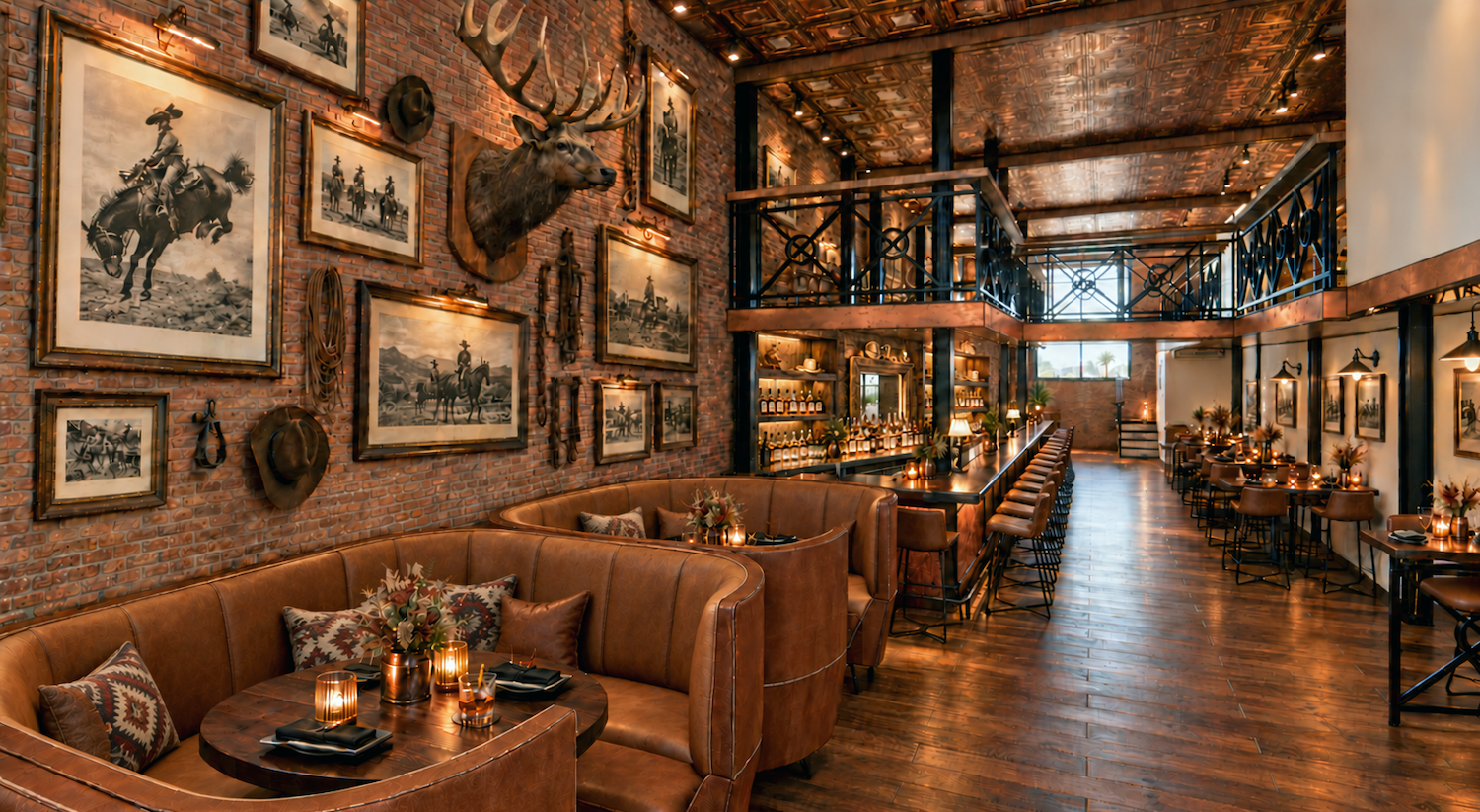
He’s aiming to open Santo Poco in October and Concrete Cowboy in November. Neither require massive renovations, and while the former Lia’s Lumpia space will keep the cabin-esque aesthetic, he’s creating more of an adobe-style exterior and an interior lined with Western-themed wallpaper and taxidermied animals. He’ll also tweak the bar layout to move from a fast-casual feel to full service.
Local designer Dane Danner is designing both spaces and visual direction for menu layouts, logos, and packaging, going for low-key, but high on vibes. Once Concrete Cowboy opens, Fish Guts will temporarily close to remodel the space to switch its white palette for a warmer feel, plus introducing a refreshed menu featuring some new tacos and other items.
Could another Fish Guts be on the way somewhere else in San Diego? Not likely, says Becker. “Fish Guts is cool, “ he says. “I feel once you start branching out, it’s more forced, not as organic.” So for now, count on Becker staying in the neighborhood.
Santo Poco opens for lunch daily October 2026, 2222 Logan Avenue (above Fish Guts). Concrete Cowboy opens Tuesday through Sunday for lunch and dinner November 2026, 2219 Logan Avenue.
Beth Demmon is an award-winning writer and podcaster whose work regularly appears in national outlets and San Diego Magazine. Her first book, The Beer Lover's Guide to Cider, is now available. Find out more on bethdemmon.com.
The 53rd Annual National Philanthropy Day Takes Place on November 21. Join us from 11:00 a.m. – 1:30 p.m. at the new Gaylord Pacific Resort & Convention Center!
Once yearly, AFP San Diego joins with others worldwide to celebrate National Philanthropy Day (NPD), a special day set aside to recognize the great contributions of donors and nonprofits that enrich of our community and the world. San Diego’s NPD is one of the largest and most successful in the U.S., attracting nearly 900 participants, including philanthropists, nonprofit leaders, CEOs, board members, development professionals, and business, community, and civic leaders.
Sponsorship proceeds from National Philanthropy Day are reinvested in education, training, scholarships, career development, and the advancement of fundraising professionals throughout San Diego. These resources and training provide fundraising professionals with the tools necessary to support our region’s diverse array of nonprofit organizations, which rely on charitable giving for close to half of their annual revenues.
The National Philanthropy Day Honorees are selected by the NPD Honorary Committee, a group of highly respected, diverse nonprofit and business leaders. Our 2025 Honorees include:
National Philanthropy Day San Diego provides an opportunity to reflect on the meaning of giving and to celebrate the selfless contributions of individuals and organizations across the region. We look forward to celebrating with you!
Sponsorship opportunities and individual tickets are available. Please visit www.afpsd.org for more information.