Everyone knows the classic sunset spots in San Diego like La Jolla Cove and Sunset Cliffs, the tourist traps we both love and hate. But what about the hidden gems, the quiet corners where you can actually enjoy the view without a camera crew? Here are seven underrated spots that are not necessarily undiscovered, but where it feels like the sun sets just for you.
Photo Credit: Cole Novak
Torrey Pines Glider Point
La Jolla
I’ll be honest, this spot isn’t exactly a secret—but it’s absolutely worth the semi-crowded parking. With Scripps Pier and La Jolla Cove as your stunning backdrop and gliders literally swooping right over you, it makes for a thrilling sunset. Everyone picks their favorite spot to take in the view, but if you’re looking for a little more solitude, just wander further out right. If you’re feeling unusually social, stick closer to the glider launch area where, if you’re lucky, you might catch a small DJ set as the sun dips.
2800 Torrey Pines Scenic Dr, La Jolla
La Jolla Hermosa Park
La Jolla
Are locals gatekeeping this park? Maybe, but you can see why. Hermosa Park is a small spot with just a picnic table and a few benches, but that’s what makes the sunsets here feel personal. It’s a great alternative to Windansea Beach since it’s so close (if you do go to Windansea, hit up the far left corner at Neptune and Palomar). Plus, you might actually get to hear the waves and birds instead of just the crowd.
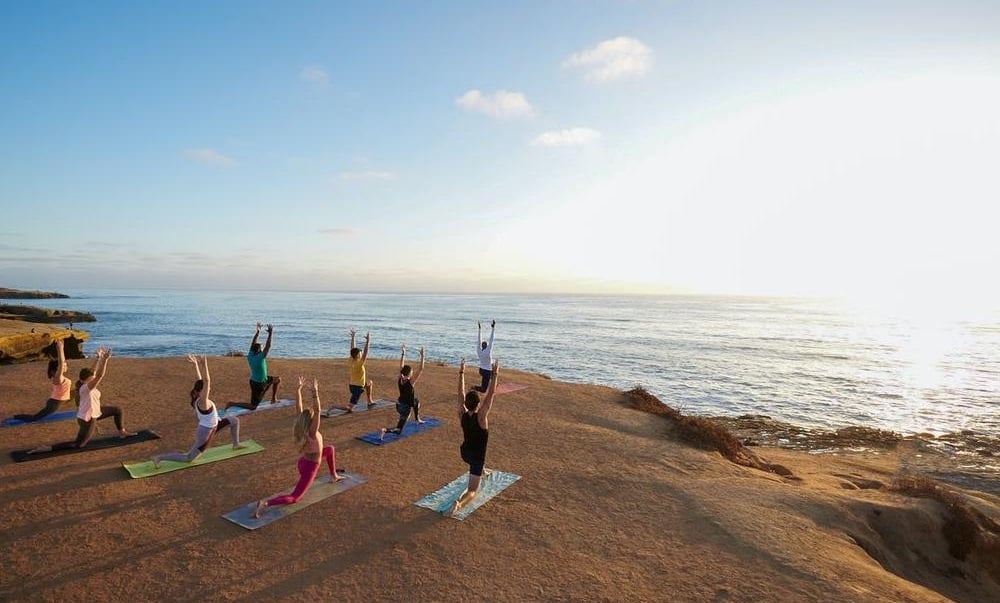
Right off Law Street in Pacific Beach, you’ll find a grass area dedicated to sunset yoga and picnic enthusiasts. Bring a blanket, relax, and take in the popular view of the Pacific Beach pier and surfers without it being shoulder to shoulder. Whether you’re practicing yoga poses, finally diving into that book on your nightstand, or sipping a glass of rosé, this spot welcomes your most laid-back self.
4960 Ocean Blvd, San Diego
Mt. Helix
La Mesa
With a 360-degree view of San Diego, it’s a guaranteed sunset lover’s dream. Drive to the top, blast your favorite sunset playlist, and take in the sparkling city lights. Mt. Helix exudes reflection and renewal, and there are even candlelight symphony concerts with a string quartet. It’s peaceful, and isn’t that what a sunset is all about?
4901 Mt Helix Dr, La Mesa
Garbage Beach
Sunset Cliffs
I know, just hear me out. I won’t deny that Sunset Cliffs has some of the most stunning sunsets in San Diego, but those cliffs can get jam-packed. Did you know Sunset Cliffs has its own beach? Right beneath those towering cliffs lies Garbage Beach. Despite the name, this beach offers the same breathtaking views as the cliffs, but with less than half the crowd. While the trek down can be steep, the best time to visit is at low tide when the tide pools are out. This spot is for all you mountain climbers, surfers, and swimmers.
705 Cornish Dr, San Diego (small parking lot near the corner of Ladera Street and Cornish Drive, with a stairwell going down to the shore)
Calumet Park
La Jolla
Fuzzy dogs and small families with bubbles might just be the best part of a Calumet Park sunset. This cozy neighborhood gem in Bird Rock features a dirt trail at the north end that leads down for some low-tide exploring. And, just when you think it can’t get any better, you realize how close you are to the charming downtown area of Bird Rock, where you can pick up pizza and stroll along the mini stretch of La Jolla Boulevard that feels like a town straight out of a book.
5424 Calumet Rd, La Jolla
Courtesy of City of Coronado
Harborview Park
Coronado
Need a break from the busyness at Hotel Del Coronado or Bayview Park? Harborview Park in Coronado is the spot to unwind. It’s a pocket with great views of the bay, the towering downtown skyline, and the waterfront. What more could you ask for? And, if you’re into photography (or just need a new profile picture), this is the perfect backdrop, complete with boats sailing under the Coronado Bridge against a pink and orange sky.
Isabella Dallas is a freelance writer for San Diego Magazine and the Arts and Culture Editor at The Daily Aztec in her final year at San Diego State University. She previously worked as an editorial intern for SDM, but when she’s not writing, you can find her trying the best coffee spots in SD, devouring the latest rom-coms, and indulging in anything and everything pop culture.
Sure, San Diego has its picturesque hikes. Its beautiful scenic hikes where you can contemplate the exquisiteness of our surroundings and remind yourself that this is why your rent or mortgage is so high. It also has fun hikes, social hikes, hikes where you can bring your parents, your kids, and your friends who don’t usually exercise.
But sometimes you just really want a challenge. A butt-busting workout that will leave you panting and make your wearable device very happy with your step count and heart rate.
Luckily, the San Diego region has plenty of these hikes, too. But there are some cautions. Before attempting any of them, make sure you are ready—that you’ve done some easier hikes in the region and have a good base of fitness. Also bring plenty of water, food, sun protection, and go early in the morning on days that will not be as hot.
Courtesy of AllTrails
El Cajon Mountain Trail – 11.6 Miles
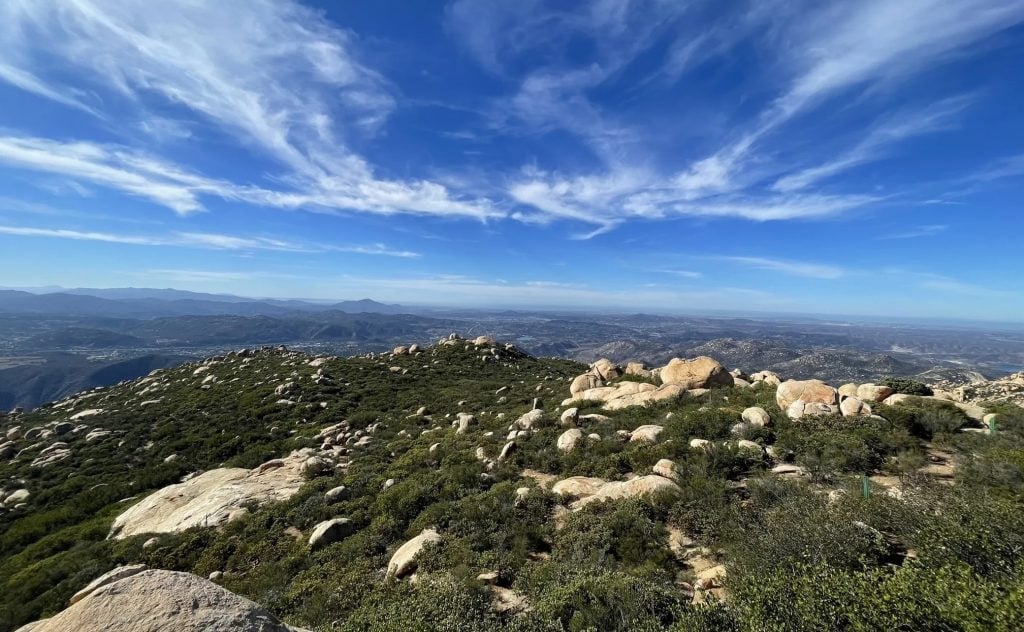
For most hikers, the El Cajon Mountain Trail is really the epitome of challenging hikes in the region. Some like to call it El Capitain, or El Cap, not to be confused with the far taller mountain in Yosemite. But this hike still has lots of steep climbs, and it’s not just a steady uphill, but times where you climb down and then up again to make it to the summit. The trail is rocky at times as well, with big boulders to cover. But if you make it to the top, you’ll feel like you really accomplished something significant. And on a clear day, you can see all the way to the ocean.
Even if you don’t make it all the way, you can stop at any of the saddles on the trail and take in the panoramic views. But be prepared, you will definitely feel sore the next day.
Directions: Start at the parking lot on Wildcat Canyon Road.
Distance: 11.6 miles roundtrip
Dogs: Allowed
Details: The parking lot is open from 8 a.m. to 7 p.m. The trail is closed in August due to the heat.
Courtesy of San Diego Parks & Recreation
Mt Gower Open Space Preserve – 9.8 Miles
Mount Gower Open Space Preserve is a massive space in Ramona, and has a few trails that are very challenging but with seriously stunning views. The open space covers 1,574 acres, and has the trail to Mount Gower summit. The summit itself does not actually fall in the preserve—that’s in Cleveland National Forest. But you can reach it on the trail that goes through the preserve. And the viewpoints along the way make the long journey worth it.
There are multiple routes to take to the top. If you follow the southern trail, you get the best views of the San Vicente Valley below.
Directions: Start at the parking lot at the end of Gunn Stage Road.
Distance: 9.8 miles roundtrip
Dogs: Leashed dogs allowed
Details: The parking lot doesn’t open until 9 a.m., but if you want to start earlier, you can park outside the gate. That adds an extra 0.25 miles to your hike. Also, be on the lookout for poison oak, which is sometimes found along the trail.
Courtesy of AllTrails
Black Mountain in Ramona – 14.5 Miles
Another very challenging but rewarding hike in Ramona is Black Mountain. This is not to be confused with the smaller Black Mountain near Rancho Peñasquitos, which is a far easier hike. Sometimes it’s called Big Black Mountain to make the distinction. The trail takes you past a variety of trees and plant life, including oak groves and chaparral, as well one of the biggest growths of Engelmann Oak, a threatened species.
You can start the climb from the Santa Ysabel Truck Trail, which is also open to off-road vehicles, but is always open for hiking. In the rainy months, this road can get very muddy, so be warned.
Directions: From downtown Ramona, follow Pamo Road to the gated Forest Service Road entrance. Park along Pamo Road.
Distance: 14.5 miles roundtrip
Dogs: Leashed dogs allowed
Details: Be prepared for mud in the winter and spring. There are no bathrooms at the parking lot or on the trail.
Claire Trageser has been writing for San Diego Magazine for 10 years. She also is a reporter at KPBS and writes for The New York Times, National Geographic, Marie Claire, Elle and Runner's World.
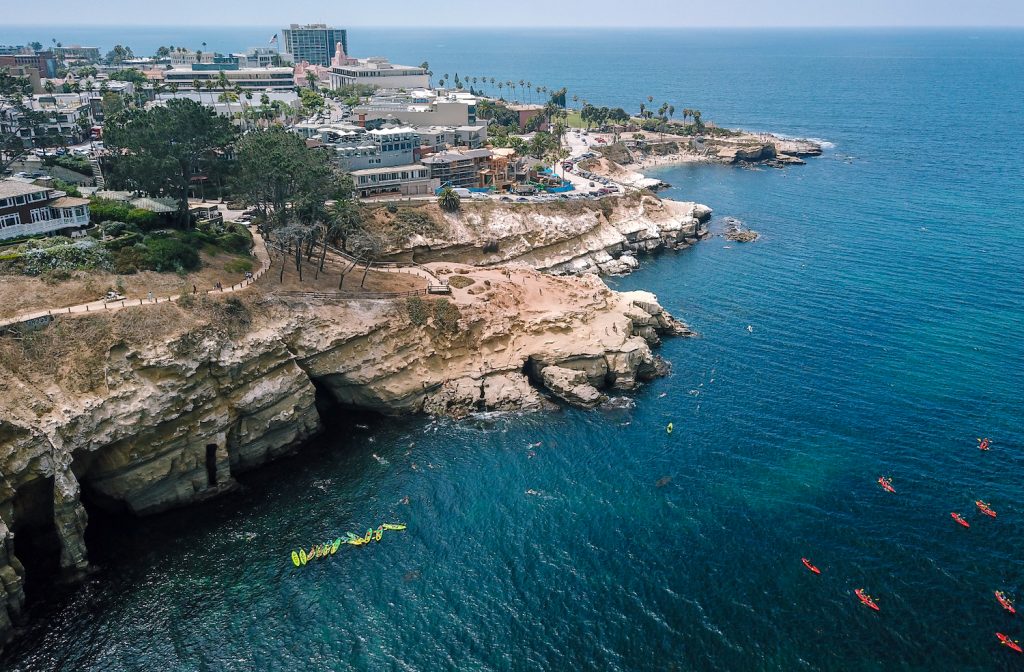
From the Marine Room, I paddle through the surf break, trying not to get knocked into the water. Once through, I stand on my stand-up paddleboard (SUP), navigating the next set of challenges: avoiding the groups of snorkelers directly in front of me, and then the flotilla of kayakers working their way from La Jolla Shores in the direction of the sea caves—each of us connecting with the ocean in our own way.
At a little over one square mile in size and reaching offshore depths of some 330 feet, the area between the shores and La Jolla Cove is technically a marine protected area called the Matlahuayl State Marine Reserve. Under the surface of the water, you might spot sea lions and seals, leopard sharks, garibaldi and other fishes, various kinds of rays, lobsters, and possibly even moray eels. Above water, winged creatures like brown pelicans and egrets dart through the skies. One of the joys of snorkeling here is when you spot a Brandt’s cormorant “flying” underwater, fishing for a meal.
Photo Credit: James Murren
Past most of the snorkelers and in front of the flotilla, I turn south and head over to where the water is more open and less hectic. After 10 minutes or so, with the leash wrapped around my ankle, I squat down and straddle my SUP. Then, I secure my paddle through the accompanying loops on the side of the board. Strapped under the SUP’s bungee webbing are my snorkel, mask, and fins. I put them on and drop into the water.
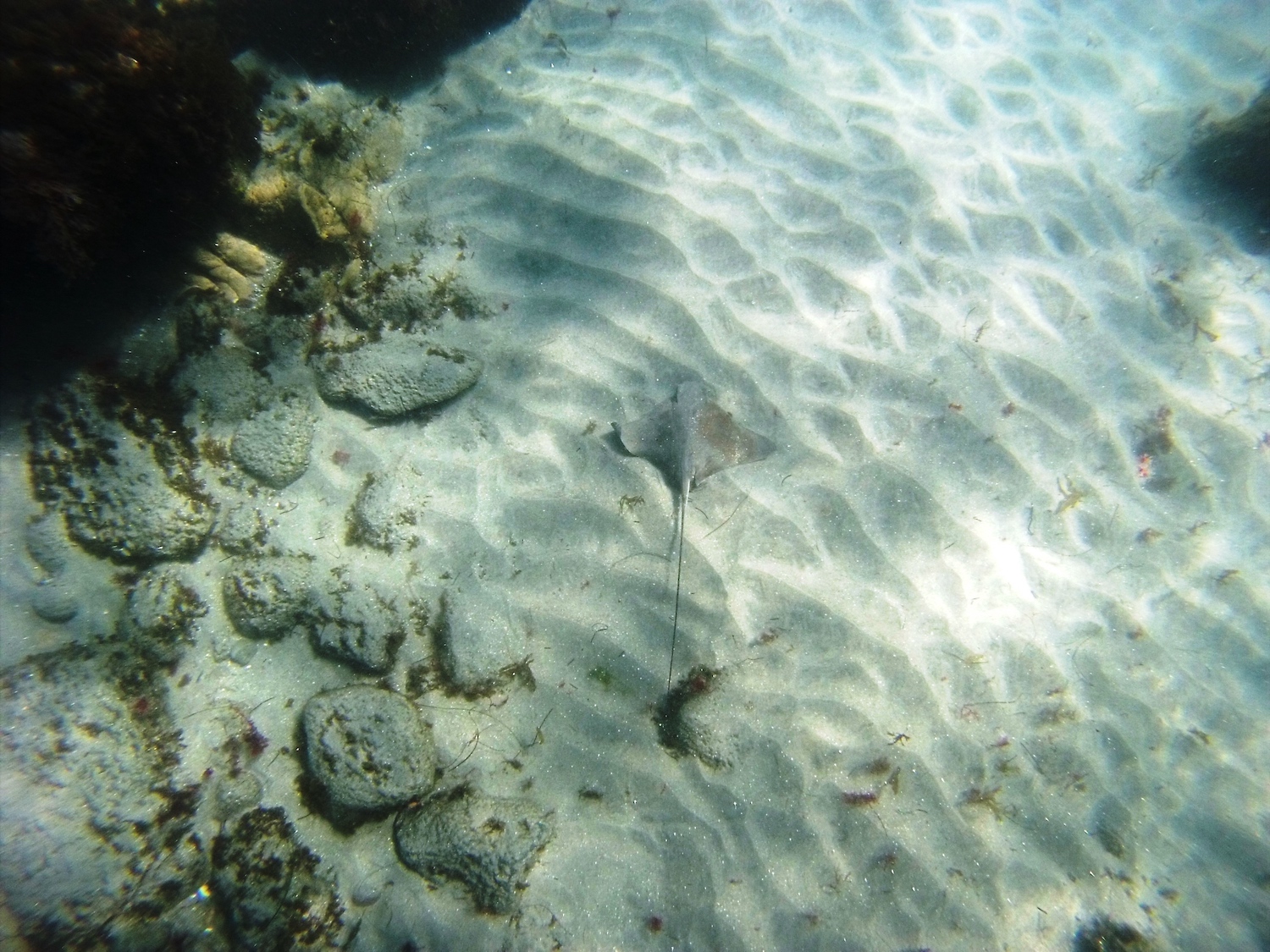
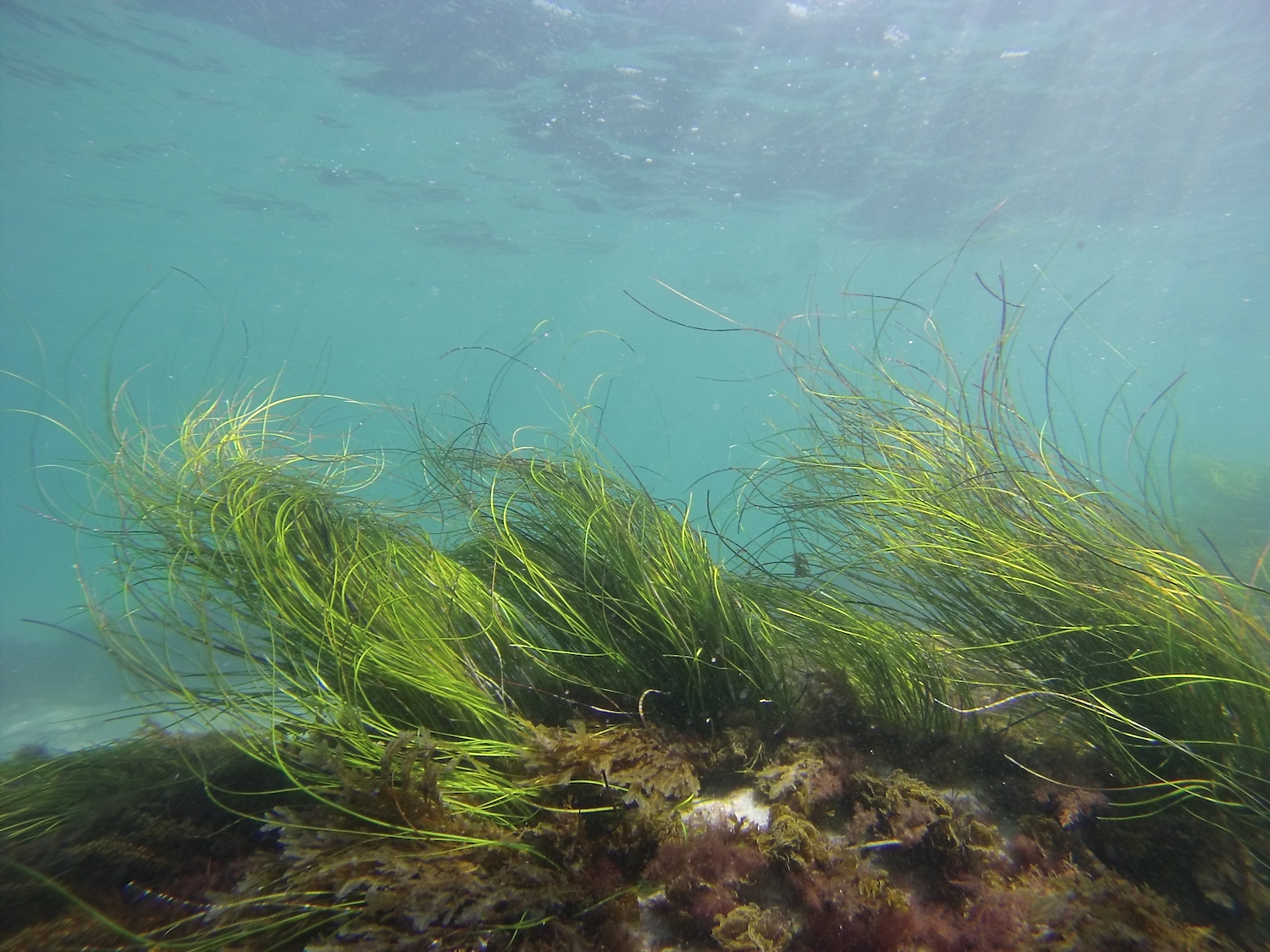
The visibility is okay, about 15 feet or so. Immediately, I see the territorial garibaldis protecting their watery turf. Juvenile ones, identifiable by the iridescent blue-purple spots on their backs, swim by. Snorkeling in the direction of the undulating grasses, I pass over a patch of sand. Down there, round stingrays hover. No bigger than a small dinner plate, they are in their element, fluttering with ease.
Photo Credit: James Murren
Above the grasses, I hover, emulating the rays. It is one of my favorite things to do while snorkeling: I simply float, using my fins only to maintain my position and avoid being pushed into the rocky underwater cliffs. As the waves roll in and back out, the green grasses shimmer in the sunlight, dancing to and fro.
Amidst it all, my body sways with the grasses, recalibrating my being for the days ahead.
Courtesy of Visit California
Tips for Stand-Up Paddleboarding in La Jolla
La Jolla Shores and La Jolla Cove are very busy and crowded areas. Be mindful of those around you while SUPing. Your board can cause injury to others in the blink of an eye. Be very aware that open ocean swimmers and sometimes scuba divers are out there as well.
You cannot SUP in the La Jolla Cove zone. Lifeguards will get on the intercom and ask you to leave the cove. As a rule, I suggest staying around the sea caves—if you’re going to pass them, go north, not toward the beach-goers in the shore break zone.
You can rent SUPs in the village area at La Jolla Shores. Be sure to have a waterproof bag—also called a dry bag—for your phone and other valuables.
Do not forget to wear sunscreen, a hat, sunglasses, and perhaps a long-sleeved sun shirt with a hood. You get burned more quickly out on the water.
James Murren is an award-winning adventure/travel writer, with nearly three decades of independent journalism experience. He's often having a good time in our local mountains, deserts and waters, when he's not teaching classes at SDSU.
Stake Chophouse & Bar isn’t your average steakhouse. Blue Bridge Hospitality’s Coronado outpost is a modern interpretation of a big-city steakhouse nestled in the heart of the small coastal community. The team at Stake has reimagined the whole steakhouse experience. By prioritizing a seasonal farm-to-table sourcing philosophy, a personalized guest experience, and unique service touches, like a formal steak presentation and a bespoke knife selection process, Stake distinguishes itself in a sea of steakhouses.
Exceptional steaks, including Wagyu from Japan, Australia, and the U.S., and fresh seafood flown in daily form the core of Stake’s culinary identity. The menu features a five-course omakase-style steak experience highlighting house favorites, plus an array of cuts, and classic steakhouse staples—think a wedge salad, baked potato, or pasta carbonara—refined for a contemporary palate without losing their traditional appeal. Stake focuses on seasonal sourcing from the region’s best family farms and specialty purveyors, and incorporates intentionally unexpected touches to create something truly unique.
“I challenge our chefs and myself to take it a step further in sourcing,” says Chef Ronnie Schwandt. “It’s important to us to highlight different farms, unique one-off farms—whether it’s cattle, strawberries, a local fisherman or from anywhere in the United States, we’re always trying to find that niche.”
Beyond the menu, Stake emphasizes outstanding service, says Vinny Spatafore, Director of Hospitality Operations. Staff maintains detailed notes, allowing them to remember guests by name, recall previous orders such as a favorite martini (also memorable for the customer since it’s served in an extra tall, distinctly-shaped glass), and celebrate special occasions like birthdays and anniversaries.
“When you have those points of topic that you remember about a guest, they appreciate that,” he says. “Our servers are really good with that—we have a couple servers who have been here since the beginning and they’ll remember somebody from years ago, their name, their kids’ names, where they live. I’m really thankful to have a great front of house staff.”
Award-winning wines, rare whiskeys, special events, and a complementary black car service that provides transportation for guests throughout Coronado add to Stake’s appeal.
Schwandt stresses that Stake offers more than a meal; they aim to give patrons something unforgettable.
“It starts when you walk up the stairs and are greeted by the hostess—that sets the tone for the night. Then you’re greeted by a server, who may know you by name, and can guide you through the menu and curate as they get to know you,” says Schwandt. “Most people leave kind of blown away; they leave feeling like they just had an experience. That’s the goal, right? Whether you’re serving smash burgers or high-end steak, you want somebody to leave thinking, Wow, that was awesome.”
For this adventure, you only need to be able to do one thing. “If you can follow directions, you can get in a boat,” says Brewster Schenck, who has quadriplegia and has cruised with Challenged Sailors—a nonprofit that offers free adaptive sailing to people with disabilities—for the past five years.
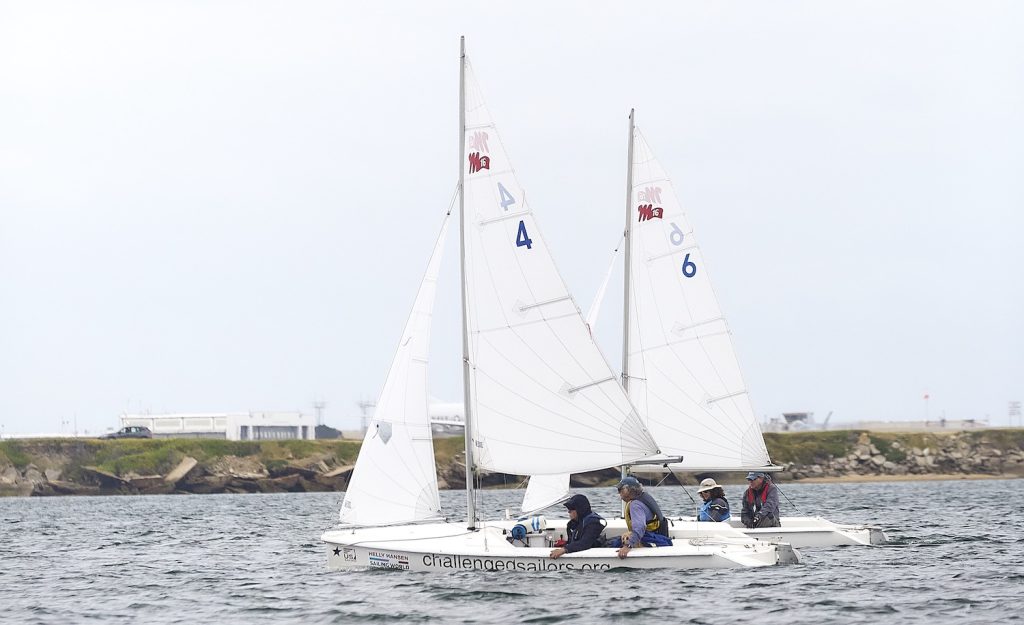
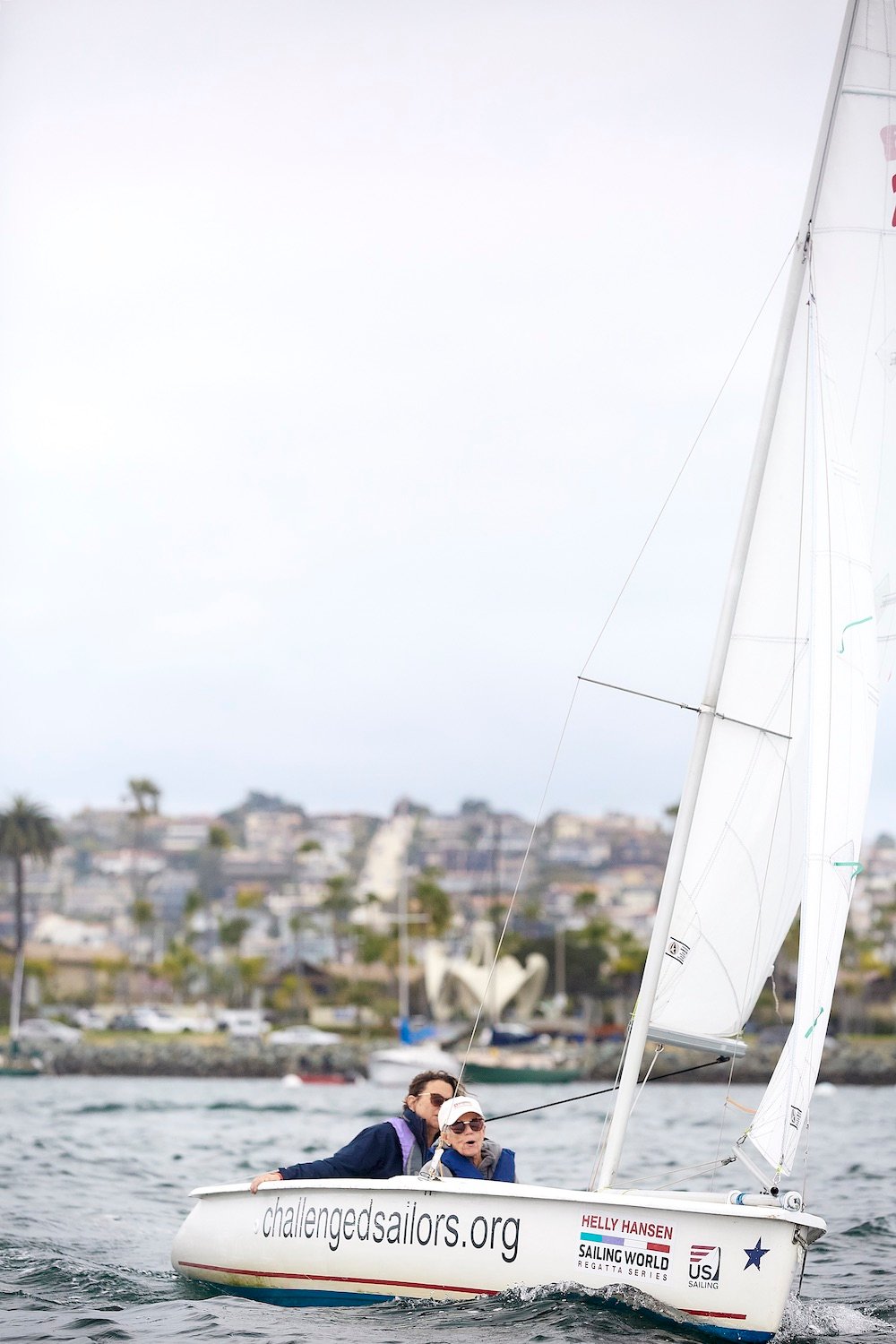
On an overcast Friday afternoon, a group of 17 huddles on Harbor Island’s docks, home to eight specially designed Martin16 sailboats. The two-person vessels are weighted so they can’t tip over. Even if they filled with water, they wouldn’t sink. The sails are controlled by two ropes and the rudder by a joystick, so the boater can sail without ever having to leave their seat. These boats can even be fitted with technology that allows sailors who can’t use their limbs to control the boat with their breath. As a precaution, a volunteer sailor travels in the seat behind.
Photo Credit: Erica Joan
The adapted boats give participants freedom they don’t always experience on land. Volunteer Dale Burchby recalls a woman who went sailing with them after a catastrophic accident that rendered her suddenly needing a wheelchair. Looking out at the bay, she asked, “Where do we go?”
Her companion sailor said, “Anywhere you want.”
She burst into tears.
Wheelchairs, walkers, and scooters stay on the docks, explains Challenged Sailors President Peter Phillips, who, because of nerve damage caused by Guillain-Barré syndrome, needs leg braces and a walker to get around.
“When I’m walking, I’m experiencing pain. I can’t go fast,” he says. But out on the bay, “there are no limitations—it’s just the boat and the wind and the water.”
Photo Credit: Erica Joan Penny Anders feeling the stoke after a successful day on the sea.
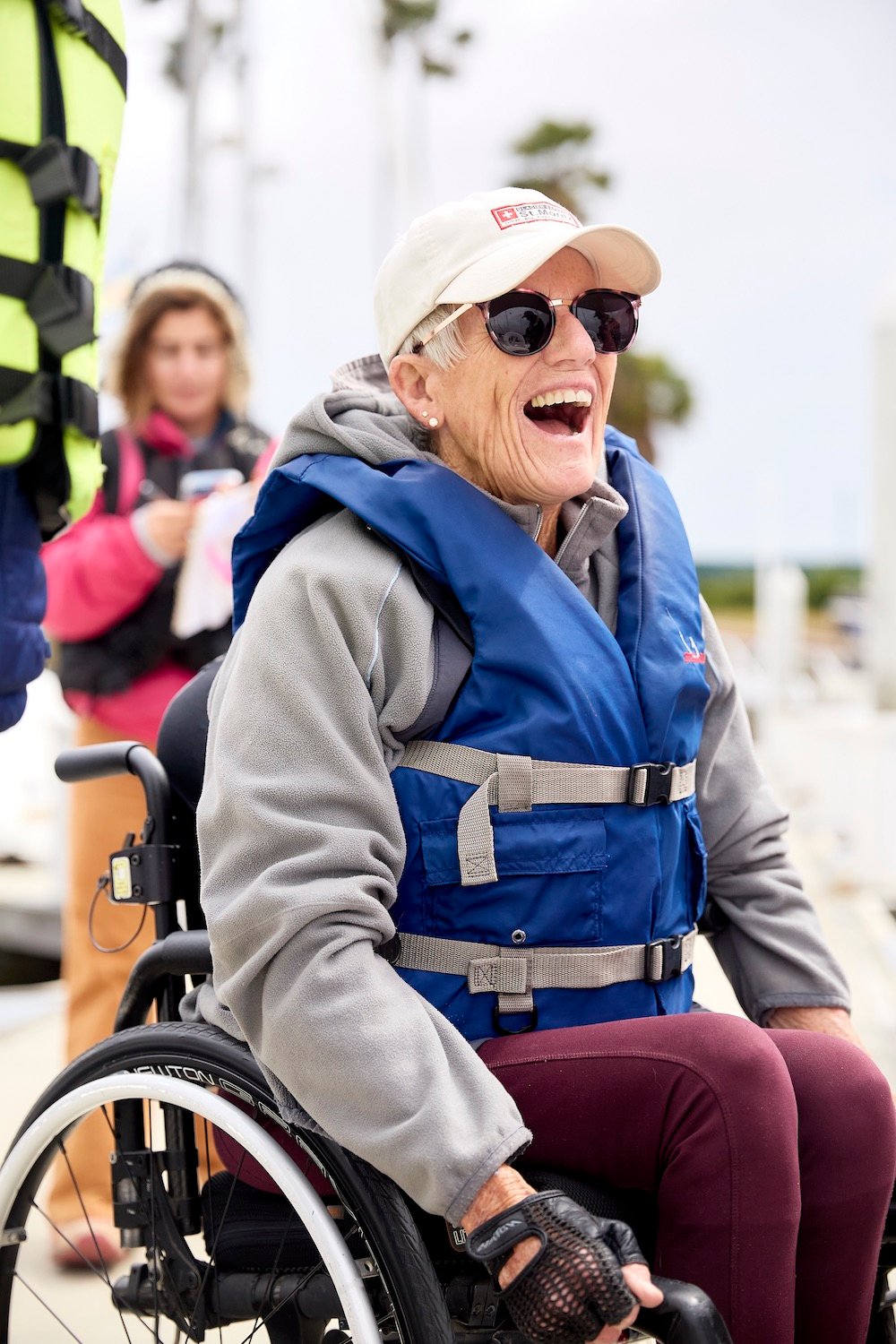
Back on the dock, Penny Anders, who became paraplegic after an accident two years ago, gets ready to be lowered by a hoist into her boat. She beams as she ducks beneath the boom and takes control of the helm. “You go so fast [when you’re sailing]—you’re just flying,” Anders says. The sport has been a source of joy for her in what has been a difficult transition, she adds.
“It saved me, too,” says Leah Gualtieri, her volunteer companion sailor, who took up sailing after a divorce. “Once you’re out there, you don’t want to not be out there.”
Mara Altman is the author of two nonfiction books, Thanks for Coming and Gross Anatomy: Dispatches from the Front (and Back), which was a semi-finalist for the Thurber Prize for American Humor. Altman also wrote eight best-selling Kindle Singles and has written for publications such as The New York Times and New York Magazine. Earlier in her career, she was a staff writer for The Village Voice and daily newspapers in India and Thailand. She lives in North Park with her husband and twins.
If you have lived and hiked in San Diego long enough, eventually you’ll find yourself in a hiking rut. Heading to the same places, doing the same trails, instead of branching out and trying something new.
That’s happened to me plenty of times. And while there is something beautiful about hiking the same routes over and over—noticing things you haven’t seen before, or seeing if you can reach a summit in a record time—it’s also important to explore. That’s the whole point of hiking, right?
This 4.7-mile, out-and-back hike takes you through a scenic canyon in Jamul with sweeping green hills on either side. Go in the spring and you’ll have beautiful views of wildflowers, and possibly a few small streams you’ll need to cross (pack a small towel and go barefoot across if you don’t want wet shoes and socks). There are a few steep places along the way, but the trail is well maintained and mostly not too challenging.
Directions: Start at the trailhead on Honey Springs Road off Campo Road.
Distance: 4.7 miles, out-and-back
Difficulty: Moderate
Dogs: Allowed
Details: Buy a California Department of Fish & Wildlife day pass for $5.66 online before you go.
Mother Miguel Mountain
This steep but relatively short climb near Chula Vista is a bit challenging, but the views from the top are totally worth it. On a clear day, you can see mountains to the east, Sweetwater Reservoir, and Chula Vista, plus the ocean and bay along with Mexico, Coronado, and downtown San Diego. The hike is best done before summer months because there’s no shade along the way, and there are steep switchbacks for part of the trail.
Directions: Start at Mount San Miguel Park on Paseo Veracruz.
Distance: 4.4 miles, out-and-back
Difficulty: Challenging
Dogs: Allowed
Details: Parking is free.
Tijuana Estuary
Forget Torrey Pines (OK, don’t forget it, because it’s also beautiful), this wide park along the ocean is way less crowded and still has beautiful views. You can hike along the US-Mexico border, winding your way around as many trails in the Tijuana River Valley as you’d like. Still perfectly pleasant as the weather gets warmer, this estuary is a great spot for bird watching and easy hiking with its flat trails.
Directions: Start on Imperial Beach Boulevard to follow the North McCoy trail or the full route.
Distance: For the longest hike, follow the 9.2-mile Valley Scenic Route, or do the shorter North and South McCoy trails.
Difficulty: Easy
Dogs: Allowed
Details: Parking is free. A trail map can be found here.
Claire Trageser has been writing for San Diego Magazine for 10 years. She also is a reporter at KPBS and writes for The New York Times, National Geographic, Marie Claire, Elle and Runner's World.
While glucagon-like peptide-1 (GLP-1) receptor agents have been used to treat Type 2 diabetes for more than 20 years, their recent emergence as weight-loss wonder drugs marked a new frontier in medicine. But their effectiveness has left some patients wondering what to do once they’ve reached their goal. Stopping the medication could mean regaining some, if not all, of the weight. A Scripps Clinic internal medicine physician recently conducted a small study of whether GLP-1 patients who had reached their goal weight could maintain that weight by taking their regularly prescribed injection every other week instead of weekly. Spoiler alert: 30 of 34 patients did. Read more about the study here and what that may mean as pharmaceutical companies roll out oral GLP-1s.
For more nutrition, wellness, and healthy living tips, sign up for the San Diego Health newsletter here.