Featured articles
Food & Drink
Features
Food & Drink
Featured articles
Food & Drink
Things to Do
Things to Do
Featured articles
Food & Drink
Food & Drink
Food News
Featured articles
podcast-ep
podcast-ep
podcast-ep
Featured articles
Food & Drink
Features
Food & Drink
Featured articles
Food & Drink
Features
Partner content
Ready to know more about San Diego?
SubscribeReady to know more about San Diego?
Famed health retreat Rancho La Puerta
Hiking
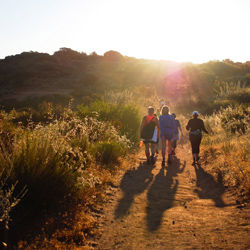
Guests pilgrimage to famed health retreat Rancho La Puerta year after year. Three editors attempt to drink the all-natural, locally-sourced, organic Kool-Aid.
By Erin Meanley
Rancho La Puerta in Tecate, Mexico is a French fry-free property. There is also no red meat, chicken, mayo, ranch dressing, TV, Wi-Fi (except in the lounge), or alcohol. There are no cabana boys or room service. On the first night, we sat in our villa, fireplace roaring, smuggled wine in hand, reading books and staring at each other. At 9 p.m., we went to bed since there was nothing else to do—and because we’d all signed up for a sunrise hike at 5:30 a.m.
Activities were varied, plenty, and hippie-leaning. We meditated. We did water aerobics. We walked a reflexology path. I watched an artist teach “yarn painting.” I breathed fresh air, met roaming cows on a trail, drank gallons of water, and consumed more vegetables and fiber than I care to think about. (One tablemate, a nurse named Ellie, watched us devour slices of dense bread before informing us, “That’ll give you gas.”)
Throughout my stay, I couldn’t shake the feeling that I would never be fed again. At the buffets, I cleared small plate after small plate like some kind of vegetarian Michael Phelps. Erin Chambers Smith told me she was giving me the Good Eater Award.
I didn’t stop there. I poured chia seeds, flax seeds, and nutritional yeast onto everything. In just four days, my nails grew to ridiculous lengths. I was Edward Scissorhands slicing the air during Tai Chi.
The fitness was not as challenging as the diet was strict. Ninety percent of the students in one class had never tried Zumba before. In a sculpt and tone class, people were stopping to ask how to orient their step platforms. The classes were relatively low-impact, and just 45 minutes in duration, but the big plus is that it allows you to try a lot of different disciplines.
The first day, I hiked a trail and took four fitness classes. I logged 18,000 steps, according to the pedometer they gave me. Ten thousand per day is the goal—but in an average day at the office I walk a mere 950.
Even though the exercise wasn’t hardcore, it was the most exhausting-relaxing vacation I’ve had. As a result, I slept soundly, which is not the norm for me. I didn’t touch Ambien or ZzzQuil. One ranch employee suggested that people sleep so well there because TV and Internet aren’t keeping them up. People listen more closely to their bodies, and just go to bed when they’re tired. The property’s quiet tranquility doesn’t hurt, either.
There’s much to be said for RLP. We walked between every meal, activity, and lecture. We met friendly people, most of them highly motivated and successful individuals—with Emmy Awards or summer houses to prove it—all reading literary fiction at the pool, open to change and new ways of living. And they weren’t judgy, either. As I wheeled my suitcase out on the final day, Connie from Annapolis called after me, with zero sarcasm, “Enjoy your French fries!”
And I did. They were from In ‘n’ Out. But I’ll tell ya, I kept that pedometer, and I have a newfound respect for vegetarians.
By Erin Chambers Smith
It started before I even got to “The Ranch.” I texted my colleagues who were already there that I was coming a day late. I didn’t tell them I was leaving a day early, too. I’ve always been the type to make my own way. I’d heard all about RLP’s health and wellness efforts, but the schedule and rules had me skeptical from the get-go. First, the bans: No alcohol, not even with dinner? No meat? No Wi-Fi? Then there’s the open-your-mind activities: Cardio-drumming? Uh, not so much for me.
But the thing about RLP is that you really can tailor your stay. And there’s an amazing spa. So if you don’t feel the need to heal your soul one afternoon, or have a conversation with your lower limbs, or re-explore your relationship with God or your mother, you can always take a nap. Or lie by the pool. Or get a pedicure. I opted for all of the latter. I did go to one yoga class, and made a concerted effort. I also put on my joiner hat to take a “What is Feldenkrais?” class, a 15-minute primer before the actual class. I listened to the explanation, but ditched the class. Just not my thing.
I read two books and three magazines in the three days I was there, and I completely broke the rules when it came to food. I snuck in my own wine, beef jerky, and salty pretzels. But not even those rations were enough. The philosophy in the kitchen is valiant. The garden is wildly impressive, and the salads are truly delicious. But three days of greens and granola doesn’t cut it. By the second day, I had figured out a way to save a hard-boiled egg from breakfast, and add it to the handmade tortillas (the size of a small soda lid) at lunch. With salsa and salt, it kind of tasted like a breakfast burrito. On the third day, there was a special event where they served guacamole (made mostly with peas!). I think I ate a half-pound of it.
My renegade ways became a bit of a joke within our group, and I was almost feeling smug about how I’d skirted the program and made my own little spa weekend.
Then I met the resort’s founder, Deborah Szekely, and I felt like an idiot.
We wandered into the weekly fireside chat with Szekely on our last night there. The lights dimmed, the pillows came out, the people gathered in a circle, and I braced for what seemed like another session of spiritual enlightenment. But out from the back hallway walked DS, as regular as any American grandmother. She sat in a chair at the front of the cozy room. She’s one of those people who has a calming aura, so the advice she gives comes across as especially wise. She began by passing around laminated cards with complex diagrams of the human body. One diagram showed all the vessels and nerve systems, and one zoomed-in on the human brain. “Think about how amazing your body is,” she said in her sweet Betty White-like voice. “Look at everything it can do. It makes human beings. It heals itself.” She paused and really let the thought sink in. Szekely, 91, talked about her daily one-hour Pilates workout. If she can do that, I should have tried Feldenkrais. She talked about the chemicals in our food and how little we really consider what goes into our bodies. (Suddenly I wondered how many milligrams of sodium were in that beef jerky tucked in my pocket.) She talked about the importance of quiet time for yourself. Reflection. Daily, she eats breakfast in silence with her dog. She encouraged everyone to take time at the beginning and end of each day to assess their actions and obligations. She also suggested an annual getaway to have a real conversation with yourself about your health and wellbeing. All jokes aside, the discussion was as calming and centering as any yoga class or church service.
Szekely’s not preachy. She’s lived well, and talks and walks what seems like a lovely, peaceful life. I went back to our room for a glass of bootleg wine, but wasn’t so smug anymore. I knew I had missed an opportunity to genuinely try something new, to spend a few days walking in someone else’s shoes.
By Kimberly Cunningham
I am a heaping ball of stress. Even as I type these words, my shoulders are tensed, fingers clenched, heart palpitating with the click of every key. This isn’t new news. I come from a long line of worriers. But I became hyper-aware of my condition at the ranch. While my co-workers lounged poolside in their bikinis, flipping through magazines and novels, I lay there fully clothed with my book propped open, dog-eared on the same page it had been for days. I stared aimlessly at the trees, thinking about all the work I’d left behind, wondering if I was having an allergic reaction to all that nature, and feeling completely unable to relax.
Everywhere I looked, people were blissed out—their skin dewy with a post-workout glow. That day at lunch, one of the trainers told us the best gift he’d gotten from the Ranch was meditation. He said it would make us look and feel younger. “Just think of all the money you’ll save on Botox!” he promised. This hooked me. I put down my plate of kale and mushrooms disguised as lasagna, and hiked (at RLP you HIKE!) over to the first meditation class they offered. After much effort to get there, I was slightly disappointed to learn that we were meant to sit in silence for the whole class. Apparently, even the Dalai Lama has a hard time getting into the zone, so it’s no wonder I had a hard time, too. When we were supposed to quiet our minds, I was thinking: This is weird. I need to cough. I need to write that story. I forgot to email so-and-so. I wonder what we’re having for lunch? Dangit!
Feeling defeated, I hiked, with less vigor this time, to another meditation class that involved crystal bowls and chanting. We lay on the floor as a teacher struck the bowls, creating a powerful and supposedly healing sound. Then we sang a song about forgiveness—Kleenex in hand, in case we started to cry. But I didn’t cry. In fact, I felt frustrated that I couldn’t cry, or concentrate, or meditate. And just when I was about to swear off the whole crystal-bowl-chanting thing as ridiculous hippie nonsense, I felt… something. Remember in Eat Pray Love, when writer Elizabeth Gilbert describes being held in the palm of God’s hand? Well, this wasn’t that. I wouldn’t even say I was under the fingernail of God’s hand. But suddenly I was still. And quiet. In that moment, I couldn’t remember a single email that was waiting for me, or anyone I needed to call. The crystal bowls chimed in the distance, and my bones sank into the carpet. When the class was over, I slowly hiked back to my room. What had happened? Did I fall asleep? Did all those vegetables send me into anaphylactic shock? I think it was the beginning stages of meditation.
Our senior editor, Erin Meanley, practices meditation regularly. She uses an app on her iPhone. Sometimes she comes into the office looking really refreshed. On those days I’ll usually notice and compliment her. She only recently told me that those days typically coincide with mornings when she’s meditated for 20 minutes. At RLP, they say if you practice meditation with consistency, it will change your life. And now I’m a believer! I realize more than ever that all this stress is going to put me in an early grave. Here’s to slowing down a little bit and learning to cope with the everyday stresses of life. Shoulders down. Fingers unfurled. Steady heart. Now breathe…
PARTNER CONTENT
Summer Camp for Adults
The Border Report: Mexico on two wheels
Rosarito-Ensenada Bike Ride
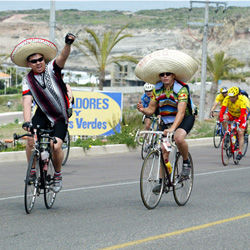
Celebrating its 34th anniversary is the Rosarito–Ensenada bike ride, a 50-mile fun trek that happens twice annually, this year on May 3 and September 27. In what’s billed as one of the largest cycling events in the world, nearly 4,000 participants follow the free road out of Rosarito south along the coast before cutting inland at La Mision and upward through the hills surrounding the Valle de Guadalupe wine country and onward to Ensenada. At the finish line is a street fest with food, bands, and beer. If you don’t want to haul your wheels to Mexico, TNT Ensenada (tntbicicletas.com) rents loaners, and shuttles run back to Rosarito from Ensenada after the race for $22 per cyclist. Preregister online for 400 pesos ($35), or sign up on the day of the ride for 450 pesos ($40).
Getting from San Diego to the border by bike is a 30-mile tour—and an epic one at that (how many bike rides cross international borders?). Cruise the Bayshore Bikeway, a 25-mile loop linking Chula Vista, Imperial Beach, Barrio Logan, and the Silver Strand via the San Diego– Coronado Bay Bridge (the ferry makes for a less-strenuous option), and skim the horse ranches and farms of the Tijuana River Valley before eventually finding yourself face to face with Mexico on the horizon. Even if it’s just to walk your bike across for a quick taco and bag of churros before heading back north.
Ease into riding south of the border with Paseo de Todos Tijuana, a night group ride that departs from beneath the arch on Avenida Revolucion at 8 p.m. the first Friday of the month and occasionally hosts cross-border rides that usually depart from a San Diego bar.
The Border Report: Mexico on two wheels
Rosarito-Ensenada Bike Ride
Celebrating its 34th anniversary is the Rosarito–Ensenada bike ride, a 50-mile fun trek that happens twice annually, this year on May 3 and September 27. In what’s billed as one of the largest cycling events in the world, nearly 4,000 participants follow the free road out of Rosarito south along the coast before cutting inland at La Mision and upward through the hills surrounding the Valle de Guadalupe wine country and onward to Ensenada. At the finish line is a street fest with food, bands, and beer. If you don’t want to haul your wheels to Mexico, TNT Ensenada (tntbicicletas.com) rents loaners, and shuttles run back to Rosarito from Ensenada after the race for $22 per cyclist. Preregister online for 400 pesos ($35), or sign up on the day of the ride for 450 pesos ($40).
Getting from San Diego to the border by bike is a 30-mile tour—and an epic one at that (how many bike rides cross international borders?). Cruise the Bayshore Bikeway, a 25-mile loop linking Chula Vista, Imperial Beach, Barrio Logan, and the Silver Strand via the San Diego– Coronado Bay Bridge (the ferry makes for a less-strenuous option), and skim the horse ranches and farms of the Tijuana River Valley before eventually finding yourself face to face with Mexico on the horizon. Even if it’s just to walk your bike across for a quick taco and bag of churros before heading back north.
Ease into riding south of the border with Paseo de Todos Tijuana, a night group ride that departs from beneath the arch on Avenida Revolucion at 8 p.m. the first Friday of the month and occasionally hosts cross-border rides that usually depart from a San Diego bar.
Where you're staying and what you're doing
Rancho Bernardo Inn
Rancho Bernardo Inn
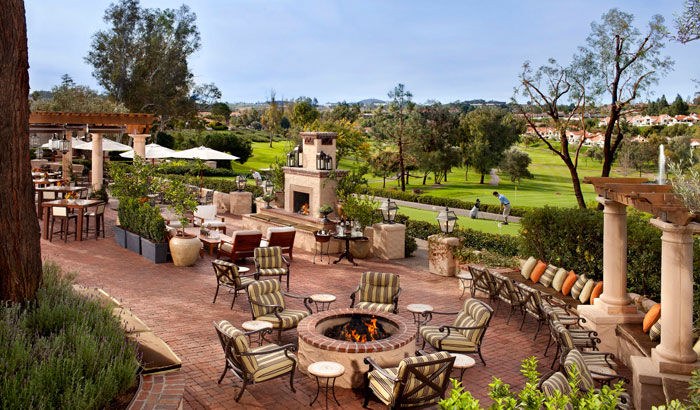
The 287-room Rancho Bernardo Inn is having a moment. It celebrated its 50th anniversary just last year and made Travel + Leisure’s list of World’s Best Hotels 2014. Not to mention, the newly reborn restaurant Avant (formerly El Bizcocho) is getting rave reviews, even from its longtime regulars.
On property, the Inn has 18 holes of golf, three swimming pools, and a full-service spa and wellness center. For hikers, Lake Hodges is a seven-minute drive north of the hotel. The Highland Valley Trail is an easy 4-mile loop and the North Shore is a 14.8-miler, also great for biking. Beer and wine lovers visiting the area can take a different kind of trail—ask the hotel about special packages for tastings at local craft breweries and wineries. For your main dining event, try Avant. Our critic Troy Johnson called the kitchen’s efforts “near flawless,” with “enough excellent [menu] options… to live up to the quite phenomenal new destination that is Avant.” Sold! Rooms start at $199. 17550 Bernardo Oaks Drive
The 29-year-old culinary director at Herb & Sea is making seafood sexy (and approachable) again
Implementing a farm-to-table model hardly deserves acknowledgement these days. It’s not a stretch. It’s not innovative. “It’s the bare f**king minimum,” says Herb & Sea‘s executive chef Aidan Owens.
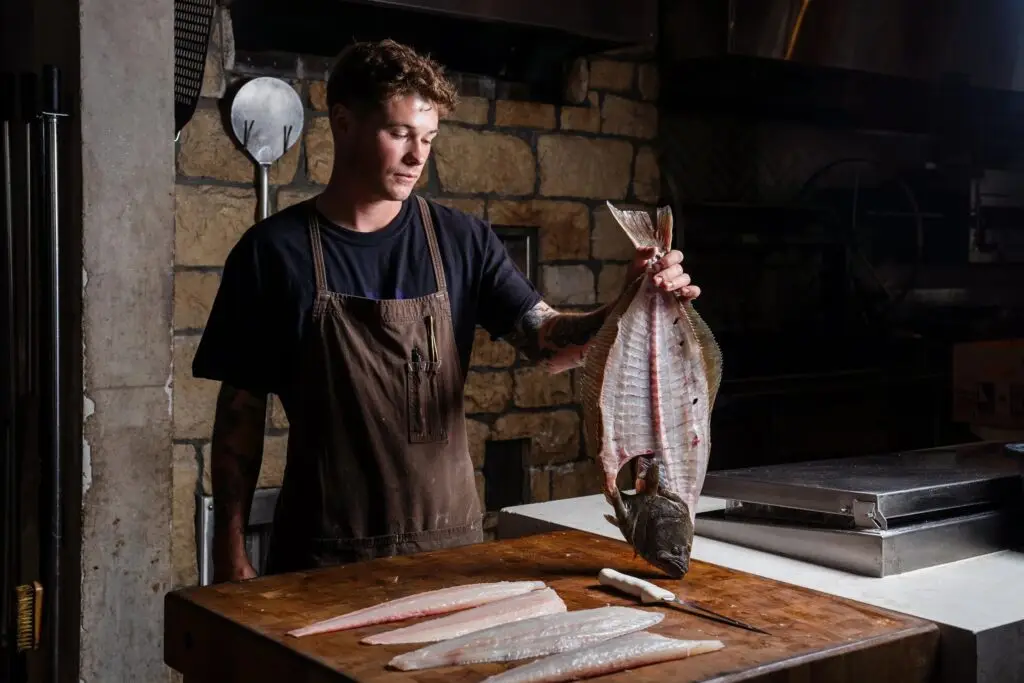
When I arrive at the Encinitas restaurant, I’m ready to talk sustainability, farm-to-table stuff, with Owens. “Did you see the chin on that?” he says of the extra big jiggly chin on the sheephead that just arrived with the day’s fresh catch. I did. It was Jay Leno adjacent.
I learn quickly that he somehow oozes both charm and stone-cold honesty. Maybe he could construct a new dish with chin goo, like he did when he had a bunch of tuna scraps and voila’d it into a smooth and crowd-pleasing ‘nduja. “I want to know what’s in there,” he says.

The instinct to look closer, to dig into what others might discard, says a lot about the chef’s approach. I guide him back to our topic, but he has something else on his mind. “We’re overcomplicating food—what happened to just cooking good food and having fun with it?”
Owens grew up on a farm in Byron Bay, Australia, where sustainability wasn’t a concept you chat about so much as a way of life. Think dirt roads, backyard chickens, pulling vegetables straight from the ground, and a mother who believed that if you couldn’t pronounce the ingredients on a package, you shouldn’t eat what was inside.
Food wasn’t precious or performative. Making it was what you did because you were hungry and that’s still what inspires Owens today. “I like to cook good food because I like to eat good food,” he says.
His approach to sustainability at Herb & Sea began so naturally that it felt just like instinct. “I was just like, ‘Let’s order food from the people who live and work here,’” he says.

And why wouldn’t he when lives in San Diego? Cities all over the world vie for our goods. Our tuna is sent overseas. Our spiny lobsters hit dinner plates in China and Japan. Not to mention California’s producing a third of the country’s vegetables and three-quarters of its fruits and nuts.
“Why would we outsource when it’s all here?” Owens asks.
Sustainability, in this context, is about cooking what exists in abundance, nearby, right now. “I love the local fish here. It’s f**king delicious and San Diego citrus, I mean, it is so f**ing good,” he says.
Instead of importing ingredients, Owens also looks for nearby alternatives. “You can find really cool things in the local waters,” he says, pointing out that stingray cheeks taste similar to scallops.

Whatever he finds in that sheephead chin might just be the next substitute for marrow. But to make this work, it means getting diners amped up about the slightly unfamiliar.
Tasting menus, where diners are completely in his hands, become an opportunity to gently push boundaries. “I’ll serve mackerel, because people think they hate it,” Owens says, noting that the abundant local fish can have some fishiness. “But when it’s fresh, it’s arguably one of the best fish in the ocean.”
He also tweaks the language on the menu so people might feel more compelled to give dishes a try without preconceived notions. He might use “lengua” instead of “tongue.” “Whelk” instead of “snail.” When he puts “stingray throat” on the menu, he disarmingly calls it “skate.”
To reduce waste, scraps aren’t always discarded but rather turned into something new. Sometimes they’re smoked, cured or fermented. Apples going bad turn into apple ponzu. Lemons turn to marmalade, which stretches their usefulness far beyond peak season. “And it’s super tasty on our pizza,” he says.
What makes the food even richer, is the relationships he’s built with farmers. Though it didn’t always feel natural, Owens sought personal connection first. He recalls approaching a fisherman at the Tuna Harbor Dockside Market. “I was awkward,” he says. “I went up to him and said, ‘I like your fish.’”
Owen’s is now so close to his suppliers—like fishermen Ryan Sebo and Joe Daly—that he gets texted pictures of fresh catches right as they flop on the boat. The messages always ask if he wants first dibs. “I say yes to a lot of fish,” Owens says, noting that Herb & Sea can go through 2,000 pounds of seafood a week.

The next evolution of sustainability, in his view, will be chefs working directly with producers such as his alliance with Sebo, cutting out middlemen and purveyors where possible. “It will put more money in the pockets of the people doing the work,” he says.
It will mean that chefs can’t just know their local farmers and producers, but they’ll choose to work with the ones who have the best practices. Dining and sustainability will become much less about the final plate. “It will be more about the impact that plate has on the Earth,” he says.
Ultimately, he believes sustainability doesn’t need to be loud. It doesn’t need hashtags. It just needs to be honest.
“We aren’t saving lives. We’re feeding people good food,” he says.
And yet, in feeding people well—simply, thoughtfully, responsibly—something meaningful happens. Guests leave satisfied. Ingredients are respected. Local ecosystems are supported and food returns to what it has always been at its core: nourishment, pleasure, and a quiet reflection of the place it comes from.
No buzzwords required.
Where you're staying and what you're doing
Rancho Bernardo Inn
Rancho Bernardo Inn
The 287-room Rancho Bernardo Inn is having a moment. It celebrated its 50th anniversary just last year and made Travel + Leisure’s list of World’s Best Hotels 2014. Not to mention, the newly reborn restaurant Avant (formerly El Bizcocho) is getting rave reviews, even from its longtime regulars.
On property, the Inn has 18 holes of golf, three swimming pools, and a full-service spa and wellness center. For hikers, Lake Hodges is a seven-minute drive north of the hotel. The Highland Valley Trail is an easy 4-mile loop and the North Shore is a 14.8-miler, also great for biking. Beer and wine lovers visiting the area can take a different kind of trail—ask the hotel about special packages for tastings at local craft breweries and wineries. For your main dining event, try Avant. Our critic Troy Johnson called the kitchen’s efforts “near flawless,” with “enough excellent [menu] options… to live up to the quite phenomenal new destination that is Avant.” Sold! Rooms start at $199. 17550 Bernardo Oaks Drive
Padres spring training in Arizona
If you’re headed to Arizona for Padres spring training, beef up your itinerary with a self-guided tour of the Cactus League Legacy Trail. Baseball geeks will enjoy making pit stops at both rookie and umpire hangouts, as well as restaurants like Don and Charlie’s in downtown Scottsdale, where Hall of Fame-signed memorabilia are on display. Just don’t get so sidetracked that you forget you’re there to support the Padres. experiencescottsdale.com
Peoria Sports Complex in Scottsdale, Arizona
In a world overflowing with shortcuts, marketing fluff, and “good enough,” there are still companies that choose a different answer. And in San Diego, there are plenty of them.
In a world overflowing with shortcuts, marketing fluff, and “good enough,” there are still companies that choose a different answer.
Integrity guides how they show up every day. They make hard decisions, hold themselves accountable, and build trust the old-fashioned way, one action at a time. At the Better Business Bureau, we call these businesses Torch Heroes: leaders who demonstrate that ethical leadership strengthens businesses and drives long-term success.
And in San Diego, there are plenty of them.
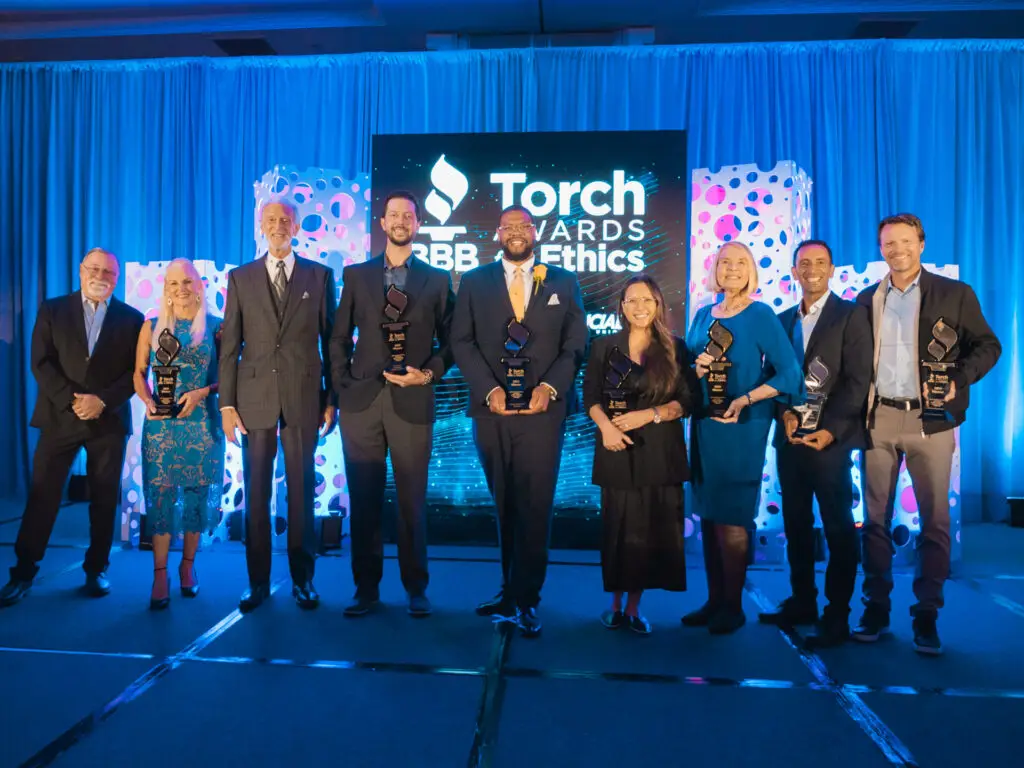
Take House Collective Marketing Solutions, a Carlsbad-based digital agency that won the 2025 Torch Award for Ethics for its people-first approach to marketing. Instead of pushing flashy campaigns, the team often takes a step back to make sure clients’ foundations are strong before going big. Their philosophy? Truth over transaction builds partnerships that last.
Or look at Young Black & N’ Business, where integrity shows up through community action. When a local school lost art funding, founder Roosevelt Williams III and his team stepped in with workshops, mentorship, and hands-on support to help restore creative opportunity. That kind of engagement reflects ethical leadership rooted in real impact.
And in Vista, Lotus Sustainables carried its commitment to ethics all the way to the product line. After discovering defects in a shipment of eco-friendly products, the company issued full refunds and redesigned its offerings at its own expense, a choice that shaped its identity and reinforced to customers that ethics guide every decision.
In North County, Greenway Landscape Design & Build brings integrity into everyday service. When a client’s glass was damaged, likely not by their crew, owner Scott Lawn chose responsibility over blame and covered the repair personally. For Greenway, doing the right thing serves as a north star, guiding every interaction through transparent pricing, accountable partnerships, proactive communication, and follow-through long after the job is done.
Other honorees include At Your Home Familycare, whose leadership turned down a lucrative state contract during the pandemic to protect vulnerable clients and staff, and Bill Howe Family of Companies, where hiring practices, training, and service centers around shared values, every day, on every call.
What connects these diverse businesses, from marketing to nonprofit support to home services, isn’t size, industry, or revenue. It’s something deeper: a commitment to trust as a business strategy.
In San Diego’s competitive marketplace, that trust gives companies an edge. Clients invest in relationships. They refer friends. They stay loyal when others fade.
As one Torch Award winner puts it, integrity isn’t a section in the employee handbook. It’s the operating system of the company, the invisible code that determines every choice, every day.
And that’s exactly the point of the BBB Torch Awards for Ethics: to spotlight companies that dispel the myth that ethics and success are at odds. These businesses show that when leaders choose honesty, fairness, and accountability, especially when it’s hard, they build brands that matter.
At BBB, we see nominations come in from clients, employees, and business partners who have witnessed ethical leadership up close. These submissions aren’t polished promotions. They’re stories of moments when a company chose people over profit, clarity over confusion, and trust over convenience.
The nomination window for the 2026 Torch Awards for Ethics is open through March 31, 2026, and there are more Torch Heroes waiting to be recognized.
Who comes to mind in San Diego’s business community?
And yes, businesses can nominate themselves. We encourage it. If you’ve built your business on principles rather than buzzwords, we want to hear your story.
Because in a world full of noise, integrity still deserves the spotlight, and San Diego is full of stories worth telling. Nominate your hero now.