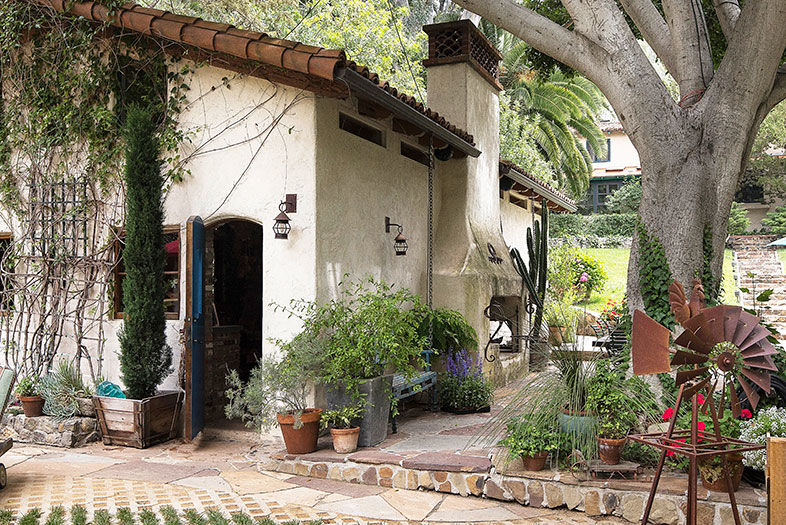
Behind the gates of a Rancho Santa Fe estate, nestled among the eucalyptus groves, lies an original Lilian Rice house that was in various states of disrepair when its current owners bought it in 1984. Over the years they restored the property to its former glory, while raising their three daughters and never missing the opportunity to instill in them the value of hard work. A place like this doesn’t run itself. That meant feeding the horses, raking the grounds, and shoveling manure before school. Today the girls are grown, but the seeds planted here have spawned a lifetime of inspiration—both creative and altruistic.
Inside Susan Madden Lankford’s North County Ranch
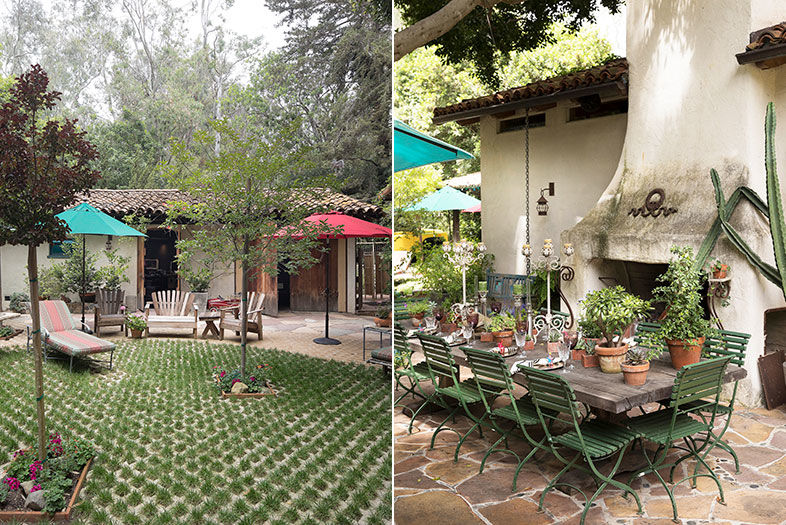
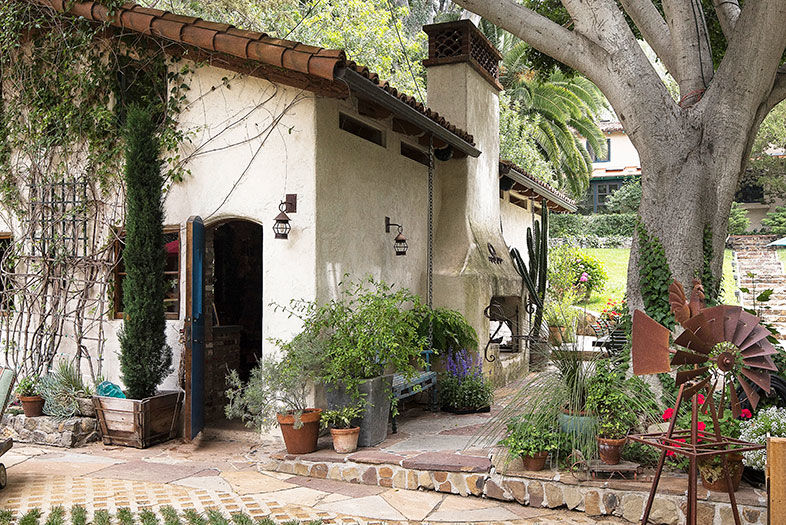
Left: The geometric grass design outside Susan’s home office. Right: An outdoor table setting by the stone house.
Susan Madden Lankford is the founder of Humane Smarts, a nonprofit that helps empower underprivileged youth through arts and other educational programs. One of the organization’s flagship projects is Smarts Farm, a 16,000-square-foot garden in the heart of downtown that offers classes, free events, and community plots for nearby residents. To date they have served more than 4,000 children, many of whom come from nearby schools like e3 Civic High.
Inside Susan Madden Lankford’s North County Ranch
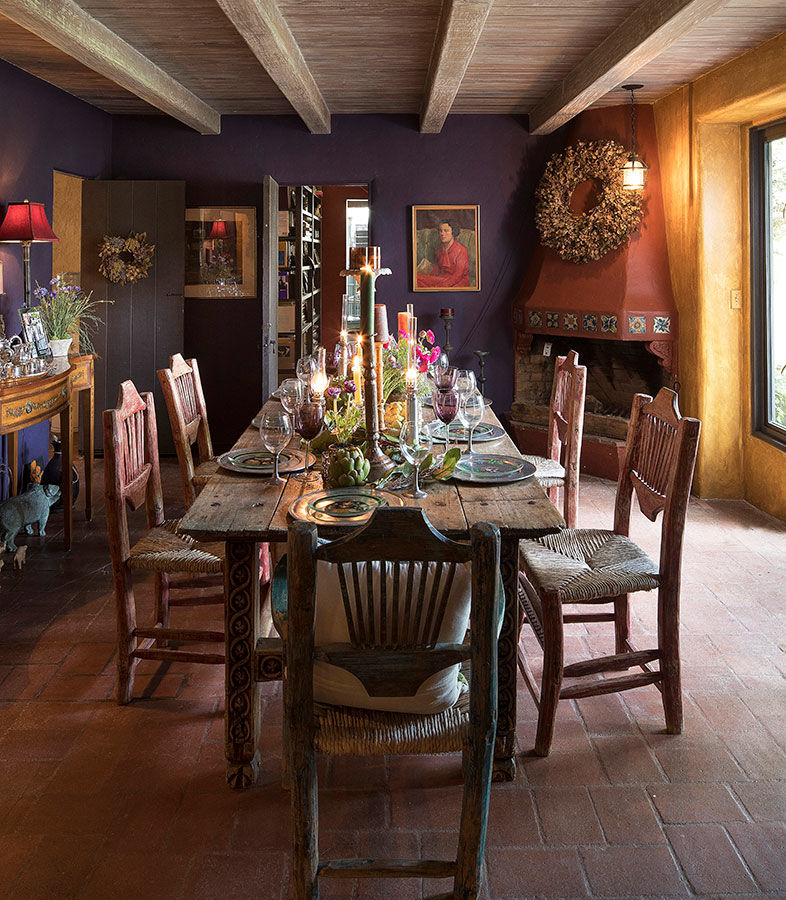
The dining room retains much of architect Lilian Rice’s original design. The portrait on the far wall is of Susan’s mother when she was in her 40s.
“Learning to grow from seed and seeing where foods come from … there are so many lessons in the garden,” Susan says.
Such is the motto back at the ranch she shares with her husband of nearly 50 years, real estate developer Rob Lankford. Standing at the entrance, taking in the verdant scenery, it’s easy to see why Susan has made it her mission to share her love of nature with people who might not otherwise be exposed to it.
Inside 9 Incredible San Diego Homes
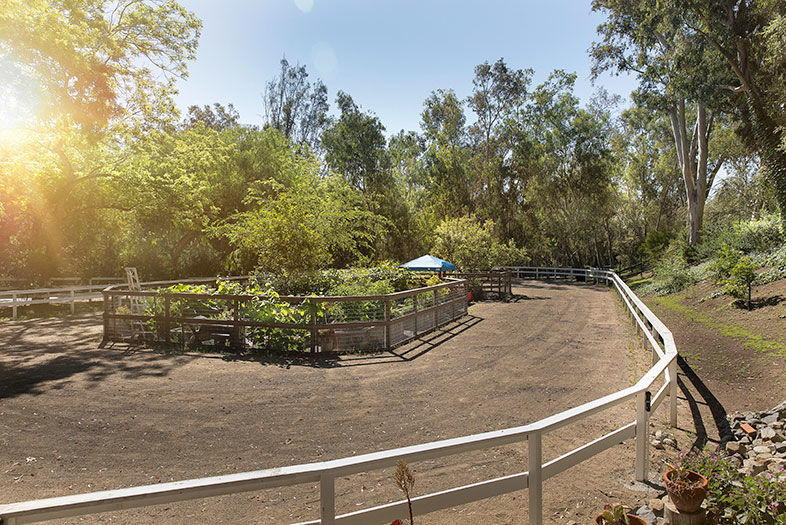
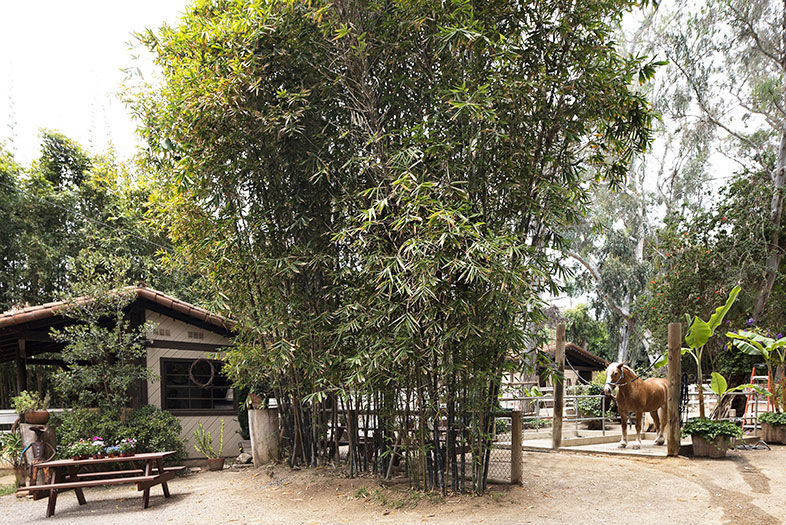
There are two houses, a larger two-story main house and a cottage that they call the “stone house,” both built in 1922. The six-acre property also has a cow manger, horse stables, hiking trails, intimate courtyards, and an arena with a plentiful vegetable garden in its center.
The main house sits atop a grassy hill and looks as if it were built right into the landscape. The structure still boasts many of Rice’s original architectural details, such as adobe walls, open-beamed ceilings, and tiled surfaces. Wood-burning fireplaces abound, both indoors and out. “I’ve made sure it’s stayed original ranch,” Susan says.
Inside Susan Madden Lankford’s North County Ranch
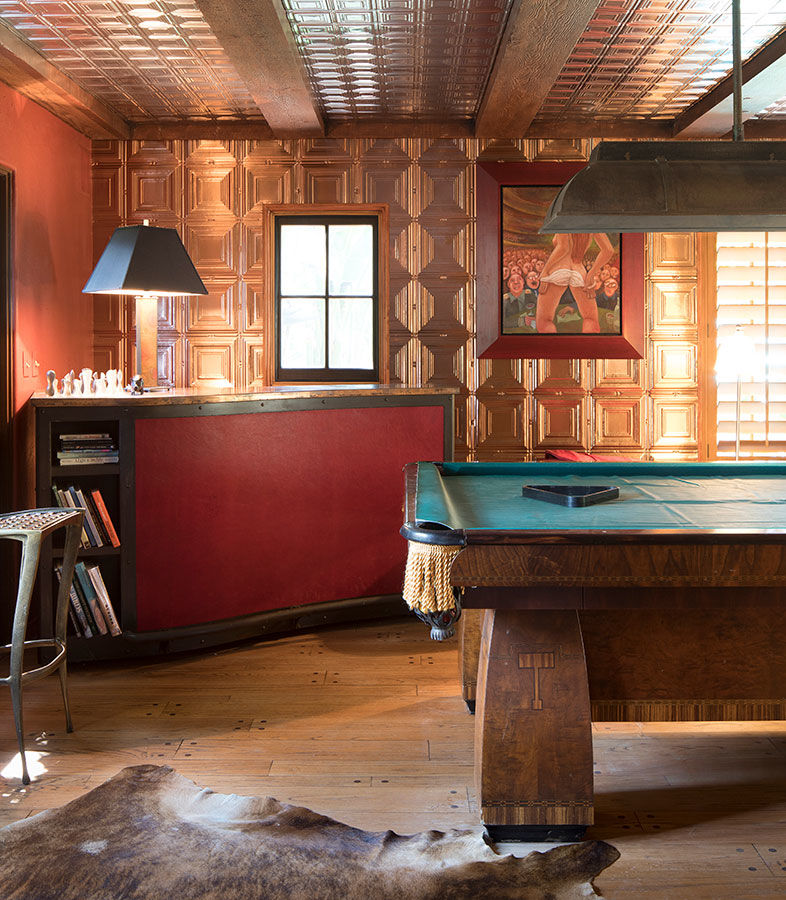
The billiard room is accented with copper and aluminum tiles.
Over time she has added color to nearly all of the formerly white walls. The dining room, a testament to Rice’s Mission-style influences, is painted a deep eggplant hue. The exterior is trimmed in a vibrant turquoise.
“Mom taught me the joy and love of color,” says Susan’s daughter, Polly Lankford Smith. (Smith is director of programming and operations at Smarts Farm.)
Inside Susan Madden Lankford’s North County Ranch
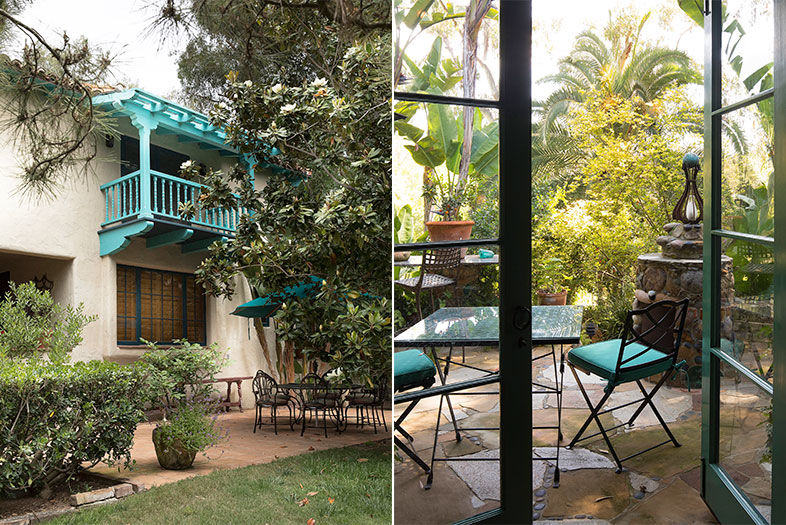
Left: A covered balcony showcasing the exterior’s colorful turquoise trim. Right: An intimate courtyard off the dining room.
Like in most homes, the kitchen is the heart. It tells the greatest story about Susan’s eclectic flair. (Imagine: puppets, birdcages, and a faux-evergreen garland with twinkle lights suspended from the ceiling.) She’ll proudly tell you the kitchen has no cabinets, redesigned with modern ranch life and big family gatherings in mind, including a tamale assembly line at Christmas. It’s here that many of the recipes for Smarts Farm’s café have been created and tested.
Inside Susan Madden Lankford’s North County Ranch
The horse arena encircles a garden with thyme, verbena, chives, and much more.
Susan loves this room. “The cow and goats are in view, the stone house is in view, the gas range is available, and my herbs are 20 feet from the door,” she describes. “I can write a screenplay under a 47-year-old parrot shouting out, have doggies wrapped around me, and loads of memories of my children coming and going through that old kitchen barn door.”
Inside Susan Madden Lankford’s North County Ranch
Oh yes, the screenplay. Susan is also a photographer, author, and documentary filmmaker—the kind of woman who cannot sit still. When we met her, she was rushing off for a phone call about said screenplay; a few days prior she’d hosted a group of fifth graders for a ranch tour and chuck wagon rides.
Although the Lankfords are technically empty nesters, their nest is anything but, thanks to continuous events like the one mentioned above and the ranch’s many animals: a cow, turtle, mastiff, Yorkie mix, menagerie of doves, three horses, two French donkeys, three parrots, three goats, and koi.
Inside Susan Madden Lankford’s North County Ranch
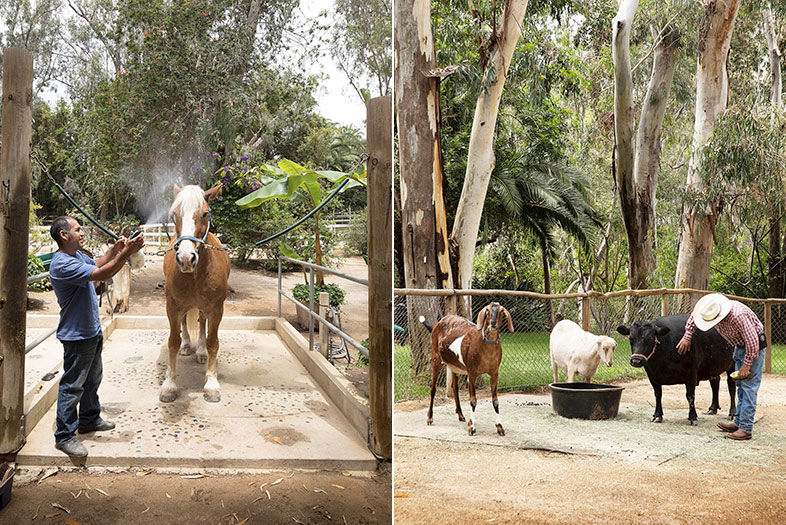
Left: Trigger, the family’s Belgian horse, once belonged to the local sheriff’s department and patrolled Balboa Park while on duty. Right: The Lankfords rescued their cow, affectionately named Cowgirl, from culling. She holds court with three goats, two of whom are pictured here.
With so much to tend and care for, it’s a wonder Susan has time for anything else. But such is the enigma and drive behind Susan Madden Lankford. In between discussing her “passion for solutions” and the greatest lesson her mother ever taught her (“Never be satisfied with your written word or mission. Press on.”), she stops to admire a strikingly abundant plant in her vegetable garden.
“These zucchini are absolutely glorious! Now that is successful.”
Inside Susan Madden Lankford’s North County Ranch
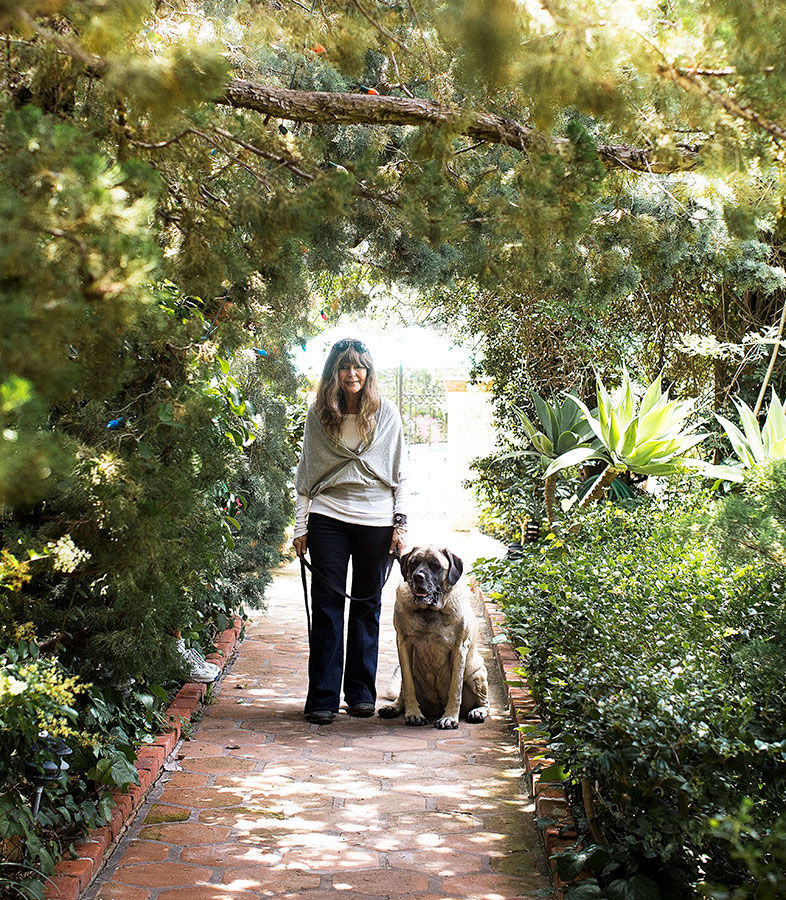
Susan Madden Lankford and her mastiff, Millicent, on one of the property’s shaded pathways
Inside Susan Madden Lankford’s North County Ranch
Arts & Culture
AUGUST 5, 2026
The Best of San Diego 2026: Readers’ Picks
From tacos to tailors and trainers to travel, these are the businesses, people, and places that earned San Diego readers' votes
Growing up in Carlsbad, I never quite understood why people vacationed there. What, so you want to check out the field where I have soccer practice? Pay my orthodontist a visit? Carlsbad just felt like a town by the beach, no better or worse than any other in the country. It took going to college out of state for me to actually understand just how rare a place like Carlsbad is.
Thanksgiving break my freshman year, my first time coming home after three months in the Midwest, my shoulders dropped. I rolled down the windows and drove to lifeguard tower 37—the hangout magnet for Carlsbad’s youths (and, in the summer, tourists)—and the smells of the ocean woke me right up like smelling salts do. I finally got it.
Carlsbad isn’t just a stopover town on your way to something better. It is the destination. Travel + Leisure named Carlsbad one of the top 50 places around the world to travel in 2026. From the whole globe, the travel magazine picked my home. Sure, we’ve got the Flower Fields and Legoland—but now it’s the smaller ships and indier dreams that are giving it street-level character.
It’s not just Carlsbad, either. People have talked about the “North County bubble” for decades—a force field that prevents its residents from traveling south of the 56. It’s often used derogatorily, and it’s a fairly accurate burn.
For decades, living up in North County meant giving up on culture, or at least culture within close proximity. But now, the main expansion of San Diego culture is happening up north. Central San Diego restaurants have started taking notice and are expanding into the area—spurred no doubt by Oceanside’s food boom and the Jeune et Jolie–Campfire–Wildland–Lilo constellation in Carlsbad. City Heights burger joint Key & Cleaver opened a new spot in Oceanside; the owners of Parc Bistro-Brasserie in Bankers Hill opened Parc Lounge in Rancho Santa Fe. Possibly the strongest market indicator is that Sam Fox—one of the most successful restaurateurs west of the Rockies—has started focusing on North County for his concepts. In 2025, he opened both The Henry in Carlsbad and Culinary Dropout in Del Mar.
For the ultimate insider guide, we found a handful of inspiring people who live and create and truly know six North County neighborhoods—San Marcos, Escondido, Oceanside, Leucadia, Rancho Santa Fe, and Vista—and asked them how they’d spend a dream day out and about in their town.
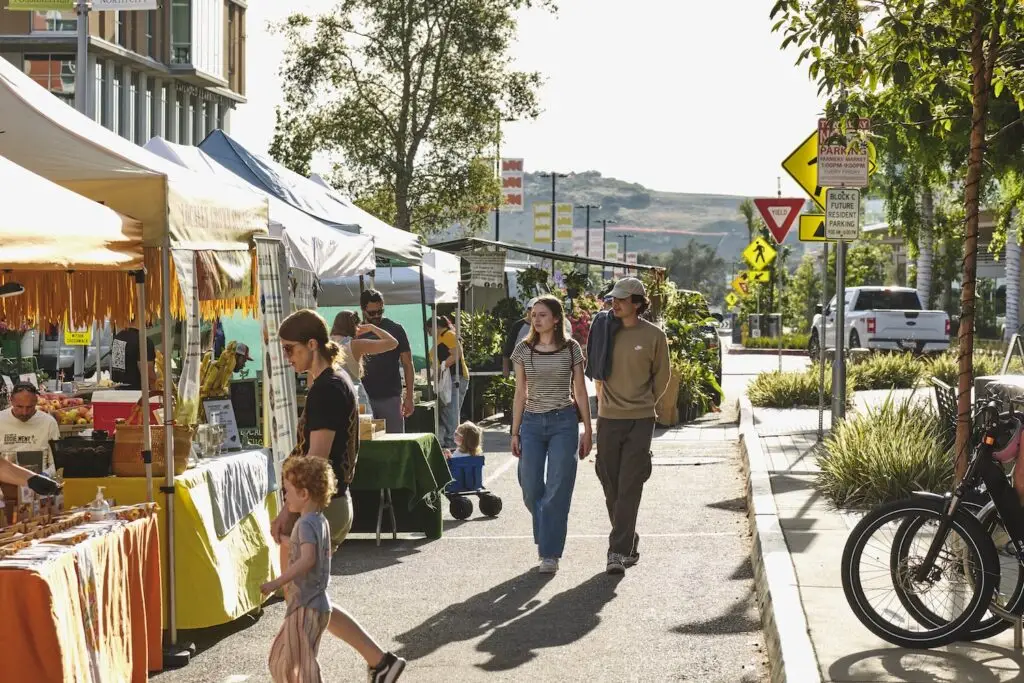
Courtesy of North City Farmers Market
San Marcos
San Marcos is in full renaissance mode. The biggest story is that the grand North City vision is starting to peek through the scaffolding. It’s essentially the North County Downtown that’s been written in the tea leaves and discussed whenever someone gets stuck in traffic at the 5/805 merge: a 200-acre, pedestrian-friendly, mixed-use face-changer that’s slated for 2,600 homes, 350,000 square feet of retail and restaurants, 250 hotel rooms, and about a million square feet of offices and labs. Its most recent manifestation is 222 North City—a 12-story residential tower with over 450 residences, rooftop garden, pool cabanas, art installations, and almost 20,000 square feet of ground-floor retail (Necessity Coffee, Buona Forchetta, Draft Republic, Milonga Empanadas, and a grocery store anchor on its way).
Which means Restaurant Row is no longer burdened with being the primary caregiver for the hungry or the socially inclined. Patricia Prado-Olmos has watched the city morph during her nearly three-decade tenure at CSUSM, having spent the past six years as the school’s chief community engagement officer. She also just announced her forthcoming retirement at the end of the 2026–2027 school year, so she’ll have even more time to haunt local haunts.
Meet the Local: Patricia Prado-Olmos
Those in the know call the university “Cal State StairMaster” from the Sisyphean amount of stairs on the hillside campus. So, any day at or around CSUSM should start with a homestyle carbo-load (biscuits and gravy) from Mama Kat’s.
“There’s something about this breakfast spot that immediately puts me in a good mood,” she says. Mama Kat’s is also known for its pie (strawberry-rhubarb), which is breakfast if you change your perspective.
After a few hours on campus—with a break to pet the university’s official therapy goldendoodle, Frank, who helps ease finals tremors or apprehension of on-campus stairs—Prado-Olmos will wander into North City, just steps away. She says the almond croissant and coffee at Christophe Rull Patisserie rival Parisian cafés: “It feels like the kind of place you’d stumble across in a much bigger city.”
Rull, a Michelin-trained pastry chef who’s done stints on Netflix (Bake Squad) and Food Network (Super Mega Cakes, Halloween Wars), opened his patisserie last fall. The hype hasn’t cooled off yet: Get there early because the crowds do.
Emma Veidt is an editor at San Diego Magazine. She earned her bachelor's and master's degrees from the Missouri School of Journalism. She loves running, hiking, and rock climbing, but really, she mostly loves encounters with the street cats around North Park.
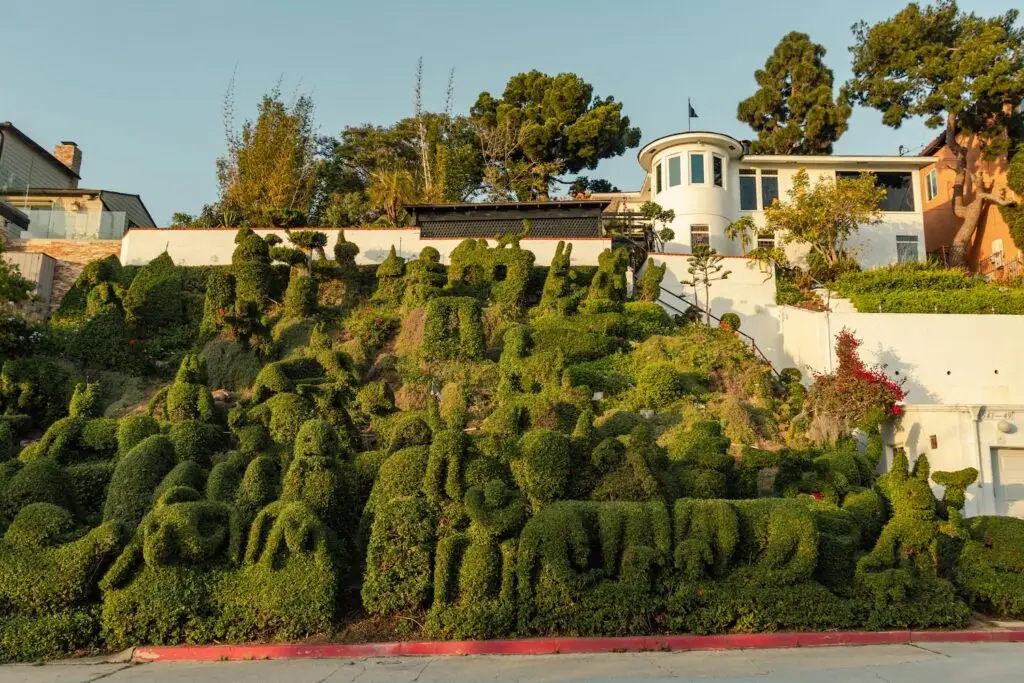
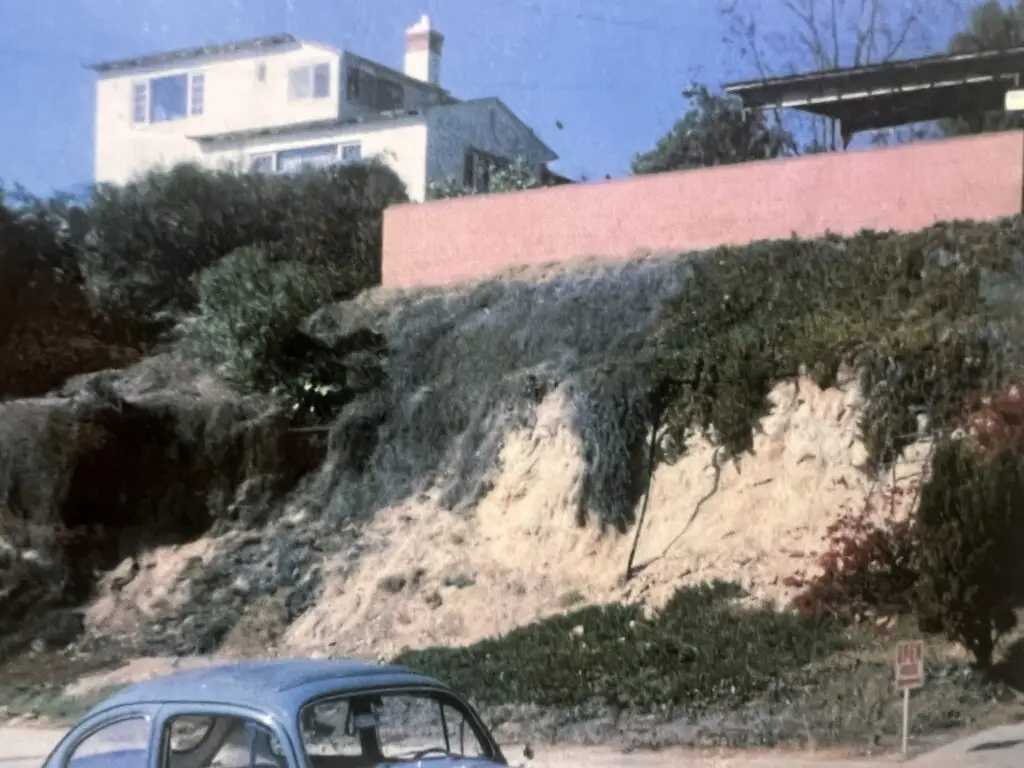
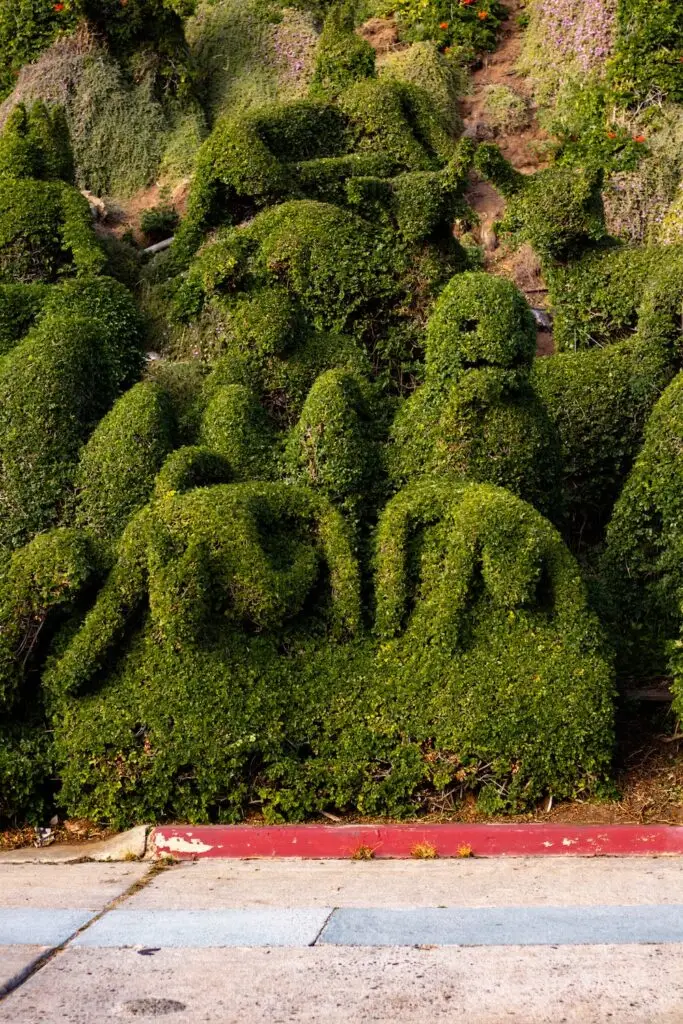
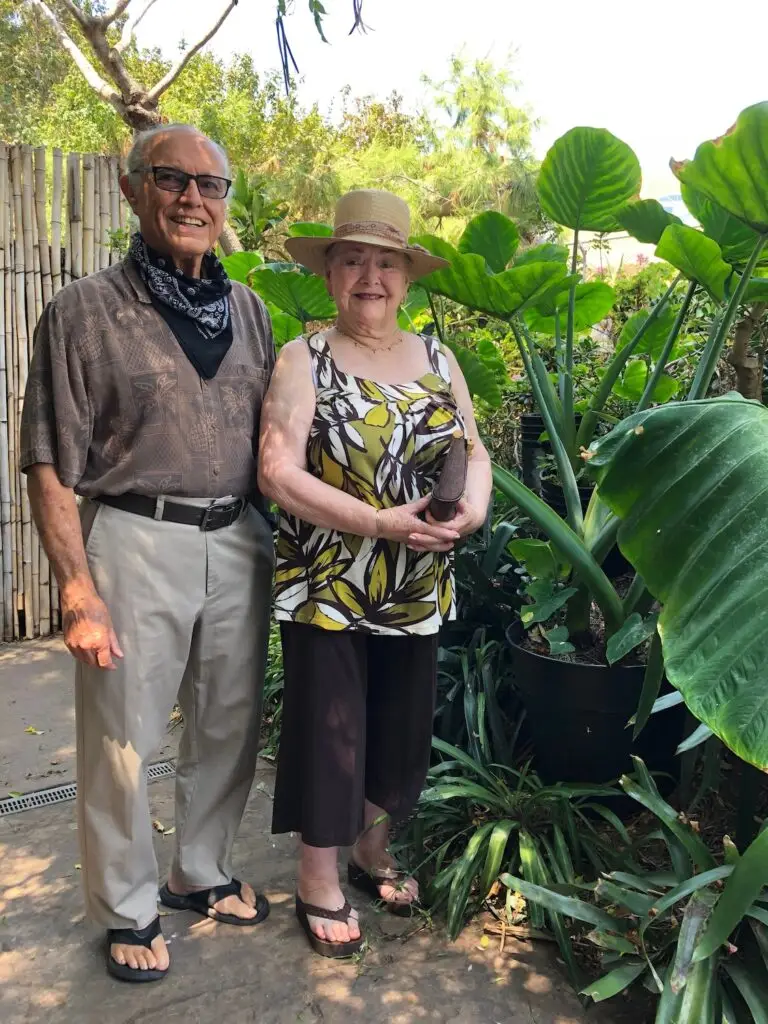
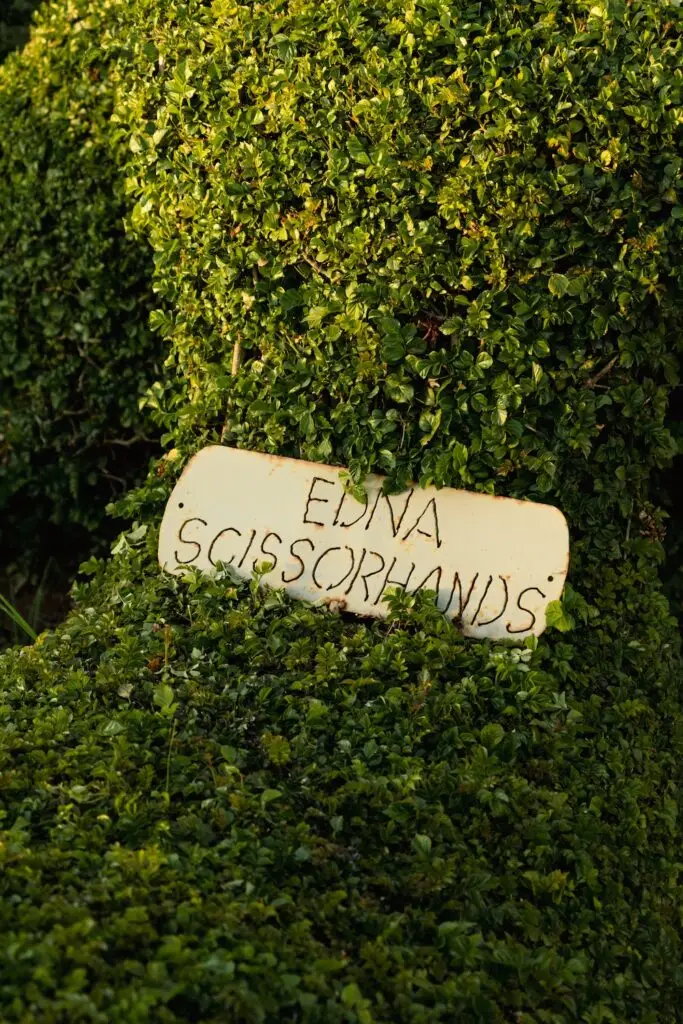
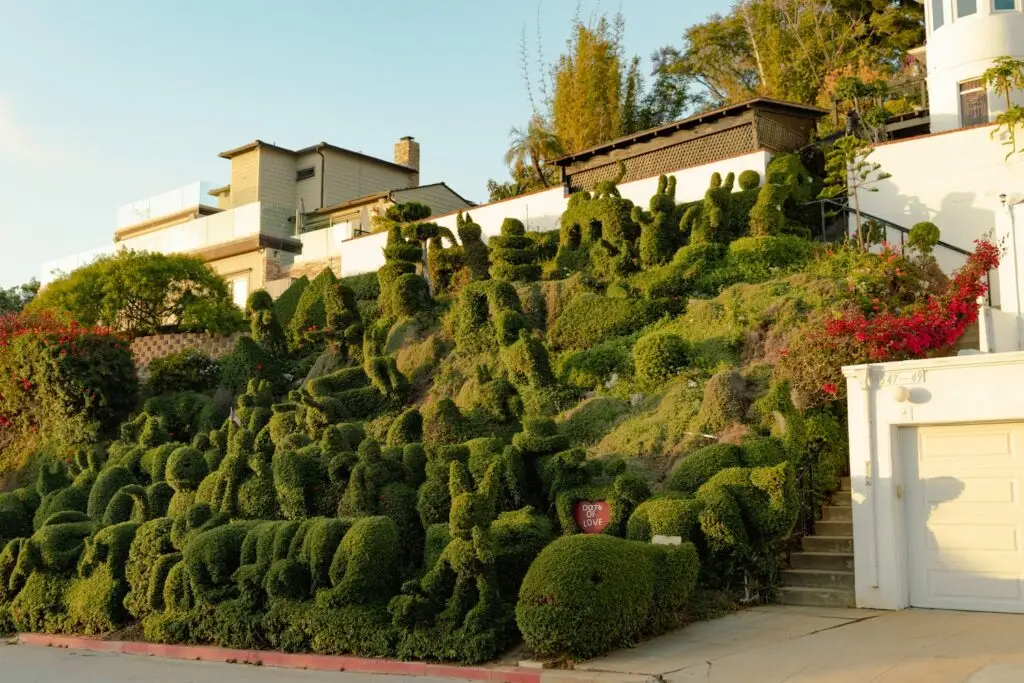
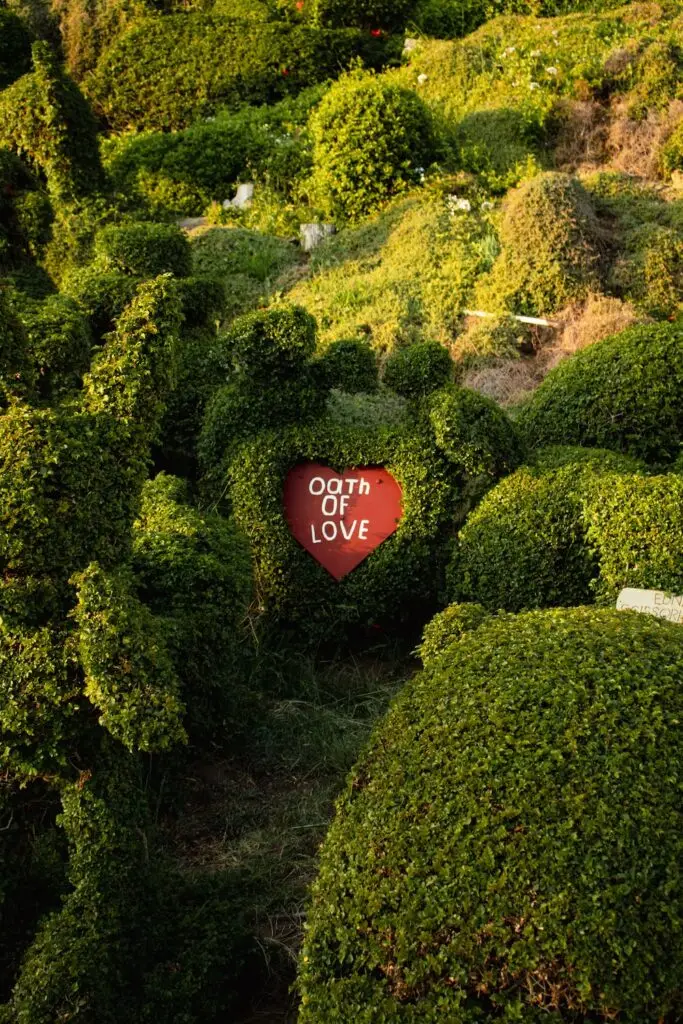
Edna Harper asked for one thing before she died: that the next owner of her iconic Mission Hills home keep the street-facing “garden.” Which is essentially asking the future residents to be curators of a whimsical and obsessive, delightful and strange, classic, cartoony and slightly unhinged sculpture museum. Harper, who died in January at the age of 87, poured her heart into this topiary bonanza, and it’s right there for everyone to see.
Like thousands (or millions, there’s no formal estimation) of others, I had scrolled through the photos of this topiary fantasia before I ever stood in front of it. As of this writing, Harper’s Topiary Garden is No. 227 of 2,686 Things to Do in San Diego on Tripadvisor, making it a popular tourist stop between fish tacos, a day at the beach, and a stroll in nearby Presidio Park. But crowdsourced photos quickly snapped in direct overhead sunlight tend to flatten the shapes that, while meticulously manicured, refuse to behave. In person, Harper’s figures seem to be in motion and, given that they’re sculpted out of bushes, they literally are. (I’d love to see a maintenance timelapse.)
Animals emerge out of shrubs as if they have impish ideas. A fanciful whale, a man in a sombrero, a random spiral twisting skyward, otherworldly creatures that defy categorization—all of these exist together in a neatly trimmed cascade pouring down the steep front slope of the property.
You don’t accidentally end up with a yard like this. You decide to create it and choose to cultivate it, and then you keep deciding and cultivating—for decades.
Although a consistent parade of looky-loos have visited over the years, most have never been inside the home, which is on the market for the first time since Harper and her husband, Alex (who died in 2020), bought it in 1969.
Courtesy of Christopher Delgado
“It was and is a landmark,” says Christopher Delgado, Harper’s cousin and trustee of her estate. “She specialized in Chinese brush art and Japanese art called ‘sumi-e,’ a form of Zen art. She was a creator … she was very, very talented.”
I can’t stop thinking about Harper, sitting at the kitchen window, looking down at her masterpiece and the watchers watching it. The image of Harper enjoying the joy the public took from her handiwork makes me want to understand the woman behind the work. Because topiary, as an art form, has always been a little… loaded.
Topiary has always had a bit of an identity crisis—and that’s part of its charm.
When I think of topiary, I immediately think: Fancy. French bourgeoisie. Palace of Versailles. Mais non! Topiary has its origins in Rome. According to the Center forArchitecture, the word “topiary” has its origins in late 16th century English, which combines the Greek word “topos” for place and the Latin word “topiarius” for ornamental gardner.
Photo Credit: Casiel Sanchez
Topiary started as a flex, really. A Julius-Caesar-adjacent pastime for the most ancient one-percenters; an expression accessible only to those with land, labor (or, put more plainly, enslaved people), and spare time. In its earliest form, topiary was about control: bending nature into submission. It’s where symmetry and precision signaled order, taste, and money.
But with the collapse of the Roman Empire and the Dark Ages that followed, the topiary almost preceded the Dodo Bird in extinction. Monks quietly kept the art alive by growing herbs and manicuring the gardens and hedges within the courtyards of their monasteries.
It wasn’t until the Renaissance nine centuries later when topiary saw a resurgence—ah, Versailles!—and this form of pleasure gardening went into overdrive. Nature became architecture. The French pruned their foliage into iconic cones and obelisks, walls to keep out the riffraff, and ornamentation designed to impress. The Dutch got a little freaky, as they do, and sculpted complicated figures, animals, and even furniture.
Inevitably, the pendulum swung again, and topiary fell out of favor once it became viewed as excessive and even absurd. Even so, it never really disappeared. It just migrated to exist in a completely different paradigm. It was less Versailles and more, “What if this bush were a mouse?”
Fast forward to Disneyland in 1963. That year, the park opened a topiary garden in Fantasyland with verdant sculptures of giraffes, camels, elephants, and hippos all inspired by Denmark’s Tivoli Gardens.
Disney’s interpretation of topiary—which is still a fixture of park decor today—falls more into the realm of imagination and possibility than restrained aristocratic performance.
That’s one of the stranger throughlines of topiary: It moves from elite to everyday, from stiff and formal to playful and silly, from symbol of control to something steeped in personal expression.
Which is what makes a place like Harper’s Topiary Garden so compelling and the woman behind it utterly intriguing.
Courtesy of Christopher Delgado
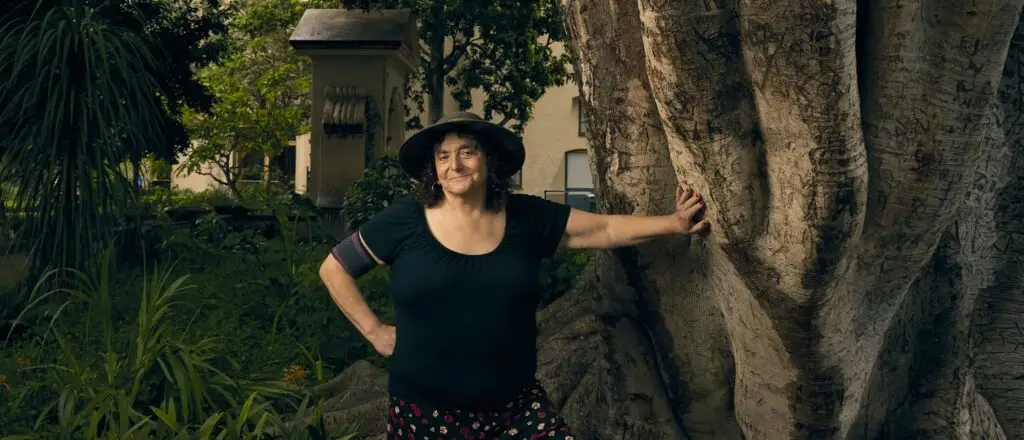
Born in 1938, Edna Harper was something of a Renaissance woman. She worked for two decades as a dental assistant, and she later became a notable painter, calligrapher, and stained glass artist (the house itself is adorned with her work). But she was also savvy in other ways.
“She graduated [with a degree in dental assisting] from San Diego City College and wanted to have her own money and her independence,” says Delgado. “Most people didn’t know that she was such a great businessperson, and for many years, she managed all of [the couple’s] properties on her own. She was great at building relationships … she touched a lot of people’s lives.”
Her friend and fellow artist Julie Roth attributes her artistry to her relationship with Harper. The pair met two decades ago at an art class at Oasis in Mission Valley.
“She was just the most encouraging person,” Roth says. “I didn’t know I could paint, but apparently I can. She was a tremendous person.”
I asked Roth what she’d want people to know about her friend.
“Her empathy and diplomacy,” she says. “[She had] a sharp eye for other talent. She spotted me, but I’m not the only one she encouraged.”
That sharp eye suggests attention, the same kind it takes to look at a bush and also see a whale. Or a spiral. Or something that doesn’t exist yet, but could.
Photo Credit: Casiel Sanchez
Nothing about Harper’s life suggests someone chasing attention. And yet, she ended up creating something that demanded hers, and she took great pleasure in seeing people enjoy her creations.
The garden didn’t happen all at once. It grew out of years of travel, observation, and collaboration. Harper often traveled without her husband, always returning from trips to Japan, Thailand, and other parts of Asia with ideas and impressions captured through sketches in a notebook.
“She would get creative ideas from her travels … she’d come back with ideas and pictures, and they’d go about cutting that topiary bush into shape,” Delgado says.
For the past 25 years, she had the help of her gardener, Pedro Duran—who’s still employed by the trust and has maintained the garden since Harper’s passing.
In the early topiary years, Harper worked closely with Duran in what Delgado describes as a kind of shared “labor of love.” She would share her sketches and together the pair would shape the bushes into something deliberate.
Photo Credit: Casiel Sanchez
“As she got older, she would increasingly draw her ideas and [Duran] would [carry them out],” Delgado says.
That collaboration reinforces that her garden was not an act of control, but one of creative collaboration and translation. From memory to sketch. From sketch to shrub. From something seen, somewhere else in the world, to something rooted in the soil of a steep hillside in Mission Hills.
Harper also made sure that the lawn’s boisterous energy made its way into the house on Union Street. Apparently, she threw legendary parties.
“Fairly regularly, in the late ’70s and ’80s, she would host Super Bowl parties with 200 people. She had TVs everywhere,” Delgado says.
It’s not hard to square that image with the stillness of the garden which, despite the careful pruning and intentional design, is voluminous and nearly vibrating.
And, damnit, I wish I’d watched some sportsball on her shocking number of TVs and wandered out front to the topiary—slightly wine-drunk with an orange smear of wing sauce on the corner of my mouth—to marvel at the leafy hippo and this woman’s elaborately creative life.
Photo Credit: Casiel Sanchez
I can hear Delgado smiling as we talk on the phone. He’s going back to his childhood, when he talks about being one of the cousins Harper doted on when he visited.
“The adults were inside, and we’d be out in the camper,” he says, “and [Harper] would come check on us, make sure we were okay. She always had gifts for us. If it was Easter, there were chocolate eggs. If it was Christmas, stockings. We were the beneficiaries of them not having kids because they showered us with all their love.”
Knowing this and taking a look at her garden again, you can see it’s not the work of a shut-away curmudgeon. It’s wondrous, inviting, and the right kind of weird.
“Ultimately, she did it for herself and family, first and foremost,” Delgado says of Harper’s Topiary Garden.
Harper’s one request of whomever buys her home may seem like a focus on basic maintenance, about hedges and upkeep and preserving something visually striking. But it’s really about attention. And maybe, too, about legacy. Not hers, per se, but the legacy of community, relationships, art, creativity, possibility, adventure, culture, dedication, and love.
For now, it’s there for anyone to see, and its future is in the hands of whomever comes next.
Aaryn Belfer is a writer and editor specializing in nonfiction across art, architecture, and culture. Once upon a time, she wrote a provocative column for San Diego CityBeat (RIP). She was a runner up in the 2025 Matchbook Stories contest at the San Diego Central Library and is irrationally happy about it. Currently in her Soft Girl Era, Aaryn has expensive taste in (mostly flat) shoes and will choose a great art exhibit or live jazz concert over almost anything else. Except, possibly, Javier Bardem.
A perfectly designed home rarely happens by accident. Those kitchens that feel effortless and rooms that seem to tell a story the second you walk in? They’re usually the work of someone who knows exactly what they’re doing.
It’s knowing which ideas will actually work, which materials will hold up over time, and how to turn a collection of choices into a space that feels intentional. That’s where a professional interior designer comes in.
For the American Society of Interior Designers (ASID) California San Diego Chapter, the goal is to help people see interior design as more than just the finished look. Behind every well-designed space is a process built on technical expertise. Designers are educated in everything from professional software and construction details to building codes, space planning, materials, and functionality.
Courtesy of ASID
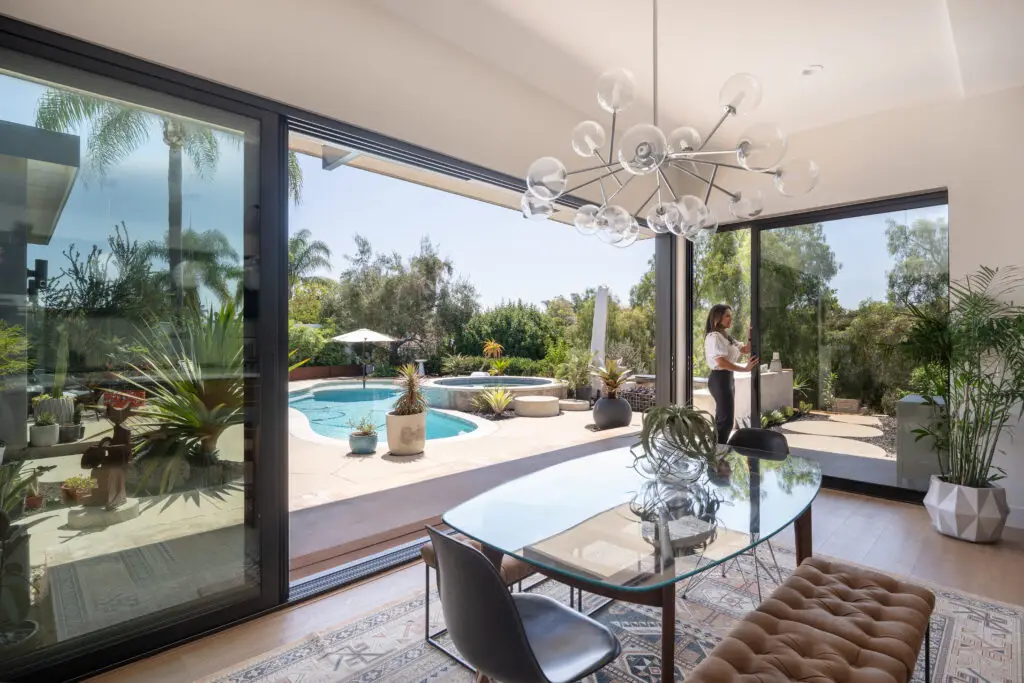
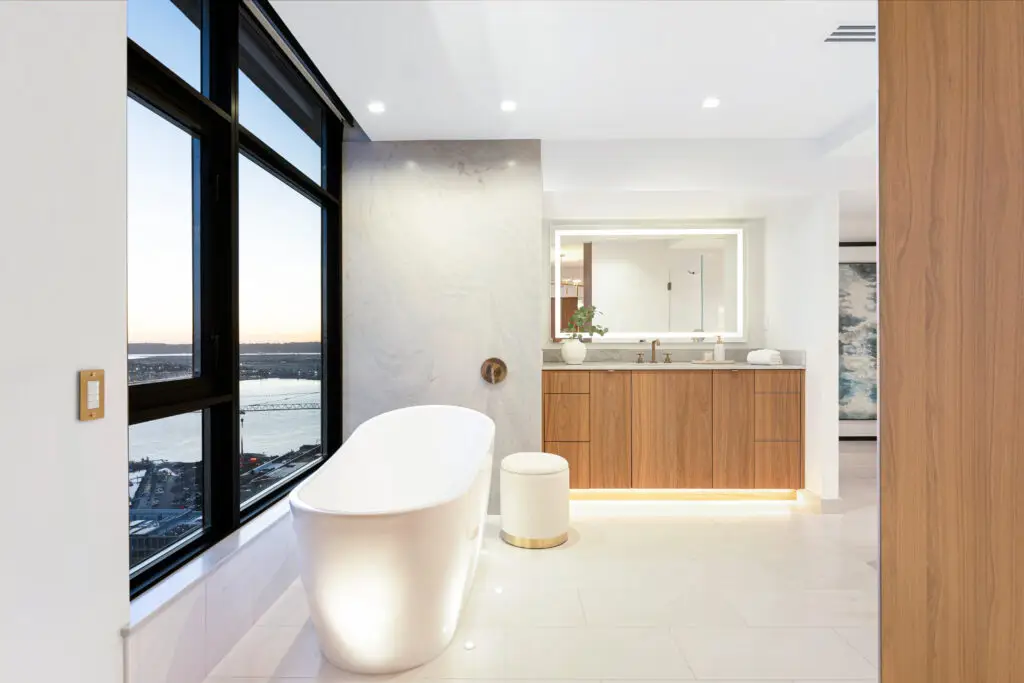
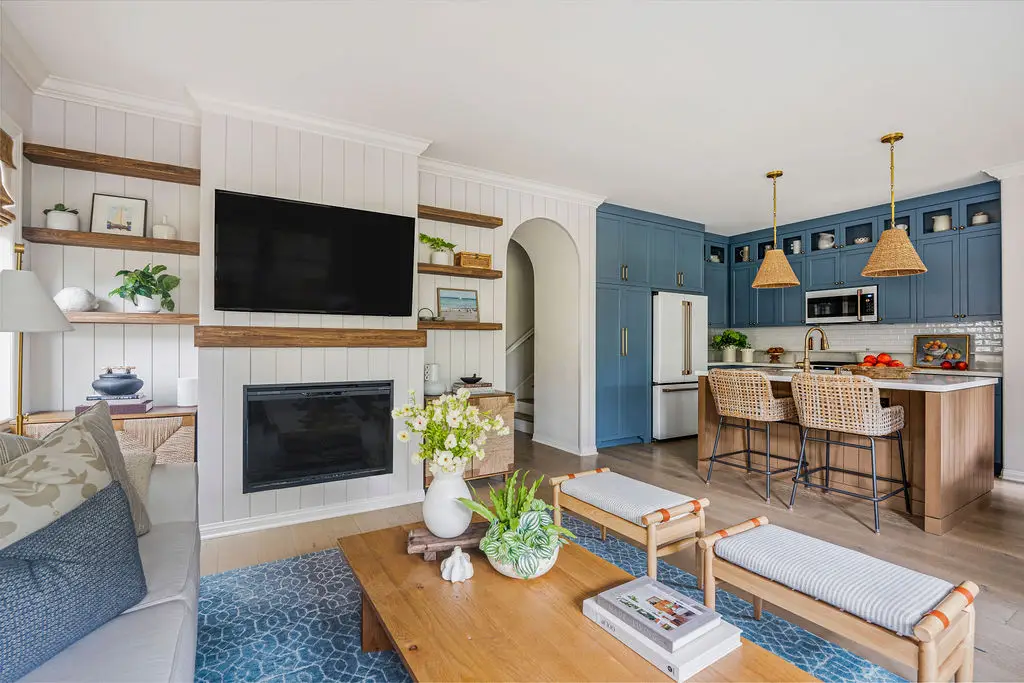
“People don’t always realize how much goes on behind the scenes,” Kirsten Recce , current president of the ASID California San Diego Chapter, says. “Our designers are not just doing furniture placement and color selection and picking out new fluffy pillows. That’s not what they’re trained for.”
ASID members bring formal education, continued learning, and industry knowledge to their projects, helping create spaces that are not only beautiful, but designed to work. A paint color that changes completely depending on the lighting. A material that looks beautiful in a showroom but doesn’t make sense for everyday life. A layout that photographs well but doesn’t function for the people living there. These are the details where professional guidance can make all the difference.
Still, one of the biggest misconceptions about hiring an interior designer is that it’s reserved for massive renovations, luxury homes, or people who already know exactly what they want. The process can feel intimidating. Where do you begin? Is a designer worth the investment? What if you only need help with one room?
ASID’s answer: start with one hour.
ASID’s Spruce Up events break down one of the biggest barriers between homeowners and professional design: knowing where to begin. Held twice a year, the community program gives homeowners the chance to work directly with an ASID designer through a one-hour, $125 consultation in their own home. Whether you’re looking for advice on furniture placement, window treatments, kitchen and bath updates, remodeling ideas, vacation rentals, color selections or something else entirely, the upcoming September 2026 event offers an approachable way to get expert guidance before committing to a full project. Signups are open through Sept. 7, with consultations taking place Sept. 21 through Oct. 31. Proceeds benefit ASID San Diego’s educational and community programs. Register here!
Courtesy of ASID
“It’s a great opportunity for people who are in that exploratory phase,” Recce says. “Maybe they’re not sure they want to hire an interior designer yet, or they think it sounds daunting or expensive. This gives them a chance to discover what working with a designer is actually like.”
Design is personal. A good designer isn’t just creating a beautiful room; they’re helping create a space that fits the way someone lives.
“We’re a resource to all of San Diego County,” Recce says. “It doesn’t cost anything to pick up the phone and call and ask. We’ll answer.”
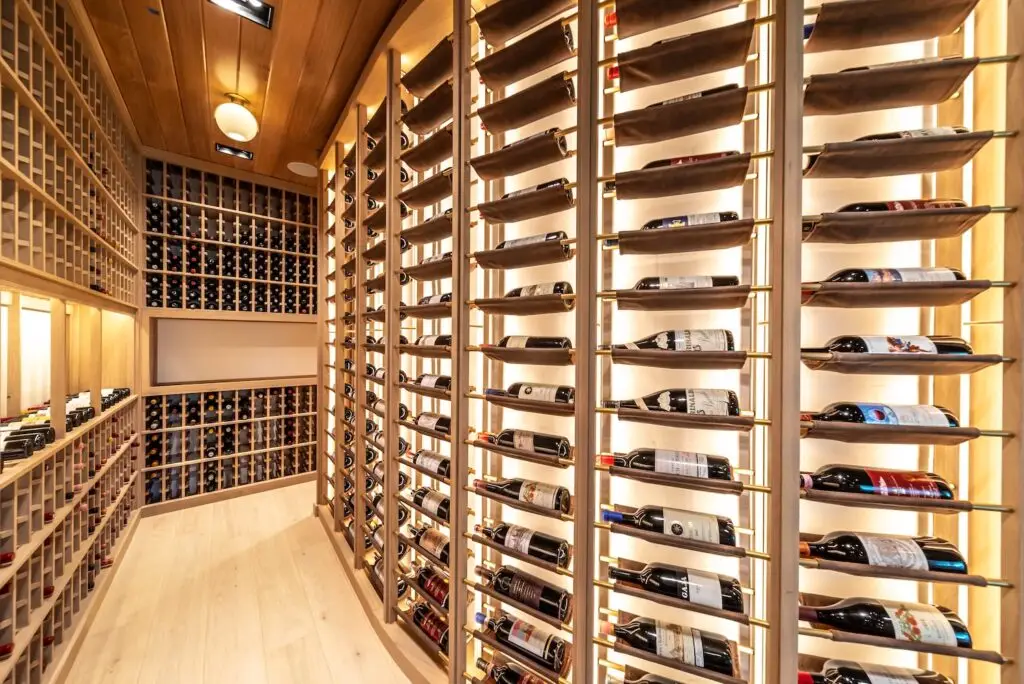
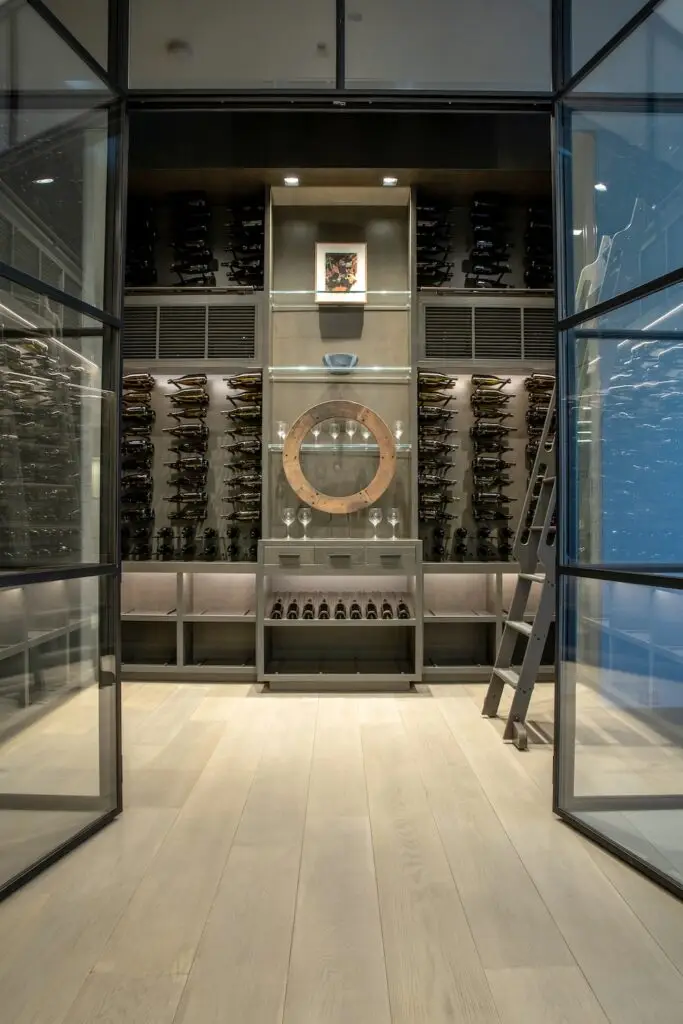
The floor is made of glass. Under your feet, you can see the cellar—15-foot ceilings, soft light, and stained white oak walls the color of desert silt.
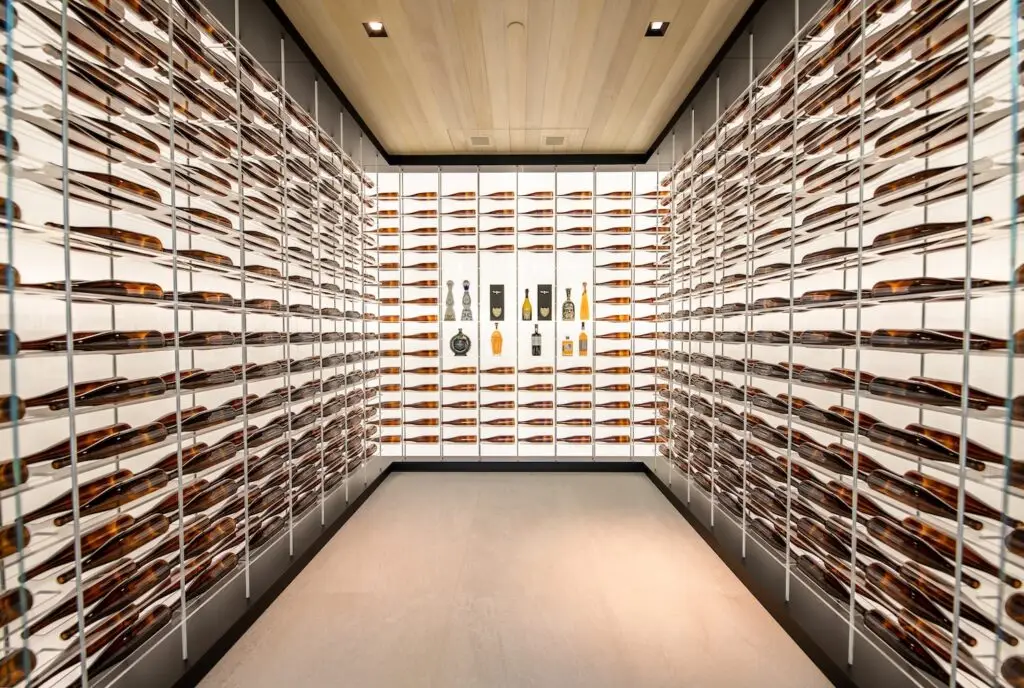
Tucked behind the wood, inside the doors, and in the ceiling is a highly advanced and very specific network of tech assembled in San Marcos—perfectly calibrating the room for humidity and temperature with vapor barriers, specialized insulation, and LED lights. Along the walls on matte blag pegs lay 1,000-plus bottles of wine—some iconic collector vintages, some with stories, some earmarked for major life moments.
This is a very serious wine home, built by someone whose obsession eventually leads to a call with Chris Noel.
“We have some clients who have been collecting wine since the ’60s and the ’70s, and they have collections of 15,000 or 20,000 or more bottles,” says Noel, owner of Vintage Cellars, the San Marcos–based designer of custom wine vaults for some of the region’s top restaurants and super-collectors. “[For them], collecting wine is similar to Jay Leno collecting cars.”
Courtesy of Vintage Cellars
Before the wheel, there was wine. Fermenting fruit sugars into alcohol was a thing as early as 4100 B.C. (wheel, circa 3500 B.C.), most likely a happy accident. Unsurprisingly, the tipsy breakthrough in juice arts was a huge hit. The challenge was that it was also hugely perishable.
The first efforts to save it from spoil were clay vessels called amphora, often fully or partially buried to create a sun-proof, temperature-stable environment. The terra-cotta pots were pointy-bottomed, which stacked and traveled better, encouraged gas circulation (thus preventing oxidation, the famed wine ruiner), and helped separate sediments.
Once basic preservation was figured out, makers noticed the aging process ushered in a moodier magic. So they engineered structures to tinker with the possibilities of the long haul. Those first wine holes in the dirt evolved into entire catacombs, tombs, quarries, and caves.
Courtesy of Vintage Cellars
Ancient Romans engineered wine storage rooms called fumariums, built facing north to avoid the sun and filled with smoke to speed the aging process (no doubt rapidly aging the cellar workers in the process).
For centuries, specialized wine storage was mostly a commercial venture. Serious wine people would (and still do) outsource their collections to a bonded storage facility or turn to professional cellarers who run giant chilled warehouses of cabernets.
A few major social moments sparked a more serious at-home cellar trend. First, the “Judgment of Paris” in 1976 (California wines famously besting the French in a blind tasting) established US wineries as worthy of collections.
A few years later came the 1982 Bordeaux, one of the most-coveted vintages in history. It was championed by a US lawyer named Robert Parker, whose 100-point scale rating system would quickly become the gold-standard for grading wines, creating a huge boom of wine collectors for the next few decades (wine as an economic investment became a thing).
The US economy also boomed in the ’80s, while France hit a skid. With the dollar trading 6-1 against the franc, US collectors had a rare chance to pick up Grand Crus at serious bargains, which demanded equally serious storage.
Courtesy of Vintage Cellars
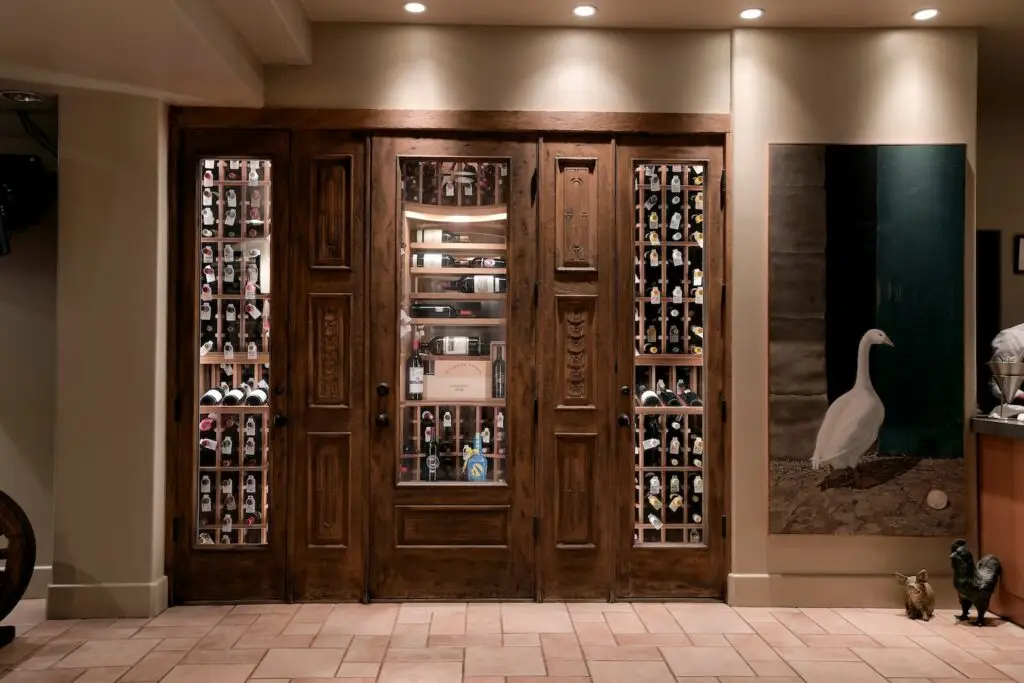
Given that framing, 1990 was a fairly great time for Vintage Cellars to get into the game. Noel—who worked his way up at the company and then eventually took over as owner in 2020—and his team work with architects, designers, and builders to create cellars that both fit the space and act as an attraction in multimillion-dollar homes across the region, and at top restaurants like Pamplemousse Grille in Del Mar and Avant Restaurant in Rancho Bernardo Inn. They hide cooling systems in brick-walled enclosures, bend bottle racks around curved walls, create standalone pavilions—engineer structures for cabs.
Their cellars hover between 50 to 70 percent humidity to keep the cork appropriately moist. Air too dry, and a cracked cork will give up the ghost—O2, in excess, turns wine into vinegar. If the air’s too dry, it can shrink the cork, eventually evaporating the wine and creating a low pressure that will pull in destruction. Too humid, and mold contaminates the works.
Light’s a big no-no for wine, too. Incandescent or halogen lights were the norm for cellars 20 years ago, but they emitted heat. Like Schrödinger’s Cat, these bulbs would risk the subject in order to view it. Vintage Cellars adopts LED lighting and, for glass cellars in the sightline of bright windows, mechanized shades that lower during UV exposure times.
Custom circumference-cut cove trays, leather saddles, and pegs stabilize bottles in Vintage Cellars storage areas; movement disturbs the tannins and upsets the aging process. And these cellars are smart, with app-based monitoring, remote temperature monitoring, and eSommelier cellar management. Don’t fret, Siri’s got your Syrah.
The most important decision, however, is deciding when to uncork that special bottle.
“[A lot of times, people] are saving those wines for specific moments in life—maybe a 50th anniversary or when their firstborn turns 21,” says Noel. “That’s how they look at it: as social and also to create memories.”
Pete Peterson has served as high as Editor-in-Chief of an enthusiast media magazine and as low as writer of his own bio… In addition to contributing to San Diego Magazine, Pete authored the YA novel One Tiger One Teen and is working on his second novel. Slightly more info is available at petepetersonauthor.com.
Troy Johnson is the magazine’s award-winning food writer and humorist, and a long-standing expert on Food Network. His work has been featured on NatGeo, Travel Channel, NPR, and in Food Matters, a textbook of the best American food writing.
Just south of Lake Hodges near 4S Ranch and Poway, Rancho Bernardo is a suburban community that blends residential neighborhoods with industrial pockets, elevated by a decidedly diverse food scene.
Over 60 years ago, this North County neighborhood was once part of a family ranch. Since that time, big tech companies have taken up residence here, including Amazon, Sony Electronics, Oura Ring, HP, Teradata, and ASML. Rancho Bernardo Inn serves as a community hub, with locals frequently meeting at the hotel’s restaurants, golf course, and spa.
Whether it’s work or a round of golf that brings you to Rancho Bernardo, we’ve taken care of the agenda planning with our guide to the area’s best restaurants, activities, and shops.
Courtesy of Avant Restaurant
Rancho Bernardo Restaurants, Bars, and Coffee Shops
Avant
Sample ingredients plucked straight from Rancho Bernardo Inn’s onsite garden and served at their signature restaurant Avant. One of the neighborhood’s most upscale dining options, they serve a French-inspired menu with nods to California, including many seafood options. Don’t miss their more casual sister restaurant Veranda for al fresco dining.
Wood-fired pizzas and handmade pastas are standouts at The Kitchen, Bernardo Winery’s counter-service restaurant specializing in Sicilian flavors. Charcuterie boards and bruschetta make for great starters or snacks while wine tasting.
13330 Paseo Del Verano Norte
Bushfire Kitchen
Fast-casual and family-owned eatery Bushfire Kitchen recently opened a location in Rancho Bernardo, serving sandwiches, bowls, salads, burgers, protein plates, and housemade empanadas. Bushfire prepares comfort food with healthy ingredients, and offers plenty of vegetarian and vegan options.
11962 Bernardo Plaza Drive, Suite 110
The Cork & Craft
Some might call The Cork & Craft an overachiever. This gastropub has an in-house craft brewery and winery: Abnormal Beer and Wine. The more, the merrier. Their sushi menu is definitely worth exploring, but don’t miss other specialties like garlic noodles, chicken wings, and pork belly.
16990 Via Tazon
Courtesy of Carvers Steaks & Chops
Carvers Steaks & Chops
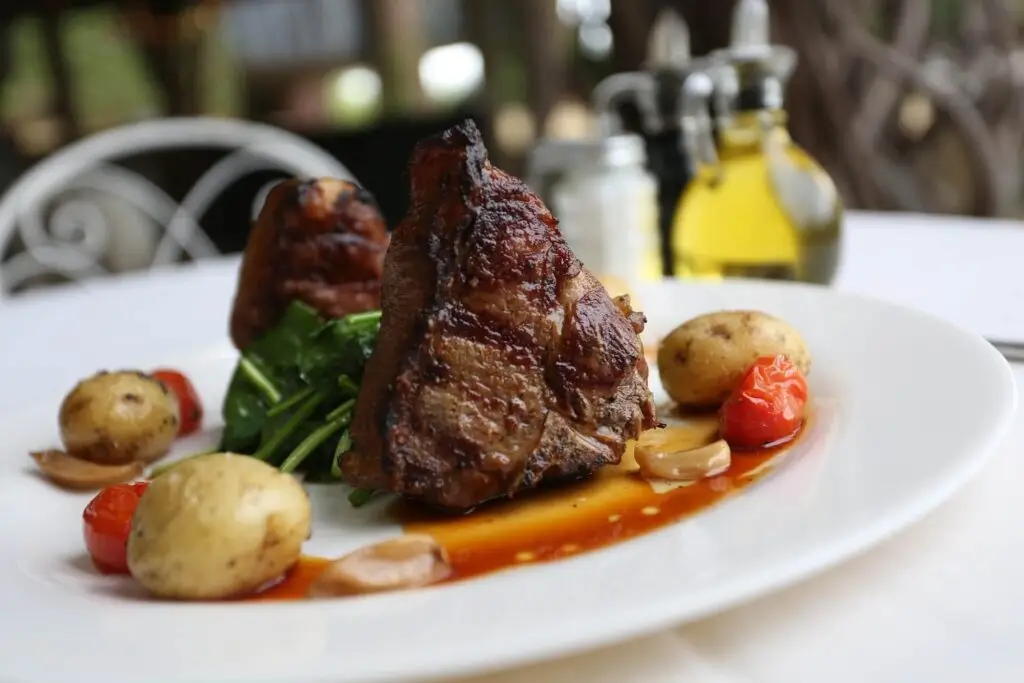
You don’t have to leave Rancho Bernardo to get a white tablecloth steakhouse experience. Carvers Steaks & Chops has prime rib (their best seller), filet, ribeye, porterhouse, New York strip, and other cuts, served alongside crab-stuffed mushrooms, wedge salad, French onion soup, potato skins, and other steakhouse specialties.
1940 Bernardo Plaza Drive
Burma Place
This no-frills Burmese restaurant is known for its traditional tea leaf salad that’s topped with sesame and sunflower seeds, garlic chips, peanuts, tomatoes, jalapeños, fried yellow beans, and fermented green tea leaf dressing. Tucked into a nondescript strip mall, Burma Place is a great takeout option when you want to eat garlic noodles, fried rice, chicken curry, and samosas from the comfort of your couch.
16719 Bernardo Center Drive, Suite A
Phở Ca Dao
Find authentic Vietnamese cuisine at Phở Ca Dao, including favorites like phở noodle soup, vermicelli noodles, broken rice dishes, and spring rolls. One of eight locations throughout San Diego, this family-owned chain uses robot servers for food delivery.
11808 Rancho Bernardo Road, Suite 100
The Kebab Shop
It’s all about the sauce at fast-casual Mediterranean restaurant The Kebab Shop. Smothering your chicken shawarma, gyro, or falafels in garlic yogurt, cilantro jalapeno, fire chili, and dill yogurt sauce is practically a rite of passage. The hardest part is deciding whether to order a wrap, bowl, or salad.
11980 Bernardo Plaza Drive
Casa Lahori
Get a taste of South Asian flavors at Casa Lahori, a Pakistani restaurant noted for its grilled meat kabobs. Other best-selling dishes include beef nihari, chicken biryani, and shahi paneer— best enjoyed with naan bread.
11975 Bernardo Plaza Drive
Kangnam Korean BBQ
Grill your own meat on the tabletop at Kangnam Korean BBQ, an interactive, all-you-can-eat experience that’s well-suited for large groups. Marinated beef bulgogi, grilled galbi short ribs, and spicy pork are served alongside traditional banchan dishes like kimchi, japchae glass noodles, and flavorful stews. Weekday lunch specials provide a nice discount on these filling meals.
11828 Rancho Bernardo Road, Suite 117–119
Courtesy of Curry & More Indian Bistro
Curry & More Indian Bistro
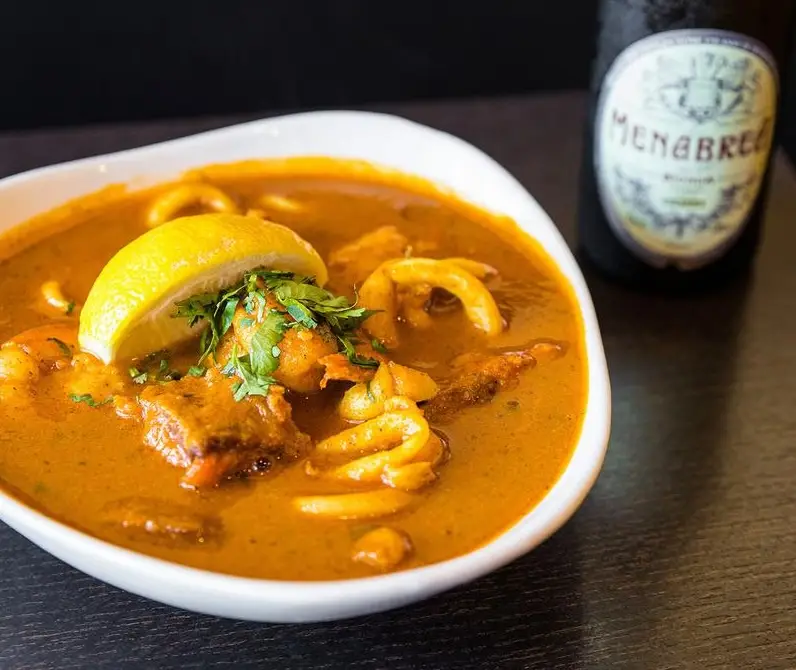
Dig in to your favorite curries and kebabs at Curry & More Indian Bistro. Most entrees are served with a choice of two side dishes, including basmati rice, potatoes with cumin, daal, naan, or mixed greens. Help offset the spice with one of their sweet mango or strawberry lassi drinks.
Kai Oliver-Kurtin is a San Diego-based writer who covers travel, dining, events, and culture. Her writing has been published in USA Today, Condé Nast Traveler, Fodor's Travel, Marie Claire, and HuffPost, among others.
Nearly everyone experiences a sleepless night once in a while. But for those with a circadian sleep disorder, being well-rested can feel out of reach. A circadian sleep disorder occurs when a person’s internal clock doesn’t align with their desired or socially required sleep schedule. This can significantly impact quality of life, mental health and physical well-being. Scripps Circadian Sleep Disorders Clinic, launched in 2019, was the first of its kind in the state. Its specialists diagnose and treat conditions like delayed sleep phase disorder, shift work sleep disorder and non-24-hour sleep-wake disorder. Many patients have spent years—or even decade —thinking there was no hope for their sleep behavior. A solution can be life-changing. Read more about the Scripps Circadian Sleep Disorders Clinic here.
For more nutrition, wellness, and healthy living tips, sign up for the San Diego Health newsletter here.