Navajo rugs, Mexican textiles, and folk art abound at the East County ranch of designer and restaurateur Diane Powers and husband Brent Gilman
By Kimberly Cunningham | Photography by Jen & Bec
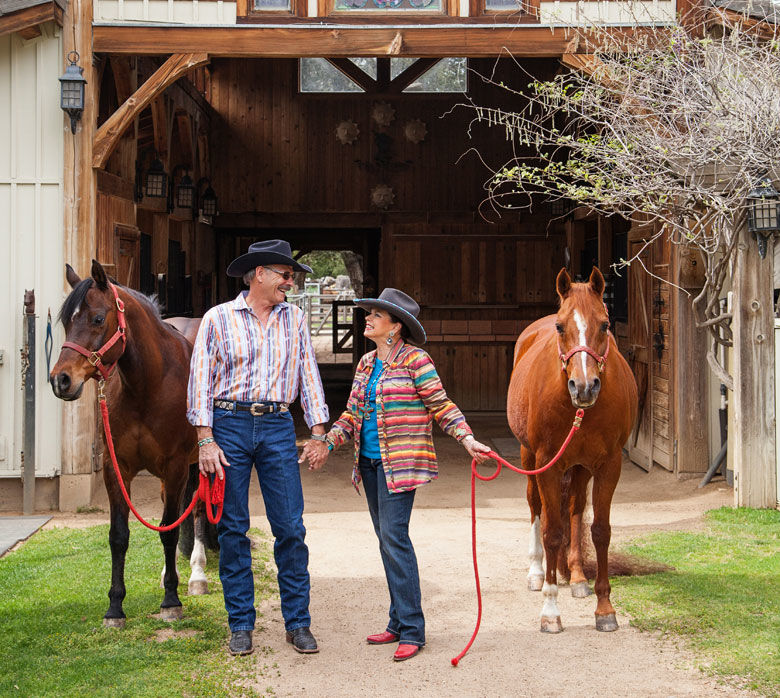
Diane Powers and Brent Gilman
GUEST ROOMS 8, each with its own theme, such as the All Saints Room and the Pendleton Room
HORSES 12, including a foal that was born this spring
Their Story
For most San Diegans, Diane Powers will always be the woman who pioneered the birdbath margarita and made Old Town the place to eat chimichangas beneath a sea of colorful umbrellas. But at the East County ranch she shares with husband Brent Gilman, Old Town feels a million miles away. Of course, there is color (lots of it) and tequila (plenty of that, too), but here, the rolling pastures and natural meadows offer a quiet serenity. Inside, the décor is what fans of her Bazaar del Mundo Shops might expect: vivid Guatemalan textiles, Talavera china, and entire rooms of folk art collectibles—a passion that began when a college professor gave Diane her first Mexican Tree of Life. That gift spawned a deep love of Mexican and Southwestern culture that inspires nearly everything she does. At home, she’s created a space that’s distinctly Diane (after all, her aesthetic is part of this city’s history). With a recently remodeled kitchen, separate catering room, and multiple dining areas, it is primed for what this San Diego icon does best. Bring on the chips and salsa!
formal living area
Navajo Niche
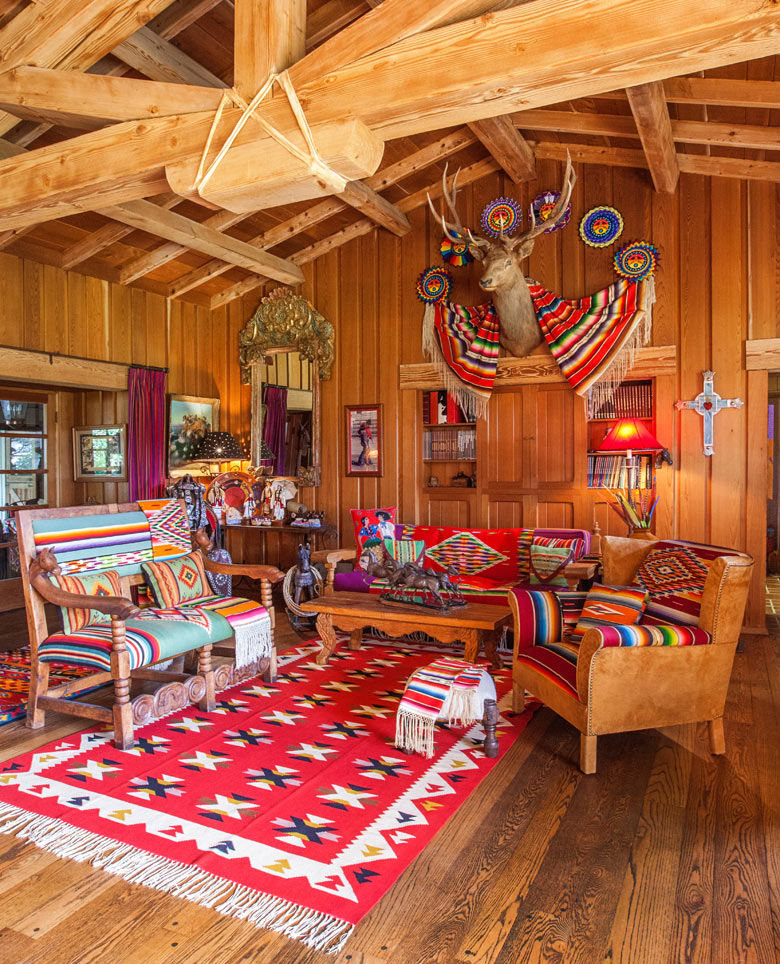
The formal living area features original redwood paneling and hand-hewn rafters tied with rawhide joinery. The room showcases Diane’s extensive collection of vintage Saltillo serapes. Some drape decoratively, while others are used as upholstery. Most of the accessories date back to the ’30s and ’40s, when the ranch was built. “I really tried to keep to what was done in those times,” Diane says. “But I put a contemporary spin on it.”
bedroom
Rustic Retreat
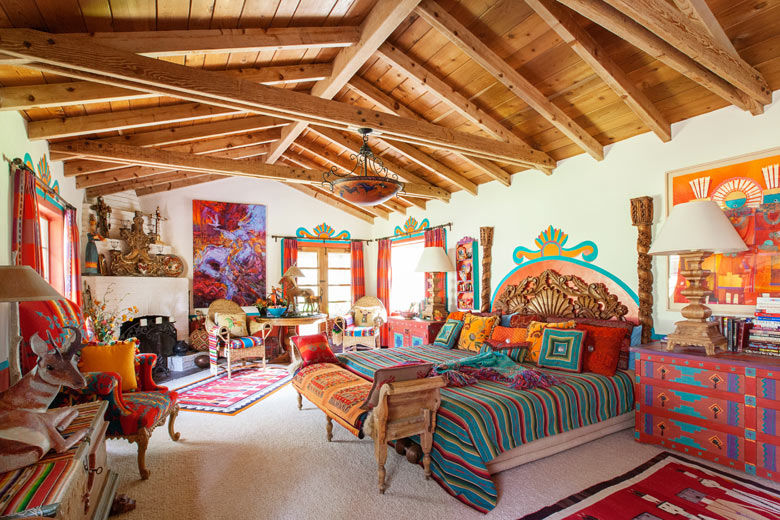
The couple’s custom headboard is made from two posts that once served as structural support columns in Mexico. Diane and her team then drew the rest of the design on the wall and filled it in with golden yellow and turquoise paint. The same design continues above the French doors and window treatments. On the left, Pendleton fabric covers an antique armchair. “Everything just evolves,” says Diane, who frequently travels to the Southwest, Guatemala, and Mexico, buying items for her stores and clients. “There’s a ribbon of continuity and vibrancy, those things that your eye responds to. It’s a style and a lifestyle that’s colorful, vibrant, and cultural.”
boots
These Boots Are Made For Riding
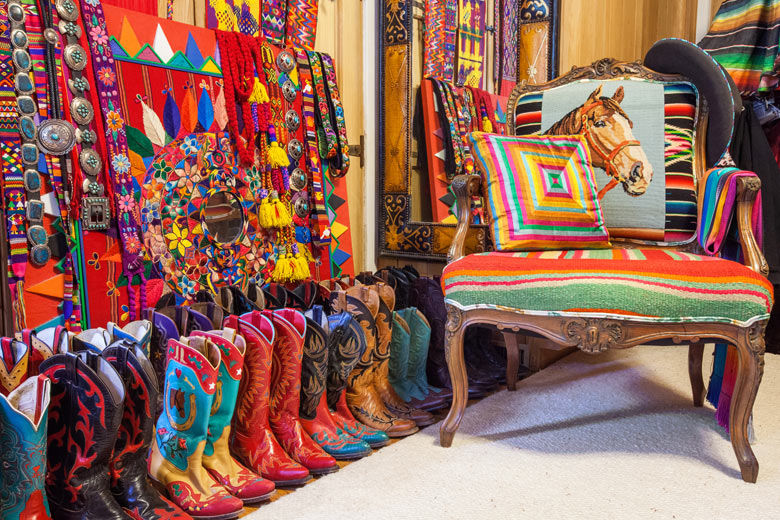
Diane turned one of the property’s spare bedrooms into a dressing room, where a sampling of her leather riding boots lines the floor. They are just as vivid as the rest of her life. “I love color,” she says. “That always attracts my eye when they’ve added something more radical.”
horses
Wide Open Spaces
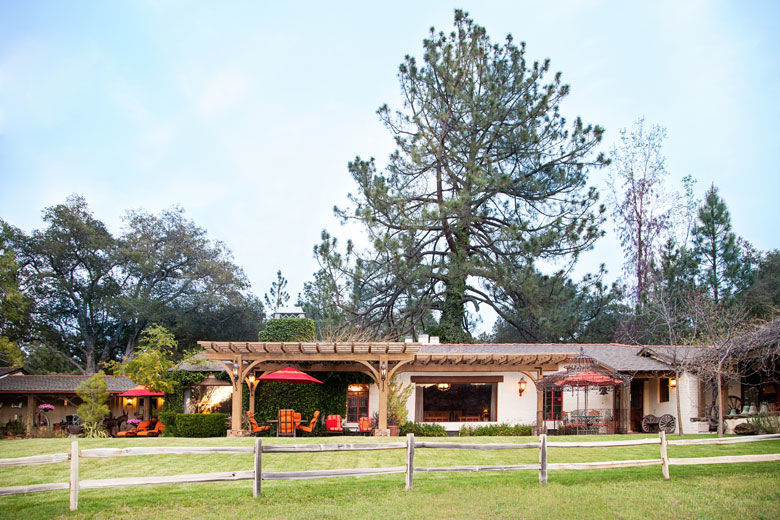
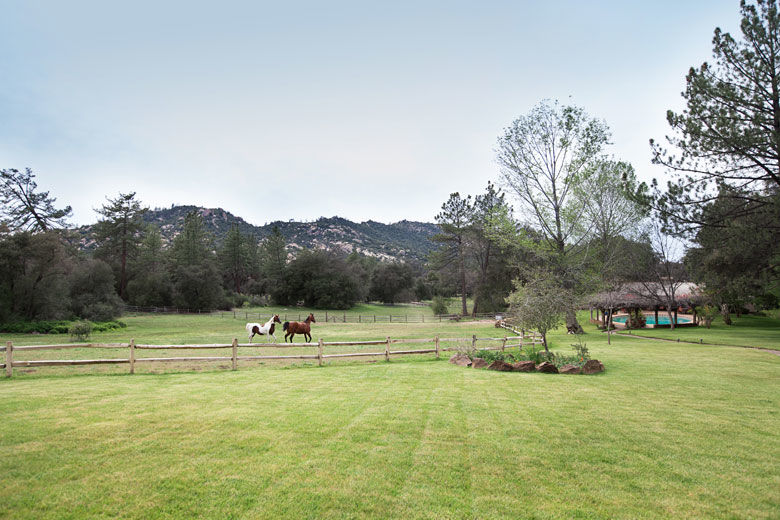
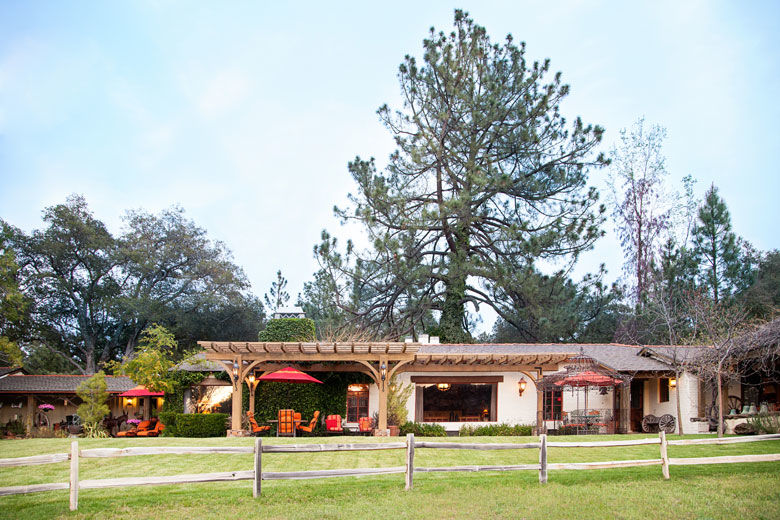
“You don’t know you’re in San Diego when you’re here,” Diane says. This is one of her favorite views, from the main house overlooking the valley. “Everything is so natural,” with miles of hiking trails, live oaks, and roving wildlife. The cedar barn (not pictured) stands behind the pool house on the far right. The couple’s Arabian horses are their pride and joy, and have taken the duo all over the country to various competitions. Below, Kimberlite and her filly Karma Link frolic in the meadow and await dinnertime.
the ranch house
The ranch house was built around this pine tree, which is at least 200 years old.
The ranch house was built around this pine tree, which is at least 200 years old.
What’s Cooking
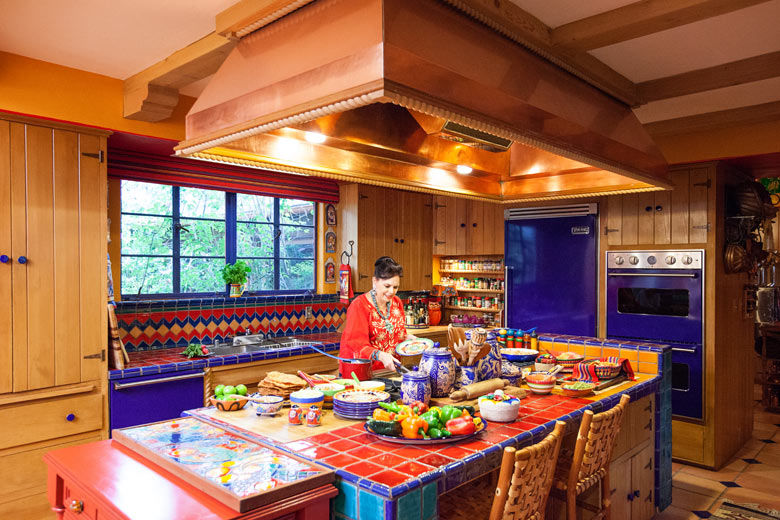
The kitchen features an array of bright Mexican tile work, a large island with a built-in griddle, and an original copper hood. Nestled inside the ranch house cabinetry are stacks of colorful platters and Talavera china. Diane laughs as she sifts through a shelf in search of the perfect bowl. “It looks like my store, right?” For further color, the restaurateur chose shiny cobalt Viking appliances. “I thought it would complement the other colors I have everywhere. I didn’t want to overdo the red, but the blue accents the red.” When asked if she ever gets sick of Mexican food, Diane, who is constantly working with her chefs to create new menu items, replies: “Never! I get addicted to it.”
kitchen
Colorful Corner
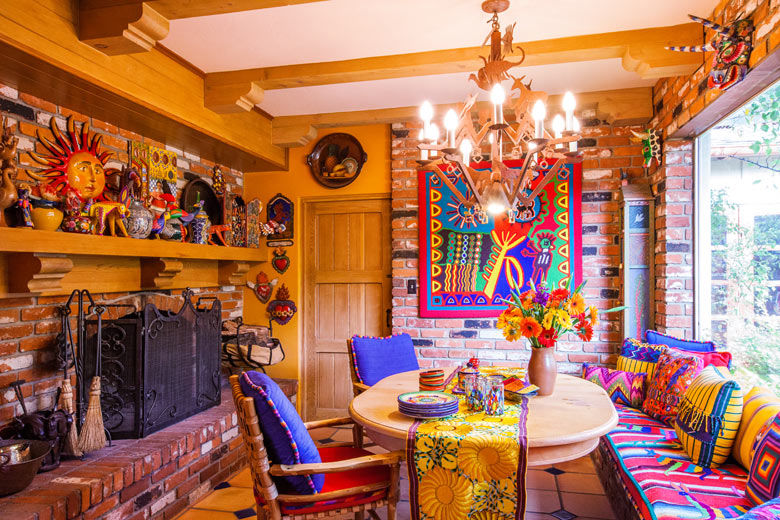
In this sunlit breakfast nook, ceremonial masks, a Guatemalan runner, and other festive textiles add cultural flair. Chevrons, stripes, and florals blend together—a thick border here, a thin accent there, some fringe to garnish. “Color is my passion, but I’d be hard pressed to answer if someone asked what my favorite color is,” Diane says. “I love color combinations. I like hot colors—red, orange, fuchsia—and then I love to contrast those with cobalts and blues.” (Fabrics available at Bazaar del Mundo)
Some keep lists of favorite books, of quotes, of enemies whose time shall come. At SDM we keep vast, nuanced, hotly debated lists of the best food and drink in the city. Menus are our smut novels. From Michelin stars to mom and pops, our list constantly evolves over hundreds of new bites tried every year. Here’s the 2026 list from food critic Troy Johnson and 129,000-plus votes from our readers, who really, really know their food.
Scroll down for the full list of Best Restaurant winners
Troy Johnson is the magazine’s award-winning food writer and humorist, and a long-standing expert on Food Network. His work has been featured on NatGeo, Travel Channel, NPR, and in Food Matters, a textbook of the best American food writing.
San Diego is just out here minding its own business. It’s long been cast as Los Angeles’s less ambitious sibling—the chill one, the one who shows up late for dinner reservations in flip-flops with a few provocative opinions. Architecturally it’s often cast the same: secondary, derivative, a footnote to California modernism that seems to begin and end with the Stahl House (Case Study House #22). LA has Pierre Koenig, Craig Ellwood, John Lautner. San Diego has the original fish taco.
But this version of the story is redacted, metaphorically speaking.
While the jazz hands of Hollywood and its hills cast a spell on historians and architecture buffs, San Diego had, and has, its own quiet evolution: It invented and reinvented itself through homegrown modernism, beginning with The Allen House (1907) in Bonita by Irving J. Gill.
“The biggest misconception is that San Diego was following Los Angeles,” says Keith York of Modern San Diego, one of the city’s top guides to modernist architecture. “Those who consider Rudolph Schindler and Richard Neutra as the fathers of Southern California Modernism often fail to recognize the outsize influence Gill and his buildings had on their work.”
Courtesy of Keith York
A new book, The Distinct Modernism of San Diego—written by Mark Hargreaves and Hallie Swenson, published by York—focuses on eight architects who were born, raised, or built their careers in San Diego. It illustrates how the city wasn’t hosting weekend warrior architects on side quests. It was a staging ground for a less look-at-me modernism from luminaries like Gill, Lilian J. Rice, Richard Requa, Lloyd Ruocco, Frederick Liebhardt, Kendrick Bangs Kellogg, Sim Bruce Richards, and Cliff May.
“Absent the backstabbing competition for projects, a collegial group of architectural peers collaborated and maintained lasting friendships with one another as they designed in response to the temperate climate and slower economy,” York says.
Largely unknown until the mid-1960s, Gill is a marquee name today. He arrived here from the East Coast at a moment when San Diego was still defining itself, which gave him the freedom to invent something new, experiment, rebel.
Instead of imposing the flourishes and frills of the time, he considered San Diego’s climate, light, landscape, history—the joie de vivre—and designed for this place. “[Architects of the west] must have the courage to fling aside every device that distracts the eye from structural beauty, must break through convention and get down to fundamental truths,” he once said, a sentiment that nails the un-ornate, total lack of pretension that’s defined San Diego people and culture.
And, lo, did Gill fling: His flat roofs, clean lines, and almost no ornamentation—though not necessarily modernism in the Eames or Eichler sense—foreshadowed what would later be called minimalism. Gill eventually became synonymous with the Los Angeles narrative, but broader architectural histories overlook the fact that his most progressive designs happened here.
Courtesy of Keith York
Another key to San Diego’s architectural movement was Lilian J. Rice, who often worked behind the scenes with little credit. She was one of only about 10 women in America licensed as architects at the time. Even though she died from cancer at 43, she somehow managed to complete an estimated 170 projects in the region, many in Rancho Santa Fe.
Born and raised in National City, Rice also wasn’t importing ideas. She shaped her own based on her understanding of this region and her commitment to protect the natural environment. Her work has been categorized as Spanish Colonial Revival, but she wasn’t reviving as much as she was refining a style suited to our border region—serene, mirroring nature, beautiful.
Like Sim Bruce Richards, who was his own way of life. While Gill stripped away ornamentation and Rice focused on the peace of open spaces, Richards came along several decades later and went full emo. By then, modernism had grown deep roots; its steel-and-glass structures took themselves very seriously. Richards came to party.
Photo Credit: Ollie Patterson
An eccentric, unpredictable man with half a face (part of his jaw was removed following a bone infection when he was a child), his life was a jalopy of adventures. He was opinionated and passionate about design, music, texture—and he created what he called a “sensuous environment.” He wanted his clients and their guests to feel the spaces as much as to be in them, appealing to the visual, tactile, nasal (“a cedar house smells good”), auditory (“acoustically superior”), even taste. “Though, I‘ve never had a client lick my houses,” he once wrote.
Organic, woodsy, textured, aromatic—if you ever find yourself in a Sim Bruce Richards house, a licking impulse might not seem so outrageous.
Gill, Rice, Richards and the other architects in Distinct Modernism built a legacy in San Diego that resonates nationally. And the work of these heavy hitters isn’t stuck in an inaccessible collectors realm: This October, homes by Kellogg and Liebhardt will open to the public as part of the La Jolla Modernism Home Tour—an opportunity to experience it not as a museum relic or magazine image (ahem), but as something alive.
Modernism in San Diego was never about glamour or an intention to be iconic. What transpired here is more nuanced, more ingrained with a less shouty aesthetic. A very San Diego aesthetic.
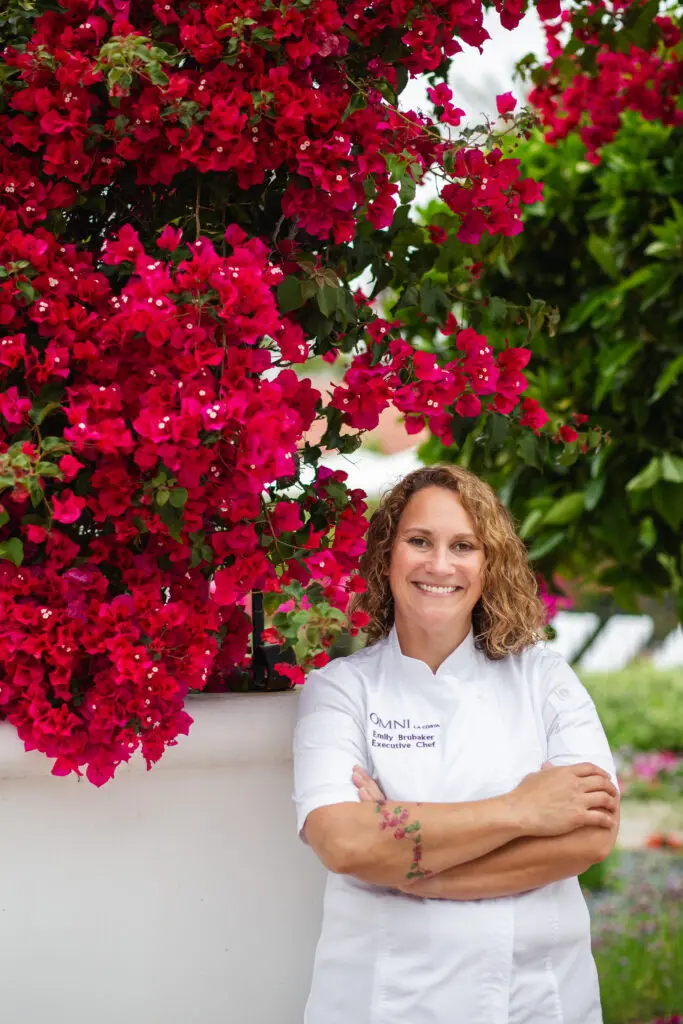
For Executive Chef Emily Brubaker, Omni La Costa Resort & Spa feels like home. She grew up just a mile-and-a-half away from the 400-acre property and fondly recalls walking the golf course perimeter as a kid. Though her ambitions led her away from San Diego for nearly two decades in which she honed her craft in some of the highest of high-profile Las Vegas restaurants—including triple Michelin-starred Joël Robuchon at MGM Grand—they ultimately brought her back to North County.
Courtesy of Omni La Costa
Today, the classically French-trained chef, who’s fresh off a victory on NBC’s Yes, Chef!, judged by Martha Stewart and José Andrés, oversees Omni La Costa Resort & Spa’s seven distinct dining concepts. Her goal is to elevate the resort’s culinary program with her creative, hyperlocal ingredient-driven approach while maintaining the Spanish- inspired flavors and fresh California coastal cuisine that are the bedrock of its culinary identity.
“The San Diego food scene is really growing, and in North County alone, it’s really exploded in the last five years,” Brubaker says. “There are Michelin stars, beautiful tasting menus, craft bakers, and all this food—when I was growing up in La Costa, it was fish tacos. Now there are really cool things popping up, and I’m so happy to be here to see where it’s going to go.”
Brubaker gives chefs de cuisine at each individual restaurant autonomy, however, her influence is evident across the resort.
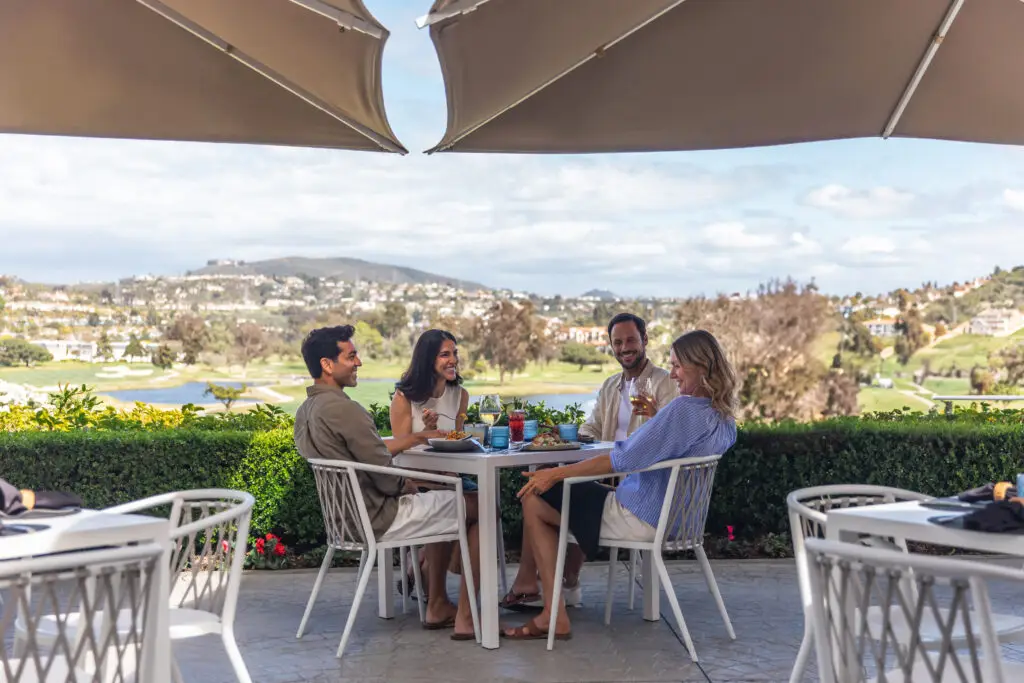
For example, lobby restaurant Bar Traza serves as Omni La Costa’s culinary centerpiece and features bold Spanish flavors in a lively, social atmosphere. Brubaker overhauled the menu to be more consistent and centered on casual bites with that signature vibe. Think smoky paprika, vibrant citrus, and Spanish meats and cheeses.
At VUE, the focus is on seasonal offerings, California coastal cuisine, and Baja-inspired dishes. She and Chef de Cuisine Cameron Dixon change the menu biannually, which heading into summer, will highlight farm-fresh produce and hyperlocal ingredients—the resort even has its own herb garden and honeybee hives.
Courtesy of Omni La Costa
Poolside dining options are leaning into the country’s 250th this summer with a selection of classic American dishes with an Omni La Costa twist. And Bob’s Steak & Chop House (Brubaker is a trained butcher) offers a classic steakhouse experience with elevated service.
The chef and company also plan menus for special events at the resort where her creativity can really shine. For an upcoming National Ski Association dinner, the banquet hall will be transformed into an Alpine-themed winter wonderland complete with a snow machine, savory sausages, and melty, decadent raclette. A recent dinner was built around the Carlsbad Flower Fields and each course was matched to a color of ranunculus (Did you know pink dragonfruit are grown in North County? You do now.).
“It’s my zen to be in the kitchen playing with food,” Brubaker says.
Omni La Costa’s culinary program is a key part of the resort experience. And with Brubaker’s leadership, it’s becoming a draw for visitors and locals alike.
“These aren’t just hotel restaurants, these are restaurants that you should go to. They’re destinations, and I’m really hoping for the future that’s where we’re going,” Brubaker says.
Courtesy of Omni La Costa
Brubaker is also channeling her experience on Yes, Chef! into the culture at Omni La Costa—more emphasis on teamwork and collaboration, empowering her staff to share constructive critiques, and embracing different perspectives. Alongside her leadership role, Brubaker has become an advocate for mental health in the hospitality industry, serving as chief ambassador for the Burnt Chef Project and serves on the Board of Advisors for the Apex Culinary Program, where she mentors and develops future talent.
Craftsmans and Spanish Revivalists and mid-century modernists—why does San Diego have so many different architectural styles? What makes a home distinctly San Diego? What are the trends shaping the look of the city’s neighborhoods for years to come? We asked the experts: architects and designers honoring the past, crafting the present, and radically altering the future of San Diego living. They opened their portfolios, shared points of view, and treated us to snapshots of their latest work that speaks to the ideas they’re playing with. The result? Six trends, design choices, and a proposal to make local homes unique. Grab a lemonade and get a little inspo for your own place.
Outdoor comfort goes to 11 with climate-controlled architecture
“Clients are now reaching for comfortable outdoor spaces that can be controlled for subtle shifts in the environment—heated covered porches, or patios with controlled louvered ceilings with integrated fans, lighting, heaters, and adjustable light.” –Mark Morris, Oasis Architecture & Design
“I think outdoor spaces in San Diego can be as useful or even more useful than indoor spaces. Relating to the site, view, [and] neighborhood can bring so much value and richness to a home.” –Bill Bocken, Bill Bocken Architecture & Interior Design
Photo Credit: Lauren Taylor Creative
Trend 2: End of the Farmhouse Era, Finally
The death of Little House on the Coast and the rise of warmth and organic materials
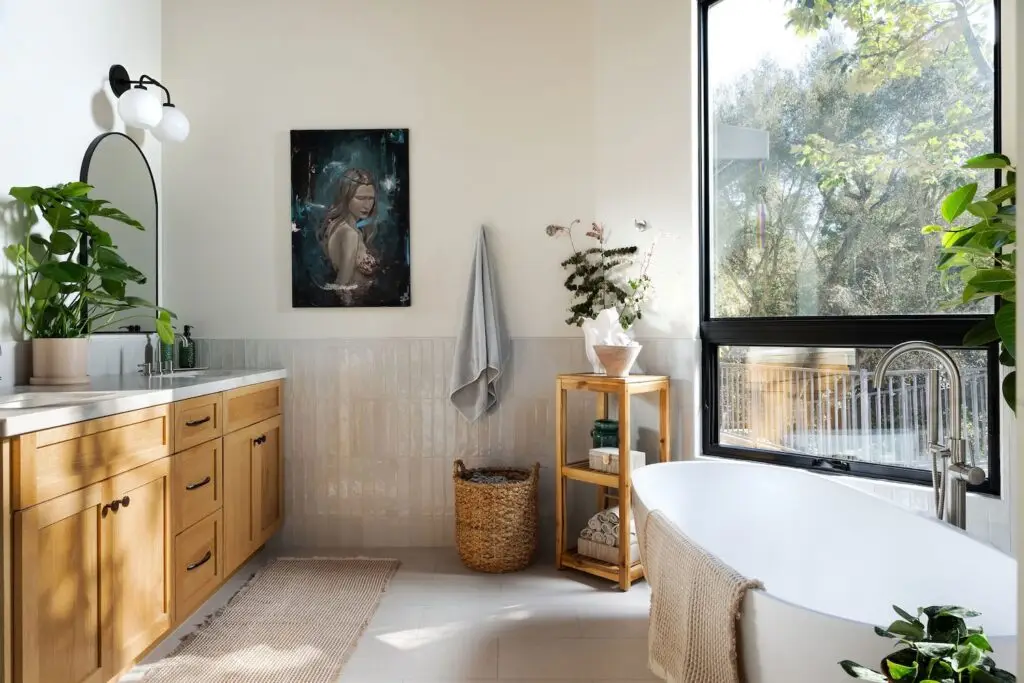
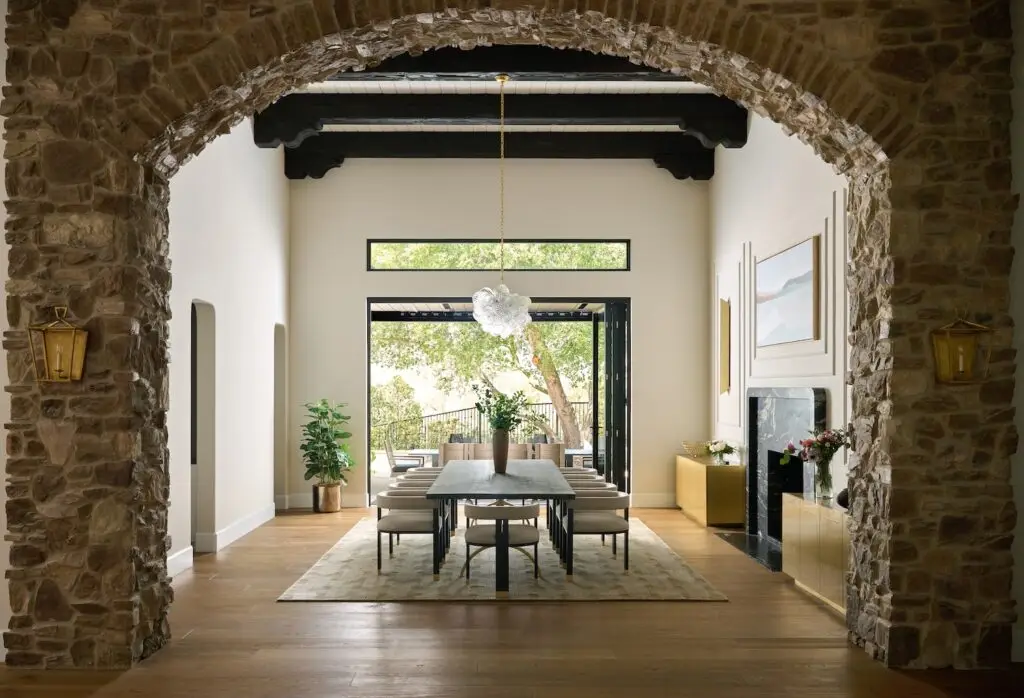
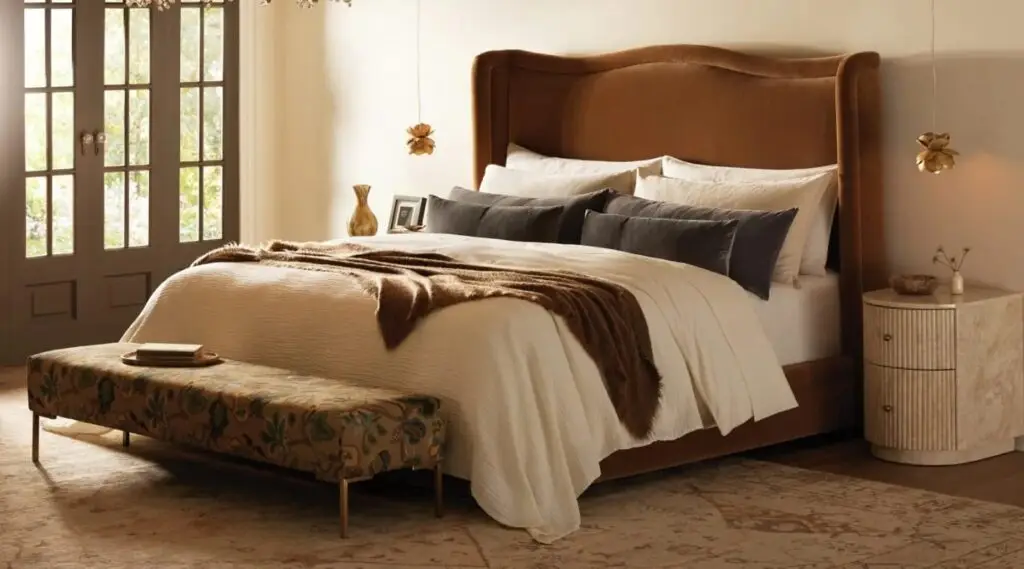
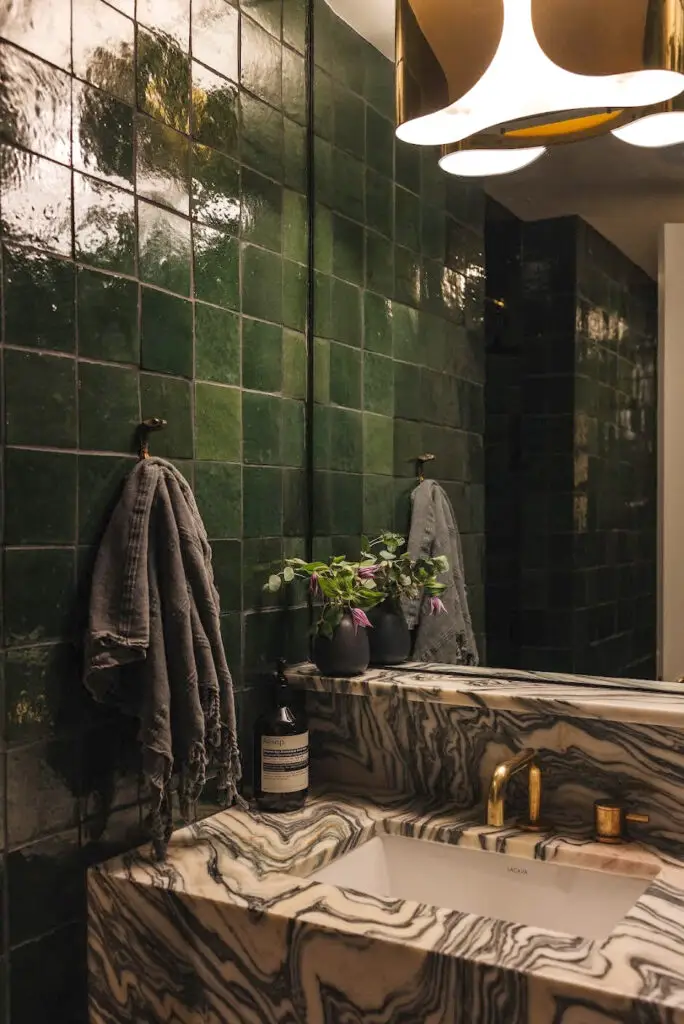
“After years of modern farmhouses—black windows, white houses, and gray walls and floors—natural tones are coming back. We are seeing a return to organic textures and more saturated color. Homes feel layered rather than stark.” –Susan Wintersteen, Savvy Interiors
“There’s a move toward homes that feel like every element has a purpose. I see a strong desire for warmth and natural stone, wood, organic textures with softer transitions, and materials that age well.” –Jen Pinto, Jackson Design & Remodeling
Designers’ plea: Don’t ditch beautiful bones for trend whimsy
“I would like to see even more architectural integrity, fewer quick flips, and more thoughtful renovations that respect proportion, scale, and context. San Diego deserves homes that feel timeless, not transactional.” –Susan Wintersteen, Savvy Interiors
“We want to see people respecting the original character of their homes while re-imagining them for modern life, rather than erasing character in favor of quick transformations that look ‘cookie-cutter.’” –John Kavan, Jackson Design & Remodeling
Trend 4: We’re Designing to Stay Awhile
San Diego’s design market is maturing in place
“Homeowners are staying in their homes longer—some 15 or 20 years. That has shifted design away from trend-driven choices and toward architecturally driven spaces that are functional, cohesive, timeless, and designed to support daily life over decades.” –Jen Pinto, Jackson Design & Remodeling
Photo Credit: Brooke Brady
Trend 5: This Is Not Spicoli’s House
We probably don’t need a starfish next to our “Beach That Way” sign
“There’s a noticeable move away from literal ‘coastal themes’ and toward more layered, textural environments. San Diego homes today often feel cleaner, more architectural, and more personal.” –Julie Crosby, designer
“Today, the aesthetic is more refined but still rooted in ease. It is coastal without being cliché and modern without being cold. The throughline is light, air, and a relaxed sophistication that reflects how people actually live here.” –Susan Wintersteen, Savvy Interiors
Trend 6: The House Outside Your House
Outdoor square footage as equally valuable as interior space
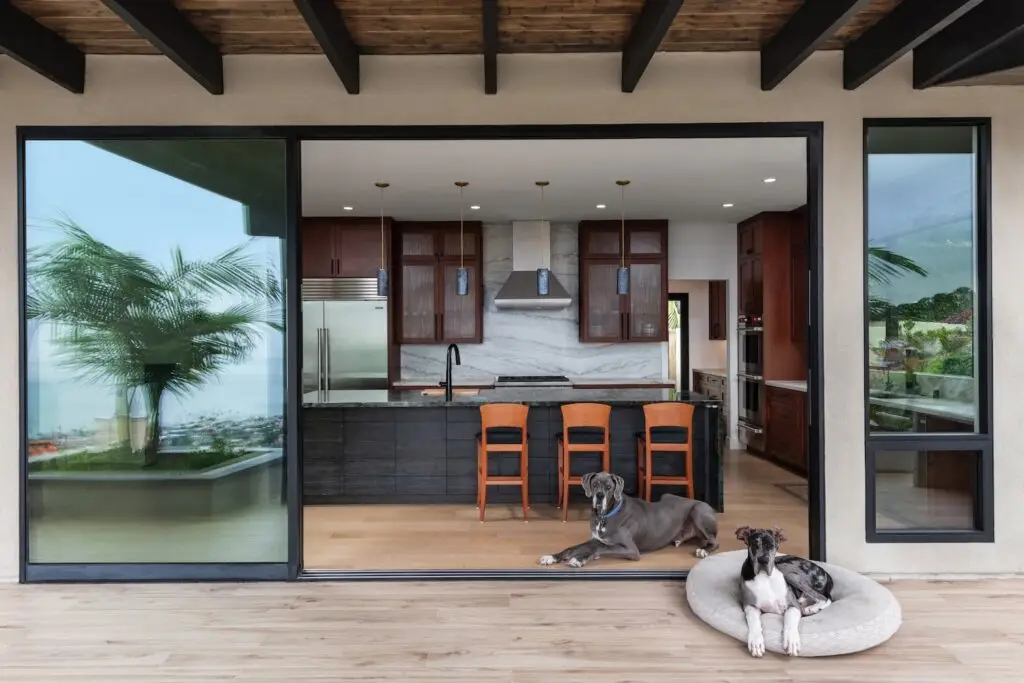
“When you can live outdoors most of the year, architecture and interiors must support that. Large format doors, layered patios, durable materials, and seamless flooring transitions all stem from lifestyle.” –Susan Wintersteen, Savvy Interiors
“Nearly everyone wants to take advantage of the constant sunshine, so we see a huge desire for indoor-outdoor living, light and airy fabrics, organic materials that bring the feeling of nature into the home, and a desire to incorporate a relaxed, coastal lifestyle into everyday living.” –Lilli Fish, LS Design Studio
Lili Kim is a content coordinator and writer for San Diego Magazine, with experience highlighting local businesses and communities. When not writing or shooting film, she is likely brewing her seventh cup of tea of the day or strolling along Sunset Cliffs.
San Diego’s most iconic architectural tower sat closed and vacant for over 80 years until the invisible architects came in.
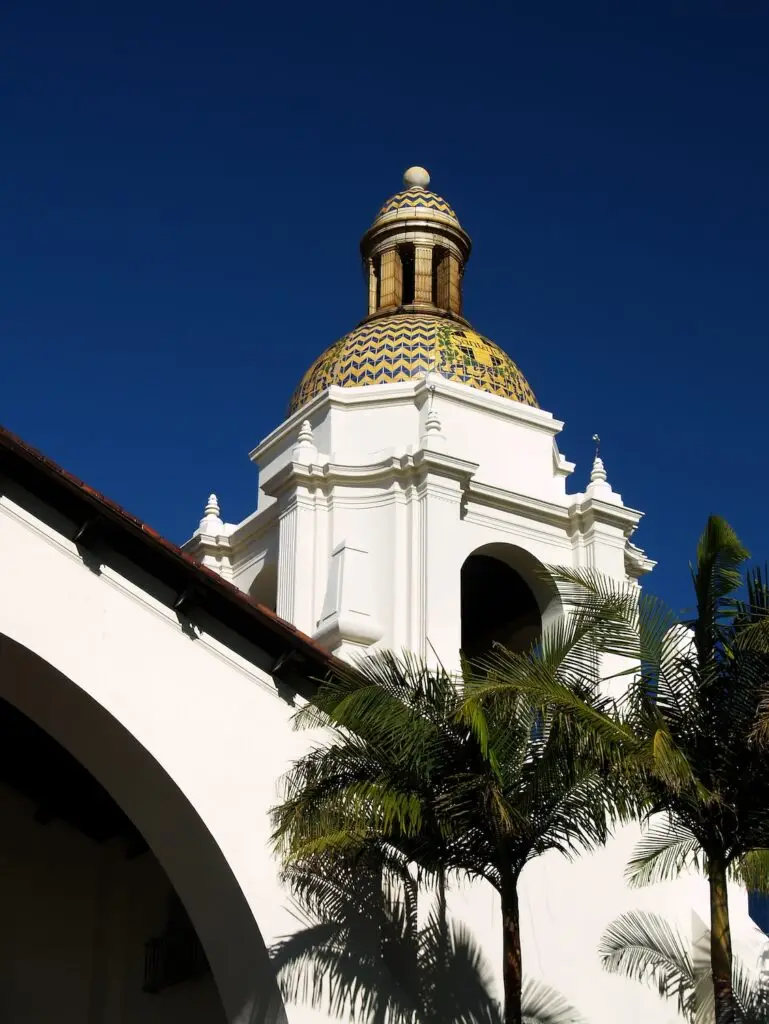
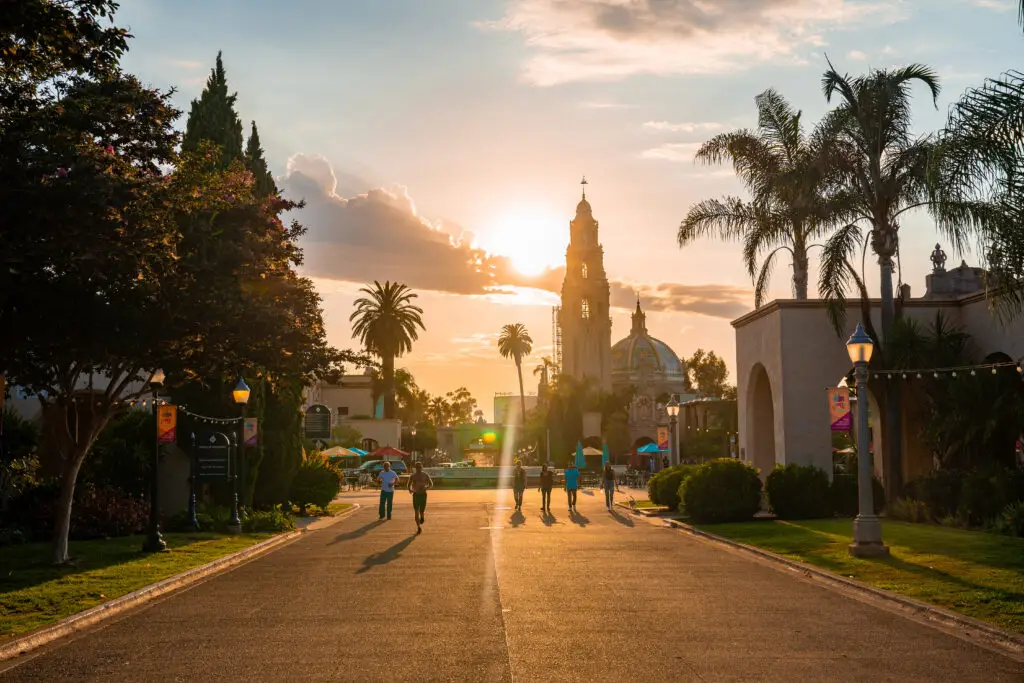
A century ago, the dramatic structure we now know as the California Building greeted visitors to the 1915–16 Panama–California Exposition in Balboa Park. It was covered in ornate pilasters, colorful tiles shone on its domed roof, and an attached eight-story tower surveyed the expo below. The building resembled a church, yet attendees who stepped inside expecting a sermon instead encountered an exhibit called The Story of Man Through the Ages. The showcase would inspire the building’s longtime-permanent use as the Museum of Us (formerly the Museum of Man).
Its tower became famous but furtive. Shut to the public in 1935, it spent decades as an instantly recognizable but inaccessible landmark. Finally, the museum decided that the California Tower would reopen for tours by 2015 and be outfitted for earthquake safety by 2020.
The challenge was significant. In order to keep it secure during seismic shifts, the whole structure needed steel braces, concrete walls, and tension rods—major infrastructure that had to remain a secret; hidden so that it didn’t alter the tower’s legendary look.
The people who completed the work were secret, too. Sort of.
“We call ourselves ‘invisible architects,’” says David Marshall, principal architect at Heritage Architecture & Planning, the firm tasked with restoring the California Tower. “Most architects going through school, their dream is to create something that’s never been created before. That’s not what preservation architects do. We are following the footsteps of great designers, and we don’t want to leave our fingerprints on everything we work on.”
Courtesy of Heritage Architecture & Planning
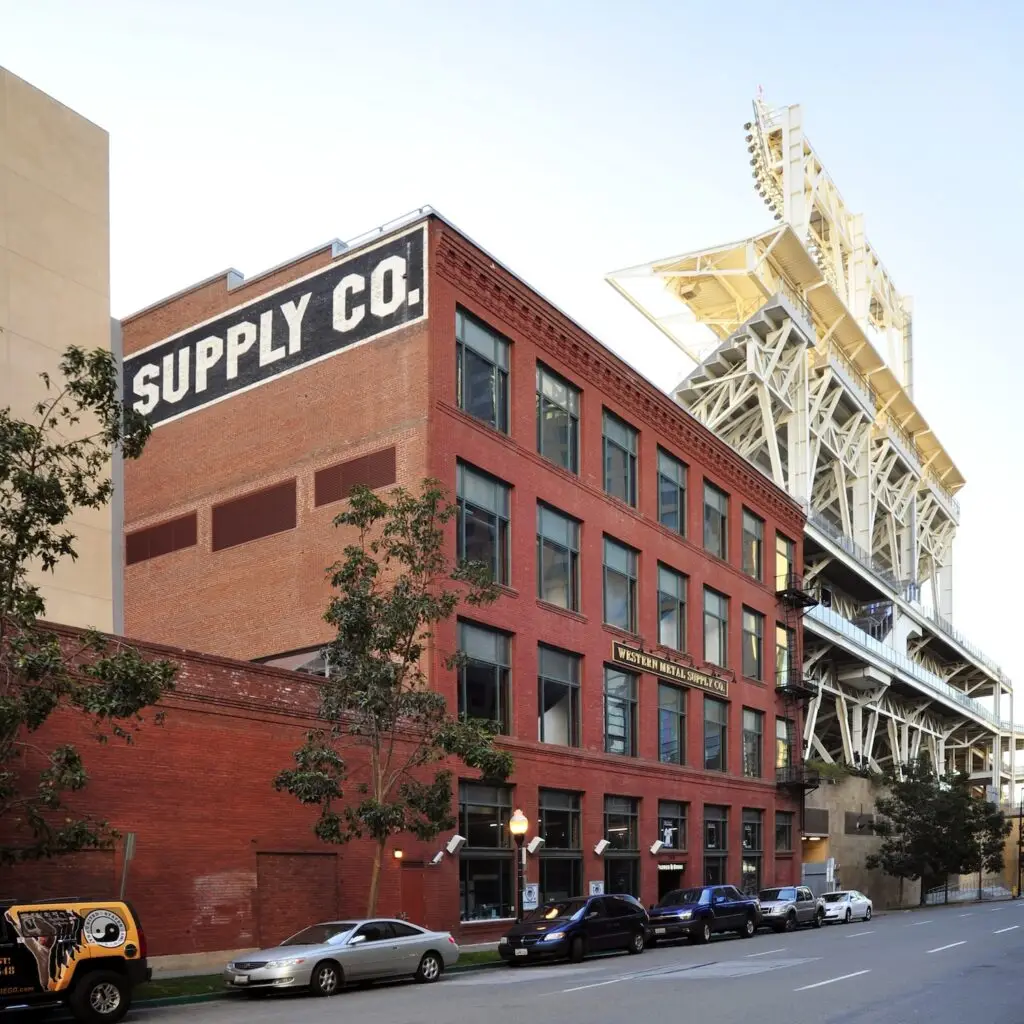
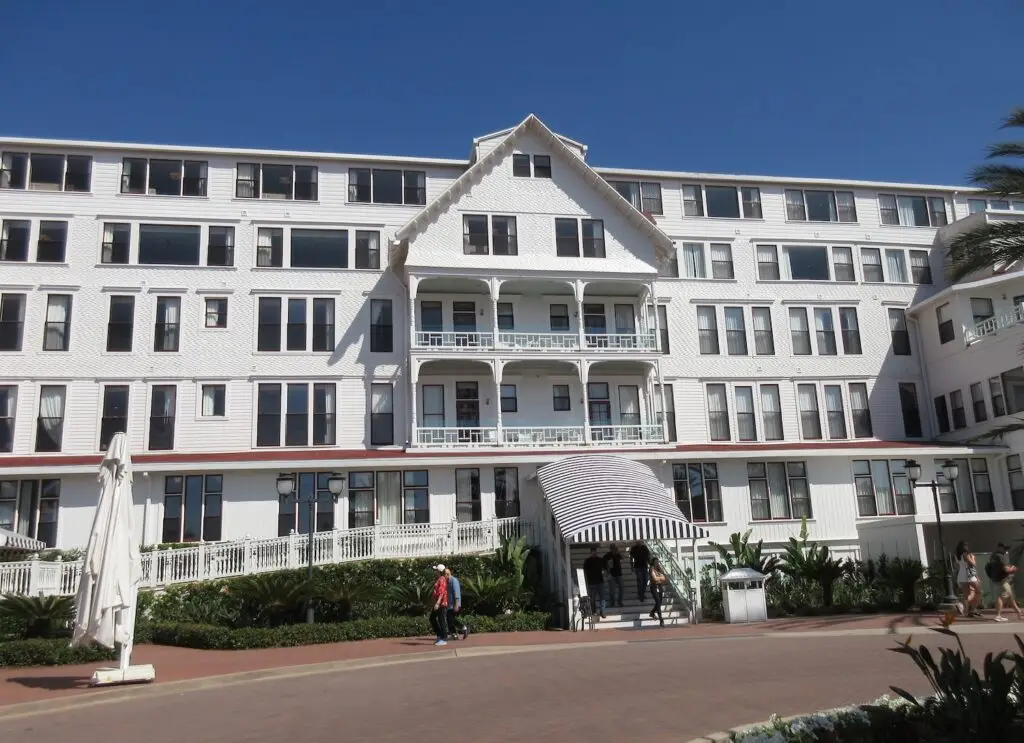
Marshall has spent the last 35 years returning iconic San Diego structures to their original shine: Balboa Theatre, the Top Gun house, Hotel del Coronado, and the Western Metal Supply Co. building, to name a few. And those are just the well-known ones. San Diego has more than 1,000 buildings—from modest homes to multi-story civic structures—that qualify as historic for various reasons.
“Number one is age: It has to be over 30 years old,” says Cathy Herrick, who founded the development company San Diego Historic Properties with her father Leon in 1984. (Though that’s not a hard-and-fast rule—Marshall’s team was able to help top local architect Jonathan Segal designate three of his buildings constructed after 2000, since any structure proven to be architecturally significant is up for consideration.)
“Second, it has to have enough of its original fabric—like 90 percent,” Herrick continues. The preservationist’s ultimate goal is to gently repair and, if absolutely necessary, replace weakened or damaged portions of the building while making modern safety and accessibility upgrades.
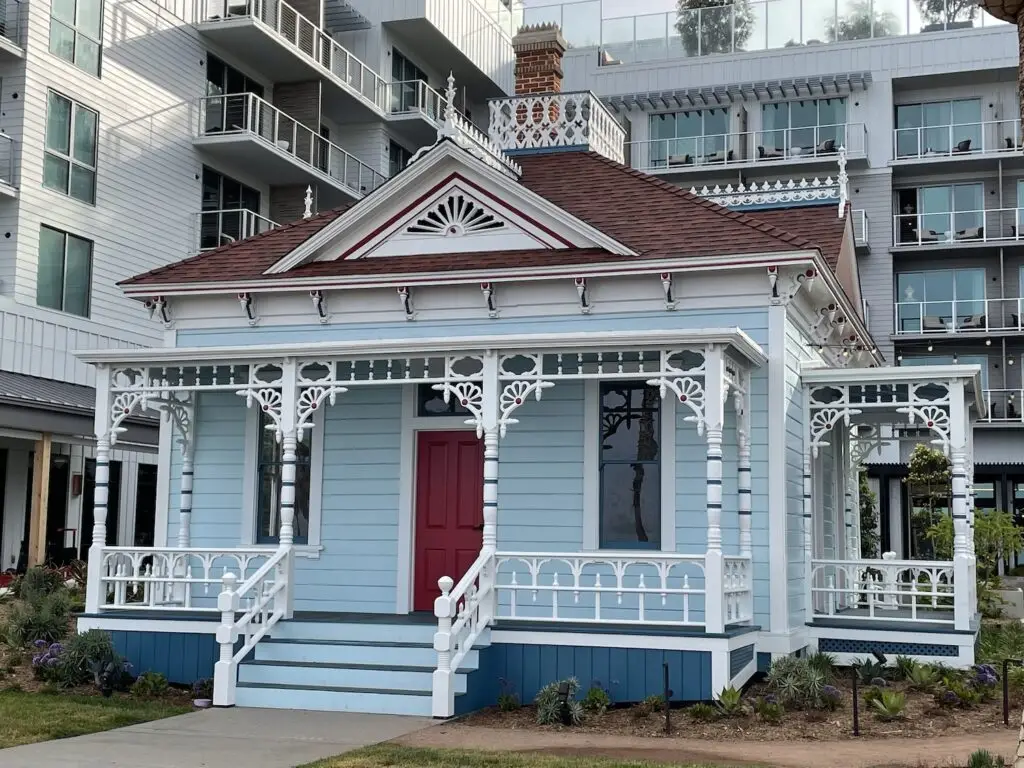
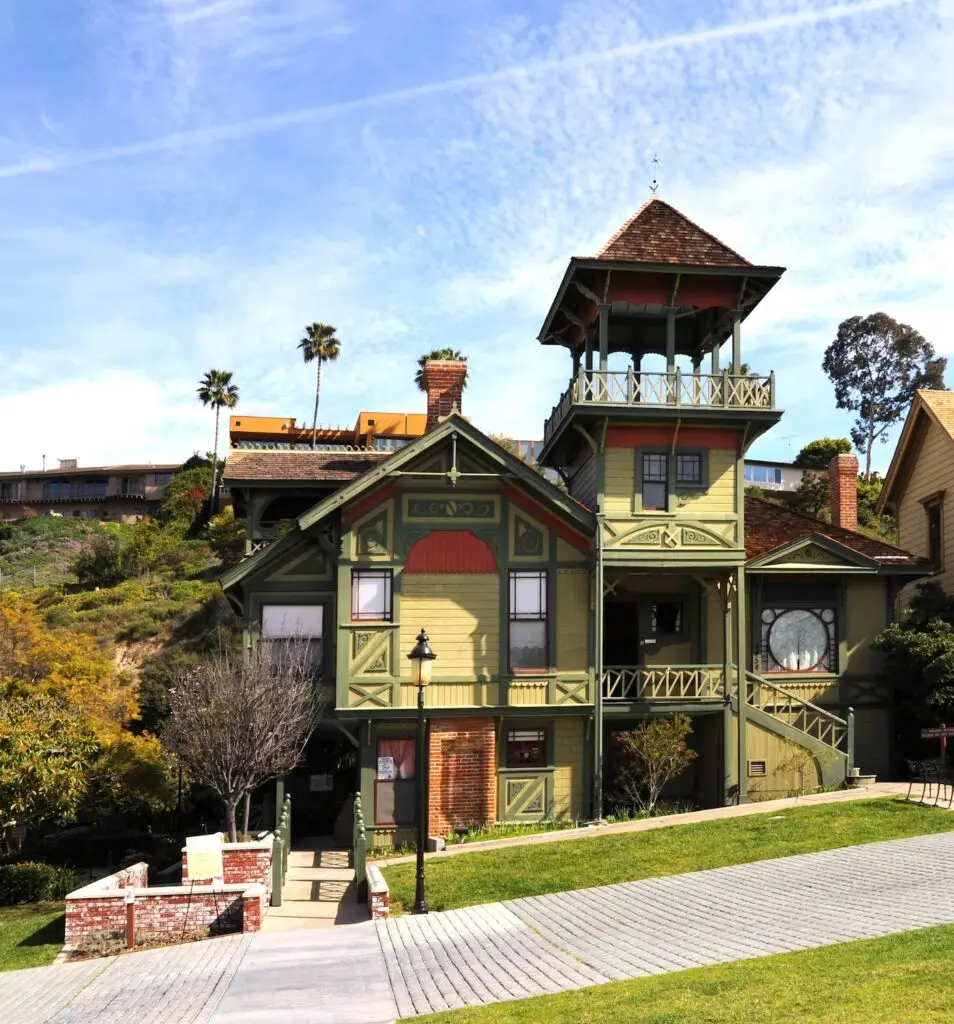
“We were trying to bring back the historic handrails around the front porch,” he explains. “They were built in 1888, so they didn’t meet the current code—they were only 29 inches tall instead of 42 inches tall.” On top of their diminutive stature, the handrails had seven-inch gaps between their pickets, more than twice the current safety requirement of less than four inches. The Heritage Architecture team’s solution: build exact replicas of the original handrails, but add a frameless glass rail behind them that’s only visible up close.
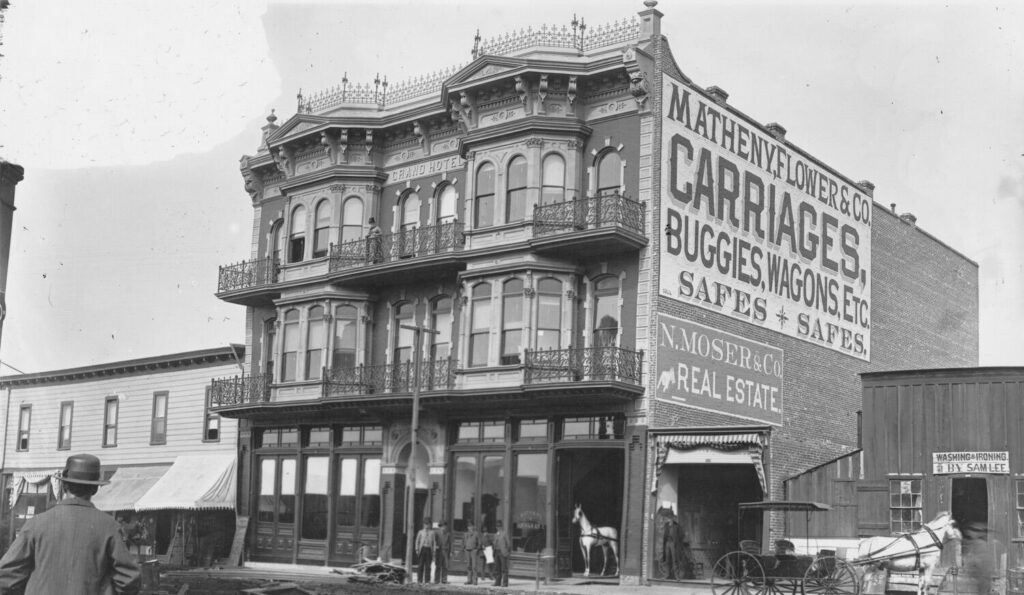
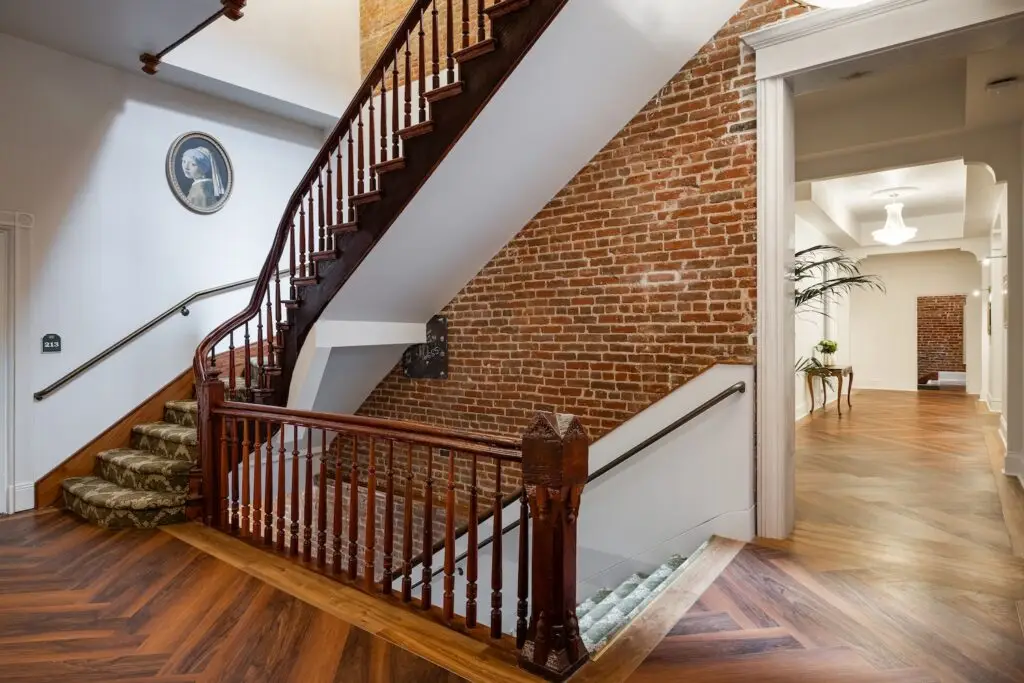
At The Beau—Herrick’s $5 million restoration of an 1886 Gaslamp Quarter hotel said to have been a favorite haunt of Al Capone—“there was a section of redwood staircase banisters and posts that were deteriorated,” Herrick says. “We took the pieces that remained and sent them to Northern California to a guy who specializes in hand-tilling [creating a distressed appearance on the redwood]. He made new pieces to match the historic.”
Restoring an old building for a new purpose—which preservation architects call adaptive reuse—can become even trickier. “Standard number one is to find a new use that’s compatible with the historic use,” like turning an old hotel into apartments, Marshall says.
His team transformed the Western Metal Supply Co. building at Petco Park into suites and a team store for Padres fans. “Warehouses like that are the easiest to convert because they’re usually large, open spaces with very few columns and partitions,” he explains. Any additions can be torn out by future preservationists, returning the building to its original state.
All these efforts to preserve the past don’t come cheap. “At The Beau Hotel, we wanted to put back the original 140-year-old bay windows. There were only eight of them, but it would have cost me $750,000,” Herrick says. “You sometimes have to make the economic decision to go with something that looks like the original but really is new.”
Photo Credit: Ollie Paterson Photography
Another challenge is that skilled artisans capable of restoring and replicating historical designs and materials are becoming increasingly rare. Over her four-decade career, Herrick utilized craftspeople—some in their 80s—who specialize in unique skills like repointing historic brick or reworking century-old window sashes. “Those guys aren’t around anymore,” she says. “It’s a lost art.”
Historical preservation may also be under threat from a policy perspective. As of now, the City of San Diego automatically reviews any building that’s over 45 years old before it’s demolished or its exterior is altered. But with the city’s current focus on densification and increased housing, Marshall says, “there seems to be a lot of push for fewer restrictions on new construction in historic neighborhoods.”
A proposed amendment to the current Heritage Preservation program would alter that automatic review process because it is “a reactive and, overall, less efficient approach to historic preservation,” says Kelley Stanco, deputy director of Climate, Preservation & Public Spaces for the City Planning Department. “Of the roughly 3,500 properties reviewed every year, 85 to 90 percent are found to have no potential historic significance. In addition to creating unnecessary delays for project applicants, it is an ineffective use of city resources that could be more effectively spent proactively surveying and identifying what is significant and bringing those properties forward for designation.”
Photo credit: Sandé Lollis
Another suggested amendment would give the Historical Resources Board new recourse for overturning historical designations. “If a building owner wants to tear down these newly designated historic houses, they’re gonna go to the council and appeal and, depending if they have any leverage—financially or otherwise—the council could say, ‘It’s not historic anymore,’” Marshall says. He fears that the change would “open the door to nothing being able to stay designated historic and nothing being safe from demolition.”
Stanco argues that changes to the city’s Heritage Preservation program are intended “not to eliminate historic preservation, but rather to incorporate…other important factors” like housing, equity, and sustainability.
The Save Our Heritage Organization (SOHO), a nonprofit dedicated to preserving historical architecture in San Diego, recently sent a letter, signed by former members and staff of the San Diego Historical Resources Board, to Mayor Todd Gloria and the city council decrying delays in historic designation reviews and nominations, among other concerns.
Ultimately, “growth and preservation are compatible,” believes SOHO Executive Director Bruce Coons. “The fact of the matter is that even if all the eligible houses and buildings were designated, it would be one percent or less of the city’s entire housing stock.”
Photo Credit: Sandé Lollis
Coons considers many historic properties “naturally occurring affordable housing”: They already exist, for one, giving them a financial leg-up on costly new builds. They’re also typically smaller than contemporary homes, and San Diego’s Mills Act financially incentivizes homeowners to maintain their historic houses through property tax relief. A number of structures in older San Diego neighborhoods also added ADUs during the first and second World Wars, contributing to density.
And beyond the practical, these structures contribute an inimitable texture to the local landscape. San Diego is unique for its mix of architectural styles—the famous Spanish Revival buildings, of course, but also Victorian, Pueblo-style, Art Deco, Craftsman, ranch-style, and midcentury-modern structures, spread across popular neighborhoods like Hillcrest, Bankers Hill, North Park, Point Loma, La Jolla, Logan Heights, and more.
“Our built environment is really what makes San Diego what it is,” Coons says. “It’s difficult to get meaning from a stucco box. I think San Diegans want to feel like San Diegans, and [historical buildings] provide that context, meaning, depth, and character to our lives. We realize that when they’re gone.”
Amelia Rodriguez is a writer and journalist and winner of the San Diego Press Club's 2023 Rising Star Award and 2024 Best of Show Award, she’s also covered music, food, arts and culture, fashion, and design for Rolling Stone, Palm Springs Life, and other national and regional publications. After work, you can find her hunting down San Diego’s best pastries and maintaining her five-year Duolingo streak.
The iconic 1,200-acre preserve’s history dates back more than 150 years, evolving from a scrub-filled plot atop a mesa overlooking what’s now Downtown to an urban oasis—the largest of its kind in the country—filled with an array of museums, attractions, gardens, trails, restaurants, and more. Balboa Park is an epic playground where San Diegans and visitors alike can experience the great outdoors just as easily as they can enjoy a world-class performance or explore groundbreaking discoveries.
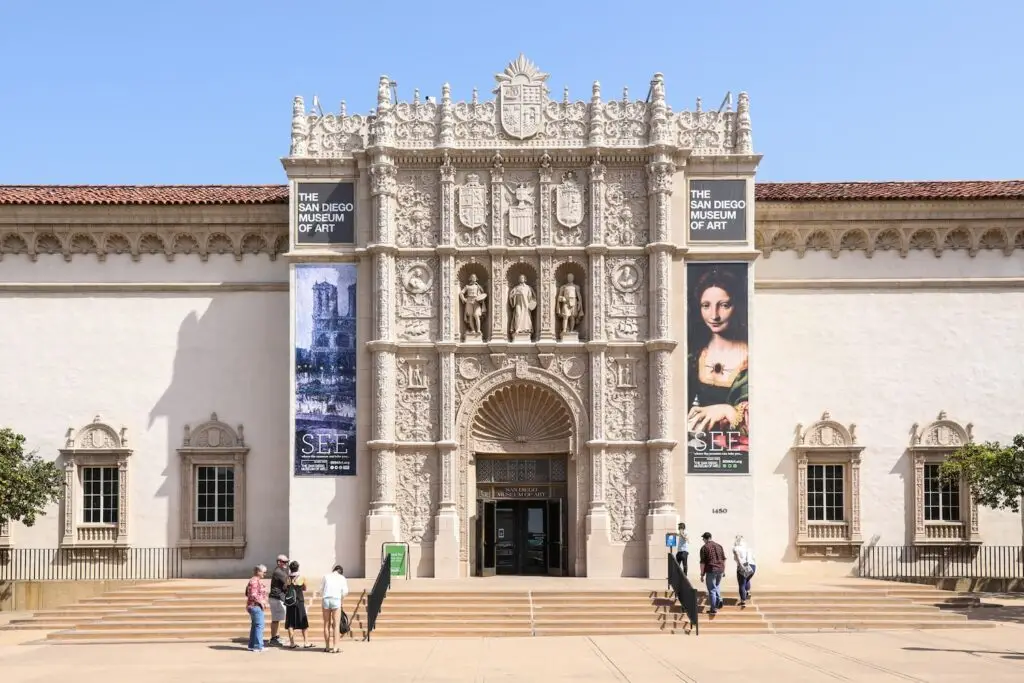
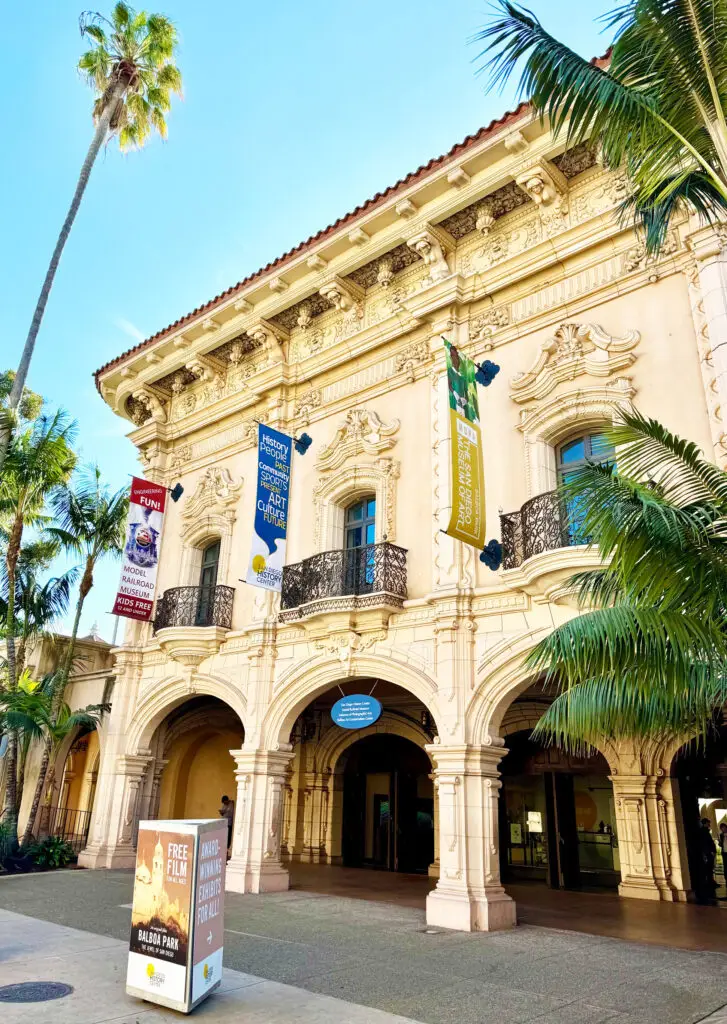
Tucked away in the Spanish Colonial Revival-style architecture are 18 diverse museums that allow visitors to spend the day learning about, well, anything. A great place to start is the San Diego History Center. Located in the Casa del Balboa building, the museum tells the story of the city’s past, present, and future through photographs and art, clothing and textiles, and interviews with people who witnessed history-making events firsthand. The San Diego Natural History Museum takes visitors even farther back with interactive exhibitions that show what the region was like up to 75 million years ago.
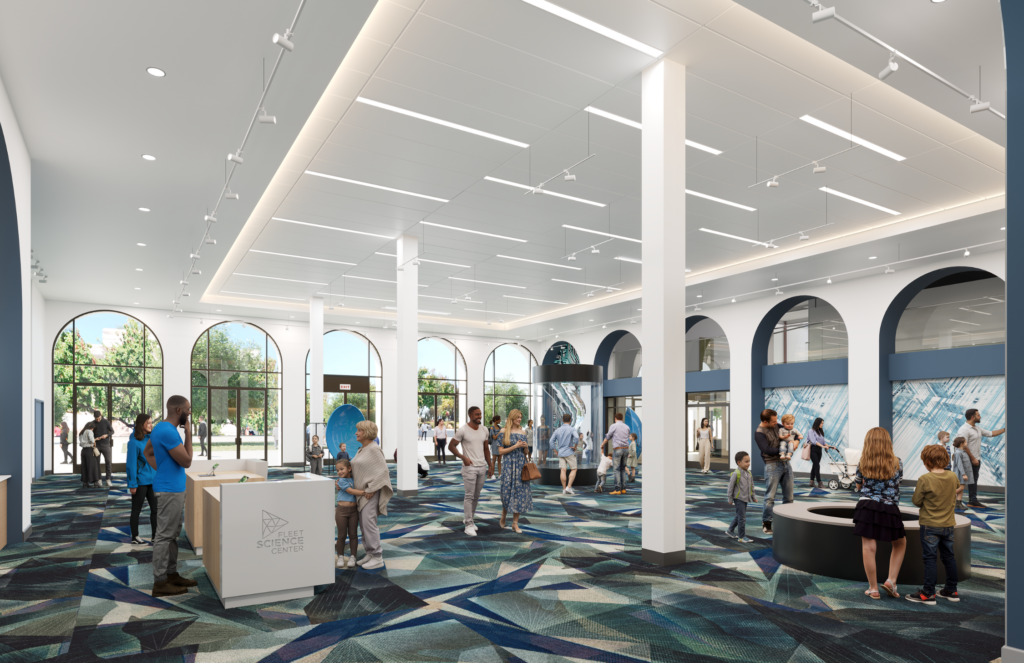
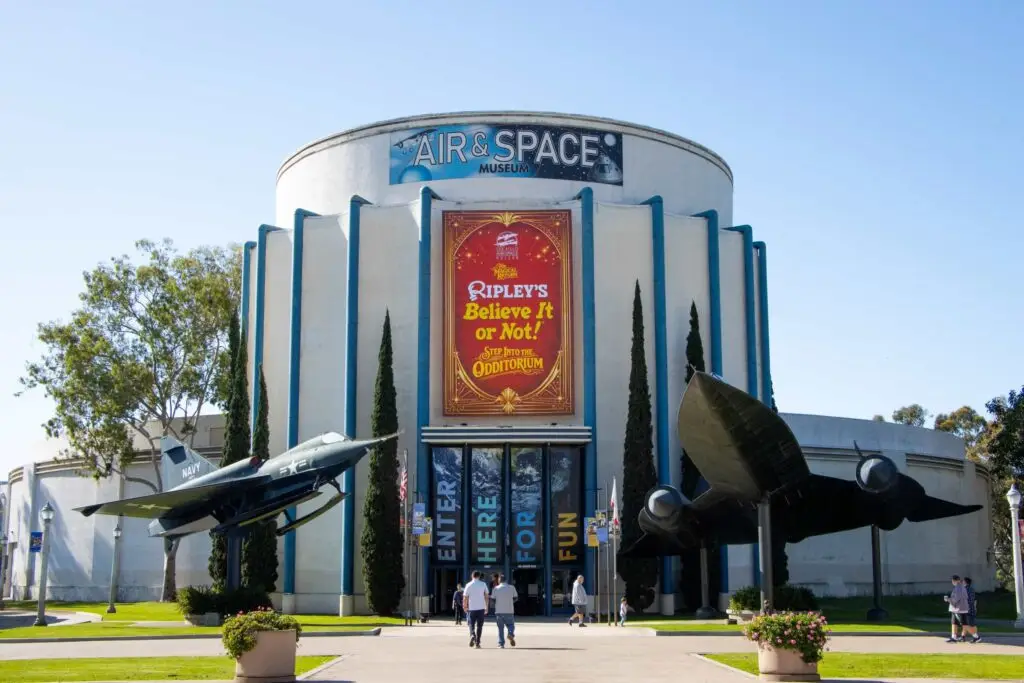
Blast off on a simulated trip to space at the San Diego Air & Space Museum, then check out artifacts from aviation legends, including the Wright brothers, Amelia Earhart, and Buzz Aldrin. Discover new perspectives revolutionizing the science world, learn about an often overlooked but overutilized utility, and exercise your creativity at the Fleet Science Center.
Calling all theater-lovers, Balboa Park has something for you, too. The San Diego Junior Theatre will present their musical take on beloved children’s book A Bad Case of the Stripes from June 26 through July 12. And laugh, cry, and marvel in awe as the pros of The Old Globe perform Kim’s Convenience, the award-winning comedy that inspired the popular series, from May 15 to June 14.
There’s nowhere else in Balboa Park quite like WorldBeat Cultural Center. The institution celebrates African diaspora and indigenous cultures around the world using art, music, dance, and education. The building, a renovated water tower covered in colorful murals, houses a performing arts center, museum, gift shop, cafe, and outdoor classroom.
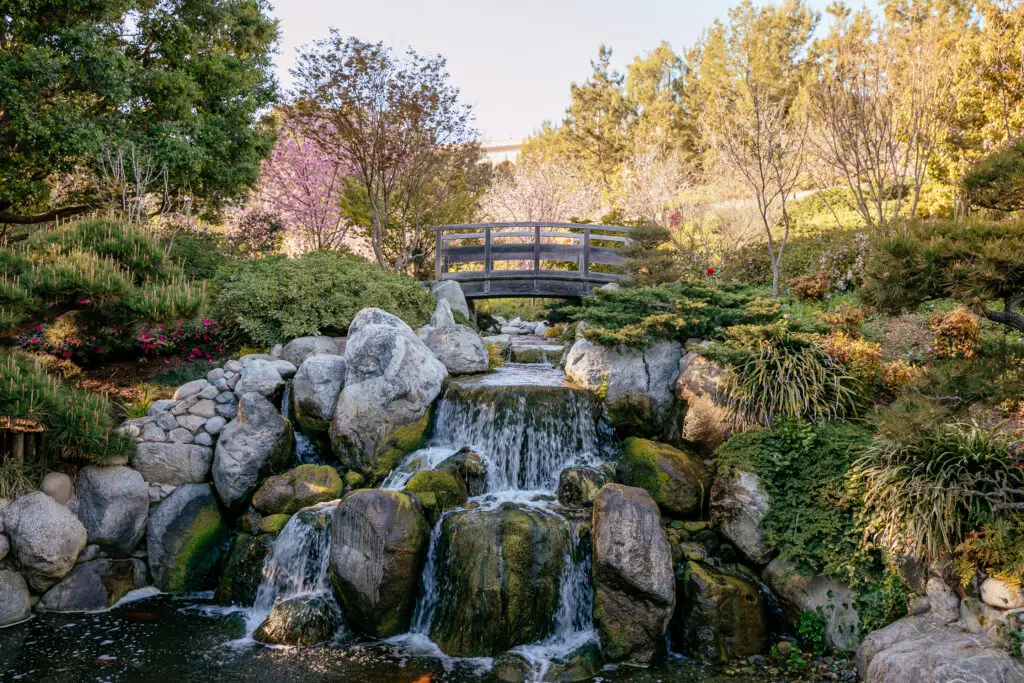
If you’d like a side of nature with your culture, Balboa Park has you covered there, too. Stroll through the gardens of the Japanese Friendship Garden & Museum, a monument to the relationship between San Diego and its sister city, Yokohama, Japan. Inspired by traditional Japanese design dating back centuries, the 10-acre respite features a living exhibition that showcases plants native to both cities.
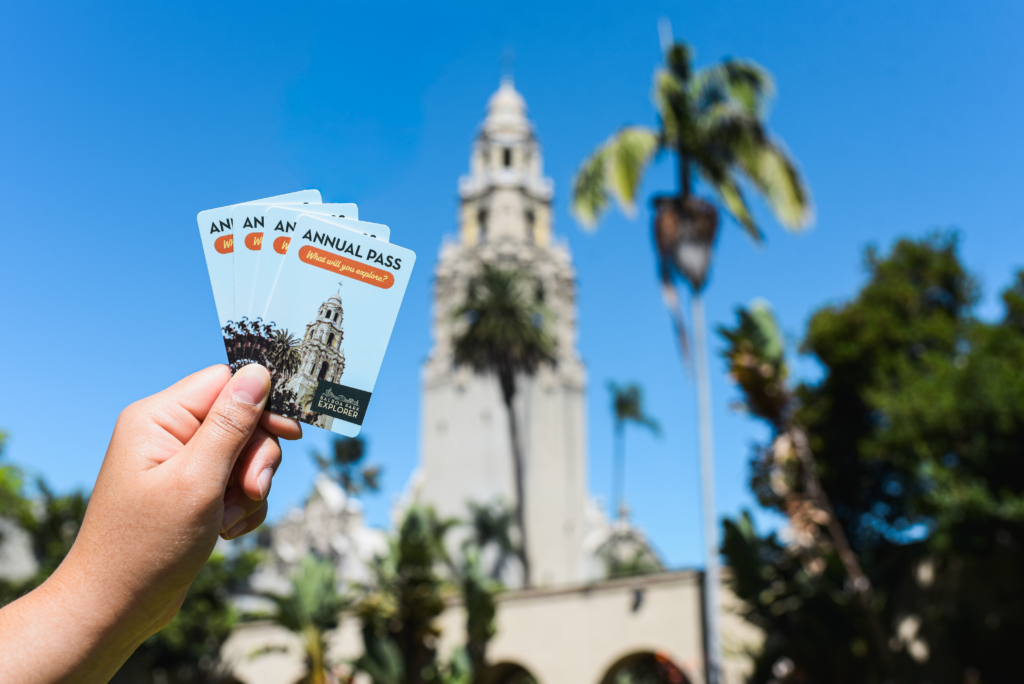
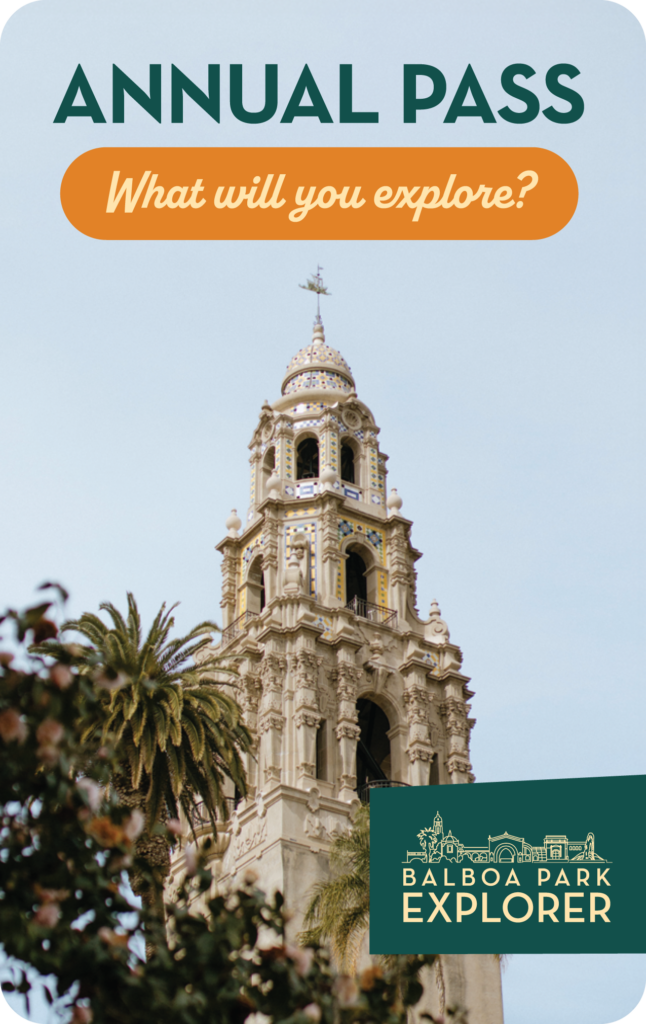
If there seems like a lot going on in Balboa Park, it’s because there is. Let theBalboa Park Cultural Partnership be your guide. The organization is the umbrella for 24 of the park’s institutions and offers an Explorer Pass that allows visitors to access multiple museums for one affordable price. The hardest part is picking where to start.
16 Museums, One Pass
Save on admission to San Diego’s top museums with the Balboa Park Explorer Pass. Explore 16 museums of art, science, history and culture across Balboa Park — all with one affordable pass. Choose the option that fits your pace: the Limited Pass (one day for up to four museums), the Parkwide Pass (seven consecutive days of access to all 16 museums) or the Annual Pass (365 days of unlimited exploring).
Looking for an experience-driven gift? Let the museum lover in your life enjoy their favorite museums all year with a Balboa Park Explorer Annual Pass gift voucher.
Bigger experiments, brighter ideas, and boundless curiosity await at the newly reimagined Fleet Science Center. This summer, the Fleet debuts Element 8 Cafe, an expanded theater queuing and concessions space, two new gallery spaces, and, for the first time, a free entrance gallery exploring science in and around San Diego. The transformation marks a new chapter for the Fleet, keeping it a vital, innovative, and accessible science hub for the region. Visitors are invited to explore the experience this summer and connect with the power of science like never before.
Address: 1875 El Prado, San Diego, CA 92101 Website:FleetScience.org Hours: 10 a.m. to 5 p.m. daily Phone: 619-238-1233
Japanese Friendship Garden & Museum
An accredited cultural gem, the Japanese Friendship Garden & Museum brings traditional Japanese garden design to life with koi ponds, curving walkways and layers of greenery. Guests explore bonsai trees, streams and peaceful nooks while taking part in exhibits, educational programs and festivals that illuminate Japanese culture. Situated in the heart of Balboa Park, the garden doubles as a meditative retreat and a dynamic gathering place, welcoming visitors to slow their pace and connect more deeply.
Address: 2215 Pan American Road E, San Diego, CA 92101 Website:Niwa.org Hours: 10 a.m. to 7 p.m. daily; last admission at 6 p.m. Phone: 619-232-2721
The Old Globe
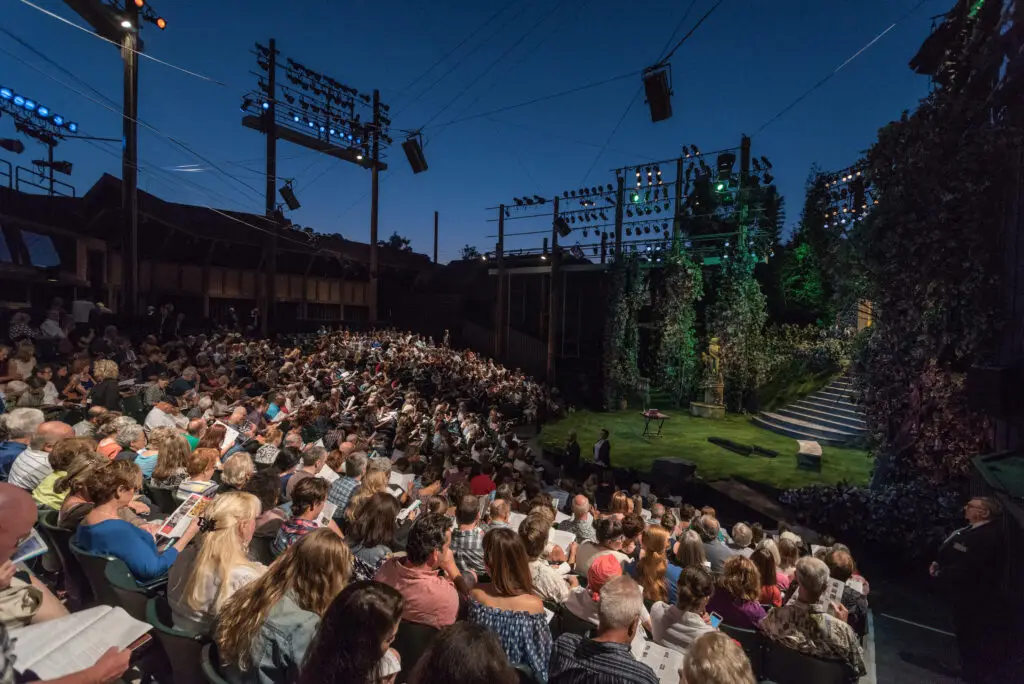
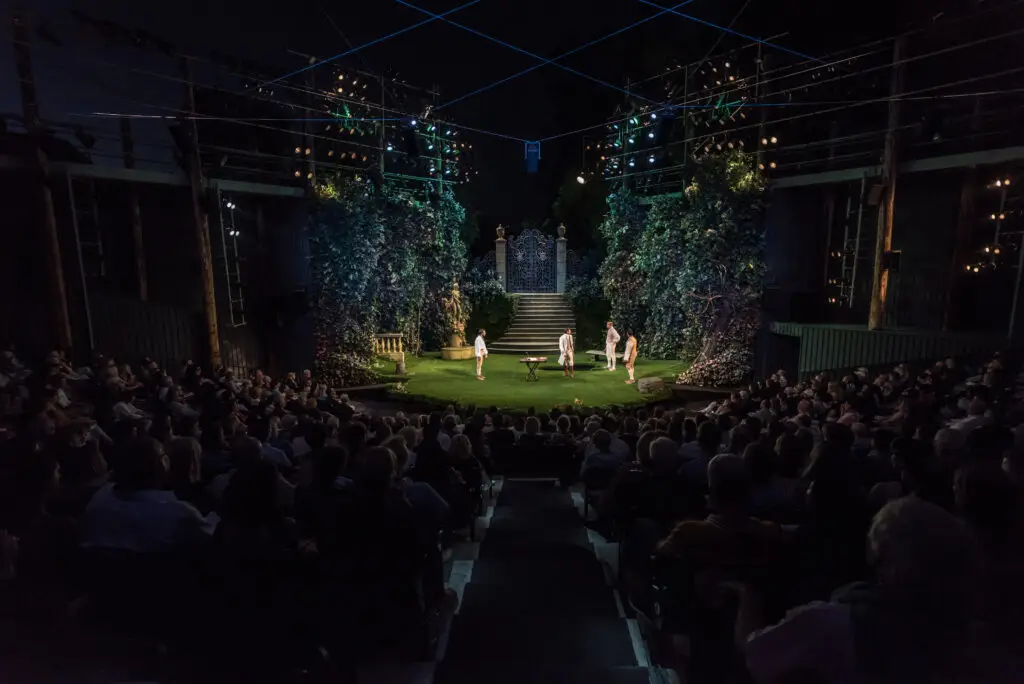
A San Diego summer favorite, The Old Globe invites audiences to experience a beloved local tradition in its outdoor Lowell Davies Festival Theatre.
This summer, the 2026 Shakespeare Festival presents two thrilling tales of power, passion and romance. Measure for Measure, running June 14 through July 12, 2026, is a riveting story of justice and hypocrisy that asks who holds power, who is punished and what it truly means to be virtuous. Much Ado About Nothing, playing Aug. 2–30, 2026, is a classic rom-com packed with schemes, sparks and laughter as opposites attract. Audiences can enjoy both shows for $44.
Address: 1363 Old Globe Way, San Diego, CA 92101 Website:TheOldGlobe.org Hours: Box office open Tuesday–Sunday, 1 p.m. to final curtain Phone: Box office, 619-234-5623
San Diego Air & Space Museum
Aviation and space exploration come to life at the San Diego Air & Space Museum. See an airworthy replica of the Spirit of St. Louis, a Gee Bee racer and historic aircraft from World War I, World War II and the Korean and Vietnam eras. Get up close to the Apollo 9 command module — one of only 11 of its kind in the world — along with Mercury and Gemini capsules, Mission Control and space shuttle simulators, and a selfie spot beside a lunar lander on the moon. Running through 2026, Ripley’s Believe It or Not! brings oddities from around the world to Balboa Park.
Address: 2001 Pan American Plaza, San Diego, CA 92101 Website:SanDiegoAirAndSpace.org Hours: 10 a.m. to 5 p.m. Phone: 619-234-8291
San Diego History Center
History belongs to everyone. At the San Diego History Center, two experiences bring that history to life this summer: America at 250 and the Center for Women’s History. America at 250 traces San Diego’s place in 250 years of U.S. history, while summer programs invite children to learn and explore. The Center for Women’s History amplifies the voices of women whose leadership and creativity have shaped our region.
By understanding our past, we build a more vibrant and inclusive community together. These vital educational experiences are only possible through generous community support. Discover your roots, spark meaningful dialogue, and help keep San Diego’s stories alive for future generations.
Address: 1649 El Prado, Suite 3, San Diego, CA 92101 Website: SanDiegoHistory.org Hours: 10 a.m. to 5 p.m. Wednesday–Sunday Phone: 619-232-6203
San Diego Junior Theatre
Junior Theatre is San Diego’s longest-running youth theatre program, empowering students ages 4 to 18 to explore storytelling, performance, and collaboration in a supportive environment. Through classes, camps, and productions, young artists build confidence, creativity, and lifelong skills onstage and off. Each season features a wide range of opportunities, from introductory experiences to advanced training in acting and musical theatre.
Looking for a summer adventure? Junior Theatre’s Summer Camps deliver dynamic programs for grades K–12, including musical theater intensives, acting academies and immersive JT Studio experiences. It’s a place where imagination truly takes center stage.
Address: 1650 El Prado, Suite 208, San Diego, CA 92101 Website:JuniorTheatre.com Hours: 10 a.m. to 5 p.m. Phone: 619-239-1311
San Diego Natural History Museum (The Nat)
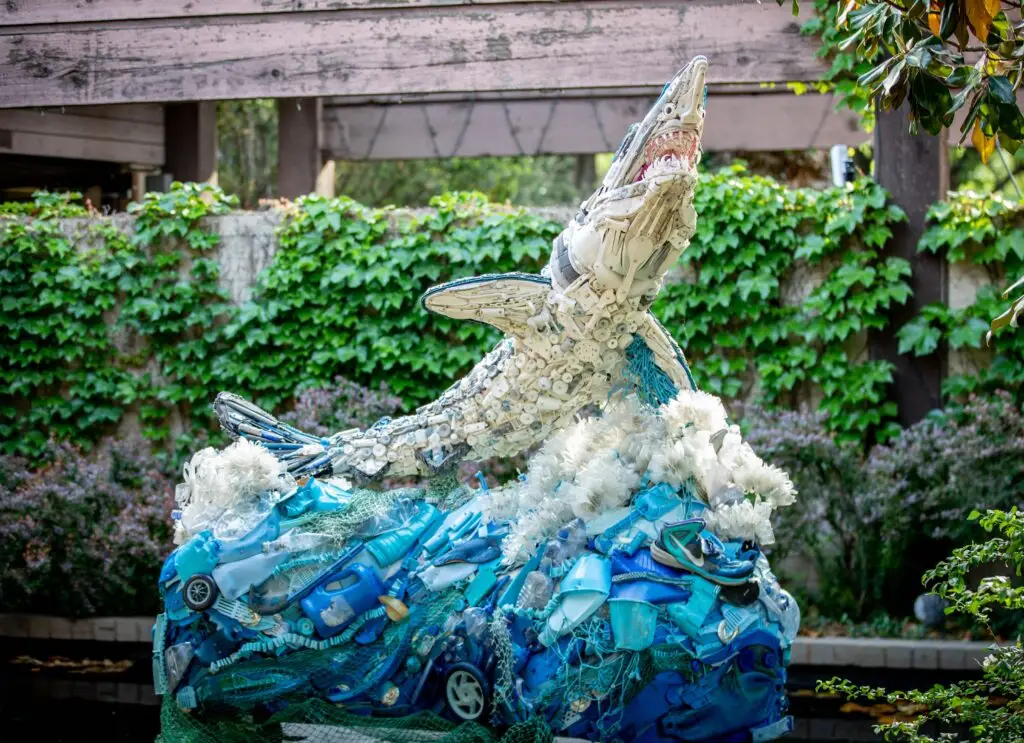
This summer, The Nat is talking trash—literally. Their newest exhibition, Washed Ashore: Art to Save the Sea, features larger‑than‑life marine sculptures made of ocean debris collected from beaches. It invites visitors to explore the impact of plastic pollution and discover ways to take action.
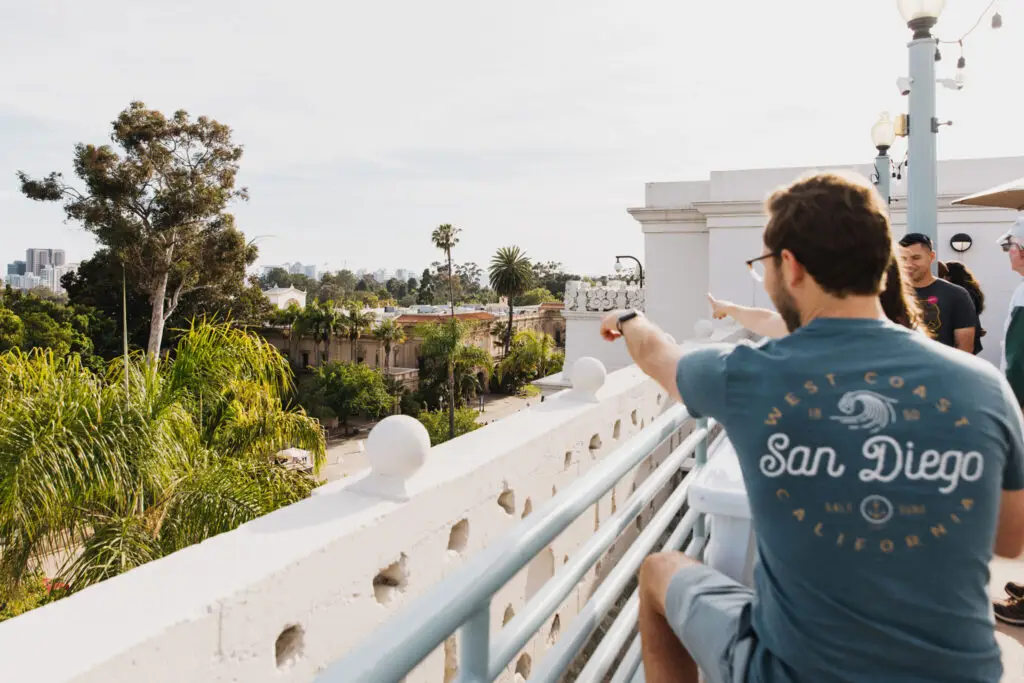
But the experience doesn’t stop at the gallery doors. Friday nights, the exhibition transforms into an ocean-themed “dive bar” during Nat at Night. Select Sundays bring something brand new: a rooftop brunch with sweeping Balboa Park views. Add two new giant-screen films and five floors of nature to explore, and The Nat is shaping up to be one of the season’s must-visit destinations.
Address: 1788 El Prado, San Diego, CA 92101 Website: SDNat.org Hours: 10 a.m. to 5 p.m. daily; 10 a.m. to 11 p.m. Fridays in summer Phone: 619-232-3821
WorldBeat Cultural Center
The WorldBeat Cultural Center is a nonprofit multidisciplinary cultural organization dedicated to promoting, presenting and preserving Indigenous cultures worldwide through music, art, dance, education, sustainability and community programs. WorldBeat elevates multicultural artists, expands opportunities for cultural enrichment and fosters deeper understanding across traditions. WorldBeat offers a holistic cultural experience that inspires pride, unity, connection and belonging for all ages.
Address: 2100 Park Blvd., San Diego, CA 92101 Website:WorldBeatCenter.org Hours: Classes: Monday, Wednesday, Thursday, 6–9 p.m. Exhibits and café: Friday–Sunday, 11 a.m.–6 p.m. Phone: 619-230-1190
Event Calendar
Throughout 2026: Ripley’s Believe It Or Not!
Step into a world of the weird and wonderful at Ripley’s Believe It or Not! at the San Diego Air & Space Museum in Balboa Park. Explore hundreds of bizarre artifacts, interactive displays and unbelievable stories that celebrate the curious and the extraordinary.
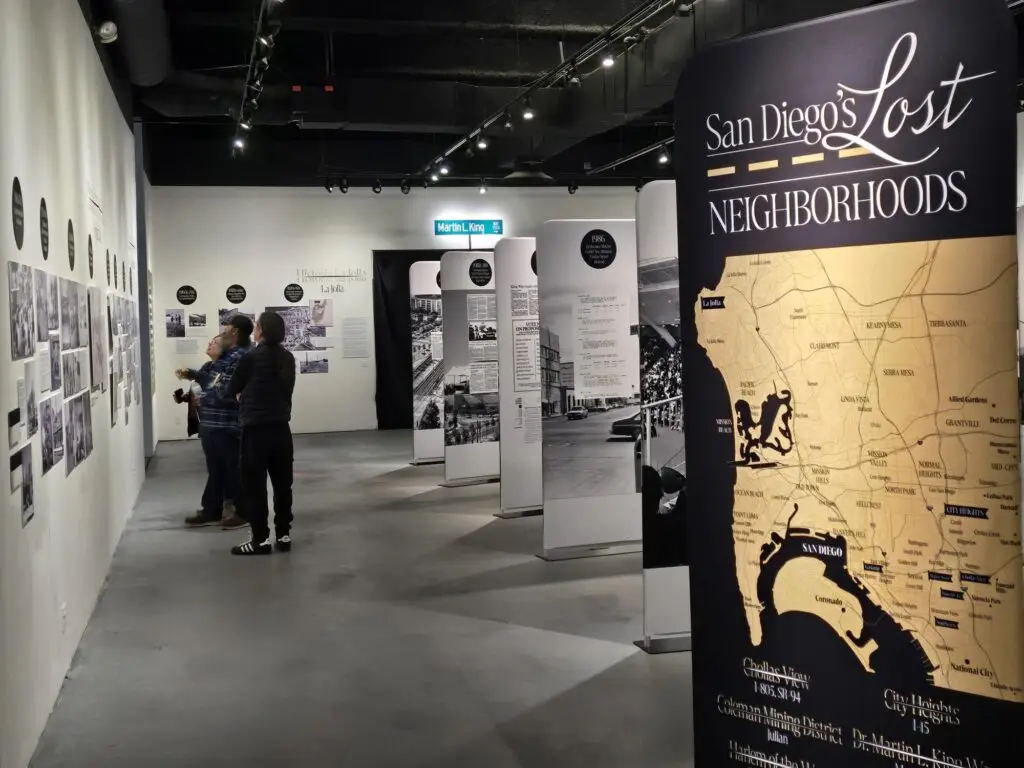
Presented in partnership with the San Diego Museum of African American Fine Arts, San Diego’s Lost Neighborhoods uses augmented reality, oral histories, and archival materials to explore communities and residents displaced by redlining, freeway construction, and other discriminatory policies.
Spend a summer night at The Old Globe. The Lowell Davies Festival Theatre stages Measure for Measure (June 14–July 12) and Much Ado About Nothing (Aug. 2–30), offering two unforgettable Shakespeare productions for just $44.
The Old Globe | 1363 Old Globe Way, San Diego, CA 92101
June 8–Aug. 7: Theatre Summer Camps
Summer camps at Junior Theatre spark creativity for grades K–12 with hands-on training, musical theatre intensives, acting academies, and JT Studio experiences.
A museum visit turns into a Sunday Funday with the addition of rooftop brunch, featuring mimosas, bloody Marys, and brunch bites from Wolfish by Wolf in the Woods (June 14, August 9) and Hash House a Go Go (July 12).
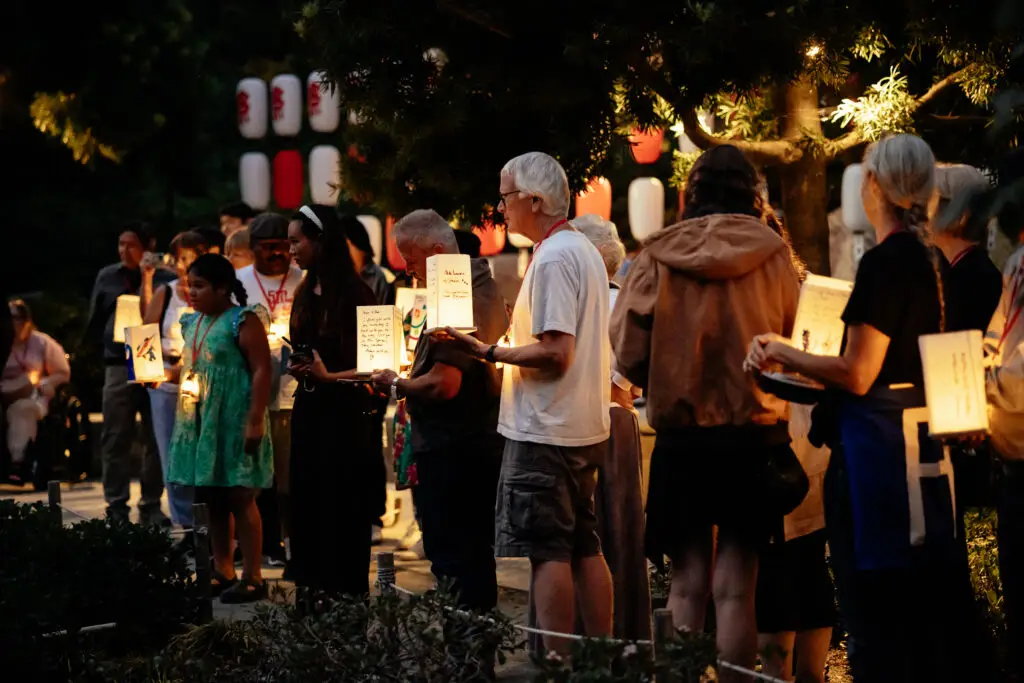
Nagashi at the Japanese Friendship Garden & Museum by floating a lantern to honor loved ones who have passed. Stroll merchant booths, enjoy cultural performances in the Inamori Pavilion, and sample food vendors plus a beer and sake garden in the lower garden.
Explore arts, science, history, and culture in the Balboa Park Cultural District with one convenient, affordable Pass. The Balboa Park Explorer Pass is your ticket to up to 16 museums and endless fun! Purchase your pass at BuyMyExplorer.com.