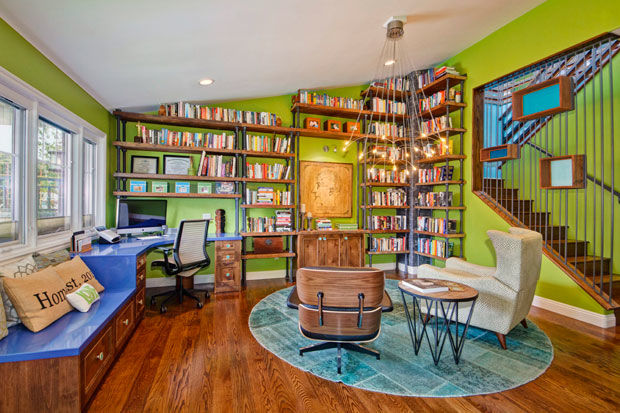
Welcome to the bright and colorful world of Shannon Lerach and Todd Murphy. The young Solana Beach couple was inspired by photos of an old library and coral reefs with bright blues and greens. This space, complete with his and her chairs, serves as the main entry. Before the remodel, it was a formal dining room. “I knew that we didn’t need a formal dining room,” Lerach says. “But I love to read and knew I wanted a library or office.” She credits Murphy, an artist and DJ by trade, with the bold color choices. “I knew I’d want to wake up every day to something that made me happy and inspired me,” explains Murphy, who’s been drawing and painting since he was a kid. Together, the couple worked with Sol Quintana Wagoner of Jackson Design & Remodeling to realize their vision. Here, books become the art. A welder created the shelving system, with reclaimed wood and long threaded poles. The low-voltage pendant is by LBL Lighting, and the blue desktop is made of Silestone.
The rendition of Gustav Klimt’s The Kiss by Stacy Vosberg was meant to be an actual surfboard, but instead, the couple decided to hang it in their stairwell.
CURB APPEAL
The couple got rid of the white-picket and painted-yellow exterior. They chose a seaside blue-gray for the overall color, and added a natural stacked stone wall, customizing its height to accommodate their three dogs. The landscaping is laden with plants that thrive in a beach environment, and the design was kept simple for easy maintenance.
“People always say to us, ‘Are you going to like that color in five years?’” says homeowner Todd Murphy. “And I always think, ‘It’s no big deal. We’ll just repaint!’”
PUP PORTRAITS
Murphy painted these colorful pop- art portraits of the couple’s three dogs (from left to right): Chloe (a white boxer), Francis (a red Boston terrier), and Pig (a French bulldog). Inspired by graffiti street art and the works of Andy Warhol, Murphy says, “Having a house reflects your creativity.” This converted garage is his favorite spot to hang out. The designers added engineered vinyl flooring to make it feel more like an art studio. Murphy stores his paint supplies and DJ equipment in there—plus the couple’s wide assortment of bikes, surfboards, wetsuits, and tools. “I love that all my hobbies and interests can live in one room,” he says. “I like to open the garage doors and let the ocean breeze in.”
RUNNING WITH IT
Yep, they have that many pairs of running shoes—and they’re all just as colorful as the house itself. “We aren’t 18 shades of beige. We like bright colors,” says Lerach, who jokes that Lululemon is her stylist and REI is her Mecca. It’s worth noting that the closet, along with the rest of the home, is always this organized. The self- proclaimed Container Store junkie adds, “I love to organize, alphabetize, and label!”
INDOOR SUNSET
The couple was thrilled when they discovered NYC- based wallpaper company Flavor Paper. Now almost every room in their house has a state- ment wall with a different pattern on it. “We didn’t just want to cover our walls with stuff,” Lerach says. “The wallpaper gives character to the rooms.” The upstairs hallway mural is called Undertow, designed by Steve Ellis.
SLIDING DOORS
Rustic barn doors serve as the entry to the upstairs master suite and a downstairs guest room. The wood adds warmth to the space, and complements the new stair railings. “It was a very collaborative project, with lots of custom details,” says designer Sol Quintana Wagoner.
SOFT SILENCE
Cozy and quiet, the master suite is Lerach’s favorite room in the house. “I love the bright colors in the rest of the house,” she admits. “But there’s nothing like taking a big exhale in here at the end of the day. You just fall into the room.” The wintery wallpaper mural behind the bed is called Soft Silence, designed by Boone Speed (available at Flavor Paper).
San Diego is just out here minding its own business. It’s long been cast as Los Angeles’s less ambitious sibling—the chill one, the one who shows up late for dinner reservations in flip-flops with a few provocative opinions. Architecturally it’s often cast the same: secondary, derivative, a footnote to California modernism that seems to begin and end with the Stahl House (Case Study House #22). LA has Pierre Koenig, Craig Ellwood, John Lautner. San Diego has the original fish taco.
But this version of the story is redacted, metaphorically speaking.
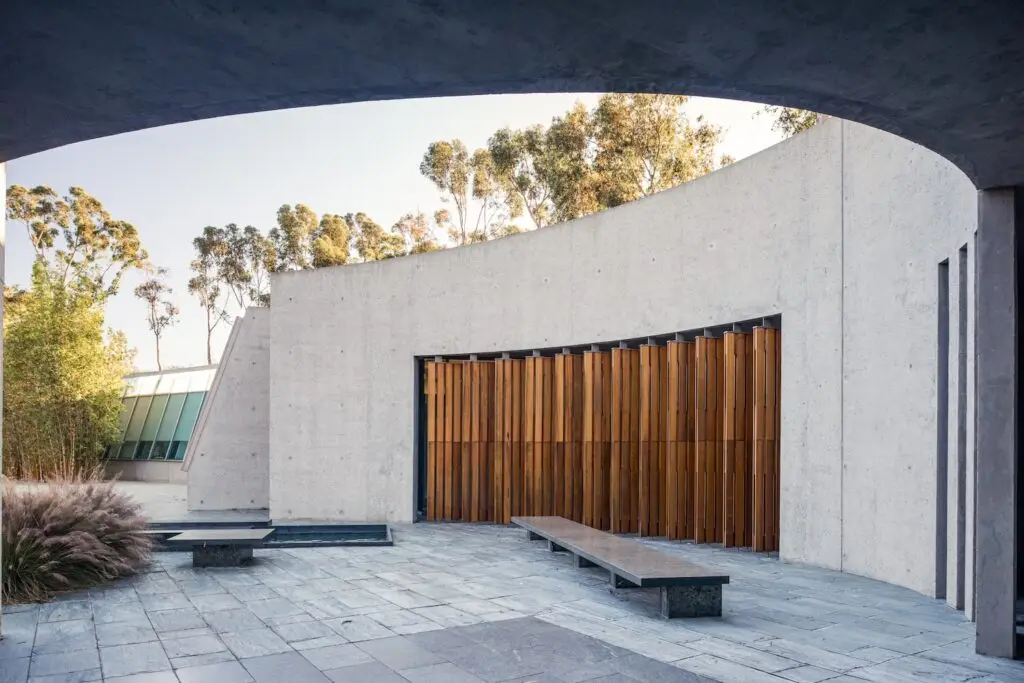
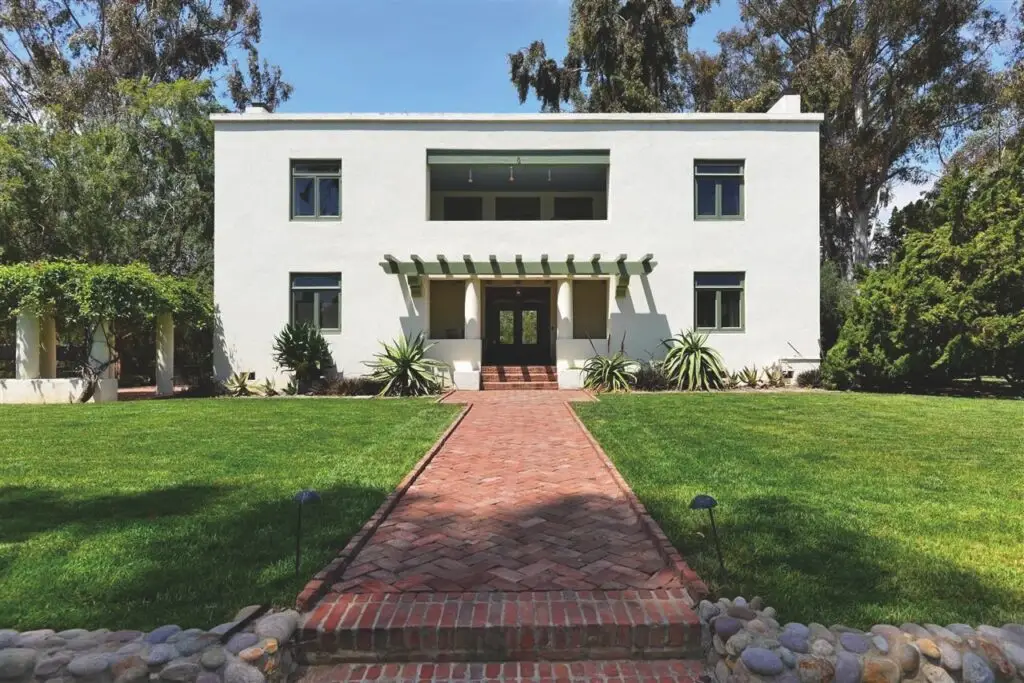
While the jazz hands of Hollywood and its hills cast a spell on historians and architecture buffs, San Diego had, and has, its own quiet evolution: It invented and reinvented itself through homegrown modernism, beginning with The Allen House (1907) in Bonita by Irving J. Gill.
“The biggest misconception is that San Diego was following Los Angeles,” says Keith York of Modern San Diego, one of the city’s top guides to modernist architecture. “Those who consider Rudolph Schindler and Richard Neutra as the fathers of Southern California Modernism often fail to recognize the outsize influence Gill and his buildings had on their work.”
Courtesy of Keith York
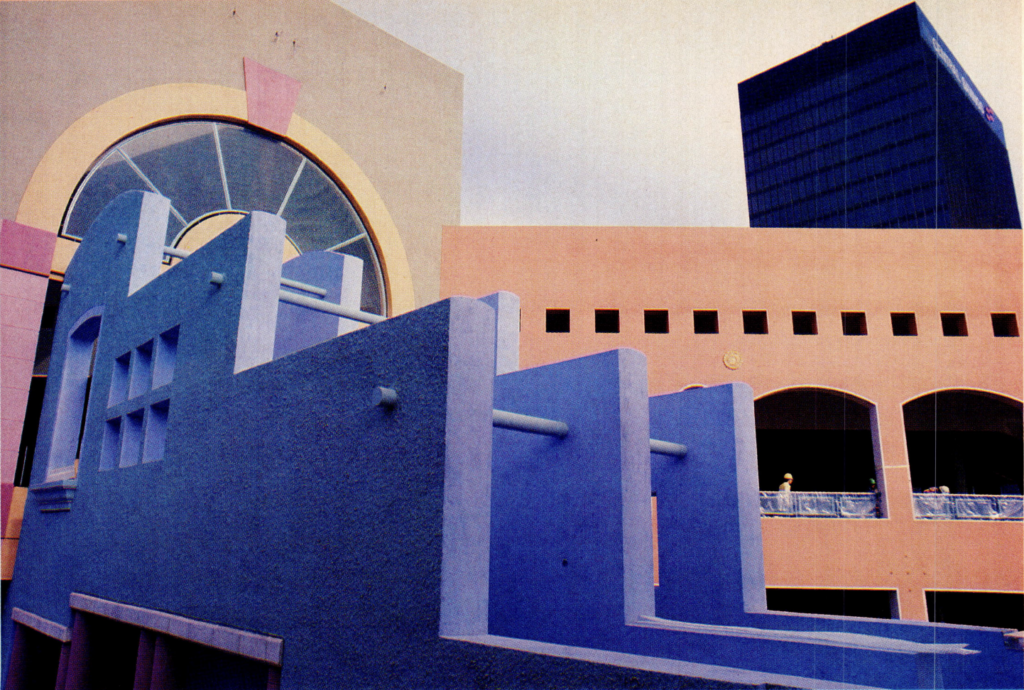
A new book, The Distinct Modernism of San Diego—written by Mark Hargreaves and Hallie Swenson, published by York—focuses on eight architects who were born, raised, or built their careers in San Diego. It illustrates how the city wasn’t hosting weekend warrior architects on side quests. It was a staging ground for a less look-at-me modernism from luminaries like Gill, Lilian J. Rice, Richard Requa, Lloyd Ruocco, Frederick Liebhardt, Kendrick Bangs Kellogg, Sim Bruce Richards, and Cliff May.
“Absent the backstabbing competition for projects, a collegial group of architectural peers collaborated and maintained lasting friendships with one another as they designed in response to the temperate climate and slower economy,” York says.
Largely unknown until the mid-1960s, Gill is a marquee name today. He arrived here from the East Coast at a moment when San Diego was still defining itself, which gave him the freedom to invent something new, experiment, rebel.
Instead of imposing the flourishes and frills of the time, he considered San Diego’s climate, light, landscape, history—the joie de vivre—and designed for this place. “[Architects of the west] must have the courage to fling aside every device that distracts the eye from structural beauty, must break through convention and get down to fundamental truths,” he once said, a sentiment that nails the un-ornate, total lack of pretension that’s defined San Diego people and culture.
And, lo, did Gill fling: His flat roofs, clean lines, and almost no ornamentation—though not necessarily modernism in the Eames or Eichler sense—foreshadowed what would later be called minimalism. Gill eventually became synonymous with the Los Angeles narrative, but broader architectural histories overlook the fact that his most progressive designs happened here.
Courtesy of Keith York
Another key to San Diego’s architectural movement was Lilian J. Rice, who often worked behind the scenes with little credit. She was one of only about 10 women in America licensed as architects at the time. Even though she died from cancer at 43, she somehow managed to complete an estimated 170 projects in the region, many in Rancho Santa Fe.
Born and raised in National City, Rice also wasn’t importing ideas. She shaped her own based on her understanding of this region and her commitment to protect the natural environment. Her work has been categorized as Spanish Colonial Revival, but she wasn’t reviving as much as she was refining a style suited to our border region—serene, mirroring nature, beautiful.
Like Sim Bruce Richards, who was his own way of life. While Gill stripped away ornamentation and Rice focused on the peace of open spaces, Richards came along several decades later and went full emo. By then, modernism had grown deep roots; its steel-and-glass structures took themselves very seriously. Richards came to party.
Photo Credit: Ollie Patterson
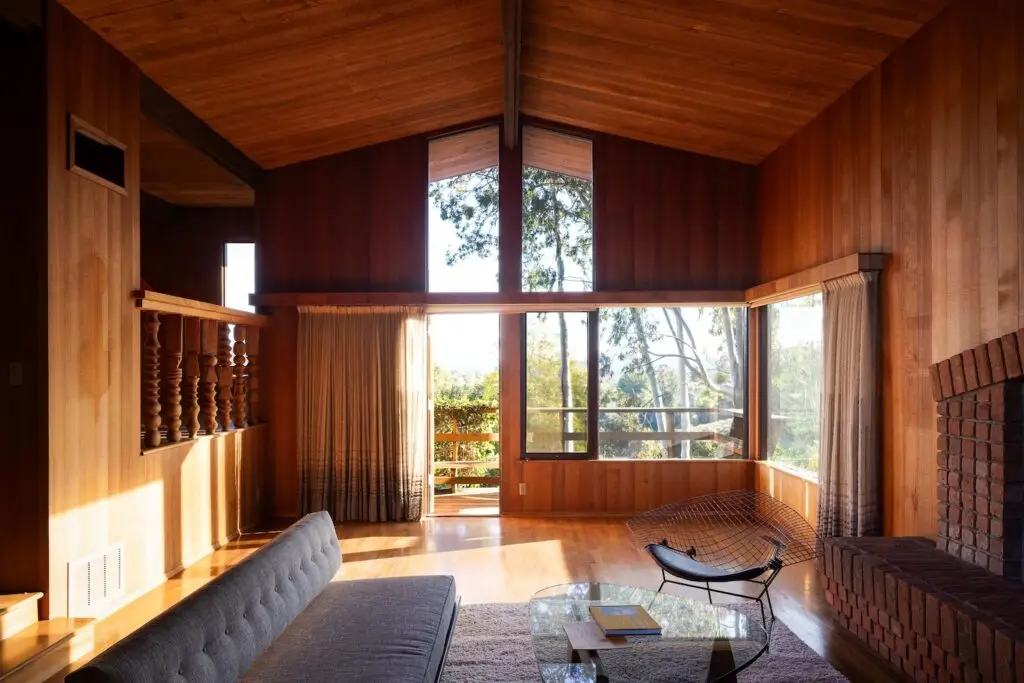
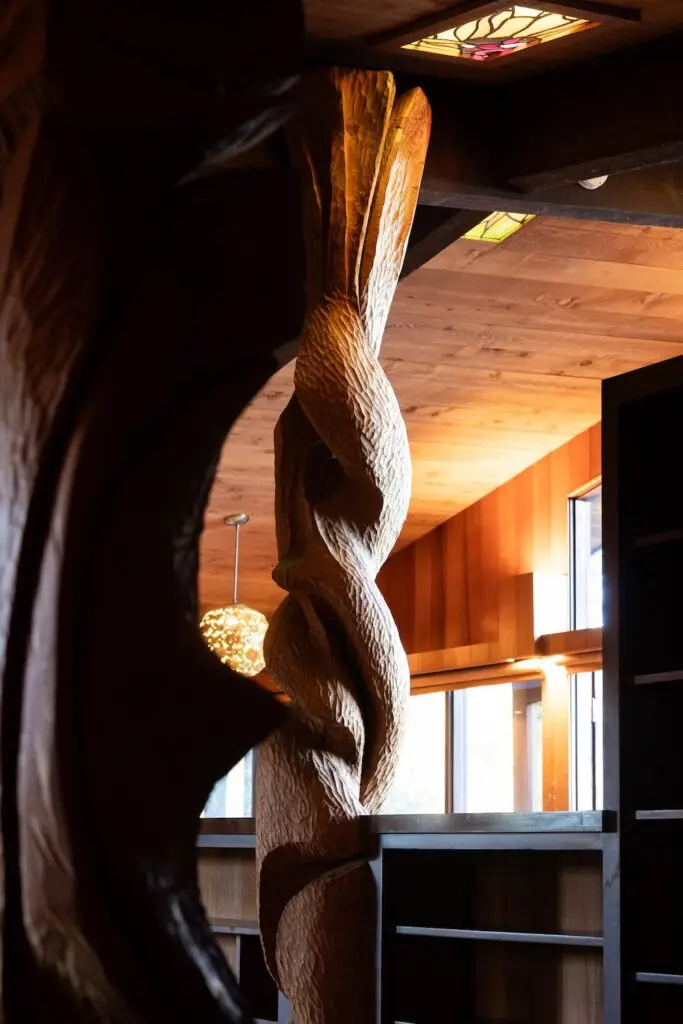
An eccentric, unpredictable man with half a face (part of his jaw was removed following a bone infection when he was a child), his life was a jalopy of adventures. He was opinionated and passionate about design, music, texture—and he created what he called a “sensuous environment.” He wanted his clients and their guests to feel the spaces as much as to be in them, appealing to the visual, tactile, nasal (“a cedar house smells good”), auditory (“acoustically superior”), even taste. “Though, I‘ve never had a client lick my houses,” he once wrote.
Organic, woodsy, textured, aromatic—if you ever find yourself in a Sim Bruce Richards house, a licking impulse might not seem so outrageous.
Gill, Rice, Richards and the other architects in Distinct Modernism built a legacy in San Diego that resonates nationally. And the work of these heavy hitters isn’t stuck in an inaccessible collectors realm: This October, homes by Kellogg and Liebhardt will open to the public as part of the La Jolla Modernism Home Tour—an opportunity to experience it not as a museum relic or magazine image (ahem), but as something alive.
Modernism in San Diego was never about glamour or an intention to be iconic. What transpired here is more nuanced, more ingrained with a less shouty aesthetic. A very San Diego aesthetic.
Kelvins. If you’re anything like me, you probably haven’t thought about them since high school chemistry. Lately, though, they’ve become one of the more hotly debated measurements in interior design.
Kelvins measure the color temperature of light, which is a technical way of saying they’re key to whether a room feels calming or slightly unsettling. The wrong Kelvin temperature can suddenly give your bedroom the vibe of a hospital corridor. Warmer Kelvin temperatures cue relaxation. Cooler ones sharpen alertness. Interior designers now talk about Kelvins the way chefs talk about salt: invisible when it’s right, immediately obvious when it’s not.
That focus on light reflects a broader shift in San Diego homes—people are worried less about how spaces look and more about how they hold you over the course of a day. Design decisions now favor what fades into the background and silently improves daily life. And once you start thinking that way, it’s hard not to apply the same logic to everything else in the house.
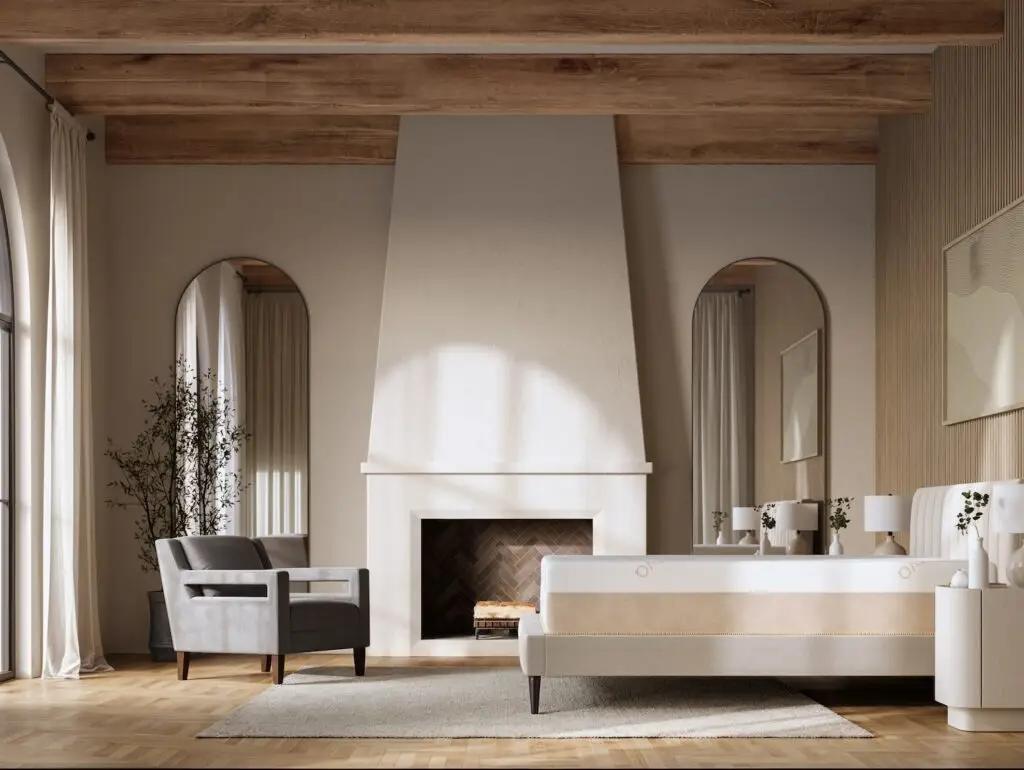
My husband and I felt that impulse firsthand last year while shopping for a mattress. We spent multiple weekends wandering the showrooms at Westfield UTC, lying on beds in our outside clothes, asking questions about spinal alignment, breathability, and temperature regulation. We debated coils versus foam, read studies on sleep stages and thermoregulation, and compared notes in the parking lot like two people deciding whether to buy a house.
Courtesy of Saatva
Eventually, we chose the Saatva Contour—a name that sounds more like a luxury sedan than something you sleep on. That felt fitting, given the amount of deliberation we put into it. We picked it for its spinal support and ability to dissipate heat through the night, two factors consistently tied to deeper, less fragmented sleep. At the time, it felt overly academic, but it made its case experientially: We experience fewer disruptions at night and wake with the unexpected sense of being genuinely rested.
Eventually, I realized that our search had been less about shopping for comfort and more about shopping for recovery.
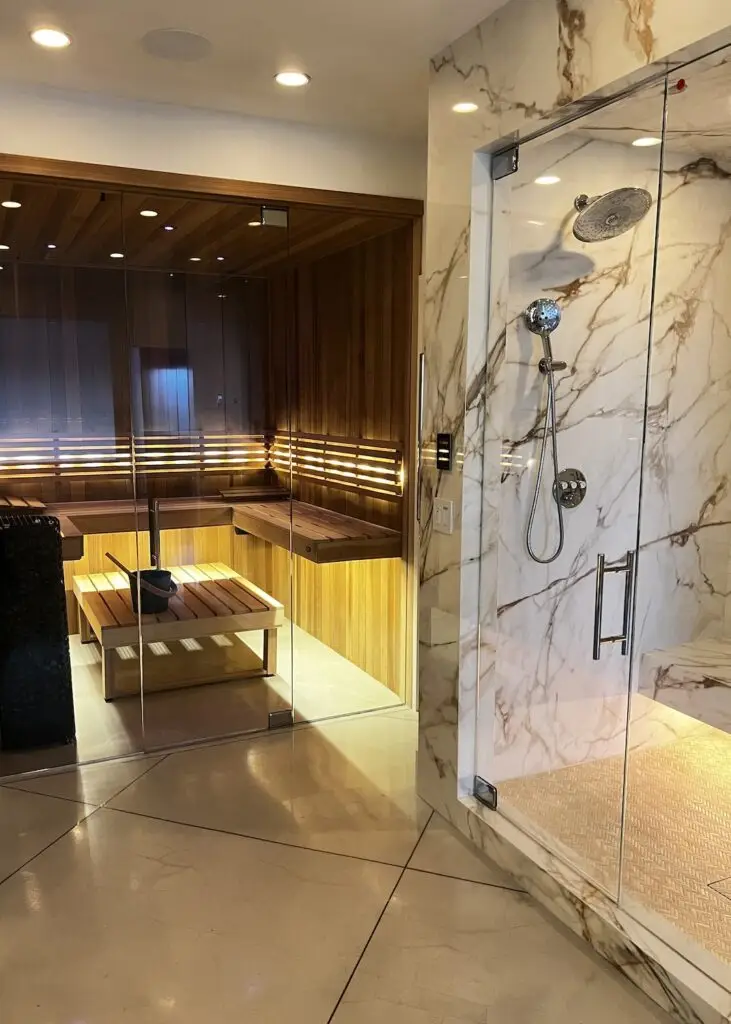
Now when I wake up, I usually head straight to our little sauna, which sounds much more impressive than it actually is. It sits just outside the house, tucked into a narrow corner of our small backyard. Technically, it’s meant to live indoors, but we adapted it for outdoor use because that was the only place it would fit. The door closes with a soft thud; the scent of cedar blooms as the heat sets in. Inside, there’s a single bench and barely room to stretch my legs. It isn’t glamorous, but the science on sauna use is compelling: Regular heat exposure has been linked to improved cardiovascular health, reduced inflammation, and more efficient recovery via circulation and the nervous system. To me, its real value is something simpler—a few quiet minutes that are mine before the day and its noise begin to make their claims on me.
Courtesy of James Denton Designs
For a long time, luxury meant square footage, statement kitchens, and bonus rooms designed to impress people who don’t actually live there. Homeowners are making different choices today.
“These days, the questions my clients ask are, ‘Will I actually use this?’” says James Denton, senior architectural and interior designer and owner of James Denton Design. “‘Will it help me sleep better? Will it simplify my routines?’”
Interior designer Maegan Ayukonchong, owner of M. Swabb Interior Design Collective, sees that shift in nearly every project. Clients want layouts that reduce friction, storage that actually functions, and spaces that feel uncrowded. “It’s less about filling rooms,” she says, “and more about designing homes that support how people want to live.”
That recalibration accelerated during the pandemic, when homes were suddenly forced to perform at full capacity. Living rooms became offices, kitchens became classrooms, closets became refuges for phone sessions with your therapist. Denton says he noticed clients suddenly confronting how their homes actually functioned.
Ashley Chavez, a realtor with Compass Real Estate in San Diego, watched the same awareness show up in buyer behavior. “After spending so much uninterrupted time at home, buyers started noticing things they used to overlook,” she says, like the amount of natural light, how rooms flow into one another, and whether spaces feel peaceful or overstimulating.
Health conversations widened beyond workouts to include sleep, stress, and recovery, areas where the home environment plays a defining role. Chavez notes that buyers may not use the word “wellness,” but their priorities are clear. “Clients comment on how a home feels,” she says. “They notice whether bedrooms are quiet, whether the layout supports their routines without constant adjustment.”
The results show up in what people choose to build and invest in. Spare bedrooms become infrared saunas. Massage chairs edge out media consoles. Red light panels replace bar carts, delivering low-level light that supports cellular repair, muscle recovery, skin health, and circadian signaling (it’s worth noting that cocktails pretty much do the opposite of all that). Rooms once dedicated to entertaining are reimagined for restoration.
Clement Qaqish drops into a chaise in the living room of his Solana Beach home with the familiarity of someone used to managing fatigue. A maxillofacial surgeon by day and an endurance athlete by choice, he’s completed 14 full Ironman races and a dozen Half Ironmans. “When you’re training this much, recovery isn’t optional,” Qaqish says. “And even if you’re not doing Ironmans, your body still has to recover—from stress, from sitting, from whatever you ask of it.”
Normatec compression boots sit coiled on the floor beside him—long black sleeves that look part medical device, part sci-fi costume. He slides his feet in one at a time, zipping them up to the thighs. They inflate, with air pulsing upward in slow waves, rhythmically compressing his legs to push blood and lymphatic fluid back toward his heart. The soft mechanical whir fills the room. The goal is faster recovery and less soreness after heavy training. “Most people wait until [their legs are] broken,” he says, smiling slightly. “I’d rather not get there.”
When Qaqish and his wife, Gabby Galleo, a biotech executive, moved into the house, those priorities shaped the abode early on. “The first thing I bought for our home was an infrared sauna for Clem’s birthday,” Galleo says. “Once we had the space, it just made sense.”
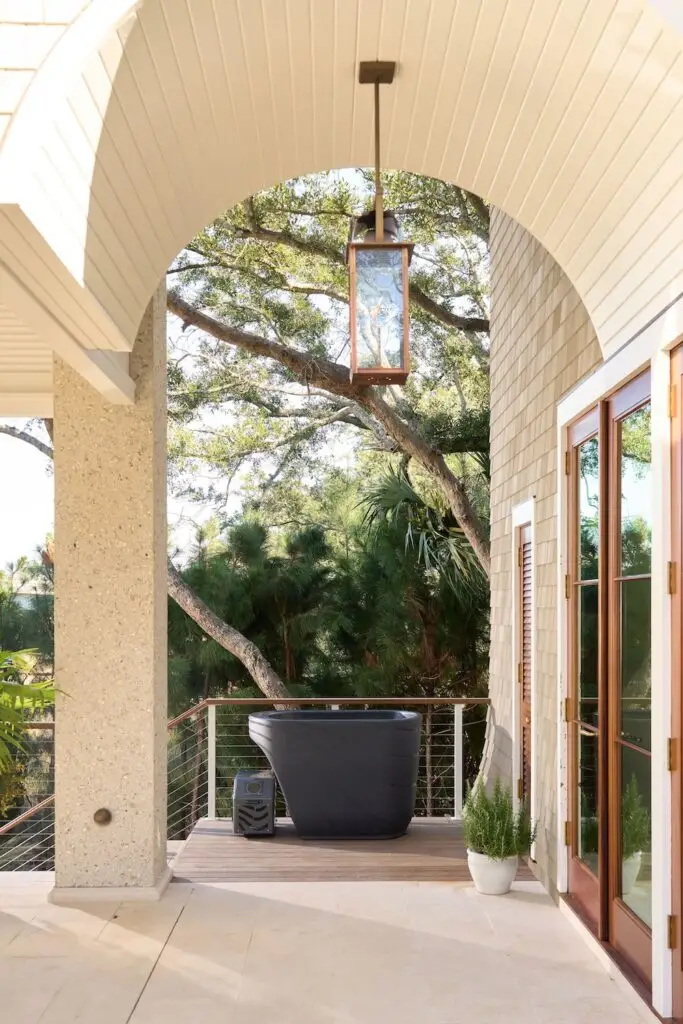
Courtesy of Nordic Wellness
From there, the rest followed naturally: a Nordic Wave Cold Plunge on the patio (to support nervous-system resilience and curb inflammation), compression boots by the couch, a red light mask on the armoire (to promote cellular repair and skin tone). Tools more commonly found in a training facility or high-tech spa are folded into the feng shui of the home. With all the tech scattered around the house, “it’s easier to do it than to avoid it,” Galleo says. “You’re just moving through your day, and it’s there. We didn’t want it to feel like a production. If it required driving somewhere or scheduling around it, we knew we wouldn’t do it consistently.”
While fancy equipment certainly helps you unwind after a hard workout, most of the changes that make a home extra restful can be accomplished without hiring a contractor or taking out a loan for the latest technology.
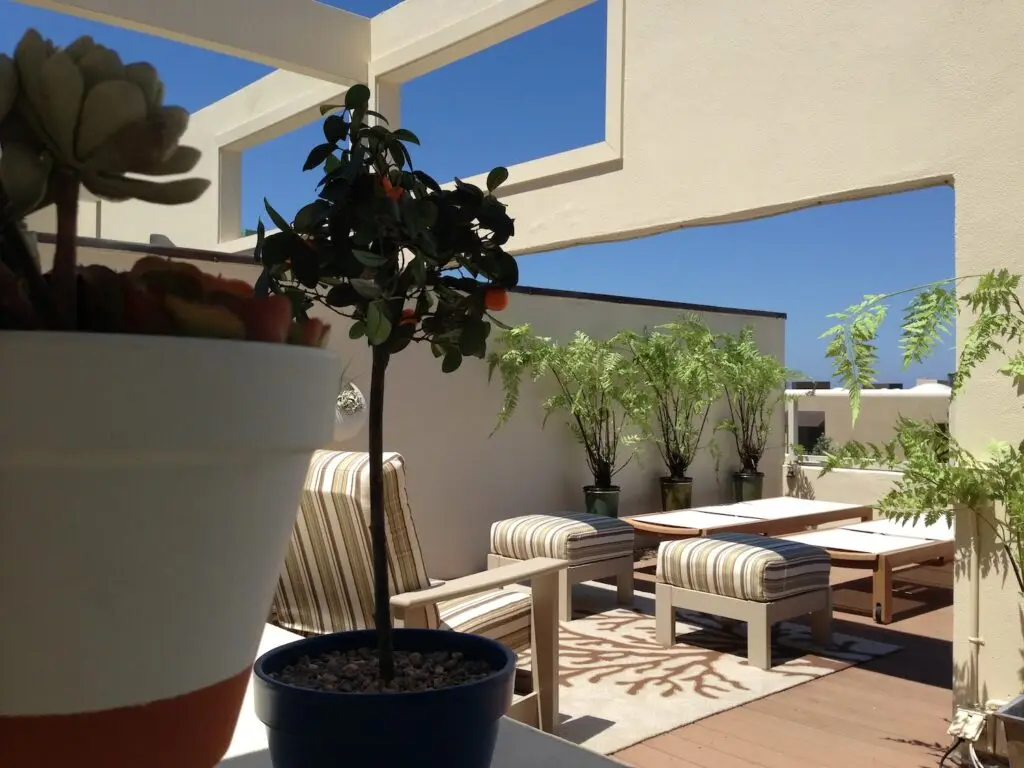
“Editing is the new flex,” Ayukonchong says. “The most impactful shifts are often the simplest ones: Add live plants for a fresh, calming boost; reorganize storage; replace heavy window treatments with breathable linens to soften natural light.”
In general, lighting is a low-cost approach to achieve an outsized impact. Denton recommends “warmer tones in bedrooms for relaxation, cooler bulbs in workspaces for focus, and dimmers that let rooms shift with the day,” (gotta get those Kelvins right!).
From there, he turns to details most of us overlook, even as research increasingly shows how powerfully they shape how we think and feel. “Start with acoustics. They are key to reducing stress and mental fatigue,” he says. According to research from the University of California, Davis, chronic background noise raises stress hormones and cognitive fatigue, which is why oversized rugs and soft window treatments that dampen sound can matter just as much as aesthetics.
And you can double up on the boons from your houseplants by intentionally placing mirrors near or across from them. Studies on biophilic design link visual exposure to greenery—even if it’s reflected—with improved mood and lower stress, while blank walls offer no such benefit.
Air quality is the final layer. Indoor air can be more polluted than outdoor air, and poor ventilation has been associated with headaches, brain fog, and disrupted sleep. Simple upgrades, like higher-grade HVAC filters or a modest air purifier, address a problem quietly and persistently affects many homes.
Courtesy of James Denton Designs
Even simply designating one chair for reading, one corner for stretching, or one surface for tea or journaling can reshape how a home functions. Research in environmental psychology suggests that context-dependent cues help the brain switch states more efficiently, making it easier to relax or focus when an activity is consistently paired with a specific place. Over time, the space itself becomes a signal, reducing decision fatigue and allowing the nervous system to settle more quickly.
Dr. Jenn Chang, a physical therapist, yoga therapist, and founder of The Movement Mechanic PT, walks me through her small Carmel Valley condo. “I didn’t have room to include things casually,” she says. “Everything had to earn its place.”
In her home office, where she sees clients, a yoga wall with mounted bars and straps that support alignment and traction anchors one side of the room. “It feels like a bonus,” she says. “I can use it with patients, but it’s also there for my own practice.”
In the garage, an infrared sauna sits snugly against the wall. Despite the condo’s limited storage, Chang is careful to keep the area around it uncluttered. “If the space starts filling up, the sauna stops feeling inviting,” she explains. “I notice that right away.”
Aerial yoga hammocks hang from the ceiling for her kids (with safety mats below). A compact Swedish ladder supports dead hangs and calisthenics and doubles as something her children climb on. A vibrating foam roller and a Theragun are stored nearby. “The easier it is to use and put away,” Chang says, “the more likely it becomes part of your day.”
For a long time, I resisted getting a cold plunge myself. It felt unnecessary, even a little excessive. But after spending time with people who treated it as just another part of the house, I eventually purchased one, setting it up on my patio, steps away from the sauna that shields me from notifications and the mattress that we spent so long researching. All together, they offer me permission to do less, move a little slower, incorporate recovery into my everyday life. In a culture that never stops asking what’s next, that feels like the most radical thing.
Ingrid Yang, M.D., J.D. is a hospital-based physician in San Diego, CA, certified yoga therapist, and longevity specialist. She loves *double hearts* San Diego and spends her days helping people fully engage in long, healthy lives through evidence-based lifestyle medicine. Her books include Adaptive Yoga, Zen Mindfulness, and Hatha Yoga Asanas. When she’s not leading international wellness retreats, she is chasing sunsets, handstanding in nature, or geeking out over mitochondria.
Welcome to the inaugural San Diego Magazine Home + Design Awards, where we celebrate the brilliance of local interior designers, architects, landscapers, craftspeople, builders, and home service experts within San Diego’s vibrant home design scene.
These awards are a celebration of the creative forces shaping the aesthetics of San Diego and its surroundings. Like brushstrokes on a canvas, we aim to bring attention to the talent and services that turn spaces into living masterpieces.
Your submission is your invitation to step into the limelight. The winners will be featured in the April Issue of San Diego Magazine and posted online. San Diego Magazine is read by more than 164,700 readers each month, and sandiegomagazine.com receives more than 403,000 monthly page views. Your nomination is an opportunity to captivate our affluent readers who turn to San Diego Magazine for insight into culture, food, arts, and the latest in home design.
To Enter
You can nominate a business or tradesperson whose work and physical business is located within San Diego County. Please provide the name of the business and tradesperson with their contact information. In addition, please include your name and contact information with your entry.
For Transformation entries, provide a high-quality before and after photo to be eligible for the Reader’s Choice vote. We’ve set up an easy-to-use Canva template for your convenience here.
Reader’s Choice Voting
Rally Your Troops! After your masterpiece is nominated, it’s time to gather the votes! From January 8 to 15, unleash the power of your design community. Share, shout, and let your network know that your creation deserves the Reader’s Choice Award, and ask them to vote for your entry.
Important Dates
Nomination Period: December 4, 2023 – January 12, 2024 12 PM Reader’s Choice Voting: January 12, 2024 3 PM – January 19, 2024
Winners will be announced in the April issue of San Diego Magazine and online at sdmag.com
Nominating Categories
Best Interior Transformations (Before and After) Bathroom Bedroom Closet Dining Room Game Room Garage Home Gym Kids Room Kitchen Living Room Nursery Office Stairs/Staircase
Best Exterior Transformations (Before and After)
ADU (Accessory Dwelling Unit) Backyard Landscaping Conversion to water-wise landscape Exterior Home Renovation Front yard landscaping Garden Patio + Porch Sheds Swimming Pools
Best Home Businesses + Services
Appliance Store Architect Carpet/Flooring Cleaning Services Closet Remodeling Door + Window Electrician Escrow Company Furniture Store Gardener General Contractors Handyman / Repairman Heating, Cooling, and Air Home Remodeling Home Security Interior Designer Landscaper Lighting Stores Nursery / Garden Center Painters Pest Control Pile + Masonry Plumber Pool Services Real Estate Agent Real Estate Company Roofing Solar Tree Services Turf Upholstery
Homes of the Year
Interior Categories
Bohemian Coastal Contemporary Eclectic Green Industrial Maximalist Midcentury Minimalist Modern Multifamily Residence Rustic
Exterior Categories
Beach Home Multifamily Residence Contemporary Craftsman Green Mediterranean-Style Midcentury Modern Mountain Home Ranch Style Spanish-Style Suburban Home Tudor-Style Urban Home Victorian
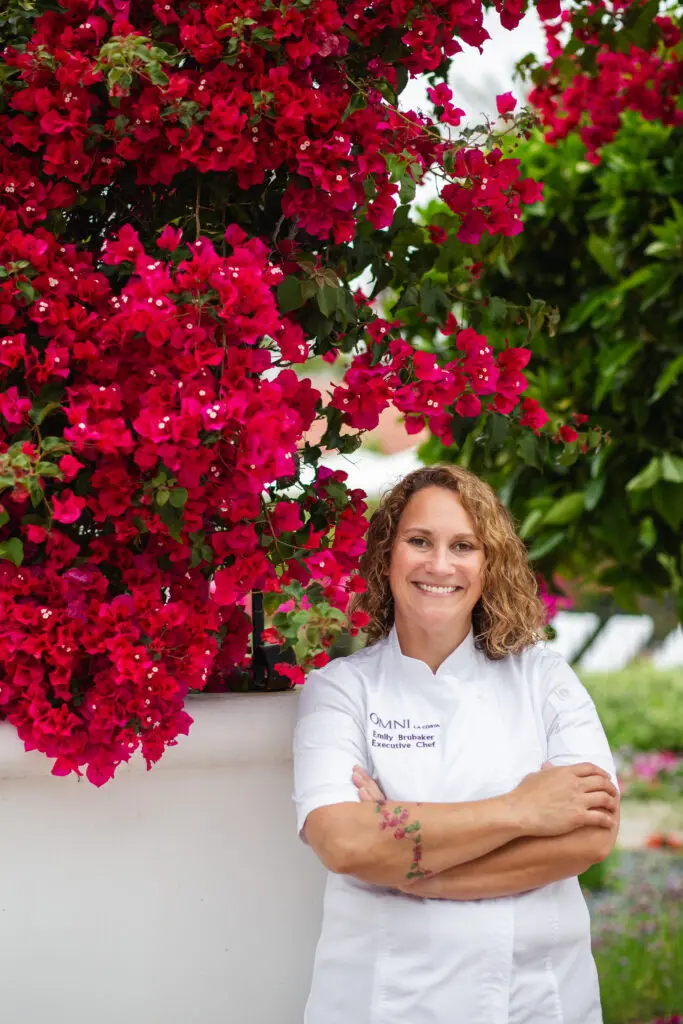
For Executive Chef Emily Brubaker, Omni La Costa Resort & Spa feels like home. She grew up just a mile-and-a-half away from the 400-acre property and fondly recalls walking the golf course perimeter as a kid. Though her ambitions led her away from San Diego for nearly two decades in which she honed her craft in some of the highest of high-profile Las Vegas restaurants—including triple Michelin-starred Joël Robuchon at MGM Grand—they ultimately brought her back to North County.
Courtesy of Omni La Costa
Today, the classically French-trained chef, who’s fresh off a victory on NBC’s Yes, Chef!, judged by Martha Stewart and José Andrés, oversees Omni La Costa Resort & Spa’s seven distinct dining concepts. Her goal is to elevate the resort’s culinary program with her creative, hyperlocal ingredient-driven approach while maintaining the Spanish- inspired flavors and fresh California coastal cuisine that are the bedrock of its culinary identity.
“The San Diego food scene is really growing, and in North County alone, it’s really exploded in the last five years,” Brubaker says. “There are Michelin stars, beautiful tasting menus, craft bakers, and all this food—when I was growing up in La Costa, it was fish tacos. Now there are really cool things popping up, and I’m so happy to be here to see where it’s going to go.”
Brubaker gives chefs de cuisine at each individual restaurant autonomy, however, her influence is evident across the resort.
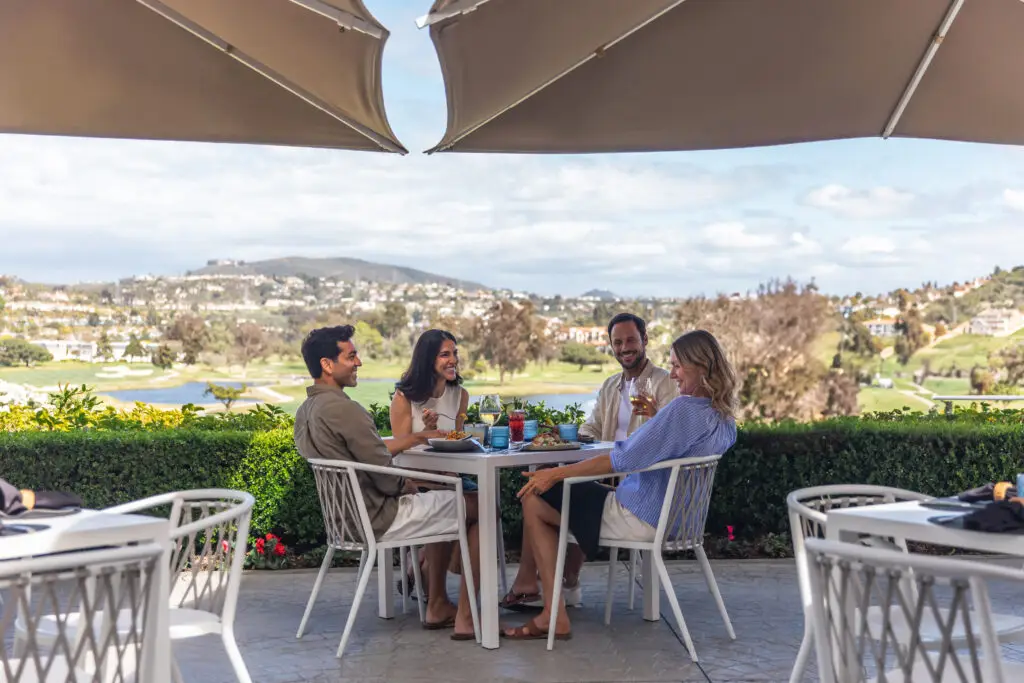
For example, lobby restaurant Bar Traza serves as Omni La Costa’s culinary centerpiece and features bold Spanish flavors in a lively, social atmosphere. Brubaker overhauled the menu to be more consistent and centered on casual bites with that signature vibe. Think smoky paprika, vibrant citrus, and Spanish meats and cheeses.
At VUE, the focus is on seasonal offerings, California coastal cuisine, and Baja-inspired dishes. She and Chef de Cuisine Cameron Dixon change the menu biannually, which heading into summer, will highlight farm-fresh produce and hyperlocal ingredients—the resort even has its own herb garden and honeybee hives.
Courtesy of Omni La Costa
Poolside dining options are leaning into the country’s 250th this summer with a selection of classic American dishes with an Omni La Costa twist. And Bob’s Steak & Chop House (Brubaker is a trained butcher) offers a classic steakhouse experience with elevated service.
The chef and company also plan menus for special events at the resort where her creativity can really shine. For an upcoming National Ski Association dinner, the banquet hall will be transformed into an Alpine-themed winter wonderland complete with a snow machine, savory sausages, and melty, decadent raclette. A recent dinner was built around the Carlsbad Flower Fields and each course was matched to a color of ranunculus (Did you know pink dragonfruit are grown in North County? You do now.).
“It’s my zen to be in the kitchen playing with food,” Brubaker says.
Omni La Costa’s culinary program is a key part of the resort experience. And with Brubaker’s leadership, it’s becoming a draw for visitors and locals alike.
“These aren’t just hotel restaurants, these are restaurants that you should go to. They’re destinations, and I’m really hoping for the future that’s where we’re going,” Brubaker says.
Courtesy of Omni La Costa
Brubaker is also channeling her experience on Yes, Chef! into the culture at Omni La Costa—more emphasis on teamwork and collaboration, empowering her staff to share constructive critiques, and embracing different perspectives. Alongside her leadership role, Brubaker has become an advocate for mental health in the hospitality industry, serving as chief ambassador for the Burnt Chef Project and serves on the Board of Advisors for the Apex Culinary Program, where she mentors and develops future talent.
Inside the remodeled 1970s craftsman of local pastry chef and Extraordinary Desserts owner Karen Krasne
By Ashtyn Douglas-Rosa
The similarities between baking a cake and remodeling a home might be slim in the minds of most. But to renowned pastry chef and owner of Extraordinary Desserts Karen Krasne, paying attention to detail when decorating anything—be it a gorgeous wedding cake or her 2,200-square-foot house in Mission Hills—is the recipe for a tasteful design.
Krasne began remodeling her 1970s craftsman into the dynamic, contemporary space it is today with the help of local architect Aaron Anderson nearly 15 years ago. “We started with this custom gate, actually,” Anderson says, pointing to a large, suspended steel-and-glass opening at the entrance of the Krasne residence.
Photo Credit: Cole Novak
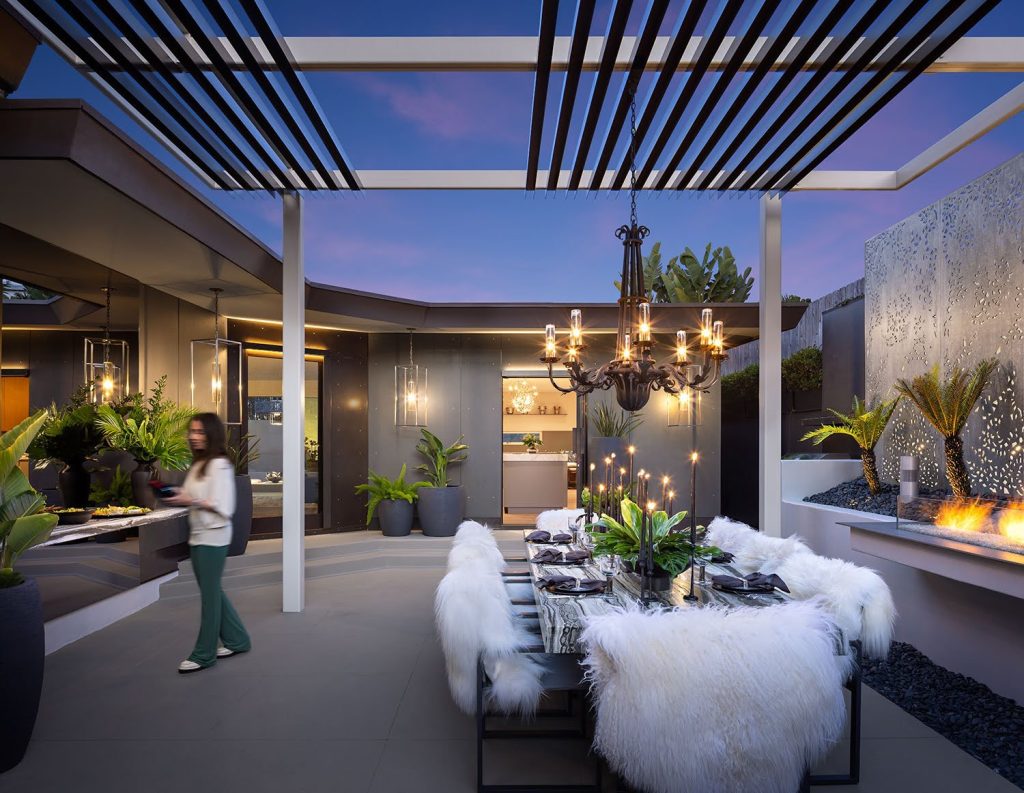
Past the gate, guests step into the front courtyard that serves as an outdoor dining room. Beneath a custom steel canopy filtering sunlight into the space—an effect inspired by the oak trees of San Diego County—sits a grand stainless-steel communal table topped with zebra quartzite stone. Along the north wall, a smoky gray mirror magnifies the space.
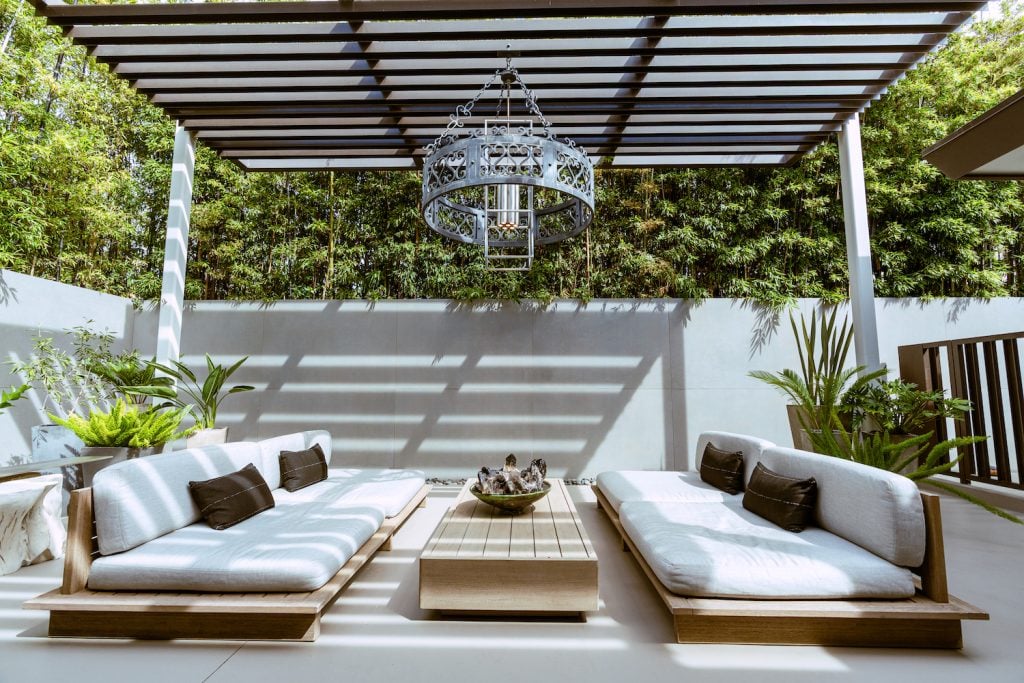
The intimate courtyard brings the outdoors in, while the architecture and design of the house spill outwards.
Photo Credit: Cole Novak
“Both Karen and I grew up in San Diego, so the house is heavily influenced by that sort of outdoor living,” Anderson says. “But the interesting thing about Karen is her travels. What she does, as a chef, is heavily influenced by her international travel, so we also brought all that influence into the house. It’s anchored in San Diego, but it has all kinds of international flourishes.”
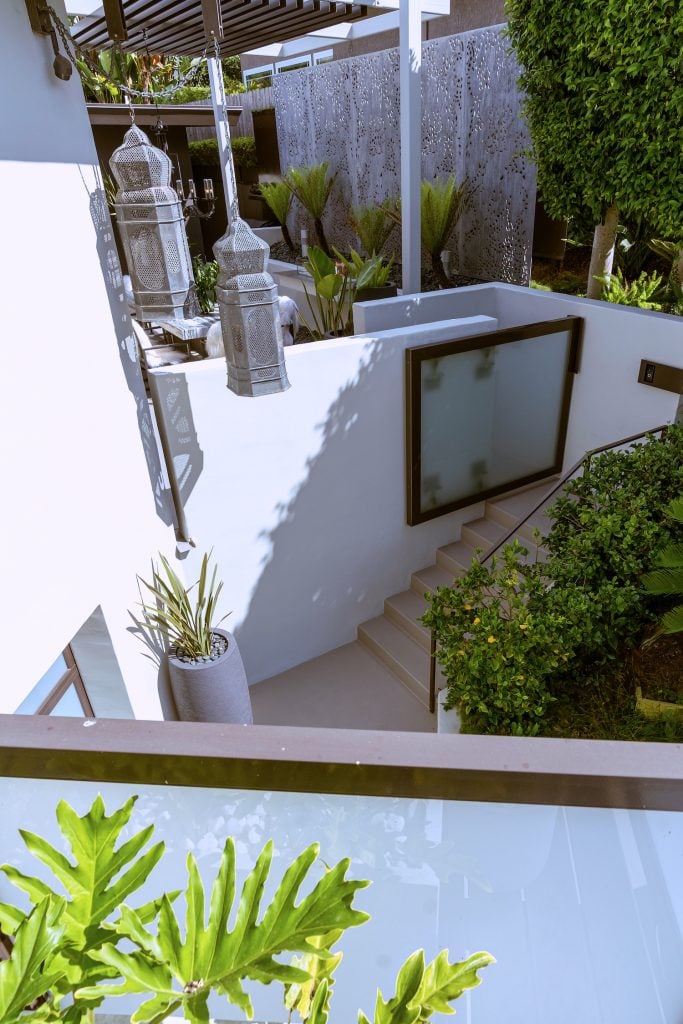
The south wall of the courtyard is a striking cement fiberboard privacy screen that’s been pierced with an intricate design. “The very first day I met Karen, she brought these Moroccan lanterns she bought on a trip to Marrakech into my office and she said she wanted the front part of the house to be about these,” Anderson remembers. “I had [the lanterns] on my desk, and we just thought about unrolling them and cutting out the design onto a piece of slim fiberboard. The piece is backlit so, at night, this side glows just like a lantern does.”
Photo Credit: Cole Novak
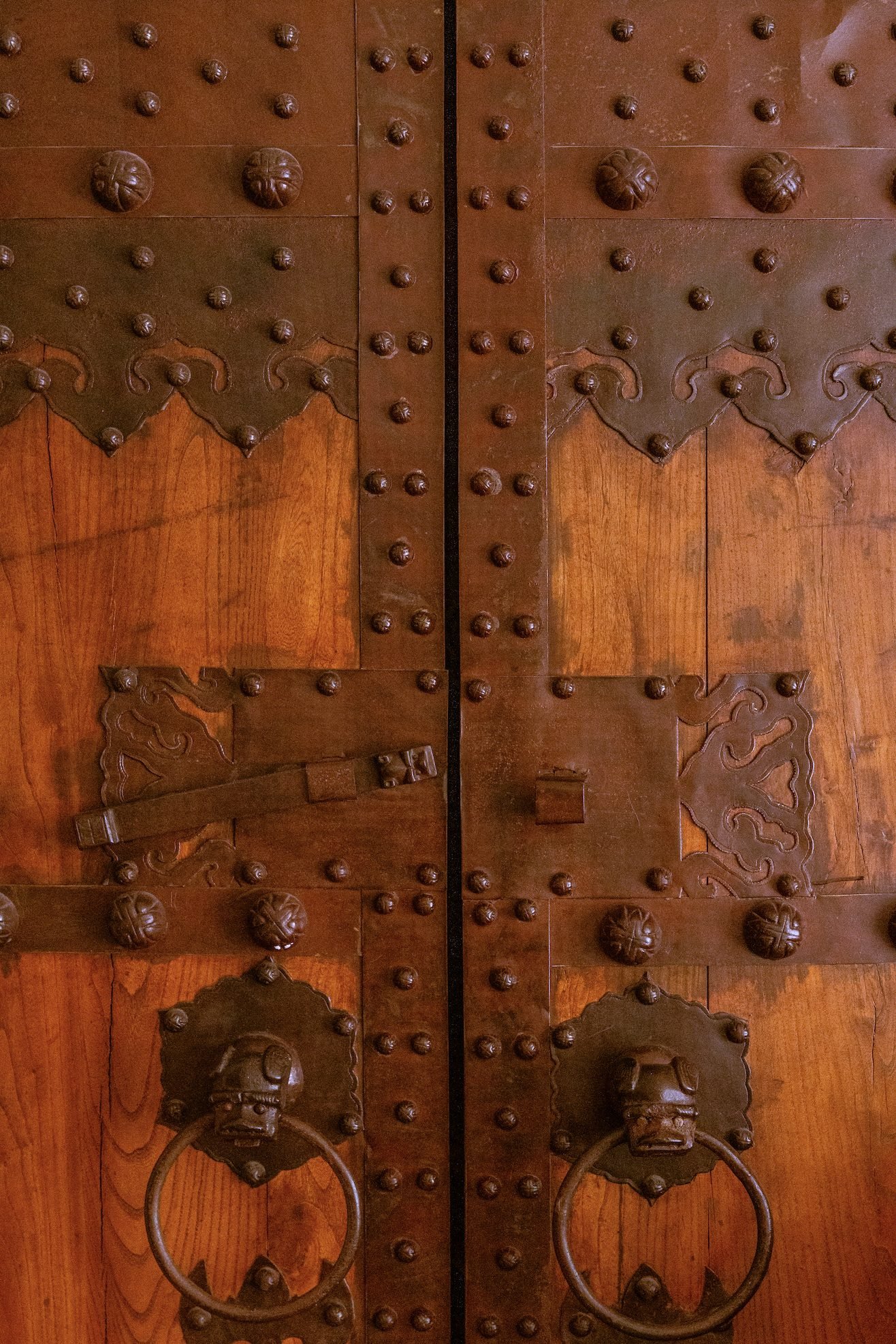
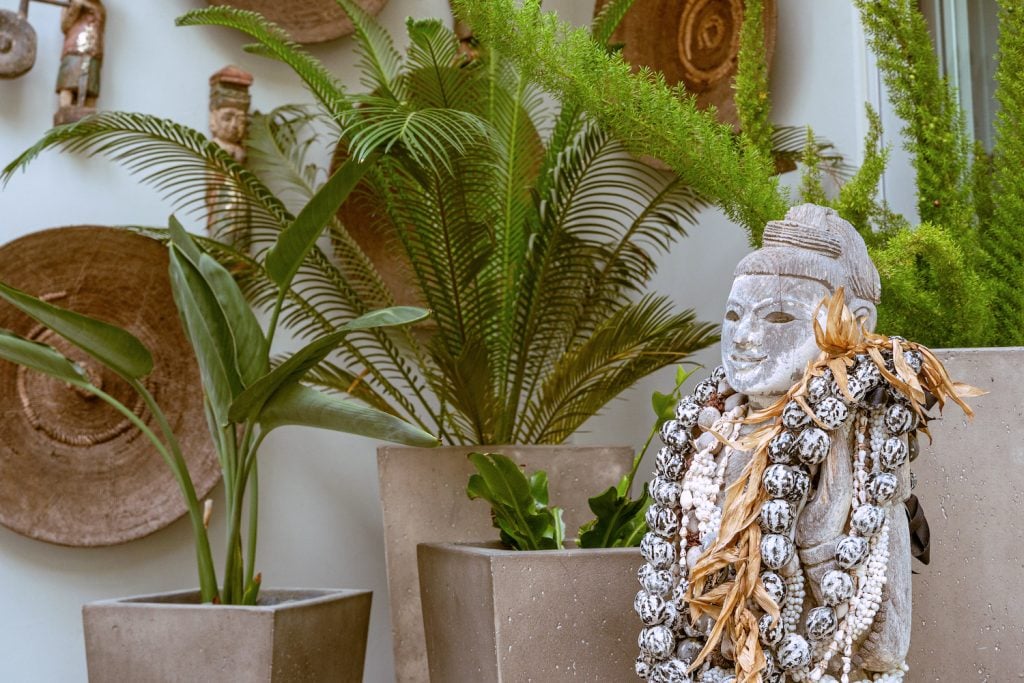
The old-world, international influences don’t stop in the courtyard. Inside the home, Krasne’s love of traveling is reflected in every room. A hand-carved wooden Moroccan cabinet has been repurposed into a bathroom door. Ornate candle holders from Bali adorn the master bathroom countertop. And in the living room—which expands into a second, bamboo-flanked courtyard through massive stacking glass doors—a feature wall was inspired by traditional azulejos tile Krasne once saw in Spain.
Photo Credit: Cole Novak
“We tried to take all these different influences—Morocco, Bali, and Paris, where Karen went to culinary school—and balance them with the edgier, modern stuff,” Anderson says. “It’s really hard to take a craftsman house and modernize it without it looking terrible, so I think one thing we all did well was elevating it without overtaking it.”
Photo Credit: Zack Benson
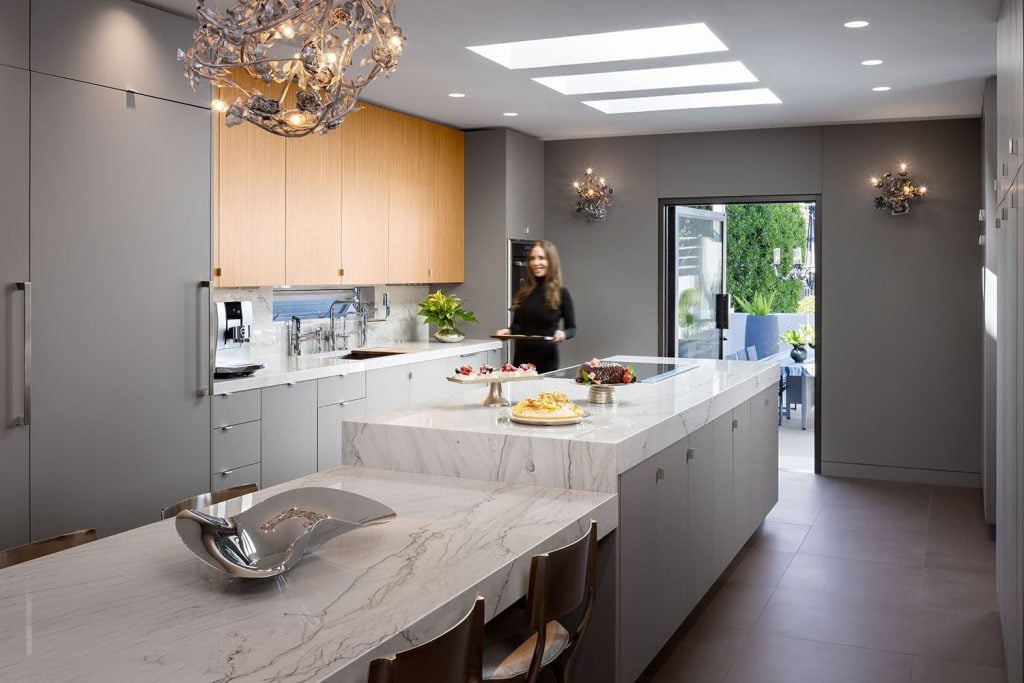
The kitchen, where Krasne spends most of her time while she’s at home, was renovated last. A large island topped with a Japanese-inspired lithograph on natural quartz sits in the middle of the sunlit room, nearly always covered in a food spread for Krasne’s family and friends. Floor-to-ceiling, built-in cabinetry is coated with a self-healing gray Fenix laminate, giving the space a calming atmosphere.
Photo Credit: Cole Novak
“Those,” Kranse says, gesturing to ornate, art-deco chandeliers hanging over the kitchen table, “are from an old opera house in Austria. I had them sprayed silver to match the sconces, which all came from the same opera house. I also wanted to bring in French Champagne buckets—I really wanted the space to be about us drinking wine and entertaining.”
The Champagne buckets line a shelf hung above built-in lounge seating. Next to the lounge is an in-wall desk with a stack of her favorite cookbooks on display. There, Krasne researches and experiments with new recipes.
“I have a huge office at my restaurant, but I can’t think straight there,” Krasne says. “You feel the frenetic energy, you hear the tamping of the espresso machine and the phones ringing.” It’s here, in this calming, creative space (and in her personal gym downstairs), that Krasne finds inspiration.
As we exit Krasne’s kitchen and step back out into the front courtyard, she jokes with Anderson that she recently came up with a landscaping idea for the front entrance while on a trip to Puerto Vallarta with her husband.
“I know, with Karen, there’s actually a good chance that it’ll happen,” Anderson laughs. “Karen knows more about construction and putting a house together than any other client I’ve ever worked with. We actually get to a detailed level of thought and design. That’s super rare.”
Lisa Franco didn’t plan to become an interior designer. She and her husband, Luis, met while working in biotech. But when the couple’s daughter, Samantha, was a year old, she was diagnosed with a genetic disorder called Angelman syndrome. Lisa left the industry to focus on Sam full-time. And when the Francos bought their first house in San Diego shortly thereafter, Lisa—armed with a more flexible schedule and a hunger to explore her innate love of design—decided to take the reins on the interiors.
The Francos had tapped Mark Morris of Oasis Architecture to refresh the home. He was skeptical; homeowners who go the DIY route usually end up regretting it. But Lisa’s knack for design was apparent. She pulled samples, chose colors, sourced finishes, and visited showrooms, and others in the industry treated her like a fellow pro. “I just started calling myself a designer, and other people believed me,” she laughs. “My career was in science. Science is problem-solving. Interior design is, too. It’s solving a problem, and making it look good.”
Photo Credit: Auda & Auda Photography The sliding doors to the deck can fully retract, making the view the star of the show
When Morris walked through the finished product, he said, “‘You need to come work for me,’” he recalls. Soon after, she did. Their first project together won Bathroom of the Year in San Diego Home/Garden Lifestyles magazine.
As Samantha, now 24, and the couple’s son Ethan, 21, got older, the Francos set out to find a forever home—one that could accommodate a future live-in caregiver for Sam. In 2017, a La Jolla Heights gem jumped out from a listing in the paper: an Old Hollywood–inspired, 1960’s home, once owned by an oil baroness. The Francos bought it, and Morris signed on to bring the build into modern day. The bones were good, and “the house had the perfect entry—grand, yet understated,” Morris says.
Photo Credit: Auda & Auda Photography The colorful wall behind the sapo table is made from recycled skateboard decks.
The inside, on the other hand, needed work. Full of small, closed-off areas, it had level changes at every turn, like step-downs into bedrooms. Morris and the Francos modified the floor plan with two goals in mind: to create a seamless flow for family time and entertaining and to make the layout safe for Sam to have as much independence as possible.
They leveled out the floors, opened up the once-enclosed staircase for visibility, and installed pocket-door gates to block rooms and stairs as needed. Though the layout changed, “Lisa loved that house and wanted to respect it,” Morris says, so they preserved some original elements: crown molding, light fixtures, closet doors, built-ins.
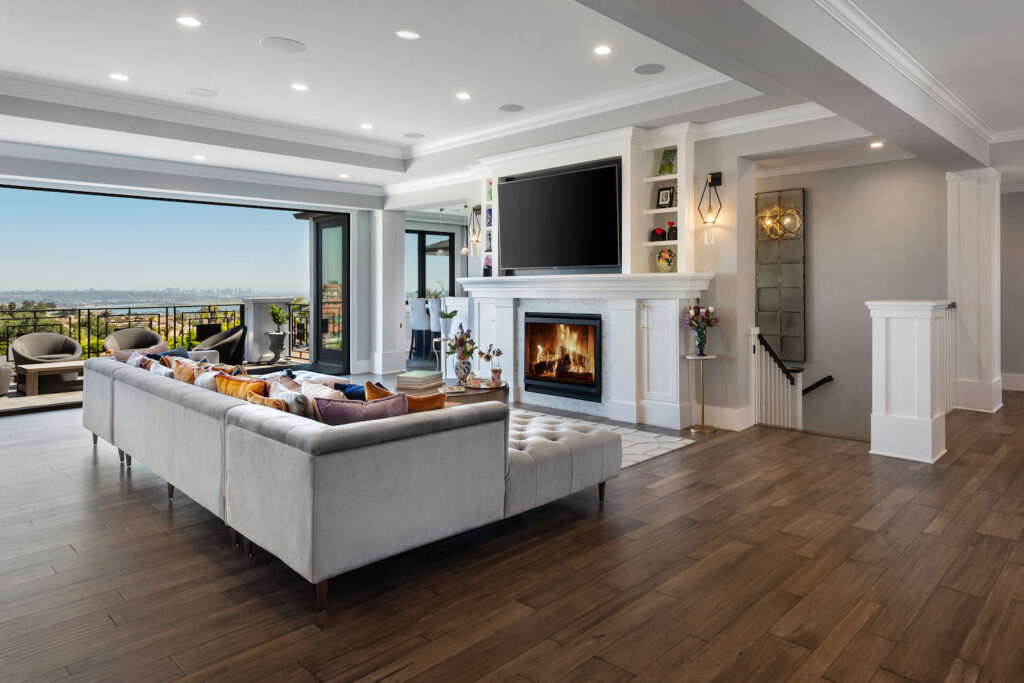
Today, once you cross the threshold, you step directly into the main living space, or the great room. Just past the L-shaped couch is a million-dollar view: La Jolla’s hodgepodge of terracotta rooftops, the coast, all the way to Mexico.
The home’s primary palette is one of soft gray and white walls with chocolate-brown wood floors. But the Franco house is anything but muted. Lisa’s style is bold, colorful, happiness-inducing. In the great room, velvet pillows add pops of pink, blue, and ochre to the couch.
Photo Credit: Auda & Auda Photography Lisa, an avid cook, designed her spacious kitchen with dinner parties and gatherings in mind.
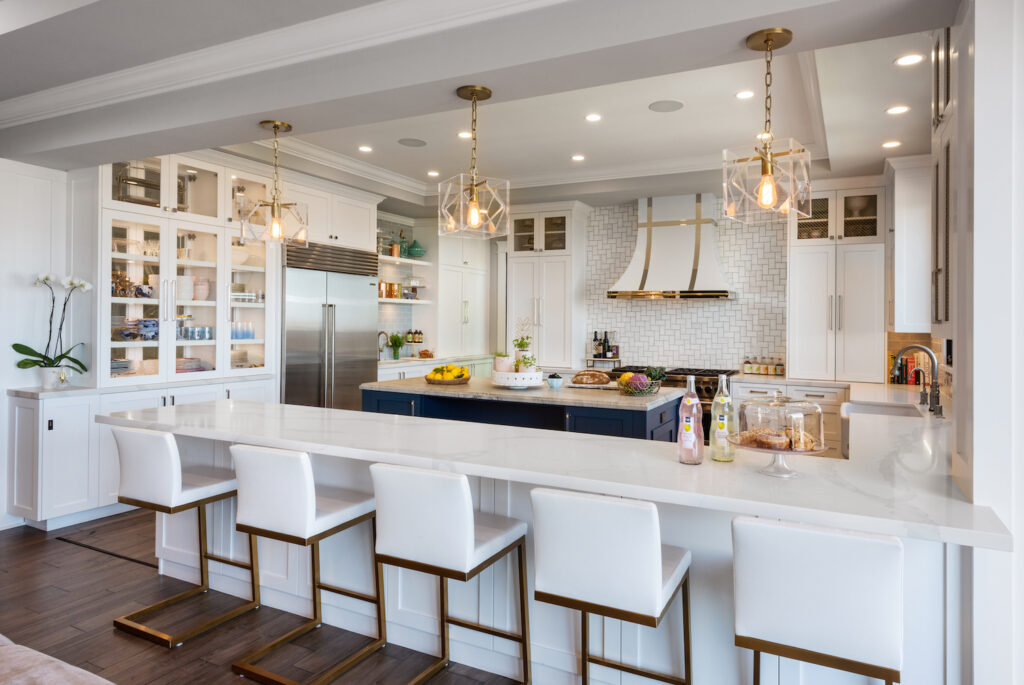
The great room flows into the kitchen, separated only by a peninsula. When Lisa and Morris design a kitchen for a client, they ask about their everyday routine—and that’s exactly what informed Lisa’s own space. Daily essentials receive priority; open shelves hold flour, sugar, oil, and tea, while a full butler pantry around a corner offers hidden storage.
The most innovative feature is a pass-through cabinet between the kitchen and dining room. Dishes and glassware are accessible from either side, and the configuration lets the dining room borrow the kitchen’s natural light.
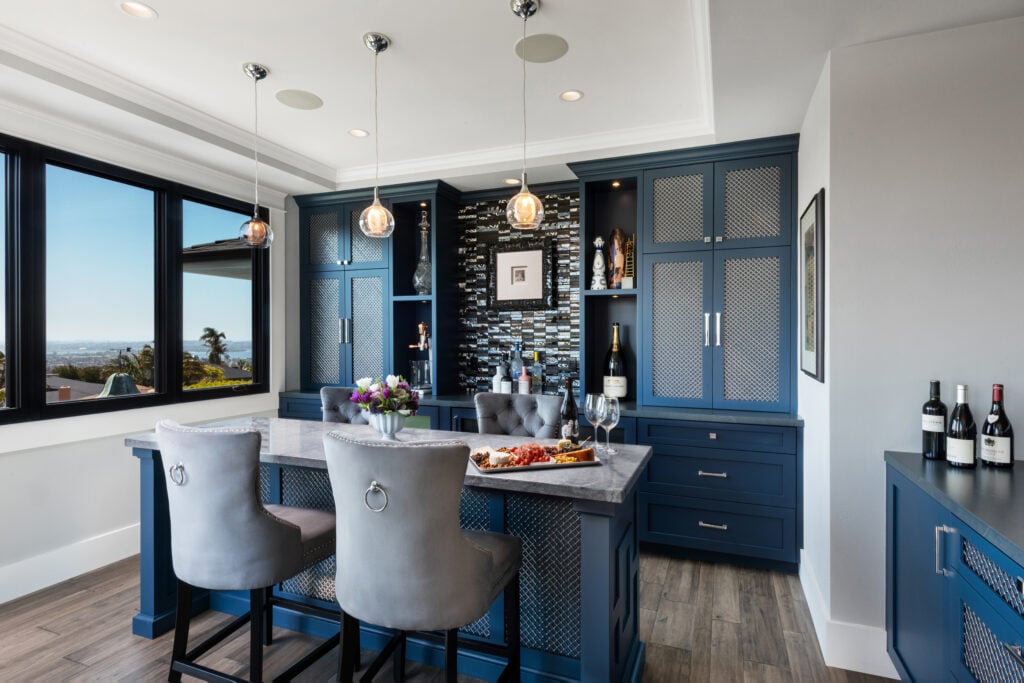
The Francos wanted an additional space to unwind with friends, so they tucked a bar into an alcove off the great room. “Sometimes we have a couple come over, and we just want to hang, but our dining room is big,” Lisa says. “So this is an intermediate. It’s cozy.”
The couple pulled the blue from the kitchen island and incorporated gold and stone accents. The wire accents on the bar island are both aesthetic and functional—no need to worry about scuffs from guests’ shoes. Closed cabinets hold their collection of wine and spirits.
Photo Credit: Auda & Auda Photography The Francos’ home bar uses darker, moody hues to align with its purpose as an evening hang-out space
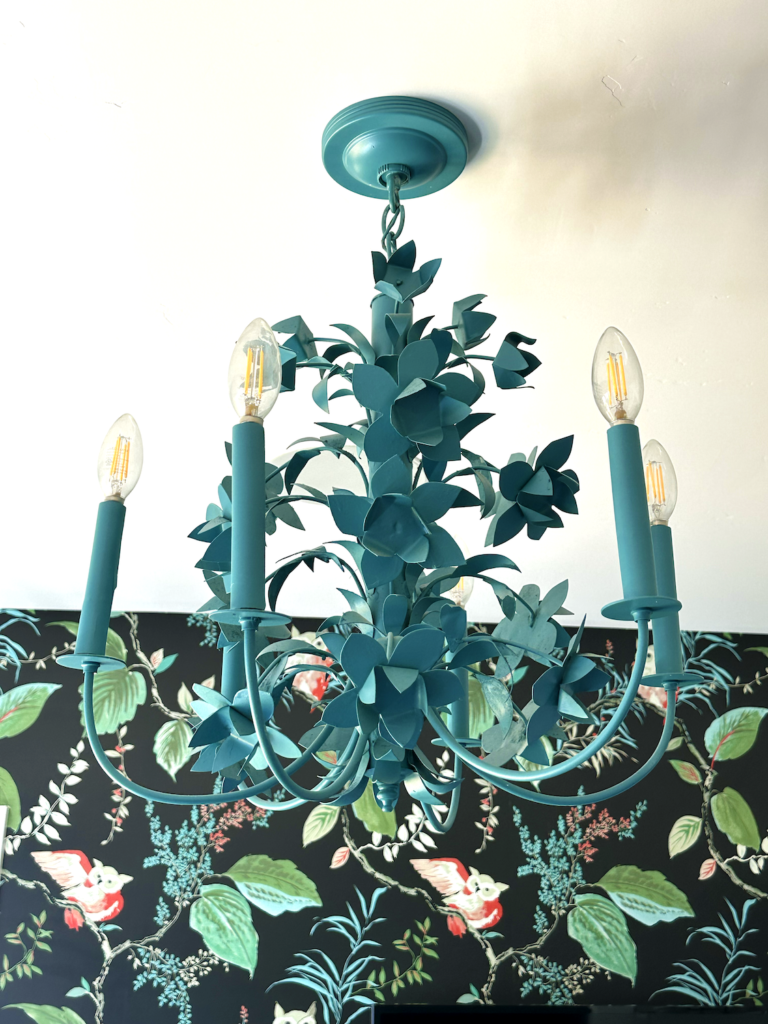
On the other side of the great room is Lisa’s office, easily the most colorful space in the house. Her desk is framed by a bay window overlooking the courtyard, while a pendant light fixture, original to the home and refreshed with deep teal paint, anchors the room. “I love whimsy,” Lisa says. The owl-print wallpaper was a touch she couldn’t resist. Luis was skeptical until he saw it installed. “That’s why she’s the designer,” he laughs.
Right across the hall is Sam’s media room, furnished with durable pieces. It’s near the kitchen and dining room, so Sam has her own space but is still in the mix. A mother-in-law suite, which can eventually function as a caregiver’s room, is next-door.
Photo Credit: Auda & Auda Photography Lisa’s décor is an eclectic mix of estate sale finds, original art, and budget-friendly pieces from retailers like Target and Anthropologie
The great room might be the heart of the home, but the lower level is where the fun happens.
A mural of Lisa’s late brother, Michael “Howie” Mandell, who she calls “the life of the party,” is front and center, smiling with arms outstretched. The local artist they commissioned tagged the names of Howie’s loved ones around him, and band posters harken back to Howie and Lisa’s shared love of music.
In the corner is sapo, a Peruvian game (also called “toad in the hole”) that Luis grew up playing. The objective: Throw a gold coin into the toad’s mouth or the nearby holes. The sapo table was a gift from Luis’s mom, who transported it in pieces via plane.
A far wall holds a candy bar, stocked with guests’ favorites, and a mini kitchen with a pink SMEG fridge and toaster. The oversized sliding window opens up onto the grill, the outdoor dining space, and the pool area.
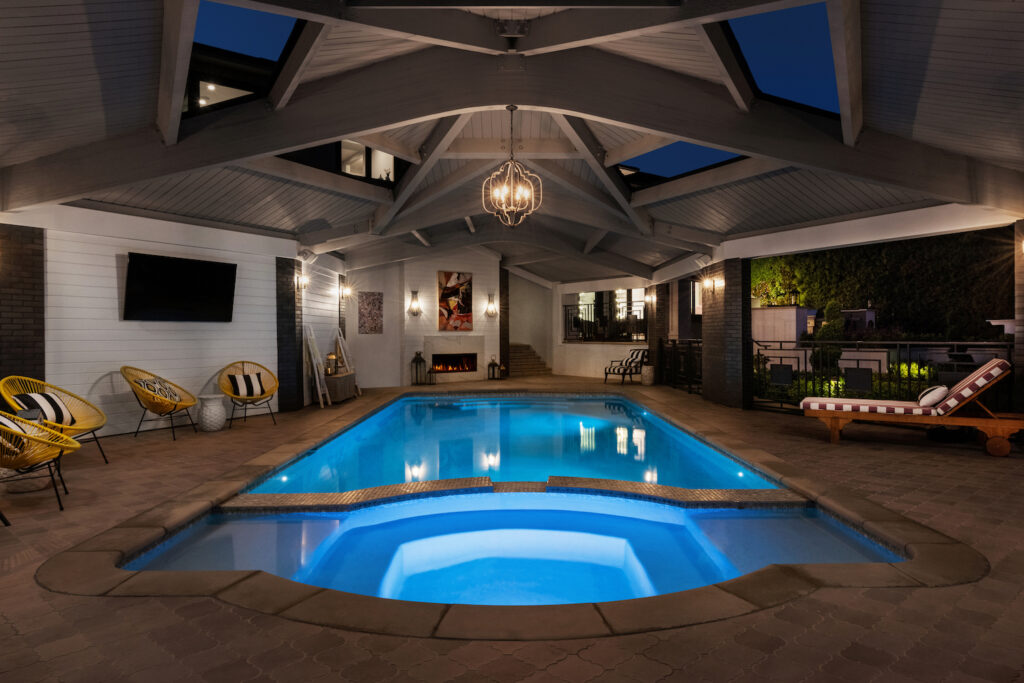
Photo Credit: Auda & Auda Photography The original arched beams over the pool were constructed with pressed wood; it’s a similar process to crafting a ship’s hull
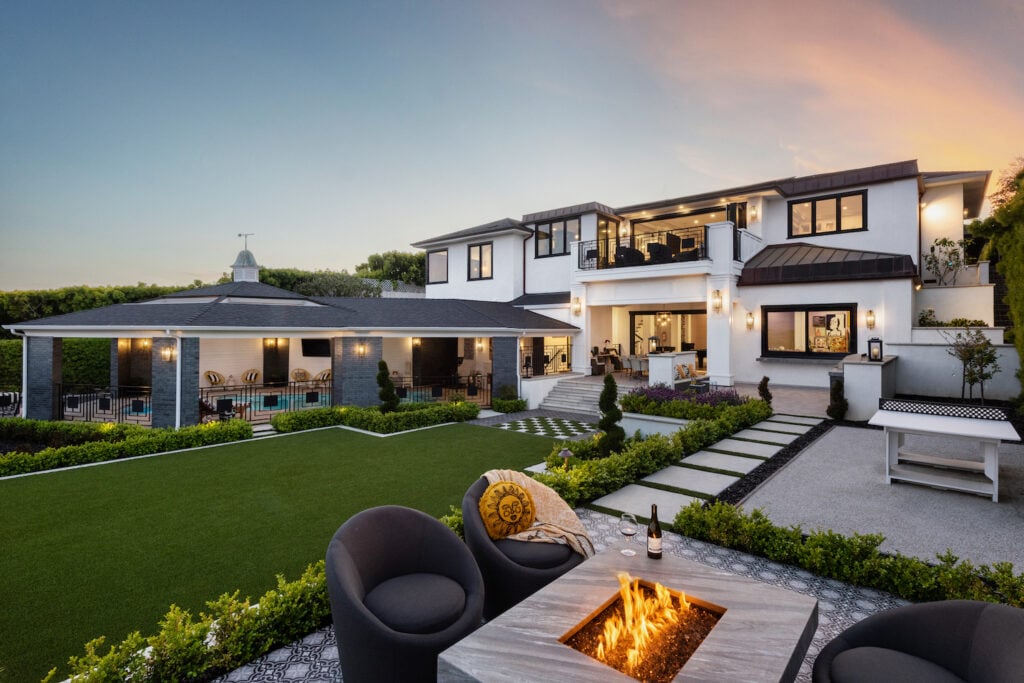
It’s a stunning pool, considering it was once surrounded by green carpet. “It was like going into a football locker room,” Morris says. “The pool itself was spectacular, and we didn’t want to lose that character.” The Francos kept the exposed beams, opened the ceiling and walls, and wrapped the columns in dark brick. “During the day, it feels like you’re outside,” Morris says, “but at night, all lit up, it really feels like its own room.”
Morris and Lisa treated the outdoor space like an extension of the home, creating “rooms” for different functions: grilling, playing, resting, entertaining. A fire pit at the farthest point is an ideal spot to sit and reflect. Lisa designed a “rug” made from tiles that frames the outdoor dining area. They added a ping-pong table for Ethan and his friends. And in the polished, turfed yard, which mimics the shape of the pool, there’s always room for an impromptu game of soccer.
Photo Credit: Auda & Auda Photography Lisa’s playful style is on full display in her home office
Looking up from the backyard, you can see the family’s gathering spots—great room, basement, kitchen—framed like vignettes through the windows. “Being a good architect is not about bringing your sense of style to the table,” Morris says. “It’s about being sensitive to the environment, the existing [house], and the client’s interests. And if you can cohesively pull that together into a beautiful design that feels like home, you’ve done your job.”
The iconic 1,200-acre preserve’s history dates back more than 150 years, evolving from a scrub-filled plot atop a mesa overlooking what’s now Downtown to an urban oasis—the largest of its kind in the country—filled with an array of museums, attractions, gardens, trails, restaurants, and more. Balboa Park is an epic playground where San Diegans and visitors alike can experience the great outdoors just as easily as they can enjoy a world-class performance or explore groundbreaking discoveries.
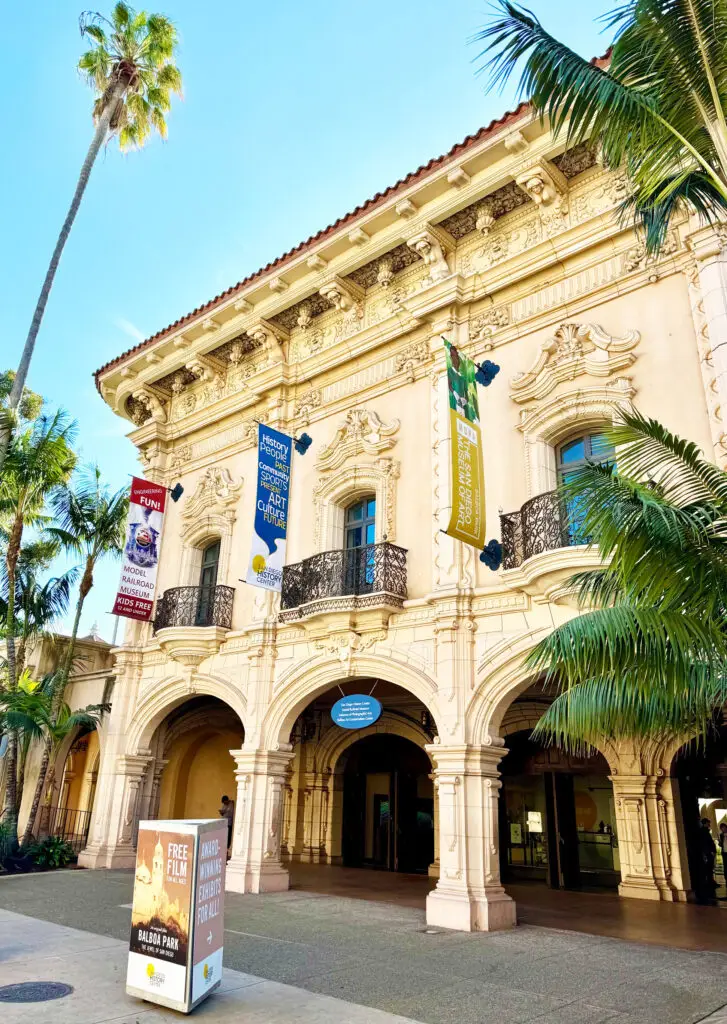
Tucked away in the Spanish Colonial Revival-style architecture are 18 diverse museums that allow visitors to spend the day learning about, well, anything. A great place to start is the San Diego History Center. Located in the Casa del Balboa building, the museum tells the story of the city’s past, present, and future through photographs and art, clothing and textiles, and interviews with people who witnessed history-making events firsthand. The San Diego Natural History Museum takes visitors even farther back with interactive exhibitions that show what the region was like up to 75 million years ago.
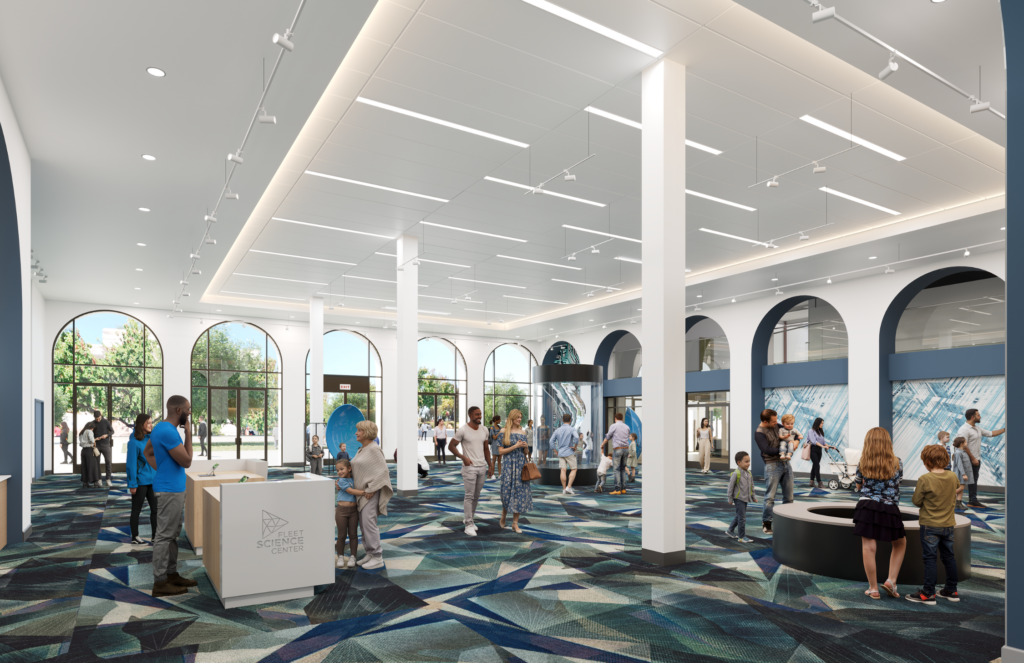
Blast off on a simulated trip to space at the San Diego Air & Space Museum, then check out artifacts from aviation legends, including the Wright brothers, Amelia Earhart, and Buzz Aldrin. Discover new perspectives revolutionizing the science world, learn about an often overlooked but overutilized utility, and exercise your creativity at the Fleet Science Center.
Calling all theater-lovers, Balboa Park has something for you, too. The San Diego Junior Theatre will present their musical take on beloved children’s book A Bad Case of the Stripes from June 26 through July 12. And laugh, cry, and marvel in awe as the pros of The Old Globe perform Kim’s Convenience, the award-winning comedy that inspired the popular series, from May 15 to June 14.
There’s nowhere else in Balboa Park quite like WorldBeat Cultural Center. The institution celebrates African diaspora and indigenous cultures around the world using art, music, dance, and education. The building, a renovated water tower covered in colorful murals, houses a performing arts center, museum, gift shop, cafe, and outdoor classroom.
If you’d like a side of nature with your culture, Balboa Park has you covered there, too. Stroll through the gardens of the Japanese Friendship Garden & Museum, a monument to the relationship between San Diego and its sister city, Yokohama, Japan. Inspired by traditional Japanese design dating back centuries, the 10-acre respite features a living exhibition that showcases plants native to both cities.
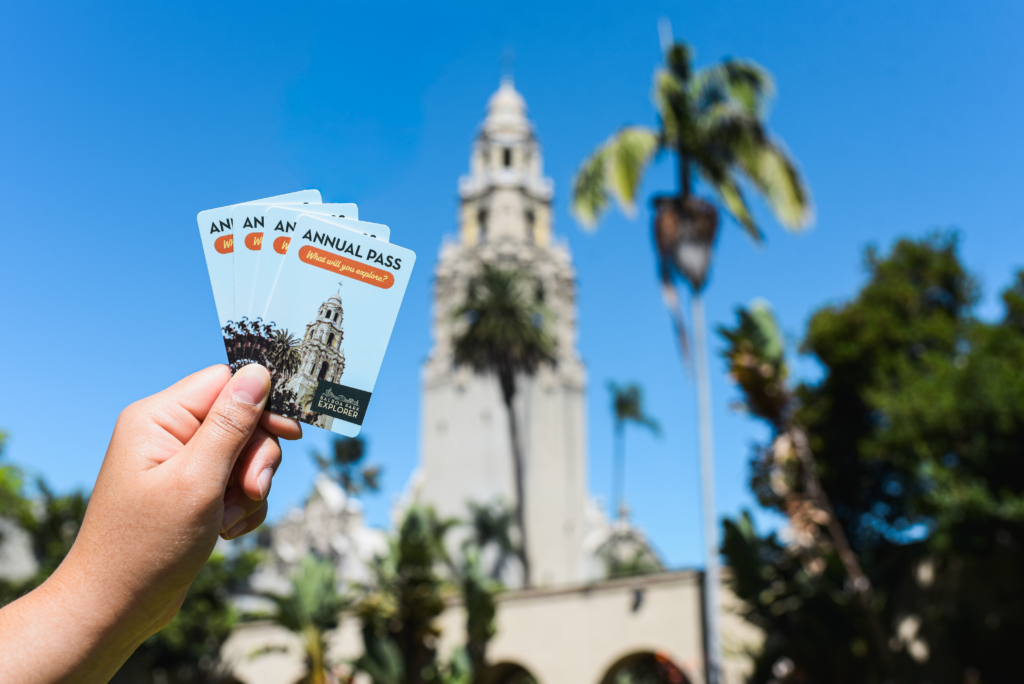
If there seems like a lot going on in Balboa Park, it’s because there is. Let theBalboa Park Cultural Partnership be your guide. The organization is the umbrella for 24 of the park’s institutions and offers an Explorer Pass that allows visitors to access multiple museums for one affordable price. The hardest part is picking where to start.
16 Museums, One Pass
Save on admission to San Diego’s top museums with the Balboa Park Explorer Pass. Explore 16 museums of art, science, history and culture across Balboa Park — all with one affordable pass. Choose the option that fits your pace: the Limited Pass (one day for up to four museums), the Parkwide Pass (seven consecutive days of access to all 16 museums) or the Annual Pass (365 days of unlimited exploring).
Looking for an experience-driven gift? Let the museum lover in your life enjoy their favorite museums all year with a Balboa Park Explorer Annual Pass gift voucher.
Bigger experiments, brighter ideas, and boundless curiosity await at the newly reimagined Fleet Science Center. This summer, the Fleet debuts Element 8 Cafe, an expanded theater queuing and concessions space, two new gallery spaces, and, for the first time, a free entrance gallery exploring science in and around San Diego. The transformation marks a new chapter for the Fleet, keeping it a vital, innovative, and accessible science hub for the region. Visitors are invited to explore the experience this summer and connect with the power of science like never before.
Address: 1875 El Prado, San Diego, CA 92101 Website:FleetScience.org Hours: 10 a.m. to 5 p.m. daily Phone: 619-238-1233
Japanese Friendship Garden & Museum
An accredited cultural gem, the Japanese Friendship Garden & Museum brings traditional Japanese garden design to life with koi ponds, curving walkways and layers of greenery. Guests explore bonsai trees, streams and peaceful nooks while taking part in exhibits, educational programs and festivals that illuminate Japanese culture. Situated in the heart of Balboa Park, the garden doubles as a meditative retreat and a dynamic gathering place, welcoming visitors to slow their pace and connect more deeply.
Address: 2215 Pan American Road E, San Diego, CA 92101 Website:Niwa.org Hours: 10 a.m. to 7 p.m. daily; last admission at 6 p.m. Phone: 619-232-2721
The Old Globe
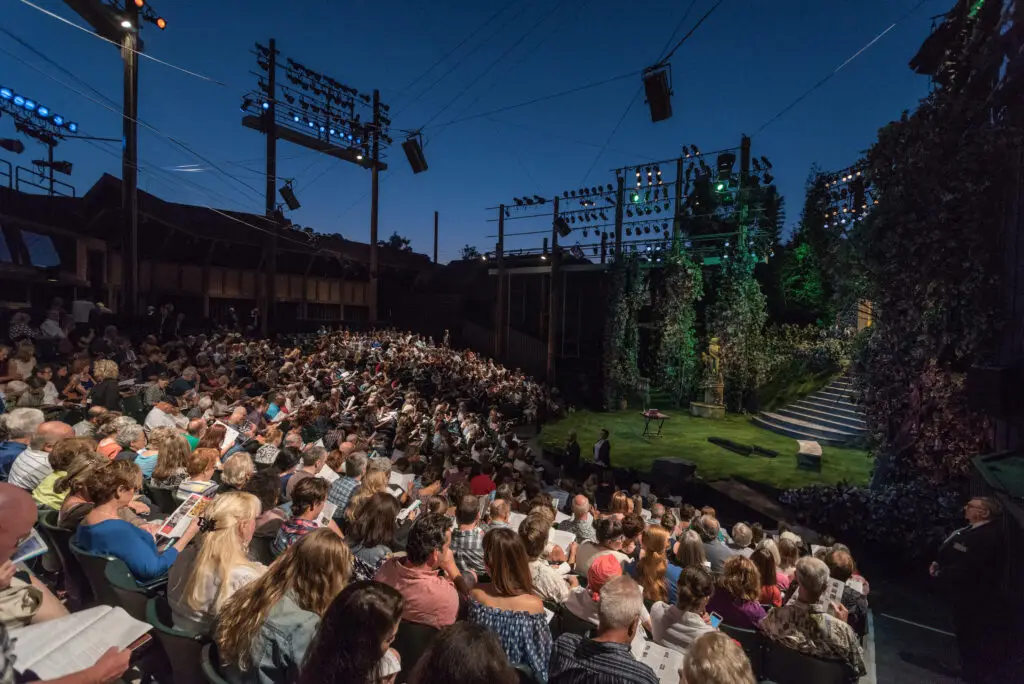
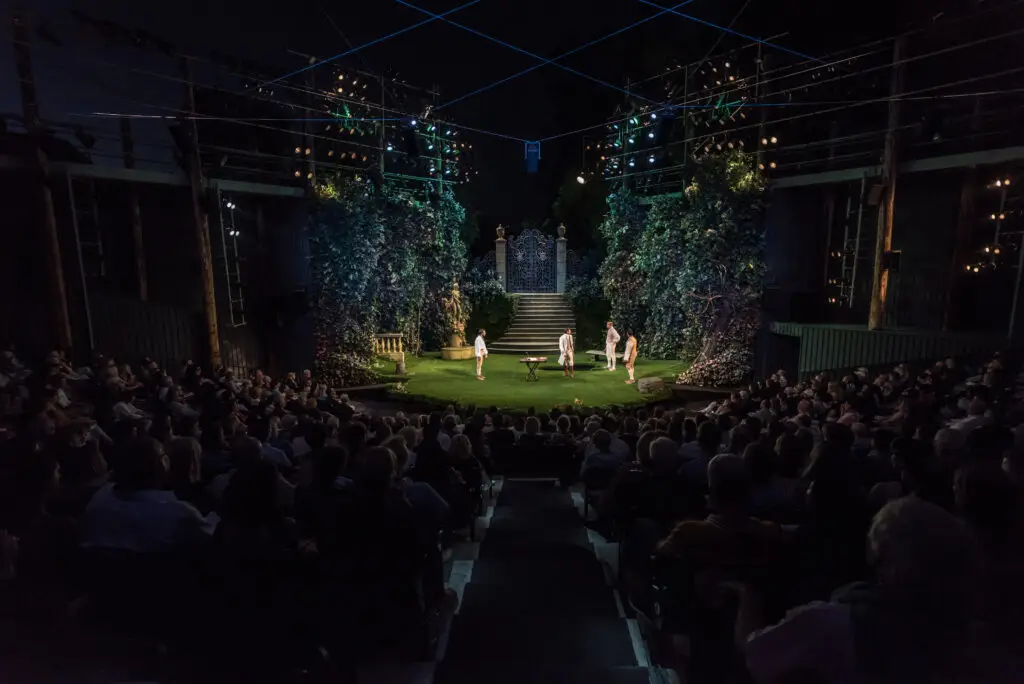
A San Diego summer favorite, The Old Globe invites audiences to experience a beloved local tradition in its outdoor Lowell Davies Festival Theatre.
This summer, the 2026 Shakespeare Festival presents two thrilling tales of power, passion and romance. Measure for Measure, running June 14 through July 12, 2026, is a riveting story of justice and hypocrisy that asks who holds power, who is punished and what it truly means to be virtuous. Much Ado About Nothing, playing Aug. 2–30, 2026, is a classic rom-com packed with schemes, sparks and laughter as opposites attract. Audiences can enjoy both shows for $44.
Address: 1363 Old Globe Way, San Diego, CA 92101 Website:TheOldGlobe.org Hours: Box office open Tuesday–Sunday, 1 p.m. to final curtain Phone: Box office, 619-234-5623
San Diego Air & Space Museum
Aviation and space exploration come to life at the San Diego Air & Space Museum. See an airworthy replica of the Spirit of St. Louis, a Gee Bee racer and historic aircraft from World War I, World War II and the Korean and Vietnam eras. Get up close to the Apollo 9 command module — one of only 11 of its kind in the world — along with Mercury and Gemini capsules, Mission Control and space shuttle simulators, and a selfie spot beside a lunar lander on the moon. Running through 2026, Ripley’s Believe It or Not! brings oddities from around the world to Balboa Park.
Address: 2001 Pan American Plaza, San Diego, CA 92101 Website:SanDiegoAirAndSpace.org Hours: 10 a.m. to 5 p.m. Phone: 619-234-8291
San Diego History Center
History belongs to everyone. At the San Diego History Center, two experiences bring that history to life this summer: America at 250 and the Center for Women’s History. America at 250 traces San Diego’s place in 250 years of U.S. history, while summer programs invite children to learn and explore. The Center for Women’s History amplifies the voices of women whose leadership and creativity have shaped our region.
By understanding our past, we build a more vibrant and inclusive community together. These vital educational experiences are only possible through generous community support. Discover your roots, spark meaningful dialogue, and help keep San Diego’s stories alive for future generations.
Address: 1649 El Prado, Suite 3, San Diego, CA 92101 Website: SanDiegoHistory.org Hours: 10 a.m. to 5 p.m. Wednesday–Sunday Phone: 619-232-6203
San Diego Junior Theatre
Junior Theatre is San Diego’s longest-running youth theatre program, empowering students ages 4 to 18 to explore storytelling, performance, and collaboration in a supportive environment. Through classes, camps, and productions, young artists build confidence, creativity, and lifelong skills onstage and off. Each season features a wide range of opportunities, from introductory experiences to advanced training in acting and musical theatre.
Looking for a summer adventure? Junior Theatre’s Summer Camps deliver dynamic programs for grades K–12, including musical theater intensives, acting academies and immersive JT Studio experiences. It’s a place where imagination truly takes center stage.
Address: 1650 El Prado, Suite 208, San Diego, CA 92101 Website:JuniorTheatre.com Hours: 10 a.m. to 5 p.m. Phone: 619-239-1311
San Diego Natural History Museum (The Nat)
This summer, The Nat is talking trash—literally. Their newest exhibition, Washed Ashore: Art to Save the Sea, features larger‑than‑life marine sculptures made of ocean debris collected from beaches. It invites visitors to explore the impact of plastic pollution and discover ways to take action.
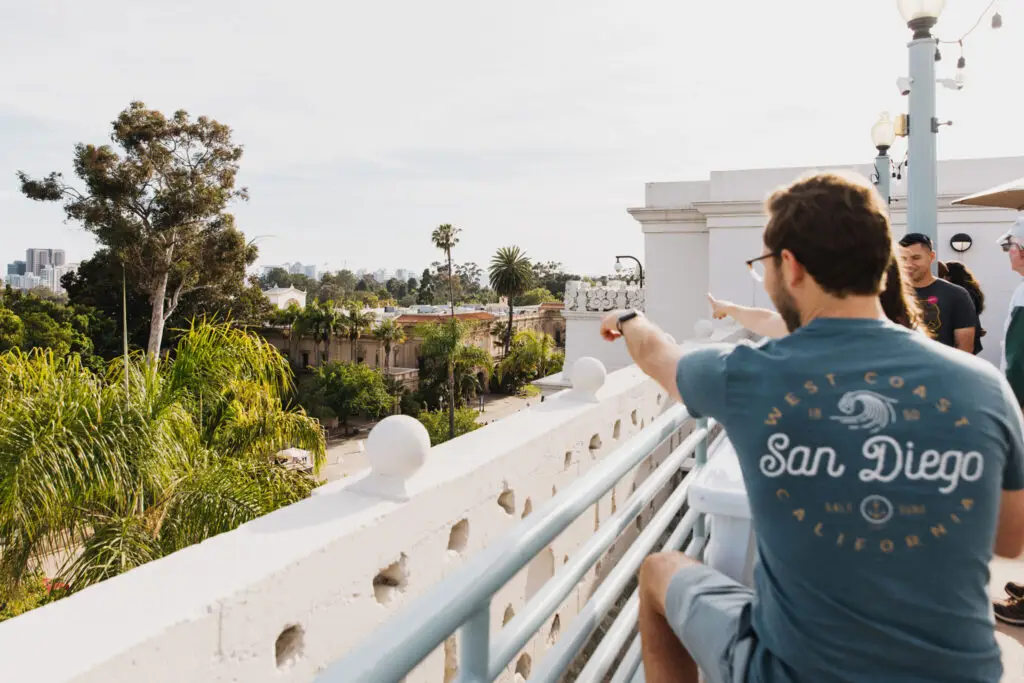
But the experience doesn’t stop at the gallery doors. Friday nights, the exhibition transforms into an ocean-themed “dive bar” during Nat at Night. Select Sundays bring something brand new: a rooftop brunch with sweeping Balboa Park views. Add two new giant-screen films and five floors of nature to explore, and The Nat is shaping up to be one of the season’s must-visit destinations.
Address: 1788 El Prado, San Diego, CA 92101 Website: SDNat.org Hours: 10 a.m. to 5 p.m. daily; 10 a.m. to 11 p.m. Fridays in summer Phone: 619-232-3821
WorldBeat Cultural Center
The WorldBeat Cultural Center is a nonprofit multidisciplinary cultural organization dedicated to promoting, presenting and preserving Indigenous cultures worldwide through music, art, dance, education, sustainability and community programs. WorldBeat elevates multicultural artists, expands opportunities for cultural enrichment and fosters deeper understanding across traditions. WorldBeat offers a holistic cultural experience that inspires pride, unity, connection and belonging for all ages.
Address: 2100 Park Blvd., San Diego, CA 92101 Website:WorldBeatCenter.org Hours: Classes: Monday, Wednesday, Thursday, 6–9 p.m. Exhibits and café: Friday–Sunday, 11 a.m.–6 p.m. Phone: 619-230-1190
Event Calendar
Throughout 2026: Ripley’s Believe It Or Not!
Step into a world of the weird and wonderful at Ripley’s Believe It or Not! at the San Diego Air & Space Museum in Balboa Park. Explore hundreds of bizarre artifacts, interactive displays and unbelievable stories that celebrate the curious and the extraordinary.
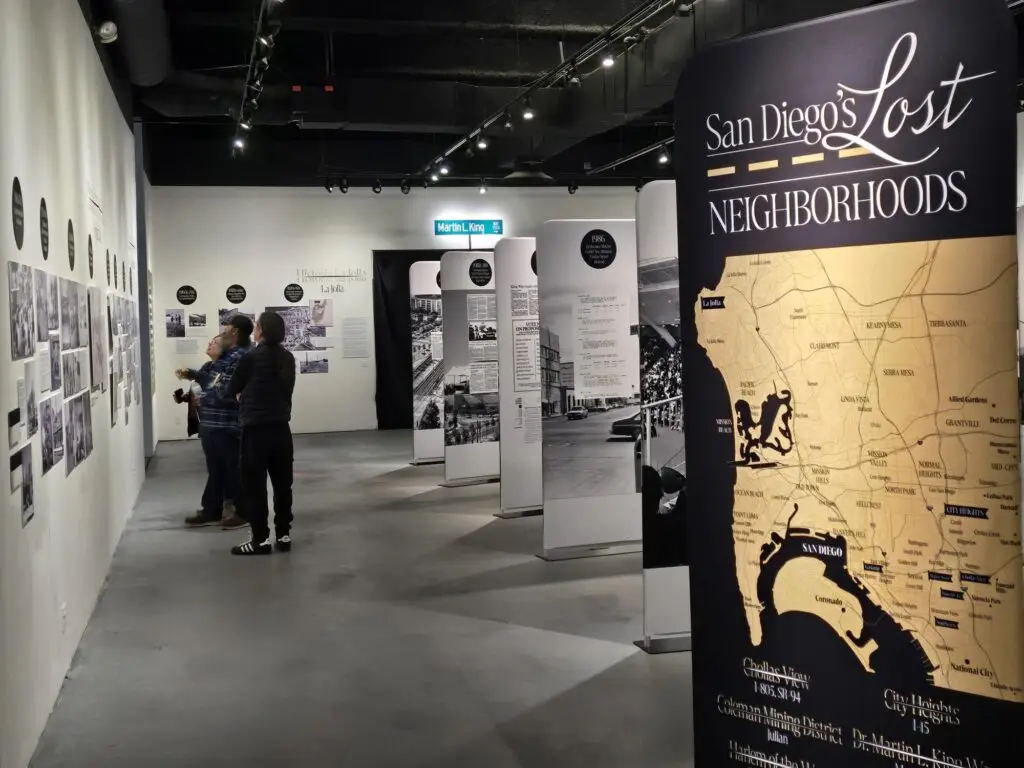
Presented in partnership with the San Diego Museum of African American Fine Arts, San Diego’s Lost Neighborhoods uses augmented reality, oral histories, and archival materials to explore communities and residents displaced by redlining, freeway construction, and other discriminatory policies.
Spend a summer night at The Old Globe. The Lowell Davies Festival Theatre stages Measure for Measure (June 14–July 12) and Much Ado About Nothing (Aug. 2–30), offering two unforgettable Shakespeare productions for just $44.
The Old Globe | 1363 Old Globe Way, San Diego, CA 92101
June 8–Aug. 7: Theatre Summer Camps
Summer camps at Junior Theatre spark creativity for grades K–12 with hands-on training, musical theatre intensives, acting academies, and JT Studio experiences.
A museum visit turns into a Sunday Funday with the addition of rooftop brunch, featuring mimosas, bloody Marys, and brunch bites from Wolfish by Wolf in the Woods (June 14, August 9) and Hash House a Go Go (July 12).
Nagashi at the Japanese Friendship Garden & Museum by floating a lantern to honor loved ones who have passed. Stroll merchant booths, enjoy cultural performances in the Inamori Pavilion, and sample food vendors plus a beer and sake garden in the lower garden.
Explore arts, science, history, and culture in the Balboa Park Cultural District with one convenient, affordable Pass. The Balboa Park Explorer Pass is your ticket to up to 16 museums and endless fun! Purchase your pass at BuyMyExplorer.com.