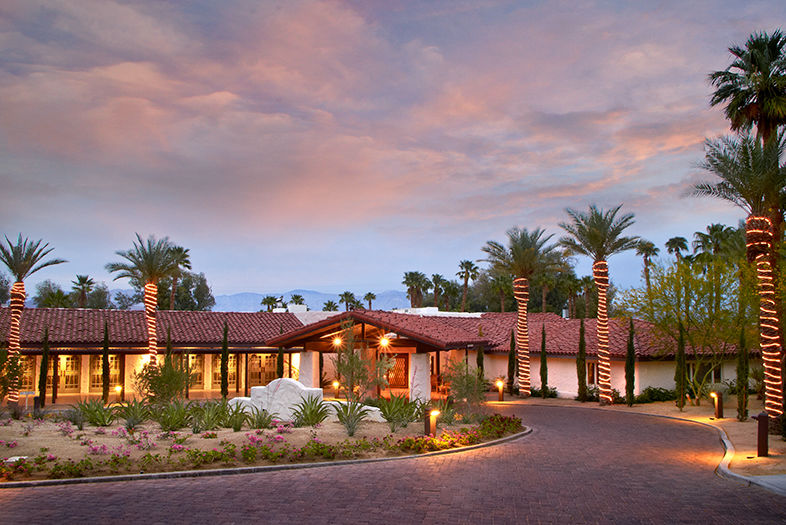
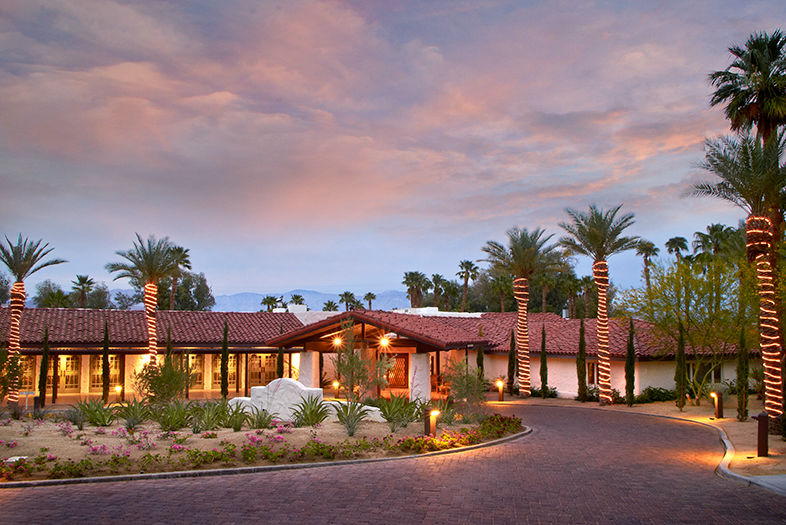
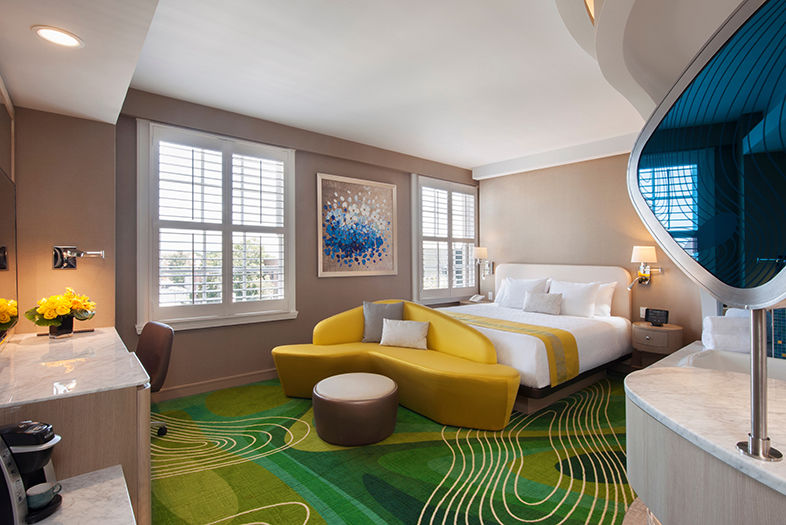
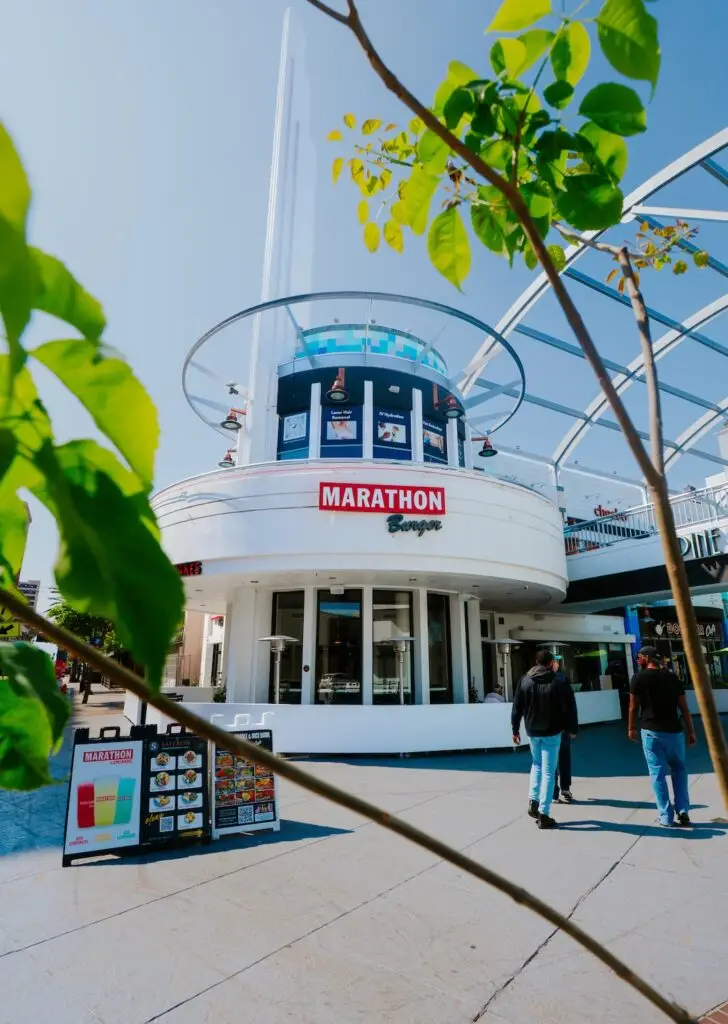
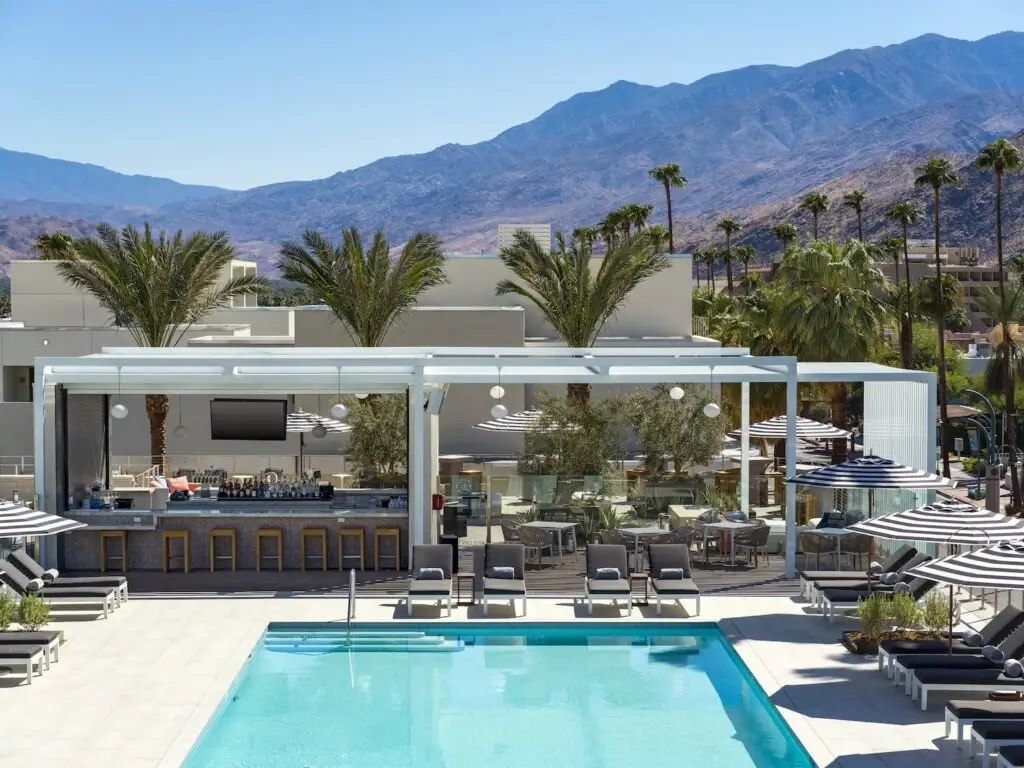
The brand-new Kimpton property on the Calle Real strip in Goleta offers enough activities on its own to make you say, “What Santa Barbara?” That includes happy hour prizes, adult arts programs, live music, and Friday night movie screenings. The hotel makes dining a whole new experience, too, with off-menu items discoverable through social media, a nightly s’mores cart, make-your-own-guac, and spiked agua frescas. Designed by Studio Collective, The Goodland is billed as a “surf lodge meets chic boutique.” Goleta or bust! Starts at $229/night
Borrego Springs
Travel: Easy Weekenders
La Casa Del Zorro
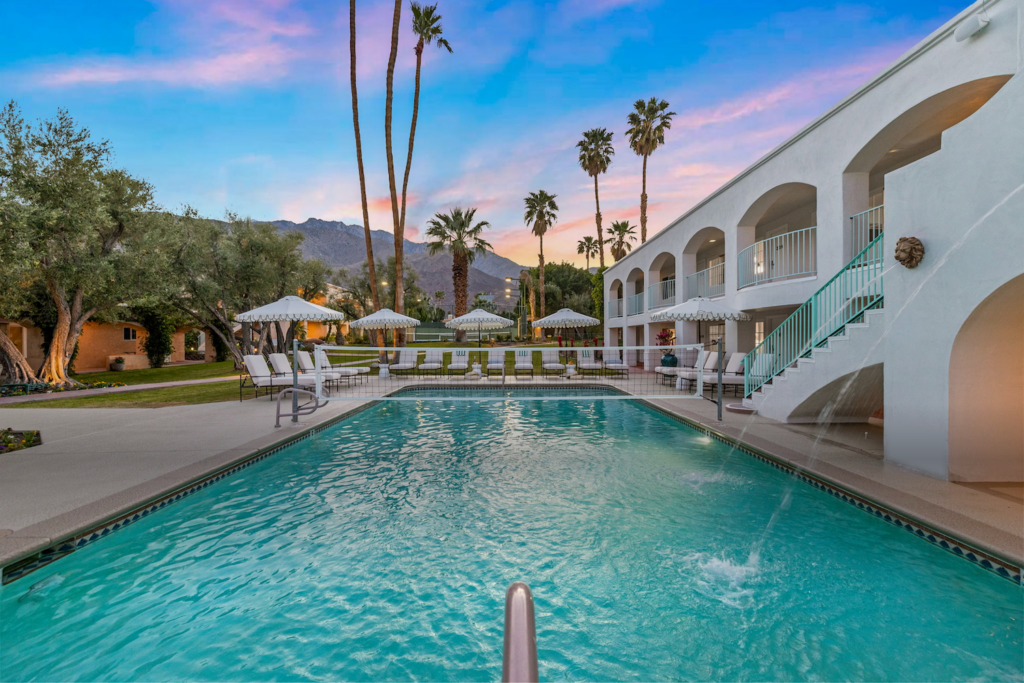
A weekend at La Casa Del Zorro is great if you’re craving seclusion and silence—one of the casitas lies a half mile from the lobby. At night, grab a blanket and cuddle near a fire ring under the stars. Borrego is a designated Dark Sky Community, and all lights on property must point downward. The historic hotel was closed for three years and recently reop ened with improvements like the Butterfield Room, the most upscale dining in Borrego. This season, guests can try the brand-new Rams Hill Golf Club with a special golfers’ package ($220/night).
Headed to the Rose Bowl? DusitD2, downtown Pasadena’s first hotel to open in 20-plus years (a redo of the 1926 Hotel Constance), lies on the Rose Parade route and is just 10 minutes from the Rose Bowl (also home of the Pasadena Flea Market!). The hotel, owned by a Thai hospitality brand, boasts a modern design influenced by roses and the Rose Parade. Every room is equipped with an iPad acting as your virtual concierge. Starts at $229/night
Coronado
Travel: Easy Weekenders
Hotel Marisol Coronado
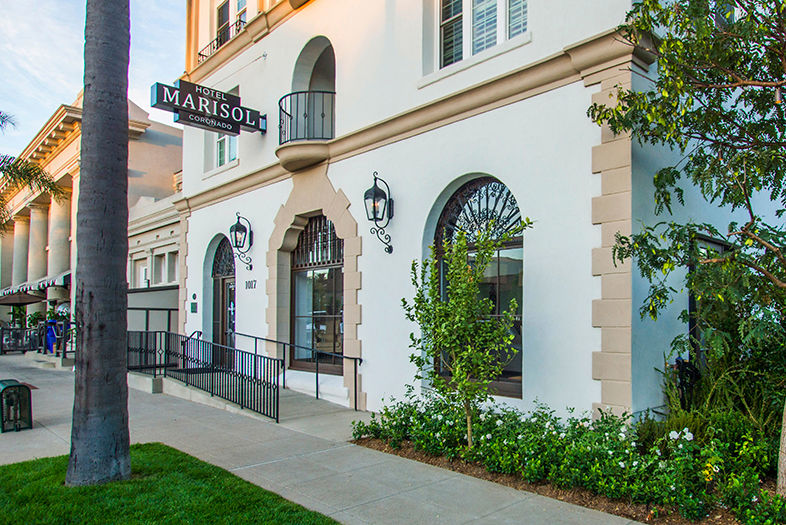
Coronado’s Blue Lantern Inn (1927) has been reimagined by local real estate investors John Murphy and Ann Keyser. The three-story Spanish Eclectic hotel delights with its refurbished wood beam ceiling, original wrought-iron grilles, and more—plus an update of custom furnishings, Italian linens, and WiFi. Stay in one of the 15 rooms or junior suites, and if you can bear to leave this charmer, the beach is just a few blocks away. The staff will loan you a bicycle, beach chair, and towel. Starts at $199/night
Guides
JUNE 11, 2026
A Guide to the FIFA World Cup 2026 in SoCal
From San Diego’s coastline to Los Angeles stadium and fan zones across the region, here’s how to experience soccer’s biggest event
When three nations and 16 cities come together to host the FIFA World Cup 2026, the scale stops feeling like a tournament and starts feeling like geography. A continent becomes the stage as borders soften into corridors. And Southern California—shaped by migration, sport, entertainment, and constant movement—sits inside that landscape with all eyes on it.
San Diego and Los Angeles have always felt connected. Hop on the Pacific Surfliner, and the trip unfolds in one continuous stretch of coastline, passing beach towns, neighborhoods, and city centers.
Traveling from San Diego, everything still feels slightly suspended as the Pacific Surfliner follows the coast north with ocean on one side and a slow suburban blur on the other. San Diego stays in exhale. Los Angeles is already building toward something louder.
This summer, Los Angeles will host eight matches of the FIFA World Cup at Los Angeles Stadium, including the US Men’s National Team opener on June 11, while the region stretches into 39 days of programming across stadiums, parks, transit hubs, beaches, and neighborhoods. Instead of one massive fan hub, Los Angeles is embracing a citywide celebration, with fan zones spread across its entirety.
But this pattern has been rehearsed here for decades. In 1994, Southern California became one of the defining stages of the World Cup, when matches at the Rose Bowl placed global attention on the region and turned local stadiums into international landmarks, confirming its ability to hold the world at scale.
What distinguishes Southern California is not just infrastructure, but cultural permeability. Fashion, music, film, art, and sport constantly overlap here, creating an environment where identity is flexible and always in motion. From the Venice boardwalk, where skate culture shaped modern street style, to global soccer stars rubbing shoulders with Hollywood celebs, to authentic Spanish cuisine moving up and down the I-5 corridor, everything circulates.
The World Cup is not introducing anything new here, it’s showing up for the summer and showing out, revealing what this city has always known about itself. What follows is a look at the fan zones and how Los Angeles turns itself into a city-wide stage for the tournament, one neighborhood at a time.
Courtesy of Los Angeles Tourism & Convention Board
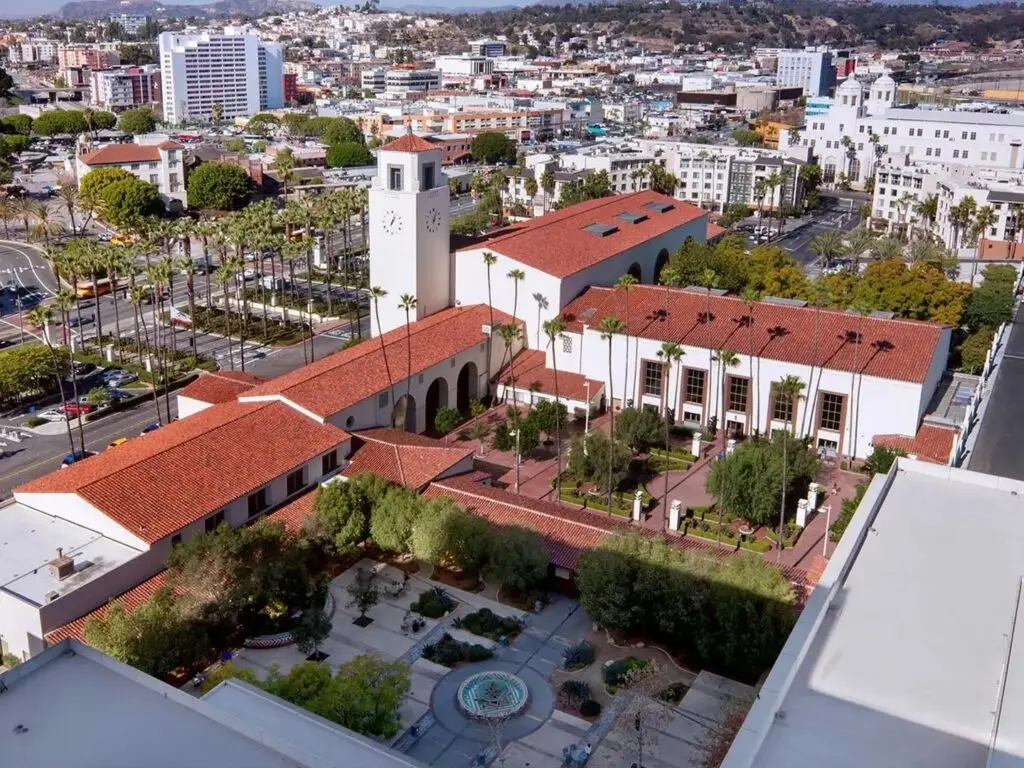
Los Angeles Union Station
As the heart of Los Angeles, Union Station is an official Fan Zone June 25-28 during the World Cup, but in practice it never really stops being one.
It is the city’s circulation point, its meeting ground, its pressure valve. Commuters, travelers, match-day crowds, and everyday Angelenos all move through the same space, and everything mixes, overlaps, and scales in real time. In a way, this is where the World Cup stops arriving in Los Angeles and starts moving through it.
The Pacific Surfliner from San Diego to Los Angeles makes that shift feel almost too easy. No stress or gridlock anxiety, just a straight line up the coastline with ocean on one side and everything slowly becoming more built on the other. It’s one of the rare ways into LA that doesn’t feel like arrival as friction. You can sit with a laptop, watch the Pacific drift past, grab coffee from the café car, and let the city come to you in pieces.
That’s the beauty of arriving at Union Station. Instead of feeling like you’re on the edge of the city, you’re immediately surrounded by it. And, inside, the station already reads like a World Cup nerve center: banners, movement, multilingual energy, the sense that something global is about to funnel through this exact point. The Heart of the City Fan Zone only sharpens that feeling, with simultaneous match screens, DJ sets, meet and greets, and immersive activations built around marquee games like USA vs. Türkiye.
ROW DTLA feels like the first exhale after arrival. A converted industrial campus turned creative district where restaurants, retail, and open-air courtyards form a self-contained ecosystem. If you’re looking for the perfect first meal in LA, make it lunch at Pizzeria Bianco. The thin-crust pizza is reason enough to go, but the space leaves just as much of an impression.
What I liked most about ROW DTLA is how quickly it resets you after the train. One minute you are stepping off at Union Station, and the next you are in a space that feels like its own version of LA, a city inside a city with some of the most curated shopping I’ve ever seen.
Bodega hides itself behind a convenience-store front, a sneaker and streetwear space disguised as something ordinary, like LA refusing to make anything feel too obvious. The whole campus moves like that, part retail, part gallery, part neighborhood you are only temporarily inside.
Isabella Dallas is a freelance writer for San Diego Magazine and the Arts and Culture Editor at The Daily Aztec in her final year at San Diego State University. She previously worked as an editorial intern for SDM, but when she’s not writing, you can find her trying the best coffee spots in SD, devouring the latest rom-coms, and indulging in anything and everything pop culture.
Mad Libs. License plate bingo. The “quiet game,” a universal parent savior. Long live Slug Bug, where kids with zero self-control punched each other in the arm every time they saw a VW Bug in the wild—an activity no doubt invented by some Volkswagen marketing intern who now quietly runs the world. A family that cruises together bruises together.
So many threats to pull the car over and leave unruly progeny on the side road for good. GenXers are such baddies because our parents actually followed through. But we tracked those boomers down—or just walked into the wilderness and formed angsty flannel bands. We survived.
There were no downloaded movies back then. No seatback entertainment. Just a mythical road, a few bug-gutty windows, and the fast-moving summer world beyond. Seatbelts ignored, hot air whipping a frenzy of hair and beef-stick child scent.
Very few chaoses match being trapped in a moving car with your entire bloodline. It’s unimaginable, but we kinda liked it.
The road trip was always about endurance, discovery, adventure, creativity, and memory. Somewhere between gas station hot dogs, the Hollywood Walk of Fame, and musty motels with coin-operated vibrating beds—the bored between moments of mutual expedition sealed our love of the long distance car ride.
To respark road lust, we’ve put together a coastal California run up the 101 and Highway 1. The state’s famed road trip siblings, with ocean on one side and possibility in every direction. We analyzed what’s incoming, just-arrived, compelling, or a classic in need of a reminder in almost every county along the way—the kind of places we’d drag our family (or dog or best friend) to.
We start our trip just outside San Diego County lines and work our way through San Francisco. Because, by then, it’s time to turn the car around and do it all again.
The road is still the main character.
Photo Credit: @Tanveerbadal
Laguna Beach
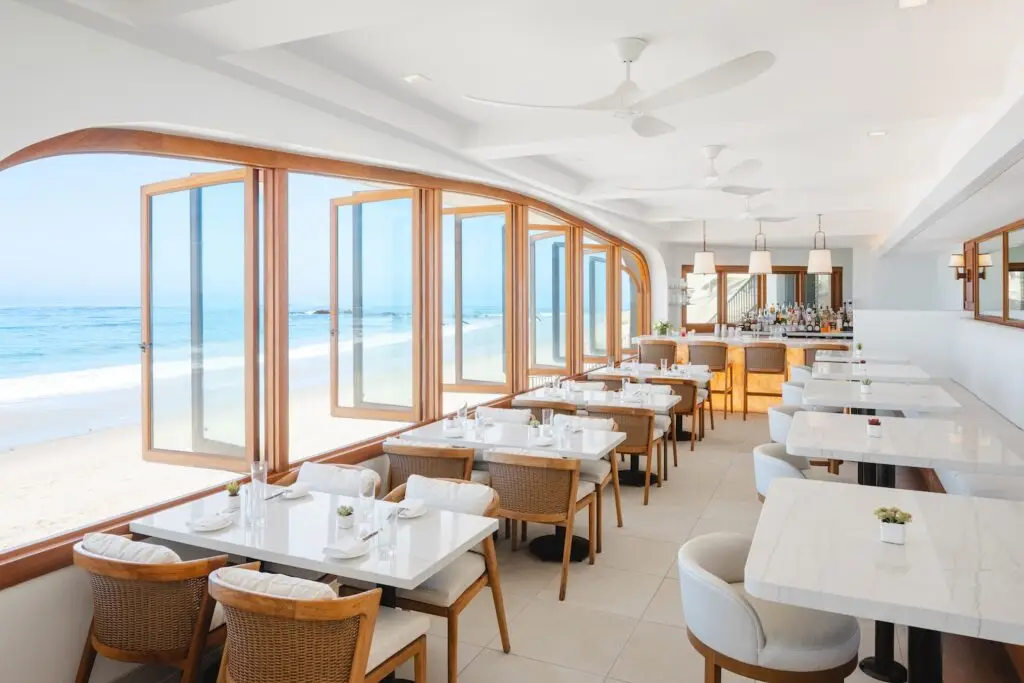
A 90-minute drive from downtown San Diego, Laguna Beach is home to serene coves, big-deal art events, miles of hiking trails, and the greatest number of beachfront hotels in California. Among the latter is the newly revamped icon, Surf & Sand Laguna Beach. Along with tweaks to the guestrooms, pool, and onsite Splashes restaurant, the remodel includes a new spa, Aquaterra. Wake up to ocean views, then get outside: Go tide pooling at Shaw’s Cove, or descend to Thousand Steps Beach and spend the day stretched out with a salacious summer read. For dinner, get fancy at the upscale (no swimwear allowed!) Studio Mediterranean at the Montage Laguna Beach hotel. Led by Greek chef Dennis Efthymiou, it serves feta-, phyllo-, and fish-forward cuisine inspired by his heritage.
Newport Beach
Head another 15 minutes up the road to Newport, an unlikely destination for adrenaline junkies both relatively tame (family-friendly thrill rides at the Balboa Fun Zone amusement park) and willing to risk life and limb (30-foot waves at the Wedge surf break). It’s also increasingly a killer place to eat, with Luke’s, of international Maine-lobster-roll fame, having recently opened locations in town. James Beard Award winner Tyson Cole just opened his sleek omakase and sushi restaurant Uchi this year. Once you’re stuffed, lay your head at Bay Shores Peninsula Hotel, a midcentury-inspired, 25-room boutique resort overlooking the sea. Watch the waves from beside the hotel’s rooftop fire pits, or paddle out on surfboards provided free for guests.
Huntington Beach
Huntington Beach has been an icon of California surf culture since the 1910s thanks to Hawaiian Olympic swimmer Duke Kahanamoku. Surfers still chase waves near his old haunts, including the Huntington Beach Pier, where the aptly named Huntington’s on the Pier is scheduled to arrive this fall in the location of the old Ruby’s Diner (RIP, Ruby). It’ll serve seafood, obviously, plus livestreamed videos of groms wiping out just a few feet away. Sports here don’t always require wetsuits: Mini-golf bar Playground is equipped with the obvious, as well as arcade and pinball games. Or bypass physical exertion en masse at the new Holistic Lounge at Hyatt Regency. It’s packed with newfandangled healing tech that uses light, heat, and electromagnetic fields to allegedly repair stressed skin and muscles tired from lifting mojitos.
Aaryn Belfer is a writer and editor specializing in nonfiction across art, architecture, and culture. Once upon a time, she wrote a provocative column for San Diego CityBeat (RIP). She was a runner up in the 2025 Matchbook Stories contest at the San Diego Central Library and is irrationally happy about it. Currently in her Soft Girl Era, Aaryn has expensive taste in (mostly flat) shoes and will choose a great art exhibit or live jazz concert over almost anything else. Except, possibly, Javier Bardem.
Amelia Rodriguez is a writer and journalist and winner of the San Diego Press Club's 2023 Rising Star Award and 2024 Best of Show Award, she’s also covered music, food, arts and culture, fashion, and design for Rolling Stone, Palm Springs Life, and other national and regional publications. After work, you can find her hunting down San Diego’s best pastries and maintaining her five-year Duolingo streak.
From artsy, boutique hotels in New Mexico to a revolutionary restaurant in Baja, explore what’s new in these desert cities around San Diego.
Coachella Valley
Terra Palm Springs, Palm Springs
Serenity-seeking guests (and, presumably, the free-spirited ghosts of naked people) roam this 13-room wellness escape that was once a clothing-optional resort. Opened a year ago, it offers exclusive, 24-hour access to a Himalayan salt sauna, cold plunge pool, and rain room. For food and drink, it’s tonics and juice cleanses, plus poolside bites from Michael Beckman, exec chef of the nearby Workshop Kitchen + Bar.
Casa Palma Hotel & Bungalows, Palm Springs
Opened last year on the historic, two-acre Movie Colony neighborhood property originally built by actor Errol Flynn (it was called the Normandy then), this is a micro-hotel for people who love Taschen books. Casa Palma reimagined the place as a minimalist, veneers-white 33-room escape with pickleball; tennis; and a mountain view bistro serving breakfast, salads, and sandwiches.
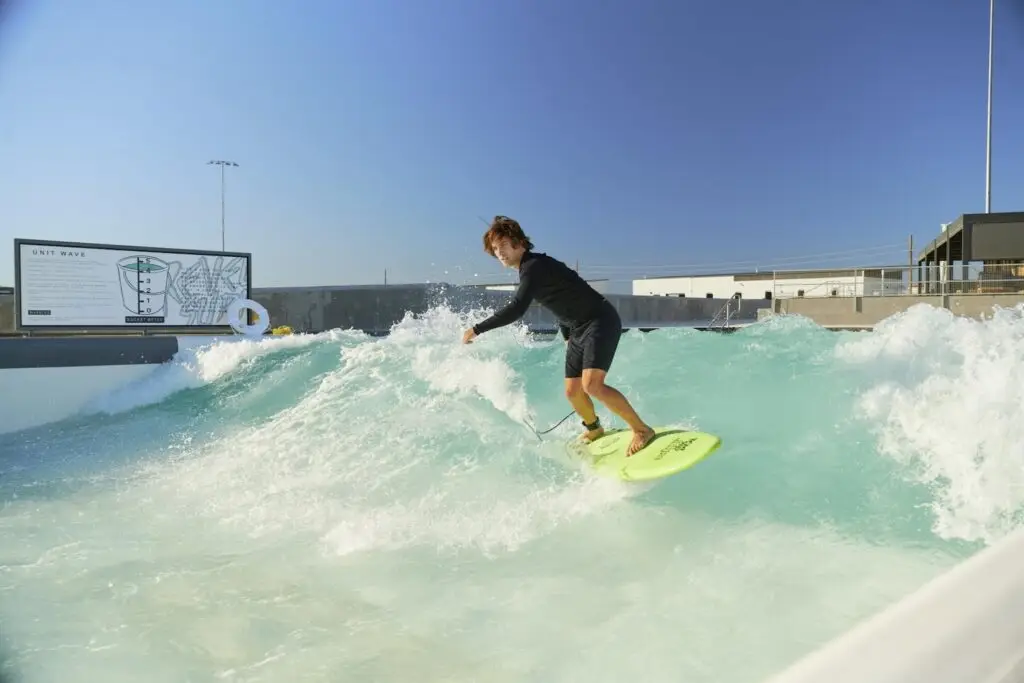
“Surfing in the desert” sounds like an absurd ayahuasca notion, but the Coachella Valley already has one wave pool (Palm Springs Surf Club), and, soon, a 5.5-acre surf lagoon will anchor DSRT Surf, an incoming resort at the Desert Willow Golf Courses. Planned for completion in mid-2026, it’ll include a 139-room hotel, 57 luxury villas, and restaurants.
Photo Credit: Patrick Chin
New Mexico
Hotel Willa, Taos
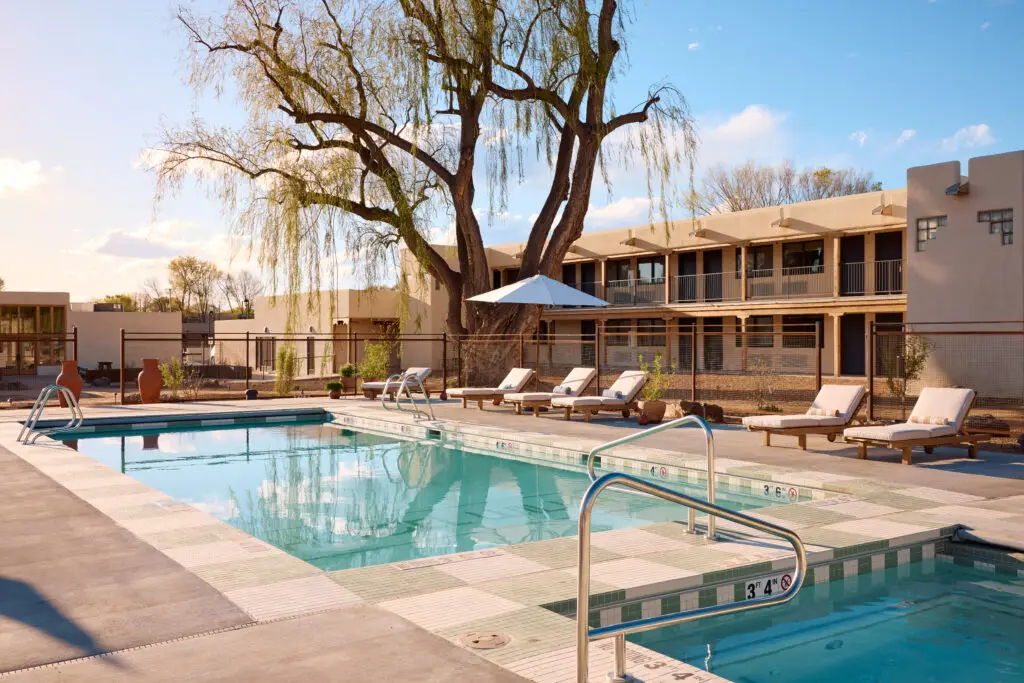
Last spring, the Casetta Group (the same folks who own SD’s Pearl Hotel) resuscitated an old motor lodge in Taos, a longtime beacon for creatives, and named it after Willa Cather (who finished her novel Death Comes to the Archbishop in town). The 51-room Hotel Willa has adobe architecture, an artist residency, a pool with a giant weeping willow nearby, and a seasonal restaurant from husband-and-wife duo chef Johnny Ortiz Concha and artist Maida Branch.
Arrive Albuquerque, Albuquerque
Originally built in 1965 as the Downtowner, a classic, six-story inn on the motel-culture strip of Route 66 in downtown Albuquerque cycled through several identities before last year, when Palisociety reimagined it with the Secret Gallery (featuring modern work from Southwest artists), a cocktail bar, a restaurant, and 137 dog-friendly rooms. Like any good desert road trip hotel, Arrive Albuquerque hotel is a cheeky, midcentury affair centered around an umbrella-shaded pool scene and those strappy ’80s patio loungers.
Courtesy of Leo’s Santa Fe
Leo’s, Santa Fe
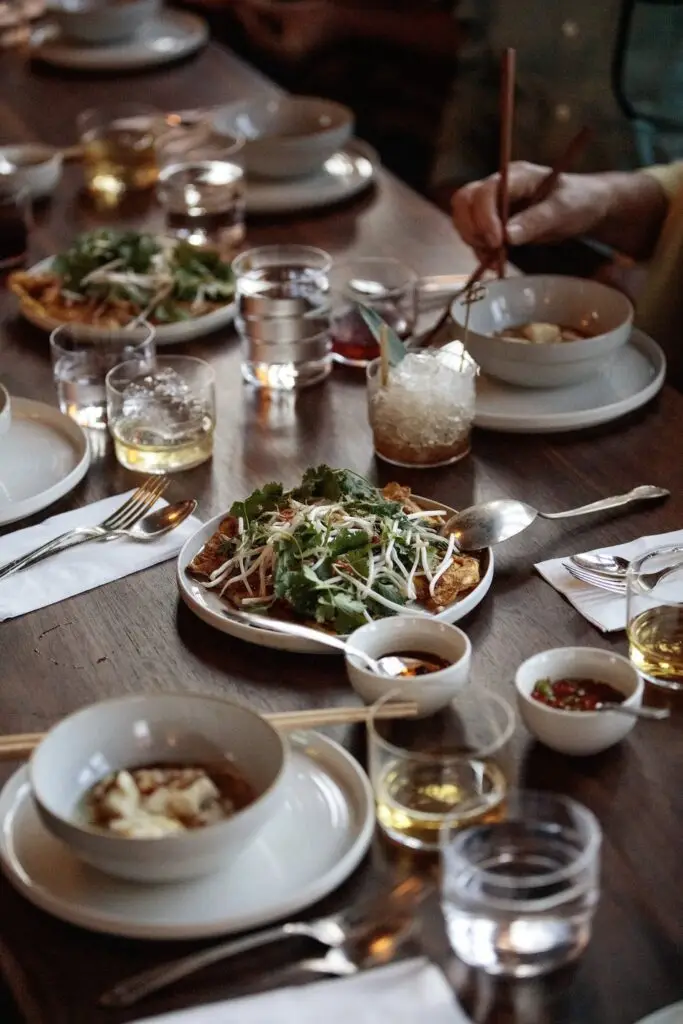
After forming Vital Spaces, an org that leased abandoned warehouses and rented them at a low cost to artists, furniture designer Jonathan Boyd launched Leo’s, a no-signage, no-reservations restaurant last August with James Beard Award–winning chef Zakary Pelaccio. It focuses on Thai and Malaysian dishes—catfish sum tum, pork belly with garlic prik phao, fried chicken with tofu-mustard sauce and jiao chili sauce—plus natural wines and inventive cocktails. It promptly landed on Esquire’s Best New Restaurants of 2025.
Arizona
Trailborn Grand Canyon, Williams
Trailborn is the base camp of hotel groups. It’s focused on America’s grand outdoorsy arenas, with spots in the Rockies; the Blue Ridge Mountains; and now, Williams, a mile from the Grand Canyon Railroad Depot. This kitchy, 96-room roadside hotel offers a moody, wood-paneled steakhouse; adventure excursions; free breakfast inside a bustling “camp hall;” and front-row access to the fanfare of Route 66’s centennial celebration this year.
Early this year, Paradise Valley (the mountain-wrapped town neighboring Scottsdale) will welcome the 40-acre Kimpton Miralina, with six pools; more than 400 rooms and villas; and three restaurants, including Hecho Libre, a new Baja-inspired concept from fellow Beard semifinalist Wes Avila (known for Angry Egret Dinette and MXO in Los Angeles).
International Dark Sky Discovery Center, Fountain Hills
As cities grow and stargazing becomes an endangered pastime, an org called International Dark Sky Places works to protect the best areas in the world to behold night skies. One of them is Fountain Hills on the outskirts of Phoenix. This summer, it’ll get even better with a $28 million discovery center featuring a massive telescope, a planetarium, science exhibits, and a stargazing terrace.
Courtesy of Cote Korean Steakhouse
Nevada
Cote Korean Steakhouse, Las Vegas
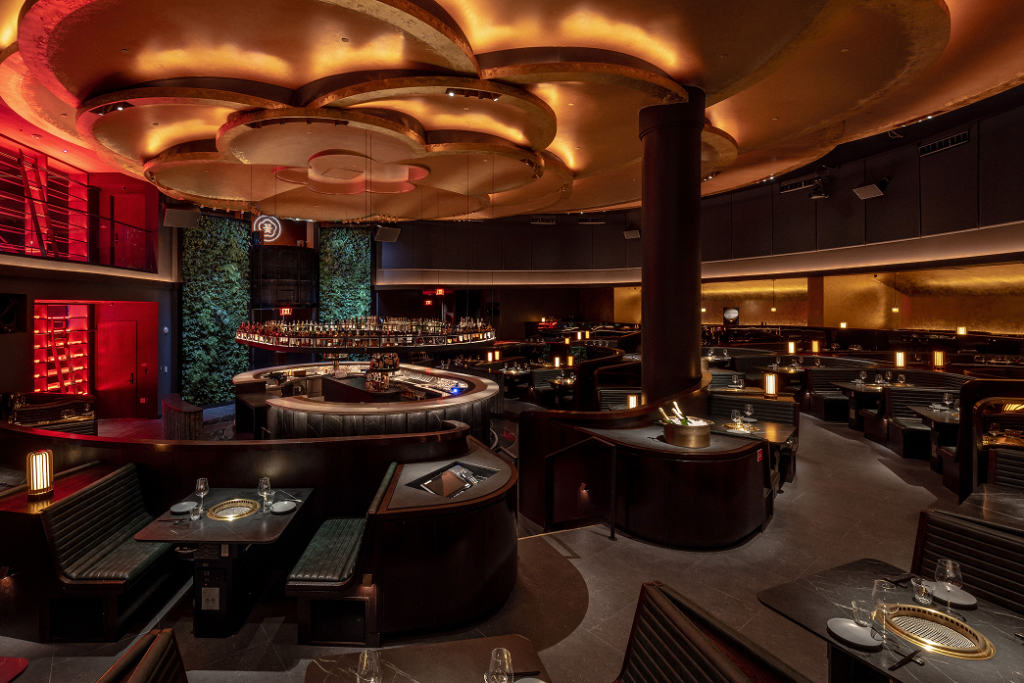
Cote is the only Michelin-starred Korean steakhouse in the US, an idea from Seoul-born and James Beard nominated chef and restaurateur Simon Kim. Part of The Venetian’s $1.5 billion renovation, it’s a show—18,000 square feet, with stadium seating, VIP skyboxes, a crow’s nest DJ booth, a glowing central bar, 1,200 wine bottles, and the inimitable buzz of energetic impulse spending.
F1 Arcade, Las Vegas
2025 was a big year for Formula 1 racing—the sport celebrated 75 years with a Brad Pitt film (for which Rancho Bernardo–based Sony Electronics created a one-of-a-kind camera that took viewers inside the cockpit), and Caesars Palace welcomed a 21,000-square-foot F1 Arcade where fans can flex their inner Lando Norris with 87 racing simulators.
GSR Arena, Reno
When built in the 1970s as the MGM Grand, the Grand Sierra Resort was one of the biggest hotels in the world with over 1,000 rooms. Almost 50 years later, it’s nearly doubled its occupancy and is undergoing a billion dollar upgrade. The star will be the $435 million, 10,000-seat GSR Arena, which broke ground in September. Once completed (hopefully in fall 2027), it’ll be home to the University of Nevada men’s basketball team.
Courtesy of Dendric Estate
Utah
Dendric Estate, Kamas
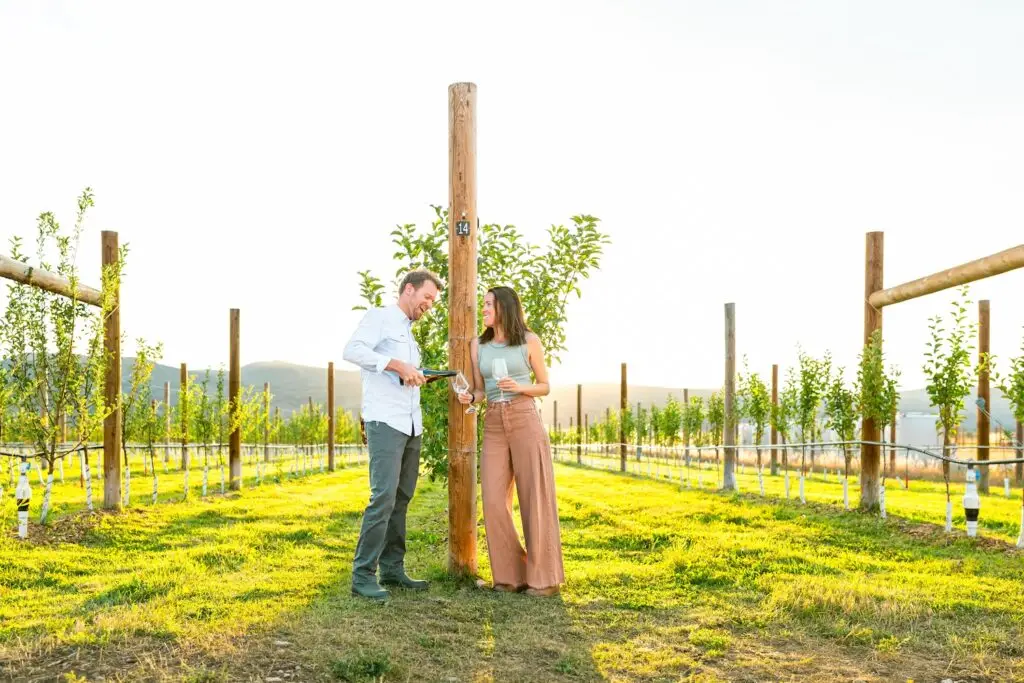
Utah’s High West Distillery was a groundbreaker, the first legal distillery in Utah when it opened in 2006. Now High West’s master distiller Brendan Coyle has left to open his dream project with his wife, Carly. They purchased 20 acres in Kamas Valley at the foothills of the Uinta mountain range, where they’re growing high elevation apples and flipping them into bone-dry boozy cider with Dendric Estate. You can tour the estate or wait for the onsite tasting room, planned for 2027.
The Inn at Sundance Mountain Resort, Sundance
In 2020, Robert Redford sold his famed, conservationist-minded mountain ski resort to Broadreach Capital Partners and Cedar Capital Partners, who promised to keep his “build some, preserve more” vision going. Since, it’s earned a Michelin Key. This month, The Inn at Sundance Mountain Resort—a 63-room, ski-in/ski-out inn—opens with views of the 12,000-foot Mount Timpanagos. Perched right out front, the Outlaw Express chair lift takes you to the Mandan summit in seven minutes (getting there used to take 20). There’s a wrap-around porch, relaxation pools, a sauna, outdoor showers, and a cold plunge at The Springs.
Canopy by Hilton Deer Valley East Village, Park City
Four years after hosting the Winter Olympics, famed ski-only resort Deer Valley is undergoing a massive expansion of its East Village, including eight new hotels (the Grand Hyatt is already there, and the Four Seasons and others are incoming). Scheduled to open this summer, Canopy will be Hilton’s 180-room, ski-in/ ski-out property with après-ski and rooftop lounges. Deer Valley has also added 2,000 additional acres of skiable slopes, 100 new runs, and 10 new chairlifts.
Baja
Diego, Valle de Guadalupe
In the 2010s, Ensenada-born chef Diego Hernández was a headliner in the food-culture revolution in Valle de Guadalupe with Corazón de Tierra—named number 30 in the 2018 “World’s 50 Best Restaurants” list. It closed in 2020 (damn pandemic!). Last January, he returned with an eponymous 40-seat restaurant, Diego, inside Valle’s Museo de La Vid y El Vino, relying on onsite gardens and in-house butchery to prepare seasonal, multi-course tasting menus and à la carte dishes nodding to his Corazón roots.
Kadún, Cabo San Lucas
Over the years, the trend in Cabo resorts has been to get away from the action with secluded beachfront hideouts. Well, not all who travel to Cabo want to be tucked away. Last October, Mexico Grand Hotels (known for elaborate luxury resorts like Marina Fiesta and El Encanto) opened a smaller but still opulent thing: Kadún, a 110-room hotel with a rooftop pool and sundeck. It’s within walking distance to the Cabo Marina (the Vegas of Baja’s southern tip) and Medano Beach (one of the only swimmable beaches in Cabo).
Courtesy of Carnival Cruise Line
Ensenada Bay Village, Ensenada
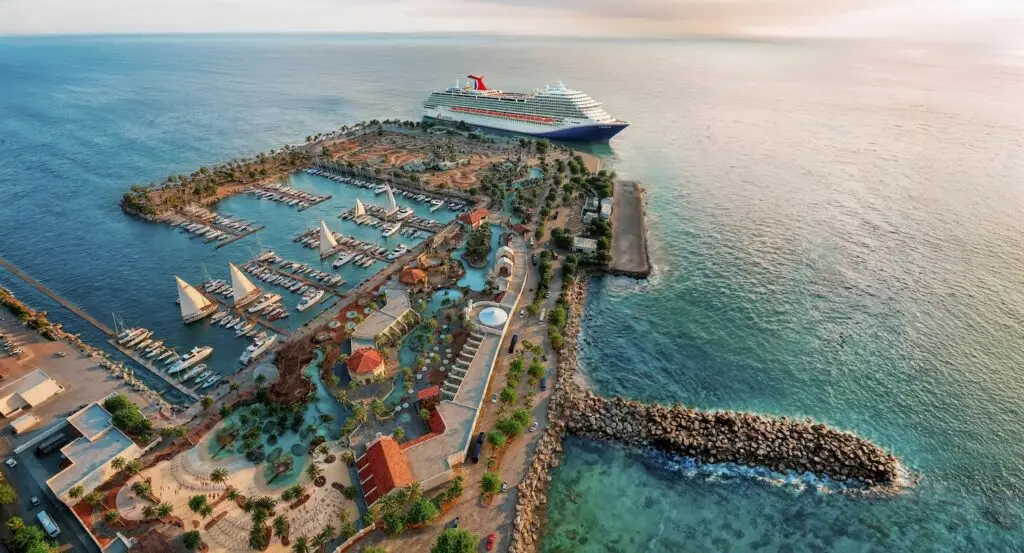
Carnival Cruise Line has a vested interest in building up the ports it parks in. It’s established spots in Grand Turk, Roatan, and Cozumel, and its next elaborate disembarkment project is a $26 million beachside playground in Ensenada, planned for completion in 2027. Expect a sort of Pinocchio’s Island isthmus packed with zip lines, dune buggy rides, river rides, an adult pool, thermal springs, a spa, and wine and cheese pairings from Valle de Guadalupe (the wine region is 15 minutes inland).
Troy Johnson is the magazine’s award-winning food writer and humorist, and a long-standing expert on Food Network. His work has been featured on NatGeo, Travel Channel, NPR, and in Food Matters, a textbook of the best American food writing.
Amelia Rodriguez is a writer and journalist and winner of the San Diego Press Club's 2023 Rising Star Award and 2024 Best of Show Award, she’s also covered music, food, arts and culture, fashion, and design for Rolling Stone, Palm Springs Life, and other national and regional publications. After work, you can find her hunting down San Diego’s best pastries and maintaining her five-year Duolingo streak.
Today’s seniors are more connected than ever, with a renewed focus on retirement as a time of discovery and enriching experiences. The ultimate reward for a retirement well-earned is the wisdom to appreciate it all, and what better place to enjoy that unique perspective than Vi at La Jolla Village, in the heart of San Diego.
All-access pass to good living.
As a Continuing Care Retirement Community (CCRC), Vi provides access to a connected and fulfilling community while making it easy to plan for future care, should the need ever arise. With a care plan in place, residents enjoy greater financial predictability and long-term value, freeing them to focus on making the most out of retirement.
Resort-style amenities at the epicenter of a cultural hub like San Diego offer a retirement experience unlike any other. Paired with exceptional dining, spacious accommodations and dedicated staff, the best of maintenance-free living is all around. And with the introduction of Vista 360 Well-Being, Vi’s panoramic approach to wellness, there are more ways than ever for residents to access it all.
The harmony of mind, body and community.
Courtesy of Vi at La Jolla Village
The key to longevity is striking the right balance in maintaining an active lifestyle with an active mind in a fulfilling community. With newly renovated community spaces and restaurants, Vista brings a variety of opportunities for residents to elevate their well-being through Vi-exclusive “Signature Experiences.”
Vista Enrich takes an evidence-based approach to brain vitality, keeping residents at the forefront of cognitive health through exergaming (exercising + gaming), nutritional plans and informative workshops. It is also home to The Brain Vitality Studio, an innovative facility dedicated to cognitive fitness that has garnered national recognition.
Vista Discover invites residents into stimulating educational experiences, from chef-led cooking demos and guided wine tastings to lectures at local universities and intimate lectures following cultural outings.
While Vista Enrich focuses on brain health and Vista Discover engages residents intellectually, Vista Explore cultivates a sense of adventure through curated travel and local excursions. But broadening one’s horizons doesn’t always require a plane ticket. One recent event brought a taste of the world right to the community: an onsite “jazz cruise” featuring live music and global cuisine served at a series of themed “ports” all within the community’s own ballroom.
“Location, location, location”
Courtesy of Vi at La Jolla Village
One of the biggest perks of life at Vi at La Jolla Village is its proximity to just about everything. With easy access to transportation and local attractions just steps away, residents can explore and engage with their community at their own pace.
“There are trolley and bus stops within a 5-minute walk that will get you to the beach, UCSD Campus, medical appointments, downtown La Jolla or San Diego, et cetera. We rarely use our car,” said resident Tom Yager.
With the best of San Diego just steps away, residents don’t just live in the city, they live within reach of everything that makes it special.
The best of all worlds.
Courtesy of Vi at La Jolla Village
At Vi at La Jolla Village, retirement isn’t a chapter to slow down; it’s an invitation to discover more. Tailored community experiences created by Vista, paired with the vibrant pulse of San Diego just outside the door, mean that residents don’t have to choose between security and adventure, connection and independence. They get all of it.
This is what an all-access pass to good living looks like: the comforts of an elevated lifestyle, a community built for growth and a city made for discovery – all in one place.
To learn more about Vi at La Jolla Village or for details on available floor plans, visit ViatLaJollaVillage.com/SDM.
What the hell am I doing in Arizona looking for water?
It’s the kind of question that creeps in the moment you step off the plane at Sky Harbor and the dry heat hits like an open oven door. Arizona is famous precisely because it’s unforgiving, a place where the presence of life amid the extreme lack of water is its own marvel. The compelling thing about attractions on this hot moon is the ingenuity behind the fact that they exist at all.
Long before the golf courses and cul-de-sacs, the Indigenous Hohokam people engineered one of the most sophisticated canal systems in the ancient world, diverting water from the Salt River to irrigate crops and sustain entire communities. Built by hand more than 1,000 years ago, portions of those canals still guide water through the Mesa valley today.
Phoenix’s main pockets tell different stories: Scottsdale has its polished, resort-town sheen; Tempe is full of young brains on vices; and Mesa is expansive and quietly strange. The kind of Arizona you think of when someone says Arizona. It’s the state’s third-largest city by population, but it feels like a series of outposts stitched together: historic downtown blocks, desert trailheads, leftovers of the Old West, and now—the improbable thing that brought me here—a surf park.
As I pull into Revel Surf Park, a watery lagoon glows blue against a backdrop of red dirt and distant peaks. The waves come and go like someone endlessly draining and refilling a mirage.
Revel—the centerpiece of Mesa’s Cannon Beach development—opened in late 2024, turning a patch of desert into Arizona’s first full-scale surf park. Roughly 2.2 million gallons of water circulate through the lagoon in an area that averages just over eight inches of rain a year.
It looks excessive, wildly irresponsible. It isn’t.
“We built this very strategically,” general manager Ryan Armstrong explains. “The well is located right here on the property. It’s processed and piped right into the lagoon.”
The pool runs on a closed-loop filtration system, recycling every drop and losing water only to evaporation. Developers say the park uses less water than a single golf hole—and a mere two percent of what the alfalfa field that once occupied the site consumed. Because Revel draws directly from the ground rather than city taps, Armstrong notes, “our water bill is essentially zero.”
Like many of the staff members at Revel, Armstrong is a surfer transplanted from the coast. The wave technology he oversees didn’t come out of a research lab, but a backyard. Matt Gunn, the creator of Swell Manufacturing, built a functional model of the wave in his own yard before partnering with developer Cole Cannon and pro surfer Shane Beschen to bring it to scale. The result is a private ocean—a lagoon where surfers can choose between the sloping lines of Trestles, the hollow barrels of Oahu’s V-Land, or Malibu’s mellow shoulders.
As a surfer spoiled by San Diego’s coastline, I’m equal parts curious and skeptical. Wave pools can feel sterile, stripped of the wild consequence that makes the ocean seem alive. But the sea can’t come close to the constant supply of waves a surf park offers. “We’re running eight hours a day, eight sessions a day, 10 surfers in each session, with waves every minute,” Armstrong tells me. “We have stadium lights, so sometimes we’re out here surfing until midnight.”
I opt for the Trestles setting, expecting smooth sailing. I’m wrong. The drop is quick, the margin for error thin. I get pitched. I recover. I link together a few snaps, then lose it again. Even manufactured waves have a way of humbling you. A few solid rides save the session.
As I dry off, Armstrong walks me through the broader vision. The 44-acre Cannon Beach district surrounding Revel will include roughly 500,000 square feet of retail.
“There are about seven or eight restaurants going in and a super high-end med spa,” he says, pointing toward the construction. Beyond food and surfing, the site is designed as a multi-sport hub. A massive KTR (Kids That Rip) indoor action sports park is in the works, featuring trampolines, parkour obstacles, and a world-class skate park.
This corner of the desert won’t stay quiet for long.
In hindsight, the advantages to Revel Surf Park are obvious: no suffocating crowds, no jockeying for position. Waves arrive every minute, precisely on schedule (if you miss one, that’s on you). There are no flat days at Revel. You don’t have to monitor weather reports and tide charts to know when it might be a good day for a surf. The swell is never not quite right for the break. It’s surfing’s version of shooting fish in a barrel—a strange, athletic fever dream and a convincing way to scratch the surfing itch when the nearest ocean is more than 300 miles away.
Cole Novak is an award-winning writer with a passion for highlighting local figures, small businesses, and nonprofits. Born and raised in San Diego, Cole is passionate about photography, surfing, art, the local food scene, and the great outdoors.
A group of teenagers is taking selfies outside of Saguaro Coffee in downtown Indio, California. One adjusts her sunglasses on her nose and holds up her spiced pear matcha latte, and I can picture the shot: This smiling young woman in the foreground, largely unnecessary cardigan (it’s a textbook-perfect 76 degrees) laid just so over her shoulders; the green expanse of a community park in the background. Makers’ market booths dot the grass, with the angular new public library (opened in October 2025) beyond.
In other words, downtown Indio is a cool neighborhood for cool young people.
It wasn’t always so. Though I grew up minutes away, I seldom visited this place, except to buy my school uniforms at Yellow Mart—a cluttered sort of “general store” with firearms behind the counter and mechanic coveralls on offer in the back—and attend rehearsals at a warehouse-like community theater then surrounded by empty storefronts.
Courtesy of Rosemary HiFi
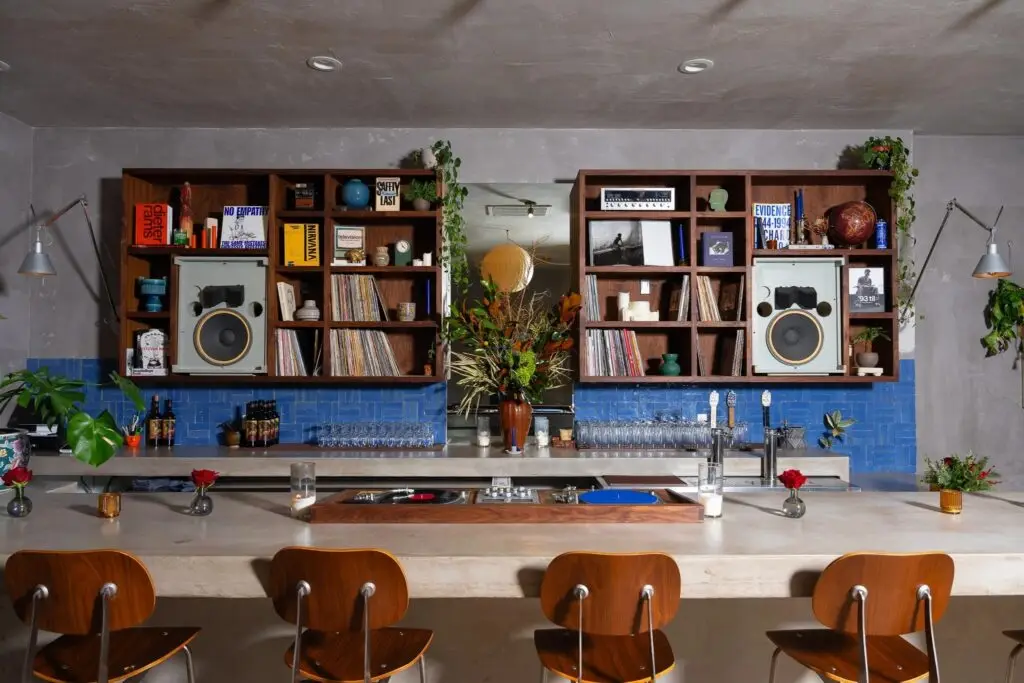
Yellow Mart and the theater have endured, and while unused buildings still dot the area, those teenagers can now make a loop between businesses that will look great on their Instagram stories: a few bustling cafés; Urban Donkey vintage store; Gabino’s, a Guy Fieri–approved spot for savory crepes. At night, locals flock to Rosemary HiFi, a listening lounge and wine bar owned by Adrian Romero, a Coachella Valley–raised kid whose first business, Hermano, was a florist’s shop turned if-you-know-you-know apparel brand. In glass windows, each storefront hangs posters promoting other local businesses and events. One beckons visitors to Field Day, Rosemary HiFi’s free, outdoor gathering of vendors, DJs, chefs, wine and beer makers, and activations.
“We’re continuing to grow at a higher pace than everybody else [in the valley],” says former Indio mayor Glenn Miller (late last year, he passed the head honcho role to Elaine Holmes, a requirement of the city’s rotating, one-year mayoral terms for all city council members). He and I are sitting in the recently opened downtown location of Everbloom Coffee, owned by Indio hometowners Efrain Mercado and Matthew Ortega. Their first outpost, off the nearby Highway 111, was sunny but cramped, with zero indoor tables and terrible parking. People came anyway, and now they have this 2,800-square-foot space busy with patrons working and chatting. The city of Indio helped make it happen.
“When land becomes available [in downtown], we purchase it,” Miller explains. The city council put a program in place to help entrepreneurs like Mercado and Ortega become tenants in city-held properties. “They have to come in with a full-fledged business plan and a proposition for tenant improvements. Then we say, ‘We’ll give you’—for example—‘a dollar per square foot to make those improvements.’ We’re keeping rents low, being partners with business owners, and then also investing back into the space, because we actually own it.”
The program’s capital comes out of Indio’s $141 million annual general fund. A one-cent city sales tax brings in another $18 to $20 million a year, funding one-time projects like Center Stage, an outdoor venue in the center of downtown. “That’s really our focal point,” Miller says. Honing in on entertainment makes perfect sense in Indio, considering it’s home to some of the most iconic music fests in the world, Coachella Festival among them.
But so far the stage—opened in April 2024—has taken some time to get off the ground, mostly hosting occasional community events and classic rock cover bands.
Miller has bigger dreams for the venue. “We’re going to use it for nonprofits to have events there,” he says. “We’re going to have acoustic guitar performances, yoga, other things.”
The city also hopes to bring in affordable housing, boutique hotels, and a train stop connecting Indio to the rest of the valley (like the town of Coachella to the east and the fairly orderly line of other desert cities—La Quinta, Indian Wells, Palm Desert, Rancho Mirage, Cathedral City, Palm Springs—stretching to the west) and beyond, accommodating the city’s growing number of tourists and transplants.
Courtesy Visit Greater Palm Springs
Among them is Nicole Massoth, who runs a downtown marketplace simply called The Place. At a staggering 15,000 square feet, The Place, opened last August, is a living catalog of local creative entrepreneurship. More than 100 small businesses have displays inside, many immersive enough to feel like their own tiny stores within the concrete-floored space. In a mini ’70s-style living room, you can sniff the candles of Mijo Co.—a husband-and-husband team who make scents inspired by the tangerines their mothers used to pack in their school lunches and the aroma of fresh-cut grass that emanated from family members who worked as gardeners.
Amelia Rodriguez is a writer and journalist and winner of the San Diego Press Club's 2023 Rising Star Award and 2024 Best of Show Award, she’s also covered music, food, arts and culture, fashion, and design for Rolling Stone, Palm Springs Life, and other national and regional publications. After work, you can find her hunting down San Diego’s best pastries and maintaining her five-year Duolingo streak.
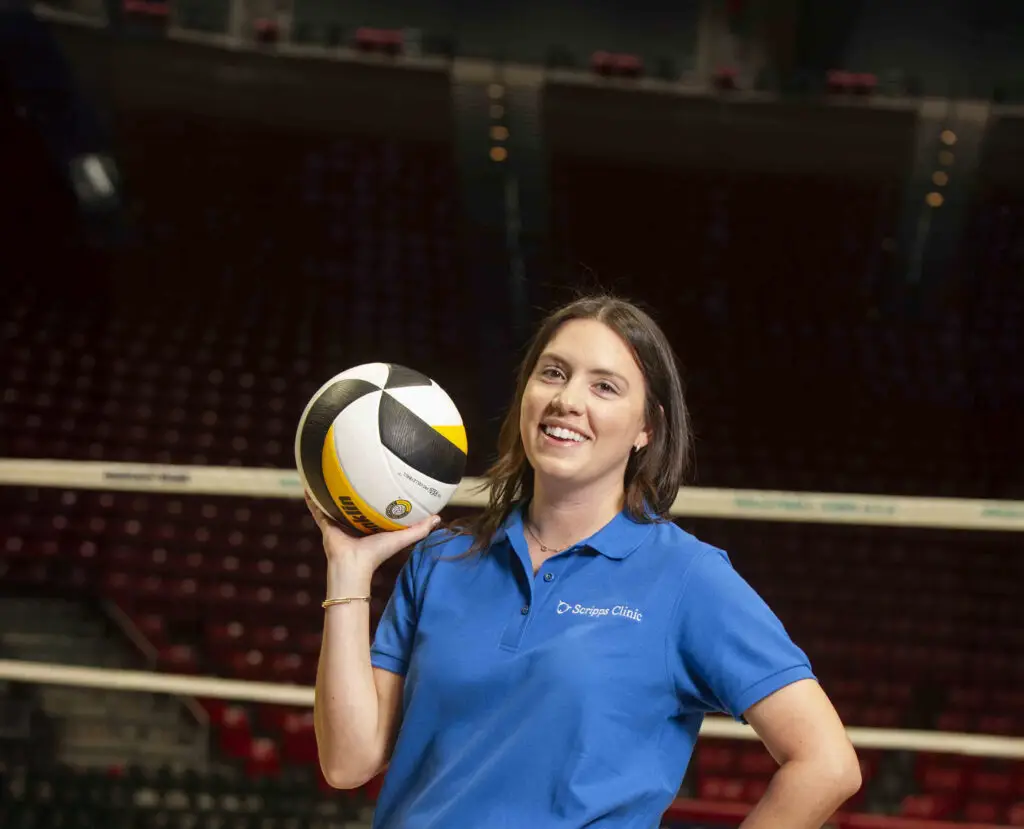
Growing up, Laika Nur, MD, Scripps Clinic sports medicine specialist, loved watching beach volleyball when the Association of Volleyball Professionals tour came to her hometown of Chicago. A talented volleyball player herself, she remembers sitting in the stands all day, and once, even got a couple autographs. Years later, Dr. Nur was attending a professional event focused on women’s sports, and the discussion turned to a new professional women’s volleyball league. The general manager and coaching staff for San Diego’s team, the Mojo, happened to be in attendance, and Dr. Nur took the opportunity to ask them if they needed a team doctor. Flash forward to the Mojo’s inaugural 2024 season, when Dr. Nur officially became the team physician. Click here to read more about Dr. Nur and how she incorporates lessons she learned on the court into her practice.
For more nutrition, wellness, and healthy living tips, sign up for the San Diego Health newsletter here.