Featured articles
Food & Drink
Food & Drink
Food & Drink
Featured articles
Food & Drink
Things to Do
Things to Do
Featured articles
Food & Drink
Food & Drink
Food News
Featured articles

podcast-ep
podcast-ep

podcast-ep
Featured articles

Food & Drink
Food & Drink
Features
Featured articles
Partner content
Food & Drink
Food & Drink
Ready to know more about San Diego?
SubscribeReady to know more about San Diego?
One big "Where are they now?" check-in with San Diego people to watch from 2012 + 2013

50 People to Watch Follow-Up
Dean Bradshaw
PARTNER CONTENT
Cycling infrastructure is coming our way in the near-ish future
In 2030, San Diego will be threaded with more than a thousand miles of bike routes, according to the recently approved San Diego Bicycle Master Plan Update. So dust off that Schwinn and prepare to break up with your SUV. Now, what will we do about all these hills?
Biking through Del Mar
510 existing miles in San Diego’s bicycle network
595 additional miles proposed by 2030
47,499 SD commuters currently biking to work, school, college, and transit stations
112,378 Commuters in 2030 who will bike to work, school, college, and transit stations (projected)
39.4 miles of “Bicycle Boulevard” proposed. What is a Bicycle Boulevard? A low-speed or residential street that’s bike-friendly and sees minimal cut-through motor traffic.
6.6 miles of “Cycle Track” proposed—zero miles currently exist. What is a Cycle Track? A bikeway on a road that is separated from vehicles by a wide raised curb, parking system, or some other barrier.
149 million Reduced number of weekday vehicle miles per year (by 2030)
121 million Reduced pounds of CO2 per year in 2030
$80K Funding San Marcos received from the State to create a new master bike plan
March 1: The international Bicycle Film Festival will roll into San Diego at MOPA. bicyclefilmfestival.com
March 30: San Diego County Bicycle Coalition’s CicloSDias will hit Pacific Beach. ciclosdias.com
Cycling infrastructure is coming our way in the near-ish future
In 2030, San Diego will be threaded with more than a thousand miles of bike routes, according to the recently approved San Diego Bicycle Master Plan Update. So dust off that Schwinn and prepare to break up with your SUV. Now, what will we do about all these hills?
Biking through Del Mar
510 existing miles in San Diego’s bicycle network
595 additional miles proposed by 2030
47,499 SD commuters currently biking to work, school, college, and transit stations
112,378 Commuters in 2030 who will bike to work, school, college, and transit stations (projected)
39.4 miles of “Bicycle Boulevard” proposed. What is a Bicycle Boulevard? A low-speed or residential street that’s bike-friendly and sees minimal cut-through motor traffic.
6.6 miles of “Cycle Track” proposed—zero miles currently exist. What is a Cycle Track? A bikeway on a road that is separated from vehicles by a wide raised curb, parking system, or some other barrier.
149 million Reduced number of weekday vehicle miles per year (by 2030)
121 million Reduced pounds of CO2 per year in 2030
$80K Funding San Marcos received from the State to create a new master bike plan
March 1: The international Bicycle Film Festival will roll into San Diego at MOPA. bicyclefilmfestival.com
March 30: San Diego County Bicycle Coalition’s CicloSDias will hit Pacific Beach. ciclosdias.com
Amaya La Jolla has it all, and maybe just a little too much
Amaya La Jolla wine cellar
1205 Prospect St., La Jolla
Short rib & scallop
Farfalle with Angus tips
Mini cheesecake trio
Got enough marble?” asks my dining companion.
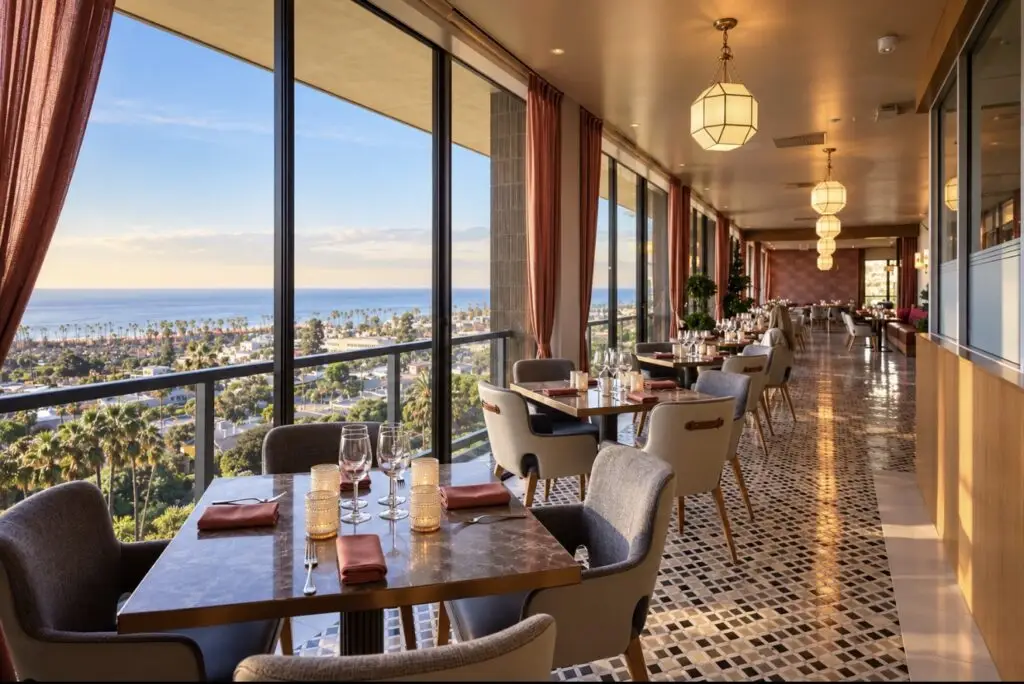
If there is a shortage of expensive rock in the near future, blame Amaya La Jolla. Every inch of the restaurant is sturdy, costly, and perfectly attended to. There is no reclaimed wood, no wall hung with rusty farm tools or animal heads. This is no cheap curtsy to the modern, the trendy, nor the hip. Which explains why there are very few modern, trendy, or hip people here on a Friday night. Or many people of any kind, for that matter.
The lack of crowd is not for lack of investment. Designer Warren Sheets quite artfully decorated this restaurant with the best Italian Renaissance ornatery money could buy. The original Amaya is in the $400 million resort, Grand Del Mar. It’s a fine restaurant. Chef Camron Woods spent six years there. The problem? It shares a roof with Addison—the Relais & Chateaux’d, Zagat-ed, and starred apex of fine dining in San Diego. Chef William Bradley casts a mile-wide shadow.
So it’s nice to see Woods get a little sun, 10 miles to the southwest. He’s a native of Charleston, South Carolina, and his Southern food roots color the menu. You’ll find rutabaga and turnips, polenta, quail, butterbeans (limas), and corn muffins. It’s not a pot likker joint, but there’s a whiff of Mason-Dixon.
Amaya La Jolla farfalle pasta
Flavor Parade: Farfalle pasta with Angus beef tips, tomatoes, mushrooms, and basil
As a life pursuit, I’d like to eat nothing but quality bread and butter until some carb-based nutritional ebola knocks me dead. Nothing puts my astrological Jupiter in the doghouse quite like getting a cold, hard, yellow rock of butter. Woods makes a little art of it. His is a room-temp, soft triangle of three butters—garlic-herb, honey-pecan, plain salted sweet cream—served with pretzel rolls, cheddar-herb biscuits, and corn muffins. Eating just bread and butter at Amaya would be shortsighted, gauche, and highly enjoyable.
For dinner, we start with Woods’ short rib and scallop—a soft-textured surf-and-turf. Vanilla’s a renowned scallop helper, but many chefs get carried away and mistake their seafood for bread pudding. Woods does it right, leaving his vanilla-cauliflower puree unsweetened next to an excellent huckleberry sauce. It’s one of those dishes that inspires involuntary, libidinal noises. For another starter, he stuffs a boneless roasted quail with briôche and dried cherry, then rests it on a daring puree made of chicken livers with Sauternes. It’s unctuous, gamy, polarizing. I enjoy it because I prefer the taste of parts; my companion mostly gazes at it like someone might look at a worrisome new facial mole.
Amaya La Jolla dining room
Being connected to the Grand Del Mar, a sommelier farm of sorts, Amaya’s 300-bottle wine list is excellent—all under $100, and 20 by the glass (a Terrassen Gruner Veltliner from Domaine Wachau, a Spanish Tempranillo from Beronia, etc.). Enjoy one in the back room (“Club M”)—a supper club of sorts, with neon signage and gray-haired jazz beatniks.
For dinner entrees, we stick to French hunting proteins—duck and rabbit. Both are suggested by our server, who’s the sort of fine-dining lifer you’re lucky to come across. A real food person you’d like to ask to pull up a chair. All of Amaya’s servers are pretty much the same.
The duck is perfect in just about every way, poached with the small cap of fat and crisped skin on each slice. A dried cherry gastrique supplies the necessary acid, while the butterbean puree is some fancification of a classic Southern side-food. The rabbit comes braised in two parts—legs and loin. The legs are a tad dry and bland. Rabbit’s a skinny, faint protein that requires some chefly flavor-building. Woods’ elemental stock reduction isn’t enough. The rutabagas and turnips, too, are served whole with inexpressive seasoning. The tenderloin, however, is treated like pork and wrapped in housemade bacon from Julian’s Cook Pigs Ranch (they raise great swine). The combo yields a beautiful, moist bite—especially since the bacon is only lightly smoked, not overwhelming.
Amaya La Jolla mini cheesecake trio
Three Times Good: Mini cheesecake trio of vanilla, hazelnut, and passion fruit
For dessert, we try pastry chef Michael Luna’s trio of cheesecake—a vanilla (with white balsamic gastrique and tangerine), hazelnut (with chocolate sauce and praline bark), and passion fruit (with coconut-lime sorbet). All are very good, while the sorbet-topped passion fruit is excellent—a Hawaiian à la mode.
I come back on a Thursday for lunch. The restaurant is all but empty again. I eat more than humans ought to, and there is not a single bad bite. The crab-and-lobster bisque is deep and rich; it smells like tarragon and your good fortune. The daily flatbread with Creminelli salami is thin, crisp, and well-browned, arugula giving it a little food-garden required of SoCal lunches. The panzanella (Italian bread salad) is comically generous, served with lightly smoked and well-seared salmon in a Sherry vinaigrette that’s drinkable. Woods also makes a salad-less tuna Niçoise (a fancy way of saying seared ahi with cured olives and chimichurri) and a simple, excellent farfalle with Angus tips, wet with veal jus and topped with fresh basil and Parmigiano-Reggiano.
So the food is mostly excellent. The service is top-notch, as is the wine. Why, then, does it echo in Amaya? If I have to place blame, it’s with the room itself. It takes real fortitude to identify an ancient design fetish and really, truly go for it. But in doing so, there’s zero white space, zero restraint. Even my companion—an accomplished professional in his late 50s—says it feels too old, baroquely so. It’s the equivalent of a woman wearing a mink coat, diamond brooch, pearl earrings, and an emerald gemstone on a headdress—all while carrying a bedazzled Persian cat.
That said, if you find yourself with houseguests from 17th-century Florence, Amaya feels just right.
The 29-year-old culinary director at Herb & Sea is making seafood sexy (and approachable) again
Implementing a farm-to-table model hardly deserves acknowledgement these days. It’s not a stretch. It’s not innovative. “It’s the bare f**king minimum,” says Herb & Sea‘s executive chef Aidan Owens.
When I arrive at the Encinitas restaurant, I’m ready to talk sustainability, farm-to-table stuff, with Owens. “Did you see the chin on that?” he says of the extra big jiggly chin on the sheephead that just arrived with the day’s fresh catch. I did. It was Jay Leno adjacent.
I learn quickly that he somehow oozes both charm and stone-cold honesty. Maybe he could construct a new dish with chin goo, like he did when he had a bunch of tuna scraps and voila’d it into a smooth and crowd-pleasing ‘nduja. “I want to know what’s in there,” he says.

The instinct to look closer, to dig into what others might discard, says a lot about the chef’s approach. I guide him back to our topic, but he has something else on his mind. “We’re overcomplicating food—what happened to just cooking good food and having fun with it?”
Owens grew up on a farm in Byron Bay, Australia, where sustainability wasn’t a concept you chat about so much as a way of life. Think dirt roads, backyard chickens, pulling vegetables straight from the ground, and a mother who believed that if you couldn’t pronounce the ingredients on a package, you shouldn’t eat what was inside.
Food wasn’t precious or performative. Making it was what you did because you were hungry and that’s still what inspires Owens today. “I like to cook good food because I like to eat good food,” he says.
His approach to sustainability at Herb & Sea began so naturally that it felt just like instinct. “I was just like, ‘Let’s order food from the people who live and work here,’” he says.

And why wouldn’t he when lives in San Diego? Cities all over the world vie for our goods. Our tuna is sent overseas. Our spiny lobsters hit dinner plates in China and Japan. Not to mention California’s producing a third of the country’s vegetables and three-quarters of its fruits and nuts.
“Why would we outsource when it’s all here?” Owens asks.
Sustainability, in this context, is about cooking what exists in abundance, nearby, right now. “I love the local fish here. It’s f**king delicious and San Diego citrus, I mean, it is so f**ing good,” he says.
Instead of importing ingredients, Owens also looks for nearby alternatives. “You can find really cool things in the local waters,” he says, pointing out that stingray cheeks taste similar to scallops.

Whatever he finds in that sheephead chin might just be the next substitute for marrow. But to make this work, it means getting diners amped up about the slightly unfamiliar.
Tasting menus, where diners are completely in his hands, become an opportunity to gently push boundaries. “I’ll serve mackerel, because people think they hate it,” Owens says, noting that the abundant local fish can have some fishiness. “But when it’s fresh, it’s arguably one of the best fish in the ocean.”
He also tweaks the language on the menu so people might feel more compelled to give dishes a try without preconceived notions. He might use “lengua” instead of “tongue.” “Whelk” instead of “snail.” When he puts “stingray throat” on the menu, he disarmingly calls it “skate.”
To reduce waste, scraps aren’t always discarded but rather turned into something new. Sometimes they’re smoked, cured or fermented. Apples going bad turn into apple ponzu. Lemons turn to marmalade, which stretches their usefulness far beyond peak season. “And it’s super tasty on our pizza,” he says.
What makes the food even richer, is the relationships he’s built with farmers. Though it didn’t always feel natural, Owens sought personal connection first. He recalls approaching a fisherman at the Tuna Harbor Dockside Market. “I was awkward,” he says. “I went up to him and said, ‘I like your fish.’”
Owen’s is now so close to his suppliers—like fishermen Ryan Sebo and Joe Daly—that he gets texted pictures of fresh catches right as they flop on the boat. The messages always ask if he wants first dibs. “I say yes to a lot of fish,” Owens says, noting that Herb & Sea can go through 2,000 pounds of seafood a week.

The next evolution of sustainability, in his view, will be chefs working directly with producers such as his alliance with Sebo, cutting out middlemen and purveyors where possible. “It will put more money in the pockets of the people doing the work,” he says.
It will mean that chefs can’t just know their local farmers and producers, but they’ll choose to work with the ones who have the best practices. Dining and sustainability will become much less about the final plate. “It will be more about the impact that plate has on the Earth,” he says.
Ultimately, he believes sustainability doesn’t need to be loud. It doesn’t need hashtags. It just needs to be honest.
“We aren’t saving lives. We’re feeding people good food,” he says.
And yet, in feeding people well—simply, thoughtfully, responsibly—something meaningful happens. Guests leave satisfied. Ingredients are respected. Local ecosystems are supported and food returns to what it has always been at its core: nourishment, pleasure, and a quiet reflection of the place it comes from.
No buzzwords required.
What's happening around San Diego
North Park
North Park
If anyone needed yet another sign that our city’s hipster central is indeed gentrified (up-and-comers need not apply), just note the advertised rents for its newest dwelling, The North Parker, designed by starchitect Jonathan Segal: $2,200/month for one of the new lofts at the corner of 30th and University.
Working to launch its own Business Improvement District, the Kearny Mesa area is sponsoring a series of night markets that highlight the area’s best Asian food. Look for new neighborhood banners, more park space, and improved walkability around Convoy Street. Yes, we said green space around Convoy!
The 25th Street Renaissance Street Enhancement is a $2.5 million project expected to give pedestrians better sidewalks and allow for more parking in the neighborhood. It’s also paving the way for more bike racks and beautification efforts, and more lighting throughout the area.
Acoustic Music San Diego has left Normal Heights. The ongoing all-ages, booze-free concert series ended its residency at The Normal Heights United Methodist Church after a new pastor removed the church’s pews, eliminating seats for concertgoers. After the series threatened to permanently shut down, AMSD kicked off 2014 in its new location at Our Redeemer Lutheran Church on Euclid Avenue.
Del Mar
Del Mar
When in drought, head to the City of Del Mar. Its water usage is down about 25 percent over the last eight years, and levels continue to stay low. Good thing the Del Mar Racetrack is more dirt than turf!
The island’s new smoking ban went into effect on January 1. Smokers are now prohibited from lighting up in public areas, including streets, sidewalks, alleys, and parking lots. (Smoking was already prohibited at parks and beaches.) Planning to smoke anyway? The city is cracking down with $100 fines for first-time offenders. Now that’s clearing some already pristine beach air—no ifs, ands, or butts!
Parks are usually planned with kids in mind, but City Heights just welcomed a new one designed specifically for adults and seniors. Located next to a senior housing complex, the park has benches, chess boards, and art installations. Not a jungle gym in sight!
Scripps Ranch
Scripps Ranch
Neighborhood group Save Our Scripps Ranch is rallying against the development of a plot of land at the intersection of the I-15 and Carroll Canyon Road. SOS Ranch fears a big box retailer such as Walmart may replace the eucalyptus trees and abandoned buildings that currently rest there.
The Scripps Proton Therapy Center is expected to open this Spring, offering an alternative cancer treatment that involves the delivery of radiation via a precise beam, ensuring that healthy tissue remains unaffected. The center is the first to be built solely for “pencil beam” treatment.
The 28th Street Canyon and hiking trail is in danger of undergoing development, according to a public notice of a development application. Developers are planning five single-family homes on the property. South Park residents are concerned they will lose a peaceful, natural spot. A hearing on the proposed development will take place March 12 at 6:30 p.m.
South Park
South Park
If there’s one thing SoCal neighborhoods love, it’s their signs. And if there’s one thing Rancho Bernardo is ready for, it’s a new one. A signature sign was set for completion in January, but construction has been slated to begin later this fall. The original sign, built in the ’60s, was demolished when a vehicle crashed into it in 2009.
The Relay for Life team is gearing up for its sixth year in Spring Valley and will join other cities walking to help fight cancer. On a smaller, but no less important, scale is a BBQ competition hosted by the Spring Valley Chamber of Commerce each year in October. Proceeds from the competition and street fair go to Spring Valley Youth Sports.
What's happening around San Diego
North Park
North Park
If anyone needed yet another sign that our city’s hipster central is indeed gentrified (up-and-comers need not apply), just note the advertised rents for its newest dwelling, The North Parker, designed by starchitect Jonathan Segal: $2,200/month for one of the new lofts at the corner of 30th and University.
Working to launch its own Business Improvement District, the Kearny Mesa area is sponsoring a series of night markets that highlight the area’s best Asian food. Look for new neighborhood banners, more park space, and improved walkability around Convoy Street. Yes, we said green space around Convoy!
The 25th Street Renaissance Street Enhancement is a $2.5 million project expected to give pedestrians better sidewalks and allow for more parking in the neighborhood. It’s also paving the way for more bike racks and beautification efforts, and more lighting throughout the area.
Acoustic Music San Diego has left Normal Heights. The ongoing all-ages, booze-free concert series ended its residency at The Normal Heights United Methodist Church after a new pastor removed the church’s pews, eliminating seats for concertgoers. After the series threatened to permanently shut down, AMSD kicked off 2014 in its new location at Our Redeemer Lutheran Church on Euclid Avenue.
Del Mar
Del Mar
When in drought, head to the City of Del Mar. Its water usage is down about 25 percent over the last eight years, and levels continue to stay low. Good thing the Del Mar Racetrack is more dirt than turf!
The island’s new smoking ban went into effect on January 1. Smokers are now prohibited from lighting up in public areas, including streets, sidewalks, alleys, and parking lots. (Smoking was already prohibited at parks and beaches.) Planning to smoke anyway? The city is cracking down with $100 fines for first-time offenders. Now that’s clearing some already pristine beach air—no ifs, ands, or butts!
Parks are usually planned with kids in mind, but City Heights just welcomed a new one designed specifically for adults and seniors. Located next to a senior housing complex, the park has benches, chess boards, and art installations. Not a jungle gym in sight!
Scripps Ranch
Scripps Ranch
Neighborhood group Save Our Scripps Ranch is rallying against the development of a plot of land at the intersection of the I-15 and Carroll Canyon Road. SOS Ranch fears a big box retailer such as Walmart may replace the eucalyptus trees and abandoned buildings that currently rest there.
The Scripps Proton Therapy Center is expected to open this Spring, offering an alternative cancer treatment that involves the delivery of radiation via a precise beam, ensuring that healthy tissue remains unaffected. The center is the first to be built solely for “pencil beam” treatment.
The 28th Street Canyon and hiking trail is in danger of undergoing development, according to a public notice of a development application. Developers are planning five single-family homes on the property. South Park residents are concerned they will lose a peaceful, natural spot. A hearing on the proposed development will take place March 12 at 6:30 p.m.
South Park
South Park
If there’s one thing SoCal neighborhoods love, it’s their signs. And if there’s one thing Rancho Bernardo is ready for, it’s a new one. A signature sign was set for completion in January, but construction has been slated to begin later this fall. The original sign, built in the ’60s, was demolished when a vehicle crashed into it in 2009.
The Relay for Life team is gearing up for its sixth year in Spring Valley and will join other cities walking to help fight cancer. On a smaller, but no less important, scale is a BBQ competition hosted by the Spring Valley Chamber of Commerce each year in October. Proceeds from the competition and street fair go to Spring Valley Youth Sports.
In a world overflowing with shortcuts, marketing fluff, and “good enough,” there are still companies that choose a different answer. And in San Diego, there are plenty of them.
In a world overflowing with shortcuts, marketing fluff, and “good enough,” there are still companies that choose a different answer.
Integrity guides how they show up every day. They make hard decisions, hold themselves accountable, and build trust the old-fashioned way, one action at a time. At the Better Business Bureau, we call these businesses Torch Heroes: leaders who demonstrate that ethical leadership strengthens businesses and drives long-term success.
And in San Diego, there are plenty of them.
Take House Collective Marketing Solutions, a Carlsbad-based digital agency that won the 2025 Torch Award for Ethics for its people-first approach to marketing. Instead of pushing flashy campaigns, the team often takes a step back to make sure clients’ foundations are strong before going big. Their philosophy? Truth over transaction builds partnerships that last.
Or look at Young Black & N’ Business, where integrity shows up through community action. When a local school lost art funding, founder Roosevelt Williams III and his team stepped in with workshops, mentorship, and hands-on support to help restore creative opportunity. That kind of engagement reflects ethical leadership rooted in real impact.
And in Vista, Lotus Sustainables carried its commitment to ethics all the way to the product line. After discovering defects in a shipment of eco-friendly products, the company issued full refunds and redesigned its offerings at its own expense, a choice that shaped its identity and reinforced to customers that ethics guide every decision.
In North County, Greenway Landscape Design & Build brings integrity into everyday service. When a client’s glass was damaged, likely not by their crew, owner Scott Lawn chose responsibility over blame and covered the repair personally. For Greenway, doing the right thing serves as a north star, guiding every interaction through transparent pricing, accountable partnerships, proactive communication, and follow-through long after the job is done.
Other honorees include At Your Home Familycare, whose leadership turned down a lucrative state contract during the pandemic to protect vulnerable clients and staff, and Bill Howe Family of Companies, where hiring practices, training, and service centers around shared values, every day, on every call.
What connects these diverse businesses, from marketing to nonprofit support to home services, isn’t size, industry, or revenue. It’s something deeper: a commitment to trust as a business strategy.
In San Diego’s competitive marketplace, that trust gives companies an edge. Clients invest in relationships. They refer friends. They stay loyal when others fade.
As one Torch Award winner puts it, integrity isn’t a section in the employee handbook. It’s the operating system of the company, the invisible code that determines every choice, every day.
And that’s exactly the point of the BBB Torch Awards for Ethics: to spotlight companies that dispel the myth that ethics and success are at odds. These businesses show that when leaders choose honesty, fairness, and accountability, especially when it’s hard, they build brands that matter.
At BBB, we see nominations come in from clients, employees, and business partners who have witnessed ethical leadership up close. These submissions aren’t polished promotions. They’re stories of moments when a company chose people over profit, clarity over confusion, and trust over convenience.
The nomination window for the 2026 Torch Awards for Ethics is open through March 31, 2026, and there are more Torch Heroes waiting to be recognized.
Who comes to mind in San Diego’s business community?
And yes, businesses can nominate themselves. We encourage it. If you’ve built your business on principles rather than buzzwords, we want to hear your story.
Because in a world full of noise, integrity still deserves the spotlight, and San Diego is full of stories worth telling. Nominate your hero now.