

Featured articles
Featured articles
Featured articles
What's next
Featured articles
Featured articles
Featured articles
Ready to know more about San Diego?
SubscribeReady to know more about San Diego?
The 'hood holds it down as SD’s glitteriest area and the anchor of our proud LGBTQ history—here's what to do, see, and eat on your next visit
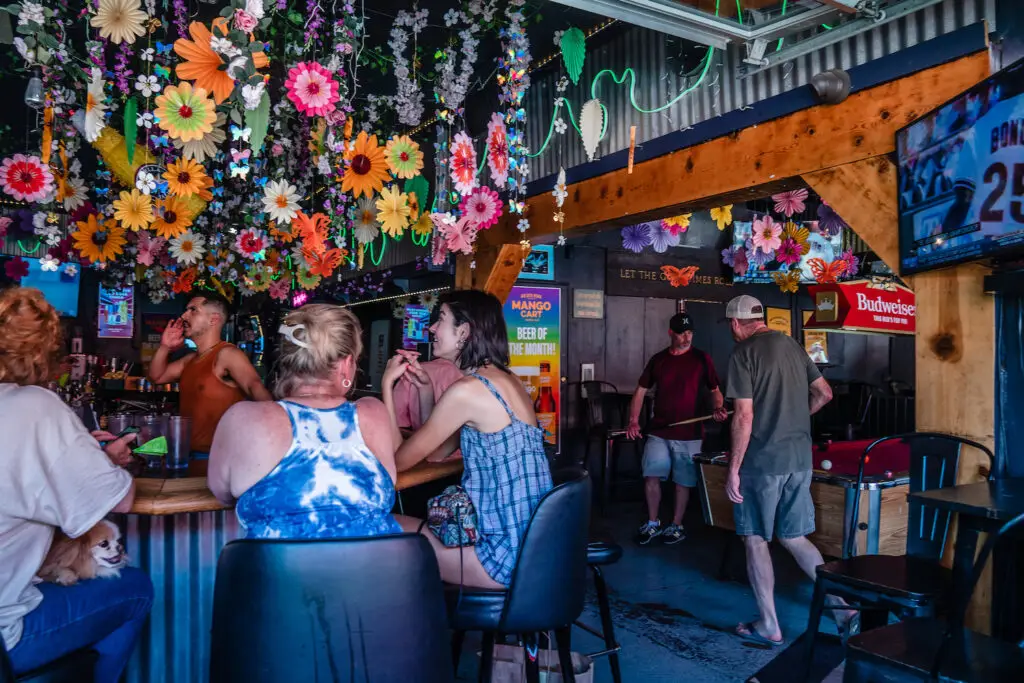
Hello Hillcrest, you fabulous forest of fun. Nestled between Mission Hills, Balboa Park, and North Park, Hillcrest holds it down as SD’s glitteriest ’hood and the anchor of our Pride festivals and proud LGBTQ history.
But it wasn’t always this way. Originally marketed in the late 1800s by George Hill as a quiet, streetcar-accessible suburb, Hillcrest evolved with the times. The postwar boom brought car-friendly retail and the Sears building in 1952, but by the ’60s, the buzz had shifted to Mission Valley, leaving Hillcrest to fade—temporarily.
As early bungalows weathered and longtime residents moved on, the neighborhood’s affordability and untapped charm made it a haven for those on the margins. When The Rail (then Brass Rail)—San Diego’s first gay bar—landed on Fifth and Robinson avenues in the ’60s, a new era took root. The area’s LGBTQ community blossomed, pouring its heart and energy into transforming Hillcrest into the vibrant, eclectic, and unapologetically welcoming place it is today.
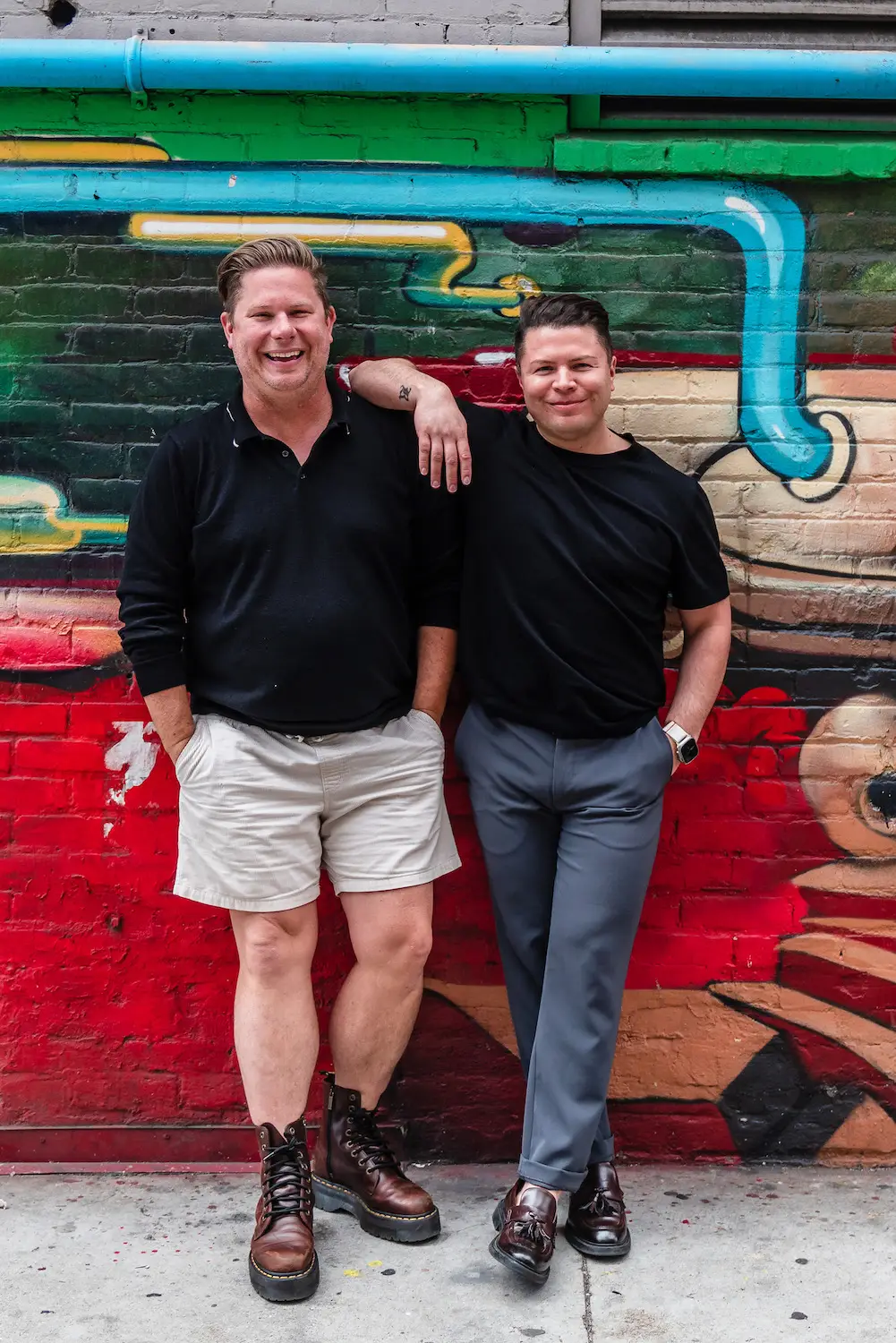
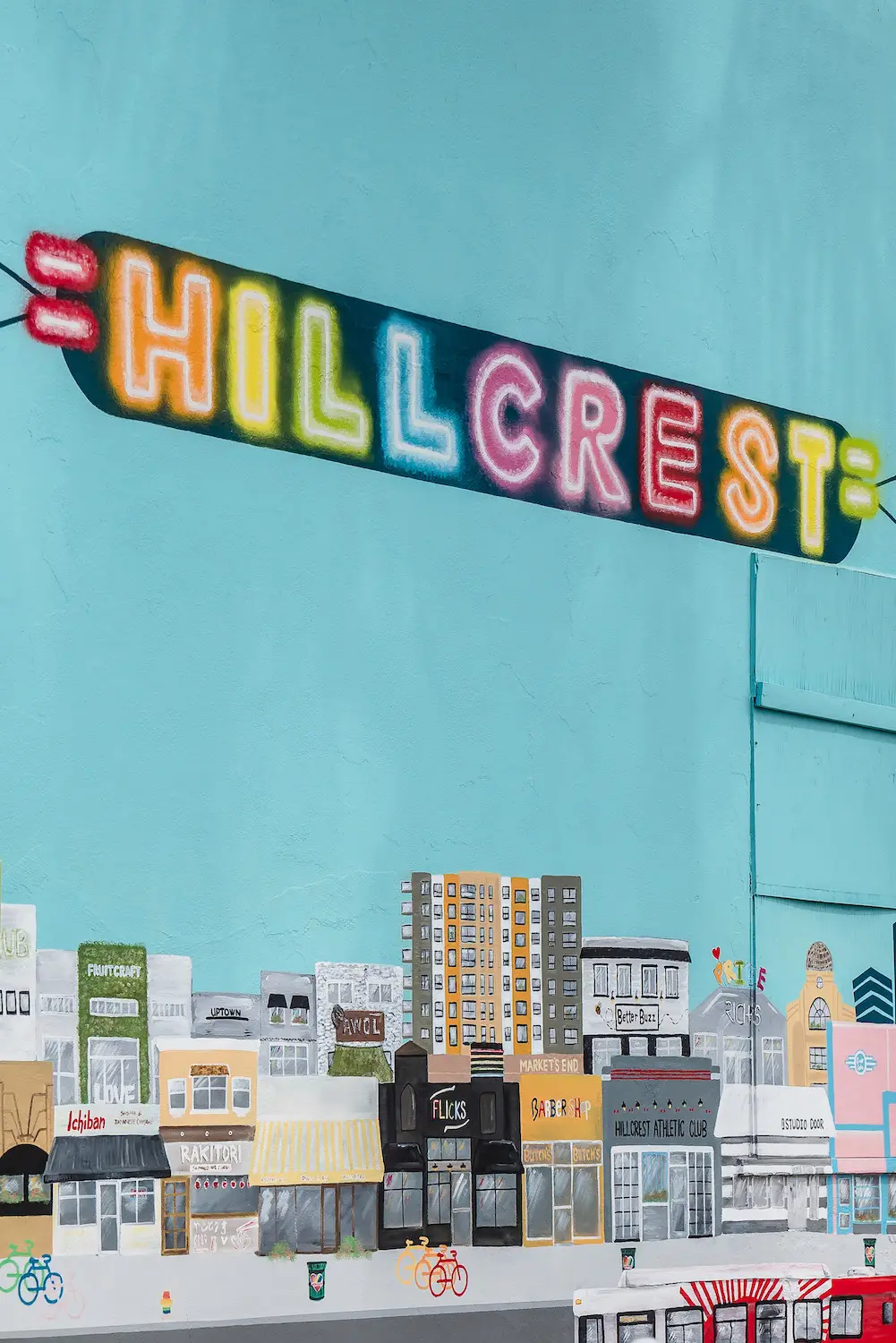
Pride and CityFest pack the sidewalks. Rainbow flags wave from windows; murals color the alleyways; and vivacious energy spills from rooftop bars, indie cafés, drag brunches, and taco stands. A patchwork of old bungalows, midcentury motels, mixed-use towers, and sidewalk storefronts shows the story of a place in constant, confident flux.

Anchored by Hillcrest icons like Urban Mo’s Bar & Grill, The Alibi, Bread & Cie, and Rich’s, the neighborhood’s spirit is all about both staying power and reinvention. “What makes it work is the people who care to see this neighborhood succeed,” says Hillcrest Kiwanis president Benny Cartwright.
And it’s home to the famously heavy-handed “Hillcrest pour,” says Rick Cervantes, who runs the Instagram account @hillcrestsandiego. The drinks are strong, and, even for those who don’t imbibe, the friendships you make here are stronger.
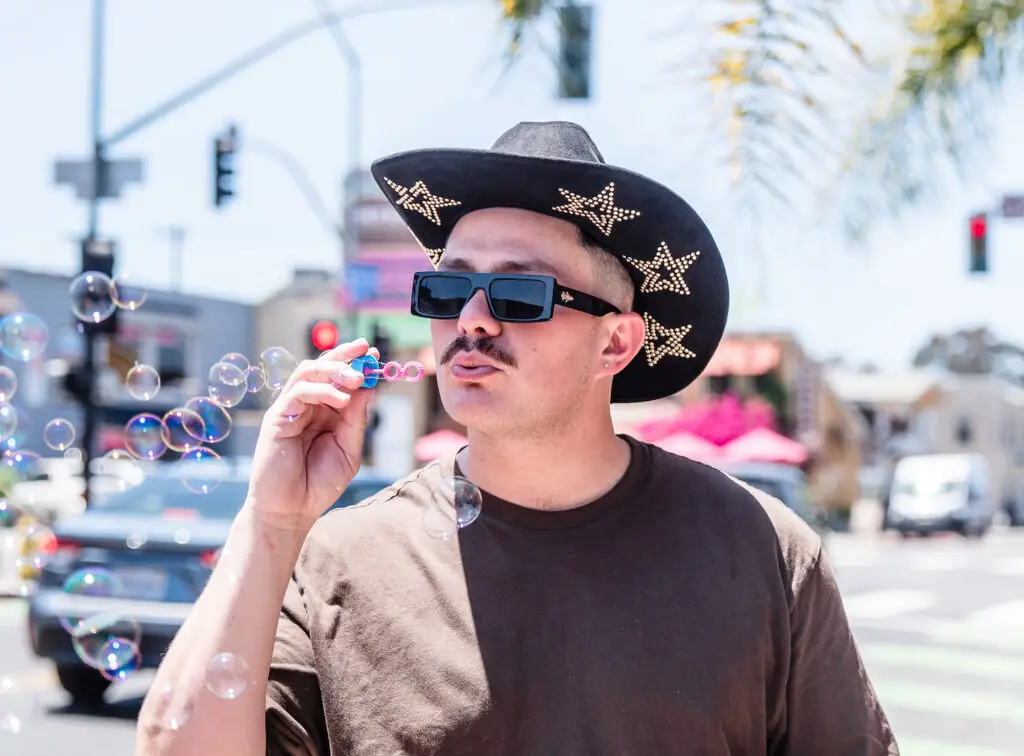
Cervantes moved to San Diego from Lodi and found his rainbow family in Hillcrest, where his adventures often begin or end at Uptown Tavern, a primary neighborhood hub and meeting-up spot. “Maybe it sounds basic, but [it’s] famous here for the chicken strips,” he says.
“They’re marinated in herbs and buttermilk for 48 hours and hand-breaded and fried,” adds Cartwright, a fellow Uptown Tavern fan who was born in the neighborhood and now lives in “Unicrest,” where the quieter, neighboring University Heights meets hoppin’ Hillcrest. More fabulous finger food? Hand-packed sliders with parmesan-rosemary fries.
On weekend mornings, you’ll find them at Urban Mo’s, which hosts a hoppin’ brunch bash every week. “Get the fat-ass chocolate-chip pancakes,” Cervantes says. “Go for it all: the sweet and the savory”—the latter being a breakfast burger with fried egg. “And go ahead and get the foo-foo drink with the plastic monkey; that’s why you’re here.” For a quicker bite, Cervantes and Cartwright recommend Sunnyboy Biscuit Company, serving comforting, low-key, delicious breakfast sandos like someone’s Southern grandma used to make.
Come lunchtime, head to Crest Cafe, which has been family-owned in the neighborhood since 1983. You can get any menu item all day (and night) here. “Meatloaf for breakfast?” Cervantes laughs. Why not?
“I could definitely eat the butter burger any time,” Cartwright adds. (Guy Fieri agrees—the indulgent, herb butter–stuffed patty was featured on Food Network’s Diners, Drive-Ins and Dives.) The café does a homey holiday prix-fixe menu with tradition in mind; last year, it was tamales for Christmas. And that’s not the only place to spend the holidays in Hillcrest: Urban Mo’s has turkey and all the fixings on Thanksgiving.
If you hit Hillcrest during daylight hours, grab a pastry at Bread & Cie, take a stroll, and pop in to say hello to some friendly business owners, Cervantes advises. He and Cartwright know pretty much everyone, and, three years ago, they started Hillcrest Honors to award the hard-working folks who make the neighborhood sparkle. The inaugural award went to LGBTQ lifestyle boutique Humanity. “No judgment here,” Cervantes says—just kinky gifts, lube, toys, fun outfits, and thongs, of course.
While you’re here, don’t skip the eye candy at Green Florals: houseplants, fresh-cut blooms, and pick-your-own bouquets. It’s a great spot to grab a last-minute gift before picking up a treat at Babycakes next door. Continue the feast (for the eyes) by perusing the art in Mural Alley, just outside The Studio Door gallery on Fourth Avenue.

“Hillcrest has no parks,” Cervantes points out.
“Balboa Park doesn’t count,” Cartwright chimes in. The $27.5 million Pride Promenade project, which broke ground in February 2025, aims to change that, with a reconfiguration of Normal Street to create an outdoor gathering space. Already a place where the community comes together when things happen, the corner of Normal and University Avenue (where the giant pride flag flies) will soon be a rainbow-striped pedestrian and bicycle zone, slated for late 2026 or early 2027.
And, after a decade of residents plying Caltrans and the city to do something with a bit of otherwise undeveloped land at the southwest corner of University and the 163, the area might soon become a small green space.
Cruise through Hillcrest today, and the skyline tells the story: shiny, new apartment buildings now tower where rows of century-old bungalows once stood. Like much of San Diego’s urban core, Hillcrest is growing dense fast—and not without tension. “It’s also pushing some of the LGBTQ folks out,” Cartwright says. The recently adopted Plan Hillcrest (2024) paves the way for as many as 20 new residential towers, signaling a new era for this storied ’hood.
But change isn’t just vertical—it’s cultural. The long-vacant Panera space at The Hub on Cleveland Avenue is getting a fresh start with a new diner concept (name still TBD)—from the group behind Madi, Madison on Park, and newly-opened Sonny’s—opening a Hillcrest outpost later this year. Earlier this year, Good News made headlines as San Diego’s first non-alcoholic bar, serving up craft mocktails and stocking a bottle shop so you can take the “free-spirited” vibe home.
Community leaders like Cartwright and Cervantes see Hillcrest embracing a more elevated culinary identity, too, with buzzworthy newcomers like Cellar Hand, Origen, and Frenchy’s Hideout adding a refined edge to the neighborhood’s famously rowdy charm. The future is rising, and Hillcrest is rewriting what it means to grow while staying true to its roots.

PARTNER CONTENT

Leorah Gavidor won her first essay contest at age 5. She writes features, news, and non-fiction in San Diego.
The city's pet-friendly courses combine scenic greens, wagging tails, and a round that’s as much about your pup as your swing
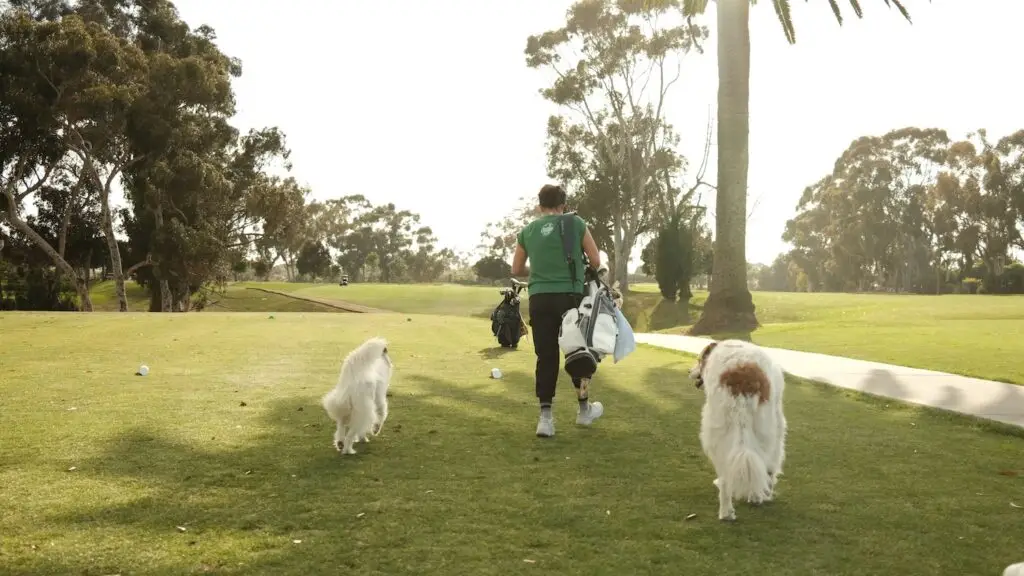
Golf doesn’t have to mean stiff collars, pleated khakis, whisper-talking on the green, or pretending your sand trap fails aren’t actually hilarious. Around San Diego, a handful of rebel courses are quietly rewriting the rules of an afternoon round, making them more relaxed, more social, and yes, more dog-friendly. These are the fairways where leashed pups pad alongside their people; where a suspenseful search for a golf ball in the bushes or—no!no!no!no!no!—in the water hazards are part of the fun; where every polite golf clap comes with a smiling, panting audience. If your ideal golf day includes a walk, a drink, and your dog riding shotgun, this is your teeing ground.
For proof that a golf course can be approachable without being boring, look no further than Emerald Isle Golf Course in Oceanside. The executive course delivers consistently beautiful greens, rolling elevations, and just enough challenge to keep you engaged, not stressed—unless your pup breaks free and runs for the rolling elevations, in which case you’ll be very engaged and maybe a little stressed. Locals love holes like the canal carry on No. 3 and the wildlife-dotted pond on No. 16, while golden-hour sunsets steal the show most evenings. Dogs are genuinely welcome here, not an afterthought. Grab them a slice of watermelon from the clubhouse, pose in the cart for Instagram cameos with an Emerald Isle scarf (it doubles as an adorable bandana for your four-legged friend), or introduce them to the course’s resident pups like Bogey, the assistant director of instruction, and shop dogs Karl and Frank. Affordable, friendly, and no-frills, Emerald Isle feels like golf you and doggo can’t wait to play.
660 S El Camino Real, Oceanside

The Loma Club is where golf goes social. Set in Liberty Station, this historic 9-hole par-3 course trades country club stiffness for an easy, neighborhood energy that feels distinctly San Diego. The course is walkable and unintimidating, with skyline and harbor views doing most of the heavy lifting. The Loma Club is just dipping its paws into the dog-friendly trend, and welcomes them on the mini course and off the fairways. Though your pup is the epicenter of your world, the patio at Loma Club is the real star, hosting live music, trivia (even the smartest dogs are stumped), and cocktails that rival golf itself. You don’t even need clubs to enjoy it. Show up with your dog, wander the course, grab something from the clubhouse, and stay for hours. You’ll feel like you’re exactly where you’re supposed to be.
2960 Truxtun Rd, San Diego
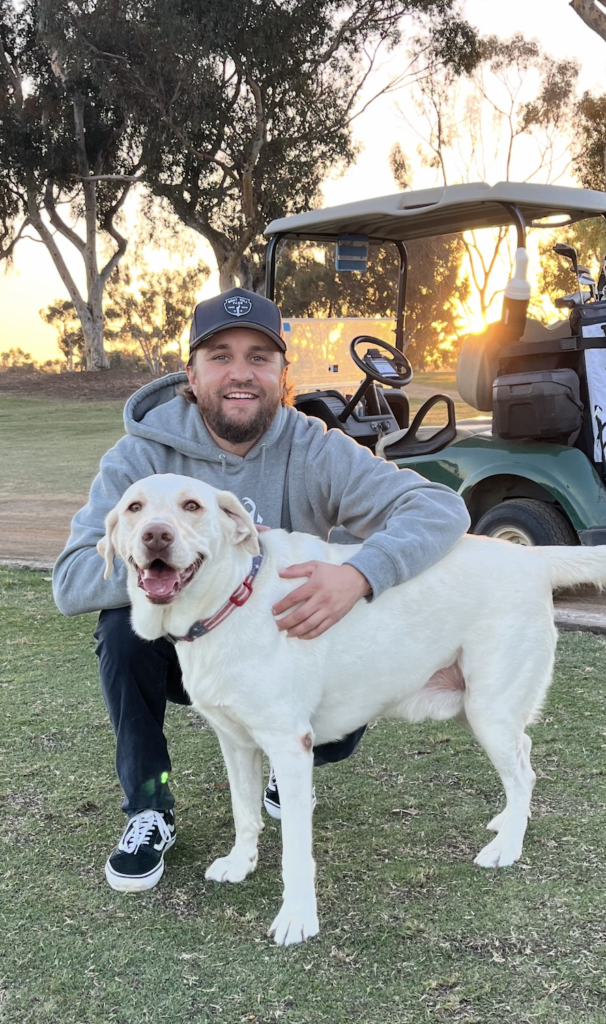
Calling Goat Hill Park a golf course almost undersells it. Known as the “People’s Park,” this historic Oceanside staple operates more like a community space where golf happens. Expect dogs strolling alongside the players, music streaming from magnetic speakers attached to golf carts, beginners smacking balls alongside serious talent, and locals and tourists sharing the same teeing grounds with a few four-legged besties trotting alongside. Saved from redevelopment in 2014, Goat Hill embraces a raw, unpolished look that’s both intentional and refreshing. With ocean views, a “19th-hole” fire-pit, and zero pretense, it’s golf at its most human…because: dogs.
2323 Goat Hill Dr, Oceanside

Ready to add your pup’s name to the illustrious list of golf greats? Same. At the iconic The Club at Omni La Costa, the vibe is equal parts championship-caliber and casually fabulous. Emerald fairways so perfect you’ll hesitate to step on them, palm-lined paths practically begging for a golden-hour strut, and rolling greens that ripple in the sun. And just when you thought it couldn’t get any better, your four-legged plus-one enters the chat: For members and overnight guests, the La Costa lifestyle rolls out the (very chic) welcome mat for your (leashed) pup, turning tee times into a social affair of breezy, citrus-kissed luxury and leisurely strolls. Really—what are you waiting for? Even your dog’s got a standing invite.
2100 Costa Del Mar Rd, Carlsbad

Isabella Dallas is a freelance writer for San Diego Magazine and the Arts and Culture Editor at The Daily Aztec in her final year at San Diego State University. She previously worked as an editorial intern for SDM, but when she’s not writing, you can find her trying the best coffee spots in SD, devouring the latest rom-coms, and indulging in anything and everything pop culture.
From San Diego’s coastline to Los Angeles stadium and fan zones across the region, here’s how to experience soccer’s biggest event

When three nations and 16 cities come together to host the FIFA World Cup 2026, the scale stops feeling like a tournament and starts feeling like geography. A continent becomes the stage as borders soften into corridors. And Southern California—shaped by migration, sport, entertainment, and constant movement—sits inside that landscape with all eyes on it.
San Diego and Los Angeles have always felt connected. Hop on the Pacific Surfliner, and the trip unfolds in one continuous stretch of coastline, passing beach towns, neighborhoods, and city centers.
Traveling from San Diego, everything still feels slightly suspended as the Pacific Surfliner follows the coast north with ocean on one side and a slow suburban blur on the other. San Diego stays in exhale. Los Angeles is already building toward something louder.
This summer, Los Angeles will host eight matches of the FIFA World Cup at Los Angeles Stadium, including the US Men’s National Team opener on June 11, while the region stretches into 39 days of programming across stadiums, parks, transit hubs, beaches, and neighborhoods. Instead of one massive fan hub, Los Angeles is embracing a citywide celebration, with fan zones spread across its entirety.
But this pattern has been rehearsed here for decades. In 1994, Southern California became one of the defining stages of the World Cup, when matches at the Rose Bowl placed global attention on the region and turned local stadiums into international landmarks, confirming its ability to hold the world at scale.
What distinguishes Southern California is not just infrastructure, but cultural permeability. Fashion, music, film, art, and sport constantly overlap here, creating an environment where identity is flexible and always in motion. From the Venice boardwalk, where skate culture shaped modern street style, to global soccer stars rubbing shoulders with Hollywood celebs, to authentic Spanish cuisine moving up and down the I-5 corridor, everything circulates.
The World Cup is not introducing anything new here, it’s showing up for the summer and showing out, revealing what this city has always known about itself. What follows is a look at the fan zones and how Los Angeles turns itself into a city-wide stage for the tournament, one neighborhood at a time.
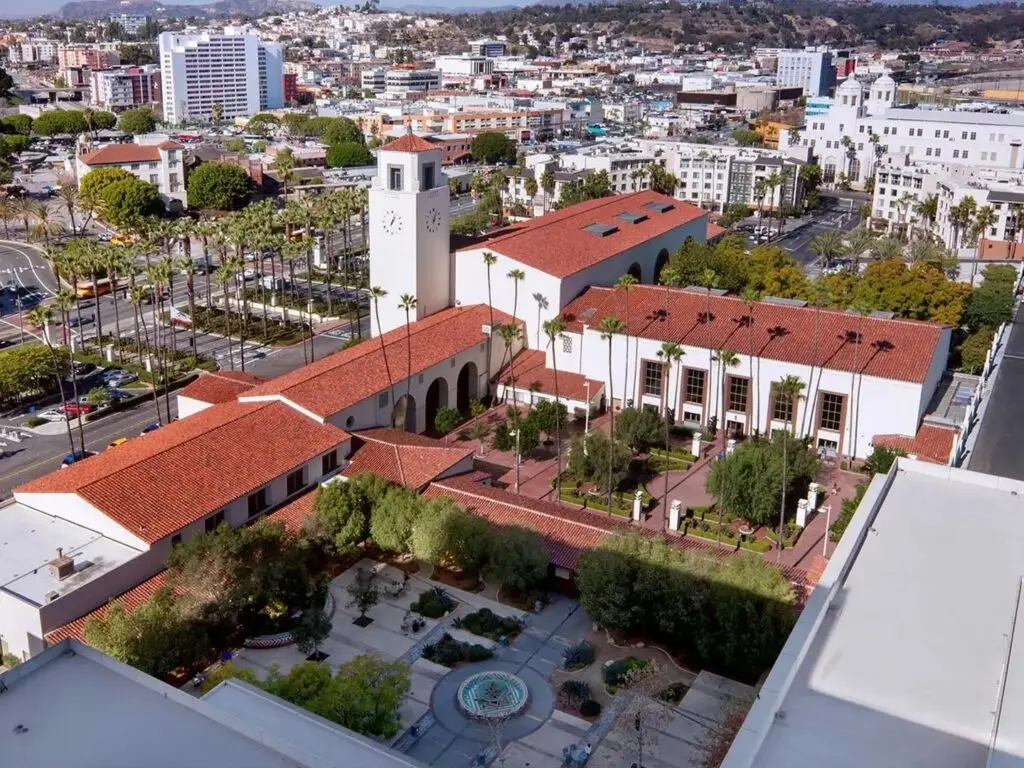
As the heart of Los Angeles, Union Station is an official Fan Zone June 25-28 during the World Cup, but in practice it never really stops being one.
It is the city’s circulation point, its meeting ground, its pressure valve. Commuters, travelers, match-day crowds, and everyday Angelenos all move through the same space, and everything mixes, overlaps, and scales in real time. In a way, this is where the World Cup stops arriving in Los Angeles and starts moving through it.
The Pacific Surfliner from San Diego to Los Angeles makes that shift feel almost too easy. No stress or gridlock anxiety, just a straight line up the coastline with ocean on one side and everything slowly becoming more built on the other. It’s one of the rare ways into LA that doesn’t feel like arrival as friction. You can sit with a laptop, watch the Pacific drift past, grab coffee from the café car, and let the city come to you in pieces.
That’s the beauty of arriving at Union Station. Instead of feeling like you’re on the edge of the city, you’re immediately surrounded by it. And, inside, the station already reads like a World Cup nerve center: banners, movement, multilingual energy, the sense that something global is about to funnel through this exact point. The Heart of the City Fan Zone only sharpens that feeling, with simultaneous match screens, DJ sets, meet and greets, and immersive activations built around marquee games like USA vs. Türkiye.
From there, the city splits outward.
ROW DTLA feels like the first exhale after arrival. A converted industrial campus turned creative district where restaurants, retail, and open-air courtyards form a self-contained ecosystem. If you’re looking for the perfect first meal in LA, make it lunch at Pizzeria Bianco. The thin-crust pizza is reason enough to go, but the space leaves just as much of an impression.
What I liked most about ROW DTLA is how quickly it resets you after the train. One minute you are stepping off at Union Station, and the next you are in a space that feels like its own version of LA, a city inside a city with some of the most curated shopping I’ve ever seen.
Bodega hides itself behind a convenience-store front, a sneaker and streetwear space disguised as something ordinary, like LA refusing to make anything feel too obvious. The whole campus moves like that, part retail, part gallery, part neighborhood you are only temporarily inside.
Isabella Dallas is a freelance writer for San Diego Magazine and the Arts and Culture Editor at The Daily Aztec in her final year at San Diego State University. She previously worked as an editorial intern for SDM, but when she’s not writing, you can find her trying the best coffee spots in SD, devouring the latest rom-coms, and indulging in anything and everything pop culture.
Stop by the San Diego County Fair, rock out at the inaugural Field of Dreamz and visit Bikini Bottom via The Spongebob Musical
Charitable gatherings, downtown music festivals and theater premieres—of both the heartwarming and thought-provoking variety—are among San Diego’s standout events this weekend. You can’t spell fundraising without ‘fun,’ and both elements are central at Poway OnStage’s Taste of the Towne and the Switchfoot Bro-Am. Listeners of blues, reggae rock and silky smooth jazz can check out the East Village Blues Fest, Field of Dreamz and the San Diego Smooth Jazz Festival, respectively. As for the city’s thespian community, new shows include Cygnet Theatre’s production of Broadway favorite The Spongebob Musical and the world premiere of the OnWord Theatre show Marti Gobel’s Adult Storytime: A Caregiver’s Guide To The Blues.
Food & Drink | Concerts & Festivals | Theater & Art Exhibits | More Fun Things to Do
The tasteful appetizer to Switchfoot Bro-Am’s annual Beach Fest is the laid-back Benefit Party, returning this Thursday from 6-10 p.m. at Viasat. Guests will be treated to a curated dining menu, a performance by Switchfoot with special guests, and the chance to bid on live and silent auction items, including local excursions, apparel packages, and deluxe arts experiences. Individual ticket options include general admission ($300) and reserved seating ($450); the money raised will go towards youth-centered programming at six local nonprofits.
6155 El Camino Real, Carlsbad
Patrons of Poway OnStage are invited to Taste of Our Towne, the organization’s annual culinary fundraiser, this Saturday at 5 p.m. at Poway Center for the Performing Arts. The evening will begin with auctions, plus bites and libations from over a dozen local vendors before magician Chris Funk, aka The Wonderist, takes the stage for an interactive comedy show. General admission is $115 for Taste of Our Towne; proceeds from this event will benefit Poway OnStage’s Professional Performance Series and Arts in Education Initiative.
15498 Espola Road, Poway
Before (potentially) riding off into the sunset, British rocker Rod Stewart is strutting his stuff stateside with the unconventional voice and unquestionable verve that’s propelled his nearly six decade-long solo career. Though the “Da Ya Think I’m Sexy?” artist’s days on the road may be dwindling, that’s even more reason to give him his flowers in the present. Stewart’s upcoming show this Friday at 7:30 p.m. at North Island Credit Union Amphitheatre will feature prolific singer-songwriter Richard Marx as the opening act. Tickets start at $40.
2050 Entertainment Circle, Chula Vista
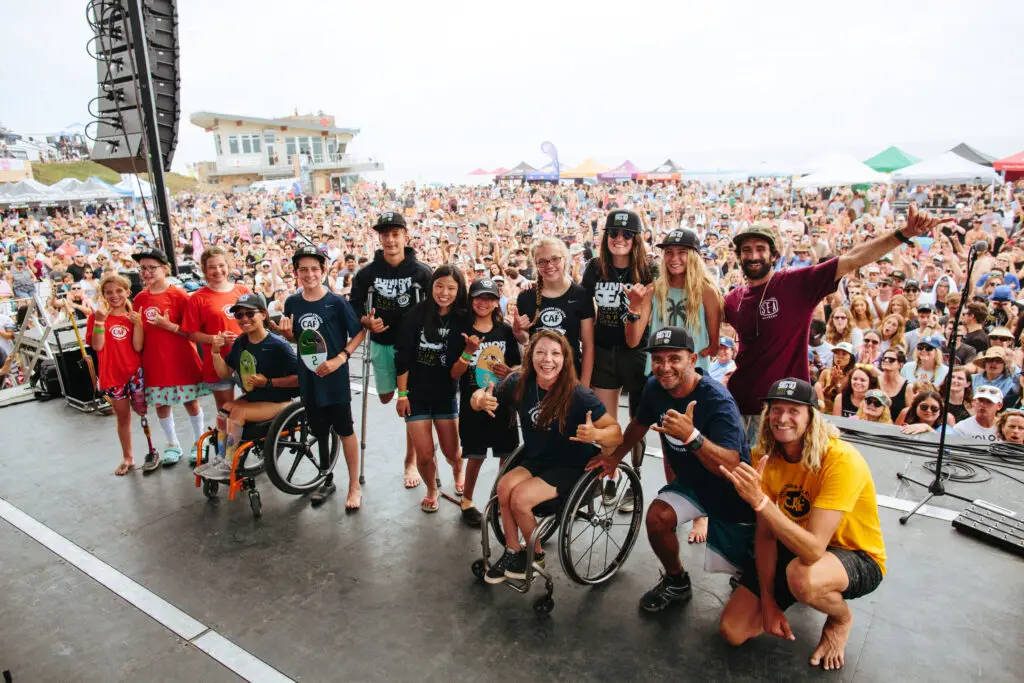
Following Thursday’s Benefit Party, the 22nd annual Switchfoot Bro-Am will switch (get it?) from its fundraiser to a free day at Moonlight Beach for Saturday’s all-day Beach Fest. From 7 a.m. to 3 p.m. there will be surf competitions—including surf jousting—and from noon to 5 p.m., Sun Room, Telephone Friends, Kimiko, a handful of special guests and, of course, Switchfoot will perform for attendees. Additionally, throughout the day, there will be a variety of vendors and brand activations to explore. Admission is free with RSVP, while VIP pit tickets are $195.
400 B Street, Encinitas
As the mysterious saying goes, ‘If you build it, they will come,’ but instead of Iowa cornfields, this time the message is coming from inside SD’s home ballpark. This Saturday, Ocean Beach natives Slightly Stoopid will headline the first-ever Field of Dreamz Festival, and they’ve brought along a handful of ska, reggae and island-inspired rock acts for the ride. Doors will open at 3 p.m., and fans can see sets by Stephen Marley, Pepper, Sublime—whose first album with frontman Jakob Nowell drops Friday—and more. Ticket options include standard admission ($125), floor tickets ($188), plus All-Star VIP ($244) and Hall of Fame VIP ($610) passes.
100 Park Boulevard, Downtown

Ryan Hardison is a freelance arts and entertainment writer and recent graduate of San Diego State. When he's not staring at his laptop, he's likely eating an adobada burrito or getting sunburnt at the beach.
KQ Aesthetic Society goes beyond cosmetic to provide comprehensive care and transformative results

Kelly H. Harfouche, founder of KQ Aesthetic Society, knows firsthand that cosmetic treatments like fillers, neurotoxins, and microneedling, can not only enhance a person’s appearance and restore confidence, they have the power to truly change a person’s life. An expert injector has the ability to tailor treatments to each individual patient’s anatomy and goals for personalized results. Harfouche, a board-certified nurse practitioner, has spent nearly a decade perfecting her craft as an aesthetic injector and integrating her multifaceted artistic skills with precision patient care. Her commitment to continual education and training, plus a passion for helping people look—and feel—their best, set KQ Aesthetic Society apart in a sea of local medspas.
For many people considering nonsurgical treatments, the intent is to look refreshed and refined. KQ Aesthetic Society’s philosophy eschews a cookie cutter approach that bases treatments around units, instead working to understand each person’s unique goals, then curating a treatment plan to fit that vision. Harfouche focuses on “inclusive luxury,” the belief that everyone deserves access to aesthetic treatments, respective of budget restrictions. She develops long-standing trusted relationships with her patients, and works with each one to achieve their aesthetic objectives and address the underlying causes of their concerns.
“For me, forming an honest and open relationship with every patient who walks through the door is essential. This means understanding them on a deeper level and meeting them where they are to define and achieve their individual goals,” she says.

Drawing on her artistic background, which inspired her transition into medical aesthetics, Harfouche sees each client as a “unique canvas.” Rather than relying on standardized procedures, the practitioner’s distinctive approach combines her profound understanding of the physiological and anatomical changes associated with aging with an unwavering commitment to ongoing education about the newest products and their mechanisms of action. Her goal is to make each patient feel beautiful in their own skin and to embrace their individuality.
She has also pioneered a way to combine her talent for aesthetic artistry with her philanthropic nature. Harfouche is one of only a handful of providers using dermal fillers to treat patients with lip asymmetry and scarring resulting from cleft lip surgery. Patients travel from around the country for this transformative treatment, noting increased confidence and a restored identity. She hopes to eventually launch a training program to help fill the void in this space.

“My passion has always been connecting with people and giving back in any capacity that I can,” she says. In the rapidly advancing landscape of aesthetic medicine, you can place your confidence in Harfouche and KQ Aesthetic Society to deliver exceptional care. To learn more or book a consultation, please visit kqaestheticsociety.com.
Food writer Beth Demmon names local bites we love—both at the high and low ends of our budgets
We love a mega-fancy tasting menu, but let’s be honest—we’re not all blessed with unlimited Wagyu funds. So we picked some of the breakout dishes of the last year (or couple of years) from the best chefs in the city, reverse-engineered their chief charms (salty, smoky, caramelized?) in the test lab of our mouths, and found some budget-friendly alternatives that hit some of the same notes with an everyday price tag.
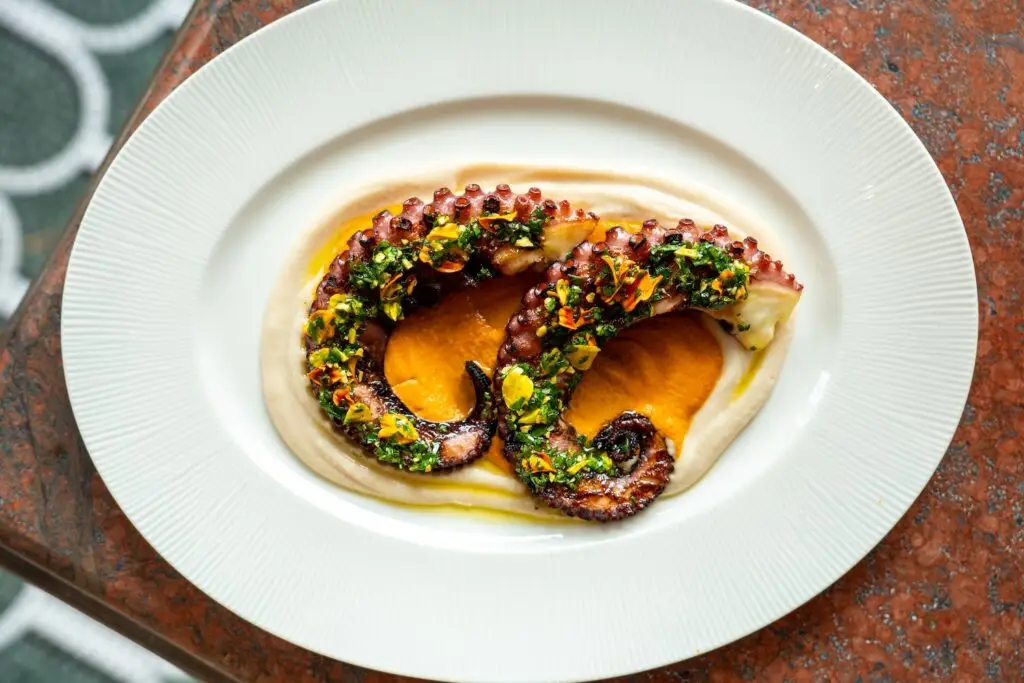
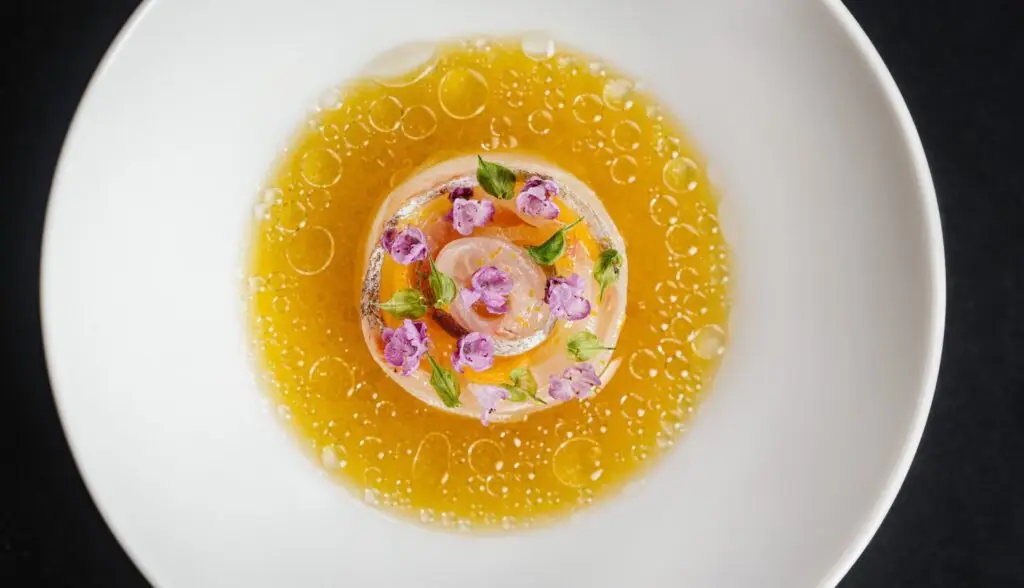
Where do delicately plucked marigold blossoms adorn Deer Isle scallops, or ingredients like fermented raspberry precede roasted coffee oil, shiro miso caramel, or bronze fennel in a parade of hit-after-hit dishes? Lilo in Carlsbad, of course. San Diego’s newest Michelin star changes its menu with the seasons, but one stalwart dish has kept tongues wagging since opening day last April: the caviar ice cream. A boat-shaped sliver of orgeat ice cream, smoked celery root bushi, and freshly pressed almond oil are topped with a generous heap of caviar. It’s a dish so good and defining that chef Eric Bost will tire of talking about it for a very long time.
Price: $265 for the tasting menu (before tax, tip, and drinks)
There’s a reason Stella Jean’s s’mores ice cream is part of the local scoop shop’s “always available” menu. Made with fire-roasted marshmallows and coconut ash ice cream mixed with dark chocolate-covered graham crackers and mini marshmallows, its strangely ashen hue dabbled with flecks of tawny brown is a far cry from the wildly vibrant ube and pandesal toffee flavor seemingly made for Instagram reels. But it’s a sensation in your mouth—smoky, toasty, torched, creamy, marshmallowy, coconutty, ashy, and bitter from the dark chocolate. Pro tip: If you really want to DIY Lilo’s ultra-luxe treat, bring your own caviar.
Price: $6.25 for a single scoop
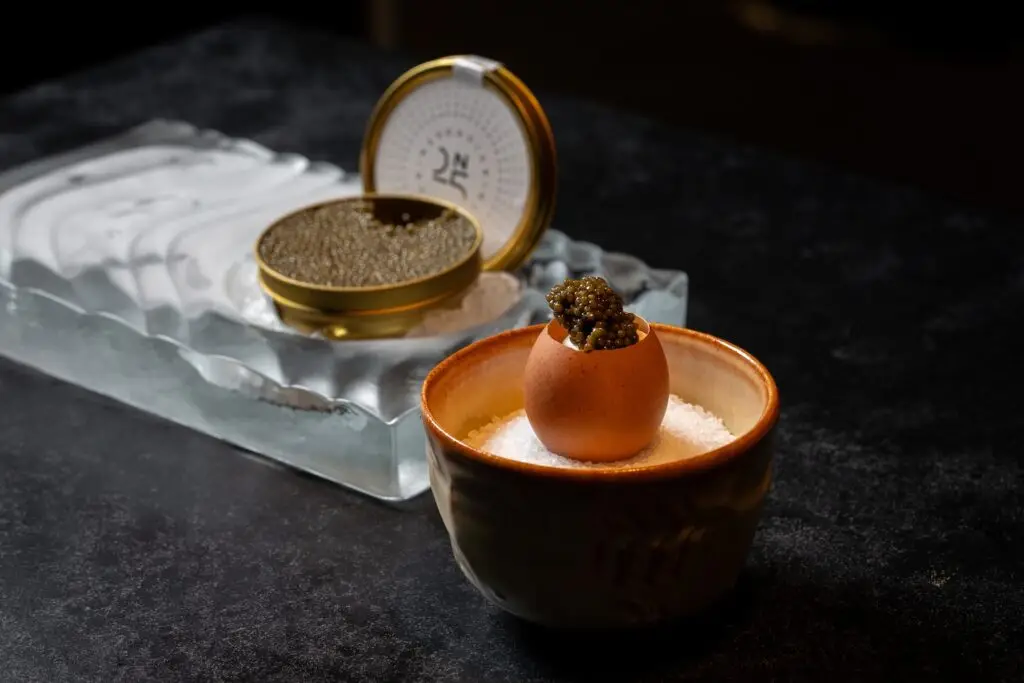
There’s no question what comes first at Lucien. It’s the egg. Chef and co-owner Elijah Arizmendi’s 12-course tasting menu begins with welcome bites under the calamansi tree before moving inside to start the Journey (the actual name of this section of the menu). The first step is one of the most astounding—a perfectly intact, upright, ochre-hued eggshell containing his take on Japanese chawanmushi (egg custard), topped with a dollop of caviar. The accompanying ingredients have ranged from sweet corn and huitlacoche to banana and buckwheat, but each one has precisely demonstrated Arizmendi’s commitment to French technique with California experimentation and global influence.
Price: $260 for the chef’s tasting menu (before tax, tip, and drinks)
The biggest difference (besides price) is that while Lucien’s dish changes with the season, Sushi Ota is comfortably predictable. A San Diego staple since 1990, the legendary Sushi Ota has been one of those if you know, you know joints that locals try to keep off the radar. (It hasn’t worked at all.) Known for ultra-fresh fish and ultra-traditional service, the small Pacific Beach restaurant also serves Japanese comfort foods like udon noodle soup alongside sashimi, nigiri, and rolls. But it’s the savory steamed egg custard, called chawanmushi, that really gives you the warm and fuzzies. Add a side of salmon roe (ikura) for a few bucks more, and this dupe is about as good as it gets.
Price: $12 for chawanmushi, $11 for ikura
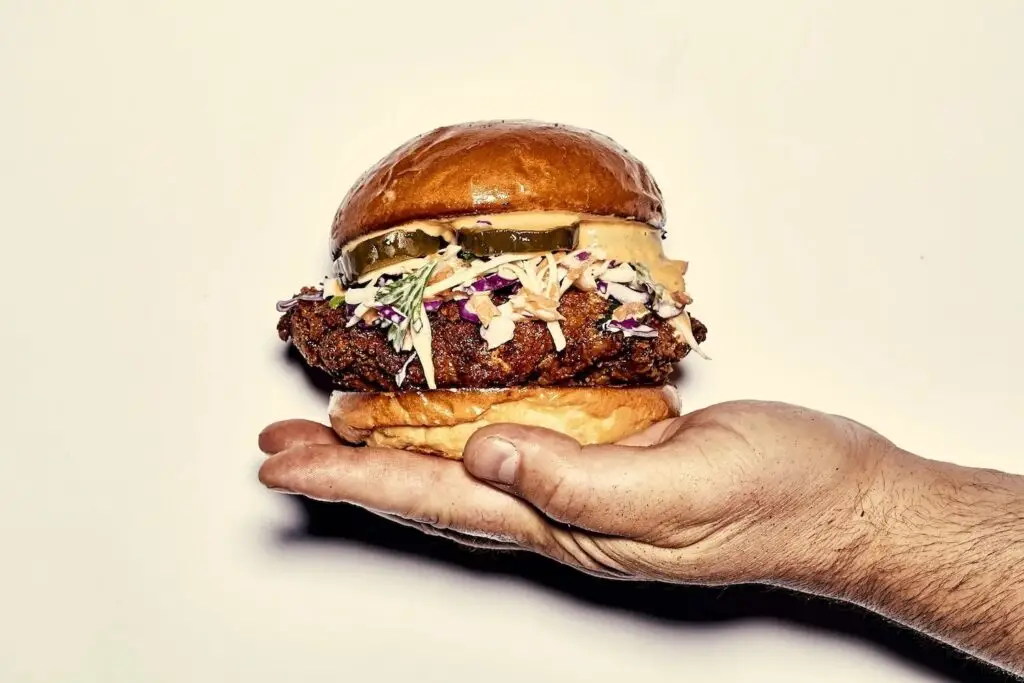
Enough ink—and tears, I’m sure—has been spilled over Chick & Hawk’s long and arduous journey to opening its doors. But now that the Encinitas eatery is in full swing, chef Andrew Bachelier’s tightly curated menu of fried chicken sandwiches, fries, and bowls command lines of hungry locals and skate-culture loyalists. The Birdman, the signature hot chicken sandwich named for partner and skateboarding legend Tony Hawk, is piled with cabbage slaw and pickles and slathered with a tangy kimchi comeback sauce on a soft brioche bun. Although this Nashville meets California meets Mississippi meets Korea sando doesn’t command a triple-digit price tag, the fact that it’s nearly a $20 chicken sandwich (sans side) has been a topic of conversation. Bachelier—who worked at Addison before opening Jeune et Jolie, then launched SDM’s 2024 “Best New Restaurant,” Atelier Manna—and his team earned that price tag.
Price: $18
It’s hard to beat Koreans at the chicken game. Korean fried wings are defined by a double-fry technique—first at a low temperature to ensure the chicken is cooked through, then at a high temperature to ensure the famed extra-crispy, ear-splittingly crunchrageous magic. At Cross Street, they follow a similar fusion ethos as Chick & Hawk, using inspiration from the American South as well as Thailand, Korea, Vietnam, and more, with flavors like “Seoul Spicy” or “Honey Butter” for whatever you’re feeling that day. Pair it with a cold beer to go full chimaek (a popular Korean combination of pairing fried chicken and beer). Now that’s a combo—and price tag—that’s hard to beat.
Price: $8.75 for five wings
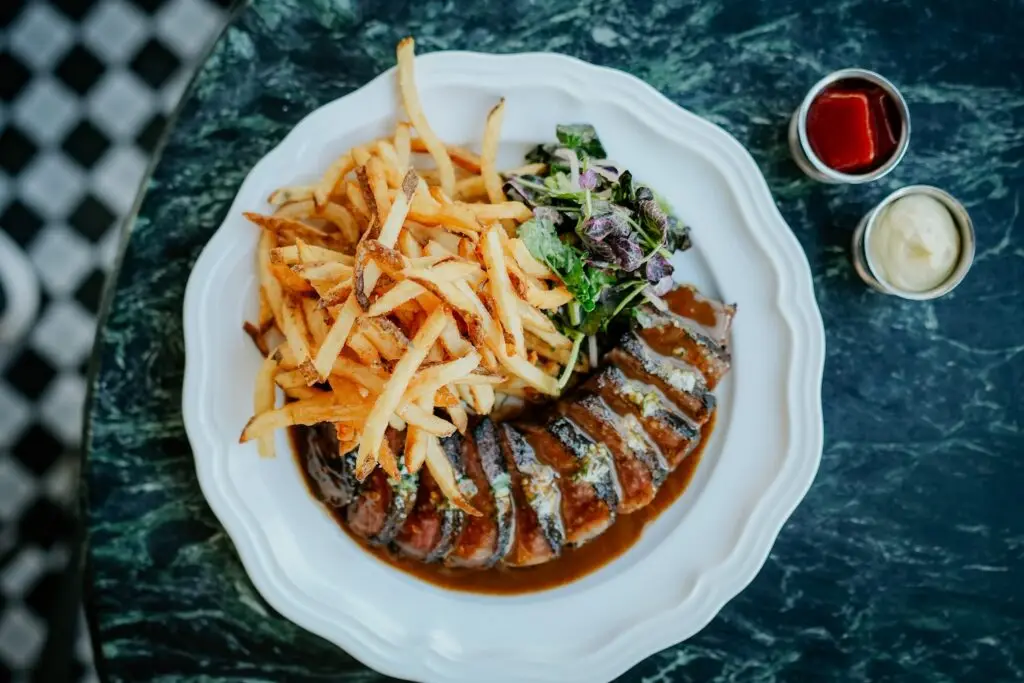
PB&J. Captain & Tennille. Brad Wise and steak. Steak frites ranks among the iconic global duos. And when the holy union of prime cuts and twice-fried carbs comes from Wise and the meat-loving masters at Trust Restaurant Group, it’s a pretty safe bet. À L’ouest—the group’s newest fancy, but not fussy, drippy plant dreamscape of a French steakhouse on the prime corner of 30th and University in North Park—gives guests a choice: 12-ounce New York strip, 8-ounce filet mignon, or 8-ounce Wagyu hanger, topped with sauce au poivre (the classic French pan sauce—peppercorns, shallots, heavy cream, brandy) and served with a heaping pile of 24-hour salt-brined fries and a watercress salad. One bite acts as a transport to a Parisian brasserie, so if you think about the cost in terms of time-space travel, it’s a pretty great deal.
Price: starts at $48
To satisfy the same urge for meat and potatoes, feel at least moderately European while doing so, and save a couple quid, a trip to The Shakespeare in Mission Hills ticks all the boxes. The classic British shepherd’s pie arrives in a piping hot oval au gratin dish, smothered with a thick layer of mashed potatoes. Beneath it lies a hefty portion of marinated ground beef and vegetables in the pub’s secret sauce, and while there are a few choices of sides, the correct order is peas and “proper” chips (a.k.a. chunky, thick-cut fries versus the typically thinner American “French” fries). It’s more tickety-boo than très bien, but it’s immensely satisfying in any language.
Price: $22.95

Beth Demmon is an award-winning writer and podcaster whose work regularly appears in national outlets and San Diego Magazine. Her first book, The Beer Lover's Guide to Cider, is now available. Find out more on bethdemmon.com.
From dedicated line cooks to seasoned bartenders, these are the people making magic happen in city's top restaurants
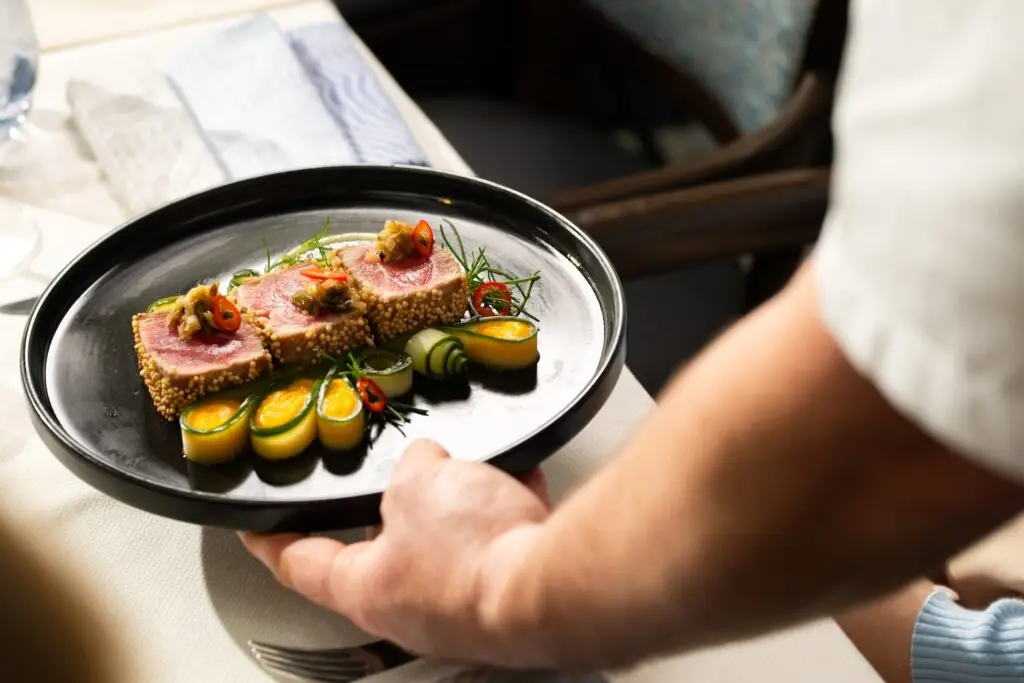
Chefs have done gobs of thankless, lumbar-breaking work over years to land the role. Restaurateurs put their entire livelihoods on the line, microdosed sleep, took ultimate responsibility for every minor stress. They earned the spotlight they get. But ask one of them, and they almost always defer to a line cook who’s showed up for years, been deep in the thing, and whose absence would bring the kitchen to its knees. Or the bartender with a warmth that draws people whether they’re thirsty or not. Or the noble and spreadsheetable soul in charge of purchasing everything needed for the nightly show.
They call it the “heart of the house.”
Spotlight or not, these are the people who make a food culture hum at its daily core.
For this year’s “Best Restaurants” issue, we asked a handful of the top chefs and one restaurant owner—Tara Monsod (Animae/Le Coq), Jason McLeod (Ironside Fish & Oyster), Ananda Bareño (The Marine Room), Owen Beatty (A.R. Valentien), and Ryan Thorsen (Mister A’s)—who that person is for them.
These are the hearts of houses.
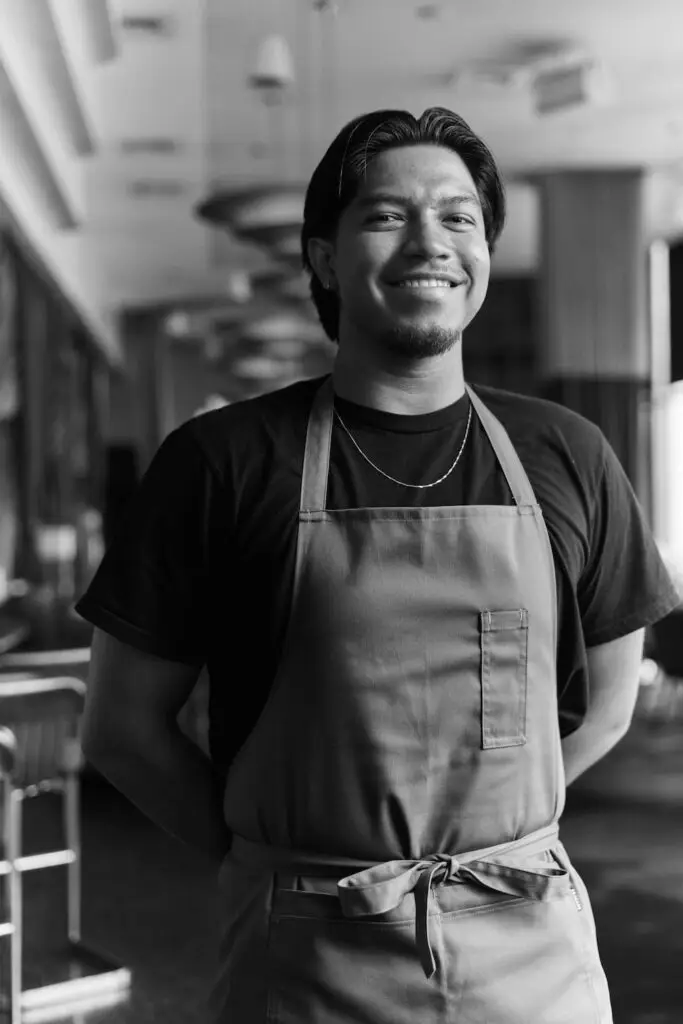
Roger Feria Krile is not only the guy you want to be friends with at work, but also the guy you want to hire: respectful, nose-to-the-grindstone, versatile. And he’ll drop off a fresh batch of cinnamon rolls at your house for the holidays. Born in Tijuana, Krile moved to the US with his mom and sister when he was in elementary school. He saw the sacrifices his mother made to give her children a better life, and he pushed himself to live up to that brighter future.
He came to cooking during the pandemic, asking himself, “What do I really love to do?” His answer: “Bake cakes for friends and break bread with people,” he says. That led to a culinary school degree and a stint in a Michelin-starred NYC kitchen, where he grew to “love and understand” fine dining. Now back in San Diego, Krile’s showing up at Animae in a major way. He does prep work three mornings a week and comes later in the day twice a week for dinner service. Most line cooks do one or the other, but he requested both tours of duty.
“Gotta get my reps, keep my skills sharp,” Krile says, “and I don’t want to miss the rush.” Prep work in the mornings helps him learn how Executive Chef Tara Monsod uses each ingredient to the fullest. Krile’s not just a line cook. One-quarter Filipino (and learning about his culinary heritage from mentor Monsod), he’s building his own Mexican-Filipino pop-up concept. Look for Sarsa—Filipino for salsa—where every dish is a play on words fusing Mexican and Philippine Spanish or Tagalog. He’s already R&D’d a breakfast sandwich, the tortantalong: a torta filled with a signature Filipino eggplant omelette called a tortang talong. Friends in the industry say it’s unexpectedly delicious.
“He shows up every day with a clear goal of one day opening his own restaurant, and that drive pushes him to go above and beyond,” says Monsod. “He is constantly learning, asking questions, and absorbing as much as possible, all while leading by example on the line.”
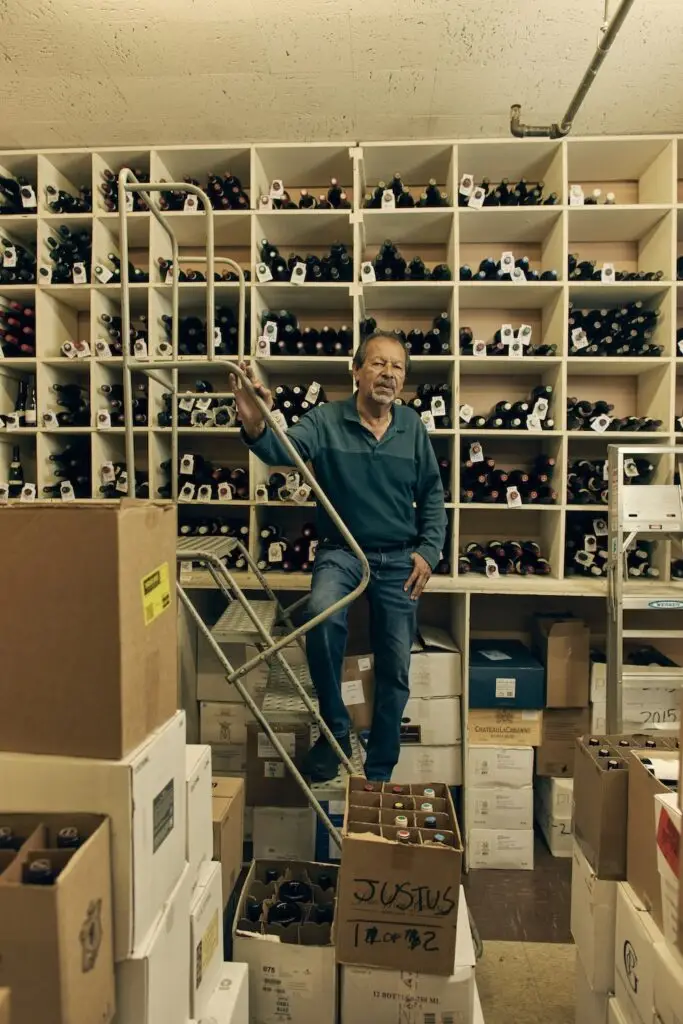
Ruben Martinez knows every bottle of wine at Mister A’s—not necessarily by taste (though he was on the tasting committee for years), but by where they are in storage and whether they need replenishment. Owner Ryan Thorsen wants the wine list at 100 percent available every night, and Martinez’s job is to make that a reality. He’s been keeping inventory on Mister A’s wines since the 1970s, back when he worked for founder John Alessio. And it’s not just vino: Martinez also procures the ingredients, arriving at 5 a.m. to meet delivery trucks, stock shelves, and alert chefs if anything’s amiss.
Then he hits the dining room for a once- or twice-over to find any imperfections. If a light is out, if the plumbing acts up, if something major happens after he leaves in the afternoon, he’ll fix it all. He’s the best guy to ask, anyway; he knows every inch of Mister A’s. “Before ‘Google it,’ there was ‘Call Ruben,’” Thorsen says.
Martinez started out in hospitality at 17 with his father at Hotel Del. “I thought it would be easy working with my dad,” he says. “But early on, he caught me fooling around with the boys and told me, ‘We’re here to make money for the company. If you’re not willing to work, get out of here.’” That set him straight and set the foundation for Martinez’s lifelong dependability.
He moved to Mister A’s a couple years later, and after over five decades, he’s now the indispensable purchasing manager who worked with Alessio, Betrand Hug, and now Thorsen. Later this year, he’s planning on retiring—though he’s already offered to keep showing up a couple days a week and help out with Thorsen’s new project at Liberty Station.
Thorsen knows this man is a gem. “I don’t think we fully grasp what it will feel like without him,” he says. Last year, he threw Martinez a surprise birthday party in Mister A’s Blue Room, inviting Martinez’s family and a whole cast of coworkers going back to Alessio days. Martinez says he had to leave the room to hide his tears.
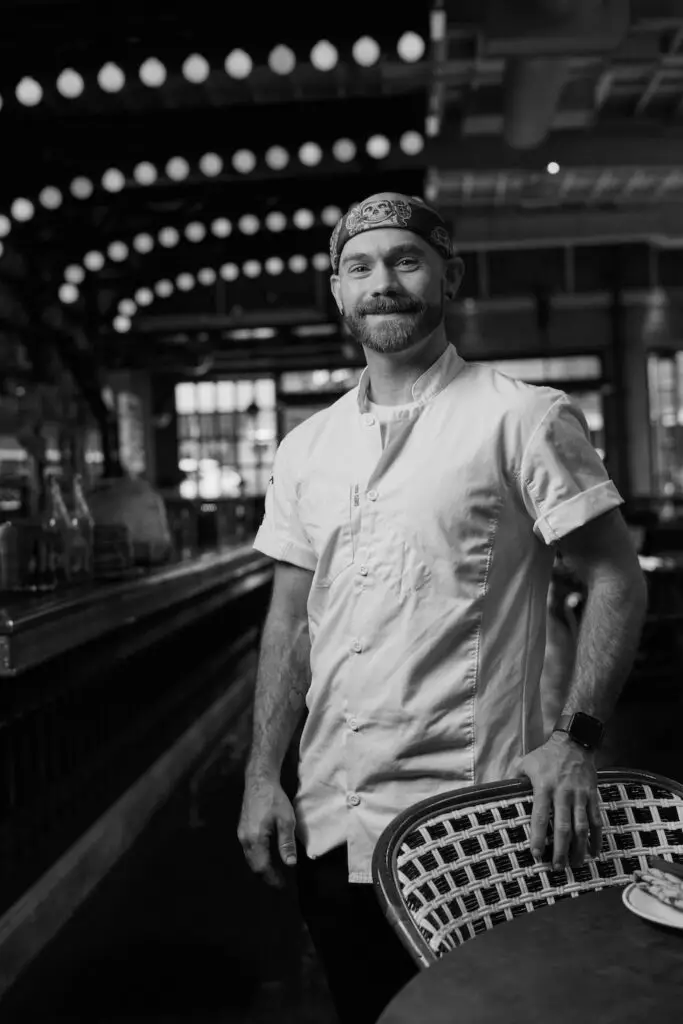
There’s an hour most people never see, when a restaurant’s technically awake but not yet accountable, and that’s where Patrick Mattoon lives. He’s been the foundation of Ironside’s prep team for the past five years, quietly guiding the day toward success. He and his team are the first in, and they turn on ovens, check deliveries, catch mistakes before they become problems, and fix everything without ceremony so the chefs and line cooks walk into a day that already works.
Mattoon organizes, but more importantly, he owns. There’s no job too small, no detail beneath notice. In a kitchen, bad prep’s the one thing you can’t fix later, no matter how talented of a chef is at the helm.
Five years in, Mattoon still approaches each day with the same care and intensity that he had on day one. He takes every task seriously and sees it through completely—the kind of consistent work that doesn’t draw attention but makes everything else possible. When the restaurant got a soft serve machine, a notorious maintenance nightmare, he taught himself how to clean and run it just to make sure it never broke, not for credit but because that’s just how he’s wired.
“He is a silent leader who has the respect of the entire team due to leading by example,” says Ironside chef Jason McLeod.
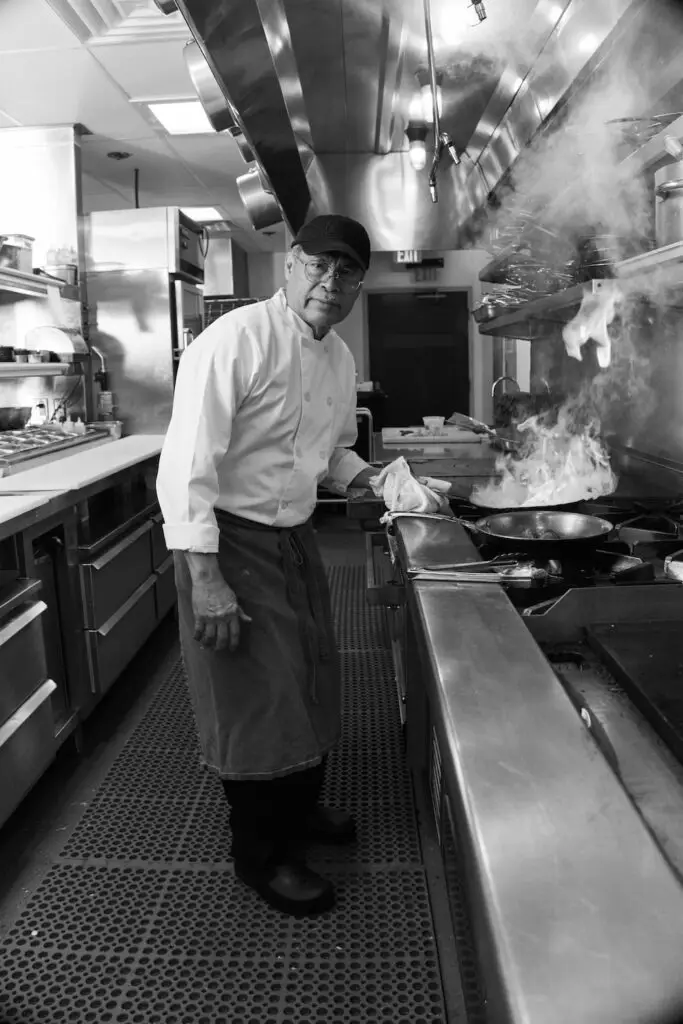
Through 23 years, three executive chefs, and a recent kitchen remodel, lead line cook Arturo Celestino is a constant at A.R. Valentien. He’s there at 6:30 a.m. five days a week—sometimes six—for the Lodge’s breakfast service. That means he’s up early prepping potatoes, slicing mushrooms, whisking pancake batter, and stirring sauces “always with a smile,” says Owen Beatty, the restaurant’s new chef de cuisine. “He’s a good leader.”
Celestino shows the younger guys how to make the eggs fluffy, so the omelettes are always perfect (don’t stop twirling the spatula!). He keeps his line in line when their spirits start to naturally droop during the morning shift home stretch when his crew just wants to get out of there. As the lead, he’s also the one chefs turn to when newbies need motivation.
His secret sauce: “mucho talking!” It keeps people happy, and it also helps the chefs retain talent in the kitchen.
Celestino learned to cook out of “necesidad,” he says. He cut his teeth on fine dining at Pacifica Del Mar at the Hyatt and moved to A.R. Valentien in 2003, just a few months after it opened in 2002.
“I’ve had good jefes,” Celestino says of the three executive chefs he’s known at A.R. Valentien: Jeff Jackson, Kelli Crosson, and now Michelin-starred Eric Sakai. Under Jackson—who’s known for pioneering farm-to-table dining in San Diego—Arturo learned to appreciate local ingredients.
“My favorite is basil,” he says, “added to tomato sauce with garlic, it’s mmm.” Fresh basil plays the supporting role in A.R. Valentien’s signature brunch plate, which is also Celestino’s top choice on the menu (to make and to eat), via the Bull’s Eyes: slow-roasted eggplant with sunny-side-up eggs, tomato sauce, and La Quercia prosciutto.
“I love my job,” Celestino says as he flashes that smile. “It’s not just a plate of food. It’s an experience.”
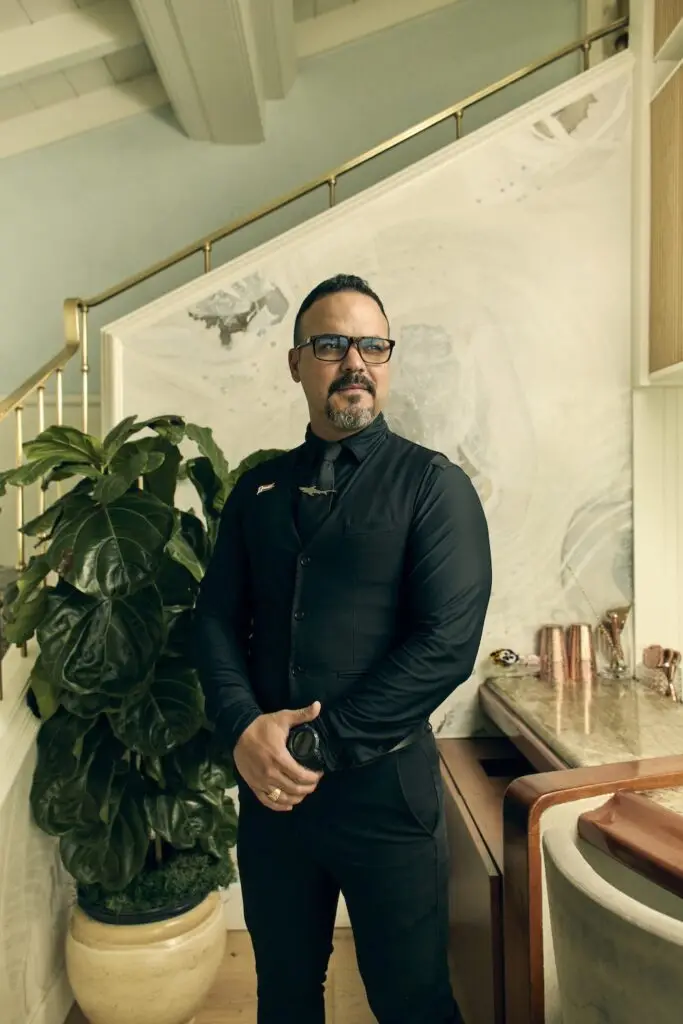
If you’ve been to The Marine Room, you’ve probably met bartender Tony Suarez. With his charming Cuban accent and dapper vest and tie, he makes it his business to regale guests coming and going—even while he’s pouring, mixing, shaking, polishing glasses, and taking orders.
“Over 90 percent of our guests are celebrating a special occasion,” he says. “So I keep up the celebration throughout their whole visit.” He’ll make you a sparkling toast and a customized cocktail, and on your way out, he’ll wish you a happy birthday (again) and invite you back for drinks on him.
“My goal is always to delight the guest,” he says. “I like to discover how you feel and lead you to what you would like to drink.” That spirit of experimentation has led to new signature cocktails, such as the Gerald—crafted for a neighbor who’s a regular—featuring housemade pomegranate puree and bourbon, or the I Drink of You with local Bebemos tequila, Gran Marnier, and Green Chartreuse. You won’t find this anywhere else.
“[Suarez] has mastered the art of the personalized guest experience,” says Marine Room’s Executive Chef Ananda Bareño. “He remembers the small details and favorite orders that make our regulars feel like family.”
Suarez’s tenure at the Marine Room started with a walk on the beach and a knock on the door. He was impressed by the beautiful location, and he asked if they were hiring. He immediately started as a server assistant—right before Valentine’s Day. The bartender took Suarez under his wing, and he took to the books to learn all about spirits.
He’s taken on the bartender role with wisdom and grace, offering a sympathetic ear, a pick-me-up, and a “human to human connection,” he says. Ten years into his career, the surroundings still inspire him as much as they did on day one.
“The Marine Room, the windows onto the ocean, [all] have a healing effect,” he says.
Leorah Gavidor won her first essay contest at age 5. She writes features, news, and non-fiction in San Diego.
A look at San Diego's top designers creating unique environments that combine creativity and function


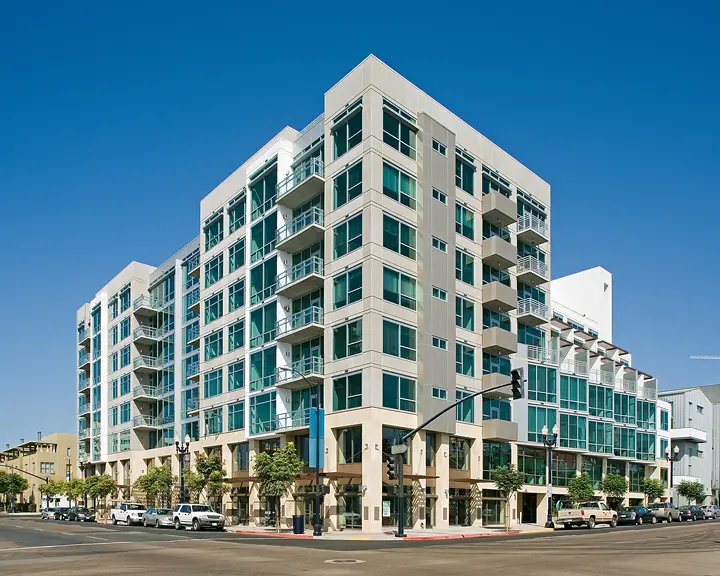
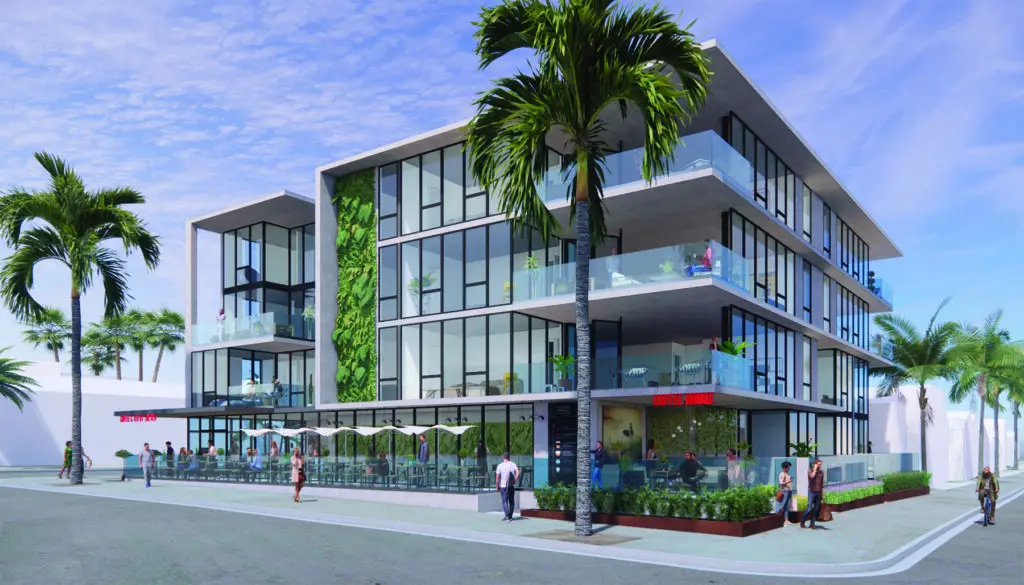
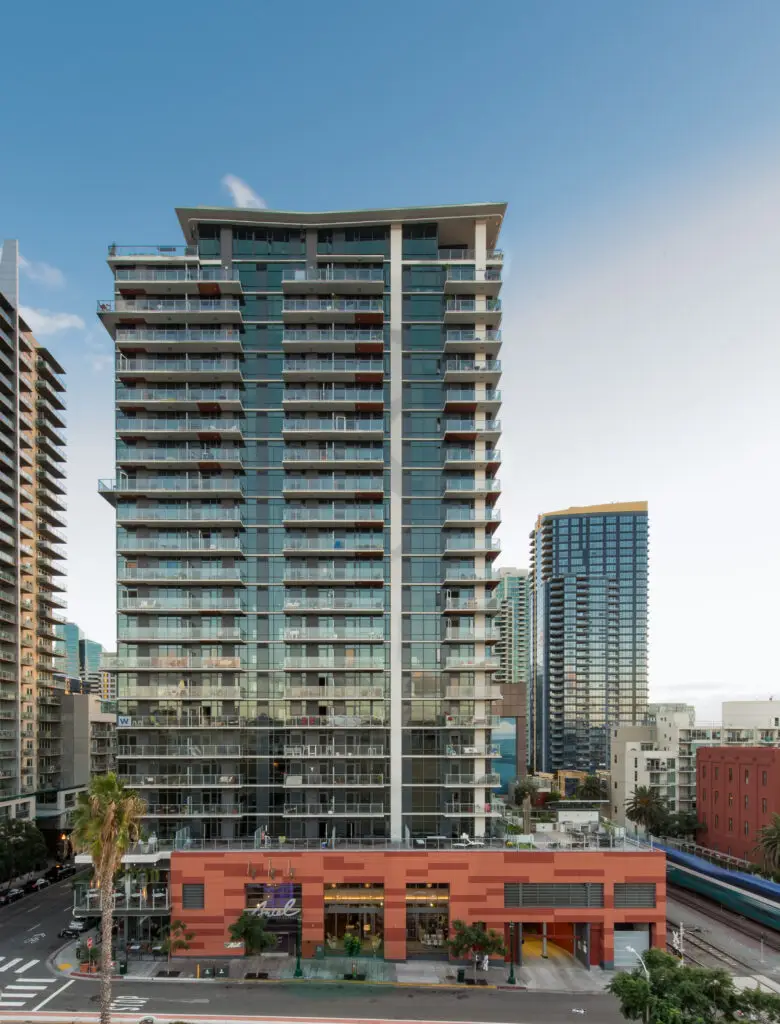

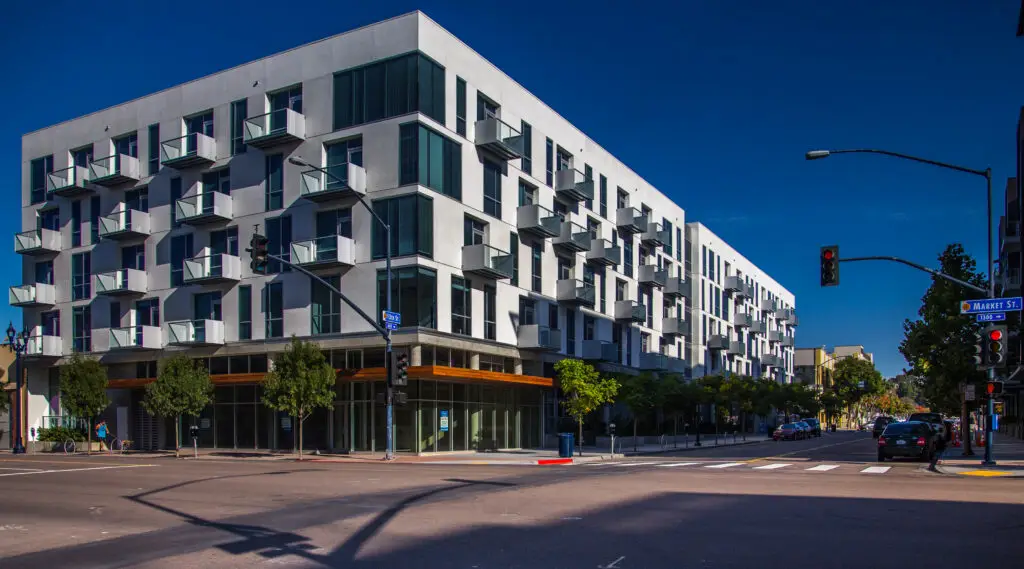
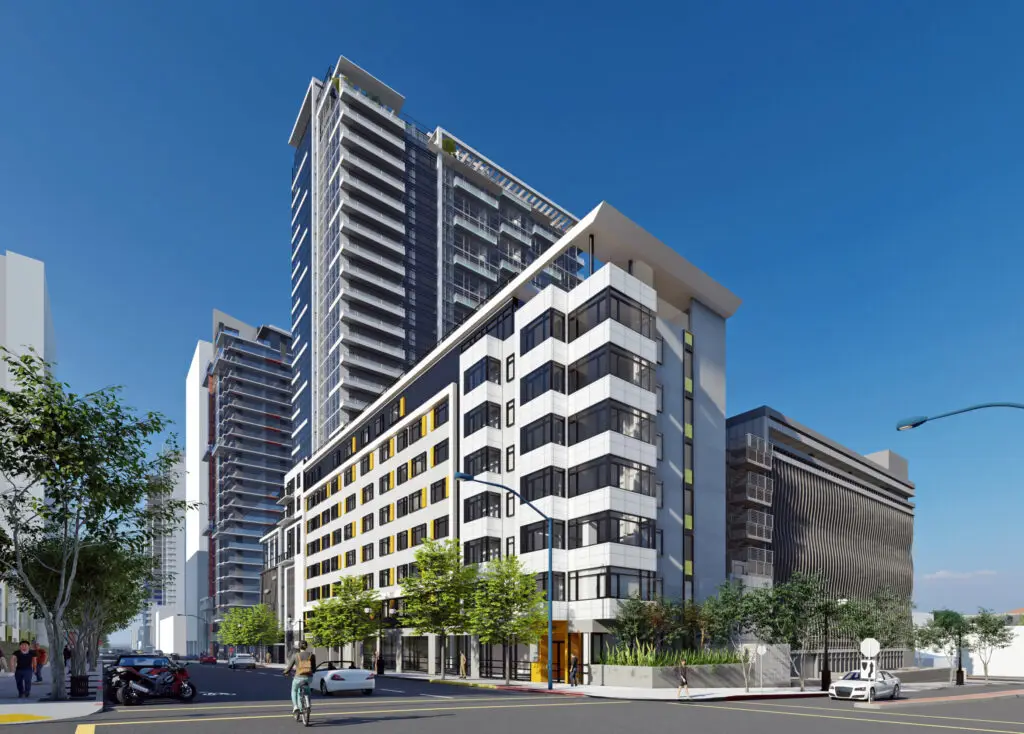
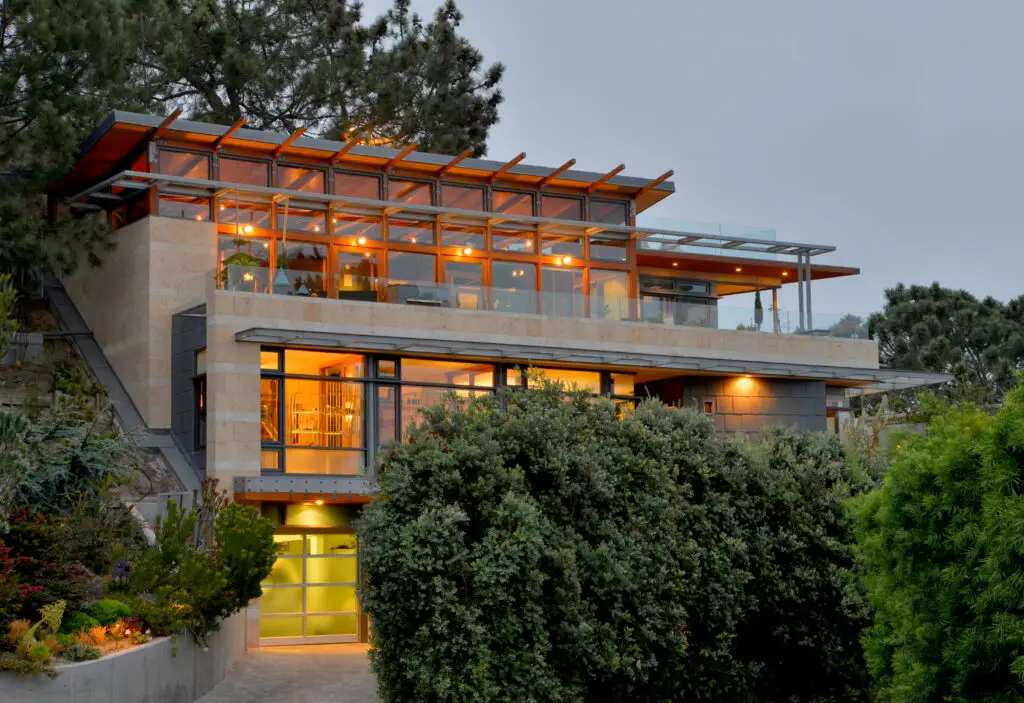
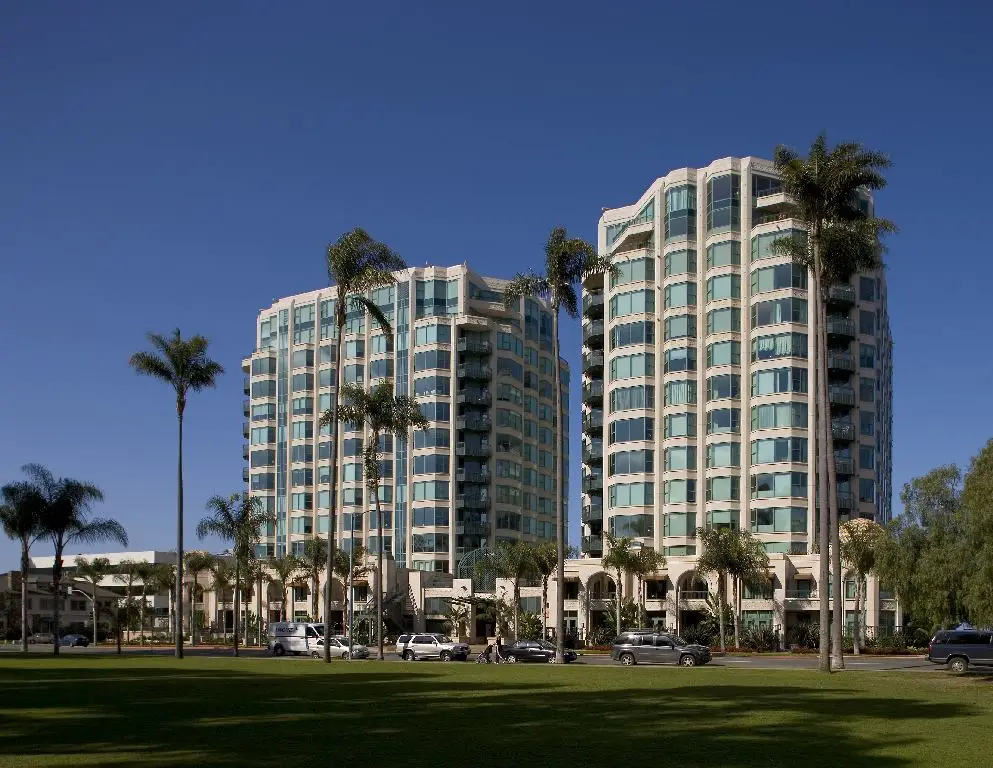
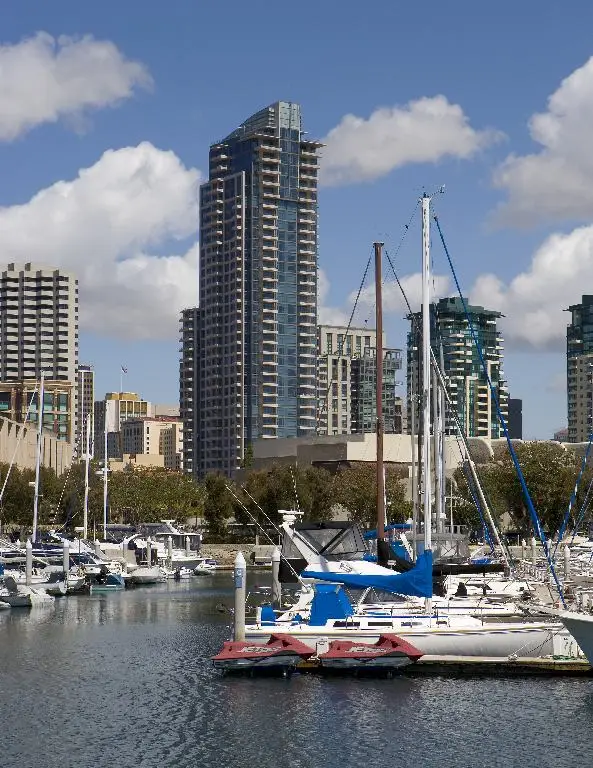

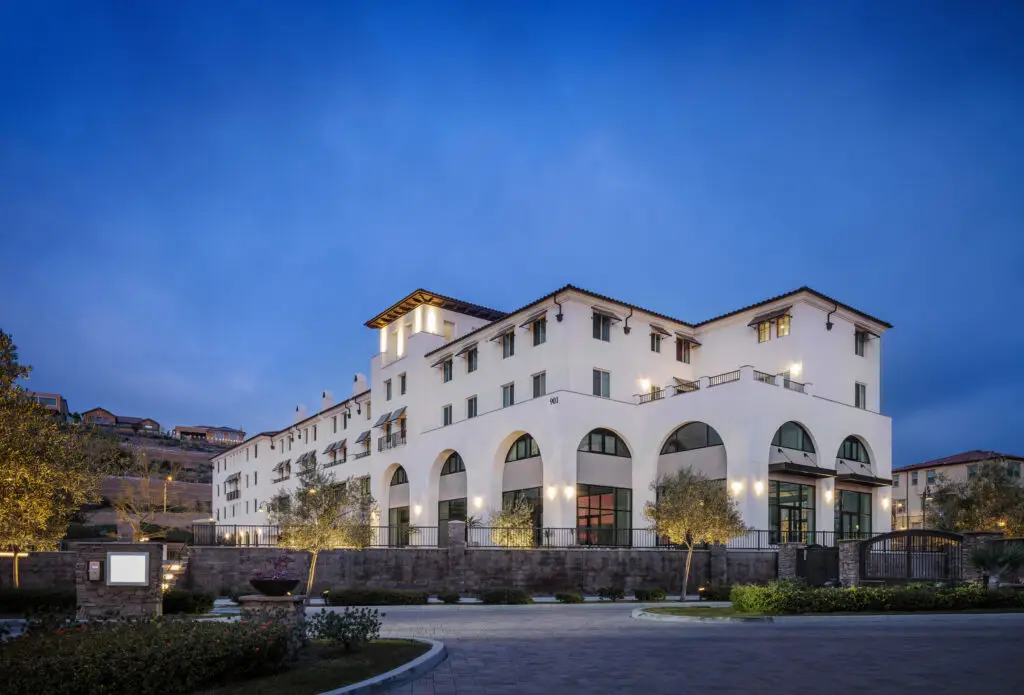
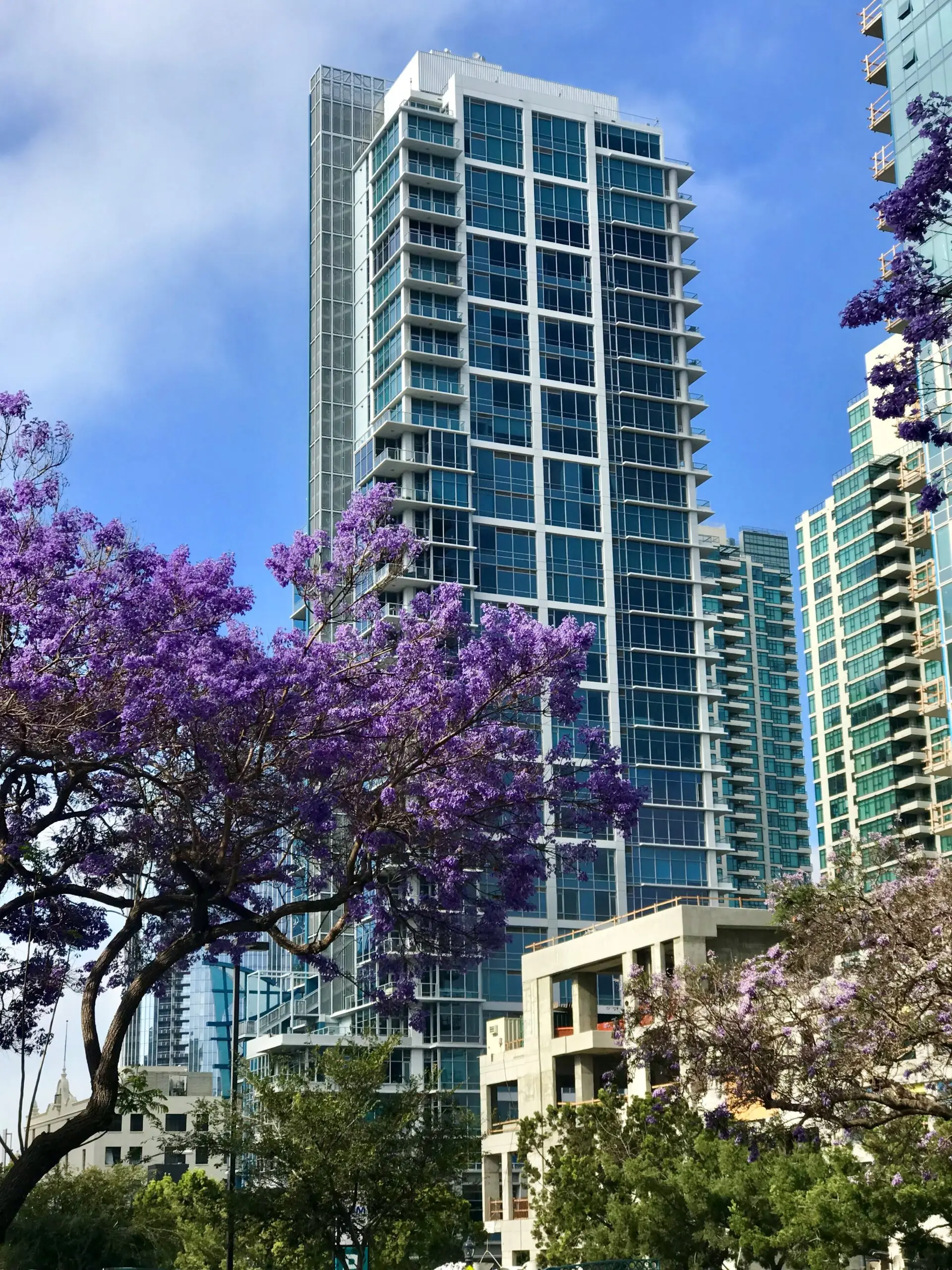
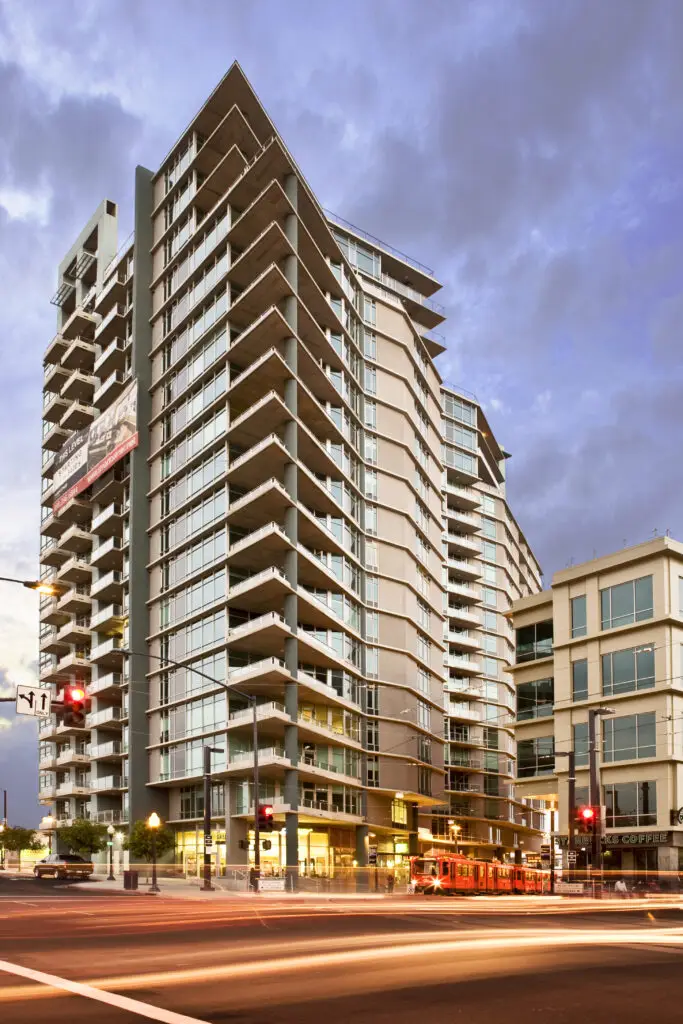
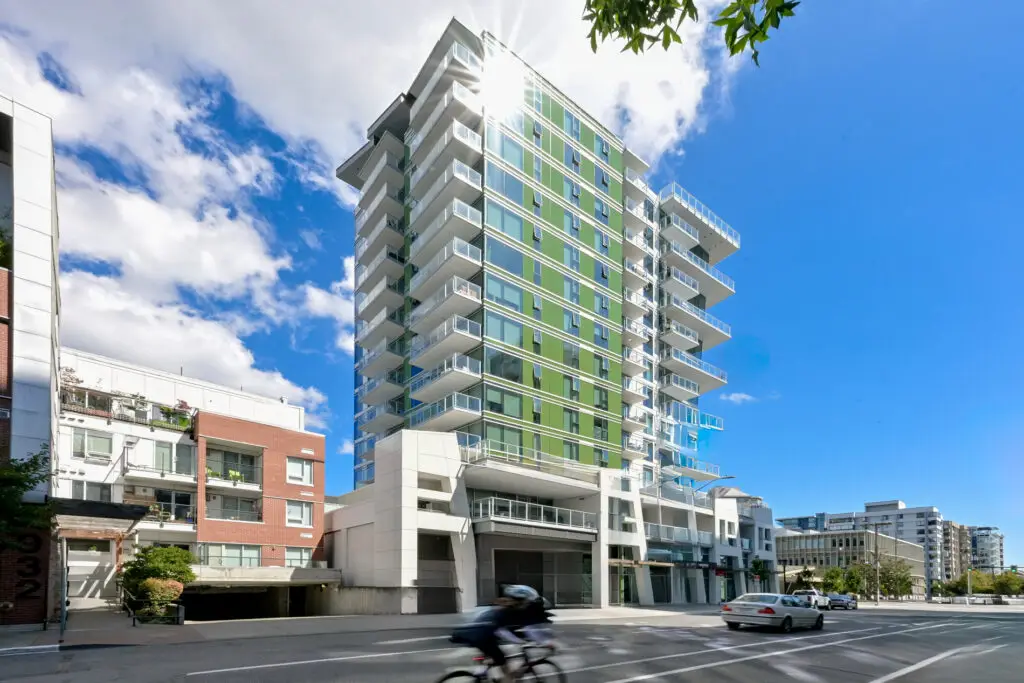
AVRP Studios’ tradition for Design Excellence and Innovation began in 1976 with Doug Austin, FAIA, in Solana Beach, California. The firm has since grown to complete major projects throughout the United States and Canada. We think of ourselves as a family and we care deeply about people. We want to inspire, help make their lives richer and more complete through our efforts. We believe that architecture is one of the most important art forms because of the impact it can have on the lives of those it touches. We’re delighted to have been recognized with over 150 awards for design excellence.
703 16th Street, Suite 200, San Diego, California 92101 | 619-704-2700 | avrpstudios.com