Ready to know more about San Diego?

Subscribe
Features JANUARY 28, 2019

The Big Family in Little Italy

Troy Johnson pulls up a seat for dinner with San Diego's iconic Italian family, the Busalacchis

The Big Family in Little Italy

Joe Busalacchi would like to invite you to his birthday party. All of you. He didn’t, technically. But I feel confident. That’s what Joe does. He invites yous.

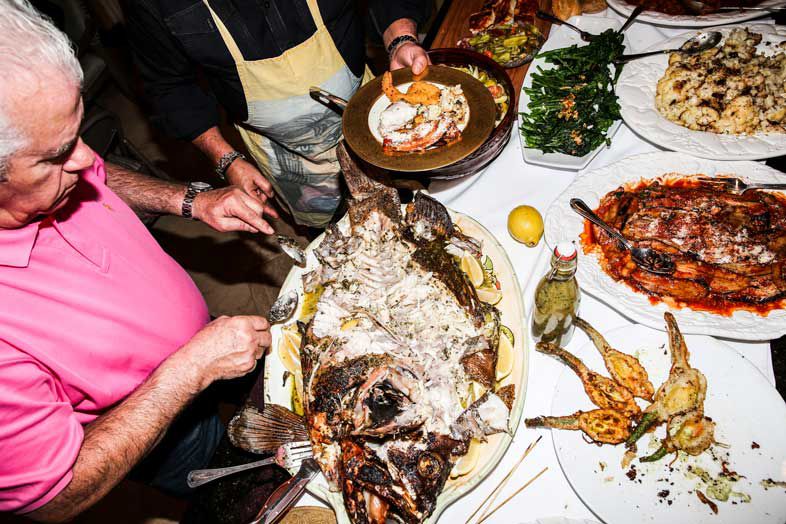
On the outdoor grill at his gated Mission Hills home—with a three-point view of downtown, the airport runway, and, most critically, of Little Italy—lies a whole grouper, scored and slathered with salmoriglio sauce (anchovy, capers, garlic, shallots, oregano, parsley, lemon juice, fresh-squeezed orange, olive oil). He’d like to give you the cheeks, a delicacy for people who truly know and love fish. Since you’re not here, he gives it to me. That’s what Joe does. Joe gives the best parts to strangers. Has been for 42 years.

For example: Within 15 minutes of my being in his home for the very first time, he invites me for Christmas. Not a restaurant opening, or something that would benefit his business by having a writer publicize it. With unrestrained earnestness, Joe announces to his entire family that this stranger is invited to the holiday where they all wear pajamas. And no one bats an eye. Yes, they agree, the stranger should come to Christmas in his pajamas.
The Big Family in Little Italy

The Big Family in Little Italy

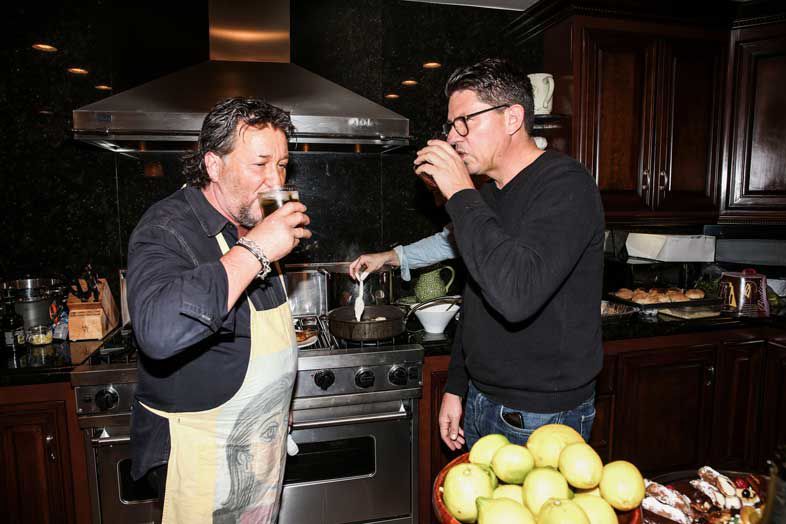
“The most important thing that you don’t get in a lot of restaurants now is the ‘Hi, how you doin,’ lemme buy you a glass of wine,’” says 61-year-old Joe, as he surveys the dozens of dishes assembled in his kitchen, wearing an apron emblazoned with a Picasso print. “You gotta make people feel like a million dollars. Restaurateurs now are doing so many covers and don’t have time. You should make a friend, then make a customer.”

I feel like a friend. Should I show up on Christmas morning, I have no doubt Joe would answer the door and insist I was late.

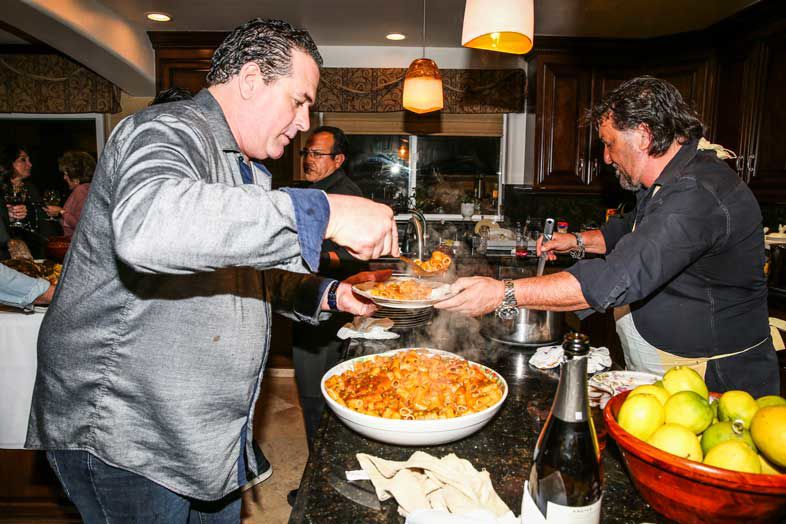
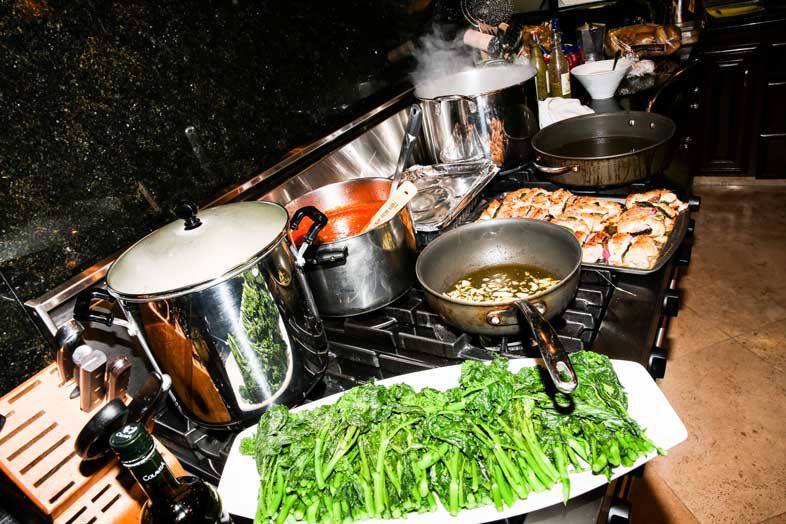
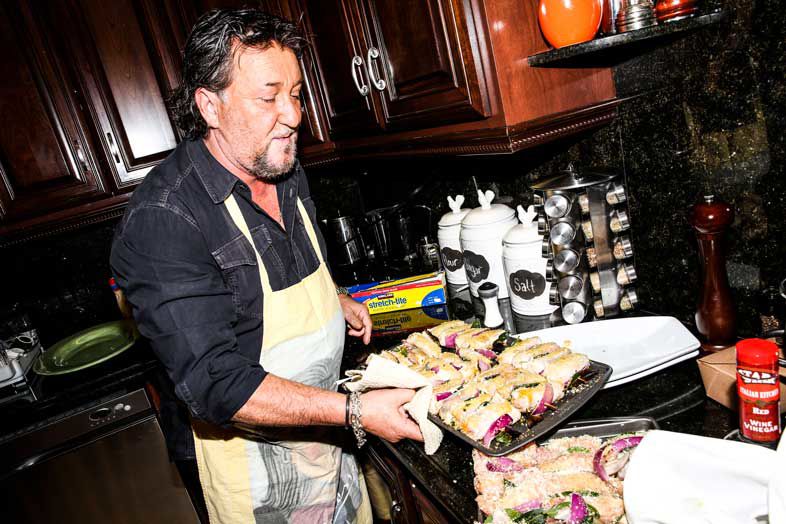
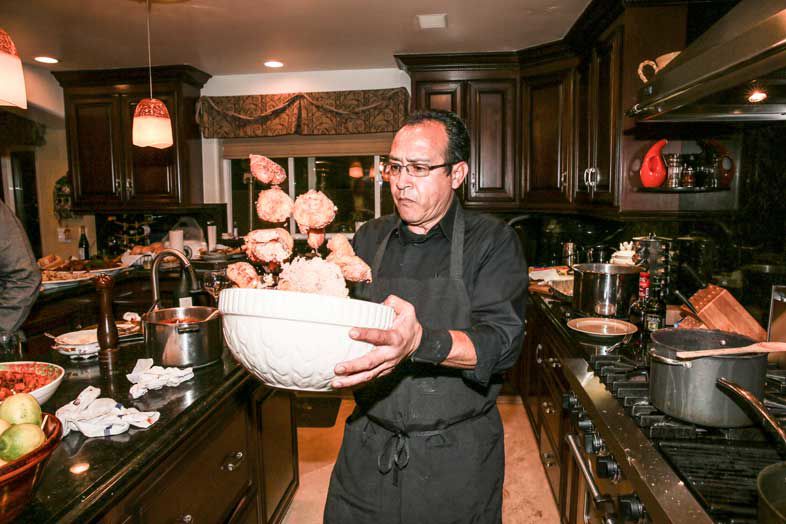
About a dozen Busalacchi specialties are being prepared for this family meal tonight, overseen by no fewer than six family members. Joe’s son Michael helps Cousin Nino monitor the squash blossoms, vibrating in hot oil like a Van Gogh painting of flowers. On another burner, Nonna’s Bolognese sauce lightly simmers (always for at least three hours). Joe’s other sons, PJ and Joey Jr., handle the hospitality, making sure cups are filled, introductions are made, and embarrassing stories are given properly mortifying light.
The Big Family in Little Italy

The Big Family in Little Italy

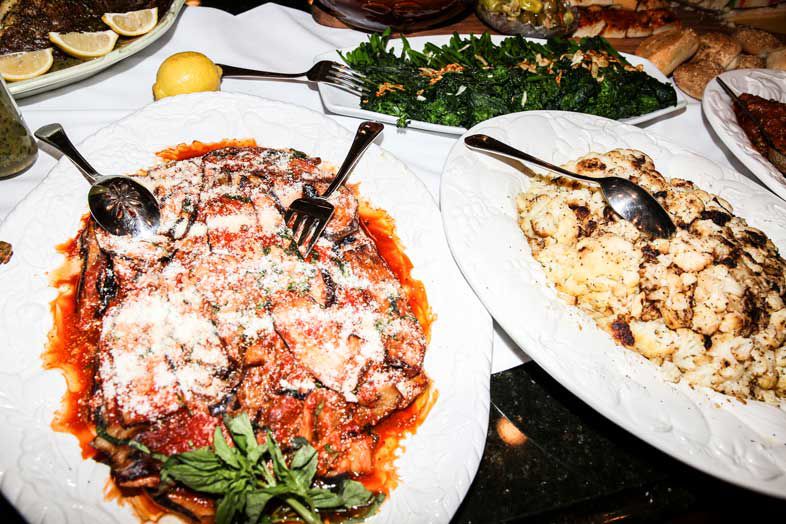
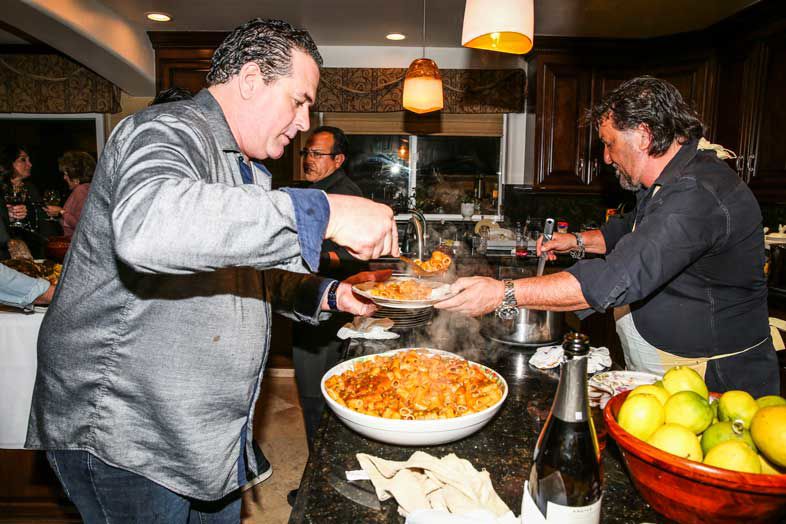
Everyone has brought a plate of food. A typical Busalacchi family meal consists of dishes made by between 20 and 25 Busalacchis. There is someone poking and prodding the spiedini, a Sicilian specialty of ground pork stuffed with bread crumbs, currants, prosciutto, and cheese (“We were the first in San Diego to serve these,” beams Joe’s nephew, Nino, who’s now the chef of their newest Little Italy restaurant, Barbusa). Pendant kitchen lights glint off the fresh orange juice squeezed on razor-thin slices of fennel for the finocchio salad. Sicilian meatballs the size of toddler fists bask in crushed tomatoes flecked with herbs.

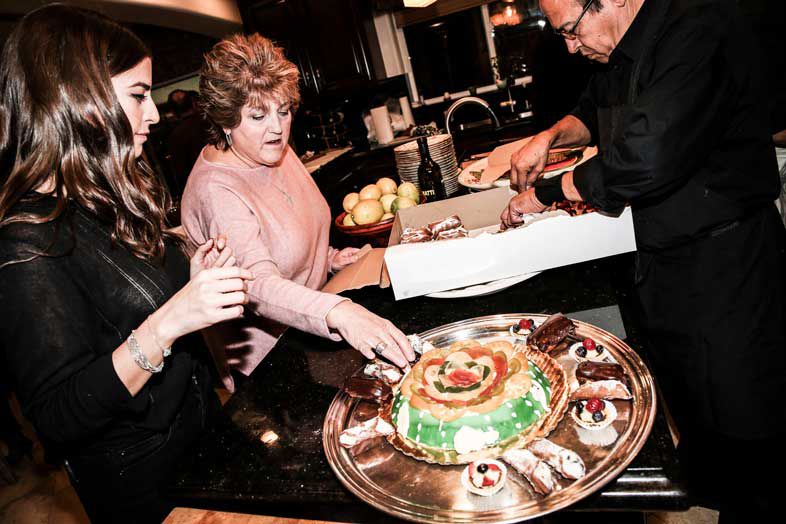
An aunt produces a warm basket of her bread topped with sesame seeds, toasted brown as desert dusk. There are layers of zucchini upon layers of eggplant—”blanched first, so they don’t get so oily,” explains Joe. Sfingi, a gossamer Italian donut is made, tonight and always, by Joe’s sister, Anna. And, of course, there’s cannoli. In Italian, a night without cannoli is called a mistake.

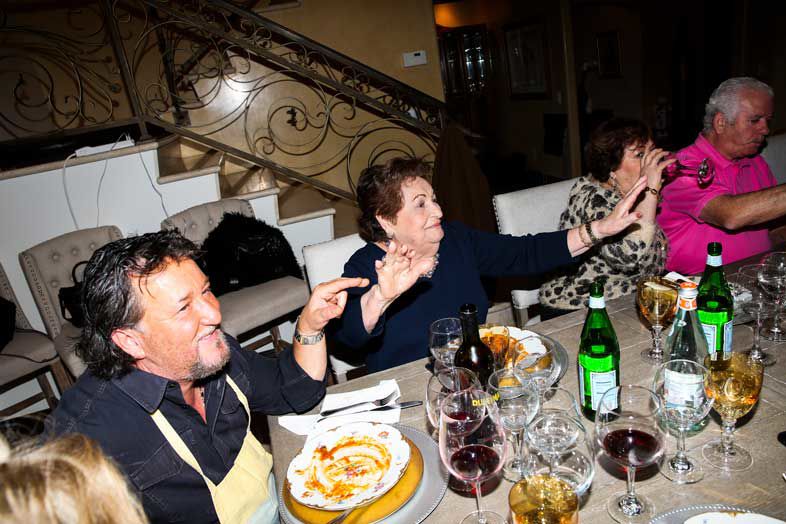
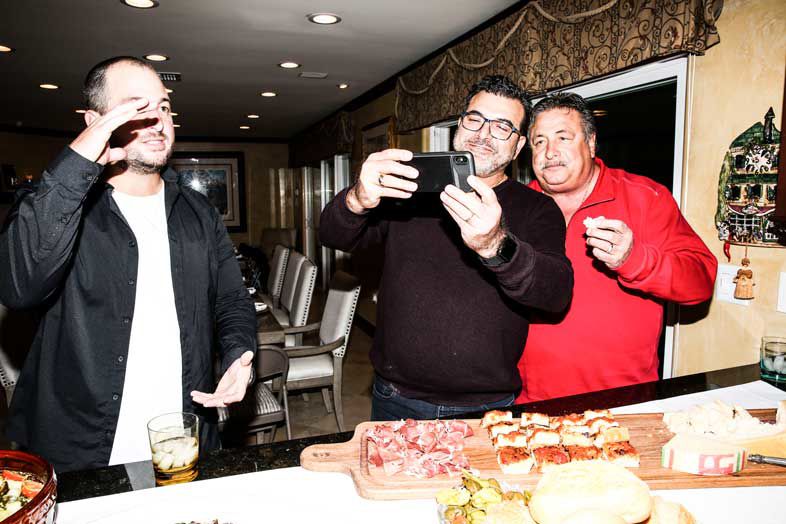
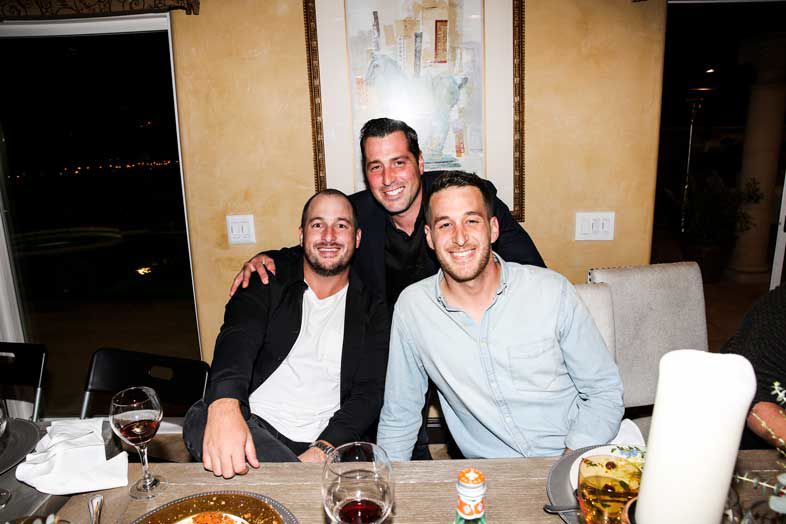
As the dishes are finalized, men gather in the TV room to see a football team that used to play in San Diego and then left the city without ceremony, and are therefore watched with a mix of obligation, habit, and derision. In the corner, a door leads to a modest wine room filled with immodest and sentimental reds. Most of the women converse around a large table outside by the pool. It’s there that my girlfriend asks how they’ll know what time is proper and polite to move inside to eat. “Oh, you’ll know,” a woman laughs. Two minutes later, Nino opens the sliding glass door and yells, “LET’S EAT!” The table must be 30 feet long, an Uber-able distance from end to end. Actually, it’s two tables. When you’re a Busalacchi, you own two tables, just in case family happens. And family always happens. Gold crosses glint from almost every open shirt collar. Each seat is elaborately set with wine glasses, each with a specific purpose (an aperitif glass, a dinner-wine glass, a digestif glass). Italians, much like the French and Russians, have an extensive tool set for dinner. I’m sitting in the center. The room is full of Busalacchis. Nearly 20, for sure. There’s Joe’s three sons, PJ, Joey Jr., and Michael. Joe’s brother Frank, his sons. Then nephews and girlfriends and boyfriends. If you ever need to borrow an aunt or uncle for any aunting or uncling scenario, they’ve got extra. They’re all laughing and spilling family secrets and moaning over the fiori di zucca (those fried squash blossoms, stuffed with four cheeses and topped with apricot jam, one of the standouts at Barbusa).
The Big Family in Little Italy

The Big Family in Little Italy

Our family meal begins when Nonna—Joe’s 87-year-old mother, Christina—serves us the pasta course, as she always does. It’s her celebrated Bolognese, which is on the menu at their other Little Italy restaurant—appropriately named Nonna. Forks twirl and voices climb as a flood of family stories come. The table takes on the roar of the stock exchange floor, with less panic and more bonhomie.

After the pasta course, we take our plates, go to the kitchen, and load up. It’s impossible not to be obscene about this, with a tonnage of food that befits Thanksgivings and last meals. Impossible for everyone except Joey Jr., whose plate is virtually empty. “Oh yeah, that,” he says, a little sheepish. “I don’t really eat. I eat fried food and meat and cheeses, but that’s about it. I don’t think I’ve ever had a vegetable. My dad used to get so mad. He once held up a piece of arugula and said, ‘I swear to God if you eat this right now I’ll buy you a car!’ I didn’t eat it.” Before coming to dinner, I called a handful of restaurant people to ask about Joe. They all said the same thing—good restaurateur, and one funny guy. Real funny. People always mentioned the funny.

“C’mon, dad, show him the video!” begs Joey Jr., plate still empty.
The Big Family in Little Italy

The Big Family in Little Italy

Joe does not want to show the video. But soon the cajoling gets him. He stares down to the head of the table, his shoulders sulk, his face flushes. For the first time that night, he doesn’t look like a self-made restaurateur who helped build both Hillcrest and Little Italy into culinary destinations. He looks like a child with a Bic lighter and a bad idea.

“She’s gonna be so mad,” he says, trying to contain the laughter.

“She” is Nonna, dressed tonight in a proper blue sweater with a significant necklace and earrings.

Joey Jr. produces the infamous family video on his iPhone. His father turns his back to Nonna and reluctantly narrates. They’d finally gotten her a flip phone, he explains. She wanted to program it like a smartphone: press one for Joe, two for brother Frank, and so on. Joe, divining rod of funny, convinced her that these newfangled phones can only be programmed by loudly speaking the person’s name and then banging on a cooking pot with a wooden spoon. Joe had helpfully arranged the necessary materials for her on a kitchen table. The video shows this sweet woman almost screaming the names of her beloveds into the phone and banging with shocking authority on the pot. Like a gong.
The Big Family in Little Italy

The Big Family in Little Italy

When pot banging didn’t work, he convinced her—oh yeah oh yeah sorry Ma I forgot—she has to do it lying down. So the next video is her wearing a conservatively elegant nightgown in bed, loudly proclaiming the names of her grown children into the phone. The poor woman; the good sport. Her fault, though, for raising a Joe.

At this point, Nonna has caught wind that she’s the inspiration for the laughter. She casts a narrow side-eye that is loving and deadly. She quietly mutters something in Sicilian.

No one can hush a roomful of Sicilians like Nonna. With a look or a whisper. Throughout the night, the Busalacchi home is not merely loud, it is a leading cause of tinnitus. Men and women talk over each other, a constant rising and falling of voices. People yell to fill our wine glasses (Joe makes his own wine, called Due Matti). They yell to be heard. In a jumbo-sized family with jumbo-sized personalities, if you don’t yell you might as well be carpet. But when Nonna opens her mouth, the assembled generations zip it. The Busalacchi Earth stops spinning and will return to its regularly scheduled decibels after these important messages.
The Big Family in Little Italy

The Big Family in Little Italy

Someone—an uncle or a cousin or a brother or some stranger who walked in off the street and was welcomed—translates for me: “She said ‘Why you gotta talk about me?” Nonna shakes her head with the kind of annoyed permission parents give when their pride for their children outweighs the crime.

She should be proud. Joe had help from his brother, his ex-wife Lisa (who raised their sons so that Joe could raise the business, often feeding the three young’uns in the restaurants before opening hours), his cousins, aunts, uncles, and eventually his grown sons. But it was mostly Joe who built a restaurant empire that provided for a few generations. And he did it by learning to cook at Nonna’s side when he was knee high.

Nonna and her husband brought the family to San Diego from Sicily when Joe was eight years old. “When I’m telling you they had nothing,” explains PJ, “I mean nothing.”
The Big Family in Little Italy

The Big Family in Little Italy

At age 19, Joe was hired as the chef for one of San Diego’s tuna boats. At the time, the city’s tuna boats were the equivalent of floating Google campuses—more or less economic juggernauts. Usually, boat cooks were ad hoc parents who cleaned, did dishes, mopped, and grunted through the necessary and unwanted work. Joe was so good, his brother explains, the crew didn’t make him do any of that.

“I used to take about 50–60 cookbooks out fishing and read all day,” Joe explains. “All I had to do was make a call and they’d deliver me fish to our house. And they let me have access to the wine locker.”

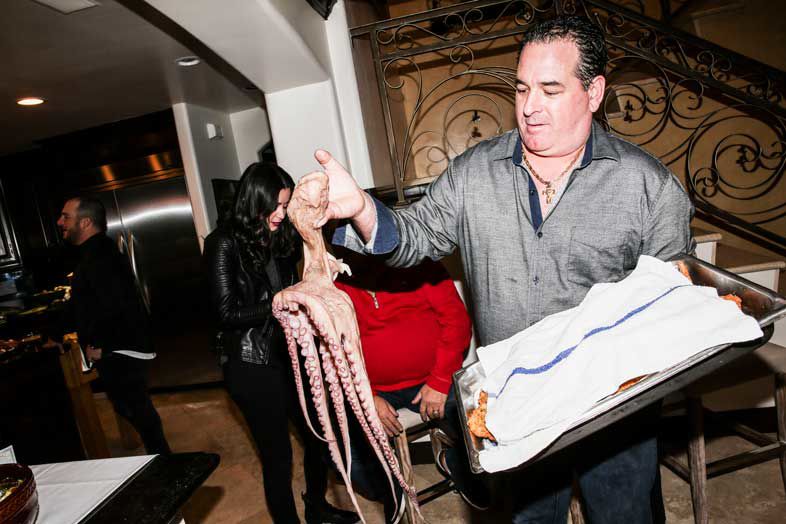
He opened his first restaurant 35 years ago in La Mesa at Grossmont Center, Casanova’s Pizza. That same year, with his fishing contacts, he opened Busalacchi’s Fish Company. Two years later, in a converted Craftsman home in Hillcrest, he christened the restaurant that would make his name—Busalacchi’s on Fifth. The dishes, largely based on Nonna’s recipes and tweaked with Joe’s expanding talent, were a revelation. But it was bittersweet, because San Diego diners at the time weren’t adventurous. “I used to get so sick of people saying, ‘You make the best fucking lasagna in the world,’” Joe grouses. “I didn’t want to make the best fucking lasagna in the world.” He wanted to serve them Sicilian specialties like calamari, or octopus with lemon (which, at family dinners, is always served as a late-night snack and always, always cut by Uncle Frank Z.). “I couldn’t get fettuccine alfredo off the menu,” he grumbles.
The Big Family in Little Italy

The Big Family in Little Italy

Busalacchi’s on Fifth—which moved one block away and was renamed Busalacchi’s A Modo Mio in 2011—lasted as an icon for 24 years. When the lease was up and the landlord’s new terms were too steep, Joe opted to close it. This became a recurring theme. When faced with a spike in rent, many owners often just pay it, because that particular patch of earth is the birthplace of so many emotions. Joe crunches the numbers. If those numbers don’t pencil out, he cuts bait and opens somewhere they do. He had already made inroads in Little Italy, opening Trattoria Fantastica and a bakery called Cafe Zucchero in 1994 and 1995, respectively. (Joe’s brother Frank went to Sicily, studied Italian pastry, and returned to help open Zucchero). At that time, the price per square foot in Little Italy was 99 cents. Now it’s eight dollars.

“Tell them about the bullet holes, Dad,” urges Joey Jr. as we sit outside after dinner, cigars aflame.

“It was a ghetto,” Joe admits. “Seven thirty, eight o’clock it was dead. I’d love to say I saw what Little Italy would become, but I had no idea. It was just so affordable.”

“We used to have to put things underneath the patio tables because the sidewalks slanted down toward the street,” Joey Jr. remembers.

“You could lay in the middle of India Street and never get hit by a car,” adds Nino. “The lease was a single piece of paper.”
The Big Family in Little Italy

The Big Family in Little Italy

Joe was one of the independent business owners who changed that, by taking a chance on Little Italy. Landlords wanted a Busalacchi joint. Joe’s food and jokes de vivre made people come, which made landlords’ buildings more valuable. They offered him rent for proverbial pennies. At one point he had six concepts in the neighborhood, from Grape Street to Cedar.

“I couldn’t say no,” he says.

Then Little Italy exploded. Craft & Commerce, Prepkitchen, Bencotto, Underbelly, Café Gratitude, Born & Raised, Ironside—all the hip restaurants arrived. Rent went up, way up. Between 2015 and 2017, he sold or reconcepted seven restaurants, five in Little Italy alone. From an outsider’s perspective, the Busalacchi starshine seemed a little dusty.

“It wasn’t that we lost it,” explains Joe. “We were done with the leases. I sold one of them to one of the managers who worked with me. I wanted to give him an opportunity. And so we concentrated on coming back, all hands on the one idea.”
The Big Family in Little Italy

The Big Family in Little Italy

That idea was Barbusa. The lease for his steakhouse restaurant, Po Pazzo, was up. He wanted out. His sons wouldn’t let him, at least not without a fight. PJ and Joey Jr. wanted to take Dad and Cousin Nino’s food and put it in a more modern setting. Ditch the white tablecloths, the formal service, the classic—and possibly outdated—earmarks of restaurant culture Joe made his name on.

“We fought with him over every little thing—decor, music, the food,” says PJ.

“I was coming from the old school with the linens and tiles or carpet,” says Joe in his defense. “They had all these big changes, of concrete floors and no linens, different-style chairs, mix-matched spoons. I was like, ‘Wow, what’s goin’ on here? You guys are crazy.’ But apparently they were right and I was wrong.”

It worked. Barbusa, which opened in 2016, is a hit, arguably Busalacchi’s biggest in a decade. PJ and Joey Jr. run the front of the house, trying their best to make strangers feel the same way I, a stranger, feel in their home tonight. Father Joe oversees it all. There are plans to open more Barbusas outside of Little Italy, maybe even in other cities.
The Big Family in Little Italy

The Big Family in Little Italy

“I’m still at the restaurants at six in the morning,” says Joe. “I still check the sauces and prep some. But I’m all over the place. I’m consulting with my kids, keeping them on their toes, changing menus, and handling the business end of it. You might see us at the edge of a table, fighting.”

It’s 42 years in the making, this Busalacchi thing. And the boy who worked on a tuna boat at age 19, who opened a pizza joint with a few bucks and a dream, is watching the second wave carry the name.

Near the end of the night, I look down at Nonna in her spot at the head of the table. She hasn’t moved. That is her place. The cook who started it all.


Cook Like a Busalacchi

San Diego’s first family of Italian food shares three hallmark recipes passed down through the generations, including Nonna’s famous Bolognese. Mangia!
The Big Family in Little Italy

The Big Family in Little Italy

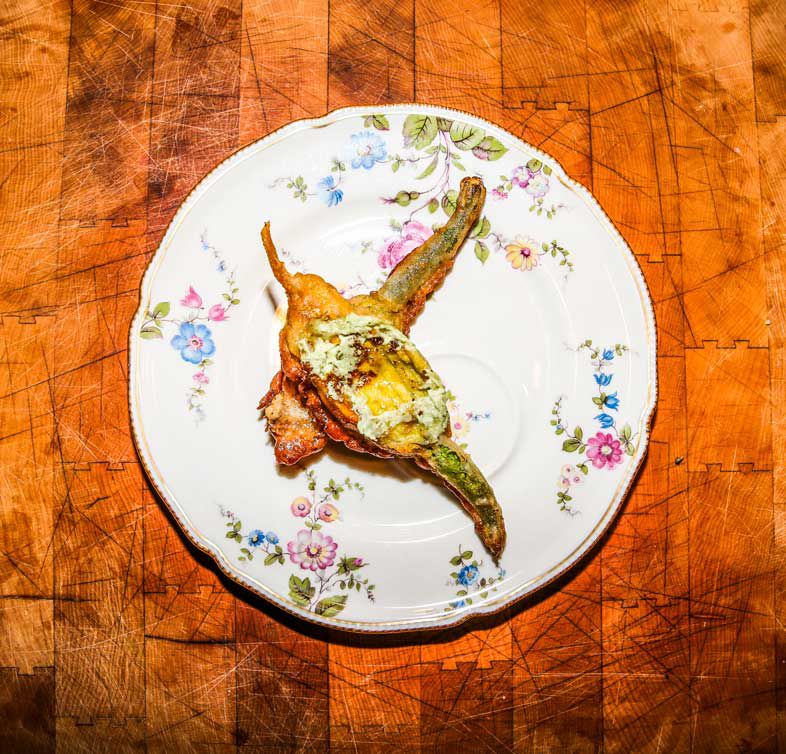
Fiori di Zuccha

“Squash blossoms are an ingredient that intimidates many people but, in reality, are very easy to work with,” says Barbusa Executive Chef Nino Zizzo. They are a great example of a fresh dish that you can change up by experimenting with different stuffings according to your preference, and they will consistently impress your guests.”

Serves 6

Prep time: 10–15 minutes

Cook time: 2–4 minutes per blossom

Ingredients

Filling:

6 squash blossoms

¼ cup mascarpone cheese (can substitute cream cheese)

2 tablespoons Parmesan cheese

¼ cup mozzarella cheese

1 teaspoon chopped shallots

Pinch of salt

Pinch of pepper

Sauce:

¼cup apricot preserves

½teaspoon Calabrian chilies, minced

½teaspoon serrano chilies, minced

Batter (can substitute store-bought tempura batter):

1 cup flour

¼ cup corn starch

1 egg

Sparkling water to preference

Directions

Filling:

1. Combine all ingredients (except squash blossoms) in a large bowl.

2. Roll into small balls, then stuff each squash blossom to capacity (will depend on blossom size).

Batter:

Combine all ingredients in a bowl, using enough water to achieve preferred consistency.

Sauce:

Combine all ingredients in a bowl and plate under the blossoms.

Blossoms:

1. Once stuffed, pat the blossoms in flour, then dip in the batter.

2. Heat your skillet with oil or heat the fryer to 375 F.

3. Fry each blossom until golden brown, about 1–2 minutes on each side.

4. Plate the squash blossoms over the sauce.
 

The Big Family in Little Italy

The Big Family in Little Italy

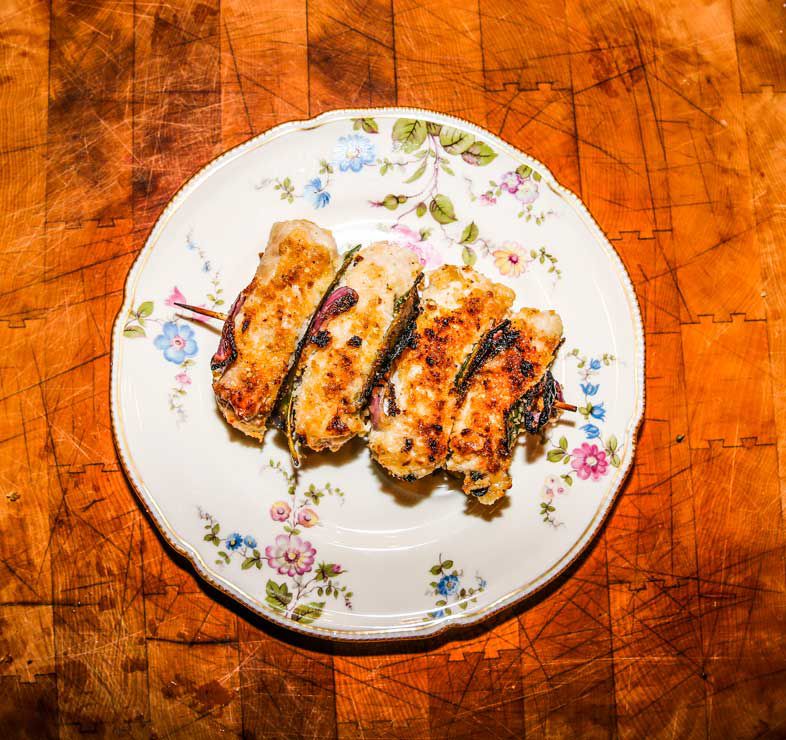
Spiedini

“Spiedini are a traditional Italian dish historically reserved for holidays and special occasions,” Zizzo says. “Whether it’s Christmas, Easter, or a family member’s first communion or reconciliation, the whole family gets together and participates in the preparation.”

Serves 4

Prep time: 45 minutes–1 hour

Cook time: Varies according to preference

Ingredients

Stuffing:

½ sweet onion

2 bunches of green onions

½ cup olive oil

⅛ pound salami

⅛ pound prosciutto cotto (ham)

⅛ pound pecorino Romano cheese

⅛ pound mozzarella cheese

1 teaspoon black currants

1 teaspoon pine nuts

½cup tomato sauce

Panko breadcrumbs

1 sprig Italian parsley

Salt and pepper to taste

Meat:

2–2 ¼ pounds pork or veal, cut into 2 ounce medallions (4–5 medallions per skewer)

1 red onion, slivered

20 bay leaves

Extra virgin olive oil

Panko breadcrumbs

Directions

Stuffing: 

1. Chop onion and green onion into slices the width of a quarter.

2. Sauté the onion and green onion in olive oil, then transfer to a bowl.

3. Chop the salami, prosciutto cotto, pecorino Romano, and mozzarella and add to mixture.

4. Add in black currants and pine nuts, then mix in tomato sauce.

5. Add Panko breadcrumbs until the mixture becomes doughy.

6. Add parsley and salt and pepper to taste.

Meat:

1. Place meat medallions on plastic wrap and pound until thin.

2. Take a generous dollop of stuffing, roll it up, and place on meat.

3. Using a three-tuck fold, roll the stuffing up in the meat.

4. After they are rolled, place 4 to 5 portions of meat on each skewer, inserting a sliver of red onion and 1 bay leaf between each portion

5. Dip both sides of the loaded skewer in extra virgin olive oil, and roll the skewer in Panko breadcrumbs.

6. Barbecue the skewers on the grill, cooking to preference and until cheese in the middle has melted.
The Big Family in Little Italy

The Big Family in Little Italy

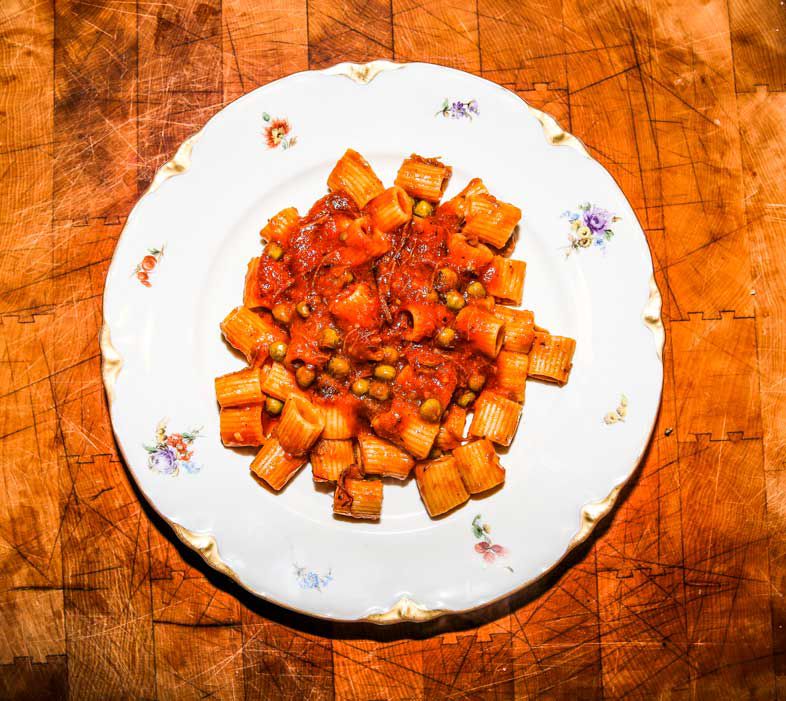
Nonna’s Bolognese Sauce

“Our Bolognese aims to instantly bring back the memories of walking into Nonna’s kitchen for Sunday family dinner,” Zizzo says. “The recipe comes directly from our grandmother and serves as a reminder of simpler times with a great meal and family.”

Serves 4

Prep time: 30 minutes

Cook time: 1 hour

Ingredients

1 white onion

1 large carrot

2 stalks celery

¼ pound pancetta

3 garlic cloves

½ cup olive oil

1 ½ pounds ground beef

1 pound Italian pork sausage

2 tablespoons salt

1 teaspoon black pepper

1 cube beef bouillon

24 ounces tomato paste

½ cup whole milk

1 gallon water

2 cups green English peas (sweet peas)

Directions

1. Mince the onion, carrot, and celery in a food processor.

2. Add the pancetta and garlic, then transfer to a large pot and sauté in olive oil.

3. Add the ground beef and sausage, then add salt, pepper, and the beef bouillon.

4. Once the meat has browned, add in the tomato paste.

5. Mix well, then add in milk, water, and peas.

6. Cook on low heat for one hour.

7. Depending on desired consistency, add more water or cook for longer.
The Big Family in Little Italy


Subscribe to our newsletters

Select Options

By subscribing you confirm that you agree with our Terms and Conditions and Privacy Policy.

Food & Drink JULY 10, 2026

San Diego’s Tiniest Cookbook Shop Is Hidden Inside a Garage

Patine packs new and used cookbooks, hard-to-find ingredients, and fresh-baked goods into a one-car garage—and a much bigger storefront is coming soon

San Diego’s Tiniest Cookbook Shop Is Hidden Inside a Garage
Courtesy of Patine

There are two types of people: those whose cookbooks remain clean and crisp, and those whose cookbooks are dog-eared, stained with flecks of oil and butter, and graffitied with handwritten notes scrawled on each page. 

Courtney Geilenfeldt falls in the second group. Sure, it’s easy to go to TikTok or Instagram to figure out what to cook on any given day. “But there’s something about a physical, analog book, where you can see the photos and get pasta sauce splattered on it,” she says. “I just have always loved that.” 

In the spirit of sharing that love, earlier this year Geilenfeldt opened Patine, a cookbook micro-shop and grocery with an itty-bitty selection of curated goods. And when I say micro-shop, I mean it literally—she runs it out of her one-car garage in University Heights that’s too small to even fit her car.

What she lacks in square footage, she makes up for with unique offerings. “If I know that there’s this very specific ingredient in a cookbook that I’ve had to hunt down, then I will try to have that in the shop to just make it a little bit easier,” explains Geilenfeldt. Patine’s shelves are lined with items like specialty beans, a handful of wines, and fresh baked goods like loaves of sourdough, but the main attraction is her collection of new and used cookbooks on cuisines ranging from the Caribbean to Japan. 

Her garage shop is only a placeholder. Later this year, Patine will open as a brick-and-mortar on Fifth Avenue and Nutmeg Street in Bankers Hill, across from Heavenly Bodega. That space will be “much, much bigger,” she promises, with an expanded selection of books and goods, plus space for cooking classes, author events, book club meetings, and other events. 

The educational-plus-retail approach is something she missed from her years in Seattle, where bookshops like Book Larder have been combining the two since 2011. Although Geilenfeldt is a San Diego native, the Pacific Northwest is where she really began to cut her teeth in the world of professional baking. From there, she bakery-bopped to Germany, where she learned the art of European-style baking and embraced the more methodical, slowed-down culture. 

“‘Patine’ is the French word for patina,” she explains. Items only acquire patina, or a polished look of something well-used and cared for, over years. It’s not something you can fake or make new, and it was the idea that inspires her in both baking and business. 

That’s not to say Geilenfeldt doesn’t create new things. Actually, quite the opposite—she’s launched a micro-bakery cottage food business, hosted a supper club series, worked as a recipe writer, food stylist, private chef, pop-up host, book club host, and pretty much every other food-related entrepreneurial route you can think of. And if everything falls into place, Patine’s future storefront will open in August or early fall, bringing people together for the love of food and each other.

Patine’s micro-store currently operates at 4673 Alabama Street in University Heights. Check Instagram for current hours of operation. 

Courtesy of Nobu del Coronado

San Diego Restaurant News & Food Events

Beth’s Bites

  • Neptune may be the tempestuous god of water, but even his famously volatile temper can be soothed with a plate of fresh sushi. (I’m just guessing, I’ve never spoken to him personally.) His namesake restaurant, Neptune Sushi, opens this summer (or maybe fall, you really never know) at 3015 Adams Avenue in the former Tajima space. One of Neptune’s partners, Michael Harrison, says guests can expect a modern interpretation of temaki-style hand rolls with locally caught fish, utilizing influences from Asia and Latin America alongside San Diego. The team isn’t ready to announce many details yet, but the 1,500-square-foot space fits around 60 guests and Harrison says there will be table seating, plus multiple sushi bars. “We do have plans to expand the Neptune concept in the future,” he says, so may the gods be with them.
  • At long last, New Wave Bagel is ready to serve its signature bagels alongside breakfast and lunch sandwiches, open-face toasts, pastries, and full espresso bar starting on Saturday, July 18. Baker and co-owner Cheryl Storms says they’ll finally be able to fulfill one long-requested update: toasting bagels. “We’ve gotten a lot of flack for not being able to toast bagels this whole time,” she says. (It’s a pop-up! There are limits!) “On the 18th, that changes—we will be able to toast all bagels all the time.” New Wave will be open Wednesday through Sunday from 7 a.m. to 2 p.m. with Tuesdays coming soon. 
  • If you can’t wait for Neptune, there’s always Nobu. Nobu del Coronado is one of the best-known upscale sushi chains in the world, and now, you can get a bento box full of goodies for $70. Grab a Summer Bento Box Lunch special between noon and 3 p.m. daily and get a Matsuhisa salad, three pieces of tuna, chef’s choice for three pieces each of uramaki and nigiri, rock shrimp tempura, and the iconic miso black cod, plus steamed rice and vegetables tossed in a spicy garlic sauce. Considering the black cod miso dinner portion costs $65 by itself, this is legitimately a pretty good deal (IMHO). Plus, those Coronado views!

Listen Now: The Latest in San Diego’s Food and Drink Scene

Have breaking news, exciting scoops, or great stories about new San Diego restaurants or the city’s food scene? Send your pitches to [email protected].

Beth Demmon

About Beth Demmon

Beth Demmon is an award-winning writer and podcaster whose work regularly appears in national outlets and San Diego Magazine. Her first book, The Beer Lover's Guide to Cider, is now available. Find out more on bethdemmon.com.

Food & Drink JULY 8, 2026

Ina Garten Inspired This SD Baker to Open His Own Pop-Up

After a childhood obsession with the Barefoot Contessa and years in Michelin-starred kitchens, Juan Lopez is bringing Poppy Bakeshop to Liberty Station

Ina Garten Inspired This SD Baker to Open His Own Pop-Up
Courtesy of Poppy Bakeshop

It wasn’t his mother who inspired Juan Lopez to start baking. Nor was it pandemic boredom. It was Ina Garten. Lopez remembers it clearly—he was in third grade, watching TV at home in San Diego when the Food Network’s Barefoot Contessa appeared on the screen. She was in Paris, France, making profiteroles, which are essentially French cream puffs. He’d never seen them before. “That stuck with me forever,” Lopez says. 

Forever, or at least present day. It was enough inspiration for him to launch his own pop-up bakery this June: Poppy Bakeshop, which now appears every weekend from 7 a.m. to 12:30 p.m. (or sellout) at Moniker Coffee in Liberty Station. 

But let’s not fast-forward how he went from a third-grader to burgeoning bakery entrepreneur. After falling under Garten’s spell—I mean, who among us hasn’t at one point or another—Lopez decided to try his hand at making cookies, which proved equal parts satisfying (making something from scratch) and frustrating (not actually knowing what on Earth he was doing). But that itch never went away through high school, when he decided to pursue culinary school. But before enrolling, prospective students had to complete a six-month internship in a professional kitchen.

So Lopez went to the first French restaurant he ever visited—Cafe Chloe in East Village, where chef Katie Grebow took him under her wing. School didn’t pan out, but his education was just beginning.

In the early 2010s, San Diego’s culinary scene was still an afterthought on the national scale. Lopez recalls Grebow encouraging him to move to San Francisco to really hone his skills. “I was 18 and was like, ‘Well, I’ve got nothing else to do,’” he laughs. He walked into the one Michelin-starred La Folie in the Russian Hill neighborhood, resume in hand, and asked chef Roland Passot for a job. He started the next day.

After a few years in San Francisco, he returned to San Diego with the intention of moving out of restaurants and focusing on perfecting the foundations of pastry. After stints at Con Pane Rustic Breads, Herb & Wood, and Hommage Bakehouse, he landed at Wayfarer Bread & Pastry in 2023. 

The Bird Rock bakery was already well on its way to national acclaim—it was named one of the best 100 bakeries in America by Food & Wine Magazine in 2020, not to mention the Critic’s Pick for “Best Bakery” by San Diego Magazine in 2022, 2024, 2025, 2026, runner-up in 2023, critic’s pick and runner-up in 2021, and then I stopped counting (because I’m pretty sure we all get the picture). 

He still works part-time at Wayfarer while growing Poppy, but Lopez says he hopes to increase his pop-up schedule and collaborate more with other local makers. “The ultimate goal is to get a storefront,” he says. Normal Heights would be ideal, but he’s flexible on location and timeframe. 

One thing he’s not flexible on is boxing himself into one type of pastry or flavor profile. “I really want Poppy to be this overwhelming abundance of items with different colors and different textures… I don’t want to be known for one thing,” he says. French-inspired, Mexican-influenced, and yes, even taking cues from the fashion industry. Take his plum cornbread, for instance. It’s an homage to Belgian designer Dries Van Noten’s vibrant palette. 

“They had this one outfit that had this very, very bright kind of burgundy with this khaki-ish color. Then I went to the farmer’s market, and one of my favorite farmers, Heritage Family Farms, they had these gorgeous, gorgeous plums, and I was like, ‘Well, those are literally the color of that.’” The result? A sweet slice of rich reddish-purple plum cake. 

He also draws inspiration from his own family. Every year, he makes coffee cake for Mother’s Day. Cinnamon rolls for Christmas. Basically, anything and everything that makes it onto his shelves is “based on what I’m craving,” Lopez laughs. 

And he’s ready to share his cravings with you. “I’ve had so many bad days, and so many of them have been made better through pastry or through food,” he says. “I think as long as everyone just takes the time to just really enjoy what’s in front of them, that’s kind of all I hope for.”

Courtesy of Good Pressure Brewing

San Diego Restaurant News & Food Events

Beth’s Bites

  • Partnering with Bay City Brewing Company and the Center for Plant Conservation (CPC), the ecologically-minded Good Pressure Brewing just brewed an American Wheat Beer using 100 percent California-grown barley to raise money for the plant preservation program. The 20bbl batch will be available at the Mission Gorge taproom the week of July 13, with a yet-to-be-announced release event featuring CPC reps on hand to talk about their efforts. That’s about as easy-drinking as a beer style can get, and with some plant power supporting the initiative, it’s a no-brainer to swing by. 
  • For as many coffee shops San Diego has, there’s only a small number of tea houses that really focus on a genuine tea experience. (We see you, Paru.) But Chagee Modern Teahouse just soft opened its first location in the county at Westfield UTC, which will be followed by a second location at the new Zion Market later this year. Based on early reports, paying a visit to the whole leaf milk tea maker just might be worth dealing with the new parking costs at the mall. 
  • Every summer break, around 240,000 K-12 students across San Diego County lose access to school-provided meals. That’s around half of the total number of students enrolled across the entire county, so yeah, it’s a problem. For the sixth year, Regents Pizzeria in La Jolla partnered with Feeding San Diego to launch the chunkily-named, but uber-generous “Dough-nate to Fuel for Summer” campaign. Following the “buy one, give one” model, the pizzeria will donate one meal to Feeding San Diego for every meal purchased through July, as well as matching any customer’s donations. I’m always happy to eat a slice of ‘za, but if I can make sure others can too, that tastes even better.

Listen Now: The Latest in San Diego’s Food and Drink Scene

Have breaking news, exciting scoops, or great stories about new San Diego restaurants or the city’s food scene? Send your pitches to [email protected].

Beth Demmon

About Beth Demmon

Beth Demmon is an award-winning writer and podcaster whose work regularly appears in national outlets and San Diego Magazine. Her first book, The Beer Lover's Guide to Cider, is now available. Find out more on bethdemmon.com.

Food & Drink JULY 7, 2026

San Diego’s Filipino Food Revolution Continues

Along with other Filipino culinary icons, Ashley del Rosario is making Filipino pastries a category of their own

San Diego’s Filipino Food Revolution Continues
Courtesy of Ashley del Rosario

Baker Ashley del Rosario estimates she makes five people cry every day. It’s not because she’s some salty old grump. In fact, del Rosario is such a delight to talk to that we ended up chatting in the sunshine for 20 minutes after my two-hour parking meter ran out. (I got lucky—no ticket!) It’s because her baking philosophy, which centers around spotlighting her culture as a Filipina-American and using some of her mom’s recipes as inspiration, seems to uniquely touch a nerve in her community.  

“People message me every day saying… ‘Oh my God, my mom loves your stuff. Oh my God, this made me so emotional. This reminds me of my childhood,’” she says. “I must be doing something right.”

We’re sitting outside at Michi Michi in Bankers Hill, where she finished up a two-month residency as the in-house guest baker on June 30. Her menu of Filipino-inspired pastries feature ingredients like mango, ube, pandan, calamansi, and taro leaves in items like French croissants and Italian maritozzos. But she’s also pushing flavor boundaries with pastries like a champorado tart, a Filipino chocolate rice pudding topped with a dollop of anchovy paste. 

Love it or hate it, to del Rosario, the point is that she introduced champorado to a new audience. “If you don’t like Filipino food, or you’re not interested in it, or you don’t even get it… you [still] came into this bakery and you saw Filipino desserts,” she says. So the next time you come across champorado, your brain will already recognize it and hey, maybe you’ll give it a try. 

San Diego is home to the fifth-largest Filipino population in the United States, with enclaves in Mira Mesa, National City, southeast San Diego, and Chula Vista. That’s led to a rise in popularity of Filipino food in San Diego, as well as across the country

In 2021, Phillip Esteban—San Diego Magazine’s “Chef of the Year” in 2020—opened the first location of his fast-casual Filipino concept White Rice, which now has locations in Normal Heights and Sorrento Valley. Kristin Cleavinger’s coffee and matcha pop-up One of One draws inspiration from her own Filipina-American heritage. Tara Monsod, executive chef at Animae and Le Coq, is a three-time semifinalist for Best Chef in California by the James Beard Awards and one of the leading champions of Filipino-American cuisine. She was also del Rosario’s boss at her first kitchen job, which was doing pastries at Animae. (Nothing like jumping straight into the fire!)

Del Rosario says Monsod became a cultural and culinary mentor, pushing her to explore new and bigger opportunities. When she got the chance to study at the illustrious Italian Culinary Institute in Calabria, Italy, Monsod encouraged her to go. It changed del Rosario’s life—so much so, she’s moving to Italy later this year to continue honing her pastry skills. 

In the future, she says she hopes to split her time between Italy and San Diego, continuing collaborations and pop-ups while developing what she sees as an entirely new lane within pastry: Italian pastry technique with distinctly Filipino flavors. 

Italian pastry technique is different from classic French. Take croissants, for example. The Italian version, called cornetto, is often filled with creams, jams, or savory fillings, and tends to feel softer than its buttery, flakier French counterpart. They’re also more regionally driven, with different areas utilizing local specialties like citrus for the filling—an ideal vehicle for launching a Filipino-fusion creation. 

There are plenty of globally-inspired bakeries in San Diego with their own specialties—Azúcar in Ocean Beach is Cuban, Su Pan offers traditional Mexican pastries, and Asa Bakery is modeled after Japanese kissaten cafés. There are even a number of local Filipino bakeries like Valerio’s 1979 (formerly Valerio’s City Bakery), Kababayan Bakery, and Starbread Bakery. But a Filipino-Italian bakery? Not yet. And even if there were, del Rosario says the more, the merrier. 

“There is no competition,” she says. “It’s just showing our culture.”

San Diego Restaurant News & Events

Beth’s Bites

Beth Demmon

About Beth Demmon

Beth Demmon is an award-winning writer and podcaster whose work regularly appears in national outlets and San Diego Magazine. Her first book, The Beer Lover's Guide to Cider, is now available. Find out more on bethdemmon.com.

Studio S JULY 7, 2026

Xplosion Box: A Customized Keepsake Your Loved Ones Won’t Forget

A customized memory-filled explosion gift box is a creative way to show someone you care

Xplosion Box: A Customized Keepsake Your Loved Ones Won’t Forget
Hero image – Birthday Explosion Gift Box

Finding a gift that feels truly personal can be surprisingly difficult. In a sea of generic options — flowers, gift cards, candles, and the like — Xplosion Box offers something more lasting: a customized keepsake built around the photos, messages, and memories that matter most. 

Founded by Southern California entrepreneur Jay Vijay, Xplosion Box LLC creates fully customized explosion gift boxes that arrive professionally designed, printed, assembled, and ready to gift. Each box opens layer by layer to reveal personal photos, heartfelt messages, pull-out albums, origami-style photo pockets, and hidden notes, turning a simple gift into an emotional reveal. 

The brand was built for people who want to give something meaningful without spending hours printing photos, cutting paper, folding cardstock, or assembling a DIY project. Customers simply choose a box, upload their favorite photos, add personal messages, and the Xplosion Box team transforms those details into a polished keepsake that feels thoughtful, personal, and beautifully made.

Xplosion Box offers personalized gift boxes for birthdays, anniversaries, weddings, graduations, Mother’s Day, Father’s Day, Valentine’s Day, Christmas, proposals, bridesmaid gifts, long-distance relationships, and thoughtful “just because” moments. 

Customers can choose from flexible customization options starting at $27. The Mini Surprise Box includes 10 photos, three message cards, and one hidden secret note, while the Mega Surprise Box offers a fuller keepsake experience with 40 photos, three message cards, and one hidden secret note. 

What sets Xplosion Box apart is its high level of customization combined with convenience. Filled with personal photos, custom text, decorative details, and layered surprises, each box gives customers the freedom to create a gift that feels one-of-a-kind — without having to make it themselves. 

At its core, Xplosion Box helps people turn favorite photos, stories, and words into something tangible: a keepsake that can be opened, revisited, and remembered long after the occasion has passed. asion has passed.

Partner Content
Food & Drink JULY 7, 2026

Review: Alchemy – Choose Thy Poison

The Mexican restaurant continues the Barrio Logan tradition of art in unexpected places

Review: Alchemy – Choose Thy Poison
Photo Credit: Dee Sandoval

I’m sitting in a slab of concrete under a freeway, eating a ceviche black as eyeliner.

There might be seven seats in this restaurant. Or maybe it’s 12 minus five. That area under the stairs might also be a couple seats, or it might just be a very inviting storage area with a flower vase. The restaurant is so small your core instinct is to count seats and tabulate if Alchemy – Choose Thy Poison is a real place with a sane business plan or if it’s a social art project designed to question the reality of restaurants and business plans.

There’s a large, floor-to-human-height window near our table. Through it, I notice someone didn’t make their bed this morning. It’s a decision I deeply empathize with. It’s moments like this that make you acutely aware that Alchemy is also technically the courtyard of a six-room micro-hotel called Narcissus. Not the kind of massagey boutique hotel you’re thinking of with soft woods, obscene amounts of linen, and opinions on bonsai therapy. It’s a near-Brutalist cube of base industrial materials—concrete and acrylics bent and molded into a series of alcoves, with pods to sleep in. Sculptures lie behind glass like Tilda Swinton circa 2013.

The window to the unmade bed forcibly crams light voyeurism into the dining experience. The hotel and Alchemy feel like the parts of Mexico I love the most. Although Mexico has its multimillion-dollar restaurants, a vast majority of the best street-level places feel like you’re temporarily recreating in a very lovely construction project.

Alchemy’s location is what most people comment on (“I can’t believe a place like this exists on a block like this.”)—jammed at the bottom of the freeway embankment on the northeast side of Barrio Logan. But that makes it distinctly Barrio, the historic cradle of San Diego’s Hispanic and Chicano culture. The I-5 freeway was built through Barrio in 1963—a fairly traumatic gashing of the neighborhood—and residents responded by painting epic murals on the ugly concrete belly of eminent domain. Where some would’ve just accepted the industrial blight, locals saw shade for a park. There is a deep history here of turning concrete into art, and Alchemy carries that on.

Photo Credit: Dee Sandoval

The vision for the property came from owner Benjamin Longwell, whose company—The Society of Master Craftsmen—sounds like it wears a monocle. Longwell is part of the new guard of developers who focus on urban infill. Instead of adding to the city sprawl, they find unused or underutilized parcels of land in established neighborhoods, then build creative mixed-use spaces that, in perfect scenarios, add something of value for locals.

I’m not making a case for architectural sainthood, but there isn’t a huge list of developers who would look at the line of cars exiting the freeway in front of Alchemy and think, “We must build here.” So in that sense, Narcissus and Alchemy feel additive to the community, not extractive.

I stare back at Alchemy’s ceviche negro, a glossy mound of halibut that looks inspired by the La Brea Tar Pits or melted vinyl records. Chef-owner and Mexico City–native Eddy Cortes saves all the trimmings of his dishes (garlic and onion skins, vegetable shavings), then chars them into an ash to create a recado negro—a Yucatán specialty that usually involves toasted chiles, achiote paste, vinegar, and a ton of warm spices. He tosses local halibut with squid ink, tamari, charred pineapple, and citrus. The usual charm of ceviche is that it’s light, bright, full of color. Not here.

It is fantastic—acidic but with a whole world of toasted, warm flavors, like ceviche that’s seen some things.

The menu from Cortes—a home cook his whole life, only having taken it professional a few years ago with his popular pop-up, Barracruda—is really a tour of specialties from various states in Mexico.

A crema de poblano has the blended ghost of rajas at its core: an emulsion of roasted poblanos with butter-sautéed onions and garlic, plus a touch of milk that’s topped with queso fresco, chile ancho, and morita oil. Morita—a smoky Mexican condiment made from dried and smoked red jalapeños for a less intense, fruitier cousin of chipotle—is the key here. It specializes in spiking fats (guacamole, fried eggs, burritos). Sop up the crema with house-baked garlic-rosemary sourdough, blackened from the ash of a corn husk.

Smoked tuna is a Baja gift that’s become an anchor for most San Diego taco shops, and Alchemy combines mesquite-smoked yellowtail with caramelized onions, sweet peppers, and Chihuahua cheese (the OG quesadilla filling), then stuffs it in a perfectly baked masa empanada. The result is somewhere between a TJ Oyster Bar taco, a calzone, and a tamale—but with extra flavor and more black hue from cuttlefish ink.

Alchemy’s huaraches de res is Cortes’ ode to where he’s from. Huaraches are the New Haven–style pizza of Mexican food—thick, oblong masa flatbread layered with refried beans and a payload inspired by the Mexico City markets the chef grew up roaming with his dad: braised beef (braseado), avocado salsa, pickled vegetables, salsa macha, and jocoque (Mexico’s fermented dairy product, like a cross between crema and labneh).

Alchemy’s seared tuna crudo gets a tad abused by the riot of big flavors: charred hibiscus salsa, avocado salsa, pickled grapes, pomegranate salsa macha, and chipotle aioli. It’s a fate that also tempers the joy of the zarandeado, with the adobo marinade on the shrimp fighting a bit with recado negro and chipotle crema. Sticking with curmudgeonly food critic notes, flies are a part of the Alchemy experience, at least during our visit. They’re fairly hard to evict from the outside world, but more measures could be taken to discourage their participation.

Photo Credit: Dee Sandoval

The oxtail tetelas—like a Mexican pupusa—are a diary note from Cortes’ travels to Tlaquepaque, where they famously superboost their salsa with a touch of instant coffee. First, Cortes braises the oxtail with beer and Mexican spices. Then he blends that braising liquid into a salsa with beef tallow, guajillo, charred onions, tomatoes, and black garlic. Keeping with the goth food theme, the oxtail goes into masa negra infused with squid ink.

Desserts are where you realize just how deeply Alchemy is committed to the art bit. Rarely do you see a neighborhood bistro trying to pull off trompe l’œil—the French specialty of making pastries and other desserts look like fruit or other everyday objects. (The phrase means “to deceive the eye” and is the historical precedent for the Is It Cake? phenomenon.) Pastry chef Catherinne Avila does, though. A “Naranja” comes out in the form of a mandarin, but inside is orange blossom mousse, apricot jelly, and sablée (a delicate, crumbly shortcrust). A “Philosopher’s Stone” comes in the form of a brick of gold with a serpent on top; inside are mango mousse, mango-Tajín jelly, and a coconut dacquoise.

As Barrio Logan enters an apprehensive phase—its creative culture and restaurant scene growing rapidly, bringing economic promise face-to-face with the need to protect the Chicano way of life—this concrete tuckaway from a Mexico City kid feels like a good step. The Barrio has a long history of making art in unexpected places, and Alchemy carries that a little further.

Photos Credit: Dee Sandoval

Troy Johnson

About Troy Johnson

Troy Johnson is the magazine’s award-winning food writer and humorist, and a long-standing expert on Food Network. His work has been featured on NatGeo, Travel Channel, NPR, and in Food Matters, a textbook of the best American food writing.

Food & Drink JULY 7, 2026

This Popular Ice Cream Pop-Up Is Opening Its First Permanent Shop

After building a loyal following through coffee shop pop-ups, Scoopy Scoopy is putting down roots in Leucadia

This Popular Ice Cream Pop-Up Is Opening Its First Permanent Shop
Courtesy of Scoopy Scoopy

There’s a saying in business that if you’re not evolving, you’re dying. I personally have a saying that if you’re not eating ice cream, you’re also probably dying, but of sadness.

Scoopy Scoopy doesn’t have either of those problems. The premium ice cream pop-up launched last year with the idea of setting up in coffee shops after hours, helping those businesses maximize their profitability while also avoiding the costs of a brick and mortar. But it turns out, a lot of people in Leucadia really like ice cream—so much so that Scoopy Scoopy decided to open their own scoop shop in the same building as Moto Deli and Cadence Cyclery (in the former Queenstage Coffee House space) on July 8.

Evolving doesn’t mean leaving the old ways behind. Zach Zien, who runs Scoopy with his partner Steven Segal and wife Sophia, says they will continue to pursue the shared space model on weekends at Coffee Coffee in Leucadia through the summer and are still open to popping up at other venues. “That’s still a core part of our business,” he says. But with steady demand in the Encinitas area, it gave them the confidence to put down roots of their own. 

“People have really welcomed us and we’ve been well-received,” he explains. “We think this is the market to succeed in.”

The super-premium ice cream is still sourced from Chocolate Shoppe Ice Cream in Wisconsin, but instead of the eight flavors they’re limited to for popups, the permanent storefront will be able to offer 12. “There will be three or four that regularly rotate, with probably eight staples that are our best sellers,” says Zien, pointing to flavors like peanut butter, oatmeal cookie, and the alternating vegan options. They’ll also be able to fill pints to order, something they haven’t been able to do in the past. 

Currently, Moto Deli closes at 4 p.m. daily, but once Scoopy Scoopy is up and running, it will offer beer and wine until 8 p.m. for a shared drinks-and-dessert Happy Hour. “We’re hoping to get a food truck vendor on regular rotation to have food options available after hours as well,” says Zien. 

The spontaneity of pop-ups can be as exciting as it is efficient. But when it comes to ice cream, I like knowing exactly when and where I can get a scoop—before the sadness kicks in. 

Scoopy Scoopy soft opens on July 8 at 190 N. Coast Hwy 101 in Encinitas. Initial operating hours are Wednesday and Thursday, noon to 8 p.m.; and Friday through Sunday, noon to 9 p.m. (subject to change). 

Courtesy of Cold Smoke BBQ

San Diego Restaurant News & Food Events

Cold Smoke BBQ Is San Diego’s Newest Meat-Centric MEHKO

Speaking of pop-ups, San Diego’s culinary entrepreneurs keep ramping things up with more concepts launching every week. But after a parade of pastry prodigies and brilliant breadmakers, it might be nice to sink your teeth into something with a bit of protein. (Shoutout to all my carboholic brethren out there.) 

Jim Adamski is joining the ever-swelling ranks of MEHKO (Micro Enterprise Home Kitchen) businesses alongside the likes of The Hidden Gazebo Eatery in Lemon Grove and Warung RieRie in Serra Mesa with his new venture, Cold Smoke BBQ. He’s not following a specific regional barbecue style like Central Texas, Kansas City, or St. Louis—he’s driven by whatever inspires him at the time (or, whatever he’s craving). He’s also not following a specific schedule. “My loose plans are weekends… then eventually maybe during the week,” he says. His menu and pick-up schedule get updated regularly, with pre-orders available to pick up from his house in 4S Ranch. So far, he says the dry-rubbed ribs and rib tips have been the best-sellers. But if you absolutely can’t resist adding a bread-adjacent item, you’re still in luck—he’s got cornbread.   

Beth’s Bites

Beth Demmon

About Beth Demmon

Beth Demmon is an award-winning writer and podcaster whose work regularly appears in national outlets and San Diego Magazine. Her first book, The Beer Lover's Guide to Cider, is now available. Find out more on bethdemmon.com.

Partner Content JULY 10, 2026

Health & Wellness Summer 2026

It’s a Self-Care Summer. Because your best self is our favorite self.

Health & Wellness Summer 2026

If you’re anything like us, it can be easy to get so caught up in taking care of everyone else, that your own needs get lost in the ether. But while this may be a cliché, that doesn’t make it any less true: You can’t give your best self to other people unless you’re taking care of yourself.

Sometimes, that looks like stopping in for your regular acupuncture or chiropractic appointment. Other days, it means giving your body the fresh, organic fuel it needs to truly feel and function at its best. And some other times still, it involves leaving your responsibilities behind for a weekend to pamper yourself at an incredible resort and spa.

Only you can decide what your truly need. We’re just here to help you find the best ways to get it.

Tommy Bahama Miramonte Resort & Spa

Island living meets desert luxury at the Tommy Bahama Miramonte Resort & Spa in Indian Wells. When you step onto the 11-acre property, you’ll be surrounded by sweeping view of the Santa Rosa Mountains with olive trees and fragrant citrus groves decorating the grounds. In other words, everything about this relaxed but refined resort is primed to help you let go of the stress from home and enjoy easy sun-soaked days and gorgeous starry nights.

The rooms blend calming, woven textures with Tommy Bahama’s signature tropical prints and feature private lanais, making it easy unwind the moment you walk in the door. If you book one of the four Villa Suites, you’ll be treated to exclusive Tommy Bahama furniture and unique personal touches to further that feeling of instant ease.

At the award-winning Spa Rosa, the expert team will help reset and recharge your body and mind using methods and rituals inspired by the desert. The 12,000-square-foot retreat includes outdoor soaking pools, eucalyptus steam rooms, and outdoor cabanas, as well as massages, facials, and body masks—all aimed at creating a day dedicated to you. We’re particularly partial to the Day Long Escape, an indulgent all-day affair of CDBs soaks, renewing scrubs, life changing massages, and transformative facials.

Following your treatment, continue the experience with a meal on the patio at Grapefruit Basil. We love the Hamachi Crudo, a light, citrus-forward dish featuring premium yellowtail, house-made ponzu, creamy avocado, and fresh seasonal garnishes.

Whether you’re strolling the gardens, relaxing beside its saltwater pools, or indulging in a restorative treatment, you’ll be able to escape in style and relax in luxury at the Tommy Bahama Miramonte Resort & Spa.

Healcove Chiropractic

There’s no shortage of ways to stay active in San Diego—but if you really want to enjoy everything the city has to offer, you’ve got to make sure you’re giving your body its tune-ups. Enter: Healcove Chiropractic. The board-certified chiropractors and wellness professionals at Healcove are experts at addressing that stage where you’re not injured, exactly, but you’re not at 100%, either. Maybe you’re feeling a bit tense or stressed out. Or it could be that you’re not quite moving the way you want to. Sometimes, it’s just that the accumulation of days, weeks, or even years of daily strain is starting to take a toll. No matter what stage you find yourself at, the Healcove Chiropractic team can provide integrated, preventative care centered on long-term, science-backed approaches that ensure you can always stay active and live the life you want to live pain-free.

This starts by providing truly individualized care. Every patient can expect a thorough 60-minute consultation session that includes a posture and movement screening. This allows the team to develop a completely personalized plan. That plan might include chiropractic care, acupuncture, or massage therapy, as well as functional fitness training, vibration and sound therapy, and Dynamic Neuromuscular Stabilization, a clinical rehabilitation method that retrains the body’s stabilization systems. Whatever the team recommends, you can be sure that it’s tailored to meeting your body’s needs today and the future.

There’s a reason that San Diego Magazine named Healcove the “Best Chiropractor in San Diego”—don’t wait until you’re struggling with an injury to find out why. Book an appointment today for holistic, integrated care that helps ground and heal your body before it reaches a crisis point. 

Juice Holler

West Coast wellness culture meets the community feel of Southern Appalachia at Juice Holler. Juice Holler’s menu consists of made-to-order smoothies and smoothie bowls, as well as grab-and-go cold-pressed juices, wellness shots, salads, and more. It operates from the blissfully simple premise that fueling up with food and drink that’s guilt-free and good your body should be simple, accessible, and, above all else, delicious. And if you haven’t yet made it out to the Encinitas café, which opened just this year, let us be the first to tell you: Juice Holler delivers on each and every of these fronts.

We love the Supercharger smoothie, a mood-lifting and body-fueling option made with banana, almond butter, blue spirulina, maca, grass-fed whey protein, raw cacao nibs, medjool dates, and coconut milk. We’re also partial to the Thrive Alive smoothie bowl, where avocado, mango, sea moss, spirulina, mint, coconut milk, and agave are mixed and topped with coconut, chia seeds, strawberry, mango, and chocolate drizzle. The wellness shots include the Detoxifier, a cleansing blend of kale, cucumber, lemon and spirulina, plus a shot specially designed to fight inflammation (named, fittingly, Anti-Inflammation). Probiotic overnight oats, lemon turmeric bars, and strawberry shortcake chia pudding are other standouts on the grab-and-go menu.

Much of the vibe feels beachy North County chic—think green tile with orange and pink accents, grounded with greenery and natural wood—but Juice Holler founder Kelly Sergott, a longtime Encinitas local, has also enfused the space with her Kentucky roots. In Appalachia, a holler is small valley between hills and mountains, where nature reigns, community is king, and nourishment comes right from the land. At Juice Holler, Sergott has created a holler for the busy modern times, using local ingredients to create a spot for people to come together and enjoy fresh, fast, feel-good fuel for their day.

Everwell Acupuncture

We’ve all had that experience with a medical professional where we’ve felt rushed, ignored, or misunderstood—and ultimately, like we didn’t get the answers that we needed. But at Everwell, the holistic acupuncture practice located in Solana Beach, the care team wants to transform your understanding of what healthcare can look like.

Patients at Everwell experience care rooted in intentional listening and radical empathy—and trust us, those aren’t just corporate buzzwords. This place actually puts those ideas into practice. You will always be given the time you need to tell your story— initial in-take appointments are two hours long—and you can rest assured that your story will be believed. Every single question and concern will be addressed by a dedicated practitioner who wants to find the specific solutions that work best for you, and you’ll receive care that’s aimed at healing the body, mind, and spirit.

Everwell’s highly trained, doctorate-level practitioners blend evidence-based acupuncture with the practice of classical Chinese medicine. (If you’ve never tried acupuncture before or aren’t sure if the team will be a fit, we’d highly recommended Everwell’s complimentary 20-minute consultations.) Research shows that by stimulating specific points on the body, acupuncture activates a natural healing response in the body, helping to restore balance, regulate the nervous system, and improve overall wellbeing. This allows the practice to address an incredibly wide range of conditions from chronic pain and autoimmune disorders to digestive issues, from stress and burnout to headaches migraines, fertility and postpartum struggles, hormonal imbalances, sleep concerns and more.

At Everwell, you can expect to feel heard, trusted, respected, and cared for. This is a space that doesn’t want to be just another healthcare provider you visit; it wants to provide patients with dedicated partner who will be there for their entire health journey.

Partner Content

Eat Like a Local (Who Knows a Guy).

Restaurant news, culinary storytelling, and Troy Johnson’s sharp takes delivered straight to your inbox twice a month.

Close the CTA

Contact Us

1230 Columbia Street, Suite 800,

San Diego, CA