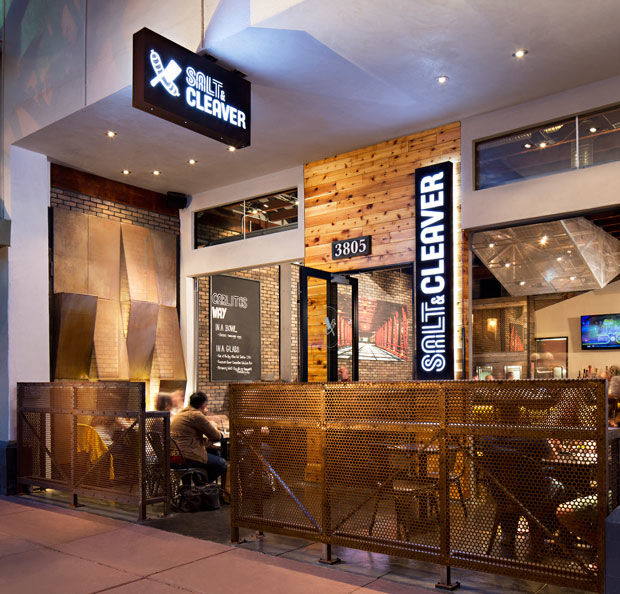
It’s the logical apex of the red-white-and-food movement. Gourmet mac ’n’ cheese begat designer burgers, which led to highfalutin’ fries. And now… chefly hot dogs, at Hillcrest’s Salt & Cleaver. Well— sausages, actually. Like the pork belly (bacon sausage with lemongrass-ginger relish), a killer lobster roulade (lobster-and-leek sausage, tarragon aioli), or the duck-duck-pig (duck and bacon sausage with duck confit, bacon aioli, and orange marmalade). Come nighttime, S&C is swarmed for its cocktails (the Collins has Ballast Point gin, lemon-grapefruit juice, and lemongrass simple syrup), but the fancy- pants meat torpedoes make a nice lunch, too. 3805 Fifth Avenue, Hillcrest
Restaurants are the new bait of the retail herd these days. For its impressive overhaul, Flower Hill Promenade pulled in Urban Solace chef/owner Matt Gordon with his third restaurant, Sea & Smoke. Blowing out a wall of the former Paradise Grill, the subterranean den (with a painting of Johnny Cash giving the world the bird) spills out into a patio that’d charm the most precious among us. The share-plate menu keeps local Pilates bodies in mind with salads (vanilla-scented beet) and vegetarian options (achiote-marinated cauliflower). But go predator and try Gordon’s excellent wood-roasted Maine lobster with jicama-corn chili and drawn butter. A dish for Del Mar, and Puerto Nuevo. 2690 Via de la Valle, Del Mar
A pizza guy does Asian fusion and it’s nowhere near as bad as that sounds
The only thing alive in here is the people.
No Flowers. No plants. Just concrete walls and black beams and menacing industrial fans that spin at a morbidly slow pace. Then there’s a 20-foot graffiti art of an Asian woman who looks like maybe she knows where the dead bodies are because she put them there.
Gang Kitchen is severe. The aesthetic of owner Jon Magnini (who’s also behind BASIC and URBN) seems to be: Find an industrial building, gut it, put in chairs.
It’s real sexy, though-one of the last creations from modernist local architect Graham Downes, who tragically died this year. Chains dangle 20-plus feet from the ceiling, holding the hostess stand like a biker wallet. The stair banisters leading to the second level are semi- rusted slabs of metal. Blacksmith- chic. There is zero to no reclaimed wood, thanks be to the gods.
Gang also represents Mangini’s most ambitious culinary effort. BASIC and URBN are mostly pizza-and-drinks joints (highly suc- cessful ones). For Gang, he pulled in longtime chef pal Jo Ann Plympton, whose long career includes two of her own restaurants (one of which, Bridge CafeÌ, got kudos from the New York Times) and a bit of training at three-star Michelin Le Gavroche. During the last 12 years she’s been a chef at CB5 Restaurant Group, creating high-end concepts (Asian, Italian, American) for fancy hotels.
CB5 is where she met Mangini, who pulled her back into the restaurant kitchen full-time for this Asian fusion concept.
Asian fusion. It makes food snobs break out in blotches. Under- standable. Americans don’t have centuries of culinary bedrock to an- chor our identity. When we see an American chef do Asian food, it not only feels like artifice, but also like we’re dismissing our own uniquely national cuisine. It also seems like a cheap way to add cultural cachet to a concept.
The solution is to not give a damn. Authenticity has its place, which is not in a fusion restaurant. JoeÌl Robuchon and David Chang both fuse. And Plympton brings a little cream, butter, and Culinary Institute of America-grad saucing skills to Asian dishes at Gang. The white woman also makes one hell of a scallion pancake.
Her menu starts with a bevy of Eastern gluten. The edamame wontons are excellent, pureÌed with butter, cream, and white truffle oil and finished with mushroom broth and nori. Truf- fle oil—a potent, crude chemical imitation of the real thing—can destroy dishes, but Plympton uses the right amount of restraint. It also shows up in her mushroom potstickers, filled with diced por- tobello, white, shiitake, and por- cinis, plus cream and panko and finished with ponzu sauce. This is excellent, just different enough from the truffle-edamame. The steamed shrimp dumplings were pretty uninspiring by comparison.
Like kale chips? Then you gotta try Plympton’s crispy spinach. Dried, crispy, lightly fried with oil, it’s basically a really healthy green disguised as fair food. Kindly resist shoving your face into the bowl.
Lobster creÌpes are unsurpris- ingly good. Maine lobster is tossed with shiitakes, shallots, chiles, ginger, and garlic in a lobster- coconut sauce, then tucked into housemade scallion creÌpes. Her barbecued pork spare ribs are fine, daintily messy with a citrus- sweet glaze. The only misstep we found at Gang was noodles. A buckwheat noodle salad in roasted peanut sauce is mistakenly served hot and a little dried out. The pork belly pad Thai is also a little dry. Too bad, because the fatty pork cubes are perfectly cooked and the dish otherwise pops with flavor, with veggies, sunflower sprouts, fish sauce, and peanuts. Crispy calamari salad, though not terribly crispy mixed in with the miso vinaigrette, has excellent flavor, and it’s not shy with the heat index.
For entrees, the barbecued salmon couldn’t have been cooked better, with a blowtorched honey-soy-miso skin that lifts easily off to barely pink-centered meat (even if the accompanying greens in Chinese mustard sauce were fairly bland). The roasted Peking duck with black vinegar sauce (black and balsamic vin- egar, cream, stock, cream, pepper) is served with sake and spiced pineapple, plums, grapefruit, and orange. It’s a chippier riff on the traditional sweet-fruit accompani- ment for duck. And again with the scallion cakes, good enough to eat out of hand by themselves. The whole fried fish was just so- so—a striped sea bass deep-fried in tempura and served with a red chile sauce that was a little too tart (sugar, fermented black beans, fish sauce, rice vinegar).
But that Shanghai beef—a dish so stereotypically gringo- Asian that Minute Rice has an official version—is a real swooner. Seven ounces of aged beef in its whoa-Jesus sauce (shallot, ginger, garlic, red chile, mirin, soy, good ol’ butter). A heap of fried potato strings under Chinese mustard vinaigrette make it one hell of a meat-and-potatoes offering.
Don’t skip desserts here. The housemade spicy gingerbread ice cream sandwich (actually creÌme fraiÌche gelato) with a side of pineapple-mango-habanÌero salsa, yuzu curd, and cilantro is excellent. Sip your tea and wait for it to soften just right, because it’s served rock hard. If you’re more of a churro/baked goods type, try the banana spring rolls with a walnut frangipane, fried and dusted with cinnamon and sugar—served with ginger gelato and miso caramel.
Plympton doesn’t shy away from a few restaurant kitchen shortcuts—namely truffle oil and butter—but it doesn’t matter when it tastes this good. Combine that with the Blade Runner-meets- Japanese horror flick deÌcor and creative cocktails from URBN bartender Jason O’Bryan (try the Broken Oath, with chamomile-in- fused bourbon, lemon, and apricot liqueur)… and, well, I couldn’t find much of anything to complain about at Gang.
Oh, the chairs are shorter than the banquettes, so whoever sits on the banquette is taller than their dining companion (good for the Tom Cruises of the world, I guess). There, that’s persnickety. Otherwise, just go.
Fearing the wrath of Ferris Bueller, Abe Froman's changes name. Still brings the sausage.
By Nate Martins
Abe Froman’s is still bringing sausage to Hillcrest. The5th Ave spot will focus on gourmet sausage and craft beer behind chef Carlos Sanmartano, but they’re going through a few pre-open makeovers. Most notably, the name.Abe Froman’s will change their name to Salt & Cleaver after a snafu. Mama didn’t raise no rocket scientists, but we’re guessing it has something to do with the fact that Froman was a cult-loved figure in Ferris Bueller’s Day Off, and that Paramount has more lawyers than Octomom’s got babies. They’ve also moved the storefront back several feet and will include a small patio; they’re planning on opening doors in a month. They recently did a segment with KUSI News outlining a few of their sausages and side dishes. Two not-so-sausage highlights: the faceless vegetarian sausage with quinoa, cauliflower, eggplant and peppers rolled in a cauliflower leaf topped with fennel slaw, and a quinoa, red pepper and sausage salad. “Sausage doesn’t always have to hit you in the face,” says Sanmartano.
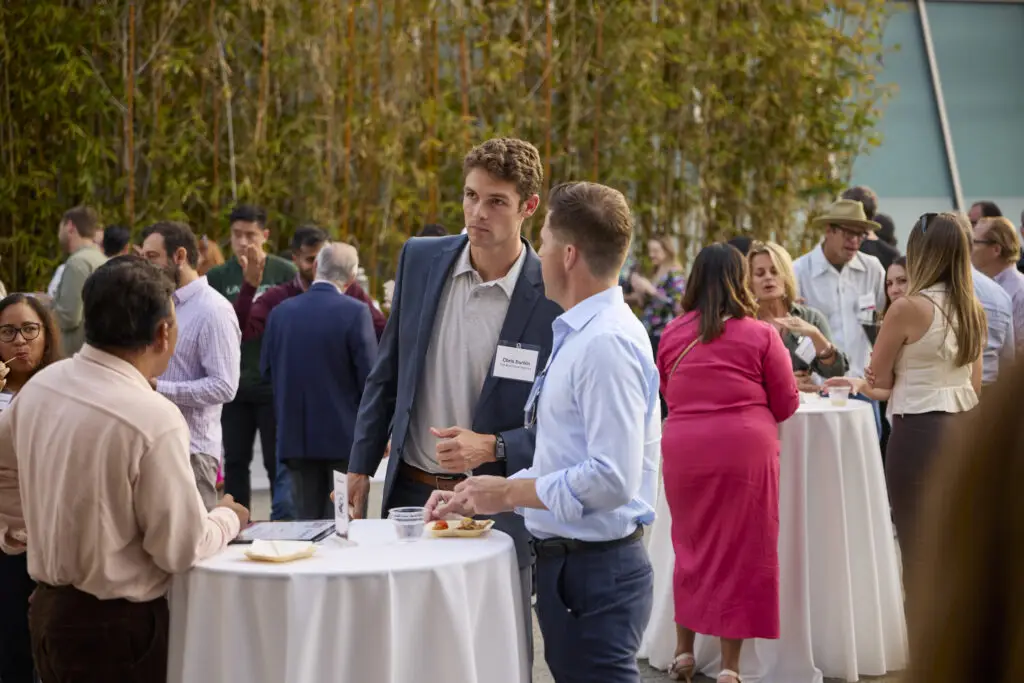
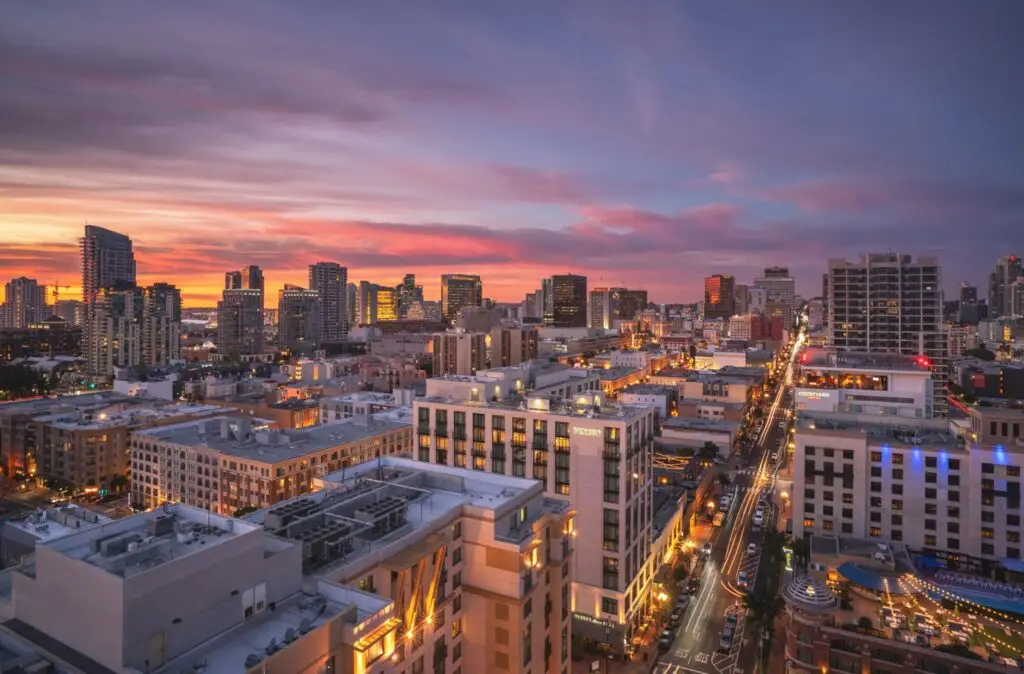
Renewable energy companies building hundreds of power plants. Biotech startups using artificial intelligence to create personalized medicine for children with rare diseases. Hospitality companies quietly powering thousands of local events. Consumer brands growing from beach-town startups into national businesses. These are the kinds of companies driving San Diego’s economy today, and the businesses recognized at this year’s San Diego Business Impact Awards offer a snapshot of where the region is headed.
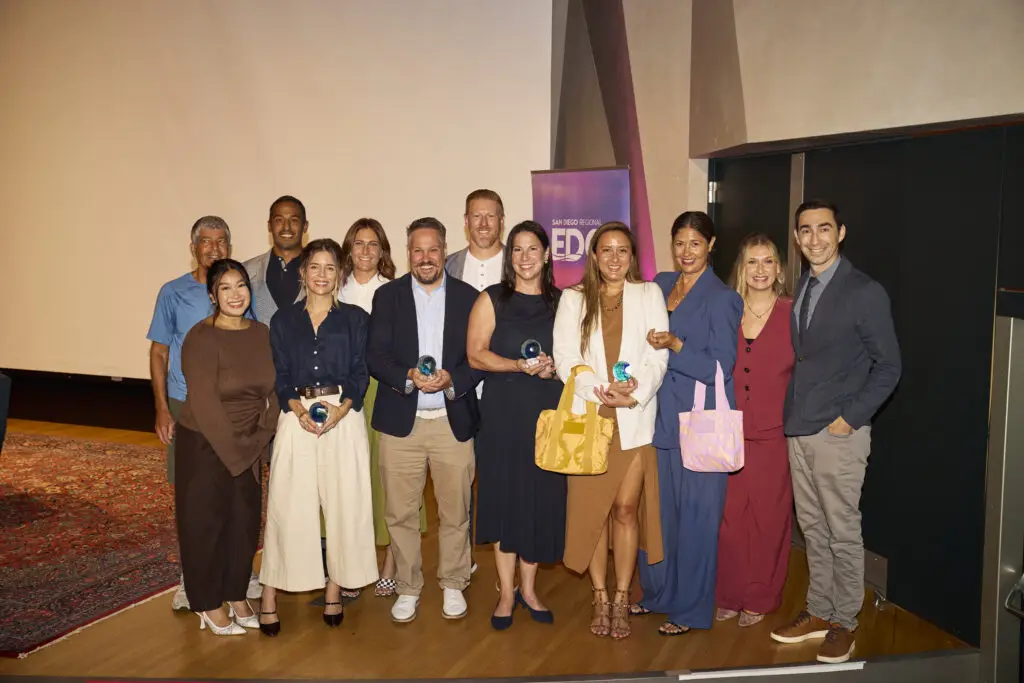
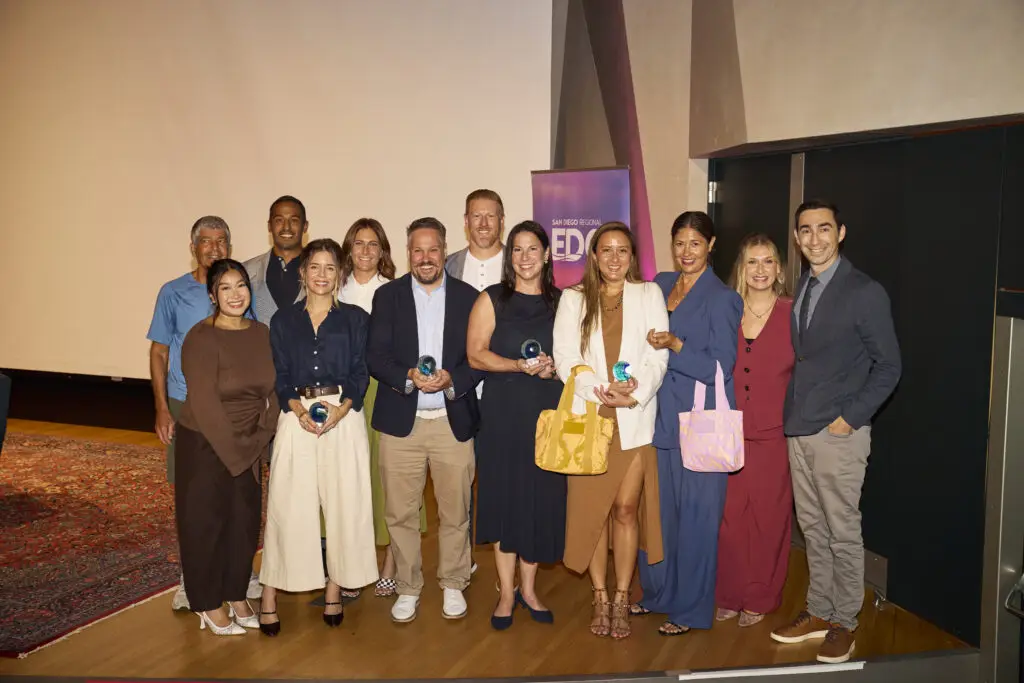
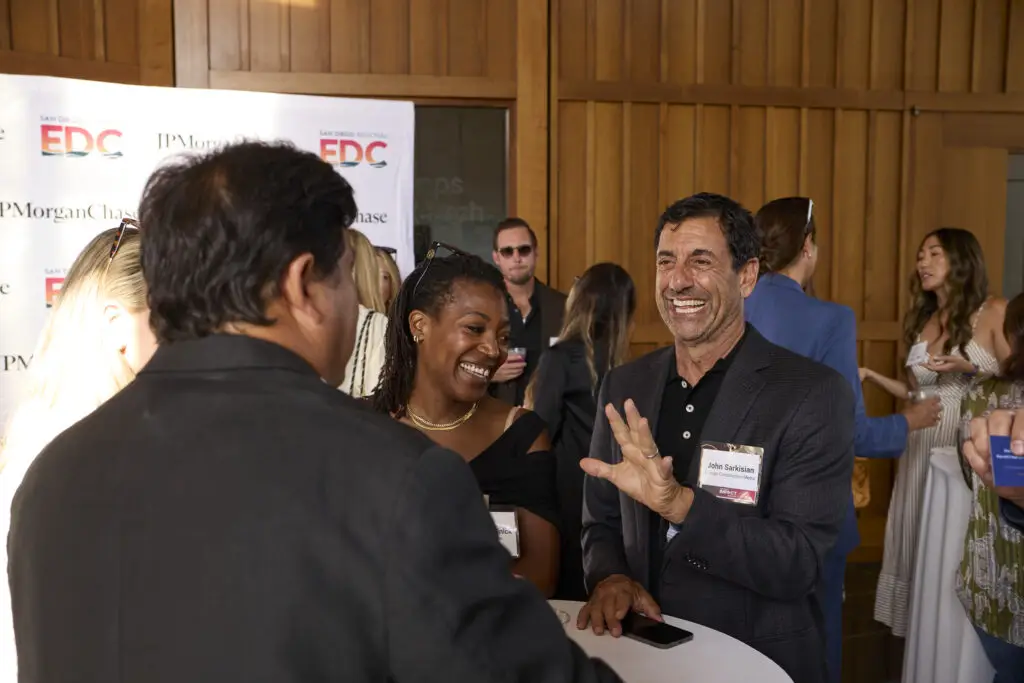
Hosted July 23 by San Diego Regional Economic Development Corporation (EDC) and JPMorganChase, the second annual awards event honored four local companies for innovation, growth, and economic impact. More than 100 nominations from San Diego’s middle-market businesses were reviewed by a 10-person judging committee, with winners selected across four categories: startup, early-stage innovator, rising star, and established heavyweight.
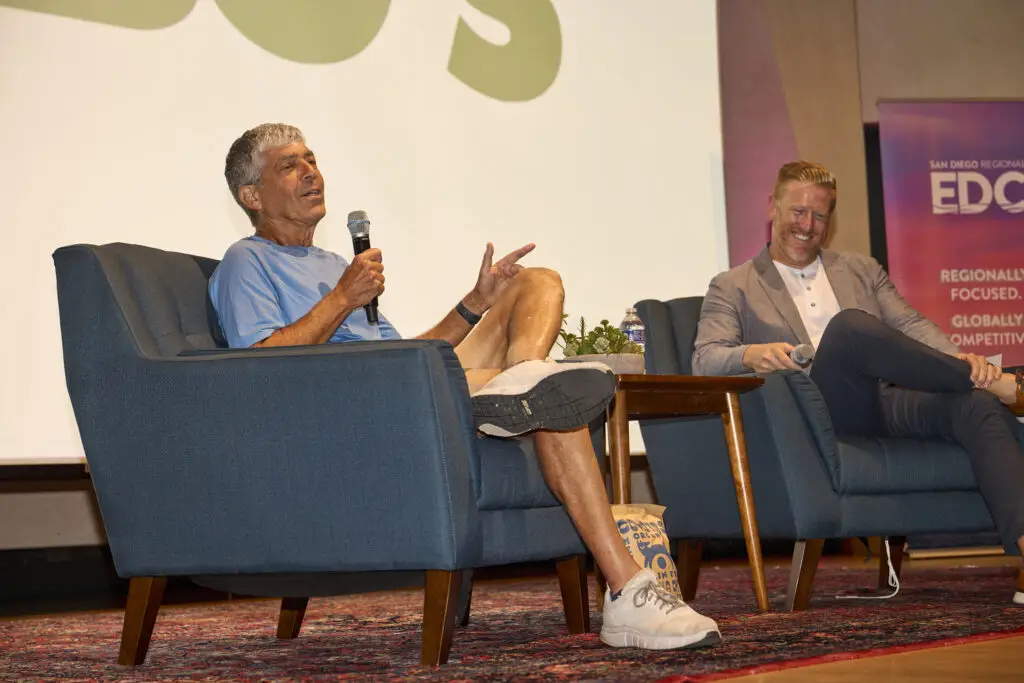
Two-time honoree Jimbo Someck, founder of Jimbo’s organic grocery stores, also joined the event for a fireside chat on buying local, supporting emerging brands, and giving back to the community.
“San Diego’s strength comes from its makers and builders—the resilient people who endure great risks and overcome obstacles to build and scale a company,” says Aaron Ryan, San Diego Region Manager and Middle Market Banking at JPMorganChase & Co. “These awards aren’t just recognition; they spotlight the talent, grit, and innovation shaping our region’s future. By celebrating those who create and build, we foster connections and fuel the growth that keeps San Diego thriving.”
Photo Credit: Matt Furman
Building the Infrastructure Behind Clean Energy
Heavyweight honoree SOLV Energy has grown alongside the country’s rapid investment in renewable power. “It’s an exciting time for SOLV Energy as we are experiencing significant growth,” says CEO George Hershman. “The business has doubled over the last year and has almost double-digit growth since its inception.”
The Rancho Bernardo-based company designs, builds, operates, and maintains utility-scale solar and energy storage facilities. Since its founding in 2008, SOLV Energy has built more than 500 power plants.
Growth has translated directly into hiring. About 200 employees work from the company’s local headquarters, including roughly 20 interns. “Our intern program is a big part of the way that we grow our workforce,” Hershman says. “Last year, 43 percent of our interns became full-time employees. We believe San Diego is a great community to build and grow a high-tech infrastructure and technology company because of the incredible workforce—the ability to attract top talent and draw from world-class universities.”
Photo Credit: Matt Furman
Developing Medicine One Patient at a Time
Startup honoree La Jolla Labs is tackling one of medicine’s biggest challenges by developing personalized RNA therapeutics for patients with rare diseases—many of them children with neurological disorders like ALS. Using proprietary artificial intelligence and machine learning tools, the biotech company develops treatments tailored to each patient’s specific genetic mutation.
CEO Tamar Grossman says the recognition reflects how far the company has come despite limited resources. “We’re honored to be recognized for our ability to change and save patients’ lives and turn our lean startup into a clinical company with very minimal resources,” she says.
Grossman credits San Diego’s concentration of research institutions—including UC San Diego, the Salk Institute, and Scripps Research—with creating a pipeline of talent and collaboration. “San Diego is one of the world-leading centers for technology, genomics, and RNA therapeutics,” she says. “We have over 30 RNA therapeutics companies here, and we support each other and help with anything related to drug discovery.”
She says that collaborative spirit extends beyond formal partnerships. “You can walk around Torrey Pines, go into a café, and find colleagues from the industry and have an ad hoc conversation,” Grossman says. “That’s something very unique to San Diego.”
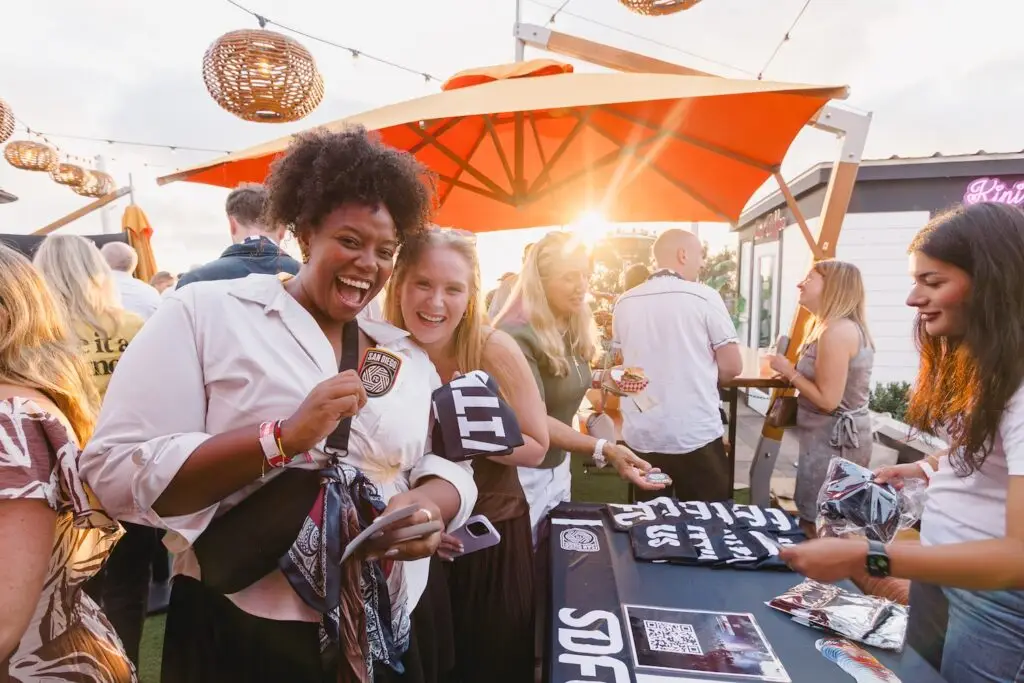
While Snake Oil Venue Company may not be a household name, chances are many San Diegans have attended one of its events. The early-stage innovator honoree has expanded from beverage catering and mixology consulting into venue management, operating Julep Venue in Mission Hills, Bramble Bay Venue in Imperial Beach, Vesper Venue, the Chapel at Liberty Station, and five outdoor venues throughout Liberty Station—more than 500,000 square feet of event space altogether.
“We do a lot of launch parties for corporations and new products,” says CEO Mike Esposito. “I really like working on the entrepreneur side of things, where new businesses are entering the San Diego market and looking to make a splash.”
Snake Oil has executed more than 16,000 events, employed more than 1,000 people, and partnered with more than 900 local vendors, including caterers, florists, photographers, entertainers, and other hospitality businesses. The company also works with many of San Diego’s nonprofits, museums, and cultural institutions. “We get to celebrate people’s most important moments,” Esposito says. “Whether that’s a wedding, celebration of life, or quinceañera, we’re fortunate to be involved in the community in so many different ways.”
Photo Credit: Matt Furman
Growing a Beach-Town Brand into a National Business
Rising star honoree ALOHA Collection is proof that a simple idea can grow into a thriving company. Founded by two roommates who wanted a better way to carry wet swimsuits after a day at the beach, the lifestyle brand has grown into a business while maintaining strong year-over-year growth.
Now headquartered in Carlsbad, ALOHA Collection employs more than 100 people and operates its California flagship store in Encinitas, which is slated for a remodel. With roots in Hawaii, the company is known for its lightweight, splash-proof travel bags that have become a familiar sight on beaches in San Diego and beyond.
“‘Aloha’ is part of our name, but it’s also how we move through the world,” says CEO Lynna Barnard. “It’s how we show up for people, the way we travel, the way we give back.” Since day one, the company has maintained a 5 percent giveback to Hawaii conservation efforts, contributing millions of dollars over the years.
“I think what’s so inspiring about ALOHA Collection, and the founders in particular, is when you dream big, those dreams can come true when you work hard and trust in the universe,” Barnard says. “It’s inspiring to be a role model for other people wanting to start businesses from humble beginnings. Start small and watch it grow.”
Together, businesses like these form a cornerstone of San Diego’s economy—not only through the jobs and revenue they generate—but through the local workers they hire, vendors they support, and investments they make in the region. Their growth doesn’t happen in isolation; it ripples outward, strengthening the broader business community and the people who call San Diego home.
From celebrity pickleball tournaments to intimate dinner parties with your favorite Food Network chefs, here are all of the can’t-miss events going on Sept 30–Oct 4
Play is underrated. Somewhere along the way, someone decided it was something we should outgrow. That you A good song comes on, and they dance. A game appears, and they’re in. Someone hands them a melting ice cream cone, and somehow it’s the best part of the day.
Adults tend to need a reason. Or maybe just the right setting.
That’s part of what makes the Del Mar Wine & Food Festival feel different. Yes, the week revolves around food and wine, with celebrated chefs, winemakers, and restaurants drawing crowds from across the region. But what lingers afterward is the conversations that stretch a little longer than expected, the strangers who become dinner companions, the live music that pulls people out of their seats, and the rare chance to spend a few hours simply enjoying yourself without much of an agenda.
The Grand Tasting is the festival’s centerpiece, bringing thousands of guests together over two days for hundreds of bites and pours. But some of the week’s most memorable experiences happen on a smaller scale. In the days leading up to the main event, intimate dinners, chef collaborations, and guided tastings create opportunities for guests to interact more closely with the people behind the food and wine and with each other.
Signature San Diego Opening Night Party at Monarch Ocean Pub
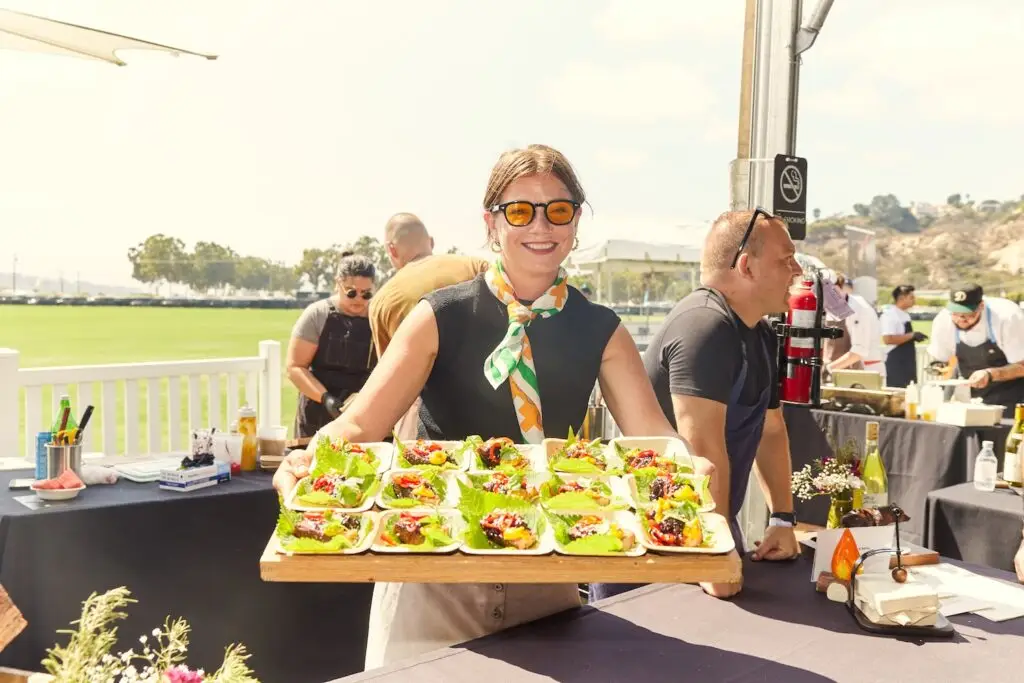
Start festival week the San Diego way: ocean views, Baja-inspired bites, and a drink in hand as the sun goes down. The Signature San Diego Opening Night Party at Monarch Ocean Pub sets the tone for the week ahead with a walk-around tasting experience celebrating the flavors that make this city impossible to replicate. It’s an evening of fresh coastal cuisine, bold Mexican flavors, Baja seafood, and plenty of local favorites—all served against one of Del Mar’s most iconic backdrops. Consider it your first official toast to the weekend ahead…
Celebrity Pickleball Tournament Presented by Justin Vineyards & Winery
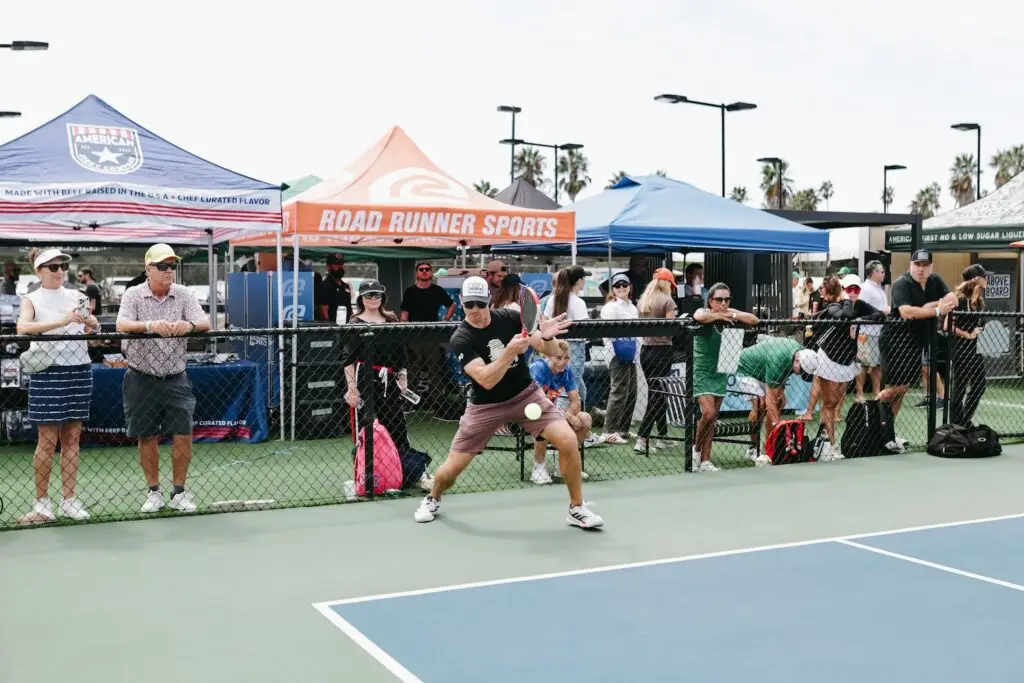
Wine and competition make an unexpectedly perfect pair. You can join Drew Brees and celebrity players at Barnes Tennis Center for a pickleball tournament benefiting Feeding San Diego, where the sidelines are just as exciting as the court. Grab a paddle, cheer from the sidelines, or simply enjoy a glass of wine while the action unfolds. The day blends friendly competition with an all-inclusive tasting experience.
Since year one, Del Mar Wine & Food Festival has partnered with Feeding San Diego to raise $100,000 in support of the organization’s mission to fight hunger across the region. Every serve, sip, and bite helps give back to the community that makes this festival possible.
Remember that pickleball paddle you swore you’d use? Time to put it to work.
Barnes Tennis Center | 4490 W Point Loma Blvd, San Diego, CA 92107
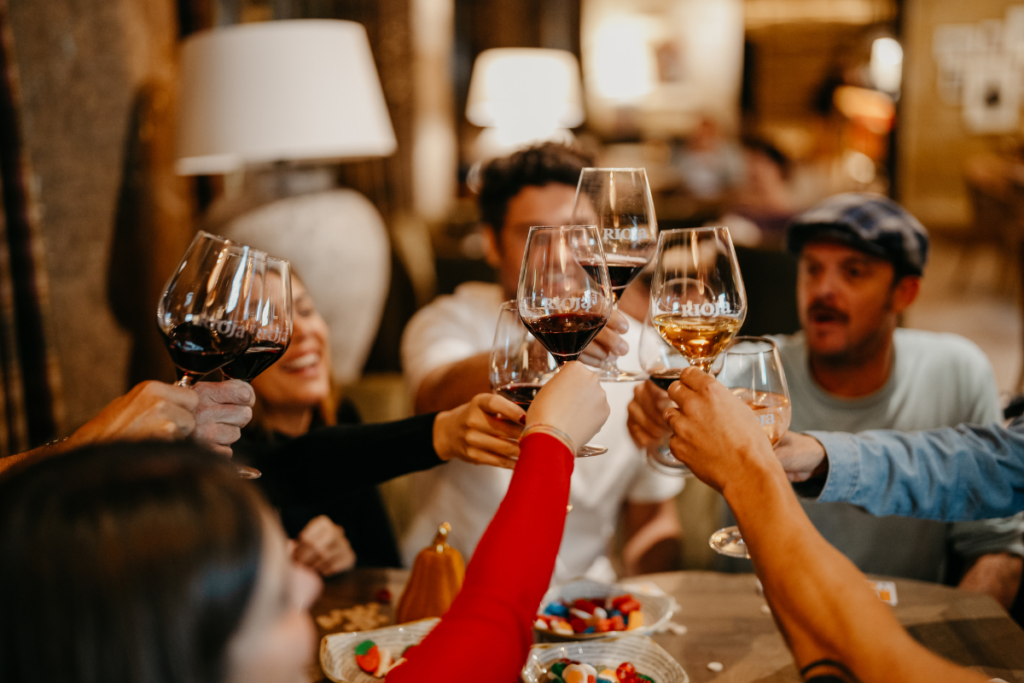
This is essentially a passport to Spain with no airport required. Set among the lush grounds of Rancho Valencia, Rioja Uncorked celebrates one of Spain’s most iconic wine regions with an evening of exceptional pours and thoughtfully paired bites. Guests will sip their way through Rioja wines while enjoying a menu featuring everything from Hiramasa crudo and uni toast to duck rillette, birria mini tacos, Cardiff Crack tri-tip sandwiches, and a sweet finale from Karen Krasne of Extraordinary Desserts (date night plans, solved).
Rancho Valencia | 5921 Valencia Cir, Rancho Santa Fe
Justin Wine Dinner with Chefs Kaitlyn Weber, Buddha Lo & Jackson Kalb
Justin Wine Dinner sounds simple: three chefs, one unforgettable table. But chefs Kaitlyn Weber (Estancia La Jolla), Buddha Lo (Top Chef), and Jackson Kalb (Top Chef) are taking you on a one-night-only culinary ride where three styles collide over a multi-course menu paired with exceptional pours from Justin Vineyards & Winery. Set in Estancia’s coastal estate, the evening unfolds course by course with pairings from Justin wines as each chef brings their own style to a menu focused on craft, connection, and a bit of friendly culinary overlap. It’s the kind of culinary conversation that only happens when very, very talented people cook together.
Estancia – Olive Lawn | 9700 N Torrey Pines Road, La Jolla, California
Isabella Dallas is a freelance writer for San Diego Magazine and the Arts and Culture Editor at The Daily Aztec in her final year at San Diego State University. She previously worked as an editorial intern for SDM, but when she’s not writing, you can find her trying the best coffee spots in SD, devouring the latest rom-coms, and indulging in anything and everything pop culture.
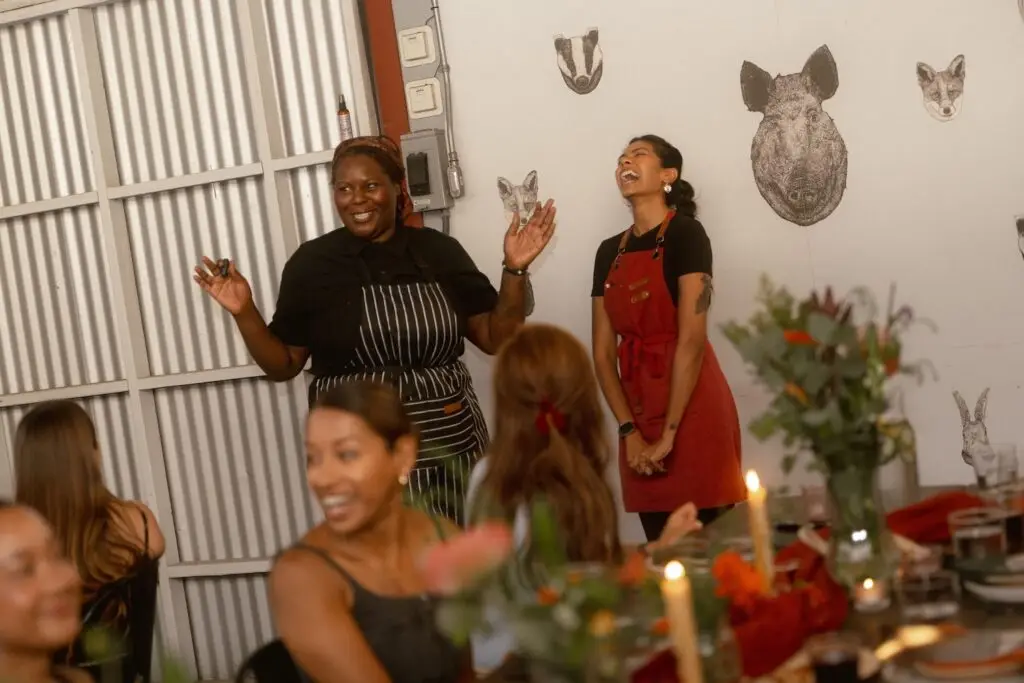
“Are you sure this isn’t a dating thing?” asked my husband as I headed out the door. Fair question, considering we’ve been happily, monogamously married for 15 years. But where I was headed—a Dinner With Strangers Co. collaborative dinner with Rasa Table—is a curated culinary experience emphasizing conversation and encouraging connection with whoever the universe decides to seat at your table.
Okay, I can see how that might sound like a blind date-type of matchmaking app. While I happen to love dining solo or with friends and loved ones, the idea of getting trapped at a table with a bunch of randos rockets me past my comfort zone somewhere in the realm of Neptune. Still, I’m nothing if not motivated by a good meal, and the duo’s Nigerian-meets-Malaysian collaborative menu this July at Millport in Imperial Beach ranged from the semi-familiar (savory jollof rice) to the completely new-to-me, like egusi, a rich West African stew made from melon seeds, palm wine, spices, assorted greens, and a mix of meats like beef and crayfish, along with a dollop of starch like yams or cassava to mop up every absolutely spectacular morsel.
(Quick note: if anyone has a rec on where to get good egusi in San Diego, please let me know immediately.)
Founder/chef Onyinyechukwu “Onyi” Akpa launched Dinner With Strangers in Houston before returning to her hometown of San Diego a little over a year ago. Not only did she see a widespread need for opportunities to meet new people, she says San Diego lacks some diverse cuisines. “One thing that made me move back is the actual lack of West African food,” she points out.
As a first-generation Nigerian-American and San Diego native, Akpa draws a lot of influence from Mexican, West African, and Black American culinary traditions, all of which were on full display alongside Vanishaa Doshi’s Southeast Asian fare from Rasa Table. (Think slow-braised oxtail meets coconut curry.)
It felt surprisingly easy to chit-chat with my fellow diners, most (but not all) of which came alone. Turns out when everyone is there to meet people, there’s no such thing as a cold shoulder. Long before the end of the night, the woman I ended up sitting next to captivated me with pictures of her recent travels to the brutalist Casa To boutique hotel in Puerto Escondido, Mexico and the ruins of La Recolección convent and church in Antigua, Guatemala.
We live our lives largely online, directed by the whims of The Invisible Algorithm and paid ads. A 2023 U.S. Surgeon General report categorizes loneliness and isolation as an epidemic, so cultivating opportunities for human connection has spawned a movement of supper clubs like these, each designed around the idea of making friends rather than networking opportunities or blind dates.
For some, there’s also an element of surprise. Local pop-up Cow by Bear is a 20-person, five-course dinner party series every Friday and Saturday at a secret location only revealed the day before. Another is The Blank Table, a pop-up dining series by Alexandria Ott and chef Frederick Keller centered around “cuisine, cocktails, and creativity,” which takes place six times a year. Details like the location and menu don’t get announced until the night before, and Ott says she tends to select venues that feel unexpected or off-the-beaten-path.
That’s how I found myself wandering around the lower floor of the Institute of Contemporary Art in Balboa Park, checking out Cat Gunn’s installation while sipping a cocktail created by Kiku Room and munching on an amuse bouche by chef Kassandra De Leon of Two Ducks. I cheated a tiny bit and brought a friend, but did manage to make small talk with some other attendees in the spirit of socializing with strangers. None of us knew what we were eating until we arrived, so there’s a level of trust required—not unlike prix fixe or omakase menus.
Rising demand for experiential dining alongside San Diego’s creative renaissance make it the perfect time to embrace these sorts of low-risk, high-reward types of endeavors. It’s less pressure than a blind date—everyone’s already paid and no one has to awkwardly browse the menu while also trying to keep the conversation going—and there’s no expectation of seeing each other again. That is, unless you really want to.
“Most people don’t think they’re gonna meet somebody they will like,” says Akpa. At both The Blank Table and Dining With Strangers, that proved true for this adventurous-in-food, introverted-by-nature, once skeptical, now convinced San Diegan.
Listen Now: The Latest in San Diego’s Food and Drink Scene
Beth Demmon is an award-winning writer and podcaster whose work regularly appears in national outlets and San Diego Magazine. Her first book, The Beer Lover's Guide to Cider, is now available. Find out more on bethdemmon.com.
It’s estimated that 44% of women in the U.S. have high blood pressure, also known as hypertension, but many don’t know it. The disease often has no symptoms, and when symptoms do present, they can appear similar to many other conditions. High blood pressure increases the risk for heart disease and stroke, so it’s critical that it’s detected and treated early. And for women at risk of developing high blood pressure, prevention is key. Click here for the basics of high blood pressure and how Scripps physicians at Scripps use screenings not just as a diagnostic tool, but as part of routine preventive care.
For more nutrition, wellness, and healthy living tips, sign up for the San Diego Health newsletter here.