This list is excerpted from the topDentists™ list, a database which includes listings for more than 450 dentists and specialists in the San Diego metropolitan area. The San Diego area list is based on thousands of detailed evaluations of dental professionals by their peers. The complete database is available at www.usatopdentists.com. For more information call 706-364-0853; write P.O. Box 970, Augusta, GA 30903; email [email protected]; or visit www.usatopdentists.com.
“If you had a patient in need of a dentist, which dentist would you refer them to?” This is the question we asked thousands of dentists to help us determine who the topDentists should be. Dentists and specialists are asked to take into consideration years of experience, continuing education, manner with patients, use of new techniques and technologies, and, of course, physical results.
The nomination pool of dentists consists of dentists listed online with the American Dental Association, as well as all dentists listed online with their local dental societies, thus allowing virtually every dentist the opportunity to participate. Dentists are also given the opportunity to nominate other dentists whom we may have missed who they feel should be included in our list. Respondents are asked to put aside any personal bias or political motivations and to use only their knowledge of their peers’ work when evaluating the other nominees.
Voters are asked to individually evaluate the practitioners on their ballots whose work they are familiar with. Once the balloting is completed, the scores are compiled and then averaged. The numerical average required for inclusion varies depending on the average for all the nominees within the specialty and the geographic area. Borderline cases are given a careful consideration by the editors. Voting characteristics and comments are taken into consideration while making decisions. Past awards a dentist has received and status in various dental academies (Academy of General Dentistry, American Academy of Periodontology, etc.) can play a factor in our decision.
Once the decisions have been finalized, the included dentists are checked against state dental boards for disciplinary actions to make sure they have active licenses and are in good standing with the board. Then letters of congratulations are sent to all the listed dentists.
Of course, there are many fine dentists who are not included in this representative list. It is intended as a sampling of the great body of talent in the field of dentistry in the United States. A dentist’s inclusion on our list is based on the subjective judgments of his or her fellow dentists. While it is true that the list may at times disproportionately reward visibility or popularity, we remain confident that our polling methodology largely corrects for any biases and continues to represent the most reliable, accurate, and useful list of dentists available anywhere.
This list is excerpted from the topDentists™ master list, which includes listings of more than 450 dentists and specialists in the San Diego metropolitan area. For more information call 706-364-0853; write P.O. Box 970, Augusta, GA 30903; email [email protected]; or visit www.usatopdentists.com. topDentists has used its best efforts in assembling material for this list but does not warrant that the information contained herein is complete or accurate, and does not assume, and hereby disclaims, any liability to any person for any loss or damage caused by errors or omissions herein whether such errors or omissions result from negligence, accident, or any other cause. Copyright 2010-2014 by topDentists, LLC, Augusta, GA. All rights reserved. This list, or parts thereof, must not be reproduced in any form without permission. No commercial use of the information in this list may be made without permission of topDentists, LLC. No fees may be charged, directly or indirectly, for the use of the information in this list without permission.
Endodontics
Tyler F. Baker, Endodontic Specialists, 955 Boardwalk, Suite 302, San Marcos, CA, 92078, 760-510-1133
Robert V. Bravin, 8860 Center Drive, Suite 430, La Mesa, CA, 91942, 619-713-6600
John Daniel Brian, Jr., Bernardo Plaza Endodontics, 11777 Bernardo Plaza Court, Suite 209, San Diego, CA, 92128, 858-487-1559
Michael D. Brown, Tri City Microendodontics, 145 Cedar Road, Suite C, Vista, CA, 92083, 760-726-3973
David S. Brunson, 15835 Pomerado Road, Suite 302, Poway, CA, 92064-2073, 858-451-2050
Chad B. Burgess, North San Diego Endodontics, 3601 Vista Way, Suite 202, Oceanside, CA, 92056, 760-439-1871
Gary B. Carr, 6235 Lusk Boulevard, San Diego, CA, 92121-2758, 858-558-3636
Michael Dennis Carter, 3737 Moraga Avenue, Suite B-220, San Diego, CA, 92117-5497, 858-483-3636
Dale Denio, 12750 Carmel Country Road, Suite 201, San Diego, CA, 92130, 858-792-8201
Robert Bruce Folk, Bernardo Plaza Endodontics, 11777 Bernardo Plaza Court, Suite 209, San Diego, CA, 92128, 858-487-1559
Randy William Garland, Garland Endodontics, 531 Encinitas Boulevard, Suite 101, Encinitas, CA, 92024-5136, 760-944-0048
Garrett M. Guess, 8929 University Center Lane, Suite 209, San Diego, CA, 92122-1006, 858-558-0222
Robert Joseph Hanlon, Jr., Escondido Endodontics, 488 East Valley Parkway, Suite 307, Escondido, CA, 92025-3373, 760-739-1400
Keven S. Herold, Torrey Pines MicroEndodontics, 11199 Sorrento Valley Road, Suite 204, San Diego, CA, 92121, 858-626-8155
David Hudson, Endodontic Excellence, 273 Church Avenue, Chula Vista, CA, 91910, 619-426-2250
H.L. “Jay” Jacobson III, 360 Highland Avenue, El Cajon, CA, 92020-5207, 619-442-3000
Jeffrey Michael Javelet, Javelet Endodontics, 7855 Fay Avenue, Suite 210, La Jolla, CA, 92037-4267, 858-454-0366
Charles Edward Jerome, Escondido Endodontics, 488 East Valley Parkway, Suite 307, Escondido, CA, 92025-3373, 760-739-1400
Candice L. Kaminski, Rancho Bernardo Endodontics, 16466 Bernardo Center Drive, Suite 176, San Diego, CA, 92128-2508, 858-676-6709
Heidi L. Kamrath, Rancho Bernardo Endodontics, 16466 Bernardo Center Drive, Suite 176, San Diego, CA, 92128, 858-676-6709
Anthony L. Korbar II, Carmel Valley Endodontist, 12264 El Camino Real, Suite 206, San Diego, CA, 92130, 858-755-4787
Edward Dwight Kosakoski, Carmel Valley Endodontist, 12264 El Camino Real, Suite 206, San Diego, CA, 92130, 858-755-4787
Craig John Malin, 1207 Carlsbad Village Drive, Suite I, Carlsbad, CA, 92008-1958, 760-729-0342
Tom Massarat, Eastlake Endodontics, 2452 Fenton Street, Suite 303, Chula Vista, CA, 91914, 619-621-5000
John W. Masters, 273 Church Avenue, Chula Vista, CA, 91910-2728, 619-426-2250
Steven James Merchant, 3144 El Camino Real, Suite 205, Carlsbad, CA, 92008-2108, 760-434-5066
Duke H. Nguyen, La Jolla Dental Specialty Group, 4510 Executive Drive, Suite 205, San Diego, CA, 92121, 858-546-1802
James E. Pastor, 8950 Villa La Jolla Drive, Suite A-207, La Jolla, CA, 92037, 858-452-2800
John C. Pawlak, 7900 El Cajon Boulevard, Suite F, La Mesa, CA, 91942-0655, 619-465-1733
Corene Janna Poelman, Rancho Bernardo Endodontics, 16466 Bernardo Center Drive, Suite 176, San Diego, CA, 92128-2522, 858-676-6709
Anthony P. Potente, C & P Endodontics, 4065 Third Avenue, Suite 300, San Diego, CA, 92103-2184, 619-298-2291
Brian T. Quesnell, Hillcrest MicroEndodontics, 306 Walnut Avenue, Suite 33, San Diego, CA, 92103, 619-295-3456
David Daryl Roland, Encinitas Endodontic Specialists, 760 Garden View Court, Suite 210, Encinitas, CA, 92024-2473, 760-436-4561
Erick Y. Sato, 360 Highland Avenue, El Cajon, CA, 92020, 619-442-3000
Michael G. Sherman, Tri City MicroEndodontics, 145 Cedar Road, Suite C, Vista, CA, 92083, 760-726-3937
Babak Shoushtari, La Jolla Endodontics, 4150 Regents Park Row, Suite 330, La Jolla, CA, 92037-9124, 858-546-9299
Bruce C. Smith, San Diego North Endodontics, 850 East Grand Avenue, Suite B, Escondido, CA, 92025, 760-741-1355
Erik Austin Stalder, Mission Valley Endodontics, 2655 Camino Del Rio North, Suite 150, San Diego, CA, 92108-1603, 619-295-3636
Eugene Isamu Sugita, 8860 Center Drive, Suite 430, La Mesa, CA, 91942, 619-713-6600
A. Jayson Tengonciang, Clairemont Endodontics, 3762 Clairemont Drive, San Diego, CA, 92117, 858-270-2760
Allen Wei, 5308 Lake Murray Boulevard, Suite A, La Mesa, CA, 91942-1334, 619-589-5454
John A. Weisenseel, Mission Valley Endodontics, 2655 Camino Del Rio North, Suite 150, San Diego, CA, 92108-5860, 619-295-3636
Damon J. Westwood, 1915 Hornblend Street, San Diego, CA, 92109-4547, 858-866-0696
General Dentistry
Mojdeh Abbasian, Sorrento Dental Care, 9254 Scranton Road, Suite 108, San Diego, CA, 92121, 858-453-4003
Martin P. Abelar, 11515 El Camino Real, Suite 160, San Diego, CA, 92130, 858-866-9692
Lawrence M. Addleson, The Art of Dentistry, 2840 Fifth Avenue, Suite 300, San Diego, CA, 92103-6327, 619-291-4325
Jonathan Amberg, Academy Dental Care, 781 Academy Drive, Solana Beach, CA, 92075, 858-523-9800
Walter Dean Andrada, 9330 Carmel Mountain Road, Suite B, Carmel Mountain Professional Park, San Diego, CA, 92129-2100, 858-780-0819
Vaida M. Avery, 2036 Hornblend Street, Suite A, Pacific Beach, CA, 92109, 858-270-6711
Janelle O. Bacino, 4747 Mission Boulevard, Suite Two, Pacific Beach, CA, 92109, 858-273-0111
John Joseph Bacino, 560 Brockton Street, El Cajon, CA, 92020, 619-461-7776
Eric Bryan Barajas, Village Walk Dental, 890 Eastlake Parkway, Suite 304, Chula Vista, CA, 91914, 619-482-7367
Ronald John Barry, 13983 Mango Drive, Suite 202, Del Mar, CA, 92014-3152, 858-755-7118
Richard S. Bartlett, Jr., 8366 University Avenue, La Mesa, CA, 91941, 619-463-9301
Christina A. Bartsch, 3737 Moraga Avenue, Suite A-107, San Diego, CA, 92117-5405, 858-272-1143
Charles U. Basso, Grand Dentistry, 457 East Grand Avenue, Suite Four, Escondido, CA, 92025, 760-747-7878
Geoff Bell, 804 Carlsbad Village Drive, Carlsbad, CA, 92008, 760-729-8500
Nolan Bellisario, 13983 Mango Drive, Suite 201, Del Mar, CA, 92014-3152, 858-755-0187
Barnaby Ira Bender, 1293 Encinitas Boulevard, Encinitas, CA, 92024-2843, 760-944-8313
Robert J. Bey, 4690 Genesee Avenue, San Diego, CA, 92117-3031, 858-279-2226
Richard B. Bialick, 8950 Villa La Jolla Drive, Suite B-220, La Jolla, CA, 92037-1708, 858-453-0050
Mark R. Bishop, 7525 Linda Vista Road, Suite B, San Diego, CA, 92111, 858-279-2360
Faith Aftreth Bolam, 7557 El Cajon Boulevard, Suite B, La Mesa, CA, 91941-8623, 619-337-2970
Leslie K. Bonar, Grand Dentistry, 457 East Grand Avenue, Suite Four, Escondido, CA, 92025, 760-747-7878
Joy Remigio Bonifacio, 8590 Rio San Diego Drive, Suite 110, San Diego, CA, 92108, 619-299-1122
Kerry A. Booth, 2990 Jamacha Road, Suite 140, El Cajon, CA, 92019-4387, 619-670-5133
Soraya Bouzida, Torrey Hills Family Dentistry, 4765 Carmel Mountain Road, Suite 209, San Diego, CA, 92130, 858-481-0080
Craig Allen Bowles, 6110 Friars Road, Suite 104, San Diego, CA, 92108-1079, 619-299-0171
Tod C. Bowman, Gentle Family Dentistry, 2879 Hope Avenue, Carlsbad, CA, 92008-1833, 760-729-5881
William L. Boyer, Spring Valley Cosmetic Dentistry, 3509-1 Sweetwater Springs Boulevard, Spring Valley, CA, 91978, 619-670-4471
Thomas David Brant, 711 Avocado Avenue, El Cajon, CA, 92020-6401, 619-440-7000
Thomas K. Brassington, 8442 La Mesa Boulevard, La Mesa, CA, 91941-5306, 619-464-3636
Michael J. Brewer, 2654 Fourth Avenue, San Diego, CA, 92103-6515, 619-234-7493
Robert C. Brombacher, 167 Cedar Road, Vista, CA, 92083-5103, 760-941-1015
Michael W. Buskirk, 3855 Avocado Boulevard, Suite 260, La Mesa, CA, 91941, 619-670-1706
Lawrence A. Buss, 122 Escondido Avenue, Suite 105, Vista, CA, 92084-6056, 760-726-0281
R. Douglas Campbell, The Art of Dentistry, 2840 Fifth Avenue, Suite 300, San Diego, CA, 92103-6327, 619-291-4325
Anthony R. Cardoza, 266 Avocado Avenue, Suite B, El Cajon, CA, 92020-4604, 619-444-6196
Brian J. Casciari, 9320 Carmel Mountain Road, Suite A, San Diego, CA, 92129-2159, 858-484-4104
D. Douglas Cassat, 10789 Tierrasanta Boulevard, Suite 110, San Diego, CA, 92124-2613, 858-565-0212
Jon William Cassell, Cassell Dentistry, 591 Camino de la Reina, Suite 412, San Diego, CA, 92108, 619-220-7475
Curtis L. Chan, 112835 Pointe Del Mar Way, Suite Three, Del Mar, CA, 92014, 858-481-9090
Jack W. Chan, California Coast Dental Arts, 818 Civic Center Drive, Oceanside, CA, 92054-2506, 760-722-4765
Scott C. Chau, 3703 Fourth Avenue, San Diego, CA, 92103-4202, 619-819-0778
Rima Chehade-Shahhal, 740 Nordahl Road, Suite 121, San Marcos, CA, 92069-3545, 760-746-7008
Robert S. Cheung, 4546 College Avenue, San Diego, CA, 92115-4008, 619-583-9060
Robert Eng Chin, 6545 Balboa Avenue, Suite A, San Diego, CA, 92111-3110, 858-292-7655
George J. Chionis, 7811 La Mesa Boulevard, Suite C, La Mesa, CA, 91941, 619-337-2424
Timothy C. Christian, 6030 Santo Road, San Diego, CA, 92124-1196, 858-277-6010
Douglas Neil Christiansen, DeAnza Dental Group, 3737 Moraga Avenue, Suite B-400, San Diego, CA, 92117-5365, 858-274-8900
Megan Clarke, 6244 El Cajon Boulevard, Suite Eight, San Diego, CA, 92115-3918, 619-583-5400
J. Richard Codington, 9728 Carmel Mountain Road, Suite B, San Diego, CA, 92129-2849, 858-484-2560
Timothy Neal Collins, Complete Dental Health, 3808 Front Street, San Diego, CA, 92103-3020, 619-295-2202
Byron Patrick Cosgrove, 9850 Magnolia Avenue, Santee, CA, 92071, 619-448-6113
Matthew Sean Cowman, 1300 Grand Avenue, Suite E, San Diego, CA, 92109-4287, 858-274-9494
Bill C. Crafton, 257 F Street, Chula Vista, CA, 91910-2821, 619-821-8804
Peggy Lee Curtis, Park Dental Arts, 2312 Sixth Avenue, San Diego, CA, 92101, 619-544-1745
Theresa Cutler, TLC Escondido Dental, 950 East Pennsylvania Ave, Escondido, CA, 92025, 760-741-5775
David Charles Daughters, 763 Academy Drive, Solana Beach, CA, 92075-2031, 858-755-1543
Brian M. Davey, 7805 Highlands Village Place, Suite G-105, San Diego, CA, 92129, 858-538-8300
Paul C. Davis, 4320 Genesee Avenue, Suite 102, San Diego, CA, 92117, 858-292-6051
Andrew J. DeMeyer, Mission Boulevard Dental Group, 4707 Mission Boulevard, San Diego, CA, 92109-2541, 858-483-6851
Douglas L. Decker, 2533 El Cajon Boulevard, San Diego, CA, 92104-1117, 619-543-1588
Emmannuel Delagrammaticas, 1030 La Bonita Drive, Suite 303, San Marcos, CA, 92078, 760-471-0475
Sanjay Dhir, 3226 Governor Drive, San Diego, CA, 92122-2902, 858-453-4514
Douglas B. Disraeli, 3645 Fourth Avenue, San Diego, CA, 92103-4142, 619-291-2980
Stephen D. Doan, 8899 University Center Lane, Suite 110, San Diego, CA, 92122-1009, 858-452-1504
Pierre Doche, Doche Family Dental, 314 South Twin Oaks Valley Road, Suite 11, San Marcos, CA, 92078, 760-744-0804
Paul E. Dougherty, Dougherty Dental, 850 Prospect Street, Suite 2 & 6, La Jolla, CA, 92037-4208, 858-454-5653
Charles L. Drury, 5256 South Mission Road, Suite 1101, Bonsall, CA, 92003, 760-630-5500
Gary A. Dudar, 240 South Hickory Street, Suite 200, Escondido, CA, 92025, 760-743-8131
David R. Duguid, 230 West G Street, Suite H, San Diego, CA, 92101, 619-234-7222
Stephen B. Earle, 8430 Lemon Avenue, La Mesa, CA, 91941-5310, 619-466-8363
Michelle M. Espinoza, 7334 Girard Avenue Suite 104, La Jolla, CA, 92037, 858-459-3381
Richard J. Ewing, Point Loma DDS, 3340 Kemper Street, Suite 201, San Diego, CA, 92110-4908, 619-224-2828
Jeremy Factor, 6080 Lake Murray Boulevard, Suite A, La Mesa, CA, 91942-2571, 619-466-6666
Reena P. Feider, Uptown Smiles Dentistry, 2728 Third Avenue, San Diego, CA, 92103-6203, 619-232-7433
Jamie M. Ferguson, Smiles by the Sea, 318 Ninth Street, Suite B, Del Mar, CA, 92014-2805, 858-793-4680
Leland J. FitzGerald, 769 Academy Drive, Solana Beach, CA, 92075, 858-481-7155
Thomas Fitzpatrick, 3340 Kemper Street, Suite 201, San Diego, CA, 92110-4908, 619-224-2828
Thomas F. Ford, 3762 Mission Avenue, Suite 104, Oceanside, CA, 92054-1438, 760-439-3400
Graham R. Freer, 321 East Main Street, El Cajon, CA, 92020-3913, 619-444-6161
Robert E. Fremont, Fremont Dental Arts, 4527 Fanuel Street, San Diego, CA, 92109-2904, 858-272-2222
Gregory Lynn Friedman, 10755 Scripps Poway Parkway, Suite K, San Diego, CA, 92131-3924, 858-547-0070
Kriston Gallipeau, Bankers Hill Dental, 2333 First Avenue, Suite 207, San Diego, CA, 92101, 619-234-5377
Robert A. Gandola, 7125 El Cajon Boulevard, Suite Two, San Diego, CA, 92115-1851, 619-466-3966
George C. Georgaklis, 4510 Executive Drive, Suite 106, San Diego, CA, 92121-3022, 858-552-1223
Richard A. Giglio, 9855 Erma Road, Suite 103, San Diego, CA, 92131-1007, 858-578-0120
Bruce A. Goldman, Town Centre Dental Group, 265 E Street, Suite E, Chula Vista, CA, 91910-2930, 619-427-9440
Mark B. Griffiths, 3565 Fourth Avenue, San Diego, CA, 92103, 619-298-6257
Russell E. Haag, 3805 Clairemont Drive, San Diego, CA, 92117-5832, 858-278-8434
Sam J. Halabo, Cosmetic & Family Dentistry, 239 F Street, Chula Vista, CA, 91910-2801, 619-427-0810
Mark P. Hansen, 2654 Fourth Avenue, San Diego, CA, 92103-6515, 619-234-7493
Richard A. Harmetz, 8899 University Center Lane, Suite 180, San Diego, CA, 92122-1035, 858-452-3636
Carl J. Hemesath, 855 Third Avenue, Suite 3330, Chula Vista, CA, 91911-1350, 619-422-5365
Keith C. Henderson, 16766 Bernardo Center Drive, Suite 201, San Diego, CA, 92128, 858-485-0200
R. Clark Henderson, 16766 Bernardo Center Dr, Suite 201, San Diego, CA, 92128, 858-485-0200
Chris Herman, 3927 Waring Road, Suite H, Oceanside, CA, 92056, 760 726 4904
Edward Kelly Holly, Point Loma DDS, 3340 Kemper Street, Suite 201, San Diego, CA, 92110-4908, 619-224-2828
Joseph A. Holtz, 726 East Grand Avenue, Suite B, Escondido, CA, 92025-4405, 760-743-5700
James E. Hopper, 9292 Mira Mesa Boulevard, San Diego, CA, 92126-4806, 858-566-4200
David S. Hornbrook, Hornbrook Center For Dentistry, 7777 Alvarado Road, Suite 210, La Mesa, CA, 91941-3646, 619-463-7797
Larry James Hovey, 3957 Governor Drive, San Diego, CA, 92122-2520, 858-453-1500
Mitra Javidan, Javidan Dentistry, 9420 Mira Mesa Boulevard, Suite G, San Diego, CA, 92126-4848, 858-271-0600
Sarah J. Jebreil, Diamond Dental Studio, 3870 Mission Avenue, Suite D4, Oceanside, CA, 92058, 760-967-8899
David Bruce Jenkins, 161 Thunder Drive, Suite 208, Vista, CA, 92083-6052, 760-758-8506
Gregg Kevin Johnson, 306 Walnut Avenue, Suite 34, San Diego, CA, 92103-4936, 619-297-6720
Gregory Ashford Johnson, 769 Academy Drive, Solana Beach, CA, 92075-2031, 858-481-7155
Bruce M. Jordan, 6120 Paseo Del Norte, Suite K1, Carlsbad, CA, 92011, 760-438-0948
Scott M. Jordan, 285 North El Camino Real, Suite 210, Encinitas, CA, 92024-5385, 760-753-3533
E. Preston Kaenel, Padre Dental Group, 501 Washington Street, Suite 704, San Diego, CA, 92103-2231, 619-688-1001
Yuri Kaneda, 1415 Ridgeback Road, Suite 24, Chula Vista, CA, 91910-6932, 619-479-5131
Pear William Karlsgodt, 8419 La Mesa Boulevard, Suite A, La Mesa, CA, 91941-5305, 619-464-3191
Wanda R. Kauffman, Solana Family Dental, 665 San Rodolfo Drive, Suite 117, Solana Beach, CA, 92075, 858-345-1960
David D. Keen, Keen Dentistry, 595 North Westwind Drive, El Cajon, CA, 92020-2844, 619-442-0983
Jeffrey Scott Keeny, 1807 Robinson Avenue, Suite 101, San Diego, CA, 92103-4600, 619-295-1512
Kevin Michael Kenny, Bay Park Dental Group, 2619 Clairemont Dr, San Diego, CA, 92117-6634, 619-276-0963
Burton Joel Kint, 2452 Fenton Street, Suite 300, Chula Vista, CA, 91914, 619-422-1171
Albert E. Klitzke, 8790 Cuyamaca Street, Suite E, Santee, CA, 92071, 619-596-0144
Paul V. Koepke, 4926 La Cuenta Drive, Suite 100, San Diego, CA, 92124-2609, 858-279-7680
Kami Kohani, La Jolla Cosmetic Dentistry and Orthodontics, 8650 Genesee Avenue, Suite 312, San Diego, CA, 92122-1129, 858-622-1007
Steven Edward Krause, San Diego Smile Makeover, 337 West Madison Avenue, El Cajon, CA, 92020-3407, 619-442-8841
Craig Edward Kubina, 5565 Grossmont Center Drive, Suite 107, Building One, Suite 107, La Mesa, CA, 91942, 619-466-3271
Thomas Gerard Kujawski, 5425 Oberlin Drive, Suite 101, San Diego, CA, 92121-1703, 858-546-0500
Susie Choi Kwok, Uptown Dental Office, 3315 Fourth Avenue, San Diego, CA, 92103, 619-295-7885
Lloyd P. La Plant, Jr., 4058 Willows Road, Alpine, CA, 91901, 619-445-1188
David A. Landau, The Art of Dentistry, 2840 Fifth Avenue, Suite 300, San Diego, CA, 92103-6327, 619-291-4325
Lee Dennis Landes, 7189 Navajo Road, Suite B, San Diego, CA, 92119-1642, 619-462-5780
Thomas H. Lange, 8950 Villa La Jolla Drive, Suite A-105, La Jolla, CA, 92037-1704, 858-452-5520
Juergen Langenbach, 127 East Third Avenue, Escondido, CA, 92025, 760-741-1231
Nita Hugo Largoza, 1040 Tierra Del Rey, Suite 207, Chula Vista, CA, 91910-7865, 619-482-1992
Janette Larsen, Xceptional Dental, 2044 Chatsworth Boulevard, San Diego, CA, 92107, 619-223-6767
William Evert Larson, Aero Dentistry, 3755 Murphy Canyon Road, Suite D, San Diego, CA, 92123-4412, 858-277-2999
James Robert Lawson, 499 North El Camino Real, Suite C201, Encinitas, CA, 92024-1347, 760-944-1202
Derek Martin Lichter, 247 F Street, Chula Vista, CA, 91910-2801, 619-422-5317
Richard W. Lindsay, 7675 Dagget Street, Suite 160, San Diego, CA, 92111-2255, 858-292-4566
Robin Low, La Mesa Dental, 7872 La Mesa Boulevard, La Mesa, CA, 91941-3633, 619-464-1211
Steven Yee Luo, Imperial Beach Family Dentistry, 629 Ninth Street, Imperial Beach, CA, 91932, 619-424-5115
Tracey L. Lysander, 11665 Avena Place, Suite 105, San Diego, CA, 92128, 858-674-6161
Joseph Maldonado, 10471 San Diego Mission Road, San Diego, CA, 92108-2101, 619-280-7362
Robert J. Malone, 910 East Ohio Avenue, Suite 203, Escondido, CA, 92025-3440, 760-746-2559
Ben Mandel, Helix Dental Care, 3835 Avocado Boulevard, Suite 220, La Mesa, CA, 91941-8525, 619-660-0022
Raymond N. Mansour, 343 East Lexington Avenue, Suite 102, El Cajon, CA, 92020-4604, 619-444-2191
Melinda K. Marino, 9910 Mira Mesa Boulevard, Suite D, San Diego, CA, 92131-1066, 858-578-0800
Rebecca Anne Marsh, 2130 Fourth Avenue, San Diego, CA, 92101, 619-298-9383
Dennis R. Marshall, Encinitas Dental Group, 119 North El Camino Real, Suite A, Encinitas, CA, 92024-5397, 760-753-5544
Paul Anthony Martin, 277 Church Avenue, Suite A, Chula Vista, CA, 91910-2728, 619-422-2422
Christie Lynn Martinez, Scripps Ranch Family Dentistry, 10299 Scripps Trail, Suite F, San Diego, CA, 92131, 858-578-0277
Irmina Bautista Martinez, Dental Care of Oceanside, 3776 Mission Avenue, Suite 138, Oceanside, CA, 92054, 760-439-2626
Richard Thomas Masek, Dental Expressions, 8505 Navajo Road, San Diego, CA, 92119-2001, 619-828-1657
Charles Anthony Mastrovich, 911 East Grand Avenue, Escondido, CA, 92025-3403, 760-741-6650
George S. Matosian, 5565 Grossmont Center Drive, Suite 229, Building One, La Mesa, CA, 91942, 619-460-6900
Terry Alan McClanahan, 2533 El Cajon Boulevard, San Diego, CA, 92104-1117, 619-543-1588
Donald Nelson McDonald, 3730 Third Avenue, San Diego, CA, 92103, 619-297-2949
Rabee McDonald, Lifetime Smiles, 1060 East Grand Avenue, Escondido, CA, 92025-4605, 760-747-1811
Jim Arthur McFaul, 1235 West Vista Way, Suite G, Vista, CA, 92083-6234, 760-941-1912
P. Scott McMahan, 1829 Sunset Cliffs Boulevard, San Diego, CA, 92107-3108, 619-223-1601
Michael G. McMahon, 3405 Kenyon Street, Suite 510, San Diego, CA, 92110-5008, 619-223-7189
R. Todd McMaster, McMaster Dental, 910 East Grand Avenue, Suite F, Escondido, CA, 92025-3430, 760-480-1888
Curtis Edward McRae, 3601 Vista Way, Suite 205, Oceanside, CA, 92056, 760-757-5057
Hilda Meza-Thompson, Park Dental Arts, 2312 Sixth Avenue, San Diego, CA, 92101, 619-544-1745
Randolph Preston Mills, 535 Broadway, Suite 103, El Cajon, CA, 92021-5463, 619-442-6100
Ilien Jimenez Minter, Gateway Dentistry, 15725 Pomerado Road, Suite 204, Poway, CA, 92064, 858-485-8420
Anton Fuad Misleh, 4320 Genesee Avenue, Suite 204, San Diego, CA, 92117-4900, 858-268-1618
Francisco Mondragon, 180 Otay Lakes Road, Suite 206, Bonita, CA, 91902, 619-475-8222
Laurel Mitri Morello, 226 Avocado Avenue, El Cajon, CA, 92020-4604, 619-444-4083
Roger Patrick Moynihan, Mission Family Dentistry, 3935 Mission Avenue, Suite Nine, Oceanside, CA, 92054-7802, 760-439-5515
Jeff Lawrence Muehl, 11199 Sorrento Valley Road, Suite 208, San Diego, CA, 92121, 858-457-7991
James B. Munce, 814 Morena Boulevard, Suite 202, San Diego, CA, 92110-2632, 619-294-3273
J. Geoffrey Murray, 1333 Camino Del Mar, Del Mar, CA, 92014-2507, 858-755-1197
Michael L. Myers, 477 North El Camino Real, Suite A-302, Encinitas, CA, 92024-1351, 760-942-1171
Lori J. Nettleton, La Jolla Shores Dental, 8100 Paseo Del Ocaso, La Jolla, CA, 92037-3115, 858-459-9772
Joe N.T. Nguyen, 12511 Poway Road, Suite B, Poway, CA, 92064, 858-486-2000
Megan Olson, 681 Encinitas Boulevard, Suite 317, Encinitas, CA, 92024, 760-753-6496
Esther J.L. Ong, 4546 College Avenue, San Diego, CA, 92115-4008, 619-583-9060
Terence B. Pegel, 11772 Sorrento Valley Road, Suite 201, San Diego, CA, 92121-1015, 858-755-3515
Daniel S. Perry, Avarado Dental Group, 6475 Alvarado Road, Suite 205, San Diego, CA, 92120, 619-287-0990
Leslie Phillips, 2694 Navajo Road, El Cajon, CA, 92020, 619-667-0277
Stephen E. Phillips, 607 Aldwych road, El Cajon, CA, 92020-2150, 619-440-7202
Gordon William Poelman, Gordon Poelman Cosmetic & General Dentistry, 15525 Pomerado Road, Suite D-6, Poway, CA, 92064-2426, 858-487-1234
Joe E. Purdie, 468 Third Avenue, Chula Vista, CA, 91910-4613, 619-422-1171
Sabine A. Purps, Fine Dentistry, 1764 San Diego Avenue, Suite 130, San Diego, CA, 92110, 619-295-6500
William P. Racicot, 13029 Pomerado Road, Suite B, Poway, CA, 92064-4246, 858-748-6300
Robert A. Randolph, 432 North Cedros Avenue, Solana Beach, CA, 92075-1255, 858-755-8001
Erela Katz Rappaport, 15706 Pomerado Road, Suite 205, Poway, CA, 92064-2033, 858-674-5954
Paul Rappaport, 2963 Madison Street, Carlsbad, CA, 92008-2323, 760-730-0400
David Edward Rauterkus, 13029 Poway Road, Poway, CA, 92064-4519, 858-748-5555
Scott Duane Rauvola, 2130 Fourth Avenue, San Diego, CA, 92101, 619-298-9383
Gregory M. Ray, Oceanfront Dental Care, 2305 Morena Boulevard, Suite A, San Diego, CA, 92110, 619-276-2145
Mercedes Flores Razo, Laser Dental Center, 885 Canarios Court, Suite 210, Chula Vista, CA, 91910, 619-656-4199
Raquel Requilman Reyes, 8590 Rio San Diego Drive, Suite 110, San Diego, CA, 92108-5597, 619-299-1122
Christopher Charles Rhoades, Oasis Dentistry, 2020 Camino Del Rio North, Suite 108, San Diego, CA, 92108, 619-220-8545
Rudolph Eugene Roman, 9510 Cuyamaca Street, Suite 102, Santee, CA, 92071, 619-449-6009
Larry Ray Rorick, 4110 Oceanside Boulevard, Oceanside, CA, 92056-3473, 760-758-1500
Ronald Sheldon Rosenblatt, 3222 Governor Drive, San Diego, CA, 92122-2902, 858-386-4820
Robert A. Rosenfeld, 116 West Plaza Street, Suite B, Solana Beach, CA, 92075-1124, 858-755-1189
Bradley A. Ross, Mission Trails Dentistry, 6902 Navajo Road, San Diego, CA, 92119, 619-582-9700
David A. Sabourin, Ximed Medical Center, 9850 Genesee Avenue, Suite 760, La Jolla, CA, 92037-1232, 858-452-2333
Valeri J. Sacknoff, Pomerado Cosmetic Dentistry, 15725 Pomerado Road, Suite 110, Poway, CA, 92064-2058, 858-485-6900
Dean H. Saiki, Beachside Dental, 3231 Waring Court, Suite C, Oceanside, CA, 92056-4510, 760-732-3456
James Douglas Salazar, Mission Trails Dentistry, 6902 Navajo Road, San Diego, CA, 92119, 619-582-9700
Alan James Salvi, The Smile Gallery, 959 East Grand Avenue, Escondido, CA, 92025-3403, 760-745-2111
Michelle K. Sandler, Solana Family Dental, 665 San Rodolfo Drive, Suite 117, Solana Beach, CA, 92075, 858-345-1960
Catherine Jean Santone, 895 Santa Fe Drive, Encinitas, CA, 92024-3842, 760-753-0908
Robert Joseph Santoro, San Diego Dentists, 6244 El Cajon Boulevard, Suite One, San Diego, CA, 92115, 619-583-1100
Dennis Robert Scharer, Granite Hills Dental Team, 810 Jamacha Road, Suite 104, El Cajon, CA, 92019-3223, 619-579-0233
Tamara Lynne Schneidmiller, 7888 La Mesa Boulevard, La Mesa, CA, 91941-3633, 619-460-8211
Peter D. Shaw, 315 Walnut Avenue, San Diego, CA, 92103-4904, 619-297-2954
Karen F. Shibuya, 468 Third Avenue, Chula Vista, CA, 91910, 619-422-1171
Maricela Moulinet Simmons, 351 Santa Fe Drive, Suite 230, Encinitas, CA, 92024, 760-634-0500
Joseph M. Snider, Pacific Beach Dentistry, 926 Hornblend Street, San Diego, CA, 92109-4057, 858-273-7900
Terri Nguyen Snider, Pacific Beach Dentistry, 926 Hornblend Street, San Diego, CA, 92109, 858-273-7900
Andrew Ian Softley, Softley Dental, 955 Broadwalk, Suite 102, San Marcos, CA, 92078-2407, 760-744-8450
James E. Sorge, A Smile Shoppe, 521 East Elder Street, Suite 203, Fallbrook, CA, 92028, 760-728-1592
Richard D. Steinberg, 9131 Fletcher Parkway, Suite 112, La Mesa, CA, 91942-3426, 619-463-9307
George John Stratigopoulos, 4808 Clairemont Mesa Boulevard, San Diego, CA, 92117-2100, 858-277-7200
Rod Strober, Strober Dental, 3330 Third Avenue, Suite 302, San Diego, CA, 92103-5639, 609-299-5925
Leslie Shak Strommer, New Image Dental Care, 7510 Hazard Center Drive, Suite 203, San Diego, CA, 92108-5863, 619-280-9100
Scott Allen Strommer, New Image Dental Care, 7510 Hazard Center Drive, Suite 203, San Diego, CA, 92108-5863, 619-280-9100
Carol Gomez Summerhays, 6635 Flanders Drive, Suite E, San Diego, CA, 92121-2978, 858-457-4100
Guy Cliff Sutton, Sutton Advanced Dentistry, 5075 Ruffin Road, Suite C, San Diego, CA, 92123-1617, 858-278-1454
Brian Y. Suzuki, 2592 Fletcher Parkway, El Cajon, CA, 92020-2107, 619-466-0600
Ephraim Jonathan Tabornal, Island in the Hills Dentistry, 10850 Baroque Lane, Suite C, San Diego, CA, 92124-3029, 858-560-8250
Kellen Mariko Tadano, 3144 El Camino Real, Suite 102, Carlsbad, CA, 92008, 760-720-2200
Brian T. Tanaka, 2446 Fenton Street, Suite 101, Chula Vista, CA, 91914, 619-621-5800
Katherine Miyuki Tanaka, 212 Church Avenue, Suite A, Chula Vista, CA, 91910-2703, 619-420-8696
Brian C. Tasto, Torrey Hills Dental, 4765 Carmel Mountain Road, Suite 101, San Diego, CA, 92130, 858-523-1330
James P. Tasto, Torrey Hills Dental, 4765 Carmel Mountain Road, Suite 101, San Diego, CA, 92130, 858-523-1330
Daniel J. Tevrizian, One Civic Center Drive, Suite 110, San Marcos, CA, 92069-2934, 760-752-1430
Lynne Dee Thomas, 127 East Third Avenue, Escondido, CA, 92025-4248, 760-741-1231
Stephen Scott Tornay, 3730 Third Avenue, San Diego, CA, 92103, 619-297-2949
Tenette Serrano Trevino, Dynamic Dental, 161 Thunder Drive, Suite 211, Vista, CA, 92083, 760-631-0454
Donald J. Trexel, 4333 Palm Avenue, Suite B, La Mesa, CA, 91941-6529, 619-469-4342
Dale R. Trudeau, Del Mar Family Dentistry, 2775 Via De La Valle, Suite 103, Del Mar, CA, 92014-1915, 858-755-9775
Chau T. Truong, 713 Broadway, Suite F, Chula Vista, CA, 91910-5313, 619-425-8785
Roger H. Tubbesing, 233 A Street, Suite 701, San Diego, CA, 92101-4094, 619-232-3774
Diana Turbeville-Kolokowsky, 2318 Sixth Avenue, San Diego, CA, 92101-1643, 619-234-6349
Stephen C. Tuttle, 9982 Scripps Ranch Boulevard, San Diego, CA, 92131-1825, 858-566-8510
Bernadette Tyler, 15835 Pomerado Road, Suite 102, Poway, CA, 92064-2042, 858-451-2400
Michael Tyler, Granite Hills Dental Team, 810 Jamacha Road, Suite 104, El Cajon, CA, 92019, 619-579-0233
Nicole Vane, 4765 Carmel Mountain Road, Suite 208, San Diego, CA, 92130, 858-259-4765
Frederick Otto Wallace III, 530 Lomas Santa Fe Drive, Suite Seven, Solana Beach, CA, 92075-1350, 858-755-2414
Karl F. Wehrle, 8425 Grant Street, La Mesa, CA, 91941-5303, 619-464-3631
Lorrilee Weller, 290 East Douglas Avenue, El Cajon, CA, 92020, 619-442-0871
John F. Weston, Scripps Center for Dental Care, 9850 Genesee Avenue, Suite 620, La Jolla, CA, 92037-1217, 858-535-8300
Carolyn Marie White, La Jolla Smile Design, 8910 University Lane, Suite 670, San Diego, CA, 92122, 858-558-8590
Charles W. White, 1235 West Vista Way, Suite G, Vista, CA, 92083-6234, 760-941-2113
Jack R. White, Pacific Beach Dentist, 2187 Garnet Avenue, San Diego, CA, 92109-3603, 858-272-8330
Stephen Donald White, 3651 Avocado Boulevard, La Mesa, CA, 91941-7337, 619-670-1907
Kenny Williams, 5565 Grossmont Center Drive, Suite 220, Building One, La Mesa, CA, 91942, 619-270-4676
William Robbi Wilson, Pomerado Cosmetic Dentistry, 15725 Pomerado Road, Suite 110, Poway, CA, 92064, 858-485-6900
Gary J. Wokuluk, 119 West Lexington Avenue, El Cajon, CA, 92020-4409, 619-444-0412
Jimmy Chring Wu, Sutra Dental Spa, 7851 University Avenue, Suite 206, La Mesa, CA, 91941, 619-589-6060
Michele Miyoko Yamada, Ocean Dental Care, 1802 Cable Street, San Diego, CA, 92107-3103, 619-223-3423
Carl Y. Yamaguchi, 1276 East Washington Avenue, El Cajon, CA, 92019-3036, 619-440-9211
Denise Zendejas-Hornby, Beautiful Smiles of San Diego, 9150 Campo Road, Spring Valley, CA, 91977, 619-469-3993
Oral and Maxillofacial Surgery
Thomas M. Baransky, Torrey Pines Oral & Maxillofacial Surgery, 12395 El Camino Real, Suite 304, San Diego, CA, 92130-3085, 858-793-3393
William Santford Bate, 11777 Bernardo Plaza Court, Suite 207, San Diego, CA, 92128-2451, 858-673-0737
Gregg Warren Beaty, Center for Oral, Maxillofacial and Implant Reconstructive Surgery, 3737 Moraga Avenue, Suite B-200, San Diego, CA, 92117-5402, 858-272-7086
Joel S. Berger, San Diego Center for OMS, 8008 Frost Street, Suite 311, San Diego, CA, 92123, 858-292-5175
Brian Chris Blalock, 145 Cedar Road, Suite B, Vista, CA, 92083-5103, 760-724-8891
Craig Alan Chan, 761 Garden View Court, Suite 103, Encinitas, CA, 92024-2464, 760-436-7660
Andrew K. Chang, San Diego Center for Oral and Facial Surgery, 9855 Erma Road, Suite 100, San Diego, CA, 92131-1007, 858-536-2900
Albert A. Cutri, San Diego Center for Oral and Facial Surgery, 9855 Erma Road, Suite 100, San Diego, CA, 92131-1007, 858-536-2900
Brian William Daly, 320 Santa Fe Drive, Suite 107, Encinitas, CA, 92024, 760-282-7088
Craig Breen Dever, 7855 Fay Avenue, Suite 240, La Jolla, CA, 92037-4284, 858-459-0862
James Richard Eckstein, Center for Oral and Facial Surgery, 306 Walnut Avenue, Suite 26, San Diego, CA, 92103-4980, 619-299-3320
Robert Ferdowsmakan, Torrey Hills Oral and Maxillofacial Surgery, 4765 Carmel Mountain Road Suite 105, San Diego, CA, 92130, 858-481-8248
Nicholas Noel Gadler, Fletcher Hills Dental Implant & Oral Surgery Center, 366 South Pierce Street, El Cajon, CA, 92020-2233, 619-334-8880
Robert Thomas Gramins, Boulder Oral & Maxillofacial Surgery, 12630 Monte Vista Road, Suite 205, Poway, CA, 92064, 858-485-1290
Frederick W. Hammond, Mission Valley Oral and Maxillofacial Surgery, 2878 Camino Del Rio South, Suite 210, San Diego, CA, 92108-3845, 619-298-2200
Kierian B. Kuklok, Carmel Mountain Oral and Facial Surgery, 9912 A Carmel Mountain Road, San Diego, CA, 92129, 858-484-6418
Albert W. Lin, Boulder Oral & Maxillofacial Surgery, 12630 Monte Vista Road, Suite 205, Poway, CA, 92064, 858-485-1290
David R. Londo, 4647 Zion Avenue, San Diego, CA, 92120, 619-528-5000
Lester Machado, Machado Maxillofacial Surgery, 501 Washington Street, Suite 710, San Diego, CA, 92103, 619-295-6774
Ian S. McDonald, North County Oral & Facial Surgery Center, 839 East Grand Avenue, Escondido, CA, 92025-3365, 760-432-8888
Grant B. McGann, Oral and Reconstructive Specialty Center, 7910 Frost Street, Suite 310, San Diego, CA, 92123-2791, 858-874-8181
David Geoffrey Milder, 3737 Moraga Avenue, Suite B-216, San Diego, CA, 92117-5495, 858-274-7901
Mark Lee Monson, Carlsbad Oral & Maxillofacial Surgery, 1289 Carlsbad Village Drive, Carlsbad, CA, 92069, 760-730-9333
Richard Scott Mowry, 1040 Tierra Del Rey, Suite 109, Chula Vista, CA, 91910-7865, 619-421-2322
Brian D. Mudd, Carlsbad Dental Associates, 5814 Van Allen Way, Suite 220, Carlsbad, CA, 92008, 760-918-9000
Brian K. Oleksy, Center for Oral and Facial Surgery, 306 Walnut Avenue, Suite 26, San Diego, CA, 92103-4980, 619-299-3320
Frank L. Pavel, Center for Oral and Facial Surgery, 306 Walnut Avenue, Suite 26, San Diego, CA, 92103-4980, 619-299-3320
Charles Clayton Phillips III, Torrey Pines Oral & Maxillofacial Surgery, 12395 El Camino Real, Suite 304, San Diego, CA, 92130-3085, 858-793-3393
Jaime Gabriel Quejada, North Coast Oral Surgery, 1205 West Vista Way, Suite L, Vista, CA, 92083, 760-941-5051
Robert Hale Riding, Jr., Mission Valley Oral and Maxillofacial Surgery, 2878 Camino Del Rio South, Suite 210, San Diego, CA, 92108-3845, 619-298-2200
John Seul, Wheeler & Seul Oral Surgery, 320 Santa Fe Drive, Suite 304, Encinitas, CA, 92024, 760-942-1333
Jon P. Shafqat, 2023 West Vista Way, Suite G, Vista, CA, 92083, 760-724-7474
Arshiya Sharafi, ClearChoice Dental, 4910 Directors Place, Suite 300, San Diego, CA, 92121, 585-768-2956
Alan Shelhamer, Shelhamer Oral & Maxillofacial Surgery, 6221 Metropolitan Street, Suite 103, Carlsbad, CA, 92009, 760-448-2228
Timothy S. Smith, Mission Valley Oral and Maxillofacial Surgery, 2878 Camino Del Rio South, Suite 210, San Diego, CA, 92108-3845, 619-298-2200
Jim D. Stewart, Stewart and Drake Oral Surgery, 406 South Magnolia Avenue, El Cajon, CA, 92020, 619-588-7000
John E. Tillner, Jr., Chula Vista Oral & Maxillofacial Surgery Center, 752 Medical Center Court, Suite 205, Chula Vista, CA, 91911, 619-482-6774
David J. Tracy, Carlsbad Oral & Maxillofacial Surgery, 1289 Carlsbad Village Drive, Carlsbad, CA, 92008-1950, 760-434-4301
Gerald Paul Unhold, North County Oral & Facial Surgery Center, 839 East Grand Avenue, Escondido, CA, 92025-3365, 760-432-8888
Anthony Paul Varboncoeur, Varboncoeur & Caldemeyer Oral & Maxillofacial Surgery, 5565 Grossmont Center Drive, Suite 129, Building One, La Mesa, CA, 91942, 619-463-4486
Stephen L. Wheeler, Wheeler & Seul Oral Surgery, 320 Santa Fe Drive, Suite 304, Encinitas, CA, 92024-5140, 760-942-1333
Rick K. Yamada, 8950 Villa La Jolla Drive, Suite A-128, La Jolla, CA, 92037-1709, 858-452-8606
Oral Pathology
Lewis R. Eversole, Oral Pathology Diagnostic Services, 9292 Chesapeake Drive, Suite 100, San Diego, CA, 92119, 858-492-9500
Gretchen S. Folk, Naval Medical Center-Radiology, 5190 Govenor Drive, Suite 106, San Diego, CA, 92122-2848, 619-532-8670
Gordon M. Rick, Scripps Oral Pathology Services, 5190 Governor Drive, Suite 106, San Diego, CA, 92122-2848, 858-784-0600
Lee James Slater, Scripps Oral Pathology Services, 5190 Governor Drive, Suite 106, San Diego, CA, 92122-2848, 858-784-0600
Orthodontics
C. David Adams, San Diego Smile Pro, 2125 South El Camino Real, Suite 101, Oceanside, CA, 92054, 760-433-0393
Mojdah Michelle Akhavan, Akhavan Orthodontics, 345 F Street, Suite 190, Chula Vista, CA, 91910-2648, 619-420-5811
Lawrence F. Andrews, The Andrews Foundation for Orthodontic Education and Research, 2025 Chatsworth Boulevard, San Diego, CA, 92107-2715, 619-224-8286
Will A. Andrews, The Andrews Foundation for Orthodontic Education and Research, 2025 Chatsworth Boulevard, San Diego, CA, 92107-2715, 619-224-8286
Bradford Guy Baker, Baker Orthodontics, 203 East Third Avenue, Escondido, CA, 92025-4203, 760-743-2295
Peter Jeffrey Bauer, 13035 Pomerado Road, Suite D, Poway, CA, 92064, 858-486-1412
Anton J. Bisbas, 12750 Carmel County Road, Suite 202, San Diego, CA, 92130, 858-755-5363
Adam J. Brand, Brand & Okmin Orthodontics, 10425 Tierrasanta Boulevard, Suite 205, San Diego, CA, 92124, 858-560-6374
David T. Cheung, 249 F Street, Chula Vista, CA, 91910-2801, 619-427-8700
Nader Ehsani, Elite Orthodontics, 7695 Cardinal Court, Suite 320, San Diego, CA, 92123, 858-277-8080
Kirsten Marie Fenn, 1136 North Second Street, El Cajon, CA, 92021-5008, 619-444-1181
Ronald Sam Fenn, 1136 North Second Street, El Cajon, CA, 92021-5008, 619-444-1181
Daniel Alexander Flores, 210 East Fig Street, Suite 201, Fallbrook, CA, 92028-2889, 760-728-1182
Christian Merit Fortney, Hidden Valley Orthodontics, 230 West Third Avenue, Escondido, CA, 92025, 760-489-0330
Greggory P. Gechoff, Gechoff Orthodontics, 8770 Cuyamaca Street, Suite Five, Santee, CA, 92071, 619-448-1611
Joseph B. Gordon III, 9728 Carmel Mountain Road, Suite F, San Diego, CA, 92129-2849, 858-271-6080
Ronald A. Greenspan, Greenspan Orthodontics, 3810 Valley Centre Drive, Suite 902A, San Diego, CA, 92130, 858-755-8882
Michael J. Hammack, Hammack Orthodontics, 3855 Avocado Boulevard, Suite 200, La Mesa, CA, 91941-7394, 619-670-4018
William Richardson Hardie, Jr., Hardie Orthodontics, 910 East Grand Avenue, Suite E, Escondido, CA, 92025, 760-746-3450
Jerrold Alan Hennes, Shadowridge Orthodontics, 1950 Shadowridge Drive, Suite A, Vista, CA, 92081-9006, 760-598-1707
Stephen Patrick Henry, 15525 Pomerado Road, Suite C4, Poway, CA, 92064-2426, 858-487-0173
Gary Hirsh, Hirsh Orthodontics, 7301 Girard Avenue, Suite 200, La Jolla, CA, 92037, 858-456-8080
John E. Hoss, Hoss Orthodontics, 7855 Fay Avenue, Suite 220, La Jolla, CA, 92037-4267, 858-454-7111
Christopher S. Hydo, Affiliated Dental Specialists, 530 Lomas Santa Fe Drive, Suite H, Solana Beach, CA, 92075, 858-755-5125
Cynthia Lee Jackson, Alpine Orthodontics, 1620 Alpine Boulevard, Suite 212, Alpine, CA, 91901-1105, 619-445-8883
Raymond Joseph Kieffer, Kieffer Orthodontics, 1044 Second Street, Encinitas, CA, 92024-5006, 760-753-3322
David Li, San Diego Orthodontic Specialists, 10715 Tierrasanta Boulevard, Suite F, San Diego, CA, 92124, 858-560-4047
Lawrence Paul Lotzof, 4320 Genesee Avenue, Suite 206, San Diego, CA, 92117-5916, 858-279-6210
Christopher Maulik, Scripps Poway Orthodontics, 12112 Scripps Summit Drive, Suite F, San Diego, CA, 92131-4606, 858-527-0091
Richard Philip McLaughlin, 1831 Sunset Cliffs Boulevard, San Diego, CA, 92107-3108, 619-225-1611
Diane J. Milberg, 306 Walnut Avenue, Suite 32, San Diego, CA, 92103, 619-299-3560
Natalie Miller, 530 Lomas Santa Fe Drive, Suite J, Solana Beach, CA, 92075, 858-755-5125
Michael D. Minnich, Minnich Orthodontics, 713 Seagaze Drive, Oceanside, CA, 92054, 760-721-1552
Michael Andrew Miroue, 2752 Navajo Road, El Cajon, CA, 92020-2121, 619-464-1771
Robert Paul Mohr, 145 Cedar Road, Suite A, Vista, CA, 92083-5103, 760-724-7887
Melanie S. Parker, 3737 Moraga Avenue, Suite A303, San Diego, CA, 92117-5461, 858-274-0777
Ana Valeria Poggio, 891 Kuhn Drive, Suite 205, Chula Vista, CA, 91914, 619-482-2412
Shahrzad S. Prater, Rancho Del Rey Orthodontics, 1040 Tierra Del Rey, Suite 203, Chula Vista, CA, 91910, 619-421-8742
Michael Anthony Rogers, 260 East Chase Avenue, Suite 101, El Cajon, CA, 92020, 619-579-2561
Christopher Erik Roncone, Roncone Orthodontics, 1680 South Mission Road, Suite A, Fallbrook, CA, 92028, 760-728-5808
Mark Steven Rothstein, 235 Town Center Parkway, Suite I, Santee, CA, 92071-5812, 619-448-9455
Kurt Daniel Stormberg, Stormberg Orthodontics, 4333 Palm Avenue, Suite C, La Mesa, CA, 91941-6529, 619-462-4462
Paul Joseph Styrt, 4510 Executive Drive, Plaza Suite Three, San Diego, CA, 92121-3021, 858-458-1088
Elaine Vargas Sunga, Sunga Orthodontics & Dentofacial Orthopedics, 860 Kuhn Drive, Suite 201, Chula Vista, CA, 91914, 619-591-5950
Robert Allen Sunstein, The Sunny Smile Specialist, 7575 Eads Avenue, Suite 101, La Jolla, CA, 92037, 858-459-3353
Martin Hugh Thurston, Pediatric Dentistry and Orthodontic Specialists, 11616 Iberia Place, San Diego, CA, 92128-2404, 858-676-5010
Paul Khanin Upatham, 1831 Sunset Cliffs Boulevard, San Diego, CA, 92107, 619-225-1611
Patricia Westwood, Westwood Orthodontics, 4633 Ingraham Street, Suite C, San Diego, CA, 92109-8713, 858-866-1551
Michael Glen Willes, Willes Orthodontics, 740 Oak Avenue, Suite A, Carlsbad, CA, 92008-2455, 760-434-5031
David D. Wynn, 6495 Alvarado Road, Suite 102, San Diego, CA, 92120-5008, 619-287-8870
Terrie T. Yoshikane, Dental Specialty Associates, 477 North El Camino Real, Suite B-203, Encinitas, CA, 92024-1353, 760-942-1132
Pediatric Dentistry
Michael J. Amodeo, Pediatric Dentistry and Orthodontic Specialists, 11616 Iberia Place, San Diego, CA, 92128-2404, 858-676-5000
Crystal Angelopoulos, Great Smiles Pediatric Dentistry & Orthodontics, 530 Lomas Santa Fe Drive, Suite H & I, Solana Beach, CA, 92075, 858-755-4223
Roland Masayuki Buyama, 709 Seagaze Drive, Oceanside, CA, 92054, 760-722-0142
Trilla R. Cajulis, Cajulis Pediatric Dentistry, 890 Eastlake Parkway, Suite 206, Chula Vista, CA, 91914, 619-946-7477
Jean C. Chan, Jean Chan and Associates, 260 East Chase Avenue, Suite 101, El Cajon, CA, 92020-6325, 619-579-2363
J. Patrick Davis, Dental Specialty Associates, 477 North El Camino Real, Suite B-203, Encinitas, CA, 92024-1353, 760-942-1131
Dino Del Fierro, South Bay Pediatric Dental Group, 2446 Fenton Street, Suite 102, Chula Vista, CA, 91914, 619-216-1100
Eric Hamilton Dixon, Dixon Pediatric Dental Group, 5627 Oberlin Drive, Suite 100, San Diego, CA, 92121-3748, 858-452-7272
Gordon H. Dixon, Pediatric Dentistry and Orthodontic Specialists, 11616 Iberia Place, San Diego, CA, 92128-2404, 858-676-5000
Howard R. Dixon, San Diego Pediatric Dental Group, 5627 Oberlin Drive, Suite 100, San Diego, CA, 92121-3748, 858-452-7272
Stephanie L. Dixon, Dixon Pediatric Dental Group, 5627 Oberlin Drive, Suite 100, San Diego, CA, 92121, 858-452-7272
Christopher J. Eitzen, Pediatric Dentistry and Orthodontic Specialists, 11616 Iberia Place, San Diego, CA, 92128-2404, 858-676-5010
Stephen T. Finger, Dixon Pediatric Dental Group, 5627 Oberlin Drive, Suite 100, San Diego, CA, 92121-3748, 858-452-7272
Tom Douglas Keller, 500 Second Street, Encinitas, CA, 92024-2931, 760-635-3478
Christy N. Lam, Pediatric Dentistry and Orthodontic Specialists, 11616 Iberia Place, San Diego, CA, 92128-2404, 858-676-5000
Guy C. Lichty II, 3030 Childrens Way, Suite 107, San Diego, CA, 92123, 858-492-9977
Mary Mildred O’Connor, 420 Spruce Street, Suite A, San Diego, CA, 92103-5806, 619-291-5291
Gary A. Olen, 773 Broadway, El Cajon, CA, 92021-4631, 619-440-5915
Todd W. Pacofsky, South Bay Pediatric Dental Group, 2446 Fenton Street, Suite 102, Chula Vista, CA, 91914, 619-216-1100
Mitchell Byron Poiset, Poiset and Associates Pediatric Dentistry and Orthodontics, 7930 Frost Street, Suite 101, San Diego, CA, 92123, 858-309-5768
Parvathi K. Pokala, 8031 Linda Vista Road, Suite 200, San Diego, CA, 92111, 858-278-8700
S. Roya Sadrian, ABC Children’s Dentistry, 12778 Rancho Penasquitos Blvd, Suite A, San Diego, CA, 92129, 858-780-9794
Kimberley Diane Sauer, San Diego Pediatric Dental Group, 5627 Oberlin Drive, Suite 100, San Diego, CA, 92121-3748, 858-452-7272
Anthony Joseph Scoma, 9855 Erma Road, Suite 113, San Diego, CA, 92131, 858-271-4200
David M. Toppi, Lil’ Smiles, 10415 San Diego Mission Road, Suite A, San Diego, CA, 92108, 619-640-3000
Jaye S. Venuti, Torrey Pines Pediatric Dentistry, 12395 El Camino Real, Suite 312, San Diego, CA, 92130-3085, 858-259-0331
Evelyne Hoang-Yen Vu-Tien, Kidz Place Dentistry, 4765 Carmel Mountain Road, Suite 210, San Diego, CA, 92130, 858-755-9511
Periodontics
Bruce S. Abe, 4076 Third Avenue, Suite 201, San Diego, CA, 92103, 619-298-2322
Alex B. Avanessian, La Jolla Center for Periodontal & Implant Aesthetics, 7334 Girard Avenue, Suite 204, La Jolla, CA, 92037, 858-459-0858
Sergio Berkstein, 8860 Center Drive, Suite 440, La Mesa, CA, 91942-3026, 619-461-2900
Bradley D. Bourcy, 850 East Grand Avenue, Suite A, Escondido, CA, 92025-3402, 760-741-4061
Joseph A. Buckley, 8440 Lemon Avenue, La Mesa, CA, 91941, 619-469-6133
Andrew Chapokas, 3730 Third Avenue, San Diego, CA, 92103, 619-297-2949
William Cho, 3144 El Camino Real, Suite 104, Carlsbad, CA, 92008, 760-720-7372
Marlin Eugene Gher, Twin Oaks Periodontics, 230 F Street, Suite C, Chula Vista, CA, 91910-2845, 619-427-4336
Ali Haeri, 1297 West Main Street, Suite A, El Cajon, CA, 92020-4109, 619-579-0505
Brad William Hunt, Torrey Hills Periodontal Group, 4765 Carmel Mountain Road, Suite 204, San Diego, CA, 92130, 858-259-1168
Bruce W. Johnson, 15835 Pomerado Road, Suite 402, Poway, CA, 92064-2073, 858-485-1180
Ann Kania, 345 Saxony Road, Suite 203, Encinitas, CA, 92024, 760-642-0711
John E. Lofthus, 7877 Ivanhoe Avenue, Suite Two, La Jolla, CA, 92037-4528, 858-459-4364
Todd H. Nalley, 1207 Carlsbad Village Drive, Suite B, Carlsbad, CA, 92008-1958, 760-730-0140
Susan T. Nguyen, Chula Vista Periodontics, 345 F Street, Suite 240, Chula Vista, CA, 91910-2634, 619-425-9770
W. Peter Nordland, Nordland Oral Microsurgical Institute, 850 Prospect Street, Suite Seven, La Jolla, CA, 92037-4208, 858-459-7374
Scott Tadashi Ozaki, Eastlake Periodontics, 2452 Fenton Street, Suite 302, Chula Vista, CA, 91914-3516, 619-482-3205
Scott Anton Paul, 2023 West Vista Way, Suite L, Vista, CA, 92083-6030, 760-630-8727
Jon E. Peterson, 4076 Third Avenue, Suite 201, San Diego, CA, 92103, 619-298-2322
David W. Richards, 4060 Fourth Avenue, Suite 303, San Diego, CA, 92103, 619-543-0905
Daniel D. Roberts, 761 Garden View Court, Suite 102, Encinitas, CA, 92024-2400, 760-944-7844
Tinou Tran Roncone, Roncone Periodontics, 1680 South Mission Road, Suite A, Fallbrook, CA, 92028, 760-728-0800
Craig Henry Rubinoff, Rancho Bernardo Periodontics, 13035 Pomerado Road, Suite A, Poway, CA, 92064, 858-486-4867
Gary M. Sigafoos, Scripps Center for Dental Care, 9850 Genesee Avenue, Suite 620, La Jolla, CA, 92037-1217, 858-568-8941
Cathleen Ann Silliman, 2322 Sixth Avenue, Suite Three, San Diego, CA, 92101-1643, 619-238-2388
James Holter Sinks, 4320 Genesee Avenue, Suite 203, San Diego, CA, 92117-4900, 858-541-7676
Garo Thomas Sirinian, 116 West Plaza Street, Suite A, Solana Beach, CA, 92075, 858-755-5168
John S. Sottosanti, Jr., 7877 Ivanhoe Avenue, Suite Two, La Jolla, CA, 92037-4528, 858-459-4364
Sidney L. Spector, 9855 Erma Road, Suite 110, San Diego, CA, 92131-1007, 858-578-2205
Michael A. Spilotro, Spilotro Periodontics, 3805 Clairemont Drive, San Diego, CA, 92117, 858-272-0070
Parker D. Workman, Workman Periodontics & Implant Dentistry, 3330 Third Avenue, Suite 200, San Diego, CA, 92103, 619-692-9060
Prosthodontics
Robert Bosworth, Scripps Center for Dental Care, 9850 Genesee Avenue, Suite 620, La Jolla, CA, 92037-1217, 858-366-8300
Raymond E. Carpenter, Carpenter Center for Restorative Dentistry, 16766 Bernardo Center Drive, Suite 212, San Diego, CA, 92128-2557, 858-487-2301
Tony George Chammas, 7910 Frost Street, Suite 160, San Diego, CA, 92123-3353, 858-576-2040
William M. Dern, 605 Cassidy Street, Oceanside, CA, 92054-6033, 760-433-6111
James Douglas Dickinson, 11777 Bernardo Plaza Court, Suite 102, San Diego, CA, 92128-2450, 858-487-7766
Miguel A. Grillo, Aesthetic Dental Solutions, 12264 El Camino Real, Suite 306, San Diego, CA, 92130, 858-755-9810
Harold J. Gulbransen, 8860 Center Drive, Suite 460, La Mesa, CA, 91942-3021, 619-463-3773
Edmund Walt Jay, 3737 Moraga Avenue, Suite B-300, San Diego, CA, 92117-5359, 858-270-0682
Peter F. Johnson, San Diego Denture & Implant Specialists, 5565 Grossmont Center Drive, Suite 1-110, La Mesa, CA, 91942-3021, 619-463-3737
Gary Douglas Krueger, 320 Santa Fe Drive, Suite 201, Encinitas, CA, 92024-5141, 760-479-0961
Pamela A. MacPherson, 306 Walnut Avenue, Suite 24, San Diego, CA, 92103-4980, 619-727-6688
Robert Rowley McLachlan, Jr., North County Prosthodontics, 755 East Valley Parkway, Escondido, CA, 92025-3400, 760-745-6361
Graham Leonard Simpson, Aesthetic Prosthodontic Dentistry, 2333 Camino del Rio South, Suite 310, San Diego, CA, 92108-3615, 619-291-8827
We love a mega-fancy tasting menu, but let’s be honest—we’re not all blessed with unlimited Wagyu funds. So we picked some of the breakout dishes of the last year (or couple of years) from the best chefs in the city, reverse-engineered their chief charms (salty, smoky, caramelized?) in the test lab of our mouths, and found some budget-friendly alternatives that hit some of the same notes with an everyday price tag.
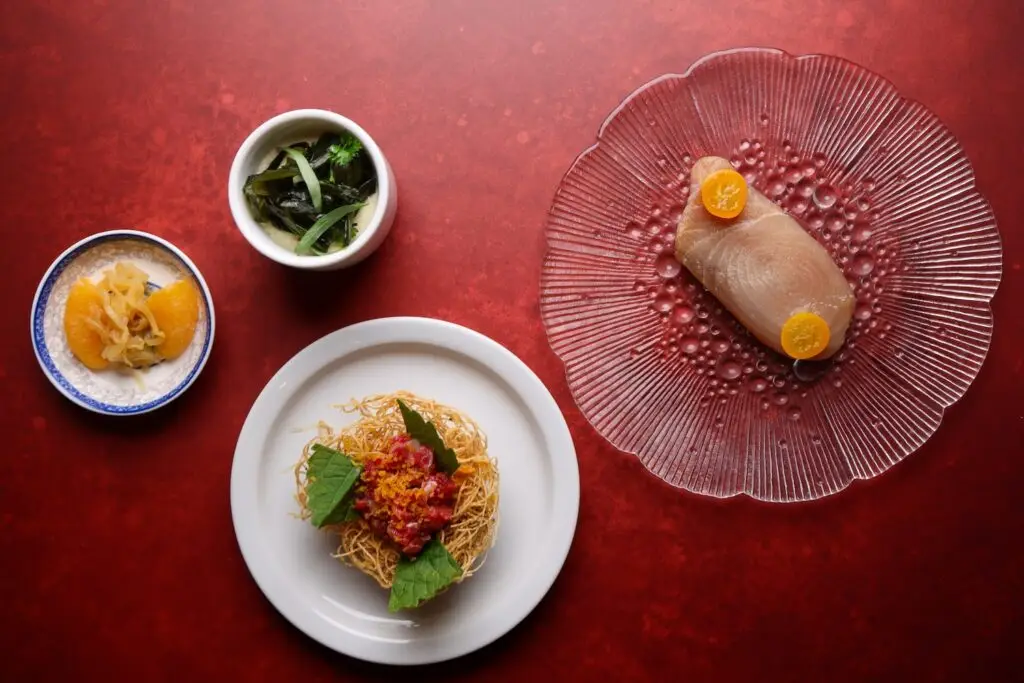
Where do delicately plucked marigold blossoms adorn Deer Isle scallops, or ingredients like fermented raspberry precede roasted coffee oil, shiro miso caramel, or bronze fennel in a parade of hit-after-hit dishes? Lilo in Carlsbad, of course. San Diego’s newest Michelin star changes its menu with the seasons, but one stalwart dish has kept tongues wagging since opening day last April: the caviar ice cream. A boat-shaped sliver of orgeat ice cream, smoked celery root bushi, and freshly pressed almond oil are topped with a generous heap of caviar. It’s a dish so good and defining that chef Eric Bost will tire of talking about it for a very long time.
Price: $265 for the tasting menu (before tax, tip, and drinks)
Low: S’mores Ice Cream at Stella Jean’s
There’s a reason Stella Jean’s s’mores ice cream is part of the local scoop shop’s “always available” menu. Made with fire-roasted marshmallows and coconut ash ice cream mixed with dark chocolate-covered graham crackers and mini marshmallows, its strangely ashen hue dabbled with flecks of tawny brown is a far cry from the wildly vibrant ube and pandesal toffee flavor seemingly made for Instagram reels. But it’s a sensation in your mouth—smoky, toasty, torched, creamy, marshmallowy, coconutty, ashy, and bitter from the dark chocolate. Pro tip: If you really want to DIY Lilo’s ultra-luxe treat, bring your own caviar.
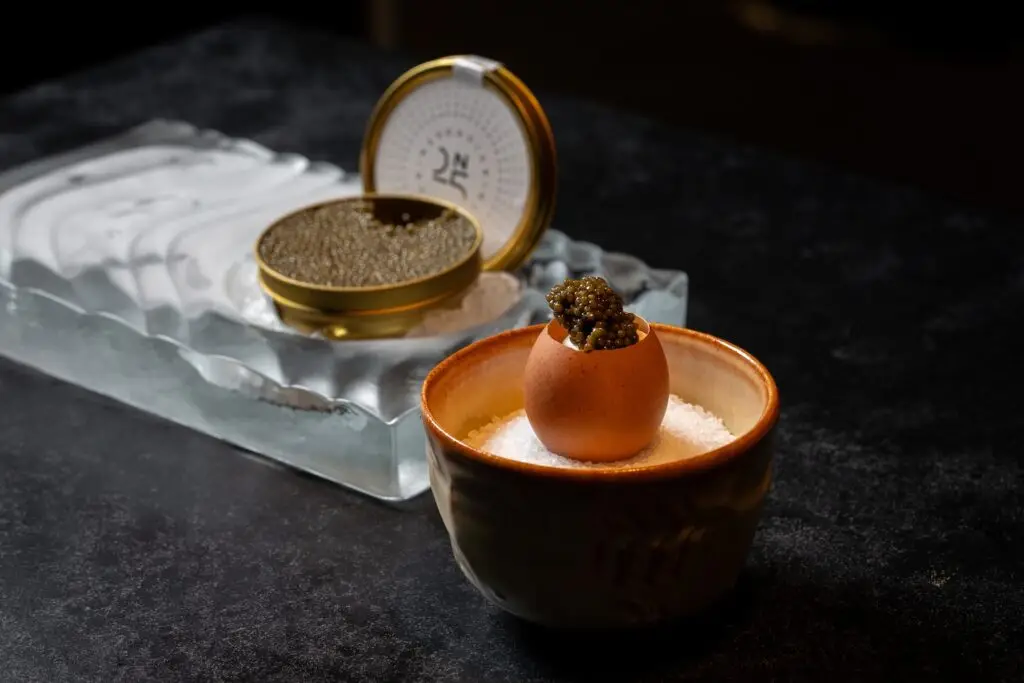
There’s no question what comes first at Lucien. It’s the egg. Chef and co-owner Elijah Arizmendi’s 12-course tasting menu begins with welcome bites under the calamansi tree before moving inside to start the Journey (the actual name of this section of the menu). The first step is one of the most astounding—a perfectly intact, upright, ochre-hued eggshell containing his take on Japanese chawanmushi (egg custard), topped with a dollop of caviar. The accompanying ingredients have ranged from sweet corn and huitlacoche to banana and buckwheat, but each one has precisely demonstrated Arizmendi’s commitment to French technique with California experimentation and global influence.
Price: $260 for the chef’s tasting menu (before tax, tip, and drinks)
Low: Chawanmushi at Sushi Ota
The biggest difference (besides price) is that while Lucien’s dish changes with the season, Sushi Ota is comfortably predictable. A San Diego staple since 1990, the legendary Sushi Ota has been one of those if you know, you know joints that locals try to keep off the radar. (It hasn’t worked at all.) Known for ultra-fresh fish and ultra-traditional service, the small Pacific Beach restaurant also serves Japanese comfort foods like udon noodle soup alongside sashimi, nigiri, and rolls. But it’s the savory steamed egg custard, called chawanmushi, that really gives you the warm and fuzzies. Add a side of salmon roe (ikura) for a few bucks more, and this dupe is about as good as it gets.
Price: $12 for chawanmushi, $11 for ikura
Courtesy of Chick & Hawk
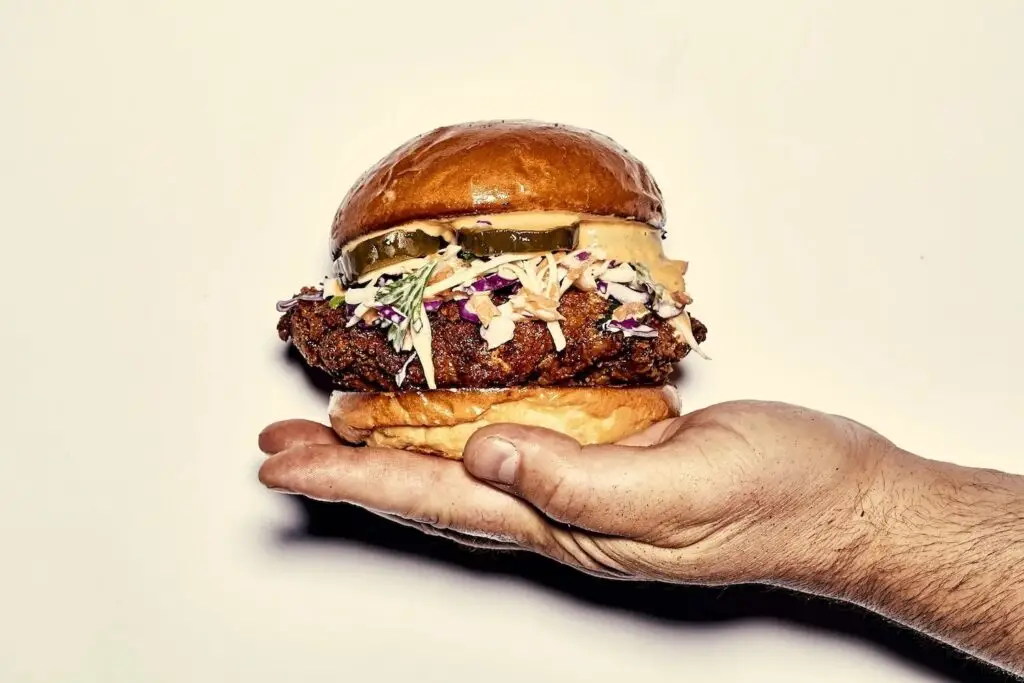
High: The Birdman Sandwich at Chick & Hawk
Enough ink—and tears, I’m sure—has been spilled over Chick & Hawk’s long and arduous journey to opening its doors. But now that the Encinitas eatery is in full swing, chef Andrew Bachelier’s tightly curated menu of fried chicken sandwiches, fries, and bowls command lines of hungry locals and skate-culture loyalists. The Birdman, the signature hot chicken sandwich named for partner and skateboarding legend Tony Hawk, is piled with cabbage slaw and pickles and slathered with a tangy kimchi comeback sauce on a soft brioche bun. Although this Nashville meets California meets Mississippi meets Korea sando doesn’t command a triple-digit price tag, the fact that it’s nearly a $20 chicken sandwich (sans side) has been a topic of conversation. Bachelier—who worked at Addison before opening Jeune et Jolie, then launched SDM’s 2024 “Best New Restaurant,” Atelier Manna—and his team earned that price tag.
Low: 5-Piece Korean Fried Wings at Cross Street Chicken & Beer
It’s hard to beat Koreans at the chicken game. Korean fried wings are defined by a double-fry technique—first at a low temperature to ensure the chicken is cooked through, then at a high temperature to ensure the famed extra-crispy, ear-splittingly crunchrageous magic. At Cross Street, they follow a similar fusion ethos as Chick & Hawk, using inspiration from the American South as well as Thailand, Korea, Vietnam, and more, with flavors like “Seoul Spicy” or “Honey Butter” for whatever you’re feeling that day. Pair it with a cold beer to go full chimaek (a popular Korean combination of pairing fried chicken and beer). Now that’s a combo—and price tag—that’s hard to beat.
Price: $8.75 for five wings
Courtesy of Trust Restaurant Group
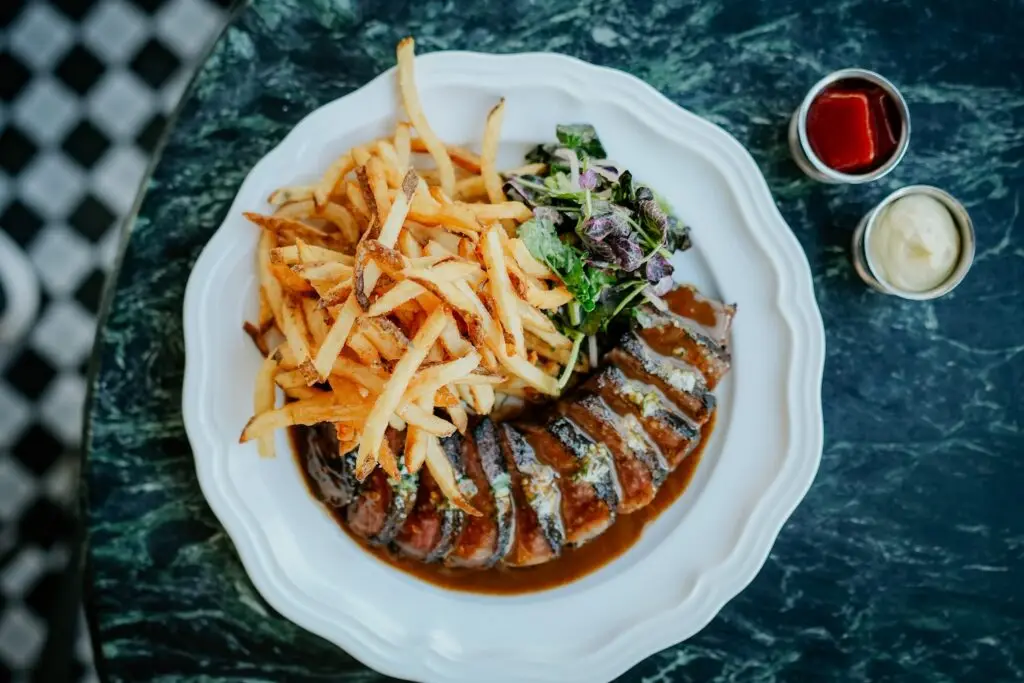
High: Steak Frites at À L’ouest
PB&J. Captain & Tennille. Brad Wise and steak. Steak frites ranks among the iconic global duos. And when the holy union of prime cuts and twice-fried carbs comes from Wise and the meat-loving masters at Trust Restaurant Group, it’s a pretty safe bet. À L’ouest—the group’s newest fancy, but not fussy, drippy plant dreamscape of a French steakhouse on the prime corner of 30th and University in North Park—gives guests a choice: 12-ounce New York strip, 8-ounce filet mignon, or 8-ounce Wagyu hanger, topped with sauce au poivre (the classic French pan sauce—peppercorns, shallots, heavy cream, brandy) and served with a heaping pile of 24-hour salt-brined fries and a watercress salad. One bite acts as a transport to a Parisian brasserie, so if you think about the cost in terms of time-space travel, it’s a pretty great deal.
Price: starts at $48
Low: Shepherd’s Pie at The Shakespeare Pub & Grille
To satisfy the same urge for meat and potatoes, feel at least moderately European while doing so, and save a couple quid, a trip to The Shakespeare in Mission Hills ticks all the boxes. The classic British shepherd’s pie arrives in a piping hot oval au gratin dish, smothered with a thick layer of mashed potatoes. Beneath it lies a hefty portion of marinated ground beef and vegetables in the pub’s secret sauce, and while there are a few choices of sides, the correct order is peas and “proper” chips (a.k.a. chunky, thick-cut fries versus the typically thinner American “French” fries). It’s more tickety-boo than très bien, but it’s immensely satisfying in any language.
Beth Demmon is an award-winning writer and podcaster whose work regularly appears in national outlets and San Diego Magazine. Her first book, The Beer Lover's Guide to Cider, is now available. Find out more on bethdemmon.com.
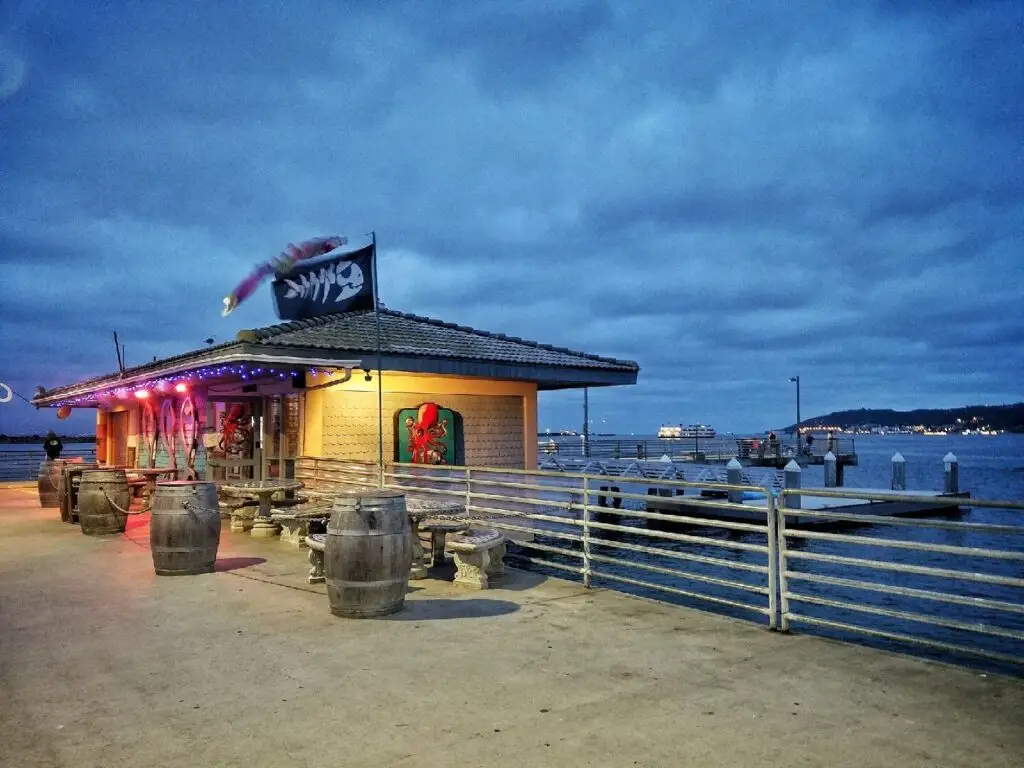
I spent time in a hot dog stand on the edge of San Diego Bay, looking out a window that mattered. Mattered to a kid whose mom taught him to fish on this pier. They’d turn on a little transistor radio, find a signal through the static, stare at the water, and talk life and his dad. Dennis Borlek’s dad was out there, somewhere, commanding a naval submarine through god knows what. When his dad would dock in Point Loma weeks or months later, Borlek biked down the street along Shelter Island to see him and steal back stolen moments.
Later, Borlek helped midwife the craft beer scene, managing seminal spots like Small Bar and Liar’s Club. Wondering what to do with the rest of his life, he went back to that pier and saw a for-lease sign on the bait and tackle shop. He tore through the public library and spent the whole night learning how to write a business plan (he had no clue). A couple days later he found himself at the intimidating end of a massive conference table, pitching his dream to the very official Port of San Diego executives.
They gave it to the San Diego kid. Not sure if they ever imagined Fathom Bistro—the tiniest, mightiest craft beer and hot dog stand, filled with spear guns, ocean monster figures, and seafaring oddities—would still be there 13 years later, let alone be a local’s favorite. It’s the most San Diego place in the world. Borlek taught himself to make kimchi and puts it on his Explodo Dog. His friend Kevin, who played with him in a punk band, dresses as a pirate and works the door on weekends. Has done so for years.
And when Borlek stares out the window, he can see the sub base and the memories of his dad.
Courtesy of Wayfarer Bread
Later, a few beach towns over, I sat in an employee break area—a shaded back-alley alcove with grape vines that serves as an escape garden for the crew. The place used to be a taco shop. Owner Crystal White points to a window of a single bedroom behind the dough-mixing part of the kitchen. She lived there when she started, often finding herself on the roof at midnight, staring at a broken compressor, trying to will it into working.
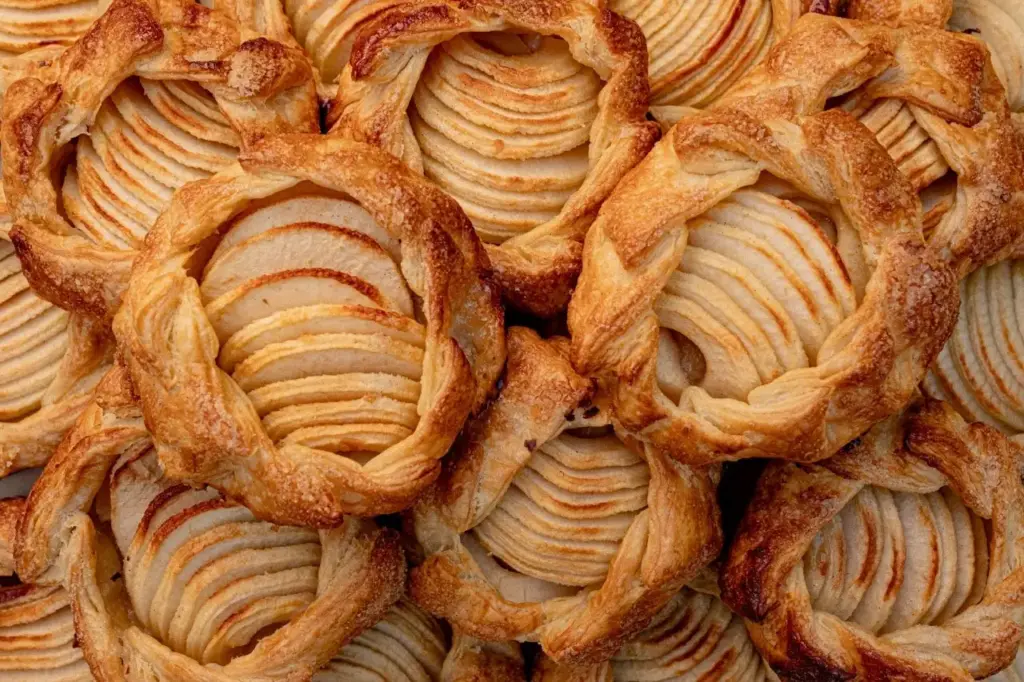
A blue-collar kid who fell in love with bread, she moved to San Diego with a business plan and zero cash. Banks don’t loan money to bread dreamers. Fate, kismet, and door-knocking found her enough investors. In the weeks leading up to opening that dream—perfect croissants, kouign-amanns, sandwiches, pizzas, baguettes fermented with wild La Jolla yeasts—she was outside hammering and painting. Locals would pause to ask what she was putting into the spot. “A bakery!” she’d reply.
“Oh, we don’t need one of those,” they’d say. Eight years later, White has moved out of the bedroom, and Wayfarer Bread is one of the best bakeries in the land. I ask if she’ll ever open another location. “I grew up dirt poor,” she says. “This has surpassed even my wildest dreams. This is enough. Please make sure you mention Emma Koehler, K-O-E-H-L-E-R, my kitchen manager. She deserves the credit now.”
These are the people and the stories behind “Best Restaurants.” This issue is dedicated to them, the culture they’ve gritted into being. On the surface, the annual tradition—naming a list of “winners,” my favorite places and my honest answers to “who has the best taco/pizza/Thai…”—is a good-natured competition among friends. But the deeper point is that it’s a way to highlight hundreds of places that have risked it all to build a little magic across the city. Sure, some owners were born in the stars and used that dust to make more stars. But many or most restaurants started with a scrappy go-getter or two. And now those places are filled with dozens or hundreds of people who love the work, show up day in and day out, for years. People like Koehler and the ones we feature in our story, “Behind the Line”.
So please use this list as a beachhead. Try these places, email me ([email protected]) to say “thanks” or “you truly messed up.” Eat, drink, commune, say hello, get to know the stories of the people making your favorite food. Make your own list, and share it with us.
(Note: Fathom didn’t win anything, probably because there’s no category for “Best Hot Dog Craft Beer Stand on a Pier with a Pirate,” which is a shortcoming on our part. So I put him here because he should be a part of any conversation about best San Diego things.)
Troy Johnson is the magazine’s award-winning food writer and humorist, and a long-standing expert on Food Network. His work has been featured on NatGeo, Travel Channel, NPR, and in Food Matters, a textbook of the best American food writing.
Your cup of coffee shows up exactly how you like it. The fully booked restaurant suddenly has a table. The last-minute, once-in-a-lifetime experience somehow comes together without a hitch. In the world of hospitality at top resorts, there’s an iceberg of scrupulous planning for each guest.
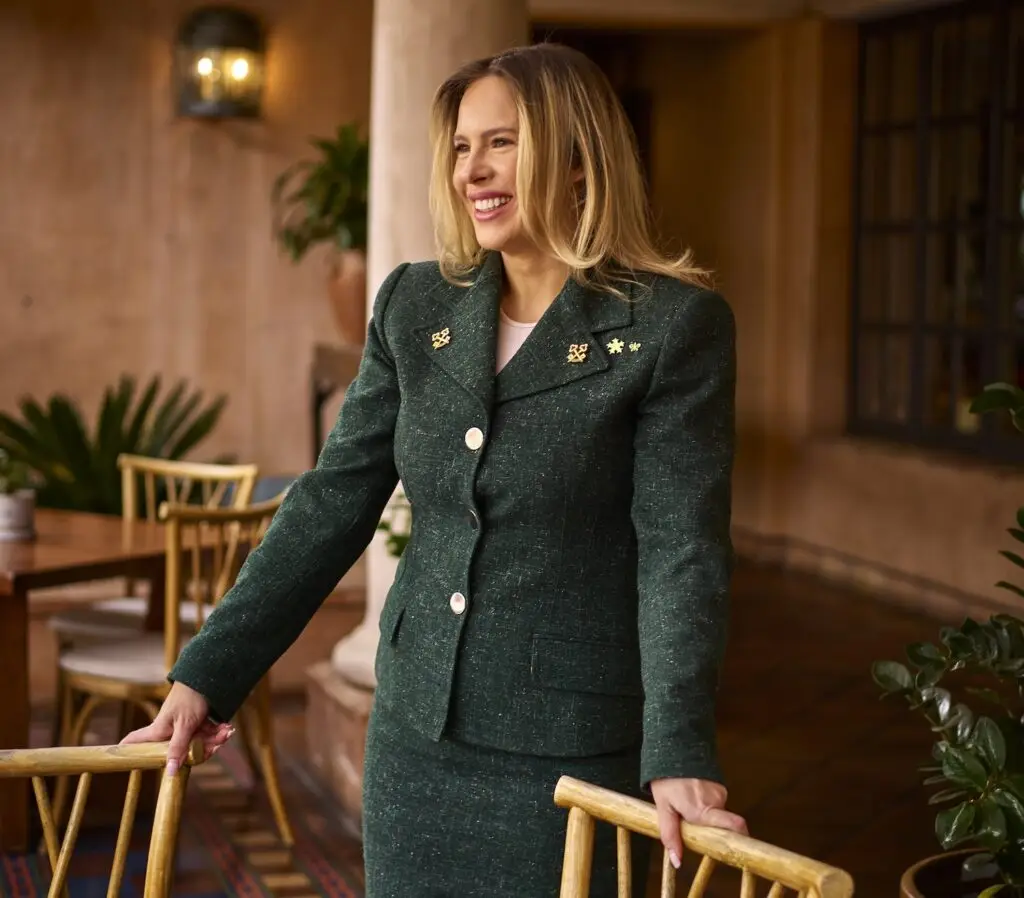
A concierge is in charge of that iceberg. There’s even an award for the best in the world: the Les Clefs d’Or Young Leader Award. It’s a months-long, multi-stage process with interviews, tests, and international competition, culminating at a global congress. Each member country only gets one nominee. Representing the US this year? Simona Marciulaityte from San Diego.
As Chef Concierge at Rancho Valencia Resort & Spa—a Relais & Châteaux retreat with Forbes Five-Star and AAA Five Diamond, a highly accoladed place with commiserate expectations—Marciulaityte is equal parts doer, fixer, and project manager for guests’ sometimes wild travel dreams.
“We see hospitality as theatre,” she explains. “There are a lot of moving parts, but when we arrive to the stage, it’s always with grace and a performance to create an incredible experience for the guests.”
That impossible-to-get reservation with custom cake and balloons at the table? She’s already texted three people. A guest calling on their way to the Zoo requesting a VIP-tour in 15 minutes? Booked in seven. The usual ‘Hey can you schedule me an appointment with Hermès to buy a $30K Birkin bag and plan my proposal in Italy’ request? Oddly specific, true story—and fully handled.
Courtesy of Rancho Valencia
“Great concierge work truly begins long before a guest ever steps on property,” Marciulaityte says. “Who is traveling, notes from prior visits, special occasions, and dining history help me understand the nature of the stay. For new guests, I read between the lines: the questions they ask, the pace they seem to want, the kinds of experiences they gravitate toward.
“Curation draws on something that can’t be replicated by a search engine. It’s years of genuine relationship-building with partners across San Diego and beyond.”
Nearly a decade ago, Marciulaityte was juggling life as a personal stylist at Nordstrom and hostess/server at Brian Malarkey’s Herringbone and Searsucker. After working an event for the San Diego Concierge Association, she had a moment of clarity: “I remember thinking, oh my god—this is exactly what I want to do.”
Being a part of Les Clefs d’Or grants entry to a global network of concierges who operate like a very discreet, very efficient hotline (“In service through friendship,” as their motto goes). When local super-chef Tara Monsoud was nominated for a James Beard, Marciulaityte worked with the SD Concierge Association and Le Coq to send flowers and photos to Chicago where the chef was staying.
“It’s not only guests—we hope to touch everyone with our concierge magic.”
Lili Kim is a content coordinator and writer for San Diego Magazine, with experience highlighting local businesses and communities. When not writing or shooting film, she is likely brewing her seventh cup of tea of the day or strolling along Sunset Cliffs.
Implementing a farm-to-table model hardly deserves acknowledgement these days. It’s not a stretch. It’s not innovative. “It’s the bare f**king minimum,” says Herb & Sea‘s executive chef Aidan Owens.
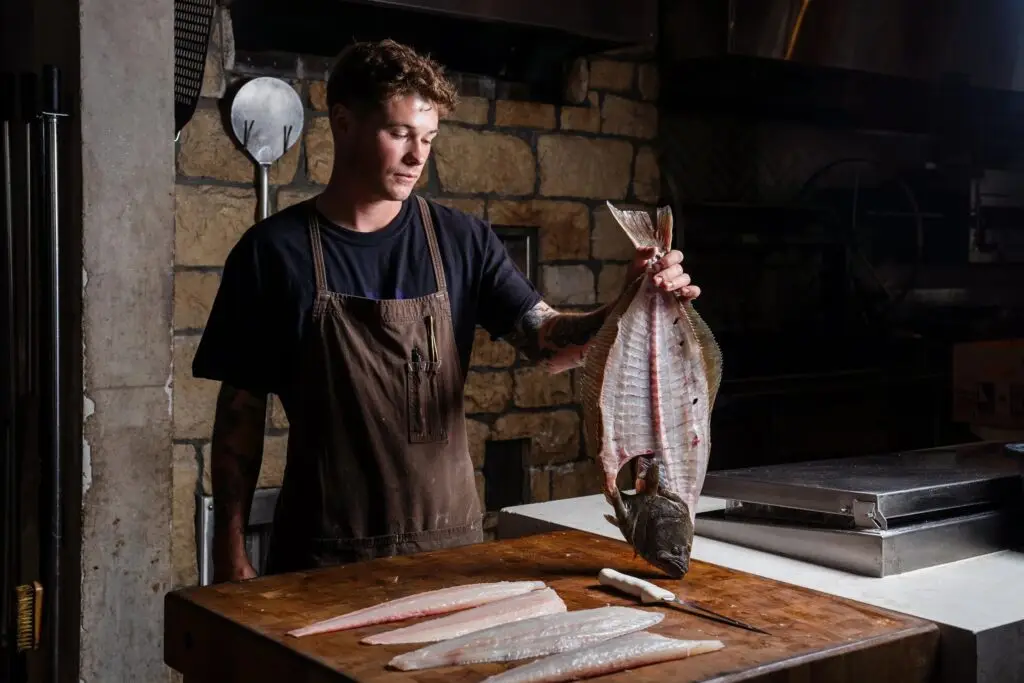
When I arrive at the Encinitas restaurant, I’m ready to talk sustainability, farm-to-table stuff, with Owens. “Did you see the chin on that?” he says of the extra big jiggly chin on the sheephead that just arrived with the day’s fresh catch. I did. It was Jay Leno adjacent.
I learn quickly that he somehow oozes both charm and stone-cold honesty. Maybe he could construct a new dish with chin goo, like he did when he had a bunch of tuna scraps and voila’d it into a smooth and crowd-pleasing ‘nduja. “I want to know what’s in there,” he says.
Courtesy of Herb & Sea
The instinct to look closer, to dig into what others might discard, says a lot about the chef’s approach. I guide him back to our topic, but he has something else on his mind. “We’re overcomplicating food—what happened to just cooking good food and having fun with it?”
Owens grew up on a farm in Byron Bay, Australia, where sustainability wasn’t a concept you chat about so much as a way of life. Think dirt roads, backyard chickens, pulling vegetables straight from the ground, and a mother who believed that if you couldn’t pronounce the ingredients on a package, you shouldn’t eat what was inside.
Food wasn’t precious or performative. Making it was what you did because you were hungry and that’s still what inspires Owens today. “I like to cook good food because I like to eat good food,” he says.
His approach to sustainability at Herb & Sea began so naturally that it felt just like instinct. “I was just like, ‘Let’s order food from the people who live and work here,’” he says.
Courtesy of Herb & Sea
And why wouldn’t he when lives in San Diego? Cities all over the world vie for our goods. Our tuna is sent overseas. Our spiny lobsters hit dinner plates in China and Japan. Not to mention California’s producing a third of the country’s vegetables and three-quarters of its fruits and nuts.
“Why would we outsource when it’s all here?” Owens asks.
Sustainability, in this context, is about cooking what exists in abundance, nearby, right now. “I love the local fish here. It’s f**king delicious and San Diego citrus, I mean, it is so f**ing good,” he says.
Instead of importing ingredients, Owens also looks for nearby alternatives. “You can find really cool things in the local waters,” he says, pointing out that stingray cheeks taste similar to scallops.
Courtesy of Herb & Sea
Whatever he finds in that sheephead chin might just be the next substitute for marrow. But to make this work, it means getting diners amped up about the slightly unfamiliar.
Tasting menus, where diners are completely in his hands, become an opportunity to gently push boundaries. “I’ll serve mackerel, because people think they hate it,” Owens says, noting that the abundant local fish can have some fishiness. “But when it’s fresh, it’s arguably one of the best fish in the ocean.”
He also tweaks the language on the menu so people might feel more compelled to give dishes a try without preconceived notions. He might use “lengua” instead of “tongue.” “Whelk” instead of “snail.” When he puts “stingray throat” on the menu, he disarmingly calls it “skate.”
To reduce waste, scraps aren’t always discarded but rather turned into something new. Sometimes they’re smoked, cured or fermented. Apples going bad turn into apple ponzu. Lemons turn to marmalade, which stretches their usefulness far beyond peak season. “And it’s super tasty on our pizza,” he says.
What makes the food even richer, is the relationships he’s built with farmers. Though it didn’t always feel natural, Owens sought personal connection first. He recalls approaching a fisherman at the Tuna Harbor Dockside Market. “I was awkward,” he says. “I went up to him and said, ‘I like your fish.’”
Owen’s is now so close to his suppliers—like fishermen Ryan Sebo and Joe Daly—that he gets texted pictures of fresh catches right as they flop on the boat. The messages always ask if he wants first dibs. “I say yes to a lot of fish,” Owens says, noting that Herb & Sea can go through 2,000 pounds of seafood a week.
Courtesy of Herb & Sea
The next evolution of sustainability, in his view, will be chefs working directly with producers such as his alliance with Sebo, cutting out middlemen and purveyors where possible. “It will put more money in the pockets of the people doing the work,” he says.
It will mean that chefs can’t just know their local farmers and producers, but they’ll choose to work with the ones who have the best practices. Dining and sustainability will become much less about the final plate. “It will be more about the impact that plate has on the Earth,” he says.
Ultimately, he believes sustainability doesn’t need to be loud. It doesn’t need hashtags. It just needs to be honest.
“We aren’t saving lives. We’re feeding people good food,” he says.
And yet, in feeding people well—simply, thoughtfully, responsibly—something meaningful happens. Guests leave satisfied. Ingredients are respected. Local ecosystems are supported and food returns to what it has always been at its core: nourishment, pleasure, and a quiet reflection of the place it comes from.
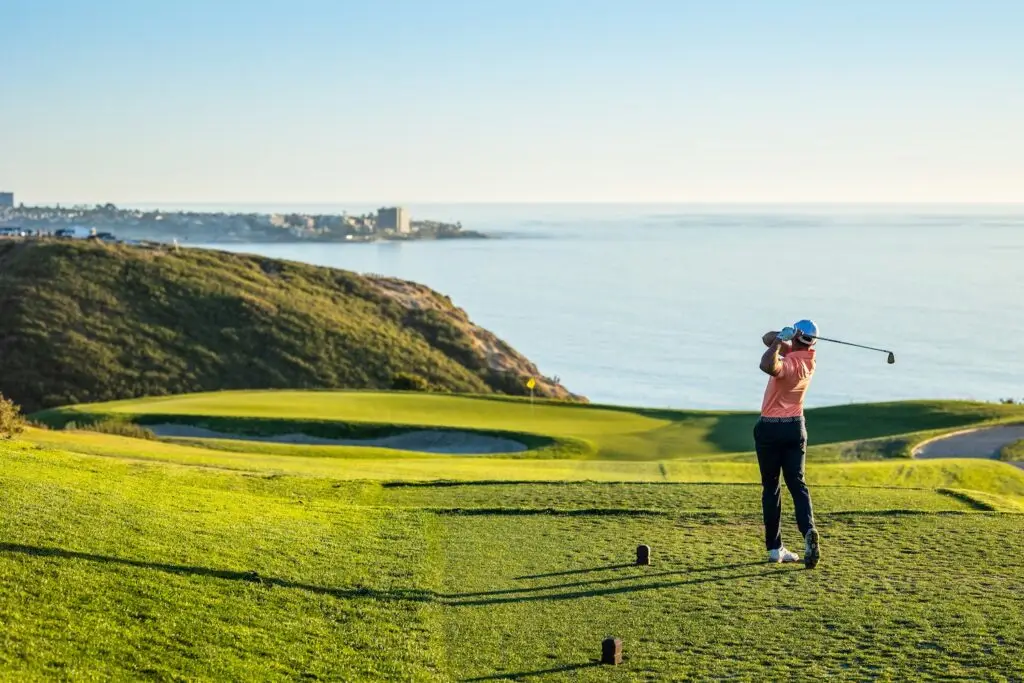
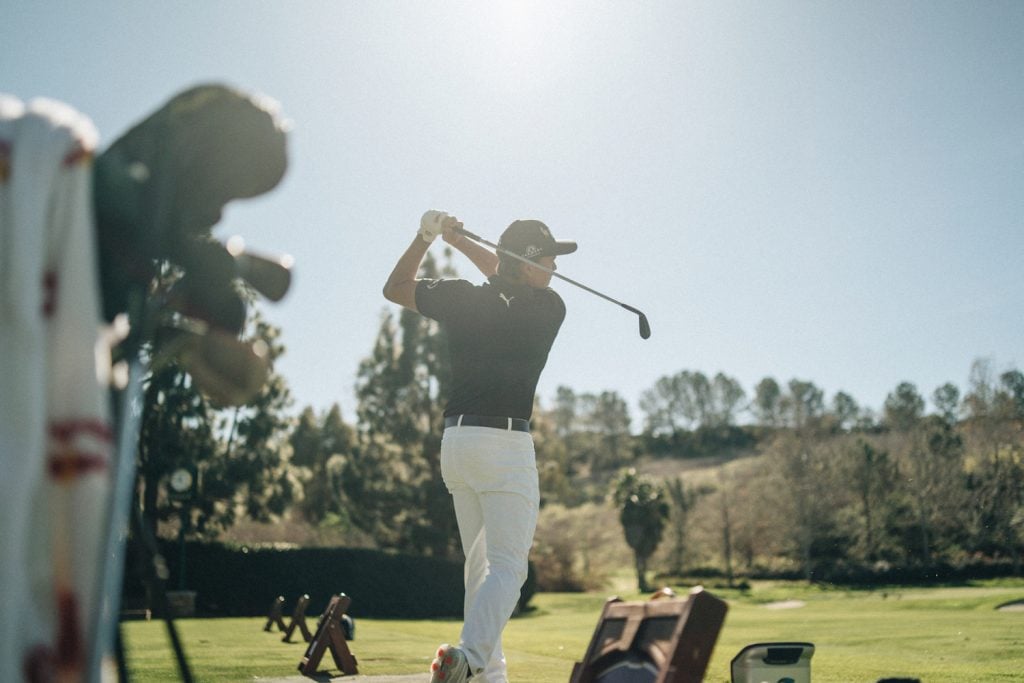
At the top of a golf swing, the world settles into a hush. Anyone within 50 yards kindly shuts up in reverence. Steady heartbeats tuck inside the sound of the wind. Time stands still.
Or—panic sets in, a thousand warnings from coaches and YouTube tutorials prattle through your brainpan. You wonder if a good walk prepares to be ruined.
On descent, the club rearranges air particles as it slices on a perfect or unwise line toward an earth so green, it seems like AI. The iron face meets the ball, and the satisfying or unsettling thwack echoes across the fairway like a nonviolent gunshot or a cry for help. Breath catches, curse words load in the prefrontal cortex. Eyes squint to follow the hard-to-see projectile zip majestically through the air or bounce lamely along the ground like a failed hurdler.
Sometimes it goes a couple hundred yards in the right direction, other times a couple yards into uncaring swamps. Golf’s beautiful and hard as hell.
Mindfulness and stillness reign over speed and might—which goes against most basal American instincts regarding sport. Its quiet, serene mocking of our human abilities is what brings so many of us to the life-long process of sharpening the skill. Because who hasn’t stared at the most beautiful parks and lawns in the world and said, “How can I turn this into a game and win it?”
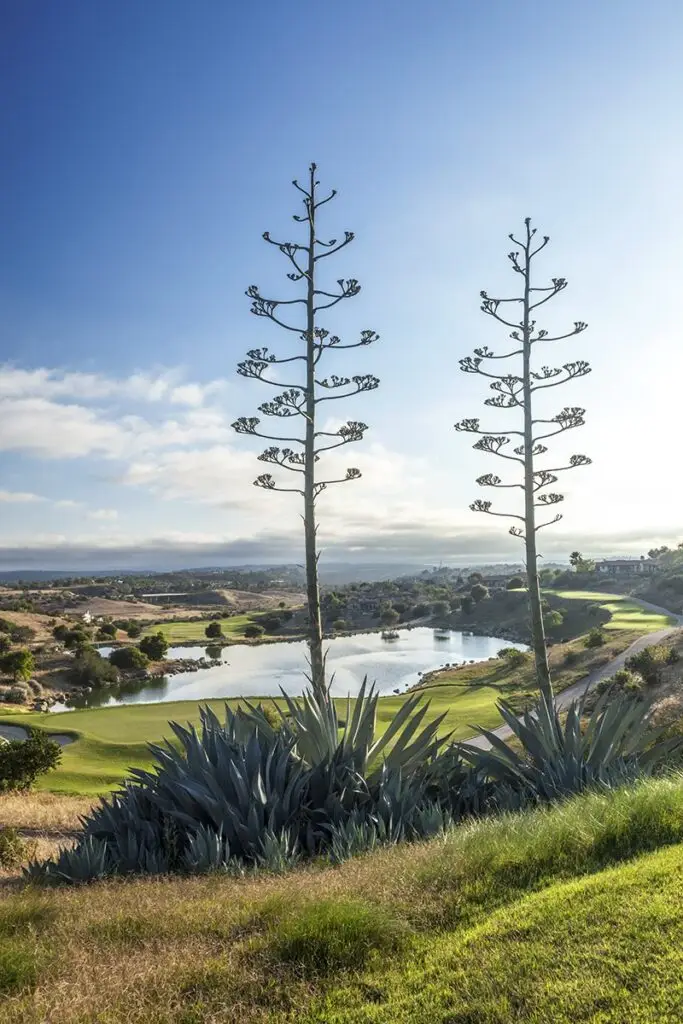
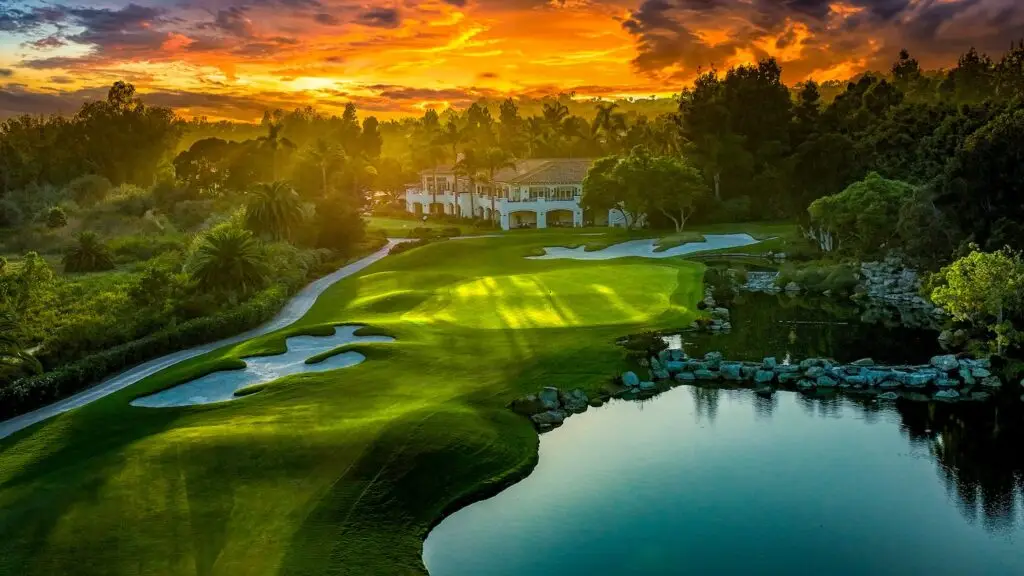
Luckily, San Diego has an abundance of courses to improve and curate self-doubt. The county is home to over 70 courses that attract the top golfers in the country. Some of the biggest names in the sport—Callaway, TaylorMade, Cobra, Titleist, Odyssey, Honma—are based here. Perfect weather never hurts. But San Diego golf courses also promise a smorgasbord of terrains: rocky canyons, hot deserts, and lush greens overlooking the expanse of the Pacific Ocean.
If you could take the 1,300-ish holes around San Diego and pick the very best ones to create your ultimate course, which would they be? We asked some of the top golf pros in the county to do just that. The result? San Diego’s Dream 18. Think fantasy football but for golf.
Just like any great course, our Dream 18 includes four par 3s, 10 par 4s, and four par 5s—everything from tricky dog legs and psychological tee shots to just pretty, pretty views. Once we had our list, we either asked the head golf pro what makes a hole so special, or other pros spoke on its behalf. Go ahead, tell us what we missed.
“One of the most iconic par 3s on the West Coast. The cliffside setting above the Pacific and the constant ocean breeze make it both beautiful and demanding.”
—Anthony Valverde, Director of Golf, The Crosby Club atRancho Santa Fe
“It’s a downhill par 3 over water with a great view from the tee down to the green. It’s surrounded by bunkers as well, so it almost feels like an island green even though it’s not. What’s really cool is once you drive to the next hole, if you look back on No. 14, it’s a great view as well. One of the signature holes [at Santaluz].”
“Hole 15 is widely considered one of the best and most memorable holes on the course. At about 250 yards, it’s a long downhill with multiple tiers and panoramic views into the valley. It looks intimidating at first, but there are lots of recovery contours and the green is fairly large.”
“While it’s beautiful with the backdrop of the Batiquitos Lagoon and the Pacific Ocean, this finishing hole demands both precision and nerve. The water guarding the right side and fairway bunkers ahead create a visually striking, strategic tee shot, while the expansive green rewards a confident, well-placed approach. If you can make a par on this hole, you’ve played it very well.”
“The 18th hole at Del Mar CC is a demanding par 4 with an elevated tee box. Water guards the right side of the green, and a player must hit a precise shot into this green.”
“It’s a difficult 428-yard par 4 playing into the predominant west wind. The hole is post-renovation and the vegetation was trimmed back, so now it exposes a penalty on the right. It’s uncomfy at the tee but a good challenge. Plus, it’s the No. 1 handicap for [all players].”
—Chris Lungo, Head Golf Pro, Rancho Santa Fe Golf Club
Lili Kim is a content coordinator and writer for San Diego Magazine, with experience highlighting local businesses and communities. When not writing or shooting film, she is likely brewing her seventh cup of tea of the day or strolling along Sunset Cliffs.
A ’90s pop hit is blasting as I drive up to Solana Beach to go dancing. I’m dressed in the millennial nightlife uniform: black tee, cute jeans, heels. It is 6:30 p.m. on a Tuesday. The dance party starts soon. I’ll be home by 10 p.m. at the latest. I may even catch an episode of Summer House.
I am acutely aware of my age in this moment. I haven’t willingly chosen the club life since my 20s and early 30s. Yet here I am, transported back to 2014 with a few more wrinkles, a lot more ibuprofen, and a touch of “pandemic stole this from me” in my pocket.
A few days earlier, a friend texted to suggest we go to a concert the upcoming weekend. “I can’t, I’m already tired on Friday,” I replied. At 42, two glasses of cabernet bend my space-time equilibrium. A hard sneeze risks a sprained neck. Did I mention the perimenopausal night sweats yet?
I arrive at the Belly Up at 7 p.m. Wilson Phillips comes on the stereo, and I sing-shout the lyrics before stepping out of the car.
Someday, somebody’s gonna make you want to turn around and say goodbye | Until then, baby, are you gonna let ’em hold you down and make you cry?
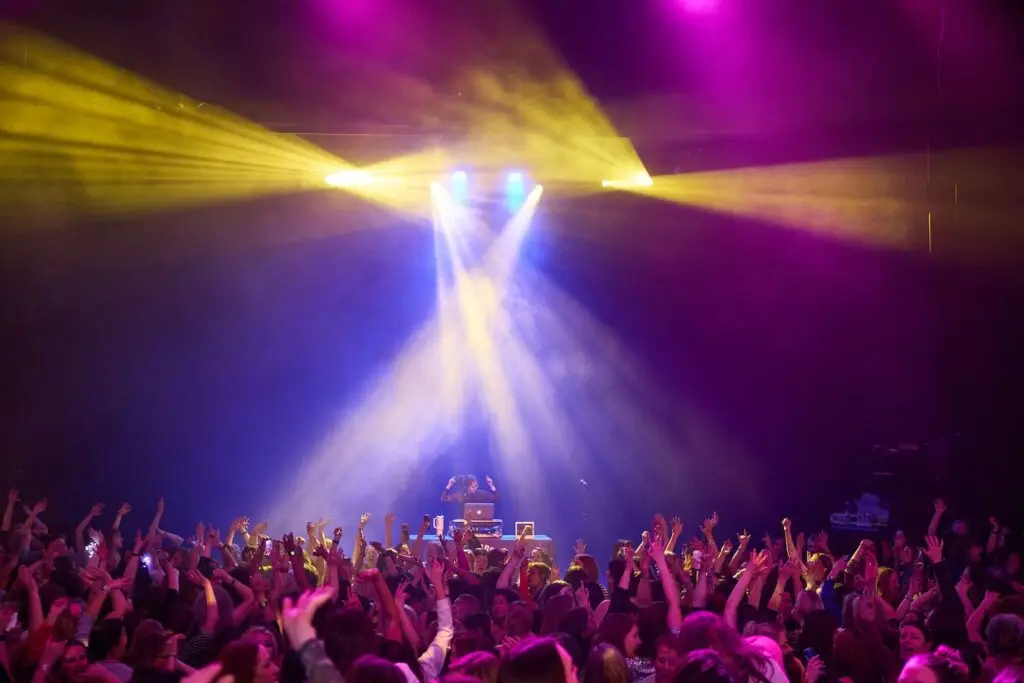
Tonight’s event is billed as “the dance party that starts earlier.” Surprisingly, I’m not the oldest person in the room. A 60-something man shoulder bops to the DJ set. A Gen X woman shimmies by and snaps photos of the glow-stick-spinning raver on stage. Few are drinking.
Started by two North County locals, Amal Chandaria (32) and Max Gold (37), Earlier is a dance party for older adults who want a club experience without the sleep-deprived, hungover physical toll. Running 6:30 to 10 p.m., attendees get home at a reasonable hour for a full night’s sleep.
Early is part of a national trend: the green-juice-ifying of party culture. Americans aren’t going out as much as they used to. They’re drinking less, and 10 p.m. has become the new 2 a.m. Wellness as a lifestyle concept is old hat, and each generation manifests itself in different forms (fitness booms in the ’80s, organic food in the 2000s).
According to a 2024 survey by consulting firm McKinsey & Company, the US wellness market now exceeds $500 billion annually, up from roughly $300–$350 billion a decade ago. More striking than the spend: Wellness as a top priority has surged from about 42 percent in 2020 to more than 80 percent today.
The timing makes sense. Studies show Covid led to long-term shifts in lifestyle patterns. We all began to reassess our lives and made some existential changes—like 6 p.m. soberish dance parties. In a recent Gallup poll, only 54 percent of US adults reported drinking alcohol, the lowest level in about 30 years. Conversations around longevity turned “treat yourself” into “invest in yourself.”
The downer of any wellness trend, though, has been the “can’t” philosophy—can’t eat that cake, can’t sip that marg, can’t binge that show. What if we could do health stuff and still dance and not totally suck the joy out of life? That’s what people like Chandaria and Gold are banking on.
Last year when they attended Atomic Groove—a variety dance band from 5–8 p.m. most Fridays at Belly Up—it sparked an idea. “People want to be healthy and active, and they don’t want to compromise on that by not feeling rested,” says Gold. “I thought, ‘I bet if we’re feeling this way, other people are looking for something like this, too.’”
He was right. Nearly 200 people showed up to the pair’s first dance party last July. Tonight’s crowd is nearing that number again. Among them is Cardiff-by-the-Sea resident and second-time attendee Lauren Marley.
“If you do one thing for yourself—and it means that you don’t have to be completely exhausted and wrecked for all the stuff you have to do the next morning—it’s great,” she says.
Though EDM isn’t quite my thing (give me some stank-face hip-hop from the 2000s), it’s clear from the number of return attendees that Chandaria and Gold have filled a need, one that isn’t just in famously health-forward cities like San Diego.
In DC, Dancing on the Waterfront occurs every Saturday from 5–9 p.m. while Extended Play DC wraps up at 10 p.m. Philly has Matinee Dance Party (5–10 p.m.). New York City finally chooses to sleep, with Friday Feeling and Matinee Social Club both ending at 10 p.m. Last year, Day Shift, geared toward those over 30, debuted at Bloom Nightclub in San Diego.
In Chicago, Earlybirds Club was founded in 2023 by high school friends Laura Baginski and Susie Lee. About 100 people showed up to the sold-out “dance party for ladies who got shit to do in the morning.” Two years later, Earlybirds Club is now held in nearly 60 cities and regions across the US.
“It’s an outlet that [middle-aged women] don’t get in our everyday life,” says Baginski, who also recently appeared on the Kelly Clarkson Show to share their story. “It’s movement and dance. We’ve learned now that it’s really essential to being a happy person.”
Admittedly, it’s a bit harder to be happy when I walk into the Music Box for Earlybirds’ event in San Diego. War’s about to start, protests are the new social gathering, and the economy is gaslighting me into believing salads should cost $18.
But soon the club is a sea of 700 people wanting to dance their asses off. Any negative emotions quickly begin to disappear. Tonight’s music features hits from the ’80s, ’90s, and 2000s: Madonna, Britney, Christina, 50 Cent, Ludacris.
Shuffling past the bar to the already-crowded dance floor, my heartbeat quickens. Pure, unadulterated joy is oozing in this place.
“The whole club was women’s bathroom culture,” said returning attendee and San Marcos resident Beth Avant, 50. “[You get to] freely dance, not care about what you’re wearing, you’re not trying to really impress people.” Soon Whitney Houston’s golden pipes set the room on fire, arms raise, smile lines deepen, and for a few hours, nothing else matters.
Oh, I wanna dance with somebody / I wanna feel the heat of somebody
While Baginski continues to run the operation, Lee lost her battle with stage IV metastatic breast cancer in August of last year. Honoring her memory at each event are words from Lee herself: “Sing f**king loud, dance like nobody gives a shit, and remember who the f**k you are.”
And who we are are sleepy people. If this new wellness era really takes off, imagine the possibilities. Dinner dates at 5 p.m., the Super Bowl at 2 p.m. EST, Justin Bieber headlining Coachella at 7 p.m. Until then, you’ll find me in bed shooting down plans past 8 p.m.
Nicolle Monico is an award-winning writer and the director of creative projects, digital editor for San Diego Magazine with more than 16 years of experience in media including Outside Run, JustLuxe and The San Francisco Chronicle.
Torch Heroes: Why San Diego’s Most Trusted Businesses Win by Doing the Right Thing
In a world overflowing with shortcuts, marketing fluff, and “good enough,” there are still companies that choose a different answer. And in San Diego, there are plenty of them.
In a world overflowing with shortcuts, marketing fluff, and “good enough,” there are still companies that choose a different answer.
Integrity guides how they show up every day. They make hard decisions, hold themselves accountable, and build trust the old-fashioned way, one action at a time. At the Better Business Bureau, we call these businesses Torch Heroes: leaders who demonstrate that ethical leadership strengthens businesses and drives long-term success.
And in San Diego, there are plenty of them.
Take House Collective Marketing Solutions, a Carlsbad-based digital agency that won the 2025 Torch Award for Ethics for its people-first approach to marketing. Instead of pushing flashy campaigns, the team often takes a step back to make sure clients’ foundations are strong before going big. Their philosophy? Truth over transaction builds partnerships that last.
Or look at Young Black & N’ Business, where integrity shows up through community action. When a local school lost art funding, founder Roosevelt Williams III and his team stepped in with workshops, mentorship, and hands-on support to help restore creative opportunity. That kind of engagement reflects ethical leadership rooted in real impact.
And in Vista, Lotus Sustainables carried its commitment to ethics all the way to the product line. After discovering defects in a shipment of eco-friendly products, the company issued full refunds and redesigned its offerings at its own expense, a choice that shaped its identity and reinforced to customers that ethics guide every decision.
In North County, Greenway Landscape Design & Build brings integrity into everyday service. When a client’s glass was damaged, likely not by their crew, owner Scott Lawn chose responsibility over blame and covered the repair personally. For Greenway, doing the right thing serves as a north star, guiding every interaction through transparent pricing, accountable partnerships, proactive communication, and follow-through long after the job is done.
Other honorees include At Your Home Familycare, whose leadership turned down a lucrative state contract during the pandemic to protect vulnerable clients and staff, and Bill Howe Family of Companies, where hiring practices, training, and service centers around shared values, every day, on every call.
What connects these diverse businesses, from marketing to nonprofit support to home services, isn’t size, industry, or revenue. It’s something deeper: a commitment to trust as a business strategy.
In San Diego’s competitive marketplace, that trust gives companies an edge. Clients invest in relationships. They refer friends. They stay loyal when others fade.
As one Torch Award winner puts it, integrity isn’t a section in the employee handbook. It’s the operating system of the company, the invisible code that determines every choice, every day.
And that’s exactly the point of the BBB Torch Awards for Ethics: to spotlight companies that dispel the myth that ethics and success are at odds. These businesses show that when leaders choose honesty, fairness, and accountability, especially when it’s hard, they build brands that matter.
At BBB, we see nominations come in from clients, employees, and business partners who have witnessed ethical leadership up close. These submissions aren’t polished promotions. They’re stories of moments when a company chose people over profit, clarity over confusion, and trust over convenience.
The nomination window for the 2026 Torch Awards for Ethics is open through March 31, 2026, and there are more Torch Heroes waiting to be recognized.
Who comes to mind in San Diego’s business community?
A vendor who always delivers — and always explains why.
A competitor who chooses the high road even when shortcuts tempt.
A team within your own company whose day-in, day-out choices reflect deep character.
And yes, businesses can nominate themselves. We encourage it. If you’ve built your business on principles rather than buzzwords, we want to hear your story.
Because in a world full of noise, integrity still deserves the spotlight, and San Diego is full of stories worth telling. Nominate your hero now.