Featured articles
Food & Drink
Food & Drink
Food & Drink
Featured articles
Everything SD
Everything SD
Things to Do
Featured articles
Things to Do
Things to Do
Guides
Featured articles
podcast-ep
podcast-ep
podcast-ep
Featured articles
Everything SD
Everything SD
Food & Drink
Featured articles
Everything SD
Everything SD
Food & Drink
Ready to know more about San Diego?
SubscribeReady to know more about San Diego?
The new bar has a menu by Irving Gonzalez and an ideal location in revamped Estación Federal
A decade ago, if you walked across the border to Tijuana, you’d exit near a pair of rundown residential buildings with “Estación Federal” spelled out in mosaic tile. Artists, architects, and writers looking for community and cheap rent filled the buildings, though at some point the squalor lost its charm. The buildings sat mostly vacant until a couple years ago, when developers decided to make them part of downtown Tijuana’s revitalization.
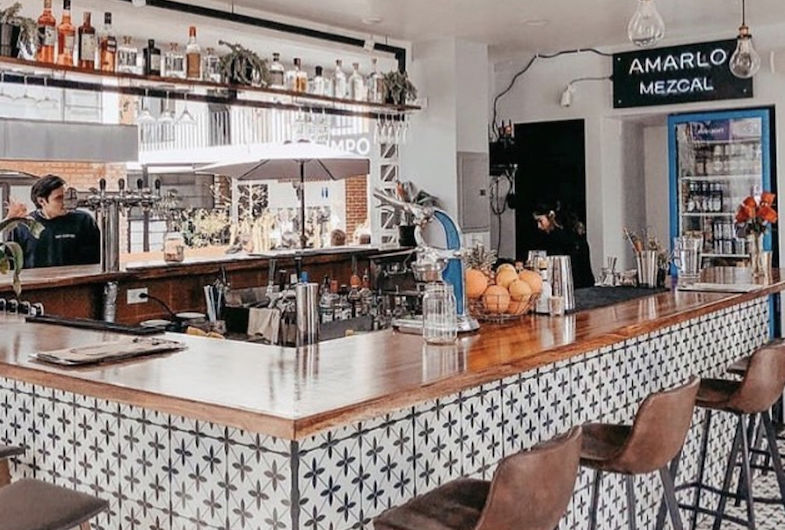
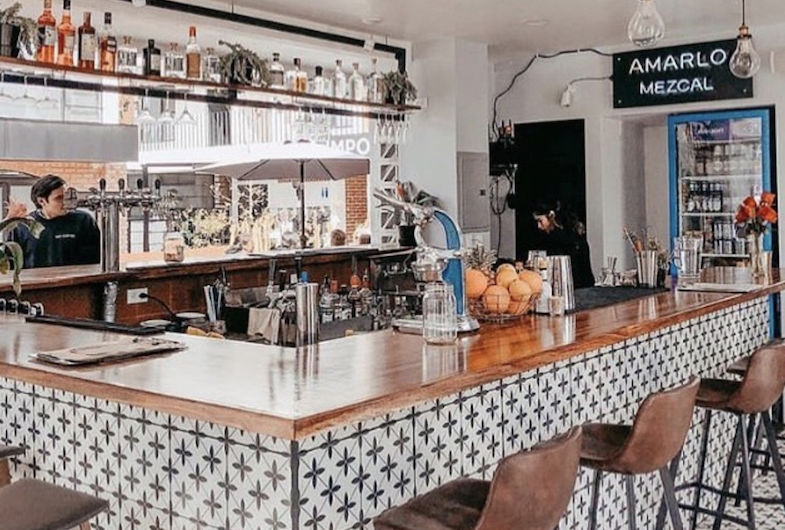
The result is an attractive mixed-use space—called Estación Federal—that honors the neighborhood, Colonia Federal, and its history. There are affordable lofts, offices, restaurants, a coffee shop, and—since this is a cocktail blog—a cocktail bar. Named Cereus after a desert plant that blooms at night (“Catch us at night” is one of the bar’s taglines), it’s an exciting addition to Tijuana’s growing craft cocktail scene.
Irving Gonzalez, well-respected for his cocktail-making skills on both sides of the border, came up with the menu. He said he wanted to create something fresh and fun, and though the bar soft-opened at the beginning of a cold February, he envisioned folks enjoying the cocktails on Cereus’s open-air patio on warm evenings.
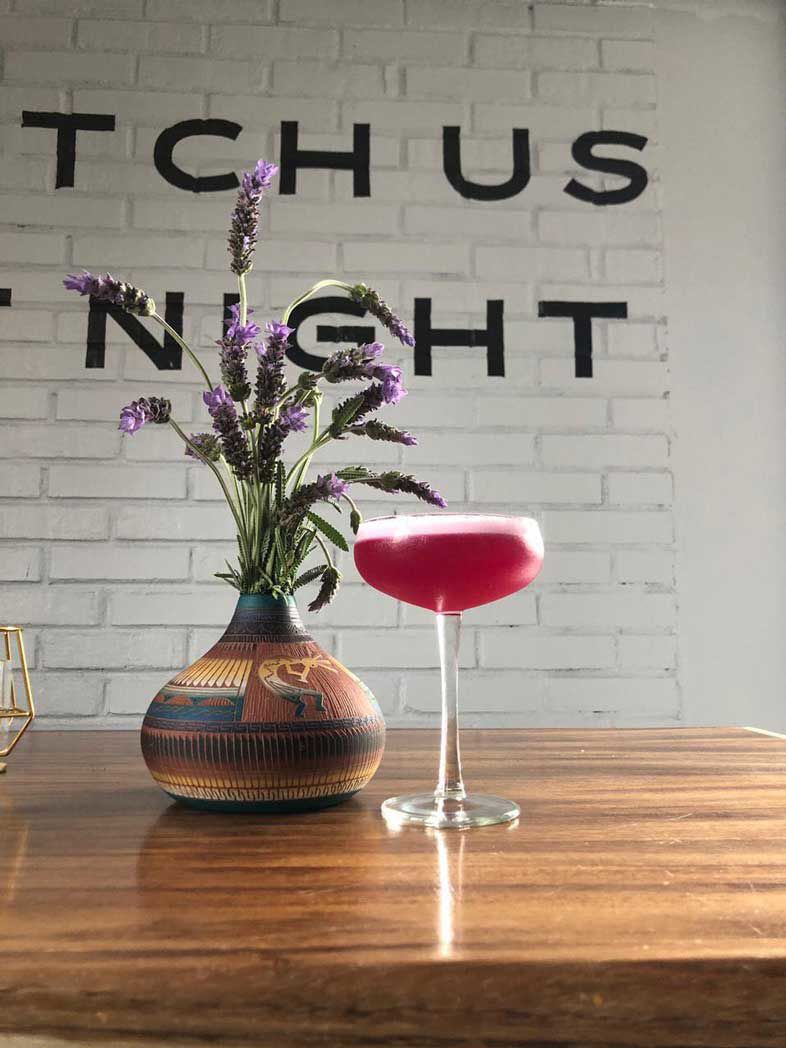
The bar’s signature cocktail is the Desierto, made with prickly pear juice, lavender syrup, Enmienda 18 (a small-batch gin made by Tijuana’s Agua Caliente Distillery), lemon juice, and egg white, garnished with a sprinkling of hibiscus salt. Served in a coupe glass, it’s the color of a Baja sunset.
For something lighter, try the Baja Summer, a TJ version of a tiki cocktail, made with tequila, orgeat, Aperol, grapefruit, and lemon. One of the more popular cocktails has been the namesake Estación Federal, a Negroni variation made with dry vermouth, Campari, Enmienda gin, and Ancho Reyes.
Gonzalez says he’s been pleased with how open Tijuanenses have been to craft cocktails. Despite Tijuana’s history as a Prohibition-era destination, it wasn’t too long ago that folks would order a daiquiri and expect it frozen. Now they’re asking for the real thing.
Cereus Joins Tijuana’s Growing Craft Cocktail Scene
The Desierto cocktail
“People are realizing the true flavors for cocktails,” Gonzalez says. “When people go to a bar and ask for a mai tai, they really are expecting an authentic mai tai.”
While you won’t find Gonzalez behind the bar—he was brought on as a consultant—he says customers are in good hands with lead bartenders Elzbeth Gomez and Sofia Escaravante.
“They are amazing,” he says. “I was so blessed to find them.”
Cereus (Larroque 271, Colonia Federal) is still in soft-opening mode, but is open regular hours—noon-ish to around midnight most nights and 2 a.m. Fridays and Saturdays.
Got an idea for a future post? Email me.
Cereus Joins Tijuana’s Growing Craft Cocktail Scene
PARTNER CONTENT
Cereus’ interior opens onto a large patio | Photo: Antonio Díaz de Sandi
The tastiest excuse for your next trip across the border, according to a seasoned local
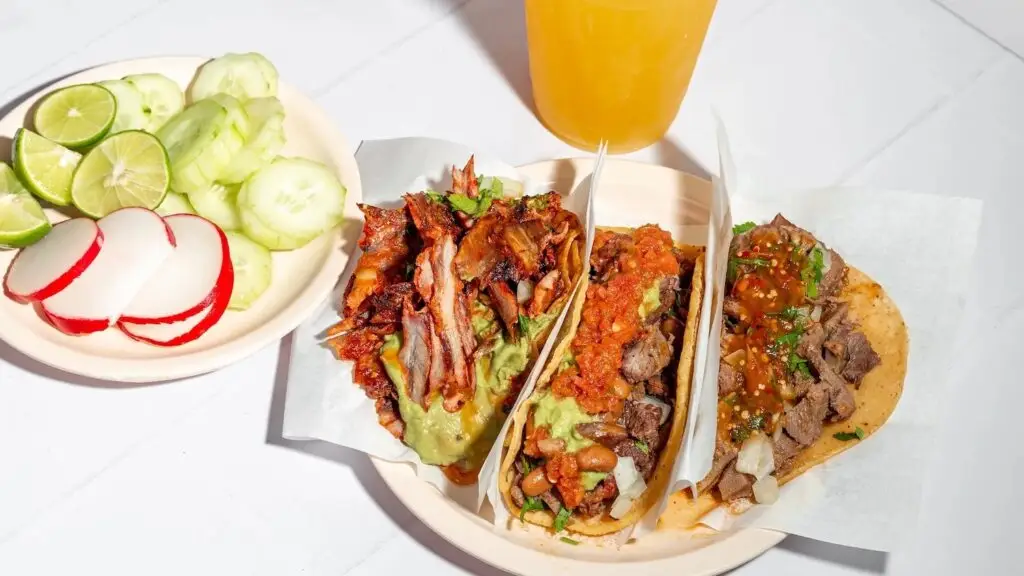
No trip to TJ is complete without tacos by the kilo, so we asked TJ native Angel Miron, who runs the tour company Let’s Go Clandestino, to do the impossible: narrow down a list of great tacos in his hometown. Here are five of his favorite.
“These guys serve fried fish and shrimp tacos” on a bustling corner in El Centro de Tijuana, Miron says. “Don’t leave without trying the BBQ-grilled smoked marlin taco on a smoky tortilla.”
Miron likes the tacos dorados de birria from this Tijuana shop. “The taquero is known for pumping them out super fast and does a trick with the consomé—pouring it onto the taco without looking,” Miron says.
While Tacos El Franc’s addition to the Michelin Guide has brought an influx of attention, Miron has long been familiar with its charms. “This is the place I used to go to all the time growing up in Tijuana, especially after a night out with the boys,” Miron says. “[Its] specialty is adobada. I really like the suadero taco.”
Founded in 1960, this place keeps it simple with three taco options: shredded beef, beans and cheese, or chicharrón. “They’re what you would call ‘steamed tacos’ because they are prefilled and then kept hot or steamed in pots,” Miron explains. “Then [the restaurant staff] slaps ’em with shredded cabbage, onion, and salsa roja.”
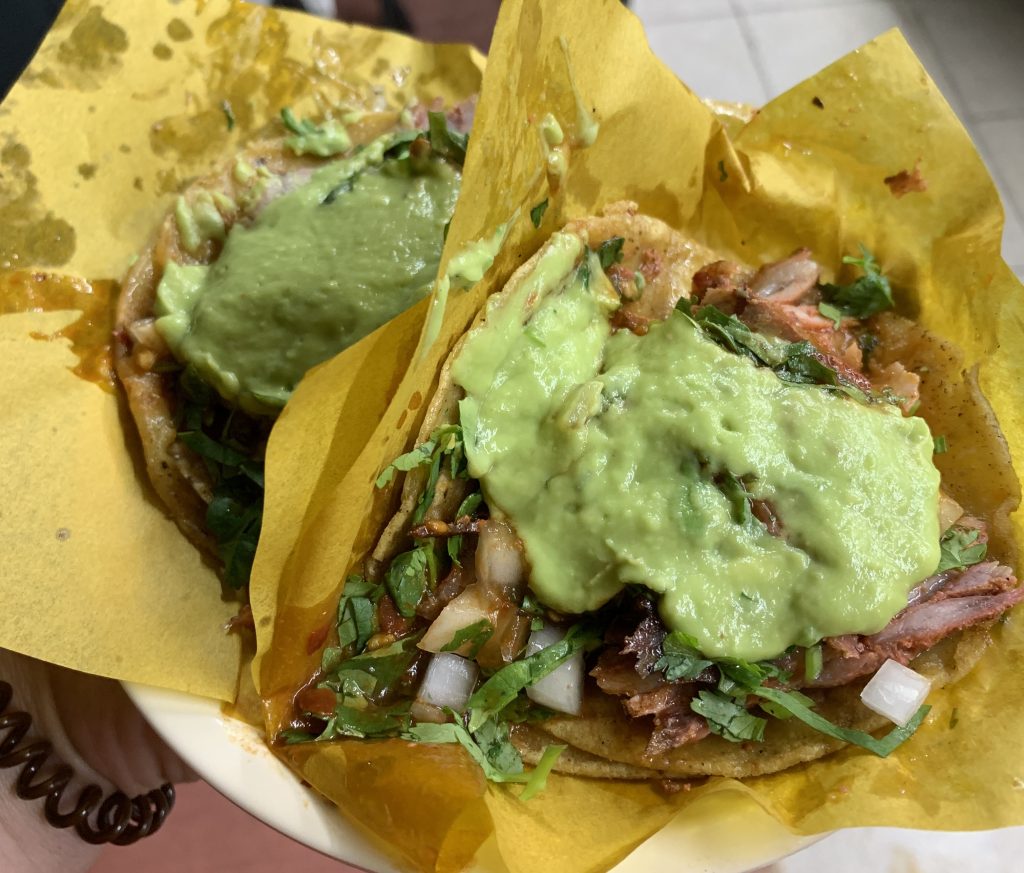
While this casual spot has multiple locations, its original outpost in the Gabilondo neighborhood is still considered the best. “Not only [does it] have tacos dorados de birria, but amazing carnitas—get the masisa with guacamole,” Miron recommends. “And another specialty here is the torta ahogada [or ‘drowned sandwich’] with birote shipped from Guadalajara.”
Mateo Hoke is a journalist and author. His books include Six by Ten: Stories from Solitary, and Palestine Speaks: Narratives of Life Under Occupation.
Amelia Rodriguez is a writer and journalist and winner of the San Diego Press Club's 2023 Rising Star Award and 2024 Best of Show Award, she’s also covered music, food, arts and culture, fashion, and design for Rolling Stone, Palm Springs Life, and other national and regional publications. After work, you can find her hunting down San Diego’s best pastries and maintaining her five-year Duolingo streak.
The craft beer scene in Baja is emerging from San Diego's shadow and coming into its own
Craft beer is booming in Baja California. What was once a grassroots network of passionate homebrewers clandestinely sharing their brews with family and friends has transformed into a multimillion-dollar industry representing nearly one-fifth of Mexico’s entire economic output of cerveza artesenal.
In October 2019, the Mexican Association of Beer Makers (ACERMEX), an organization similar to the United States’ Brewers Association, estimated the country would surpass 1,000 craft beer companies by the start of 2020, many of whom are based in the state of Baja California. But this persistent rise of beer businesses has been fraught with roadblocks, forcing scrappy entrepreneurs to fight tooth and nail to operate openly.
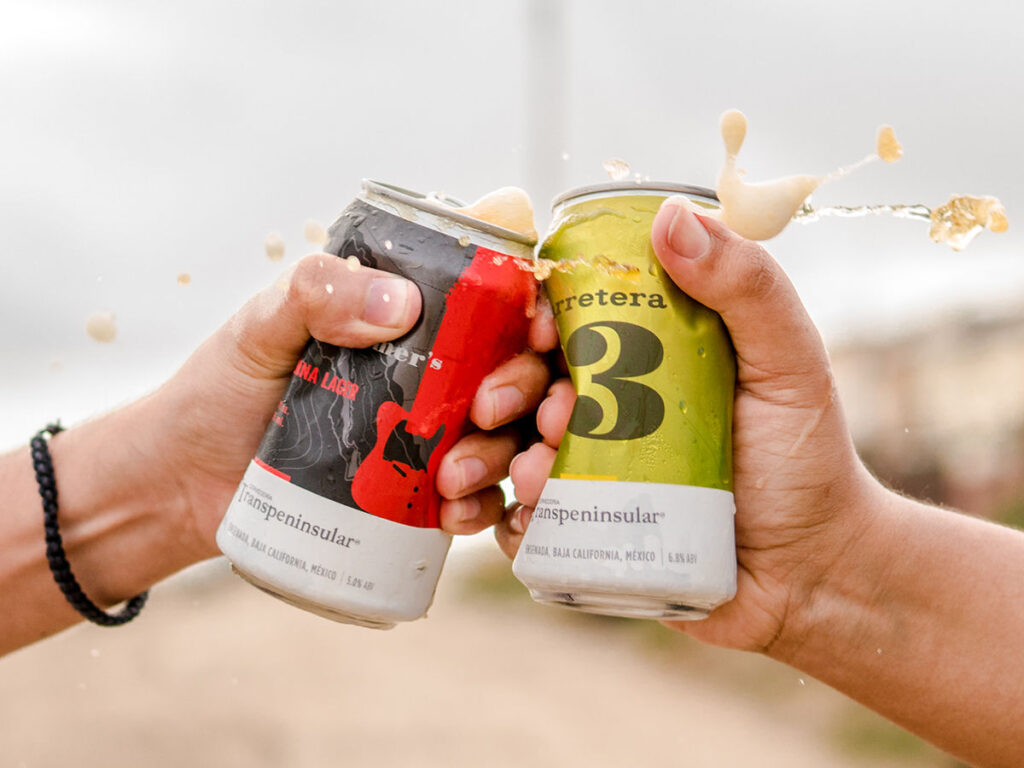
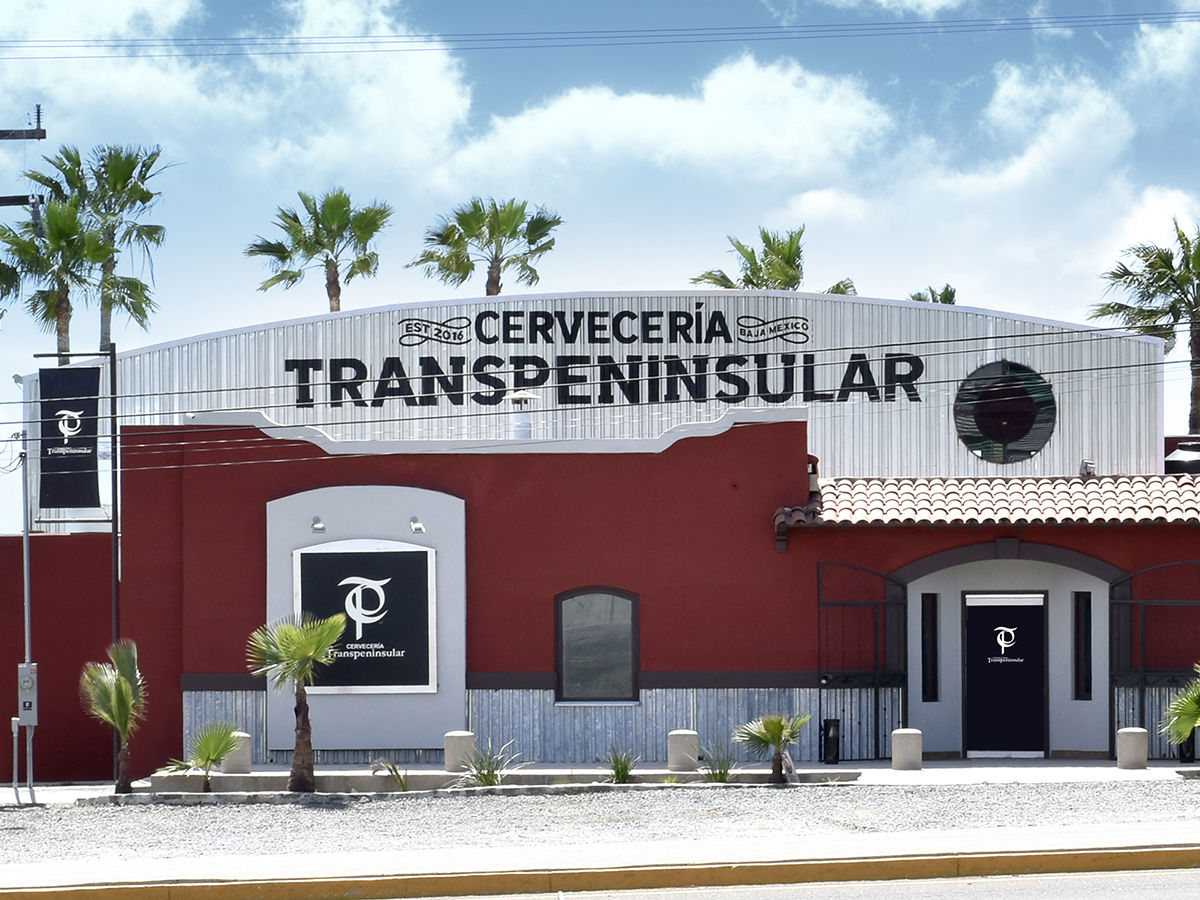
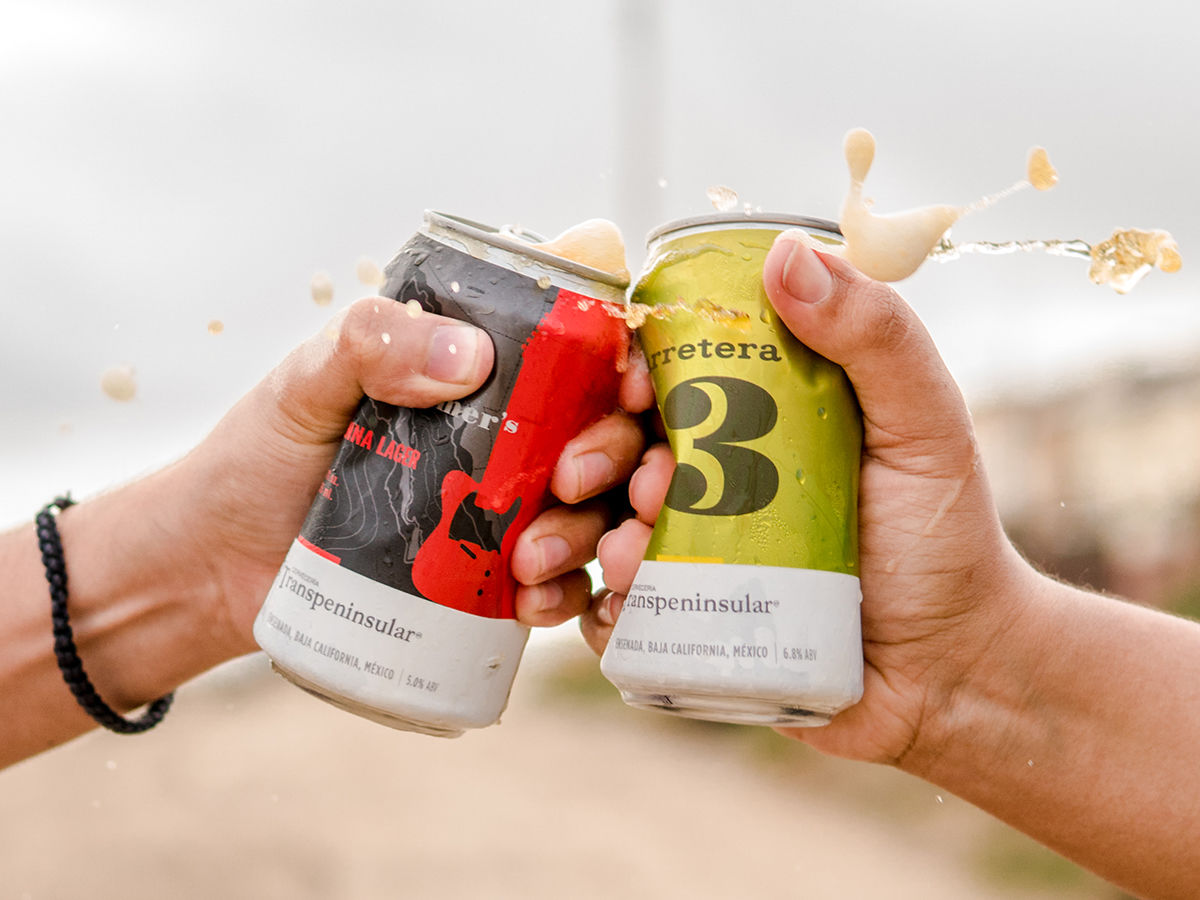
These obstacles range from a near-complete stranglehold of the market by Anheuser-Busch InBev–owned Grupo Modelo and Heineken-owned Cuauhtémoc Moctezuma to prohibitively expensive import taxes on ingredients. When asked what’s stifling Baja breweries’ growth, Collin Corrigan, a San Diego native and founder of Ensenada’s Cervecería Transpeninsular, just laughs. “Do you have a couple days to listen? I could go on for hours.”
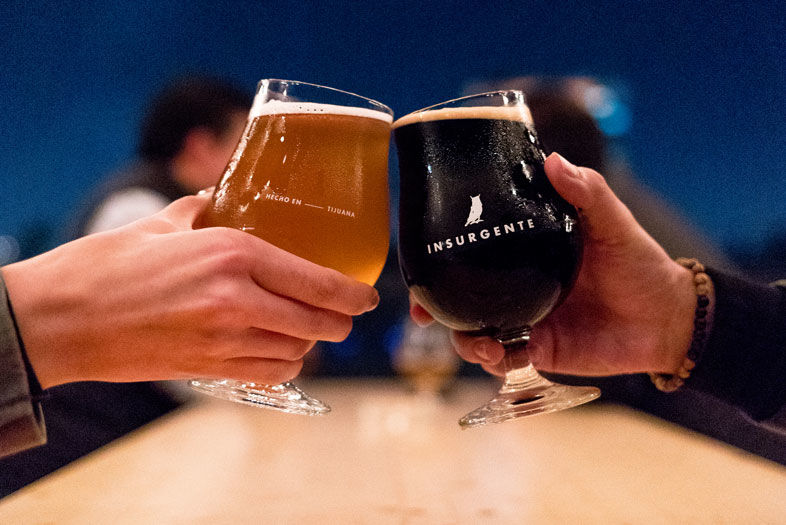
But these challenges have done little to stem the tide of small, independently owned craft breweries opening across Baja California, especially in cities like Tijuana, Mexicali, and Ensenada. Early pioneers like Cervecería Insurgente and Wendlandt Cervecería helped spark the revolution with a hefty dose of influence from San Diego.
“If it wasn’t for our proximity [to San Diego], not only would we not have been exposed to all the beers that marked our career, creatively and technically, but we wouldn’t have access to the fresh and readily available ingredients,” says Ivan Morales, cofounder of Insurgente. “The community of brewers between both cities have done a very good job of working together.”
Arguably, San Diego’s biggest contribution to Baja’s burgeoning beer scene is exposing drinkers to super-hoppy beers like IPAs. Mexico’s best-selling beer has long been Corona from Grupo Modelo, which is also one of the top five most consumed beers in the world. Now, brewers hope these historically flaccid lagers will serve as a gateway to more adventurous brews. Other styles that have fallen out of fashion in the US, like robust porters and amber ales, are prevalent on Baja tap lists.
But as I, a pretty frequent drinker of San Diego craft beer, began to explore the Baja beer scenes in earnest, a few obvious differences unfurled. Quality is sporadic—an issue most brewers openly admit. More than once, a brewer has poured me a not-quite-right splash straight from the tanks with a shrug and a promise that they’ll tweak it the next time. Nothing’s undrinkable, but there’s a lot that wouldn’t fly in the US.
The biggest and more attractive difference is a feeling, a vibe, an excitement—that unspoiled naivete about collectively building something from the ground up and giving the big boys of beer the middle finger at the same time. Experimentation and innovation are encouraged, and while the results don’t always land, it’s intoxicating to witness. Baja brewers are unfettered by expectations (although with a decent amount of awards already earned, that’s sure to change). Still, it must be difficult to define oneself in the shadow of San Diego beer.
Cervecería Transpeninsular
“[Baja beer] is still trying to find its spot,” Corrigan says. “We have not established our own uniqueness.”
Morales is confident that not only will Baja get there, but they’re already there. “I think Baja will continue to be the bastion of craft beer in Mexico because of our openness and confluence of new ideas. Tijuana, in particular, is a sort of melting pot that has always allowed for an influx of different currents; it’s an ever-changing city that does a very good job of adapting to changing contexts.”
As beer quality increases and logistical barriers decrease, it’s likely that more breweries across Baja will open and garner further international recognition in competitions like the World Beer Cup. If the current course of pressure on the government to relax restrictions on independent breweries continues, the number of craft breweries exporting to the US and other countries will probably rise as well. But my one hope for the future of Baja beer isn’t “better” beer or more styles. It’s that they maintain that sense of camaraderie that we’ve somewhat lost under the weight of the crown. In that vein, long may Baja reign.
Baja Beer — Feature
Beth Demmon is an award-winning writer and podcaster whose work regularly appears in national outlets and San Diego Magazine. Her first book, The Beer Lover's Guide to Cider, is now available. Find out more on bethdemmon.com.
Beer businesses on both sides of the border rally to support the currently closed brewery
Four months after Jaime Bonilla won the state of Baja California’s gubernatorial race, Cervecería Insurgente closed.
After opening in 2010, the popular Tijuana brewery in Zona Rio quickly became one of the country’s most respected and pioneering craft breweries, helping boost Baja beer in the global beer conversation by racking up awards, accolades, and plenty of attention. But on October 5, 2019, officials from the city and Baja California’s new controlling party, the National Regeneration Movement (MORENA), shuttered the tasting room and halted production of the brewhouse, citing a lack of numerous operating permits, according to the San Diego Union-Tribune.
Ivan Morales, co-founder of Insurgente with his brother Damian, disputes this. “We have all the required permits, although they’re accusing us of not having them.”
While initially reluctant to comment publicly, Morales has recently become more outspoken about Insurgente’s plight, seemingly out of desperation as his and his employees’ livelihoods are jeopardized by the extended closure. The brewery is now leveraging social media to rally support from the craft beer community, condemning the new government’s accusations of bribery toward the political party formerly in power to bypass proper permitting procedure.
Insurgente Is Fighting Back
Photo by Beth Demmon
“What’s going on at Insurgente, in my eyes, is what hurts not only Mexico but any country,” says Ryan Brooks, brewmaster at SouthNorte Beer Company, a San Diego-based brewery with a permanent shared tasting room in Tijuana. “The mess of government stepping on people trying to make an honest business, it’s petty government parties not getting along. They are hurting the employees, bartenders and even the beer tourism.” (San Diego Magazine reached out to the Baja Norte Tourism Board, which did not provide a comment.)
So far, support from the craft beer community has been swift. Several breweries in the region, such as Mamut Brewery in Tijuana, have allowed Insurgente to utilize their brewhouses so they can continue production in an attempt to keep the business afloat during the indefinite closure. SouthNorte is brewing a collaboration called #FreeInsurgente to help bring attention to the conflict.
This Thursday, December 19 at 7 p.m., Machete Beer House in National City is hosting an Insurgente “tap attack” with guest bartenders from the brewery in order to show solidarity “with our brothers and sisters of Insurgente as they fight the injustices they are currently facing with the new governor, Jaime Bonilla’s administration,” according to the event page.
“We hope it’s just a minor setback, but does raise questions,” says Joann Cornejo, co-founder of Machete. When asked what she’d say to the governor if she had the chance, she doesn’t hesitate. “If your promise was to combat corruption, why are you targeting small businesses that contribute to the tourism of your state, jobs, and the local economy?”
Morales claims there’s a more personal motive behind Insurgente’s closure. “The real matter is that the new governor’s brother lives directly across the street from the brewery. It seems he doesn’t want a bar in front of his house, and he told us this directly.” He did acknowledge the government is conducting mass sweeps of businesses in non-compliance, but calls their particular situation “a personal matter.”
cerveceria insurgente tijuana
Photo by Beth Demmon
According to the U-T report, the new governor is adamant that Insurgente’s days at their current location are finished. But personal or not, Cornejo is hopeful for a resolution. “The Mexican craft beer scene continues to flourish and great beer is coming out of Baja. It would be a shame if Bonilla continues to attack small beer.”
thedelightedbite @delightedbite
Insurgente Is Fighting Back
Photo courtesy of Cervecería Insurgente
Stake Chophouse & Bar brings contemporary classics and old-school service to the heart of Coronado
Stake Chophouse & Bar isn’t your average steakhouse. Blue Bridge Hospitality’s Coronado outpost is a modern interpretation of a big-city steakhouse nestled in the heart of the small coastal community. The team at Stake has reimagined the whole steakhouse experience. By prioritizing a seasonal farm-to-table sourcing philosophy, a personalized guest experience, and unique service touches, like a formal steak presentation and a bespoke knife selection process, Stake distinguishes itself in a sea of steakhouses.
Exceptional steaks, including Wagyu from Japan, Australia, and the U.S., and fresh seafood flown in daily form the core of Stake’s culinary identity. The menu features a five-course omakase-style steak experience highlighting house favorites, plus an array of cuts, and classic steakhouse staples—think a wedge salad, baked potato, or pasta carbonara—refined for a contemporary palate without losing their traditional appeal. Stake focuses on seasonal sourcing from the region’s best family farms and specialty purveyors, and incorporates intentionally unexpected touches to create something truly unique.
“I challenge our chefs and myself to take it a step further in sourcing,” says Chef Ronnie Schwandt. “It’s important to us to highlight different farms, unique one-off farms—whether it’s cattle, strawberries, a local fisherman or from anywhere in the United States, we’re always trying to find that niche.”
Beyond the menu, Stake emphasizes outstanding service, says Vinny Spatafore, Director of Hospitality Operations. Staff maintains detailed notes, allowing them to remember guests by name, recall previous orders such as a favorite martini (also memorable for the customer since it’s served in an extra tall, distinctly-shaped glass), and celebrate special occasions like birthdays and anniversaries.
“When you have those points of topic that you remember about a guest, they appreciate that,” he says. “Our servers are really good with that—we have a couple servers who have been here since the beginning and they’ll remember somebody from years ago, their name, their kids’ names, where they live. I’m really thankful to have a great front of house staff.”
Award-winning wines, rare whiskeys, special events, and a complementary black car service that provides transportation for guests throughout Coronado add to Stake’s appeal.
Schwandt stresses that Stake offers more than a meal; they aim to give patrons something unforgettable.
“It starts when you walk up the stairs and are greeted by the hostess—that sets the tone for the night. Then you’re greeted by a server, who may know you by name, and can guide you through the menu and curate as they get to know you,” says Schwandt. “Most people leave kind of blown away; they leave feeling like they just had an experience. That’s the goal, right? Whether you’re serving smash burgers or high-end steak, you want somebody to leave thinking, Wow, that was awesome.”
A journey through Baja to find tostada enlightenment
A year and a half ago, I insulted hundreds, possibly thousands of years of Mexican food heritage when I suggested the tostada was a sub-par invention. I needed an umbrella for all of the hate mail that rained down upon me.
First off, let’s say this. I love Mexican food and have a long history with it. I started traveling to Baja when I was 14. As a San Diego native, we’re weaned directly from the breast to the bottle of hot sauce. I love birria and menudo and Cotija cheese.
My derision of the tostada is pretty simple. It is one of the toughest foods in the world to eat. Attempt to bite it like a pizza, and tostada shrapnel cascades all over your person. Congratulations on your new tostada pants.
Try to eat it with a fork? Ever tried to eat a corn chip with a fork? Tostadas mock your silly utensil.
Plus, being flat as a CD (those were thin, flat discs that once played music), all of the awesome juices from the toppings would run off onto the plate. All that lovingly stewed meat juice, just wallowing and alone on a plate. And since the tostada shell is hard, it’s not like you can dredge it through the orphan sauce, like you would Indian flatbread.
And so tostadas make me sad.
And unlike other hard-to-eat foods (crab legs come to mind), the tostada shell was intentionally left in this useless shape. Why wouldn’t you just fold the fried corn disc into an easier shape? Like the glorious side-vee of the taco, which is much easier to eat? Or at least fold the edges of the tostada so that it can contain the goodness of the toppings and not freely donate its juices of gold to the plate?
Leaving it flat was like doing laundry and deciding not to fold it. I called it the “half-ass laundry taco.” Chef Chad White was gracious about the peculiar missive, painting “#HALFASSLAUNDRYTACO” on the wall of his restaurant’s bathroom.
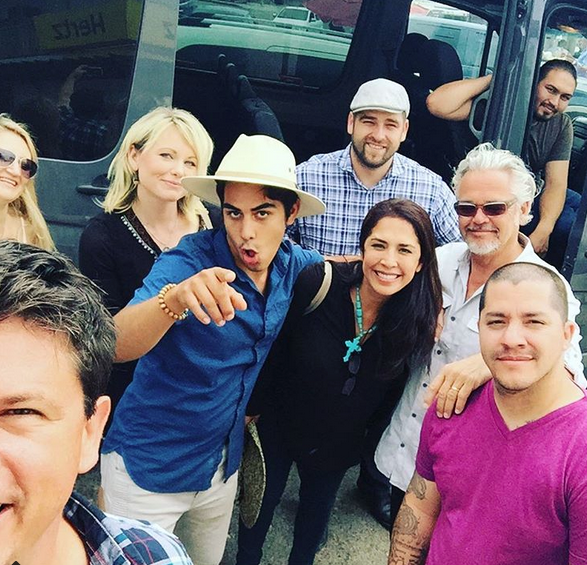
Two weeks ago, chef Flor Franco decided she needed to educate me. So she organized a trip as part of her food/drink/travel company, Indulge. With myself, a handful of chefs, food people and Baja lovers, we headed south in search of tostada enlightenment. They dubbed the journey “The Half-Ass Laundry Taco Tour.”
I felt honored. And ashamed. And skeptical. Read below for the gold we found.
Dear Tostada, I’m Sorry
FIRST STOP: LA OAXAQUEÑA @ MERCADO HIDALGO
Mercado Hidalgo is Tijuana’s permanent farmers market. There are chiles and moles and dried fruit of every kind. There’s what looks to be a plastic bottle of water, filled with mezcal. Here you can buy raw huitlacoche—the Mexican truffle, which looks like corn has a disease but tastes like Jesus. Our first tostada is from La Oaxaquena, the shell slathered with black bean in a sort of delicious glue, topped with shredded lettuce and sturdy chunks of chorizo. They make their tortillas with organic corn from Oaxaca. It’s got the thin, crispy texture of a flatbread like lavash or papadum. When plied with salsa, it’s excellent. Still, hard to eat. Hurumph.
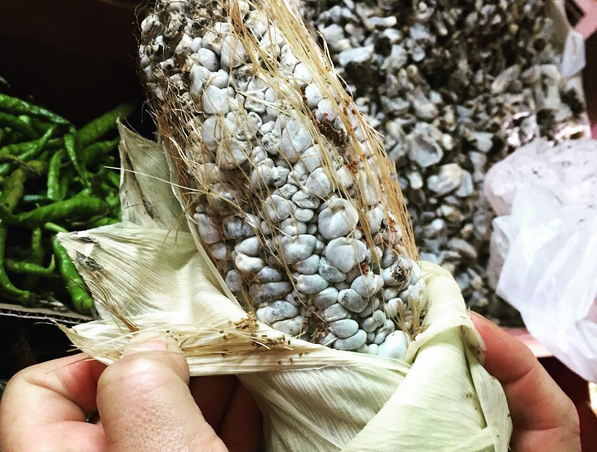
Raw huitlacoche at Mercado Hidalgo in Tijuana.
SECOND STOP: POPOTLA FISHING VILLAGE
Just past the movie studio where they filmed The Titanic, we make a right on a dirt road down to Rosarito’s famed fishing village. While many tourists eat lobsters up the road at Puerto Nuevo (lobsters, most locals tell me, that are often flown in frozen from China), Popotla is where locals eat fresh seafood. Cars pull right onto the beach. An old VW Bug splashes through the shallow water. There are tables piled high with the day’s fresh catch—yellowtail, oysters, chocolate clams, lobsters, you name it. Literally boat-to-throat. One table is piled so high with vibrant, red sculpin that it looks like an apple cart.
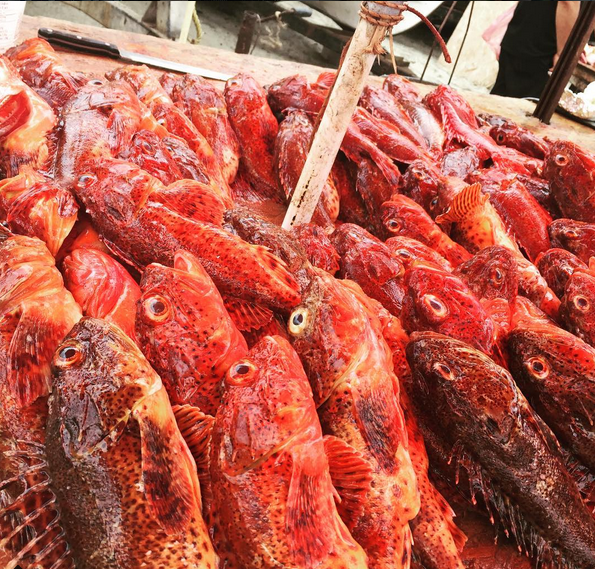
Dear Tostada, I’m Sorry
Our liaison is Patty Villareal, who, along with her husband, operate Think Blu, which promotes sustainable seafood for Baja’s immense supply. Stands—plastic lawn chairs, tables, and outdoor kitchens covered by tarps and tents—feed the locals who come to play in the waves. We sit down at La Reina de la Playa for tostadas, literally on the edge of the water, gazing out at the wet horizon. Both are piled high with fresh ceviche. Looking at the mound of incredibly fresh, raw seafood—including excellent Baja octopus—I have a tostada epiphany. There is no way a taco could take this load. The taco’s thin middle severely limits abundance. A-ha! Tostadas are how you put an entire meal on a fried tortilla. Still, it’s hard to eat and the juice from the excellent ceviche escapes onto the plate and makes me sad.
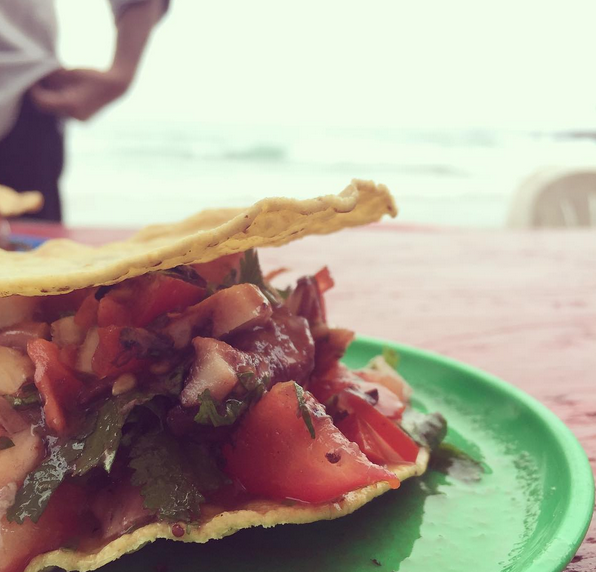
Dear Tostada, I’m Sorry
THIRD STOP: MANZANILLA
When I wrote San Diego Magazine’s story on the Baja food and drink scene (and how incredibly, incredibly hot it is among food lovers these days), I was just learning about the culture. I was trying to not miss any of the major chefs and/or food and wine people. But inevitably, every story has its holes or every story would be as long as Ulysses. I nearly missed interviewing chefs Benito Molina and Solange Muris—the husband-and-wife chef team behind Manzanilla in Ensenada. It would’ve been a grave mistake, since these two are one of the first to create high-end food using the world-class seafood and produce found in Baja. Their restaurant is right next to the Ensenada port, and it’s awesomely kitschy with art and sustainable building materials. It’s lovely and hip, masculine and feminine, arty and not pretentious. A place easily loved.
Dear Tostada, I’m Sorry
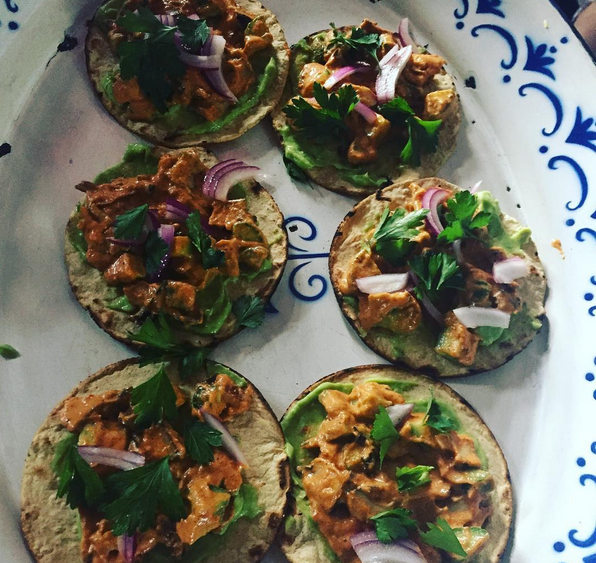
And Solange’s tostada—the corn round oven-baked so that it has crispy, charred edges and a softly crunchy interior—is the best thing we eat all day. Unsurprisingly. She’s quickly seared local abalone, and covered it with chipotle crema and spiked it with cilantro. It’s divine. There is a reason why this has been named by multiple sources as one of the best restaurants on the planet. I look at their menu. An eight-course tasting dinner, with wine pairings from nearby Valle de Guadalupe, is less than $100. I’ll be back.
Dear Tostada, I’m Sorry
FOURTH STOP: HUSSONG’S
There are no tostadas here. It is where the margarita was invented. Though culinary tourists, we’re still tourists. There is a mariachi band. We dance, some of us badly.
FOURTH STOP: CERVECERIA WENDLANDT
This is where Ensenada does craft beer. And it is righteous.
CONCLUSION
I have seen the tostada light. It is a crispy Mexican pizza of sorts—an edible Frisbee of glee. Its flatness, while a real pain in the ass to eat, serves its utility. And that is to accommodate a heaping of delicious food. It is essentially a taco of plenty. Do I still maintain that a mere curling of the edges of the corn crisp would better serve humanity and keep all those juices contained for the full ride? You bet. But I’ll gladly get it all over my person when it’s this good.
An octopus tostada on the beach at Popotla.

Baja icon Javier Plascencia finally opens spot in central San Diego
Remember when I told you this was a huge week for Mexican food in San Diego? This is the second shoe to drop: Bracero Cocina de Raiz from renowned Mexican-American chef, Javier Plascencia and his partner Luis Peña. It opens today.
Plascencia is the real deal. He grew up on both sides of the border. His family, under Grupo Plascencia, has been a leader in Tijuana’s culinary scene for decades. Plascencia made his own name with his Chula Vista restaurant, Romesco, then opened his temple to modern Mexican cooking, Mision 19, in Tijuana, followed by the rustic Finca Altozano in Baja’s wine region, Valle de Guadalupe.
For all his repute—including features in the New York Times and The New Yorker hailing him as the chosen son of Baja cuisine—San Diegans have had to drive near the border to try his food. And now they don’t.
Bracero is a 4,800, two-level showpiece on Kettner Blvd. in Little Italy. Little Italy is the undisputed heart of San Diego’s culinary scene right now, and for the foreseeable future.
San Diego’s long had a fitful relationship with gourmet Mexican food. Blame $3 defrosted rolled taco culture. But over the last few years, some of Baja’s most accomplished chefs have brought their riffs on seafood, chiles, charcoal and spice across to San Diego. The hottest thing in San Diego’s food culture right now is Mexico.
So the timing couldn’t be more perfect for Bracero. Expect small plates, large plates. Dishes inspired by Plascencia’s other restaurants. Dishes inspired by San Diego and Baja. They’ll be making their own masa in house—a key for a truly housemade Mexican experience. A crudo bar will serve shellfish from Carlsbad and wild seafood from Baja. The tequila program will be massive. Wines will come from California and Valle de Guadalupe. Craft cocktails will have a Mexican kick, and craft beers will be from both sides of the border.
There will be tiraditos, ceviches, sashimi, roasted meats, the smell of corn, peppers and sopes and high-end French saucing techniques. It will be a mishmash of border and culinary cultures.
San Diego has never been more ready to see what real, top-end Mexican cooking is all about.
But enough of that. Please enjoy our first look inside Bracero Cocina de Raiz, with design done by talented locals, Bells & Whistles.
Bracero opens today.
Bracero Cocina de Raiz, 1490 Kettner Blvd, Little Italy, 619.756.7864.
FIRST LOOK: Bracero
Scripps study shows that some patients may be able to taper their dose and maintain results
While glucagon-like peptide-1 (GLP-1) receptor agents have been used to treat Type 2 diabetes for more than 20 years, their recent emergence as weight-loss wonder drugs marked a new frontier in medicine. But their effectiveness has left some patients wondering what to do once they’ve reached their goal. Stopping the medication could mean regaining some, if not all, of the weight. A Scripps Clinic internal medicine physician recently conducted a small study of whether GLP-1 patients who had reached their goal weight could maintain that weight by taking their regularly prescribed injection every other week instead of weekly. Spoiler alert: 30 of 34 patients did. Read more about the study here and what that may mean as pharmaceutical companies roll out oral GLP-1s.
For more nutrition, wellness, and healthy living tips, sign up for the San Diego Health newsletter here.