Featured articles
Food & Drink
Food & Drink
Food & Drink
Featured articles
Everything SD
Everything SD
Everything SD
Featured articles
Things to Do
Things to Do
Everything SD
Featured articles
podcast-ep
podcast-ep
podcast-ep
Featured articles
Everything SD
Everything SD
Everything SD
Featured articles
Food & Drink
Things to Do
Partner content
Ready to know more about San Diego?
SubscribeReady to know more about San Diego?
Eight years in the making, Cohn unveils massive Harbor concept
“You have to see it—it’s unbelievable, might be the best view in San Diego.”
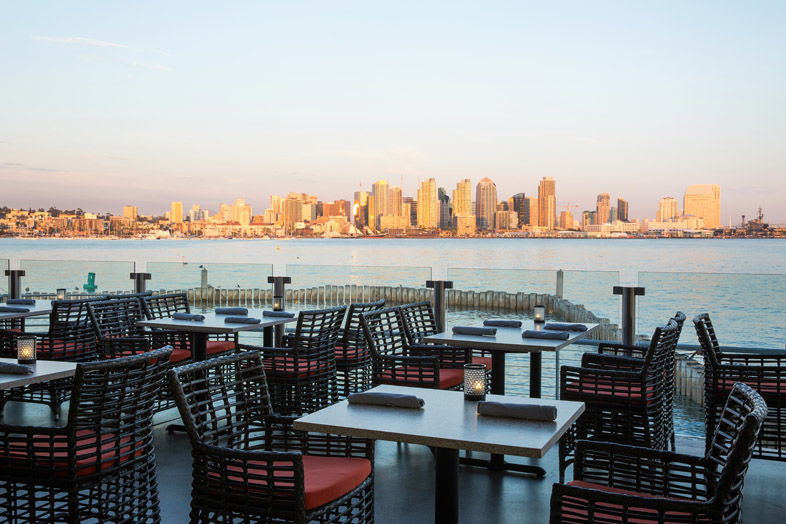
That quote is from longtime San Diego Mag editor-in-chief, Erin Chambers-Smith, after witnessing Coasterra, the new project from the Cohn Restaurant Group and Sunroad Enterprises. It’s been eight years in the making. It’s 28,000 square-feet and $15 million of prime waterfront ogling. It’s a restaurant, an event space, and a new “behold the magnificence of San Diego, my dear out of town relatives” along Harbor Island.
It’s also another entry in the modern Mexican movement that’s taking San Diego right now. Chef Deborah Scott hired executive chef John Gray (Ritz-Carlton Cancun, Grand Havana Room) to oversee the kitchen, which will serve 300-plus diners, with over half of the seating outside under that expensive San Diego sun. They’ll be doing tableside guacamole (with add-ins like lobster and crab), fresh oysters, housemade salsas, tostadas (garlic-sesame yellowfin), spicy lobster fundido, carne asada nachos, lobster tacos, carne asada tacos, enchiladas, steaks (like an 1855 bone-in ribeye with avocado salad), and a Mexican surf and turf (skirt steak with mole poblano, half Maine lobster with chipotle garlic butter).
Coasterra’s bar will speak Spanish, too. The menu will include eight hand-shaken margaritas, including Deb’s Coconut Marg with Olmeca Altos Reposado tequila, coconut cream, lime juice and coconut salt rim. And agave cocktails: Oaxacan old-fashioned with Herradura Double Reposado Tequila Barrel Selection, El Silencio Mezcal and Angostura Bitters. House cocktails include a Tolstoy Michelada (with vodka), a Cabrillo Collins (with lemongrass), and a Santa Ana Sangria. There will also be wine, plus Mexican and American craft beer.
The design is from the late Graham Downes, who tragically died a few years ago. It’s a mid-century indoor-outdoor space, with rustic this-and-that pieces from Mexico and massive abstract murals from local artist Rafael Lopez. There will soon be a floating, outdoor event deck that can fit 500 people standing. There are towers of tequila, and a wooden bar that illustrates the coastline of Mexico. An abstract stone wall was designed using images the Cohns’ brought back from their trip to Mexico City. Photovoltaic solar glass on the terrace will provide about 35 percent of the energy for the building.
Someone you know will get married here soon. But enough of the talking. Please enjoy the first known photos in the universe of Coasterra.
Coasterra opens for dinner at 5PM, August 14. No reservations opening weekend. Starting Monday, August 17, it will be open for lunch and take reservations via OpenTable.com. 880 Harbor Drive.
FIRST LOOK: Coasterra
jennifer siegwart
Olivewood Gardens transforms the diets of a fast-food neighborhood
I’d always heard great things about Olivewood Gardens & Learning Center in National City. A place to learn about and grow food, being used as an educational center for a community struggling with obesity and lack of nutrition. On March 20, I’m honored to be the speaker at their Cultivating Conversation Dinner Series, an intimate dinner outdoors with Tender Greens. A couple days ago, I talked with Olivewood’s executive director Healy Vigderson to get an idea of Olivewood’s story so far. It’s a story about counteracting decades of junk food indoctrination. Please enjoy, and buy one of the remaining tickets to the event. Maybe donate time or money to Olivewood if you feel so inclined. Or just go take a tour.
Coca Cola spent $3.5 billion on advertising in 2014. Rival PepsiCo spent $2.3 billion. According to the Center for Science in the Public Interest, companies spend $1.79 billion marketing packaged (mostly junk) food to children. Seventy percent of ads on the most popular children’s TV channel are for junk food. Eighty four percent of ads on children’s websites are for junk food.
As for healthy food? America spends $280 million each year promoting it. That’s less than 10 percent of the marketing budget for one single soda company (Coca Cola).
No wonder a third of our kids are obese (and two-thirds of adults). Twenty years ago, no U.S. state had an obesity rate above 15 percent. Now 41 states have rates over 25 percent. If the rates stay the same, over half the American population will be obese by 2030. For numbers people, annual health costs related to obesity in the U.S. is nearly $200 billion.
Can a single garden in National City change that?
A National Treasure
The community in South San Diego is considered a “food desert.” Food deserts are classified as places where it’s real hard to get affordable, nutritious food. In food deserts, you don’t have Whole Foods or even an Albertson’s. You have corner stores that sell Twix bars and Mountain Dew. You have fast food out the ying-yang. According to one study, people living in poor neighborhoods have 2.5 times the exposure to fast food restaurants than the rest of the population.
National City is a poor neighborhood. According to a 2007 study, 34 percent of National City’s kids live in poverty. Eighty-five percent of them qualify for free or reduced cost school lunches. No surprise, then, that the rate of hospitalization for diabetes is 2.3 times greater in National City than the rest of San Diego County.
National City needs help, and Olivewood Gardens is helping.
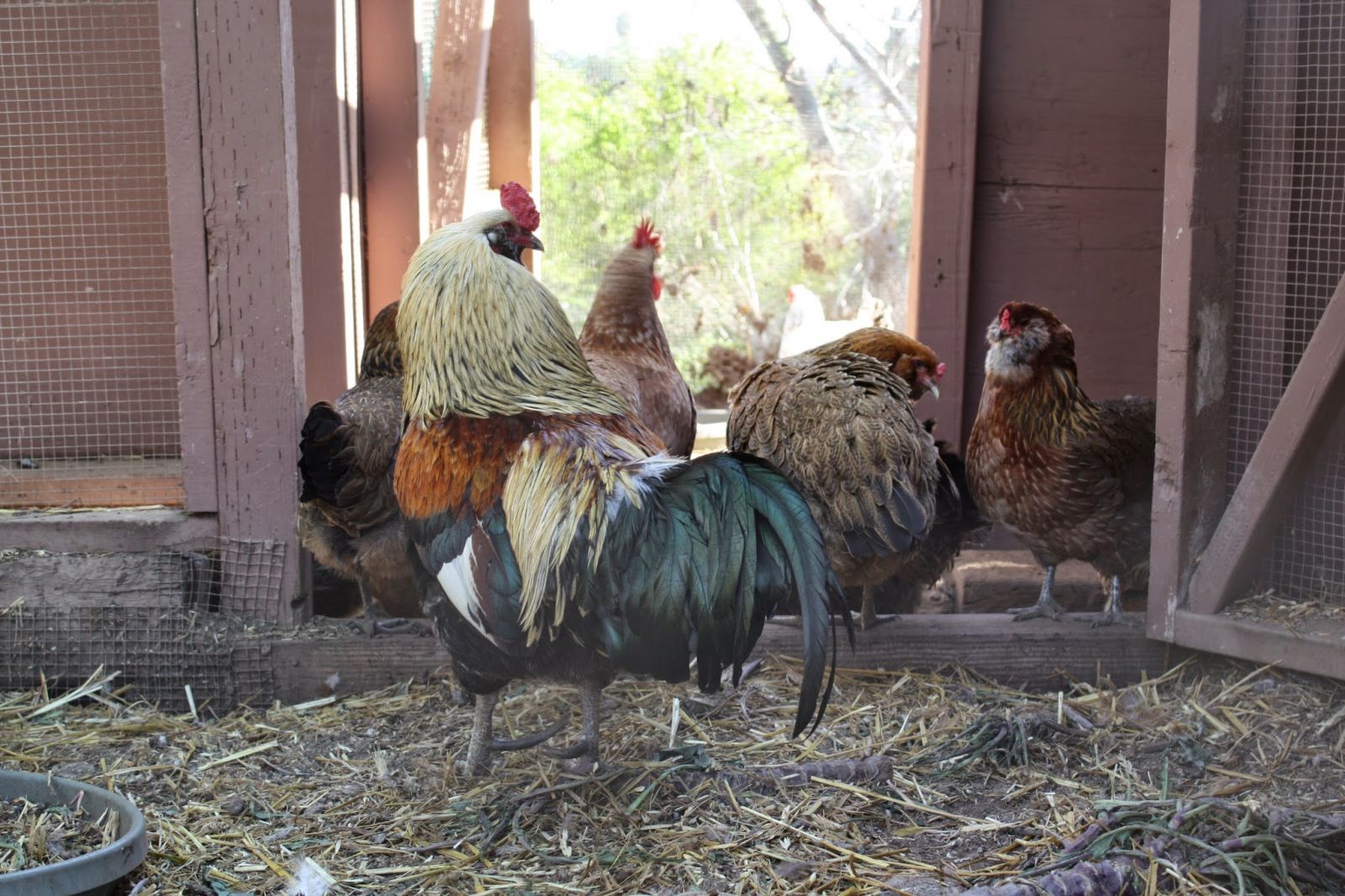
Olivewood—spread over 6.85 acres of land teeming with giant kale, chickens, butterflies, living things and good earth—isn’t really a garden. It’s more of a university with plants and animals on it. A university that teaches an entire group of people—people raised on and surrounded by the sugar-fat-salt trinity of cheap fast food—how to grow and cook real, nutritious, tasty food.
Not just any food. Sixty-three percent of National City is Latino or Hispanic. Try to tell someone they should abandon their culinary-cultural heritage of carne asada and tamales for, what, a kale salad? Good luck. At Olivewood, some of the best chefs in San Diego take culturally relevant foods and recipes and give them a healthy spin. Maybe that’s using grapeseed oil instead of lard. Or make a cauliflower ceviche. Teach them to add cut fruit to water for an exciting drink instead of reaching for the 2-liter bottle of soda.
The fact is, Americans are wildly, grotesquely removed from the process of growing and making our own food. We let companies do it for us, and those companies haven’t done a very good job. Companies are defined by their sales numbers. To increase those numbers, they most often load the food with fat, salt and sugar—so we develop an addiction to it, and that addiction fuels sales.
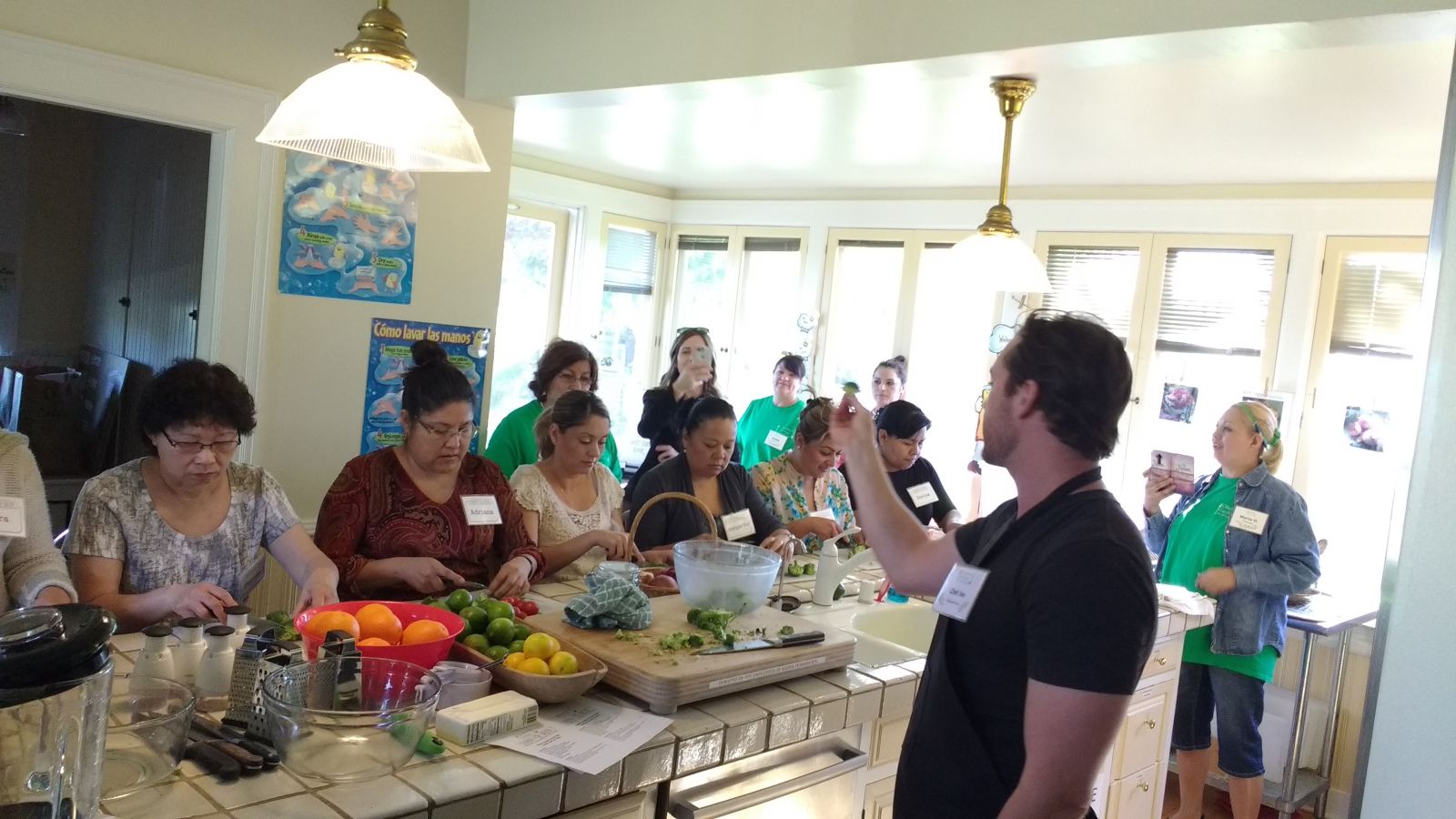
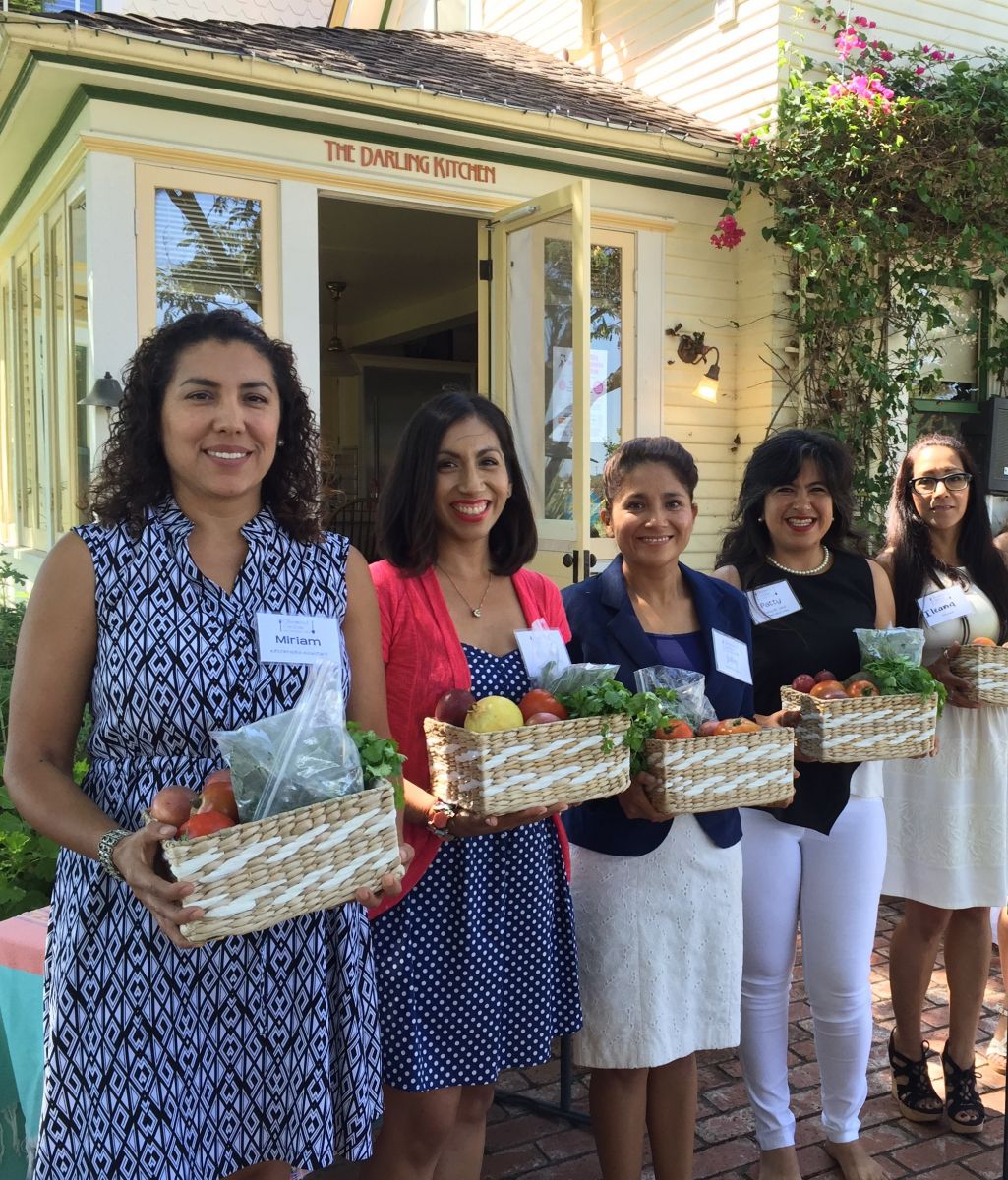
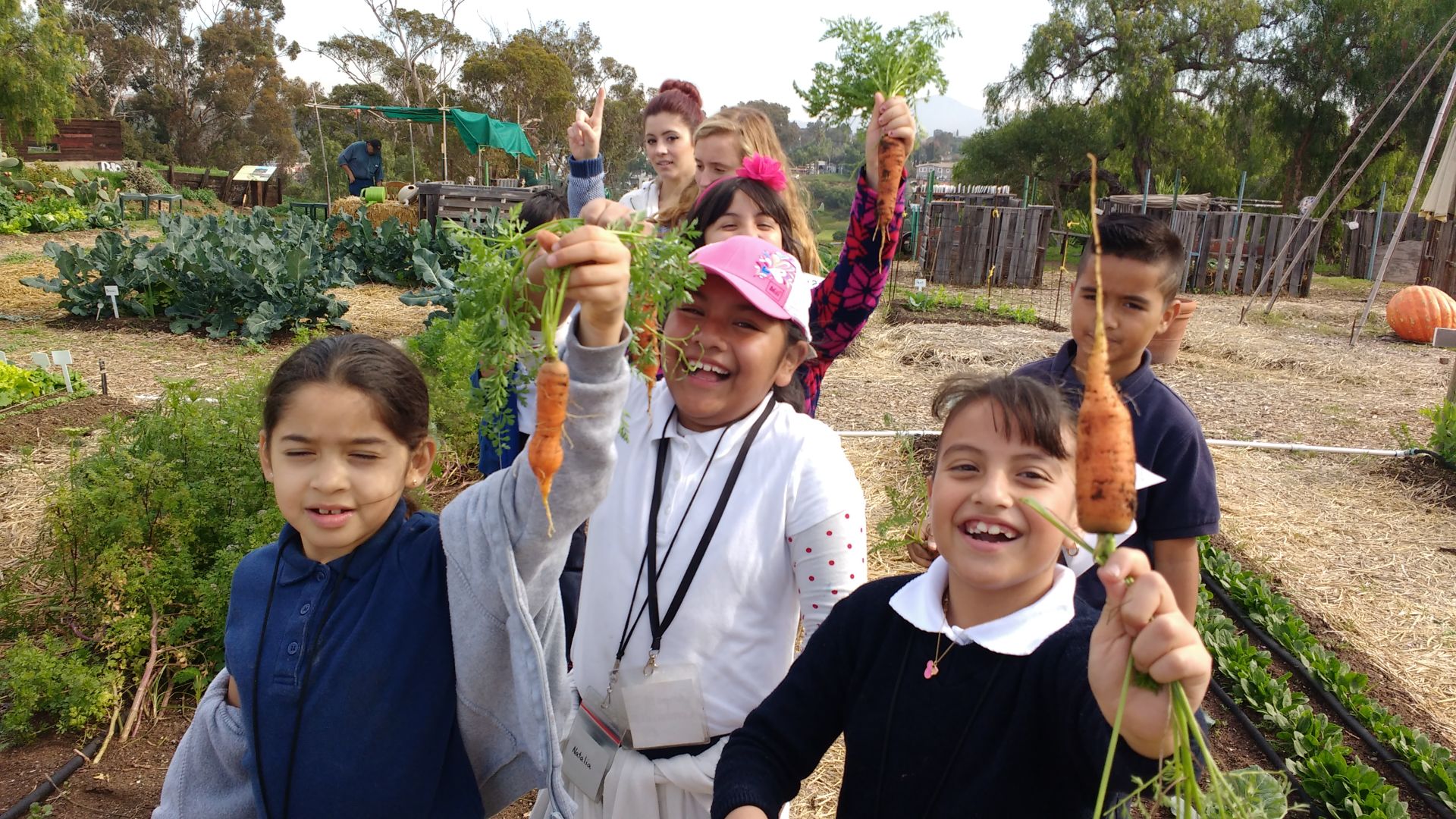
Olivewood teaches third, fourth and fifth graders about real food—about the importance of healthy soil, about growing food, about harvesting it and then about cooking it. Olivewood also has their “Cooking for Salud” program. Twice a year, about 60 applicants apply for the program. Olivewood has the funding to select 15 of them, at no cost to the participant. Over seven weeks, three hours a week, these women learn from Olivewood’s own chef-educators—plus some of the top chefs in San Diego who donate their time, like Matt Gordon of Urban Solace or Margarite Grifka (ex-Starlite Lounge, currently at California’s Table) have done in the past—how to grow and make healthy food.
On March 17, they’ll graduate their seventh generation of kitchenistas (115 graduates), who continue to meet once a month after the program ends to talk about food, healthy cooking, growing their own herbs, etc. A documentary film on the program, The Kitchenistas of National City, is making the festival circuit and winning awards.
A National Treasure
“We target families who wouldn’t be able to afford classes like these,” says executive director Healy Vigderson. “We have funding to do it twice a year. We’re looking for investors to expand it to three times a year. The graduations are a big deal. All the ladies prepare a dish, the mayor of National City comes.”
Vigderson says the program has a long waiting list. “We reserve half the spots for National City residents. The rest are from around the county, mostly the south region. We give preference to participants who have a family member with a chronic condition that can be improved with better food. Or if they have children at home, which will lead to a longer lasting impact.”
This isn’t a light and leisurely gardening class. Look at Olivewood’s website shows the commitment to “curriculum” and “science” and structured education. It’s a natural science university of sorts. Educators include chefs, food professionals, master gardeners, scientists and educators—all using the Olivewood gardens to teach about history, science, art, literature, math, geography, nutrition, agriculture, water conservation, recycling and composting.
The main focuses of Olivewood’s teachings about nutrition?
Reduce the big three crutches of unhealthy foods—sugar, fat and salt. Kitchenistas learn to use natural fats (like avocado) and healthier cooking oils, like grapeseed. “One of the things we teach in all our classes is reduction of sugar,” says Vigderson. “We want people to learn how to make their own granola and jams so they can control the amount of sugar that’s going into them. We take recipes they’re used to making and we use no sugar, or use agave or honey instead and show them how delicious it can be. We also focus on eliminating sugary beverages. We give them alternatives. We call it spa water—take a glass pitcher and cut up fruit or put lavender flowers or limes in it. That gets them to increase their water consumption and eliminate soda. We also teach them to lower their salt intake by using herbs for flavor. Chef Joe Burns of Waters Catering teaches that class. We send them home with their small potted herb gardens.”
A National Treasure
Class by class, it’s working—even if some of the participants are wary in the beginning.
“When they come into the program, one of their biggest concerns is that their husbands or kids won’t eat the healthier food,” says Vigderson. “And then they go home and they find their families love it. They’re actually asking for it. One of the recipes is a cauliflower ceviche. One of the kitchenistas said, ‘My kids are eating cauliflower now! There was no other way they would have eaten it before!’”
The immersive experience—and the epic natural beauty of the land—is what makes Olivewood different than, say, just trying to recreate a healthy recipe from a website.
“We find the most impactful is the hands-on experience. They tell us, ‘This is not like any other class because I’m actually DOING IT.’ We’re not just giving them a recipe for a healthy dish. We bring in chefs from different restaurants. Chef Matt Gordon here last week. He teaches the meats and meat alternatives course. He was teaching the kitchenistas what kind of pans you should be using and why. This is why you should use grapeseed oil instead of olive oil. They’re cooking it, they’re eating it, they’re experimenting with the flavors, so when they go home they’ve already made it and understand why. The next thing is, ‘Here’s where you can buy this stuff.’”
The other part is cultural relevance. The families of National City have generations of traditional Mexican recipes—often not written with nutrition or health in mind. This season’s Top Chef contestant Chad White taught the traditional Mexican class until recently. When White moved to Portland earlier this year, chef Miguel Valdez of The Red Door took over.
“Chef Miguel originally sent us his recipes,” recalls Vigderson. “And we had to send them back because they weren’t healthy enough. He was naturally frustrated with us. He tells this story to the class: ‘I had to call my grandmother and ask permission to change the recipes—I couldn’t change her recipes without permission. She said, ‘Of course, mijo.’”
The effect hits home with the kitchenistas. If one of the better professional Mexican chefs in San Diego can change his recipes to be healthier—with grandmother’s blessing, no less—so can the kitchenistas.
“It resonates so well because that’s THEIR STORY,” says Vigderson. “They have their traditional recipes, which are their connection to their ancestors and families. To change that feels like betrayal. But if they see Miguel can do it, so can they.”
The chef and food community has shown huge support for Olivewood since it opened in 2010. Whether it’s chefs like Gordon, Burns, Valdez, Grika, or Barleymash chef Kevin Templeton, who keeps his compost from the restaurant and drives it out to Olivewood once a week on his own time and dime. All told, over 2,000 volunteers have donated over 30,000 hours of service.
Olivewood is constantly on the money-raising trail. They need donors. For example, they’re looking for $7,500 to put subtitles on the Kitchenistas of National City documentary, so that they can distribute the film in Baja and spread the message about healthier Mexican food. They’d also like to expand their services, enroll more kitchenistas, and help replicate their successful program across the U.S.
Vigderson finds that the beauty of the place is the best persuasive tool she has.
“I continue to be amazed by the power of this physical place. When people come here and step on the grounds, and they’re surrounded by the beauty, you see their shoulders relax and their breathing slow down. They change. We recently had a meeting with a city official type person. He had said no, no, no to all the things we were suggesting. We got him to come here, and he stepped foot on our property and his whole mentality changed. Just physically being here, he started smiling, relaxed, started talking about his kids and his family. He got it.”
“I’m sitting here watching huge butterflies fly around outside of my office,” she says. “There’s a chicken.”
A National Treasure
Restaurant news. Food ideas. Thoughts. Stuff of note.
Looks like Good Time Design just put Southpaw up for sale. It’s time for the developers around Petco’s “Park at the Park” (outside the left field wall) to realize that’s not an easy area for restaurateurs. A lot more activation of the park would be a boon for local business. The next tenant in Southpaw’s space needs to blow out that wall facing J Street and make it an indoor-outdoor thing like Bub’s or Basic down the street.
***
North Park is getting Milkbar—a donut, fried chicken and milk bar joint at the corner of Lincoln and 30th Streets.
***
If you say you hate piano bars, you lie. Every time you find yourself with your fun-loving, gin-loving aunt at the dueling piano bar you end up having a blast. Then you discovered Rick Lyon with his amazing hair and computer-aided piano tunes at the Imperial House. Well, Hillcrest is about to get a piano bar. Not a dueling piano bar. Not a Bon Jovi-and-mom-jeans piano bar. A better piano bar, if the owners of The Dirty Bird Lounge pull of their vision. It’ll go into the former spot of Commonwealth at 1263 University Ave.
***
Looks like chef Chris Idso, longtime chef-partner of Pacifica Del Mar, will be moving with his family to Hawaii. That’s the end of an era for the Del Mar seafood restaurant that’s managed to stick it out for 25 years amid the new-new-new-hot-new-hip-new restaurant scene. No timetable yet for Idso’s departure; he’s currently on the lookout for his replacement. Idso’s been the soul of the restaurant, so those are no small shoes to fill. Interested chefs should call the restaurant.
***
While in Tijuana at great third-wave coffee shop Caffe Sospeso (who are launching a Kickstarter campaign to fund a North Park location), I ran into the owner of beloved Aqui Es Texcoco—the famed lamb barbacoa specialists with places in Tijuana and San Diego. He said he’s looking into making a food truck for the enterprise. Food trucks have really cut into his business on both sides of the border. Rather than complain, he’s acting.
***
Solana Beach’s Culture Brewing is expanding into a new spot in Ocean Beach next to the new Cohn restaurant, O.B. Warehouse. It’ll have about 20 taps and hopefully open doors in November.
***
A restaurant industry insider recently pointed out that he’s absolutely, 100% certain that one of the more prominent restaurants in San Diego is lying on their menu about the free range/organic thing. We hear rumblings about this all the time. I’d really rather not launch an investigative report into restaurant fraud. And 95% of the restaurateurs in San Diego are good people who don’t lie to get extra bucks out of you. But it does, sadly, happen.
***
Cohn Restaurant Group announced their next big project—a $10 million, 24,000 square-foot food-party-wedding-everything-bonanza space where the old Reuben E. Lee paddle boat was once docked (880 Harbor Island Dr.). The space will be anchored by a 322-capacity restaurant focused on Mexican food (Baja mania continues), plus a deck that’ll fit 1,000 people. Jesus that’s big. They’ve partnered with Sunroad Enterprises for the new food-drink city. The project will be set right next to C Level/Island Prime, already one of the nicest view restaurants in San Diego. “There’s a tremendous desire by San Diegans and those who visit the city to be on the water—not near the water, or with a view of the water—but directly on the water,” says David Cohn. Set to open summer 2015—which means, after the city delays them multiple times, we’ll see it sometime by the fall.
***
Local designer Paul Basile won an Orchid—the city’s top interior design award—for his work on Polite Provisions and Soda & Swine. Basile and Consortium Holdings make pretty things.
***
An email from a friend: “What happened? Craft, artisanal, reclaimed wood, Edison bulbs, garage doors, industrial yada yada yada. When are you going to write a story about how incredibly ****ing cliché San Diego has become?” I emailed him back some Xanax.
***
A text from a gay rancher friend: “When are you going to do a story about the gay mafia taking over San Diego’s farming and ranching scene?”
***
The Cottage Food Act, passed in January 2013, basically allows you to make certain approved foods (baked goods, candies, dried foods, etc.) at home and sell them at, say, a local restaurant or store. So Mieko Sunbury, a Qualcomm employee and craft beer devotee, is going to make gourmet beer nuts worthy of the local craft beer culture. It’s called North Park Nuttery. “I’m going to make spiced nuts that incorporate beer into the recipe,” she says. “One’s going to be a very hoppy flavor nut and another savory-sweeet, stout-based nut. My target audience is going to be beer tasting rooms. They just recently passed a bill that’ll allow tasting rooms to serve snacks. Living in North Park and being in the beer scene, I’ve noticed there’s a lack of something like that. People are bringing in food trucks, but what about a nice healthy snack? Keeps you from getting too drunk.” She doesn’t have any clients yet, but good ideas find homes.
The new waterfront project from the Cohn Restaurant Group.
Restaurant news. Food ideas. Thoughts. Stuff of note.
Looks like Good Time Design just put Southpaw up for sale. It’s time for the developers around Petco’s “Park at the Park” (outside the left field wall) to realize that’s not an easy area for restaurateurs. A lot more activation of the park would be a boon for local business. The next tenant in Southpaw’s space needs to blow out that wall facing J Street and make it an indoor-outdoor thing like Bub’s or Basic down the street.
***
North Park is getting Milkbar—a donut, fried chicken and milk bar joint at the corner of Lincoln and 30th Streets.
***
If you say you hate piano bars, you lie. Every time you find yourself with your fun-loving, gin-loving aunt at the dueling piano bar you end up having a blast. Then you discovered Rick Lyon with his amazing hair and computer-aided piano tunes at the Imperial House. Well, Hillcrest is about to get a piano bar. Not a dueling piano bar. Not a Bon Jovi-and-mom-jeans piano bar. A better piano bar, if the owners of The Dirty Bird Lounge pull of their vision. It’ll go into the former spot of Commonwealth at 1263 University Ave.
***
Looks like chef Chris Idso, longtime chef-partner of Pacifica Del Mar, will be moving with his family to Hawaii. That’s the end of an era for the Del Mar seafood restaurant that’s managed to stick it out for 25 years amid the new-new-new-hot-new-hip-new restaurant scene. No timetable yet for Idso’s departure; he’s currently on the lookout for his replacement. Idso’s been the soul of the restaurant, so those are no small shoes to fill. Interested chefs should call the restaurant.
***
While in Tijuana at great third-wave coffee shop Caffe Sospeso (who are launching a Kickstarter campaign to fund a North Park location), I ran into the owner of beloved Aqui Es Texcoco—the famed lamb barbacoa specialists with places in Tijuana and San Diego. He said he’s looking into making a food truck for the enterprise. Food trucks have really cut into his business on both sides of the border. Rather than complain, he’s acting.
***
Solana Beach’s Culture Brewing is expanding into a new spot in Ocean Beach next to the new Cohn restaurant, O.B. Warehouse. It’ll have about 20 taps and hopefully open doors in November.
***
A restaurant industry insider recently pointed out that he’s absolutely, 100% certain that one of the more prominent restaurants in San Diego is lying on their menu about the free range/organic thing. We hear rumblings about this all the time. I’d really rather not launch an investigative report into restaurant fraud. And 95% of the restaurateurs in San Diego are good people who don’t lie to get extra bucks out of you. But it does, sadly, happen.
***
Cohn Restaurant Group announced their next big project—a $10 million, 24,000 square-foot food-party-wedding-everything-bonanza space where the old Reuben E. Lee paddle boat was once docked (880 Harbor Island Dr.). The space will be anchored by a 322-capacity restaurant focused on Mexican food (Baja mania continues), plus a deck that’ll fit 1,000 people. Jesus that’s big. They’ve partnered with Sunroad Enterprises for the new food-drink city. The project will be set right next to C Level/Island Prime, already one of the nicest view restaurants in San Diego. “There’s a tremendous desire by San Diegans and those who visit the city to be on the water—not near the water, or with a view of the water—but directly on the water,” says David Cohn. Set to open summer 2015—which means, after the city delays them multiple times, we’ll see it sometime by the fall.
***
Local designer Paul Basile won an Orchid—the city’s top interior design award—for his work on Polite Provisions and Soda & Swine. Basile and Consortium Holdings make pretty things.
***
An email from a friend: “What happened? Craft, artisanal, reclaimed wood, Edison bulbs, garage doors, industrial yada yada yada. When are you going to write a story about how incredibly ****ing cliché San Diego has become?” I emailed him back some Xanax.
***
A text from a gay rancher friend: “When are you going to do a story about the gay mafia taking over San Diego’s farming and ranching scene?”
***
The Cottage Food Act, passed in January 2013, basically allows you to make certain approved foods (baked goods, candies, dried foods, etc.) at home and sell them at, say, a local restaurant or store. So Mieko Sunbury, a Qualcomm employee and craft beer devotee, is going to make gourmet beer nuts worthy of the local craft beer culture. It’s called North Park Nuttery. “I’m going to make spiced nuts that incorporate beer into the recipe,” she says. “One’s going to be a very hoppy flavor nut and another savory-sweeet, stout-based nut. My target audience is going to be beer tasting rooms. They just recently passed a bill that’ll allow tasting rooms to serve snacks. Living in North Park and being in the beer scene, I’ve noticed there’s a lack of something like that. People are bringing in food trucks, but what about a nice healthy snack? Keeps you from getting too drunk.” She doesn’t have any clients yet, but good ideas find homes.
The new waterfront project from the Cohn Restaurant Group.
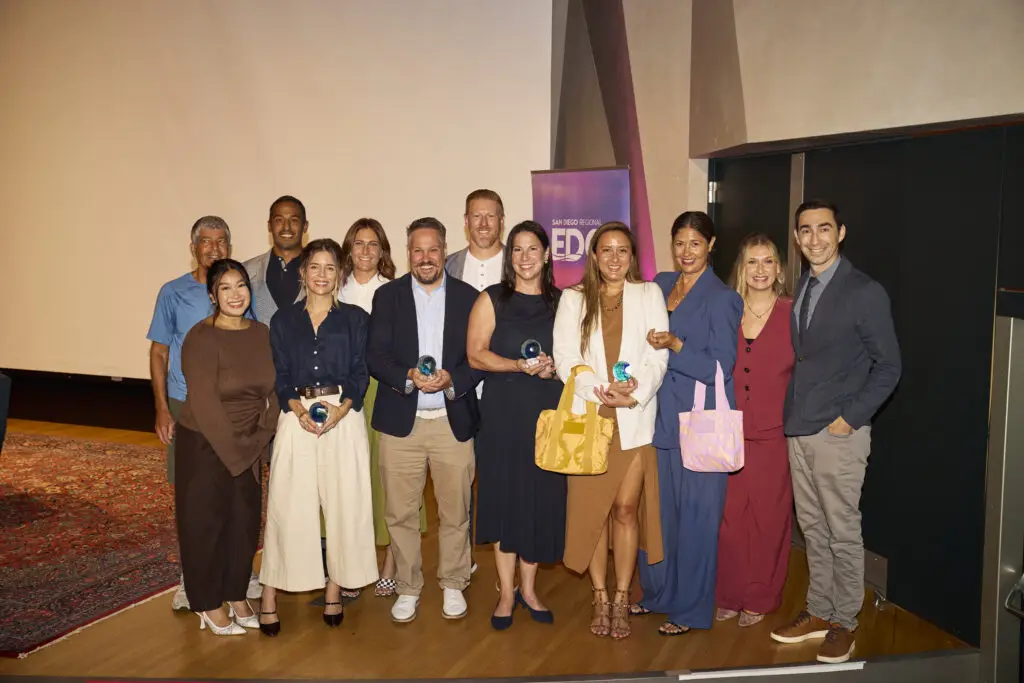
This month, the 2026 San Diego Business Impact Awards recognized local businesses making an impact in clean energy, biotech, hospitality, and beyond
Renewable energy companies building hundreds of power plants. Biotech startups using artificial intelligence to create personalized medicine for children with rare diseases. Hospitality companies quietly powering thousands of local events. Consumer brands growing from beach-town startups into national businesses. These are the kinds of companies driving San Diego’s economy today, and the businesses recognized at this year’s San Diego Business Impact Awards offer a snapshot of where the region is headed.
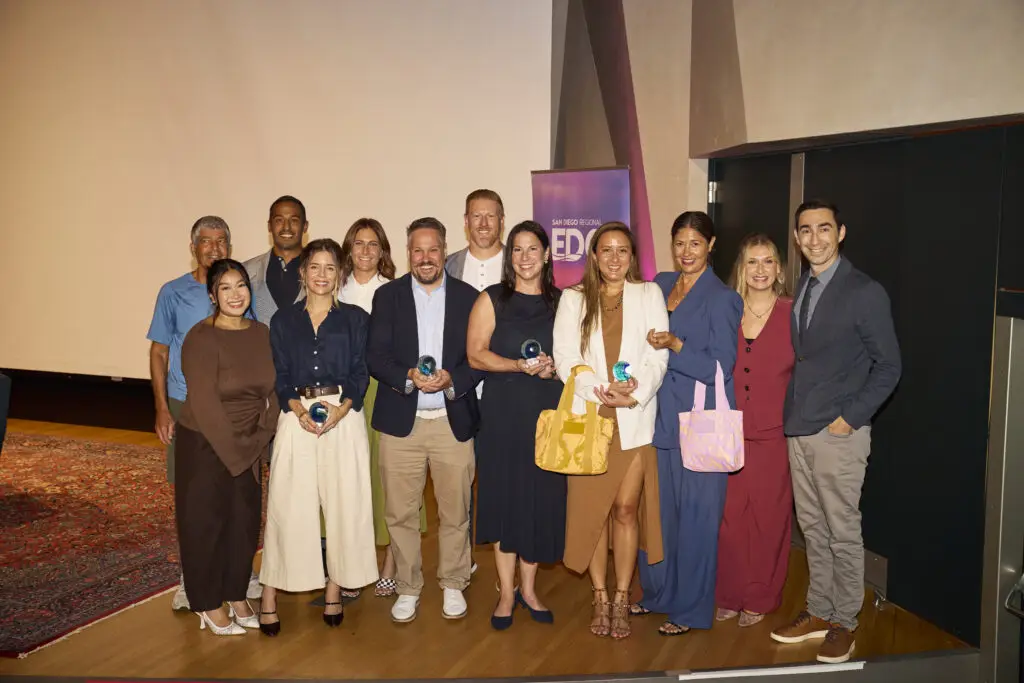
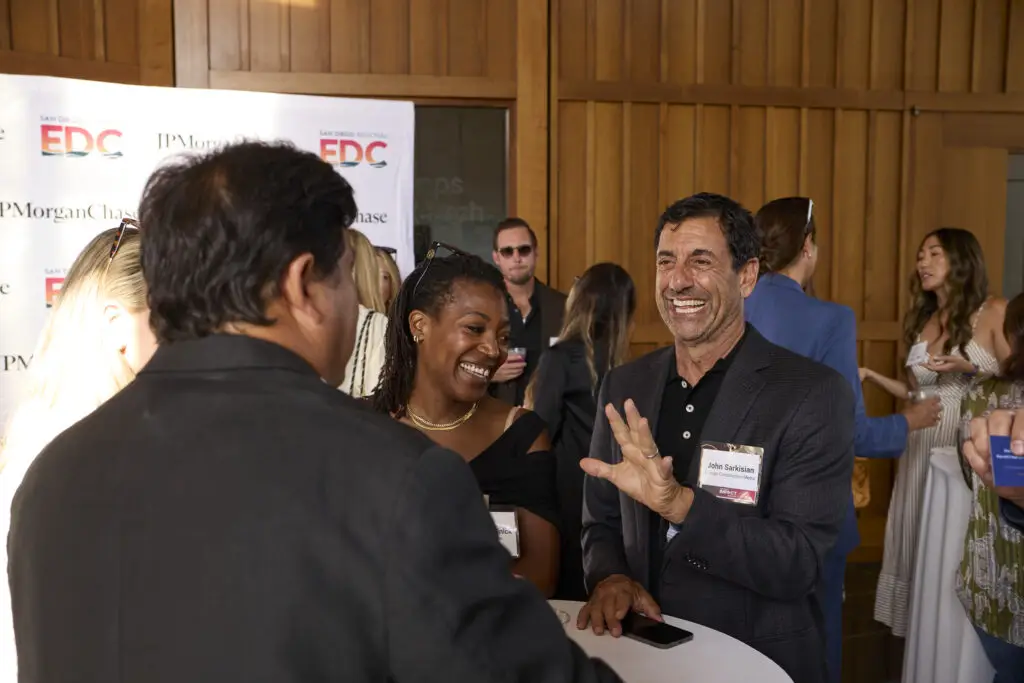
Hosted July 23 by San Diego Regional Economic Development Corporation (EDC) and JPMorganChase, the second annual awards event honored four local companies for innovation, growth, and economic impact. More than 100 nominations from San Diego’s middle-market businesses were reviewed by a 10-person judging committee, with winners selected across four categories: startup, early-stage innovator, rising star, and established heavyweight.
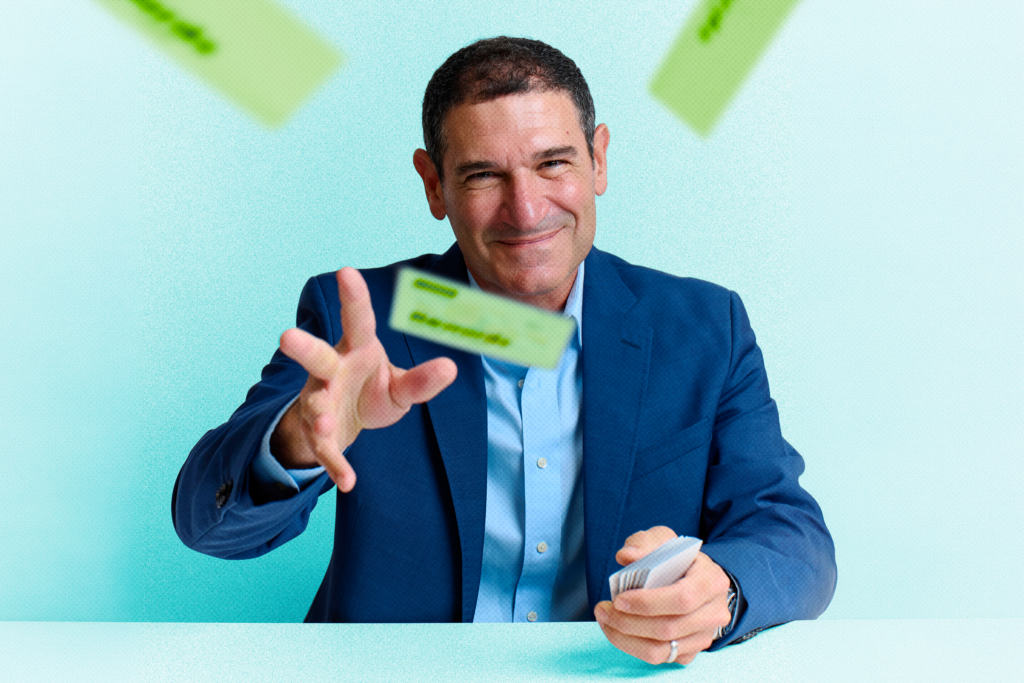
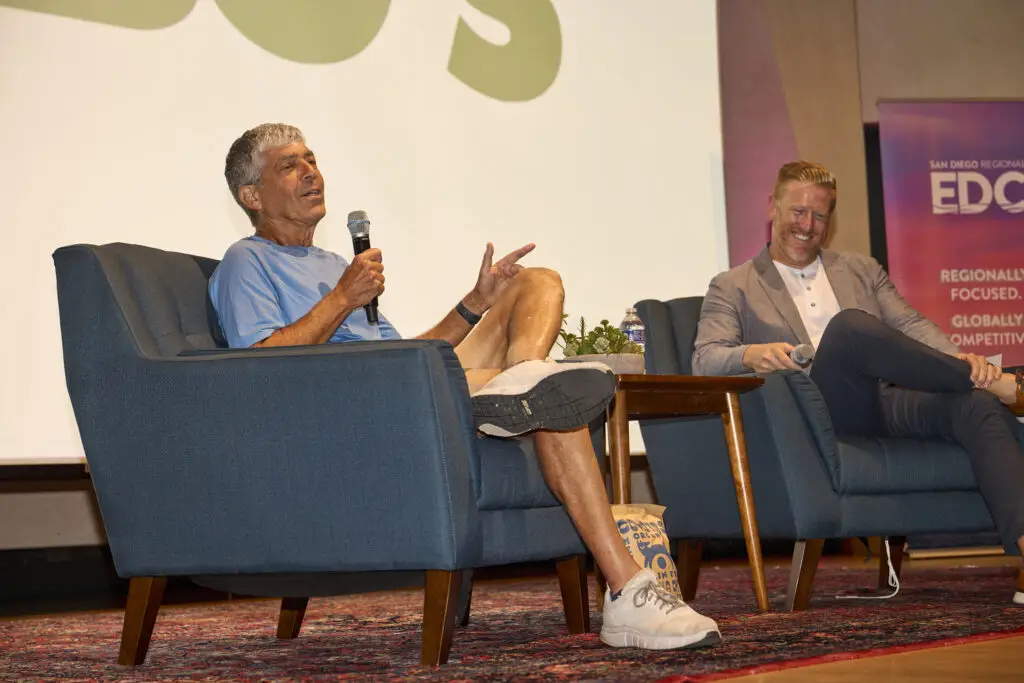
Two-time honoree Jimbo Someck, founder of Jimbo’s organic grocery stores, also joined the event for a fireside chat on buying local, supporting emerging brands, and giving back to the community.
“San Diego’s strength comes from its makers and builders—the resilient people who endure great risks and overcome obstacles to build and scale a company,” says Aaron Ryan, San Diego Region Manager and Middle Market Banking at JPMorganChase & Co. “These awards aren’t just recognition; they spotlight the talent, grit, and innovation shaping our region’s future. By celebrating those who create and build, we foster connections and fuel the growth that keeps San Diego thriving.”

Heavyweight honoree SOLV Energy has grown alongside the country’s rapid investment in renewable power. “It’s an exciting time for SOLV Energy as we are experiencing significant growth,” says CEO George Hershman. “The business has doubled over the last year and has almost double-digit growth since its inception.”
The Rancho Bernardo-based company designs, builds, operates, and maintains utility-scale solar and energy storage facilities. Since its founding in 2008, SOLV Energy has built more than 500 power plants.
Growth has translated directly into hiring. About 200 employees work from the company’s local headquarters, including roughly 20 interns. “Our intern program is a big part of the way that we grow our workforce,” Hershman says. “Last year, 43 percent of our interns became full-time employees. We believe San Diego is a great community to build and grow a high-tech infrastructure and technology company because of the incredible workforce—the ability to attract top talent and draw from world-class universities.”

Startup honoree La Jolla Labs is tackling one of medicine’s biggest challenges by developing personalized RNA therapeutics for patients with rare diseases—many of them children with neurological disorders like ALS. Using proprietary artificial intelligence and machine learning tools, the biotech company develops treatments tailored to each patient’s specific genetic mutation.
CEO Tamar Grossman says the recognition reflects how far the company has come despite limited resources. “We’re honored to be recognized for our ability to change and save patients’ lives and turn our lean startup into a clinical company with very minimal resources,” she says.
Grossman credits San Diego’s concentration of research institutions—including UC San Diego, the Salk Institute, and Scripps Research—with creating a pipeline of talent and collaboration. “San Diego is one of the world-leading centers for technology, genomics, and RNA therapeutics,” she says. “We have over 30 RNA therapeutics companies here, and we support each other and help with anything related to drug discovery.”
She says that collaborative spirit extends beyond formal partnerships. “You can walk around Torrey Pines, go into a café, and find colleagues from the industry and have an ad hoc conversation,” Grossman says. “That’s something very unique to San Diego.”

While Snake Oil Venue Company may not be a household name, chances are many San Diegans have attended one of its events. The early-stage innovator honoree has expanded from beverage catering and mixology consulting into venue management, operating Julep Venue in Mission Hills, Bramble Bay Venue in Imperial Beach, Vesper Venue, the Chapel at Liberty Station, and five outdoor venues throughout Liberty Station—more than 500,000 square feet of event space altogether.
“We do a lot of launch parties for corporations and new products,” says CEO Mike Esposito. “I really like working on the entrepreneur side of things, where new businesses are entering the San Diego market and looking to make a splash.”
Snake Oil has executed more than 16,000 events, employed more than 1,000 people, and partnered with more than 900 local vendors, including caterers, florists, photographers, entertainers, and other hospitality businesses. The company also works with many of San Diego’s nonprofits, museums, and cultural institutions. “We get to celebrate people’s most important moments,” Esposito says. “Whether that’s a wedding, celebration of life, or quinceañera, we’re fortunate to be involved in the community in so many different ways.”

Rising star honoree ALOHA Collection is proof that a simple idea can grow into a thriving company. Founded by two roommates who wanted a better way to carry wet swimsuits after a day at the beach, the lifestyle brand has grown into a business while maintaining strong year-over-year growth.
Now headquartered in Carlsbad, ALOHA Collection employs more than 100 people and operates its California flagship store in Encinitas, which is slated for a remodel. With roots in Hawaii, the company is known for its lightweight, splash-proof travel bags that have become a familiar sight on beaches in San Diego and beyond.
“‘Aloha’ is part of our name, but it’s also how we move through the world,” says CEO Lynna Barnard. “It’s how we show up for people, the way we travel, the way we give back.” Since day one, the company has maintained a 5 percent giveback to Hawaii conservation efforts, contributing millions of dollars over the years.
“I think what’s so inspiring about ALOHA Collection, and the founders in particular, is when you dream big, those dreams can come true when you work hard and trust in the universe,” Barnard says. “It’s inspiring to be a role model for other people wanting to start businesses from humble beginnings. Start small and watch it grow.”
Together, businesses like these form a cornerstone of San Diego’s economy—not only through the jobs and revenue they generate—but through the local workers they hire, vendors they support, and investments they make in the region. Their growth doesn’t happen in isolation; it ripples outward, strengthening the broader business community and the people who call San Diego home.

Bull Taco to Leucadia; Anthology's new owner?; tons of rumors
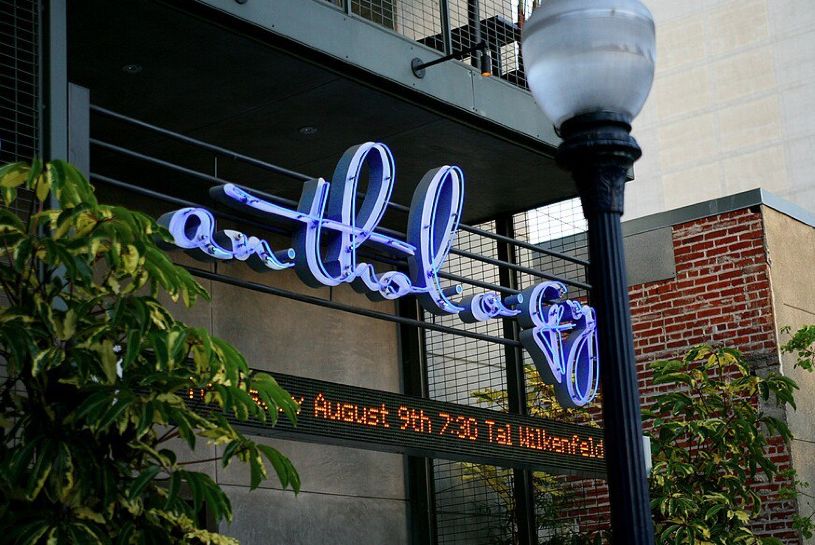
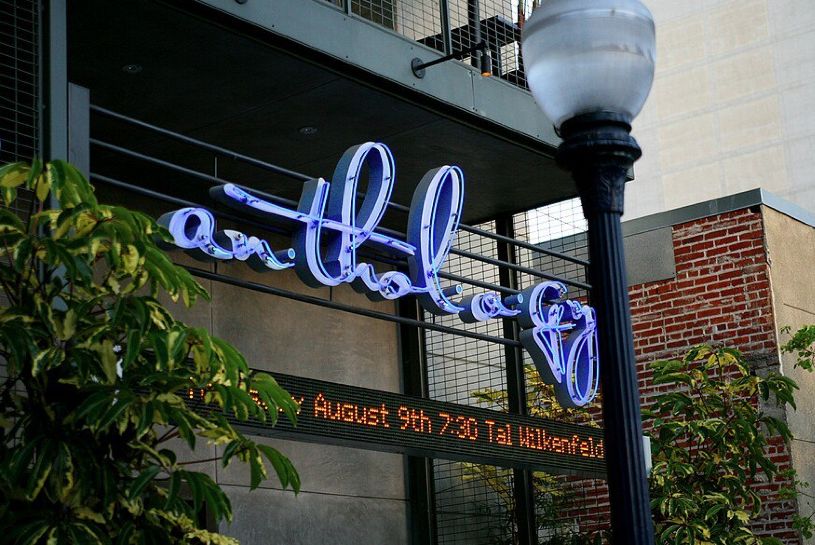
JAZZ HANDS: Little Italy’s 13,000-square foot jazz supper club, vacant since early last year, sounds to have new owners. Originally, it looked like an L.A. group was set to invade, but multiple sources have told us that local Tim Aaron—who recently took over both Nicky Rottens locations—is heading the project now. Calls to Aaron haven’t been returned so we have zero direct confirmation. But we’re told they’re doing a big remodel and plan to open in June.
GOSPEL ACCORDING TO LEUC: Leucadia’s little food renaissance is on. The last couple years has seen Fish 101, Solterra Winery + Kitchen and Regal Seagull move into one of the last funky beach communities in SD. The new project from Vigilucci’s group—Robby’s—is reportedly coming along beautifully, but slow. Now Leucadia is getting Bull Taco—the proudly “inauthentic Mexican” joint made famous because a couple surf punks served creative tacos (lobster chorizo, shrimp curry, even foie gras back when it was legal) out a window overlooking the beach. The new location is going into the former Jamroc (101 N. Coast Hwy 101). There’ve also been rumors that Bull Taco would take over Woody’s in Solana Beach (near CPK, formerly fine dining joint Blanca). But a BT rep says “no, not yet.”
SAN DIEGO MEANS BEER IN GERMAN: Craft beer bottle shops are the new wine bar. Bottlecraft in Little Italy and North Park has obviously done a great job. Now Solana Beach is getting one with San Diego BeerWorks—also going into the Beachwalk Retail Center in the former space of Cupcake Love.
NICE PLACE NEEDS CHEFS: Rancho Santa Fe’s top property Rancho Valencia has lost both exec chef Eric Bauer and sous chef James Noonan. We knew Noonan was leaving to be top toque for Urban Plates, but weren’t sure about Bauer’s new gig. Now Eater’s reporting Bauer has joined catering company H Events, which handles the annual Diner En Blanc. Look for Rancho Valencia to make a big new hire to helm its signature restaurant, Veladora. That $1M Damien Hirst art almost demands it.
TOTALLY UNCONFIRMED RUMORS: By no means are the following cemented nor confirmed, but… A source has told us that the long-shuttered On Broadway has a new owner. Our source also told us that the new club will be called YOLO—the internet acronym for You Only Live Once. Just kind of lets the soul leak out of ya, doesn’t it? Pray harder…. Oggi’s Pizza is reportedly working on opening a bunch of new locations around SD, concentrating the first efforts near SDSU… Pirch—the high-end kitchen showroom that hosts a slew of top-notch culinary events—is expected by expecters to open a few more spots around the city soon…. Three big renovations planned for iconic SD spots: The Catamaran Resort (Pacific Beach), The Horton Grand Hotel (Downtown) and Baleen (at Paradise Point in Mission Bay, home to talented chef Amy DiBiase)…. Keep your eye on the great and mighty Pannikin coffee shop in Del Mar’s Flower Hill Promenade. We have reason to believe there may be some big changes coming to that space as FHP continues its overhaul… We’re also hearing that PB Fish Shop has just signed on for a second location in Encinitas, and are planning a few more…
Three Dots and a Hunger: Jan. 31
Bull Taco to Leucadia; Anthology's new owner?; tons of rumors
JAZZ HANDS: Little Italy’s 13,000-square foot jazz supper club, vacant since early last year, sounds to have new owners. Originally, it looked like an L.A. group was set to invade, but multiple sources have told us that local Tim Aaron—who recently took over both Nicky Rottens locations—is heading the project now. Calls to Aaron haven’t been returned so we have zero direct confirmation. But we’re told they’re doing a big remodel and plan to open in June.
GOSPEL ACCORDING TO LEUC: Leucadia’s little food renaissance is on. The last couple years has seen Fish 101, Solterra Winery + Kitchen and Regal Seagull move into one of the last funky beach communities in SD. The new project from Vigilucci’s group—Robby’s—is reportedly coming along beautifully, but slow. Now Leucadia is getting Bull Taco—the proudly “inauthentic Mexican” joint made famous because a couple surf punks served creative tacos (lobster chorizo, shrimp curry, even foie gras back when it was legal) out a window overlooking the beach. The new location is going into the former Jamroc (101 N. Coast Hwy 101). There’ve also been rumors that Bull Taco would take over Woody’s in Solana Beach (near CPK, formerly fine dining joint Blanca). But a BT rep says “no, not yet.”
SAN DIEGO MEANS BEER IN GERMAN: Craft beer bottle shops are the new wine bar. Bottlecraft in Little Italy and North Park has obviously done a great job. Now Solana Beach is getting one with San Diego BeerWorks—also going into the Beachwalk Retail Center in the former space of Cupcake Love.
NICE PLACE NEEDS CHEFS: Rancho Santa Fe’s top property Rancho Valencia has lost both exec chef Eric Bauer and sous chef James Noonan. We knew Noonan was leaving to be top toque for Urban Plates, but weren’t sure about Bauer’s new gig. Now Eater’s reporting Bauer has joined catering company H Events, which handles the annual Diner En Blanc. Look for Rancho Valencia to make a big new hire to helm its signature restaurant, Veladora. That $1M Damien Hirst art almost demands it.
TOTALLY UNCONFIRMED RUMORS: By no means are the following cemented nor confirmed, but… A source has told us that the long-shuttered On Broadway has a new owner. Our source also told us that the new club will be called YOLO—the internet acronym for You Only Live Once. Just kind of lets the soul leak out of ya, doesn’t it? Pray harder…. Oggi’s Pizza is reportedly working on opening a bunch of new locations around SD, concentrating the first efforts near SDSU… Pirch—the high-end kitchen showroom that hosts a slew of top-notch culinary events—is expected by expecters to open a few more spots around the city soon…. Three big renovations planned for iconic SD spots: The Catamaran Resort (Pacific Beach), The Horton Grand Hotel (Downtown) and Baleen (at Paradise Point in Mission Bay, home to talented chef Amy DiBiase)…. Keep your eye on the great and mighty Pannikin coffee shop in Del Mar’s Flower Hill Promenade. We have reason to believe there may be some big changes coming to that space as FHP continues its overhaul… We’re also hearing that PB Fish Shop has just signed on for a second location in Encinitas, and are planning a few more…
Three Dots and a Hunger: Jan. 31
Hypertension is the leading cause of cardiovascular disease and premature death in women
It’s estimated that 44% of women in the U.S. have high blood pressure, also known as hypertension, but many don’t know it. The disease often has no symptoms, and when symptoms do present, they can appear similar to many other conditions. High blood pressure increases the risk for heart disease and stroke, so it’s critical that it’s detected and treated early. And for women at risk of developing high blood pressure, prevention is key. Click here for the basics of high blood pressure and how Scripps physicians at Scripps use screenings not just as a diagnostic tool, but as part of routine preventive care.
For more nutrition, wellness, and healthy living tips, sign up for the San Diego Health newsletter here.