Featured articles
Food & Drink
Food & Drink
Food News
Featured articles
Everything SD
Everything SD
Everything SD
Featured articles
Things to Do
Things to Do
Everything SD
Featured articles
podcast-ep
podcast-ep
podcast-ep
Featured articles
Everything SD
Everything SD
Food & Drink
Featured articles
Partner content
Everything SD
Everything SD
Ready to know more about San Diego?
SubscribeReady to know more about San Diego?
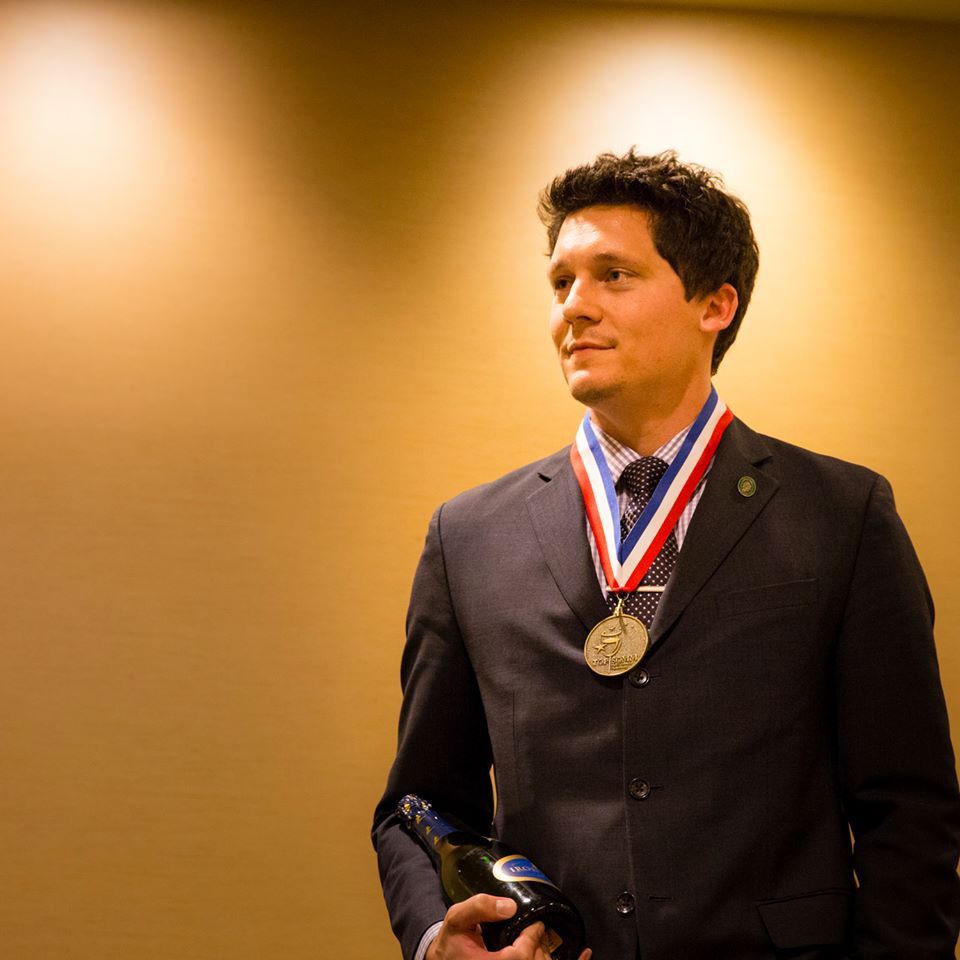
Top Somm is a big deal in the wine world. San Diego's Joshua Orr just won it.
You’ve heard of sommeliers. They’re wine experts who’ve studied the grapes, varietals, winemaking methods, sugar levels, acid levels, chemical compounds—everything that makes a good wine and determines how well it will pair with your dinner. This isn’t a self-appointed title like “social media guru.” This is a very grueling, specific, years-long testing program overseen by the Court of Master Sommeliers, a British organization.
There are three tests and certifications that matter. First is Certified Sommelier (the entry-level title, but still no easy feat). Then Advanced Sommelier (hundreds if not thousands of study hours and practical experience). And the end-all, be-all is to become a Master Sommelier (you’ve dedicated your life to wine, and your firstborn will be named Assyrtiko).
Since the first exam in 1969, only 214 people in the world have been named a Master Sommelier. Stories abound about sommeliers giving up after their fourth or fifth try. “I’ve heard of people walking into the blind tasting, sniffing the glasses and saying, ‘I’ve got nothing—I’m out of here,’” says Joshua Orr, an Advanced Sommelier who oversees the wine program at San Diego’s Marina Kitchen.
Orr takes his test this week. Expectations are high, especially since he just won Top Somm, an annual competition that crowns the best up-and-coming sommelier in America. Top Somm gathers some of the brightest and best from across the US and sends them through a competition in which they’re heckled, flustered and harassed by Master Sommeliers. They’re tested on wine service, wine theory, and have to execute a blind tasting in which they sniff, sip and analyze six unnamed glasses of wine and try to nail the global region, the grapes, the approximate age, whether it’s oaked, who made it, etc.
The previous four winners were from The French Laundry, the Ritz-Carlton Half Moon Bay, Café Boulud and Hotel Fauchere. And now Orr.
“It’s a hardcore achievement,” says Domaine Select Wine Estate’s Ted Glennon, who was named one of the country’s top sommeliers by Food & Wine magazine in 2012. “It’s an intense, dizzying set of challenges—to compete is a total display of badassery.”
We asked Orr about the experience:
How’s it feel?
It’s a humungous honor. I always looked at the competitors and winners and said, “Oh, man—you’re the man.”
Tell me a feel-good story about civic San Diego pride.
Usually in these things it’s New York versus San Francisco versus Chicago. When I moved here five years ago, a mentor told me, “San Diego is where sommeliers go to die.” But we recently had a Master Sommelier down here and he was shocked at the talent level. Another San Diego guy—Brian Donegan, formerly of Market—is going with me next week to take the Master Sommelier exam.
Had you tried to enter the competition before?
Yeah. I’d never advanced beyond the initial round prior to last year, when I was allowed in as the “Top New Somm.” I’ve probably taken it two times maybe three prior to that.
What’s the competition like?
You start with the written exam online. It’s timed. They encourage you to Google and cheat because if you do, you’ll never finish on time.
What’s the blind tasting like?
You’re presented with six glasses of wine. In competition, they tend to be less obvious stuff. You gotta expect it. You just know they’re gonna screw with you. We had an Australian Riesling and they threw two sparkling wines at us. Then the questions come: How do you think it’s made? Is there lees contact? What style? What are the primary grapes? How old do you think it is? What’s the retail price of it? I got those right on the first one—a Pinot Noir-dominant Champagne from Bollinger.
There’s a “service” portion of the competition?
Yeah, you actually have to serve wine to these Master Sommeliers while getting harassed at the same time. It’s no-holds-barred, and it’s not meant to be fair. I got quizzed on Calvados and brandy. They were peppering me with the minimum alcohol, which apple types are used, name three small producers, what’s the alcohol level when it’s shipped, whether it’s batched still or continuous still, what’s the soil like…. And while all of this is going on, I have to walk around a table and serve wine.
Go back to the contest. You’ve just picked up a glass of white wine. What’s in your head?
Wine No. 1 was herbal and super mineral, but had a little elevated alcohol. It had a Sauvignon Blanc character, but it’s not super herbal so maybe it’s a riper style of white like Blanc de Blanc or Assyrtico. There’s a chive character to it. It doesn’t fit the Old World style. It ended up being a Sonoma Valley Sauvignon Blanc.
What part was the most nerve-wracking?
The second wine, because the nose was off. I’m at a blind tasting at Top Somm. Do I dare call the wine a little corky? I’m afraid they’re going to walk over to me and whisper, “Son, you’re going to need to politely bow out of the competition for suggesting we would ever serve a corked wine at Top Somm.” Well, I ended up saying that the nose was corked—and I got points for doing so.
How the hell do you break that down?
Certain grape varieties have certain markers. There are chemical compounds called pyrazines. It puts off a green bell pepper note that’s very prevalent in Sauvignon Blanc, Cabernet Sauvignon, Cab Franc and Merlot. If you can identify that in a glass of wine it makes the world of possible answers so much smaller. Rotundone is a chemical that smells like black pepper, so I’d think something like Syrah or Mourvédre. From there, it’s matching with structure. Sauv Blancs have high acid. Rieslings, too. Gewürztraminers have low acid and high alcohol. Sangiovese has a really distinctive orange color, but it’s also high acid and high tannin. You’re thinking, Is it ripe? Is it overripe? Dry? Jammy? All those things can point to climate, part of the world, Old World or New World.
I’m thirsty. Give me a recent “find” that you’re excited about at Marina Kitchen…
Samsara’s Turner Vineyard Syrah from Santa Rita Hills. It has that dark berry flavor but it’s not over the top. What I love is it’s got that peppery, smoky, olive, almost bacon character. But it’s not so heavy that it knocks you off your feet. I’m also huge on dry Rieslings. We do a great one called Wagner-Stemple that I just brought on by the glass.
The ultimate bottle on your list? For when I sell my startup.
The 91 Vega Sicilia Unico. That’s arguably the most heralded wine out of Spain—a Tempranillo. A crazy wine, made by a family so wealthy that they don’t have to worry about the bottom line. So they have 100-year-old vines and age it as long as they see fit. On our list it’s $525. Unfortunately, it does live up to the price. Damn you for being so expensive, and damn you for being so good.
Biggest part of your success as a sommelier?
Having access to a consistent, high-quality tasting group. Getting your MS is like a marathon—you need constant exposure and training.
So you and sommelier pals get together regularly and taste? Who pays for all the wine? I’m assuming it’s not Barefoot and Smoking Loon.
We pay for it ourselves. This isn’t cheap. It’s like getting a degree. Instead of spending it on books, you’re spending it on alcohol—which most college kids do anyway.
Anything else new?
I jumped on the Coravin bandwagon and I’m having fun with it. It looks like a little hand pump with a needle on it, and it lets you pull a glass of wine without uncorking the bottle. So I use it to feature four different wines—something old and something new. For instance I’m doing a Riesling from 1989 that you can taste for $8. I’ve got a 10 year-old Napa Valley Merlot. I’m going to start posting which wines I’m offering on the Twitter feed (@somm_morr).
How’d mom react to the Top Somm win?
She was on the east coast waiting up in a hotel room for me to call. I’ve done well but never great in competitions. So my dad joked, “Well, you picked a hell of a time to break through.”
Go have some wine with Joshua Orr at Marina Kitchen.
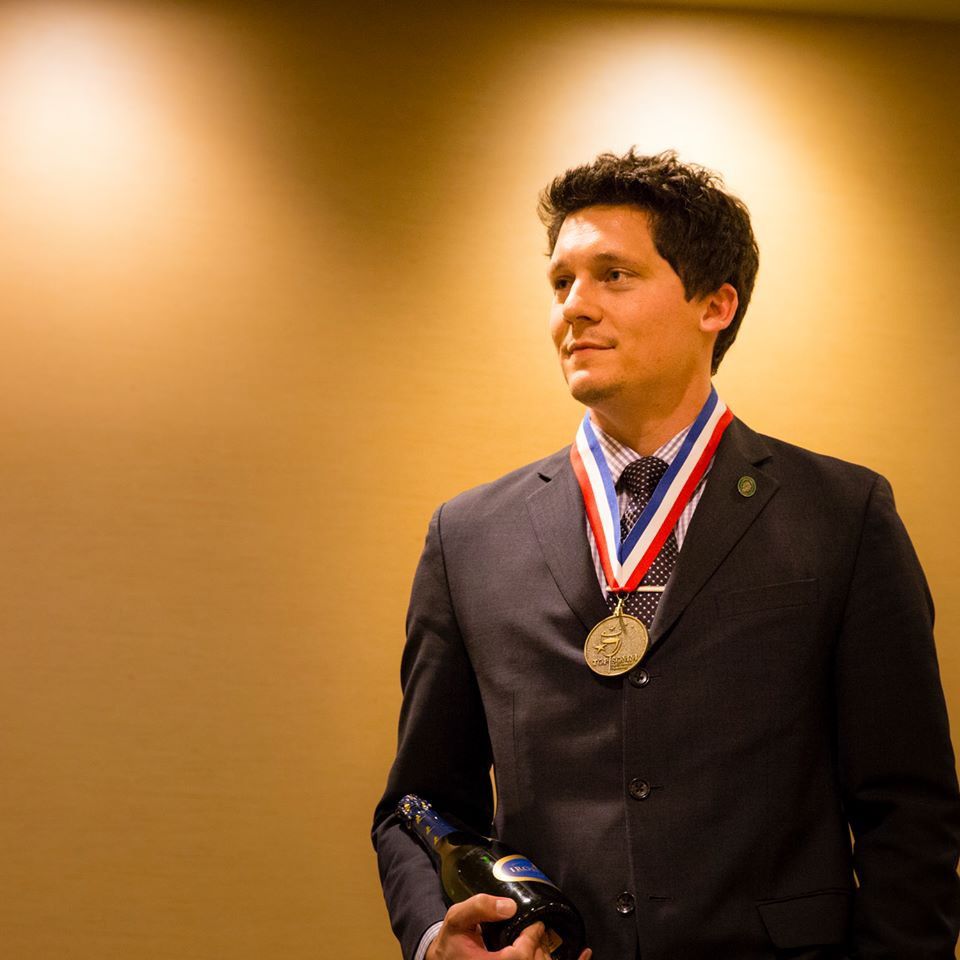
Joshua Orr, wine Olympian.

Top Somm is a big deal in the wine world. San Diego's Joshua Orr just won it.
You’ve heard of sommeliers. They’re wine experts who’ve studied the grapes, varietals, winemaking methods, sugar levels, acid levels, chemical compounds—everything that makes a good wine and determines how well it will pair with your dinner. This isn’t a self-appointed title like “social media guru.” This is a very grueling, specific, years-long testing program overseen by the Court of Master Sommeliers, a British organization.
There are three tests and certifications that matter. First is Certified Sommelier (the entry-level title, but still no easy feat). Then Advanced Sommelier (hundreds if not thousands of study hours and practical experience). And the end-all, be-all is to become a Master Sommelier (you’ve dedicated your life to wine, and your firstborn will be named Assyrtiko).
Since the first exam in 1969, only 214 people in the world have been named a Master Sommelier. Stories abound about sommeliers giving up after their fourth or fifth try. “I’ve heard of people walking into the blind tasting, sniffing the glasses and saying, ‘I’ve got nothing—I’m out of here,’” says Joshua Orr, an Advanced Sommelier who oversees the wine program at San Diego’s Marina Kitchen.
Orr takes his test this week. Expectations are high, especially since he just won Top Somm, an annual competition that crowns the best up-and-coming sommelier in America. Top Somm gathers some of the brightest and best from across the US and sends them through a competition in which they’re heckled, flustered and harassed by Master Sommeliers. They’re tested on wine service, wine theory, and have to execute a blind tasting in which they sniff, sip and analyze six unnamed glasses of wine and try to nail the global region, the grapes, the approximate age, whether it’s oaked, who made it, etc.
The previous four winners were from The French Laundry, the Ritz-Carlton Half Moon Bay, Café Boulud and Hotel Fauchere. And now Orr.
“It’s a hardcore achievement,” says Domaine Select Wine Estate’s Ted Glennon, who was named one of the country’s top sommeliers by Food & Wine magazine in 2012. “It’s an intense, dizzying set of challenges—to compete is a total display of badassery.”
We asked Orr about the experience:
How’s it feel?
It’s a humungous honor. I always looked at the competitors and winners and said, “Oh, man—you’re the man.”
Tell me a feel-good story about civic San Diego pride.
Usually in these things it’s New York versus San Francisco versus Chicago. When I moved here five years ago, a mentor told me, “San Diego is where sommeliers go to die.” But we recently had a Master Sommelier down here and he was shocked at the talent level. Another San Diego guy—Brian Donegan, formerly of Market—is going with me next week to take the Master Sommelier exam.
Had you tried to enter the competition before?
Yeah. I’d never advanced beyond the initial round prior to last year, when I was allowed in as the “Top New Somm.” I’ve probably taken it two times maybe three prior to that.
What’s the competition like?
You start with the written exam online. It’s timed. They encourage you to Google and cheat because if you do, you’ll never finish on time.
What’s the blind tasting like?
You’re presented with six glasses of wine. In competition, they tend to be less obvious stuff. You gotta expect it. You just know they’re gonna screw with you. We had an Australian Riesling and they threw two sparkling wines at us. Then the questions come: How do you think it’s made? Is there lees contact? What style? What are the primary grapes? How old do you think it is? What’s the retail price of it? I got those right on the first one—a Pinot Noir-dominant Champagne from Bollinger.
There’s a “service” portion of the competition?
Yeah, you actually have to serve wine to these Master Sommeliers while getting harassed at the same time. It’s no-holds-barred, and it’s not meant to be fair. I got quizzed on Calvados and brandy. They were peppering me with the minimum alcohol, which apple types are used, name three small producers, what’s the alcohol level when it’s shipped, whether it’s batched still or continuous still, what’s the soil like…. And while all of this is going on, I have to walk around a table and serve wine.
Go back to the contest. You’ve just picked up a glass of white wine. What’s in your head?
Wine No. 1 was herbal and super mineral, but had a little elevated alcohol. It had a Sauvignon Blanc character, but it’s not super herbal so maybe it’s a riper style of white like Blanc de Blanc or Assyrtico. There’s a chive character to it. It doesn’t fit the Old World style. It ended up being a Sonoma Valley Sauvignon Blanc.
What part was the most nerve-wracking?
The second wine, because the nose was off. I’m at a blind tasting at Top Somm. Do I dare call the wine a little corky? I’m afraid they’re going to walk over to me and whisper, “Son, you’re going to need to politely bow out of the competition for suggesting we would ever serve a corked wine at Top Somm.” Well, I ended up saying that the nose was corked—and I got points for doing so.
How the hell do you break that down?
Certain grape varieties have certain markers. There are chemical compounds called pyrazines. It puts off a green bell pepper note that’s very prevalent in Sauvignon Blanc, Cabernet Sauvignon, Cab Franc and Merlot. If you can identify that in a glass of wine it makes the world of possible answers so much smaller. Rotundone is a chemical that smells like black pepper, so I’d think something like Syrah or Mourvédre. From there, it’s matching with structure. Sauv Blancs have high acid. Rieslings, too. Gewürztraminers have low acid and high alcohol. Sangiovese has a really distinctive orange color, but it’s also high acid and high tannin. You’re thinking, Is it ripe? Is it overripe? Dry? Jammy? All those things can point to climate, part of the world, Old World or New World.
I’m thirsty. Give me a recent “find” that you’re excited about at Marina Kitchen…
Samsara’s Turner Vineyard Syrah from Santa Rita Hills. It has that dark berry flavor but it’s not over the top. What I love is it’s got that peppery, smoky, olive, almost bacon character. But it’s not so heavy that it knocks you off your feet. I’m also huge on dry Rieslings. We do a great one called Wagner-Stemple that I just brought on by the glass.
The ultimate bottle on your list? For when I sell my startup.
The 91 Vega Sicilia Unico. That’s arguably the most heralded wine out of Spain—a Tempranillo. A crazy wine, made by a family so wealthy that they don’t have to worry about the bottom line. So they have 100-year-old vines and age it as long as they see fit. On our list it’s $525. Unfortunately, it does live up to the price. Damn you for being so expensive, and damn you for being so good.
Biggest part of your success as a sommelier?
Having access to a consistent, high-quality tasting group. Getting your MS is like a marathon—you need constant exposure and training.
So you and sommelier pals get together regularly and taste? Who pays for all the wine? I’m assuming it’s not Barefoot and Smoking Loon.
We pay for it ourselves. This isn’t cheap. It’s like getting a degree. Instead of spending it on books, you’re spending it on alcohol—which most college kids do anyway.
Anything else new?
I jumped on the Coravin bandwagon and I’m having fun with it. It looks like a little hand pump with a needle on it, and it lets you pull a glass of wine without uncorking the bottle. So I use it to feature four different wines—something old and something new. For instance I’m doing a Riesling from 1989 that you can taste for $8. I’ve got a 10 year-old Napa Valley Merlot. I’m going to start posting which wines I’m offering on the Twitter feed (@somm_morr).
How’d mom react to the Top Somm win?
She was on the east coast waiting up in a hotel room for me to call. I’ve done well but never great in competitions. So my dad joked, “Well, you picked a hell of a time to break through.”
Go have some wine with Joshua Orr at Marina Kitchen.
Joshua Orr, wine Olympian.

Offering everything from smashburgers to sundaes, the latest food hall from Tiger Hospitality opens its doors this weekend
Omakase and fixed-price menus are one way hospitality businesses are addressing our collective food decision-making fatigue. But on the opposite end of the spectrum, some restaurateurs are offering a bonanza of totally unrelated options for people ordering on a whim. Why not pair a lobster grilled cheese sandwich, açaí bowl, and ridiculously loaded hot dog?
Starting June 27, diners can satisfy their spur-of-the-moment appetites at Global Fork in Little Italy, the latest food hall from Southern California-based Tiger Hospitality.
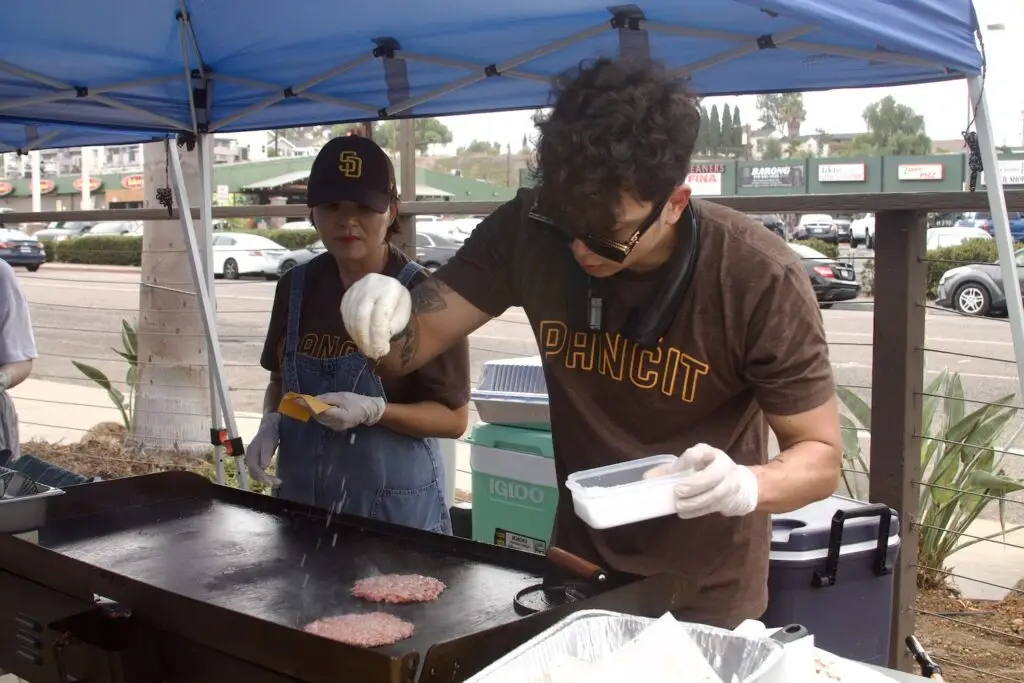
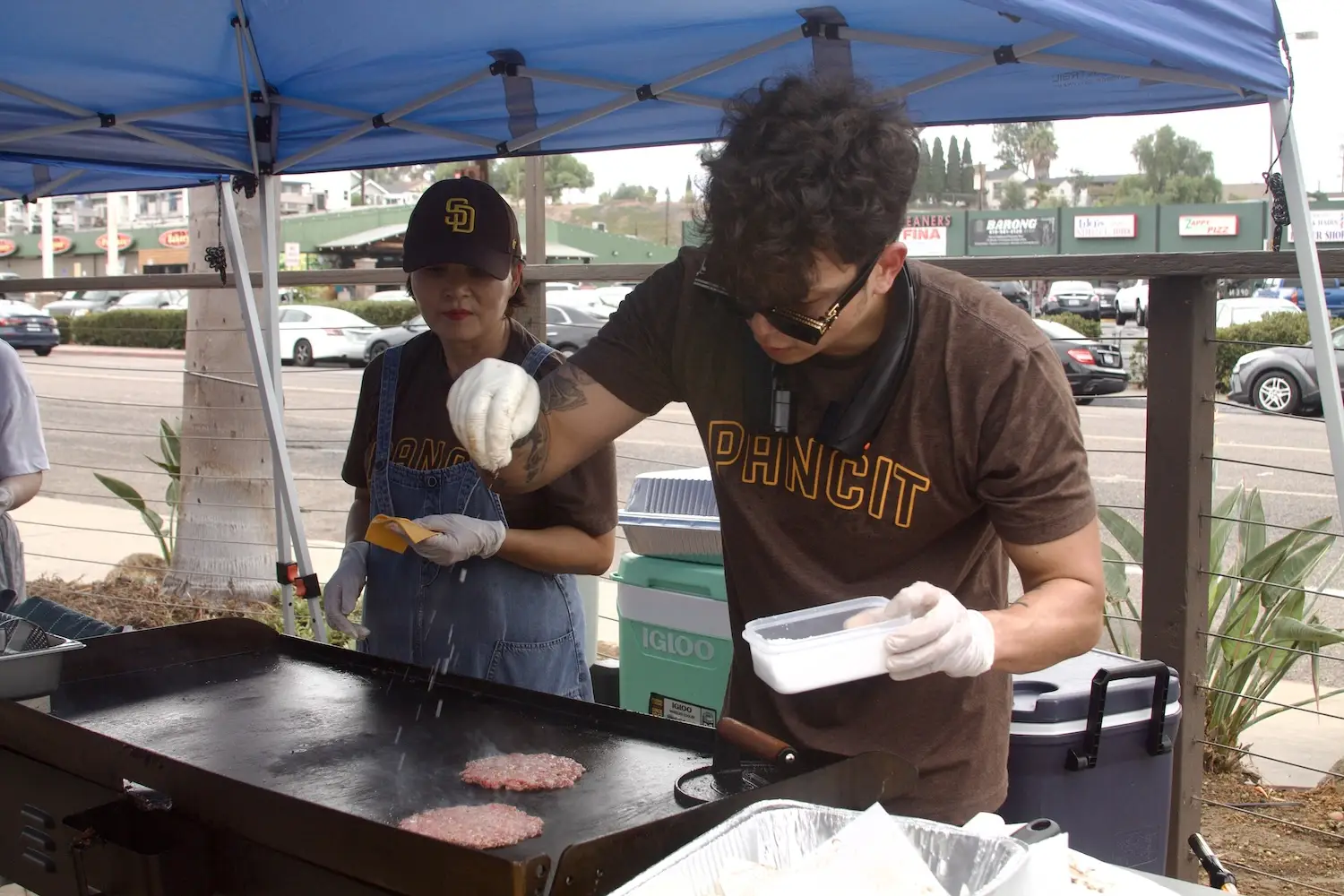
Six different food concepts will be featured in the 4,685-square-foot, indoor-outdoor space along the Piazza della Famiglia promenade. The space’s inaugural lineup includes a mix of Tiger Hospitality-owned concepts (Cosmos Burger, La Vida, Lobster Lab, and Prik Ki Nu Thai) and outside operators (Seattle-based Moto Pizza and Handel’s Homemade Ice Cream). The space next door, Good Enough Cocktail Club, is another Tiger-backed brand, operated by the team behind Same Same and Amor y Magia in Carlsbad.
Cosmos Burger serves smashburgers stacked with classic toppings, while Lobster Lab focuses on seafood favorites including lobster rolls, shrimp rolls, and lobster mac n’ cheese. Prik Ki Nu Thai adds Thai street food to the mix, with traditional noodle, rice, and stir-fry dishes. And for those looking for something on the lighter side, La Vida offers things like smoothies, salads, and wraps.

Moto Pizza focuses on Detroit-style square pizza with Filipino influences and, despite the name, is not affiliated with Mr. Moto Pizza. Handel’s, which began in Ohio in 1945, will offer dozens of flavors ranging from staples like chocolate and vanilla to rotating specialties packed with candies, cookies, and other mix-ins. (Handel’s already has a number of locations across San Diego, with a La Mesa store coming later this year.)
Some of these vendors already operate at Miramar Food Hall, the other Tiger-owned food hall in San Clemente. And some of them will also appear in Station8, the next food hall slated to open in UC San Diego’s Theatre District Living and Learning Neighborhood later this fall. But if you ask me, reviving the space that housed the Little Italy Food Hall before its closure last February is a far better outcome than leaving empty suites smack in the middle of an area saturated with fantastic food options. Plus, where else can you order a slice of beef adobo pizza alongside squares of caviar toast and a banana split?
Global Fork opens June 27 at 550 W. Date Street, Suite B, in Little Italy. Initial operating hours are from 9 a.m. to 9 p.m., seven days a week, but vendor hours may differ.

Listen Now: The Latest in San Diego’s Food and Drink Scene
Have breaking news, exciting scoops, or great stories about new San Diego restaurants or the city’s food scene? Send your pitches to [email protected].
Beth Demmon is an award-winning writer and podcaster whose work regularly appears in national outlets and San Diego Magazine. Her first book, The Beer Lover's Guide to Cider, is now available. Find out more on bethdemmon.com.
How the now iconic rating system became the biggest name in the food and how it made its way to our backyard
So, Michelin chose San Diego to host its annual awards show this week. Big thing for our city, which people wrote off as the flaccid mozzarella stick or the “fish tacos bro” of California food culture.
Michelin Guide is a pretty fascinating story. It started as a marketing brochure for a tire company and evolved into the strongest global marketing platform for restaurant culture in history.
In 1900, there were less than 3,000 cars in all of France. André and Édouard Michelin were trying to sell tires. A niche market. If people drove more, they figured, tires would go bald faster. They’d sell more rubber.
So they published a guidebook with maps, gas stations, mechanics, hotels, restaurants, and travel advice. The “How to Go Bald” book with food as the bait. By the 1920s, people were buying the guide just for the restaurant recs.
In 1926, Michelin introduced stars. This changes everything.
Originally just one. Five years later, it expanded to three. One meant “very good restaurant.” Two meant “worth a detour.” Three stars meant “worth a special journey.” In other words, wear those tires down to a nub in search of Dover sole.

By WWII, Michelin was the gold standard guide to French food. And French food was the gold standard for western food. Which was half the world.
Michelin first came to the US in 2005.
New York only.
(Knicks in five).
In 2007, San Francisco. Then LA and Vegas in 2008.
Michelin stopped publishing in LA and Vegas after two years and stayed dark until 2019.
Major theories for this?
First, print is expensive. I can attest. ROI on a printed story is hard.
Second, people wanted local critics, and they were finding them online.
Third, Michelin landed like a stuffed shirt in LA, which had taco carts in its heart. LA swiped hard left.
Then Michelin discovered a new way to fund what it does. Instead of trying to sell enough books to justify the cost (inspectors, printing, restaurant bills, etc.), it had tourism marketing districts pay for inspectors to come analyze their cities or states.
Tourism marketing districts are massive organizations whose primary goal is to sing the priases of their cities and states—attract tourists, who pay for hotels and spend money in the city. Heads in beds.
The first to swipe its credit card was California, which paid $600,000 in 2019 for Michelin to come back to LA, Orange County, Monterey, Sacramento, Santa Barbara, and… San Diego.
It’s an overwhelmingly positive thing, which is never without its doubters and critics.
Namely, not everyone is down with the pay for play model.
The biggest reason is that it means cities without big tourism budgets get left out. Chefs in those cities are chefs non grata in the eyes of Michelin. Which is a fair complaint, though also, sadly or not, kind of how capitalism works.
Michelin isn’t a government organization, or a nonprofit culinary organization. It’s a publicly traded company with real bills to pay and investors and shareholders to answer to.
Since it feels like a tad of a PR dilemma for Michelin, I have a proposal that may or may not work.
What if Michelin took a portion of the money it receives from larger cities and used it to fund its expansion into an underserved city or state that can’t afford it? Bake it into the price it charges California or any other state.
Again, Michelin’s not obligated to do this; there is no penalty beyond the paper cuts of public sentiment. But that sort of pay-it-forward model could help other cities without the resources to play the game, while simultaneously making Michelin’s reach bigger and more holistic.
Second, people claim this TMD-funded model somehow taints the winners.
I don’t buy that at all. All tourism boards are doing is paying a marketing business (Michelin) to come operate in their city. They’re not telling Michelin which restaurants to choose for awards. As I understand it, Michelin has retained independence, and its inspectors only award restaurants that they feel are absolutely worth it based on merit.
True pay for play would be if a restaurant group paid Michelin in exchange for a star. Or if tourism boards had a say in which restaurants received attention or awards.
I haven’t found any proof of that happening, and so I won’t ding the validity of the awards until (and if) I ever do.
All tourism boards can control is which areas they’re willing to pay to have analyzed. For instance, San Diego could technically ask that only the city be analyzed and not the county. Which it did not, most likely because Visit San Diego (our TMD) is in charge of marketing the entire county (and thus why Michelin stars like Jeune et Jolie, Lilo, and Addison are outside of SD city limits).
So, if you’re dead set on criticizing Michelin, I’m not sold yet on the pay-for-play model being the right route.
Troy Johnson is the magazine’s award-winning food writer and humorist, and a long-standing expert on Food Network. His work has been featured on NatGeo, Travel Channel, NPR, and in Food Matters, a textbook of the best American food writing.
Stake Chophouse & Bar brings contemporary classics and old-school service to the heart of Coronado
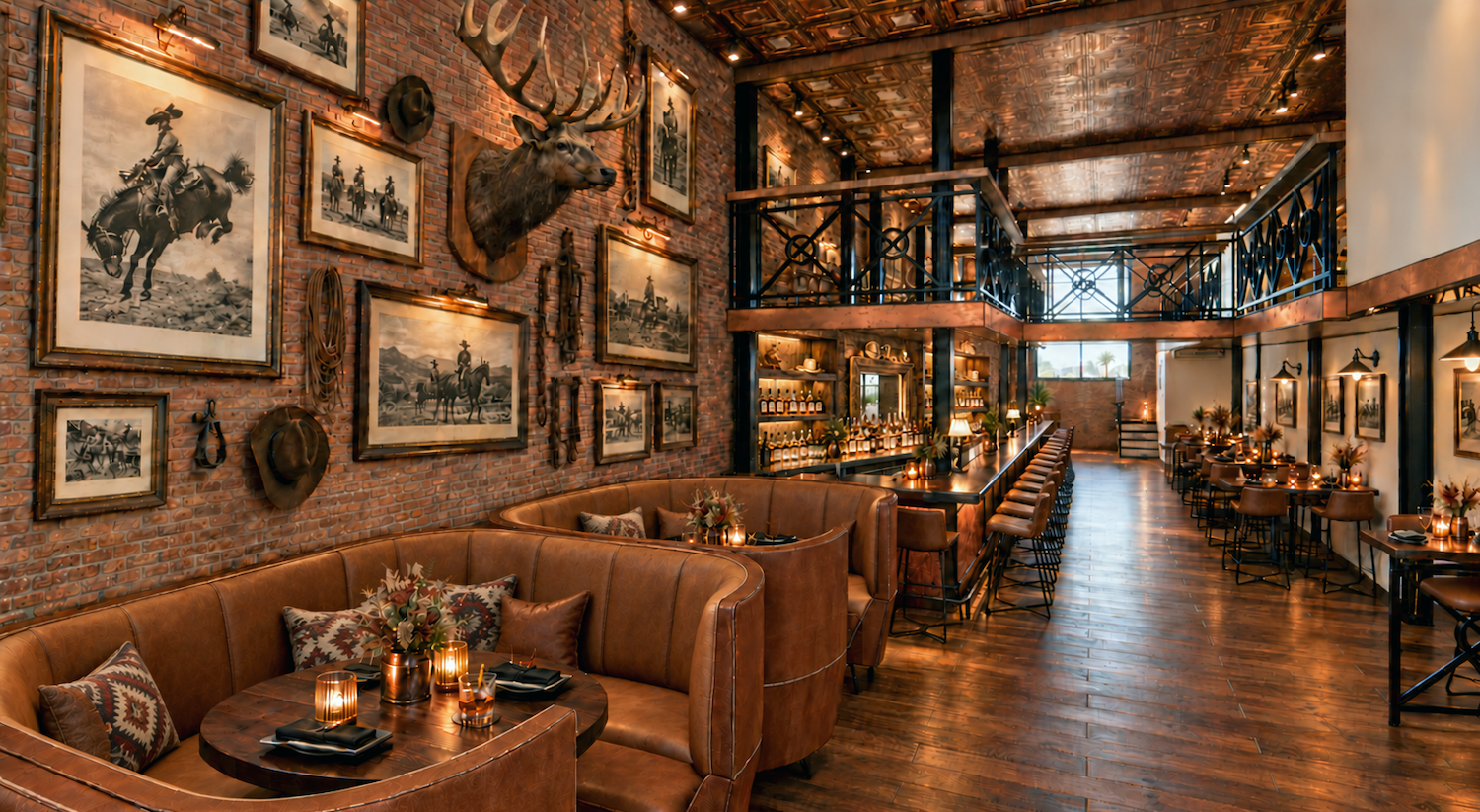
Stake Chophouse & Bar isn’t your average steakhouse. Blue Bridge Hospitality’s Coronado outpost is a modern interpretation of a big-city steakhouse nestled in the heart of the small coastal community. The team at Stake has reimagined the whole steakhouse experience. By prioritizing a seasonal farm-to-table sourcing philosophy, a personalized guest experience, and unique service touches, like a formal steak presentation and a bespoke knife selection process, Stake distinguishes itself in a sea of steakhouses.
Exceptional steaks, including Wagyu from Japan, Australia, and the U.S., and fresh seafood flown in daily form the core of Stake’s culinary identity. The menu features a five-course omakase-style steak experience highlighting house favorites, plus an array of cuts, and classic steakhouse staples—think a wedge salad, baked potato, or pasta carbonara—refined for a contemporary palate without losing their traditional appeal. Stake focuses on seasonal sourcing from the region’s best family farms and specialty purveyors, and incorporates intentionally unexpected touches to create something truly unique.
“I challenge our chefs and myself to take it a step further in sourcing,” says Chef Ronnie Schwandt. “It’s important to us to highlight different farms, unique one-off farms—whether it’s cattle, strawberries, a local fisherman or from anywhere in the United States, we’re always trying to find that niche.”
Beyond the menu, Stake emphasizes outstanding service, says Vinny Spatafore, Director of Hospitality Operations. Staff maintains detailed notes, allowing them to remember guests by name, recall previous orders such as a favorite martini (also memorable for the customer since it’s served in an extra tall, distinctly-shaped glass), and celebrate special occasions like birthdays and anniversaries.
“When you have those points of topic that you remember about a guest, they appreciate that,” he says. “Our servers are really good with that—we have a couple servers who have been here since the beginning and they’ll remember somebody from years ago, their name, their kids’ names, where they live. I’m really thankful to have a great front of house staff.”
Award-winning wines, rare whiskeys, special events, and a complementary black car service that provides transportation for guests throughout Coronado add to Stake’s appeal.
Schwandt stresses that Stake offers more than a meal; they aim to give patrons something unforgettable.
“It starts when you walk up the stairs and are greeted by the hostess—that sets the tone for the night. Then you’re greeted by a server, who may know you by name, and can guide you through the menu and curate as they get to know you,” says Schwandt. “Most people leave kind of blown away; they leave feeling like they just had an experience. That’s the goal, right? Whether you’re serving smash burgers or high-end steak, you want somebody to leave thinking, Wow, that was awesome.”
The restaurants and people behind the fastest sold-out event in San Diego Magazine’s history
The Sapporo Omakase Open is upon us. The event that sold out faster than any in San Diego Magazine’s history. The birth of another tradition.
The idea was simple: partner with the city’s preeminent force in Asian business and culture (the Convoy District) and the longest-running Japanese brewer in the world (Sapporo, founded 1876). Then bring together some of our favorite chefs and food and drink people who specialize in Asian delicacies—sushi, pho, xiao long baos, mochi, musubi, sake, tea, you name it—to shine a light on who they are and the delicious things they create.
There will be a friendly competition, judged by everyone in attendance and a panel of food experts, including longtime Food Network judge (and SDM co-owner) Troy Johnson. Winners will be named and trophied and exalted.
But moreover, SDM and its partners—Snake Oil Cocktail Co, Rivian, Del Mar Wine & Food Festival, and Komé Collective—believe in building local culture will bring together a room full of people to eat, drink, commune, and celebrate those who make San Diego’s food and drink culture hum.
Here is your guide to the restaurants, chefs, and people cooking and creating at the inaugural Sapporo Omakase Open:

The OG. Dumpling Inn & Shanghai Saloon started in a tinier strip-mall space, famous for Shanghai-style comfort food like jellyfish salad and xiao long baos (XLBs, aka soup dumplings). It became so loved that they took over the giant anchor spot on Convoy (a former iconic Chinese grocery store, which also helped launch Convoy into the pan-Asian food wonderland its become). Its menu is vast, but the dumplings are the legend—with fresh dough rolled each morning, a rounded pocket of porky goodness and a gush of broth. Celebrating 10 years in its massive space (and 32 years overall), the Inn’s XLB comforts everything in its path.
This is the family-run spot in Convoy for seafood boils, brought to you by the owners of one of the city’s top restaurants, Kingfisher. Crab Hut is their OG idea from owners Ky Phan, sister Kim, and brother in law Quan Le. It’s a love note to their childhood home and family tradition where they grew up in Vietnam. Behind their house was a river. The Phans would fish during the day, and sit around the communal table boiling up the day’s haul at night. There’s the “Bucket for One” filled with snow crab clusters, shrimp, crawfish, mussels, clams, corn on the cob, potatoes, and andouille sausages. There’s the “Go to Town” boil overflowing with everything previously mentioned, plus king crab legs and a glorious Dungeness crab. The most delicious kind of mess.
Lumi by Akira Back is led by world-renowned Korean-American chef Akira Back—the ex-pro snowboarder turned Michelin-star, best known for Dosa in Seoul, Yellowtail in Vegas, and this rooftop sushi-plus concept in the Gaslamp. Overlooking Fifth Ave, it’s serious food with a little party in its heart. Along with a serious sushi program, there are dishes like his Japanese-inspired take on pizza (a tuna carpaccio + ponzu mayo idea) or the miso pork belly kimchee chaufa. Want the full show? Order the Nano 9, Lumi’s Signature Mystery Box, a limited nine-piece omakase sushi course unveiled tableside in an ornate carrier leaking fog all over the place. Keep going big (but refined) with Mist of Kyoto, a cocktail-for-two experience—Knob Creek Barrel Rye, Mizunara liqueur, Japanese sweet vermouth, and black walnut bitters, served in a ceremonial tea pot with two equally ceremonious cups.
This concept was inevitable. Ayaka Ito first came onto San Diego’s restaurant scene in 2016 with Beshock Ramen in East Village. The ramen is fantastic, but the place was unique in that it was one of the city’s first portals into the craft of world-class sake. Ito is a kikizakeshi—essentially a certified sake sommelier or master. Sake Bar GAGA is her sake tasting bar in East Village, a 10-seater destination that takes guests on an omakase-style journey of around 20 sakes, hand selected by Ito. For the food, she and chef Ryan Miller collaborated on tapas-style bites with Marie Chiba, a certified sake samurai (one of the few in the world) and owner of Tokyo’s famous sake bar, Eureka. When you choose your dishes—like the blue cheese ham katsu, scallop mango tartar, A5 Wagyu Nigiri, konbu-aged red snapper, snow crab croquettes, you name it—the bar customizes your sake to each food.
San Diego’s largest oceanfront rooftop, hovering above the beach-culture pandemonium at Belmont Park. With a qualification like that, Cannonball could serve gas station sushi and mid boat drinks and be just fine. But local restaurant group Eat. Drink. Sleep (JRDN, The Lakehouse) and chef Luis Romero have made sure the seafood lives up to the view—with over 30 sushi creations, apps like bluefin tostadas with aguachile negro, baked blue crab dip with sriracha honey—plus entrees like a ribeye in uni butter and miso black cod. Watching the daily mix of tanned, parrot-wielding locals, Fit gym body-bods, and tourists is a show in and of itself, made even more enjoyable with a Lychee Lychee—vodka, nigori sake, yuzu liqueur, and lychee syrup.
Hard to call him underrated, since he won best dish at Del Mar Wine + Food Festival last year. But chef Ethan Yang’s Glass Box still deserves more. The restaurant is an attraction in and of itself—encased in a giant glass cube inside the Sky Deck at Del Mar Highlands. Yang and his chefs are on display, slicing top-notch fatty toro or premium wagyu filet. He offers a 10 to 15 course omakase experience, and the bar brings classics like a Toki Old Fashioned (Suntori Toki, bitters, orange) and modern plays like a Matchatini.
Cooking. That’s what chef Stevan Novoa’s ikegi is; a Japanese word meaning “reason for being.” A military veteran with 13-plus years of experience in kitchens across the coast of California and Mexico, Novoa has cooked most styles that make the region hum—and developed a deep appreciation for local farmers, fishermen, and ingredient people. Ikegi by Chef Stevan Novoa is his private chef concept, curating tasting menus that span the gamut (coastal California, Mexican, Japanese izakaya) for people in their favorite space: their home.
Few things in life are more affirming than light, fluffy dough balls stuffed with cream and baked to perfection. South Korea native and New York art-student-turned-baker Kelly Kim specializes in classic choux au craquelin—the oversized French cream puffs baked with a slender cookie disc that melts across the top during baking. At Mon Chourie, she starts with her mom’s recipe, then tweaks with seasonal, global flavors—often in collaboration with other local makers. Like the recent pandan mango ice cream choux with indie San Diego-based ice cream brand, Amor. Or a peach oolong tea choux—silky oolong tea-infused cream, peach compote inside that twice-baked, light-as-atmosphere pastry dough. She pops up on Wednesdays at local bakery Michi Michi, plus other spots in town.
A restaurant within a restaurant from the family who owns Crab Hut and Kingfisher. Pho is all about the broth and the lengths you’re willing to go for it. At Phở Gà Go, the whole idea is to take the quality of broth they have at Kingfisher—one of food critic Troy Johnson’s “Top Five Restaurants in San Diego”—and serve it in a more casual setting. Chicken bones are simmered for over 12 hours with the highest-possible ingredients (including heirloom garlic from the famed Christopher Ranch in Gilroy), resulting in a broth that’ll send the slightest throat tickle or sniffle scampering away like a frightened little puppy. They also specialize in chả giò—Vietnamese imperial rolls that are in the realm of Chinese-American egg rolls, but ineffably lighter thanks to using rice flour instead of wheat dough—stuffed with pork, shrimp, taro, wood ear mushroom, carrots, and mung bean noodles.
In early-2000s San Diego, the next generation of sushi chefs were largely trained in two spots: Sushi Ota, or Roppongi Restaurant & Lounge. First opened in 1998, Roppongi was the Japanese-inspired standout from restaurateur Sami Ladeki, who had made his name with Sammy’s Woodfired Pizza but was blown away by the food culture in Roppongi, Japan. La Jollans cried multiples when it closed in 2015, and relentlessly bugged Ladeki to bring it back. So he did exactly that last year with chef Alfie Szeprethy. They supercharged the design of the space, and rebirthed some of the classics—like the Polynesian crab stack, Mongolian duck quesadilla, the Roppongi Roll (tempura shrimp, unagi, spicy toro), and the Japanese hot rock (thinly sliced steak sizzling on a smooth stone with chili ponzu, sesame goma sauce, and cucumber sunomono). Welcome back.
Jeff Roberto is a low-key, laidback icon of sushi in San Diego. At any event, if you spot a surprisingly elaborate sushi case and setup and a couple of itamaes wielding blow-torches or breaking down an entire tuna—that’s Roberto and his Sushi On a Roll. He’s been one of the city’s premier sushi caterers since 1993 (when he started, there were only seven sushi restaurants in the city)—a powerhouse on wheels offers everything from sushi making workshops and classes. When a few US presidents needed sushi, Roberto got the call. His arsenal at this point includes over 1,000 sushi options. But moreover, he’s the warm, smiling attraction at any party that involves high-quality fish in the nude.
Hard to decide if Sweet Vibe is a viral dessert shop or a highly popular newish entry in tea culture, which runs deep in Convoy. Their cakes have somewhat stolen the buzz, with Thai milk tea cake, taromisu (taro + tiramisu), yuzu cheesecake, sea salt Oreo, etc. They’re also cute as hell, with their bearamisu (a tiramisu with a bear on it) and mousses shaped like French bulldog pups. But its drinks are the core of the menu, with vibrant fruit and milk teas (green Thai lemon, uji matcha foam with jasmine milk, lychee lemon, iced peach oolong), yogurts with Crystal boba, and fruit slushes (mango pomelo, strawberry milk, pink lychee)—all with adjustable sugar and ice levels and boba add-ons.
It’s a sandwich. It’s nigiri. No, it’s musubi. For all the SPAM skeptics, we urge you to honor the deeply Hawaiian and Japanese tradition and witness the charms of a warm, handheld block of sticky rice with a thick slab of teriyaki-glazed canned meat wrapped in nori. Those who have either been raised in the arts or converted tend to exude a higher than expected life happiness. This Musubi Love, a Leucadia musubi speakeasy (you heard us right), focuses exclusively on the minor food religion. The MEHKO (Micro Enterprise Home Kitchen) from founder Roger Post serves classics, plus riffs like the Cordon Bleu-Subi made with panko-fried SPAM, shredded rotisserie chicken, swiss cheese and Bachan’s Japanese BBQ sauce. Or the Dawn Patrol with SPAM, egg, bacon, cheddar cheese and spicy mayo. If you’re still not convinced, the fried BBQ chicken tender musubi or the crispy BBQ tempura shrimp musubi might change your mind.
It’s the pastry hybrid that everyone who values their mouth should have seen coming. Mochi is having a true uprising in San Diego. Most people know the Japanese specialty from the mochi-covered ice cream found in boxes at various grocery stores, but artisanal mochi comes in many, far more interesting forms. Like donuts. Mochi donuts have that crispy-fried traditional donut exterior, but the chewy-soft, rice-flour soul in the middle. Mochichi in Encinitas—a startup from SDSU grad Beth Kass—specializes in them. Base flavors include creme brulee, strawberry glaze, ube Oreo, churro, an Nutella, but she customizes on request and whim. She also serves an ube float and a Vietnamese coffee float because, well, that should clearly exist.
One of One combines creative seasonal drinks, ethical sourcing, and Filipino-American roots to stand out in San Diego's crowded cafe scene
In a city overflowing with cortados, ceremonial-grade matcha, and ambitious coffee startups, standing out isn’t easy. It’s even harder when your business doesn’t have a fixed address. That’s the challenge (and increasingly, the appeal) of One of One.
The Filipino-American coffee and matcha pop-up concept is the work of Kristin Cleavinger, a San Diego native who spent nearly a decade working in the Los Angeles specialty coffee business before returning home to build a concept of her own. The business takes its name from Cleavinger’s grandfather Gregorio Magnaye Bolor, who immigrated from the Philippines to the United States in the 1970s with almost nothing, but managed to build a life for him as well as his descendants.
It’s that sense of grit, perseverance, and identity that Cleavinger says fueled her to build One of One. “Throughout my time in specialty coffee, I was really curious about Filipino representation, because that wasn’t something that I saw,” she explains. She began to research coffee from the Philippines, but considering the island nation only produces about 0.25 percent of the world’s largest producer, Brazil, there wasn’t much to find.
Instead, she turned inward, drawing from her family’s history and her own Filipina-American identity to build something personal. “To me, this really is a way to honor my family’s legacy—my nanay, Maria Nieves Bolor, and my tatay Gregorio.”

For her drinks, Cleavinger never uses refined sugars, and syrups are made in-house from organic and regenerative ingredients. The Summer Peach latte, the current seasonal special, layers Ceylon cinnamon, unrefined cane sugar, Maldon sea salt, and ripe yellow peaches for a riff on one of summer’s most glorious treats: peach cobbler. Another new drink is Mint Chip, inspired by Thrifty ice cream with a fresh mint syrup, dark cocoa powder, and chocolate chunks with a base of either espresso or hojicha (roasted Japanese green tea with a mild, sweet, earthy flavor and lower caffeine content than other green teas).
Other crowd pleasers include the signature Neapolitan latte, which is inspired by childhood memories of her family using Neapolitan ice cream to create pan de sal ice cream sandwiches. She layers housemade organic strawberry syrup, Madagascar vanilla bean-infused oat milk, and dark cocoa-swirled espresso for a tricolored beverage experience that she recommends sipping before stirring to taste each layer on its own merit.
Past specials have ventured deeper into Filipino flavors, like a turon-inspired latte using jackfruit and banana; another was a coconut pandan matcha made with organic coconut water and topped with a pandan matcha cream.

The sourcing decisions behind these drinks are equally deliberate. Coffee comes from Boondocks, a Filipino-owned LA roaster whose founder is originally from National City. Its current offering, the Galleon blend, combines beans from southern Luzon in the Philippines with Chiapas, Mexico—a nod to the communities woven into San Diego’s own cross-border identity. Matcha is sourced through Este, a local San Diego company that works directly with producers in Mie Prefecture, Japan.
Every supplier is chosen for value alignment as much as quality—Boondocks’ current blend, for example, directly supports women-owned farms. “Each person has the power to choose where they want to put their dollar,” Cleavinger says.
You can catch her at regularly scheduled pop-ups at places like Olivewood Gardens in National City (every third Saturday), Ayi in South Park’s Summer Series (every Saturday morning in June), and on regular rotation at Home Ec and Best Bud Floral in Kensington. (More dates are listed on Instagram as well.) Cleavinger says she does have plans to launch a brick-and-mortar shop in the future, ideally with an expanded beverage menu, space for art shows, and a community gathering place for local and Filipino-owned makers.
In a crowded field of coffee concepts, One of One shows that a memorable drink can do more than wake you up. It can tell you something about the person behind the idea—who they are, where they’re from, and where they’re going next.
Listen Now: The Latest in San Diego’s Food and Drink Scene
Have breaking news, exciting scoops, or great stories about new San Diego restaurants or the city’s food scene? Send your pitches to [email protected].
Beth Demmon is an award-winning writer and podcaster whose work regularly appears in national outlets and San Diego Magazine. Her first book, The Beer Lover's Guide to Cider, is now available. Find out more on bethdemmon.com.
SeaWorld dazzles with a drone show, big-name entertainers, new animal adventures and more
Nights are heating up at SeaWorld San Diego. The quintessential summertime staple on Mission Bay is transforming into a destination for unforgettable day-to-night adventures, bringing back some of its most popular Summer Nights programming and introducing exciting new experiences sure to delight both kids and adults alike.

The 2026 Summer Day to Night at SeaWorld San Diego is the park’s most ambitious season yet. SeaWorld has planned a highly anticipated entertainment lineup that features nine weeks of throwback concerts featuring R&B and hip‑hop favorites from the ‘90s and early 2000s, including Jordin Sparks, Too $hort and Warren G, Ashanti, and an array of boy band heartthrobs performing together as part of the Pop 2000 Tour.
New this season is perhaps the park’s most visible update: a nightly drone show, Ocean of Dreams, which illuminates the sky with hundreds of synchronized sparklers. Drones form sea otters, sharks, dolphins, and a majestic orca that tell a breathtaking 12-minute story of marine life and underwater ecosystems. The show culminates with a spectacular electric neon finale celebrating hope, wonder, and ocean stewardship.
Nighttime visitors are also in store for animal adventures that fuse education with high-energy fun and the dreamy ambiance of nighttime. The park has launched two all-new animal presentations: Shamu’s Celebration: Light Up the Night and Dolphins: Touch the Sky. Shamu’s Celebration: Light Up the Night features vibrant lighting, music, and dynamic choreography that celebrates the power and beauty of killer whales. Dolphins: Touch the Sky showcases playful bottlenose dolphins and the special connection between humans and the natural world. And back by popular demand is fan-favorite Sea Lions Tonite. See the charming pinnipeds splash, play, and parody pop culture in this refreshed crowd-pleaser.

More must-sees: a newly reimagined Shark Encounter, one of the country’s more immersive exhibits highlighting 11 different species up close, SeaWorld’s beloved BMX Blast! stunt show, and high-seas escapade, Pirates Ahoy! The Battle for Mermaid Cove. And don’t miss the park’s all-new Deep Sea Disco, which encourages guests to dance the night away under the glow of the SkyTower, and vibrant closing time laser light display Laser Reef Summer Spectacular.
Amp up the nighttime vibe with local craft beers, curated cocktails, and nostalgic theme park treats with $1 beer all summer long. SeaWorld is the place for day to night summer fun. When the sun goes down, SeaWorld lights up, and inspires guests of all ages to embrace their inner whimsy and see why generations of San Diegans head to SeaWorld to make memories they’ll never forget.