Ready to know more about San Diego?

Subscribe
Food & Drink JUNE 3, 2013

Local Bounty: June 3

Tres Ceviches at Northgate Market

Local Bounty: June 3

For years I’ve been enjoying grocery shopping at the Northgate Gonzalez market near National City—the one off the 805 at 43rd St. But Northgate Market (I guess there’s been some rebranding) has been expanding and six months ago a new store landed in what has long been a food desert: Barrio Logan. Located on Cesar Chavez Parkway, just a few blocks away from the San Diego Public Market, the new Northgate Market reflects the same quality and product diversity I’ve seen in its other San Diego stores.

And that includes its fabulous variety of ceviches. I counted eight at the new store, at a counter that also sports salsas (both roja and verde), guacamole, pickled chiles, and more mundane items like macaroni and potato salads. Try them. The counterman I met was hugely generous to all the waiting customers, happily suggesting tastes and then filling up to overflowing the little tasting cups.

So, go for the beautiful produce, the tender rotisserie butterfly chicken, the aisle filled with bottled hot sauces and Tajin, the tortilleria, and the bakery (love the new whole grain bisquits). But don’t leave without a couple of containers of ceviche and house-made tortilla chips. (And, if you go on Fridays, there are special discounts on the ceviches.)

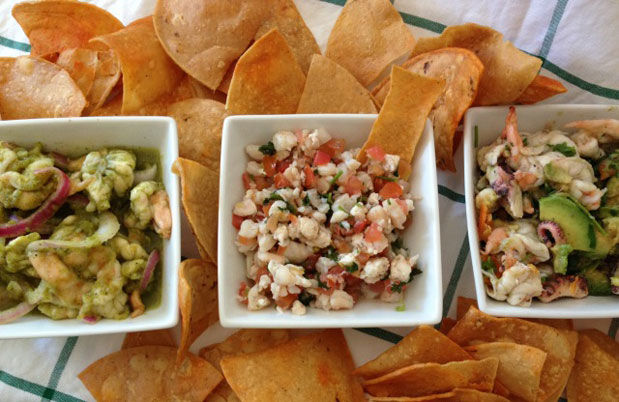
Here are the three the counterman said are not to be missed—and I agree.

Local Bounty: June 3

ceviches

Ceviches | Photo by Caron Golden

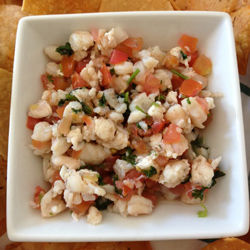
Shrimp Ceviche (Ceviche de Camaron)

This is your basic shrimp ceviche. You can get mild or spicy. It’s made with shrimp, cilantro, lime juice, garlic, and jalapeño peppers.  $5.99 a pound

Spicy Shrimp Ceviche (Ceviche de Camaron Aquachile)

The ceviche de camaron aquachile is a variation, even of the spicy ceviche de camaron. They aren’t fooling around with the heat, thanks to the habanero chile. It also has red onion, cilantro, lime juice, and garlic. How hot is it? Well, my eyes watered a bit, but I loved it. It’s full-bodied heat that really deserves (requires?) an icy bottle of Tecate beer as an accompaniment. $6.99 a pound

Shrimp and Octopus Ceviche (Ceviche de Camaron y Pulpo)

Can’t decide on guacamole or ceviche? Try this ceviche, whose name make you think it’s just about the shrimp and octopus (both very tender), but is really about the voluptuous chunks of avocado. It’s a mouthful of different bursts of flavor, thanks also to the habanero, cilantro, lime juice, and garlic. $6.99 a pound

Subscribe to our newsletters

Select Options

By subscribing you confirm that you agree with our Terms and Conditions and Privacy Policy.

Everything SD NOVEMBER 24, 2025

The Cross-Border Barbacoa Legacy of Aqui es Texcoco

From its Tijuana beginnings to its US expansion, the taco shop continues to honor a barbacoa style that keeps families gathering at the table

The Cross-Border Barbacoa Legacy of Aqui es Texcoco
Courtesy of Aqui es Texcoco

Plenty of dishes are worth writing home about. But when it’s good enough to fly home with—well, then it’s something special.

“Our location in Tijuana is very close to the airport,” says Aqui es Texcoco owner Francisco Perez. “Some of the pilots will ask the people in the airport to buy four or five pounds of lamb barbacoa from our place to bring back [home] to Mexico City.”

San Diego taco shop Chuy's Taco Shop in Rolando near La Mesa

The son of a Spanish father and a Mexican-Jewish mother, Perez learned his family’s now-famous recipe for barbacoa—tender, slow-braised lamb, a sworn-by hangover cure that takes around eight hours to make—from his uncle, who founded Aqui es Texcoco’s Tijuana outpost in 1990 and later sold it to Perez’s parents. Perez worked there on the weekends for extra cash while studying industrial engineering.

Perez held an engineering role in Spain for eight years, but entrepreneurship called, and the fact that pilots from CDMX—where barbacoa spots abound—were turning his family restaurant’s offerings into airmail provided a very big hint that Aqui es Texcoco’s success would be transferable. He also noticed “that a lot of people from the US would go to Tijuana to buy lamb barbecue and bring it back,” Perez says. “So I thought Aqui es Texcoco there was an opportunity to open the US.”

He launched Aqui es Texcoco’s Chula Vista location in 2008, followed by an outpost in LA earlier this year. The restaurant has summoned big-name guests (including Mexican celeb chef Aarón Sánchez and James Beard Award winner Andrew Zimmern), but Perez’s favorite customers are families. “People getting together and eating together—that’s something we are losing right now,” he says. “So, for me, it’s very important to maintain that kind of tradition, and I like that barbacoa brings families together to eat.”

Amelia Rodriguez is a writer and journalist and winner of the San Diego Press Club's 2023 Rising Star Award and 2024 Best of Show Award, she’s also covered music, food, arts and culture, fashion, and design for Rolling Stone, Palm Springs Life, and other national and regional publications. After work, you can find her hunting down San Diego’s best pastries and maintaining her five-year Duolingo streak.

Features AUGUST 27, 2022

Main Dish: September 2022

Best known as a bedroom community for both San Diego and Tijuana, Chula Vista's food scene is worth a visit in its own right

Main Dish: September 2022
Madeline Yang
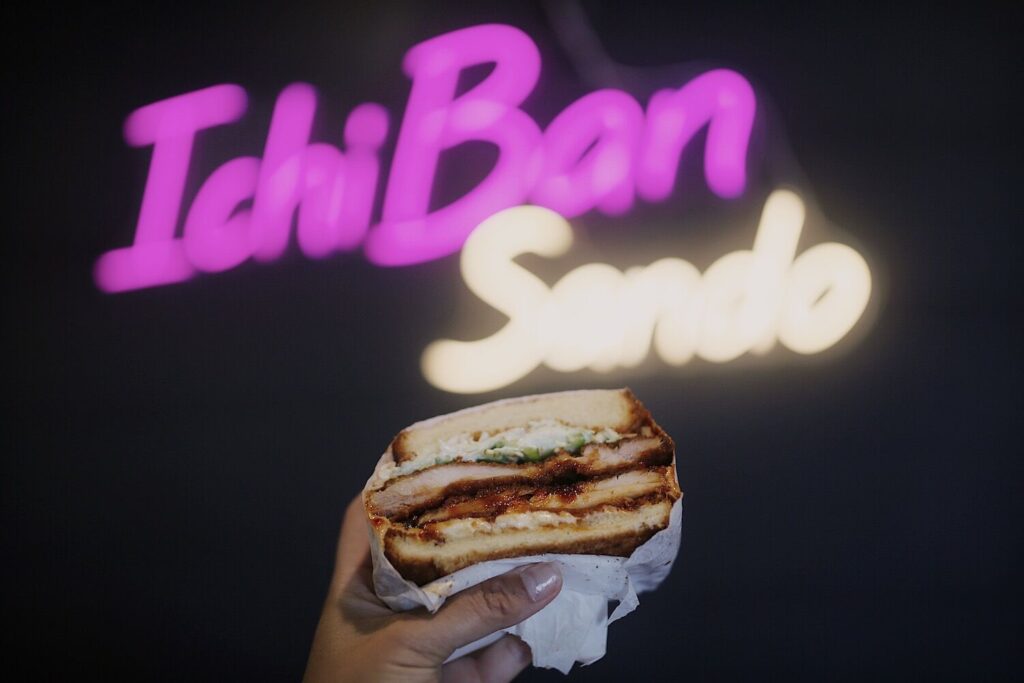
Ichiban Sando, hero

The spicy chicken katsu at Ichiban Sando

Madeline Yang

The second-largest city in San Diego County was long considered drive-by territory on the way to and from Tijuana, though always good for a water park visit. Now, longtime locals who grew up through the food revolution are opening creative spots, and Baja cuisine has become San Diego’s lingua franca.

Bayfront improvements (a $250 million redevelopment project just got greenlit), a thriving beer scene, legal weed, and a strong sense of local pride have kicked this predominantly Mexican-American suburban border city into high gear.

The action concentrates on Third Avenue, home to beloved spots like Grindhouse (Cuban sandwiches, cold brews, craft beer) and the area’s biggest block party, Amps & Ales—which brings bands like B-Side Players and brass and cumbia musicians, plus samples of beers and wines from San Diego and Baja.

Main Street is lined with tacos and Mexican-style seafood trucks like Mariscos Y Birria El Prieto, serving both hankerings in one truck. Even far-out suburb Eastlake is turning up with decent places to eat, like Chef Budda Blasian Soul Food, which might just serve the best chicken strip in the San Diego metro. Here are five things to eat in Chula Vista right now:

Adobada at Mr. Adobada

Tacos el Gordo is still king in Chula Vista, but the lines can be punishing. Enter Mr. Adobada, a truck around the corner with a spinning trompo of—wait for it—adobada and grilled taco meats. While the namesake steals the show, the asada is worth a try, too.

Sando at Ichiban Sando

Nashville hot chicken sandwich fatigue is real. Ichiban’s spicy chicken katsu sando is a welcome twist that stacks a panko-crusted breast slathered with a house chili sauce, slaw, and jalapeños between thick, house-baked Japanese milk toast. There’s also pretty good milk tea boba to sip on.

Fish Tacos at TJ Oyster Bar

Chula Vista is stacked when it comes to mariscos options, but TJ Oyster Bar’s Baja-style fish tacos taste especially divinated: perfectly battered, perfectly fried, and perfectly paired with a michelada. Tack on a side of the tuna fries and venture into the unreal.

Chilaquiles at Talavera Azul

The Curiel family recipe for chilaquiles keeps locals coming back to this Third Avenue institution. Crispy tortillas get tossed in your choice of two sauces: chipotle, red, green, poblano cream, mole, or divorciados. Protein add-ons include shredded chicken, machaca, avocado, chorizo, chicken breast, or arrachera (skirt steak).

Pho-Men at Izakaya Naruto

Find a very South Bay meeting of Asian and Mexican flavors at this strip mall Japanese kitchen. The “Chula Vista Pho-Men” is a mashup of chicken broth, cha-shu chicken, and rice noodles, all with a nice cross-border accent coming from cilantro, jalapeno, and lime.

Food & Drink JUNE 30, 2016

Dear Tostada, I’m Sorry

A journey through Baja to find tostada enlightenment

Dear Tostada, I’m Sorry

A year and a half ago, I insulted hundreds, possibly thousands of years of Mexican food heritage when I suggested the tostada was a sub-par invention. I needed an umbrella for all of the hate mail that rained down upon me.

First off, let’s say this. I love Mexican food and have a long history with it. I started traveling to Baja when I was 14. As a San Diego native, we’re weaned directly from the breast to the bottle of hot sauce. I love birria and menudo and Cotija cheese.

My derision of the tostada is pretty simple. It is one of the toughest foods in the world to eat. Attempt to bite it like a pizza, and tostada shrapnel cascades all over your person. Congratulations on your new tostada pants.

Try to eat it with a fork? Ever tried to eat a corn chip with a fork? Tostadas mock your silly utensil.

Plus, being flat as a CD (those were thin, flat discs that once played music), all of the awesome juices from the toppings would run off onto the plate. All that lovingly stewed meat juice, just wallowing and alone on a plate. And since the tostada shell is hard, it’s not like you can dredge it through the orphan sauce, like you would Indian flatbread.

And so tostadas make me sad.

And unlike other hard-to-eat foods (crab legs come to mind), the tostada shell was intentionally left in this useless shape. Why wouldn’t you just fold the fried corn disc into an easier shape? Like the glorious side-vee of the taco, which is much easier to eat? Or at least fold the edges of the tostada so that it can contain the goodness of the toppings and not freely donate its juices of gold to the plate?

Leaving it flat was like doing laundry and deciding not to fold it. I called it the “half-ass laundry taco.” Chef Chad White was gracious about the peculiar missive, painting “#HALFASSLAUNDRYTACO” on the wall of his restaurant’s bathroom.

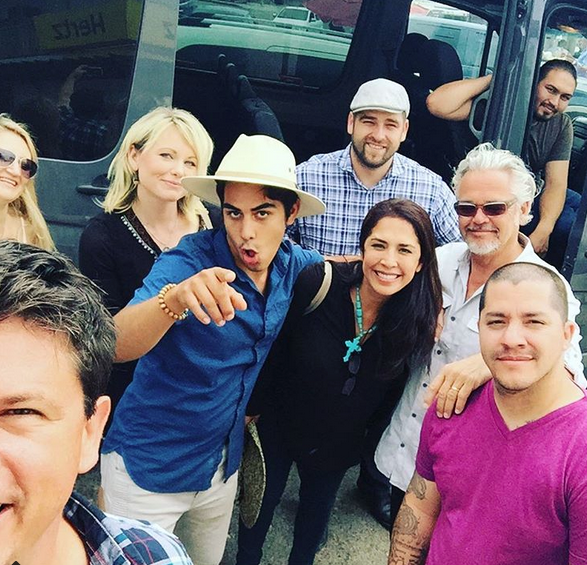
Two weeks ago, chef Flor Franco decided she needed to educate me. So she organized a trip as part of her food/drink/travel company, Indulge. With myself, a handful of chefs, food people and Baja lovers, we headed south in search of tostada enlightenment. They dubbed the journey “The Half-Ass Laundry Taco Tour.”

I felt honored. And ashamed. And skeptical. Read below for the gold we found.
Dear Tostada, I'm Sorry

Dear Tostada, I’m Sorry

FIRST STOP: LA OAXAQUEÑA @ MERCADO HIDALGO

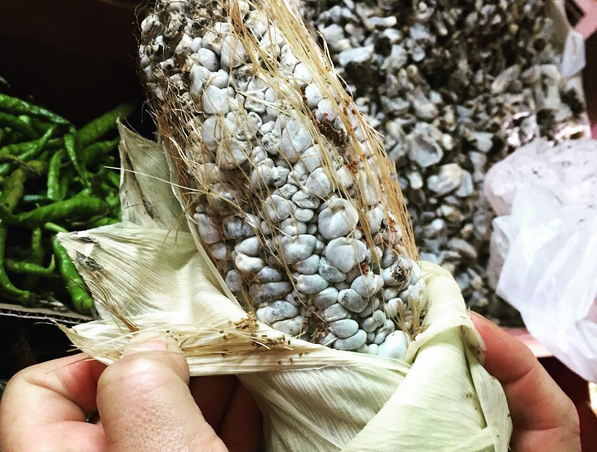
Mercado Hidalgo is Tijuana’s permanent farmers market. There are chiles and moles and dried fruit of every kind. There’s what looks to be a plastic bottle of water, filled with mezcal. Here you can buy raw huitlacoche—the Mexican truffle, which looks like corn has a disease but tastes like Jesus. Our first tostada is from La Oaxaquena, the shell slathered with black bean in a sort of delicious glue, topped with shredded lettuce and sturdy chunks of chorizo. They make their tortillas with organic corn from Oaxaca. It’s got the thin, crispy texture of a flatbread like lavash or papadum. When plied with salsa, it’s excellent. Still, hard to eat. Hurumph.
Dear Tostada, I'm Sorry

Raw huitlacoche at Mercado Hidalgo in Tijuana.

SECOND STOP: POPOTLA FISHING VILLAGE

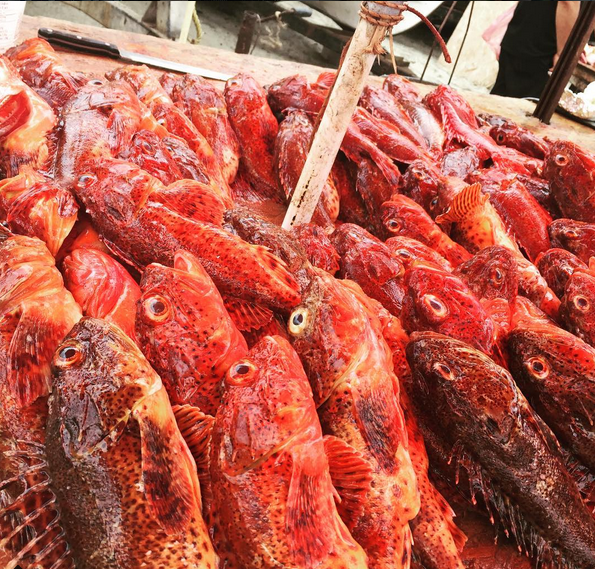
Just past the movie studio where they filmed The Titanic, we make a right on a dirt road down to Rosarito’s famed fishing village. While many tourists eat lobsters up the road at Puerto Nuevo (lobsters, most locals tell me, that are often flown in frozen from China), Popotla is where locals eat fresh seafood. Cars pull right onto the beach. An old VW Bug splashes through the shallow water. There are tables piled high with the day’s fresh catch—yellowtail, oysters, chocolate clams, lobsters, you name it. Literally boat-to-throat. One table is piled so high with vibrant, red sculpin that it looks like an apple cart.
Dear Tostada, I'm Sorry

Dear Tostada, I’m Sorry

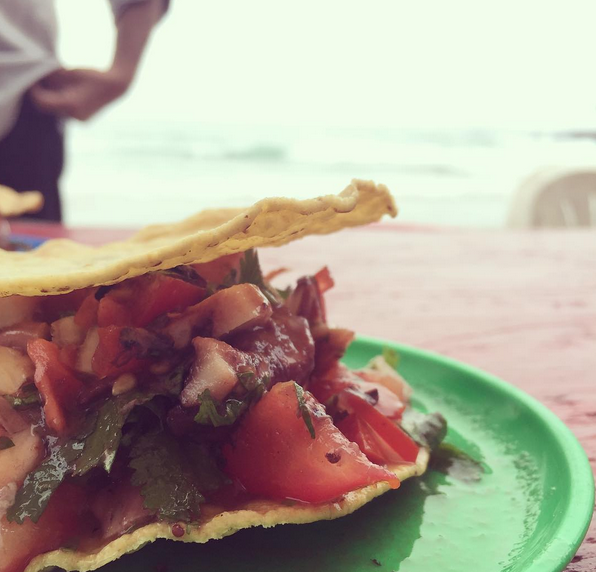
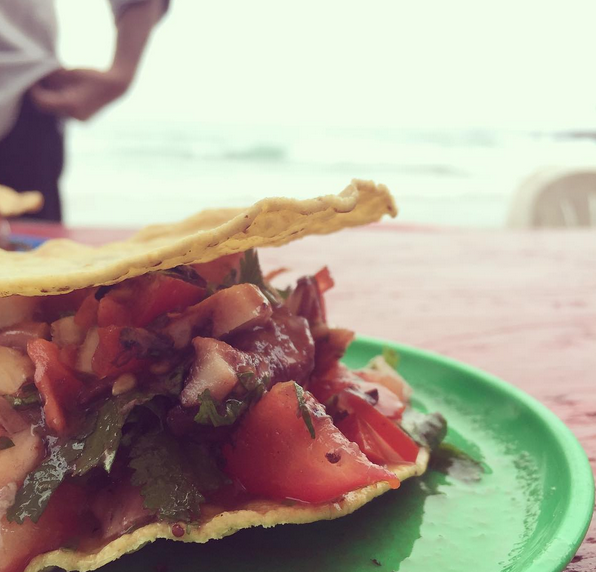
Our liaison is Patty Villareal, who, along with her husband, operate Think Blu, which promotes sustainable seafood for Baja’s immense supply. Stands—plastic lawn chairs, tables, and outdoor kitchens covered by tarps and tents—feed the locals who come to play in the waves. We sit down at La Reina de la Playa for tostadas, literally on the edge of the water, gazing out at the wet horizon. Both are piled high with fresh ceviche. Looking at the mound of incredibly fresh, raw seafood—including excellent Baja octopus—I have a tostada epiphany. There is no way a taco could take this load. The taco’s thin middle severely limits abundance. A-ha! Tostadas are how you put an entire meal on a fried tortilla. Still, it’s hard to eat and the juice from the excellent ceviche escapes onto the plate and makes me sad.
Dear Tostada, I'm Sorry

Dear Tostada, I’m Sorry

THIRD STOP: MANZANILLA

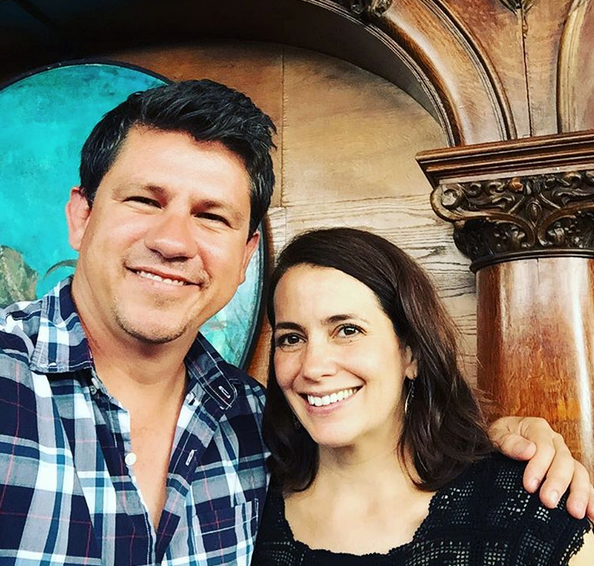
When I wrote San Diego Magazine’s story on the Baja food and drink scene (and how incredibly, incredibly hot it is among food lovers these days), I was just learning about the culture. I was trying to not miss any of the major chefs and/or food and wine people. But inevitably, every story has its holes or every story would be as long as Ulysses. I nearly missed interviewing chefs Benito Molina and Solange Muris—the husband-and-wife chef team behind Manzanilla in Ensenada. It would’ve been a grave mistake, since these two are one of the first to create high-end food using the world-class seafood and produce found in Baja. Their restaurant is right next to the Ensenada port, and it’s awesomely kitschy with art and sustainable building materials. It’s lovely and hip, masculine and feminine, arty and not pretentious. A place easily loved.
Dear Tostada, I'm Sorry

Dear Tostada, I’m Sorry

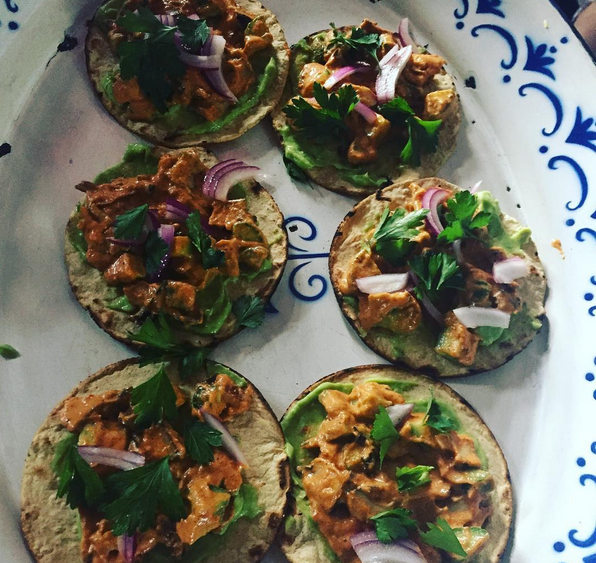
And Solange’s tostada—the corn round oven-baked so that it has crispy, charred edges and a softly crunchy interior—is the best thing we eat all day. Unsurprisingly. She’s quickly seared local abalone, and covered it with chipotle crema and spiked it with cilantro. It’s divine. There is a reason why this has been named by multiple sources as one of the best restaurants on the planet. I look at their menu. An eight-course tasting dinner, with wine pairings from nearby Valle de Guadalupe, is less than $100. I’ll be back.
Dear Tostada, I'm Sorry

Dear Tostada, I’m Sorry

FOURTH STOP: HUSSONG’S

There are no tostadas here. It is where the margarita was invented. Though culinary tourists, we’re still tourists. There is a mariachi band. We dance, some of us badly.

FOURTH STOP: CERVECERIA WENDLANDT

This is where Ensenada does craft beer. And it is righteous.

CONCLUSION

I have seen the tostada light. It is a crispy Mexican pizza of sorts—an edible Frisbee of glee. Its flatness, while a real pain in the ass to eat, serves its utility. And that is to accommodate a heaping of delicious food. It is essentially a taco of plenty. Do I still maintain that a mere curling of the edges of the corn crisp would better serve humanity and keep all those juices contained for the full ride? You bet. But I’ll gladly get it all over my person when it’s this good.

An octopus tostada on the beach at Popotla.
Studio S JUNE 15, 2026

A Modern Take on Steak

Stake Chophouse & Bar brings contemporary classics and old-school service to the heart of Coronado

A Modern Take on Steak
Courtesy of Stake Chophouse

Stake Chophouse & Bar isn’t your average steakhouse. Blue Bridge Hospitality’s Coronado outpost is a modern interpretation of a big-city steakhouse nestled in the heart of the small coastal community. The team at Stake has reimagined the whole steakhouse experience. By prioritizing a seasonal farm-to-table sourcing philosophy, a personalized guest experience, and unique service touches, like a formal steak presentation and a bespoke knife selection process, Stake distinguishes itself in a sea of steakhouses.

Exceptional steaks, including Wagyu from Japan, Australia, and the U.S., and fresh seafood flown in daily form the core of Stake’s culinary identity. The menu features a five-course omakase-style steak experience highlighting house favorites, plus an array of cuts, and classic steakhouse staples—think a wedge salad, baked potato, or pasta carbonara—refined for a contemporary palate without losing their traditional appeal. Stake focuses on seasonal sourcing from the region’s best family farms and specialty purveyors, and incorporates intentionally unexpected touches to create something truly unique.

“I challenge our chefs and myself to take it a step further in sourcing,” says Chef Ronnie Schwandt. “It’s important to us to highlight different farms, unique one-off farms—whether it’s cattle, strawberries, a local fisherman or from anywhere in the United States, we’re always trying to find that niche.”

Beyond the menu, Stake emphasizes outstanding service, says Vinny Spatafore, Director of Hospitality Operations. Staff maintains detailed notes, allowing them to remember guests by name, recall previous orders such as a favorite martini (also memorable for the customer since it’s served in an extra tall, distinctly-shaped glass), and celebrate special occasions like birthdays and anniversaries.

“When you have those points of topic that you remember about a guest, they appreciate that,” he says. “Our servers are really good with that—we have a couple servers who have been here since the beginning and they’ll remember somebody from years ago, their name, their kids’ names, where they live. I’m really thankful to have a great front of house staff.”

Award-winning wines, rare whiskeys, special events, and a complementary black car service that provides transportation for guests throughout Coronado add to Stake’s appeal.

Schwandt stresses that Stake offers more than a meal; they aim to give patrons something unforgettable.

“It starts when you walk up the stairs and are greeted by the hostess—that sets the tone for the night. Then you’re greeted by a server, who may know you by name, and can guide you through the menu and curate as they get to know you,” says Schwandt. “Most people leave kind of blown away; they leave feeling like they just had an experience. That’s the goal, right? Whether you’re serving smash burgers or high-end steak, you want somebody to leave thinking, Wow, that was awesome.”

Partner Content
Food & Drink JULY 10, 2015

FIRST LOOK: Bracero

Baja icon Javier Plascencia finally opens spot in central San Diego

Remember when I told you this was a huge week for Mexican food in San Diego? This is the second shoe to drop: Bracero Cocina de Raiz from renowned Mexican-American chef, Javier Plascencia and his partner Luis Peña. It opens today.

Plascencia is the real deal. He grew up on both sides of the border. His family, under Grupo Plascencia, has been a leader in Tijuana’s culinary scene for decades. Plascencia made his own name with his Chula Vista restaurant, Romesco, then opened his temple to modern Mexican cooking, Mision 19, in Tijuana, followed by the rustic Finca Altozano in Baja’s wine region, Valle de Guadalupe.

For all his repute—including features in the New York Times and The New Yorker hailing him as the chosen son of Baja cuisine—San Diegans have had to drive near the border to try his food. And now they don’t.

Bracero is a 4,800, two-level showpiece on Kettner Blvd. in Little Italy. Little Italy is the undisputed heart of San Diego’s culinary scene right now, and for the foreseeable future.

San Diego’s long had a fitful relationship with gourmet Mexican food. Blame $3 defrosted rolled taco culture. But over the last few years, some of Baja’s most accomplished chefs have brought their riffs on seafood, chiles, charcoal and spice across to San Diego. The hottest thing in San Diego’s food culture right now is Mexico.

So the timing couldn’t be more perfect for Bracero. Expect small plates, large plates. Dishes inspired by Plascencia’s other restaurants. Dishes inspired by San Diego and Baja. They’ll be making their own masa in house—a key for a truly housemade Mexican experience. A crudo bar will serve shellfish from Carlsbad and wild seafood from Baja. The tequila program will be massive. Wines will come from California and Valle de Guadalupe. Craft cocktails will have a Mexican kick, and craft beers will be from both sides of the border.

There will be tiraditos, ceviches, sashimi, roasted meats, the smell of corn, peppers and sopes and high-end French saucing techniques. It will be a mishmash of border and culinary cultures.

San Diego has never been more ready to see what real, top-end Mexican cooking is all about.

But enough of that. Please enjoy our first look inside Bracero Cocina de Raiz, with design done by talented locals, Bells & Whistles.

Bracero opens today.

Bracero Cocina de Raiz, 1490 Kettner Blvd, Little Italy, 619.756.7864.

FIRST LOOK: Bracero

Food & Drink JULY 7, 2015

FIRST LOOK: Galaxy Taco

Four-star chef Trey Foshee opens new taco shop in La Jolla Shores

Years from now, San Diego food lovers will talk about this week.

That’s because two restaurants from two of the area’s top chefs—Galaxy Taco by Trey Foshee (George’s at the Cove), and Bracero by Javier Plascencia (Mision 19, Romesco)—are about to help San Diego’s Mexican food scene take a giant leap forward.

Up first is Galaxy Taco. Foshee has long been one of the most respected chefs in the country. In 1998, a year after Food & Wine magazine named him “One of America’s Ten Best New Chefs,” Foshee joined owner George Hauer as chef of George’s at the Cove in La Jolla. It’s been one of the city’s iconic restaurants ever since. It only took them 16 years to spin off another concept—a 4,200 square-foot taco joint with craft tequila and mezcal cocktails, house-ground masa and wood-smoked specialties from Foshee and chef de cuisine Christine Rivera.

“For years, George wanted to keep all partners focused on George’s,” explains Foshee. “It was the right decision. We first started talking about Galaxy two years ago. The original idea was to do something super simple and fun and not very expensive. We were just going to do tacos and good music and good drinks. That got turned all upside down. The space dictated what we were going to do.”

The space is half of the old La Jolla Shores Market (2259 Avenida de la Playa) in the Kellogg Building. They also annexed two adjacent cottages (one a former kayak rental shop) with room for 160 guests (about 80 inside, 80 on patio seating). It’s an area where, right next to one of San Diego’s most bustling beaches, neither locals nor visitors could get a good taco and a margarita—until now.

Foshee designed the menu along with Rivera, who’s been at George’s for four years. They’ll base as much food as possible off their wood-burning grill (a staple of Baja cuisine). Also key to the food: grinding their own masa from scratch. Foshee and Rivera have been working for a couple years on the recipe and technique; Foshee built on his past experience working with chef John Rivera Sedlar and consulted with chef Carlos Salgado (of Tacos Maria in O.C.). To do it right, Foshee sent Rivera to work with chef Daniela Soto-Innes of famed NYC restaurant, Cosme. They had a $10,000 molino (masa grinder) custom-made for Galaxy, and will use heirloom, non-GMO corn from Masienda in Mexico.

Foshee also helped design the space with Mark Steele (of M.W. Steele), enlisting his neighbor Ross McDowell to paint a skeleton mural and surf icon Brian Szymanski (owner of Ding King and a paddleboard champion) to build weatherproof patio tables out of surfboard materials. The end result? Well, we’ve got the first photos in the known universe below. As for why one of the country’s top chefs would open a taco shop (albeit a pretty fancy one)?

“All those conversations we’ve had about what is San Diego food,” says Foshee, a longtime surfer. “Well, fish tacos and Mexican food and margaritas are part of that and I love that. You get off the beach, you go have some ceviche and a good margarita. It’s the little things done well. We’re not reinventing the wheel. People aren’t going to come in here and say ‘Wow, I’ve never seen that before.’ Hopefully they’re going to come in here and say, ‘Wow, that’s fu**ing delicious.'”

Galaxy Taco opens to the public Monday, July 13.

FIRST LOOK: Galaxy Taco

Partner Content JUNE 10, 2026

New Options for GLP-1 Users

Scripps study shows that some patients may be able to taper their dose and maintain results

New Options for GLP-1 Users
Courtesy of Scripps Health

While glucagon-like peptide-1 (GLP-1) receptor agents have been used to treat Type 2 diabetes for more than 20 years, their recent emergence as weight-loss wonder drugs marked a new frontier in medicine. But their effectiveness has left some patients wondering what to do once they’ve reached their goal. Stopping the medication could mean regaining some, if not all, of the weight. A Scripps Clinic internal medicine physician recently conducted a small study of whether GLP-1 patients who had reached their goal weight could maintain that weight by taking their regularly prescribed injection every other week instead of weekly. Spoiler alert: 30 of 34 patients did. Read more about the study here and what that may mean as pharmaceutical companies roll out oral GLP-1s.

For more nutrition, wellness, and healthy living tips, sign up for the San Diego Health newsletter here.

Partner Content

Eat Like a Local (Who Knows a Guy).

Restaurant news, culinary storytelling, and Troy Johnson’s sharp takes delivered straight to your inbox twice a month.

Close the CTA

Contact Us

1230 Columbia Street, Suite 800,

San Diego, CA