San Diego might not be as cool as New York or Paris when it comes to Fashion Week, but last week we got a taste of the big leagues at Nordstrom’s 2013 Spring Designer Preview.
The sold-out event at the Del Mar Fairgrounds featured real-life models strutting with their signature pouts down a runway, debuting this season’s most covetable styles.
Consider this your annual reminder that Mother’s Day is not the time to improvise. What’s in: roses, peonies, and a card attempting to summarize a year’s worth of gratitude in three paragraphs or less. What’s out: pretending you “didn’t know it was this weekend.” In a city currently operating at full brunch capacity, San Diego responds as it always does—oceanfront tables, excessive buffet spreads, and sparkling wine refills. Whether it’s waffle stacks, chilled seafood displays, or carving stations doing the most, these San Diego restaurants have you covered.
All moms deserve elegance on Mother’s Day. Celebrate a beachfront with a beautifully timeless and tasteful brunch at the Crown Room in Hotel del Coronado. Indulge in options like lemon vanilla pancakes with berry compote paired with crispy bacon, made-to-order omelets or your very own egg benedict station, shucked oysters, whole in-house smoked brisket, Peach Melba Verrine, and more. Guests over 21 can enjoy a complimentary glass of Champagne.
Price: $235 per adult | $125 per child (6 – 10) | Ages 5 and under are free Hours: 10 a.m. – 3 p.m. Address: 1500 Orange Ave, Coronado Reservations: Hotel del Coronado
Oceana Coastal Kitchen
Mimosas, marina views, and a Mother’s Day where the only thing on the agenda is enjoying it? We’ll cheers to that. Located at the Catamaran Resort, this Mother’s Day brunch literally has it all, from sushi rolls and nigiri to a charcuterie spread stacked with salumi, prosciutto, cornichons, pepperoncini, cherry peppers, and grainy mustard, plus waffle and omelet stations, cedar-planked salmon, and panko and herb-crusted mac and cheese. Kids can also create a bouquet for Mom that’s just chaotic enough to be adorable.
Price: $120+ per adult | $60+ per child (5 – 12) | Ages 4 and under are free Hours: 10 a.m. – 4 p.m. (last seating at 2 p.m.) Address: 3999 Mission Boulevard, San Diego Reservations: Oceana Coastal Kitchen
Mother’s Day at Arlo transforms into an enchanted garden that’s equal parts lush and indulgent: a raw bar, fresh salads, delicate pastries, 12-hour braised short ribs, roasted prime rib, and Szechuan pepper–crusted swordfish from the Santa Maria grill. Spoil moms, grandmas, aunts, and every beloved mother figure with live music, a roaming mimosa cart, floral bouquets, and of course, a little retail therapy courtesy of the Kendra Scott trunk show—necklaces, bracelets, earrings, or, let’s be real, all of the above.
Price: $99 per adult | $40 per child (5 – 12) | Ages 4 and under are free Hours: 9 a.m. – 3 p.m. Address: 500 Hotel Circle N, San Diego Reservations: OpenTable
Rumorosa
Forget the CVS roses (respectfully). Rumorosa’s Mother’s Day brunch is back for its third year, pairing complimentary flowers with sun-drenched marina views. It’s coastal-modern meets Baja soul, where the food is bright and very much not an afterthought. Last year’s spread leans into Carrot Cake Waffles, a made-to-order omelet station, Café de la Olla French Toast, Roasted Lamb Tostadas, and other “yes, I’ll have everything” moments.
Price: $90 per adult | $40 per child (5 – 12) Hours: 9 a.m. – 2 p.m. Address: 1380 Harbor Island Drive, San Diego Reservations: OpenTable
Tidal
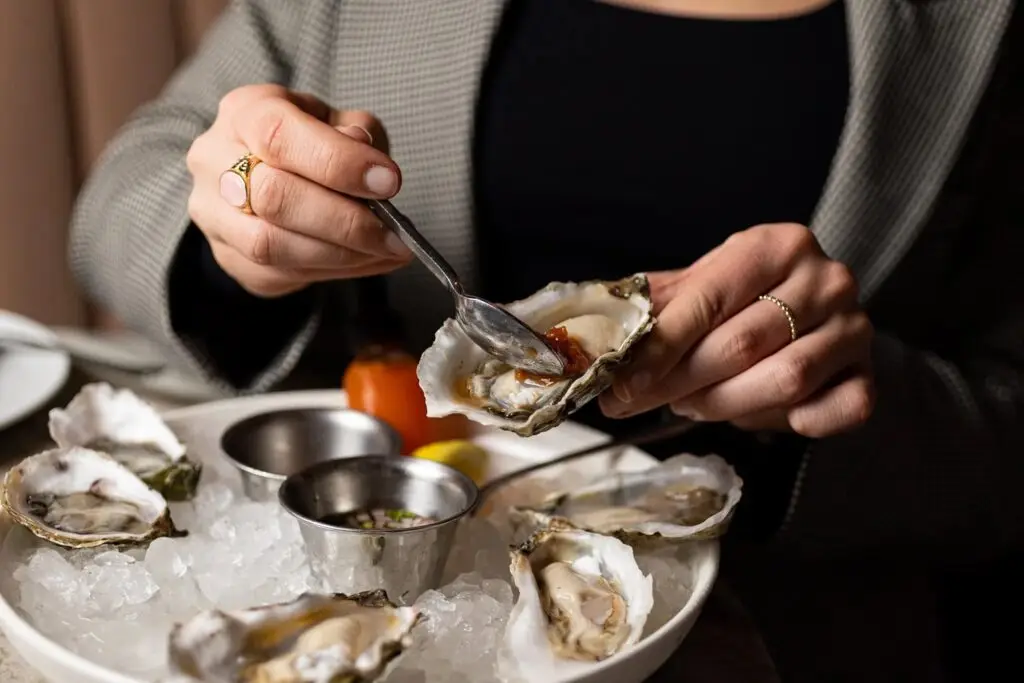
A boozy brunch overlooking Mission Bay with Mom? Say less. Celebrated at Tidal with a lavish spread of cheeses and charcuterie, a seafood bar stacked with oysters, shrimp, crab legs, and ahi specialties, and chef-attended carving stations with slow-roasted prime rib. Made-to-order omelets and pancakes, maple-glazed pork belly, roasted Baja grouper, vibrant seasonal salads, and brunch classics round it out, finishing with an abundant mini dessert selection.
Price: $125 per adult | $50 per child (5–12) | Ages 5 and under are free Hours: 11 a.m. – 3 p.m. Address: 1404 West Vacation Road, San Diego Reservations: OpenTable
Animae
Mother’s Day at Animae is anything but expected. Tucked into the Marina District, this world-class steakhouse leans West Coast with a playful Asian twist. This year, treat Mom to a dim sum–style experience: a slightly more elevated, endlessly flowing take on the buffet, where indulgent small plates arrive tableside, perfectly complementing the Art Deco interiors and designed to be picked at, shared, and fully obsessed over. It’s less set menu, more choose-your-own flavor adventure.
Price: $104 per person Hours: 10 a.m. – 2 p.m. Address: 969 Pacific Hwy, San Diego Reservations: OpenTable
Isabella Dallas is a freelance writer for San Diego Magazine and the Arts and Culture Editor at The Daily Aztec in her final year at San Diego State University. She previously worked as an editorial intern for SDM, but when she’s not writing, you can find her trying the best coffee spots in SD, devouring the latest rom-coms, and indulging in anything and everything pop culture.
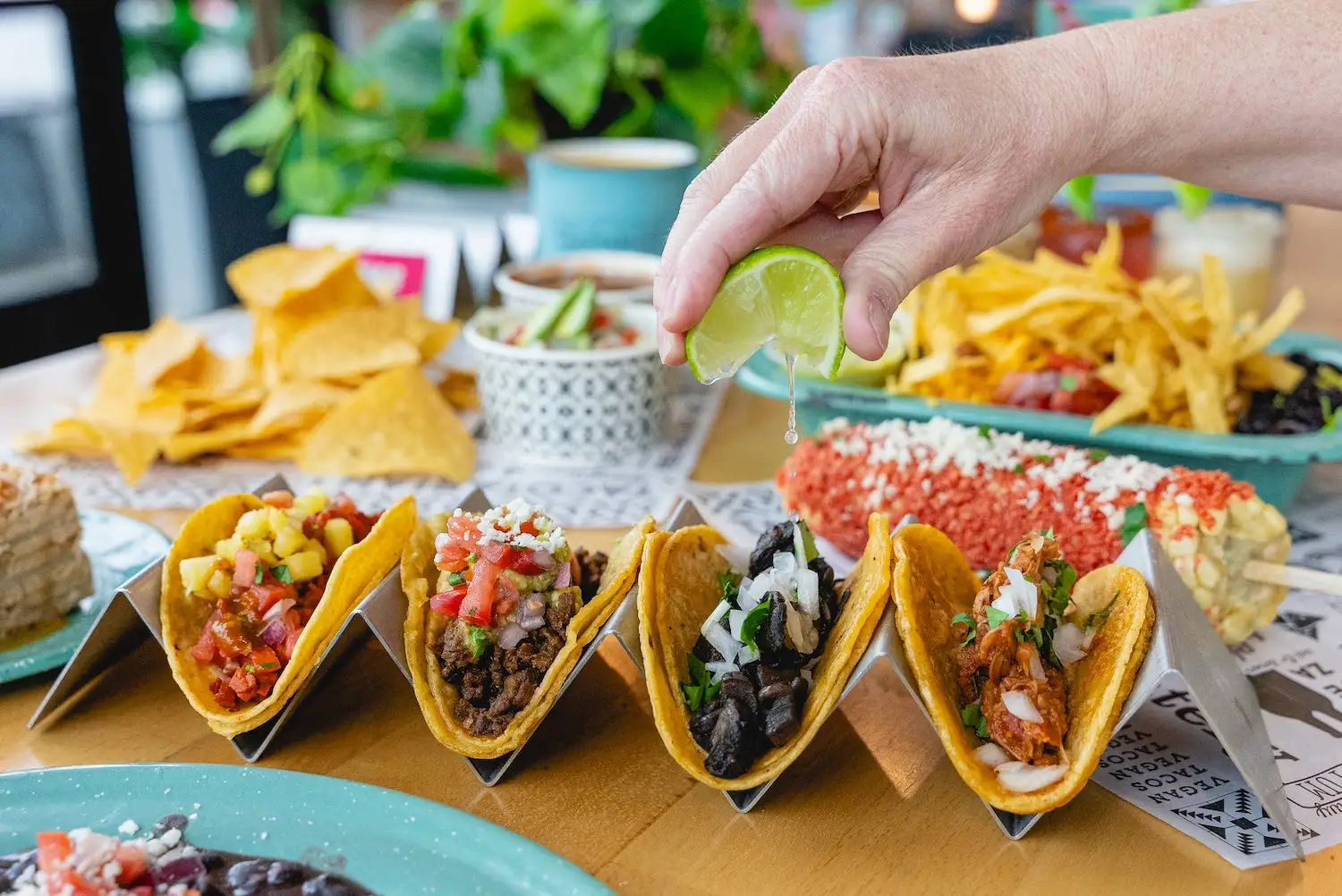
Tacos are San Diego’s lingua franca. The invention of food wrapped in corn tortillas is ballparked at 1000 to 500 BC. The word probably comes from the Nahuatl “tlahco”—meaning “half” or “in the middle”—a food meant to be folded and carried. Portable foods always have a way of sticking around.
San Diego was part of Mexico until the Treaty of Guadalupe Hidalgo in 1848, so tacos didn’t arrive; they remained. After the treaty, they receded into the kitchens of families who stayed behind.
By the early 1900s, US tacos had reached a sad state—mostly ground beef, cheddar cheese, and iceberg lettuce, because Mexican staples like cotija, cilantro, chiles, and freshly pressed tortillas weren’t in grocery stores. In San Diego, that started to change around 1930 in the abode of Petra and Natividad Estudillo, who lived on Logan Avenue in Barrio Logan, the heart of San Diego’s Chicano culture (it’s where many refugees from the Mexican Revolution settled). There, the couple created a teeny tienda, slinging homemade tortillas.
Behind the Estudillos’ counter, reportedly, you could see their living room, lined with furniture and tubs of fresh tortillas. You could tell sales (and tacos) were on the rise, because their décor got increasingly nicer. The couple opened Las Cuatro Milpas next door in 1933. It was the first Mexican restaurant in the city, a taco chapel for over 90 years. Around the same era, Ralph Pesquiera Sr. started pressing tortillas with his parents on India and Grape streets, later serving smaller, corn tortilla versions of flautas for defense workers during WWII. Credited with coining the term “taquito,” he opened El Indio in 1940.
The Bracero Program (1942–64) greatly contributed to taco culture, bringing over four million Mexican men to the US as guest workers, many in San Diego. The kitchens at bracero camps were filled with beans, tortillas, and chiles. The art of making fresh masa started to proliferate, and local grocery stores stocked dried chiles, salsas, and masa harina for their new client base.
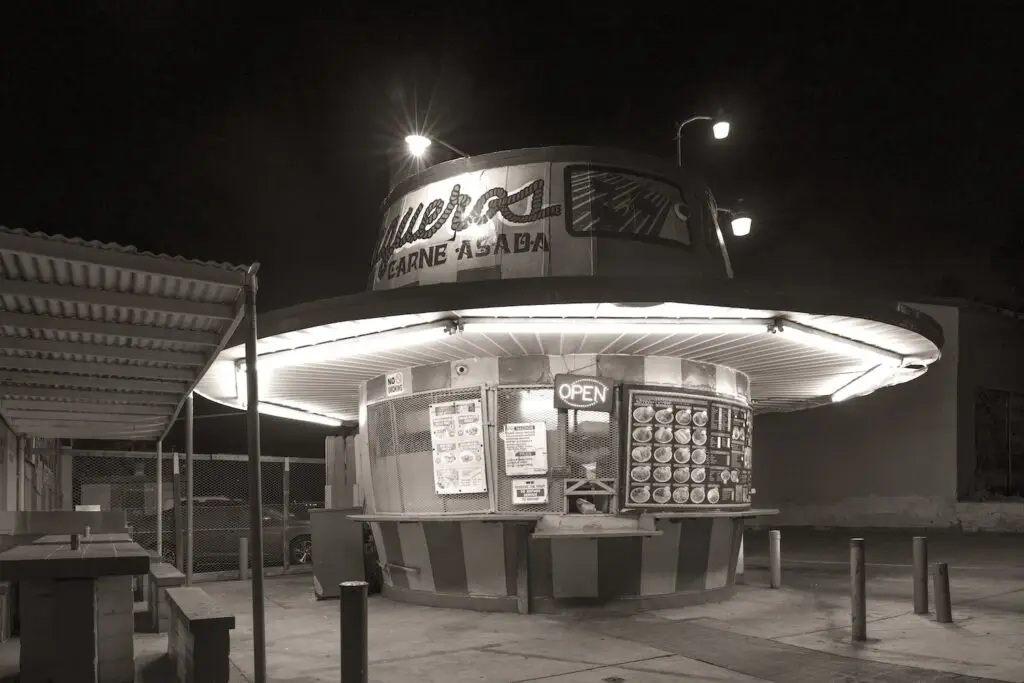
San Diego’s taco culture quantum-leapt in 1964, when Roberto and Dolores Robledo, who’d previously owned a Golden Hill restaurant called La Lomita, opened a tortilla factory in San Ysidro. They quickly added a walk-up and drive-through window and called it Roberto’s—the city’s first “modern” taco shop and eventual legend. Two years earlier, up the road in Downey, Glen Bell had launched Taco Bell; by the time he sold it to PepsiCo in 1978, every American grocery store was selling “taco kits” with pre-fried shells, seasoning packets, and jars of salsa. Taco night became a middle-class ritual.
Surfers also deserve a taco nod. In 1983, SDSU student Ralph Rubio finally made good on the recipe gifted to him by a taquero on a San Felipe beach; he opened Rubio’s on Mission Bay Drive, launching the Baja fish taco into the national imagination (Rubio’s IPO hit NASDAQ in 1999).
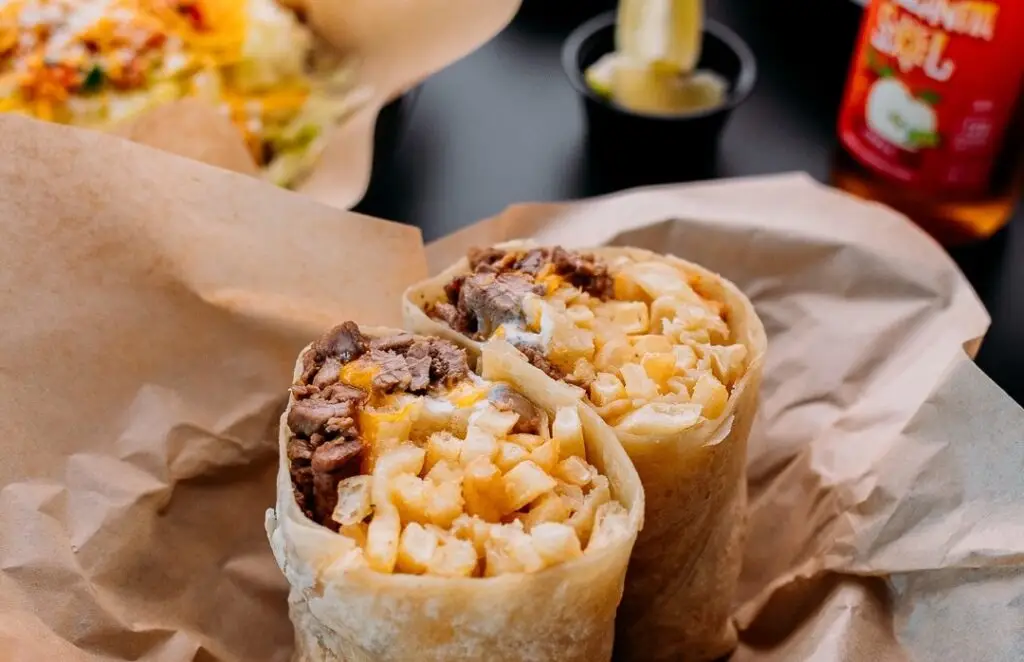
Two government policies also helped further taco enlightenment. In 1986, the Immigration Reform and Control Act (IRCA) legalized about 2.7 million immigrants, many in SoCal. Green cards and work permits meant access to leases, loans, and licenses. With that stability came confidence—and a wave of Mexican-owned small businesses. The late 1980s and ’90s saw the rise of family-run icons like Lolita’s, Rigoberto’s, and Cotixan. It’s no coincidence that two of San Diego’s proudest food inventions—the California burrito and carne asada fries (often credited to Lolita’s circa the late ’90s)—came onto the scene during this period.
This last point is an unsubstantiated connecting of dots. But Mexico’s a large country full of endless regional taco ideas (Oaxacan cheese, Sinaloan seafood, Texcoco barbacoa). And the North American Free Trade Agreement (NAFTA), signed in 1992, was probably what sprung that deep well of taco ideas. Corporations opened massive operations in border cities like Tijuana, drawing thousands of workers and tacos from every nook.
Which brings us to now. There are 1,700-ish taco shops across the county, and here’s the list of our favorites.
Courtesy of Tacotarian
San Diego’s Best Tacos
Gobernador Taco at Mariscos Mi Gusto Es
Chollas Creek
Located in the massive parking lot by an event center and a cannabis dispensary, Mi Gusto Es may just set the bar for the best gobernador (a Sinaloan-style shrimp taco with melted cheese and a flour tortilla—a wonderful thing). Loaded with sautéed peppers, it costs three bucks. Get the spicy shrimp. Always spicy.
Troy Johnson is the magazine’s award-winning food writer and humorist, and a long-standing expert on Food Network. His work has been featured on NatGeo, Travel Channel, NPR, and in Food Matters, a textbook of the best American food writing.
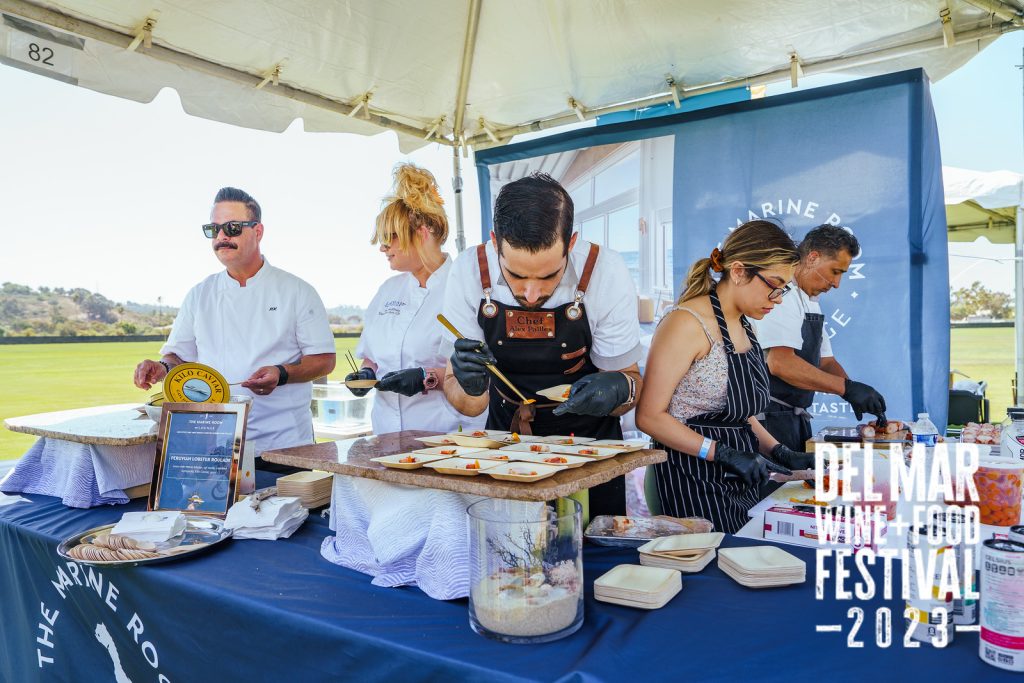
Mark your calendars for October 2–7, 2024, and prepare to indulge in a week-long celebration of San Diego’s vibrant food and wine scene at the 2024 Del Mar Wine + Food Festival!
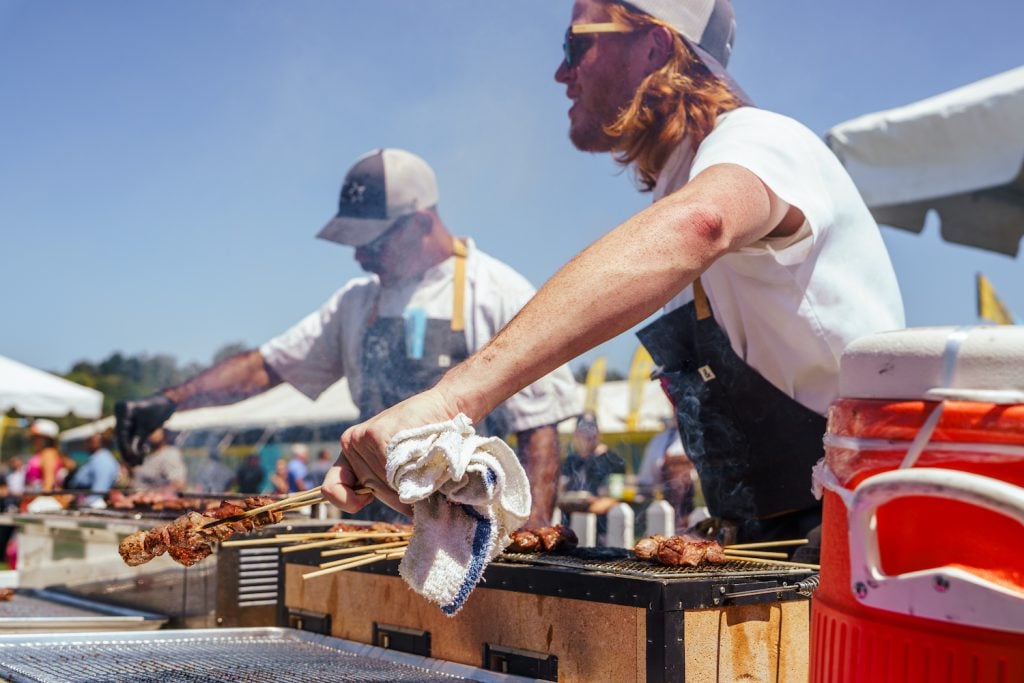
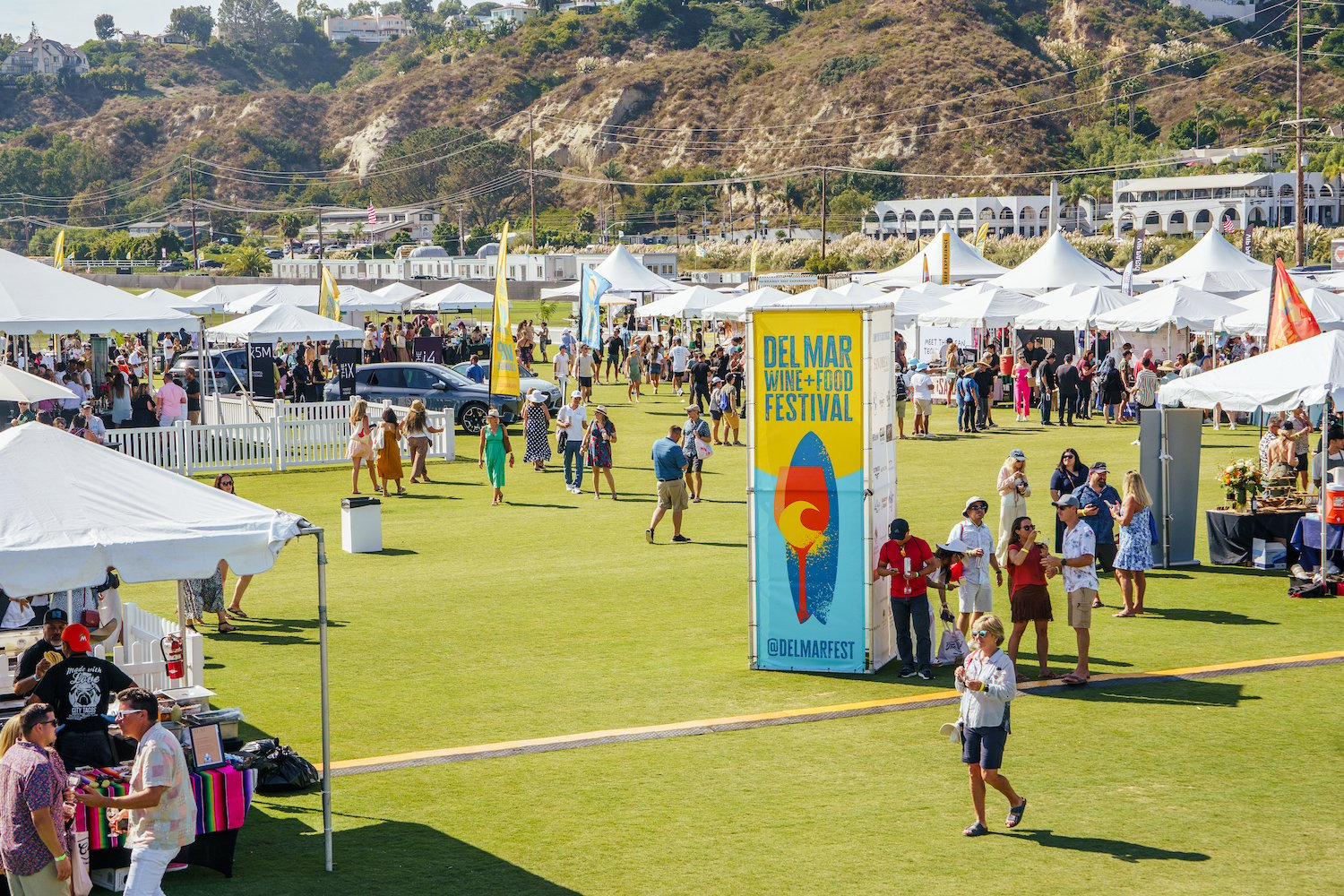
Now in its second year, San Diego’s premier food and wine event will feature a diverse array of bites, sips, and experiences. Attendees can look forward to sampling world-class cuisine from local restaurants, mingling with celebrity chefs, and savoring some of California’s finest wines and craft beverages.
Whether you’re a local or visiting from out of town, the Del Mar Wine + Food Festival offers something for everyone—from casual tastings to high-end dining experiences. Not sure where to start? Click the links below each question for more details, including event schedules, participating chefs, where to see celebs, and ticket information:
Listen: Del Mar Wine + Food Festival Chefs on Happy Half Hour
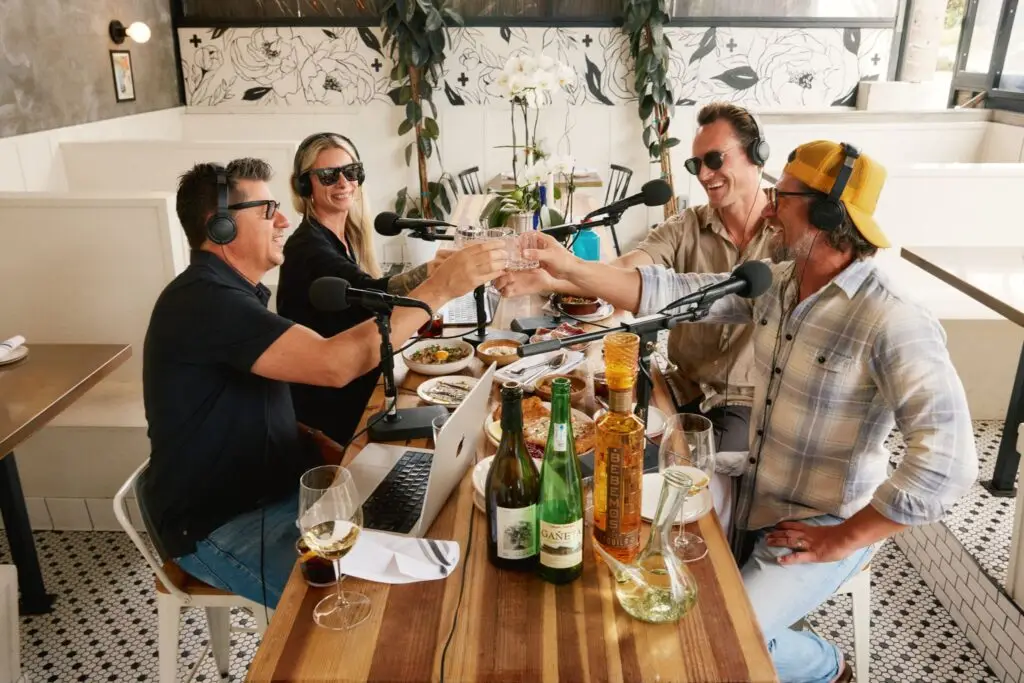
Last year’s exclusive lineup featured some of our favorite chefs and food people. This year, some of our faves return for the big event. Learn more about a few of those returning guests on Happy Half Hour with host Troy Johnson:
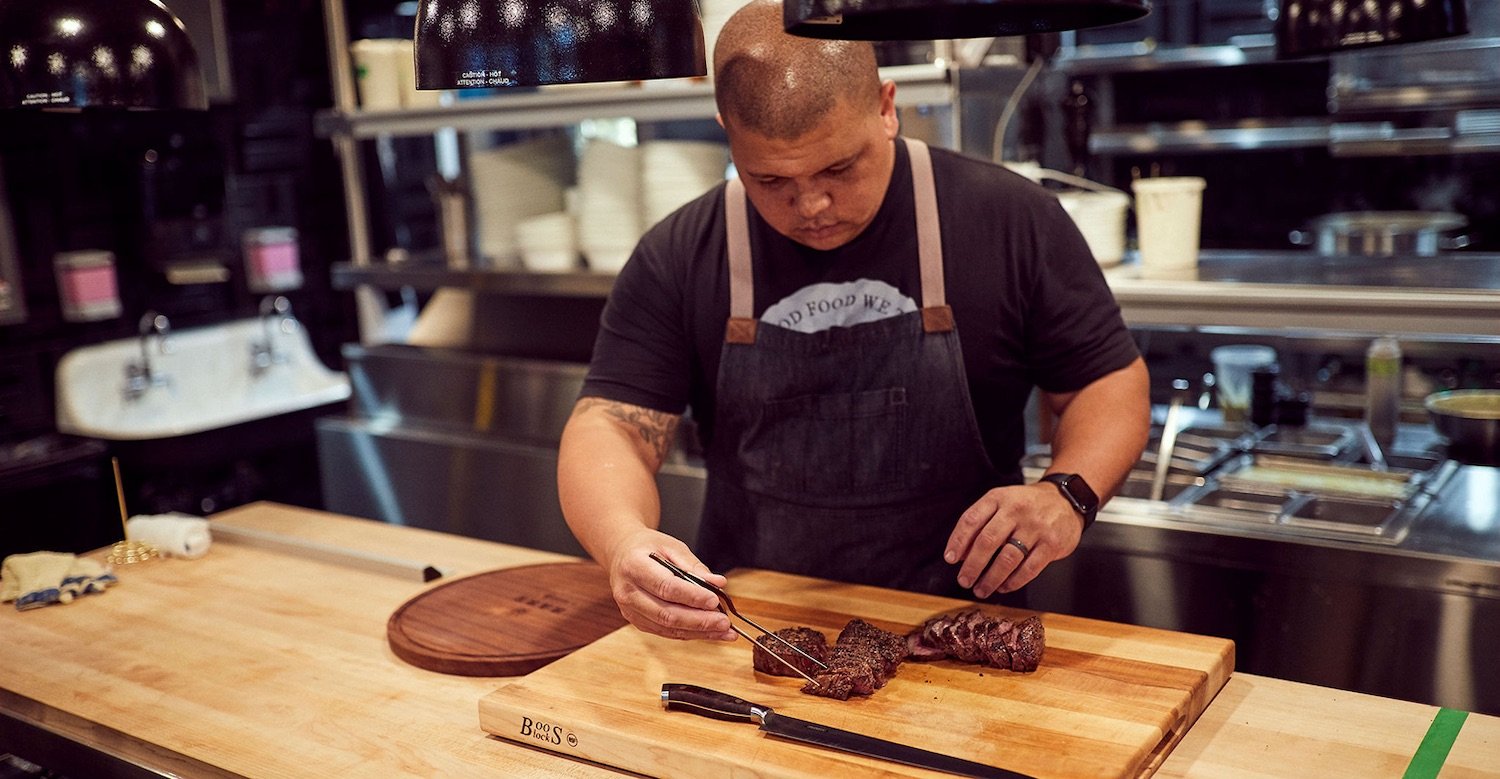
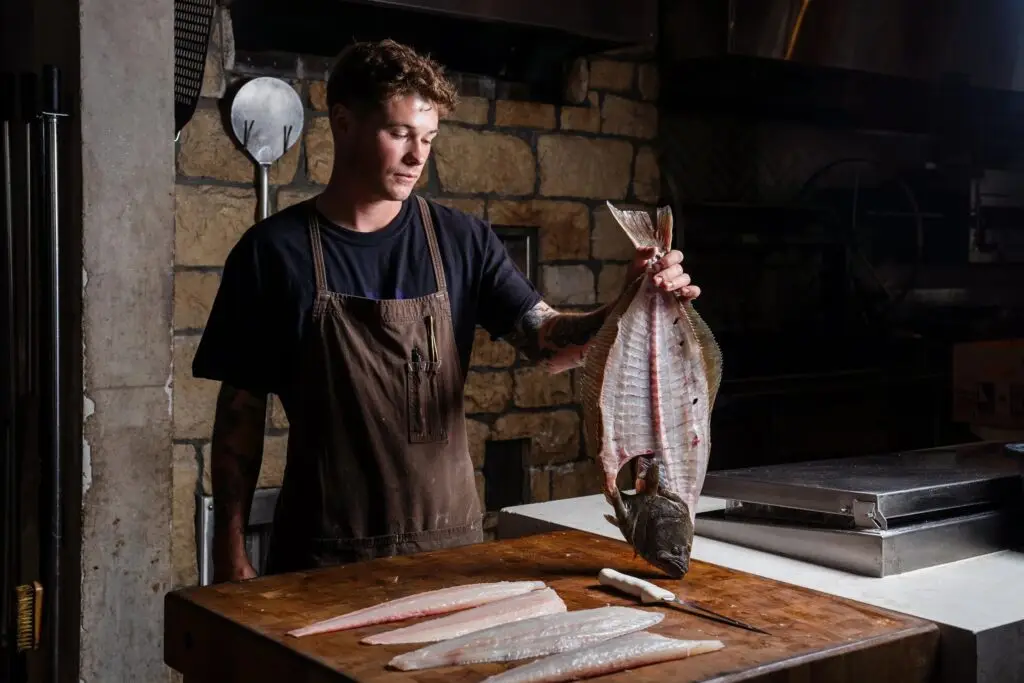
Implementing a farm-to-table model hardly deserves acknowledgement these days. It’s not a stretch. It’s not innovative. “It’s the bare f**king minimum,” says Herb & Sea‘s executive chef Aidan Owens.
When I arrive at the Encinitas restaurant, I’m ready to talk sustainability, farm-to-table stuff, with Owens. “Did you see the chin on that?” he says of the extra big jiggly chin on the sheephead that just arrived with the day’s fresh catch. I did. It was Jay Leno adjacent.
I learn quickly that he somehow oozes both charm and stone-cold honesty. Maybe he could construct a new dish with chin goo, like he did when he had a bunch of tuna scraps and voila’d it into a smooth and crowd-pleasing ‘nduja. “I want to know what’s in there,” he says.
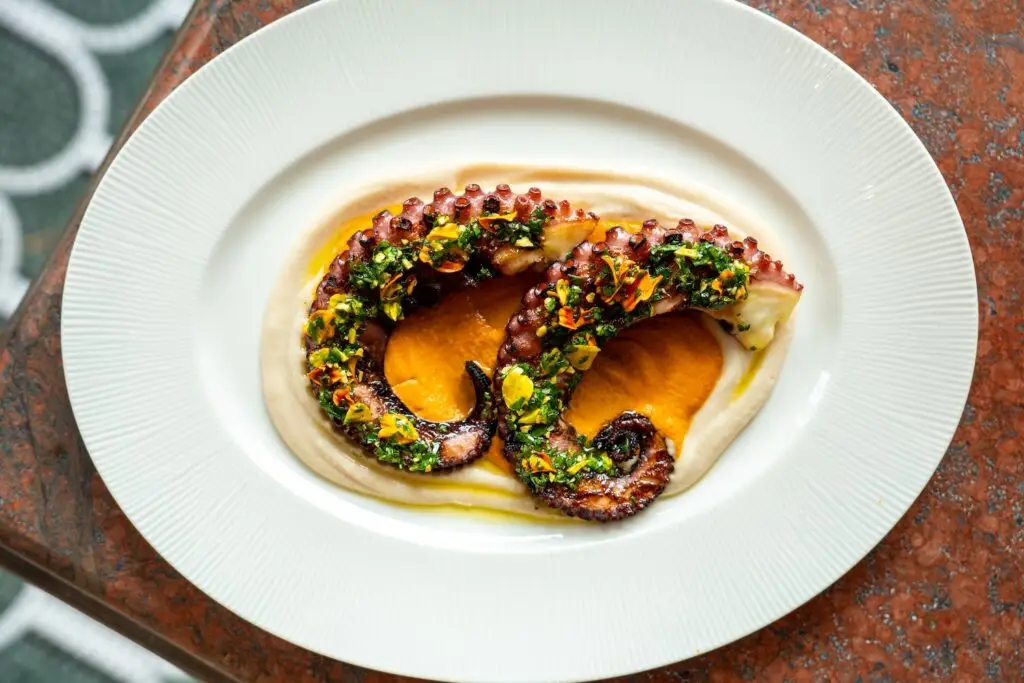
Courtesy of Herb & Sea
The instinct to look closer, to dig into what others might discard, says a lot about the chef’s approach. I guide him back to our topic, but he has something else on his mind. “We’re overcomplicating food—what happened to just cooking good food and having fun with it?”
Owens grew up on a farm in Byron Bay, Australia, where sustainability wasn’t a concept you chat about so much as a way of life. Think dirt roads, backyard chickens, pulling vegetables straight from the ground, and a mother who believed that if you couldn’t pronounce the ingredients on a package, you shouldn’t eat what was inside.
Food wasn’t precious or performative. Making it was what you did because you were hungry and that’s still what inspires Owens today. “I like to cook good food because I like to eat good food,” he says.
His approach to sustainability at Herb & Sea began so naturally that it felt just like instinct. “I was just like, ‘Let’s order food from the people who live and work here,’” he says.
Courtesy of Herb & Sea
And why wouldn’t he when lives in San Diego? Cities all over the world vie for our goods. Our tuna is sent overseas. Our spiny lobsters hit dinner plates in China and Japan. Not to mention California’s producing a third of the country’s vegetables and three-quarters of its fruits and nuts.
“Why would we outsource when it’s all here?” Owens asks.
Sustainability, in this context, is about cooking what exists in abundance, nearby, right now. “I love the local fish here. It’s f**king delicious and San Diego citrus, I mean, it is so f**ing good,” he says.
Instead of importing ingredients, Owens also looks for nearby alternatives. “You can find really cool things in the local waters,” he says, pointing out that stingray cheeks taste similar to scallops.
Courtesy of Herb & Sea
Whatever he finds in that sheephead chin might just be the next substitute for marrow. But to make this work, it means getting diners amped up about the slightly unfamiliar.
Tasting menus, where diners are completely in his hands, become an opportunity to gently push boundaries. “I’ll serve mackerel, because people think they hate it,” Owens says, noting that the abundant local fish can have some fishiness. “But when it’s fresh, it’s arguably one of the best fish in the ocean.”
He also tweaks the language on the menu so people might feel more compelled to give dishes a try without preconceived notions. He might use “lengua” instead of “tongue.” “Whelk” instead of “snail.” When he puts “stingray throat” on the menu, he disarmingly calls it “skate.”
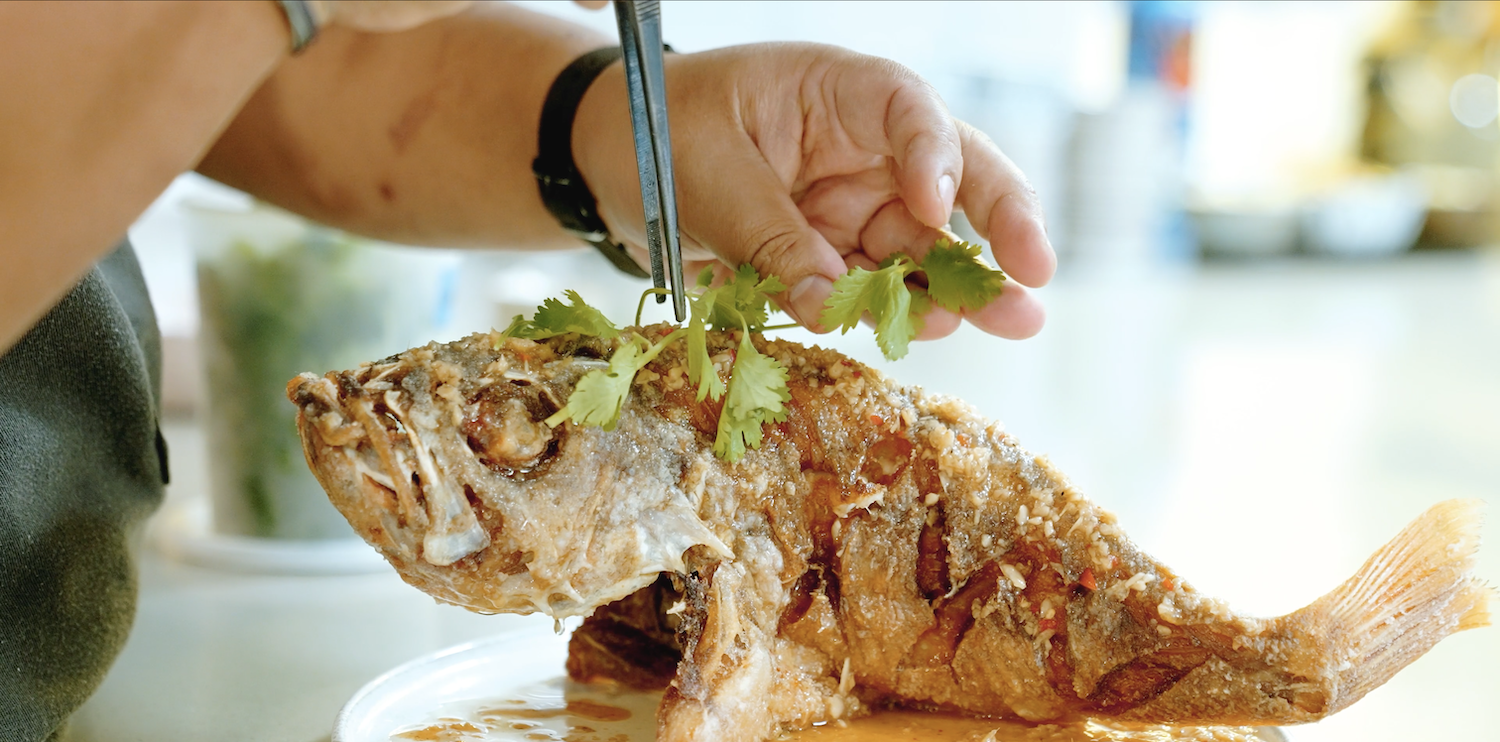
To reduce waste, scraps aren’t always discarded but rather turned into something new. Sometimes they’re smoked, cured or fermented. Apples going bad turn into apple ponzu. Lemons turn to marmalade, which stretches their usefulness far beyond peak season. “And it’s super tasty on our pizza,” he says.
What makes the food even richer, is the relationships he’s built with farmers. Though it didn’t always feel natural, Owens sought personal connection first. He recalls approaching a fisherman at the Tuna Harbor Dockside Market. “I was awkward,” he says. “I went up to him and said, ‘I like your fish.’”
Owen’s is now so close to his suppliers—like fishermen Ryan Sebo and Joe Daly—that he gets texted pictures of fresh catches right as they flop on the boat. The messages always ask if he wants first dibs. “I say yes to a lot of fish,” Owens says, noting that Herb & Sea can go through 2,000 pounds of seafood a week.
Courtesy of Herb & Sea
The next evolution of sustainability, in his view, will be chefs working directly with producers such as his alliance with Sebo, cutting out middlemen and purveyors where possible. “It will put more money in the pockets of the people doing the work,” he says.
It will mean that chefs can’t just know their local farmers and producers, but they’ll choose to work with the ones who have the best practices. Dining and sustainability will become much less about the final plate. “It will be more about the impact that plate has on the Earth,” he says.
Ultimately, he believes sustainability doesn’t need to be loud. It doesn’t need hashtags. It just needs to be honest.
“We aren’t saving lives. We’re feeding people good food,” he says.
And yet, in feeding people well—simply, thoughtfully, responsibly—something meaningful happens. Guests leave satisfied. Ingredients are respected. Local ecosystems are supported and food returns to what it has always been at its core: nourishment, pleasure, and a quiet reflection of the place it comes from.
Returning for its second year, the Del Mar Wine + Food Festival is back to make a splash in the San Diego food scene once again. Get in on some of the best restaurants and wine in the area, with faces both new and familiar to the festival. Check out our list or the DMWFF website for all to know about this quintessentially San Diegan affair.
When is the Del Mar Wine + Food Festival?
The Del Mar Wine + Food Festival takes place October 2-7, 2024, with the Grand Tasting October 5-6. Doors open for VIP ticket holders and early entry at noon, general admission opening at 1 p.m.
Where is the festival located?
The event is held at Surf Sports Park, formerly the Del Mar Polo Fields, at 14989 Via de la Valle, Del Mar, CA 92014.
What are the different ticket options?
General Admission
One-day general admission tickets are priced at $165, while the two-day pass goes for $265. Both options grant you unlimited food and drink during the Grand Tasting from the festival’s selection.
Early Entry General Admission
Get in ahead of everyone while still having all the wide selection offered at general admission using the early admission tickets. Priced at $225 for one-day tickets and $375 for two-day passes, you gain an extra hour for first dibs and to meander the grounds before the crowds come.
VIP Tickets
At $425 for a one-day ticket and $775 for a two-day pass, the VIP tickets offer access to a special VIP-only area, as well as more food and drink vendors to choose from. More details on the VIP experience will be announced closer to the date of the festival.
What food vendors will be there?
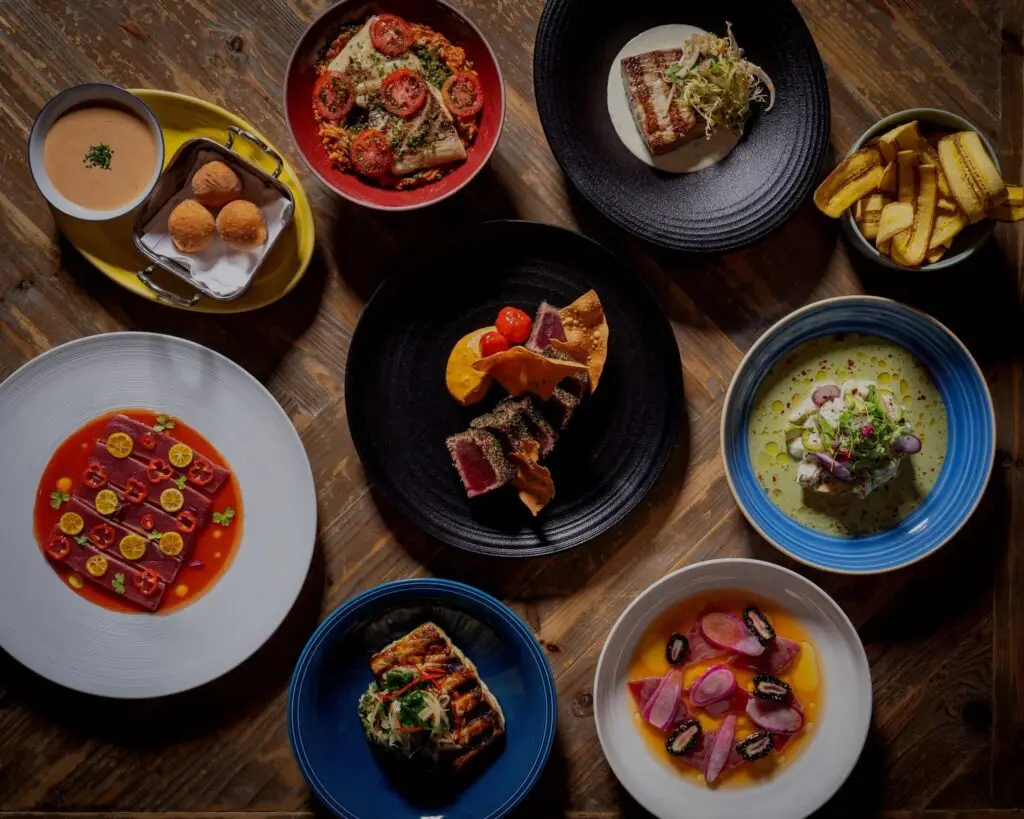
With a multitude of vendors and options for tasting, many top restaurants in San Diego will be featured at this event, including Civico 1845, Deckman’s Restaurant Group, Finca, Jolie, Kingfisher, Little Frenchie, Lola 55, the Marine Room, Marisi, Nolita Hall, Rosemarie’s Burgers, Tacos 1986, and many more. See the complete list here.
VIP Exclusive Food Vendors
Amalfi Llama
Ambrogio by Acquerello
Azuki Sushi
Crudo
Deckman’s
Kinme
Marisi
Puesto
The Fishery
Warung Rie Rie
What wineries and drink vendors will be there?
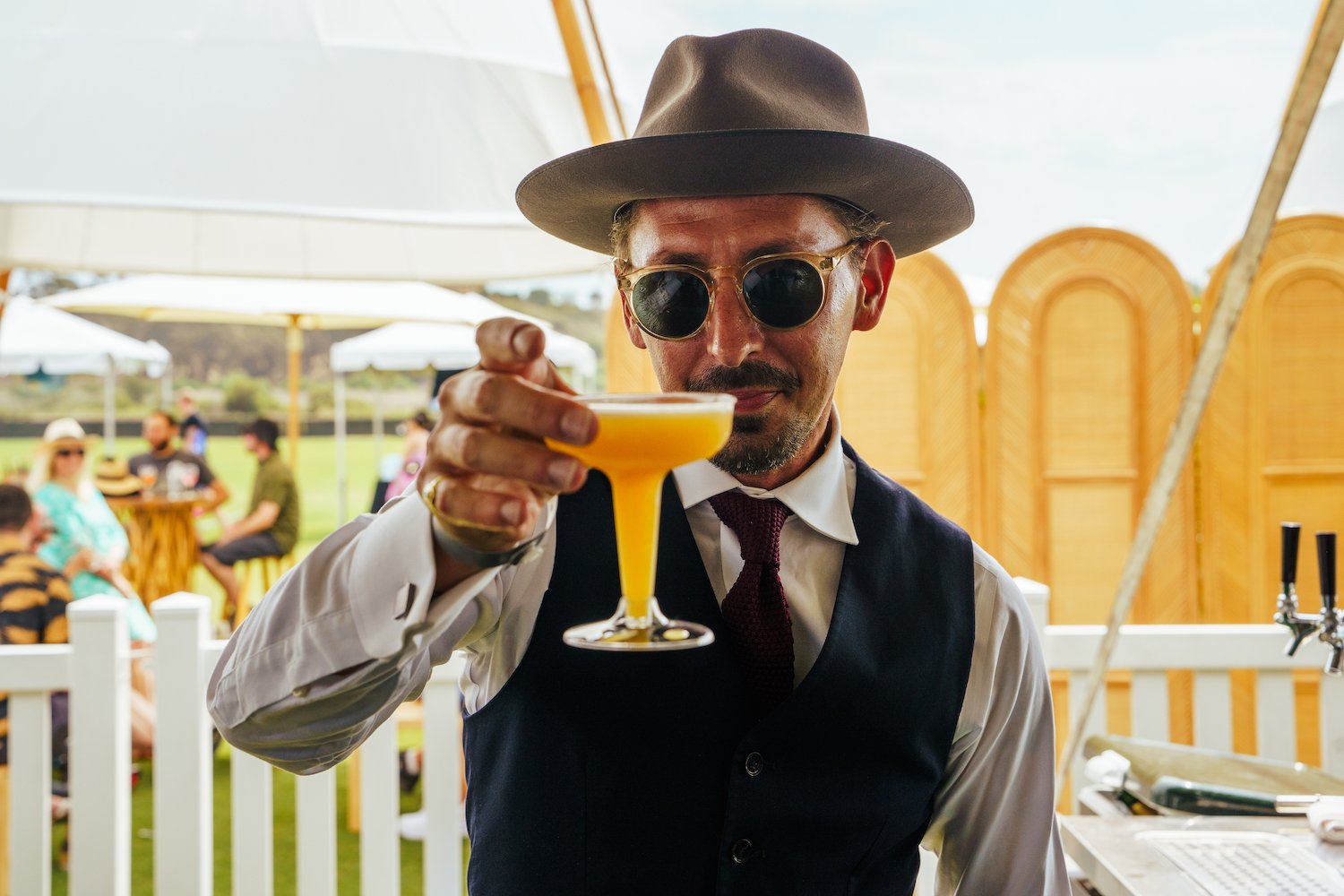
No day in a field by the sea is complete without the perfect selection of fine wines right at your fingertips. DMWFF will be featuring several wineries and breweries, including Adobe Road Winery, Bianchi, Calera, Doffo Winery, Domaines Ott, Hahn, Henebery Spirits, Library Collection Wine, Melograno, Solento Organic Tequila, Tap Truck, and many more. See the complete list here.
VIP Exclusive Wineries
Austin Hope Wines
Booker
Caymus Vineyards
Cuvaison
Daou
Fraiche Wine Group
J. Lohr Vineyards and Wine
Ramey Wine Cellars
Whispering Angel
Courtesy of Del Mar Wine + Food Festival
What VIP experiences are available for purchase?
There are 12 VIP experiences for purchase that are separate from the Grand Tasting. Tickets for these events range from $125 to $600.
Wednesday, October 2
San Diego FC Hosts Tacos, Tortas + Tequila at Monarch Ocean Pub
Are the same food vendors and wineries available both days?
Most food vendors and wineries will be at the Grand Tasting on both days. However, we do recommend you check the event’s itinerary online for more information on vendor schedules.
What to eat, see, and do in the beachside neighborhood filled with labradoodle-owning joggers and surfers on a first-name basis with their kombucha dealer
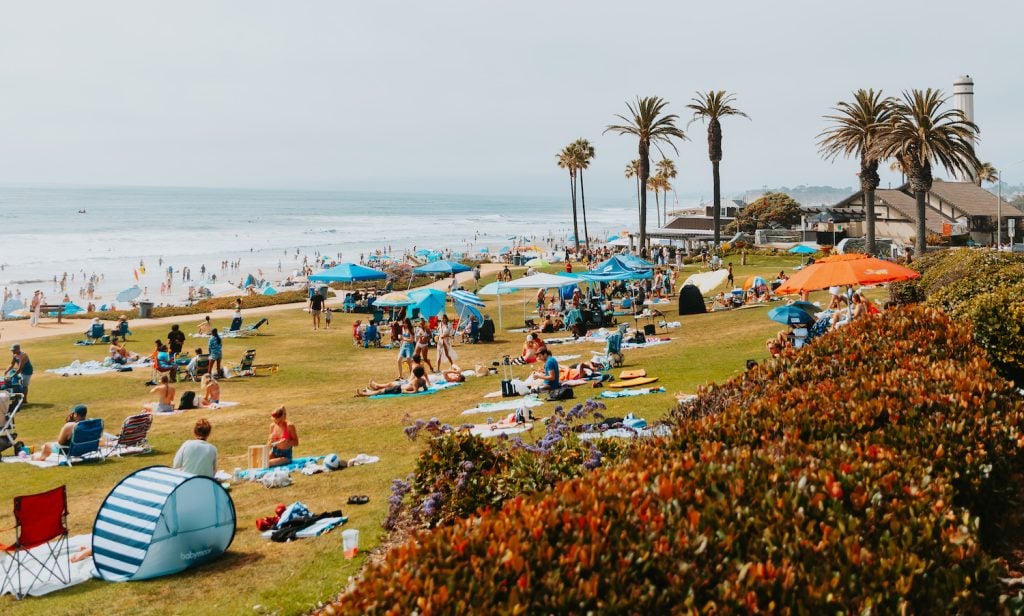
Del Mar is a small beach town—just one where Bill Gates is your neighbor. The 2.2-square-mile stretch of hilly coastline boasts multi-generational families with weighty last names, clusters of cottages set on tree-lined streets, mom-and-pop shops with diehard patrons, the local pride that comes with a population of less than 5,000… and the looming specter of new development.
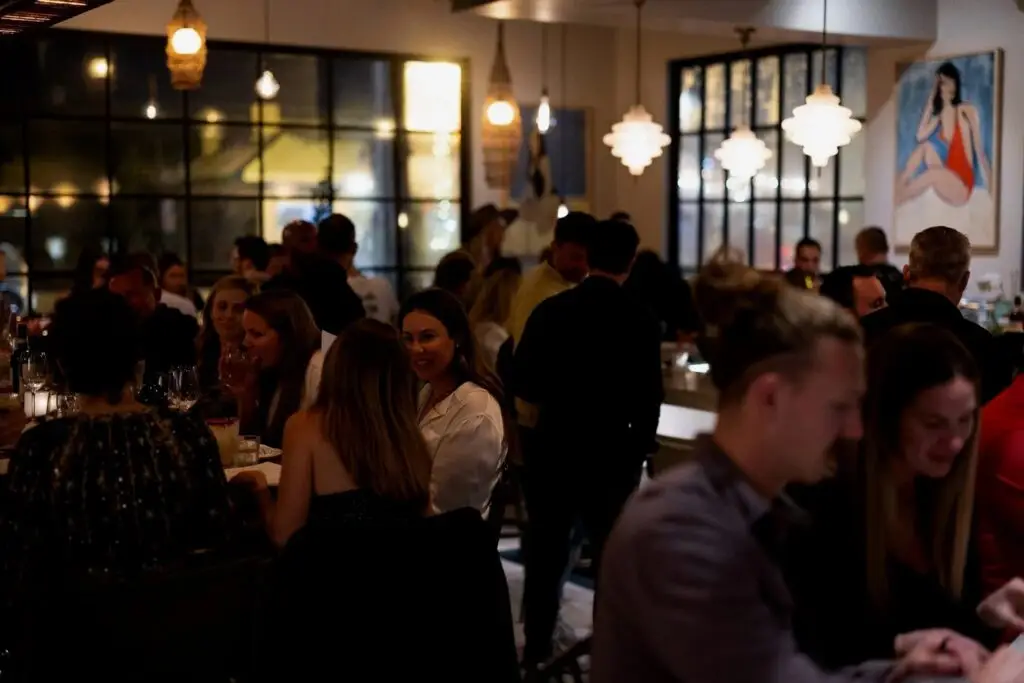
Even though its list of famous residents can sometimes read like an Illuminati roster, Del Mar has always been a classic coastal community at heart. No matter how many celebrities call it their summer home, the town’s tapestry—a mix of early-bird surfers, college professors, rooted families, retired inventors, rare Torrey pines, and lots of dogs—remains tightly woven. This town has been booming, thanks in part to Monarch Ocean Pub helping transform Del Mar Plaza from a sleepy shopping mall to a full-on scene. It’s where residents have gathered together again since the pandemic.
Del Mar Historical Society president Larry Brooks says that because half of the town’s residents are part-time, many of the million-dollar homes sit empty. But with new billion-dollar development, affordable housing requirements, and more short-term rentals on the way, a vibe shift is on the horizon, troubling local groups determined to hold onto Del Mar’s provincial spirit.
Photo Credit: Becka Vance
Things to Do in Del Mar
Meatballs at Beeside Balcony
While Vafiadis can’t resist breakfast at the beloved Harry’s Coffee Shop, she likes to venture off the beaten path for lunch. The meatballs at the Mediterranean-inspired Beeside Balcony are her current go-to. “It’s a shareable plate,” she says. “But I don’t share.”
Beach Walks to Torrey Pines
Surfboards are as common as cars in Del Mar, but Vafiadis prefers to explore on land via a nice, long beach walk. She starts on 17th Street and makes her way down to Torrey Pines State Natural Reserve, a pleasant route for people-watching and seashell-hunting.
Sunset Drinks at Monarch Ocean Pub
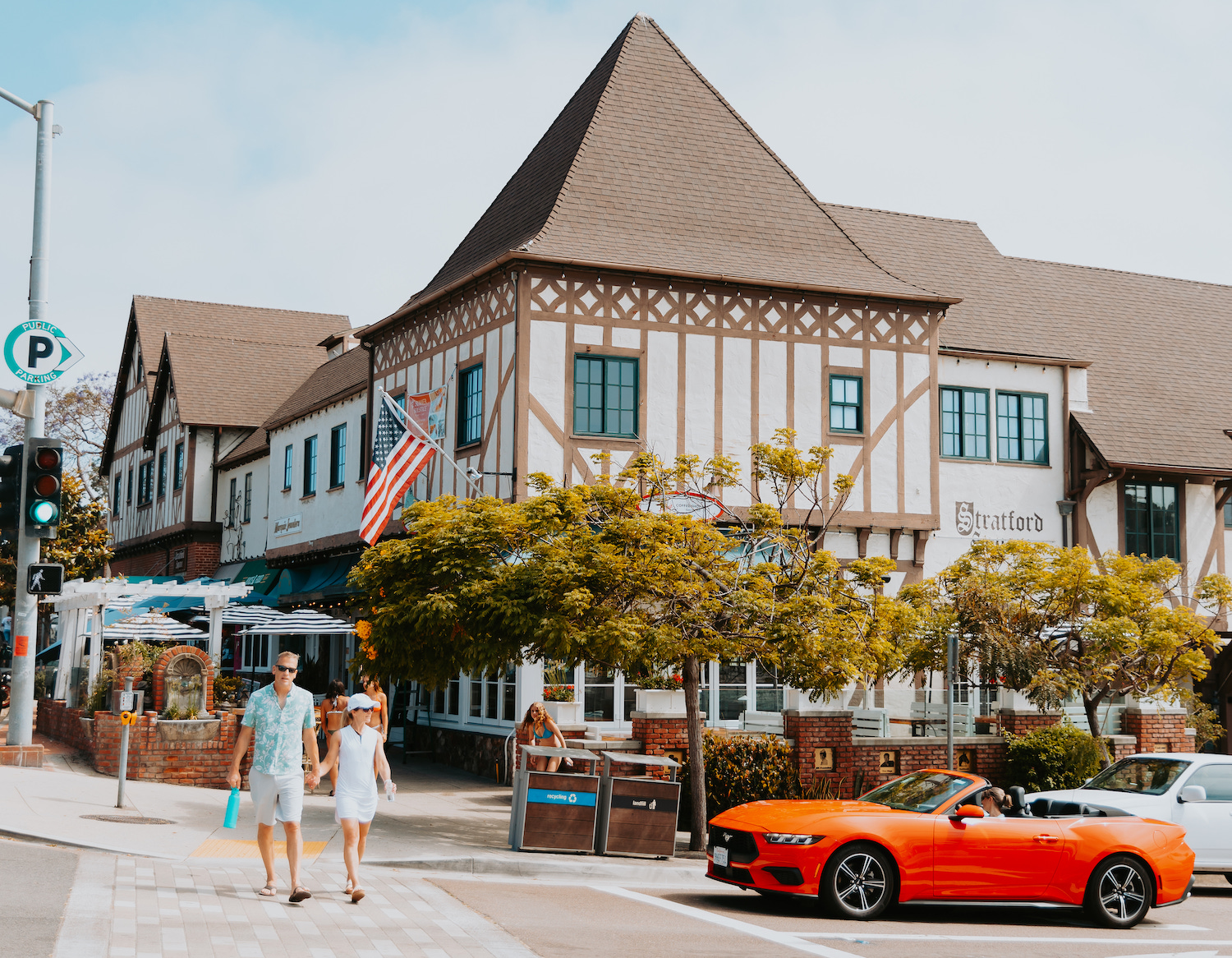
While there are no bad views in Del Mar, Monarch Ocean Pub’s third-story vantage is hard to beat. “I credit Monarch with really reviving this town more than anything,” Vafiadis says. “The energy up there is so wonderful.” She likes their grapefruit slushies—and that she can see Stratford Square from where she’s sitting.
Del Mar Wine + Food Festival
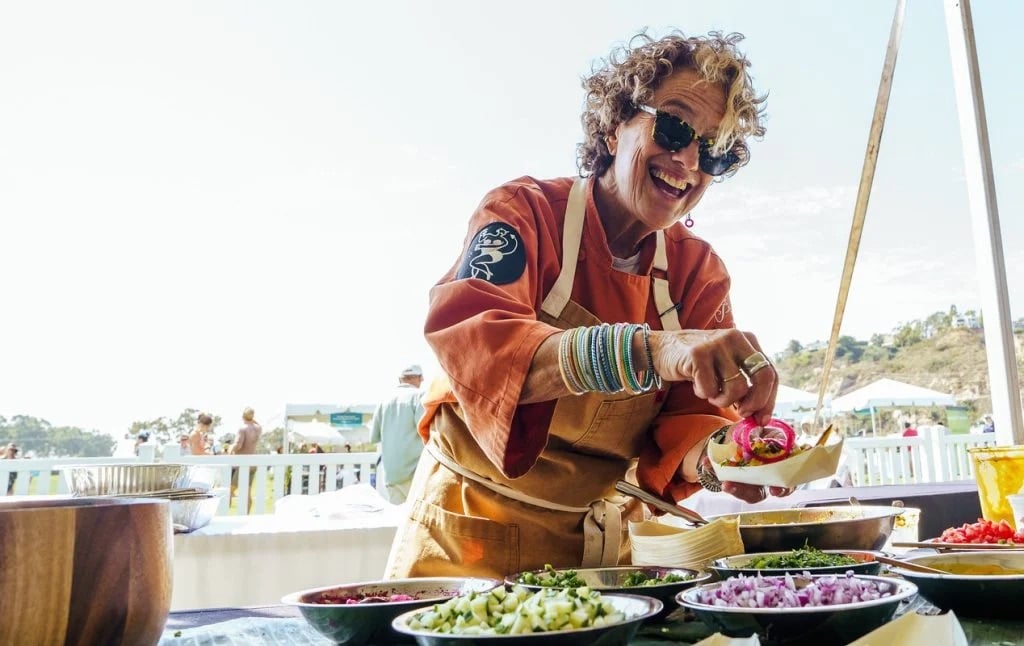
Debuting in 2023, the annual Del Mar Wine + Food festival taking place in October brings together some of the best chefs and food and drink makers in southern California for a six-day event featuring immersive culinary experiences and sold-out dinners across San Diego. From celebrity chefs to TV personalities and exclusive VIP events during the week, it’s one of the best culinary events of the year.
Photo Credit: Becka Vance
Facts About Del Mar
Start saving for that seaside abode—luxury real estate agent Mike Cady says that the average cost of a 1,200-square-foot home near the beach in Del Mar is between $3 and $5 million.
In their infamous 1963 bop “Surfin’ U.S.A.,” Del Mar is the first stop on the Beach Boys’ rundown of all the top surfing locales in Californ-I-A.
Sunday mass at St. James Catholic Church was like a red carpet event in the 1960s. Jimmy Durante, Desi Arnaz, and Lucille Ball often attended, while Bing Crosby and Pat O’Brien served as ushers.
Tony Robbins once lived in Del Mar’s only castle. Designed by local architect Richard Requa, the five-bedroom home was built in 1927 for $150,000 (almost $3 million today) and features six fireplaces and a lookout tower.
To make ocean swimming safer, wealthy cattleman Colonel Jacob Taylor built a 198-foot pool at the bluffs’ base in the 1880s that filled with seawater at high tide. Some original pylons are still visible at low tide near 11th Street.
Photo Credit: Becka Vance
Local Tips for Del Mar
For as physically small as it is, Del Mar offers a surprisingly full itinerary—especially if you’re betting on the next Seabiscuit or taking a fried food tour through the fairgrounds. But you don’t need to wait for a major event to visit. The residents’ dedication to maintaining their town’s idyllic topography and coastal charm makes even the most mundane pastimes feel like something out of a movie montage.
One of those residents is KC Vafiadis, chairman of the Del Mar Village Association and daughter of longtime developer Jim Watkins. She grew up watching her dad bring the local economy back to life with projects like the L’Auberge Del Mar. While she’s understandably biased toward the spots steeped in her own family history (particularly the historic Stratford Square that she now runs), she has more than enough love for the rest of Del Mar to go around.
Courtesy Del Mar Wine + Food Festival
What’s Next for Del Mar
Several projects that will reshape the town’s landscape are in the works, with some replacing timeless favorites. Hillstone Restaurant Group (HRG) is constructing a 3,300-square-foot spot on Camino del Mar in the former site of the beloved Bully’s North. A rep from HRG confirmed it’s slated to open as a new Honor Bar location in early 2025. Valley Farm Market and The Cottage should also soon arrive on the town’s local business scene.
Jen Grove, executive director of the Del Mar Village Association, hopes that by continuing to attract San Diego–grown businesses, Del Mar can stay true to its small-town roots. “We’ve had a lot of change,” she says. “I think what people would like to see is just continuing to support what we have. Because what we have is really good.”
But the most controversial modification to the community’s landscape isn’t happening at the street level. The San Diego Association of Governments (SANDAG) is working to relocate the rail line from Del Mar’s coast (which is threatened by eroding cliffs) onto a more stable inland route via a tunnel with a $4 billion– plus price tag that would potentially run underneath the town’s main thoroughfare. Residents are concerned about construction disruption and potential impacts on property values. But Brooks, who’s also a retired engineer, believes that as long as SANDAG doesn’t dig up the main drag of Camino del Mar, locals’ fears are mostly (though not totally) unfounded.
“It’s going to impact a couple of people on the north end, probably,” he says. “But the south end is a piece of cake. They’ve got all kinds of places [the train] can come out and not bother anybody.”
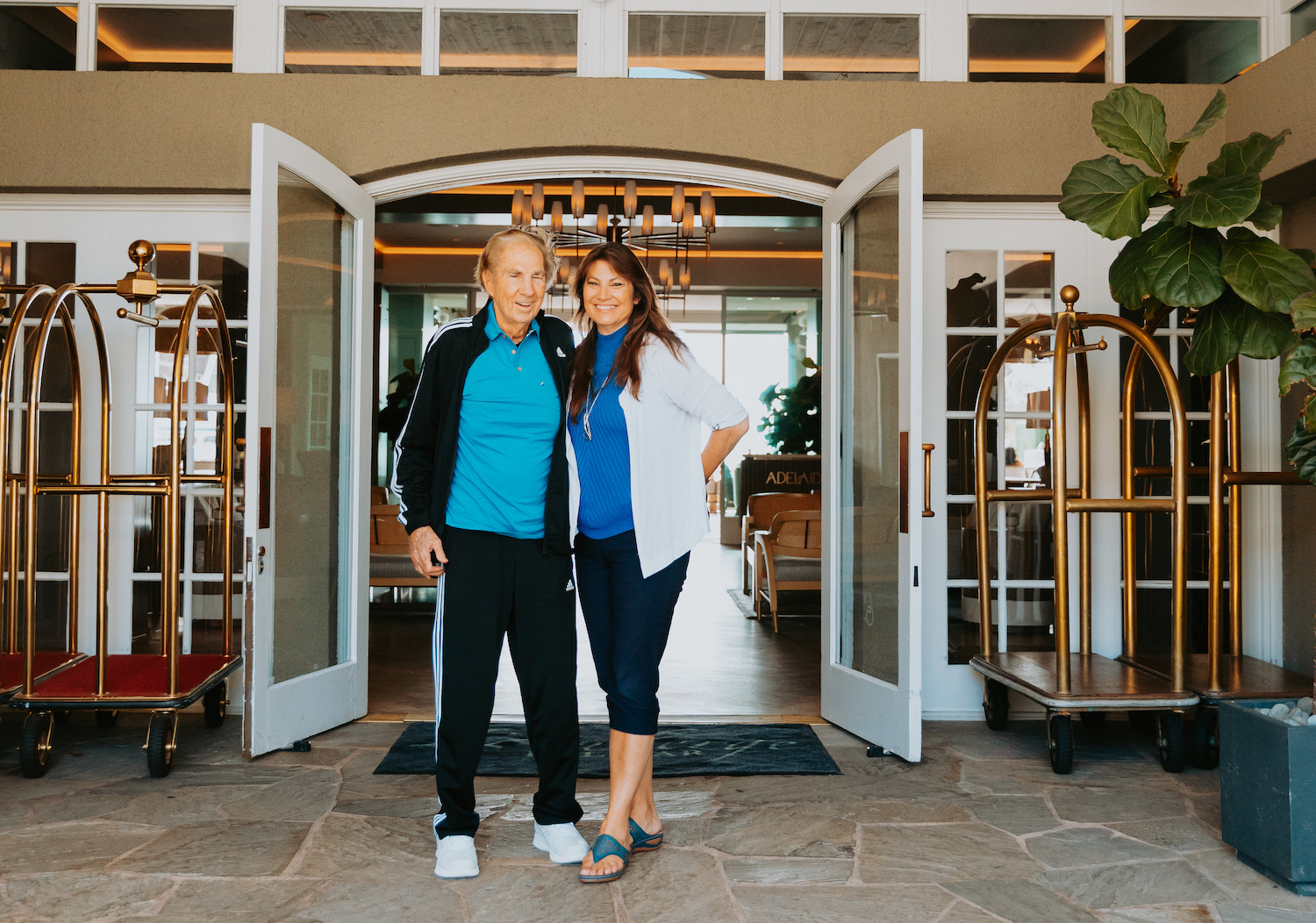
Though longtime residents can be resistant to change, 93-year-old Watkins views these new developments as the culmination of the vision he originally outlined in his 1969 economic report titled Why Del Mar.
“Del Mar is where it should be,” he says. “My focus was on business revitalization, and essentially that’s done. Now the idea is just keeping the character of the community.”
Emily Blackwood is a freelance journalist based in San Diego, CA. She covers entertainment, wellness, travel, home, food, culture—all the things that make life interesting, tantalizing, and just the right amount of weird. Her work has been published in SELF, HuffPost, and YourTango. You can learn more at emily-blackwood.com.
Torch Heroes: Why San Diego’s Most Trusted Businesses Win by Doing the Right Thing
In a world overflowing with shortcuts, marketing fluff, and “good enough,” there are still companies that choose a different answer. And in San Diego, there are plenty of them.
In a world overflowing with shortcuts, marketing fluff, and “good enough,” there are still companies that choose a different answer.
Integrity guides how they show up every day. They make hard decisions, hold themselves accountable, and build trust the old-fashioned way, one action at a time. At the Better Business Bureau, we call these businesses Torch Heroes: leaders who demonstrate that ethical leadership strengthens businesses and drives long-term success.
And in San Diego, there are plenty of them.
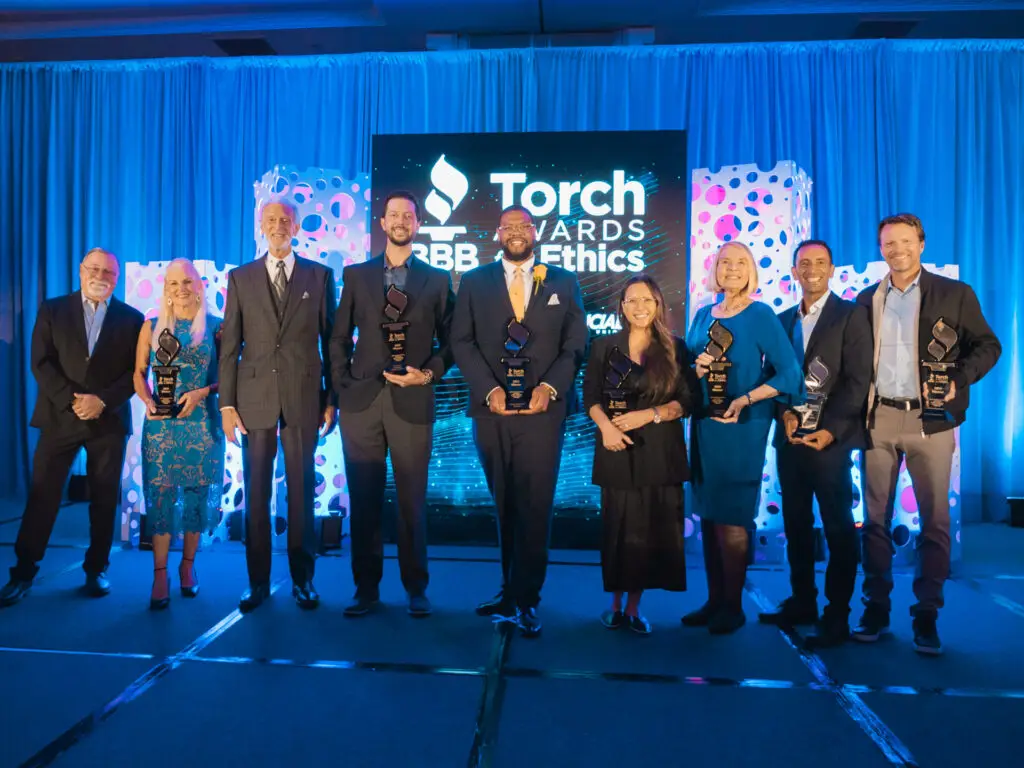
Take House Collective Marketing Solutions, a Carlsbad-based digital agency that won the 2025 Torch Award for Ethics for its people-first approach to marketing. Instead of pushing flashy campaigns, the team often takes a step back to make sure clients’ foundations are strong before going big. Their philosophy? Truth over transaction builds partnerships that last.
Or look at Young Black & N’ Business, where integrity shows up through community action. When a local school lost art funding, founder Roosevelt Williams III and his team stepped in with workshops, mentorship, and hands-on support to help restore creative opportunity. That kind of engagement reflects ethical leadership rooted in real impact.
And in Vista, Lotus Sustainables carried its commitment to ethics all the way to the product line. After discovering defects in a shipment of eco-friendly products, the company issued full refunds and redesigned its offerings at its own expense, a choice that shaped its identity and reinforced to customers that ethics guide every decision.
In North County, Greenway Landscape Design & Build brings integrity into everyday service. When a client’s glass was damaged, likely not by their crew, owner Scott Lawn chose responsibility over blame and covered the repair personally. For Greenway, doing the right thing serves as a north star, guiding every interaction through transparent pricing, accountable partnerships, proactive communication, and follow-through long after the job is done.
Other honorees include At Your Home Familycare, whose leadership turned down a lucrative state contract during the pandemic to protect vulnerable clients and staff, and Bill Howe Family of Companies, where hiring practices, training, and service centers around shared values, every day, on every call.
What connects these diverse businesses, from marketing to nonprofit support to home services, isn’t size, industry, or revenue. It’s something deeper: a commitment to trust as a business strategy.
In San Diego’s competitive marketplace, that trust gives companies an edge. Clients invest in relationships. They refer friends. They stay loyal when others fade.
As one Torch Award winner puts it, integrity isn’t a section in the employee handbook. It’s the operating system of the company, the invisible code that determines every choice, every day.
And that’s exactly the point of the BBB Torch Awards for Ethics: to spotlight companies that dispel the myth that ethics and success are at odds. These businesses show that when leaders choose honesty, fairness, and accountability, especially when it’s hard, they build brands that matter.
At BBB, we see nominations come in from clients, employees, and business partners who have witnessed ethical leadership up close. These submissions aren’t polished promotions. They’re stories of moments when a company chose people over profit, clarity over confusion, and trust over convenience.
The nomination window for the 2026 Torch Awards for Ethics is open through March 31, 2026, and there are more Torch Heroes waiting to be recognized.
Who comes to mind in San Diego’s business community?
A vendor who always delivers — and always explains why.
A competitor who chooses the high road even when shortcuts tempt.
A team within your own company whose day-in, day-out choices reflect deep character.
And yes, businesses can nominate themselves. We encourage it. If you’ve built your business on principles rather than buzzwords, we want to hear your story.
Because in a world full of noise, integrity still deserves the spotlight, and San Diego is full of stories worth telling. Nominate your hero now.